
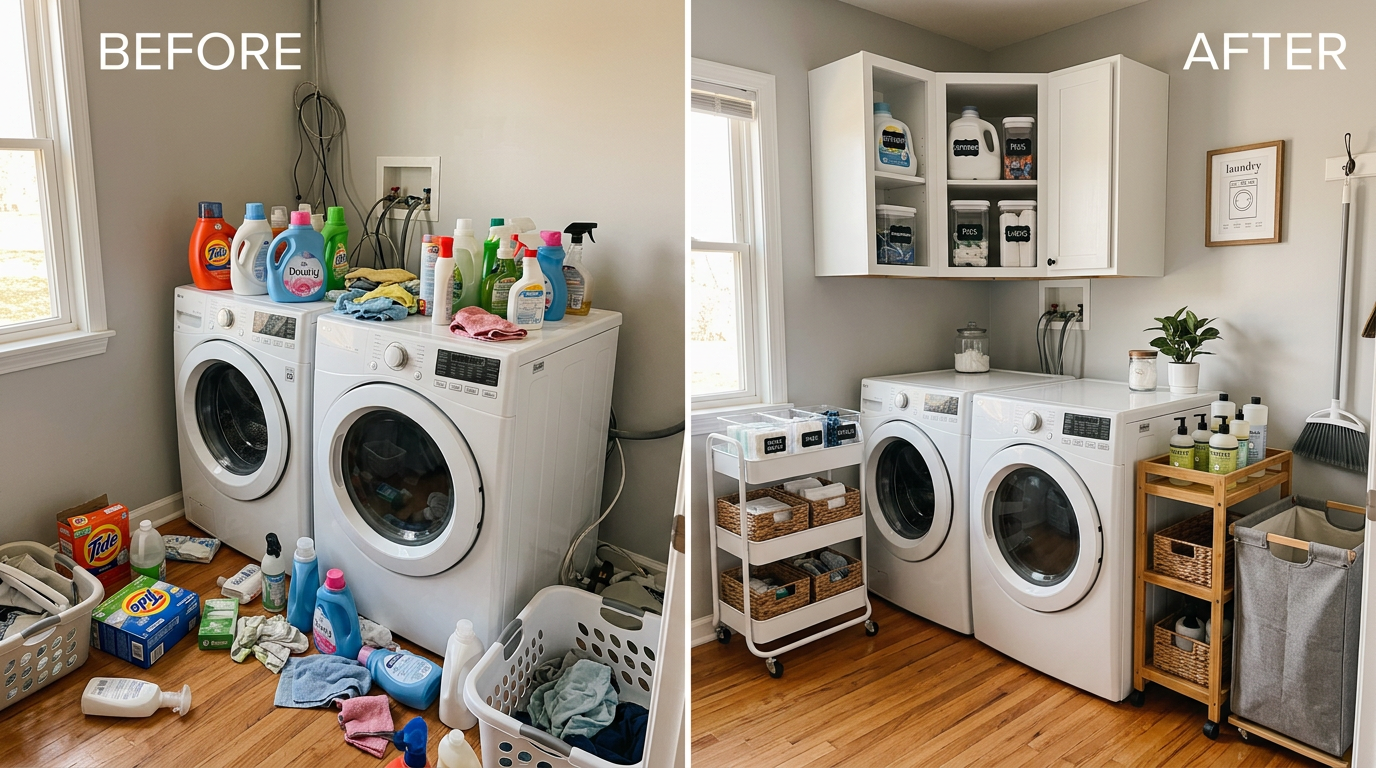
Finding space in a small laundry room feels nearly impossible when you’re working with a top load washer. I understand this challenge because I’ve helped many people transform their cramped laundry spaces into functional areas. The good news? A compact laundry room doesn’t have to feel cluttered or stressful. You can create an efficient workspace that handles your washing needs without overwhelming your home.
I’ve realized that small laundry rooms actually benefit from intentional planning. Your top load washer is a permanent fixture, so working around it smartly makes all the difference. The key is using vertical space, choosing the right storage solutions, and organizing what you truly need. I’ve seen dramatic transformations happen in rooms that seemed hopeless at first.
Small laundry room ideas for top load washers work best when you focus on practicality over perfection. You don’t need an expensive renovation to make your space functional and pleasant. With some strategic choices and clever organization, your laundry room becomes a space you actually enjoy using instead of avoiding.
4 Best Small Laundry Room Ideas for Top Load Washers
When I design small laundry spaces, I always start by assessing what’s already working. Your top load washer needs clearance to open the lid and remove clothes. This means you have valuable wall space and corners ready for solutions. I’ve found that the most successful small laundry rooms follow a strategic layout plan that doesn’t fight against the washer’s footprint.
The vertical approach works incredibly well in tight spaces. I recommend looking up and around your top load washer for storage opportunities. Wall-mounted shelving, over-the-washer cabinets, and hanging rod systems transform empty space into organized storage. I’ve watched people reclaim their laundry rooms simply by taking advantage of walls they weren’t using.
Idea 1: Over-the-Washer Shelving Systems
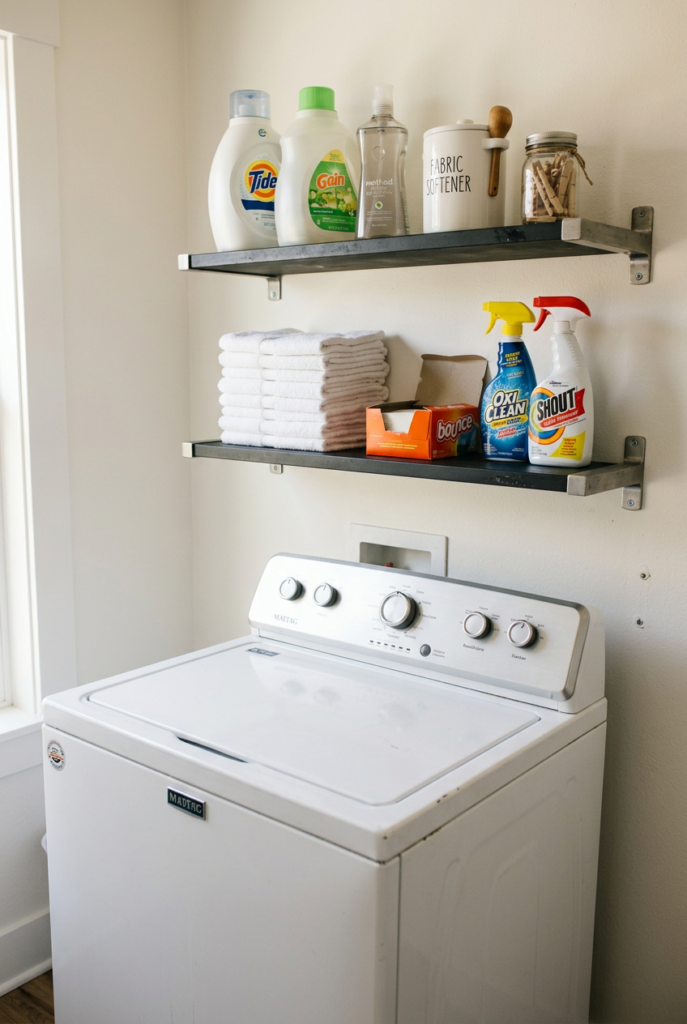
Installing shelves directly above your top load washer sounds obvious, but I’ve noticed many people overlook this opportunity. This setup gives you immediate access to detergent, fabric softener, stain removers, and dryer sheets. I personally recommend sturdy metal shelves that can handle the vibration from a washing machine. Flimsy shelves tend to shift and rattle over time, which creates unnecessary frustration.
I’ve seen two-shelf and three-shelf configurations work best depending on your ceiling height. With a two-shelf system, you get spacious shelves for larger bottles and containers. A three-shelf option lets you organize smaller items in separate categories. The key is ensuring at least 12 inches of clearance above the washer lid for safe operation.
Consider installing shelves that match your room style to make the space feel intentional. I find that coordinating your shelving with your wall color or trim creates visual cohesion. Metal shelves in black, white, or natural finishes adapt well to any laundry room aesthetic. This simple addition typically costs between 30 to 100 dollars and makes an enormous difference in functionality.
Idea 2: Corner Storage Cabinets and Narrow Units
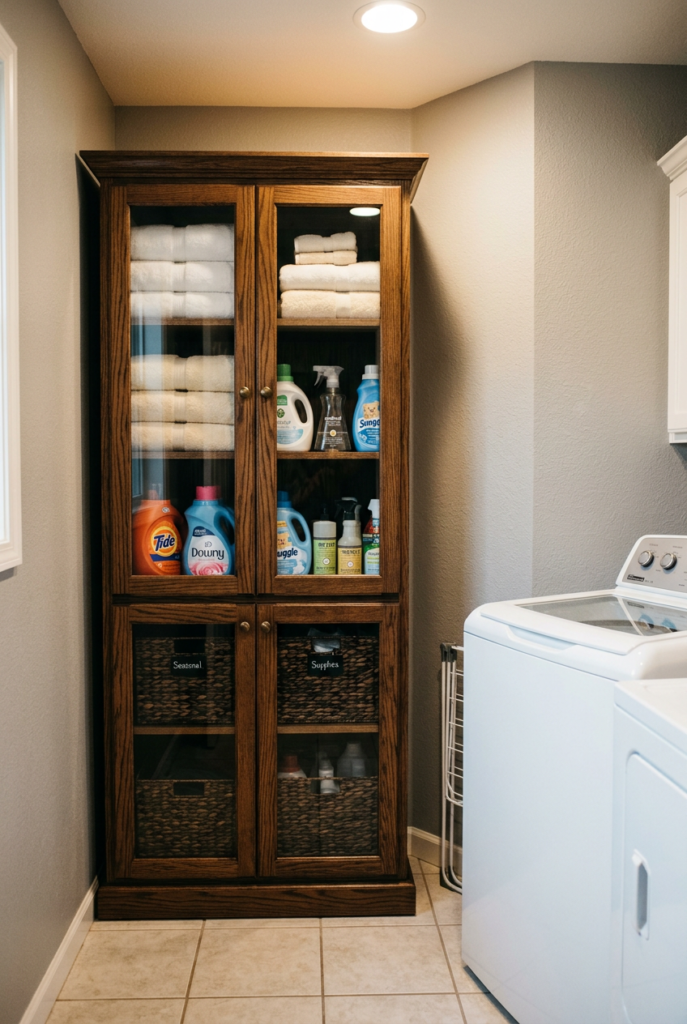
Corners in small laundry rooms often sit empty and wasted. I started using corner storage cabinets after realizing how much space I was ignoring. These narrow units fit perfectly in corners and store items you don’t access daily. I’ve placed hampers, backup supplies, and seasonal items in corner units with excellent results.
A tall corner cabinet works particularly well alongside a top load washer. I recommend choosing one that’s approximately 12 inches deep and 24 inches wide. This depth allows you to open doors fully without bumping into your washer. Many corner units feature rotating shelves, which I find incredibly convenient for accessing items in the back.
I’ve also discovered that corner units create a natural boundary in the room. They help define your laundry space and make the room feel more organized overall. Open corner shelving creates a lighter feel, while cabinets with doors hide clutter completely. Choose based on what you actually store and how often you need access.
Idea 3: Wall-Mounted Drying Racks and Hanging Systems
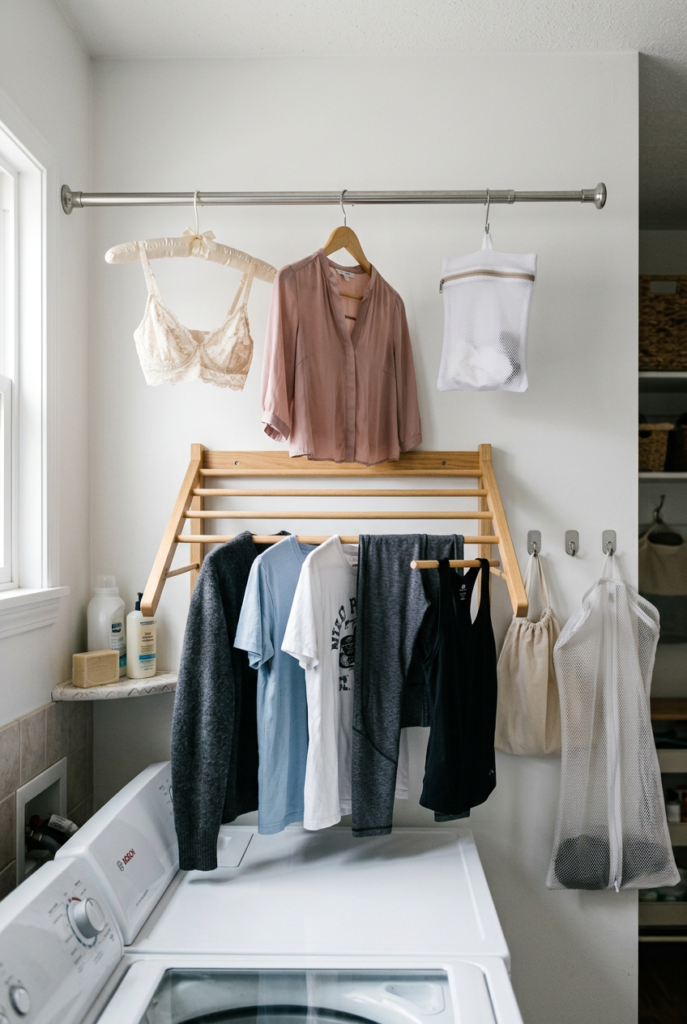
I’ve realized that most small laundry rooms lack adequate drying space. Wall-mounted drying racks solve this problem elegantly. These fold-down racks stay tucked against the wall until you need them. I appreciate how they keep drip-dry items off your washer and floor.
A wall-mounted rod system above your washer works wonderfully for hanging delicate items. I typically install these about 6 inches above the washer for easy access. Tension rods, sturdy metal rods, or purpose-built drying racks all function well in this space. I’ve found that having a dedicated hanging area reduces the time clothes spend sitting around.
Consider adding adhesive hooks to nearby walls for hanging items quickly. I use these for air-drying bags, towels, or garments that need a quick refresh. Multiple hooks around your laundry room create a flexible system that adapts to your needs. This approach costs very little yet provides surprising utility.
Idea 4: Rolling Carts and Tiered Organizers
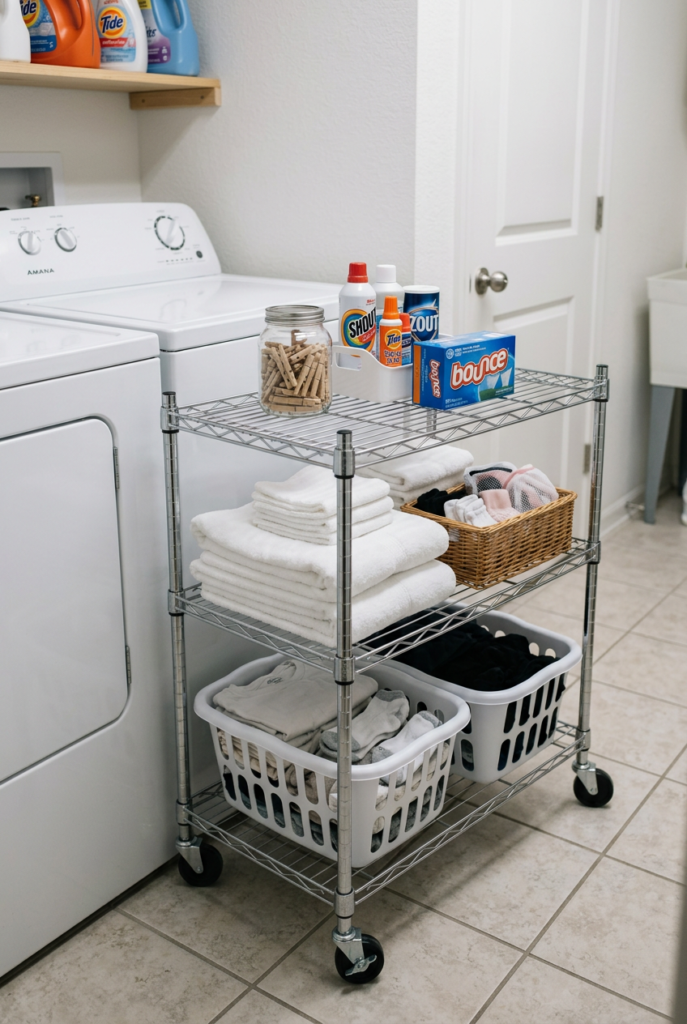
Rolling carts have transformed how I think about small laundry room organization. These mobile units move easily, which means you can adjust your layout as needed. I keep one cart dedicated to sorting clean clothes by family member. Another cart holds frequently used supplies within arm’s reach.
A three-tier rolling cart typically costs between 30 and 60 dollars and provides substantial storage. I prefer metal carts over plastic because they withstand moisture and vibration better. The wheels must roll smoothly, especially if your floor slopes slightly. I’ve tested many carts, and quality wheels make all the difference in daily usability.
I’ve discovered that tiered organizers work equally well without wheels for stationary solutions. These can sit beside or under your washer depending on your space. Stackable organizers let you customize how many tiers suit your supplies. The beauty of this approach is how you can move items around based on seasonal needs.
Smart Organization for Maximum Efficiency
Making your small laundry room work requires thinking about how you actually use the space. I’ve learned that organization systems fail when they don’t match your real habits. If you rarely hang dry clothes, wall space for drying becomes wasted potential. If you do use delicate cycles frequently, that hanging space becomes essential.
I always recommend grouping supplies by function rather than brand. Keep all stain treatments together, detergents in one spot, and fabric softeners nearby. This approach means fewer trips around the small room. Clear, labeled containers help everyone in your household find what they need quickly.
I’ve found that seasonal switches matter in laundry rooms. Winter loads differ from summer loads, and your supply needs shift accordingly. Reserving one shelf or cart section for seasonal items keeps your active supplies manageable. This rotating system prevents your small space from feeling overcrowded.
Creating a Pleasant Space for Regular Use
Small laundry rooms often feel like afterthoughts in home design. I’ve changed this perspective by treating mine as a functional room worthy of attention. Adding good lighting makes a tremendous difference in how the space feels. I installed bright LED panels above my washer area and genuinely enjoy using the room now.
I’ve noticed that neutral paint colors make small spaces feel larger. Soft whites, grays, or warm beiges create an open atmosphere. Avoiding dark colors keeps the room from feeling confined. If your laundry room lacks natural light, pale colors become even more important.
I’ve also added a small mat near the washer for comfort when loading and unloading. Small touches like this transform your mindset about the space. A basket for collecting lint, a shelf for fresh folded items, and hooks for hanging supplies create a room that functions beautifully. I find that respecting this space mentally improves my laundry routine significantly.
Layout Tips for Top Load Washer Configurations
I’ve tested different arrangements and discovered that positioning matters considerably. Your top load washer needs clear access from the front and top. I always leave at least 12 inches of space above the lid for safe operation. Shelving that extends too low creates a dangerous situation when loading clothes.
The side space next to your washer often gets overlooked. I’ve installed narrow shelving units next to machines with excellent results. A 6 to 8 inch deep shelf doesn’t take much space but provides significant storage. I’ve placed detergent bottles, washcloths, and cleaning supplies on these side shelves.
I’ve learned that traffic flow matters in small spaces. The path from your laundry room to where you hang or fold clothes should be clear. Blocking this route with carts or baskets creates unnecessary frustration. I arrange my supplies in zones that match my actual laundry workflow.
Budget-Friendly Storage Solutions
I’ve discovered that expensive systems aren’t necessary for excellent organization. Simple wire baskets cost under 20 dollars and stack effectively on shelves. I use different baskets for different purposes and label them clearly. This approach maintains flexibility as your needs change.
Repurposed containers work surprisingly well in laundry rooms. I’ve used clear plastic boxes to store extra supplies, towels, and linens. Clear containers let you see contents without opening them. Lidded boxes stack securely and protect items from dust and moisture.
I’ve found that investing in quality basics pays off over time. Good shelving brackets, sturdy cart wheels, and reliable hooks cost a bit more initially. These items last years rather than months, making them true budget solutions. I view this as spending less overall because replacements happen far less frequently.
Maintenance Tips for Small Laundry Spaces
Keeping a small laundry room organized requires consistent habits. I’ve learned that putting items away immediately prevents clutter buildup. A small space shows disorder quickly because everything is visible. Five minutes of tidying after laundry day keeps your room functional all week.
I check my storage systems monthly to see what’s working and what isn’t. Supplies that you rarely use deserve different storage than daily items. I’ve moved things around multiple times until finding the perfect arrangement. Flexibility improves how smoothly your laundry routine actually works.
I’ve discovered that regular cleaning keeps laundry rooms pleasant. Wiping down surfaces where detergent spills accumulate takes just minutes. Checking shelves for leaks or spills prevents larger problems. A small laundry room that’s well-maintained feels more spacious than a cluttered one.
Additional Organization Hacks
I’ve collected several tricks that make significant differences in small spaces. Magnetic strips hold scissors and lint rollers on your washer frame. Suction cup organizers attach to tile walls without damaging them. Door-mounted organizers transform the back of your laundry room door into valuable storage.
I’ve used drawer organizers meant for kitchen use to sort laundry supplies. Dividers keep different items separated on open shelves. Tension rods inside cabinets create hanging space for bags or clothes. These small additions multiply your storage without requiring major changes.
I’ve found that labeling everything transforms how your household uses the space. Everyone knows where things belong when labels are clear. I use adhesive labels that withstand moisture and fading. Clear organization means less time spent searching for supplies.
Conclusion
Small laundry room ideas for top load washers succeed when you work with your space rather than against it. I’ve shown you that vertical storage, corner solutions, and rolling units create substantial improvements. Your top load washer doesn’t limit your options; it simply requires intentional planning around it.
I’ve learned that the best laundry room is one you actually enjoy using. Functional storage, good lighting, and thoughtful organization make daily tasks pleasant instead of frustrating. These solutions don’t require expensive renovations or professional design help. You can implement most of these ideas in a single weekend.
I encourage you to start with one or two ideas that address your biggest challenges. Maybe you need immediate surface storage or better drying solutions. Perhaps you struggle with where to keep backup supplies. Addressing your specific pain points first creates momentum for further improvements.
I’m confident that your small laundry room can become a space you’re genuinely proud of. Many people have transformed cramped, cluttered rooms into functional laundry centers using these strategies. Your top load washer will work even better when everything has a dedicated home. Start today and notice how much better your laundry routine becomes.
Frequently Asked Questions About Small Laundry Rooms
Q1: What’s the best over-washer shelving height for a top load machine?
I recommend positioning shelves 12 to 14 inches above your washer lid to allow comfortable access. This gives you enough clearance for opening the lid fully while keeping supplies within easy reach. Measure your specific washer model to confirm the lid’s exact height when open.
Q2: Can I fit a dryer in a small laundry room with a top load washer?
Yes, if you stack your dryer on top of your washer using a stacking kit. This approach frees up valuable floor space for storage solutions. Alternatively, positioning your washer and dryer side by side works if your room width allows it.
Q3: How do I prevent moisture damage in a small laundry room?
Ensure good ventilation by running your exhaust fan during and after laundry loads. I also wipe down surfaces regularly to prevent mold growth. Use moisture-absorbing containers on shelves to keep excess humidity away from supplies.
Q4: What’s the most affordable storage solution for small laundry rooms?
Rolling carts and wire baskets offer excellent value for money. I’ve found these cost under 50 dollars total and provide substantial storage. Over-washer shelving with basic brackets also ranks as budget-friendly and highly functional.
Q5: Should I use open shelving or cabinets in a small laundry room?
Open shelving makes rooms feel more spacious and keeps frequently used items accessible. Cabinets hide clutter and protect items from dust. I recommend combining both approaches: open shelves for daily supplies and cabinets for backup stock.
Q6: How do I organize laundry supplies to save time during washing?
Group supplies by function and keep daily items at eye level. I place stain treatments near the washer, detergents on the closest shelf, and backup supplies lower or higher. This arrangement means you rarely need to search for anything.
Q7: Can I add humidity control to a cramped laundry space?
Yes, small dehumidifiers work well in compact rooms. I’ve also found that running your exhaust fan properly controls most humidity issues. Opening a window slightly when weather permits adds fresh air circulation.