
Introduction
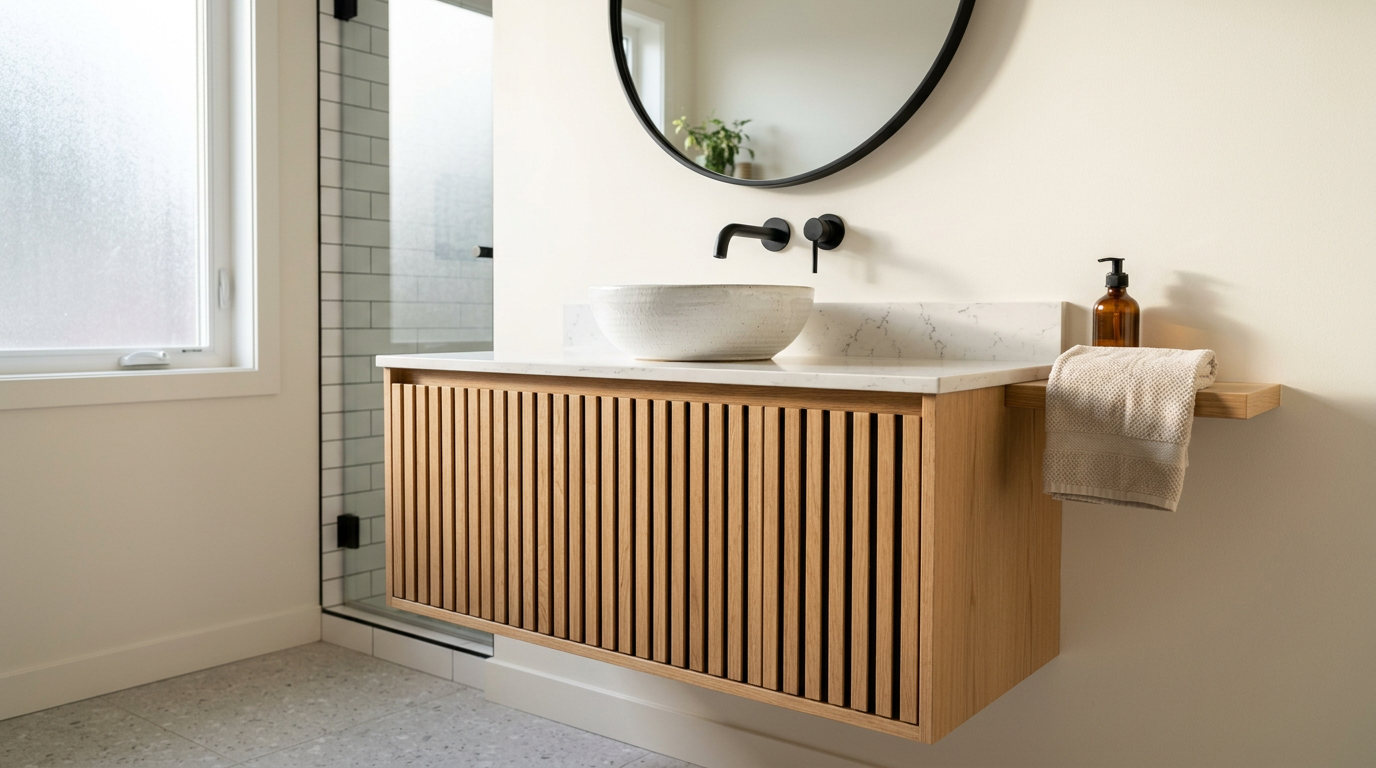
A bathroom vanity with wood slats adds warmth, texture, and storage in one piece. Thin vertical or horizontal strips of oak, walnut, or teak cover the doors or sides. The result looks calm, modern, and a little bit expensive.
I like this style because it fixes a common problem. Plain white vanities blend into the wall and feel flat. Slats give the room a focal point without bold color or busy patterns.
You do not need a big bathroom to pull it off. Wood slat vanities come in compact and double sizes, with floating and freestanding options. I will walk through the styles one by one, starting with the basics.
What Is a Wood Slat Bathroom Vanity? 3 Things to Know
A slatted bathroom vanity uses narrow wood strips on the doors, drawer fronts, or side panels. Some designs use raised slats over a solid panel. Others leave small gaps for an open, airy look.
Designers also call this look a fluted or reeded vanity when the strips have rounded edges. The shapes differ, but the idea stays the same. Straight lines, natural grain, and soft shadows between each strip.
Three details decide whether a slat vanity works in your home. Check the wood and finish, the slat direction, and the vanity size. Get those right, and the rest falls into place.
| Detail | What to Check | Why It Matters |
|---|---|---|
| Wood and finish | Solid wood or moisture-resistant veneer with a sealed finish | Bathrooms stay damp |
| Slat direction | Vertical, horizontal, or fluted | Changes how tall or wide the room feels |
| Vanity size | Common widths run from 24 to 72 inches | Affects storage and walking space |
7 Best Wood Slat Bathroom Vanity Ideas
1. Floating Wood Slat Vanity for a Light, Open Look
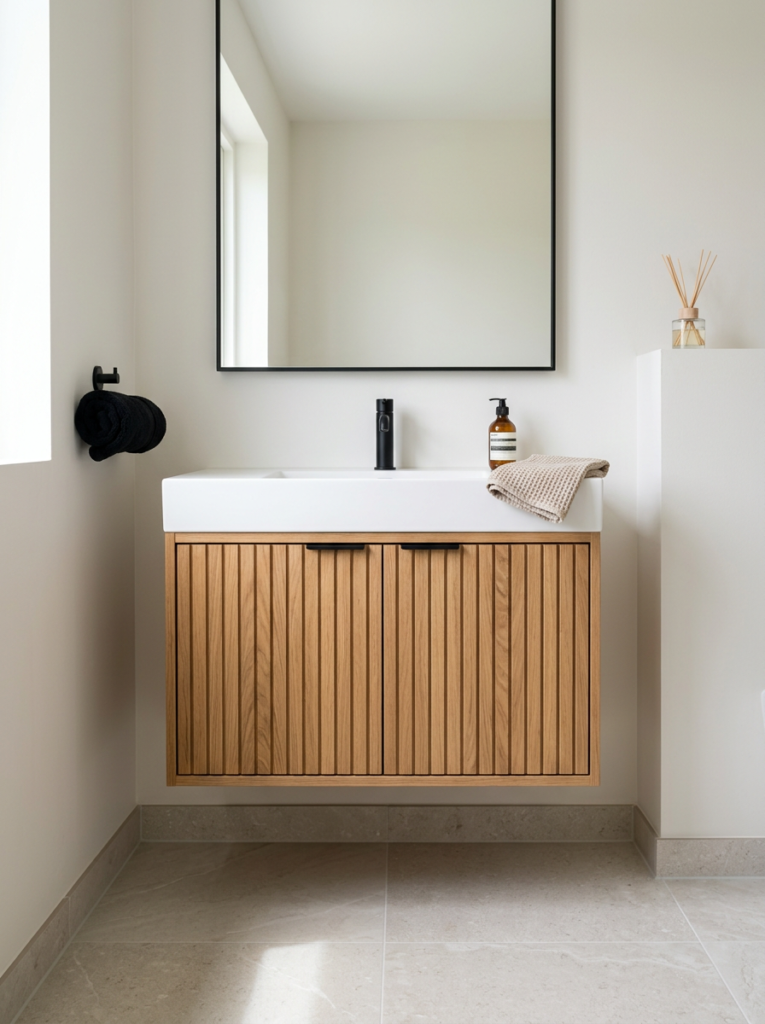
A floating vanity hangs on the wall and shows the floor underneath. That open space makes a small bathroom feel bigger. Add vertical slats on the doors, and you get a clean, modern look that still feels warm.
Wall strength matters here. A floating vanity needs solid blocking or a wall stud behind the drywall to carry the weight of the cabinet, the top, and everything inside. I always tell friends to ask a licensed installer before they drill anything.
Cleaning gets easier too. You can run a mop right under the cabinet, and no dust hides in a dark toe-kick corner. Many installers leave a gap of roughly 10 to 15 inches below, so check the maker’s guide for your model.
| Feature | Benefit | Watch Out For |
|---|---|---|
| Wall-hung design | Shows more floor and feels larger | Needs a strong wall or blocking |
| Vertical slat doors | Adds height and texture | Dust can settle in the grooves |
| Open space below | Easy to clean | Less hidden storage underneath |
2. Freestanding Vanity With Vertical Slat Doors for Classic Storage
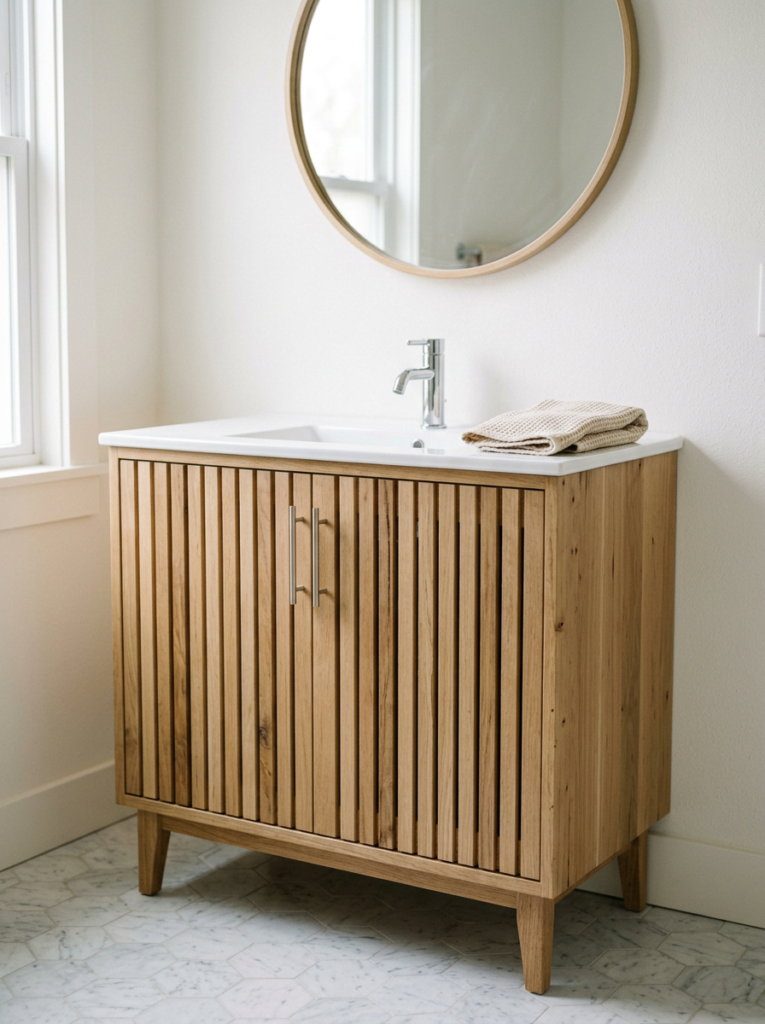
A freestanding vanity sits on legs or a solid base and gives you the most storage. Vertical slat doors hide towels, spare soap, and the random bottles that pile up in every bathroom. It also works with an existing wall, so installation is simpler.
This style suits homes that want warmth without a full renovation. The legs lift the cabinet off the floor, which helps with cleaning and moisture. Choose a matte finish, because it hides fingerprints and water spots better than glossy paint.
Look closely at how the doors close. Slatted fronts need tight, even gaps, and cheap hinges can leave a crooked line. I would open and close the doors a few times before I buy.
3. Light Oak Slat Vanity for a Bright, Scandinavian Feel
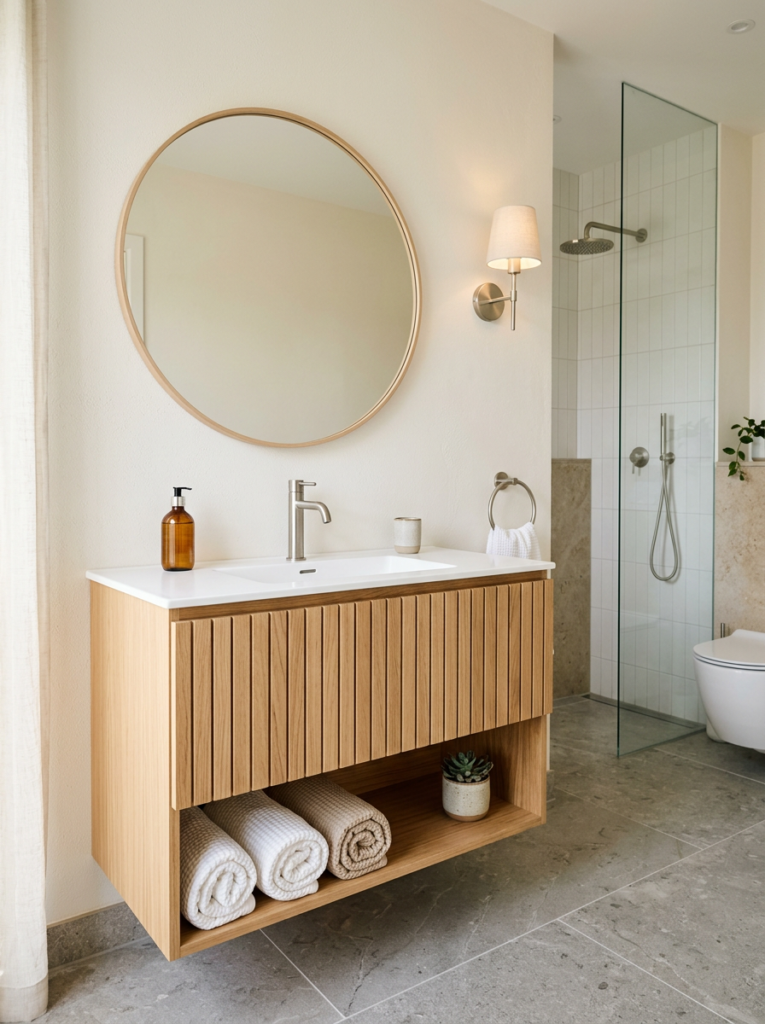
Light oak gives a slat vanity a soft, airy look. The pale grain pairs well with white walls, stone tile, and brushed nickel fixtures. It also helps a small bathroom feel brighter, which matters when you have one tiny window.
This color works best with warm bulbs and simple decor. A white or cream countertop keeps the cabinet in the spotlight. I like a plain round mirror above it, because slats already bring plenty of pattern.
Keep an eye on the finish. A natural oil or matte water-resistant coating protects the wood without making it look plastic. If you spot raw, unsealed edges inside the cabinet, move on to another model.
| Pairing | Why It Works |
|---|---|
| White quartz or ceramic top | Keeps the look clean and bright |
| Brushed nickel or matte black taps | Adds quiet contrast |
| Warm off-white walls | Softens the oak and avoids a stark feel |
4. Dark Walnut Slat Vanity for a Rich, Moody Look
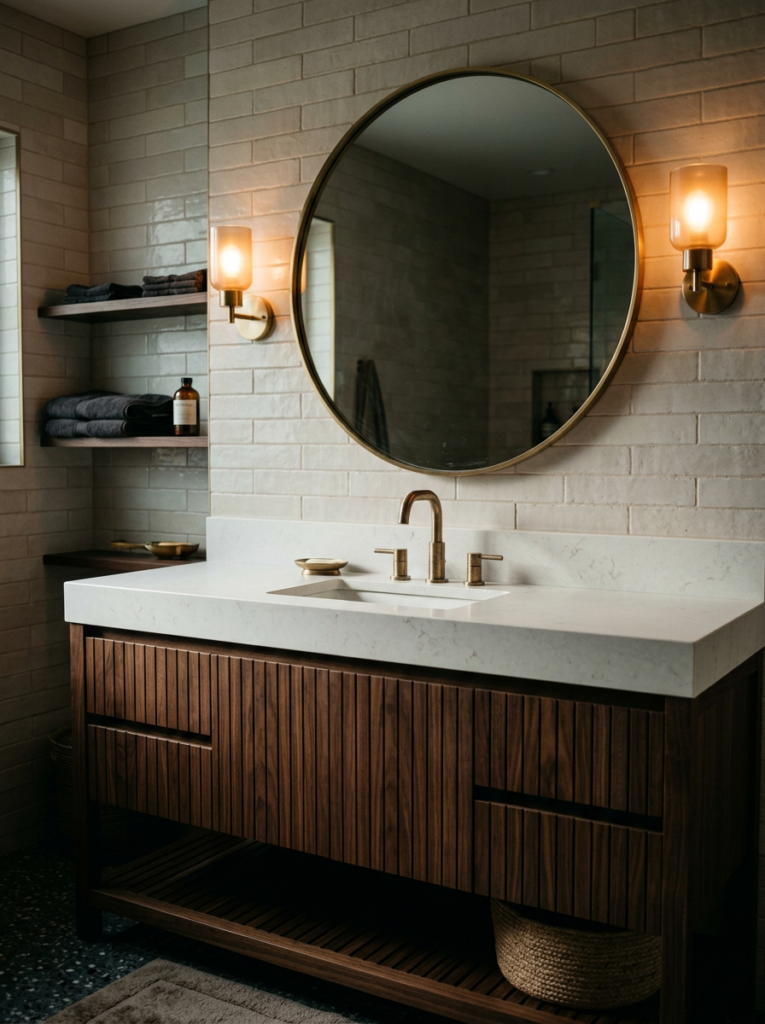
Dark walnut gives a slat vanity a bold, grown-up feel. The deep brown tones look striking against pale tile and white walls. I like it in a bathroom that needs a strong anchor.
Light matters more with dark wood. A small, windowless room can feel heavy, so add warm wall lights and a large mirror. Pale stone or white ceramic on top keeps the contrast from swallowing the space.
Check the finish carefully on darker woods. Water spots and soap marks show up faster, so a matte or satin coat helps. I would wipe the surface after each use and keep a soft cloth nearby.
| Pairing | Why It Works |
|---|---|
| White or pale stone top | Lifts the dark wood and adds contrast |
| Brushed brass or matte black taps | Adds warmth and a clean edge |
| Large round or arched mirror | Bounces light back into the room |
5. Double Wood Slat Vanity for Shared Bathrooms
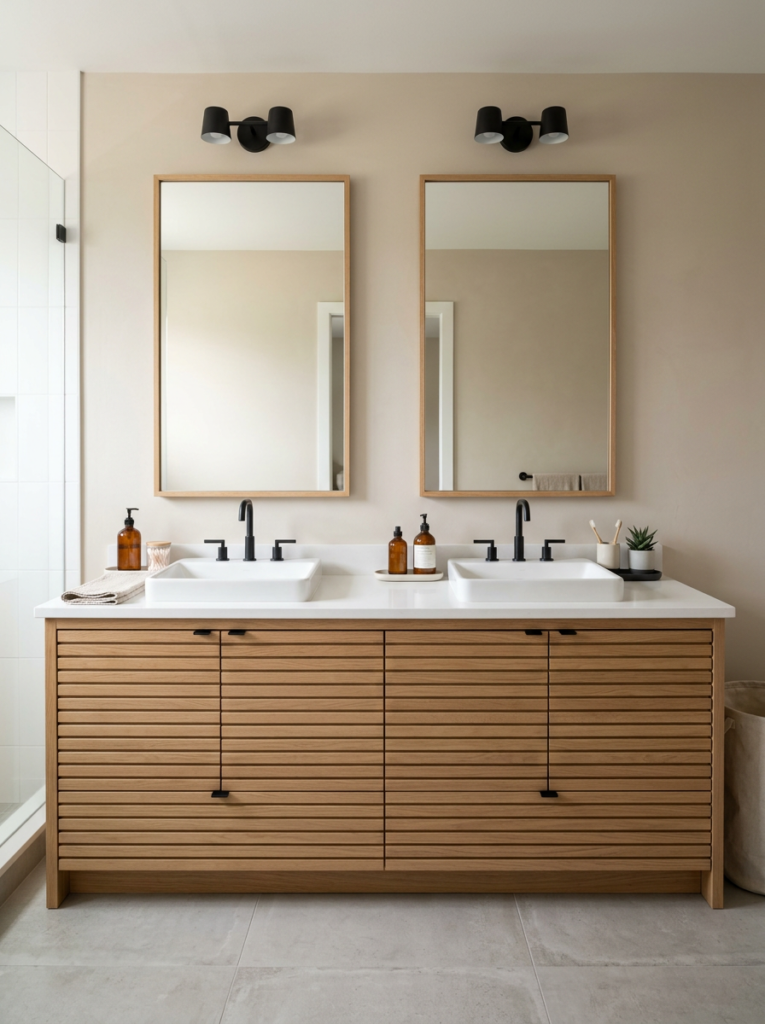
A double vanity gives each person a sink, a drawer, and a patch of counter. Widths often run from about 60 to 72 inches, so measure your wall first. Wood slats keep that large cabinet from looking like a wall of plain boxes.
Choose vertical slats if your ceiling feels low, because they draw the eye upward. Horizontal slats suit a wider, lower look. Either way, keep the slat spacing even so the front looks tidy.
Plan for plumbing and drawer clearance. Sink drains can cut into drawer space, so look for models with cut-out drawers or deep side storage. I would ask a plumber if you are replacing an older setup.
6. Compact Slat Vanity for Small Bathrooms and Powder Rooms
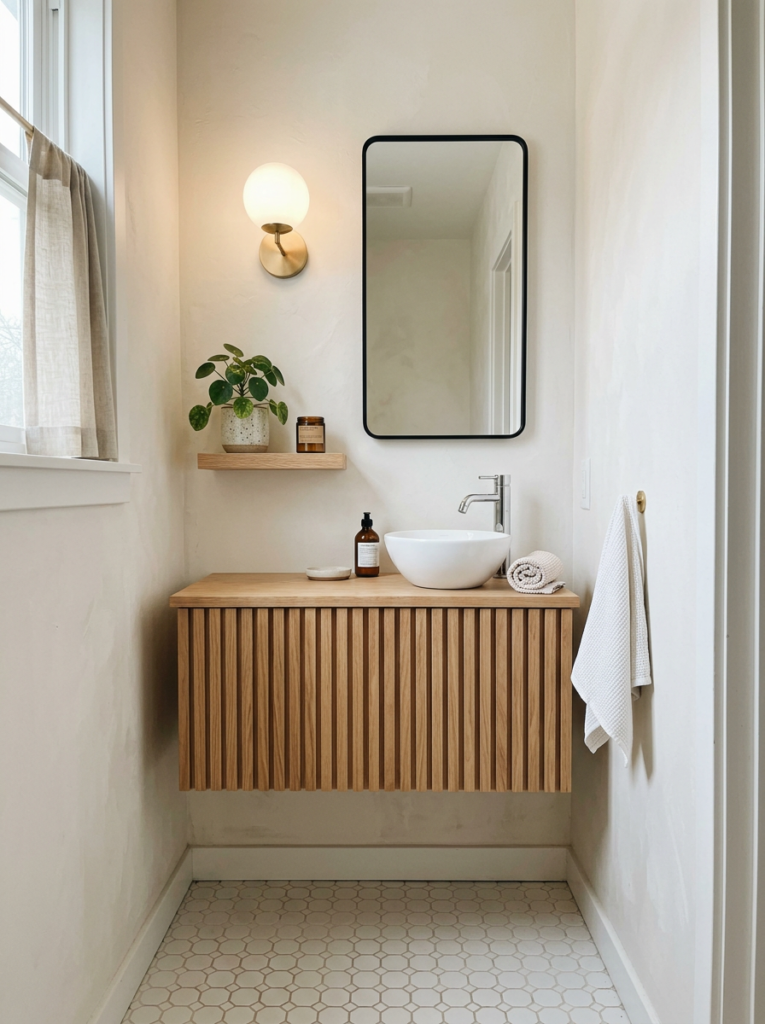
A compact vanity packs warmth into a tight space. Sizes around 24 to 30 inches fit powder rooms and narrow bathrooms. A slatted front adds interest without taking up any extra floor.
Go for a floating design if you can. The visible floor tricks the eye into reading more space. A single drawer or a narrow door usually holds the daily basics.
Keep the room around it simple. A slim mirror, one wall light, and a small plant are enough. Too many accessories make a small space feel crowded fast.
7. Slat Vanity With the Right Countertop, Mirror, and Lighting
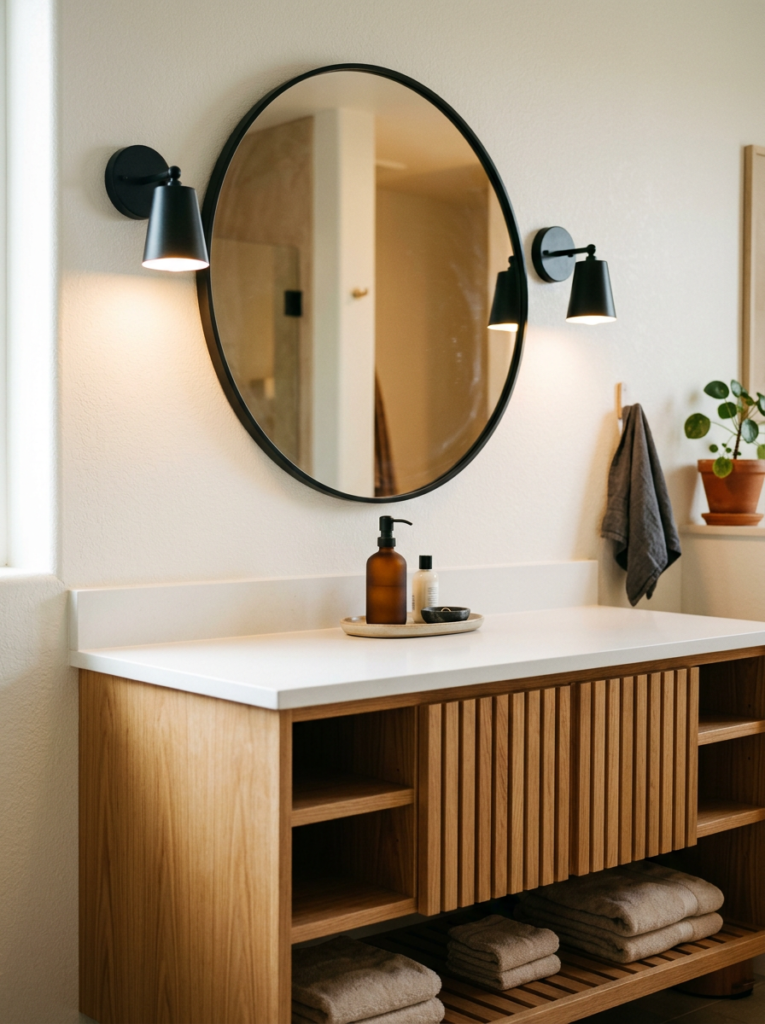
The cabinet sets the style, but the surrounding pieces finish it. A simple countertop in white quartz, ceramic, or honed stone lets the wood do the talking. A busy marble pattern next to busy slats usually fights for attention.
Pick a plain mirror with a thin frame or no frame at all. Round, oval, and soft arch shapes echo the straight lines of the slats. Hang it centered over the sink at eye level.
Warm light brings out the grain. Use bulbs around 2700K and place them beside the mirror to light your face evenly. Fixtures near water need the right protection rating, so ask an electrician if you feel unsure.
| Element | Best Choice | Avoid |
|---|---|---|
| Countertop | White quartz, ceramic, honed stone | Heavy, busy patterns |
| Mirror | Round, oval, or soft arch | Ornate decorative frames |
| Lighting | Warm 2700K bulbs beside the mirror | Cool white, harsh overhead light |
5 Care Tips and Mistakes to Avoid With a Wood Slat Vanity
Moisture causes most problems with wood vanities. Steam, splashes, and damp towels all take a toll over time. A good extractor fan and quick wipe-downs go a long way.
Dust and soap residue collect in the grooves between slats. A soft brush or a dry microfiber cloth clears them out fast. I would avoid harsh cleaners because they can strip the finish.
| Tip or Mistake | Why It Matters | Easy Fix |
|---|---|---|
| Poor ventilation | Steam swells and stains the wood | Run the fan during and after showers |
| Unsealed edges inside the cabinet | Moisture creeps in from below | Check the finish and reseal if needed |
| Standing water on the surface | Leaves marks and weakens the finish | Wipe spills right away |
| Dust in the grooves | Makes the slats look dirty | Brush with a soft cloth every week |
| Harsh chemical cleaners | Strips the protective coat | Use mild soap and a damp cloth |
Conclusion: Your Wood Slat Bathroom Vanity in 7 Simple Choices
A bathroom vanity with wood slats brings warmth, texture, and storage into one piece. Start with the style that fits your room, whether that is a floating design, a freestanding cabinet, or a compact model. Then pick the wood tone, from light oak to dark walnut.
Size and layout come next. Double vanities suit shared bathrooms, while compact ones work in powder rooms. A simple countertop, a plain mirror, and warm lighting let the slats stand out.
Care keeps the vanity looking good for years. Ventilate the room, wipe spills, and brush the grooves clean. Pick a style, check the finish, and measure twice before you buy.
FAQs About Bathroom Vanities With Wood Slats
Are wood slat vanities good for bathrooms?
Yes, if the wood has a sealed, moisture-resistant finish. Good ventilation also protects it from steam. Check the edges inside the cabinet before you buy.
Which wood works best for a slat vanity?
Oak suits a bright, Scandinavian look, and walnut gives a richer, darker tone. Teak also handles moisture well. Pick the one that matches your palette and light.
How do I clean the slats on my vanity?
Use a soft brush or dry microfiber cloth for dust in the grooves. Wipe the surface with mild soap and a damp cloth. Skip harsh chemicals because they can strip the finish.
What size vanity should I choose?
Compact models around 24 to 30 inches fit small bathrooms and powder rooms. Double vanities often run from 60 to 72 inches. Measure your wall and the door swing first.
Is a floating or freestanding slat vanity better?
Floating vanities make a room feel larger and clean easily, but they need a strong wall. Freestanding ones give more storage and install more simply. Choose by space and wall strength.
What countertop goes with a wood slat vanity?
White quartz, ceramic, and honed stone keep the focus on the wood. Avoid very busy patterns, because they compete with the slats. A plain top gives the cleanest look.
Can I use a slat vanity in a small bathroom?
Yes, a compact or floating model works well. Vertical slats add height, and the open floor below adds space. Keep the surrounding decor simple.