
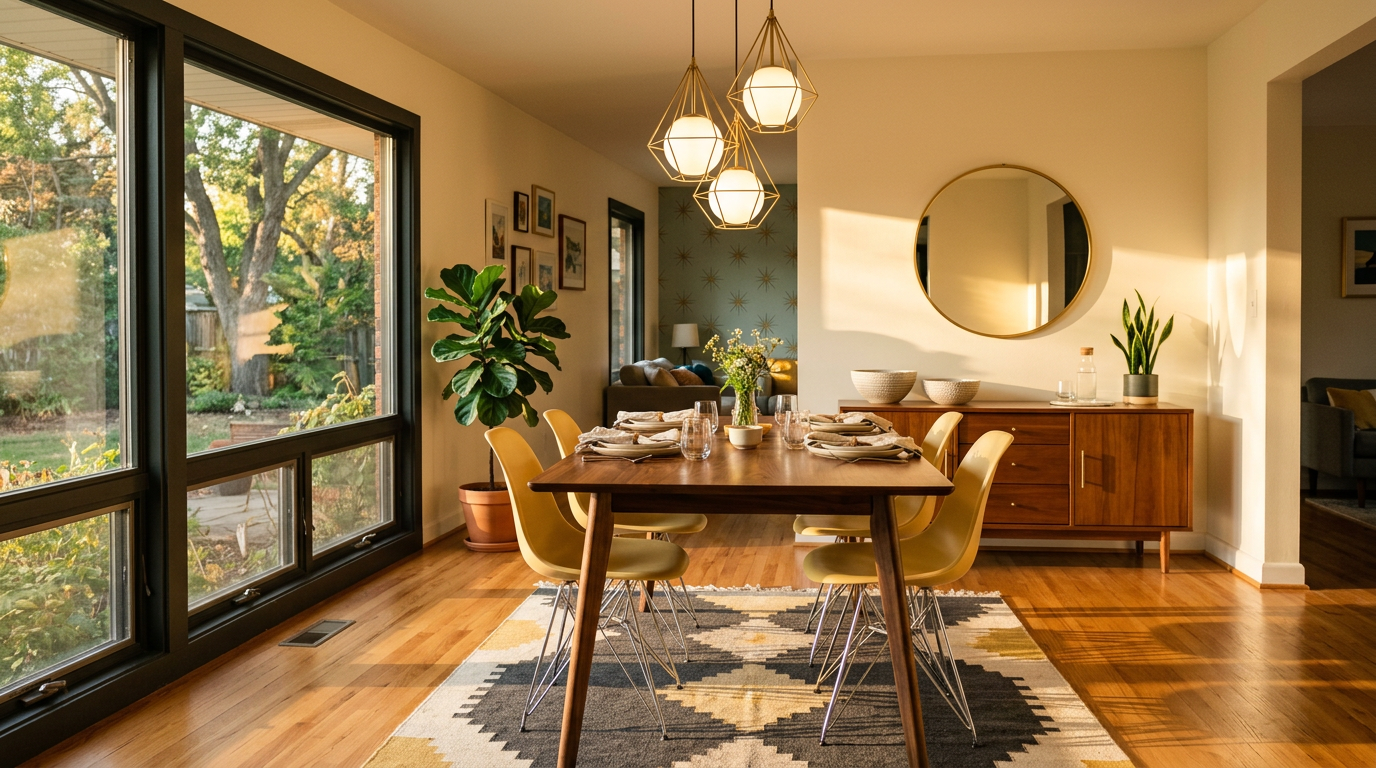
A mid century modern dining room brings timeless elegance right into your home. This design style, rooted in the 1940s through 1960s, focuses on functionality, clean lines, and natural materials that still feel fresh today. When I started incorporating mid century elements into my dining space, I immediately noticed how the aesthetic created an inviting atmosphere for both everyday meals and special gatherings.
The beauty of mid century modern design lies in its simplicity without sacrificing character. Unlike ornate Victorian or overly contemporary styles, mid century pieces speak through their thoughtful construction and honest materials. You don’t need to completely overhaul your dining room to embrace this aesthetic. Small changes, strategic furniture choices, and intentional styling can completely transform the space.
Creating a mid century modern dining room doesn’t require a massive budget either. I’ve found that mixing quality vintage pieces with affordable reproductions works beautifully. The key is understanding the fundamental principles that define the style. Once you grasp these elements, building your perfect mid century dining space becomes straightforward and genuinely enjoyable.
Understanding Mid Century Modern Design Principles
Mid century modern dining room design centers on five core principles that guide every decision. First, form follows function, meaning every piece serves a practical purpose before aesthetic appeal. Second, the style celebrates natural materials like wood, metal, and leather. Third, clean geometric lines create visual interest without unnecessary ornamentation. Fourth, minimalism in color and pattern prevents visual clutter. Finally, iconic pieces from the era anchor the space and tell its story.
I initially thought achieving this style meant collecting authentic vintage furniture, which seemed intimidating and expensive. What I discovered was that the principles matter more than the era of your pieces. A modern reproduction dining table with tapered legs and natural wood finish captures the essence just as effectively. What matters is understanding why these elements work together and how they create that distinctive mid century feeling.
The beauty of this design approach is its flexibility. You can go full retro with authentic pieces, blend vintage finds with modern pieces, or build entirely from contemporary reproductions. Each approach creates authentic mid century spaces when executed thoughtfully. The style values honest design and quality craftsmanship above all else, and that philosophy is what truly defines the aesthetic.
Idea 1: Classic Wood Table with Tapered Legs
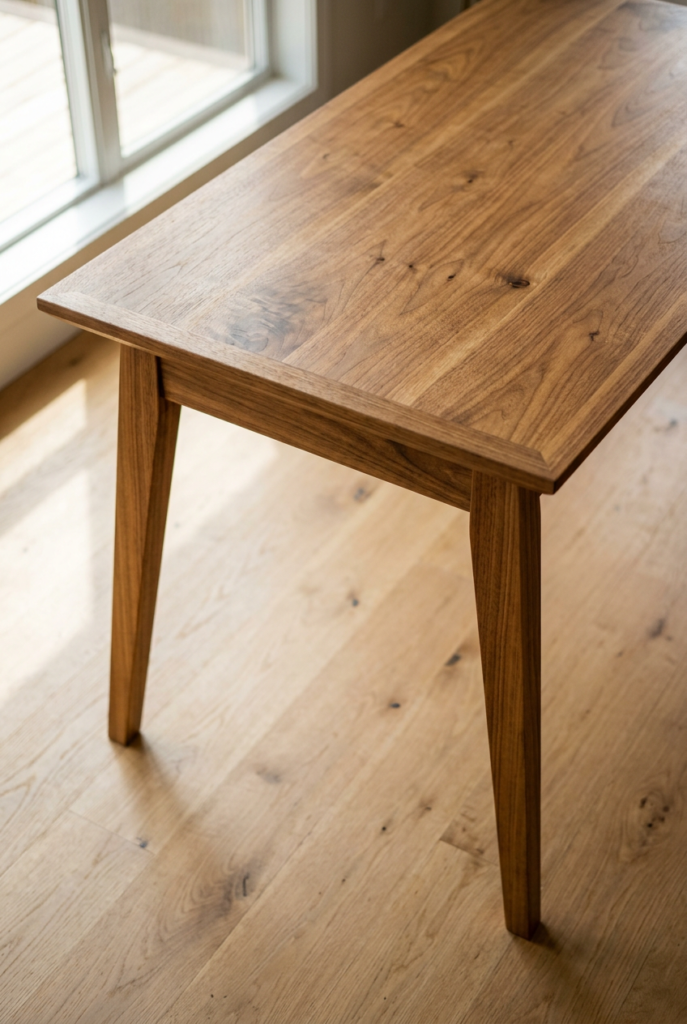
The dining table anchors every mid century modern dining room, and the classic wood table with tapered legs is the definitive centerpiece. These tables typically feature solid wood construction, usually in walnut or teak, with gracefully angled legs that lift the surface and create visual lightness. The simplicity of this design allows the natural grain and color of the wood to shine as the primary decoration.
When I shopped for my mid century modern dining table, I learned that leg style matters enormously. Tapered legs, splayed outward slightly, became the standard during the 1950s because they provided stability while looking elegantly minimal. The tabletop itself remains unadorned, sometimes featuring a single center seam if made from multiple wood planks. No carved details, no thick skirts, just honest wood and excellent proportions.
Finding quality wooden tables with authentic mid century styling has become easier thanks to modern reproduction manufacturers. You can find options at various price points that capture the essence without requiring authentication expertise. The investment in a solid wood table pays dividends because the piece works with nearly every dining style when styled thoughtfully. I’ve found that quality wood tables actually improve with age, developing character and patina that synthetic materials never achieve.
Idea 2: Statement Lighting Fixtures
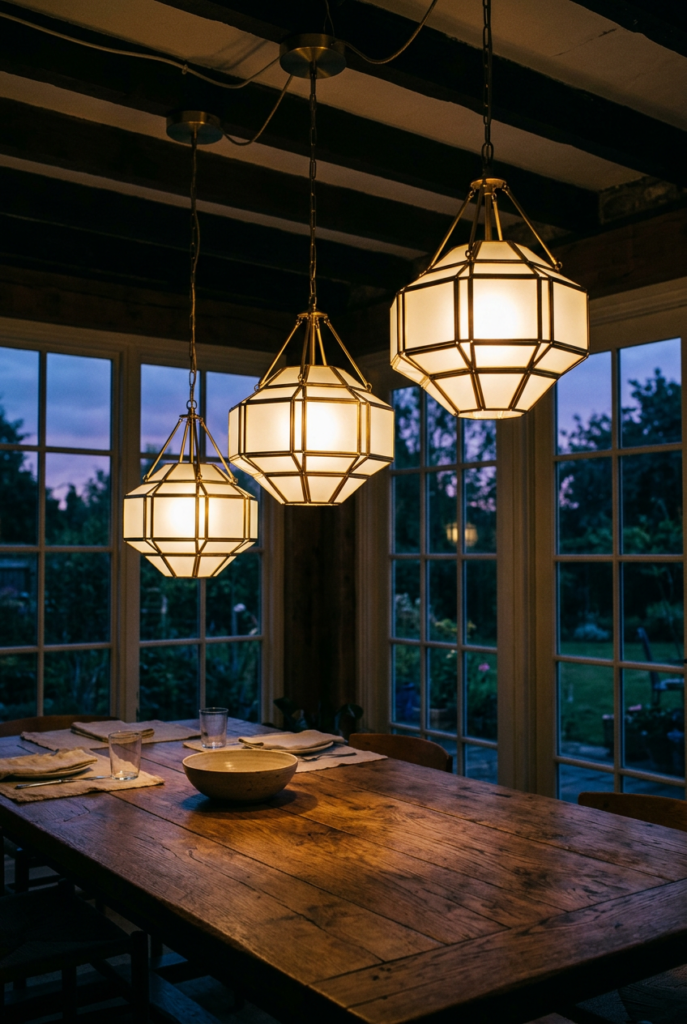
Lighting transforms a mid century modern dining room from ordinary to extraordinary. The era celebrated innovative lighting design, producing sculptural fixtures that serve as functional art. Pendant lights became synonymous with mid century style, featuring geometric shapes, simple metalwork, and materials like wood, brass, and colored glass. These fixtures hung above dining tables create visual drama while providing necessary task lighting.
I installed a trio of brass pendant lights with frosted glass shades above my dining table and immediately felt the space shift. The fixtures provided practical illumination while the clean geometric design reinforced the overall aesthetic. Mid century lighting rarely feels fussy or overwrought. Instead, designs embrace boldness through form rather than excessive detail. A single sculptural pendant light or a series of matching fixtures both work wonderfully depending on your table size and ceiling height.
Don’t overlook the possibility of mixing lighting styles within the same space. A sculptural pendant light above the table pairs beautifully with a floor lamp in a corner or a wall sconce providing ambient lighting. The key is maintaining consistency in the design language. All pieces should share that modern sensibility with clean lines and purposeful form. Modern lighting manufacturers produce excellent mid century inspired pieces that capture the style’s essence without requiring a vintage hunt.
Idea 3: Iconic Dining Chairs
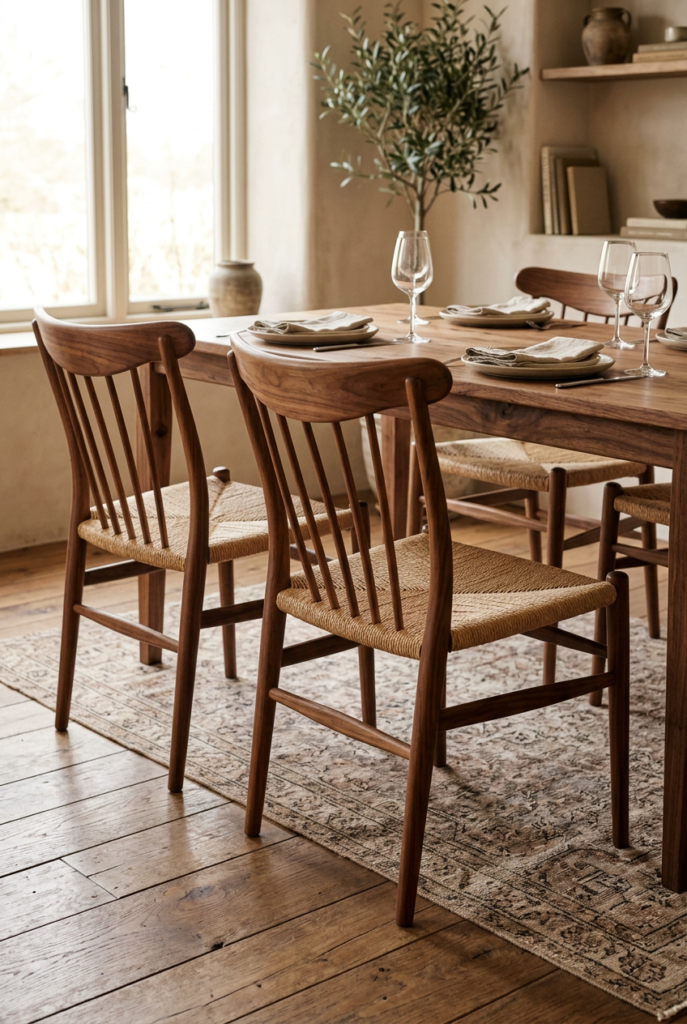
The dining chair completes the mid century modern space, and the chair style you select dramatically impacts the room’s personality. Eames-style molded plastic chairs, wooden Windsor inspired chairs, and upholstered dining chairs each bring different energy to the room. The common thread is simple, elegant construction that prioritizes comfort and visual grace over unnecessary embellishment.
I chose a set of wooden dining chairs with woven rush seats for my space, and they’ve become conversation starters. These chairs reference Scandinavian design traditions that overlapped with mid century aesthetics, creating pieces that feel timeless. Whether you select wood, plastic, or upholstered chairs, authentic mid century pieces share proportions that feel just right. The seat height, backrest angle, and overall scale work together to create comfort without bulky dimensions.
Mixing chair styles offers another design approach that feels very mid century modern. Four matching chairs provide symmetry, but alternating two styles creates dynamic visual interest. One wall might have upholstered chairs while the opposite features wooden chairs, for example. This approach requires confident styling but results in spaces that feel curated rather than matchy. Make sure your color palette remains cohesive when mixing styles so the space reads as intentional rather than random.
Idea 4: Warm and Sophisticated Color Palettes
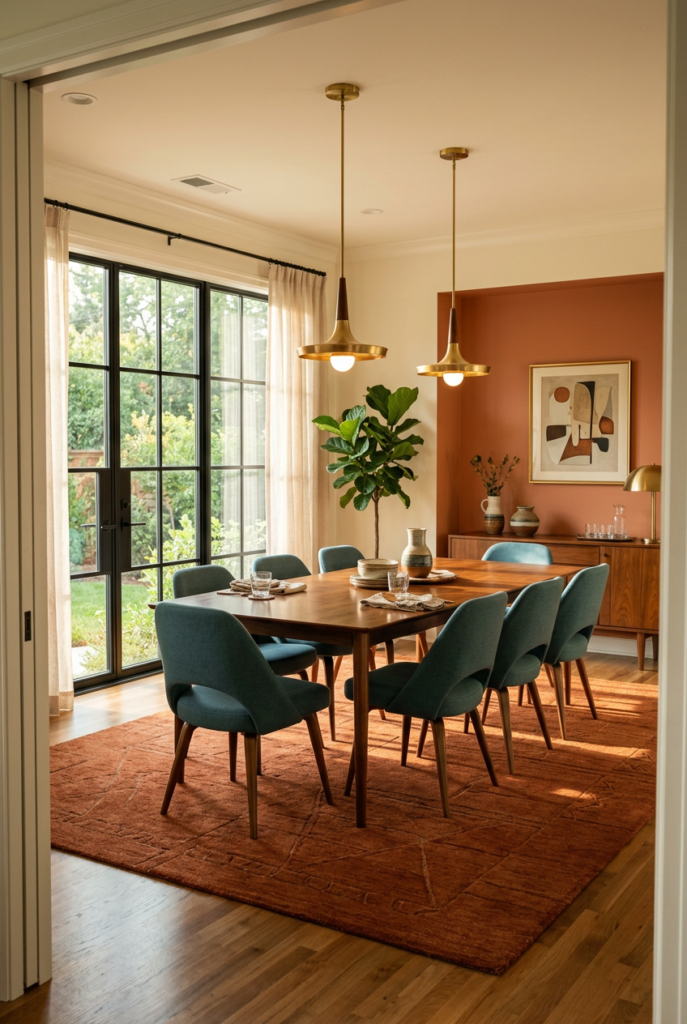
The mid century modern color palette draws from nature and avoids trendy variations. Warm woods provide the foundation, typically walnut or teak tones that create richness without darkness. Accent colors might include mustard yellow, teal, burnt orange, or muted olive green. These colors appear in fabric, accessories, and wall treatments, never overwhelming the space with saturation.
I initially worried that bold mid century colors would feel dated, but I discovered that muted versions of these hues feel timeless and sophisticated. A burnt orange accent wall plays beautifully against white trim and warm wood tones. A teal upholstered dining chair adds personality without fighting other design elements. The key is restraint in color application. Rather than painting all walls a bold color, consider an accent wall or let color appear through fabric and accessories.
Neutral foundations provide the safest approach for mid century modern dining rooms. Cream, soft gray, or warm white walls create a canvas for wood tones and carefully selected accents. I find that neutral walls make the furniture and lighting fixtures stand out, which aligns perfectly with mid century design philosophy. When color does appear in the space, through artwork, textiles, or a single statement wall, it feels intentional and impactful.
Idea 5: Geometric Wall Treatments and Wallpaper
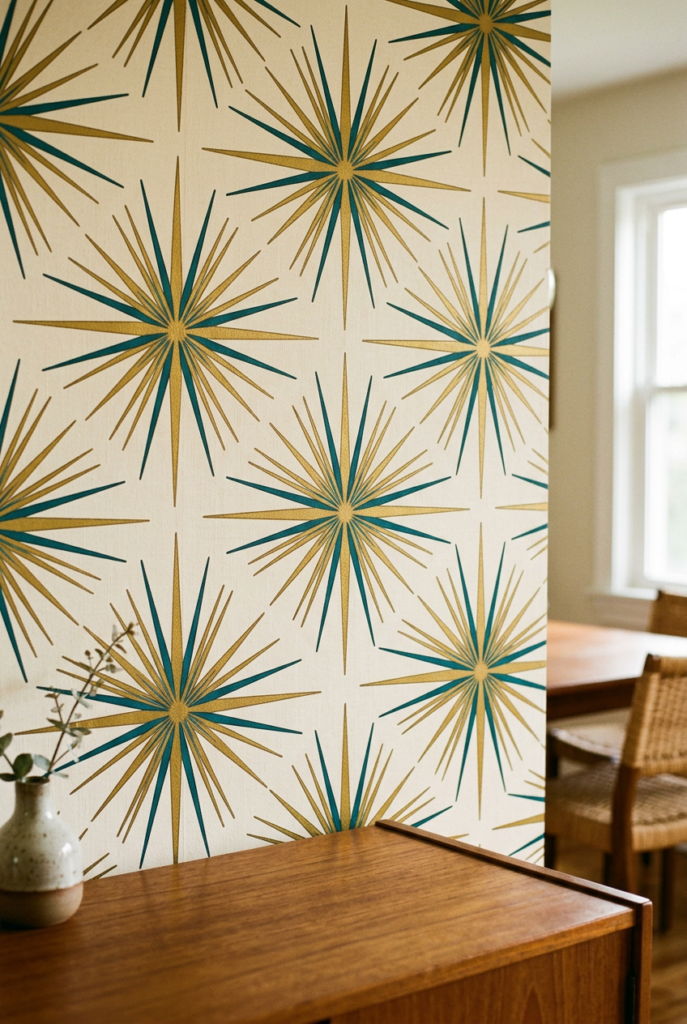
Mid century wallpaper designs celebrate geometric patterns and abstract shapes that still feel modern decades later. Starburst patterns, atomic designs, geometric florals, and abstract compositions covered dining room walls during the era. Modern reproduction wallpapers capture these iconic designs without the fragility of vintage products. These treatments add personality and visual interest without the permanence of paint.
A single accent wall of well-chosen mid century wallpaper can completely transform a dining room’s atmosphere. I experimented with a geometric starburst pattern on the wall behind my sideboard, and it created immediate visual impact. The pattern draws the eye upward, making the ceiling feel higher and the space more open. Importantly, this wallpaper pairs beautifully with solid color walls on the remaining three sides, preventing visual overwhelm.
If wallpaper feels too permanent for your space, consider other geometric wall treatments. Wainscoting with horizontal lines, shiplap installed in geometric patterns, or even a carefully selected piece of mid century artwork can provide similar visual interest. Wall treatments work best when they complement rather than compete with your furniture and lighting choices. The goal is creating a cohesive space where every element supports the overall design narrative.
Idea 6: Functional Sideboards and Storage
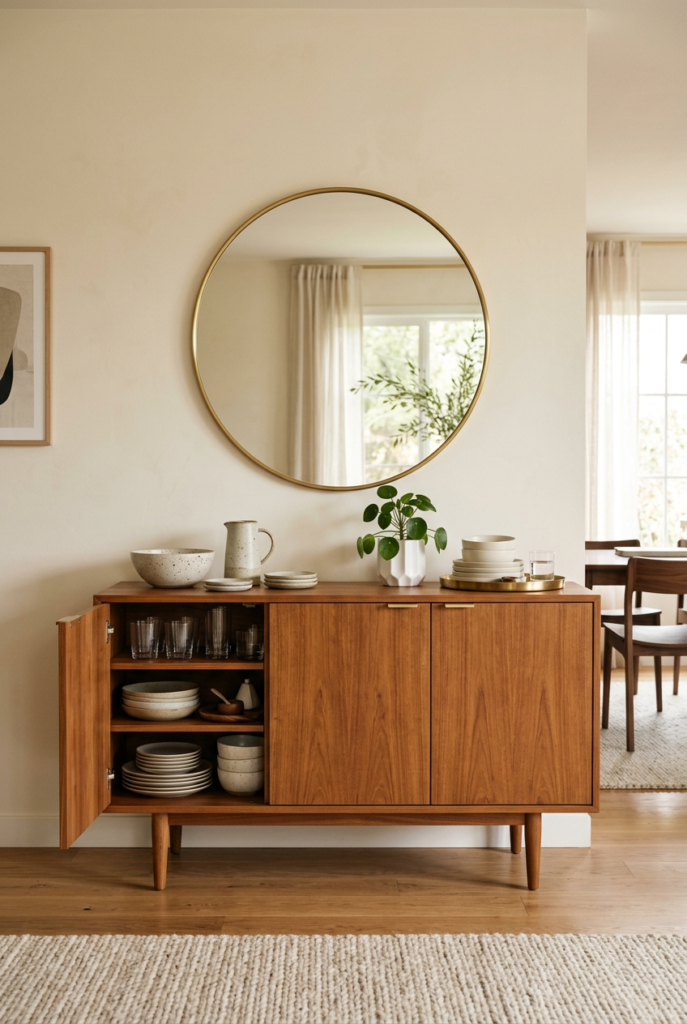
Every mid century modern dining room benefits from a sideboard or credenza that combines storage with sculptural design. These pieces typically feature tapered legs, clean lines, and minimal ornamentation. Sideboards provide essential storage for dining essentials while serving as a display platform for accessories and artwork. The negative space beneath the surface creates that signature mid century lightness.
I discovered that a well-chosen sideboard becomes the secondary focal point after the dining table. Mine features walnut veneer, minimalist hardware, and internal shelving that keeps dinnerware organized. When styled thoughtfully with a large mirror or artwork above and carefully curated accessories on top, the sideboard anchors the dining room aesthetically. The piece functions as both practical storage and design statement, which perfectly captures mid century philosophy.
Open shelving provides an alternative storage approach that works beautifully in modern mid century spaces. Wall mounted shelves with exposed brackets and natural wood shelving create the same functional minimalism without the footprint of a large piece. Displaying your nicest dinnerware, glassware, and serving pieces on open shelves adds personality while keeping frequently used items accessible. This approach requires thoughtful curation, but the result feels intentionally designed rather than cluttered.
Idea 7: Natural Materials and Honest Construction
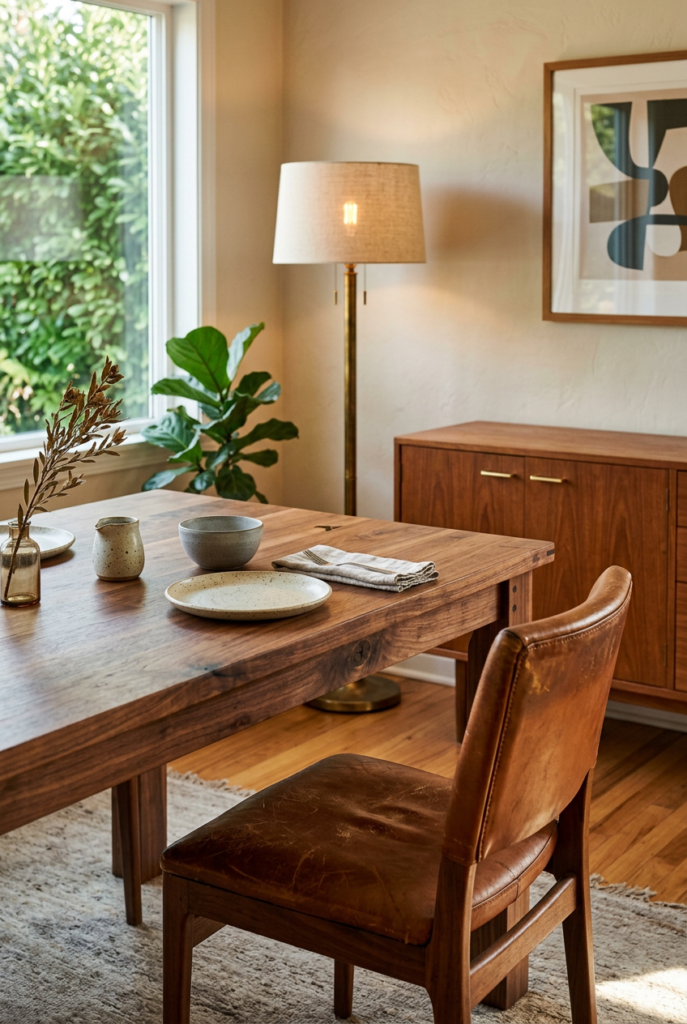
Mid century modern design celebrates natural materials and honest construction methods visible in finished pieces. Wood grain shows rather than being hidden beneath veneer or paint. Metal hardware appears functional and unadorned. Leather shows its authentic texture rather than being molded into unnatural forms. This philosophy of material honesty creates pieces that feel genuine and trustworthy.
I find that incorporating visible wood joinery, natural leather, and authentic metalwork creates dining spaces that feel timeless. A wooden table without a polyurethane plastic coating shows the actual grain and develops character over time. Leather chair upholstery develops a patina that improves with age rather than looking worn out. Metal fixtures in brass, steel, or copper develop natural finishes that feel authentic. These natural changes mean your dining room improves with time rather than falling out of style.
Combining natural materials creates visual interest through texture and tone variation. Warm walnut wood, cool brass fixtures, soft leather seating, and ceramic or stoneware accessories create a space with depth and personality. The interplay between different materials and finishes prevents the space from feeling cold or sterile, which is a common concern with minimalist design. Mid century modern succeeds because it balances minimalism with warmth through thoughtful material choices.
Creating Cohesion: Bringing All Elements Together
Successfully designing a mid century modern dining room requires balancing all these elements without creating visual chaos. Start by selecting your anchor piece, typically the dining table and chairs. These foundational pieces set the tone for scale, material, and color palette. Once you’ve committed to seating, every other element should support and enhance this decision.
Your lighting fixtures should echo the design language of your furniture. If your chairs feature curved wooden frames, consider lighting with similar warmth and organic appeal. If you’ve selected geometric plastic chairs, sculptural metal pendant lights create visual harmony. This doesn’t mean everything must match exactly, but there should be a cohesive design conversation happening throughout the space.
Accessories complete the picture by adding personality and visual interest. A carefully selected mirror above a sideboard, mid century artwork on walls, ceramic serving pieces, and perhaps a geometric rug define the space. I approach accessories with restraint, selecting pieces that feel purposeful rather than decorative clutter. Every item should either serve a function or contribute meaningfully to the aesthetic.
| Element | Purpose | Mid Century Characteristic |
| Dining Table | Main focal point and functional surface | Tapered legs, natural wood, simple form |
| Chairs | Seating and visual composition | Clean lines, iconic silhouettes, quality materials |
| Lighting | Task and ambient illumination | Sculptural design, geometric shapes, honest materials |
| Sideboard | Storage and display surface | Minimal hardware, thin legs, functional elegance |
| Wall Treatment | Background and visual interest | Geometric patterns, solid colors, minimal ornamentation |
| Accessories | Personalization and refinement | Curated selection, functional beauty, natural materials |
Making Mid Century Modern Work with Your Lifestyle
Mid century modern design appeals because it genuinely functions well in contemporary homes. The style prioritizes comfort alongside aesthetics, creating spaces where families actually want to gather. Before investing heavily in mid century pieces, consider how your dining room functions in your daily life. Do you host frequent dinner parties? Do you need maximum storage? Does your family prefer formal or casual gatherings?
I made the mistake initially of prioritizing aesthetics over functionality, choosing a beautiful but impractical table size for my space. Learning from that experience, I now prioritize how pieces work before I commit to style. A mid century modern dining table should be appropriately sized for your room and lifestyle. Chairs should actually feel comfortable for extended meals. Storage pieces should accommodate your dinnerware and serving needs. Beauty without function creates frustration.
Your personal style matters more than rigid adherence to period authenticity. Incorporating pieces from different eras or adding contemporary elements feels perfectly appropriate in modern mid century spaces. I’ve integrated vintage mid century pieces with modern reproductions and even a few contemporary accessories. The space feels cohesive because the underlying design principles remain consistent. Allowing your personality to shine through creates dining rooms that feel lived in and genuine.
Conclusion
Creating a mid century modern dining room brings timeless elegance and functional beauty into your home. Whether you start with a single iconic piece or completely redesign your space, the principles remain consistent. Focus on clean lines, natural materials, honest construction, and intentional composition. Avoid visual clutter while incorporating warmth through carefully selected colors and textures.
The best part about mid century modern design is its flexibility and accessibility. You don’t need authentic vintage pieces or massive budgets to achieve this aesthetic. Quality reproductions capture the spirit beautifully, and mixing vintage with modern creates authentic spaces. Start with whatever draws you most, build gradually, and allow your space to evolve naturally. The result will be a dining room that functions beautifully while standing the test of time.
Mid century modern works because it respects both form and function. Your dining room becomes a gathering space that looks stunning in photographs while providing genuine comfort for daily life. That balance between beauty and practicality defines the style and explains its enduring appeal. Take your time with selections, trust your instincts, and enjoy creating a space that reflects your personal vision.
Frequently Asked Questions
What’s the best starting point for a mid century modern dining room on a budget?
Begin with the dining table and chairs since they establish the foundation. Hunt for quality reproductions or vintage pieces at estate sales and online marketplaces. A solid wood table with simple lines paired with classic chairs creates an authentic mid century space without requiring expensive designer pieces.
Can I mix mid century modern with other design styles?
Absolutely, mixing styles works beautifully when executed intentionally. Pair mid century modern furniture with industrial lighting, Scandinavian textiles, or contemporary artwork. The key is maintaining consistent design principles across pieces so the space feels curated rather than random. Focus on line quality, material authenticity, and visual balance.
How do I find authentic vintage mid century pieces without overspending?
Estate sales, online vintage marketplaces, and local antique shops offer wonderful pieces at varying price points. Learn to identify quality construction and authentic design details before purchasing. Some reproduction pieces rival vintage quality at lower prices, so consider both options. Build your collection gradually rather than all at once.
What if I have a small dining room?
Mid century design works exceptionally well in compact spaces because the style emphasizes visual lightness. Select smaller-scale furniture, use wall mounted storage instead of large floor pieces, and keep your color palette simple. Tapered legs on tables and chairs visually reduce bulk. Good lighting becomes even more critical in small spaces.
Should my entire home match my mid century modern dining room?
Not necessarily. Creating a cohesive dining room makes sense even if other spaces follow different styles. If you prefer eclectic design throughout your home, ensuring your dining room’s internal logic remains consistent works beautifully. The space will feel intentionally designed rather than chaotic.
How do I prevent a mid century modern dining room from feeling dated?
Focus on quality materials, timeless silhouettes, and restrained color palettes rather than trendy interpretations. Avoid overwhelming geometric patterns or saturated colors. Invest in pieces that improve with age, like solid wood and leather, rather than trend driven options. Good design transcends decades.
What lighting works best for mid century modern dining rooms?
Sculptural pendant lights with simple geometric forms, brass or wood accents, and glass or ceramic shades work beautifully. Avoid ornate chandeliers or elaborate designs. Consider your table size when selecting pendant fixtures. Layer lighting with ambient options like wall sconces for flexibility.