
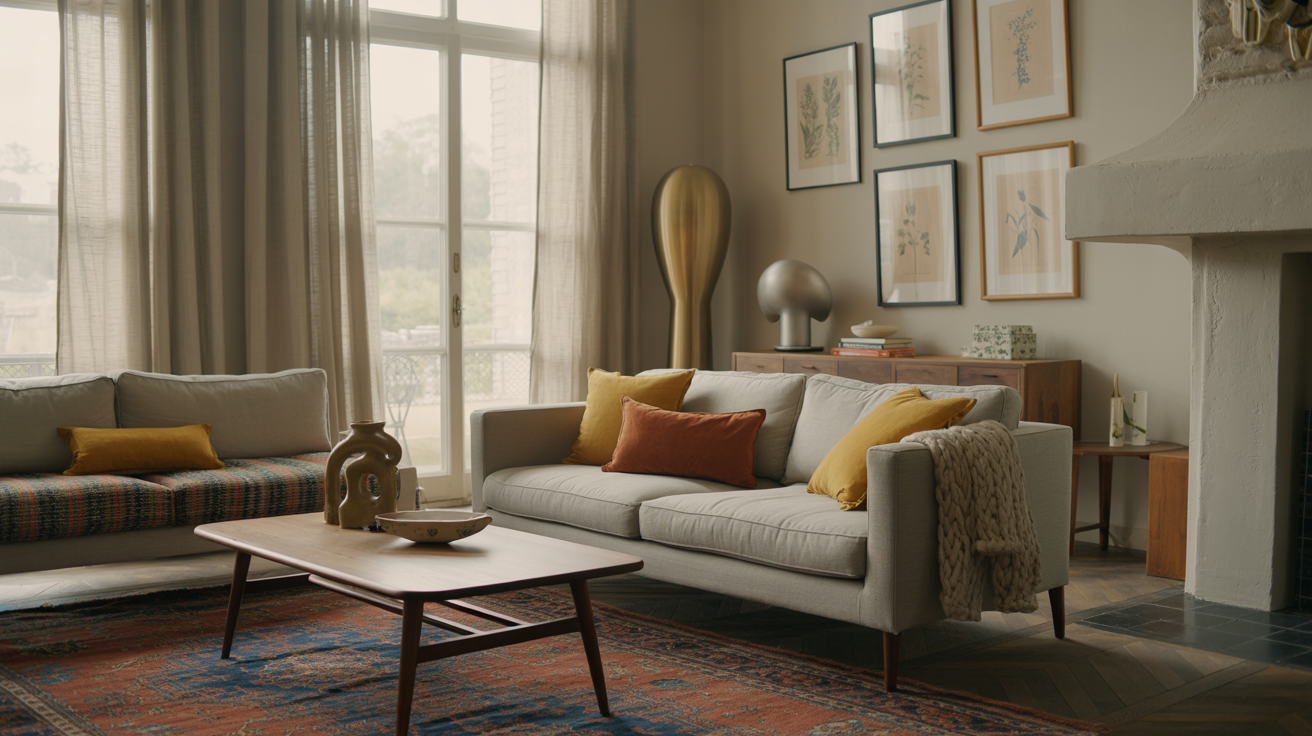
Mixing vintage and modern in a living room is one of those things that sounds risky but looks incredible when done right. I used to think you had to pick a side — either go full mid-century or embrace everything sleek and contemporary. Turns out, the best living rooms I’ve ever seen do neither. They borrow from both worlds and somehow feel completely intentional.
The secret is balance. Too much vintage and the room starts feeling like a thrift store. Too much modern and it feels cold, like a showroom nobody actually lives in. The sweet spot sits right in the middle, where a worn leather armchair shares space with a clean-lined sofa and nobody bats an eye.
What I love most about this style is that it has no strict rules. You are not locked into a particular decade or aesthetic. You get to curate pieces that mean something to you, mix them with functional modern finds, and create a space that feels layered, warm, and genuinely yours.
Why the Vintage-Modern Mix Works So Well in Living Rooms
There is a reason interior designers keep coming back to this combination. Vintage pieces carry character — the kind that takes decades to develop. A mid-century walnut coffee table or a 1970s rattan chair brings texture and history into a room that new furniture simply cannot replicate. Pair that with modern lighting or a contemporary sectional, and the contrast creates visual interest that feels intentional rather than accidental.
The living room is also the best place to try this approach because it is the most forgiving space in the home. You are working with a variety of furniture types — sofas, armchairs, side tables, shelving, rugs — which gives you more opportunity to layer styles without things feeling chaotic. Each piece gets its own moment to shine.
I also think there is something deeply personal about this kind of decorating. When you mix eras, you are telling a story. That vintage lamp your grandmother left you suddenly has a place next to your brand-new sofa. The room becomes a reflection of your life, not just a catalogue page.
The 5 Best Ways to Mix Vintage and Modern in Your Living Room
1. Start With a Neutral Base and Build Up
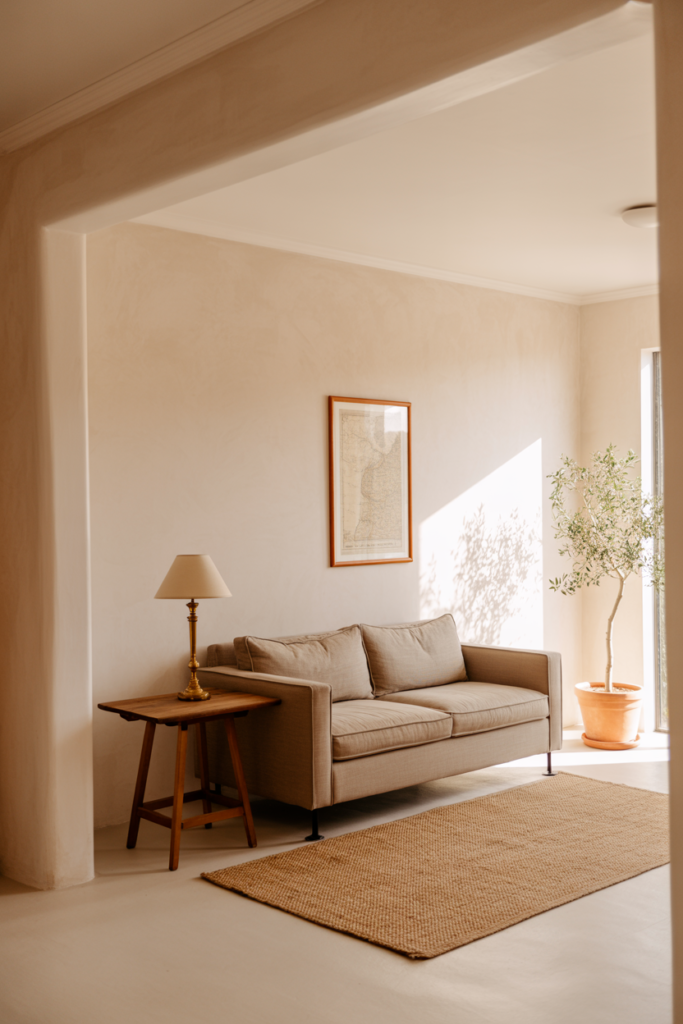
The smartest move I made in my own living room was starting with a neutral foundation. Walls in warm white, soft greige, or muted taupe work as a blank canvas that lets both vintage and modern pieces breathe. Neither style competes for attention when the background stays calm.
From there, I layered in furniture gradually. A modern sofa in a solid, understated fabric became the anchor. Then I brought in a vintage side table and a classic brass floor lamp. Each piece got space to stand out without the room feeling cluttered or confused.
Neutral bases also make it easier to swap things out over time. You can introduce a new vintage find without worrying that it will clash with the walls or existing furniture. The room stays flexible, which is exactly what a mix-and-match style needs.
2. Use One Statement Vintage Piece as the Room’s Focal Point
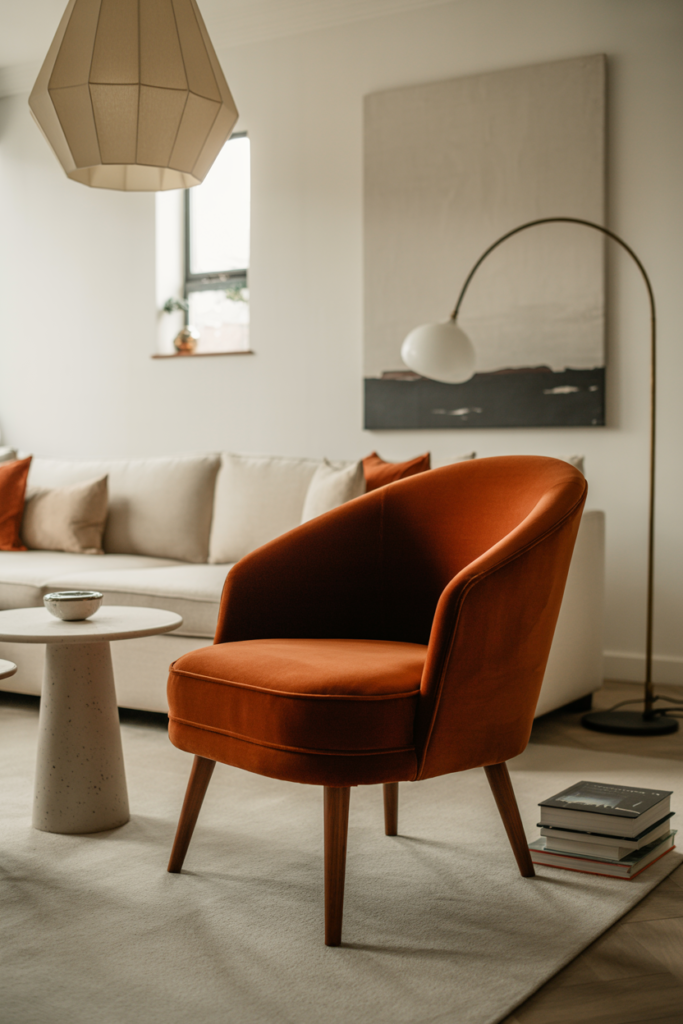
Every well-mixed living room I have admired has one hero vintage piece that anchors the whole space. It could be a sculptural mid-century armchair, an ornate vintage mirror above the fireplace, or a worn Persian rug that sets the entire colour palette. That one piece does the heavy lifting.
The rest of the room can lean modern without the space losing its warmth. When you have a strong vintage focal point, the modern elements feel grounded rather than sterile. The contrast becomes the design, not a mistake.
I would suggest choosing your statement piece first and then building around it. Pick something with real presence — good proportions, interesting detail, or a colour that draws the eye. Everything else in the room can be quieter.
3. Mix Metals and Textures Without Overthinking It
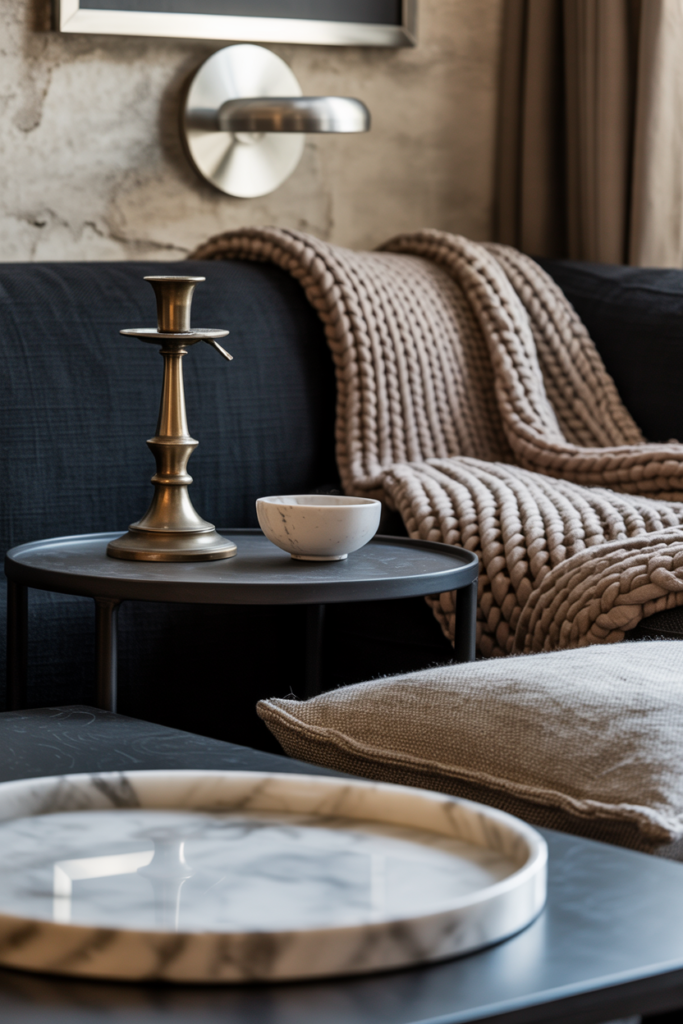
One of the fastest ways to make a room feel dated is to match everything too perfectly. Real homes do not look like that, and neither do the best vintage-modern interiors. Mixing metals like brass, matte black, and brushed nickel actually makes a room feel more curated and considered.
The same goes for textures. A chunky knit throw on a sleek modern sofa, a rough linen cushion next to a velvet one, a smooth marble tray on a distressed wooden table — these combinations create depth. The room stops looking flat and starts feeling lived-in.
I always tell people: if it feels slightly risky, it is probably right. The rooms that play it completely safe tend to be the ones that feel forgettable.
4. Let Colour Connect the Two Eras
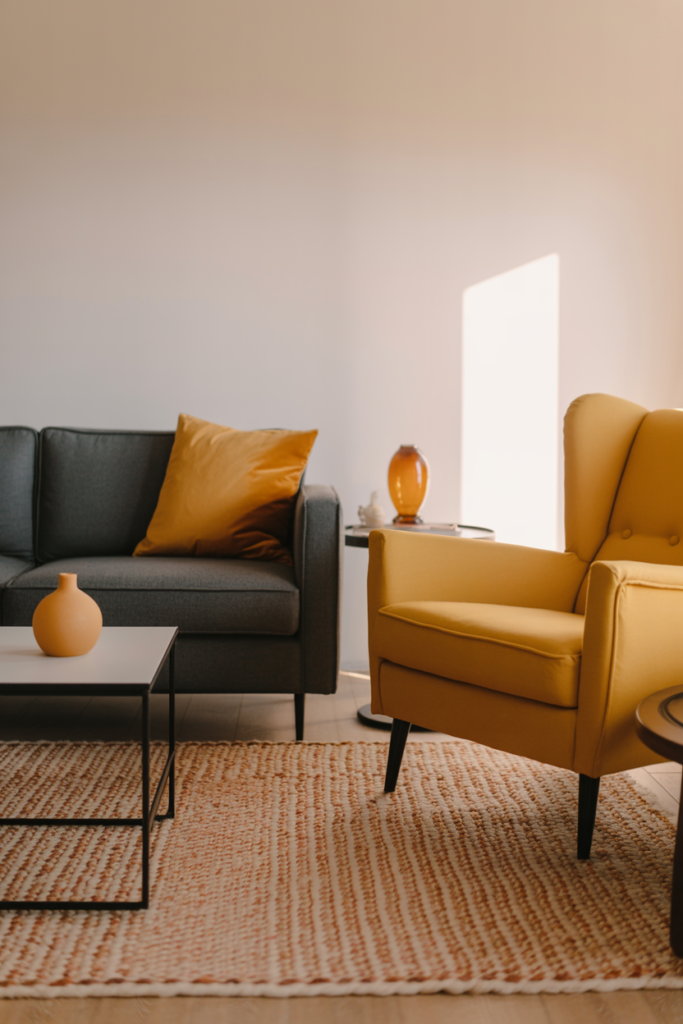
Colour is the invisible thread that ties vintage and modern pieces together. When I first started mixing styles, I worried that a 1960s mustard yellow armchair would never sit comfortably next to a contemporary grey sofa. The fix was simpler than I expected — I pulled the mustard tone into a modern cushion and repeated it in a small ceramic vase on the shelf. Suddenly, the whole room felt planned.
This technique is called colour bridging, and it works every single time. You take a dominant tone from your vintage piece and echo it somewhere in your modern elements. It does not need to be an exact match. A warm amber, a soft terracotta, or a deep olive can weave through a room and make mismatched decades feel like they belong together.
The key is repetition without overdoing it. Use the connecting colour in at least two or three places across the room. A cushion here, a artwork there, a small decorative object on the coffee table. That rhythm is what makes the room feel cohesive rather than accidental.
5. Blend Old and New Lighting for Instant Character
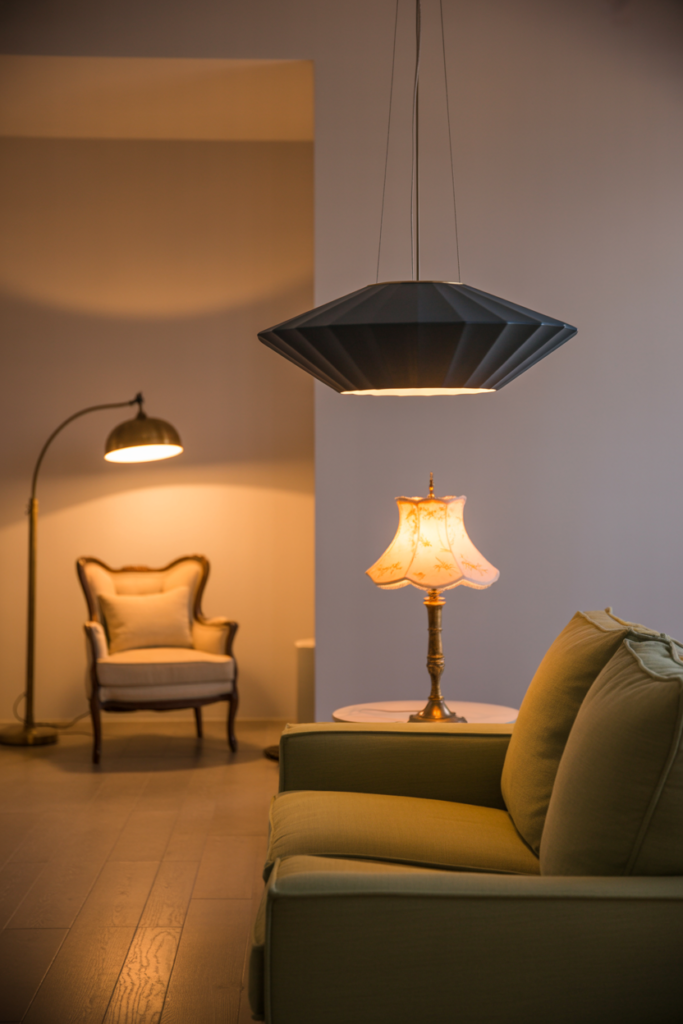
Lighting is one of the most underrated tools in interior design, and it does something special in a vintage-modern living room. A sleek, architectural floor lamp next to a vintage-inspired table lamp with a fabric shade creates a layered, warm atmosphere that neither piece could achieve alone.
I personally love pairing a contemporary pendant light — something clean and geometric — with a vintage brass sconce or an antique-style Edison bulb fixture. The combination adds depth to the room without requiring a single furniture change. It is one of the quickest upgrades you can make.
Good lighting also softens the contrast between old and new. Warm bulb tones (around 2700K) make vintage wood tones glow and give modern materials a less cold feel. The whole room relaxes, and the mix starts to feel deliberate and warm rather than mismatched.
6. Bring in Vintage Art and Modern Frames (or Vice Versa)
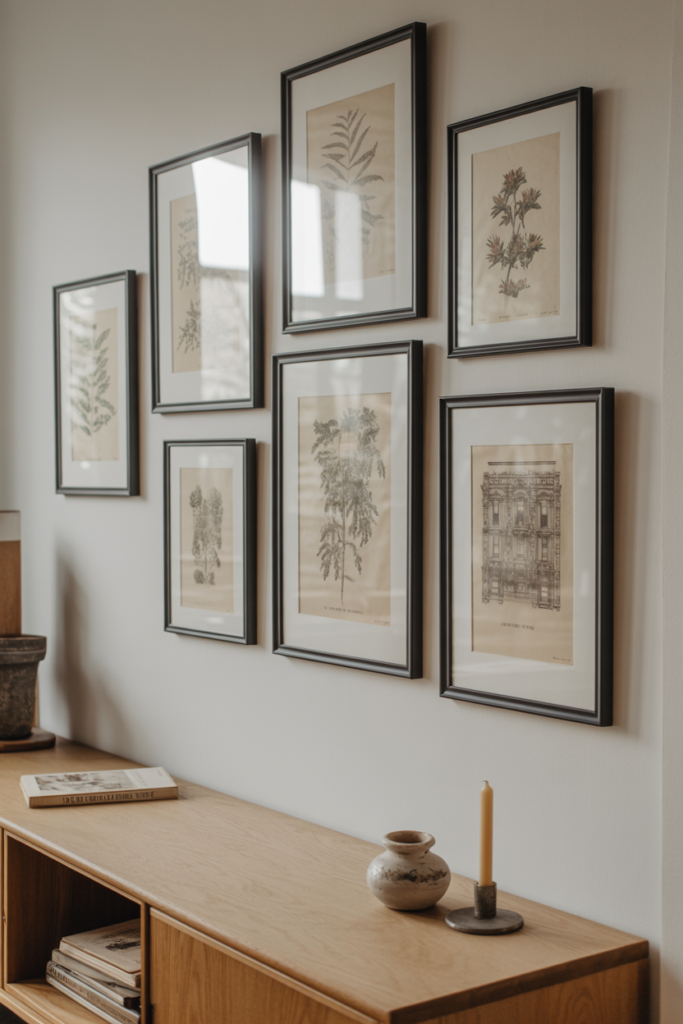
Wall art is where this style gets genuinely fun. I started collecting vintage botanical prints and old architectural drawings from local markets and online vintage shops. Framed in simple, modern black or natural wood frames, they look fresh and intentional rather than dusty and old.
You can also flip the approach entirely. Take a bold, contemporary print or abstract artwork and hang it in an ornate gilded vintage frame. The contrast is striking and costs far less than buying new statement art. It is one of those tricks that looks like it took a lot of thought but actually takes about ten minutes.
Gallery walls work especially well for this. Mix frame styles, art periods, and sizes. The variety is the point. A curated mix of old and new on a single wall tells a far more interesting story than a perfectly matched set ever could.
7. Use a Vintage Rug to Ground a Modern Room
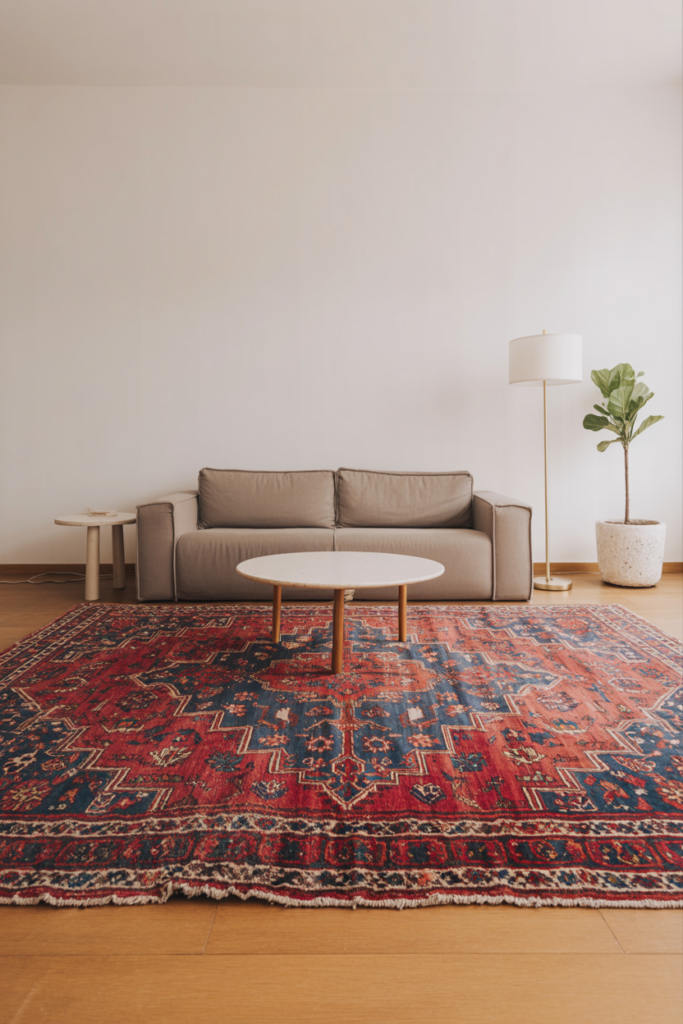
A rug does more work in a living room than most people realise. It defines the seating area, adds warmth underfoot, and sets the colour story for everything above it. A vintage or vintage-style rug — think Persian, Moroccan, or Turkish patterns — does all of that while also adding the kind of depth that modern rooms often lack.
I have seen completely modern living rooms transformed by a single vintage runner or an overdyed antique rug. The room goes from feeling like a tech showroom to feeling like a home someone actually loves living in. That one textile change is often all it takes.
When shopping for vintage rugs, do not stress about condition. Light wear, minor fading, and small repairs are part of the charm. A worn rug in a modern room looks intentional. A perfect rug in the same room looks like it came from a furniture catalogue — and that is not quite the look we are going for here.
How to Avoid the Most Common Mixing Mistakes
Even with the best intentions, a few common mistakes can make a vintage-modern living room feel off. The first is going too heavy on one era. If 90% of your room is vintage, it stops being a mix and starts being a museum. Aim for a rough balance — not necessarily 50/50, but enough of each style that both feel present.
The second mistake is ignoring scale. A delicate vintage side table next to an oversized modern sectional looks awkward, no matter how beautiful each piece is individually. Always consider how the proportions of your pieces relate to each other, not just how they look on their own.
The third is cluttering the room with too many statement pieces at once. Each strong piece needs breathing room. If everything is competing for attention, nothing wins. Edit ruthlessly, keep surfaces relatively clear, and let your best finds take centre stage.
| Common Mistake | Why It Happens | Easy Fix |
|---|---|---|
| Too much vintage | Fear of letting go of collected pieces | Rotate items seasonally |
| Ignoring scale | Buying pieces separately without comparing | Measure and sketch your layout first |
| Too many focal points | Loving everything equally | Choose one hero piece per zone |
| Mismatched undertones | Mixing cool and warm tones randomly | Stick to warm or cool across all pieces |
| Over-accessorising | Wanting to show everything at once | Follow the “odd number” rule — group in 3s |
Conclusion: Your Living Room, Your Rules
Mixing vintage and modern in a living room is less about following a formula and more about trusting your eye. The ideas I shared here — from starting with a neutral base to layering lighting and letting colour do the connecting work — are all tools, not rules. Use the ones that make sense for your space and your taste.
What I find most exciting about this style is that it grows with you. You pick up a vintage lamp at a market, swap out a cushion, find a mid-century chair at an estate sale — and the room keeps evolving. It never feels finished, and honestly, that is the best part. A living room that is always a little in progress is a living room that is actually being lived in.
If I had to give one piece of advice to anyone starting this journey, it would be this: buy what you genuinely love, not what you think you should love. The rooms that feel most personal are never the ones that followed every trend. They are the ones built around real pieces, real memories, and a genuine point of view. That is what makes a space feel like home.
FAQs:
Q1. How do I know if a vintage piece will work in a modern living room?
Start by looking at the scale and colour of the piece. If it fits the proportions of your existing furniture and shares at least one colour tone with your current palette, it will likely work. When in doubt, bring a photo of your room to the shop and compare on the spot.
Q2. What is the easiest vintage item to add to a modern living room?
A vintage rug is the easiest starting point. It adds pattern, warmth, and history without requiring you to change any furniture. Persian, Moroccan, and Turkish styles work especially well with contemporary sofas and clean-lined furniture.
Q3. Can I mix different vintage decades in the same room?
Yes, and it often looks better than sticking to one era. A 1950s armchair alongside a 1970s rattan side table creates layered interest. The key is finding a common thread — a shared colour, material, or finish — that ties the different periods together visually.
Q4. How do I stop the room from looking cluttered when mixing styles?
Edit more than you think you need to. Give each statement piece breathing room and keep surfaces relatively clear. A good rule is to style surfaces in odd-number groupings of three and leave at least 30% of any shelf or table empty.
Q5. Is it expensive to achieve a vintage-modern look?
Not at all. Some of the best vintage-modern rooms I have seen were put together on tight budgets. Charity shops, estate sales, Facebook Marketplace, and local flea markets are full of quality vintage pieces at low prices. The modern elements are often the bigger investment, so balance spending between both sides.
Q6. What colours work best when mixing vintage and modern styles?
Warm neutrals like cream, taupe, warm white, and terracotta work across both styles. Earthy tones such as olive green, burnt sienna, and mustard yellow also bridge the gap well. Avoid very cool, stark palettes if you are incorporating a lot of warm wood-toned vintage pieces — the contrast can feel jarring rather than intentional.
Q7. How do I mix patterns without the room looking chaotic?
Stick to a maximum of three patterns in the room and vary the scale of each. One large pattern, one medium, and one small keeps things visually balanced. A vintage floral cushion, a geometric modern rug, and a subtle stripe on a throw can all coexist comfortably when the colours stay within the same family.