
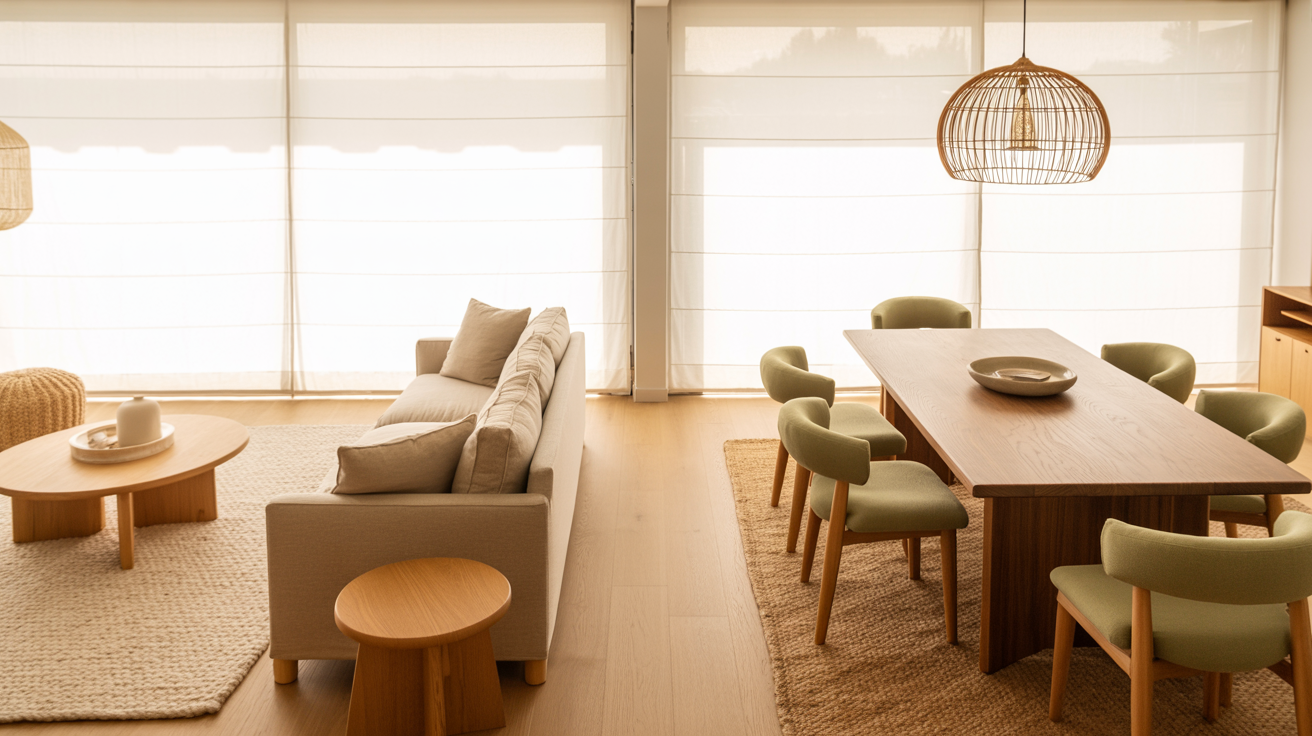
You can absolutely divide a living room and dining room without touching a single wall. I know that sounds too simple, but the right furniture placement, a well-chosen rug, or a open bookshelf can create two completely distinct zones in one shared space. No construction, no dust, no contractor bills.
Open-plan layouts are everywhere right now, and for good reason. They make smaller homes feel larger and keep the space social and connected. But the challenge is real — when everything blurs into one big room, it stops feeling intentional and starts feeling like organised chaos.
The good news is that defining two zones in one room is more about visual cues than physical barriers. Once you understand how the eye reads a space, you can guide it exactly where you want it to go. That is what every idea in this article does.
Why Dividing a Living Room and Dining Room Without Walls Actually Works
The brain naturally groups things together when they share similar visual elements. Interior designers use this all the time by creating what they call “zones” — areas that feel distinct even when no wall separates them. A change in flooring, a shift in lighting, or a consistent furniture grouping tells the eye that one area ends and another begins.
This approach also works well because it stays flexible. A physical wall is permanent. A room divider, a rug, or a shelving unit can move, change, or be swapped out entirely as your needs shift. That kind of adaptability is genuinely useful, especially in rented homes or spaces that need to serve multiple purposes.
What I find most satisfying about this style of decorating is how intentional it feels when done well. Two zones in one room, each with its own personality, but both connected by a shared colour palette or material. It looks considered and curated, and nobody needs to know it took a weekend and zero building work.
10 Best Ways to Divide a Living Room and Dining Room Without Walls
1. Use a Large Area Rug to Define Each Zone
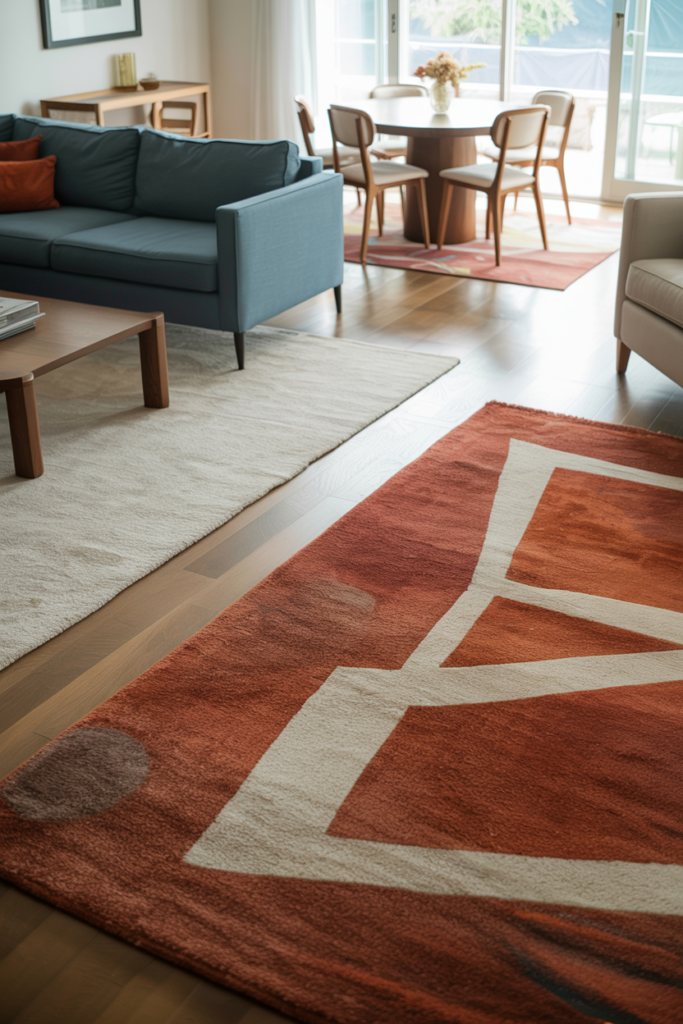
A rug is one of the fastest and most affordable ways to separate a living area from a dining space. Place one rug under the sofa and coffee table, and a separate rug under the dining table and chairs. Instantly, two zones appear without a single structural change.
The key is choosing rugs that complement each other without matching exactly. They can share a colour tone or a general style — one patterned and one plain works beautifully. The contrast between the two actually reinforces the separation rather than undermining it.
I always recommend sizing up when choosing rugs for this purpose. A rug that is too small makes the zone feel timid and unconvincing. The front legs of all seating furniture should sit on the living room rug, and all four legs of the dining table and chairs should sit fully on the dining rug.
2. Place a Sofa With Its Back Facing the Dining Area
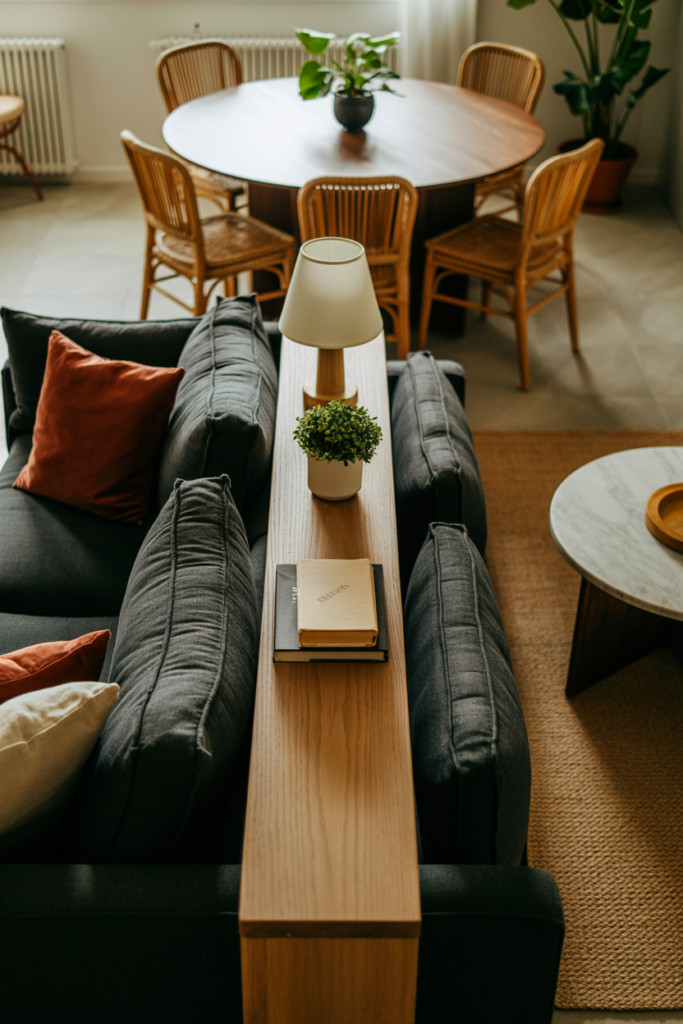
The back of a sofa is one of the most underused room dividers in interior design. When you position the sofa so its back faces the dining table, it creates a natural partition between the two spaces. No extra furniture needed, no cost involved.
This works especially well in long, narrow open-plan rooms where the living and dining areas sit end to end. The sofa acts as a soft visual wall, giving the dining area its own sense of enclosure without blocking light or sightlines across the room.
For added definition, style the back of the sofa with a narrow console table. Add a lamp, a plant, or a few books, and that transition zone becomes a feature rather than just a functional divide. It is a small addition that makes a big visual difference.
3. The Open Bookshelf That Works Both Sides of the Room
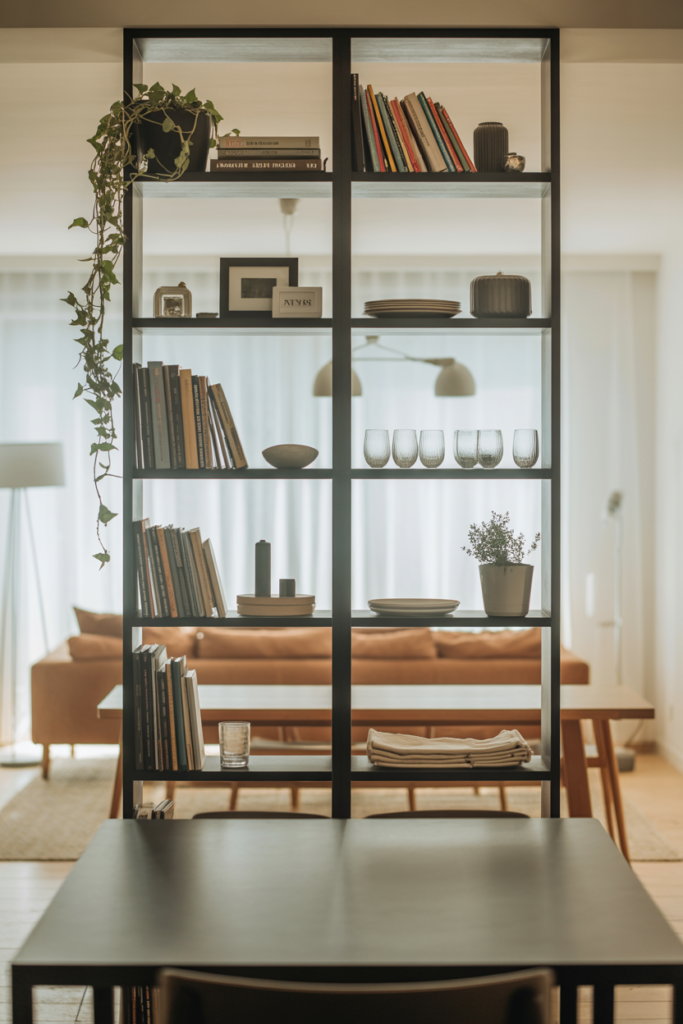
An open bookshelf placed between the living and dining areas does double duty. It separates the two zones while also adding storage, display space, and genuine visual interest. Unlike a solid wall, it keeps the space open and lets light pass through freely.
I prefer double-sided shelving units for this purpose because both sides become usable. The living room side can hold books and decorative objects, while the dining room side can store glassware, table linens, or a collection of plants. Each side gets its own story.
Styling the shelves matters as much as the placement. Avoid overcrowding them. Leave some sections open, alternate between tall and short objects, and use a consistent colour palette across both sides. A well-styled open shelving unit genuinely looks like a design feature, not a divider.
4. Hang a Curtain or Fabric Panel Between the Two Spaces
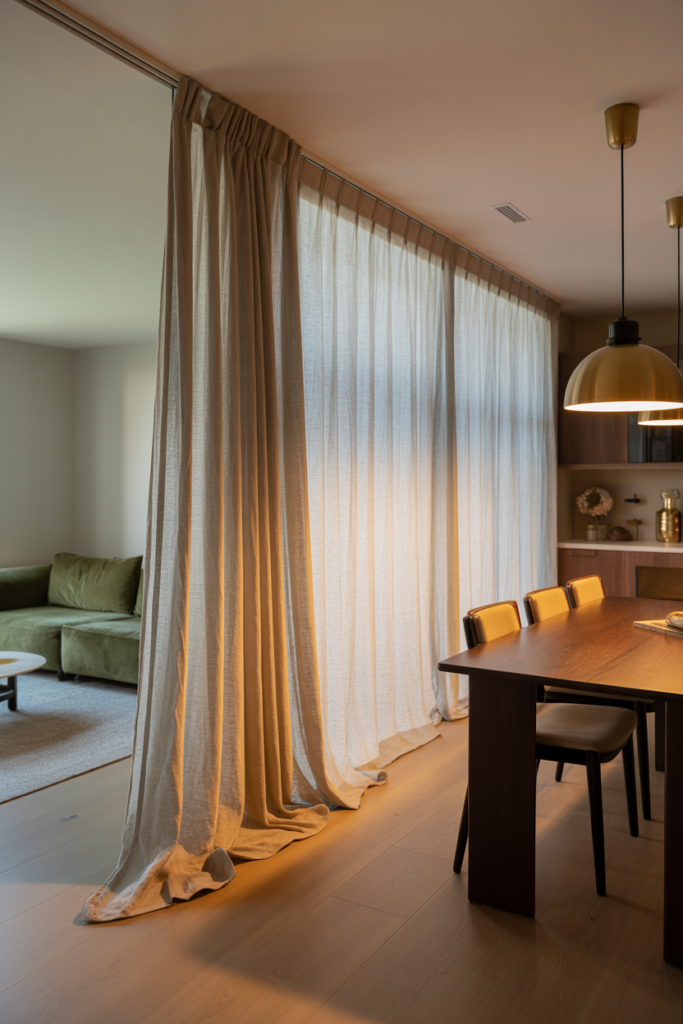
A ceiling-mounted curtain track is one of the most flexible room dividers available. You can pull the curtains closed to fully separate the spaces when needed, or push them back completely to restore the open-plan feel. That kind of control is hard to beat.
Linen curtains work particularly well for this because they drape beautifully and let some light through even when closed. Heavier velvet or blackout fabric creates a more dramatic, enclosed feel for the dining area — great if you want that intimate dinner party atmosphere without committing to a wall.
The track itself sits flush with the ceiling and almost disappears when the curtains are open. For the best result, mount the track as close to the ceiling as possible and choose curtains that puddle very slightly on the floor. It makes the ceiling feel higher and the room feel more considered.
5. Use Different Flooring Materials to Signal a Zone Change
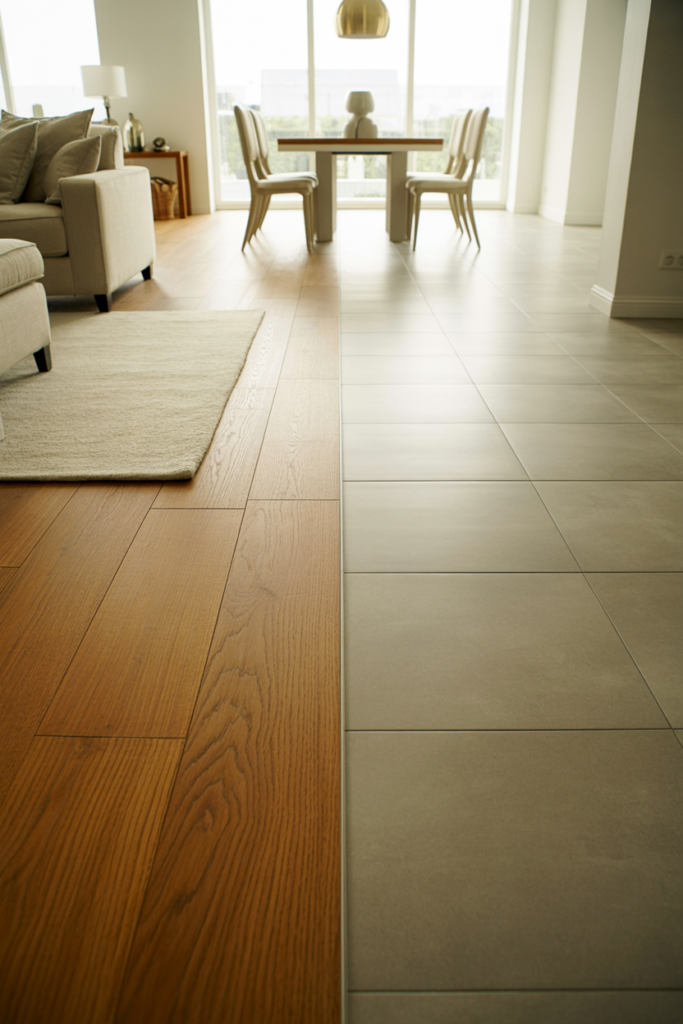
Changing the flooring between the living and dining areas is one of the most visually powerful ways to define two zones. Hardwood or tile in the dining area paired with a carpeted or rugged living space sends an immediate signal to the eye that these are two distinct areas.
If you are in a rented home and cannot change the flooring permanently, large-format rugs achieve the same effect. A stone-effect vinyl tile in the dining zone and a warm wool rug in the living zone creates the same visual separation without any permanent changes to the property.
The transition line between the two materials becomes the invisible wall. Keep it clean and intentional. A straight seam or a clear edge rather than a gradual fade works best for defining the zones clearly.
6. Create a Visual Border With a Half-Wall or Low Console
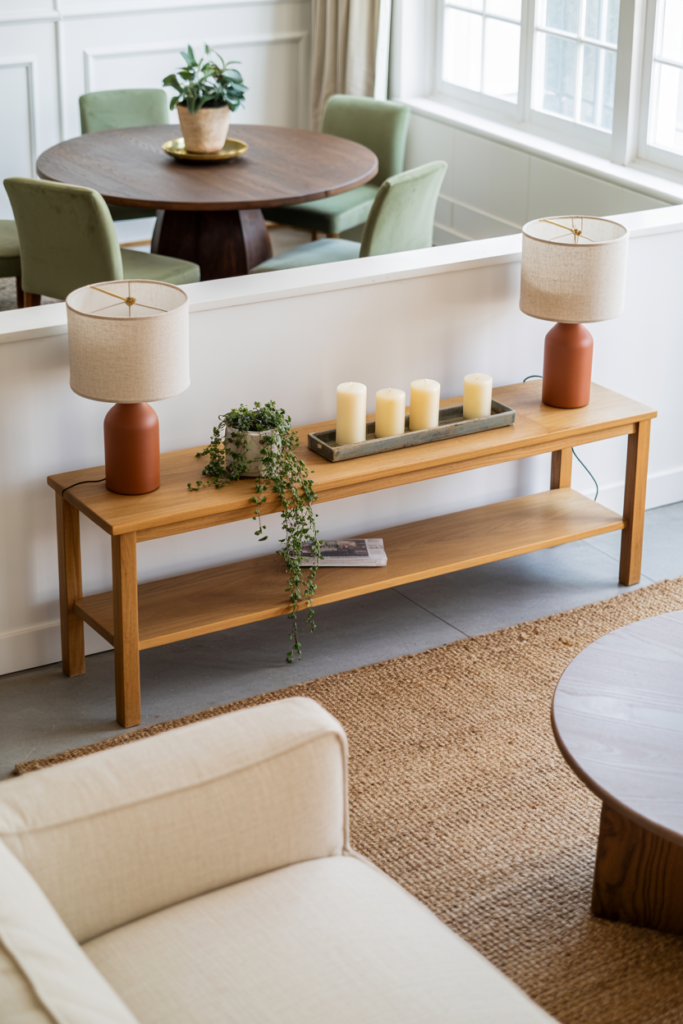
A low console table or a half-height partition creates a defined border between two zones without closing off the space. It sits at roughly waist height, which means sightlines remain open across the room while the zones still feel distinct and separate.
Styling the console table well is what makes this idea shine. A row of matching table lamps, a long tray with candles, or a collection of plants along the top turns a simple piece of furniture into a genuine design feature. It stops looking like a divider and starts looking like a deliberate styling choice.
For a more architectural feel, some people opt for a custom half-wall built from plasterboard or reclaimed wood. This is a more permanent option, but it costs far less than a full wall and still preserves the open, connected feel of the room.
7. Use Pendant Lights to Define the Dining Zone
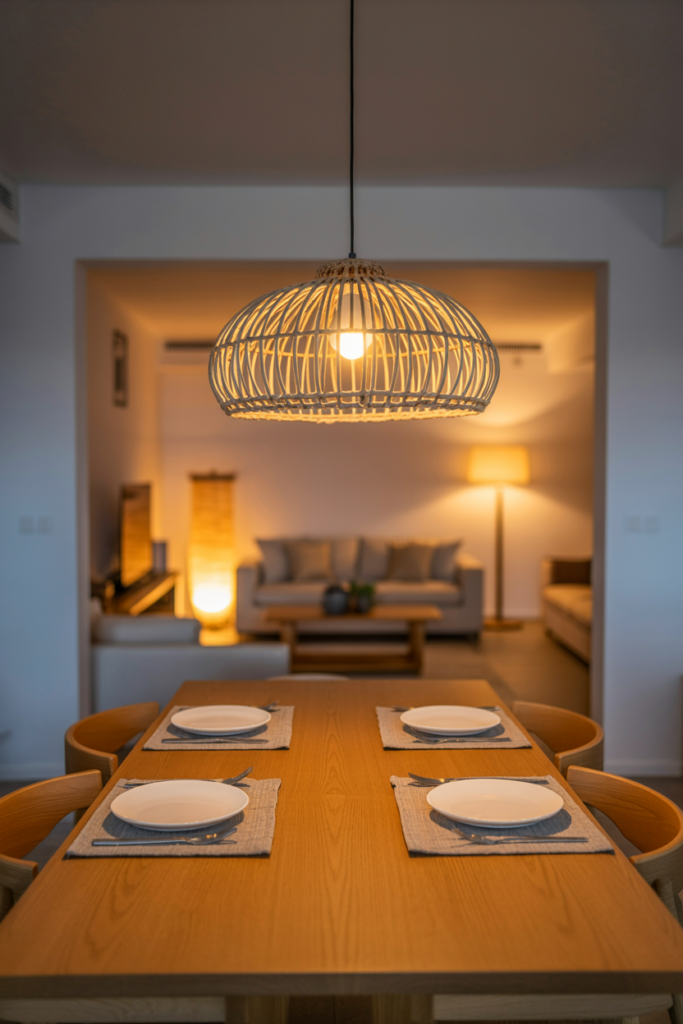
Lighting is one of the most powerful zoning tools in interior design, and almost nobody uses it as intentionally as they should. Hanging a statement pendant light directly above the dining table immediately defines that space as its own zone, regardless of what surrounds it.
The pendant draws the eye down and anchors the dining area visually. Even in a completely open room with no other dividers, a low-hung pendant above a dining table creates the sense of a dedicated, intimate space. It feels like the room has a ceiling within a ceiling.
For the living area, use floor lamps and table lamps to create a warmer, lower light level that contrasts with the dining pendant. The shift in lighting mood between the two zones reinforces their separation without any physical barrier at all.
8. Introduce a Plant Screen or Indoor Garden Divider
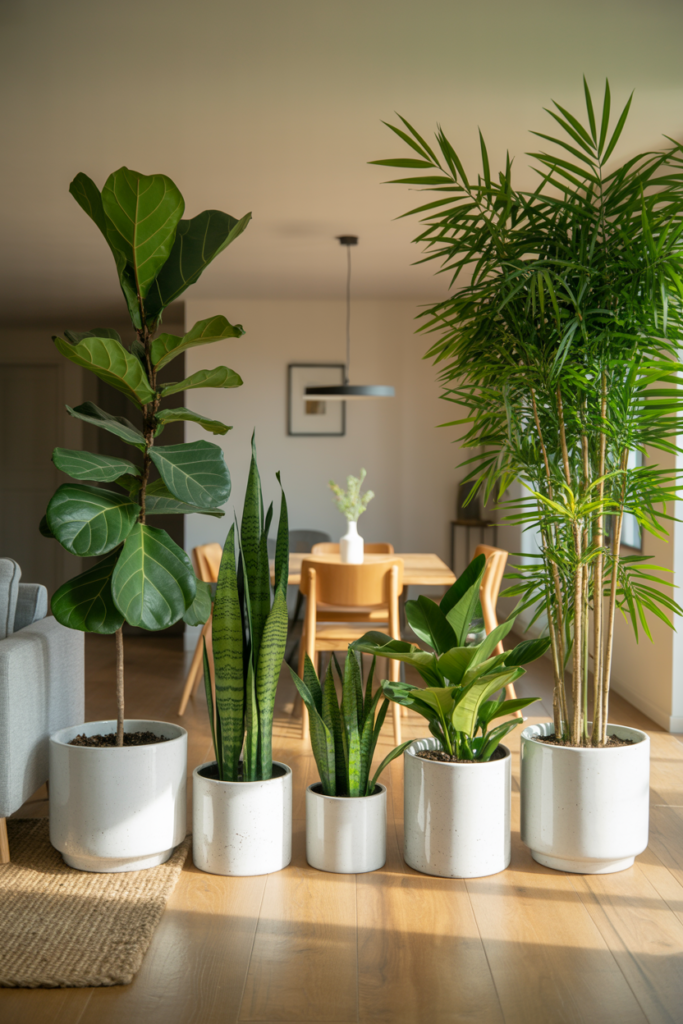
A row of tall indoor plants creates one of the most natural and visually appealing room dividers available. Tall fiddle leaf figs, snake plants, or bamboo palms grouped together form a living green partition that softens the boundary between living and dining areas beautifully.
This works best when the plants are grouped in a line rather than scattered randomly. Three to five plants of varying heights placed close together create a cohesive screen effect. Add matching planters in a consistent colour — white, terracotta, or matte black all work well — to give the grouping a considered, styled look.
Beyond the visual benefit, plants genuinely improve the atmosphere of a room. Better air quality, natural texture, and a sense of calm that no bookshelf or curtain can quite replicate. It is one of those dividers that people always comment on positively.
9. Use a Dining Bench or Banquette Against a Partial Partition
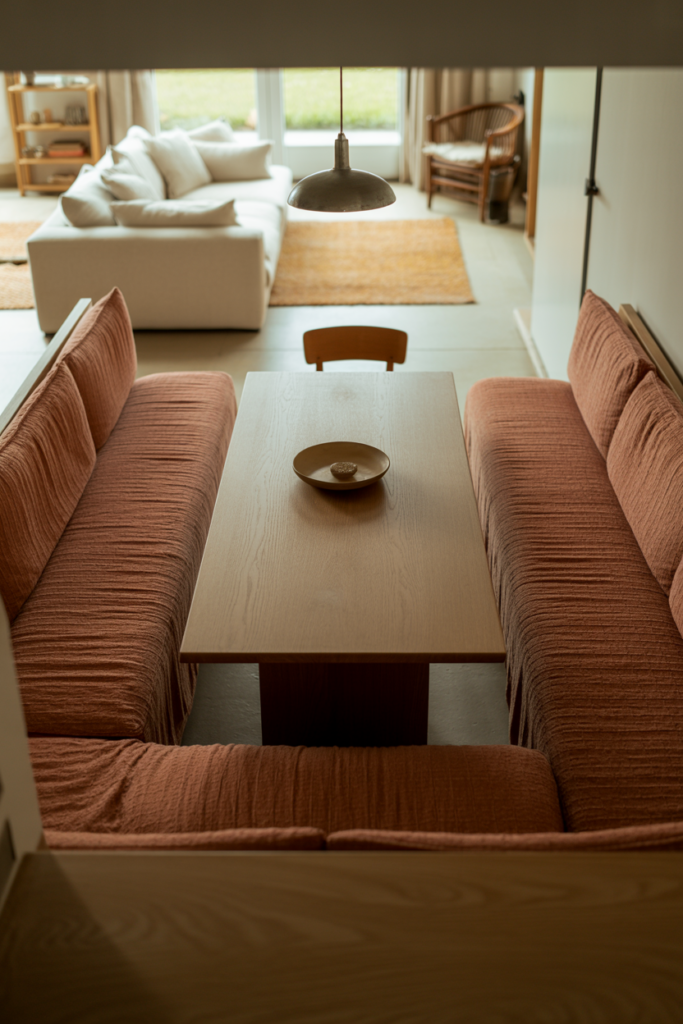
A built-in banquette or a long dining bench positioned along one edge of the dining zone acts as both seating and a subtle room divider. It creates a physical boundary on one side of the dining area while keeping the other sides open and connected to the living space.
This approach works particularly well in corner dining arrangements. The bench runs along two walls or along one wall and extends slightly into the open plan, giving the dining space a cosy, enclosed feel that a standard table-and-chairs setup rarely achieves.
Upholstered benches in a fabric that connects to the living room palette help tie the two zones together visually. The dining area feels defined and intentional without being cut off from the rest of the room.
10. Apply Different Paint Colours or an Accent Wall
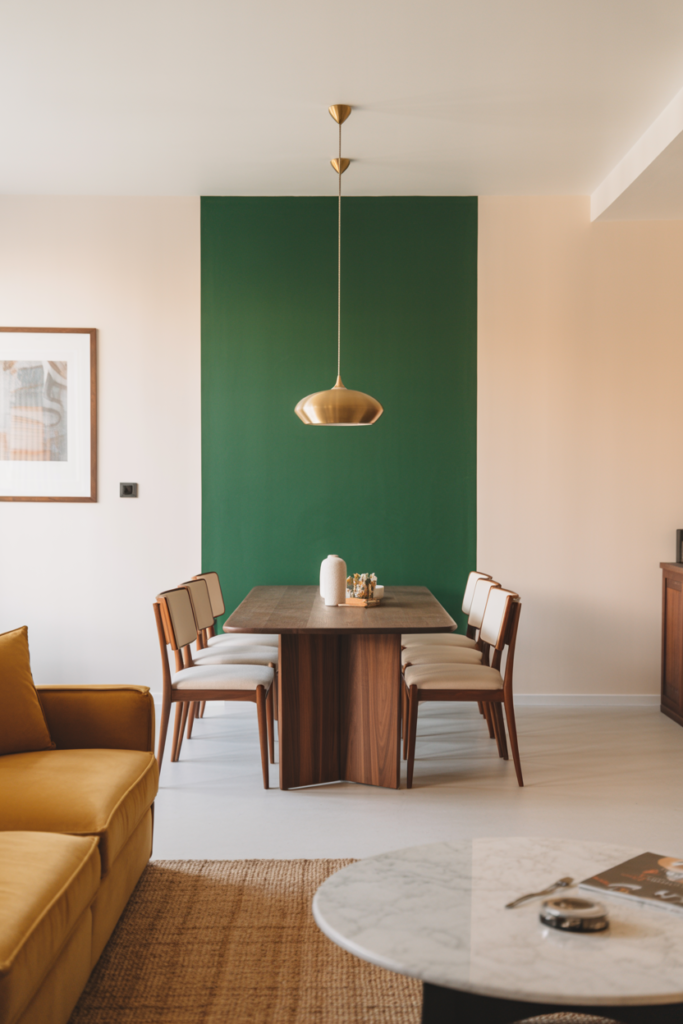
Paint is the most affordable zoning tool in this entire list. Painting the dining area wall — or even just the ceiling above it — in a different colour from the living space creates an immediate visual distinction between the two zones. No furniture, no curtains, just colour.
An accent wall behind the dining table in a deeper, richer tone than the rest of the room pulls that space forward visually. It signals to anyone entering the room that this corner has its own identity. The contrast does not need to be dramatic — even a slightly deeper shade of the same colour family creates a convincing zone.
For open-plan spaces with high ceilings, painting the ceiling above the dining area in a contrasting colour is a genuinely clever trick. It defines the space overhead and creates an intimate feel at the table without affecting the flow of the room at floor level.
What to Keep in Mind When Zoning a Living and Dining Room
Getting the zoning right comes down to three things: scale, consistency, and restraint. The dividers you choose need to suit the size of the room. A large bookshelf in a small open-plan flat can overwhelm the space just as easily as having no dividers at all.
Consistency across both zones is what makes the room feel like one cohesive home rather than two unrelated spaces. Sharing a colour palette, repeating a material like wood or brass, or using the same style of light fitting in both areas ties everything together. The zones feel distinct but still connected.
| Zoning Method | Best For | Approximate Cost | Permanence |
|---|---|---|---|
| Area rugs | Any open-plan layout | Low | Temporary |
| Sofa placement | Long narrow rooms | Free | Flexible |
| Open bookshelf | Storage and display needs | Medium | Semi-permanent |
| Curtain track | Rental homes | Medium | Temporary |
| Pendant lighting | Dining zone definition | Medium | Semi-permanent |
| Plant screen | Natural, organic feel | Low to medium | Flexible |
| Paint or accent wall | Budget-conscious homes | Very low | Permanent |
| Half-wall or console | Architectural definition | Medium to high | Semi-permanent |
Restraint is the final piece. It is tempting to layer multiple zoning methods on top of each other, but the best open-plan rooms tend to use two or three well-chosen techniques rather than six competing ones. Pick the methods that suit your space, your budget, and your style — then commit to them fully.
Conclusion: The Right Divider Makes the Whole Room Work
Dividing a living room and dining room without walls is entirely achievable, and as this article shows, there are more ways to do it than most people realise. From a well-placed sofa and a layered rug to a ceiling-mounted curtain track or a row of tall plants, every approach creates defined zones without sacrificing the openness that makes an open-plan layout so appealing in the first place.
The ideas that work best are always the ones chosen for the specific room rather than copied from a trend. Think about your layout, your budget, and how you actually use the space day to day. A zoning method that suits your lifestyle will always outperform a beautiful one that does not.
If I had to pick one starting point for anyone tackling this for the first time, it would be rugs. They are affordable, reversible, and immediately effective. Get the rugs right first, then layer in lighting, plants, or furniture as the room develops. You will be surprised how quickly the two zones take shape.
FAQs: Dividing a Living Room and Dining Room Without Walls
Q1. What is the easiest way to divide a living room and dining room without walls?
Using two separate area rugs is the easiest starting point. One rug under the living room furniture and one under the dining table immediately creates two distinct zones. It requires no installation, no permanent changes, and works in almost any open-plan layout.
Q2. Can I divide a small open-plan room without making it feel cramped?
Yes, as long as you choose low-profile or visually light dividers. Open bookshelves, rugs, and lighting work well in smaller spaces because they define zones without blocking light or sightlines. Avoid heavy curtains or tall solid partitions in compact rooms.
Q3. How do I make both zones feel connected even when they are divided?
Repeat a colour, material, or style element across both areas. A brass finish in the living room light fitting echoed in the dining room pendant, or the same wood tone in both the coffee table and dining chairs, keeps the room feeling unified despite the zoning.
Q4. Is it possible to divide a rented living and dining room without making permanent changes?
Absolutely. Rugs, freestanding bookshelves, sofa placement, curtain tracks with tension rods, and plant screens all create effective zones with zero permanent changes. Most rental-friendly options are also among the most affordable on this list.
Q5. How many zoning methods should I use in one room?
Two or three well-chosen methods work better than layering too many together. A rug plus a pendant light plus a sofa with its back to the dining area is often enough to create two convincing zones without making the room feel overworked or cluttered.
Q6. Do open bookshelves work as room dividers in a family home with children?
They can, but they need to be secured to the wall for safety. A double-sided unit anchored properly works well and gives both zones usable storage. Keep lower shelves in the dining zone practical rather than decorative if young children are using the space regularly.
Q7. What ceiling height do I need for a curtain divider to work well?
Ceiling-mounted curtain tracks work in any ceiling height, but they look best in rooms with at least 2.4 metres of clearance. In rooms with lower ceilings, choose lighter fabrics like linen or sheer panels to avoid the curtain feeling heavy or oppressive in the space.