
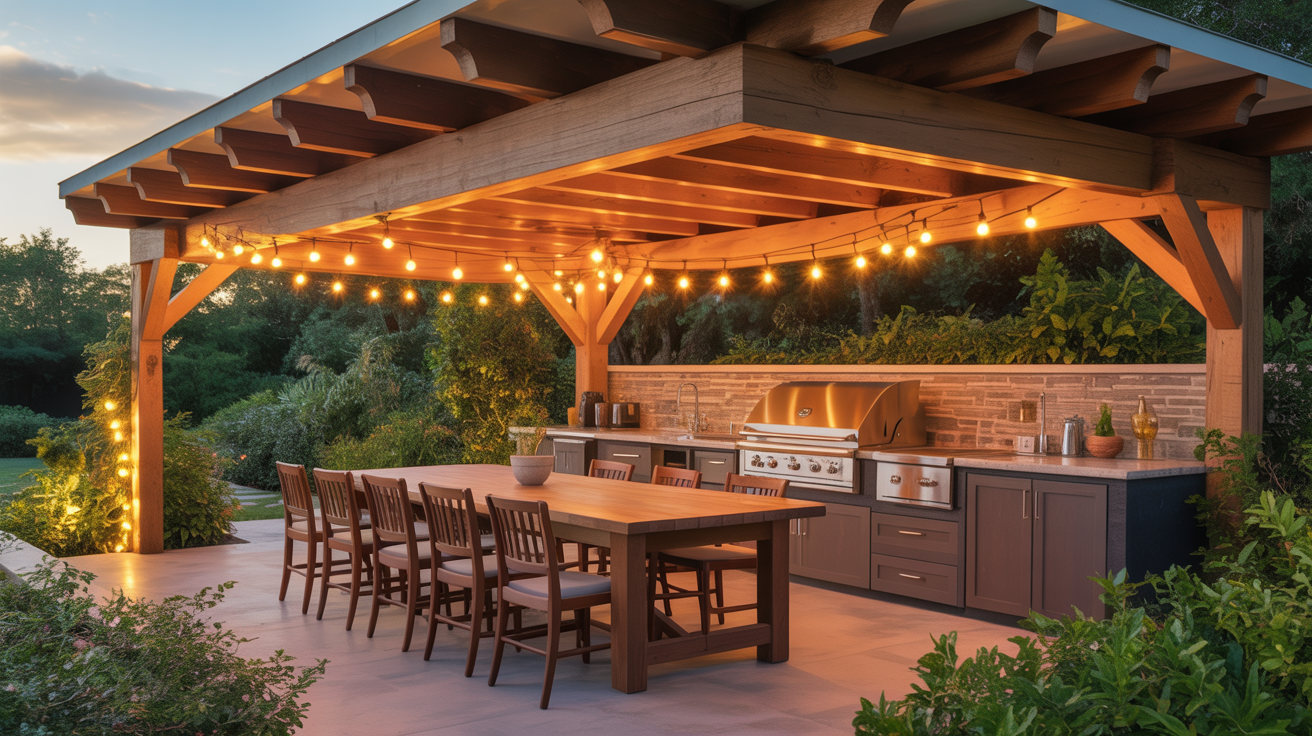
A covered outdoor kitchen changes how you use your backyard completely. It is not just about having a grill outside anymore. It is about creating a fully functional cooking and entertaining space that works whether the sun is blazing, the rain is falling, or the temperature drops in the evening. Once you have one, cooking indoors on a nice day starts to feel like a genuinely strange choice.
Covered outdoor kitchens have grown from a luxury feature into one of the most requested backyard upgrades among homeowners who entertain regularly. The addition of a proper roof structure, whether a pergola, solid patio cover, or full pavilion, transforms a basic outdoor cooking setup into a space you can use comfortably through every season. I have seen modest backyards completely transformed by a well-planned covered outdoor kitchen that costs far less than most people assume.
This list covers 15 of the best covered outdoor kitchen ideas across different styles, sizes, budgets, and backyard configurations. Whether you are starting from scratch or upgrading an existing patio, there is a covered outdoor kitchen concept here that will work for your specific space and your way of entertaining.
Why a Covered Outdoor Kitchen Makes Your Backyard Work Harder All Year
A covered outdoor kitchen solves the single biggest limitation of traditional outdoor cooking: weather dependency. An uncovered grill setup gets used on perfect days and is ignored every other time. A properly covered outdoor kitchen with good ventilation and weather-resistant materials gets used consistently through spring rain, summer heat, autumn evenings, and mild winter days. That dramatic increase in usability is what makes the investment genuinely worthwhile.
The structure overhead also allows you to incorporate features that an open outdoor kitchen simply cannot support. Proper lighting, ceiling fans, outdoor heaters, speakers, and even television screens all become practical additions under a covered structure. These elements turn an outdoor kitchen into a complete entertaining zone rather than just a cooking station with a view.
There is also a strong financial argument for covered outdoor kitchens that often gets overlooked. Real estate research consistently shows that well-designed outdoor living spaces add measurable value to residential properties. A covered outdoor kitchen with quality appliances and durable finishes sits at the top of that value-adding category, particularly in climates where outdoor living is possible for most of the year.
| Cover Type | Weather Protection | Cost Range | Best For |
| Pergola with shade sail | Partial sun and light rain | Low-Medium | Warm dry climates |
| Attached patio cover | Full rain and sun protection | Medium | Most climates |
| Freestanding pavilion | Full weather protection | Medium-High | Large backyards |
| Solid roof extension | Maximum weather protection | High | Year-round use |
| Retractable awning | Flexible sun and rain cover | Medium | Variable climates |
1. Build an Attached Covered Outdoor Kitchen Against the House for Seamless Indoor-Outdoor Flow
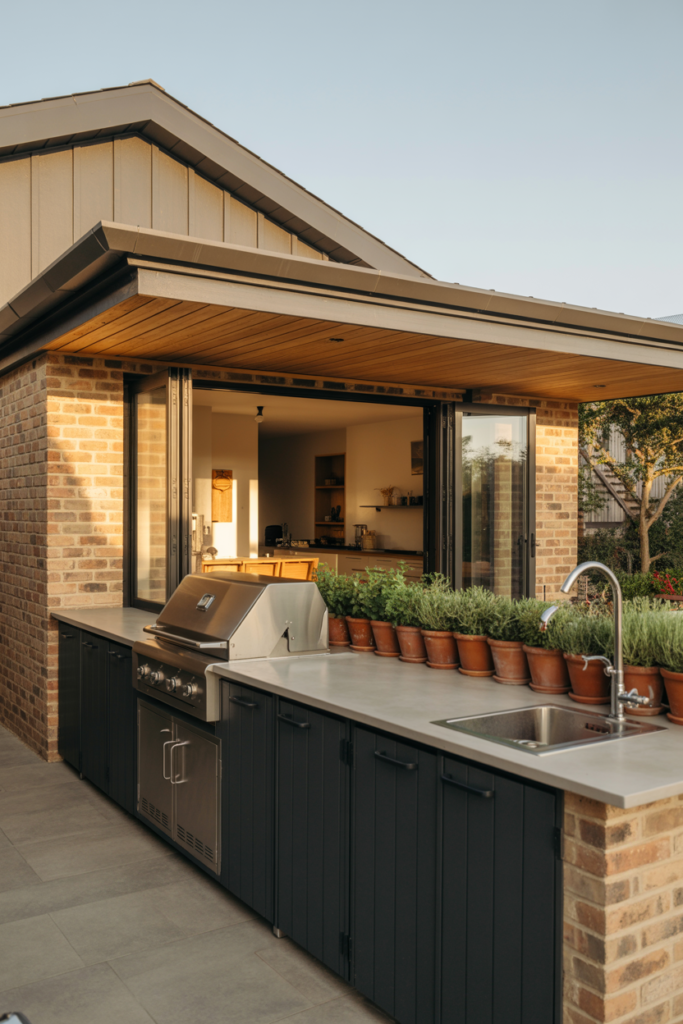
An attached covered outdoor kitchen connected directly to the house exterior is one of the most practical and popular configurations available. The shared wall with the house provides structural support for the roof, simplifies electrical and plumbing connections, and creates a natural transition between indoor and outdoor cooking and dining spaces. I find this layout works particularly well when the outdoor kitchen aligns with the indoor kitchen through a large sliding or bifold door.
Position the grill, side burners, and prep counters along the outer edge of the structure so smoke travels away from the house. Keep the refrigerator, storage, and bar area closer to the house wall where they benefit from the shelter most. This arrangement creates a logical cooking workflow that mirrors how an indoor kitchen functions while keeping the outdoor experience intact.
An attached covered outdoor kitchen also benefits from the existing house roofline, which often means the cover structure integrates more naturally into the overall architecture of the home. Matching the roofing material and color to the existing house roof creates a cohesive, intentional look that adds genuine curb appeal to the rear of the property.
2. Design a Freestanding Covered Outdoor Kitchen Pavilion as a Separate Backyard Destination
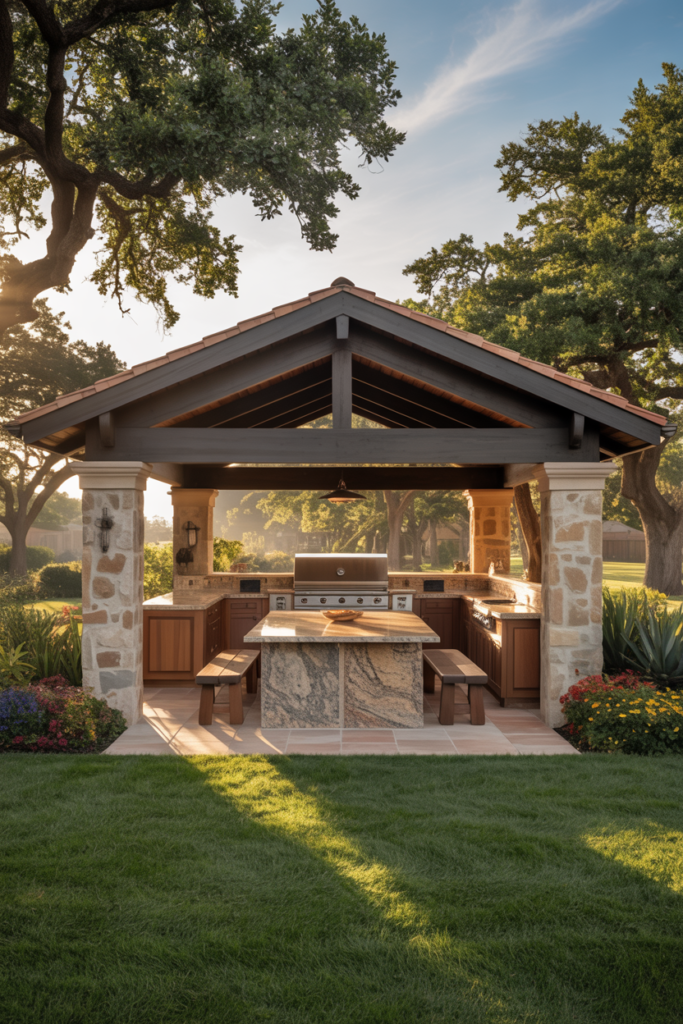
A freestanding covered outdoor kitchen pavilion positioned away from the house creates a true destination within the backyard. Rather than extending the home outward, this approach gives the outdoor kitchen its own architectural presence and creates a clear separation between the house and the entertaining zone. For larger backyards, this configuration allows the kitchen to be positioned near the pool, garden, or lower lawn area, where it serves the whole outdoor space most effectively.
Freestanding pavilions offer complete design freedom in terms of shape, size, orientation, and roofing material. A well-designed pavilion with a pitched roof, exposed timber beams, and stone or brick columns creates an outdoor kitchen structure that looks genuinely permanent and purposeful rather than temporary and added-on. The pavilion approach also allows for a larger footprint than an attached structure, accommodating more appliances, more seating, and a more generous entertaining layout.
The main consideration with a freestanding pavilion is the practical connection of utilities. Running gas, electricity, and water to a structure positioned away from the house requires more planning and installation work than an attached kitchen. Getting these services designed and installed correctly at the build stage is far more cost-effective than adding them later.
3. Cover a Compact Outdoor Kitchen With a Simple Pergola for an Affordable and Attractive Solution
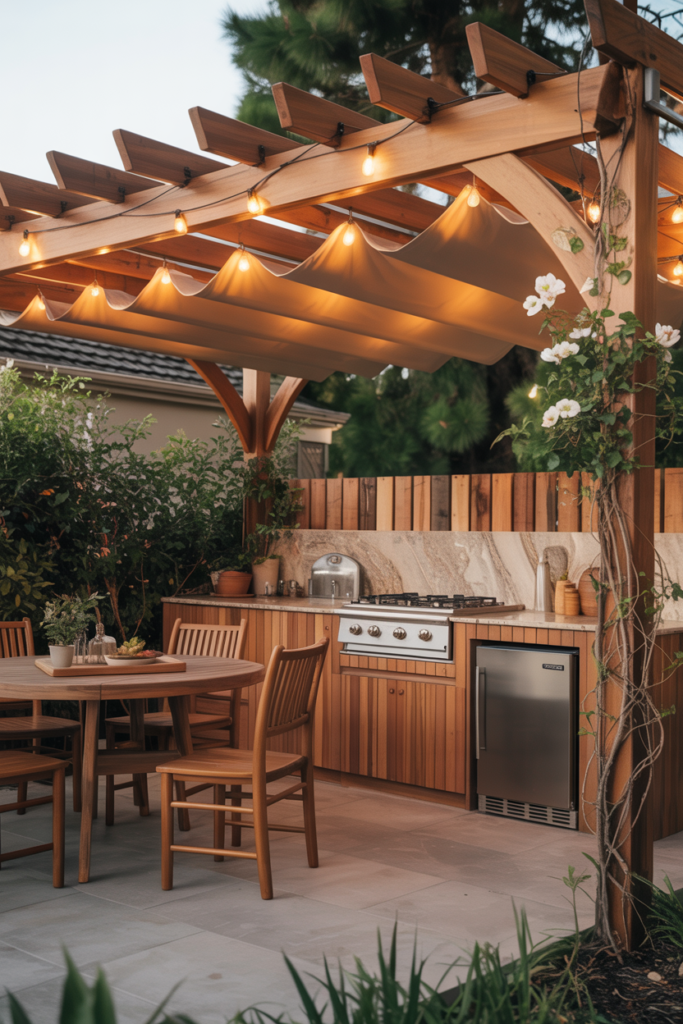
A pergola-covered outdoor kitchen is the most accessible entry point into covered outdoor cooking for most homeowners. A well-built timber or aluminum pergola provides partial shade, defines the kitchen zone clearly, and supports climbing plants, shade sails, or retractable canopy panels for additional weather protection. For backyards where budget matters and a full, solid roof structure is not feasible, a pergola delivers a strong visual impact at a fraction of the cost.
Build the pergola to a generous size that accommodates both the cooking zone and a dining or seating area underneath. A pergola that covers only the grill and counter feels cramped and defeats the purpose of creating a true outdoor entertaining space. Aim for a minimum of 12 feet by 14 feet to allow comfortable movement around the cooking area with guests present.
Add a retractable shade sail or weatherproof canopy panel system across the top of the pergola beams for rain and sun protection on demand. This hybrid approach gives you the open airy feeling of a pergola on clear days and practical weather cover when conditions change. String lights woven through the pergola rafters complete the setup and make the space genuinely inviting after dark.
4. Create a Covered Outdoor Kitchen With a Solid Insulated Patio Roof for Maximum Year-Round Comfort
A solid insulated patio roof over an outdoor kitchen delivers the highest level of weather protection and thermal comfort of any covered structure option. Unlike a pergola or shade sail, a solid insulated panel roof blocks rain completely, reduces heat gain significantly in summer, and retains warmth better in cooler months. For homeowners who want to use their outdoor kitchen as a genuine year-round space rather than a fair-weather feature, this roof type is the most functional choice available.
Insulated panel roofing systems use a sandwich construction of two steel or aluminum sheets bonded around a rigid foam core. This construction blocks heat transfer far more effectively than a single skin corrugated or polycarbonate roof. The underside of a quality insulated panel roof also provides a clean finished ceiling surface that supports LED downlights, ceiling fans, and outdoor heaters neatly and professionally.
Pair a solid insulated roof with clear polycarbonate or louvre panel infills on one or two sides of the structure to control airflow and maintain the connection to the garden and sky. Full enclosure on all sides tips an outdoor kitchen into indoor territory and removes the open-air quality that makes outdoor cooking so enjoyable. One or two open sides with the option to screen them seasonally gives you the best of both conditions.
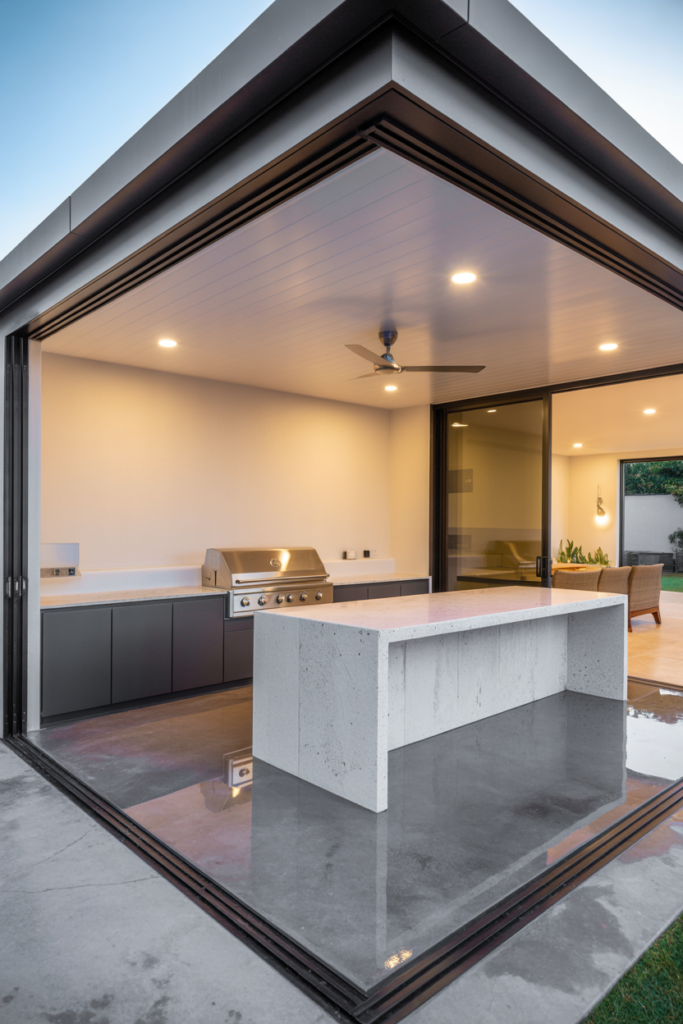
5. Install a Louvre Roof System Over an Outdoor Kitchen for Fully Adjustable Weather Control
A louvre roof system is one of the most sophisticated covered outdoor kitchen solutions available and one that has become significantly more accessible in recent years. Motorized aluminum louvre blades rotate from fully open to fully closed at the touch of a button, giving complete control over sun, shade, rain, and ventilation in real time. For an outdoor kitchen that genuinely needs to work in variable weather conditions, a louvre roof delivers a level of flexibility that no fixed roof structure can match.
When the louvres sit fully open, the kitchen feels completely connected to the sky above with maximum airflow and natural light. Close them fully when rain arrives, and the space stays completely dry. Position them at any angle to manage afternoon sun, direct a breeze toward the cooking zone, or create dappled light across the dining area. That degree of real-time control makes the outdoor kitchen genuinely comfortable in conditions that would otherwise send everyone inside.
Quality motorized louvre roof systems also integrate with rain sensors that close the blades automatically when rain is detected. LED lighting strips built into the louvre frame provide ambient illumination after dark without requiring separate light fixtures. For a covered outdoor kitchen that aims for a premium, resort-style atmosphere, a motorized louvre roof is the single most impactful structural upgrade you can make.
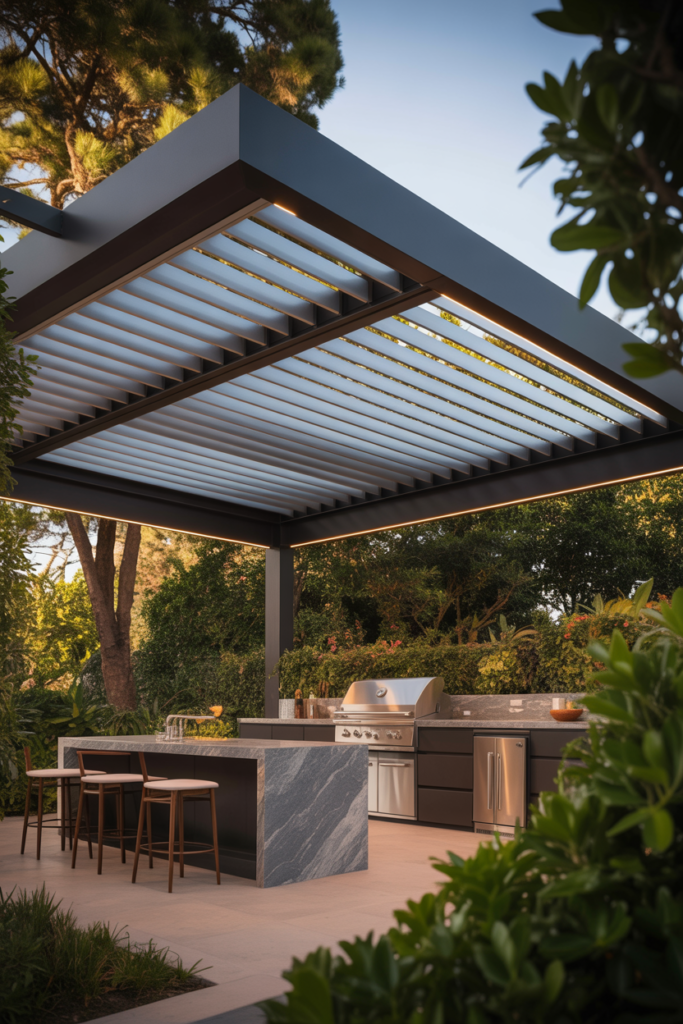
6. Build a Covered Outdoor Kitchen With a Built-In Pizza Oven for the Ultimate Entertaining Feature
A built-in pizza oven under a covered outdoor kitchen structure turns a standard backyard cooking setup into something genuinely special. Pizza ovens create a social focal point that no other cooking appliance matches. Guests gather around them, children get involved, and the whole cooking process becomes part of the entertainment rather than something that happens out of sight. I have never seen a backyard pizza oven fail to become the most talked-about feature at any gathering.
Position the pizza oven at one end of the outdoor kitchen counter, running at a comfortable working height of around 900mm to 1000mm from the ground. Build the surround from stone, brick, or rendered masonry to match the overall kitchen aesthetic and provide the thermal mass the oven needs to perform well. Integrate storage for pizza tools, wood fuel, and accessories into the cabinetry directly below and beside the oven for a clean and functional setup.
A covered structure is genuinely important when combining an outdoor kitchen with a pizza oven. The oven generates significant radiant heat, and the cooking process takes time, meaning you and your guests spend extended periods in the outdoor kitchen space. A solid roof overhead with a ceiling fan keeps the area comfortable through the entire cooking and dining experience, regardless of weather conditions above.
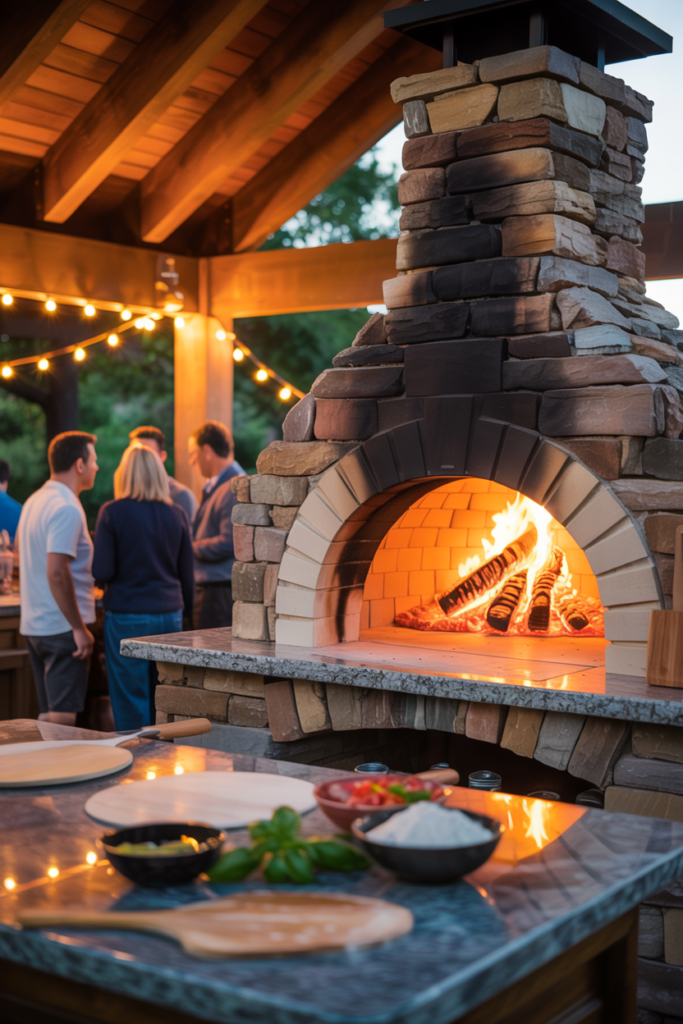
7. Design a Covered Outdoor Kitchen With a Full Bar and Seating Area for Serious Entertaining
A covered outdoor kitchen that incorporates a dedicated bar and seating zone creates a complete entertainment destination that handles everything from casual weeknight dinners to large gatherings without requiring anyone to go inside. The bar section can be as simple as an extended counter with bar stools on one side or as fully equipped as a proper drinks station with a wine fridge, beer tap, ice maker, and overhead glass storage. Either way, separating the bar function from the cooking zone makes the whole space work more efficiently.
Position the bar counter on the opposite side of the kitchen from the grill and cooking appliances so guests can gather, drink, and socialise without crowding the person cooking. A raised bar counter at 1050mm to 1100mm height with seating on the guest side creates a natural social boundary that keeps the cook comfortable and the guests engaged. I find this layout works particularly well when the bar counter faces outward toward the backyard, pool, or garden view.
Lighting plays a critical role in making a covered outdoor bar area feel genuinely inviting after dark. Pendant lights above the bar counter, LED strip lighting under the bar top overhang, and ambient wall lighting in the surrounding structure create layered illumination that shifts the atmosphere from daytime practical to evening social effortlessly. Getting the lighting design right at the planning stage costs very little relative to the impact it delivers once the space is in use.
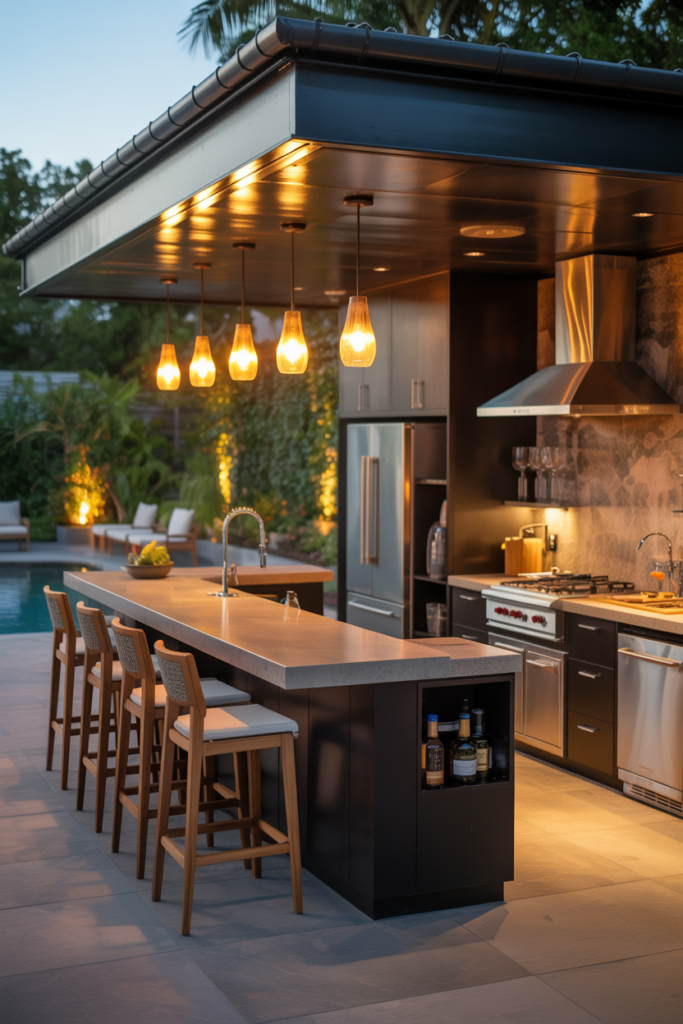
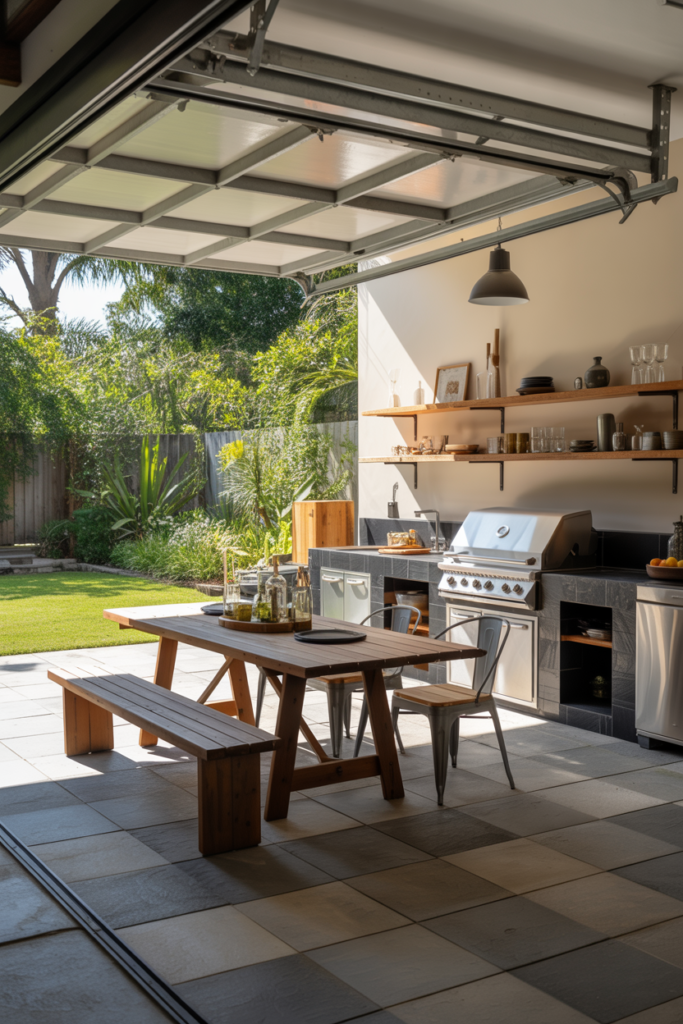
8. Create a Covered Outdoor Kitchen Using a Converted Garage or Carport Structure for a Budget-Friendly Build
Converting an existing garage, carport, or covered side structure into a covered outdoor kitchen is one of the most cost-effective approaches available to homeowners who already have a suitable structure in place. The roof, floor slab, and at least one or two walls already exist, which eliminates a significant portion of the construction cost of a purpose-built outdoor kitchen cover. The main investment goes into the kitchen fit-out itself rather than the structural shell.
Open up one or two sides of an existing carport or garage by removing roller doors or solid walls and replacing them with open archways, partial walls, or folding glass panels. This conversion immediately changes the character of the structure from a utilitarian vehicle storage space into an open, airy outdoor room. Adding an outdoor kitchen along one wall, a dining table in the center, and comfortable seating at the open end completes the transformation.
The practical advantages of a converted structure go beyond cost savings. An existing concrete floor slab handles the weight of stone countertops, heavy appliances, and constant foot traffic without any additional preparation. Existing electrical circuits in a garage often provide a useful starting point for the outdoor kitchen’s power requirements. These practical head-starts make a carport or garage conversion one of the smartest budget-conscious outdoor kitchen strategies available.
9. Add Outdoor Heating and Cooling to a Covered Kitchen for True Year-Round Comfort
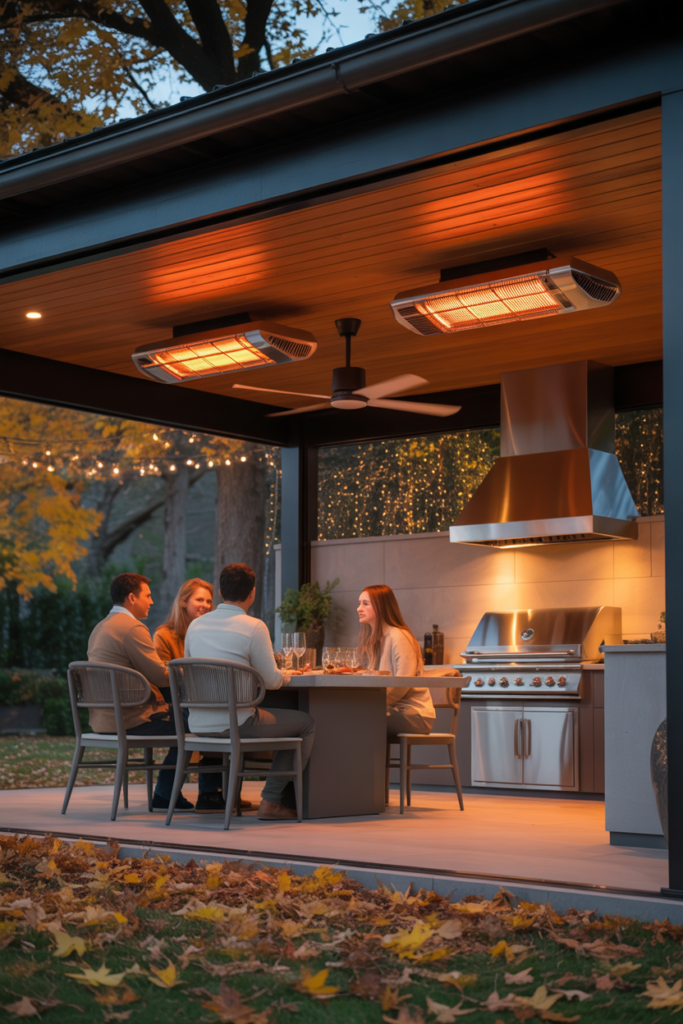
A covered outdoor kitchen without proper heating and cooling only partially solves the weather comfort problem. The roof keeps the rain off and the sun out, but temperature extremes in both directions still limit how often the space gets used if you do not address them directly. Adding ceiling fans for summer cooling and infrared heaters for cooler months converts a seasonally useful space into one that genuinely functions comfortably every single month of the year.
Ceiling fans mounted directly to the covered structure ceiling are the most effective and energy-efficient summer cooling solution for an outdoor kitchen. A large diameter fan, ideally 52 inches or wider, moves enough air across the cooking and dining zone to make the space feel significantly cooler without the noise or energy consumption of a mechanical cooling system. Position the fan centrally above the dining or seating area rather than directly above the cooking zone, where rising heat from the grill reduces its effectiveness.
Infrared patio heaters mounted to the ceiling or walls of the covered structure provide instant directional warmth that heats people and surfaces rather than the surrounding air. This makes them far more efficient outdoors than convective heaters that lose most of their output to the open environment. A combination of two or three ceiling-mounted infrared heaters positioned above the dining and seating zones extends comfortable outdoor kitchen use well into autumn and through mild winter evenings.
10. Build a Covered Outdoor Kitchen With a Dedicated Outdoor Dining Room for Complete Alfresco Living
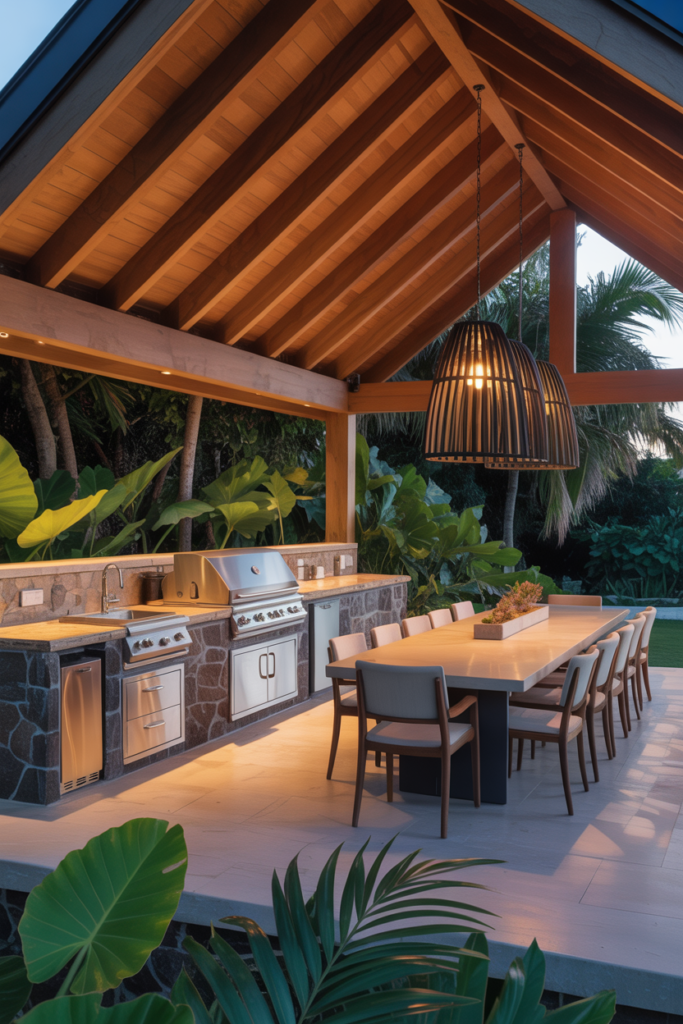
A covered outdoor kitchen that integrates a fully dedicated outdoor dining room creates the most complete alfresco living experience available in a residential backyard. Rather than treating the dining area as an afterthought squeezed beside the cooking zone, this approach gives the dining function its own defined space under the same roof structure with proper furniture, lighting, and ambiance designed specifically for the dining experience.
Use a large outdoor dining table that comfortably seats the number of people you regularly entertain, with room for two or three extra guests on occasion. Outdoor dining furniture in powder-coated aluminum, teak, or all-weather wicker all perform well under a covered structure where they face less UV and weather exposure than open-air furniture. Invest in genuinely comfortable outdoor dining chairs rather than basic stackable options because comfort directly influences how long people stay and how much they enjoy the experience.
Define the dining zone within the covered outdoor kitchen structure using a different flooring material, a feature ceiling treatment, or a change in lighting style. A pendant light or small chandelier above the dining table creates an immediate sense of intimacy and occasion that floodlights or downlights alone cannot achieve. These subtle design distinctions between the cooking zone and the dining zone make the overall outdoor kitchen space feel more considered, more generous, and more genuinely enjoyable to spend time in.
| Covered Outdoor Kitchen Feature | Cost Range | Impact Level | Priority for Year-Round Use |
| Solid insulated roof | High | Very high | Essential |
| Built-in grill and burners | Medium-High | Very high | Essential |
| Ceiling fan | Low-Medium | High | High |
| Infrared ceiling heaters | Medium | High | High |
| Outdoor refrigerator | Medium | High | High |
| Built-in pizza oven | Medium-High | Very high | Optional |
| Motorized louvre roof | High | Very high | Optional |
| Bar and seating zone | Medium | High | Recommended |
| Outdoor dining room | Medium | Very high | Recommended |
| Outdoor lighting system | Low-Medium | High | Essential |
11. Design a Covered Outdoor Kitchen With Stone and Timber Finishes for a Natural Rustic Character
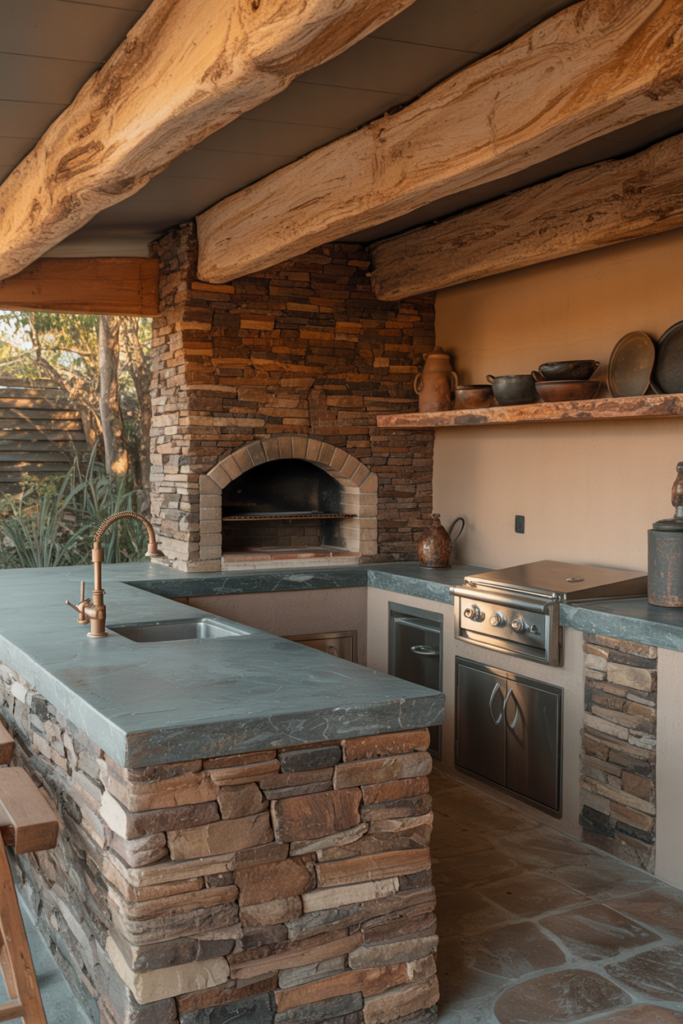
A covered outdoor kitchen built with natural stone benchtops, timber ceiling beams, and stone or brick cladding on the cabinet bases creates a warm, rustic character that feels genuinely connected to the outdoor environment. This material combination weathers beautifully over time, developing a patina that makes the space look more established and intentional with every passing season. For backyards with mature gardens, natural landscaping, or a rural property setting, this aesthetic fits the surroundings more naturally than sleek contemporary finishes.
Use natural bluestone, granite, or sandstone for the countertop surfaces as these materials handle outdoor conditions, heat from cooking appliances, and heavy daily use without deteriorating. Pair the stone tops with cabinet bases clad in stacked stone, face brick, or rendered masonry painted in a warm, earthy tone. Exposed timber ceiling beams in the covered structure overhead tie the natural material palette together and add a genuine architectural warmth that steel or aluminum structures cannot replicate.
Incorporate a built-in stone sink, a stone-clad pizza oven surround, and open timber shelving for storing outdoor entertaining essentials to complete the rustic outdoor kitchen look. Aged brass or oil-rubbed bronze fixtures and hardware complement the natural material palette without competing with it. This style of covered outdoor kitchen tends to photograph beautifully and consistently earns the most admiring comments from guests who experience it in person.
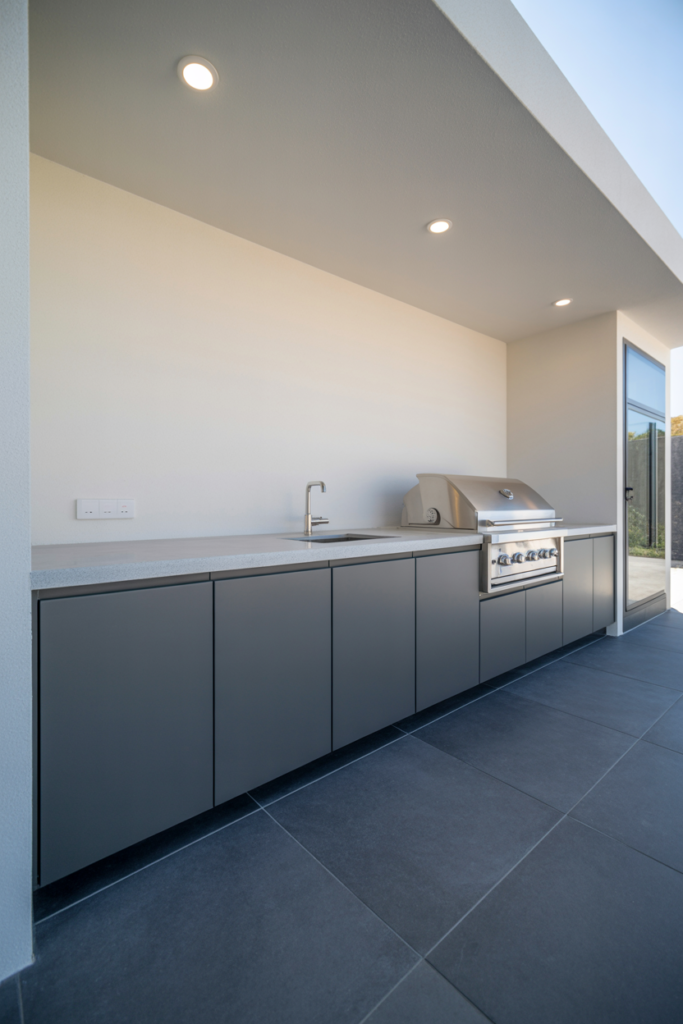
12. Install a Covered Outdoor Kitchen With Full Weatherproof Cabinetry for a Sleek Modern Look
A covered outdoor kitchen fitted with full weatherproof polymer or stainless steel cabinetry delivers a clean, contemporary look that suits modern home architecture particularly well. Weatherproof outdoor kitchen cabinets use materials specifically engineered for outdoor conditions, including UV-stable polymer doors, marine-grade stainless steel frames, and fully waterproof hinges and drawer runners. Unlike indoor cabinet materials repurposed for outdoor use, purpose-built outdoor cabinetry genuinely holds up through years of weather exposure without warping, fading, or deteriorating.
Choose a cabinet color and finish that complements your home’s exterior palette for the most cohesive result. Matte black, charcoal grey, warm white, and natural wood-look polymer finishes all look strong under a covered outdoor kitchen structure and pair well with stone or concrete benchtops. Handleless cabinet doors with push-to-open mechanisms create the cleanest possible aesthetic and eliminate the hardware maintenance issues that metal pulls and knobs can develop in outdoor environments.
A fully cabinetted covered outdoor kitchen also solves the storage challenge that open-plan outdoor kitchens often struggle with. Enclosed cabinets keep cooking equipment, outdoor tableware, condiments, and entertaining supplies protected from dust, insects, and moisture between uses. A well-designed outdoor kitchen with ample enclosed storage stays looking clean and organized even when it sees heavy regular use.
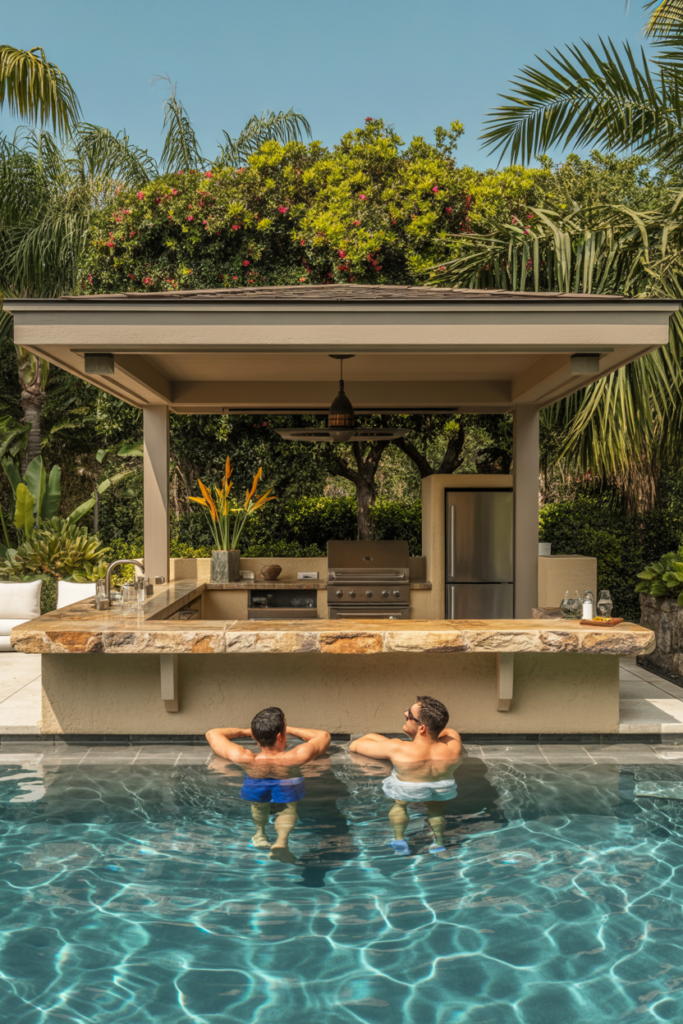
13. Create a Covered Outdoor Kitchen With a Swim-Up Bar Connecting to the Pool Area
A covered outdoor kitchen positioned at the pool edge with a swim-up bar connecting the two spaces creates the most resort-like backyard experience available in residential design. The swim-up bar concept places a raised waterproof counter at the pool coping level so swimmers can sit on submerged bar stools at the pool wall and interact directly with the kitchen and bar area above. For families and households that entertain regularly around a pool, this configuration makes the outdoor kitchen the natural social center of the entire backyard.
Build the swim-up bar counter from fully waterproof materials, including natural stone, porcelain tile, or marine-grade concrete that can handle constant water contact and chemical exposure from pool water without degrading. The counter overhang above the pool edge needs to be generous enough for comfortable elbow placement from the water side, typically around 300mm to 400mm beyond the pool coping. Non-slip surfaces on any steps or ledges connecting the pool to the bar area are a practical safety requirement rather than an optional detail.
Position the covered outdoor kitchen structure so the roof extends over both the cooking zone and the swim-up bar area, keeping the bar counter shaded and the cook covered simultaneously. Outdoor speakers, recessed lighting in the pool coping, and underwater pool lighting all contribute to an evening atmosphere around a swim-up bar that genuinely rivals commercial hospitality venues. This is a high-investment outdoor kitchen configuration, but one that delivers a lifestyle return that is difficult to put a number on.
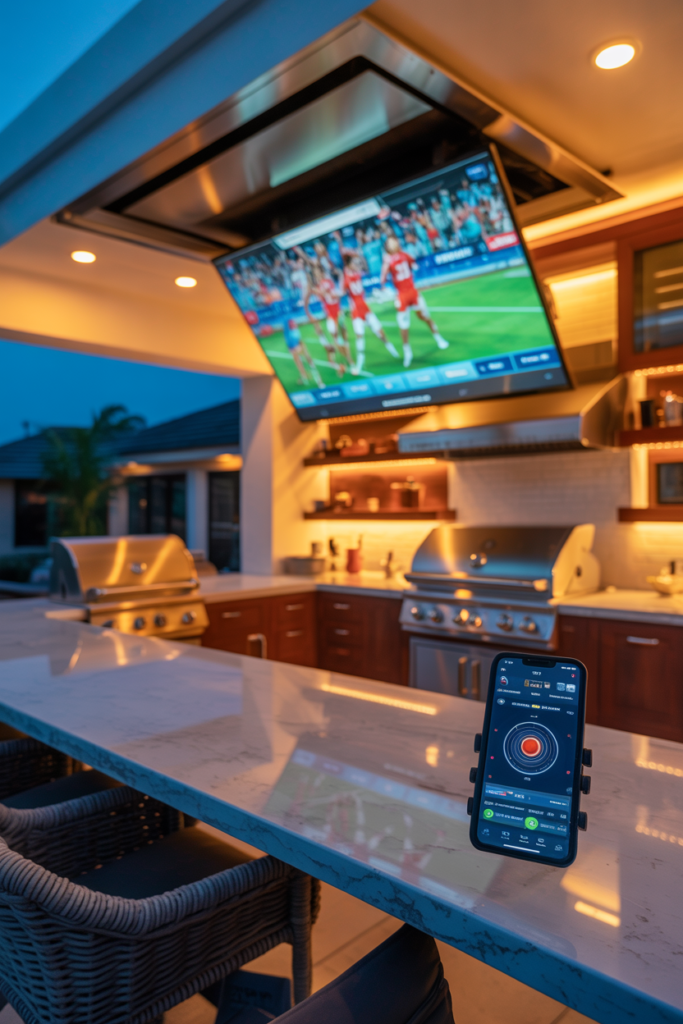
14. Build a Covered Outdoor Kitchen With Smart Technology Integration for a Connected Entertaining Space
A covered outdoor kitchen equipped with smart technology integration brings a level of convenience and control to outdoor entertaining that most people do not realize is available at a residential scale. Smart outdoor kitchens can incorporate WiFi-connected grill controllers that monitor and adjust cooking temperatures remotely, app-controlled outdoor lighting systems, motorized louvre roofs operated from a smartphone, outdoor speakers integrated into a whole-home audio system, and weatherproof outdoor televisions that lower automatically from a ceiling-mounted housing when needed.
Start the smart technology integration at the planning stage rather than retrofitting it after the build. Running conduits for data cables, speaker wiring, and motorized component connections during construction costs a fraction of what it costs to add them later. A single smart home hub compatible with outdoor components from brands like Control4, Sonos, or standard smart home platforms allows all the outdoor kitchen technology to operate from one interface rather than multiple separate apps.
Weatherproof outdoor televisions mounted under a covered outdoor kitchen structure have become one of the most popular additions to backyard entertaining spaces in recent years. A quality outdoor television with sufficient brightness to remain visible in daylight conditions, typically 1000 nits or above, transforms the covered outdoor kitchen into a venue for sports viewing, movie nights, and casual daily watching that keeps the whole family using the outdoor space more consistently throughout the year.
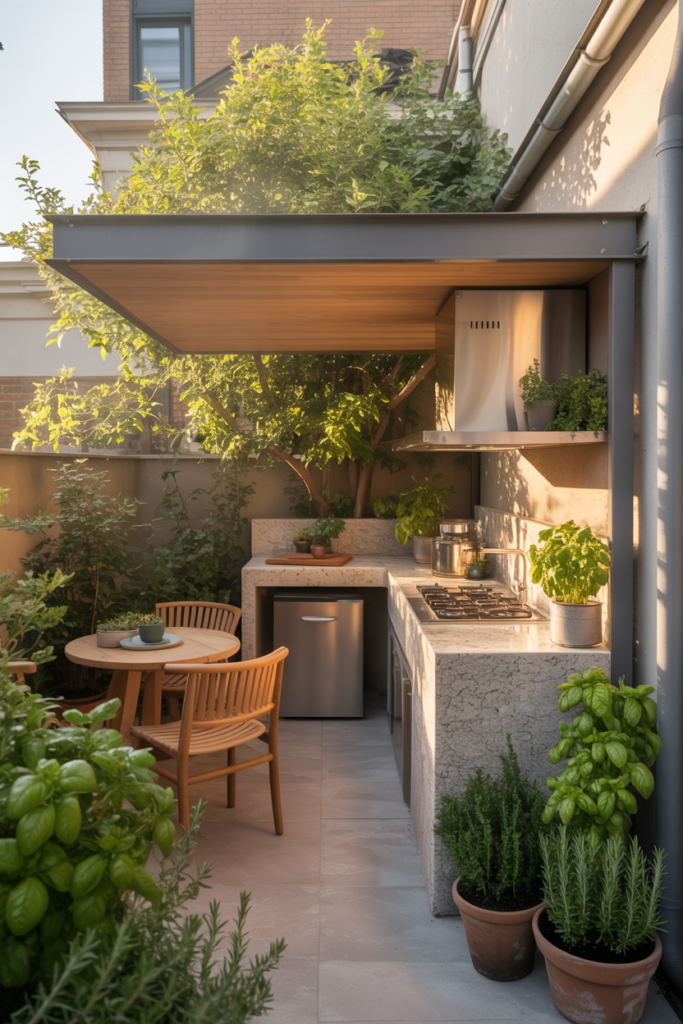
15. Design a Small Covered Outdoor Kitchen for a Compact Backyard That Maximizes Every Square Foot
A small covered outdoor kitchen designed specifically for a compact backyard proves that limited space does not mean limited function or limited style. The key to a successful small outdoor kitchen is prioritizing the appliances and features that deliver the most value for your specific way of entertaining and eliminating everything else. A compact outdoor kitchen with three well-chosen components and excellent finishes outperforms a cluttered, large kitchen with too many features competing for space every single time.
In a small covered outdoor kitchen, a built-in two-burner gas cooktop, a compact outdoor refrigerator, and a generous prep and serving counter deliver all the core functionality most households genuinely need for regular outdoor entertaining. Supplement the cooktop with a quality portable grill that stores away when not in use, rather than installing a large fixed grill that dominates the limited counter space. Vertical storage solutions, including wall-mounted shelving, magnetic knife strips, and hanging hooks, maximize usable storage without consuming counter or floor space.
Choose a simple lean-to roof structure attached to the house wall as the cover for a compact outdoor kitchen. This configuration requires the minimum footprint of any covered structure while delivering full weather protection and the cleanest possible integration with the existing house architecture. Keep the material palette simple and consistent with the house exterior, and the small outdoor kitchen will feel like a deliberate and well-designed extension of the home rather than a cramped afterthought.
How to Plan a Covered Outdoor Kitchen That Suits Your Backyard and Budget
Planning a covered outdoor kitchen well before any building begins is the single most important factor in achieving a result you will genuinely love and use. Start by defining how you entertain: the number of people you cook for regularly, the types of cooking you do most, and the time of year you want the space to be usable. These answers directly determine the size, cover type, appliance selection, and feature priorities for your specific outdoor kitchen.
Get your local council or municipal planning requirements checked early in the process. Covered outdoor structures above a certain size typically require a building permit, and the rules vary significantly between different locations and property types. Starting construction without the necessary approvals creates complications that are always more expensive and stressful to resolve after the fact than dealing with them properly at the beginning.
Budget realistically by getting at least two or three detailed quotes from experienced outdoor kitchen builders rather than estimating from online price guides. Material costs, labor rates, and appliance prices vary considerably between regions and between contractors. A detailed quote that breaks down structure, cabinetry, appliances, plumbing, electrical, and finishing separately gives you a clear picture of where the money goes and where adjustments can be made if needed.
Conclusion: Building a Covered Outdoor Kitchen That Works for Every Season
Every covered outdoor kitchen idea on this list points to the same truth: a well-planned covered outdoor kitchen is one of the highest-value backyard investments a homeowner can make. From a simple pergola-covered grill station to a fully equipped pavilion with a pizza oven, swim-up bar, and smart technology, the common thread is a covered structure that makes outdoor cooking and entertaining genuinely practical and enjoyable through every season.
The ideas that deliver the most consistent satisfaction are the ones built around how you actually live rather than how you imagine you might live. A compact covered kitchen used five nights a week brings more genuine enjoyment than an elaborate showpiece used five times a year. Match the scale and features of your covered outdoor kitchen to your real entertaining habits and your honest budget, and the result will always exceed expectations.
Start with the cover structure and the core cooking appliances, then layer in the additional features as budget and priorities allow. A covered outdoor kitchen grows and improves over time as you understand how you use it and what it needs. The best outdoor kitchens are never quite finished, which is honestly part of what makes them so enjoyable to own.
Frequently Asked Questions
What is the best roof type for a covered outdoor kitchen? A solid insulated panel roof provides the best all-around weather protection and thermal comfort for a covered outdoor kitchen used year-round. For more flexible weather control, a motorized louvre roof system allows you to open and close the roof in response to changing conditions. Pergolas with retractable canopy panels offer a more affordable option with reasonable weather protection for milder climates.
How much does a covered outdoor kitchen cost to build? Covered outdoor kitchen costs vary widely depending on size, cover type, appliances, and finish quality. A basic pergola-covered kitchen with a built-in grill and simple countertops starts from around $8,000 to $15,000. A fully equipped pavilion kitchen with premium appliances, stone benchtops, and a motorized louvre roof can reach $50,000 or more. Most mid-range covered outdoor kitchens with solid roofing and quality appliances fall between $20,000 and $35,000.
What appliances do I need for a functional covered outdoor kitchen? The core appliances for a functional covered outdoor kitchen are a built-in grill or gas cooktop, an outdoor-rated refrigerator, and adequate counter space for food preparation and serving. A side burner, outdoor sink with running water, and under-counter storage add significant convenience. Additional features like a pizza oven, ice maker, beer tap, or outdoor dishwasher depend entirely on your budget and entertaining style.
Can I build a covered outdoor kitchen myself as a DIY project? Simple pergola-covered outdoor kitchens with freestanding appliances and basic countertops are manageable as DIY projects for confident builders. Any work involving gas connections, electrical installation, or plumbing must be completed by licensed tradespeople, regardless of the overall project scope. A hybrid approach where you manage the structure and finish work while licensed contractors handle the services usually delivers the best balance of cost savings and safety compliance.
What materials work best for outdoor kitchen countertops under a covered structure? Granite, porcelain tile, natural bluestone, and concrete all perform well as outdoor kitchen countertop materials under a covered structure. These materials handle heat from cooking appliances, resist staining, and hold up through outdoor temperature changes without cracking or deteriorating. Avoid materials designed for indoor use only, such as standard laminate or solid surface products, as these degrade quickly in outdoor conditions, even under a covered structure.
How do I ventilate a covered outdoor kitchen properly? Proper ventilation in a covered outdoor kitchen requires at least one fully open side of the structure to allow smoke, cooking fumes, and heat to escape freely. A rangehood or exhaust fan positioned directly above the grill and cooking appliances captures smoke at the source and vents it upward through or beyond the roof structure. Ceiling fans improve general airflow across the whole covered space and help prevent heat and cooking odors from accumulating under the roof.
Does a covered outdoor kitchen add value to a home? A well-built covered outdoor kitchen consistently adds value to a residential property, particularly in climates where outdoor living is possible for most of the year. Real estate agents report that quality outdoor entertaining spaces featuring covered kitchens attract strong buyer interest and support higher asking prices. The value addition is most significant when the outdoor kitchen uses durable materials, quality appliances, and a design that integrates naturally with the existing home architecture and backyard layout.