
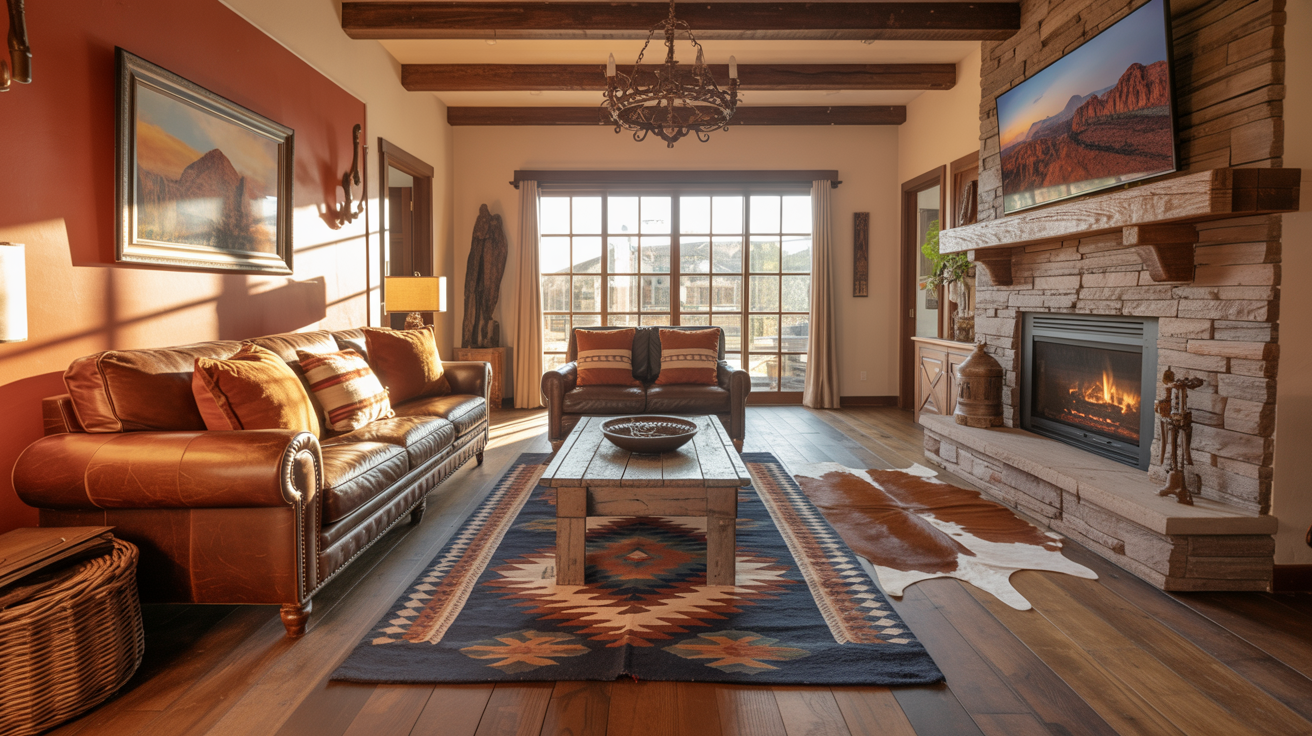
Western living room decor is one of those styles that feels immediately familiar and genuinely comfortable the moment you walk into a well-executed version of it. There is something deeply appealing about a room built around leather, aged wood, natural stone, and the kind of textiles that look like they belong on a working ranch rather than a furniture showroom floor. It is warm without trying too hard, characterful without being costume-like, and livable in a way that more trend-driven styles rarely manage.
I have always been drawn to western-inspired interiors because they prioritize substance over surface. Every material in a well-decorated western living room earns its place through genuine quality and natural character rather than through decorative novelty. A cognac leather sofa develops a richer patina every year. A reclaimed timber coffee table carries the history of whatever it was before. That accumulation of real material quality over time is what gives Western living rooms their particular sense of depth and authenticity.
The best western living room decor avoids the trap of leaning too heavily into any single visual cliché. A room full of horseshoes, cowboy hats on the wall, and wagon wheel light fixtures reads as a theme park rather than a home. The ideas on this list approach Western style with restraint and genuine taste, using the materials, colors, and objects that define the aesthetic without tipping over into territory that makes guests feel like they need to order a side of beans with their coffee.
Why Western Living Room Style Works So Well for Creating a Warm, Layered, and Genuinely Livable Space
Western living room decor works at a fundamental level because it draws from a material palette that is inherently warm, tactile, and visually rich. Leather, reclaimed wood, natural stone, wool, and wrought iron all develop character over time rather than deteriorating, which means a western-style living room tends to look better after five years of use than it did on the day it was finished. That quality of improving with age is genuinely rare in interior design and worth prioritizing from the beginning.
The color palette that defines western interiors also happens to be one of the most livable and flexible in home decorating. Warm terracotta, saddle tan, deep burgundy, dusty sage, charcoal, and cream work together in combinations that feel naturally harmonious without requiring precise coordination or professional color theory knowledge. These colors suit both natural and artificial lighting conditions well, which means the room looks consistently good from bright weekend mornings through candlelit evenings.
Western style also gives you genuine permission to mix old and new, rough and refined, practical and decorative in ways that more formal decorating styles do not easily allow. A hand-stitched leather sofa beside a modern concrete side table beside a vintage Navajo rug beside a sleek contemporary floor lamp works in a western living room in a way that would feel incoherent in a strictly traditional or strictly modern interior. That mixing freedom is one of the most appealing practical qualities of the Western aesthetic for everyday home decorating.
1. A Distressed Leather Sofa That Anchors the Western Living Room With Warmth and Timeless Character
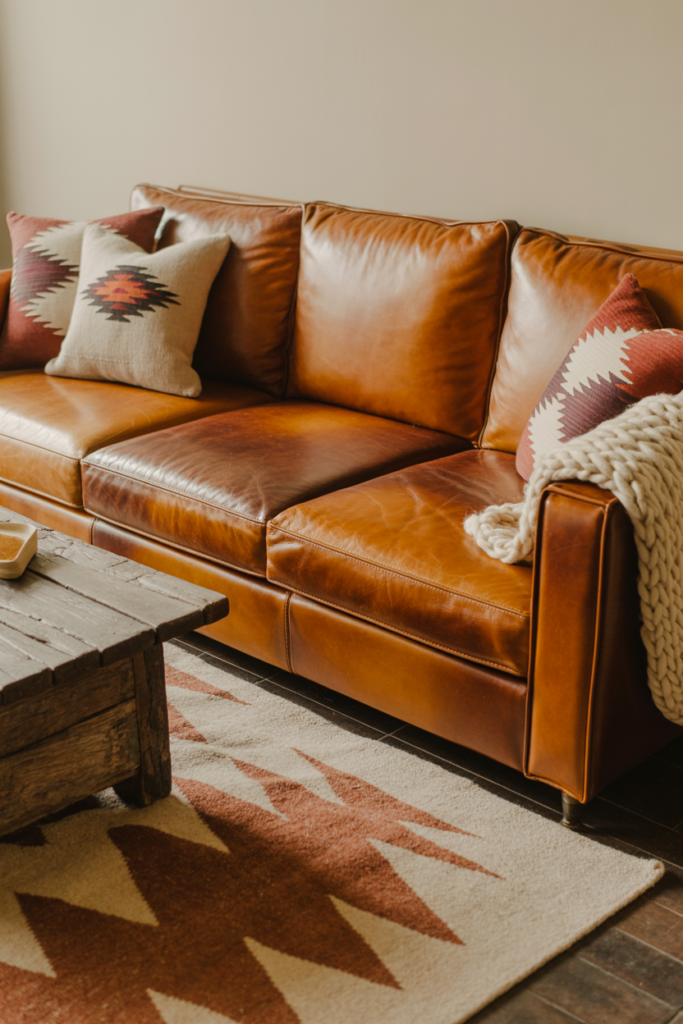
A distressed leather sofa is the single most impactful piece of furniture in any western living room, and choosing the right one sets the tone for every other decorating decision in the space. Full-grain or top-grain leather in cognac, saddle tan, tobacco brown, or aged burgundy develops a rich patina over the years of use that makes the sofa look progressively better rather than worn out. That improvement with age is the defining quality of genuine leather furniture and the main reason it suits Western decor at such a fundamental level.
Distressed leather specifically suits the western aesthetic better than smooth or polished leather finishes because the natural surface variation, pull-up marks, and subtle color shifts in distressed leather reference the worn, well-used quality that western style is built around. A brand-new smooth leather sofa can look sleek and contemporary in the right setting, but a distressed leather sofa looks like it belongs in a western living room from the first day it arrives and only improves from there. The slight imperfections in the surface are features rather than flaws.
Sizing the leather sofa generously relative to the room suits the western aesthetic well because the style gravitates toward substantial, comfortable furniture rather than slender and delicate pieces. A deep-seated three-seater or a large sectional in distressed leather creates the kind of furniture presence that invites people to settle in rather than perch carefully, which is exactly the quality a western living room should project from every piece of seating it contains.
2. A Stacked Stone or River Rock Fireplace That Creates an Immediate Western Focal Point in the Living Room
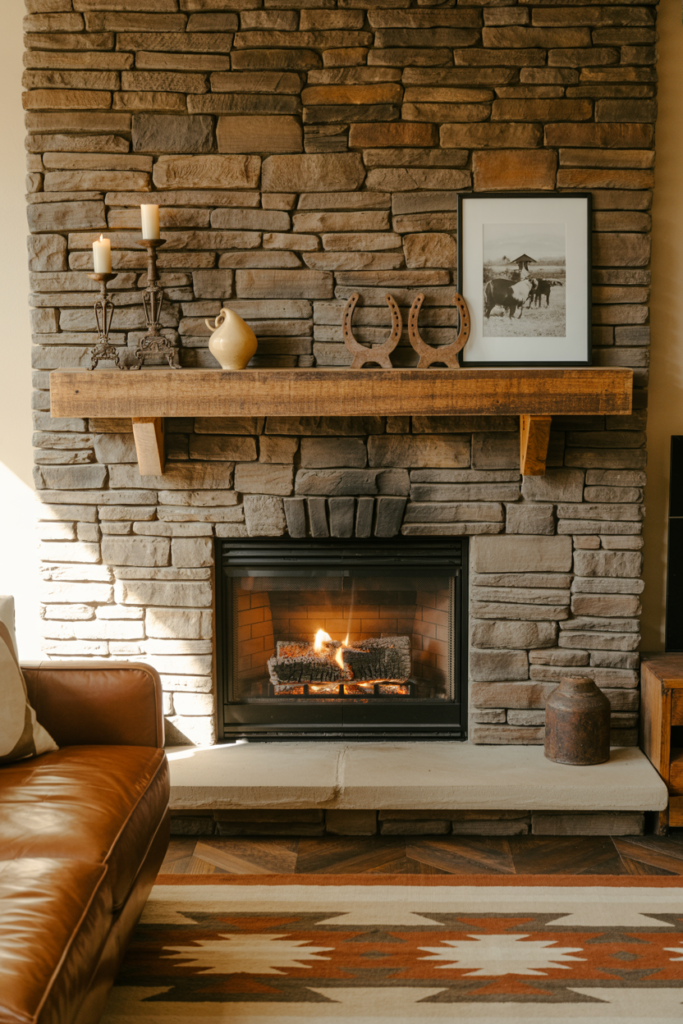
A stacked stone or river rock fireplace is the architectural equivalent of the distressed leather sofa in a western living room: the element that everything else in the room instinctively organizes itself around. Natural stone fireplaces in warm grey, cream, and tan tones carry a rugged, organic quality that no manufactured material replicates convincingly, and that authenticity is exactly what the western aesthetic rewards most consistently. A floor-to-ceiling stone fireplace on the main living room wall creates both a visual anchor and a physical warmth source that defines how the room gets used through every season.
River rock fireplaces with their rounded, organic stone shapes suit western living rooms in wooded, mountainous, and Pacific Northwest settings particularly well because they reference the natural geology of those landscapes directly. Stacked flat stone fireplaces suit the drier, more angular landscapes of the American Southwest and give the room a slightly more architectural and contemporary western feel. Either style creates the same fundamental effect of grounding the living room in natural material quality that no amount of decorative objects can replicate.
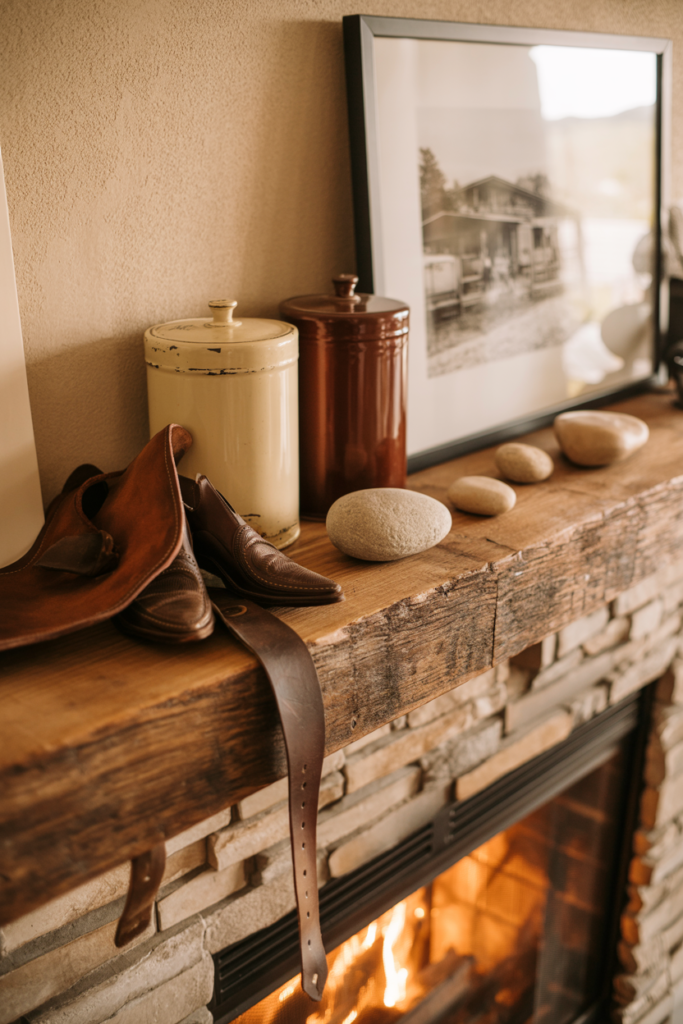
A wide reclaimed timber mantel above the fireplace opening creates a natural display ledge for western-style decorative objects while adding horizontal visual weight that balances the vertical stone surround. Vintage horseshoes, a collection of small ceramic vessels, a few framed photographs, and a pair of iron candleholders arranged on the mantel shelf create a vignette that feels genuinely western without leaning into cliché territory. The mantel styling should look collected and personal rather than thematically assembled.
3. Navajo and Southwestern Patterned Rugs That Layer Color and Cultural Richness Into the Western Living Room
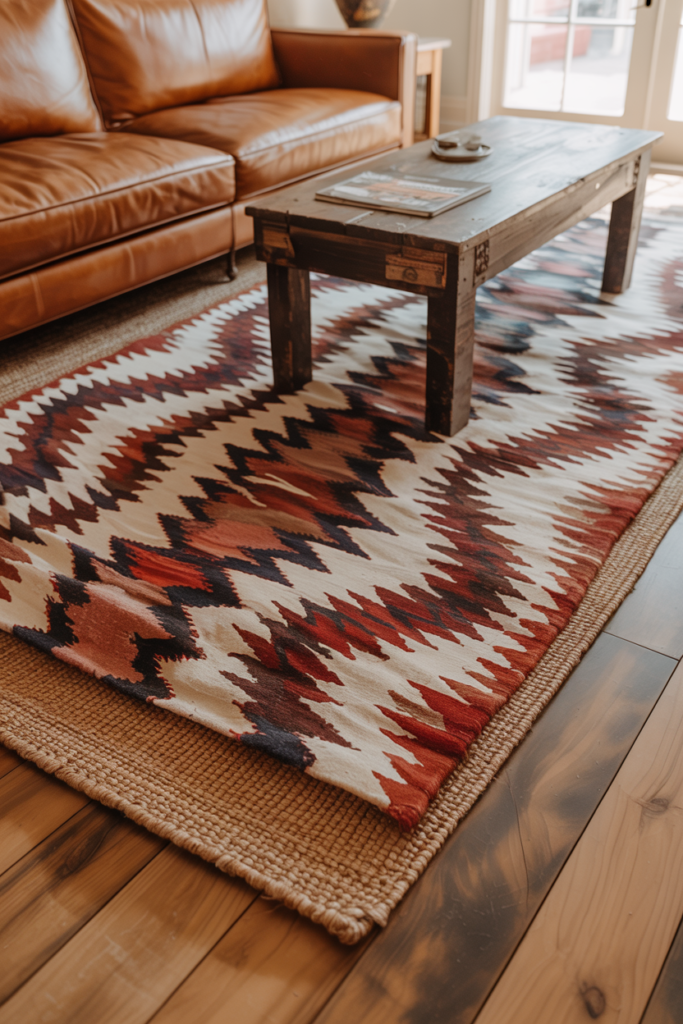
A Navajo-inspired or Southwestern-patterned area rug brings more color, pattern, and cultural depth to a western living room in a single piece than almost any other decor decision. The geometric patterns, bold color combinations of terracotta, cream, navy, turquoise, and deep red, and the woven textile quality of authentic Southwestern rugs create a visual richness that anchors the seating arrangement and ties together the surrounding furniture and wall colors. A large-format rug in a Southwestern pattern under a leather sofa grouping immediately reads as western without requiring any additional thematic elements in the room.
Authentic Navajo woven rugs from Indigenous artisans carry genuine cultural and historical significance that mass-produced Southwestern-print alternatives do not possess. When budget and availability allow, investing in authentic woven textiles from reputable Indigenous art dealers adds real value to the western living room, both aesthetically and culturally. When authentic pieces fall outside the budget, looking for hand-woven rugs from small independent weavers using traditional techniques produces a far better result than machine-printed versions of the pattern sold at volume retailers.
Layering a smaller Southwestern patterned rug over a larger natural jute or sisal base rug creates a floor treatment with genuine visual depth and warmth that a single rug rarely achieves in a large Western living room. The layered approach also lets the Southwestern pattern function as an accent rather than the dominant floor element, which produces a more balanced overall room composition than wall-to-wall pattern coverage across the entire floor area.
4. Reclaimed Wood Furniture and Accents That Add Authentic Rugged Character to Every Surface in the Room
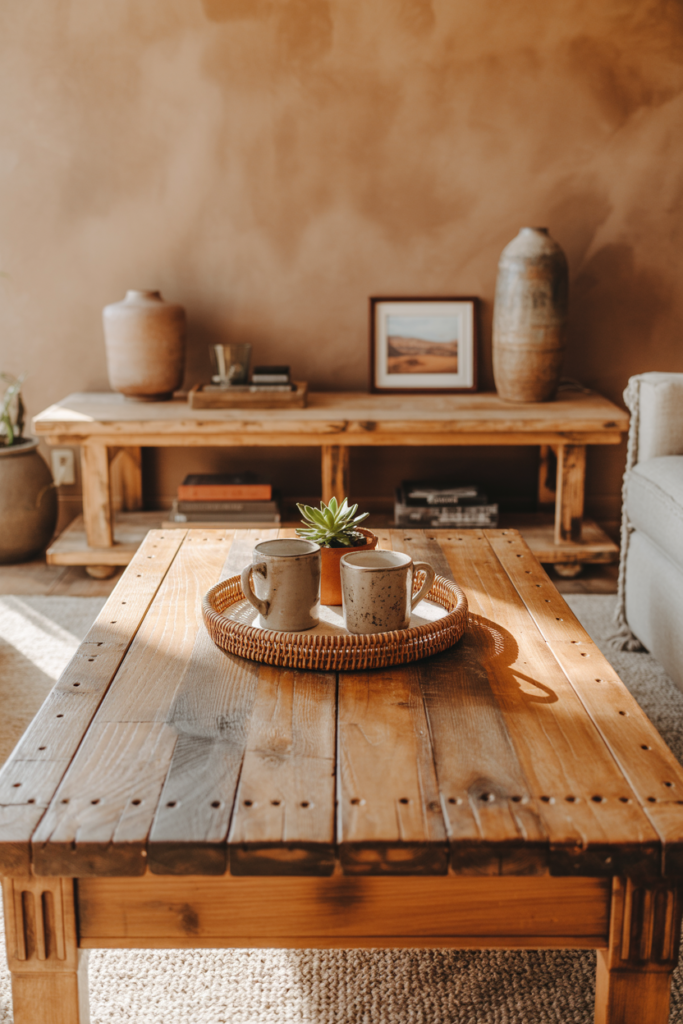
Reclaimed wood furniture belongs in a western living room the same way aged leather does: completely, naturally, and without any need for stylistic justification. A reclaimed timber coffee table with visible saw marks, nail holes, and weathered surface patina becomes an immediate conversation piece while functioning perfectly as a practical surface for books, drinks, and decorative objects. The history embedded in reclaimed wood adds a depth and authenticity to western living room decor that new furniture built to look old never quite achieves, regardless of how skillfully it replicates the distressed surface.
Sourcing reclaimed wood furniture from salvage dealers, antique markets, and small furniture makers who work with reclaimed timber produces pieces with genuine character that mass-produced alternatives lack. A solid reclaimed oak or pine console table behind the sofa, a rough-hewn timber side table beside a leather armchair, and a reclaimed wood media console anchoring the television wall create a connected material thread through the western living room that feels collected and personal rather than purchased as a matching set.
The natural color variation in reclaimed wood, from the silver-grey of weathered exterior timber to the warm honey tones of interior salvage wood, provides a built-in tonal range that suits the western color palette without requiring any staining or finishing decisions. Leaving reclaimed wood furniture in its natural, salvaged state with nothing more than a coat of clear wax or matte sealer preserves the authentic surface character that makes it so visually compelling in a western interior.
5. Cowhide Rugs and Throws That Add Texture, Pattern, and Western Identity to the Living Room Floor and Furniture
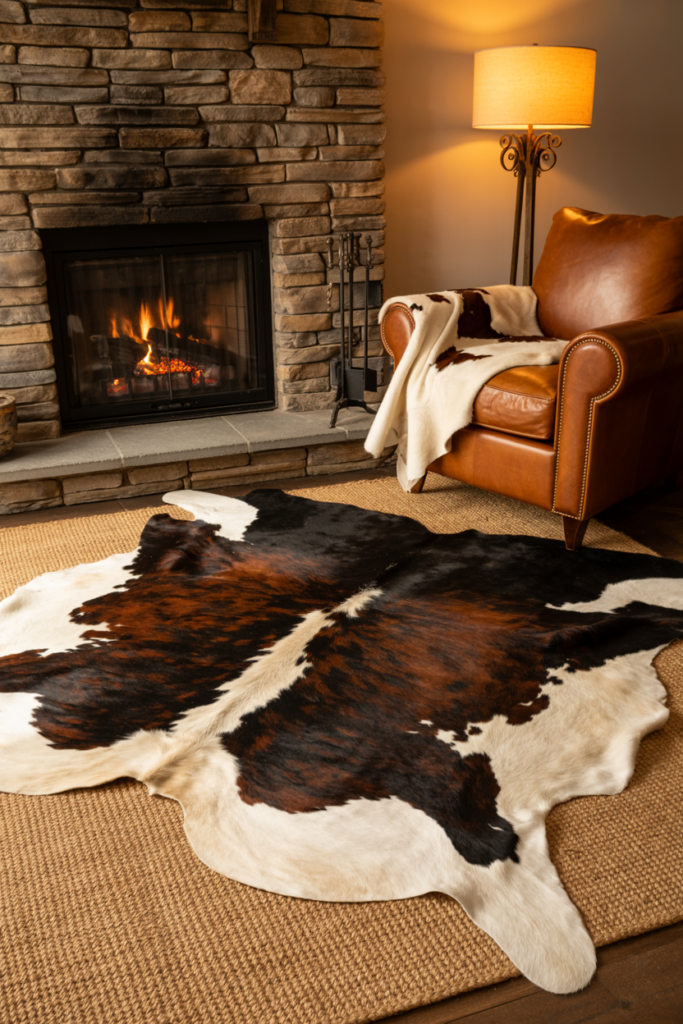
A cowhide rug is one of the most recognizable Western living room decor elements and one of the most versatile natural floor coverings available for this style. The natural black, white, brown, and tan color variation in a cowhide rug suits the western color palette perfectly, while the organic shape and hide texture add a raw, natural quality that woven rugs of the same size cannot replicate. Placed under a coffee table, layered over a larger jute rug, or positioned beside a fireplace, a cowhide rug adds instant western character without requiring any other thematic changes to the surrounding decor.
Natural cowhide rugs vary significantly in pattern and color distribution between individual hides, which means each one is genuinely unique in a way that manufactured rugs cannot claim. That individual uniqueness gives a cowhide rug the same one-of-a-kind quality as a piece of original artwork, which suits the western aesthetic’s emphasis on authentic, singular objects over mass-produced alternatives. Choosing a cowhide with a strong contrast between the dark and light sections creates the most visually striking effect in a western living room with an otherwise predominantly warm and neutral palette.
Cowhide throws draped over a leather sofa arm or the back of a wooden armchair add western texture and warmth to seating arrangements without requiring any furniture replacement or reupholstering. The combination of leather upholstery and cowhide throw on the same piece of furniture creates a layered natural material effect that reads as genuinely western rather than decoratively western, which is an important distinction in a style where authenticity drives the overall quality of the result.
6. Wrought Iron Light Fixtures and Decorative Hardware That Add Dark Metal Contrast to the Western Living Room
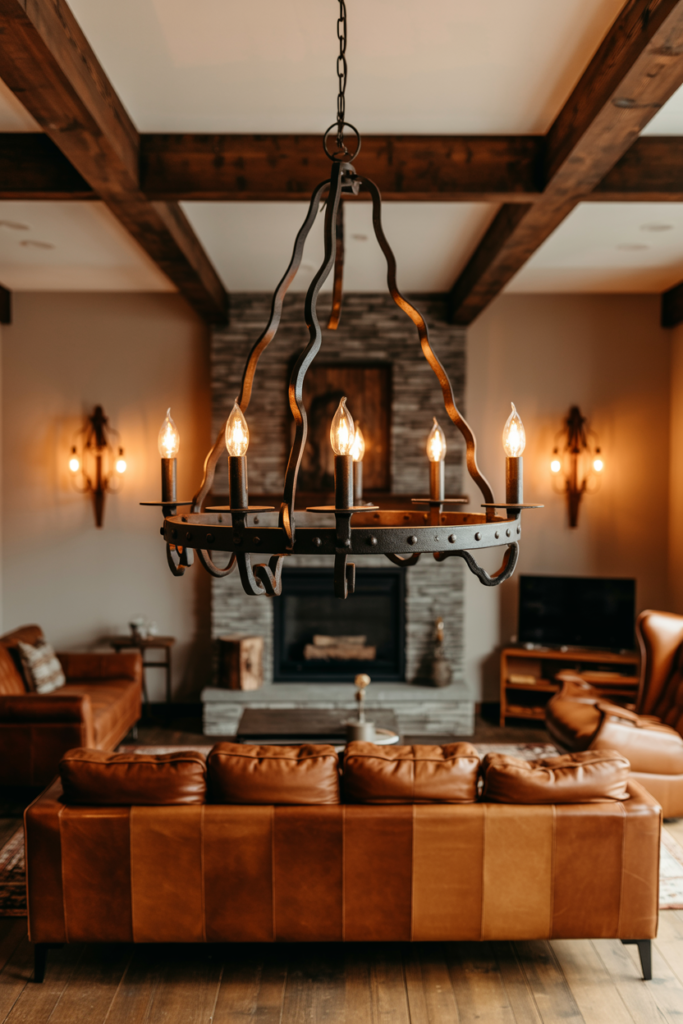
Wrought iron light fixtures bring a handcrafted, period-appropriate quality to western living rooms that no other light fixture material quite replicates. A wrought iron chandelier above the main seating area with candle-style Edison bulb holders creates a warm, atmospheric overhead light source while adding a substantial decorative presence to the room that flush-mounted fixtures and recessed cans never achieve. The dark metal tone of wrought iron also functions as a consistent accent color that ties together light fixtures, curtain rods, door hardware, and decorative objects across the entire living room without requiring a formal decorating scheme.
Choosing wrought iron fixtures with organic, hand-forged details like twisted metal accents, leaf motifs, and irregular surface texture suits the western aesthetic more authentically than perfectly smooth and symmetrical iron fixtures that read as mass-produced rather than craft-made. The slight imperfections in hand-forged ironwork add the same kind of authentic character to western decor that distressed leather and reclaimed wood provide in their respective material categories. That consistent emphasis on handcrafted imperfection over machine perfection runs through every material choice in a well-executed western living room.
Wall-mounted iron sconces on either side of the fireplace or flanking a large piece of western art add a secondary lighting layer that creates warmth and visual depth in the evening hours. Layering multiple iron light sources at different heights throughout the western living room, overhead chandelier, wall sconces, and table lamps with iron bases, creates the kind of warm, multi-source lighting that makes western interiors feel genuinely inviting rather than dramatically lit from a single overhead source.
7. Warm Terracotta and Earthy Neutral Wall Colors That Set the Right Atmospheric Tone for Western Decor
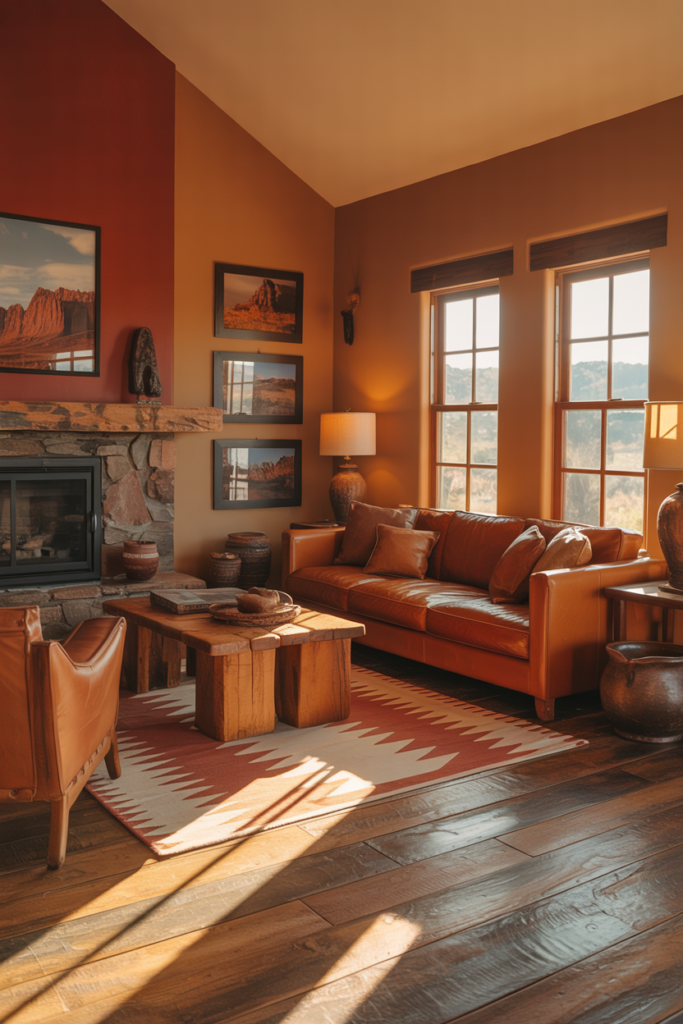
Wall color in a western living room works best when it reinforces the warm, earthy material palette of the furniture and textiles rather than contrasting with it. Terracotta, warm adobe, dusty ochre, deep canyon red, warm sand, and creamy off-white all suit western living room wall colors because they share the natural pigment quality of the landscape that western style draws its visual identity from. These colors make leather furniture look richer, reclaimed wood look warmer, and Southwestern textiles look more vibrant without any of them needing to work harder to achieve their individual decorative effect.
Painting a single feature wall behind the fireplace or sofa in a deeper terracotta or adobe red while keeping the remaining walls in a lighter warm neutral creates an accent wall approach that adds visual depth without overwhelming the room with a single strong color. That deeper accent wall behind the fireplace in particular suits the western living room beautifully because it reinforces the fireplace as the room’s natural focal point while adding warmth and drama to the surrounding stone that a white wall never achieves. The color combination of warm stone, dark iron mantel hardware, and a deep terracotta wall creates a western atmosphere almost entirely through material and color choices alone.
Avoiding cool greys, stark whites, and blue-toned neutrals as primary wall colors in a western living room matters more than most people realize before they see the difference in a finished room. Cool wall colors fight against the inherent warmth of leather, wood, and natural textiles in a way that creates a subtle visual tension throughout the room. The western palette is fundamentally warm in its undertones, and every wall color decision should reinforce rather than undermine that foundational warmth.
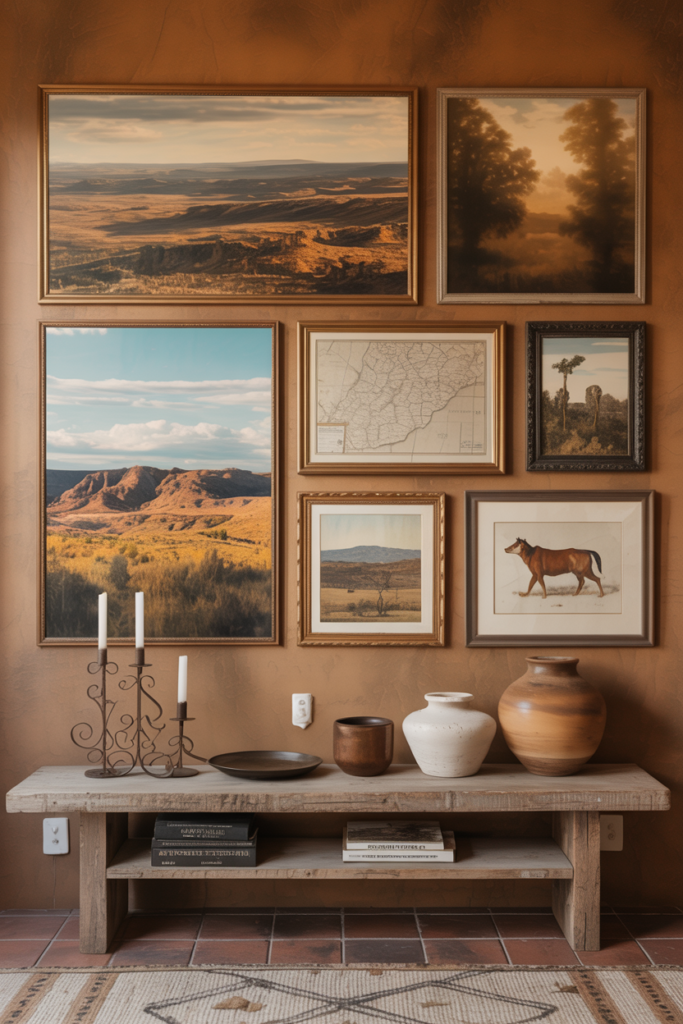
8. A Gallery Wall of Western Landscape Photography and Cowboy Art That Tells the Story of the American West
A gallery wall built around western landscape photography, cowboy art, vintage ranch maps, and Native American-inspired prints creates one of the most personal and visually compelling decorating statements available in a western living room. Large-format photographs of wide open plains, desert mesas, mountain ranges, and dramatic southwestern skies extend the visual connection between the interior and the western landscape it draws inspiration from. The right gallery wall makes the living room feel like it genuinely belongs to a specific place and a specific set of values rather than a generic decorating aesthetic assembled from a catalog.
Framing choices drive the cohesion of a Western gallery wall more than most people expect before they start assembling one. Natural timber frames in weathered and rustic finishes, simple dark iron frames, and antique wood frames with visible age patina all suit western wall art arrangements when used consistently across the collection. Mixing too many different frame styles and finishes creates visual confusion that works against the curated quality a gallery wall needs to read as intentional rather than randomly assembled.
Mixing photographic prints with original paintings, vintage maps, antique botanical or wildlife illustrations, and meaningful personal photographs adds the collected-over-time quality that makes a western gallery wall feel genuine rather than purchased as a complete set. A large oil painting of a western landscape beside smaller vintage ranch photographs beside a framed antique map creates exactly the kind of layered personal collection that western decor celebrates at every scale, from the gallery wall down to the styled shelf.
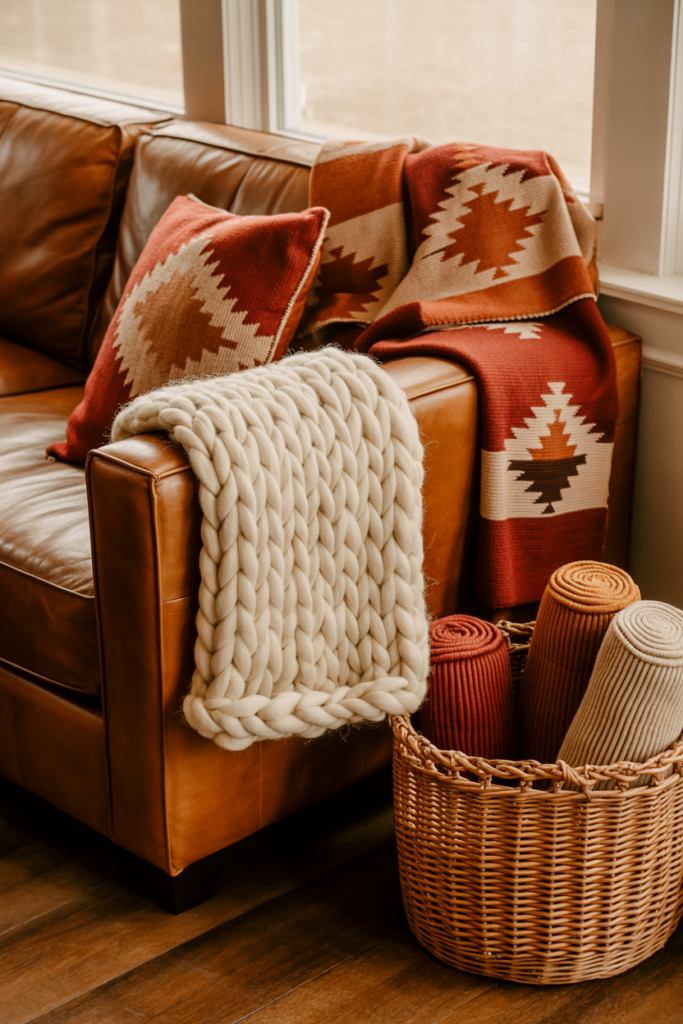
9. Chunky Knit and Woven Wool Throws That Add Softness and Warmth to Western Living Room Seating
Woven wool and chunky knit throws are essential softening elements in a western living room where the dominant materials of leather, wood, and iron create a room that could easily feel hard and cold without the right textile layering. Draping a thick, woven wool throw in a Southwestern geometric pattern over the back of a leather sofa introduces color, pattern, and tactile warmth simultaneously while softening the visual weight of the leather upholstery. That combination of material contrasts, smooth leather against rough-woven wool, creates a visual and tactile richness that suits the western living room’s emphasis on layered natural materials.
Chunky hand-knit throws in cream, warm grey, or terracotta tones suit western living rooms where the primary pattern comes from a Southwestern rug or cowhide accent, and the textiles need to add texture and warmth without introducing competing pattern. A generously sized chunky knit throw draped casually over a leather armchair or folded across the end of a sofa creates the lived-in, comfortable quality that distinguishes a genuinely welcoming western living room from a stiffly decorated one. The casual drape matters as much as the throw itself because it signals that the room actually gets used and enjoyed rather than maintained for display.
Storing extra throws in a large woven basket or a wooden blanket chest beside the fireplace keeps them accessible and also adds another decorative element to the western living room that contributes both function and visual character. A vintage wooden trunk repurposed as a blanket chest doubles as additional seating and a surface for drinks and books while holding a collection of throws in western textile patterns that rotate onto the sofa and chairs depending on the season and mood.
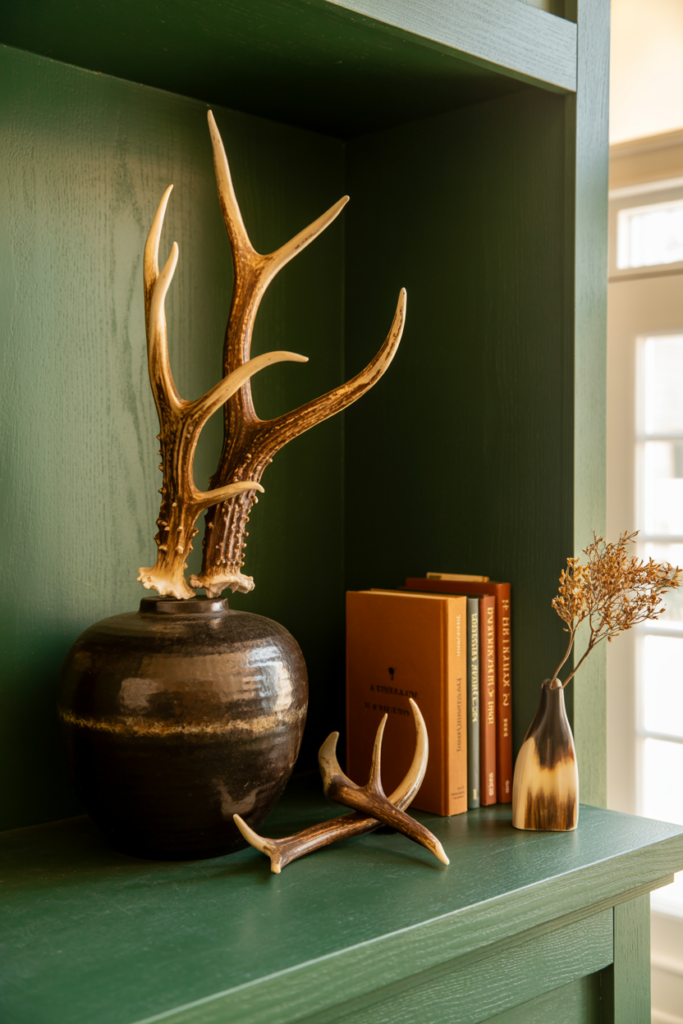
10. Antler and Horn Decorative Accents That Add Natural Western Character Without Going Into Trophy Territory
Antler and horn decorative accents add a distinctly western natural element to living room decor that leather and wood alone cannot achieve, but using them with restraint matters enormously for keeping the room feeling curated rather than themed. A single antler chandelier above the seating area, a pair of small antler bookends on the shelf, or a naturally shed antler arrangement in a large ceramic vessel each introduce the western natural element with enough restraint to feel like a design choice rather than a hunting lodge inventory. Overdoing antler and horn accents pushes a western living room quickly into territory that reads as caricature rather than character.
Naturally shed antlers from deer and elk are widely available from ranches, wildlife areas, and antique dealers, and carry no ethical concerns about trophy hunting that mounted heads and commercial antler products sometimes attract. Using naturally shed antlers in western decor also adds an authenticity to the element that manufactured resin antler products cannot replicate because each shed antler carries a unique form and natural color variation that comes from genuine wildlife rather than a casting mold. That authenticity aligns perfectly with the Western aesthetic’s broader emphasis on genuine natural materials over manufactured approximations.
Horn decorative objects in the form of carved horn vases, horn-handled serving pieces displayed on a shelf, and small horn sculptures add a subtle western material reference without the visual dominance of large antler arrangements. These smaller horn accent pieces work particularly well in shelf vignettes and on side tables, where they add textural variety and a natural material reference without overwhelming the surrounding objects or requiring the room to organize itself around them as a dominant decorative element.
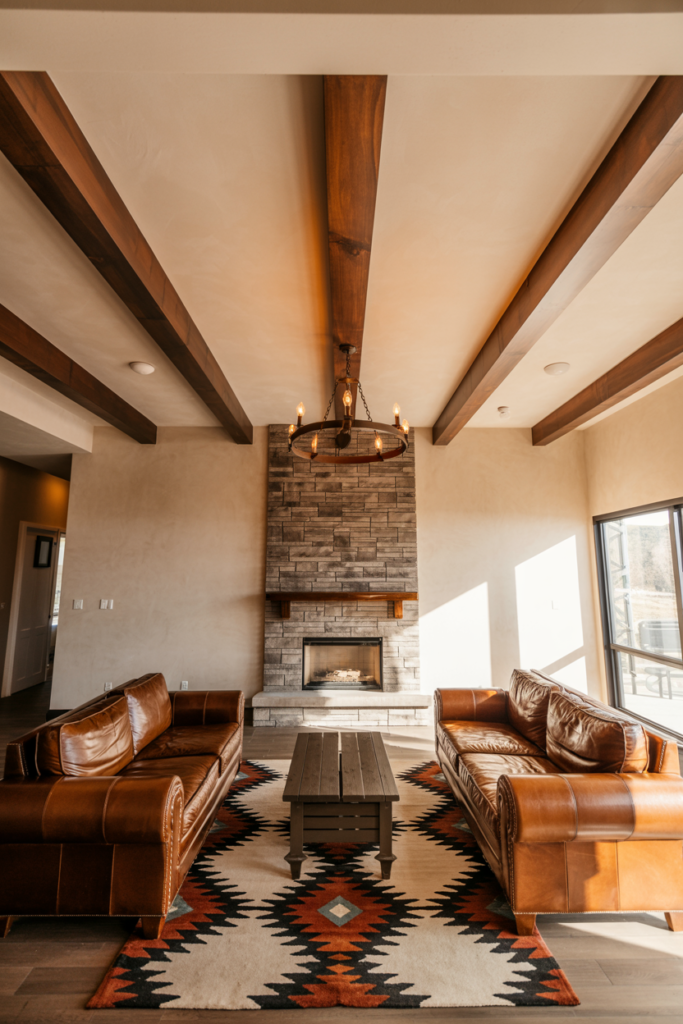
11. Exposed Wood Ceiling Beams That Add Architectural Height and Western Warmth to the Living Room
Exposed wood ceiling beams transform a western living room ceiling from a blank fifth wall into an active architectural element that adds height, warmth, and genuine character to the entire space. Dark-stained timber beams against a white plaster or whitewashed wood ceiling create the contrast that makes the beams read clearly as a design feature rather than a structural afterthought, and that contrast simultaneously draws the eye upward in a room where the ceiling might otherwise feel low and unremarkable. The horizontal rhythm of evenly spaced beams across a western living room ceiling creates a sense of order and craftsmanship that suits the style’s emphasis on honest, well-made construction.
Faux timber beams made from high-density polyurethane are a widely used and genuinely convincing alternative to real structural timber beams for homeowners who want the aesthetic without the structural modification and cost of real beam installation. From a normal standing distance in a finished western living room, the visual difference between real and quality faux beams is essentially imperceptible, which makes the faux option a practical and reasonable choice for most renovation budgets. Painting or staining faux beams in a warm walnut or dark oak tone before installation produces the depth of color that makes them read most convincingly as real timber.
The beam spacing in a western living room ceiling works best at three to five beams across a standard room width, creating a rhythm that reads as architectural rather than decorative. Fewer beams spaced far apart look sparse and indecisive, while more beams packed closely together look heavy and oppressive in a room that already has substantial visual weight from leather furniture, stone, and dark iron fixtures. That middle range of three to five beams consistently produces the proportion that suits western living room ceiling styling best across different room sizes.
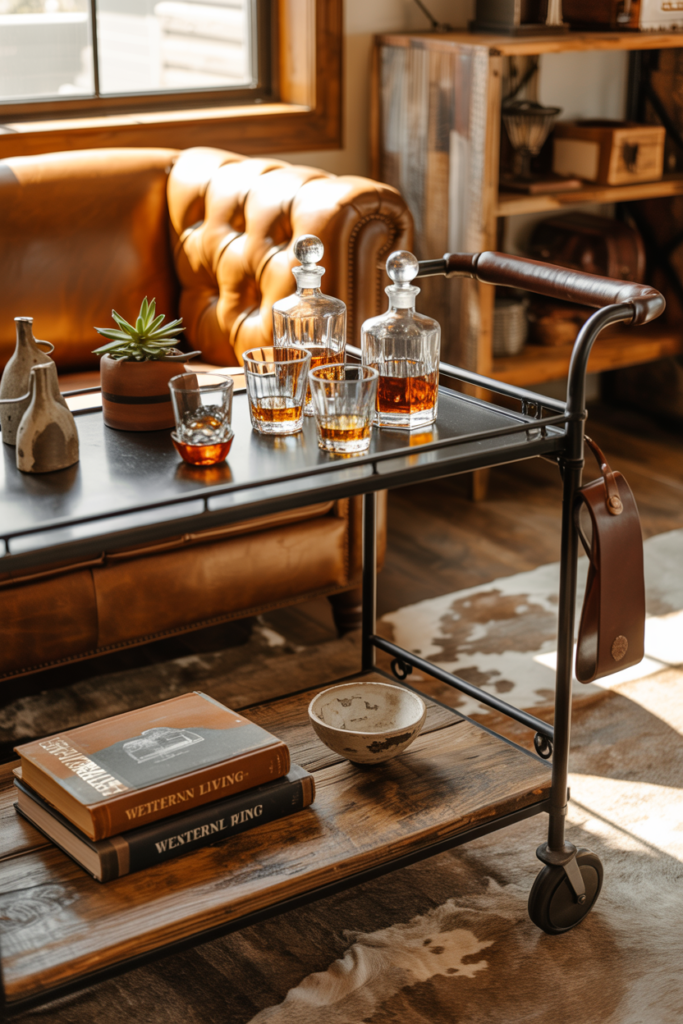
12. A Leather and Iron Bar Cart or Drinks Cabinet That Adds Western Entertaining Style to the Living Room
A leather-wrapped or iron-framed bar cart adds a western entertaining element to the living room that suits the style’s emphasis on generous, unpretentious hospitality. A sturdy iron bar cart with leather-wrapped handles, a reclaimed wood shelf, and enough surface area for a proper bottle collection and glassware becomes both a functional drinks station and a decorative focal point that adds character to an otherwise underused corner of the western living room. The combination of iron and leather on a single piece of furniture also reinforces the material story running through the rest of the room’s furniture and fixture choices.
Styling the bar cart with amber glass whiskey decanters, leather-wrapped flasks, a set of heavy-bottomed lowball glasses, and a few western-style decorative objects like a small succulent in a terracotta pot or a vintage tin creates a vignette that looks genuinely western rather than generically styled. The cart’s contents should look like they belong to someone who actually uses them rather than a display assembled for visual effect. Functional objects that also look beautiful are always the strongest decorating choice, and a well-stocked bar cart in a western living room exemplifies that principle perfectly.
A wooden drinks cabinet or sideboard with iron hardware serves the same entertaining function with more storage capacity and a slightly more formal western presence than a rolling cart. Positioning it against a wall with western landscape artwork above it and a pair of iron sconces flanking the arrangement creates a fully realized western vignette that anchors the wall as effectively as the fireplace anchors its wall across the room.
How to Balance Western Living Room Decor So It Feels Authentic and Layered Rather Than Themed and Overdone
The single most important principle in Western living room decorating is restraint in the use of explicitly Western iconographic objects. Horseshoes, cowboy hats, wagon wheels, and branded ranch signs all belong somewhere in the western decorating vocabulary, but using more than one or two of these recognizable symbols in a single living room tips the balance from authentically western to thematically decorated in a way that reads as costume rather than home. The best Western living rooms communicate their aesthetic identity entirely through materials, colors, and proportions rather than through recognizable Western symbols repeated across every surface.
Building the western living room around a foundation of genuine quality natural materials, real leather, actual reclaimed wood, authentic stone, and genuine wool textiles, creates a room that communicates western character without relying on any explicit iconographic references. The material quality speaks for itself in a way that decorated symbols never can, and that quality foundation gives the room a depth and authenticity that maintains its appeal over years of daily living rather than feeling like a decorating phase that needs updating with the next trend cycle.
| Western Living Room Element | Material Recommendation | Style Impact | Budget Range |
| Leather Sofa | Full-grain distressed cognac or tan | Very High | Medium to High |
| Stone Fireplace | Stacked natural stone or river rock | Very High | High |
| Southwestern Rug | Hand-woven wool geometric pattern | Very High | Medium to High |
| Reclaimed Wood Furniture | Salvage oak or pine | High | Low to Medium |
| Wrought Iron Fixtures | Hand-forged dark iron chandelier | High | Medium |
| Cowhide Rug | Natural black and white hide | High | Medium |
| Exposed Ceiling Beams | Real or faux timber dark stained | High | Low to Medium |
| Gallery Wall Art | Western landscape photography and prints | High | Low to Medium |
13. Vintage and Antique Western Accessories That Add Personal History and Collected Character to the Room
Vintage and antique western accessories bring a depth of personal history to a western living room that newly purchased decor items simply cannot replicate, regardless of how well-chosen or authentically styled they appear. A collection of vintage spurs displayed on a shelf, an antique leather saddlebag repurposed as a magazine holder beside the sofa, or a set of vintage tin canisters on the mantel each tells a story about real western working life that manufactured decorative versions of the same objects never achieve. That storytelling quality is what separates a western living room that feels genuinely inhabited from one that feels assembled from a theme catalog.
Antique markets, estate sales, ranch auctions, and online vintage dealers are the best sources for authentic western accessories at prices that range from very affordable to genuinely collectible, depending on the age, provenance, and condition of individual pieces. Building a collection of vintage western objects over time, rather than purchasing everything simultaneously, produces the naturally accumulated quality that defines the best western interiors. Each piece acquired at a different time from a different source adds its own individual character to the collection without the matching uniformity that purchasing a curated set produces.
Displaying vintage western accessories in deliberate vignette arrangements rather than scattered individually across every surface creates a more cohesive and intentional decorating effect. A grouping of three or five vintage objects arranged together on a shelf, mantel, or side table reads as a curated collection, while the same objects placed individually at random points around the room read as random clutter. That distinction between collected display and scattered accumulation determines whether vintage accessories enhance the western living room’s character or simply add visual noise to an already busy decorating palette.
14. Natural Fiber Window Treatments in Linen, Cotton, and Woven Textures That Suit the Western Material Palette
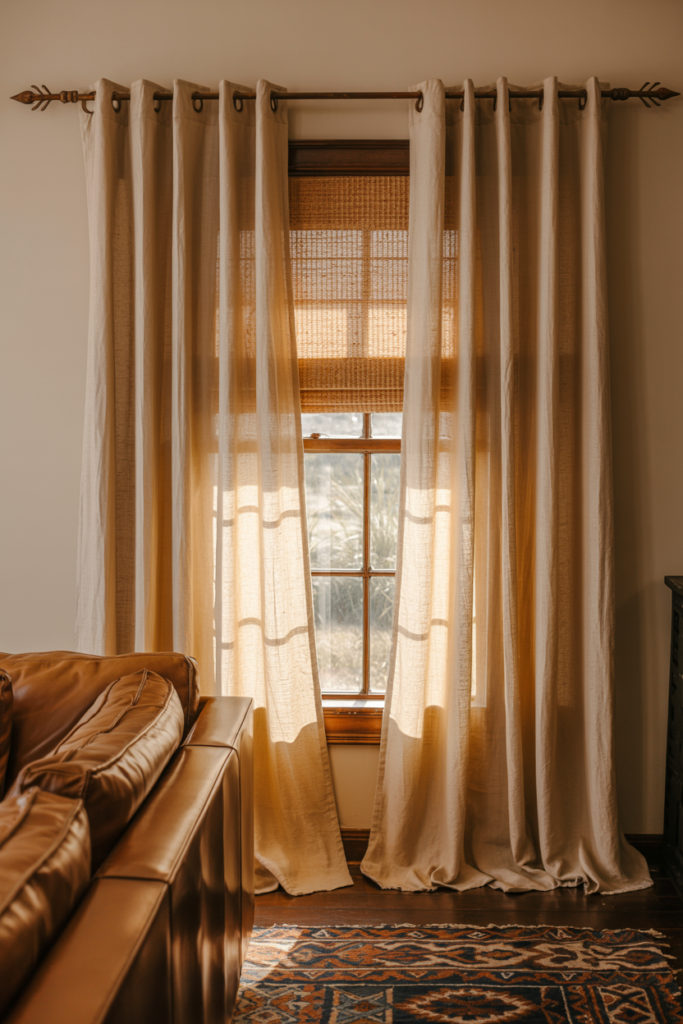
Window treatments in natural fiber materials like linen, cotton canvas, and woven jute or hemp suit the western living room material palette far better than synthetic curtains, glossy sheers, or heavily patterned drapes that introduce competing visual elements to an already richly textured room. Floor-length linen curtains in warm cream, natural, or dusty warm grey hang with a relaxed, slightly rumpled quality that suits the western aesthetic’s emphasis on comfortable informality over pressed perfection. That relaxed drape quality signals the same lived-in ease that characterizes every other well-chosen element in a western living room.
Woven roman shades in natural jute or grasscloth texture suit western living room windows, where a more structured and less voluminous window treatment suits the room’s proportions better than full curtain panels. The woven texture of a natural fiber roman shade adds visual warmth and organic material interest to the window area without requiring the full floor-to-ceiling fabric investment of curtain panels. Pairing woven roman shades with simple iron curtain rods and ring clips on flanking side panels creates a layered window treatment approach that provides both light control and decorative depth.
Choosing curtain hardware in wrought iron, aged bronze, or dark matte black finishes ties the window treatment hardware into the broader iron and dark metal accent story running through the western living room’s light fixtures and furniture hardware. Simple iron curtain rods with hand-forged finials in leaf, arrow, or simple ball designs add a subtle western craft detail to the window area that suits the room’s overall material quality without drawing disproportionate attention to the hardware itself.
15. A Western Living Room Reading Nook With a Leather Armchair, Floor Lamp, and Stacked Book Collection
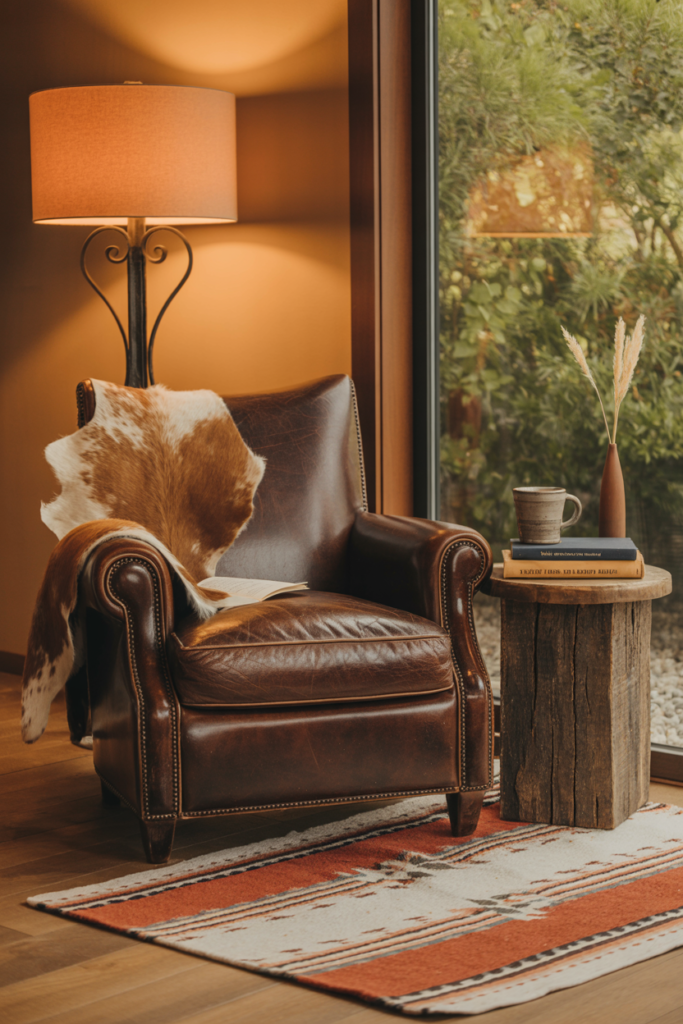
A dedicated reading nook styled in western materials creates one of the most inviting and personally appealing corners in any western living room, and it requires very little space to achieve a result that feels completely realized and genuinely comfortable. A deep leather armchair in cognac or tobacco brown positioned beside a floor lamp with an iron base and a warm-toned shade, a small reclaimed wood side table holding a ceramic mug and a few small objects, and a stack of books on the floor beside the chair creates a self-contained western living corner that draws people in immediately. The reading nook functions as both a practical daily use space and a visual vignette that adds warmth and human scale to what might otherwise be an underused room corner.
A cowhide or Southwestern woven rug underneath the armchair defines the reading nook’s floor zone within the larger living room without requiring any physical partition or architectural modification. That rug underneath the chair creates a visual room-within-a-room effect that gives the reading nook a sense of defined territory and intentional placement rather than an armchair randomly positioned in a corner. Adding a small wooden blanket chest or basket beside the chair holds extra throws and reading materials while contributing another natural material element to the nook’s layered composition.
Positioning the western reading nook beside a window maximizes natural reading light while the exterior view beyond the window reinforces the indoor-outdoor connection that western living rooms cultivate through every material and decorating choice. A window view of a garden, a natural landscape, or even a simply planted outdoor space amplifies the western atmosphere of the reading nook by extending the natural material palette from inside the room to the world immediately outside it. That visual connection between the interior western decor and the natural world beyond the glass is one of the most understated and most effective qualities in any well-executed western interior.
The Bottom Line on Western Living Room Decor That Feels Warm, Authentic, and Worth Settling Into
Western living room decor rewards a thoughtful, material-first approach to decorating that prioritizes genuine quality over decorative quantity and authentic character over thematic completeness. The fifteen ideas on this list build a complete western living room from the foundational leather sofa and stone fireplace through the layered textiles, natural material accents, wrought iron fixtures, and vintage accessories that give the style its characteristic depth and warmth. Every element on the list contributes to the overall western atmosphere through material quality and honest design rather than through recognizable symbols or themed decoration.
The most important takeaway from this list is that restraint and authenticity drive the quality of Western living room decor more than any single decorating decision or specific product purchase. A living room with five genuinely well-chosen western elements, a quality leather sofa, a natural stone fireplace, an authentic Southwestern rug, reclaimed wood furniture, and a wrought iron chandelier, looks more convincingly and satisfyingly western than a room with thirty western-themed objects of questionable quality competing for attention across every surface. Editing to the best pieces and giving each one enough space to read clearly produces the best Western living room result at every budget level.
Start with the two or three elements that will have the most impact on the room’s overall character and build from there over time as budget and opportunity allow. The western aesthetic genuinely rewards the patient, collected approach to decorating more than almost any other interior style, and a room that accumulates good pieces gradually over years of living in it always tells a more interesting and more authentic story than one assembled in a single weekend shopping trip, regardless of how generous the budget was.
Frequently Asked Questions About Western Living Room Decor Ideas for Any Home Style and Budget
What colors work best for a Western living room color palette? Warm earthy tones like terracotta, saddle tan, dusty ochre, warm cream, deep burgundy, and dusty sage green form the natural western living room color palette. These colors suit both leather furniture and natural textile accents while complementing the warm tones of reclaimed wood and natural stone materials. Avoid cool greys, stark whites, and blue-toned neutrals as dominant colors since they work against the inherent warmth that defines western interior style at every budget level.
How do I create a Western living room without it looking like a themed restaurant? Focusing on genuine natural materials rather than recognizable Western iconographic symbols keeps a Western living room feeling like an authentic home rather than a themed environment. Using quality leather, real reclaimed wood, authentic stone, and genuine wool textiles communicates western character through material substance rather than decorative symbols. Limit explicitly western objects like horseshoes and cowboy hats to one or two pieces maximum, and let the material palette carry the primary western identity of the room.
What type of rug works best in a Western living room? Hand-woven Navajo-inspired or Southwestern geometric rugs in terracotta, cream, navy, and deep red tones suit western living rooms most authentically and add the cultural richness that defines the style’s textile heritage. Natural cowhide rugs in black and white or brown and white tones offer an alternative western floor covering that adds organic texture and pattern without the geometric visual complexity of Southwestern weaving. Layering a smaller patterned rug over a larger natural jute base rug creates a floor treatment with more visual depth and warmth than a single rug provides in a large western living room.
Can Western living room decor work in a modern or contemporary home? Western decor adapts very well to modern and contemporary home architecture when the material palette stays warm and natural, and the furniture profiles remain clean and uncluttered. A modern Western living room might feature a streamlined leather sofa with clean lines rather than a heavily tufted traditional version, concrete alongside reclaimed wood rather than purely rustic timber, and a minimal Southwestern rug pattern rather than a maximally complex traditional weave. That modern Western combination maintains the material authenticity of the style while removing the heavy rustic ornamentation that would clash with contemporary architecture.
What lighting suits a Western living room best? Wrought iron chandeliers with candle-style Edison bulb holders provide the most atmospherically appropriate overhead lighting for western living rooms while adding significant decorative presence to the ceiling. Layering iron wall sconces beside the fireplace and on either side of a gallery wall with iron-based table lamps creates the warm, multi-source lighting scheme that makes western interiors feel genuinely inviting rather than harshly lit from above. Warm amber bulb tones suit the western palette far better than cool white or daylight-tone bulbs that work against the inherent warmth of leather, wood, and stone materials.
How do I incorporate Southwestern textiles respectfully into Western living room decor? Choosing authentic hand-woven textiles from Indigenous artisans and reputable dealers rather than mass-produced Southwestern-print alternatives shows genuine respect for the cultural traditions that created these textile forms. Displaying authentic pieces with care and intentionality rather than treating them purely as decorative props acknowledges their cultural significance appropriately. When authentic pieces fall outside the budget, seeking out textiles made by small, independent weavers using traditional techniques produces a more respectful result than purchasing fast-fashion versions of traditional patterns from volume retailers.
What furniture arrangement works best in a Western living room? Organizing the main furniture grouping around the fireplace as the primary focal point suits western living room layouts most naturally because the fireplace is the architectural element that western interior design builds around most consistently. A leather sofa facing the fireplace with two leather or upholstered armchairs angled inward on either side creates a seating arrangement that promotes conversation and fire-facing relaxation simultaneously. Keeping the furniture grouping slightly away from the walls rather than pushed against them creates a more intimate and cohesive seating zone that suits the western living room’s emphasis on warmth and connection.
Great content! Keep up the good work!