
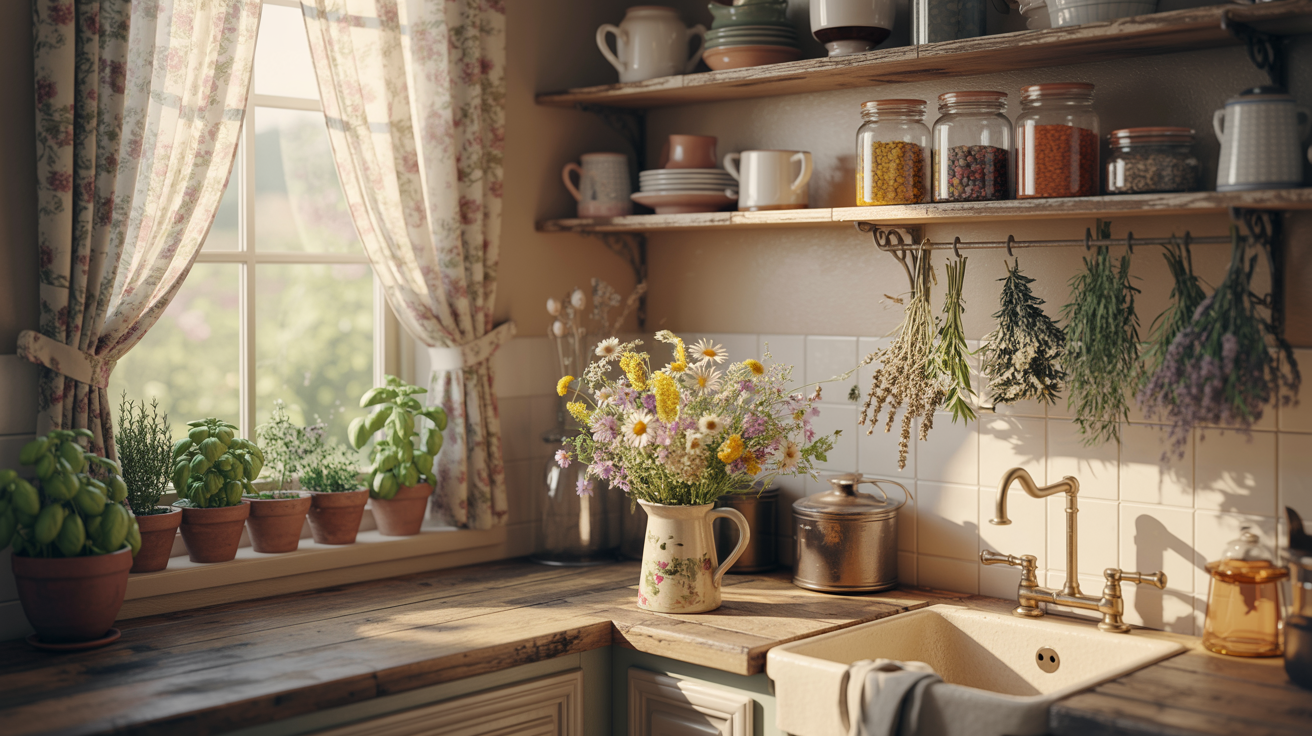
A cottagecore kitchen is a cooking space that feels warm, lived-in, and quietly beautiful, like something out of a countryside novel where someone is always baking bread and fresh herbs are hanging from the ceiling. It pulls from nature, vintage charm, and handmade touches to create an atmosphere that feels genuinely comforting rather than just visually pretty. If your kitchen currently looks like a sterile showroom, this aesthetic is basically the antidote.
I have always found that the kitchen is the one room where atmosphere matters more than anywhere else in a home. You spend real time in there, and a space that feels cold and impersonal makes even cooking a simple meal feel like a chore. A cottagecore kitchen flips that completely. It makes you want to be in there.
The best part about this aesthetic is that it does not require a full renovation or a huge budget. A few thoughtful changes, the right textures, and some carefully chosen decor pieces can shift the entire feeling of a kitchen. This guide walks you through 15 cozy ideas to get you started.
Why a Cottagecore Kitchen Aesthetic Works Better Than Most Trending Styles
Most trendy kitchen styles age quickly because they chase what looks good in photos rather than what feels good in real life. Cottagecore sidesteps that problem entirely because it draws from timeless sources: natural materials, handmade objects, vintage finds, and living plants. These things never go out of style because they were never really “in style” to begin with. They are just genuinely good.
The aesthetic also works across a huge range of kitchen sizes and layouts. A tiny apartment kitchen can feel just as cottagecore as a large farmhouse one with the right approach. It is more about layering textures and introducing warmth than it is about square footage or architectural features.
What makes cottagecore kitchens so visually satisfying is the sense that every object has a purpose and a story. Nothing looks like it came straight from a flat-pack box. Even simple things like a wooden spoon or a ceramic mixing bowl feel considered and chosen rather than just grabbed off a shelf.
1. Hang Open Wooden Shelves and Style Them With Everyday Kitchen Objects
Open wooden shelves are one of the most impactful changes you can make in a cottagecore kitchen. They replace the closed, uniform look of upper cabinets with something that feels alive and personal. The key is treating the shelves as a display as much as a storage solution.
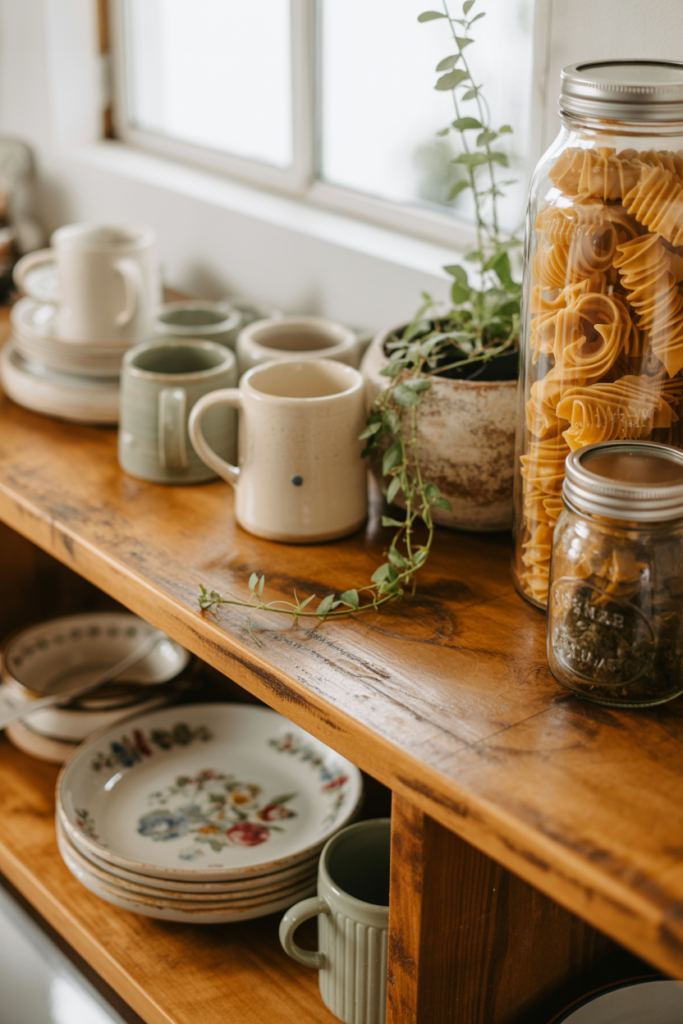
Style them with a mix of functional and decorative items. Stack mismatched vintage plates, line up ceramic mugs in earthy tones, and tuck in a small potted herb or trailing plant. A few glass jars filled with dried pasta, grains, or loose tea add color and texture without feeling cluttered.
Reclaimed wood shelves with visible grain and a natural oil finish look the most authentic in this style. Avoid anything too uniform or lacquered because it immediately reads as modern rather than cottagecore. The slight imperfections in reclaimed timber are exactly what make the shelves feel right.
2. Use Floral and Botanical Curtains to Soften the Kitchen Windows
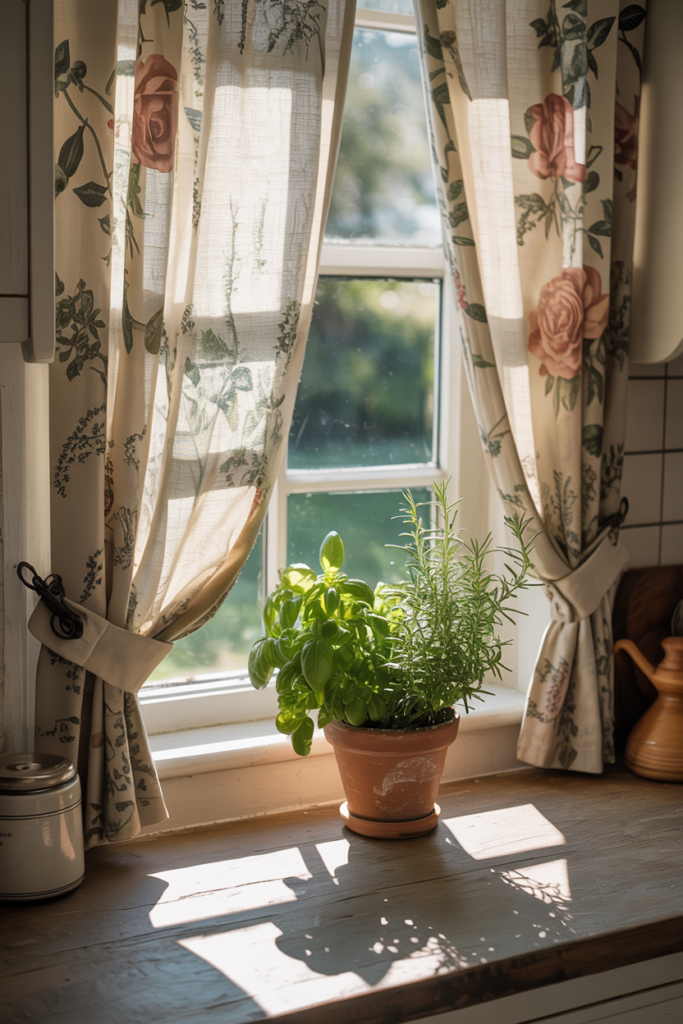
Window curtains are one of the most underrated decor elements in a kitchen, and in a cottagecore space, they do a lot of heavy lifting. A soft floral or botanical print in muted, natural tones instantly warms up the whole room. Think faded roses, trailing ivy, wildflowers, or delicate herb illustrations on a cream or linen background.
Lightweight linen or cotton curtains work best because they let natural light filter through softly rather than blocking it completely. The way morning light comes through a sheer floral curtain and casts soft, patterned shadows across a wooden countertop is genuinely one of the most beautiful things in a cottagecore kitchen. I have seen it transform a very ordinary kitchen window into something that looks intentional and lovely.
Choose curtains that puddle slightly at the bottom or have a relaxed, unstructured hem for the most cottagecore feel. Crisp, perfectly hemmed curtains look too formal for this aesthetic. The slight looseness and softness are part of what makes them work.
3. Bring in a Ceramic Farmhouse Sink for That Classic Cottage Kitchen Look
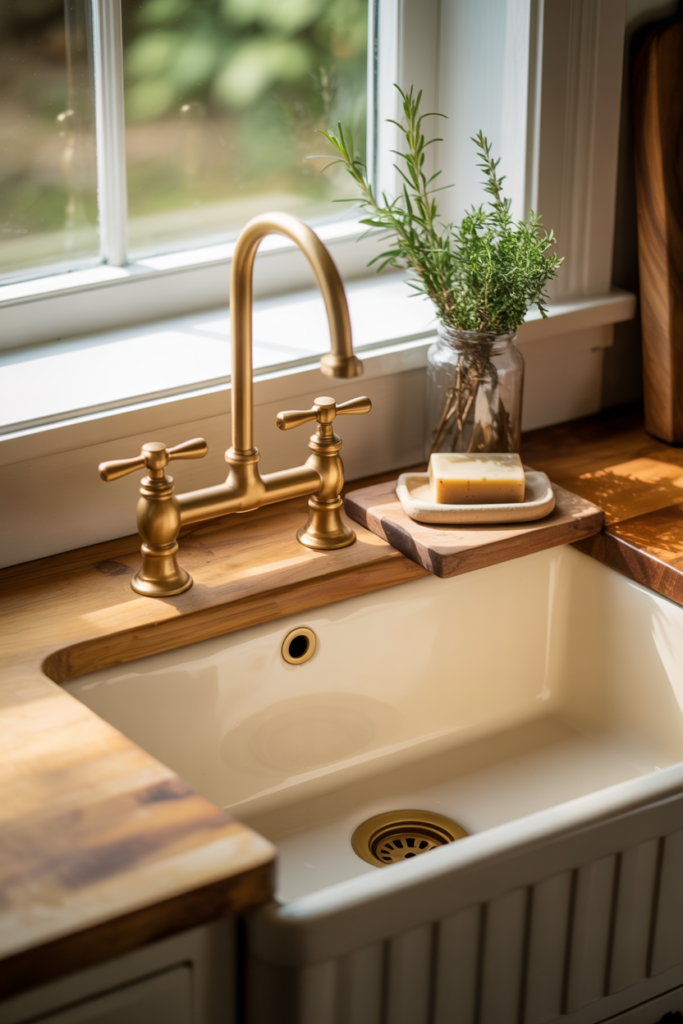
A ceramic farmhouse sink is one of those features that immediately signals cottagecore to anyone who walks into the kitchen. The deep, wide basin and the exposed apron front have a timeless quality that feels genuinely old-fashioned in the best possible way. Creamy white and soft ivory are the most popular colors for this style.
Beyond the aesthetics, farmhouse sinks are actually extremely practical. The deep basin handles large pots and baking trays easily, which makes them a genuine upgrade for anyone who cooks regularly. Function and beauty working together is very much in the spirit of the cottagecore aesthetic.
If a full sink replacement is not in the budget right now, you can still achieve a similar feeling by adding a wooden drain board, a vintage-style bridge faucet in brushed brass or aged bronze, and a hand-thrown ceramic dish for soap. These smaller additions move the sink area significantly toward the cottagecore look without the full renovation cost.
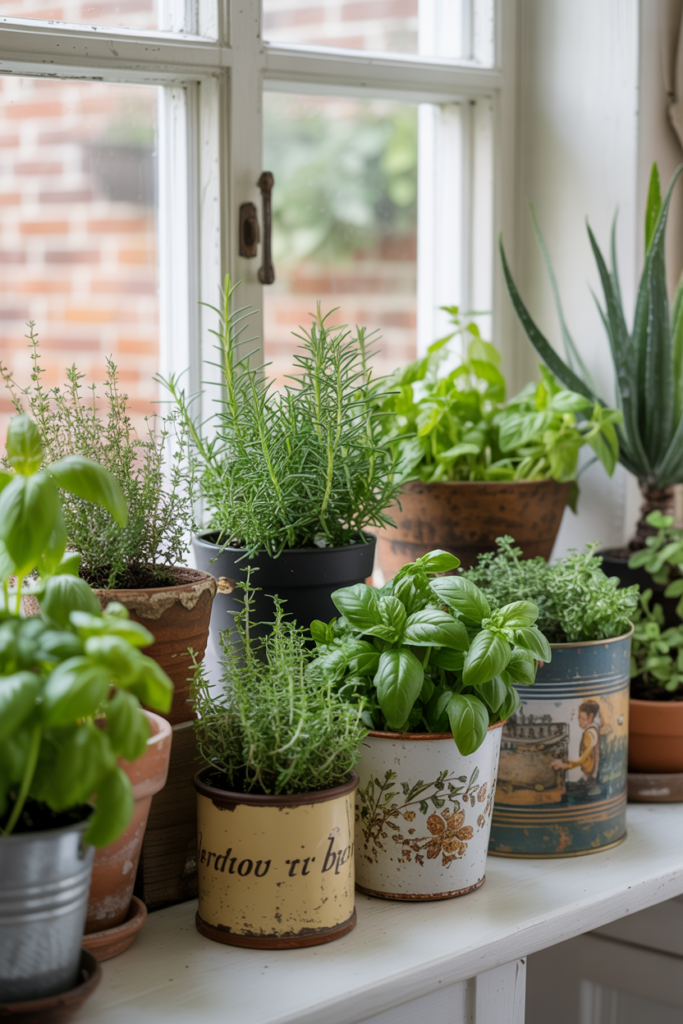
4. Add Potted Herbs on the Windowsill for a Fresh and Fragrant Kitchen Garden
A row of potted herbs on the kitchen windowsill is one of the most classic cottagecore touches you can add, and it costs almost nothing. Rosemary, thyme, basil, mint, and chives all grow happily in small pots on a sunny windowsill. They look beautiful, smell incredible, and actually get used in cooking, which makes them genuinely useful rather than purely decorative.
Use a mix of terracotta pots, small ceramic planters, and repurposed tins or jars for the most cottagecore arrangement. Avoid matching plastic pots because they flatten the whole effect immediately. The slight variation in container sizes, materials, and plant heights creates a natural, gathered-over-time look that feels authentic.
I personally think a kitchen windowsill herb garden is one of the highest-value things you can add to a cottagecore kitchen. It brings life, color, and fragrance into the space every single day. And honestly, cooking with fresh herbs you grew yourself is a small but genuinely satisfying pleasure.
5. Swap Standard Cabinet Hardware for Aged Brass or Ceramic Knobs
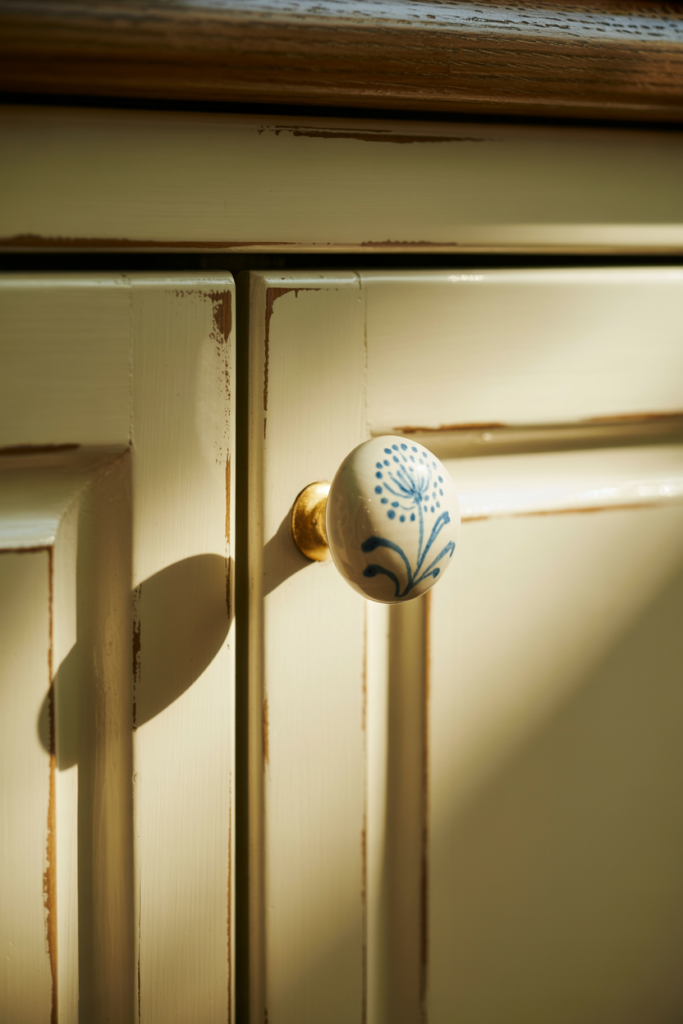
Cabinet hardware is one of those details that most people overlook completely, but it makes a surprisingly large difference to the overall feel of a kitchen. Standard chrome or brushed steel handles read as modern and cold. Aged brass, hand-painted ceramic knobs, and antique bronze pulls immediately shift the aesthetic toward something warmer and more vintage.
Ceramic knobs with hand-painted floral or botanical motifs are especially popular in cottagecore kitchens. They add a handmade, artisan quality to even the most basic flat-front cabinets. You can find beautiful options from small pottery makers on platforms like Etsy, and they tend to be very affordable given the impact they make.
Replacing cabinet hardware takes about an hour with a screwdriver and costs a fraction of any other kitchen update. For the effort involved, the visual payoff is genuinely impressive. It is one of those low-effort, high-impact changes that I always recommend starting with.
6. Display a Vintage-Style Cookbook Collection on a Wooden Kitchen Shelf
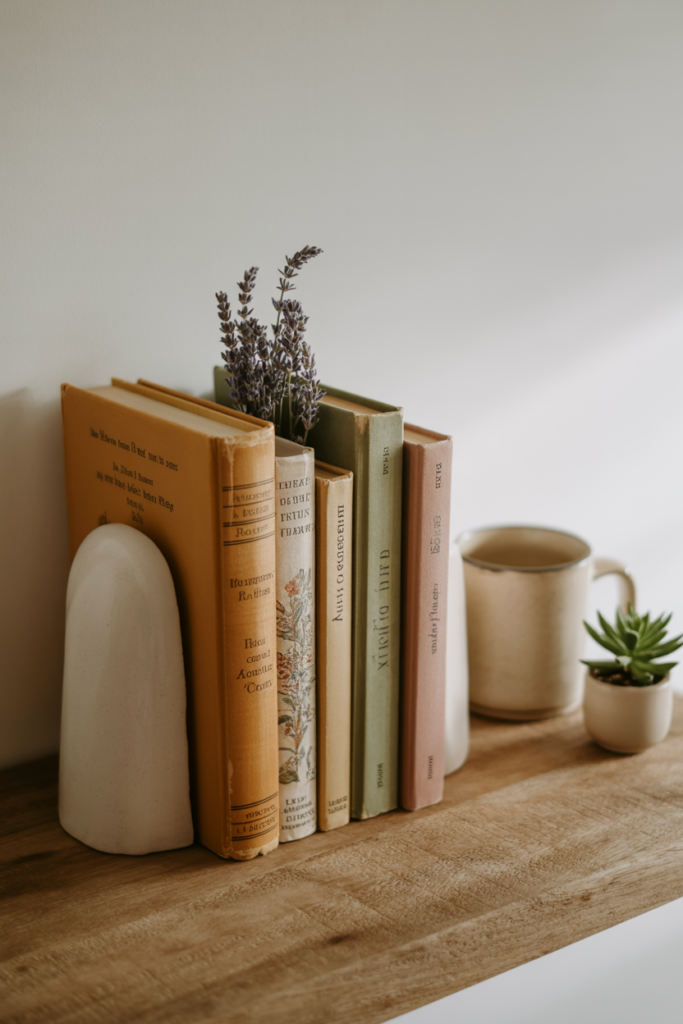
A small collection of cookbooks styled on an open kitchen shelf adds an intellectual, cozy charm that feels very true to the cottagecore aesthetic. Choose books with beautiful illustrated covers, aged spines, or botanical artwork. Old recipe books from thrift stores and antique markets often have the most gorgeous covers and cost almost nothing.
Stand the books upright between a pair of simple wooden or ceramic bookends. Tuck a small dried flower bunch or a sprig of rosemary between a couple of the spines for extra detail. This kind of layered styling makes a shelf look curated rather than just loaded with stuff.
I find that a cookbook display works especially well on the shelf closest to the main cooking area. It feels functional and decorative at the same time, which is exactly the balance cottagecore kitchens strike best. Plus, having beautiful cookbooks visible actually makes you more likely to use them, which is a genuine bonus.
7. Use Mismatched Vintage Crockery and Earthenware for Everyday Dining
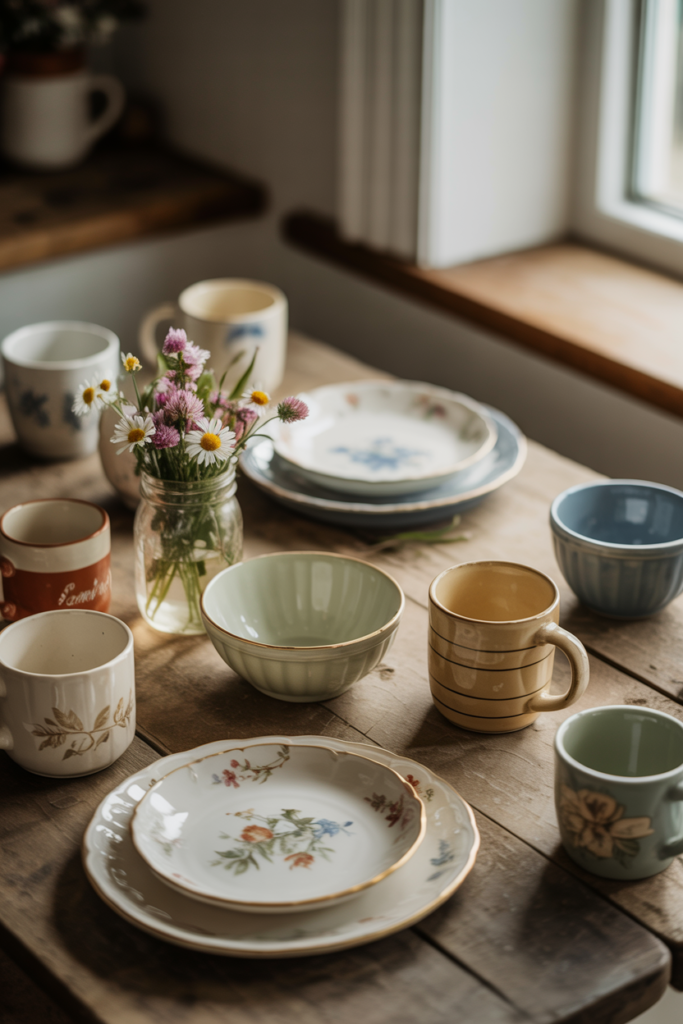
One of the most liberating things about the cottagecore aesthetic is that mismatched crockery is not just acceptable, it is actively encouraged. Collecting pieces over time from charity shops, antique fairs, and vintage markets means every plate, bowl, and mug has its own character. The slight variations in glaze, pattern, and shape create a table setting that looks genuinely lived-in and personal.
Look for pieces in earthy tones like cream, sage green, dusty blue, and warm terracotta. Transferware patterns, hand-painted florals, and simple banded designs all work beautifully together, even when they do not technically match. The common thread of natural colors and vintage character ties everything together visually.
I started collecting mismatched vintage crockery a few years ago, and it completely changed how my kitchen feels. Reaching for a beautiful hand-painted bowl in the morning rather than a plain white one from a matching set is a small thing, but it genuinely improves the start of the day. Good objects matter more than people give them credit for.
8. Hang Dried Flower Bunches and Herb Sprigs From the Ceiling or a Pot Rack
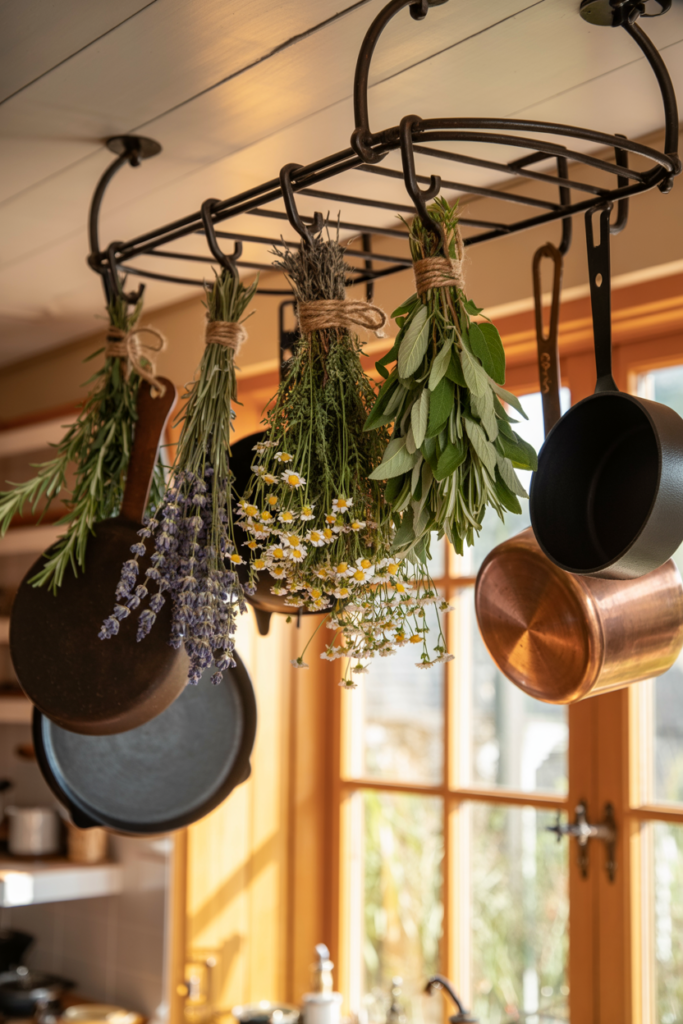
Dried botanicals hanging from a ceiling pot rack or a wooden beam are one of the most instantly recognizable elements of a cottagecore kitchen. Bundles of dried lavender, chamomile, rosemary, sage, and wheat stalks all look beautiful hanging in clusters. They also fill the kitchen with a gentle, natural fragrance that no candle quite replicates.
Tie bundles with natural twine or thin ribbon and hang them at varying heights for the most visually interesting arrangement. Mix herb bundles with dried flower heads like strawflowers, statice, and dried roses for color and variety. The combination of different textures, tones, and stem lengths creates a lush, gathered look.
A simple ceiling-mounted pot rack gives you a practical place to hang both dried botanicals and your actual cookware at the same time. Cast iron pans and copper pots hanging alongside dried herb bundles look genuinely stunning and very on-brand for this aesthetic. It is one of those ideas that solves a storage problem while also being beautiful.
9. Choose Warm, Muted Paint Colors Like Sage Green, Cream, or Dusty Rose
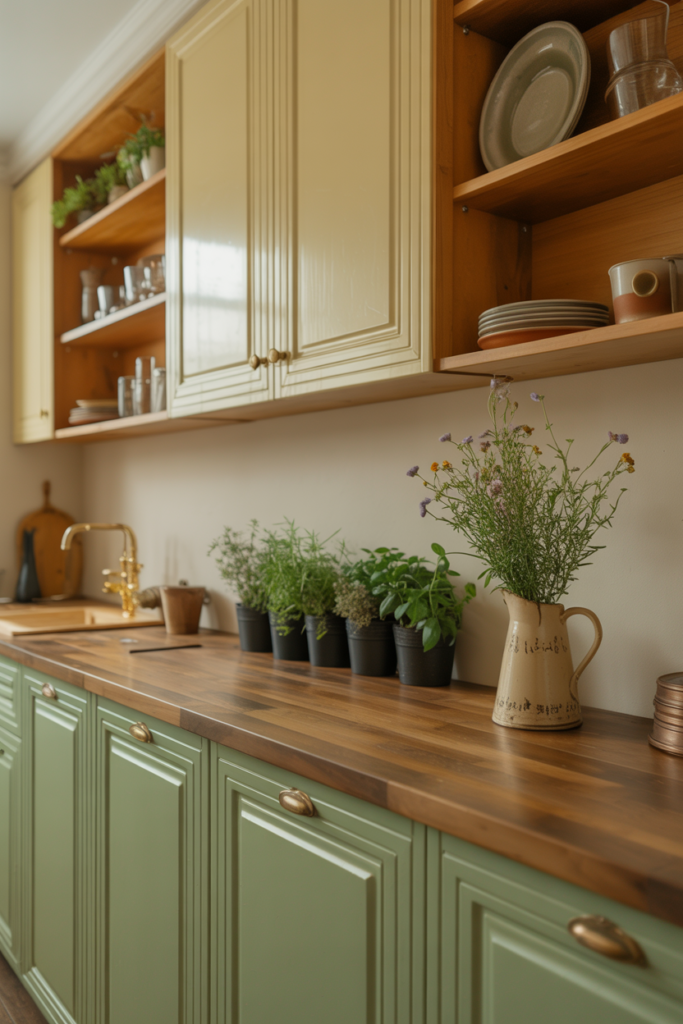
Paint color sets the entire tone of a kitchen, and cottagecore kitchens lean heavily into warm, muted, nature-inspired shades. Sage green, warm cream, dusty rose, soft butter yellow, and earthy terracotta all work beautifully within this aesthetic. These colors feel calm and enveloping rather than bold and sharp.
Sage green is probably the most popular choice right now, and for good reason. It pairs beautifully with natural wood, aged brass hardware, white ceramic, and pretty much every plant color. It reads as both fresh and vintage at the same time, which is a tricky balance to strike and one that sage green manages effortlessly.
If painting the whole kitchen feels like too much of a commitment, start with just the island or a single accent wall. Even one wall in a warm cottagecore shade can shift the feeling of the entire space significantly. Pair it with open wooden shelves and some hanging botanicals, and the transformation is genuinely impressive.
10. Add a Wooden Butcher Block Countertop or Cutting Board as a Workspace
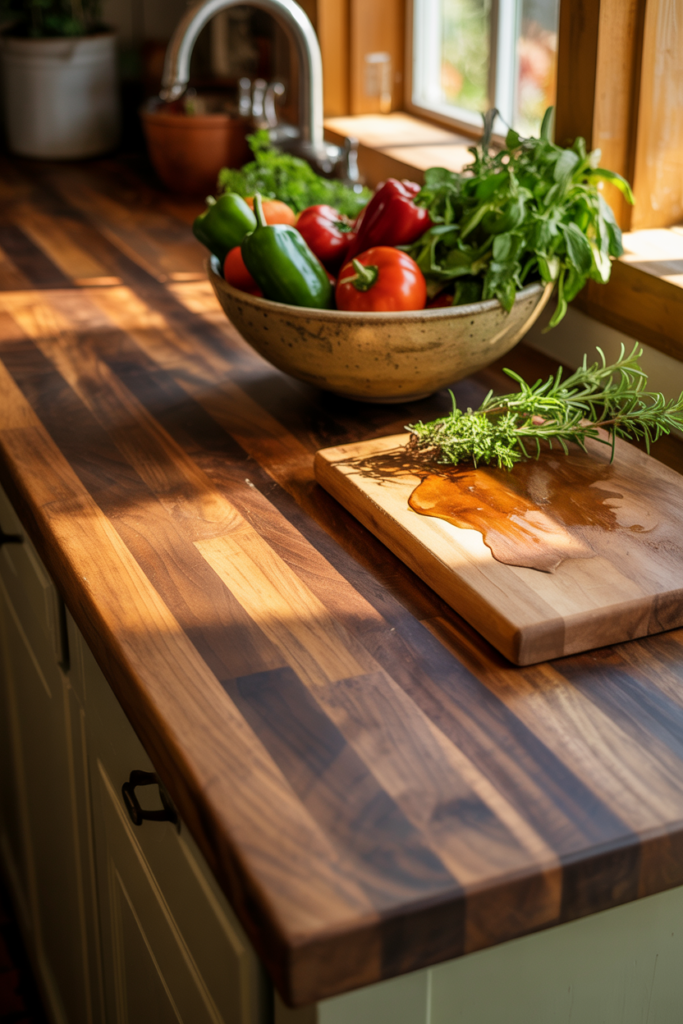
Wooden countertops and large butcher block cutting boards bring an unmistakably warm, natural quality to a kitchen that stone and laminate surfaces simply cannot match. The grain, the warmth, and the slight imperfections of wood feel deeply connected to the handmade, natural spirit of cottagecore. Even a large freestanding butcher block used as a kitchen island achieves this instantly.
If full wooden countertops are not practical, a large, thick butcher block cutting board left out permanently on the counter works almost as well visually. Choose one in end-grain walnut, maple, or oak for the most beautiful appearance. Oil it regularly with food-safe mineral oil, and it develops a rich patina over time that only gets better with use.
I love the way a well-used wooden cutting board looks in a kitchen. The knife marks, the slight staining from herbs and vegetables, the warm honey tones of oiled wood all tell the story of a kitchen that actually gets used for cooking. That kind of lived-in quality is exactly what cottagecore celebrates.
11. Style the Kitchen With Mason Jars and Glass Storage for Pantry Staples
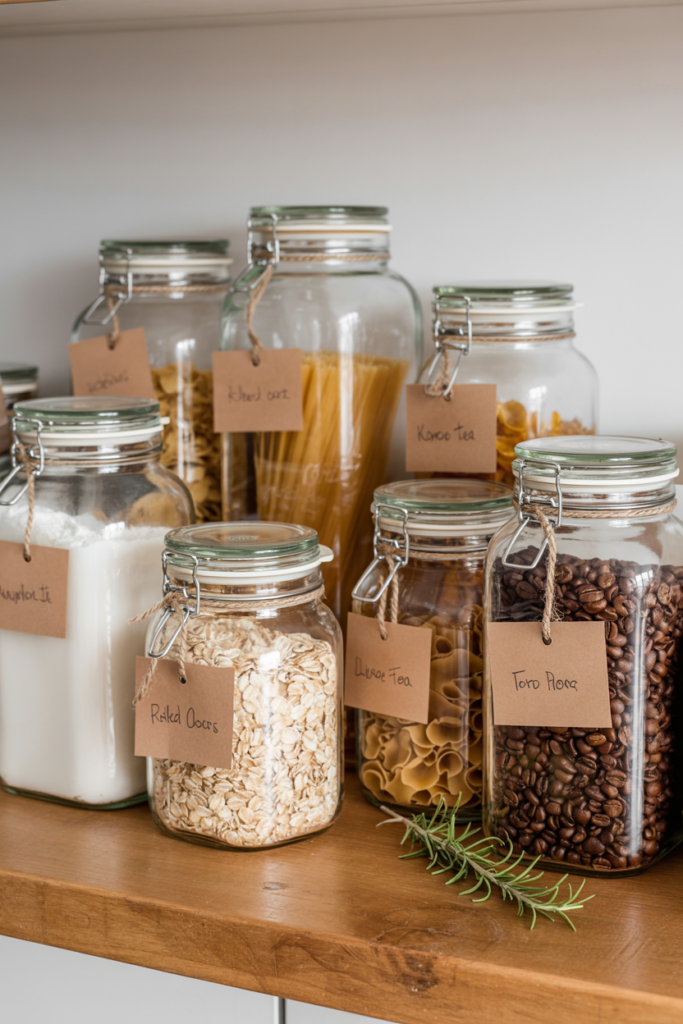
Storing pantry staples in glass jars rather than their original packaging is one of the simplest and most effective cottagecore kitchen updates. Mason jars, clip-top Kilner jars, and wide-mouth glass canisters lined up on an open shelf look beautiful while also keeping ingredients fresh and visible. Flour, oats, dried pasta, loose-leaf tea, and coffee all look wonderful stored this way.
Label each jar with a small handwritten tag or a simple adhesive chalk label for the most cottagecore finish. The handwritten element adds a personal, artisan quality that printed labels do not have. Even imperfect handwriting looks charming on a small kraft paper tag tied with twine.
The practical benefit here is real as well as aesthetic. Seeing your ingredients clearly makes cooking more intuitive and enjoyable. You reach for things more often when they are visible and accessible rather than hidden behind cardboard packaging at the back of a cupboard.
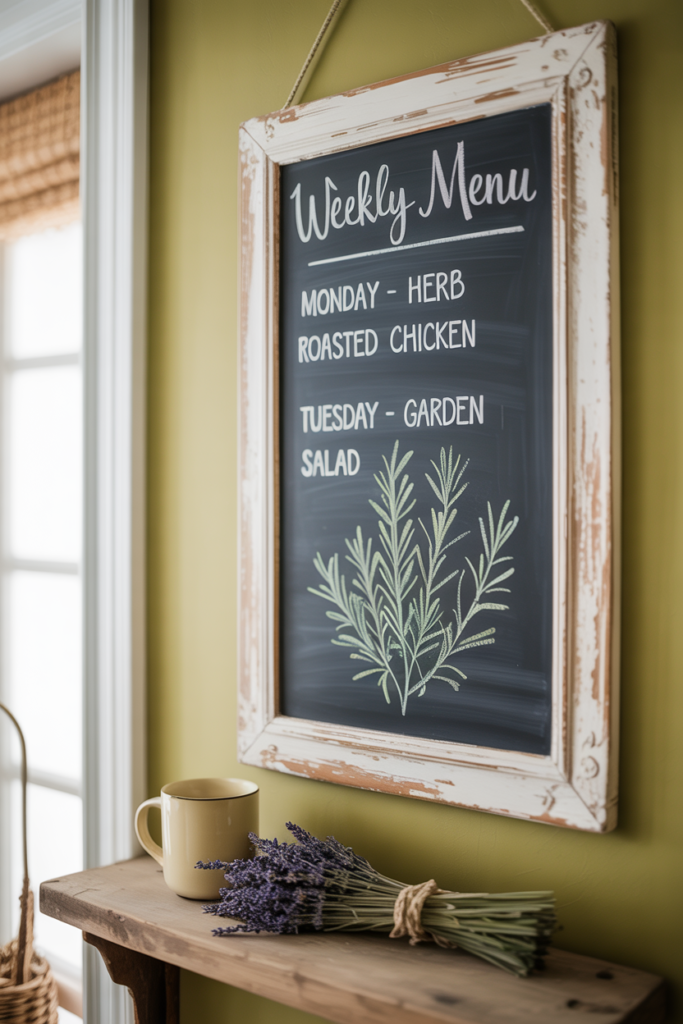
12. Hang a Vintage-Style Chalkboard for Recipes, Notes, and Weekly Menus
A chalkboard on the kitchen wall is one of those cottagecore details that feels both nostalgic and genuinely useful. Write your weekly menu, a favorite recipe, a shopping list, or just a simple quote about food and cooking. The handwritten quality adds a personal, homemade touch that no printed sign can replicate.
Choose a chalkboard with a wooden frame in a natural or painted finish for the most cottagecore look. Distressed white, sage green, and raw timber frames all work beautifully within this aesthetic. Hang it near the cooking area or above a small kitchen desk nook for the most practical placement.
I find that having a chalkboard in the kitchen actually changes how the space feels daily. Updating it regularly with seasonal recipes or simple notes makes the kitchen feel alive and inhabited rather than just functional. It is a small detail that adds a lot of warmth for almost no cost at all.
13. Incorporate a Freestanding Dresser or Hutch as a Statement Storage Piece
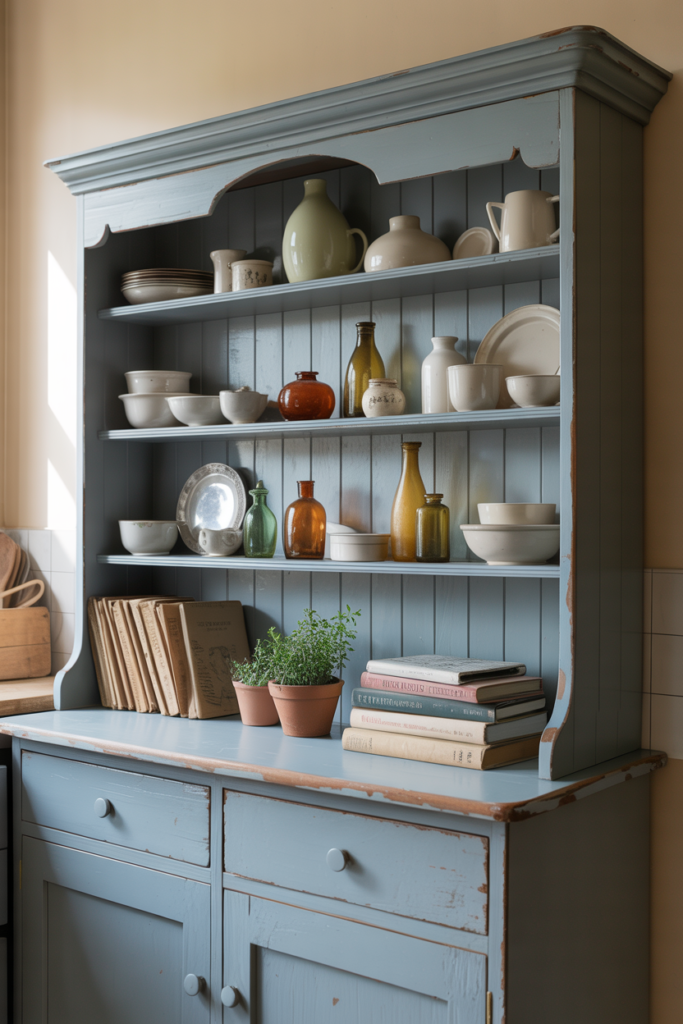
A freestanding kitchen dresser or hutch is one of the most impactful furniture pieces you can bring into a cottagecore kitchen. It adds height, storage, and an unmistakably vintage character that built-in cabinets rarely achieve. The upper shelves display beautiful crockery and glassware, while the lower cupboards handle practical storage.
Look for a painted dresser in cream, sage green, or soft duck egg blue from antique markets or second-hand furniture shops. Original paint with natural wear and aging looks far more authentic than a newly painted piece. If you find a solid wood dresser in good condition, painting it yourself in a muted cottagecore shade is a genuinely satisfying weekend project.
Style the dresser shelves with a mix of vintage crockery, glass bottles, small potted plants, and a few cookbooks. Avoid filling every inch because negative space makes the displayed objects look more intentional. A well-styled dresser becomes the focal point of the entire kitchen without much effort at all.
14. Bring in Fresh Wildflowers or Dried Botanical Arrangements as Table Centerpieces
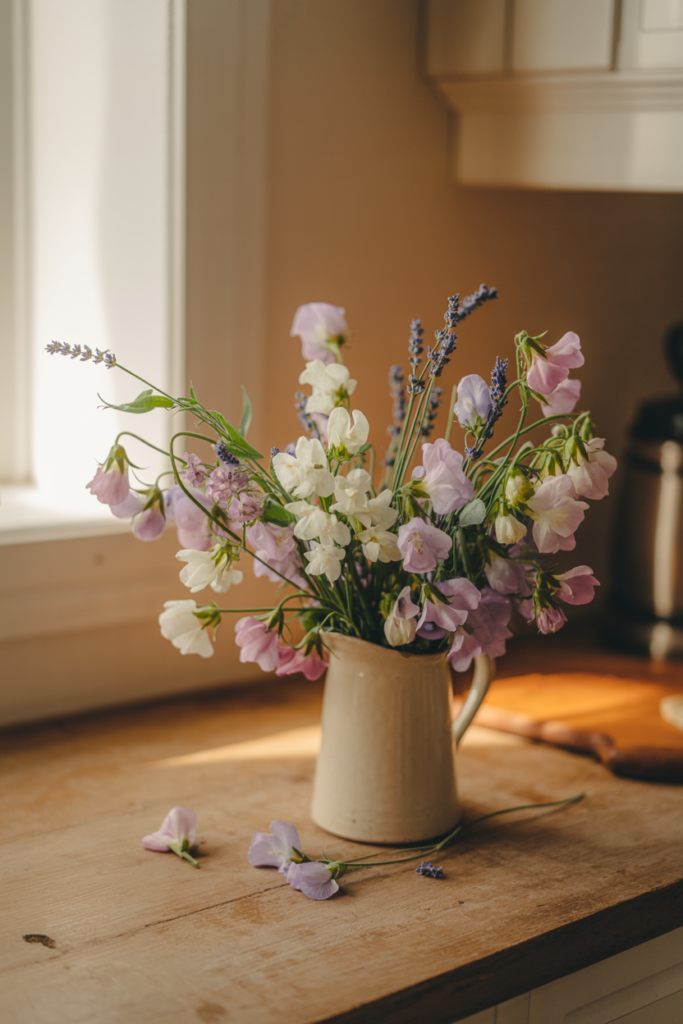
Fresh flowers on a kitchen table or countertop are one of the simplest and most beautiful cottagecore touches you can make. Loose, informal arrangements of wildflowers, garden roses, sweet peas, and herbs in a simple ceramic jug or mason jar look far more cottagecore than formal florist arrangements. The slightly imperfect, gathered-from-the-garden quality is exactly right.
Seasonal flowers work best because they connect the kitchen to the natural world outside. Spring tulips and daffodils, summer sweet peas and lavender, autumn dahlias and rosehips, winter holly and dried grasses all bring the feeling of the season into the cooking space. Swapping arrangements with the seasons keeps the kitchen feeling fresh and connected to nature throughout the year.
Dried botanical arrangements work beautifully as a longer-lasting alternative. A generous bunch of dried pampas grass, wheat, lavender, and strawflowers in a textured ceramic vase looks stunning and requires no maintenance at all. I keep a dried arrangement on my kitchen counter year-round, and it consistently gets more compliments than almost anything else in the room.
15. Use Linen and Embroidered Tea Towels as Both Function and Decoration
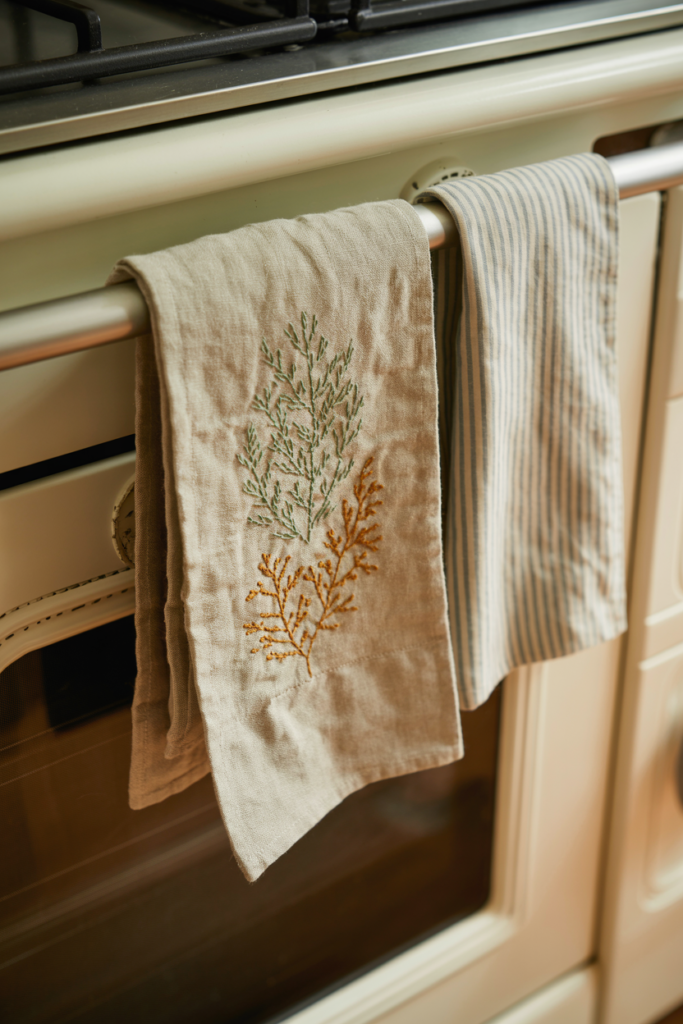
Tea towels are one of those kitchen items that most people treat as purely functional, but in a cottagecore kitchen, they become part of the decor. Linen tea towels with embroidered botanical motifs, hand-printed herb illustrations, or simple ticking stripes in natural tones add texture and charm to the space. Hang them from the oven handle, drape them over a shelf edge, or fold them neatly in a vintage wire basket.
Look for tea towels made from natural linen or cotton rather than synthetic materials. Natural fabrics have a softness and drape that synthetic ones lack, and they look far more authentic within this aesthetic. Small independent makers and craft markets often sell the most beautiful hand-embroidered and hand-printed options.
I started paying attention to tea towels when I realized they are one of the most visible items in any kitchen. Swapping out plain white ones for something with a little botanical detail costs almost nothing but changes the overall feel of the space noticeably. It sounds like a small thing, and it is, but that is exactly the kind of small thing that makes a cottagecore kitchen feel so considered.
Simple Ways to Layer Cottagecore Kitchen Decor Without Overdoing It
The biggest mistake people make with cottagecore decor is trying to do everything at once and ending up with a space that feels cluttered rather than cozy. The aesthetic works best when it builds gradually, with each addition feeling intentional rather than rushed. Start with two or three ideas from this list and live with them for a while before adding more.
A good rule to follow is the mix of three: for any surface or shelf, combine something natural like a plant or dried flowers, something functional like a jar or a cookbook, and something purely decorative like a small ceramic figure or a vintage find. This simple formula keeps styling feeling balanced rather than random.
| Cottagecore Kitchen Element | Difficulty | Approximate Cost |
| Open wooden shelves | Moderate | Medium |
| Floral window curtains | Easy | Low |
| Potted windowsill herbs | Easy | Very Low |
| Ceramic cabinet knobs | Easy | Low |
| Mason jar pantry storage | Easy | Low |
| Farmhouse ceramic sink | Difficult | High |
| Freestanding dresser or hutch | Easy | Medium |
| Chalkboard wall feature | Easy | Low |
| Dried botanical arrangements | Easy | Low |
| Butcher block countertop | Moderate | Medium |
The most important thing is that your cottagecore kitchen feels like yours. Pull in objects and pieces that genuinely mean something to you rather than copying a look exactly. A vintage jug that belonged to your grandmother fits this aesthetic perfectly and carries a story that no new purchase can replicate.
Conclusion
A cottagecore kitchen is one of the most rewarding spaces you can create because it rewards personality, patience, and a love of beautiful everyday objects. From open wooden shelves and floral curtains to dried botanical arrangements and mismatched vintage crockery, every idea in this list adds warmth and character to a cooking space in its own way.
The key takeaways are straightforward. Start with paint color and hardware for the biggest visual shift with the least effort. Add living plants and fresh or dried flowers to bring nature into the space. Layer in vintage and handmade objects gradually so the kitchen builds a sense of story over time. And always prioritize how the space feels to be in over how it looks in a photograph.
A great cottagecore kitchen does not happen overnight, and it is not supposed to. It grows with you, collects pieces over time, and ends up looking like a space that has always been exactly the way it is. That feeling of settled, comfortable beauty is worth every small effort it takes to get there.
Frequently Asked Questions
What is a cottagecore kitchen aesthetic? A cottagecore kitchen aesthetic draws from countryside living, vintage charm, and natural materials to create a warm, cozy cooking space. It typically features open wooden shelves, handmade ceramics, potted herbs, dried botanicals, and muted nature-inspired colors. The overall feeling is lived-in, personal, and quietly beautiful.
How do I start a cottagecore kitchen on a budget? Start with the smallest changes that make the biggest visual impact. Swap cabinet hardware for aged brass or ceramic knobs, add potted herbs to the windowsill, and store pantry staples in glass mason jars. These three changes alone cost very little but shift the aesthetic significantly.
What colors work best in a cottagecore kitchen? Sage green, warm cream, dusty rose, soft butter yellow, and earthy terracotta are the most popular cottagecore kitchen colors. These muted, nature-inspired shades create a calm and enveloping atmosphere that feels connected to the natural world. Sage green is particularly versatile and pairs beautifully with wood, brass, and ceramic.
What kind of plants suit a cottagecore kitchen? Potted herbs like rosemary, thyme, basil, and mint are perfect for a cottagecore kitchen windowsill. Trailing plants like ivy and pothos also work beautifully on open shelves. Any plant that looks slightly wild and natural rather than perfectly manicured fits the aesthetic well.
Can a small kitchen look cottagecore? Absolutely. A small kitchen can achieve a strong cottagecore feel with the right approach. Focus on open shelving, warm paint colors, a few well-chosen plants, and glass jar storage. Vertical space matters a lot in small kitchens, so hanging dried botanicals and using tall shelves helps the aesthetic work without taking up floor space.
Where do I find cottagecore kitchen decor pieces? Antique markets, charity shops, vintage fairs, and online platforms like Etsy are the best sources for authentic cottagecore pieces. Second-hand shops often have beautiful mismatched crockery, vintage dressers, and old cookbooks at very affordable prices. Handmade ceramics from small independent potters also fit the aesthetic perfectly.
Does cottagecore work with a modern kitchen layout? Yes, and quite well. Modern kitchen layouts with flat-front cabinets and clean lines actually provide a neutral backdrop that cottagecore decor can layer over effectively. Changing the hardware, adding open shelves, introducing warm colors through curtains and plants, and styling surfaces with natural objects softens a modern kitchen significantly without requiring any structural changes.