
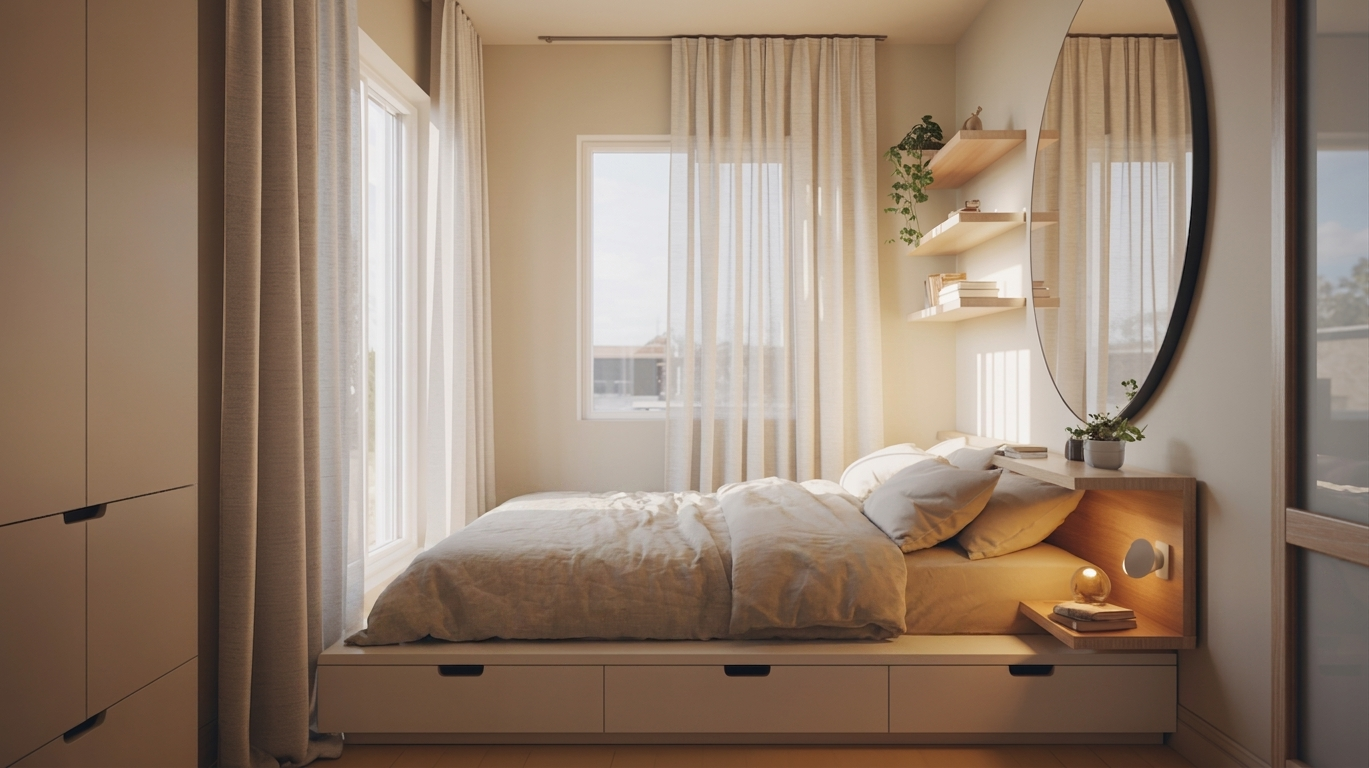
Small bedrooms get a bad reputation, but honestly, they do not have to feel cramped. With the right design choices, even the tiniest room can feel open, airy, and surprisingly functional. I have personally seen 10×10 bedrooms transformed into spaces that felt twice their size, just by swapping a few key elements.
The secret is not knocking down walls or spending a fortune on a renovation. It is about working smarter with what you already have. Choosing the right furniture, colors, and layout can completely change how a room feels the moment you walk in.
In this guide, I am sharing 25 space-smart bedroom ideas that actually work in small rooms. Whether you are dealing with a studio apartment bedroom or a tight guest room, these ideas will help you squeeze every bit of potential out of your space.
Why Small Bedroom Design Needs a Different Approach
Designing a small bedroom is not just about fitting furniture inside four walls. Every single choice, from the bed frame to the curtain rod height, either adds to the sense of space or takes away from it. Getting this balance right is what separates a cozy room from a suffocating one.
Most people make the mistake of buying furniture that is too large for the room. A king-size bed in a small room leaves almost no walking space, and that instantly makes the whole place feel uncomfortable. Scaling down and being intentional about every piece you bring in makes a huge difference.
The other big mistake is ignoring vertical space. Walls in small bedrooms are prime real estate. Using tall shelving, wall-mounted storage, and high-hanging curtains draws the eye upward and makes the ceiling feel taller than it actually is.
25 Best Bedroom Ideas for Small Rooms
1. Use a Platform Bed with Built-In Storage
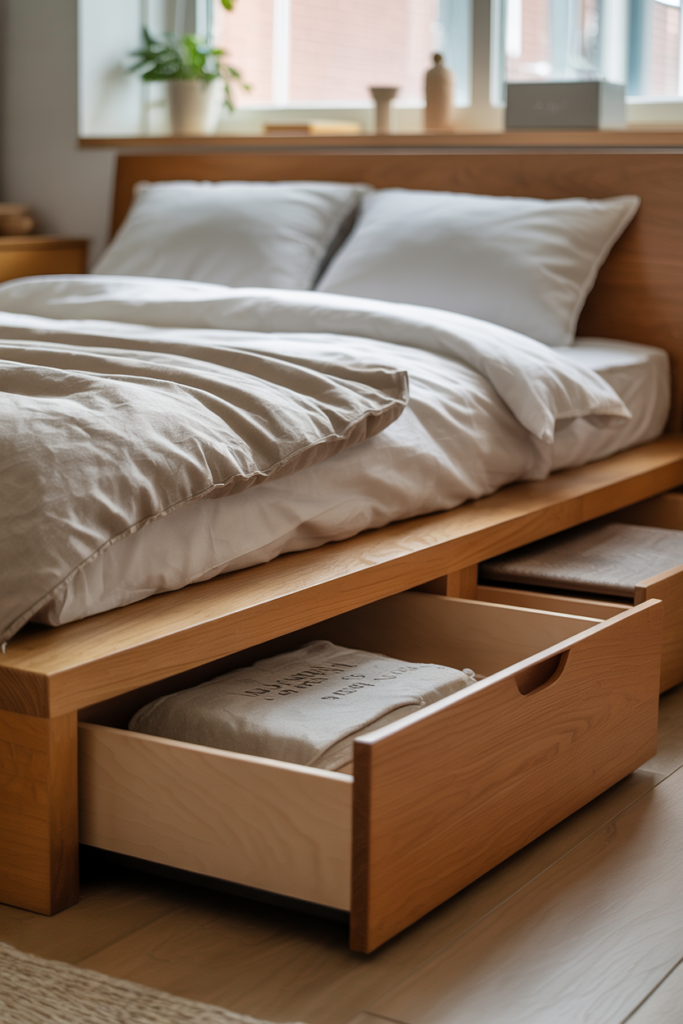
A platform bed with built-in drawers is probably the single best investment for a small bedroom. It replaces the need for a separate dresser, which instantly frees up floor space. I switched to one a couple of years ago and honestly could not believe how much room it created.
Look for beds with deep drawers on both sides, not just one. This doubles your storage capacity without adding any extra furniture. Some platform beds even have lift-up bases, which give you access to a massive hidden storage area underneath the mattress.
This type of bed works especially well in rooms where a wardrobe or chest of drawers simply will not fit. It is a two-in-one solution that keeps the room clean, organized, and clutter-free at the same time.
2. Mount Your Headboard Directly on the Wall
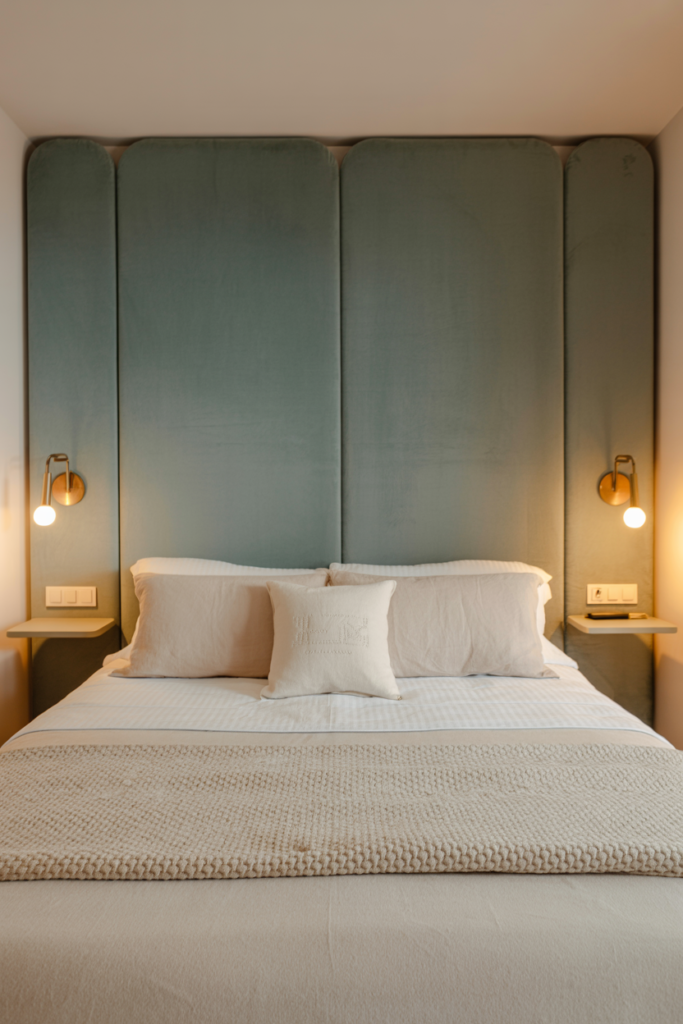
A wall-mounted headboard is a clever trick that saves a surprising amount of floor space. Traditional headboards attach to a bed frame and take up extra inches at the head of the bed. A wall-mounted version gives the same look with zero extra footprint.
It also makes cleaning much easier since there is no frame to work around. You can go with a simple upholstered panel, a wooden plank, or even a DIY fabric headboard mounted with brackets. All of these options look polished and take up no floor space at all.
As a bonus, a wall-mounted headboard makes the bed look more intentional and designed. It gives that hotel room look that makes a small space feel curated rather than cramped.
3. Choose Light and Neutral Wall Colors
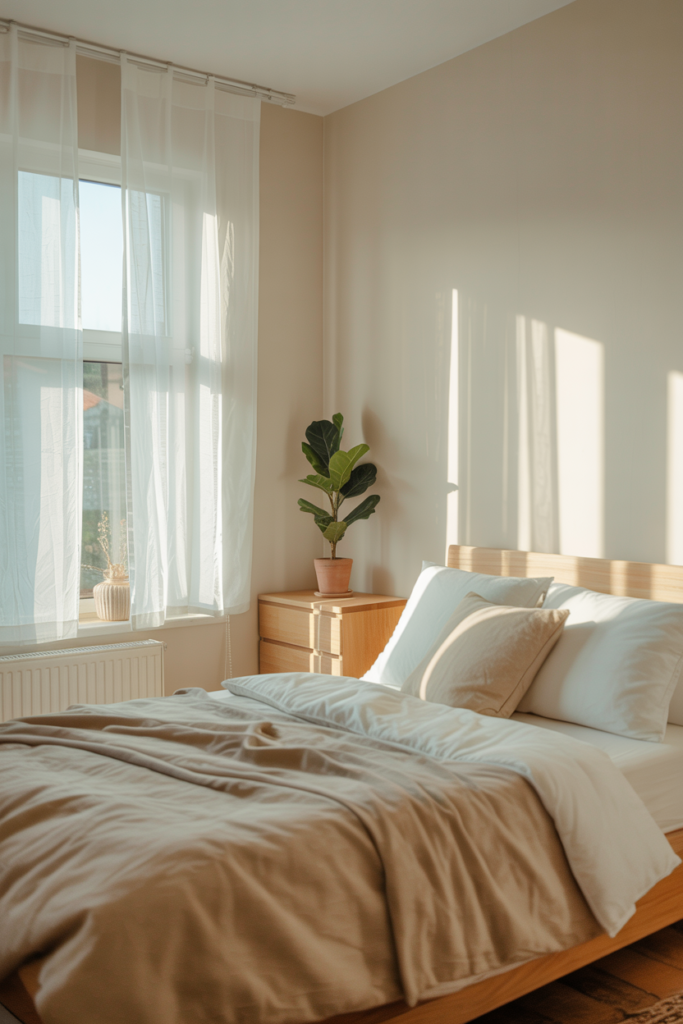
Light colors reflect natural light and make walls feel further apart than they actually are. White, soft grey, warm beige, and pale sage are all great choices for small bedroom walls. I painted my spare room a warm off-white and it genuinely looked larger overnight.
Dark colors absorb light and make walls feel closer together. This does not mean you cannot use dark tones at all, but save them for accent walls or small decorative touches rather than painting all four walls.
If you want a bit of personality without losing that airy feeling, try a light color on three walls and a slightly deeper tone on one accent wall. This adds depth without making the room feel closed in.
4. Hang Curtains Higher Than the Window Frame
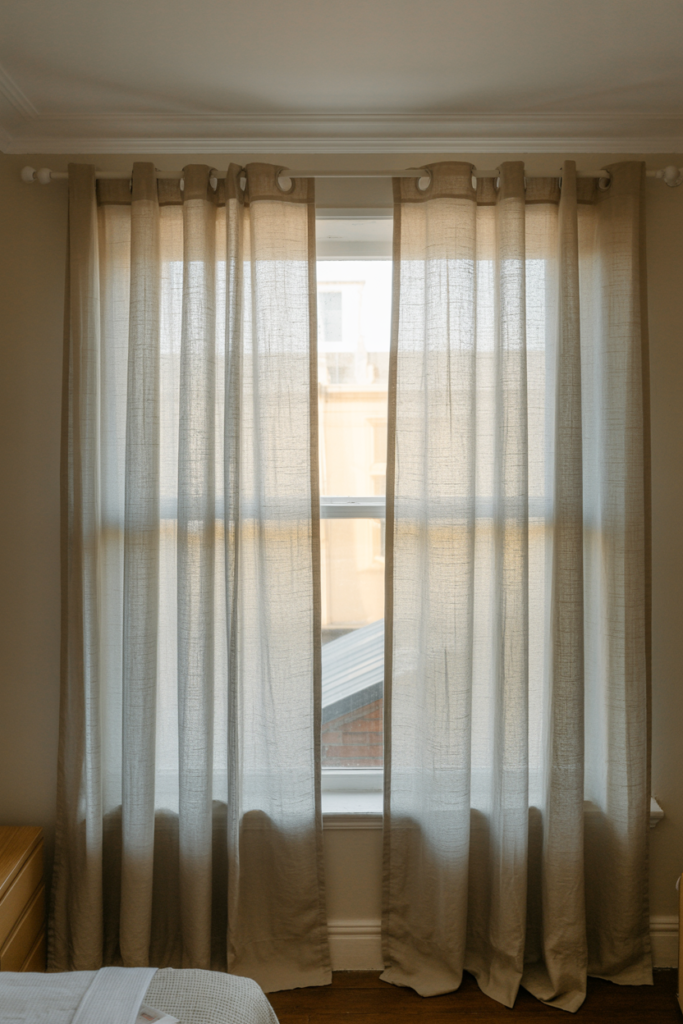
This is one of the easiest and most affordable tricks in small bedroom design. Hanging curtain rods close to the ceiling, rather than just above the window, draws the eye upward and makes the ceiling feel taller. It costs nothing extra and takes about 20 minutes to do.
Use floor-length curtains for the best effect. When fabric runs from ceiling to floor, it creates a vertical line that stretches the perceived height of the room. Even in rooms with average ceiling height, this trick makes a noticeable difference.
Stick with light, sheer fabrics in neutral tones to keep the room feeling bright. Heavy, dark curtains will undo all the work the height trick does by blocking light and adding visual weight.
5. Use Mirrors Strategically to Add Depth
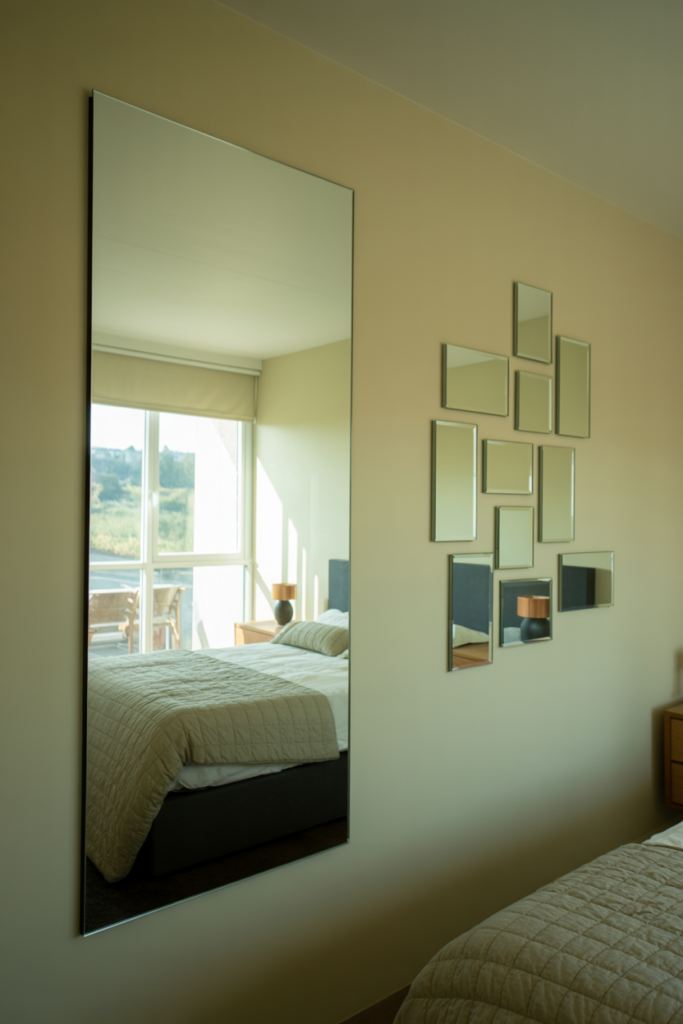
Mirrors are one of the oldest tricks in interior design, and for good reason. A large mirror on one wall reflects light and creates the illusion of a second room behind it. The result is a space that feels almost double its actual size.
A full-length mirror leaning against a wall or mounted behind the door is a practical and space-saving option. You get the visual benefit plus the everyday functionality of having a mirror to check your outfit before leaving the house.
For a more designed look, try a gallery of smaller mirrors arranged in a grid or asymmetric pattern. This adds visual interest while still doing the reflective work that makes a small room feel bigger.
6. Opt for Multi-Functional Furniture
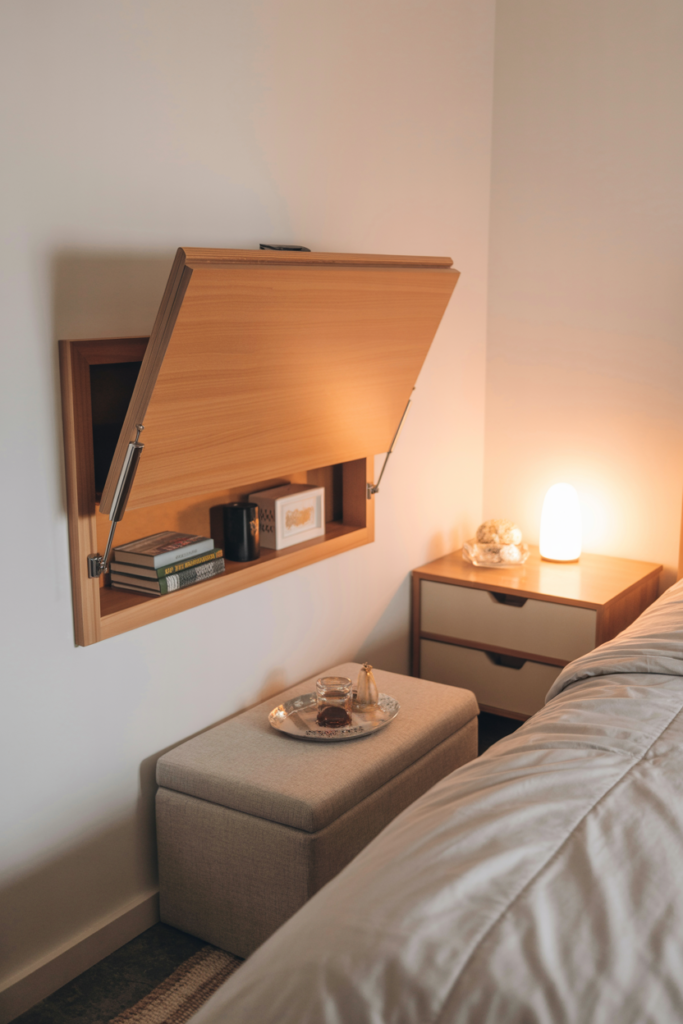
In a small bedroom, every piece of furniture should earn its place by serving more than one purpose. A bedside table with drawers beats a simple stool every time. A storage ottoman at the foot of the bed holds extra blankets and doubles as a seating spot.
Fold-down desks that mount to the wall are another great option, especially if you work from home but do not have a separate office. When not in use, they fold flat against the wall and disappear completely. This keeps the bedroom from feeling like a workspace 24 hours a day.
Think of your furniture as tools, not just decor. Every item should solve a problem and look good doing it. That mindset alone will help you make much smarter choices when furnishing a small room.
7. Try Floating Shelves Instead of Bulky Bookcases
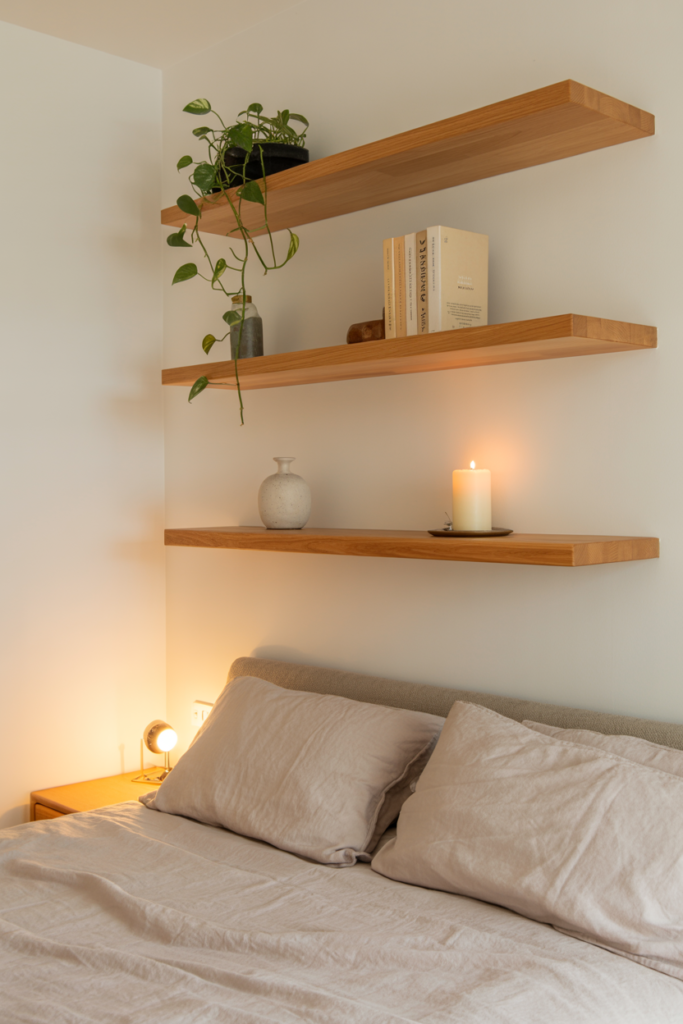
Floating shelves are a small bedroom’s best friend. They hold books, plants, decorative items, and even small baskets without taking up any floor space at all. A wall that might otherwise be wasted becomes a fully functional storage zone.
Install them above the bed, beside the window, or along an empty wall. Stagger them at different heights to create a dynamic look rather than a flat, boring row. I personally have three shelves above my bed and they hold everything from books to a small lamp.
Keep the items on your shelves minimal and intentional. Overcrowded shelves create visual clutter, which makes a small room feel messy and tight. A few well-chosen pieces look far better than shelves stuffed to capacity.
8. Go Vertical with Tall, Slim Wardrobes
When floor space is limited, the only direction to go is up. A tall, slim wardrobe that reaches close to the ceiling gives you significantly more storage than a short, wide one. It takes up the same footprint but uses vertical space that most people just ignore.
Look for wardrobes with mirrored doors to combine two functions into one piece. The storage stays hidden behind the mirrors, which also reflect light and add depth to the room. It is one of the most space-efficient furniture choices you can make.
If you are renting and cannot install built-in wardrobes, freestanding slim wardrobes work just as well. Many flat-pack options look sleek and modern, and they can move with you when you leave.
9. Keep the Floor as Clear as Possible
This sounds simple, but it is one of the most impactful things you can do in a small bedroom. A clear floor makes a room look bigger immediately. The more you can see of the floor, the more open the space feels.
This means choosing furniture with legs rather than pieces that sit flush on the floor. A bed frame with legs, a side table on legs, and a chair with visible legs all help the floor feel more open. Light passes underneath, and the room breathes better as a result.
Resist the urge to store things on the floor. Shoes, bags, and stray items pile up quickly and make even a large room feel messy. Use over-door organizers, under-bed storage, and wall hooks to keep everything off the ground.
10. Use a Small-Scale Rug to Define the Space
A rug in a small bedroom needs to be the right size. Too large and it makes the room feel even smaller by covering too much floor. Too small and it looks out of place, like a tiny island floating in the middle of the room.
The sweet spot is a rug that sits mostly under the bed with about 18 to 24 inches extending on each side. This grounds the bed as the focal point of the room without overwhelming the floor space. It also adds warmth and texture without cluttering the visual field.
Stick to light-colored rugs with simple patterns or solid tones. Busy, dark rugs add visual weight and make the floor feel heavier and smaller than it is.
11. Place the Bed Against the Longest Wall
Positioning the bed against the longest wall is one of the smartest layout moves in a small bedroom. It leaves the center of the room open, which makes walking around feel natural and easy. A clear path through the room always makes a space feel larger than it is.
This placement also leaves wall space on either side for small bedside tables or wall-mounted lights. You get a balanced, symmetrical look without crowding the room with extra furniture. Symmetry in a small space creates a sense of calm and order that feels very intentional.
If the longest wall also has a window, this layout lets natural light fall directly onto the bed. Morning light in a small room does more for the atmosphere than any light fixture ever could.
12. Install Recessed or Wall-Mounted Lighting
Overhead pendant lights and floor lamps take up visual and physical space in a small bedroom. Switching to recessed ceiling lights or wall-mounted sconces frees up both floor space and visual breathing room. It is a small change that makes the room feel noticeably cleaner.
Wall-mounted bedside sconces are especially useful because they replace the need for bedside table lamps entirely. Your nightstand suddenly has more surface space, and the room looks less cluttered overall. I made this switch in my own bedroom and it felt like gaining an extra piece of furniture.
Choose warm-toned bulbs rather than cool white ones. Warm light makes a small room feel cozy and inviting rather than clinical and tight.
13. Use Under-Bed Storage Bins and Boxes
The space under a bed is some of the most underused real estate in a small bedroom. Flat storage bins, vacuum bags, and rolling boxes can hold seasonal clothing, extra bedding, shoes, and more. Using this space well removes the need for extra furniture elsewhere in the room.
Look for storage bins with lids to keep dust out and contents protected. Clear bins are especially useful because you can see what is inside without pulling everything out. Labels help too, especially for items you only access a few times a year.
If your bed sits very low to the ground, bed risers are an inexpensive solution. They lift the frame by a few inches and instantly create more usable storage space underneath.
14. Choose Sliding or Folding Doors for Wardrobes
Standard swing-out wardrobe doors need clearance space in front of them to open fully. In a small bedroom, that clearance eats into the walking area and makes the room feel tighter. Sliding or bifold doors solve this problem completely.
Sliding doors glide along a track and never need any floor space to open. They also give a wardrobe a sleek, modern look that suits most bedroom styles. Mirrored sliding doors are even better because they add depth and reflect light at the same time.
Bifold doors fold in on themselves and need only minimal clearance. They are a good option when sliding doors are not compatible with the wardrobe frame or wall layout. Either way, ditching the swing door is a move that pays off quickly in a tight space.
15. Add a Window Seat with Hidden Storage
A window seat is one of those ideas that looks purely decorative but actually pulls serious storage duty. The box underneath the seat can hold extra blankets, books, off-season clothing, or anything else that needs a home. It turns what is often a forgotten corner of the room into a functional feature.
Window seats also create a natural reading nook or lounging spot without adding a separate chair to the room. In a small bedroom, removing the need for a chair is a big win for floor space. You get a seating area and storage in one compact built-in feature.
If a built-in seat is not an option, a simple storage bench placed in front of a window works just as well. Many affordable options look custom-built without the custom price tag.
16. Stick to a Simple, Consistent Color Palette
Too many colors in a small bedroom create visual chaos. The eye jumps from one color to the next, which makes the room feel busy and cramped. Keeping a simple palette of two or three colors throughout the space makes it feel much more cohesive and relaxed.
A consistent color palette also makes mixing and matching furniture and textiles easier. When everything follows the same color story, even mismatched pieces look like they belong together. This is especially helpful when furnishing a small room on a budget.
Stick with soft, complementary tones rather than bold contrasts. Contrast draws attention to edges and boundaries, which highlights how small a room is. Tonal, harmonious colors blur those edges and make the space feel more continuous.
17. Bring in Natural Light with Sheer Window Treatments
Natural light is the single biggest factor in how large a room feels. A small bedroom with great natural light always feels more spacious than a larger room with poor light. Maximizing the light coming through the windows should be a top priority.
Sheer curtains let light filter through while still giving a sense of privacy. They soften the window without blocking any of the brightness that makes the room feel airy. Pairing sheer panels with a simple blackout blind gives you the best of both worlds for day and night.
Avoid heavy valances, thick drapes, or layered window treatments that cover more window than they reveal. Every bit of natural light you let in does more for the room than any artificial lighting can replicate.
18. Use Narrow Bedside Tables or Wall-Mounted Shelves
Standard bedside tables can be surprisingly bulky in a small bedroom. A table that is too deep sticks out into the room and blocks the natural flow of movement. Swapping to a narrow table, a small wall-mounted shelf, or even a floating ledge solves this instantly.
A wall-mounted bedside shelf holds a lamp, a book, and a glass of water without taking up any floor space at all. It looks minimal and modern, and it keeps the area around the bed feeling open. Some versions even have a small drawer or lip to prevent items from sliding off.
For a budget option, a simple wooden ledge bracket from a hardware store works perfectly. Paint it to match the wall and it almost disappears, creating a floating effect that looks intentional and clean.
19. Try a Loft Bed to Free Up Floor Space
A loft bed is not just for kids’ rooms. In a small studio bedroom or a room with high ceilings, a loft bed can completely transform how the floor space gets used. Lifting the sleeping area off the ground frees up the entire floor area underneath for a desk, seating, or storage.
Adult loft beds come in sleek, minimal designs that look nothing like the chunky wooden ones from childhood. Low-profile metal frames with clean lines work well in modern and Scandinavian-style bedrooms. The key is choosing a frame that does not feel heavy or visually dominant in the room.
This idea works best in rooms with ceilings higher than 8 feet. Anything lower and the space above the loft mattress starts to feel uncomfortably tight when sitting up in bed.
20. Declutter Regularly and Keep Only What You Need
No design trick works in a room that is full of stuff. Clutter cancels out every smart layout and storage solution you put in place. A small bedroom stays looking and feeling bigger when the things inside it are genuinely useful or genuinely loved.
A good rule of thumb is to go through the bedroom every season and remove anything that has not been used or worn in the past three months. Donate, store elsewhere, or sell what no longer belongs in the space. The result is a room that always feels fresh and intentional.
Think of decluttering not as a chore but as a design decision. Every item you remove from a small bedroom gives the remaining items more visual breathing room. Less really does mean more when space is limited.
21. Use Diagonal Furniture Placement for Visual Interest
Placing a bed or desk at a slight diagonal angle is an unconventional move that actually makes a small room feel larger. The diagonal line is the longest distance across any rectangular room, and the eye follows that line naturally. This creates a sense of depth that a straight, parallel layout does not achieve.
This works especially well in square rooms where standard placement feels stiff and predictable. Angling the bed slightly away from the corner adds a dynamic quality to the layout. It also creates small nook spaces on either side that can hold a lamp or a small plant.
Keep the rest of the room simple if you go with a diagonal placement. Too many competing angles in a small space can quickly start to feel chaotic rather than clever.
22. Add Vertical Stripes to Walls or Textiles
Vertical stripes are a well-known visual trick that makes ceilings feel higher. Whether painted directly on the wall, applied as wallpaper, or introduced through striped curtains and bedding, the effect is the same. The eye reads the vertical lines and perceives the room as taller than it actually is.
Thin, tone-on-tone stripes work best in small bedrooms because they add the height illusion without adding too much visual noise. A subtle two-tone stripe in soft white and warm beige reads as texture from a distance rather than a bold pattern. This keeps the room feeling calm while still doing the visual heavy lifting.
Avoid horizontal stripes on walls in a small bedroom. They do the opposite job, making walls feel wider and lower, which is the last thing a compact room needs.
23. Incorporate Plants Without Cluttering the Space
A small bedroom does not need to be plant-free to stay clutter-free. A single well-placed plant adds life, color, and freshness to the room without taking up meaningful space. The trick is choosing the right size and placement rather than filling every corner with pots.
A trailing plant like pothos or string of pearls hung near a window takes up zero floor space and adds a lovely organic element to the room. A slim snake plant in a corner does the same. These plants also improve air quality, which is a nice bonus in a room where you spend a third of your life sleeping.
Avoid overcrowding windowsills with multiple small pots. One or two plants styled intentionally look far better than a collection that starts to feel like a greenhouse.
24. Use Smart Lighting Layers for a Bigger Feel
Lighting in a small bedroom should do more than just illuminate the space. A layered lighting approach, which combines ambient, task, and accent lighting, creates depth and dimension that makes the room feel larger. Flat, single-source lighting flattens a room and highlights its small size.
Ambient lighting from recessed ceiling lights sets the overall brightness. Task lighting from a bedside sconce or under-shelf strip light handles reading and close-up work. Accent lighting from a small lamp or LED strip behind the headboard adds warmth and a sense of depth to the far wall.
Using dimmable bulbs in all your fixtures gives you full control over the mood of the room. A dimly lit bedroom in the evening feels intimate and restful rather than small and confined.
25. Keep Decor Minimal and Choose Pieces with Purpose
In a small bedroom, every decorative item needs to justify its presence. A single piece of art above the bed makes a stronger statement than a wall covered in frames. One meaningful object on a shelf looks curated, while ten objects on the same shelf look cluttered.
Minimal decor also makes a small room easier to clean and maintain. Fewer surfaces covered with objects means less dusting, less rearranging, and less visual noise every time you walk in. The room stays looking tidy with very little effort, which is a genuine quality of life improvement.
Choose decor that doubles as function where possible. A beautiful basket that holds blankets, a sculptural lamp that provides light, or a framed print that covers a wall anchor are all examples of decor that earns its place in the room.
Quick Comparison: Best Small Bedroom Ideas by Budget
| Idea | Budget Level | Impact Level |
| Platform bed with storage | Medium | Very High |
| Light wall colors | Low | High |
| High-hung curtains | Low | High |
| Floating shelves | Low | High |
| Mirrored wardrobe | Medium | Very High |
| Wall-mounted sconces | Low | Medium |
| Loft bed | High | Very High |
| Window seat with storage | High | High |
| Diagonal furniture layout | Free | Medium |
| Minimal decor approach | Free | High |
Conclusion
A small bedroom does not have to feel like a compromise. With the right mix of smart furniture choices, clever storage, and a few visual tricks, even the most compact room can feel genuinely comfortable and well-designed. The 25 ideas in this guide cover every corner of a small bedroom, from the bed you choose to the way you hang your curtains.
The biggest takeaway is this: small bedroom design is about intention. Every decision either adds to the sense of space or takes away from it. Choose furniture that works harder, keep the floor as clear as possible, let in as much natural light as you can, and keep the decor simple. These four principles alone will take a cramped bedroom a long way.
Start with two or three ideas from this list that fit your budget and your room layout. You do not need to overhaul everything at once. Small, thoughtful changes add up quickly, and before long the room will feel like a completely different space.
Frequently Asked Questions
What is the best bed size for a small bedroom?
A full or queen bed works well in most small bedrooms. A twin bed is ideal for solo sleepers who want maximum floor space. Avoid king beds in rooms smaller than 12×12 feet as they leave almost no walking room.
How do I make a small bedroom look bigger on a budget?
Start with paint. A light, neutral wall color costs very little and makes an immediate difference. Adding a large mirror and hanging curtains high are two other budget-friendly changes with a big visual impact.
What colors make a small bedroom look larger?
Soft whites, warm beiges, pale greys, and light sage greens all make a small bedroom feel more open. These colors reflect light and visually push the walls outward rather than closing them in.
Should I use a rug in a small bedroom?
Yes, but size matters. A rug that extends 18 to 24 inches beyond each side of the bed grounds the space beautifully. Too small a rug looks awkward, and too large a rug can make the room feel even more crowded.
Is it better to have more furniture or less furniture in a small bedroom?
Less is always better in a small bedroom. Every extra piece of furniture reduces walking space and makes the room feel tighter. Focus on multi-functional pieces that serve two purposes rather than adding more individual items.
How do I add storage to a small bedroom without making it feel cluttered?
Use vertical space with tall wardrobes and floating shelves. Choose furniture with built-in storage like platform beds and ottomans. Keep under-bed storage organized with labeled bins so it stays functional rather than becoming a dumping ground.
Can a small bedroom still feel cozy and stylish?
Absolutely. In fact, small bedrooms often feel cozier than large ones when designed well. Layered lighting, soft textiles, a few carefully chosen decorative pieces, and a consistent color palette all work together to create a space that feels warm, personal, and stylish.