
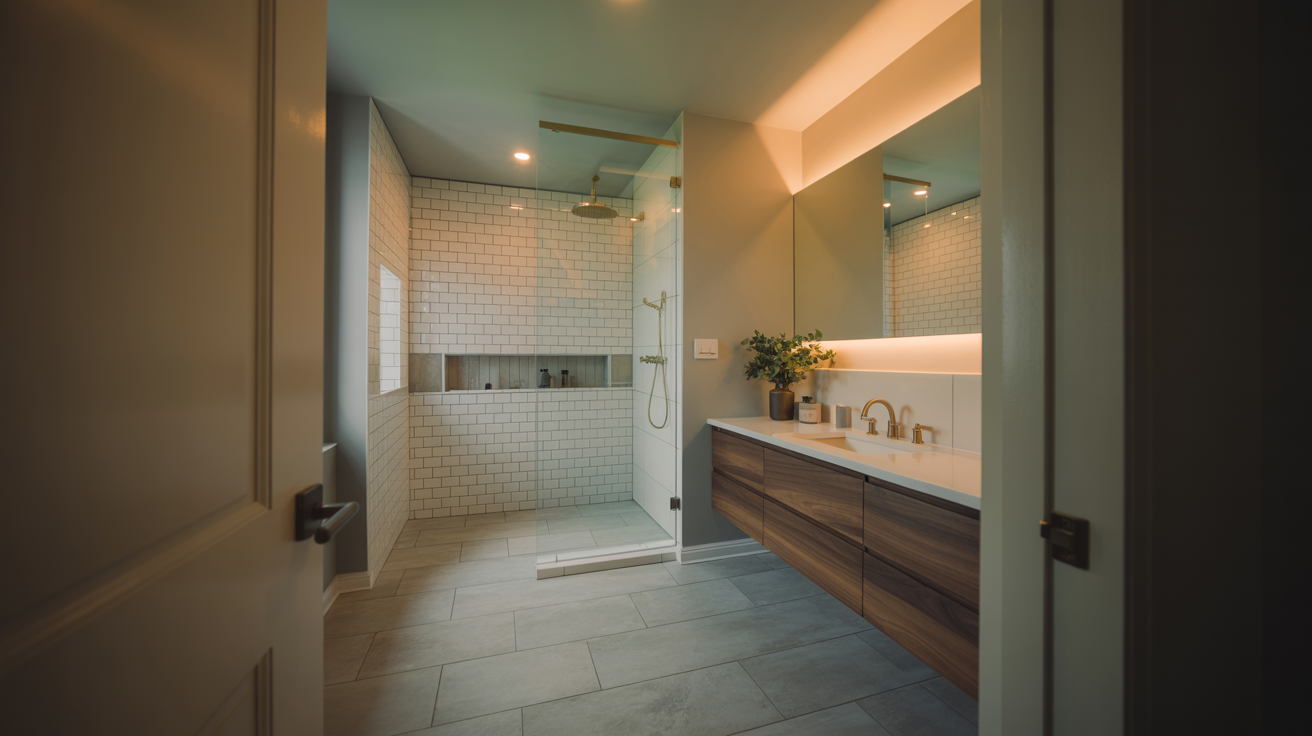
A basement bathroom can go from an afterthought to the most talked-about room in your home. Most people treat it like a last-minute add-on. But honestly, it has the potential to be a real showstopper if you approach it with a solid plan.
I’ve seen too many basement bathrooms that look like they were designed with zero thought – a bare bulb overhead, white walls, and a toilet shoved in a corner. That doesn’t have to be your story. With the right basement bathroom ideas, even the most awkward underground space can feel stylish, functional, and surprisingly spa-like.
Whether you’re starting a basement bathroom remodel from scratch or just looking for a few small basement bathroom ideas to refresh an existing one, this guide covers 20 ideas that actually work. No fluff, no unrealistic suggestions. Just real, practical ideas you can use right away.
What Makes a Basement Bathroom Different from the Rest?
Basement bathrooms come with a unique set of challenges that you simply won’t face on the main floor. The biggest ones are low ceilings, zero natural light, and the constant threat of moisture. Ignore any one of these, and you’re setting yourself up for serious problems later.
The good news is that every challenge has a smart solution. Basement bathroom design is really just about working with what you have and making intentional choices. A low-ceiling basement bathroom doesn’t have to feel like a bunker. With the right fixtures, finishes, and layout, it can feel cozy and well-planned rather than cramped and forgotten.
| Challenge | Why It Matters | Smart Fix |
| Low ceiling height | Makes the space feel cramped | Wall-mounted fixtures + vertical tiles |
| No natural light | Space looks dark and gloomy | Layered lighting + light paint tones |
| Moisture and humidity | Leads to mold and mildew | Ventilation fan + waterproof finishes |
| Limited plumbing access | Rough-in costs can spike | Plan layout around existing drain lines |
Before jumping into the ideas, it helps to understand what you’re actually working with. The table below gives you a quick overview of the most common basement bathroom challenges and the right direction to take for each one.
20 Best Basement Bathroom Ideas for Every Style and Budget
Now that you know what you’re working with, let’s get into the ideas. I’ve organized these from foundational decisions to finishing touches, so they naturally build on each other.
Go Dark with Bold Wall Colors
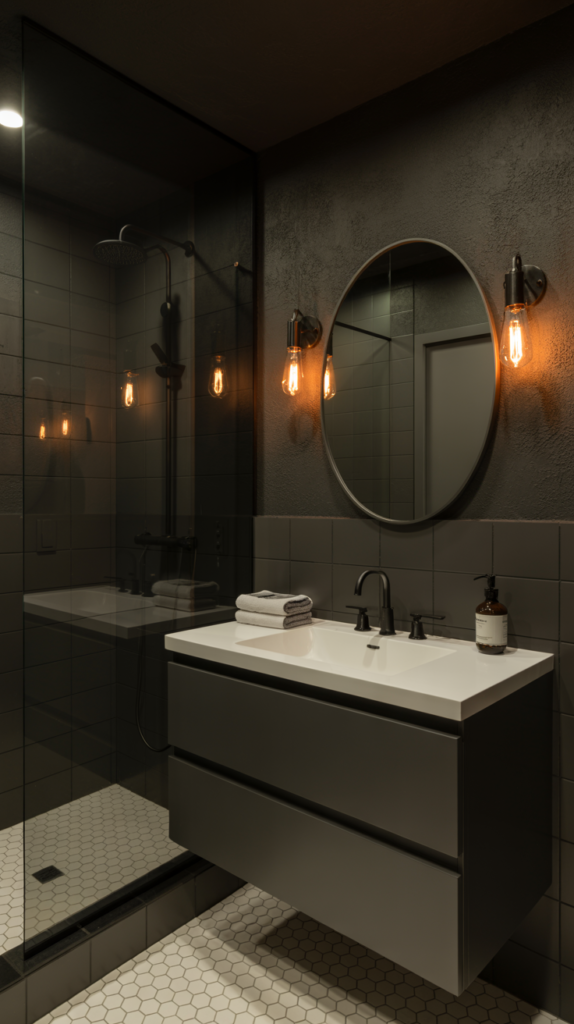
Most people instinctively reach for white in a small space, but a basement bathroom is actually one of the best places to go bold. Deep navy, charcoal, forest green, or even a moody black can make the space feel intentional and dramatic rather than small and dim.
Dark walls absorb light, yes, but they also hide imperfections and create a sense of depth. Pair them with warm-toned lighting and brushed gold or matte black fixtures, and the whole room starts to feel like a boutique hotel bathroom. I tried deep charcoal in a basement bathroom once, and visitors always assumed it was a designer renovation.
The key is to commit fully. Half-hearted dark walls with bright white trim can look unfinished. Go dark on the walls, keep the trim consistent, and let your lighting do the heavy lifting.
Install a Walk-In Shower Instead of a Tub
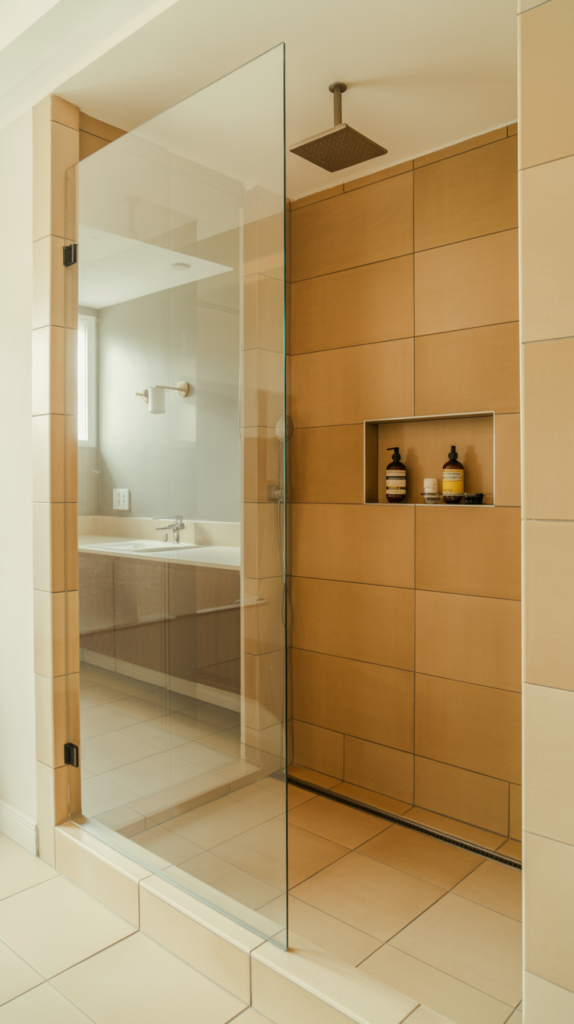
A basement bathroom with shower is almost always more practical than one with a bathtub. Tubs take up significant floor space, and in a basement setting, they rarely get used as much as a shower does.
A walk-in shower with a frameless glass door opens up the visual space immediately. It makes even a small basement bathroom feel larger because your eye can travel straight through the glass without hitting a visual barrier. Pair it with large-format tiles on the floor and walls for a seamless, clean look.
If you’re worried about waterproofing, that’s a valid concern in a basement. Use a waterproof membrane under your tile, make sure the shower area has a proper slope toward the drain, and you’ll be fine for years to come.
Use Large-Format Floor Tiles to Make the Room Feel Bigger
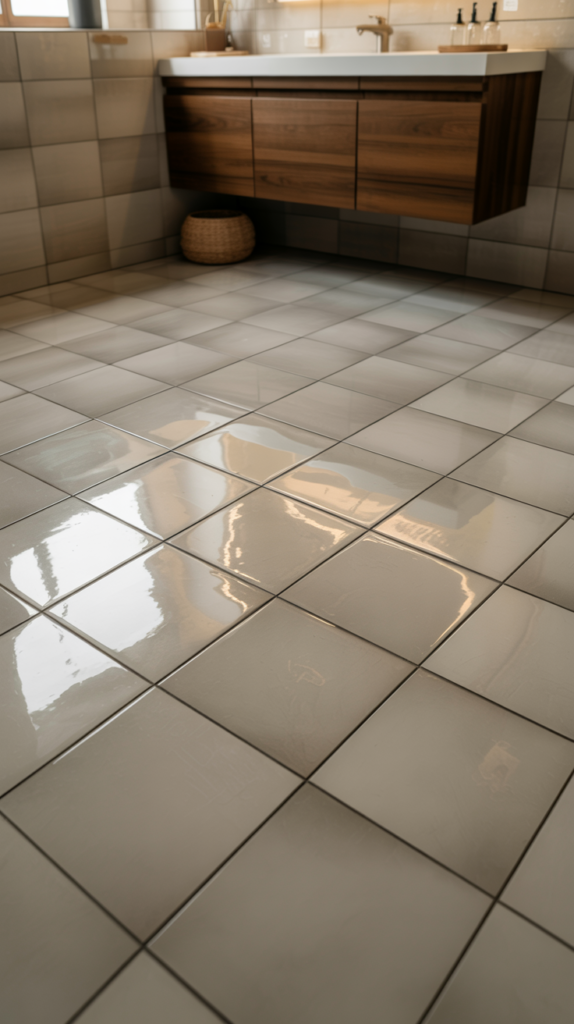
Tile choice has a massive impact on how large or small a bathroom feels. Small mosaic tiles create more grout lines, which visually chop up the floor and make a compact space feel even more confined.
Large-format tiles, like 24×24 or even 12×24 planks, do the opposite. Fewer grout lines mean a cleaner, more continuous surface that tricks the eye into seeing more floor space than there actually is. This is one of my favorite basement bathroom flooring ideas because it’s both practical and visually smart.
Neutral tones like warm grey, cream, or soft beige work best for floors. They reflect light well and pair easily with almost any wall color or fixture finish you choose.
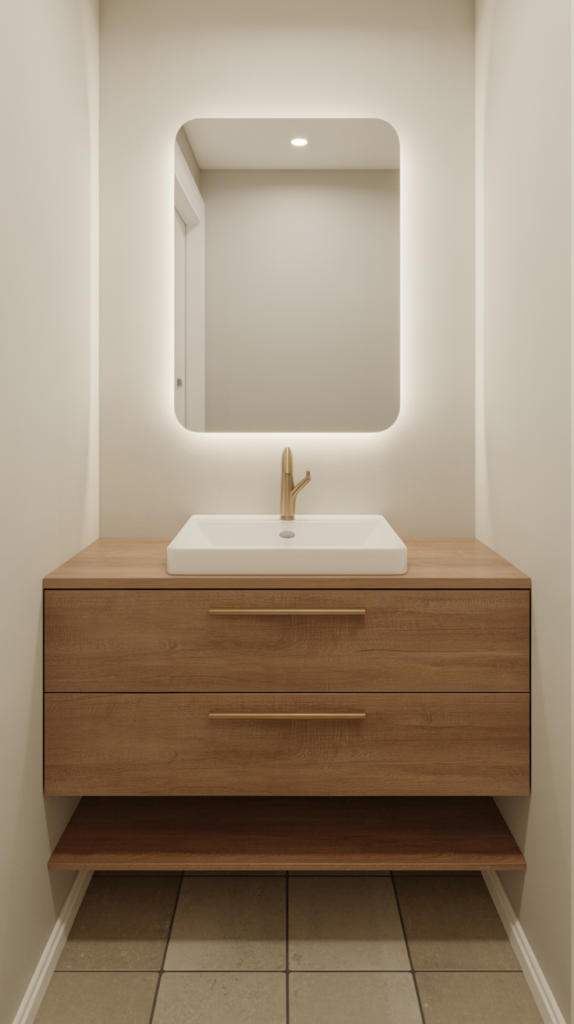
Add a Floating Vanity for a Modern, Airy Look
A floating vanity is one of the easiest ways to modernize a basement bathroom remodel. Because it mounts directly to the wall with no cabinet base touching the floor, it visually lifts the room and makes the floor space feel more open.
The exposed floor underneath a floating vanity also makes cleaning significantly easier, which is a bonus most people don’t think about until after they’ve installed a traditional floor-mounted vanity. From a design standpoint, it reads as clean, contemporary, and intentional.
Choose a floating vanity with built-in storage drawers if you’re tight on space. You get the airy look without sacrificing your storage needs, which is a win in any small basement bathroom layout.
Layer Your Lighting for Depth and Function
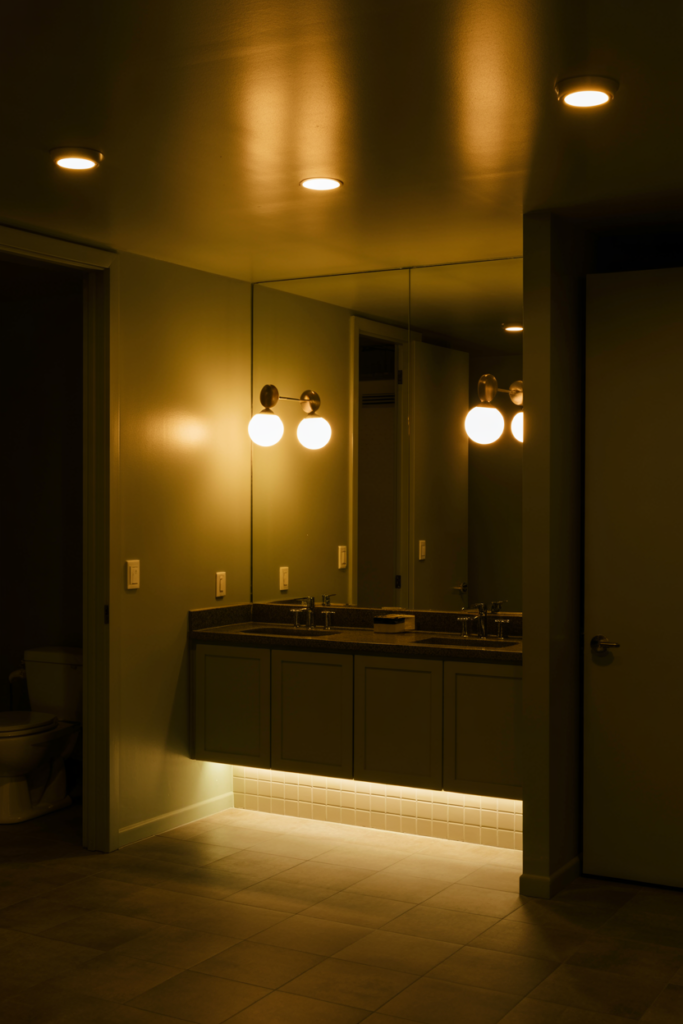
Lighting is the single most important design decision in a basement bathroom. Since there’s no natural light coming in, you’re completely in control of the mood, and that’s actually a fun position to be in.
The trick is to layer three types of lighting: ambient (overall ceiling light), task (vanity mirror lighting), and accent (under-cabinet or toe-kick lights). Each layer serves a different purpose, and together they create a bathroom that feels warm and well-designed rather than harshly lit or dim.
Install a Ceiling-Mounted Exhaust Fan Right Away
Moisture is a basement’s worst enemy. Without proper ventilation, you’re looking at peeling paint, warped cabinets, and eventually mold. A good exhaust fan is not optional in a basement bathroom – it’s a necessity.
Go for a fan rated at least 110 CFM for a standard basement bathroom. If your bathroom is larger or your basement tends to run humid, size up. Some fans now come with built-in humidity sensors that automatically kick on when steam builds up, which is genuinely useful if you tend to forget to hit the switch.
Combine the fan with moisture-resistant drywall (also called greenboard or cement board near the shower) and you’ve built a solid defense against the most common basement bathroom problem of all.
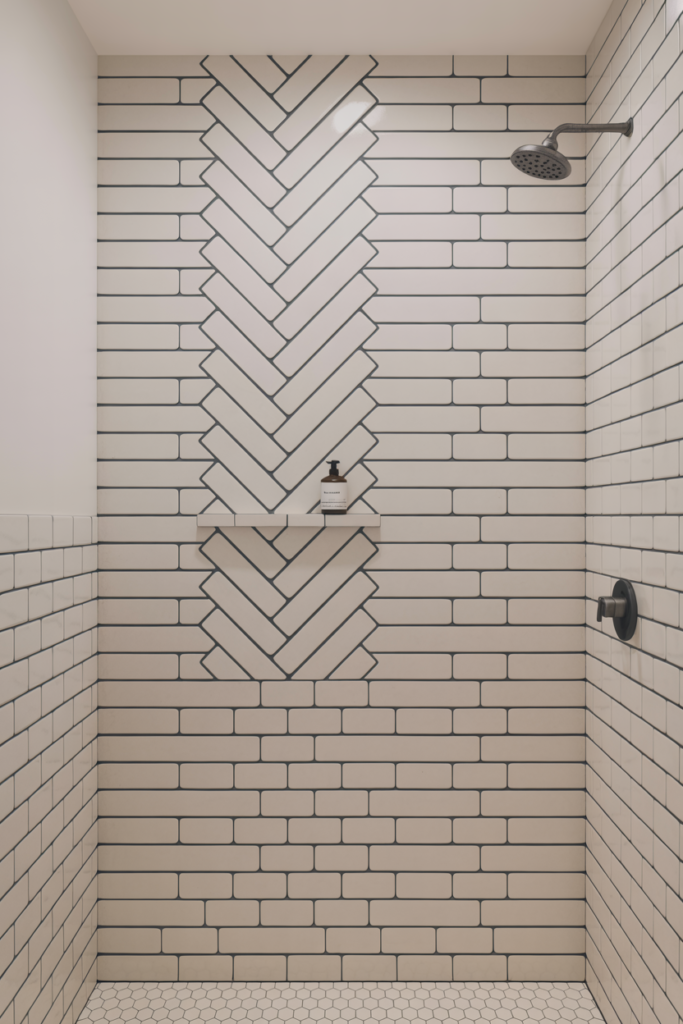
Try Subway Tiles with a Twist
Subway tiles have been around forever, and for good reason — they’re clean, versatile, and affordable. But the classic white horizontal layout can look a little expected at this point. The good news is that subway tiles work brilliantly when you play with the layout.
Try a vertical stacked layout to draw the eye upward and make low ceilings feel taller. Or go with a herringbone pattern for a bathroom that feels more custom and considered. Colored grout is another easy way to make subway tiles feel fresh — charcoal grout on white tiles gives a graphic, modern look without any extra cost.
This is a great basement bathroom tile idea if you’re working with a tighter budget. Subway tiles are widely available at reasonable price points, and the pattern variation makes them look far more expensive than they are.
Mount Your Toilet to the Wall
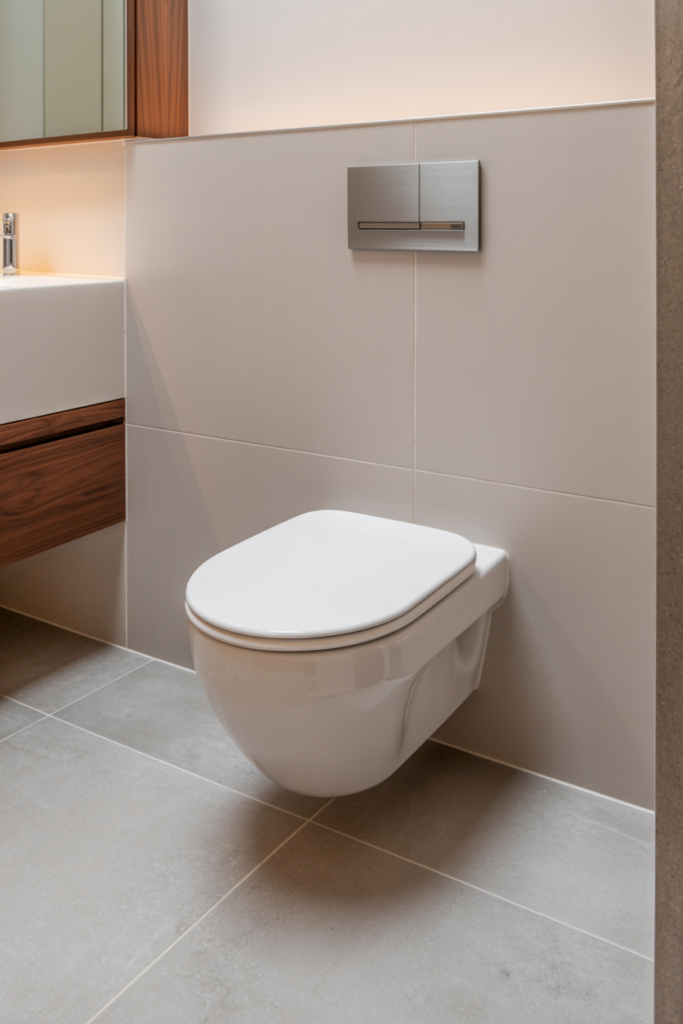
A wall-mounted toilet is one of those details that immediately makes a bathroom look high-end. The tank hides inside the wall, leaving just the bowl floating above the floor. It’s sleek, it’s modern, and it’s genuinely easier to clean around.
From a practical standpoint, wall-mounted toilets also save floor space. In a tight basement bathroom layout, every inch counts, and eliminating the visual bulk of a standard toilet base makes a real difference. The rough-in work is a bit more involved than a standard toilet installation, so budget accordingly if you’re hiring a plumber.
Pair a wall-mounted toilet with a floating vanity and frameless shower glass, and your basement bathroom will look like something pulled straight from an architectural magazine.
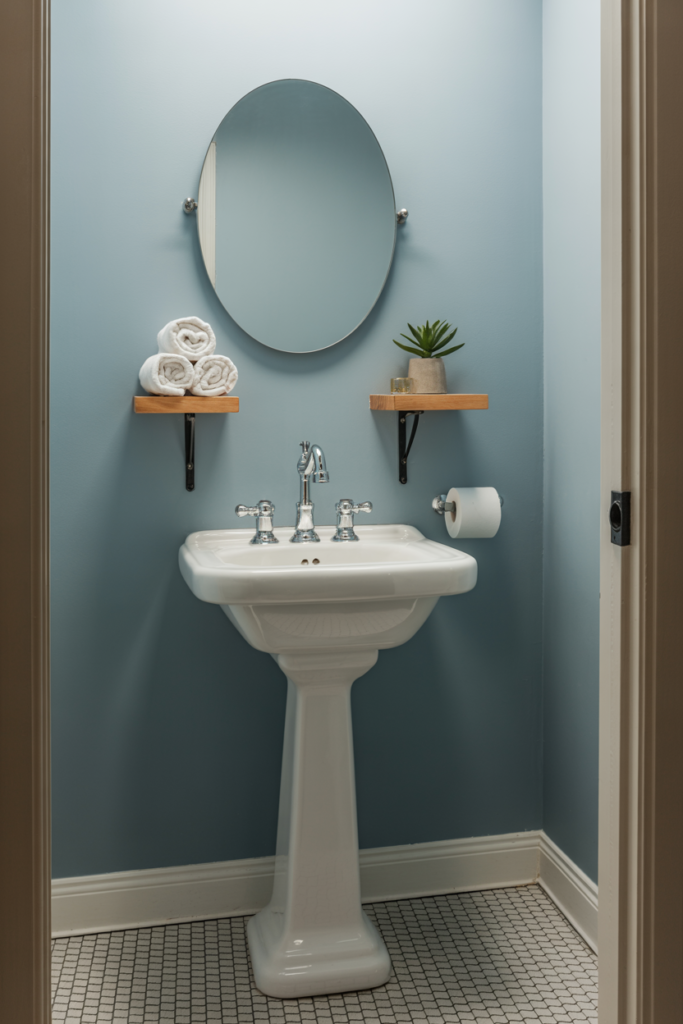
Use a Pedestal Sink in Ultra-Small Spaces
If your basement bathroom is genuinely tiny, a pedestal sink might serve you better than a vanity. It takes up very little floor space, keeps the room from feeling overwhelmed with cabinetry, and has a classic look that works in both traditional and transitional style homes.
The obvious trade-off is storage. A pedestal sink gives you zero cabinet space, so you’ll need to compensate with wall-mounted shelves, a mirrored medicine cabinet, or a freestanding storage unit nearby. Plan your storage before committing to this route.
That said, in a half basement bathroom or a true powder room situation, a pedestal sink paired with a wall-mounted toilet is one of the most space-efficient combinations available.
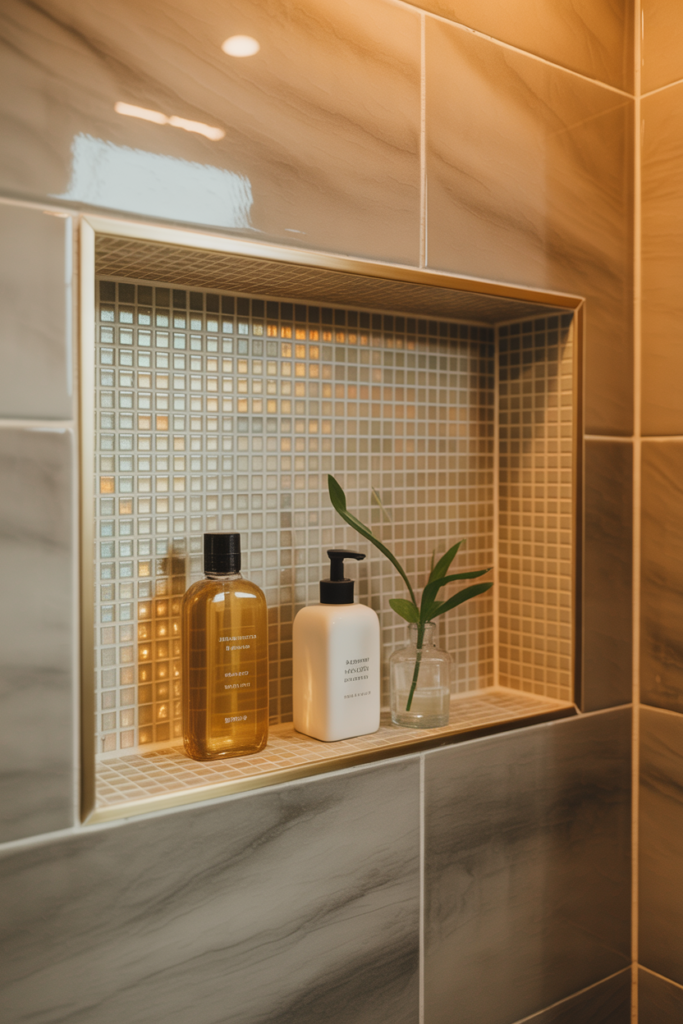
Add a Niche or Recessed Shelf in the Shower
Shower caddies that hang from the showerhead always look a little improvised. A built-in recessed niche, on the other hand, looks like it was planned from day one because it was. It’s one of those details that separates a thoughtfully designed bathroom from one that was thrown together.
A recessed niche sits flush with the wall and holds shampoo, soap, and whatever else you keep in the shower. It adds zero visual clutter and takes up no extra floor or wall space. If you’re already tiling the shower, adding a niche is relatively simple and very affordable.
Tile the interior of the niche in a contrasting material or color for a detail that catches the eye in the best possible way. A small mosaic tile inside a large-format tile surround looks especially sharp.
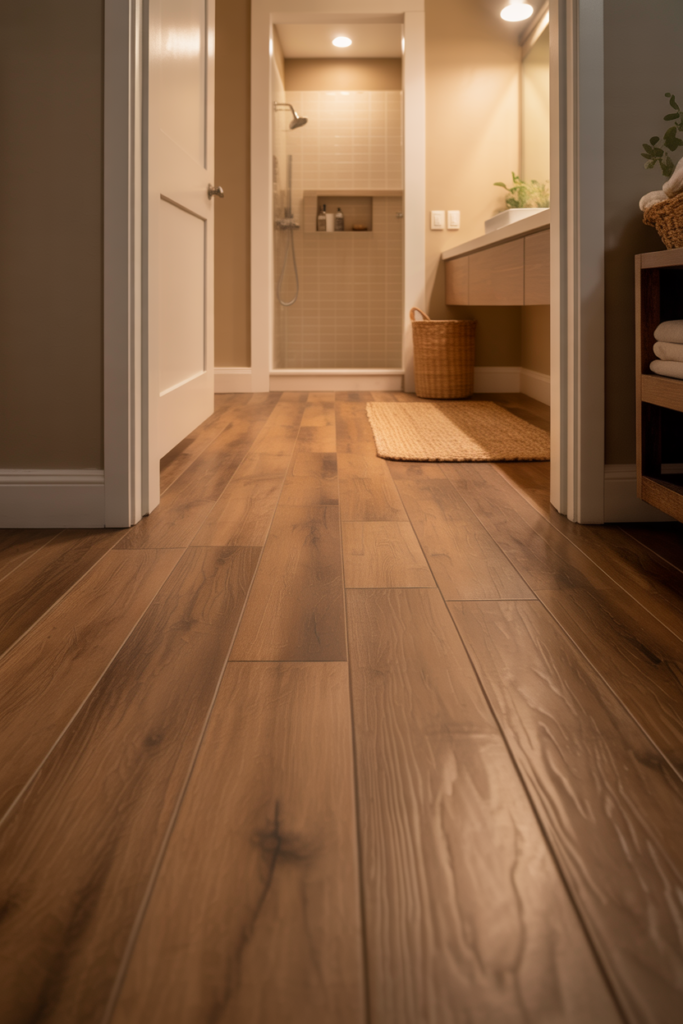
Choose Vinyl Plank Flooring for a Warm, Waterproof Option
Not everyone wants tile on the floor, and that’s completely understandable. Luxury vinyl plank (LVP) flooring is a genuinely good alternative for a basement bathroom floor, especially if you want something that feels warmer underfoot.
Modern LVP is 100% waterproof, durable, and available in finishes that convincingly mimic wood, stone, and even concrete. It’s also significantly easier to install than tile, which can save you real money if you’re doing some of the work yourself.
Make sure you choose a product specifically rated for wet areas. Not all LVP is created equal, and in a basement bathroom, you want something with a solid waterproof core rather than a basic water-resistant coating.
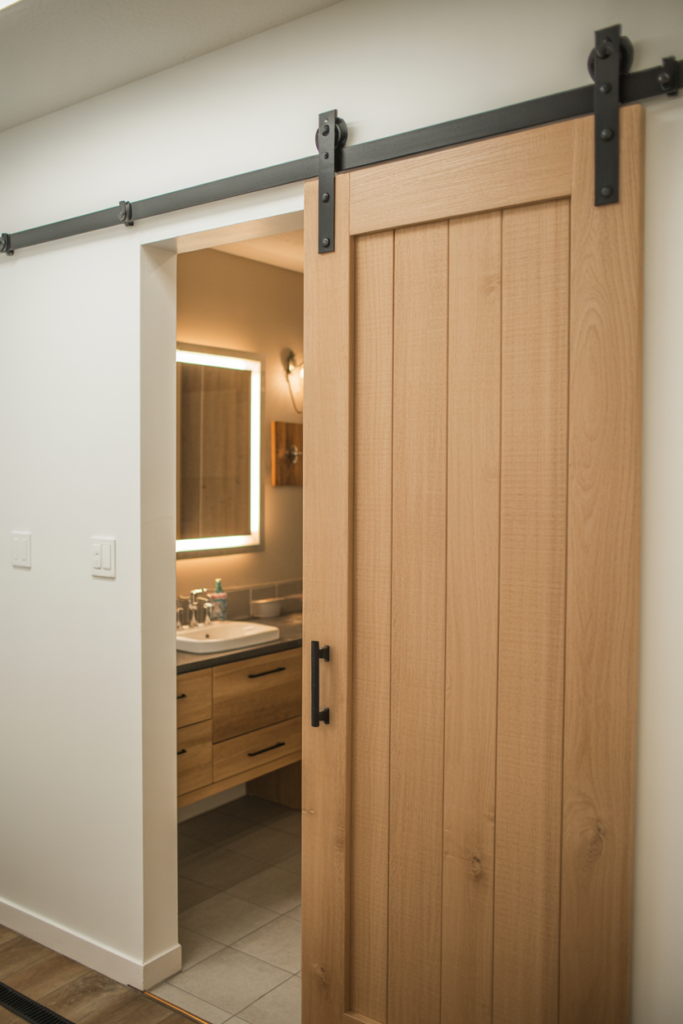
Install a Barn Door to Save Space
Swing doors eat into floor space in ways that become very noticeable in a small room. A barn door slides along the wall instead of swinging inward, which frees up the floor area that a standard door would claim.
In a small basement bathroom, this can genuinely change how the room functions. You suddenly have room to step back from the vanity, or the door no longer conflicts with the toilet when you open it. It’s a practical fix that also adds a design element to the space.
Barn doors come in a wide range of styles from rustic wood to sleek frosted glass panels. Choose one that matches your bathroom’s overall aesthetic, and make sure the wall beside the doorway has enough clearance for the door to slide fully open.
Use Mirrors Strategically to Reflect Light
A large mirror does two things really well in a basement bathroom: it reflects whatever light you have and makes the space feel noticeably larger. This is one of the easiest and most affordable upgrades you can make.
Instead of a standard medicine cabinet mirror, consider a full-width mirror that spans the entire vanity wall. The reflected image essentially doubles the perceived size of the room. This is a classic interior design trick that works particularly well in rooms with no windows.
Backlit mirrors are an even better option if budget allows. They provide soft, even task lighting right where you need it at the vanity while also acting as a decorative element. Two functions, one fixture. That’s always a win in a compact space.
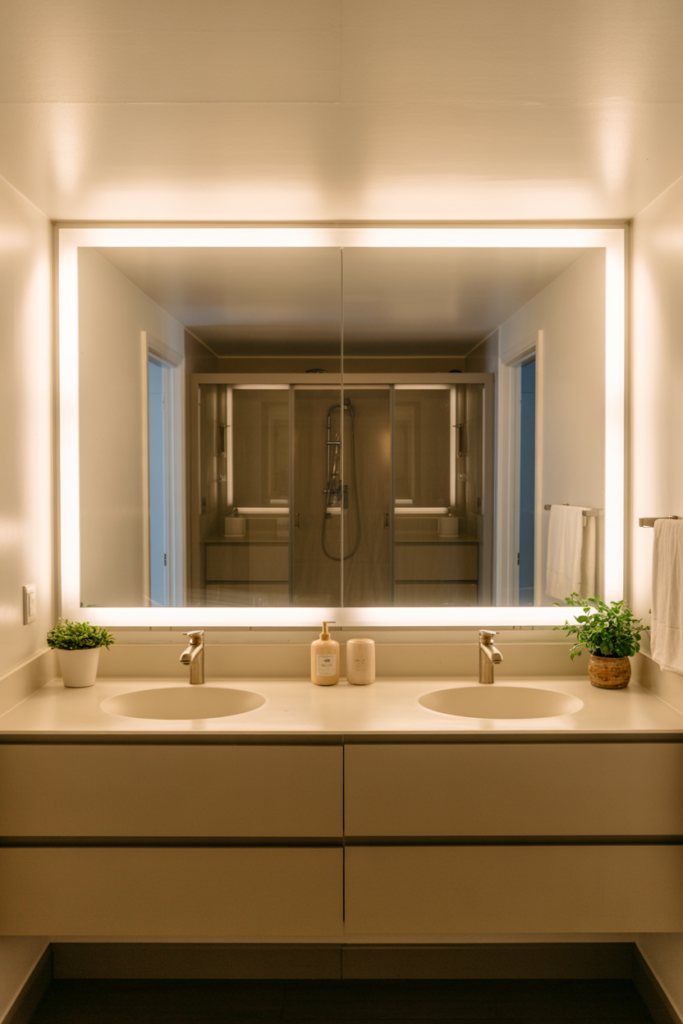
Go for a Monochromatic Color Scheme
A monochromatic bathroom – where the walls, tiles, and fixtures all sit within the same color family creates a seamless, sophisticated look that works brilliantly in basement spaces. When everything reads as one cohesive palette, the eye doesn’t get interrupted, and the room feels larger and more curated.
An all-white scheme is the classic version of this, but it doesn’t have to be white. An all-grey bathroom with warm undertones, or a soft sage green from floor to ceiling, can feel incredibly intentional and calming. This approach works especially well in a basement bathroom with low ceilings because it removes visual clutter.
Vary the textures within your chosen color family to keep things interesting. Matte tiles paired with a glossy vanity top, or a textured wallpaper alongside smooth painted walls, add visual depth without breaking the color harmony.
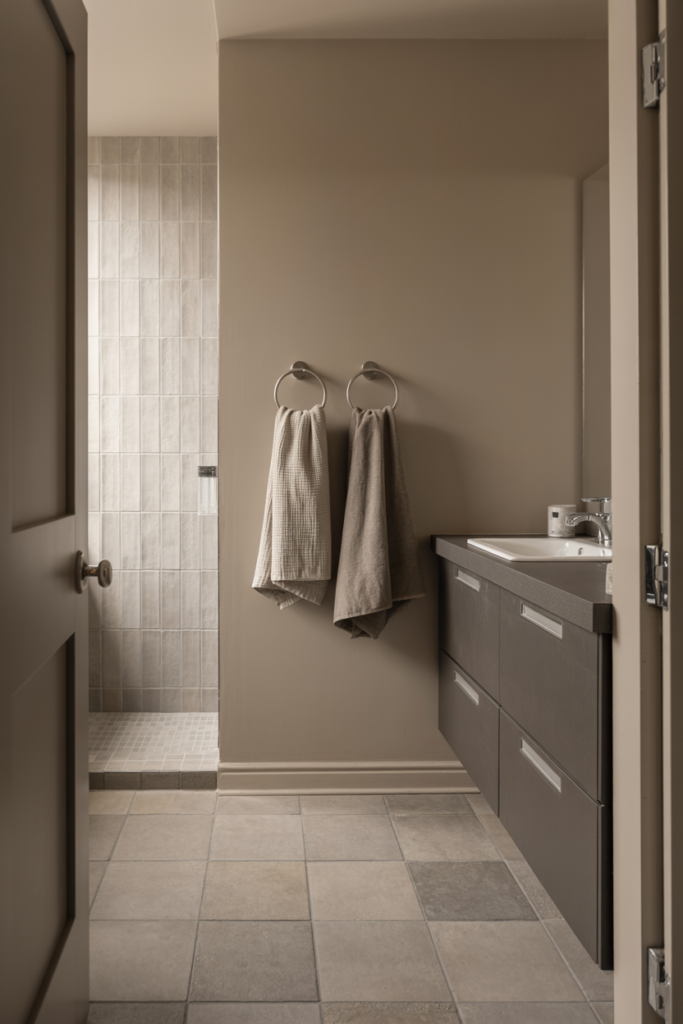
Add Open Shelving for Storage and Style
Open shelving in a bathroom serves double duty. It keeps essentials within easy reach and gives you a surface to style with folded towels, small plants, or a few decorative objects that add personality to the space.
In a basement bathroom, where wall space is often the most abundant real estate, floating shelves above the toilet or beside the vanity are a smart storage solution. They’re also inexpensive to install and easy to customize to whatever height and spacing works best for your needs.
Keep the items on open shelves intentional and tidy. A few neatly rolled towels, a small plant, and a candle look great. A cluttered shelf full of random products has the opposite effect and makes a small space feel chaotic.
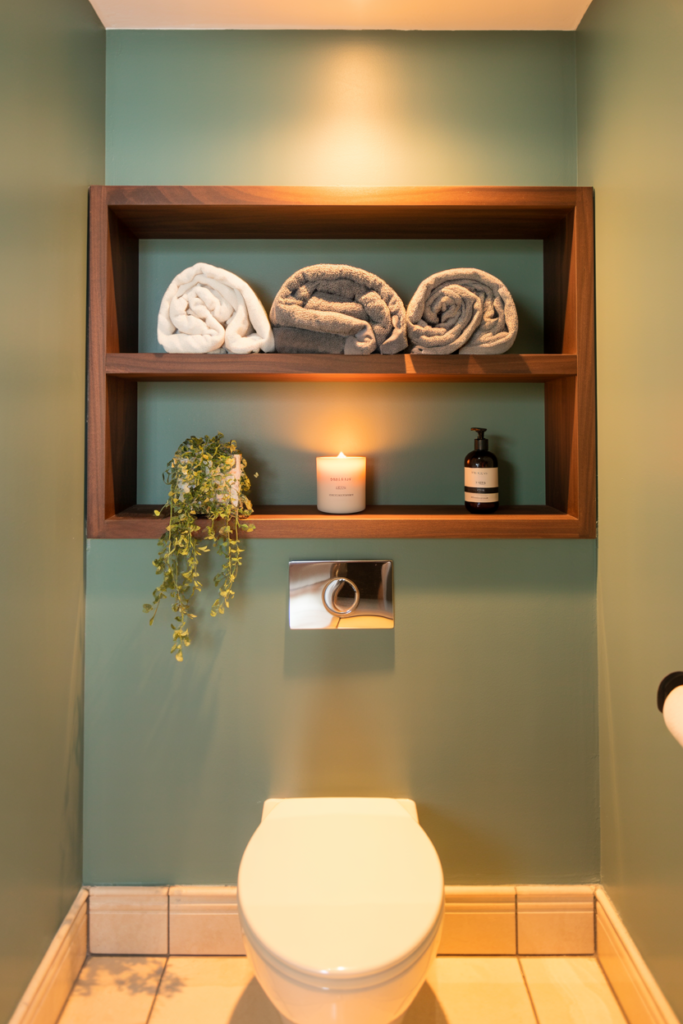
Use Accent Tiles to Create a Feature Wall
An accent tile wall is one of the most effective ways to add personality to a basement bathroom remodel without redesigning the whole room. One wall covered in a distinctive tile becomes the focal point, and everything else in the room plays a supporting role.
Zellige tiles, textured 3D tiles, or bold patterned cement tiles all make strong choices for a feature wall. You don’t need to cover all four walls, just one is enough to completely shift the character of the room. It’s also a more budget-friendly approach than tiling an entire bathroom in a premium material.
The wall behind the vanity or the wall at the end of a walk-in shower are the two most natural places for a feature tile. Both have good visual exposure and make the impact count where it matters most.
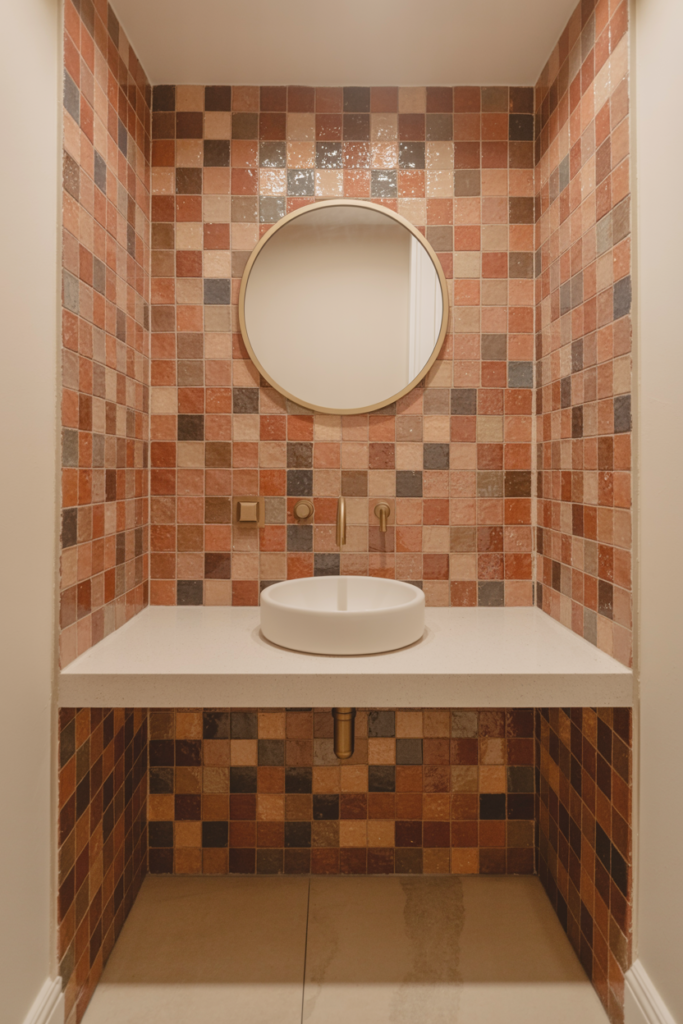
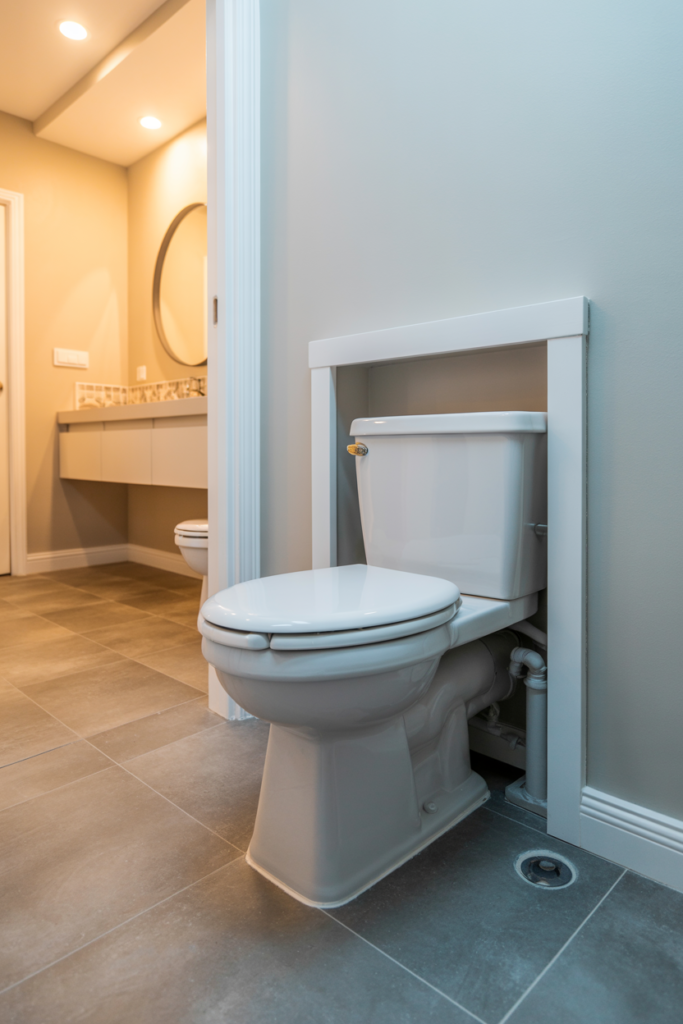
Consider a Macerating Toilet for Difficult Plumbing Situations
If your basement bathroom sits below the main sewer line, a standard gravity-fed toilet won’t work without significant excavation. A macerating toilet, often called an upflush toilet, is a practical solution that avoids tearing up the concrete floor.
A macerating toilet grinds waste and pumps it upward through a small pipe to the existing sewer line. Installation is far less invasive than traditional rough-in plumbing, and the units have become significantly more reliable and quiet over the years. It’s not the most glamorous topic, but it’s genuinely useful information for anyone planning a basement bathroom addition.
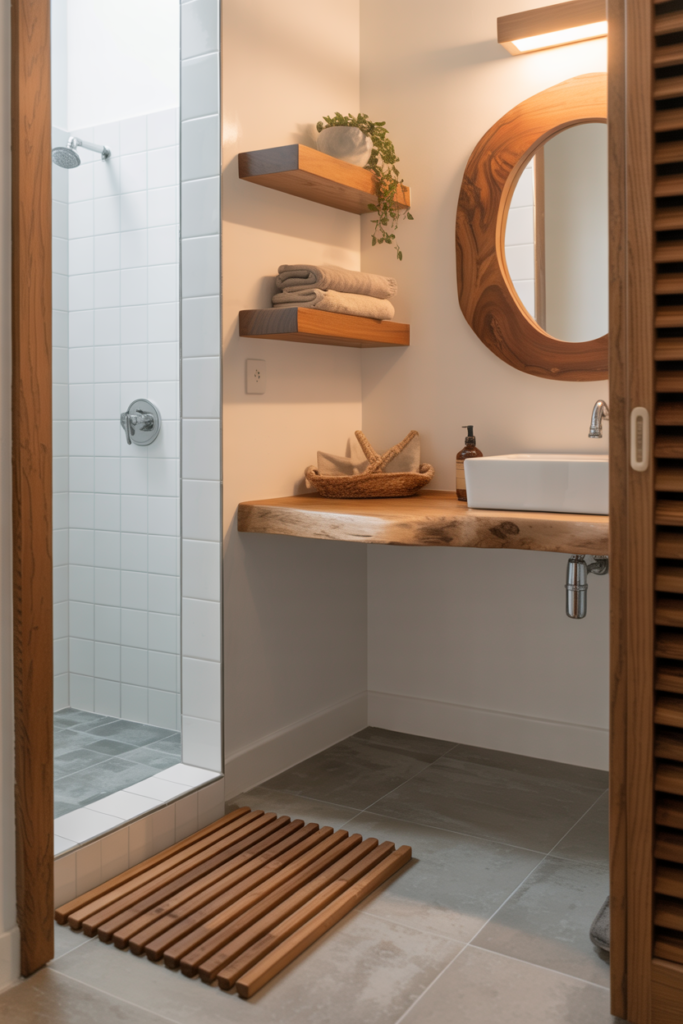
Bring in Warmth with Wood Accents
An all-tile basement bathroom can start to feel cold and clinical. Wood accents, even small ones, bring warmth and texture that softens the whole space and makes it feel more like a room someone actually wants to spend time in.
A wood-framed mirror, a teak bath mat, open shelves in a warm walnut finish, or even a wood-look tile on the floor can completely shift the atmosphere. You don’t need to go overboard. Even one or two wood elements are enough to add that organic warmth that balances out harder, cooler surfaces.
If you’re concerned about moisture damage (fair concern in a basement), stick with teak or similarly moisture-resistant woods, or use porcelain tiles that mimic a wood finish. You get the look without the maintenance worry.
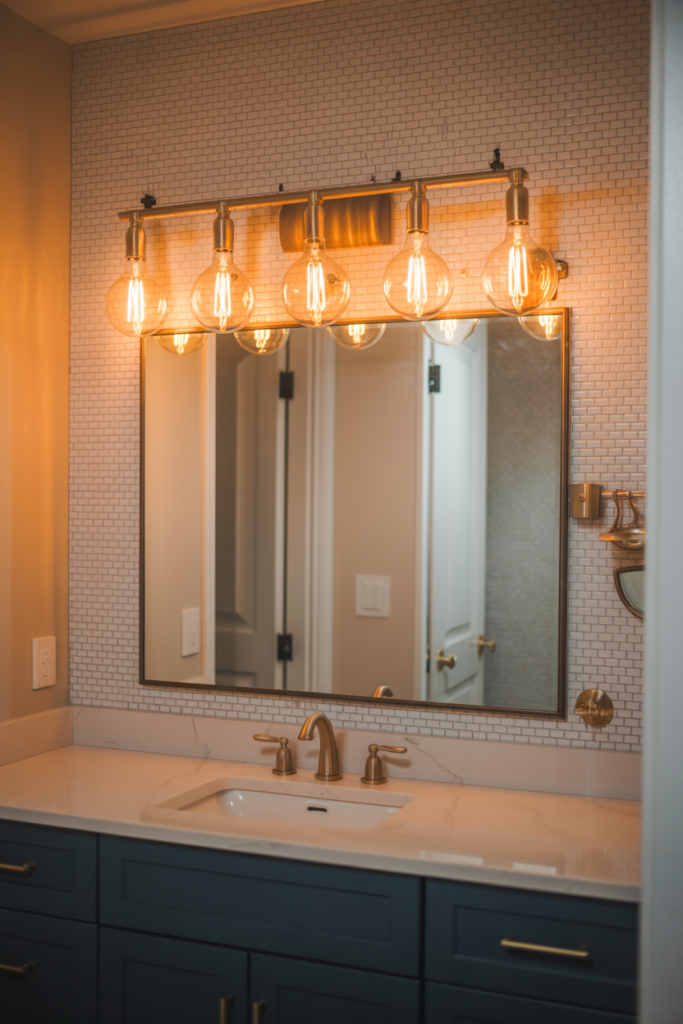
Add a Statement Vanity Light Fixture
Lighting above the vanity is often treated as an afterthought, but it’s one of the most visible design elements in any bathroom. In a basement bathroom where you’re working to build ambiance from scratch, the vanity light fixture becomes even more important.
Swap a basic builder-grade bar light for something with actual character. An exposed Edison bulb fixture, a row of globe lights, or a sleek linear LED bar in a brushed brass or matte black finish can elevate the entire bathroom aesthetic. The fixture doesn’t need to be expensive to look intentional.
Aim for fixtures that provide even, shadow-free light across the face. Side-mounted sconces at eye level on either side of the mirror are often more flattering and functional than a single fixture mounted directly above.
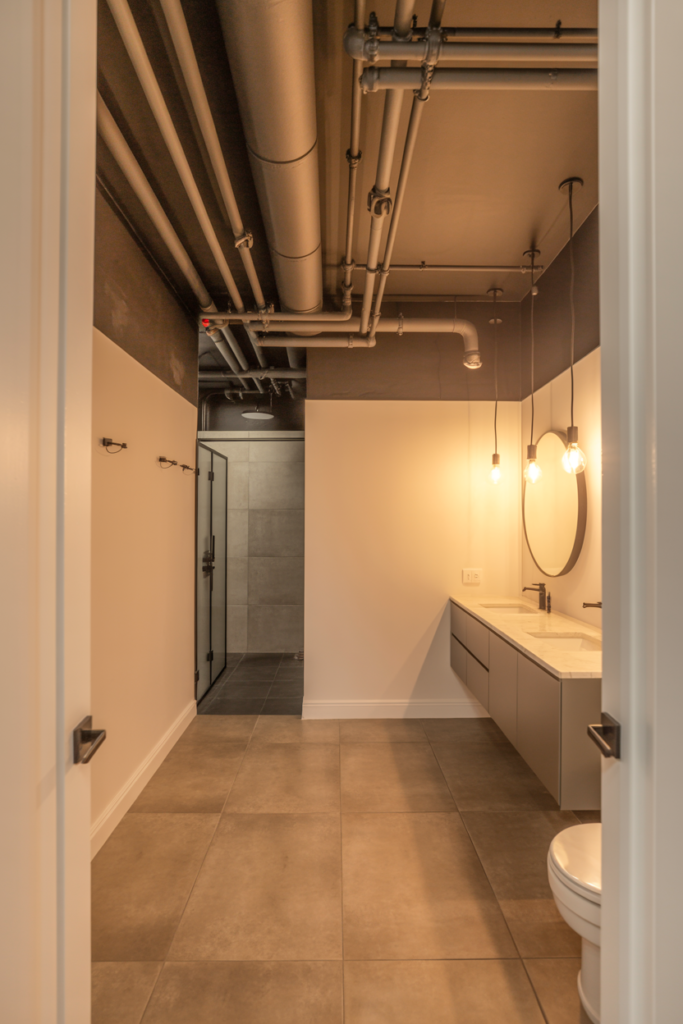
Don’t Overlook the Ceiling
The ceiling is the most overlooked surface in bathroom design, and in a basement bathroom, it’s also one of the most challenging. Low ceilings can make the space feel oppressive if you ignore them, but a few smart choices turn them into a non-issue.
Paint the ceiling the same color as the walls to blur the boundary between wall and ceiling, which visually lifts the room. Alternatively, a high-gloss white ceiling reflects light downward and creates a sense of height even when the actual clearance is limited. Skip the heavy crown molding, which visually drops the ceiling, and opt for a clean, minimal transition between wall and ceiling instead.
If your basement has exposed pipes or ductwork, consider embracing it rather than hiding it. Paint everything the same dark color – ceiling, pipes, and all — for an industrial-chic look that feels purposeful rather than unfinished.
Conclusion
The key takeaways are simple. Work with your challenges rather than against them. Use large-format tiles to open up the floor, layer your lighting to compensate for the lack of windows, and always prioritize proper ventilation to protect your investment long term. Choose finishes and fixtures that feel intentional, and don’t be afraid to add personality through an accent tile wall or a statement vanity light.
Frequently Asked Questions
Q1. What is the best flooring for a basement bathroom?
Porcelain tile and luxury vinyl plank (LVP) are the two best options for a basement bathroom floor. Both are fully waterproof, durable, and available in a wide range of styles. LVP is warmer underfoot and easier to install, while porcelain tile offers more long-term durability in high-moisture environments.
Q2. How do I add a bathroom to my basement without breaking the concrete?
A macerating or upflush toilet system is the most practical solution when breaking concrete is not an option. These systems grind waste and pump it up to the existing sewer line through a small pipe. They require no major excavation and are far less expensive than traditional rough-in plumbing work.
Q3. How can I make a small basement bathroom look bigger?
Use large-format tiles on the floor, a full-width mirror above the vanity, and a frameless glass shower enclosure. A floating vanity and wall-mounted toilet also free up visual floor space. Keeping the color palette light and consistent across surfaces helps the room feel more open and airy.
Q4. What type of lighting works best in a basement bathroom with no windows?
Layered lighting is the best approach for a windowless basement bathroom. Combine ambient ceiling lighting, task lighting at the vanity, and accent lighting underneath cabinets or along the toe kick. Warm-white LED bulbs in the 2700K to 3000K range create a welcoming, flattering atmosphere that compensates for the lack of natural light.
Q5. How much does a basement bathroom remodel typically cost?
A basic basement bathroom remodel typically costs between $3,000 and $8,000, depending on the scope of work and your location. A mid-range renovation with quality fixtures and tile can run between $8,000 and $15,000. Full custom renovations with premium materials and plumbing relocation can go higher, so getting multiple contractor quotes is always a smart first step.