
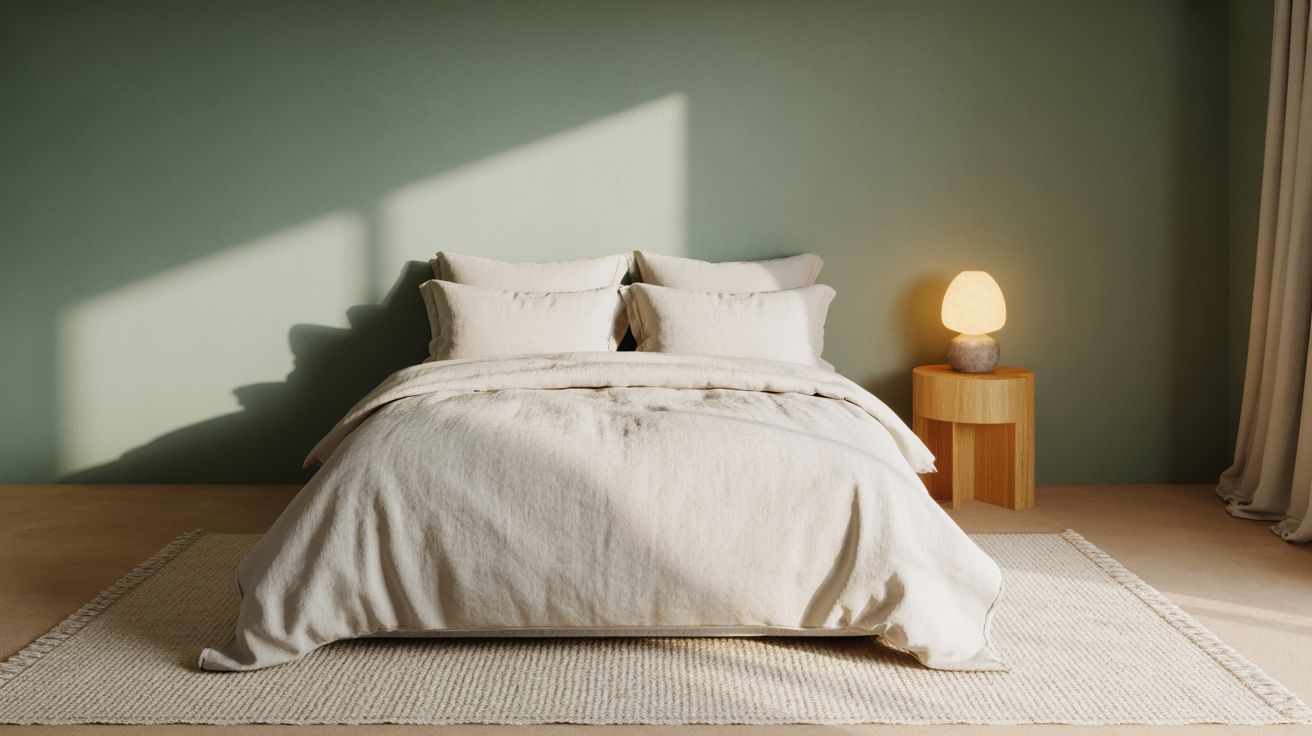
Picking the right bedroom furniture color combination is not as complicated as it sounds. The secret is simple: look at your wall paint first, then build everything else around it. Your walls are the biggest surface in the room, so they set the tone for every furniture piece you bring in.
Most people do it the other way around. They fall in love with a bed frame or a wardrobe, bring it home, and then wonder why the room feels off. Trust the process: wall color comes first, furniture comes second, and the result will feel a lot more pulled together.
I have made that mistake myself, and it cost me a full repaint. So if you are starting fresh or redecorating, this guide will save you time, money, and a lot of second-guessing.
Why Your Wall Paint Color Should Lead Every Bedroom Decision
Your wall paint is not just a background. It is the foundation of your entire bedroom color scheme. Every furniture finish, fabric, and decor piece either works with it or fights against it.
Think about it this way: a warm beige wall will make dark walnut furniture feel cozy and grounded. That same furniture against a cool grey wall can feel heavy and disconnected. The wall color shifts the entire mood of the room without you touching a single piece of furniture.
This is why interior designers always start with the wall color first. It narrows down your furniture choices fast and keeps your bedroom interior color ideas focused and consistent.
| Wall Paint Tone | Recommended Furniture Finish |
| Warm White | Natural wood, cream, or soft beige furniture |
| Cool Grey | White, charcoal, or light oak furniture |
| Warm Beige | Dark walnut, honey oak, or terracotta tones |
| Sage Green | Natural wood, white, or earthy brown furniture |
| Navy Blue | Light wood, gold accents, or crisp white furniture |
| Soft Blush | White, pale wood, or rose-toned furniture |
Understanding Warm and Cool Bedroom Colors Before You Shop
Before you pick any furniture, figure out whether your wall paint is warm or cool. This one step makes the whole matching process so much easier. Warm colors have yellow, red, or orange undertones, while cool colors lean towards blue, green, or purple.
Warm walls pair best with warm furniture finishes. Cool walls work better with cooler or neutral furniture tones. Mixing warm and cool without intention is usually where bedroom color schemes go wrong and rooms end up feeling unsettled.
A quick trick I use is to hold a white piece of paper against the wall in natural daylight. If the wall looks more yellow or peachy next to the paper, it is warm. If it looks more blue or green, it is cool. Simple as that.
The 60-30-10 Rule for Bedroom Color Combinations
The 60-30-10 rule is one of the most reliable color matching guides in interior design. It works like this: 60% of the room is your dominant color, usually the wall paint. 30% is your secondary color, which is mostly your furniture. The remaining 10% goes to accents like cushions, rugs, and decor.
This rule keeps your bedroom color combination balanced without making the space feel flat or overdone. It also gives you a clear framework when you are shopping for furniture and accessories. You are not just guessing anymore; you have a ratio to follow.
I started using this rule after years of rooms that felt either too chaotic or too boring. It is the kind of simple structure that makes a real difference in how a finished room looks and feels.
| Room Element | Percentage | Examples |
| Wall Paint (Dominant) | 60% | Wall color, ceiling |
| Furniture (Secondary) | 30% | Bed frame, wardrobe, dresser |
| Accents (Detail) | 10% | Cushions, rugs, lamps, artwork |
Best Bedroom Furniture Color Combinations Based on Popular Wall Paint Colors
Now that you understand the basics, let us get into the actual color pairings. These are the combinations that work consistently well in real bedrooms. I have broken them down by wall paint color so you can jump straight to what applies to your room.
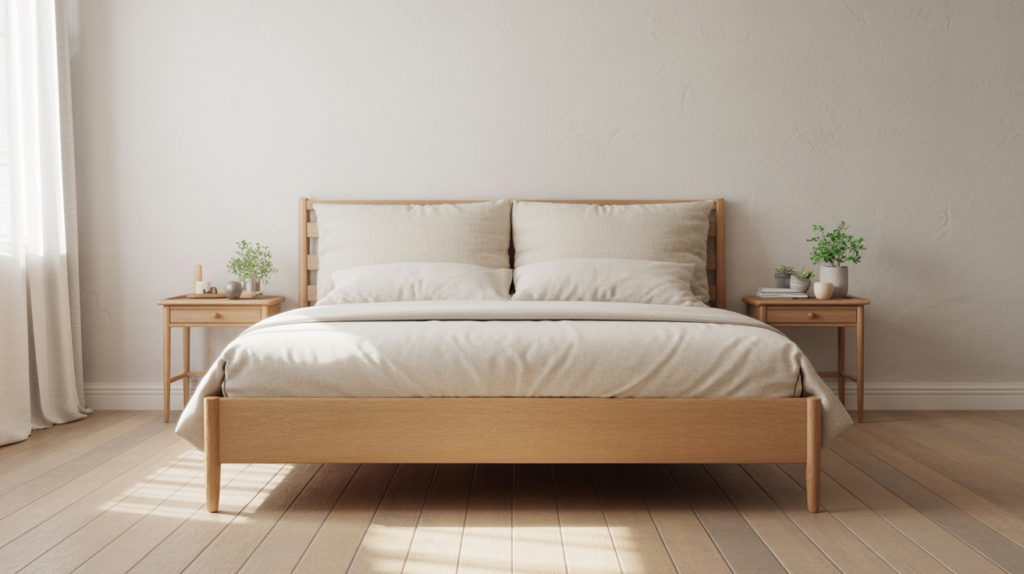
1. White Walls With Natural Wood or Dark Furniture
White walls are the most forgiving base you will find in any bedroom. They work with almost every furniture finish, which is exactly why so many people default to them. The real question is whether you want your room to feel light and airy or bold and grounded.
Natural wood furniture against white walls gives the room a clean, Scandinavian feel. It is warm without being heavy, and it keeps the space feeling open. This is a great bedroom color scheme idea if your room gets good natural light.
Dark furniture like espresso or charcoal against white walls creates a strong contrast that feels intentional and sophisticated. The white wall keeps the room from feeling too dark, while the furniture adds depth and personality. It is one of the best color combinations for a bedroom that needs a focal point.
2. Grey Walls With White or Light Oak Furniture
Cool grey walls are having a long moment in bedroom interior design, and for good reason. They are calm, neutral, and incredibly easy to build around. The key is to pair them with furniture that does not compete with that cool undertone.
White furniture against grey walls feels fresh and modern. It creates a clean contrast without being stark, and it works especially well in smaller bedrooms where you want to keep things light. Light oak furniture is another strong match; it adds a natural warmth that softens the cool grey beautifully.
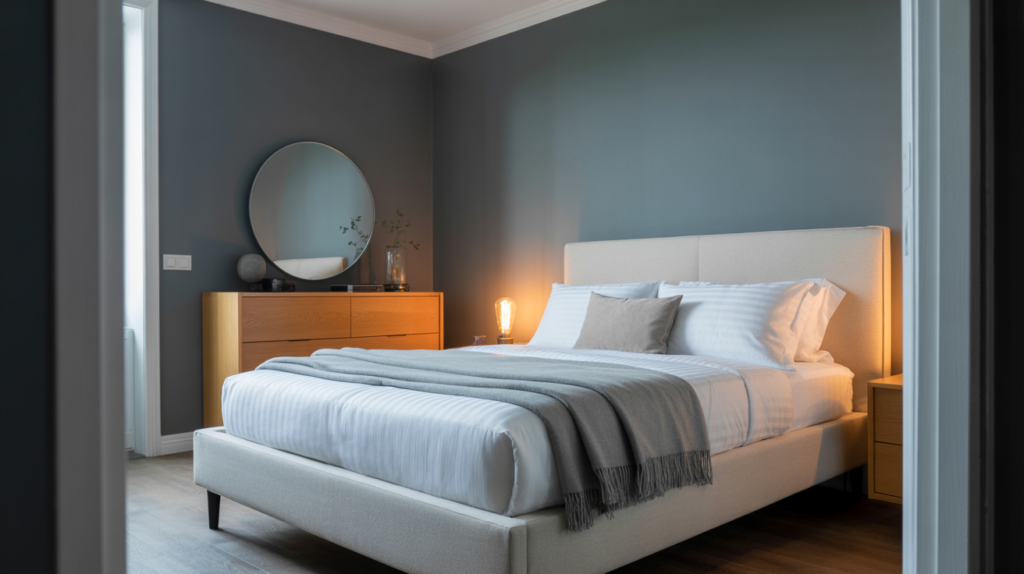
Avoid going too dark with furniture on grey walls unless you are very deliberate about lighting. A dark bed frame against a grey wall can make the room feel dim and heavy, especially in rooms with limited natural light.
| Grey Wall Shade | Best Furniture Match | Avoid |
| Light Grey | White, soft beige, light oak | Very dark brown or black |
| Mid Grey | Light oak, warm white, blush tones | Cool blue or purple furniture |
| Dark Charcoal Grey | Crisp white, pale wood, gold accents | Heavy dark wood |
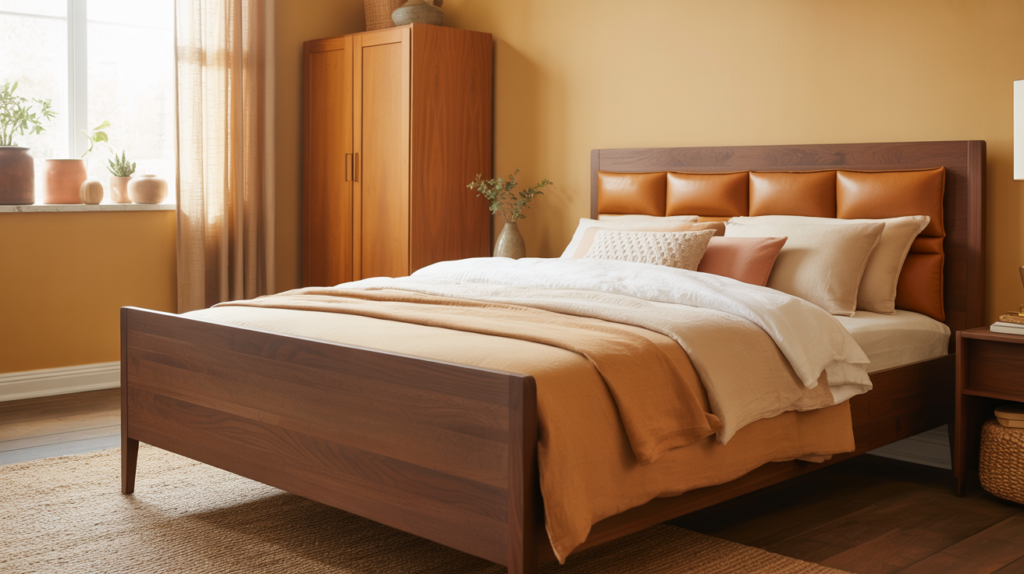
3. Beige or Warm Neutral Walls With Earthy Furniture Tones
Warm beige walls are one of the most comforting choices for a bedroom. They feel like a hug, which is exactly the energy most people want in a space where they sleep and unwind. The furniture colors that work best here are those that stay within the warm family.
Dark walnut, honey oak, and rich caramel tones all pair beautifully with beige walls. These combinations feel cohesive and grounded without looking matchy or overdone. Adding a cream or off-white textile layer through bedding or curtains ties everything together naturally.
I personally love beige walls with warm wood furniture because it never feels trendy. It is the kind of bedroom color combination that ages well and always feels welcoming no matter the season.
4. Sage Green Walls With Natural Wood or White Furniture
Sage green has become one of the most popular bedroom wall colors in recent years, and it is easy to see why. It is calming, earthy, and pairs with a surprisingly wide range of furniture finishes. The nature-inspired tone makes the room feel relaxed and grounded.
Natural wood furniture is the most obvious match for sage green walls. The combination feels organic and cohesive, like the room belongs together. White furniture is another strong option if you want the green to stand out more while keeping the overall palette light and fresh.
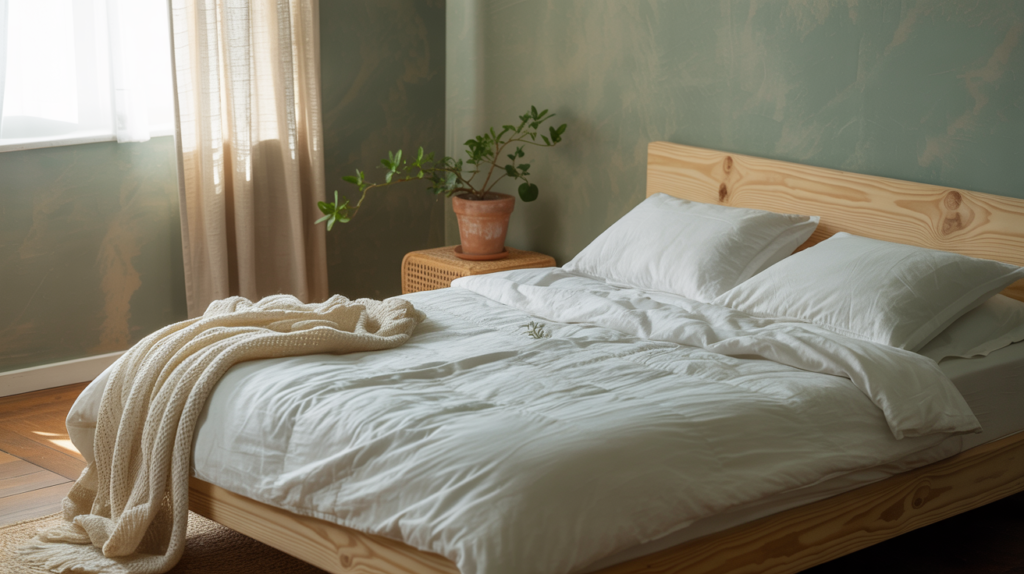
Avoid overly bright or heavily varnished furniture finishes with sage green. Glossy or plastic-looking furniture will clash with the earthy quality of the wall color and make the room feel mismatched.
| Sage Green Pairing | Mood It Creates |
| Sage green + natural wood | Earthy, organic, calm |
| Sage green + white furniture | Fresh, airy, modern |
| Sage green + cream tones | Soft, cozy, timeless |
| Sage green + rattan or wicker | Bohemian, relaxed, natural |
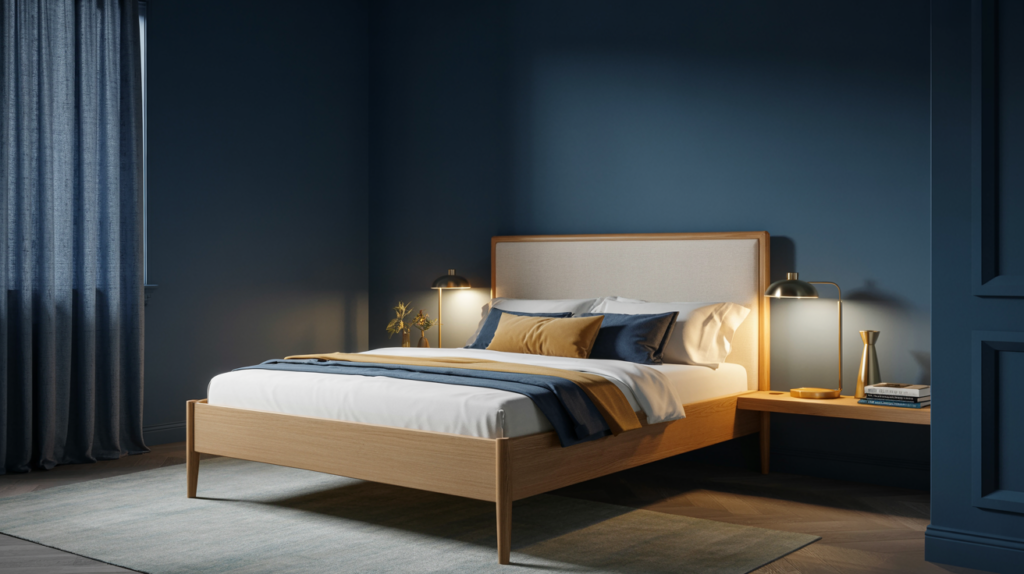
5. Navy Blue Walls With Light Wood or Gold-Toned Furniture
Navy blue is a bold wall color choice that pays off when paired correctly. It creates a moody, dramatic bedroom atmosphere that feels cozy rather than cold. The furniture colors you choose here are what keep it from feeling like a cave.
Light wood furniture against navy walls creates a beautiful contrast. The warmth of the wood cuts through the intensity of the navy and keeps the room feeling inviting. Gold or brass accents in lamps, handles, or mirror frames add a touch of richness that works perfectly with deep blue walls.
White furniture is also a strong option with navy walls. It is a high-contrast combination that feels bold and confident. Just make sure your lighting is generous because navy walls absorb a lot of light and a poorly lit navy bedroom can feel smaller than it actually is.
6. Blush Pink or Soft Pastel Walls With Light and Neutral Furniture
Soft pastel walls like blush pink, lavender, or pale peach create a gentle and feminine bedroom atmosphere. These wall colors work best with light, neutral furniture that does not compete with the softness of the tone. Heavy or dark furniture tends to overwhelm pastel walls and throws the balance off.
White furniture is the safest and most popular match for pastel walls. It keeps the room feeling clean and intentional rather than overly sweet. Pale wood furniture is another great option that adds just enough warmth to complement the pastel without overpowering it.
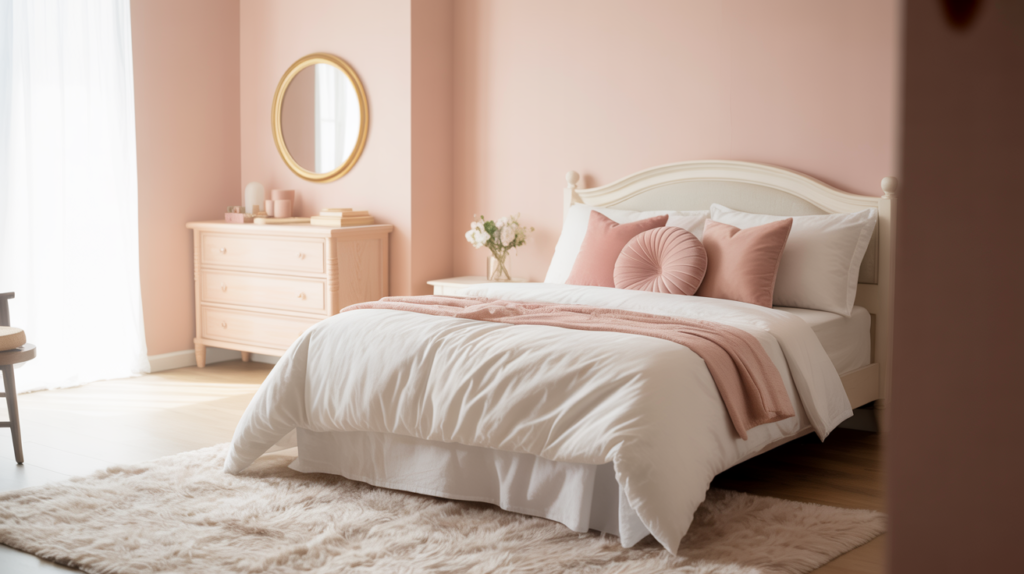
If you want to add some personality to a pastel bedroom, bring in one neutral accent piece in a deeper tone, like a charcoal grey rug or a tan leather bench at the foot of the bed. It grounds the softness and stops the room from feeling one-dimensional.
| Pastel Wall Color | Best Furniture Match | Accent Color to Add |
| Blush Pink | White, pale wood, ivory | Dusty rose, warm grey |
| Lavender | White, light grey, natural wood | Soft gold, cream |
| Pale Peach | Cream, warm white, honey oak | Terracotta, warm brown |
| Powder Blue | White, light oak, rattan | Navy, soft grey |
Quick Tips for Matching Furniture Color to Wall Paint Like a Professional
Getting the color combination right is one thing. Making the whole room feel cohesive is another. These are the practical tips that pull everything together once you have your base pairing sorted.
Always test your wall paint color in the actual room before committing. Paint looks different under artificial light than it does in a store or on a screen. A color that looks perfect on your phone can look completely different on your bedroom wall at night.
Bring furniture swatches or photos to the paint store when you are choosing wall colors. Most paint stores have lighting booths that simulate different times of day. Use them because they will save you from a very expensive mistake.
How Lighting Changes Your Bedroom Color Combination
Natural light is the single biggest factor that affects how your bedroom furniture color combination looks in real life. A north-facing bedroom gets cooler, softer light throughout the day. A south-facing room gets warm, golden light that intensifies color.
Cool wall colors in a north-facing room can feel very cold and clinical without warm furniture or textiles to balance them. Warm wall colors in a south-facing room can feel overwhelming by midday if the furniture adds even more warmth on top. Knowing your room’s light direction helps you make a smarter color choice from the start.
Artificial lighting matters just as much after sunset. Warm bulbs make warm colors richer and cool colors feel more balanced. Cool white bulbs intensify cool tones and can make warm furniture look washed out. I always recommend testing your furniture and wall combination under the actual bulbs you plan to use in the room.
| Room Light Direction | Wall Color Recommendation | Furniture Tip |
| North-facing | Warm whites, warm neutrals | Add warm wood tones to offset coolness |
| South-facing | Cool whites, soft greys, pastels | Use light furniture to prevent warmth overload |
| East-facing | Soft yellows, warm creams | Works well with both warm and natural wood |
| West-facing | Warm neutrals, terracotta, blush | Pair with medium wood or cream furniture |
Common Bedroom Color Matching Mistakes to Avoid
The biggest mistake most people make is choosing furniture and wall paint separately without comparing them together. Even experienced decorators get this wrong. Always look at your wall color and furniture finish side by side before making a final decision.
Another common error is ignoring the undertones. A white wall with pink undertones will clash with a white wardrobe that has yellow undertones. They are both white, but they are not the same white. Undertones are subtle but they make a big difference in how a room feels.
Matching everything too perfectly is also a trap worth avoiding. A room where every piece is the exact same shade of beige can feel flat and lifeless. Intentional contrast, like one darker piece against lighter walls, gives the room visual depth and makes it feel more designed.
Conclusion
Choosing the right bedroom furniture color combination based on your wall paint comes down to a few simple principles. Start with your wall color, identify whether it is warm or cool, and choose furniture finishes that complement rather than compete with it.
Use the 60-30-10 rule to keep your color balance in check and always test colors together under your room’s actual lighting before committing. Whether you are working with white walls, grey walls, sage green, navy, or soft pastels, there is a furniture pairing that will make your bedroom feel pulled together and intentional.
The combinations I have shared in this guide are based on what consistently works in real bedrooms, not just on mood boards. Start with your wall color, narrow down your furniture options using the tables and tips in this guide, and your bedroom will come together a lot more smoothly than you expect.
Frequently Asked Questions
1. What is the best bedroom furniture color combination for small rooms?
Light-colored furniture against light or white walls works best in small bedrooms. This combination reflects more light and makes the space feel larger and more open. Avoid heavy dark furniture in compact rooms as it absorbs light and shrinks the visual space.
2. Can I mix warm and cool tones in a bedroom color scheme?
Yes, you can mix warm and cool tones but do it intentionally. Use one as the dominant tone and bring the other in through accents only. A cool grey wall with warm wood furniture is a good example of a balanced mix that works well.
3. How do I match furniture color to a bold wall paint like navy or dark green?
Pair bold dark walls with light or natural-toned furniture to create contrast and keep the room feeling open. Light wood, white, or cream furniture works best against deep wall colors. Add warm metallic accents like brass or gold to bring richness into the combination.
4. Does ceiling color affect my bedroom furniture color combination?
Yes, ceiling color influences how the overall palette feels in the room. A white ceiling lifts the space and keeps even dark wall colors from feeling too heavy. A colored ceiling adds drama but requires more careful furniture and wall color coordination.
5. What furniture color goes with beige walls?
Warm wood tones like walnut, honey oak, and caramel pair beautifully with beige walls. Cream or off-white furniture also works well and keeps the palette soft and cohesive. Avoid cool grey or stark white furniture as it can feel disconnected from the warmth of beige.
6. How do I use the 60-30-10 rule in my bedroom?
Let your wall paint take up 60% of the visual space, your main furniture pieces cover 30%, and use accents like rugs, cushions, and lamps for the remaining 10%. This ratio keeps your bedroom color scheme balanced and visually comfortable without feeling busy or flat.