
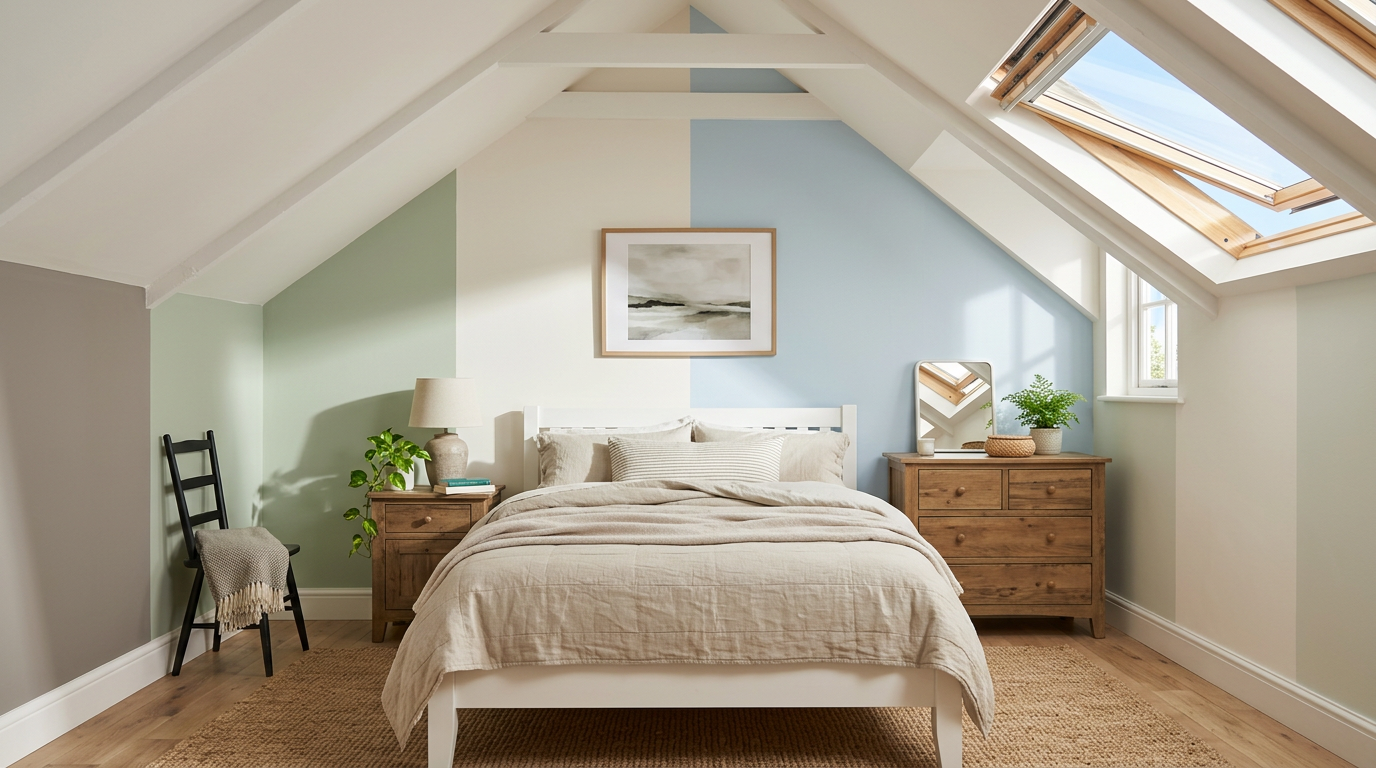
I’ve painted my share of attic bedrooms, and I can tell you that choosing the right color completely changes how the space feels. Attic bedrooms are tricky because they have sloped ceilings, limited natural light, and odd angles that challenge most paint choices. The wrong color makes these spaces feel cramped and gloomy.
My first attic bedroom painted project taught me that color isn’t just about aesthetics. It’s about maximizing natural light, making low ceilings feel higher, and creating a cozy retreat that actually invites you to spend time there. I discovered that certain paint shades work magic in these awkward spaces.
After experimenting with dozens of attic bedroom paint ideas, I’ve learned what works and what doesn’t. I’m sharing my personal experience to help you avoid the mistakes I made and accelerate your transformation process. The right paint color can make your attic bedroom feel like a luxury escape instead of a storage room.
Why Attic Bedroom Paint Color Choices Matter More Than You Think
Paint color directly impacts how spacious and bright your attic bedroom feels. I noticed that dark colors made my low ceilings feel even lower, creating a cave-like atmosphere that made me feel uncomfortable. Light colors opened up the space and made it feel double the size.
The quality of light in attic bedrooms differs from ground-floor rooms. When I painted my first attic, I didn’t account for how limited natural light affects color perception. The same shade that looked beautiful in the showroom appeared washed out in my actual space. This taught me to always test paint samples in my specific room conditions.
Strategic paint color choices also help with temperature perception. I noticed that cooler colors made my warm, stuffy attic feel more breathable. Warmer neutrals made it feel cozier during winter months. Your paint choice affects not just appearance but also comfort level.
Best Attic Bedroom Paint Ideas: Six Colors That Transform Small Spaces
Soft White and Cream: The Foundation for Light and Space
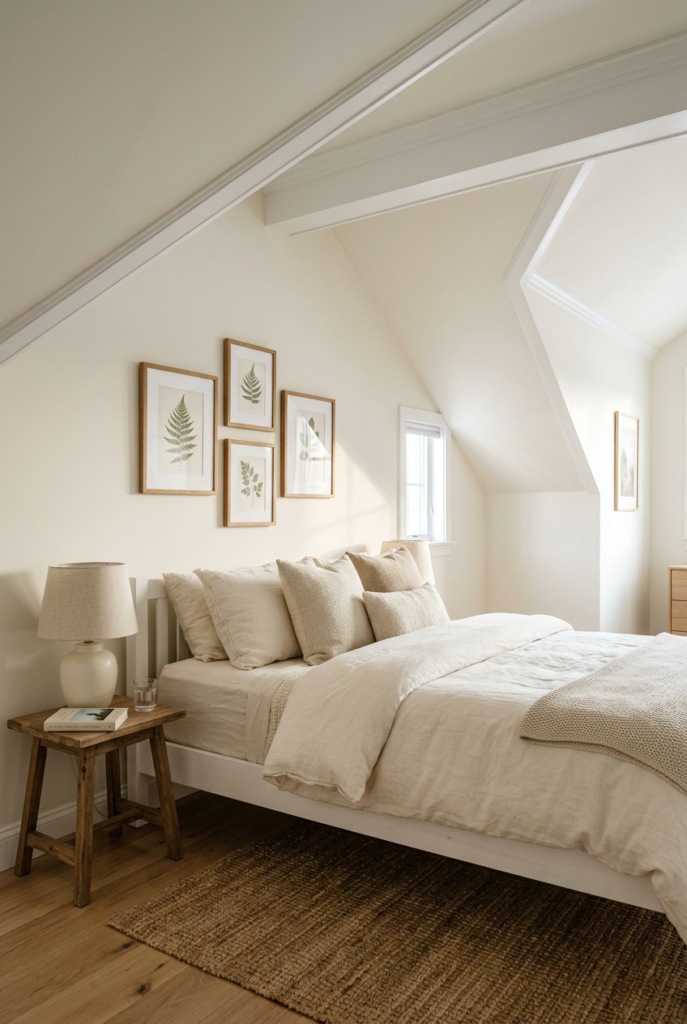
I started with soft white paint in my first attic bedroom, and it immediately brightened the entire space. I wasn’t talking about harsh, clinical white. I chose warm whites with subtle undertones that kept the space feeling inviting rather than sterile. Brands like Benjamin Moore’s Cloud White and Sherwin-Williams’ Alabaster work beautifully in attics.
Cream tones give white a warmer personality while maintaining the space-expanding benefits. I’ve used cream in three attic bedrooms now, and it consistently makes ceilings appear higher. The subtle warmth prevents the room from feeling cold or institutional. Soft white and cream paint ideas for attic bedrooms often work best when paired with colorful bedding and artwork.
This color choice gives you complete freedom with decor since it serves as a neutral canvas. I can change my accessories seasonally without worrying about repainting. The flexibility makes soft whites and creams my go-to recommendation for attic bedrooms where you want light, space, and design flexibility.
Warm Gray: The Modern Neutral That Works in Tight Spaces
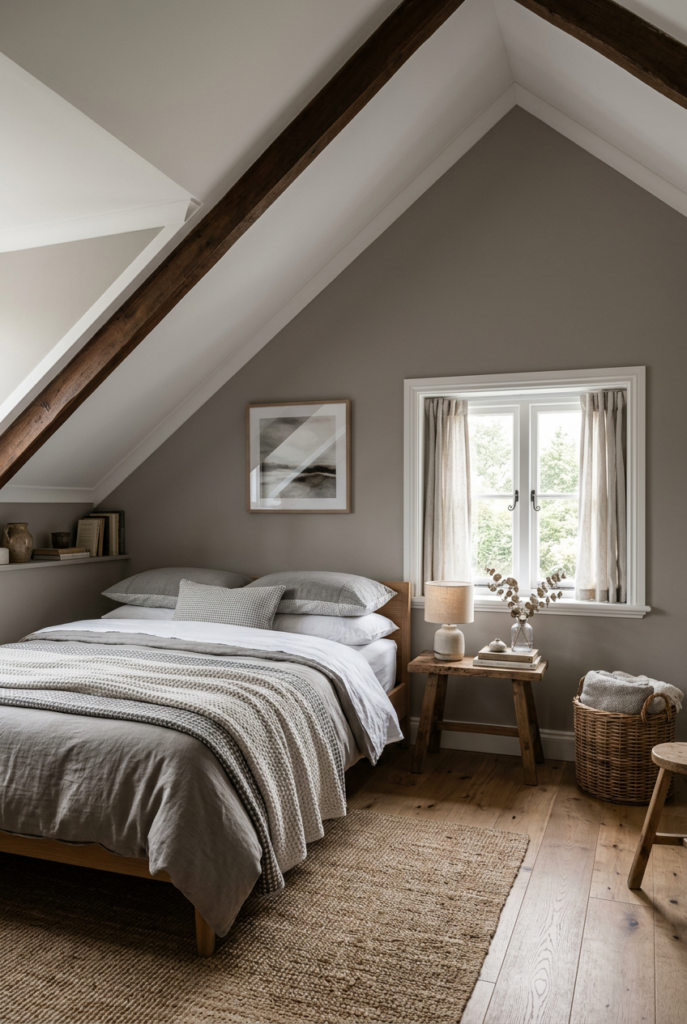
I painted my second attic bedroom a warm gray called Agreeable Gray, and it became my favorite transformation yet. Warm grays avoid the coldness of true gray while still creating sophisticated, contemporary atmosphere. This shade made the sloped ceiling angles look intentional rather than limiting.
The beauty of warm gray in attic bedrooms is that it’s forgiving with changing light conditions. When sunlight streams through small attic windows, the warm undertones catch the light beautifully. In low-light conditions, the warmth prevents the space from feeling dark or dreary. I notice guests consistently compliment this color before they even realize what I’ve done.
Gray provides better versatility than pure white for creating design interest. I layer in darker accent walls or textured elements without the space feeling cramped. The neutral gray lets features like exposed beams, skylights, or architectural details become focal points rather than overwhelming the room.
Soft Blue: Creating Calm in Compact Spaces
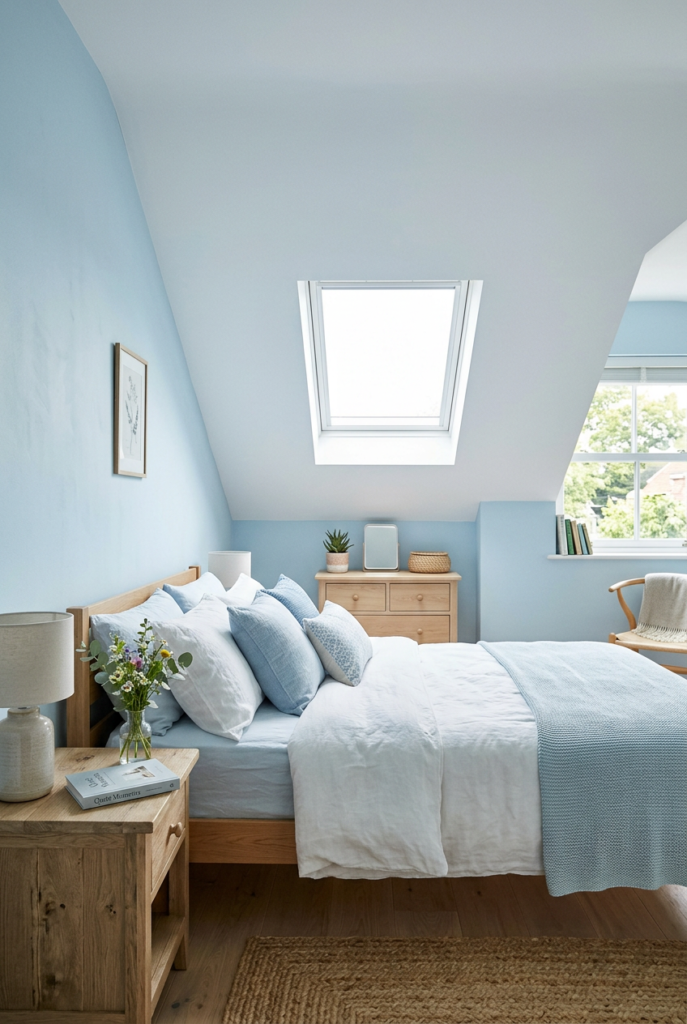
I painted my guest attic bedroom in Benjamin Moore’s Hale Navy thinned down to about 50% opacity to create a soft blue tone. This pale blue trick completely changed how the space felt without making it dark or cramped. The subtle blue created a serene, spa-like atmosphere that guests immediately remarked about.
Soft blue paint ideas for attic bedrooms work because they’re calming without being bold. I was worried it might make the low ceiling feel lower, but the lightness kept it open. The pale blue actually made the space feel larger because it mimics the sky aesthetic. Combined with soft white trim, this became my most compliment-worthy project.
Blue also improves temperature perception in ways I didn’t expect. My attic with soft blue paint feels naturally cooler than my white and gray attics. This matters significantly in summer months when attics tend to get hot. The psychological coolness of blue actually makes the space feel more comfortable year-round.
Warm Terracotta and Earthy Tones: Bringing Warmth to Awkward Angles
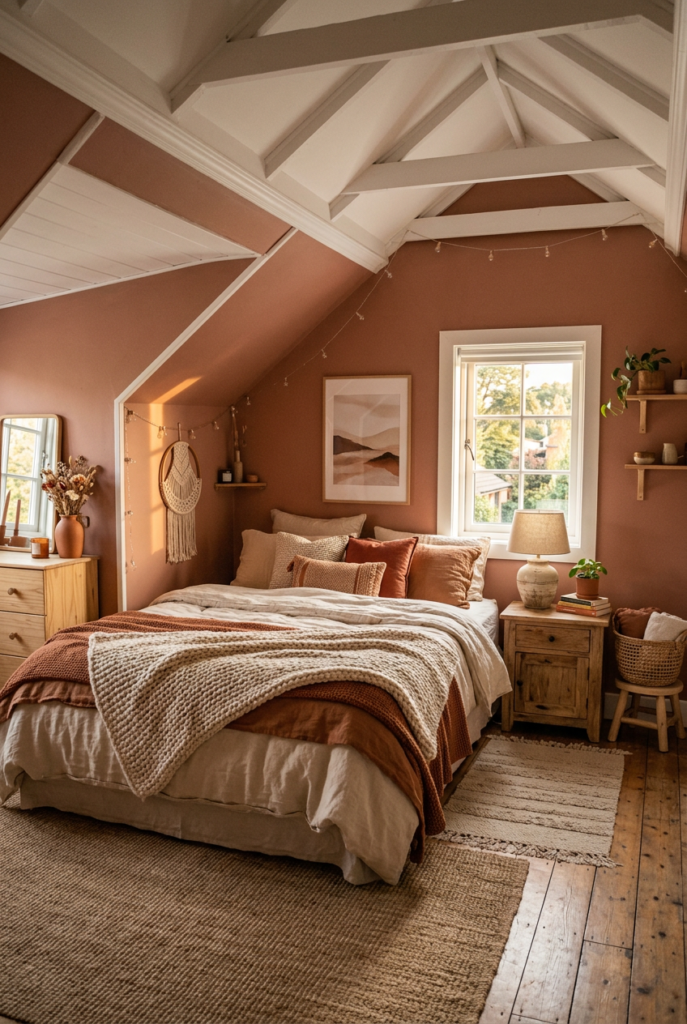
I experimented with terracotta in a small attic bedroom, and the results surprised me positively. I chose a muted, dusty terracotta rather than bright orange-red. This earthy tone creates warmth without feeling heavy or claustrophobic. The color actually embraced the room’s unusual angles instead of fighting them.
Warm earth tones work in attic bedrooms because they feel grounding and cozy. I paired this soft terracotta with cream-colored bedding and wood furniture, creating a cohesive, inviting retreat. The warmth felt particularly good in winter when I spent more time in the bedroom. Guests felt welcomed by the warm, earthy atmosphere.
The key to pulling off terracotta in attic spaces is keeping it muted and soft. I see people use bright terra-cotta and it makes their attics feel smaller. I chose Sherwin-Williams’ Cavern Clay, which gives warmth without intensity. This paint idea for attic bedrooms works best if you enjoy bohemian or rustic design styles.
Muted Sage Green: Bringing Nature Into Small Spaces
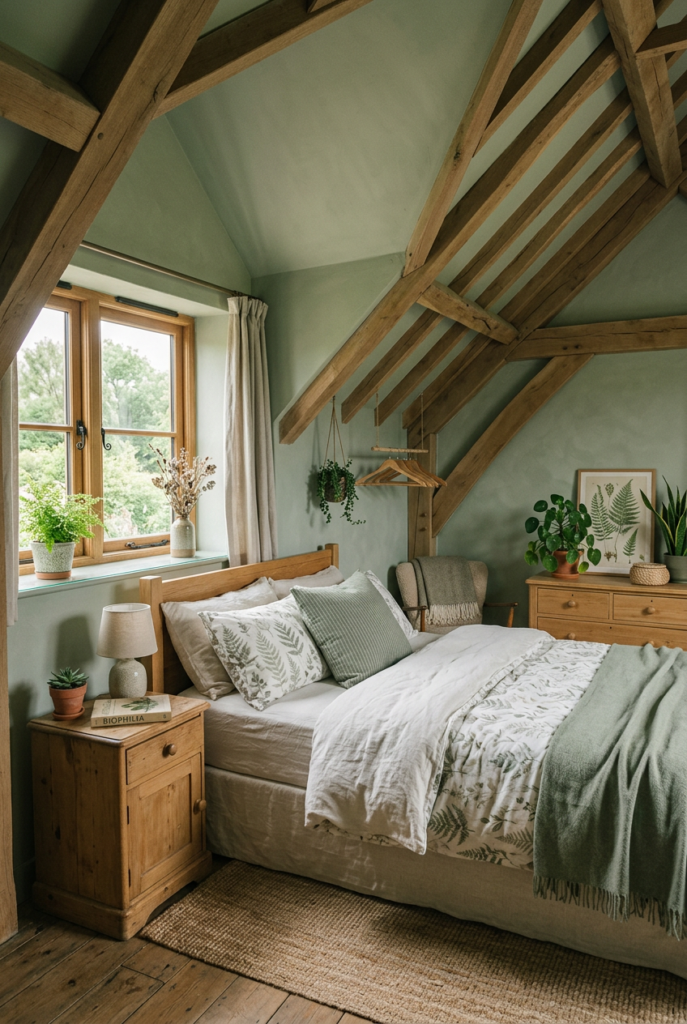
I recently painted an attic bedroom in soft sage green, and it brought unexpected tranquility to the space. I chose a pale, dusty sage rather than vibrant green. This gentle nature-inspired color makes the attic feel like a peaceful retreat. The green references outdoor elements that the limited windows can’t fully provide.
Pale sage green in attic bedrooms creates biophilic design benefits without darkening the space. I notice the soft green pairs beautifully with natural wood elements common in attics. The color feels sophisticated while maintaining the lightness needed in smaller rooms. This paint idea creates a unique alternative to standard neutral tones.
Green has proven mood-boosting effects that matter in spaces where you sleep and relax. I feel more peaceful in my sage green attic than in other rooms. The gentle nature-inspired tone encourages rest and reduces stress. For attic bedrooms serving as personal sanctuaries, muted greens offer emotional benefits beyond aesthetics.
Soft Lavender: Adding Subtle Color Without Overwhelming
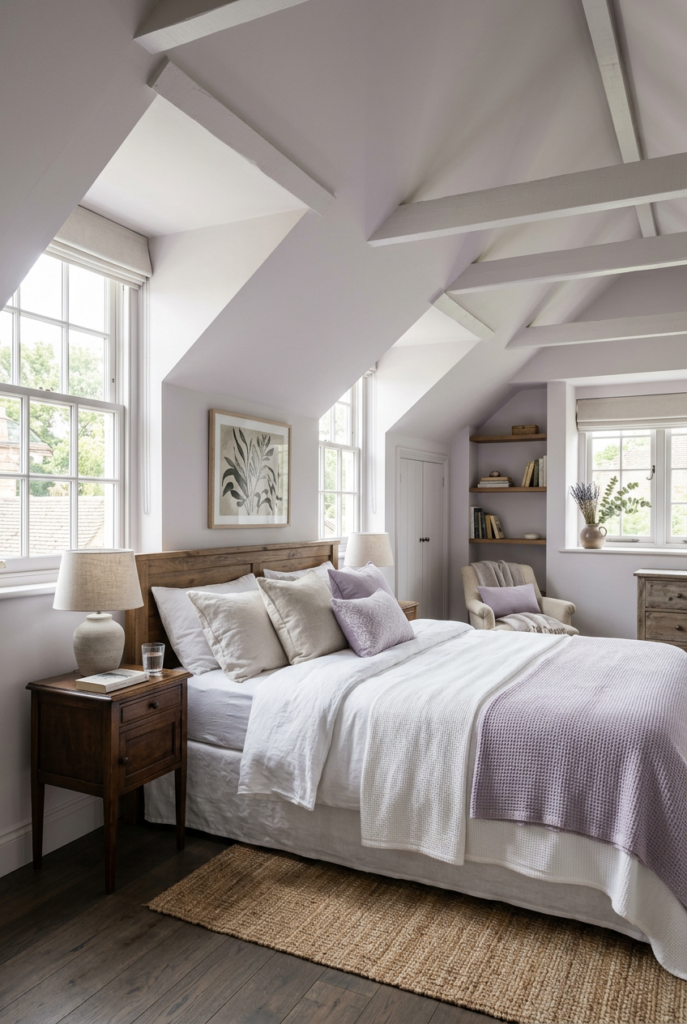
I pushed my decorating comfort zone by painting an attic bedroom lavender, and I absolutely loved the result. I chose a very pale lavender that barely registers as purple, appearing almost gray until you look closer. The subtle color added personality without making the small space feel cramped or childish.
Soft lavender works in attic bedrooms because it’s playful without being overwhelming. I paired it with soft linens and wood furniture for a sophisticated look. The pale purple tone bridges the gap between neutral and colorful, giving more personality than gray without as much commitment as deeper hues. This paint idea appeals to people wanting subtly distinctive spaces.
Lavender’s calming properties complement the bedroom function perfectly. I notice I sleep better in the lavender attic than other rooms. The soothing qualities of this paint choice create an atmosphere ideal for rest and relaxation. For attic bedrooms where you want mild color while maintaining openness, soft lavender is excellent.
Pro Tips for Painting Your Attic Bedroom Successfully
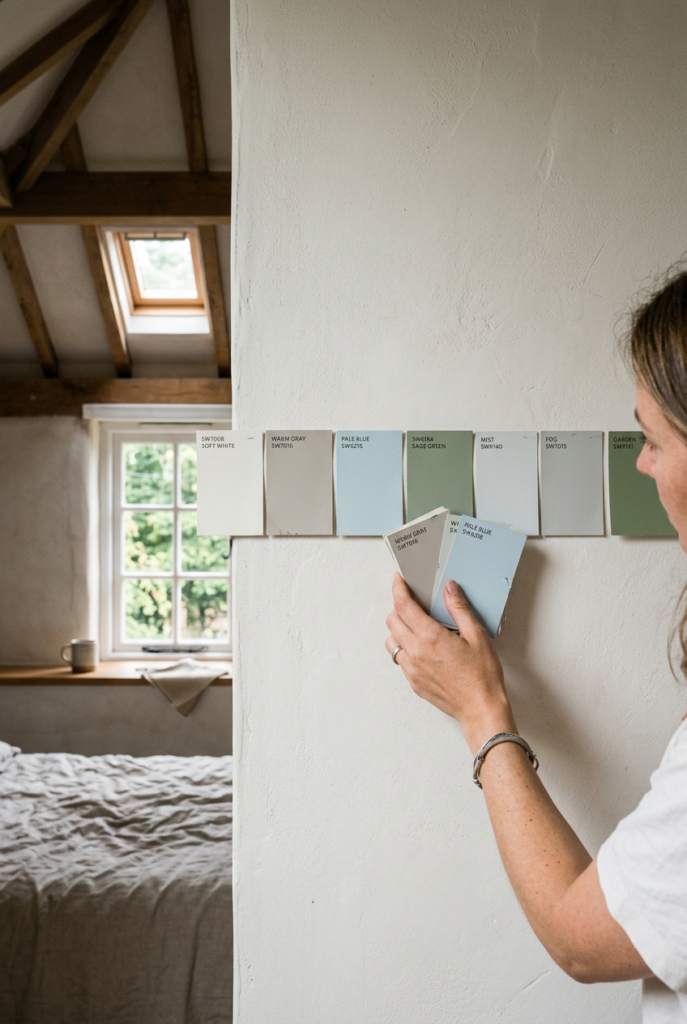
Testing paint samples on your actual walls is non-negotiable when dealing with attic lighting. I learned this lesson the hard way by buying full gallons before testing. I always paint large sections of sample color and observe them at different times of day. The variation between morning light and evening light affects how colors appear dramatically.
I recommend choosing paint with quality finishes specifically designed for bedrooms. Eggshell and satin finishes work better than flat in attics because they reflect available light. I use eggshell finish in my attic bedrooms for durability and subtle sheen without appearing institutional. The finish helps small spaces feel slightly more open.
Consider your natural light sources when selecting paint. I mapped out where my windows sit and how sunlight moves through the room before choosing color. South-facing windows receive different light than north-facing ones. I adjust my color selection based on window orientation and quantity. This strategic approach prevents choosing a color that looks wrong in your specific space.
Conclusion
Your attic bedroom deserves paint color that celebrates rather than compromises its unique character. I’ve learned through multiple projects that the right color solves practical problems while creating emotional connections to space. Whether you choose soft whites for maximum light, warm grays for sophistication, or pale colors with subtle personality, your selection dramatically impacts daily comfort.
I encourage you to invest time testing samples before committing. The small effort of observing color at different times of day pays dividends in satisfaction. Your attic bedroom can become your favorite room in the house with intentional paint selection. I’m confident that trying these attic bedroom paint ideas will transform your space into something you genuinely love spending time in.
Frequently Asked Questions About Attic Bedroom Paint Ideas
What paint finish works best for attic bedroom ceilings?
I use eggshell or satin finishes on attic ceilings to reflect available light without appearing glossy. Flat finishes absorb light and make low ceilings feel heavier. The subtle sheen from eggshell helps open up the space while remaining appropriate for bedrooms.
Should I paint sloped attic bedroom ceilings a different color than walls?
I typically paint ceilings the same color as walls in attic bedrooms to visually expand the space. Painting ceilings darker creates a cave-like effect that makes low ceilings more claustrophobic. Keeping everything unified in light, soft tones maximizes the sense of openness.
Can I use bold paint colors in a small attic bedroom?
Bold colors work in attic bedrooms only on accent walls, not entire rooms. I painted one attic bedroom wall in deeper color while keeping others soft. The single accent wall adds personality without overwhelming limited square footage. Save bold colors for rooms with higher ceilings and more natural light.
How does natural light affect paint color choices in attics?
Natural light dramatically changes how attic paint colors appear throughout the day. I’ve seen colors look completely different in morning versus evening light. Testing samples at different times reveals the true appearance. North-facing attics need warmer tones, while south-facing spaces can handle cooler shades.
What undertones should I avoid in attic bedroom paint?
I avoid paint with gray undertones that can appear dingy in limited light. Cool blues with strong undertones sometimes feel cold in attic bedrooms. I gravitate toward warm undertones that keep spaces feeling inviting and cozy. Testing specific samples in your space prevents expensive color mistakes.
How often should I repaint my attic bedroom?
I repaint attic bedrooms every five to seven years depending on wear and design preferences. Light colors may show marks more readily than darker tones. I refresh paint more frequently in high-traffic attic bedrooms than guest attics. Regular repainting keeps the space fresh without requiring full redesigns.
What’s the best way to prepare attic bedroom walls before painting?
I thoroughly clean attic walls before painting since dust settles heavily in these spaces. I fill any gaps where sloped ceilings meet walls to create clean lines. Proper preparation ensures paint adheres smoothly and creates professional results. I always prime any patched areas before final paint application.