
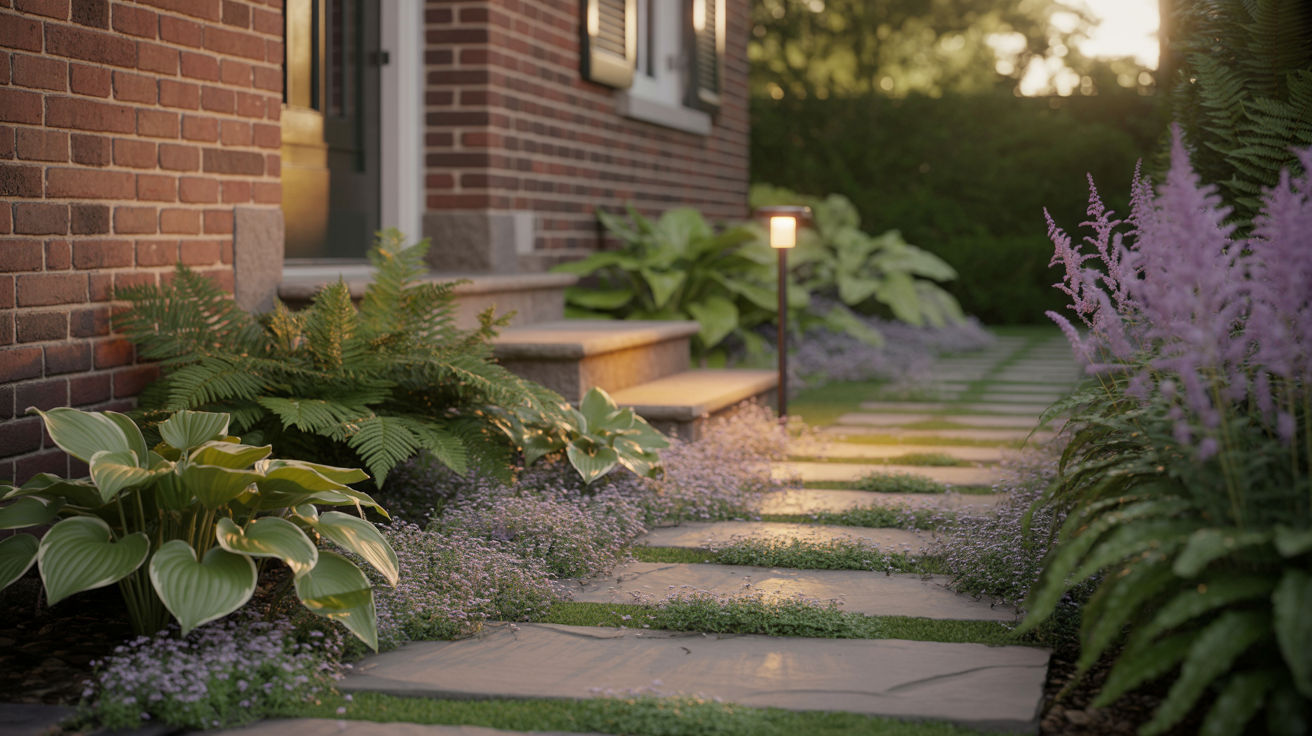
Most people treat the side of their house like the forgotten middle child of their property. It gets ignored, overgrown, and occasionally used to hide the bins. But that narrow passage running along your home’s exterior holds genuine potential, and with the right approach, it becomes one of the most charming features of your entire yard.
Side house walkway ideas have grown significantly in popularity as more homeowners realize that every square foot of outdoor space counts. Whether your side passage is two feet wide or six, there are smart, beautiful ways to turn it into a functional garden path that actually gets used and admired. I have spent a lot of time researching what works in real yards rather than just on Pinterest boards.
This list covers 15 of the best side yard walkway ideas across different styles, budgets, and space sizes. From simple stepping stone paths to fully planted garden corridors, there is something here for every home and every level of gardening ambition.
Why Your Side House Walkway Deserves a Proper Design Plan
A side yard walkway is more than just a way to get from the front of your house to the back. It serves as a transition space, a drainage zone, a utility corridor, and in the best cases, a genuinely beautiful garden feature. Treating it as an afterthought almost always results in a muddy, weedy strip that adds nothing to your property.
A well-designed sidewalk also adds measurable curb appeal and perceived property value. Real estate agents consistently note that buyers respond positively to homes where every outdoor area looks intentional and maintained. A neat, attractive side passage signals that the whole property receives proper attention.
The side of a house also presents some unique design challenges worth understanding before you start. Narrow width, limited sunlight, drainage issues, and the need for utility access all influence what works and what does not. Getting the design right from the start saves significant time, money, and frustration later.
| Side Walkway Width | Recommended Path Style | Best Paving Material |
| Under 2 feet | Single stepping stones | Natural stone, concrete pavers |
| 2 to 3 feet | Narrow paved path with edge planting | Brick, gravel, flagstone |
| 3 to 4 feet | Full path with border garden | Flagstone, pavers, decomposed granite |
| 4 to 6 feet | Garden corridor with planted beds | Any material plus planted borders |
| Over 6 feet | Full side garden with path | Unlimited options |
15 Top Side House Walkway Ideas for a Stunning Narrow Garden Path
1. Lay Flagstone Stepping Stones Through Low Ground Cover for a Natural Garden Path Feel
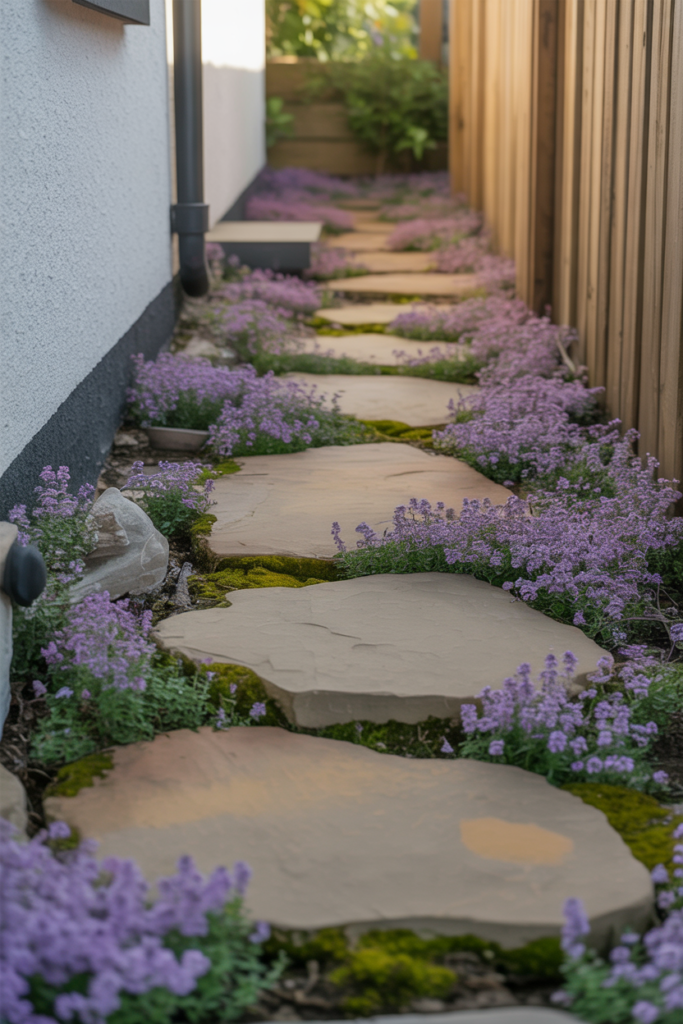
Flagstone stepping stones set into a carpet of low ground cover plants create one of the most naturally beautiful side yard paths you can build. The irregular stone shapes feel organic rather than constructed, and the ground cover fills in between them to soften the whole look. I find this combination works particularly well in cottage-style and older homes where a formal paved path would feel out of place.
Choose flagstones that are at least 18 inches wide and thick enough to stay stable underfoot. Set them slightly below the surrounding soil level so lawnmowers can pass over them cleanly if needed. Creeping thyme, Irish moss, or woolly thyme all work brilliantly as ground covers between stones because they handle light foot traffic and smell wonderful when brushed.
The maintenance on this type of path is genuinely low once established. The ground cover suppresses most weeds naturally, and the stones themselves need nothing beyond an occasional brush to clear debris. For a side passage that gets light foot traffic, this is one of the most satisfying and affordable paths you can install.
2. Install a Brick Pathway for a Classic and Durable Side Yard Walkway
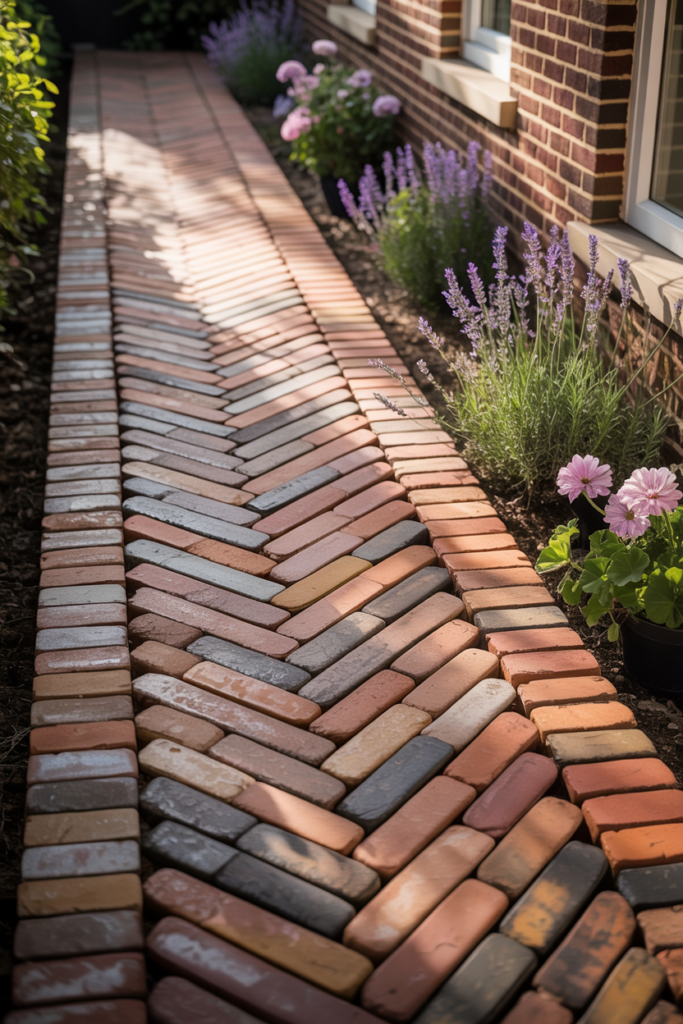
A brick pathway along the side of a house brings a timeless quality that almost no other material matches. Brick works with traditional, cottage, colonial, and farmhouse style homes particularly well, and it ages gracefully rather than looking worn out over time. A well-laid brick path also handles heavy foot traffic and lasts for decades with minimal maintenance.
Laying brick in a herringbone or running bond pattern adds visual interest to a narrow passage. The repetitive geometric pattern draws the eye forward along the path, making the space feel longer and more intentional. Edge the path with a soldier course of bricks set vertically for a clean, defined border that keeps the design looking sharp.
Reclaimed bricks sourced from demolition yards or salvage companies add even more character than new bricks and often cost less. The variation in color and the worn edges of reclaimed brick give a path a genuinely established look from the very first day. For side yards that feel too plain and utilitarian, a brick path is one of the fastest ways to add real visual character.
3. Use Pea Gravel With Timber Edging for an Affordable and Attractive Narrow Walkway
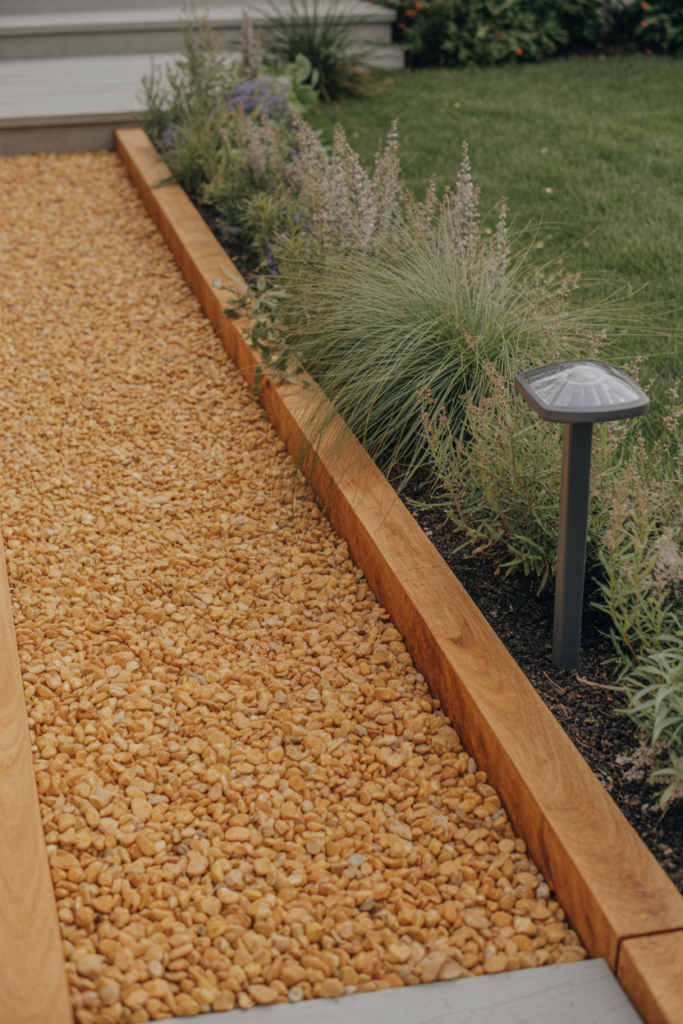
Pea gravel is one of the most budget-friendly path materials available, and it looks genuinely good when contained properly with timber or metal edging. The small, rounded stones shift pleasantly underfoot, drain rainwater naturally, and come in a range of warm neutral tones that complement almost every home exterior. For side passages where budget matters, this combination delivers the most impact per dollar spent.
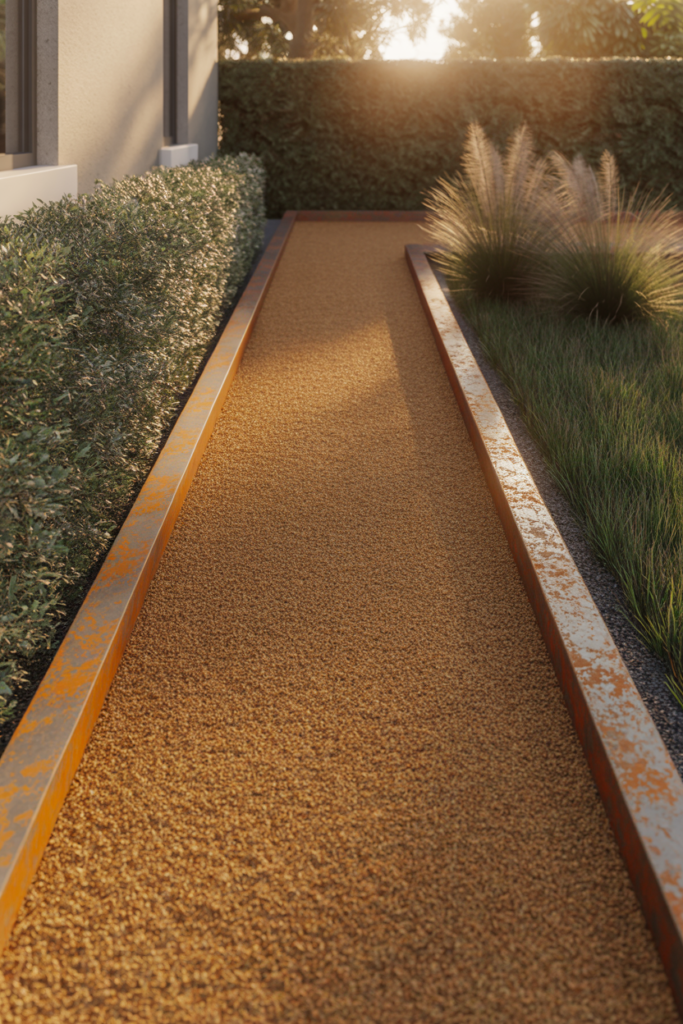
Use pressure-treated timber, hardwood sleepers, or Corten steel edging to contain the gravel and define the path edges clearly. Without proper edging, gravel migrates onto garden beds and lawn areas quickly, and the path loses its defined shape. I prefer hardwood sleepers for a more natural look or Corten steel for a cleaner, more contemporary edge.
Lay a geotextile weed membrane beneath the gravel before filling to prevent weed growth from below. Top up the gravel level every year or two as it compacts and disperses with use. For a sidewalk that needs to handle occasional heavy foot traffic and look attractive year-round, pea gravel with proper edging is a very hard combination to beat.
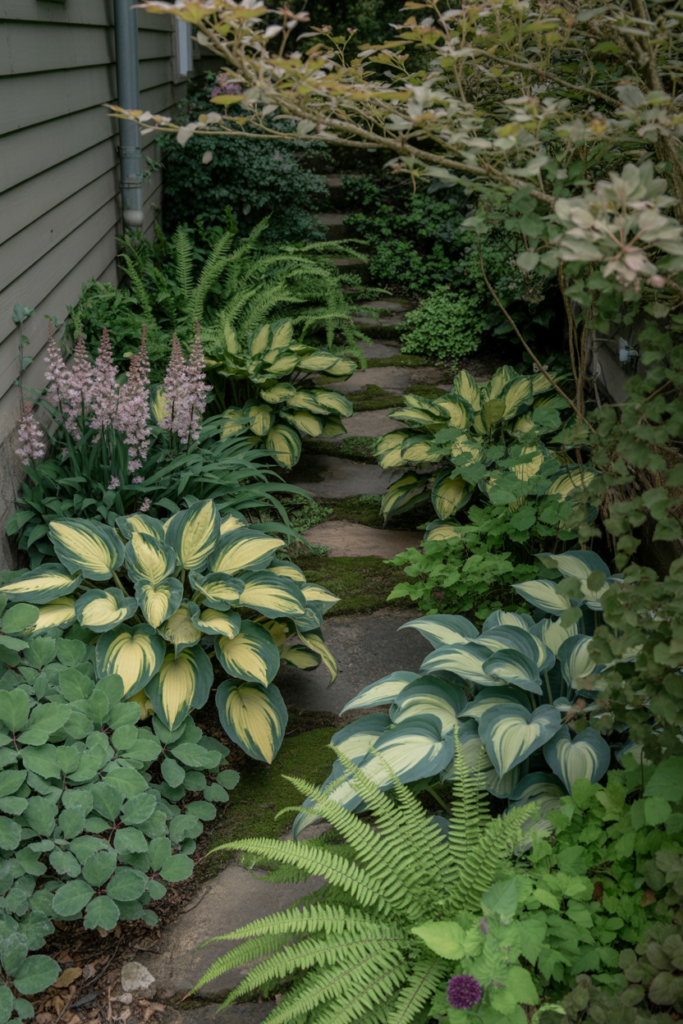
4. Create a Lush Planted Garden Corridor by Lining the Path With Shade-Tolerant Plants
A planted garden corridor transforms a plain side passage into something that feels like a destination rather than just a route. By lining both sides of the path with carefully chosen plants, the walkway becomes a garden experience rather than a functional strip. This approach works especially well in side yards that receive partial shade from the house wall and neighboring fences.
Choose plants that tolerate low to medium light and stay relatively narrow so they frame the path without blocking it. Good options include hostas, ferns, astilbe, hellebores, and Japanese forest grass. Mix foliage textures and heights for a layered effect that looks full and intentional rather than randomly planted.
Add a few seasonal flowering plants like impatiens or begonias at the path edges for color through summer. A well-planted garden corridor along a sidewalk also significantly improves the view from inside the house when you look out from a window or door. It is one of those upgrades that genuinely changes how you feel about your whole property.
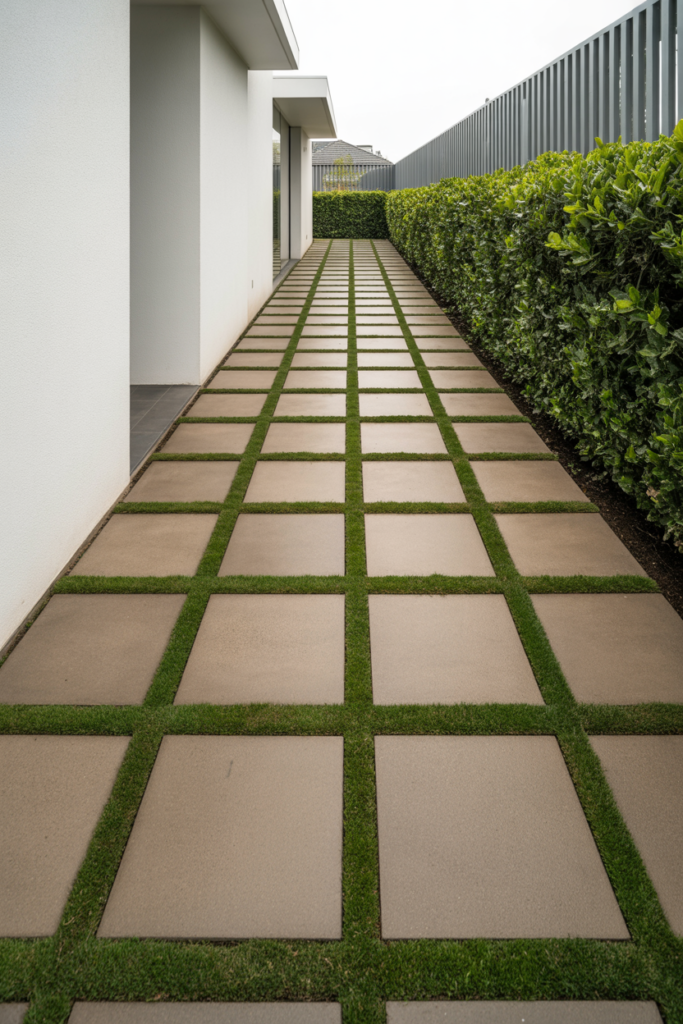
5. Lay Large Concrete Pavers With Grass or Moss Joints for a Modern, Clean Look
Large-format concrete pavers with planted or moss-filled joints create a clean, contemporary sidewalk that works beautifully with modern and minimalist home styles. The wide pavers feel substantial and confident underfoot, while the green joints soften the overall look and prevent the path from feeling too hard and industrial. I have seen this combination work in side passages as narrow as three feet, and it consistently looks well-considered and polished.
Choose pavers that are at least 24 inches square for the best visual impact in a narrow passage. Set them with consistent gaps of around one to two inches and fill the joints with a mix of sharp sand and grass seed, or plant low creeping varieties like mind-your-own-business or creeping Jenny between them. The plants establish within a few weeks and quickly knit together into a dense green joint.
This style of path also handles the transition between different outdoor zones gracefully. Running large pavers from a side gate all the way through to a back patio creates a cohesive visual line that connects the different areas of your outdoor space. For homes with a clean architectural style, this is consistently one of the strongest sidewalk choices available.
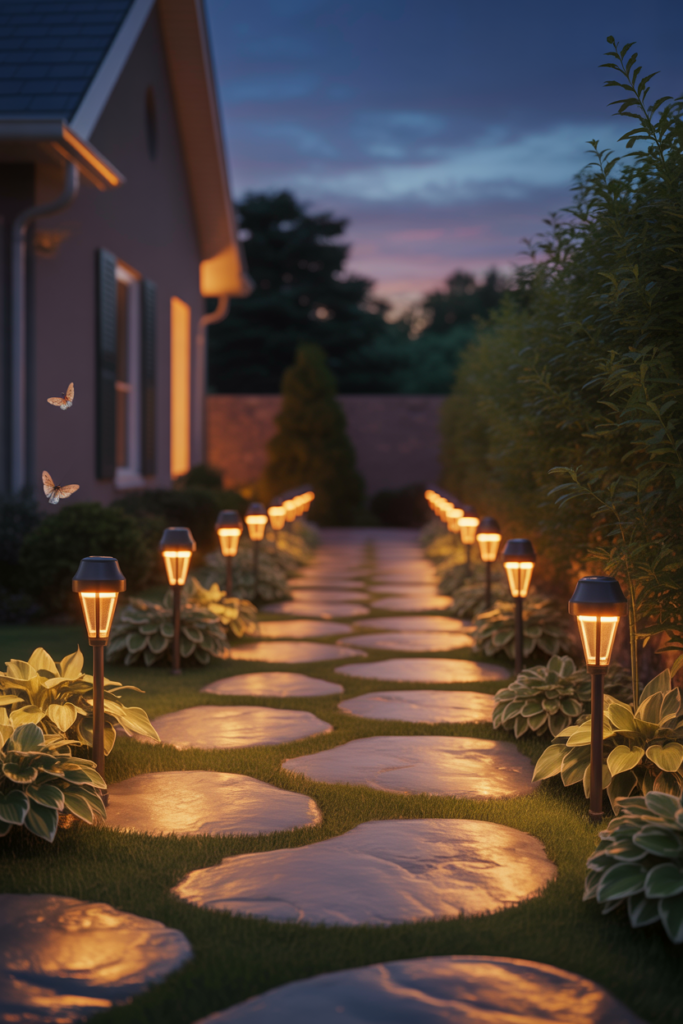
6. Add Solar-Powered Path Lights Along the Sidewalk for Safety and Evening Atmosphere
A side house walkway that looks great during the day but disappears into darkness at night is only doing half its job. Solar-powered path lights solve this immediately without any electrical work or running costs. I added a row of simple solar stake lights along a side passage last summer, and the difference after dark was genuinely surprising.
Choose lights with a warm amber output rather than cool white for the most natural and inviting glow. Spike-mount solar lights work well along planted borders, while flush-mount solar pavers embedded directly into the path surface work better for hard-paved walkways. Either option charges during the day and switches on automatically at dusk without any intervention needed.
Space lights evenly at around four to six feet apart for consistent illumination without creating a runway effect. Alternate lights on opposite sides of the path rather than placing them in a straight line on one side for a more natural, balanced look. Good lighting along a sidewalk also improves home security by eliminating dark entry points around the perimeter of the house.
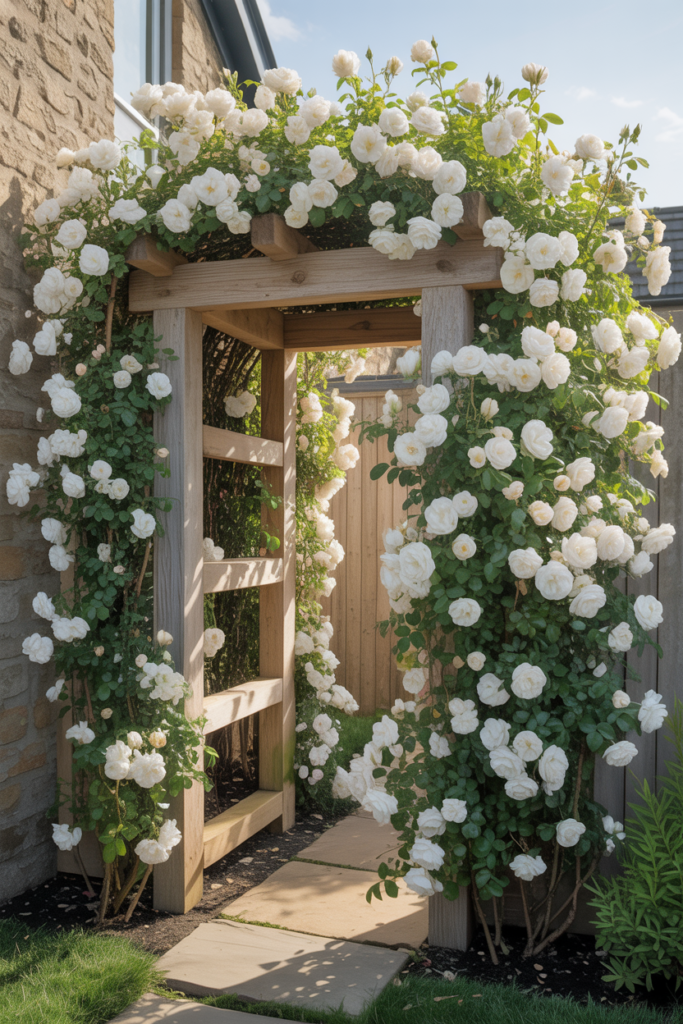
7. Build a Simple Timber Pergola or Arch Over the Side Walkway for Vertical Drama
A timber pergola or garden arch over a sidewalk instantly transforms a plain passage into something that feels purposeful and designed. The overhead structure creates a sense of enclosure and arrival that no ground-level treatment alone can achieve. Even a single arch at the entry point of a side passage changes how the whole space reads from the street.
Use pressure-treated timber or naturally rot-resistant hardwood for any overhead structure that will sit in a narrow passage where airflow may be limited. Train climbing plants like roses, clematis, jasmine, or wisteria up and over the structure for a planted canopy effect that improves with every season. Within two to three years, a well-planted arch becomes one of the most photographed features of the whole property.
For longer side passages, a series of arches spaced evenly creates a full tunnel effect that is genuinely breathtaking when the climbing plants reach full coverage. This is a weekend build project for the most confident DIYers, and the materials cost is reasonable relative to the visual impact it delivers. A planted arch or pergola over a sidewalk is one of those additions that makes guests stop and actually notice the space for the first time.
8. Use Decomposed Granite for a Low-Cost Permeable Side Yard Path That Drains Well
Decomposed granite is one of the most practical path materials for side yards that struggle with poor drainage or standing water after rain. It compacts firmly underfoot, drains water through its surface naturally, and costs significantly less than stone or brick paving. For side passages that double as a drainage channel between the house and the boundary fence, this material handles water far better than solid paving.
Stabilized decomposed granite mixed with a small percentage of resin binder compacts into a firm surface that resists scattering and stays in place better than loose gravel. Apply it over a compacted base of road base gravel at a finished depth of around three inches for a stable walking surface. Contain it with metal, timber, or brick edging to prevent migration onto surrounding garden areas.
Decomposed granite comes in several natural colors, including gold, brown, grey, and russet red. Choosing a tone that complements your home’s exterior brickwork or render color ties the path visually to the house and makes the whole side yard feel considered rather than accidental. For budget-conscious side yard projects, this material consistently delivers strong results at the lowest material cost of any path option.
9. Plant a Single Species Hedge Along One Side of the Walkway for Structure and Privacy
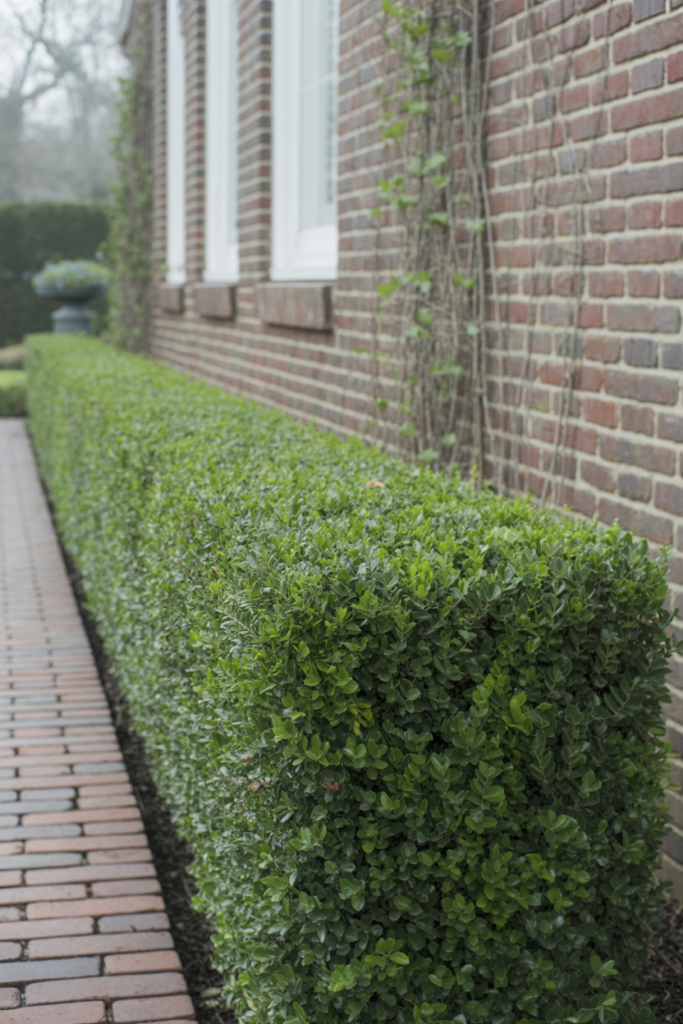
A neatly clipped hedge running along one side of a sidewalk adds structure, privacy, and a strong design backbone to what is often a shapeless passage. A hedge creates a living wall that defines the path clearly and gives the whole side yard a more formal, intentional character. I think a well-maintained hedge alongside a path is one of the most underrated landscaping moves available to homeowners.
Choose a compact, slow-growing hedge species that suits the available light and your willingness to maintain it. Good options for narrow side yards include dwarf box, Japanese holly, pittosporum, or privet. These species stay dense and compact with one or two clips per year and tolerate the partial shade conditions common in side passages without thinning out.
Keep the hedge clipped to a height that maintains privacy without blocking light to the path entirely. A hedge height of around four feet works well for most side passages, tall enough to screen the view from neighboring properties but low enough to allow good airflow and some light penetration. A single species hedge paired with a clean paved or gravel path creates a sidewalk that looks genuinely professional and well-designed.
10. Lay a Herringbone Brick or Paver Pattern for a Visually Rich Narrow Path Design
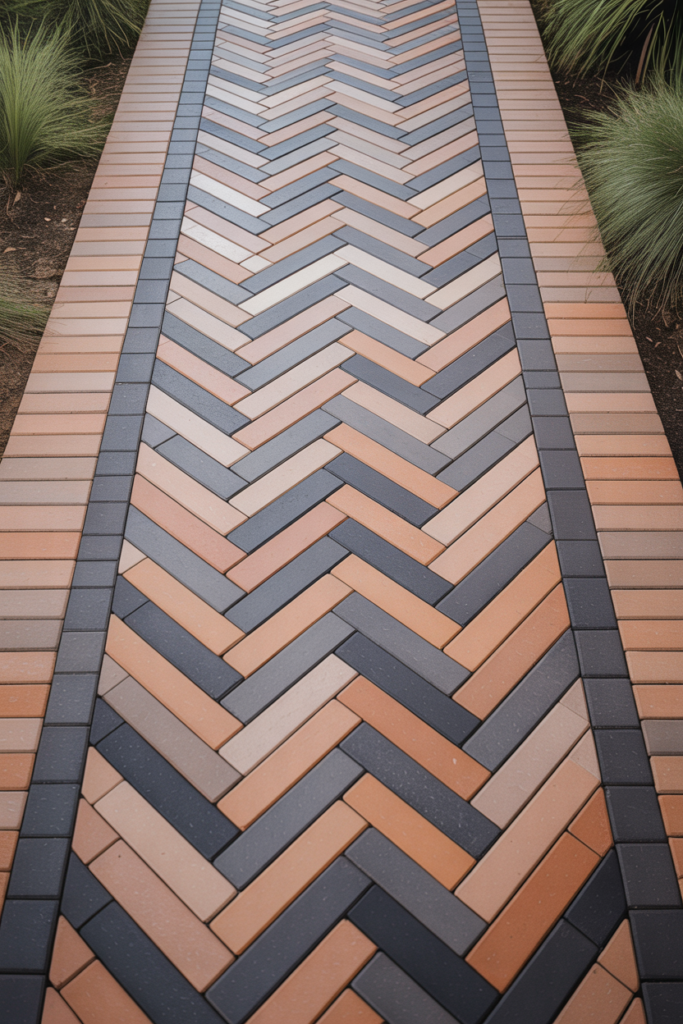
A herringbone pattern in brick or concrete pavers turns a simple path into a genuine design feature. The interlocking zigzag arrangement of units adds visual complexity and movement to a narrow space, making the walkway feel wider and more interesting than a plain stretcher bond layout would. For side passages where the path material itself needs to do most of the decorative work, herringbone is consistently the strongest pattern choice.
Lay the herringbone at 45 degrees to the path edges rather than parallel for maximum visual impact in a narrow space. The diagonal lines draw the eye along the path and create an illusion of greater width than the passage actually has. Use a consistent joint width of around half an inch and fill with kiln-dried sand brushed into the joints after laying for a clean, stable finish.
Mixing two complementary brick or paver colors in the herringbone pattern adds another layer of visual interest without requiring any additional design complexity. A warm terracotta paver alternated with a darker charcoal unit in a herringbone layout creates a path that looks custom-designed and carefully considered. For side walkways on homes with traditional or period architecture, this pattern choice elevates the whole exterior instantly.
| Path Material | Cost per Square Foot | Durability | Drainage | Best Style Match |
| Flagstone | Medium-High | Excellent | Good | Cottage, natural |
| Brick | Medium | Excellent | Moderate | Traditional, farmhouse |
| Pea gravel | Low | Good | Excellent | Informal, cottage |
| Concrete pavers | Low-Medium | Excellent | Moderate | Modern, contemporary |
| Decomposed granite | Very low | Good | Excellent | Informal, Mediterranean |
| Timber decking | Medium | Good | Poor | Coastal, contemporary |
| Resin-bound stone | Medium-High | Excellent | Excellent | Modern, formal |
11. Install Timber Decking Planks Along a Side Passage for a Warm and Contemporary Walkway
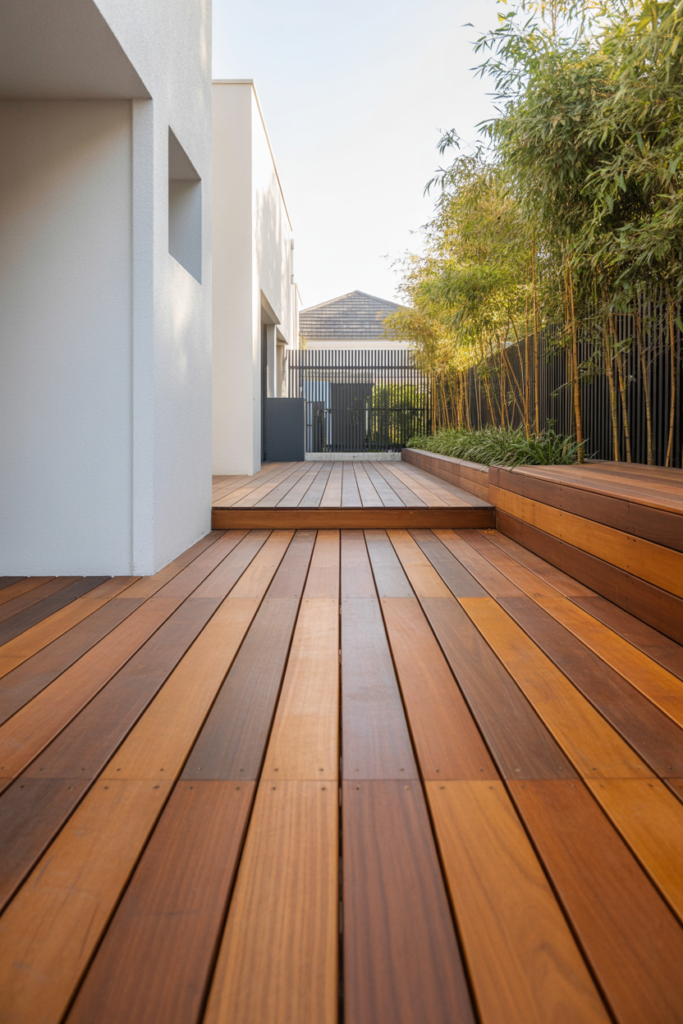
Timber decking used as a sidewalk surface brings warmth and a coastal or contemporary feel to a narrow passage that stone and brick cannot quite replicate. Horizontal decking boards laid along the length of the path create strong directional lines that visually lengthen the space and draw the eye toward the back garden. For homes with existing deck areas, extending the same decking material along the side passage creates a cohesive outdoor flow that ties the whole property together.
Use hardwood decking species like spotted gum, blackbutt, or iroko for a side passage, as these handle moisture and limited airflow better than softwood pine options. Composite decking made from recycled wood and plastic is another strong choice for side yards as it resists rot, needs no oiling, and stays splinter-free through heavy weather. Leave a small gap between each board during installation to allow water to drain through freely rather than pooling on the surface.
Finish natural hardwood decking with a quality exterior oil annually to maintain its color and protect against weathering. Left unfinished, most hardwoods silver gracefully to a driftwood grey tone that actually looks beautiful in the right setting. Either way, a timber decked side walkway adds genuine warmth and character to a passage that would otherwise look purely functional.
12. Use Stepping Stones Set in Gravel for a Simple and Elegant Low-Maintenance Path
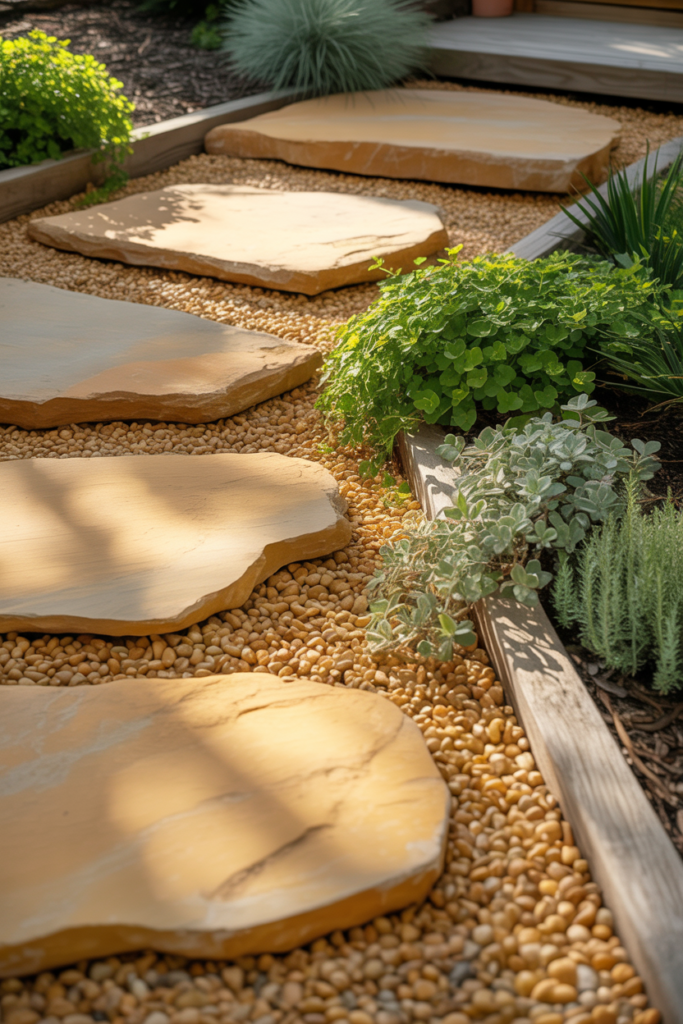
Stepping stones set into a gravel base combine the best qualities of both materials into one clean, low-maintenance sidewalk solution. The stones provide a firm footing and a clear path line while the gravel fills the surrounding space, drains water, and suppresses weeds between steps. This combination works in almost any side yard width, from very narrow passages to more generous corridors.
Choose flat stones with a surface area large enough to step on comfortably, at least 16 inches across in each direction. Natural slate, sandstone, or irregular fieldstone all work beautifully set into a pea gravel or crushed stone base. Space the stepping stones at a natural walking stride distance of around 18 to 24 inches center to center so the path feels comfortable to walk without requiring awkward steps.
Lay a weed membrane beneath the gravel layer before setting the stones to minimize ongoing maintenance. Top up the gravel level around the stones each spring to keep the surface looking fresh and even. This type of sidewalk is genuinely one of the easiest to install as a weekend DIY project and delivers a result that looks far more considered and deliberate than the effort required to create it.
13. Create a Cottage Style Side Path With Curved Edges and Mixed Wildflower Planting
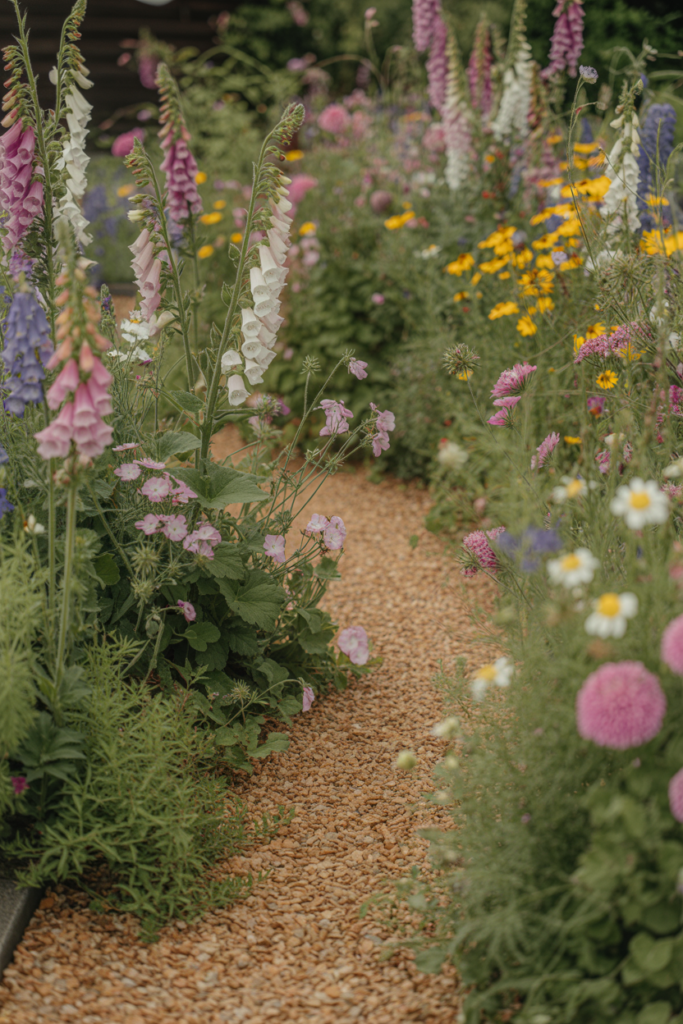
A cottage-style sidewalk with softly curved edges and mixed wildflower planting along the borders turns a plain passage into a genuinely enchanting garden path. The curved edges remove the rigid formality of a straight path and give the whole space a relaxed, grown-in quality that suits older homes and naturalistic garden styles particularly well. I find that even a gentle curve in an otherwise straight passage changes the whole character of the space dramatically.
Use flexible plastic or metal edging to create smooth curves along both sides of the path surface. Fill the border areas between the path edge and the fence or wall with a mix of cottage garden wildflowers, including foxglove, aquilegia, sweet William, and hardy geraniums. These plants self-seed freely once established and gradually fill the border more thickly each year with very little effort required.
Keep the path surface itself simple when using this style of planting. A plain gravel, decomposed granite, or simple flagstone surface lets the planting do the decorative work without competing with it visually. A cottage-style side path planted generously with wildflowers creates one of the most naturally beautiful and low-cost side yard transformations possible.
14. Line the Side Walkway With Potted Plants and Containers for a Flexible and Colorful Display
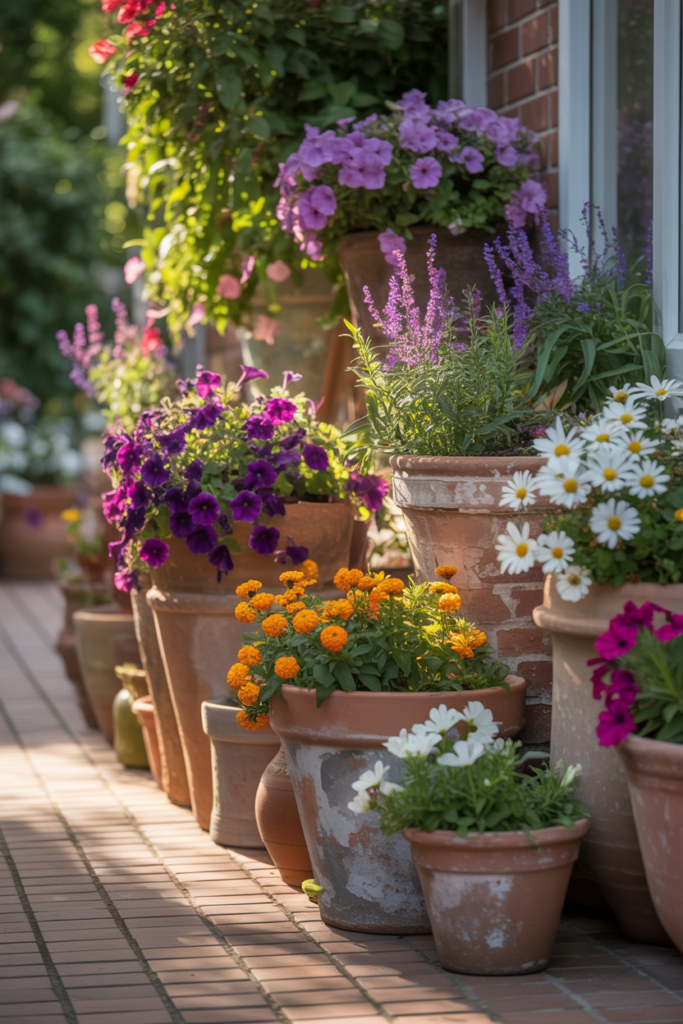
Using potted plants and containers along a sidewalk is one of the most flexible approaches to adding color and life to a narrow passage. Containers can move with the seasons, swap out when plants finish blooming, and work in any side yard regardless of soil quality or available light. For side passages with poor soil, solid paving, or rental properties where permanent planting is not possible, containers are the ideal solution.
Choose containers in a consistent material and color to create a cohesive look along the path. Terracotta pots in varying sizes work beautifully for a traditional or cottage aesthetic. Concrete or zinc planters suit contemporary and industrial style homes. Line them along one or both sides of the walkway at irregular intervals rather than in perfectly even spacing for a more natural and less regimented display.
Plant containers with a seasonal rotation to keep the display looking fresh throughout the year. Spring bulbs give way to summer annuals, which transition into autumn flowering plants and evergreen foliage for winter. A well-managed container display along a sidewalk requires more ongoing attention than permanent planting but gives you complete creative control over color, height, and seasonal interest at every point in the year.
15. Build a Raised Timber Boardwalk Over a Wet or Uneven Side Passage for a Practical Elevated Path
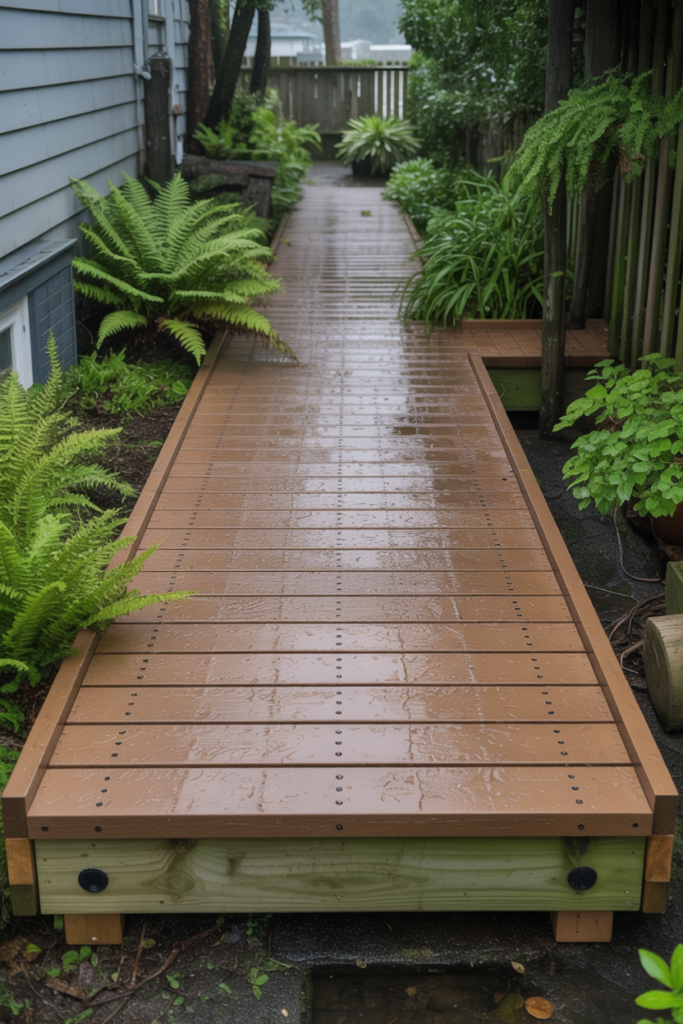
A raised timber boardwalk is the smartest solution for side passages that suffer from persistent wet ground, poor drainage, or significantly uneven terrain. Elevating the walking surface above the ground level keeps feet dry, eliminates the muddy patch problem that plagues so many side yards, and adds a genuinely architectural quality to what is usually the most neglected part of the property. For houses on sloped or poorly drained sites, this approach solves a real problem beautifully.
Build the boardwalk frame from pressure-treated timber posts and joists set into the ground at regular intervals. Deck the top surface with hardwood or composite decking boards laid either parallel or perpendicular to the path direction, depending on the visual effect you prefer. A boardwalk height of just four to six inches above ground level is usually enough to clear standing water and create a stable, dry walking surface through even the wettest winter months.
Add simple handrails along one or both sides if the boardwalk sits higher than about twelve inches above ground for safety reasons. Paint or stain the timber in a color that complements the house exterior for a more finished appearance. A raised boardwalk sidewalk is a weekend project that solves a genuine drainage problem while simultaneously creating one of the most characterful and interesting path features in the whole garden.
How to Choose the Right Side House Walkway Idea for Your Space and Budget
Choosing the best sidewalk idea starts with understanding exactly what your specific passage needs to do. A side yard that handles regular foot traffic from family members needs a firmer, more durable surface than one used only occasionally for garden access. Getting clear on the primary function of the space before choosing materials saves time and money.
Consider the drainage situation in your side passage carefully before committing to any paving or planting. Solid impermeable paving in a poorly drained side yard often makes existing water problems worse by directing runoff toward the house foundation. Permeable options like gravel, decomposed granite, stepping stones, or raised boardwalks handle drainage far more sensibly in problem areas.
Also, think about how much ongoing maintenance you are genuinely willing to commit to. Planted garden corridors and cottage-style wildflower borders look stunning but need regular seasonal attention to stay looking their best. Gravel, paver, and decomposed granite paths need very little ongoing care beyond occasional weeding and top-ups. Match the maintenance level to your realistic schedule rather than your optimistic one, and the result will always look better long term.
Conclusion: Your Side House Walkway Transformation Starts With One Good Idea
Every single one of these side house walkway ideas proves that a narrow passage alongside your home deserves far more creative thought than most people give it. From simple stepping stone paths through ground cover to full-planted garden corridors and raised timber boardwalks, the range of options suits every budget, every style, and every site condition.
The side yard is genuinely one of the most overlooked opportunities in residential landscaping. A well-designed sidewalk adds curb appeal, improves drainage, enhances security, and creates a garden feature that you actually enjoy walking through every single day. That combination of practical benefit and genuine beauty is rare in any home improvement project.
Pick the idea that fits your space, your budget, and your honest maintenance capacity. Start with the path surface, add lighting, then layer in planting as time and budget allow. A side house walkway that starts as a plain, muddy strip becomes one of the most satisfying outdoor transformations you can make to your property.
Frequently Asked Questions
What is the best material for a narrow side house walkway? Flagstone, brick, and large concrete pavers all work well for narrow side passages, depending on your home style and budget. For very tight spaces under two feet wide, single stepping stones through ground cover or gravel give the most practical result. Permeable materials like gravel and decomposed granite work best in passages with drainage challenges.
How wide should a side house walkway be? A minimum width of 24 inches allows comfortable single-file walking along a side passage. A width of 36 inches is more comfortable for regular use and allows you to carry items through the space easily. If your side passage is narrower than 24 inches, stepping stones through ground cover are the most practical path solution.
How do I stop weeds from growing through my sidewalk? Lay a quality geotextile weed membrane beneath any gravel, decomposed granite, or loose-fill path material before installation. For paved paths, use a polymeric jointing sand in the joints between pavers that hardens after wetting and prevents weed seed germination. Regular path edges maintained cleanly also reduce weed encroachment from surrounding garden areas.
What plants grow best alongside a shady side house walkway? Hostas, ferns, astilbe, hellebores, Japanese forest grass, and hardy geraniums all perform well in the partial to full shade conditions typical of side passages. For ground cover between stepping stones in shade, Irish moss, mind-your-own-business, and creeping Jenny establish reliably and handle light foot traffic without dying out.
How do I improve drainage in a wet side yard walkway? Choose permeable path materials like gravel, decomposed granite, or stepping stones that allow water to drain through or around them naturally. A raised timber boardwalk is the best solution for persistently wet side passages. Installing a simple French drain or channel drain along one edge of the path also redirects water away from the house foundation effectively.
Can I install a side house walkway myself without professional help? Most sidewalk projects are very manageable as DIY weekend projects. Gravel paths, stepping stone installations, and container displays require no specialist skills or tools. Brick and paver laying requires more precision but is well within reach for a careful DIYer following basic laying guides. Raised boardwalks and overhead pergola structures are also achievable with standard carpentry tools and good instructions.
How do I make a narrow side walkway look wider than it actually is? Lay paving in a diagonal or herringbone pattern to create an illusion of greater width. Use light-colored materials that reflect rather than absorb light. Keep planting low and open rather than tall and dense on both sides simultaneously. Installing path lighting at ground level also visually expands a narrow space after dark by drawing attention to the path surface rather than the tight walls on either side.