
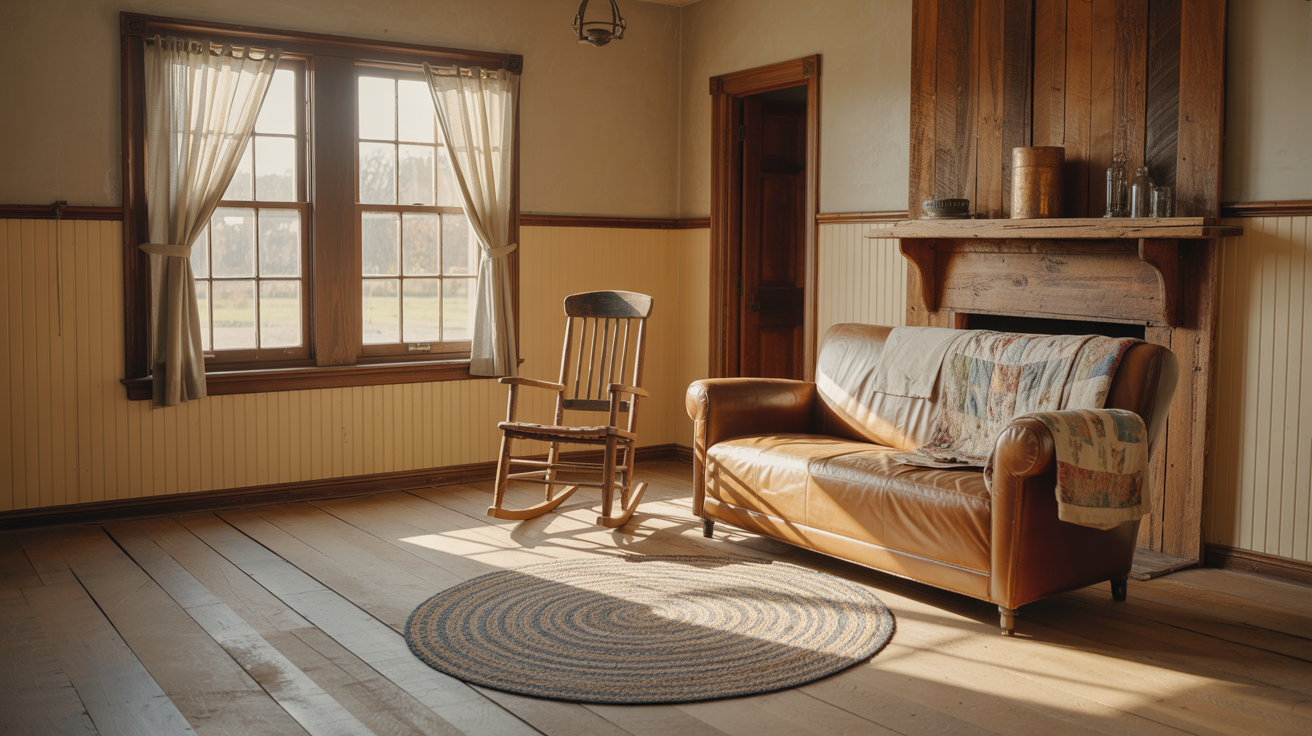
There is something about a 1900 farmhouse interior that feels like a warm hug the moment you walk in. The worn wood, the simple lines, the sense that real life happened in these rooms for over a century. I have always been drawn to that kind of honest, grounded beauty that modern interiors sometimes forget to include.
The good news is you do not need to live in an actual century-old farmhouse to bring this style home. With the right design choices, any space can carry that authentic early 1900s farmhouse character. It is about layering texture, history, and warmth in a way that feels lived-in rather than decorated.
I have put together 15 of the best 1900 farmhouse interior design ideas that work in real homes today. Whether you are restoring an original farmhouse or adding rustic charm to a newer build, these ideas will give you a clear starting point and plenty of inspiration to work with.
What Makes 1900 Farmhouse Interior Design So Timeless and Appealing
The appeal of the 1900 farmhouse style comes down to one thing: authenticity. These homes were built for function first, and every design choice reflected real daily life. That no-nonsense practicality is exactly what draws so many people back to this aesthetic today.
Early 1900s farmhouses used materials that were locally available and built to last. Solid wood floors, beadboard walls, cast iron fixtures, and hand-stitched textiles were standard features of the era. These elements carry a warmth and texture that mass-produced modern materials simply cannot replicate.
What makes this style so adaptable is that it layers beautifully with contemporary living. You do not have to sacrifice comfort or function to get the look. The best 1900 farmhouse interiors feel both nostalgic and completely livable at the same time.
| Design Element | 1900 Farmhouse Style | Modern Farmhouse Style |
| Wood floors | Original wide plank, worn finish | Engineered wood, uniform finish |
| Color palette | Cream, sage, dusty blue, barn red | White, grey, black accents |
| Fixtures | Cast iron, porcelain, brass | Matte black, brushed nickel |
| Textiles | Quilts, linen, grain sack | Cotton, linen, minimal pattern |
| Walls | Beadboard, plaster, shiplap | Shiplap, painted drywall |
| Furniture | Antique, mismatched, practical | Clean-lined, coordinated |
15 Best 1900 Farmhouse Interior Design Ideas for a Truly Rustic Home
1. Restore or Replicate Original Wide Plank Wood Floors for Authentic Character
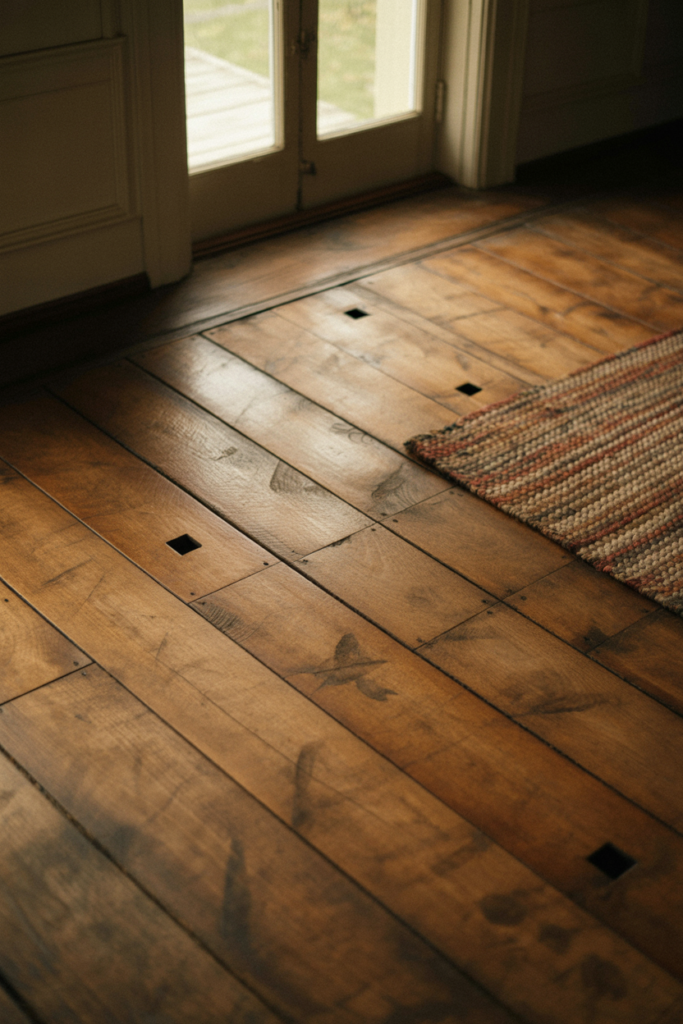
Wide plank wood floors are one of the most defining features of a genuine 1900 farmhouse interior. The boards were typically cut wide from old-growth timber and laid with visible nail holes and natural grain variations. That imperfect, aged quality is exactly what gives them so much character.
If you are working with an original farmhouse, refinishing existing floors rather than replacing them almost always gives the best result. The worn edges, color variations, and history in the wood are irreplaceable. A light sand and a natural oil finish preserve that aged beauty without making the floors look brand new.
For newer homes, reclaimed wide plank flooring sourced from old barns or factories is the closest you can get to the real thing. Widths of five inches or more, natural knots, and a matte finish all contribute to that authentic early farmhouse feel underfoot.
2. Add Beadboard Walls and Ceilings for Classic Farmhouse Detail
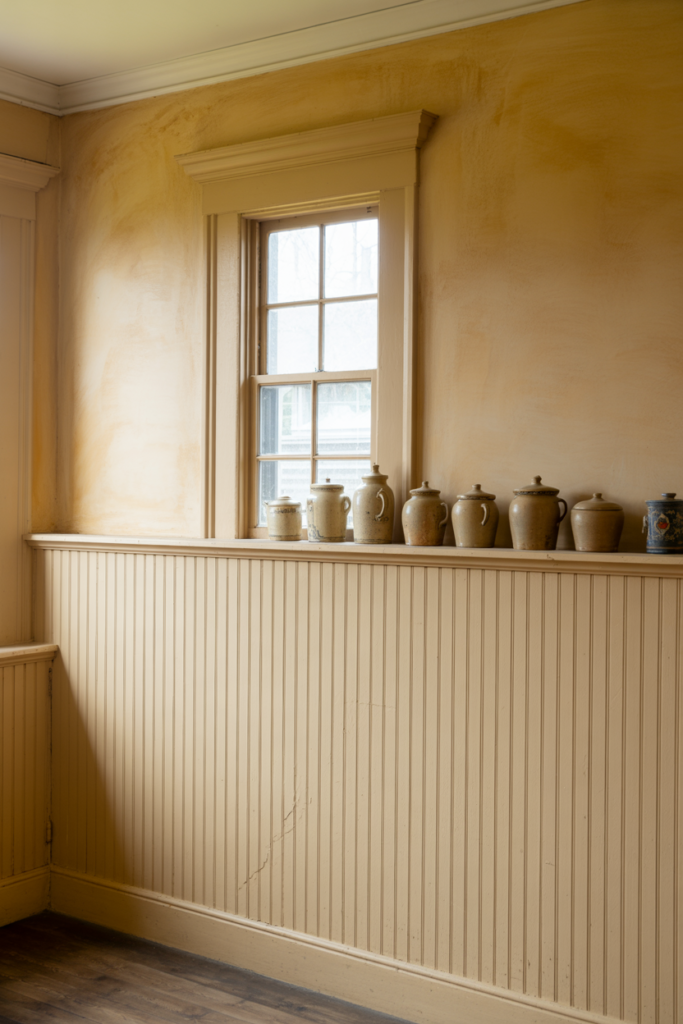
Beadboard was everywhere in early 1900s farmhouses, used on walls, ceilings, mudroom entries, and kitchen backs. It was practical, easy to clean, and added a subtle texture that plain plaster walls could not match. I still think it is one of the most underused wall treatments in modern interiors.
Installing beadboard paneling up to chair rail height on dining room or kitchen walls instantly shifts a space toward that vintage farmhouse feel. Paint it in a soft cream, warm white, or pale sage for the most authentic look. Avoid bright white as it reads too modern and clean for the 1900s aesthetic.
Beadboard ceilings in kitchens, porches, and bathrooms are another great way to add period character overhead. The subtle vertical lines draw the eye upward and add architectural detail to rooms that might otherwise feel plain and forgettable.
3. Use a Muted, Earth-Toned Color Palette Inspired by Early 1900s Farmhouse Style
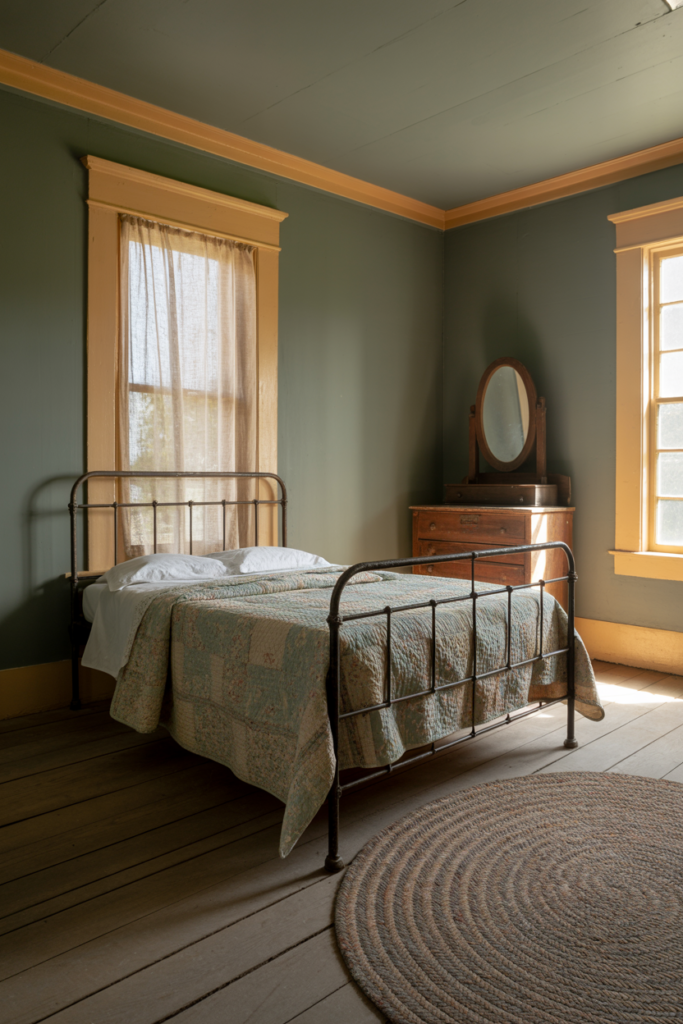
Color choices in a genuine 1900 farmhouse were practical and derived from natural pigments. Think warm creams, dusty sage greens, faded barn reds, soft slate blues, and deep forest greens. These tones have a muted, slightly grayed quality that sets them apart from modern paint colors.
I find that the easiest way to get the palette right is to look at historical paint collections from brands like Farrow and Ball, Benjamin Moore Historical Colors, or Old Fashioned Milk Paint. These ranges are specifically developed to replicate pre-1920s color characteristics. The difference between a true heritage tone and a modern approximation is subtle but immediately noticeable on the wall.
Stick to no more than three colors per room and let natural wood tones and aged textiles do the rest of the work. An overly coordinated color scheme actually works against the authentic farmhouse look, which was never meant to be perfectly styled.
4. Incorporate Antique and Repurposed Furniture for a Genuine Lived-In Look
Furniture in a 1900 farmhouse was rarely purchased as a matching set. Pieces were handed down, locally made, repaired, and used until they wore out. That mix of mismatched but complementary furniture is one of the most charming aspects of the style and one of the easiest to recreate today.
Antique shops, estate sales, and online marketplaces like Facebook Marketplace or Craigslist are great sources for genuine period pieces. Look for solid wood tables with turned legs, pressed-back chairs, Hoosier cabinets, dry sinks, and pie safes. These pieces show up regularly and are usually more affordable than people expect.
The key to making antique furniture work in a modern home is editing carefully. Choose pieces that serve a real function rather than filling every corner with vintage finds. A single well-chosen antique in a room says more than a dozen pieces crammed together.
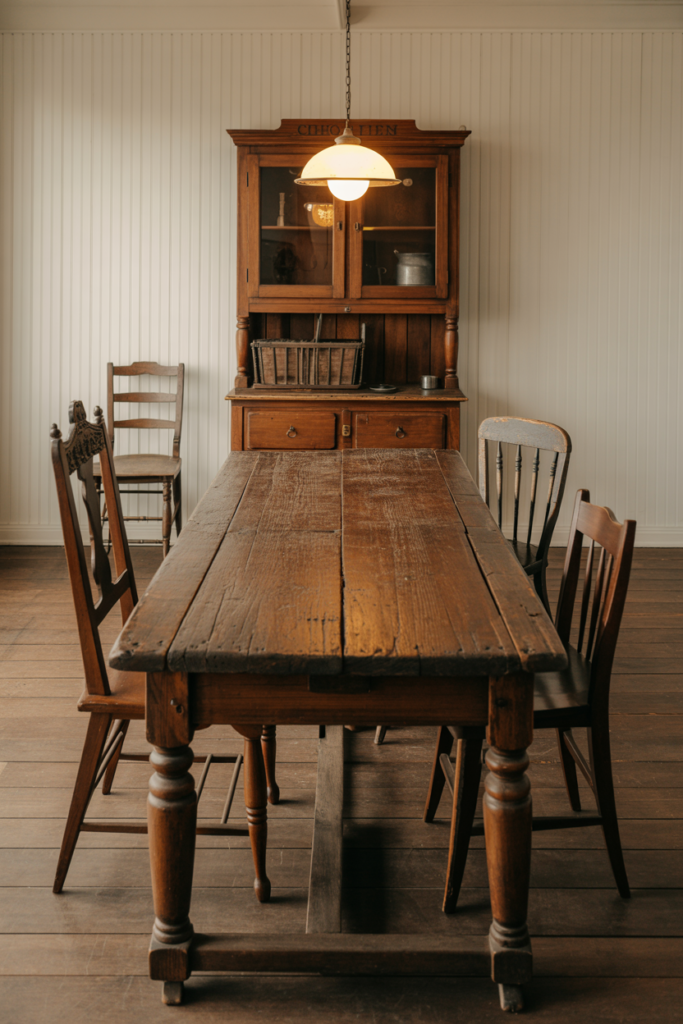
5. Hang Shiplap or Plank Walls to Add Rustic Texture and Warmth
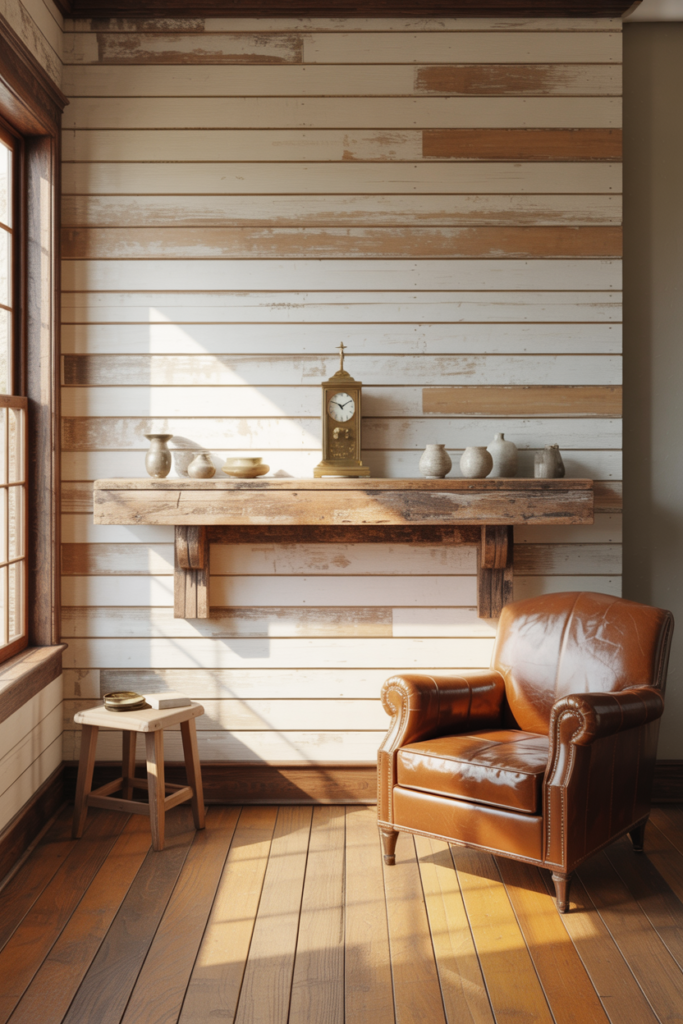
Shiplap was a practical wall covering in early farmhouses, used originally for its weather-resistant properties on exterior walls before interior versions became popular. Today, it reads as one of the strongest visual signals of farmhouse style in any room. Done right, it adds warmth and texture that painted drywall simply cannot achieve.
For a more authentic 1900 farmhouse look, choose horizontal shiplap with slightly wider boards and a natural or lightly whitewashed finish rather than a stark painted white. The wood grain should remain visible through the finish. Rooms that work especially well with shiplap include living rooms, bedrooms, and mudroom entries.
One wall of shiplap as a feature is usually enough to anchor a room in farmhouse style without overdoing it. Covering every wall can tip the space from charming into theme-park territory, which is a look nobody is going for.
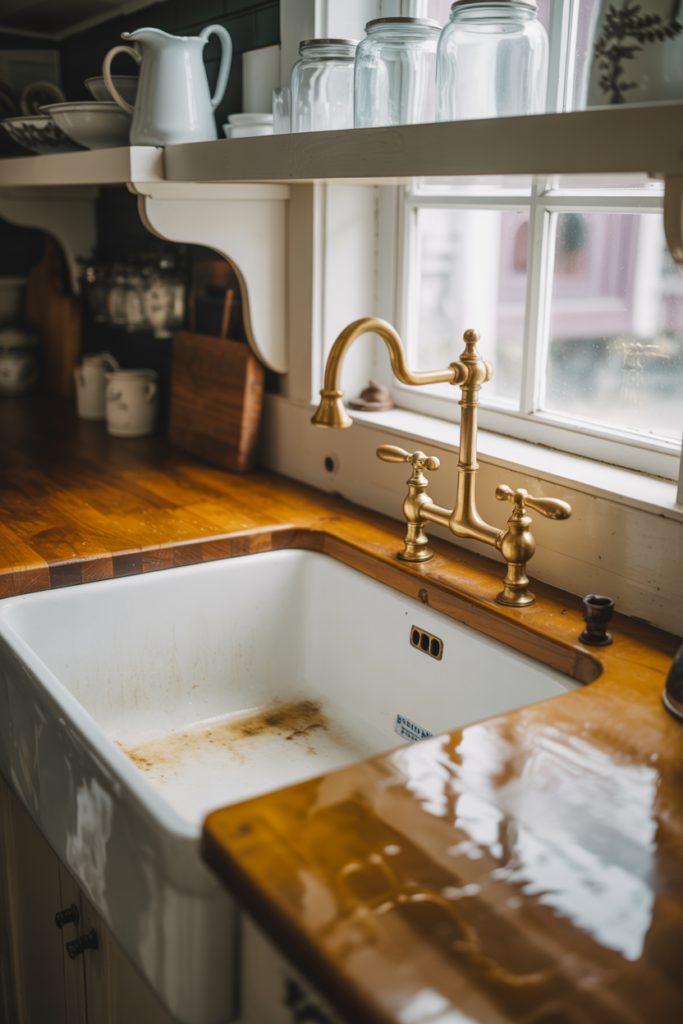
6. Install Cast Iron or Porcelain Farmhouse Fixtures for Period-Accurate Detail
Cast iron and porcelain fixtures were the standard in every 1900 farmhouse kitchen and bathroom. A cast iron farmhouse sink, also called an apron front sink, is one of the single most impactful upgrades you can make to bring authentic period character into a modern kitchen. I replaced a standard undermount sink with one last year, and the difference was immediate and dramatic.
Beyond the sink, look at cast iron door hardware, porcelain light switch plates, and exposed porcelain light fixtures. These small details add up quickly and collectively shift a space toward genuine early farmhouse character. They are the kind of things visitors notice without being able to pinpoint exactly why the room feels so right.
Brass and aged bronze finishes on faucets and cabinet pulls also read as more authentically period than matte black, which skews more contemporary farmhouse. Unlacquered brass that patinas naturally over time is particularly true to the 1900s aesthetic and requires zero maintenance to keep looking good.
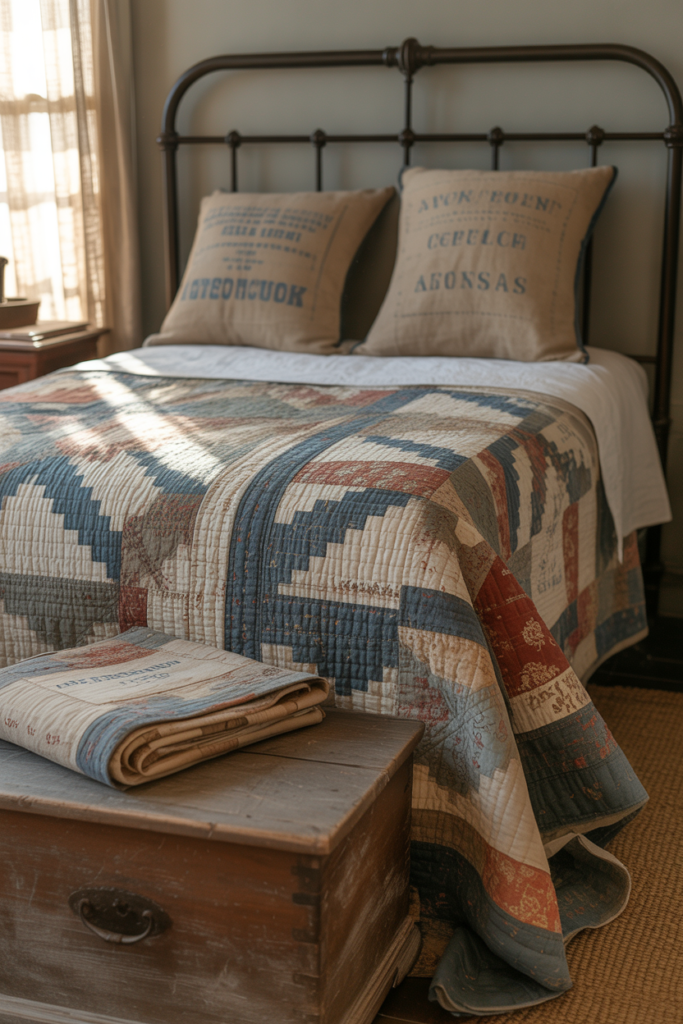
7. Layer Vintage Textiles, Including Quilts, Grain Sack Fabric, and Linen, Throughout the Home
Textiles played a huge role in early 1900s farmhouse interiors because they added warmth and color at very low cost. Hand-stitched quilts on beds, grain sack fabric on pillows, linen curtains on windows, and braided wool rugs on floors were all standard features of the era. These soft furnishings brought the whole interior together.
Vintage quilts are still widely available at antique markets and online, and genuine ones from the early 1900s carry a beauty that reproductions rarely match. Drape one over a sofa back or fold one at the foot of a bed for an instantly authentic touch. The faded, worn quality of an old quilt is a feature rather than a flaw.
Grain sack fabric, originally used to store flour and feed, has become one of the most recognizable farmhouse textile patterns. Look for genuine European grain sacks with original lettering for the most authentic version, or choose modern reproductions in linen or cotton. Either way, the simple stripe and worn texture add exactly the right kind of understated rustic detail.
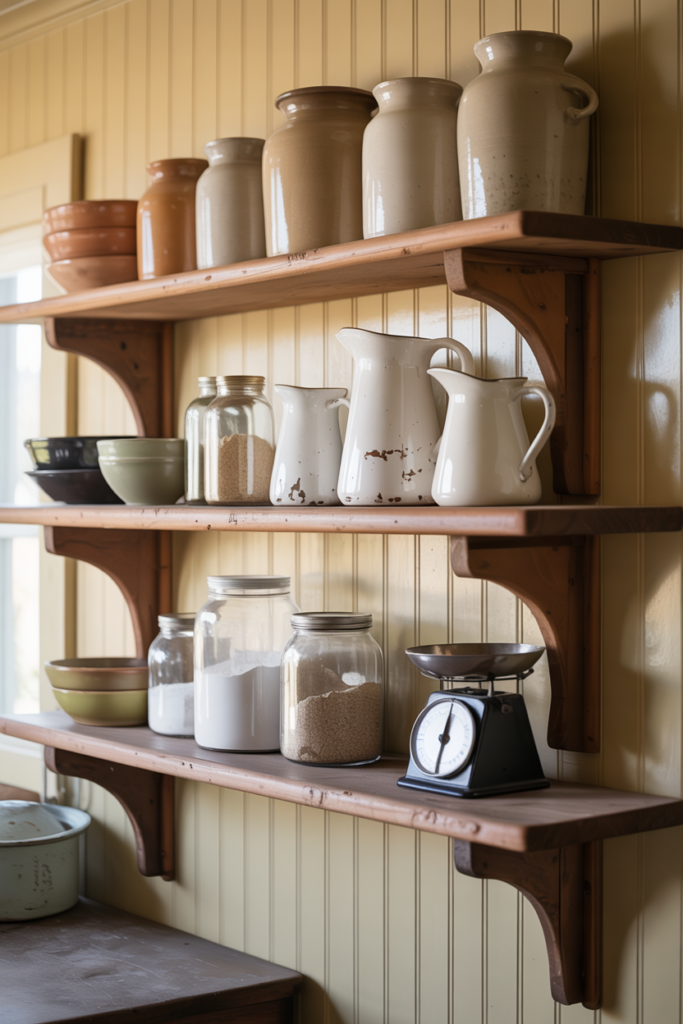
8. Use Open Shelving in the Kitchen to Display Everyday Farmhouse Ceramics and Tools
Open shelving was not a design trend in 1900 farmhouse kitchens. It was simply how kitchens worked before modern cabinetry existed. Every day, dishes, crocks, canning jars, and kitchen tools sat on wooden shelves within easy reach. That practical display approach is exactly what makes open shelving feel so natural at home in a farmhouse kitchen today.
Install simple wooden shelves using thick, solid timber brackets rather than decorative metal pipe systems, which read as more industrial than farmhouse. Style them with a mix of everyday items and a few decorative pieces like stoneware crocks, enamelware pitchers, or vintage scales. The display should look functional first and pretty second.
The biggest mistake people make with open kitchen shelving is keeping it too perfect. Real farmhouse kitchens were working spaces, and a little honest clutter makes the shelving look genuinely lived-in rather than staged for a photo shoot.
9. Bring in Reclaimed Wood Accents on Beams, Shelves, and Mantels for Aged Character
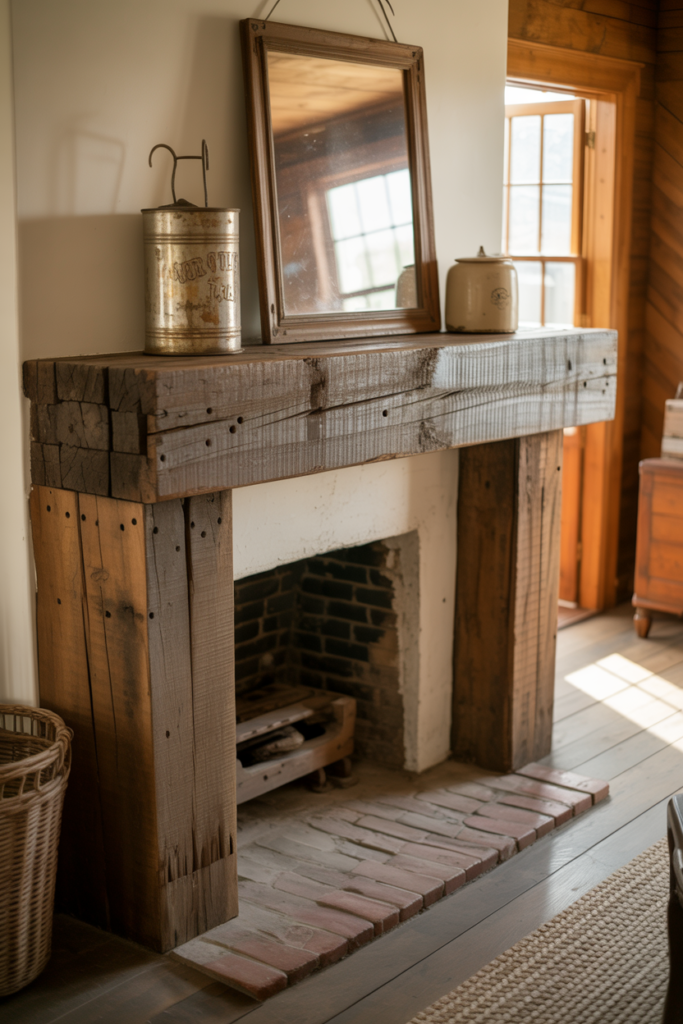
Reclaimed wood brings a level of history and texture into a home that new timber simply cannot replicate. Old barn wood, factory floor boards, and salvaged beams carry saw marks, nail holes, weathering, and color variations that took decades to develop. Using these materials in a modern home adds instant aged character to the space.
Exposed ceiling beams made from reclaimed timber are one of the most striking ways to use salvaged wood in a 1900 farmhouse interior. Even in rooms with standard ceiling heights, a single reclaimed wood beam used as a mantel shelf or a floating shelf adds significant visual weight and character. I used a reclaimed barn beam as a fireplace mantel, and it became the focal point of the entire room.
Reclaimed wood suppliers exist in most regions, and prices vary widely depending on species, condition, and demand. Shopping locally from barn demolition salvage companies often yields the best quality and the most interesting pieces at reasonable prices.
10. Add a Clawfoot Tub or Farmhouse Bathroom Fixtures for Vintage Bathroom Style
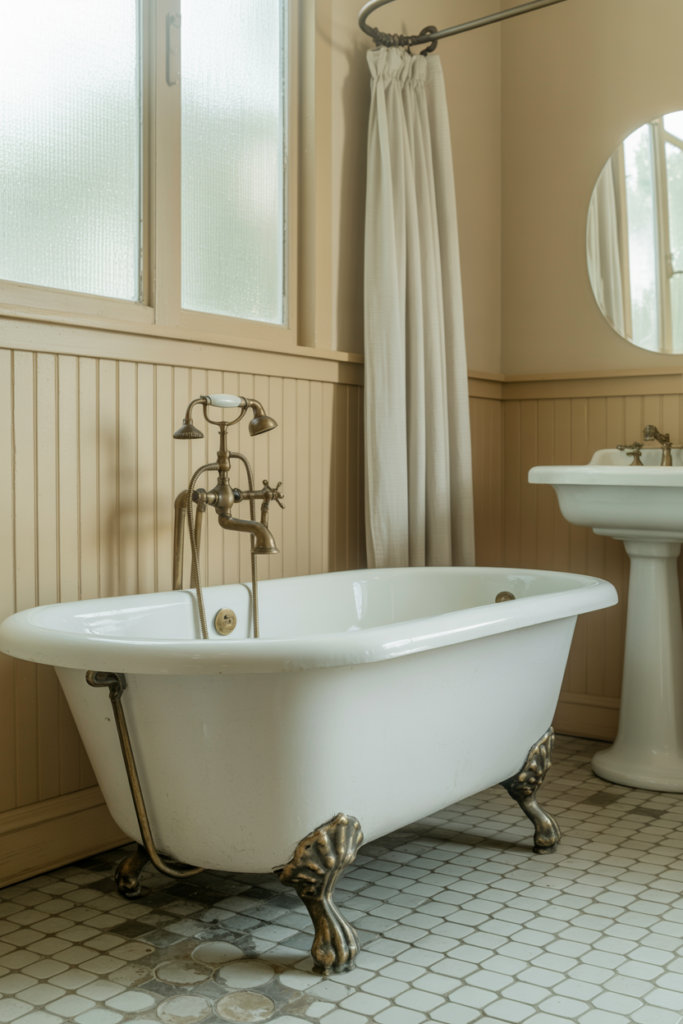
A clawfoot bathtub is one of the most iconic fixtures of the 1900 farmhouse era, and it remains one of the most desirable bathroom features today. Original clawfoot tubs were made from cast iron with a porcelain enamel interior, and they weighed considerably more than modern versions. That weight and solidity are part of what makes them feel so substantial and special.
Freestanding clawfoot tubs work beautifully in both large and medium-sized bathrooms. Pair one with a vintage-style telephone faucet in an aged brass or oil-rubbed bronze finish for the most period-accurate look. Add a simple cotton shower curtain on a circular ceiling-mounted rod, and the whole setup feels genuinely pulled from another era.
Beyond the tub, farmhouse bathroom details like pedestal sinks, pull-chain toilets, hexagonal tile floors, and beadboard walls all contribute to a cohesive early 1900s bathroom aesthetic. You do not need every element at once. Even two or three period-accurate choices in a bathroom create a strong and convincing vintage character.
| Bathroom Feature | 1900 Farmhouse Original | Modern Reproduction Option |
| Bathtub | Cast iron clawfoot | Acrylic clawfoot or cast iron reproduction |
| Sink | Pedestal porcelain | Pedestal sink, wall-mounted |
| Faucet finish | Unlacquered brass | Aged brass, oil-rubbed bronze |
| Floor tile | Hexagonal white ceramic | Reproduction hex tile, cement tile |
| Walls | Beadboard, plaster | Beadboard paneling, limewash paint |
| Toilet | High tank pull chain | High tank reproduction |
11. Hang Vintage or Reproduction Farmhouse Lighting Fixtures for Warm Ambient Light
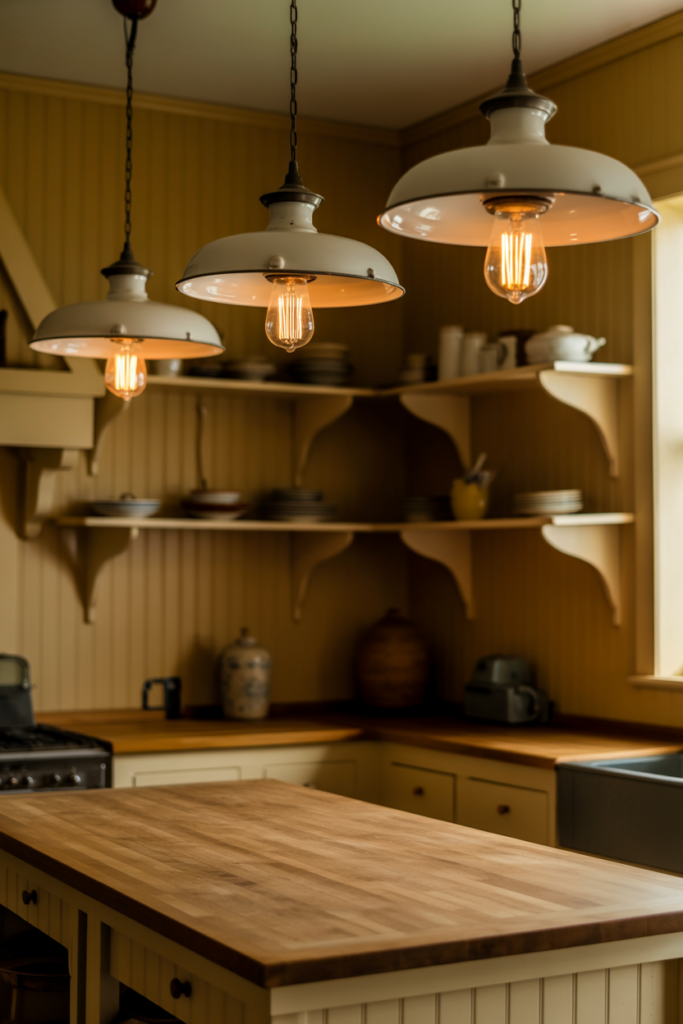
Lighting in a 1900 farmhouse was simple, functional, and warm. Early electric fixtures from that era featured exposed bulbs, porcelain sockets, simple metal shades, and minimal ornamentation. Recreating that quality of light in a modern home makes an enormous difference to how the whole interior feels after dark.
Look for vintage schoolhouse pendant lights, exposed filament bulbs in simple cage fixtures, and enamel shade pendants for kitchens and utility spaces. These styles were common in early 1900s rural homes and remain widely available through antique dealers and reproduction lighting companies. I switched out recessed lighting in my kitchen for three vintage schoolhouse pendants, and the room felt completely transformed.
Avoid overly ornate chandeliers or anything too polished and symmetrical. Farmhouse lighting from this era was practical rather than decorative, and that restrained simplicity is exactly what makes it so appealing. Warm Edison bulbs in the 2200K to 2700K range replicate the amber glow of early electric light beautifully.
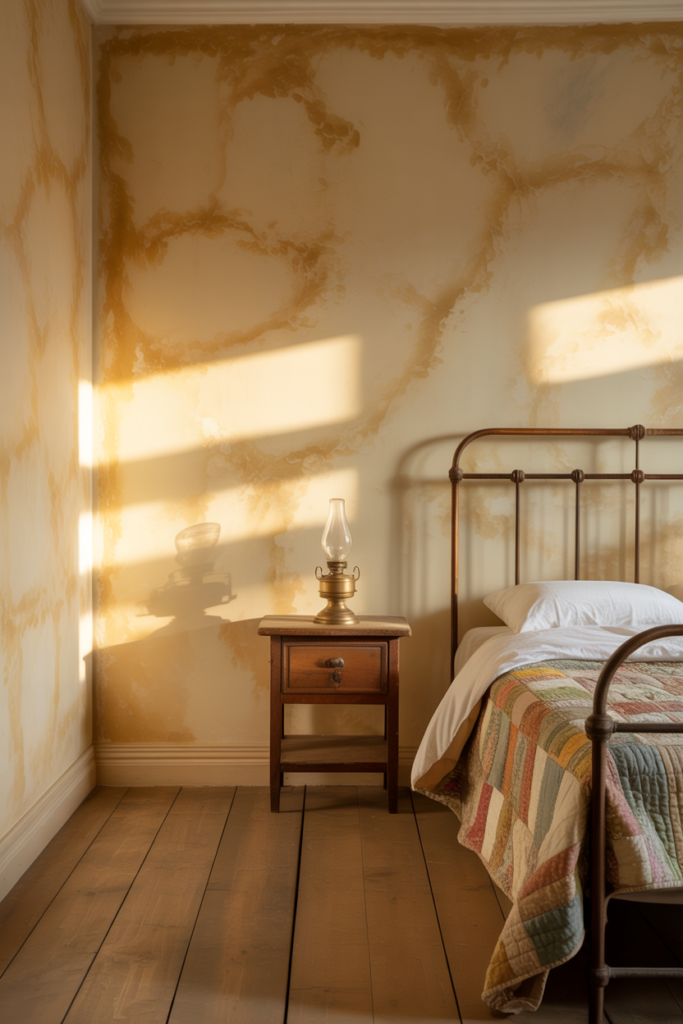
12. Use Limewash or Plaster Finish Walls for an Authentic Early 1900s Texture
Smooth painted drywall is one of the biggest giveaways that a farmhouse interior is not genuinely old. Original 1900 farmhouse walls were finished in hand-applied plaster with a slightly uneven, organic texture that catches light differently at every hour of the day. Recreating that quality of wall finish transforms how a room feels without changing a single piece of furniture.
Limewash paint is the most accessible way to achieve this effect today. Brands like Portola Paints and Romabio make limewash formulas that go on over existing painted walls and create a softly mottled, aged finish with genuine depth. The application process is forgiving, and the results look convincingly old even when freshly applied.
For a more substantial texture, American Clay or similar natural plaster products create a genuinely tactile wall surface that no paint can fully replicate. These finishes regulate humidity naturally and improve over time as they cure and settle. A limewash or plaster wall in a warm cream or dusty sage is one of the single most impactful changes you can make to a farmhouse interior.
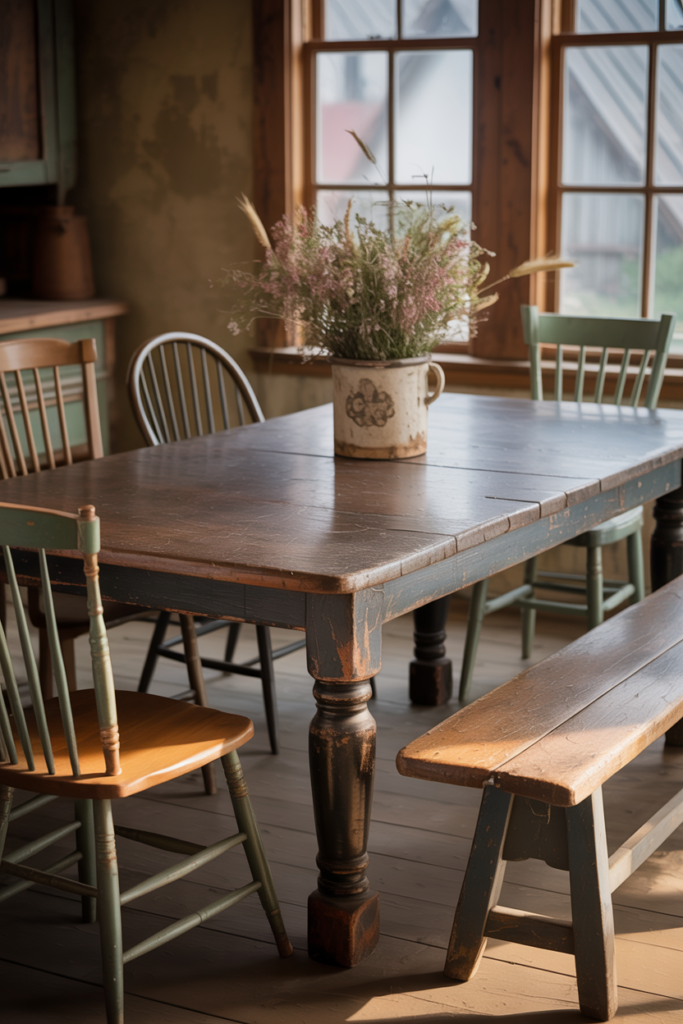
13. Furnish With a Farmhouse Kitchen Table and Mismatched Chairs as the Dining Room Anchor
The kitchen table was the heart of every 1900 farmhouse. Families gathered around it for meals, work, and conversation from morning until night. A large, solid wood farmhouse table with visible grain, worn edges, and honest construction anchors a dining space in exactly the right way for this style.
Look for tables with thick turned or tapered legs, a genuine wood top rather than veneer, and enough size to seat the whole family comfortably. Antique farm tables sourced from estate sales are the best option when you can find them. A well-used antique farm table carries scratches, stains, and character that no new piece can honestly replicate.
Pair the table with mismatched chairs rather than a matching set. Mix pressed-back wooden chairs with a bench on one side and a couple of different antique chair styles on the other. That collected-over-time look is far more authentic to the 1900 farmhouse spirit than anything that arrives as a coordinated dining set.
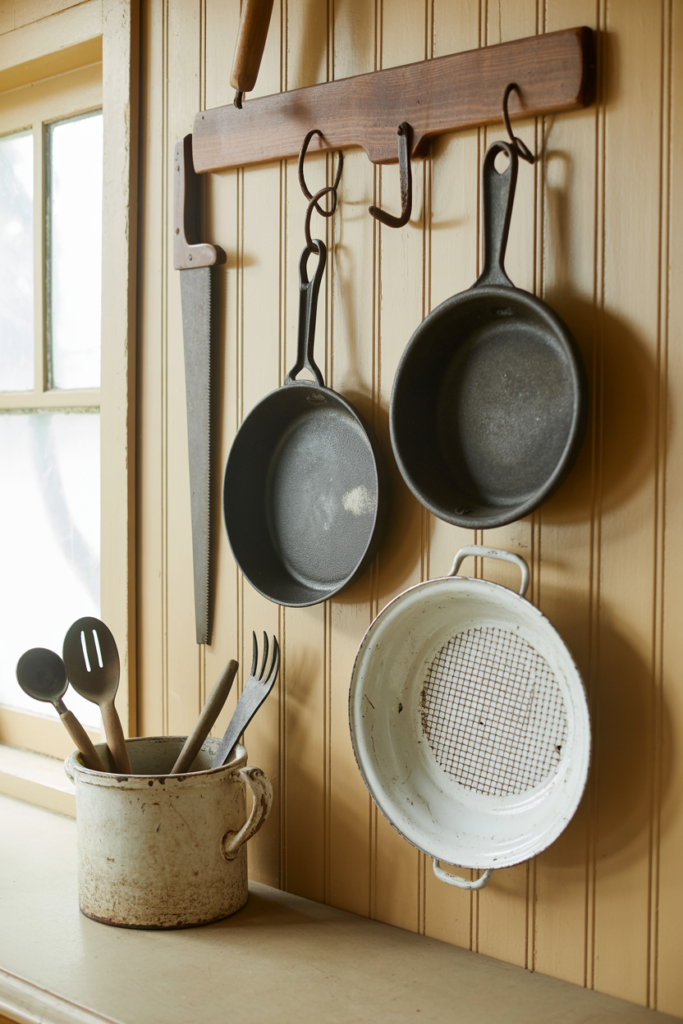
14. Decorate With Functional Antique Farm Tools and Kitchen Items as Wall Art
One of the most interesting and affordable ways to bring 1900 farmhouse character into a home is through the display of genuine antique tools and kitchen objects. Old wooden-handled farm tools, cast iron skillets, vintage cheese graters, enamelware colanders, and hand-forged kitchen implements all make compelling wall displays when arranged thoughtfully.
The rule I follow is that every displayed item should be something that was genuinely used rather than made purely for decoration. A worn wooden-handled scythe, a set of old mason jars on a shelf, or a collection of vintage tin canisters on a kitchen counter all tell a real story. That authenticity is what separates farmhouse style from farmhouse theater.
Group similar items together rather than spreading them individually around the room. A cluster of three or five related objects creates a much stronger visual statement than the same items placed randomly. Odd numbers always work better in decorative groupings, a principle that holds across every style of interior design.
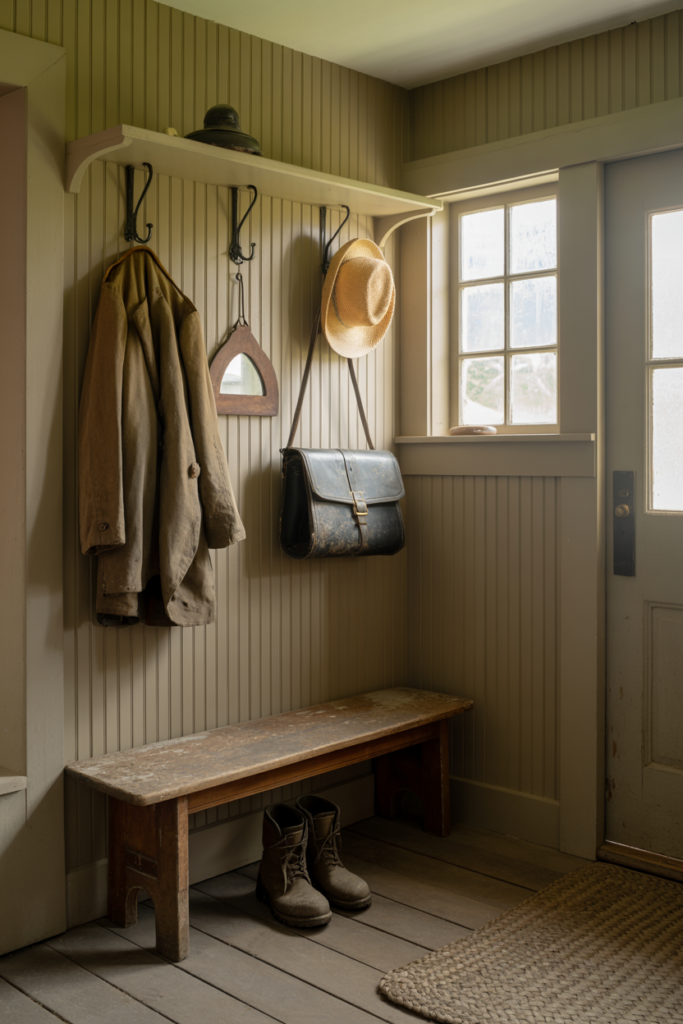
15. Create a Farmhouse Mudroom Entry With Hooks, Benches, and Practical Storage
The mudroom was one of the hardest-working spaces in any 1900 farmhouse. It served as the transition zone between outdoor farm work and the clean interior of the home, and every element in it was chosen for pure practicality. Recreating that functional, unpretentious entry space is one of the most satisfying farmhouse projects you can take on.
Install a row of simple cast iron or wooden wall hooks at two different heights, one for adults and one for children, to handle coats, hats, and work bags. Add a solid wood bench with storage underneath for boots and outdoor gear. Beadboard walls, a simple rag rug on the floor, and a vintage mirror complete the look without overcomplicating the space.
The mudroom is also a great place to incorporate genuine antique finds like an old wooden crate for shoe storage, a vintage tin bucket for umbrellas, or an enamel basin repurposed as a catch-all. These small practical touches add real character to a space that could otherwise feel generic and forgotten.
How to Mix 1900 Farmhouse Style With Modern Comfort Without Losing Authenticity
The most common concern people have about farmhouse style is that it will feel too old-fashioned or impractical for modern daily life. That concern is understandable but unnecessary. The best 1900 farmhouse interiors I have seen blend period character with contemporary comfort in a way that feels natural rather than forced.
The key is to keep the bones and the materials authentic while allowing the function to be fully modern. Period-accurate wide plank floors, beadboard walls, and vintage fixtures can coexist perfectly with modern appliances, good lighting design, and comfortable upholstered seating. Nobody is suggesting you give up central heating or a decent refrigerator for the sake of authenticity.
Focus on getting two or three major elements right in each room rather than trying to recreate every period detail at once. A genuine antique table, a cast iron sink, and limewash walls in a kitchen do more for the farmhouse atmosphere than a dozen smaller accessories ever could. Quality and authenticity in a few key pieces always outperform quantity.
Conclusion: Bringing 1900 Farmhouse Interior Design Back to Life in Your Home
Every one of these 1900 farmhouse interior design ideas points to the same truth: this style works because it is rooted in real materials, real function, and real history. Wide plank floors, beadboard walls, cast iron fixtures, vintage textiles, reclaimed wood, and antique furniture all carry a warmth and authenticity that purely modern interiors rarely achieve.
The beauty of this style is that you can start small and build gradually. One reclaimed wood mantel, one vintage quilt, one farmhouse sink, and suddenly a room shifts in a way that feels both meaningful and genuinely personal. You are not following a trend with the 1900 farmhouse style. You are connecting to a way of living that values quality, practicality, and beauty in equal measure.
Start with the idea that resonates most with your current space and your budget. The rest will follow naturally as the style layers itself into your home over time. That gradual, collected quality is exactly what makes a 1900 farmhouse interior feel so convincingly real rather than hastily assembled.
Frequently Asked Questions
What defines a 1900 farmhouse interior design style? A 1900 farmhouse interior is defined by natural materials, functional design, and a muted, earthy color palette. Key features include wide plank wood floors, beadboard walls, cast iron fixtures, antique furniture, and handmade textiles. The overall feel is warm, unpretentious, and genuinely lived-in.
How do I add a 1900 farmhouse character to a modern home? Start with surface materials like wide plank flooring, beadboard paneling, or limewash walls to set the foundation. Then layer in period-accurate fixtures, antique furniture pieces, and vintage textiles. Three or four well-chosen authentic elements do more for the look than a room full of farmhouse-themed accessories.
What colors work best for a 1900 farmhouse interior? The most authentic colors are muted and drawn from natural pigments. Warm creams, dusty sage greens, faded barn reds, slate blues, and deep forest greens all read as genuinely period. Avoid bright whites and stark contrasts, which skew more toward contemporary farmhouse style than the original 1900s aesthetic.
Where can I find genuine antique farmhouse furniture and accessories? Estate sales, farm auctions, antique markets, and online platforms like Facebook Marketplace, Etsy, and Craigslist are the best sources. Architectural salvage yards are also excellent for period fixtures, doors, and hardware. Patience and regular searching usually yield the best finds at the most reasonable prices.
Can I mix 1900 farmhouse style with modern appliances and technology? Absolutely. The most livable farmhouse interiors blend period materials and character with fully modern function. Panel-ready appliances that hide behind cabinet fronts, concealed technology, and modern plumbing behind vintage-style fixtures all allow you to enjoy contemporary comfort without compromising the aesthetic.
Is 1900 farmhouse interior design expensive to achieve? It does not have to be. Antique pieces are often more affordable than new furniture of comparable quality. Beadboard paneling and limewash paint are both budget-friendly upgrades that deliver a strong visual impact. The style rewards patience and resourcefulness more than a large budget.
How is the 1900 farmhouse style different from modern farmhouse style? The 1900 original relies on genuine antiques, natural, imperfect materials, muted historical colors, and a more strictly functional approach to design. Modern farmhouse style tends toward cleaner lines, stark white and grey palettes, and coordinated accessories. The 1900 version feels more layered, worn, and authentically old.