
Window treatments are one of those things that quietly make or break a room. The right curtain, blind, or shade pulls everything together, controls light, adds warmth, and gives you the privacy you actually need. I have rearranged furniture three times, trying to fix a room that just needed better window treatments the whole time.
The good news is that you do not need a huge budget or an interior designer on speed dial to get this right. There are so many options available now, from affordable roller shades to custom drapes, that finding something that fits your style and your window is genuinely easy. You just need to know what works and where.
This list covers 15 of the best window treatment ideas for every room in your home. Whether you want more privacy, better light control, or just a serious style upgrade, at least a handful of these ideas will work perfectly for your space. Let us get into it.
Why Choosing the Right Window Treatments Makes Such a Big Difference in Every Room of Your Home
Window treatments do far more than block light. They define the mood of a room, affect how large or small the space feels, and even play a role in energy efficiency by insulating against heat and cold. I always tell people that bare windows are the fastest way to make an otherwise well-decorated room feel unfinished.
The relationship between window size, treatment style, and room function matters more than most people realize. A heavy velvet drape that looks stunning in a living room would feel completely suffocating in a small bathroom. Matching the treatment to the room’s purpose is just as important as matching it to the decor style.
Good window treatments also add real value to a home. Buyers and renters notice windows and how they are dressed, and quality treatments signal that a space is well cared for. Whether you are decorating to stay or decorating to sell, investing in the right window coverings pays off in ways that go well beyond aesthetics.
1. Hang Floor-to-Ceiling Drapes to Make Any Room Feel Taller, Grander, and More Polished
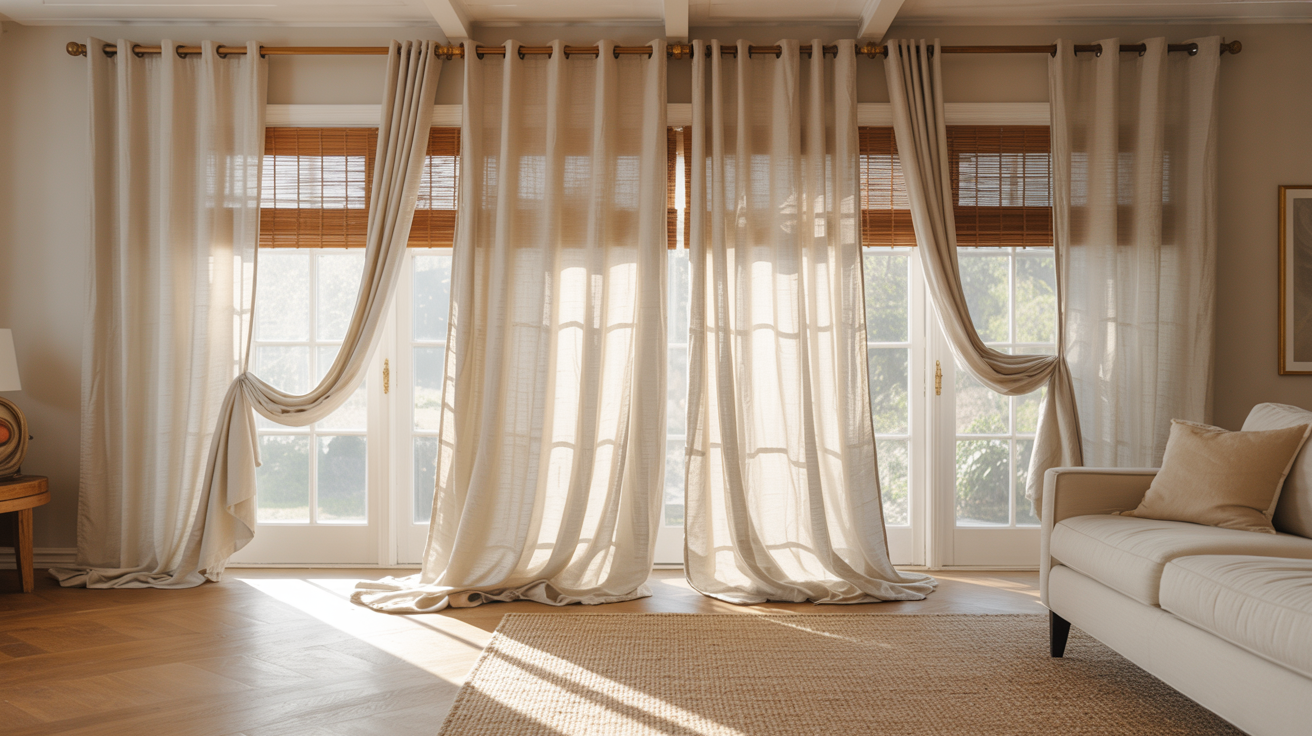
Floor-to-ceiling drapes are one of the simplest ways to make a room feel more expensive without spending a fortune. Mounting the curtain rod as close to the ceiling as possible and letting the fabric fall all the way to the floor creates an illusion of height that genuinely transforms a space. I did this in my living room, and the ceiling felt like it jumped up by two feet overnight.
The fabric you choose makes a big difference here. Linen and velvet drapes in neutral tones work beautifully for a timeless look, while patterned fabric adds personality without requiring any other major decor changes. Stick to colors that either match the wall tone for a seamless look or contrast gently for a more intentional statement.
One thing most people get wrong is hanging the rod at window height instead of ceiling height. That single mistake cuts the visual height of the room and makes even beautiful drapes look ordinary. Mount the rod high, use long panels, and watch the whole room shift.
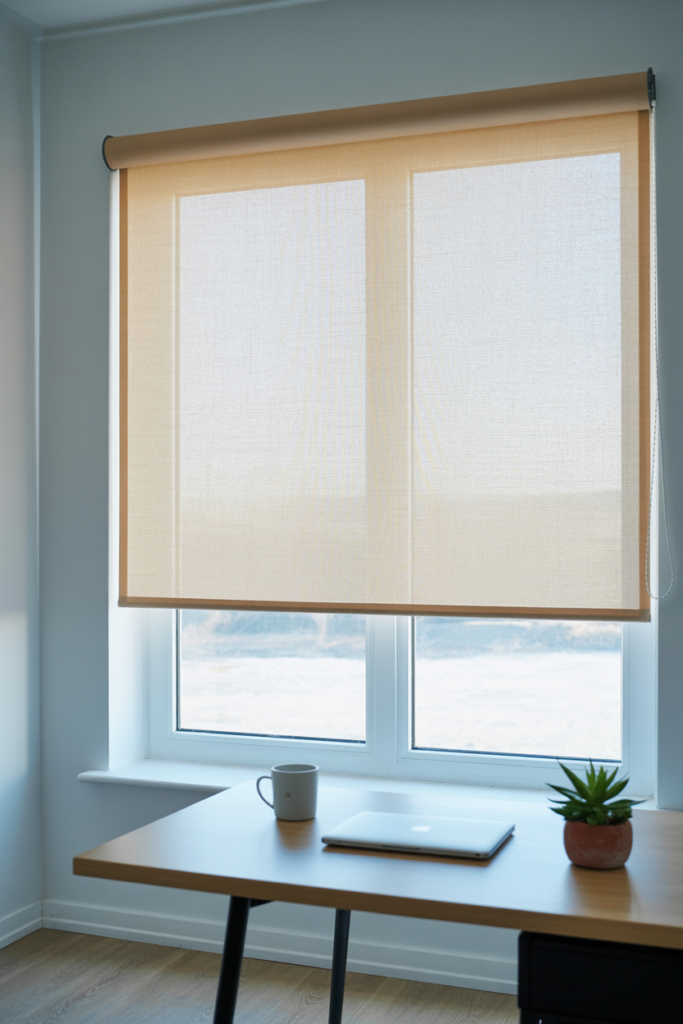
2. Install Roller Shades for a Clean, Minimal Window Treatment That Works in Almost Any Room
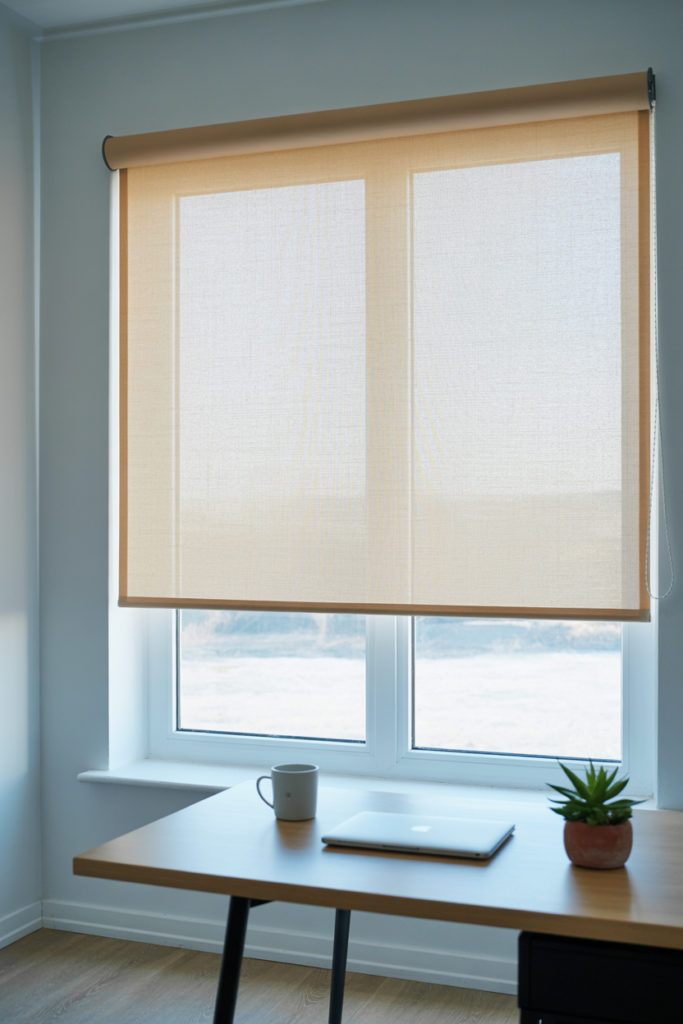
Roller shades are the most underrated window treatment on the market right now. They are clean, simple, affordable, and come in an incredible range of opacities from sheer to full blackout. I have used them in home offices, kitchens, and bathrooms where a fussier treatment would have looked out of place.
The beauty of roller shades is how little visual noise they add to a room. When rolled up, they practically disappear, which makes them perfect for windows where you want to keep the focus on the view or the surrounding decor. When pulled down, they deliver a smooth, uniform look that feels modern and intentional.
Pair roller shades with curtain panels on either side if you want softness without sacrificing function. This layered approach gives you the clean lines of a shade with the warmth and texture of fabric. It is one of the most popular window treatment combinations right now, and it works in almost every room style from minimalist to farmhouse.
3. Try Roman Shades for a Soft, Tailored Window Treatment That Adds Texture Without Bulk
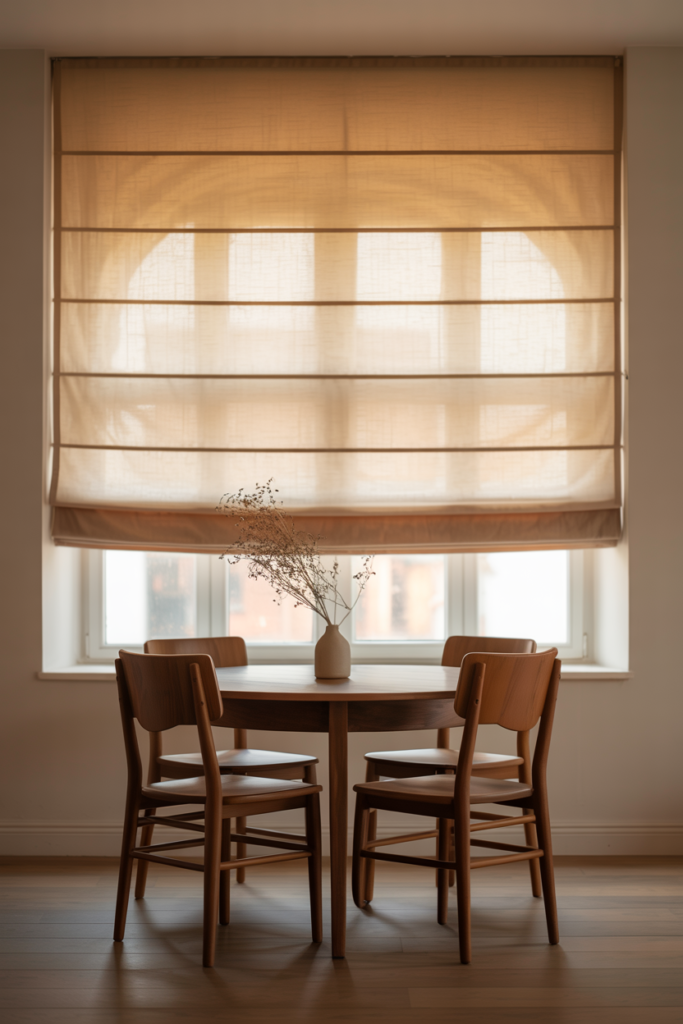
Roman shades sit in the sweet spot between drapes and blinds. They fold up neatly when raised and lay flat when lowered, giving you a clean, structured look that adds texture and softness without overwhelming the window. I think they work especially well in dining rooms and bedrooms where you want something elegant but not overdone.
The fabric choice is everything with Roman shades. A linen Roman shade gives a relaxed, casual feel, while a patterned cotton or jacquard fabric adds a more formal, tailored touch. Because the fabric is on full display when the shade is down, it is worth spending a little more on a material you genuinely love.
Roman shades work best on smaller to medium windows where the folded fabric stays proportionate to the frame. On very large windows, they can feel heavy or visually busy when raised. For oversized windows, consider pairing a Roman shade with side panels to keep the look balanced and well-proportioned.
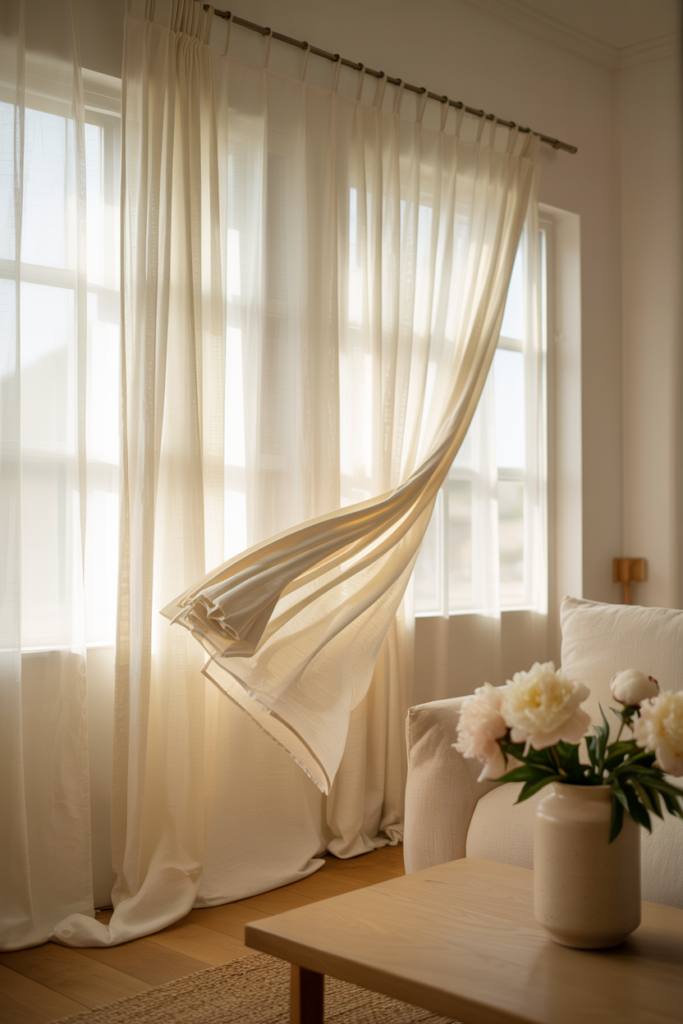
4. Use Sheer Curtains to Soften Natural Light and Add an Airy, Elegant Feel to Any Space
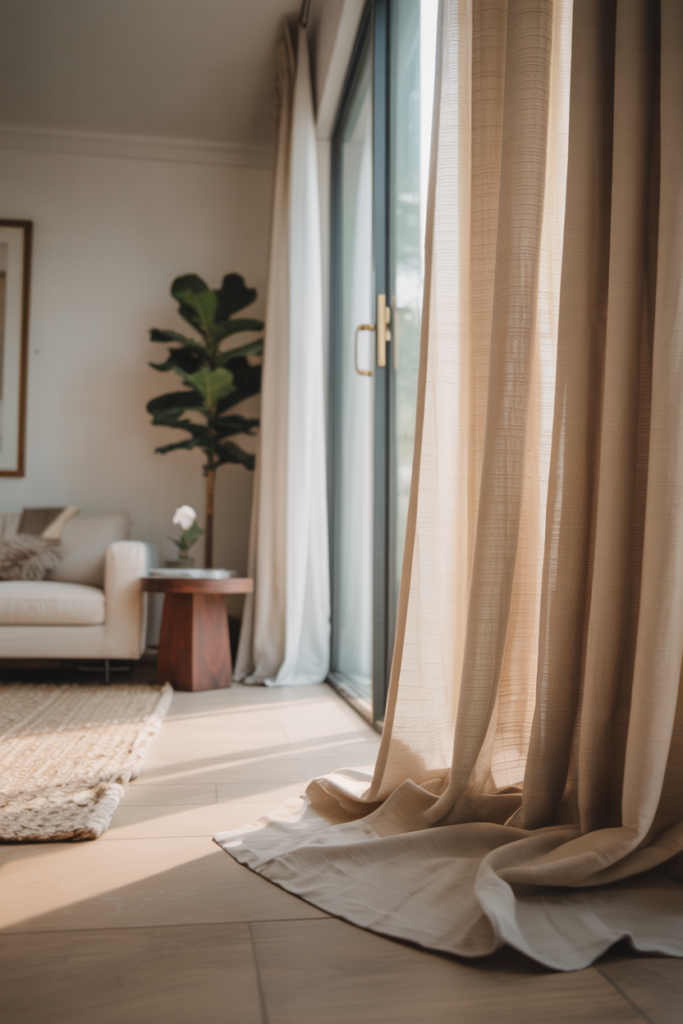
Sheer curtains are one of the most flattering window treatments you can use in a home. They filter sunlight into a soft, diffused glow that makes every room feel warmer and more welcoming. I keep sheer panels in my living room year-round because the light they create in the morning is genuinely one of my favorite things about the space.
Sheers work on their own for rooms where privacy is less of a concern, like upper-floor living rooms or spaces that face a garden rather than a street. For rooms that need more privacy, layer sheers under blackout curtains or heavier drapes so you can adjust coverage throughout the day. This layered system gives you full flexibility without sacrificing the beautiful soft light effect.
White and ivory sheers are the most popular because they work with every color palette and reflect light beautifully. That said, soft blush, sage green, and pale grey sheers are having a real moment right now, and they add a subtle color wash to a room that feels fresh and current without being trendy.
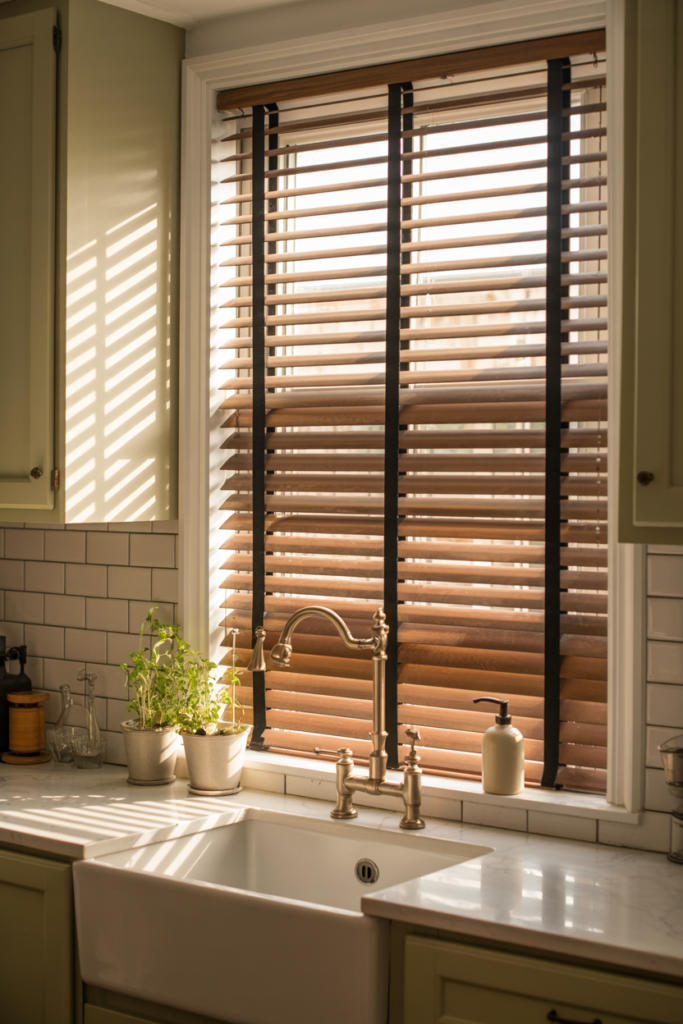
5. Add Wooden or Faux Wood Blinds for a Timeless Window Treatment That Suits Almost Every Home Style
Wooden blinds bring warmth, structure, and a natural texture to windows that most other treatments simply cannot match. They work in traditional homes, modern spaces, coastal interiors, and everything in between, which makes them one of the most versatile window covering options available. I have had the same set of faux wood blinds in my kitchen for years, and they still look sharp.
Real wood blinds are beautiful, but can warp in high-humidity areas like bathrooms and kitchens. Faux wood blinds solve this problem completely. They look nearly identical to real wood, cost less, clean up easily, and hold up perfectly in moisture-prone rooms. For most people, faux wood is the smarter choice in every room except maybe a formal living or dining space.
The slat width you choose affects the overall look significantly. Wider slats give a more contemporary feel and let in more light when open, while narrower slats read as more traditional. Finish the look by choosing a stain or paint tone that either matches your trim for a seamless built-in look or contrasts gently to make the window a focal point.
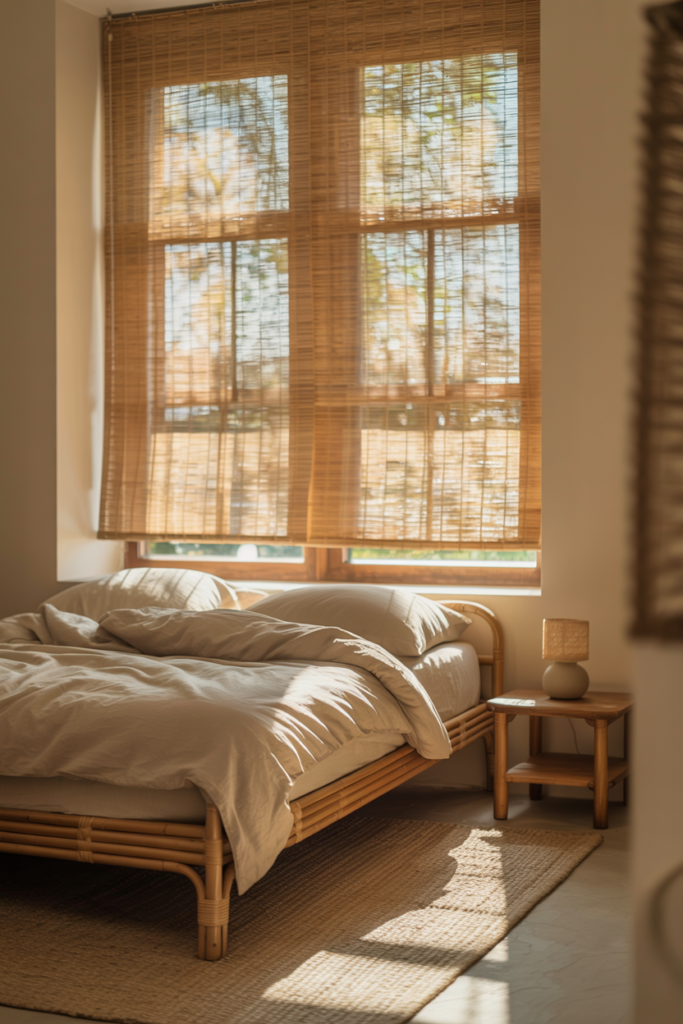
6. Hang Woven Grass or Bamboo Shades for a Natural, Textured Window Treatment With Warm Organic Appeal
Woven grass and bamboo shades are one of the best ways to bring natural texture into a room without adding visual clutter. They filter light beautifully, casting a warm golden glow that feels relaxed and organic. I added bamboo shades to a guest room once, and the whole space went from feeling cold and generic to genuinely cozy almost instantly.
These shades work especially well in rooms with natural materials like rattan furniture, linen upholstery, jute rugs, or wood accents. They tie the whole natural material story together in a way that feels intentional and cohesive. Even in a more modern space, a woven shade adds just enough warmth to keep things from feeling too stark.
Keep in mind that woven shades are not blackout treatments. They filter light rather than block it, so pair them with a blackout liner or side drapes in bedrooms where full darkness matters. In living rooms, dining rooms, and entryways, they work perfectly on their own and add some of the most beautiful natural light texture of any window treatment on this list.
7. Install Cellular or Honeycomb Shades for an Energy-Efficient Window Treatment That Insulates Year-Round
Cellular shades are the most energy-efficient window treatment you can buy, and they look genuinely clean and modern at the same time. Their honeycomb structure traps air between the fabric layers, creating insulation that keeps rooms warmer in winter and cooler in summer. I switched to cellular shades in my home office and noticed a real difference in how comfortable the room stays throughout the day.
Single-cell shades offer decent insulation and work well in mild climates. Double-cell and triple-cell shades provide significantly better thermal performance and are worth the extra cost in rooms that get a lot of direct sun or face extreme temperatures. The difference in your energy bill over a full year more than covers the price gap.
Cellular shades come in a huge range of colors and opacities, including sheer, light filtering, and blackout. They also operate in top-down, bottom-up configurations, which means you can lower the top of the shade for privacy while still letting light in from above. That feature alone makes them one of the most practical window treatment options for street-facing rooms.
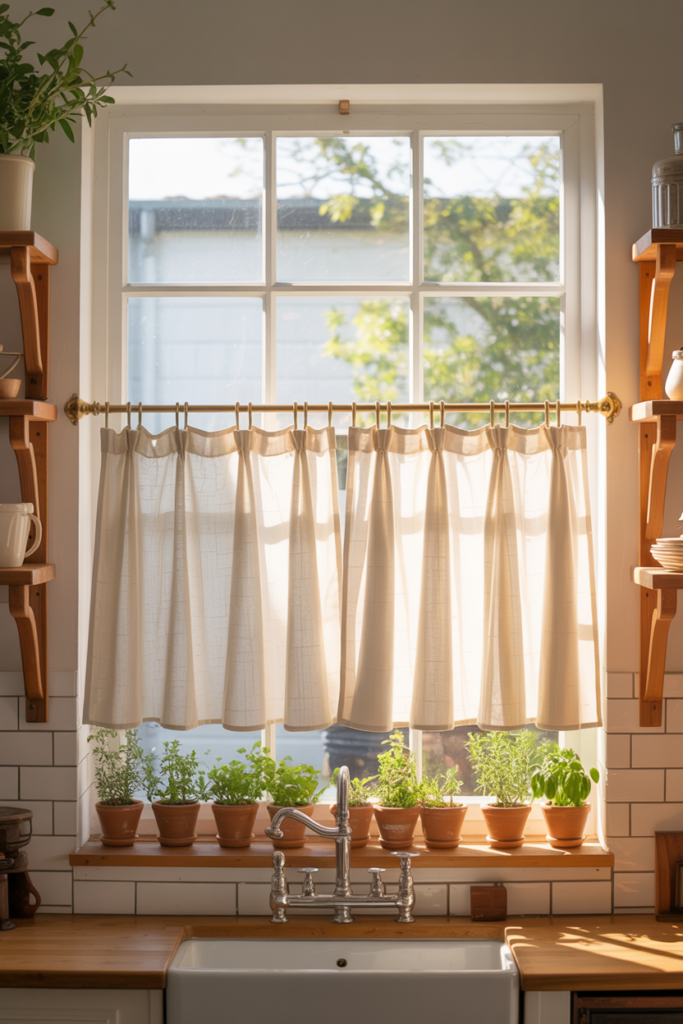
8. Try Cafe Curtains for a Charming, Privacy-Focused Window Treatment That Works Perfectly in Kitchens
Cafe curtains cover only the lower half of a window, giving you privacy at eye level while keeping the top of the window open for natural light. They have a classic European feel that works especially well in kitchens, breakfast nooks, and bathrooms. I find them incredibly charming in a kitchen with a garden view because you get the privacy you need without losing the connection to the outside.
The rod for cafe curtains mounts at the midpoint of the window frame rather than at the top. This placement is what creates that signature half-covered look. Choose a tension rod for a no-drill option or a standard cafe rod for a more permanent and polished finish.
Fabric choice sets the tone completely with cafe curtains. Crisp white cotton gives a clean farmhouse feel, printed linen reads as relaxed and coastal, and a checkered or striped pattern nods to classic bistro style. Because the panels are small, this is a great place to use a bolder fabric without it overwhelming the room.
9. Use Blackout Curtains in the Bedroom for a Window Treatment That Seriously Improves Your Sleep Quality
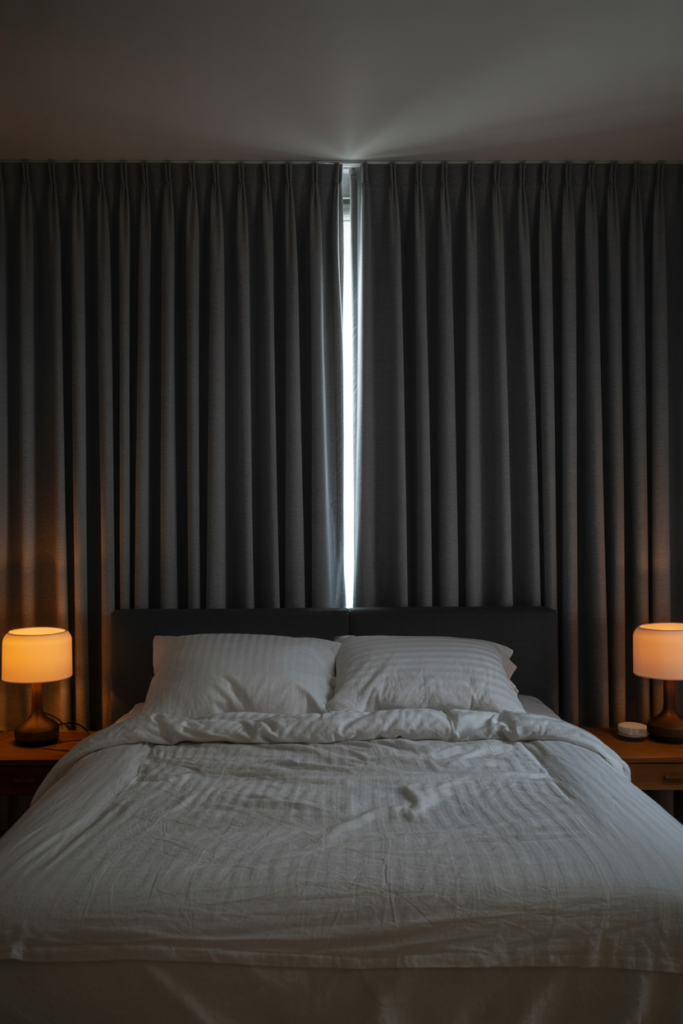
Blackout curtains are a non-negotiable for anyone who struggles with light disrupting their sleep. They block out streetlights, early morning sun, and car headlights completely, creating a dark environment that supports deeper and longer sleep. I switched to blackout curtains in my bedroom a few years ago, and the difference in how well I sleep is not subtle at all.
Not all blackout curtains are heavy or ugly. The market has come a long way and now offers blackout options in lightweight linen-look fabrics, soft velvet, and even sheer-looking materials with a blackout lining sewn in. You no longer have to choose between blocking light and having a bedroom that looks good.
For the best light-blocking performance, choose curtains that extend several inches beyond the window frame on each side and hang them as close to the ceiling as possible. Gaps at the sides and top let in more light than most people expect. A blackout roller shade underneath the curtains closes any remaining gaps for a truly dark room.
10. Add Layered Window Treatments to Create a Flexible and Stylish Look That Works at Any Time of Day
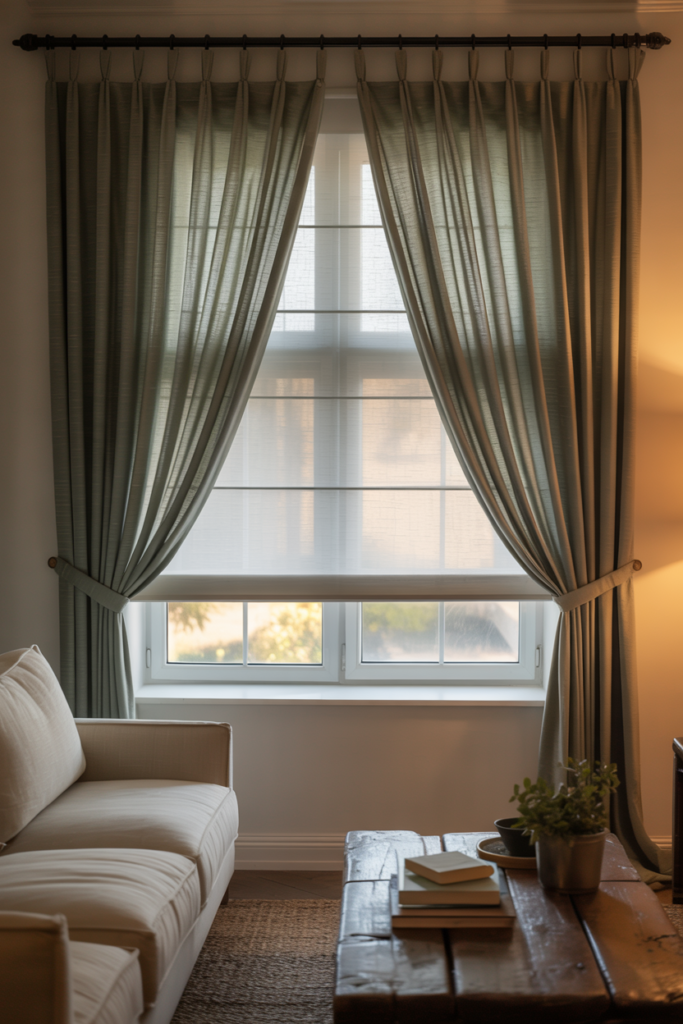
Layering window treatments is one of the most popular interior design techniques right now and for good reason. Combining a functional shade or blind with decorative curtain panels gives you complete control over light and privacy while also adding serious visual depth to a window. I think a layered window looks infinitely more finished than a single treatment alone.
The most common layering combination is a roller shade or cellular shade paired with floor-length curtain panels on either side. The shade handles the practical work of light control and privacy, while the panels frame the window and add softness and color. Pull the panels to the center when you want full coverage or leave them swept to the sides for a more open feel.
Mix textures deliberately when layering. A linen panel over a woven bamboo shade, or a velvet drape over a sheer roller shade, creates contrast that feels rich and considered. Keep the color palette cohesive so the layers complement rather than compete with each other.
11. Hang Curtains With Bold Patterns to Use Your Window Treatment as a Statement Piece in the Room
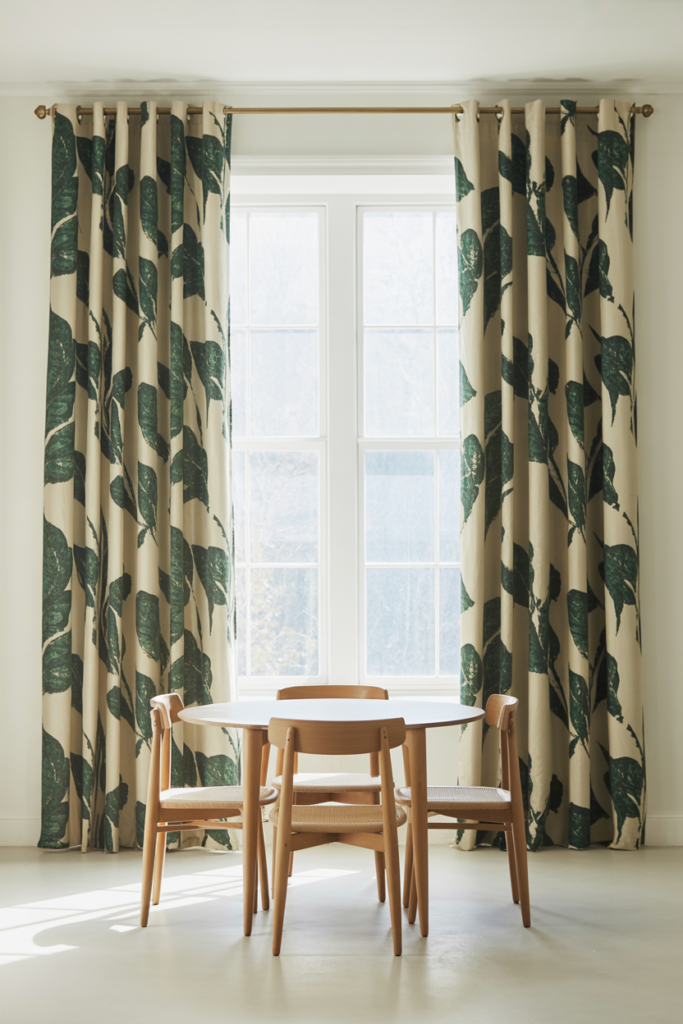
A patterned curtain is one of the easiest ways to add personality to a room without committing to patterned wallpaper or upholstery. Large-scale botanical prints, geometric patterns, and classic stripes all work beautifully as curtain fabric and immediately draw the eye. I used wide-stripe linen curtains in a dining room once, and they became the most commented-on element in the entire space.
The key with patterned curtains is to keep the rest of the room relatively calm so the window becomes the focal point rather than one busy element competing with several others. Pair bold curtains with solid-color furniture and neutral walls for the most balanced and intentional look.
Scale matters a lot with pattern. Large windows can handle large-scale patterns beautifully, while smaller windows look better with smaller or more subtle prints. When in doubt, bring a fabric swatch home and hold it up against the window in your actual lighting before committing to the full purchase.
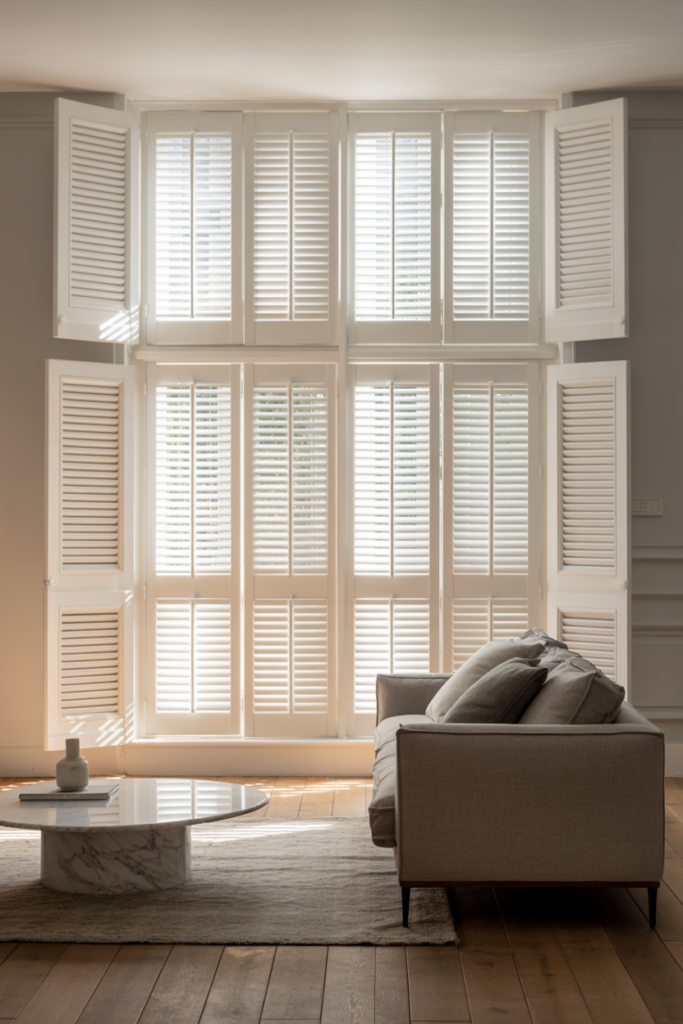
12. Install Plantation Shutters for a High-End Window Treatment That Adds Architectural Character to Any Room
Plantation shutters are one of the most timeless and value-adding window treatments you can install in a home. They are built into the window frame, adjust precisely for light and privacy, and add an architectural quality that no fabric treatment can replicate. Every home I have seen with plantation shutters looks more polished and well-finished as a result.
The wide louvers that define plantation shutters allow excellent airflow and light control. Tilt them slightly open for soft diffused light, angle them fully open for maximum brightness, or close them completely for full privacy. That range of control makes them one of the most functional window treatments available, alongside being one of the most attractive.
Plantation shutters work in virtually every room, but they look especially stunning in living rooms, master bedrooms, and home offices where their clean architectural lines add substance to the space. They are a bigger upfront investment than most other treatments, but they last for decades and add genuine resale value to a home.
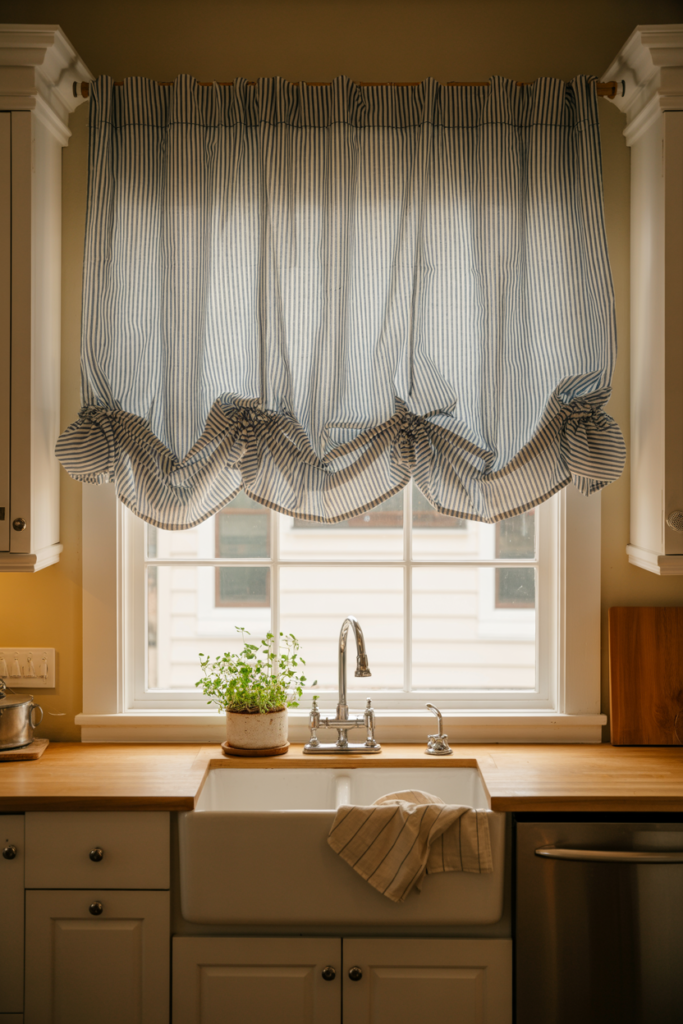
13. Use Valances or Cornices to Add a Decorative Top Treatment That Finishes Your Windows With a Polished Look
A valance or cornice sits at the top of the window and adds a decorative finishing touch that makes the whole treatment look more considered and complete. Valances are fabric-based and soft, while cornices are structured and box-shaped, usually upholstered or painted wood. Both serve the same purpose of covering the hardware and topping off the window with style.
Valances work especially well in kitchens and bathrooms where full-length curtains would be impractical. They add color, pattern, and softness to the window without interfering with function or taking up space. A simple gathered valance in a printed fabric can completely refresh a kitchen window in an afternoon for very little money.
Cornices give a more formal and architectural look that suits living rooms and dining rooms beautifully. An upholstered cornice in a complementary fabric ties the window into the broader upholstery story of the room. A painted wood cornice in a contrasting color adds a graphic, intentional quality that works well in more modern or eclectic spaces.
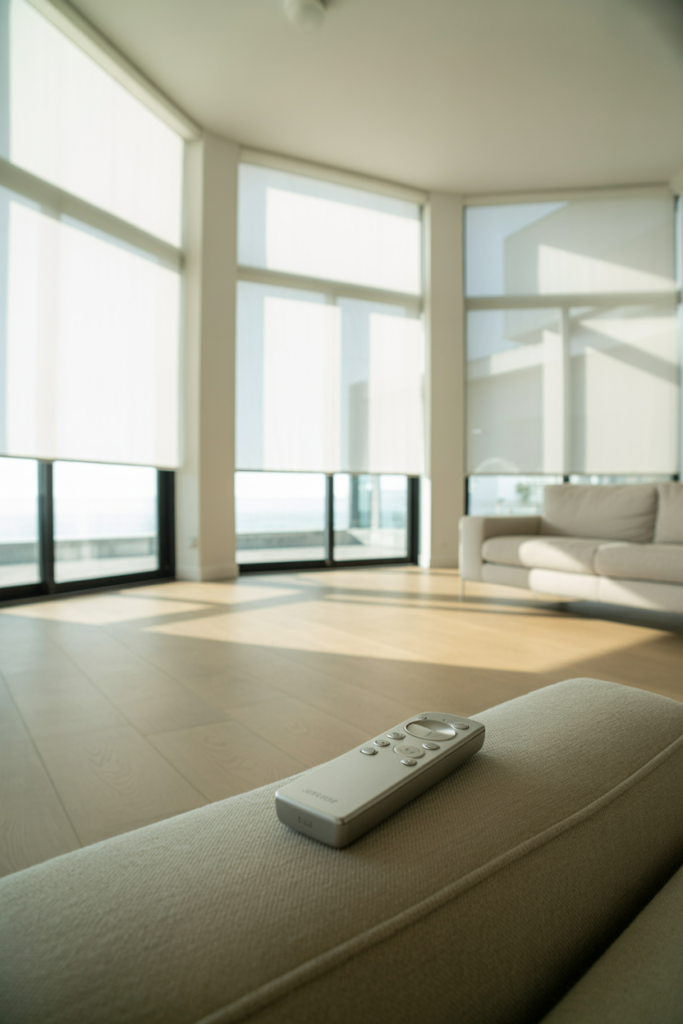
14. Try Motorized Window Treatments for a Smart Home Upgrade That Combines Convenience With Clean Style
Motorized window treatments have moved well beyond luxury status and are now genuinely accessible for most home budgets. You control them with a remote, a smartphone app, or a voice assistant, which means adjusting light and privacy without getting up from your chair. I find motorized shades especially useful for hard-to-reach windows above staircases or behind large pieces of furniture.
The practical benefits go beyond convenience. Motorized treatments can be programmed to open and close on a schedule, which helps regulate room temperature automatically and adds a layer of home security when you are away. Shades that open at sunrise and close at sunset on their own make a real difference in daily comfort without any effort on your part.
Most major window treatment brands now offer motorized versions of their most popular styles, including roller shades, cellular shades, and Roman shades. Battery-operated motors have made installation much simpler since there is no need for hardwiring. If you are already investing in quality window treatments, upgrading to motorized operation is worth serious consideration.
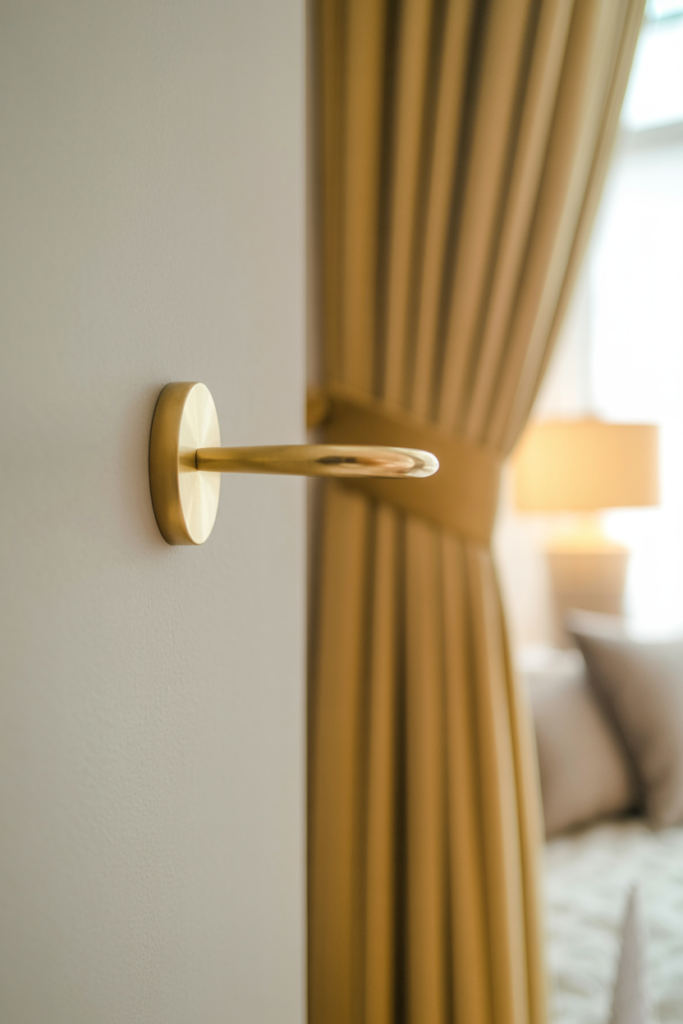
15. Add Curtain Tiebacks or Holdbacks to Style Your Drapes and Control How Light Enters the Room
Curtain tiebacks and holdbacks are small hardware details that make a big difference in how a window looks and functions. They hold curtain panels open in a swept-back position that lets in maximum light while framing the window beautifully. I think a well-placed tieback does more for the finished look of a curtain than almost any other detail.
Tiebacks come in fabric, rope, tassel, and metal versions that suit every decor style from coastal to traditional to modern. A simple brass holdback on a linen curtain looks quietly elegant. A chunky rope tieback on velvet drapes adds a more dramatic, layered feel. The hardware you choose signals the overall style of the room just as much as the fabric does.
Position tiebacks about one-third from the bottom of the curtain for the most classic proportions. Higher placement gives a more casual, relaxed drape, while lower placement creates a more formal sweeping look. Experiment with placement before fixing anything permanently, since the height makes a surprisingly large visual difference.
Quick Comparison of the Best Window Treatment Ideas by Style, Function, and Best Room
| Window Treatment | Style | Best Function | Best Room |
| Floor-to-Ceiling Drapes | Classic and grand | Height illusion and warmth | Living room and bedroom |
| Roller Shades | Modern and minimal | Light control and affordability | Home office and kitchen |
| Roman Shades | Tailored and soft | Texture and elegance | Dining room and bedroom |
| Sheer Curtains | Airy and romantic | Light diffusion | Living room and sunroom |
| Wooden Blinds | Warm and versatile | Privacy and structure | Any room |
| Woven Bamboo Shades | Natural and organic | Texture and warmth | Living room and bedroom |
| Cellular Shades | Clean and modern | Energy efficiency | Any room |
| Cafe Curtains | Charming and classic | Lower privacy with top light | Kitchen and bathroom |
| Blackout Curtains | Soft and functional | Sleep and light blocking | Bedroom |
| Layered Treatments | Rich and finished | Full light and privacy control | Living room and bedroom |
| Patterned Curtains | Bold and expressive | Statement decor | Dining room and living room |
| Plantation Shutters | Architectural and timeless | Long-term value and control | Living room and bedroom |
| Valances and Cornices | Decorative and polished | Top window finishing | Kitchen and dining room |
| Motorized Treatments | Smart and sleek | Convenience and automation | Any room |
| Curtain Tiebacks | Styled and detailed | Light shaping and drape styling | Any room with curtains |
The Best Window Treatment Ideas Come Down to Knowing Your Room, Your Light, and Your Style
Choosing the right window treatment is really about understanding what each room needs most. Some rooms need maximum light control, others need warmth and texture, and some just need something that looks finished and intentional without a lot of fuss. Once you know what problem you are solving, picking the right treatment becomes much easier.
The 15 ideas in this list cover every room, every budget, and every style direction. Whether you go with the timeless elegance of plantation shutters, the breezy simplicity of sheer curtains, or the practical brilliance of cellular shades, every option on this list delivers real value. The best window treatment is always the one that works for your specific space and your actual daily life.
Do not overthink the process. Start with the room that bothers you most, identify whether you need better light control, more privacy, or simply a style upgrade, and choose from there. A well-dressed window changes the entire feel of a room in a way that very few other decorating decisions can match.
Frequently Asked Questions About Window Treatment Ideas
What are the most popular window treatments for living rooms right now?
Floor-to-ceiling drapes, layered treatments combining shades with curtain panels, and plantation shutters are among the most popular living room choices. Sheer curtains paired with a heavier drape give the most flexibility for light and privacy throughout the day. Patterned curtains are also gaining popularity as a way to make the window a focal point.
What window treatments work best for small rooms or small windows?
Roller shades and Roman shades work best in small rooms because they sit close to the window and do not add visual bulk. Hanging curtain rods higher than the window frame and using floor-length panels creates an illusion of height that makes small rooms feel larger. Avoid heavy or overly layered treatments on small windows as they tend to overwhelm the space.
How do I choose between curtains and blinds for my bedroom?
The choice comes down to how much light control and warmth you need. Blackout curtains offer the best sleep environment and add softness and texture to the room. Blinds give precise light control and a cleaner look, but feel less cozy on their own. Many people combine both for a layered treatment that handles light blocking and aesthetics at the same time.
What is the best window treatment for a kitchen?
Cafe curtains, roller shades, and faux wood blinds are the top choices for kitchens because they handle moisture and cooking grease better than heavy fabric treatments. Cafe curtains add charm while keeping the upper window open for light. Faux wood blinds wipe clean easily and hold up well near sinks and stoves, where humidity is a constant factor.
How high should I hang curtain rods above the window?
Hang the curtain rod as close to the ceiling as possible for the most visually impactful result. A minimum of four to six inches above the window frame is the standard recommendation, but going all the way to the ceiling creates a much more dramatic and room-expanding effect. The higher the rod, the taller the room feels, regardless of actual ceiling height.
Are motorized window treatments worth the extra cost?
Motorized treatments are worth it for hard-to-reach windows, large windows that are awkward to operate manually, and anyone who wants smart home integration. The convenience of scheduled operation and remote control adds genuine daily value that most people appreciate far more than they expect. Battery-powered motorized options have also brought the cost down significantly compared to what they used to be.
What window treatments are best for privacy without blocking natural light?
Sheer curtains, light-filtering cellular shades, and top-down bottom-up shades all offer privacy without sacrificing natural light. Top-down bottom-up shades are particularly clever because you lower the top portion to let light in from above while keeping the bottom raised for street-level privacy. Woven bamboo shades also filter light beautifully while providing a decent level of daytime privacy.