
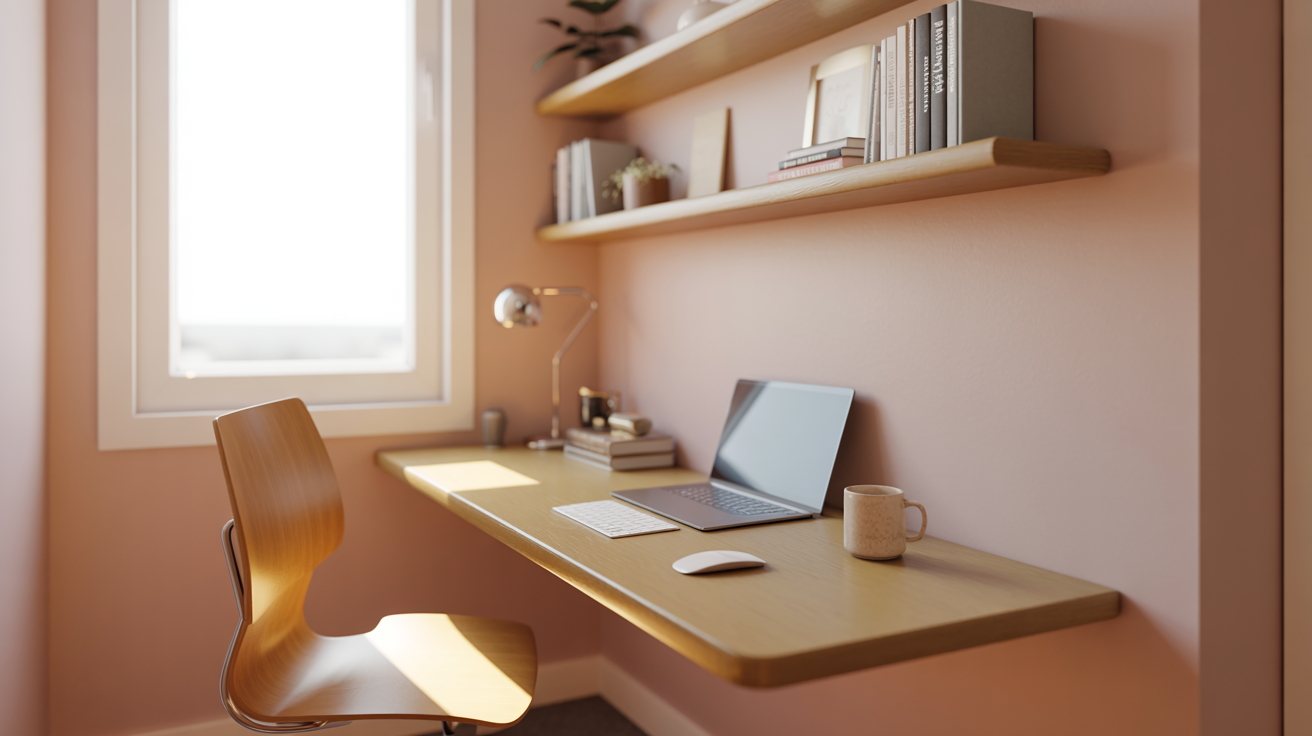
A small home office does not have to feel like a closet you gave up on. With the right setup, even the tiniest corner can become a space where you actually get things done. I have seen 6×6 nooks transformed into proper workstations, and the difference is always in the details.
Most people assume they need a dedicated room to work from home comfortably. That is simply not true. A smart layout, the right furniture, and a few clever storage tricks can make a compact workspace feel open, organized, and honestly, pretty impressive.
The key is working with what you have instead of fighting it. Whether you are squeezing a desk into a bedroom corner or converting a closet into an office, these small home office ideas will help you set up a space that actually supports your focus and productivity.
Why Your Small Home Office Setup Matters More Than You Think
A poorly planned home office messes with your head more than you realize. When your space feels cluttered or cramped, your brain feels the same way. I noticed this myself when I switched from a messy corner desk to a properly organized setup. The mental shift was immediate.
Research in environmental psychology consistently shows that workspace design directly affects concentration, mood, and output. So no, it is not just about aesthetics. The way you organize and design your small office space has a real impact on how much work you actually get done.
The good news? You do not need a big budget or a large room. You just need the right approach. The ideas below are practical, budget-friendly, and genuinely effective for small home office spaces of all sizes.
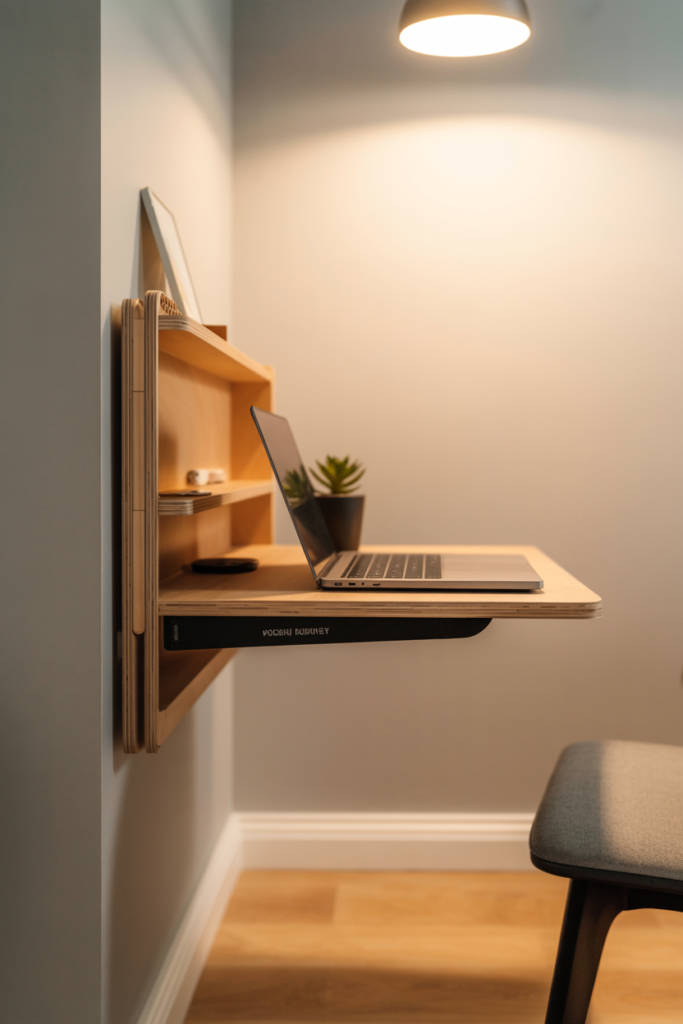
1. Use a Wall-Mounted Desk to Free Up Floor Space
A wall-mounted desk is probably the single best thing you can do for a small home office. It folds up when you are done, stays out of the way, and gives you a clean, dedicated surface when you need it. I would pick this over a bulky traditional desk in a small room every single time.
These desks come in a wide range of sizes, finishes, and weight capacities. Some even come with built-in shelves and organizers, so you get storage without adding extra furniture. You can find solid options starting from around $60 on Amazon, which makes this one of the most affordable small office upgrades available.
The best part is that a wall-mounted desk visually opens up the room. When it is folded up, the space looks like a regular room again. That matters a lot if your home office shares space with a bedroom or living area.
2. Pick Light Colors to Make the Space Feel Larger
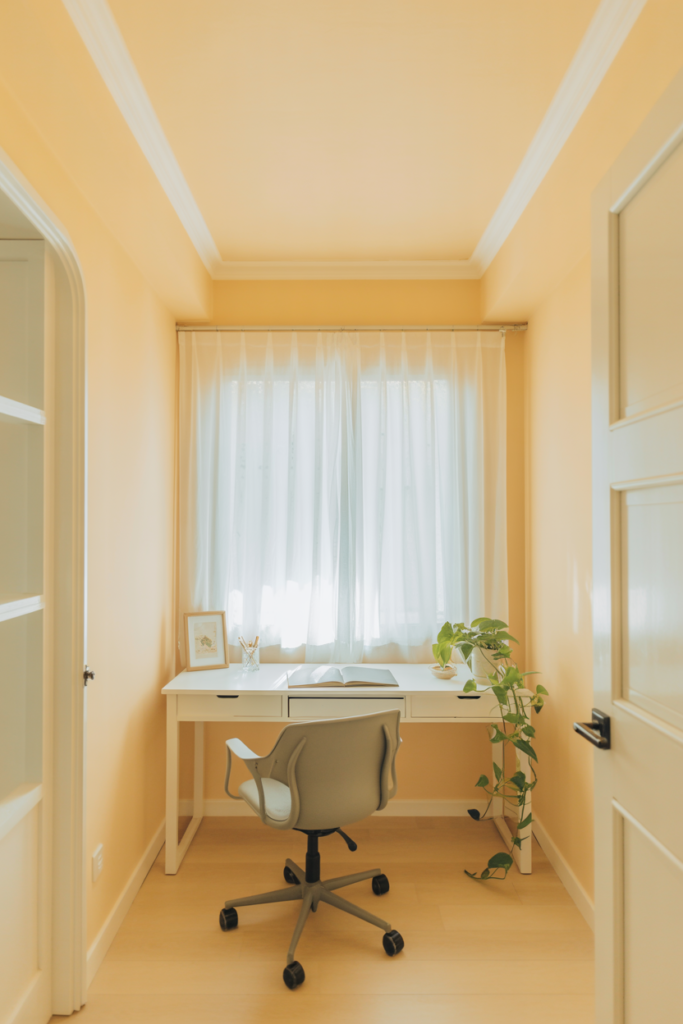
Color does a lot of heavy lifting in a small space. Light walls, such as soft whites, warm creams, and pale grays, reflect natural light and make a room feel more open than it actually is. Dark colors do the opposite, which is why so many tiny offices feel like caves.
I always recommend painting the walls and ceiling the same light color if the room feels especially tight. This removes visual breaks and makes the ceiling feel higher. Pair that with white or natural wood furniture, and the room already looks twice the size before you add a single piece of decor.
If you are renting and cannot paint, peel-and-stick wallpaper in light tones works surprisingly well. A soft-textured white or linen finish adds visual interest without making the walls close in on you.
3. Add Vertical Shelving to Maximize Storage Without Losing Floor Space
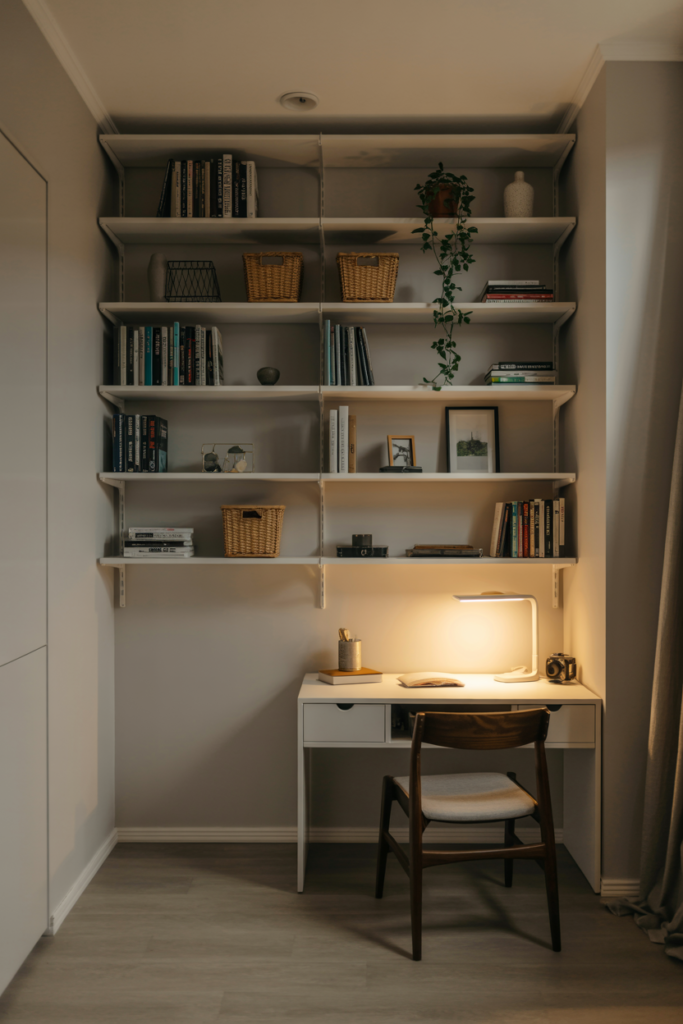
When floor space is limited, the walls become your best storage option. Vertical shelving draws the eye upward, which makes the room feel taller and more spacious. This is one of those small home office storage ideas that looks great and actually solves a real problem.
Floating shelves above the desk are a classic choice. You can store books, binders, small plants, and decorative items without cluttering the desktop. I like using a mix of closed storage, like small baskets or boxes, alongside open shelves so the display stays tidy and intentional.
For tighter spaces, a floor-to-ceiling bookcase in the corner is a smart move. It uses vertical real estate that most people ignore and creates a built-in look that feels polished and deliberate. IKEA’s Billy bookcase series is a popular and budget-friendly option for this.
4. Choose Multi-Functional Furniture to Do More With Less
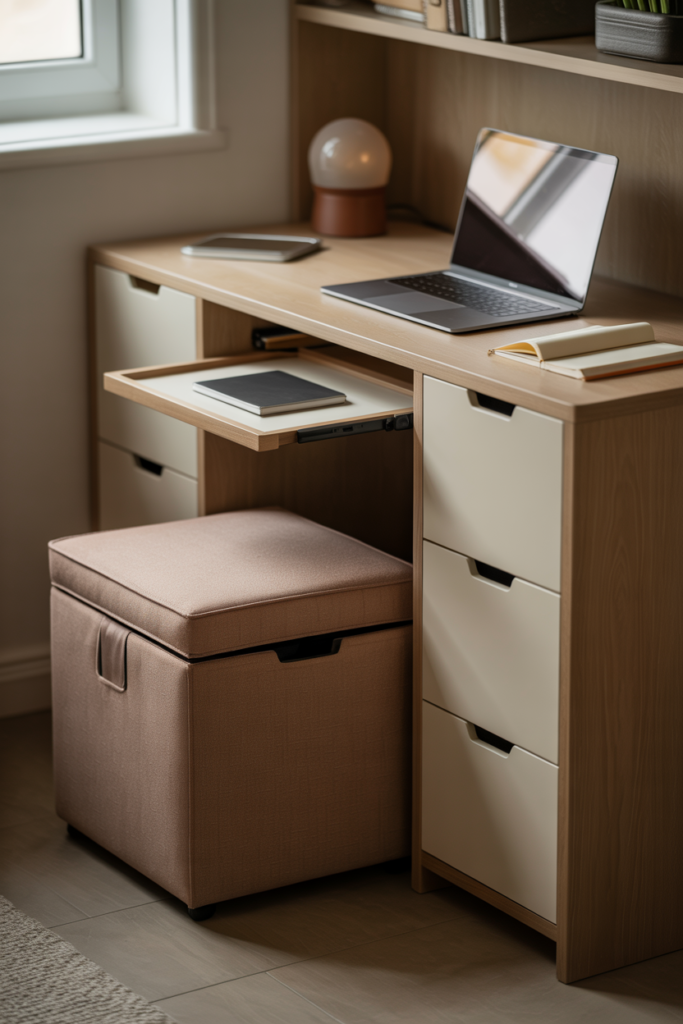
In a small home office, every piece of furniture needs to earn its spot. A storage ottoman that doubles as seating, a desk with built-in drawers, or a filing cabinet that moonlights as a side table are the kinds of choices that make a compact space work harder.
Multi-functional office furniture has come a long way in terms of design. You do not have to sacrifice style for practicality anymore. There are genuinely attractive desks with hidden compartments, fold-out panels, and cable management built right in. These are worth every penny in a small space.
I find that people who struggle with small home offices usually have too many single-purpose pieces. Swapping even two or three of them for multi-functional alternatives frees up a surprising amount of visual and physical space. It is one of the simplest upgrades you can make.
5. Bring in Natural Light to Open Up the Space
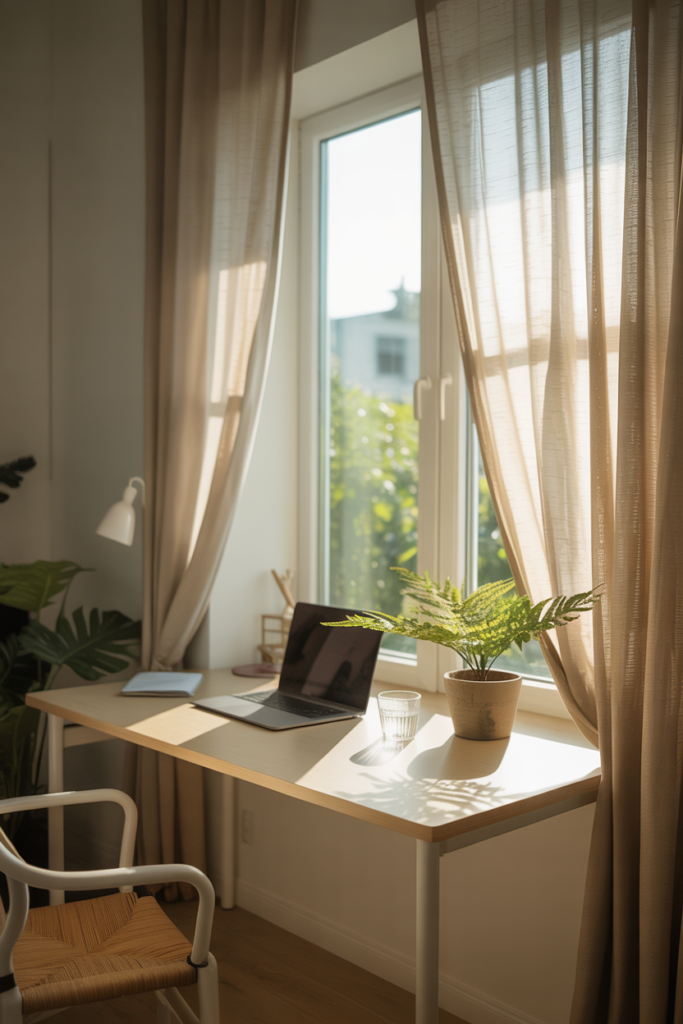
Natural light is one of the most underrated tools in a small home office. A well-lit space feels bigger, fresher, and easier to work in. If your workspace sits near a window, position your desk to face it or sit beside it rather than blocking it with furniture.
Sheer curtains are a great choice for small offices. They let in plenty of light while still giving you some privacy during video calls. Heavy drapes, on the other hand, eat up light and make a small room feel even more closed off.
If natural light is limited in your space, layered artificial lighting works as a solid backup. A combination of overhead lighting, a good desk lamp, and some ambient light behind the monitor reduces eye strain and makes the space feel warm and inviting rather than dim and dull.
6. Use Mirrors to Visually Expand a Compact Office
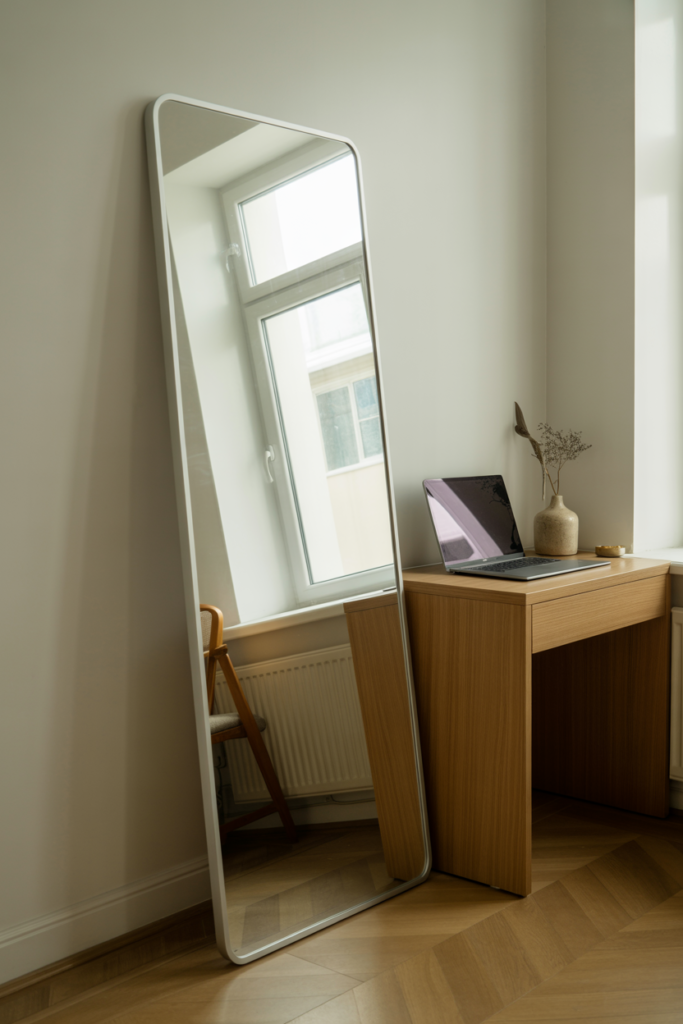
A well-placed mirror in a small home office does something almost magical. It bounces light around the room and creates the illusion of depth, making the space look noticeably larger than it is. This trick works in small bedrooms and living rooms too, but it is especially effective in a compact workspace.
You do not need a giant mirror to get the effect. A medium-sized frameless mirror or a sleek framed one leaned against the wall behind the desk works really well. I have seen people use a gallery wall of small mirrors, too, which adds a decorative touch while still doing the job.
Position the mirror where it reflects either a window or a light source for the best result. Reflecting a dark corner just doubles the darkness, which defeats the whole purpose. A little placement thought goes a long way here.
7. Go Wireless and Manage Cables to Reduce Visual Clutter
Cable clutter is one of the fastest ways to make a small office look messy and overwhelming. Even a well-organized desk can look chaotic if cords are running everywhere. Going as wireless as possible is one of the smartest small home office ideas for keeping things clean and minimal.
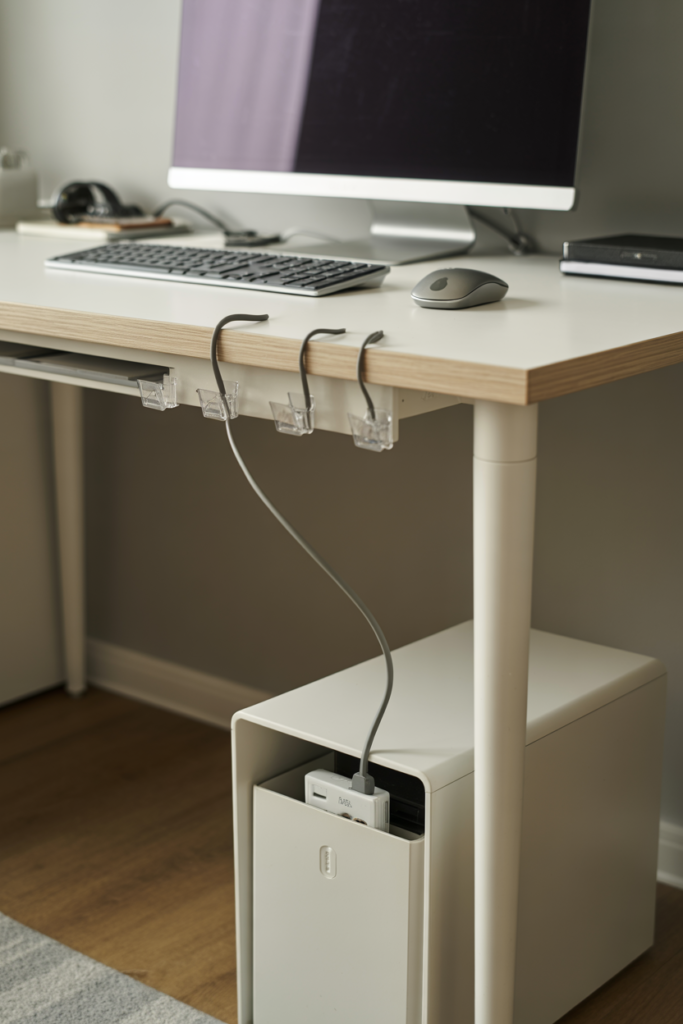
A wireless keyboard, mouse, and charger eliminate most of the visible cable mess right away. For the cables that remain, a simple cable management box or adhesive cable clips along the back of the desk keep everything out of sight. These are inexpensive and widely available on Amazon.
I also like using a cable sleeve for monitor and power cables that run down to the floor. It bundles everything into one tidy column that blends into the wall. It is a small detail, but the visual difference in the room is significant.
8. Add a Pegboard for Flexible, Space-Saving Organization
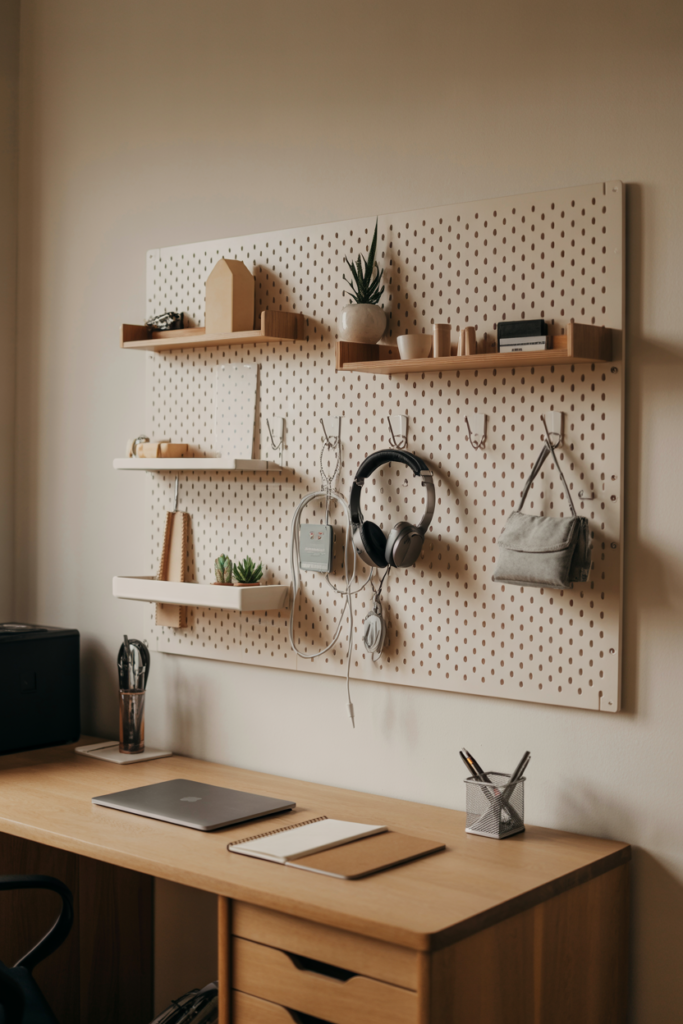
A pegboard on the wall above or beside your desk is one of those small home office organization ideas that looks great in photos and works even better in real life. You can hang shelves, hooks, bins, and cable organizers on it and rearrange everything whenever your needs change.
Pegboards come in wood, metal, and painted finishes now, so they no longer look like garage storage. A white or pastel pegboard above a clean desk setup actually looks like intentional decor. Pair it with matching hooks and small planters, and it becomes a proper focal point.
The real value is the flexibility. As your work setup evolves, your pegboard evolves with it. You can add a hook for headphones today and a small shelf for a notebook tomorrow. No drilling new holes, no extra furniture, no hassle.
| Storage Solution | Best For | Approx. Cost | Space Saved |
|---|---|---|---|
| Wall-mounted desk | Floor space | $60-$150 | High |
| Vertical shelving | Book and file storage | $30-$120 | High |
| Pegboard organizer | Desk accessories | $20-$60 | Medium |
| Cable management box | Wire clutter | $10-$30 | Medium |
| Multi-function furniture | Overall clutter | $80-$300 | Very High |
9. Use a Room Divider to Create a Dedicated Office Zone
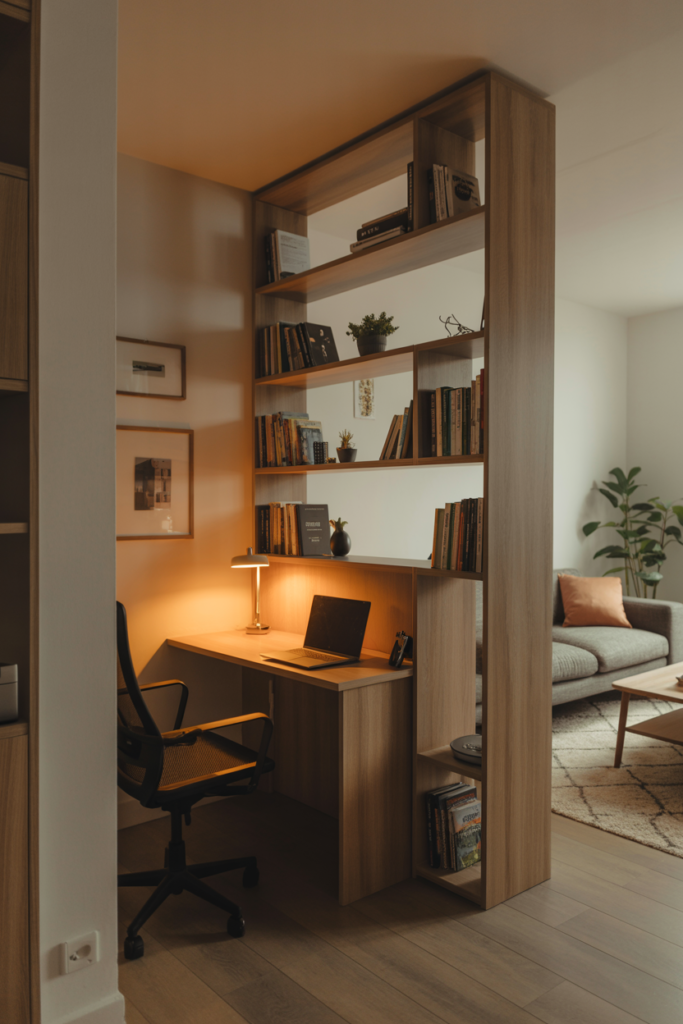
One of the biggest challenges of working from home is separating your work zone from your living space. A stylish room divider solves this without any construction or permanent changes. It creates a psychological boundary that helps your brain switch into work mode the moment you sit down.
Folding screens, open bookshelves used as dividers, or even a curtain rod with linen panels work beautifully for this purpose. They define the office area without blocking light or making the room feel chopped up. I personally love the bookshelf divider approach because it adds storage while creating the separation.
If you are working in a studio apartment or a shared bedroom, this idea is a game-changer for your focus and your sanity. Having even a soft visual boundary between your desk and your sofa makes it much easier to mentally clock out at the end of the day.
10. Add a Small Plant or Two to Boost Focus and Freshen the Space
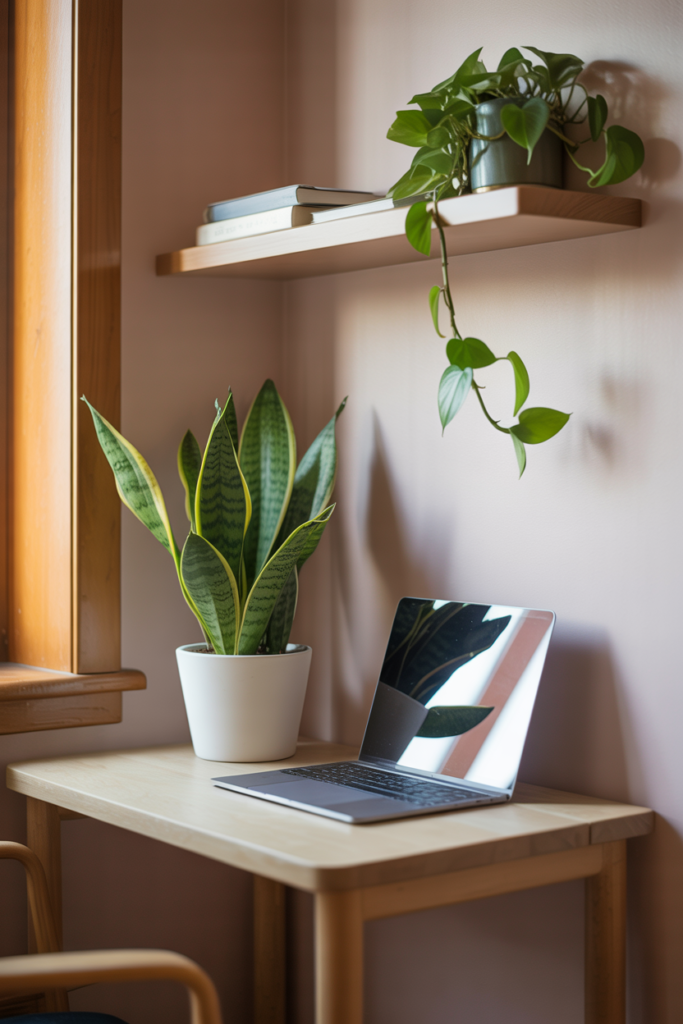
Plants in a home office are not just decoration. Studies from the Journal of Experimental Psychology show that adding greenery to a workspace improves concentration and reduces stress. A small pothos, snake plant, or succulent on the desk adds life to the space without taking up much room.
Low-maintenance plants are the obvious choice for a busy home office setup. You do not want to be worrying about watering schedules in the middle of a deadline. Snake plants and ZZ plants thrive on neglect, which makes them perfect desk companions for anyone who forgets they own plants.
If desk space is tight, a small hanging planter near the window or a tiny wall-mounted planter beside the pegboard works just as well. The goal is to bring a little organic texture into the space. It softens all the hard edges of a tech-heavy desk setup and makes the room feel more comfortable to spend time in.
The Bottom Line on Small Home Office Ideas
A small home office does not have to feel like a compromise. With the right combination of smart furniture choices, light colors, vertical storage, and a few clever tricks, even the most compact workspace can feel organized, comfortable, and genuinely productive.
The ideas in this article work because they address the real problems of small spaces: clutter, poor light, lack of storage, and the absence of boundaries. You do not need to implement all ten at once. Start with the ones that solve your biggest pain point and build from there.
Whether you are setting up a home office in a small bedroom, a studio apartment, or a dedicated but tiny room, these ideas will help you make the most of every square foot. A well-designed small office is not about having less. It is about being smarter with what you have.
Frequently Asked Questions
Q1. What is the best desk for a very small home office? A wall-mounted fold-down desk is the best option for a very small space. It takes up zero floor space when not in use and gives you a proper work surface when you need it. Look for one with built-in shelving for extra storage.
Q2. How do I make my small home office look bigger? Use light wall colors, add a mirror to reflect light, and keep the floor as clear as possible. Vertical shelving draws the eye upward and creates the illusion of height. Good lighting, both natural and artificial, also makes a significant difference.
Q3. Can I set up a home office in a bedroom without it affecting my sleep? Yes, but you need a clear visual separation between the two zones. A room divider, a curtain, or even a bookshelf used as a partition helps your brain associate each area with a different activity. Keeping work items out of sight when you are done for the day also helps.
Q4. What colors work best for a small home office? Soft whites, warm creams, light grays, and pale sage greens work best. These shades reflect light and make the space feel open. Avoid dark or saturated colors on all four walls as they tend to close in a small room visually.
Q5. How do I organize a small home office on a tight budget? Start with a pegboard for wall organization, adhesive cable clips for wire management, and a set of floating shelves above the desk. These three changes cost under $100 combined and make a noticeable difference in how organized and spacious the office feels.
Q6. What type of lighting is best for a small home office? A combination of natural light, overhead ambient lighting, and a focused desk lamp works best. Avoid relying on a single overhead bulb, as it creates harsh shadows. Layered lighting makes the space feel larger and reduces eye strain during long work sessions.
Q7. How do I separate my home office from my living space in a studio apartment? A folding room divider, a tension rod with curtains, or an open bookshelf placed strategically between the two areas works well. The goal is to create a visual and psychological boundary without permanent changes to the space.