
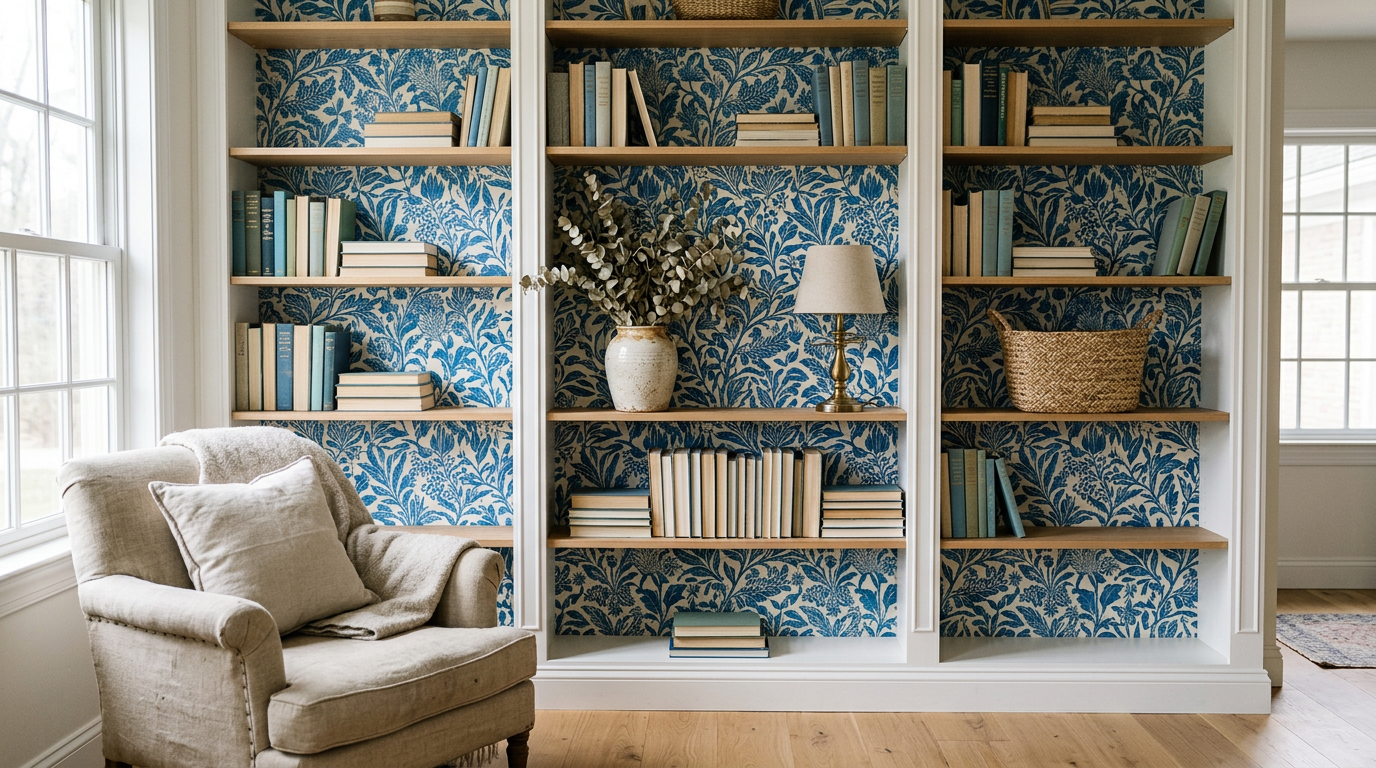
Shelf wallpaper turns a plain bookcase into a custom feature in one afternoon. You add one roll, and the whole piece looks styled.
I love this trick because it costs little and needs almost no skill. Peel and stick rolls skip the paste, the mess, and most of the stress.
Below, I share 10 ideas for wallpaper behind shelves, from bold prints to calm textures. I also cover the best wallpaper types and the mistakes that waste time.
Why Wallpaper for Shelves Works: 3 Top Reasons
Shelves hide most of the wall, so a small amount of wallpaper goes a long way. You buy far less than a full feature wall needs, which keeps the project affordable.
The pattern also frames your books and decor. A simple vase looks styled when it sits against a colored or textured back panel.
Mistakes cost less too, since shelves cover part of the surface. Narrow shelves rarely need perfect pattern matching. Your bookcase will not file a complaint.
Best Wallpaper Types for Shelf Backs
| Wallpaper type | Best for | Main benefit | Watch out for |
|---|---|---|---|
| Peel and stick | Renters and beginners | No paste, easy to reposition | Needs a clean, smooth surface |
| Traditional pasted | Permanent built-ins | Long-lasting finish | Messier and harder to remove |
| Peel and stick grasscloth | Texture lovers | Warm, natural look | Careful trimming at the edges |
| Wallpaper on foam board | Fixed or rented shelves | Keeps adhesive off the wood | Extra cutting step |
1. Bold Floral Wallpaper Behind Open Bookcases
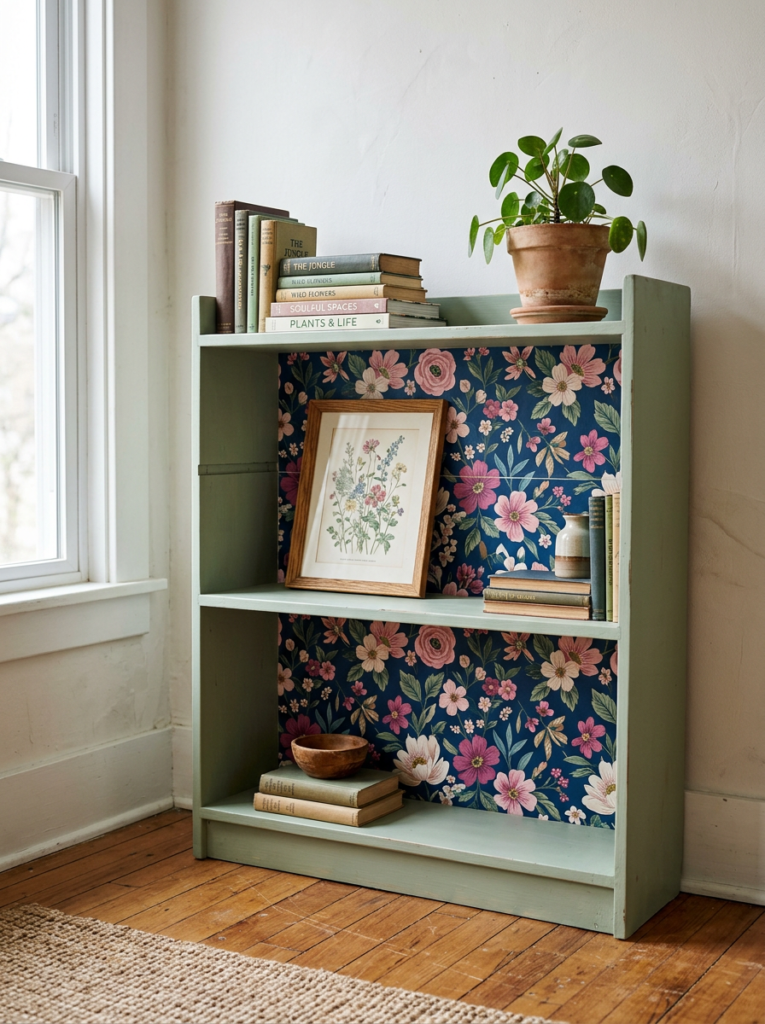
A bold floral print gives a bookshelf instant personality. One simple peel and stick panel adds a pop of drama without a big budget.
I like pairing a busy print with a solid shelf color. Painted shelves in a calm shade keep the pattern from fighting with your books.
Keep the styling simple on top of a loud print. A few stacked books, one plant, and one lamp let the wallpaper do the talking.
2. Textured Grasscloth Wallpaper for a Warm Look
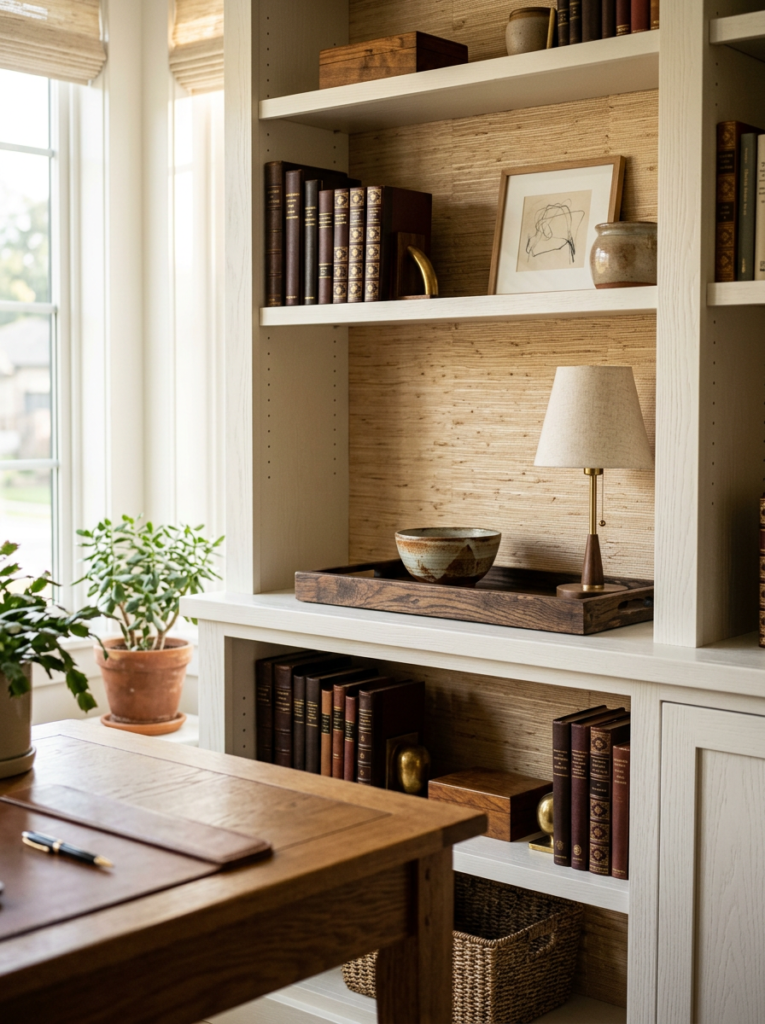
Grasscloth adds texture without adding a pattern. It works well in home offices, living rooms, and anywhere you want a quiet, natural backdrop.
Some DIYers use peel and stick grasscloth inside built-in shelves for an easy update. One blogger chose it over fabric-covered foam boards after changing her original plan.
I always order a sample first. Texture looks different in daylight than under lamps, and a small swatch saves you from a costly guess.
3. Dark Navy or Charcoal Wallpaper for Moody Shelves
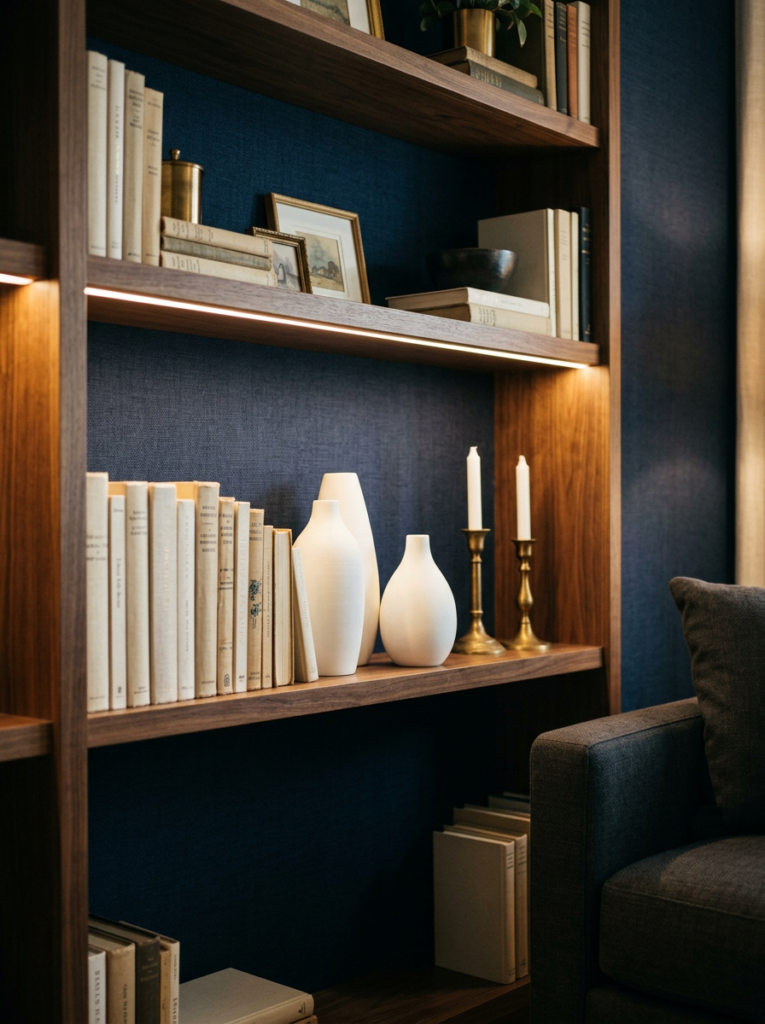
A dark backdrop makes books, brass, and white ceramics stand out. Navy, charcoal, and forest green all create a rich, library feel.
Dark colors can feel heavy in a small room with little light. I would add a small LED strip or a lamp nearby to keep the shelves from looking like a cave.
Stick to a few strong shades on the shelf itself. White bowls, wood trays, and metal accents show up best against a dark wall.
4. Wallpaper Inside Built-In Alcoves and Niches
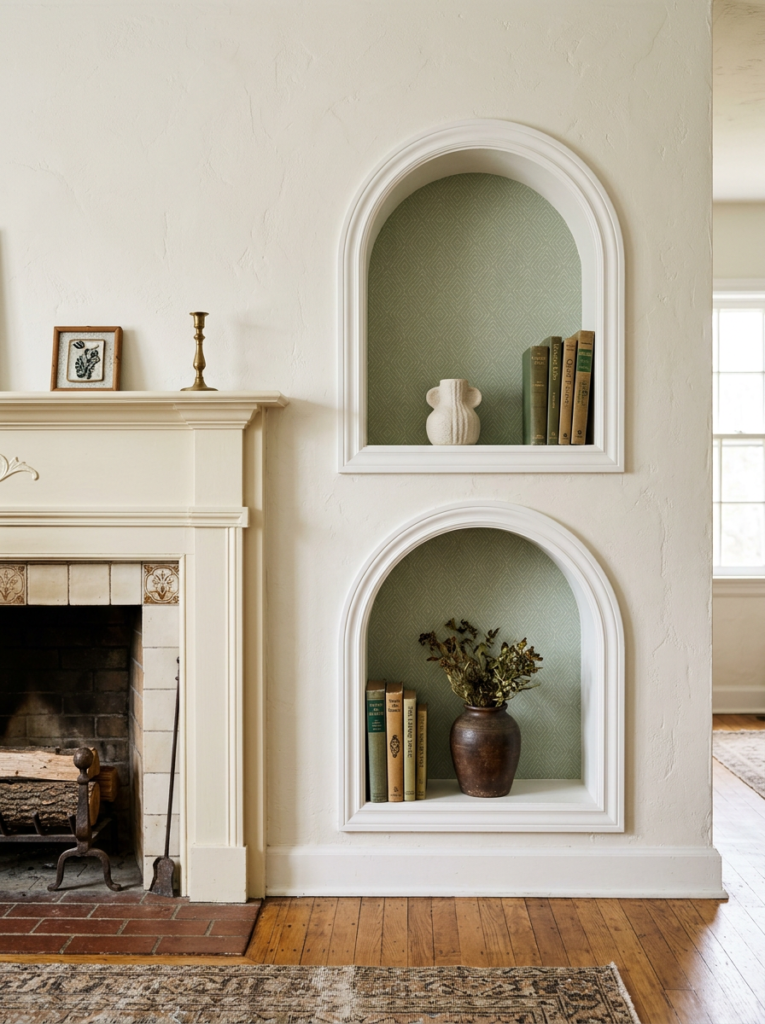
Built-in shelves beside a fireplace look custom when the niches carry wallpaper. The pattern turns each opening into a framed display.
Plan the wallpaper as one of your last steps. If you are doing a larger bookcase makeover, hang the wallpaper after painting and before styling the shelves.
Clean the surface first, then let it dry fully. Dust under the wallpaper shows up as bumps, and nobody wants bumpy shelves.
5. Wallpaper in Open Hallway or Kitchen Cabinets
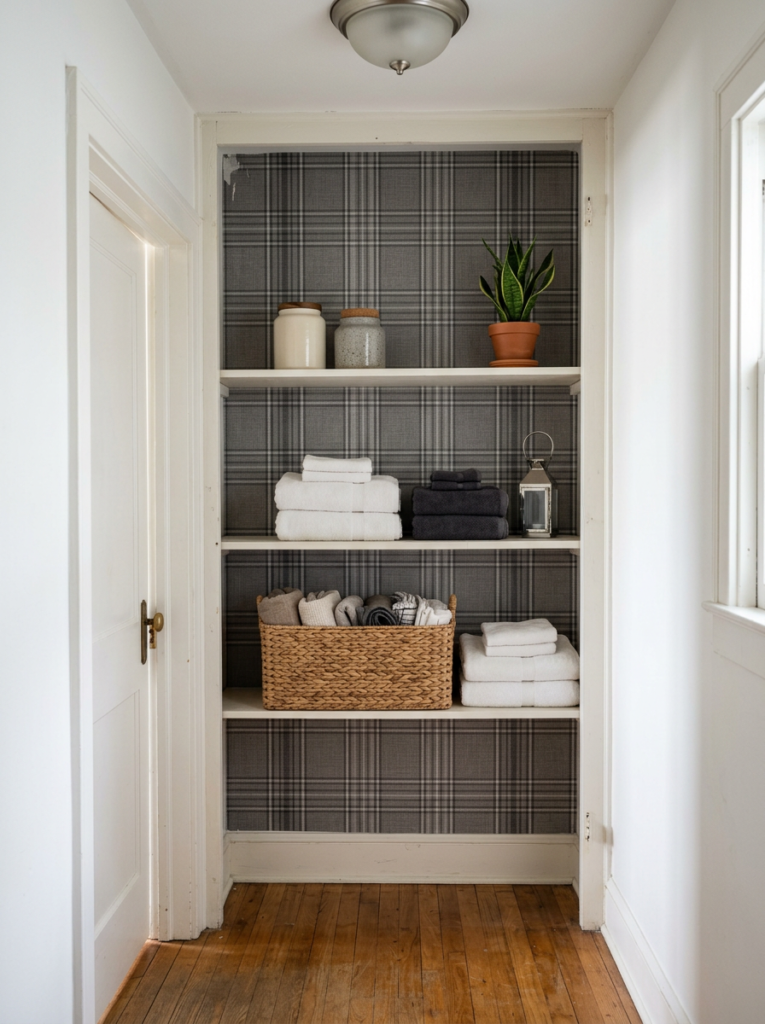
Removing cabinet doors gives you open shelves, and wallpaper makes those shelves look planned. This works well for a tight hallway cabinet or a small kitchen niche.
One homeowner took the doors off an upper hallway cabinet and added peel and stick plaid wallpaper to the exposed shelving. The cabinet went from dated to deliberate.
Peel and stick suits tight spaces best, since you do not need paste or a wallpaper table. I would cut each panel a little long and trim it in place.
6. Tone-on-Tone Wallpaper for a Quiet, Calm Look
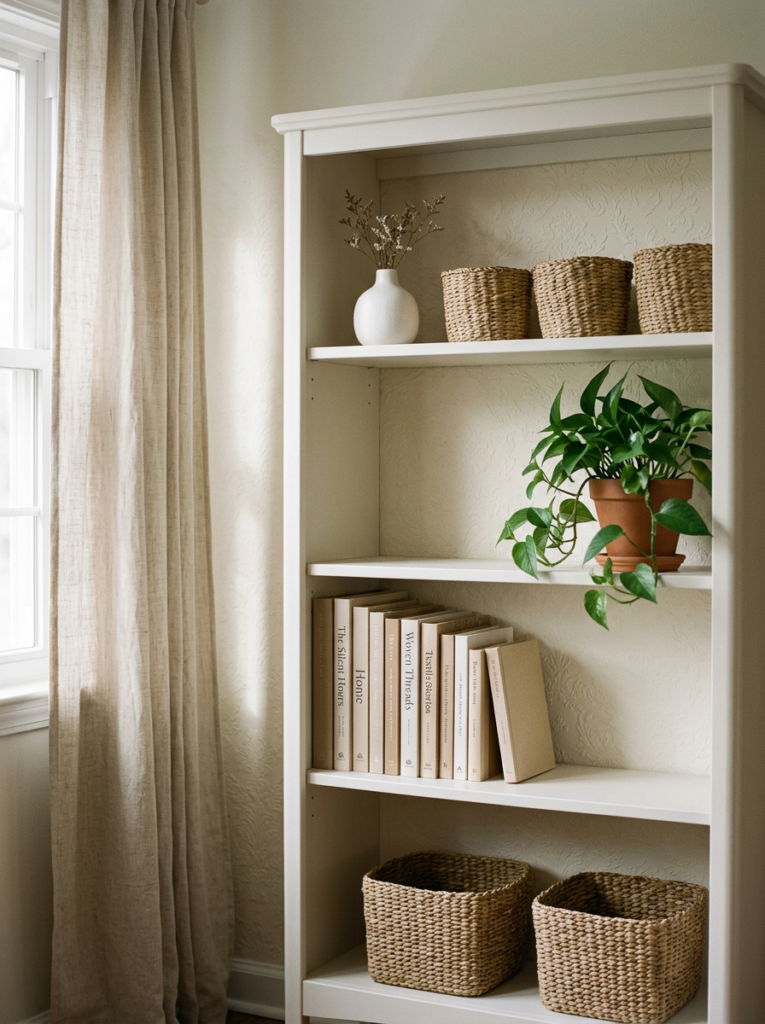
Tone-on-tone wallpaper adds depth without noise. Soft cream on cream or gray on gray gives shelves a subtle finish.
I like this style for people who fear bold prints. The pattern shows up in good light and fades back when you want a calm room.
Keep your decor simple here, too. Matching baskets, a few books, and one plant keep the whole shelf feeling relaxed.
7. Wallpaper Panels Behind Floating Shelves
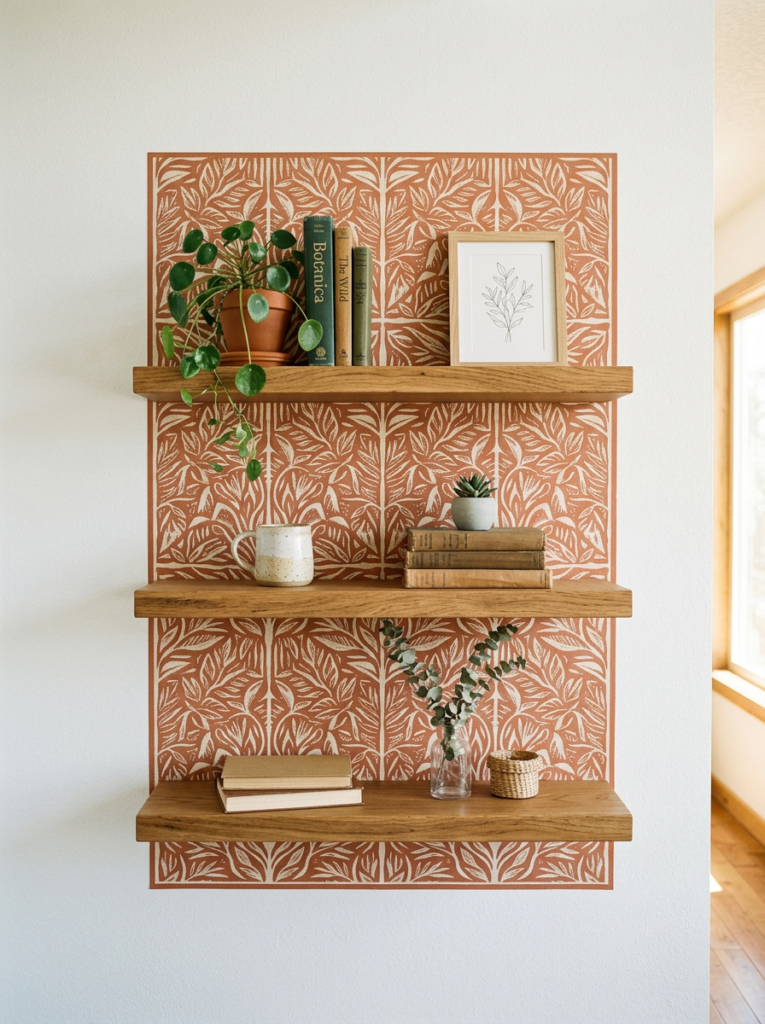
Floating shelves look stronger with a wallpaper panel behind them. The panel works like a frame and ties the shelves together as one display.
You do not need to cover the whole wall. A rectangle slightly larger than your shelf group gives a clean, planned look.
Measure twice and mark the edges with a pencil line before you stick anything. A crooked panel behind straight shelves stands out fast.
8. Foam Board Panels for Renters and Fixed Shelves
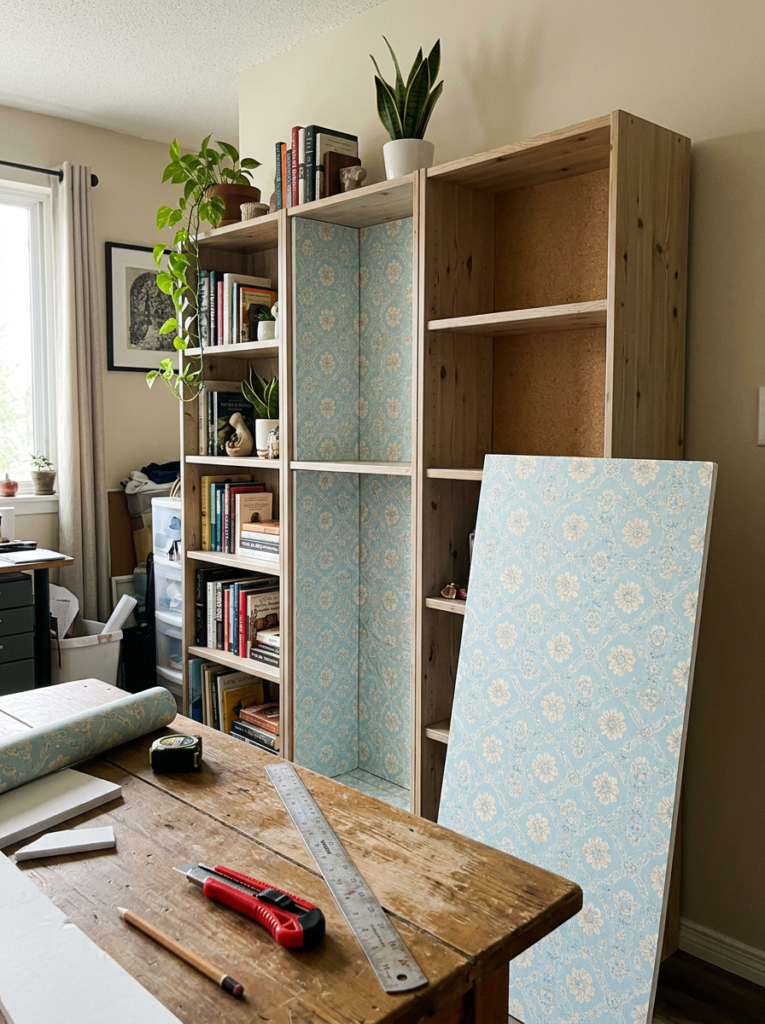
Foam board gives renters a safe way to use shelf wallpaper. You stick the wallpaper to the board and slide the board into place.
This method keeps adhesive off your shelves and walls. One DIYer says foam board mounts make installation easier and avoid wall damage, and the peel and stick sheet stays easy to adjust on the board.
I would cut the board a hair smaller than the opening. A snug fit slides in, while a tight one bends and bulges.
9. Closet and Pantry Back Walls
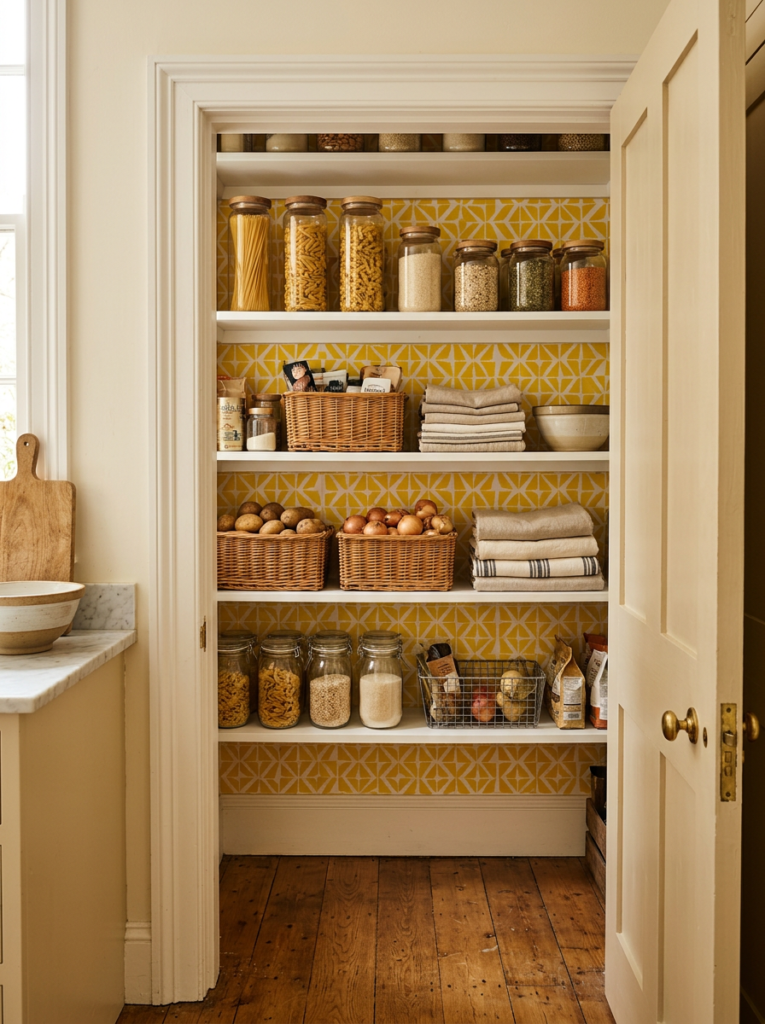
A wallpapered closet back wall adds a surprise every time you open the door. Shelves break up the pattern, so you rarely need to match it.
This idea works well in a pantry, linen closet, or coat closet. Choose a cheerful print, and a boring storage spot starts to feel like a boutique.
Clear the shelves before you start. Removing them makes the job much easier, and you can wipe the wall clean while you wait.
10. Leftover Wallpaper Scraps on Small Shelves
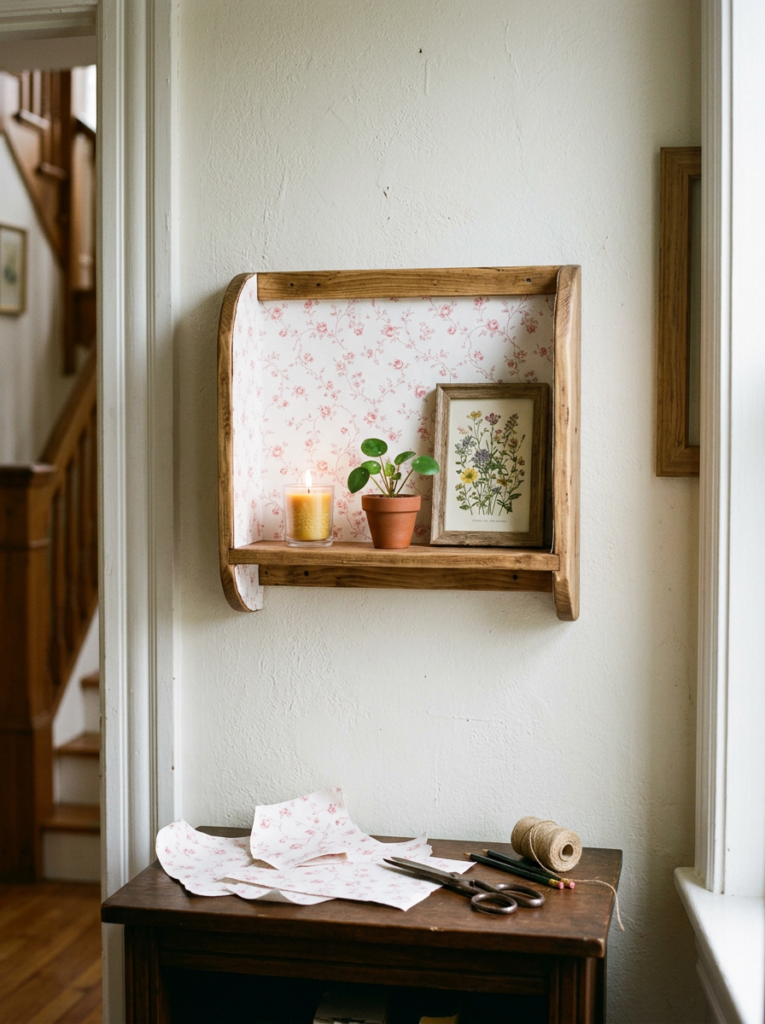
Leftover rolls work well on small shelves. Peel and stick scraps are thick enough to handle some wear and stay easy to work with.
Narrow shelves forgive pattern mismatches, so scraps cover them without stress. A small wall shelf in a hallway or bathroom makes a good first try.
I would also wrap the shelf sides if you want a finished look. Wallpapering the sides takes a few extra minutes and hides raw edges.
5 Common Shelf Wallpaper Mistakes and How to Fix Them
Most shelf wallpaper problems come from rushing. I see the same five mistakes in almost every DIY story, and each one has a quick fix.
The first mistake is leaving the shelves in place. If the shelves stay fixed, you must wallpaper each section separately, which is doable but much slower.
The second mistake is pressing too hard too early. Peel back only about 6 inches of backing at first, and press lightly so you can lift and redo a crooked edge.
The third mistake is skipping the clean-up. Wipe the surface and let it dry fully before you stick anything, because dust and dirt cause bumps and weak spots.
The fourth mistake is buying exactly what you measure. Order extra so you can trim the edges, since panels rarely fit the back of a bookcase without leftovers.
The fifth mistake is wallpapering before the paint is done. Finish painting first, hang wallpaper last, and style the shelves after that.
Quick Fix Table
| Mistake | What goes wrong | Easy fix |
|---|---|---|
| Leaving shelves in place | Slow work and messy seams | Remove adjustable shelves first |
| Pressing too hard | Panel sticks crooked | Peel 6 inches at a time and press lightly |
| Skipping cleaning | Bumps and peeling edges | Wipe and dry the surface |
| Buying exact length | No room to trim | Order extra |
| Painting after wallpaper | Paint smears on the pattern | Paint first, wallpaper last |
Conclusion: Your Best Shelf Wallpaper Plan
Shelf wallpaper gives plain shelves a custom look for very little money. You can pick a bold print, a calm texture, or a dark color and finish the job in an afternoon.
The 10 ideas in this article cover most homes and budgets. Bold florals, grasscloth, moody shades, built-in niches, open cabinets, tone-on-tone panels, floating shelf backs, foam board panels, closet walls, and leftover scraps all work.
Peel and stick wallpaper makes the job easiest. Remove the shelves, clean the surface, peel the backing slowly, and trim the edges at the end.
Paint first, wallpaper last, and style the shelves after that. Order a sample before you buy a full roll, and use foam board if you rent.
Pick one idea this week and try it on the smallest shelf you own. A tiny win builds the confidence to tackle the big bookcase.
FAQs About Shelf Wallpaper
1. Can you put wallpaper on shelves?
Yes, you can wallpaper the back of a bookcase or the inside of a shelf. Peel and stick wallpaper makes the job simple and mess-free.
2. What is the best wallpaper for the back of a bookcase?
Peel and stick wallpaper works best for most people. It skips the paste, handles small mistakes, and comes off more easily than traditional wallpaper.
3. Do I need to remove the shelves first?
Removing adjustable shelves makes the work much easier. If your shelves are fixed, you must wallpaper each section separately, which takes longer.
4. How much wallpaper do I need for a bookcase?
Measure the width and height of the back panel. Add a few extra inches on each side for trimming, and order an extra roll if your pattern repeats.
5. Can renters use shelf wallpaper?
Yes, foam board panels work well for renters. You stick the wallpaper to the board and slide it into the shelf, so the adhesive never touches the wood or wall.
6. Does peel and stick wallpaper stick to wood shelves?
It sticks best to clean, smooth, dry surfaces. Painted or sealed wood works better than rough or dusty wood, so wipe the surface first.
7. Should I paint before I wallpaper my shelves?
Yes, finish all painting first and let it dry. Hang the wallpaper last, then style your shelves.