
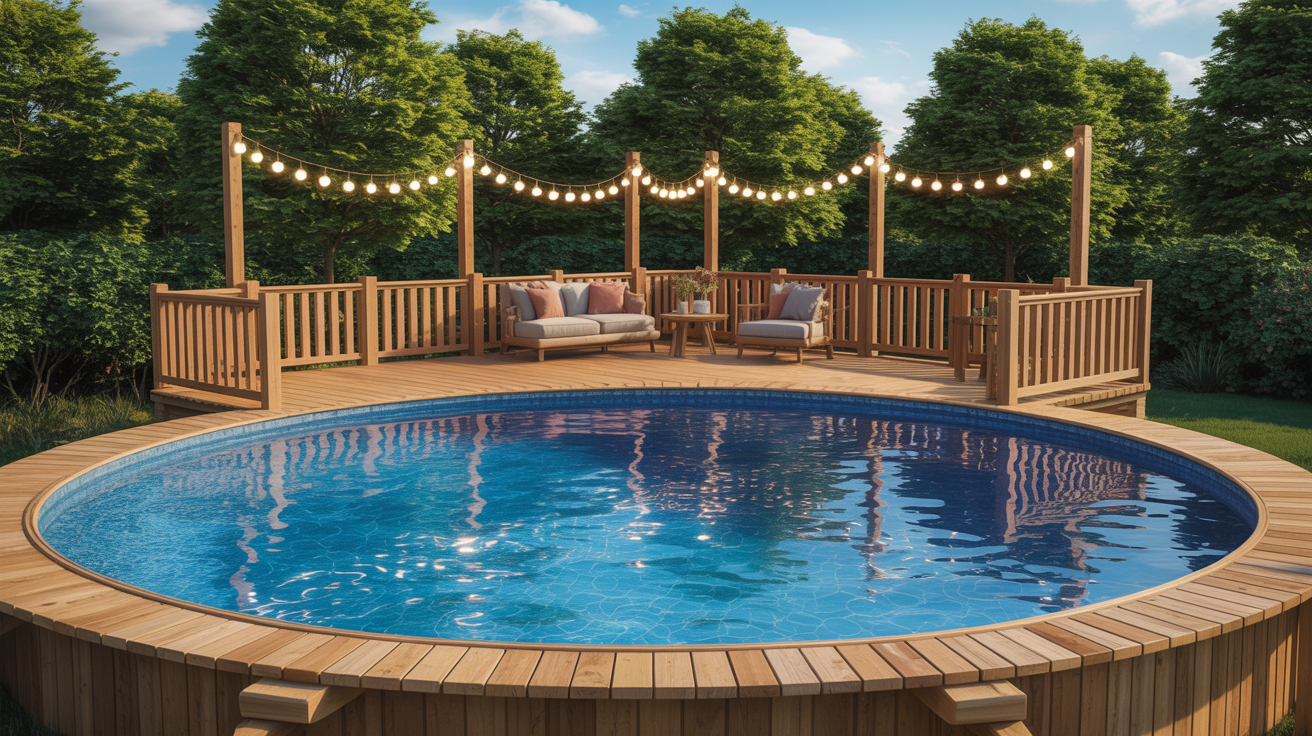
An above-ground pool deck can completely transform how your backyard looks and functions, turning what might otherwise feel like a temporary setup into something that genuinely resembles a resort-style outdoor living area. The difference between an above-ground pool sitting awkwardly in the middle of a yard and one surrounded by a well-built deck with seating, lighting, and landscaping is honestly night and day. A good deck does not just make the pool look better; it makes the entire backyard more livable.
Most people underestimate how much a deck changes the way you actually use a pool. Without one, getting in and out feels a little ungainly; there is nowhere comfortable to sit and dry off, and the pool never quite looks like it belongs in the space. Add a deck with a lounge area, some shade, and a few well-chosen accessories, and suddenly the pool becomes the centerpiece of an outdoor room you actually want to spend time in rather than just swim in.
I put together 10 above-ground pool deck ideas that cover a range of styles, budgets, and yard sizes. Whether you are working with a small suburban backyard or a larger open space, there is an approach on this list that will help you build a pool area that looks intentional, feels comfortable, and holds up well through years of summer use. And yes, your neighbors will absolutely be looking over the fence with envy.
Why a Well-Designed Above-Ground Pool Deck Changes Everything
A well-designed pool deck does three things simultaneously that no amount of pool accessories or landscaping alone can achieve. It provides safe, level access to the pool, creates a dedicated outdoor living zone around the water, and visually integrates the pool into the overall backyard design so it looks like a planned feature rather than an afterthought. Those three functions together are what elevate an above-ground pool setup from basic to genuinely impressive.
Deck material choice has a significant impact on both the look and the long-term maintenance demands of a pool surround. Pressure-treated wood is the most affordable entry point and takes stain and paint well, but it requires regular sealing to hold up against moisture and UV exposure. Composite decking costs more upfront but resists warping, splintering, and fading far better over time, making it a smarter long-term investment for a pool deck that sees heavy use and constant water exposure.
The shape and size of the deck relative to the pool also matter enormously for how the finished result looks and functions. A deck that wraps fully around the pool creates a very different feel from one that attaches to just one side. Full wraparound decks provide more usable surface area, better access from multiple points, and a more polished, integrated appearance. Partial decks are more affordable and still deliver significant visual improvement, especially when they include a dedicated seating or lounge area.
| Deck Material | Avg. Cost Per Sq Ft | Maintenance Level | Lifespan |
| Pressure-treated wood | $8 to $15 | High | 10 to 15 years |
| Cedar or redwood | $12 to $20 | Medium | 15 to 20 years |
| Composite decking | $20 to $38 | Low | 25 to 30 years |
| Aluminum decking | $22 to $35 | Very low | 30+ years |
| Concrete pavers | $10 to $20 | Low to medium | 20 to 30 years |
| PVC decking | $18 to $30 | Very low | 25+ years |
1. Full Wraparound Deck With Built-In Seating
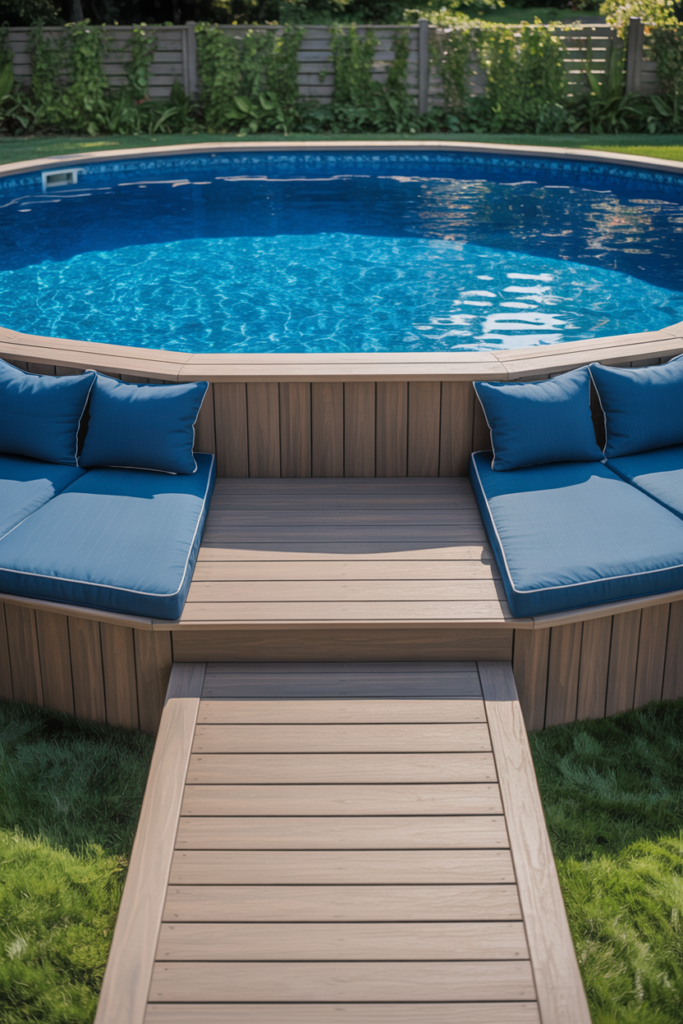
A full wraparound deck that encircles the entire above-ground pool is the most comprehensive and visually polished deck option available, and it genuinely transforms the pool from a standalone structure into a complete outdoor living feature. The deck connects to the pool at every point, creating a seamless transition between the water and the surrounding surface that looks intentional and finished from every angle. When you add built-in bench seating along the outer perimeter of the deck, the space immediately becomes a place for gathering and relaxing rather than just swimming.
Built-in bench seating along the outer rail of a wraparound deck is one of those additions that costs relatively little extra during the construction process but adds enormous practical and visual value to the finished space. The benches keep the deck surface clear of freestanding furniture that can shift around and create hazards near the water. They also give the deck a more permanent, architectural quality that makes the whole setup look like a planned outdoor room rather than a pool with some furniture arranged around it.
Material consistency between the pool deck and the built-in seating creates the most cohesive look. Using the same composite or wood decking material for the bench seats and backs as for the deck surface ties everything together visually. Adding outdoor cushions in a weather-resistant fabric in a coordinating color pulls the seating area together and makes the bench seating genuinely comfortable for extended lounging rather than just occasional perching.
2. Raised Platform Deck With Stairs and a Lounge Zone
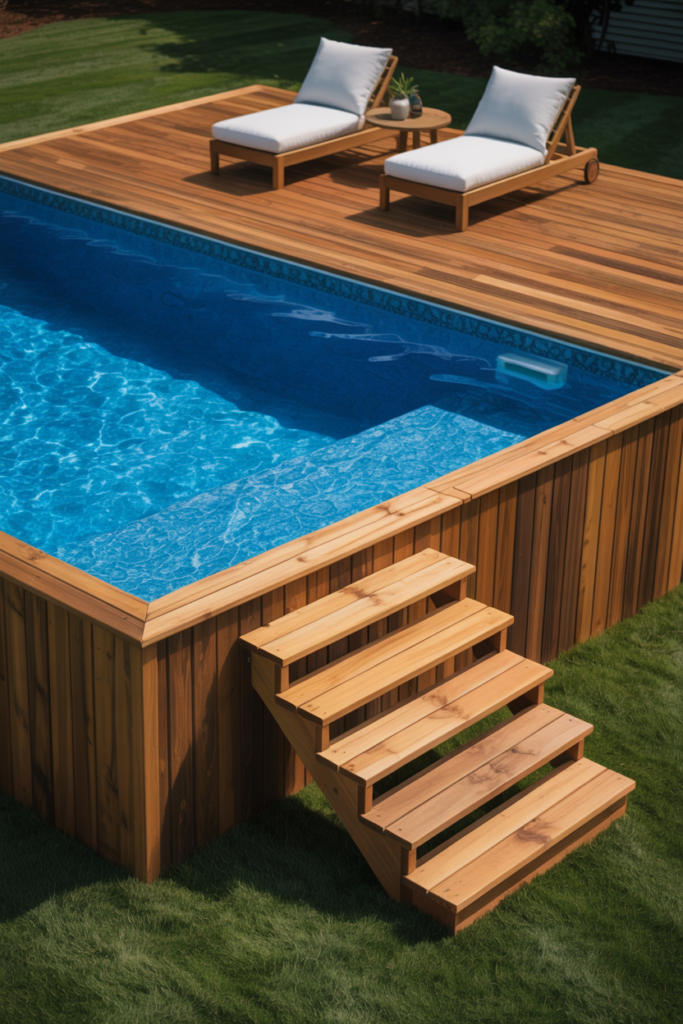
A raised platform deck positions the deck surface level with or slightly above the top edge of the above-ground pool wall, which creates a much more natural and elegant entry point into the water than a standalone pool ladder. The raised platform approach also gives the pool a more in-ground appearance from ground level, which is one of the most significant visual upgrades you can make to an above-ground pool without actually sinking it into the ground. Wide, well-built stairs leading down from the deck to the yard complete the look and make the whole structure feel substantial and well-considered.
The lounge zone on a raised platform deck works best when it sits on the opposite side of the pool entry point, so traffic flow between the seating area and the water stays clear and natural. A section of the platform extended slightly beyond the pool perimeter gives you room for two or three lounge chairs, a small side table, and a drink holder or two without crowding the entry area. I find that a raised platform deck with a dedicated lounge zone on one end genuinely feels like a resort pool setup in a way that a flat ground-level deck around the same pool simply does not.
Railing style on a raised platform deck makes a significant difference to the overall aesthetic. Cable railing with thin horizontal stainless steel cables gives the deck a modern, open feel that does not block sightlines into or out of the pool area. Traditional wooden balusters create a more classic or cottage look. Glass panel railing is the most expensive option, but it creates an almost invisible barrier that makes the deck feel larger and more open than it actually is.
3. Partial Deck With a Dedicated Sunbathing Platform
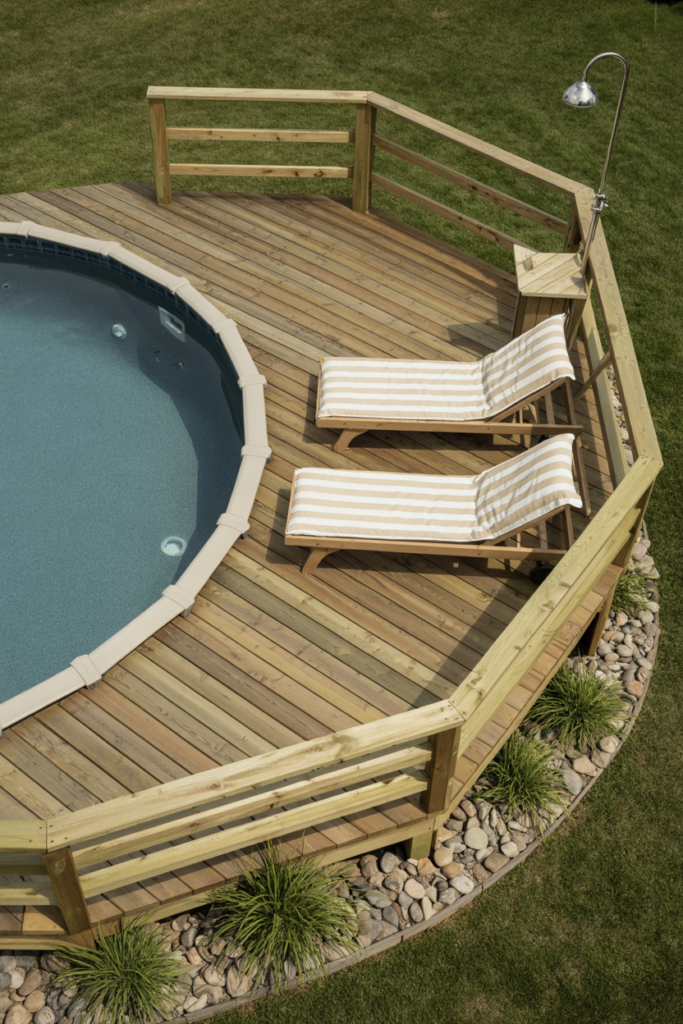
A partial deck that covers one section of the pool perimeter rather than wrapping all the way around is a smart and cost-effective approach for homeowners who want the visual and functional benefits of a pool deck without the full expense of a complete wraparound structure. Attaching a well-sized partial deck to the most accessible side of the pool, typically the side closest to the house, gives you a solid entry point, a place to store towels and pool toys, and a sunbathing platform all in one relatively compact footprint.
The sunbathing platform section works best when it extends at least four to six feet beyond the pool wall to give loungers enough room to stretch out fully without their feet hanging over the edge. A section of the deck designed specifically for sun loungers, with gaps between the deck boards slightly wider than standard to allow water to drain quickly, keeps the sunbathing area comfortable and safe rather than slippery and puddled. Some people also add a small outdoor shower post at one corner of the partial deck for rinsing off before and after swimming, which is a practical addition that adds very little to the overall cost.
Landscaping around the sides of a partial deck that does not have structural elements does a lot of work in making the whole pool area look complete and intentional. Raised garden beds, large ornamental grasses, tall shrubs, or a simple border of river rocks along the exposed sides of the pool create a natural frame that visually fills in the areas the deck does not cover. That combination of partial deck and thoughtful surrounding landscaping often looks just as finished as a full wraparound deck at a significantly lower total cost.
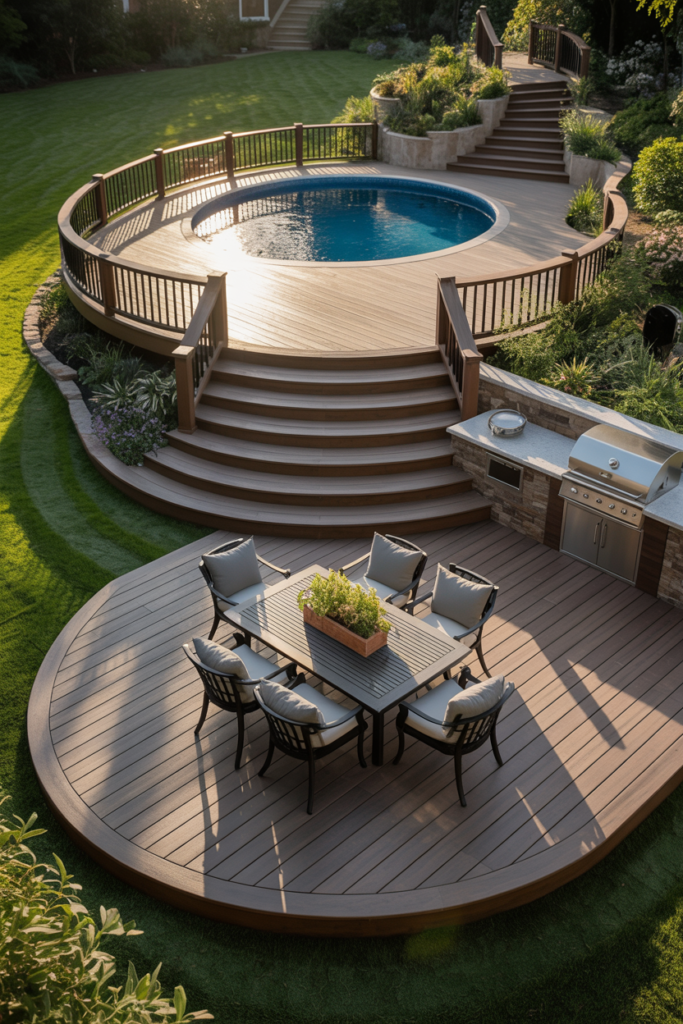
4. Multi-Level Deck With Separate Dining and Pool Areas
A multi-level above-ground pool deck separates the outdoor living space into two or more distinct zones at different heights, typically with the pool deck at the higher level and a dining or entertaining area stepping down to a lower platform closer to ground level. This tiered approach solves one of the most common challenges of designing an outdoor space around an above-ground pool, which is how to fit a pool, a seating area, and a dining area into a single backyard without everything feeling cramped and competing for space.
The upper level of a multi-level deck serves as the active pool zone with direct water access, towel hooks or storage, and space for a couple of poolside loungers. The lower level becomes the entertaining and dining zone with a table and chairs, a barbecue station, and potentially a bar cart or small outdoor kitchen setup. That physical separation between the wet pool zone and the dry dining zone makes the outdoor space function significantly better for hosting gatherings where not everyone is swimming at the same time.
Connecting the two levels with wide, shallow steps rather than a single steep staircase makes the transition between zones feel gradual and comfortable. Steps that are at least four feet wide allow two people to pass each other comfortably and give the structure a more substantial, architectural quality. Planting low ground cover or ornamental grasses along the sides of the steps softens the transition between levels and integrates the deck structure into the surrounding landscape naturally.
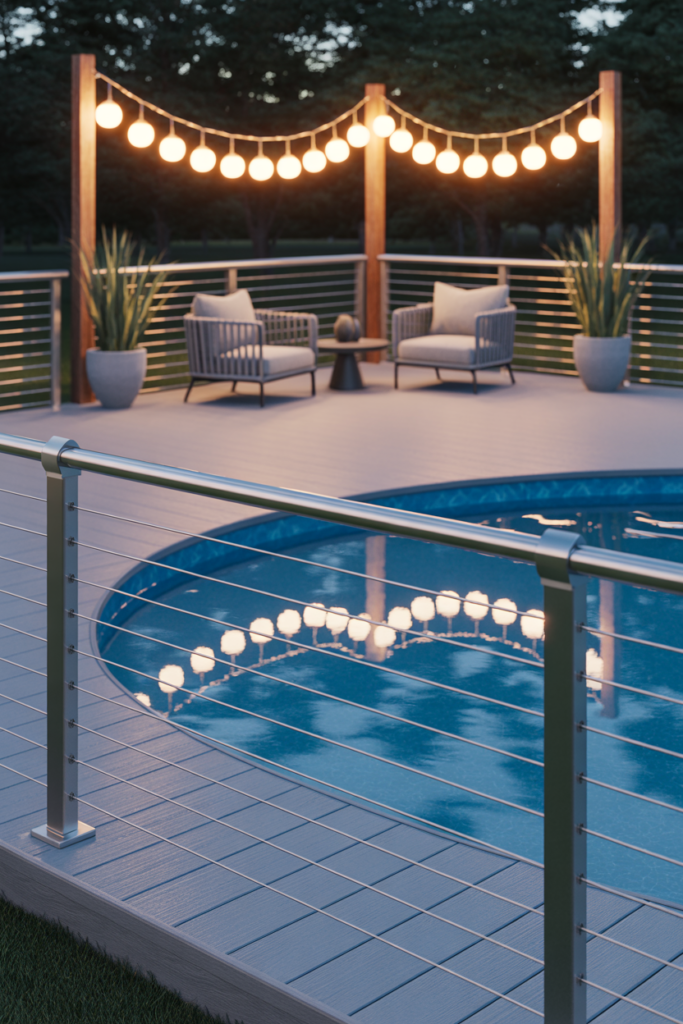
5. Composite Deck With Modern Cable Railing and String Lights
A composite deck with cable railing and string lights overhead is one of the most popular above-ground pool deck combinations right now, and it earns that popularity because it delivers a genuinely modern, polished look that holds up extremely well over time. Composite decking in a warm grey or natural wood-tone finish paired with thin stainless steel cable railing creates a clean, contemporary aesthetic that suits both modern homes and more traditional backyard settings without looking out of place in either. The low-maintenance nature of composite material means the deck keeps looking good with minimal effort year after year.
String lights strung above the deck area on a simple pergola frame or between wooden posts create one of the most effective and affordable evening atmosphere upgrades you can make to a pool deck. A single strand of warm white globe lights hung in a gentle catenary curve above the seating area transforms the deck from a purely daytime space into somewhere that feels genuinely inviting well into the evening. I find that string lights over a pool deck create that warm, holiday-like glow that makes outdoor entertaining feel effortless and special without requiring any complicated lighting installation.
The combination of composite decking, cable railing, and overhead string lights works particularly well when the surrounding yard keeps things simple and uncluttered. A few large planters with ornamental grasses or tropical-looking plants at the corners of the deck, a consistent set of outdoor furniture in a neutral tone, and a clean gravel or lawn surround complete the look without competing with the deck itself. Simple and consistent wins every time with this style.
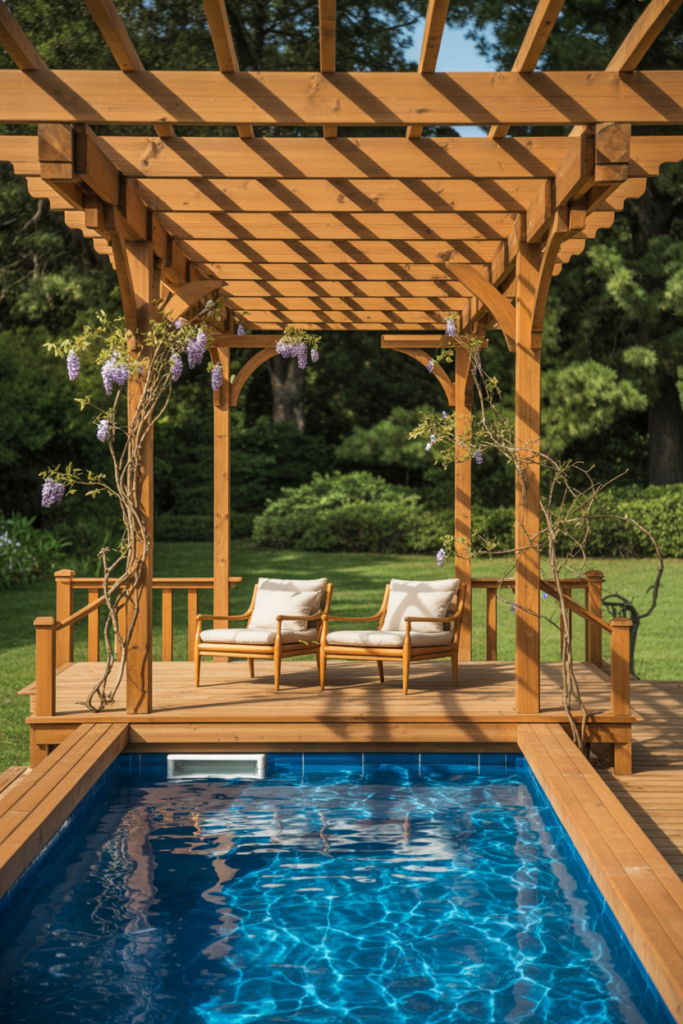
6. Wooden Pool Deck With Pergola and Shade Structure
A wooden pool deck with an attached pergola is one of the most functional and visually satisfying above-ground pool setups you can build because it solves the single biggest complaint most pool owners have about spending time poolside, which is too much direct sun with nowhere to retreat to. A pergola positioned over the lounge or seating section of the deck provides partial shade that makes the space usable even during the hottest part of the afternoon without completely blocking the open sky above the pool itself. That balance between sun and shade is what makes a pergola-covered pool deck so genuinely comfortable to spend long stretches of time in.
Cedar is one of the best wood choices for both the deck and the pergola frame because it is naturally resistant to moisture and insect damage, holds stain and sealant well, and has a warm reddish-brown tone that weathers beautifully over time to a soft silver-grey if left untreated. Building the pergola from the same wood as the deck creates a cohesive, unified look that makes the structure feel intentionally designed rather than added on as an afterthought. A pergola stained in the same tone as the deck surface ties the whole structure together visually from every angle.
Adding climbing plants to the pergola posts over time is one of those slow-burn upgrades that costs almost nothing but dramatically increases the charm of the finished structure. Wisteria, jasmine, or climbing roses growing up the pergola posts and beginning to fill in the overhead lattice create a lush, garden-like quality around the pool area that no purchased decoration can replicate. It takes a season or two to establish, but a pergola with mature climbing plants winding through it is genuinely one of the most beautiful things a backyard pool area can have.
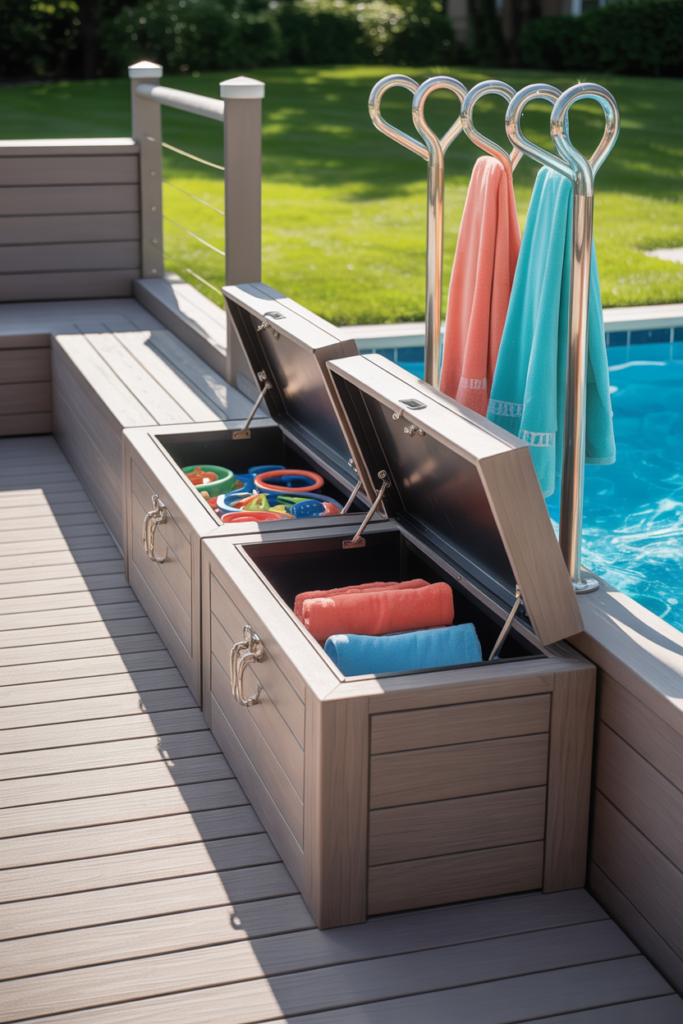
7. Pool Deck With Built-In Storage Benches and Towel Hooks
A pool deck with built-in storage benches and towel hooks is the kind of practical, thoughtful addition that makes daily pool use significantly more enjoyable and keeps the deck area looking tidy rather than perpetually cluttered with wet towels, pool toys, and forgotten sunscreen bottles. Built-in storage benches along the outer perimeter of the deck serve double duty as seating and as weatherproof storage for pool accessories, cushions, and cleaning equipment. That combination of function and form is exactly the kind of smart design decision that separates a well-planned pool deck from a basic one.
The storage bench construction does not need to be complicated to work well. A simple bench frame built from the same decking material as the surrounding surface, with a hinged lid and a weatherproof liner inside the storage cavity, provides plenty of space for pool toys, life rings, and maintenance tools. Adding a piano hinge along the full length of the lid rather than two small hinges at either end makes the lid easier to open fully and holds up better to repeated use over multiple seasons.
Towel hooks mounted on the outside face of the pool wall or on vertical posts at the corners of the deck are one of those small additions that seem minor but make a noticeable difference to how organized and functional the pool area feels day to day. Stainless steel or powder-coated hooks resist rust and weather well in a pool environment. Positioning four to six hooks within easy reach of the pool entry point means wet towels have a designated home rather than ending up draped over railings and chair backs, where they look messy and take longer to dry.
8. Natural Wood Deck With Tropical Landscaping Surround
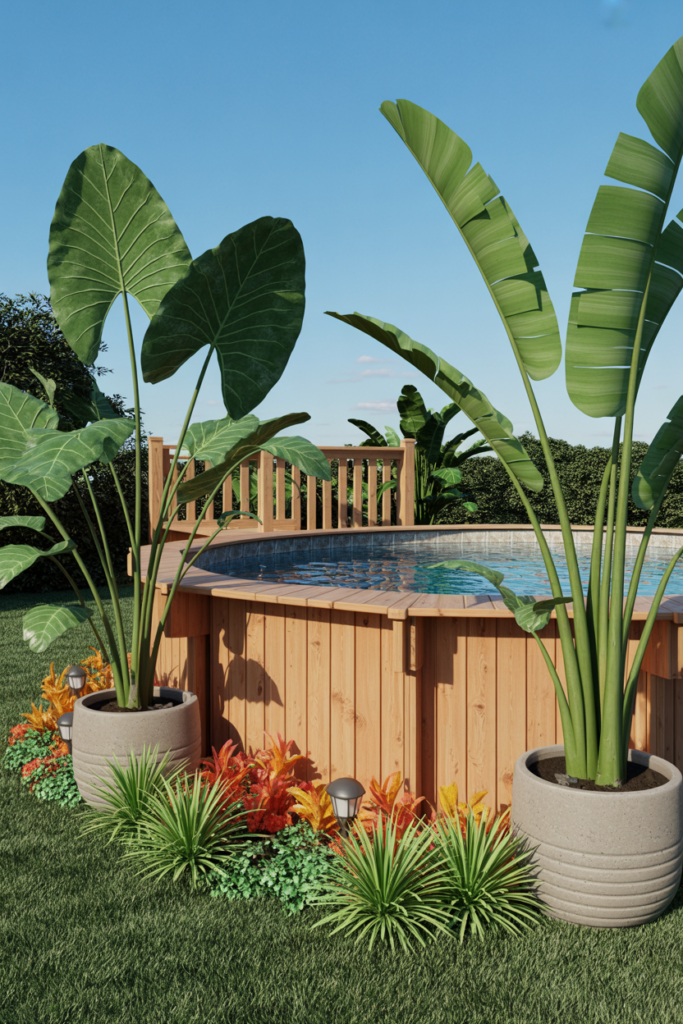
A natural wood pool deck surrounded by tropical-inspired landscaping is one of the most visually striking above-ground pool setups you can create, and it works particularly well in warmer climates where large-leaved tropical plants grow vigorously through the swimming season. The combination of warm wood tones against lush green foliage creates a resort-like quality that makes the backyard feel like a genuine destination rather than just a place where a pool happens to sit. Even in cooler climates, using large containerized tropical plants that come inside for winter achieves a similar effect during the pool season.
Large-leaved plants like elephant ears, cannas, and banana plants work especially well as poolside landscaping because their bold, dramatic foliage creates a sense of lush abundance that smaller plants simply cannot deliver at the same scale. Placing two or three large containerized tropical plants at the corners of the pool deck and filling in between with ornamental grasses and lower flowering plants creates a layered, garden-like surround that frames the pool beautifully. The contrast between the structured deck and the organic, flowing plant shapes is what gives this style its particular visual appeal.
Keeping the deck itself relatively simple in design lets the surrounding landscaping do the decorative heavy lifting without the two elements competing with each other. A clean rectangular or octagonal deck in a warm natural wood tone with simple railing and minimal accessories lets the tropical planting surround take center stage. Outdoor solar path lights tucked into the landscaping beds at ground level illuminate the plantings from below after dark and add a warm, atmospheric glow to the whole pool area in the evening.
9. Above-Ground Pool Deck With Outdoor Bar or Refreshment Station
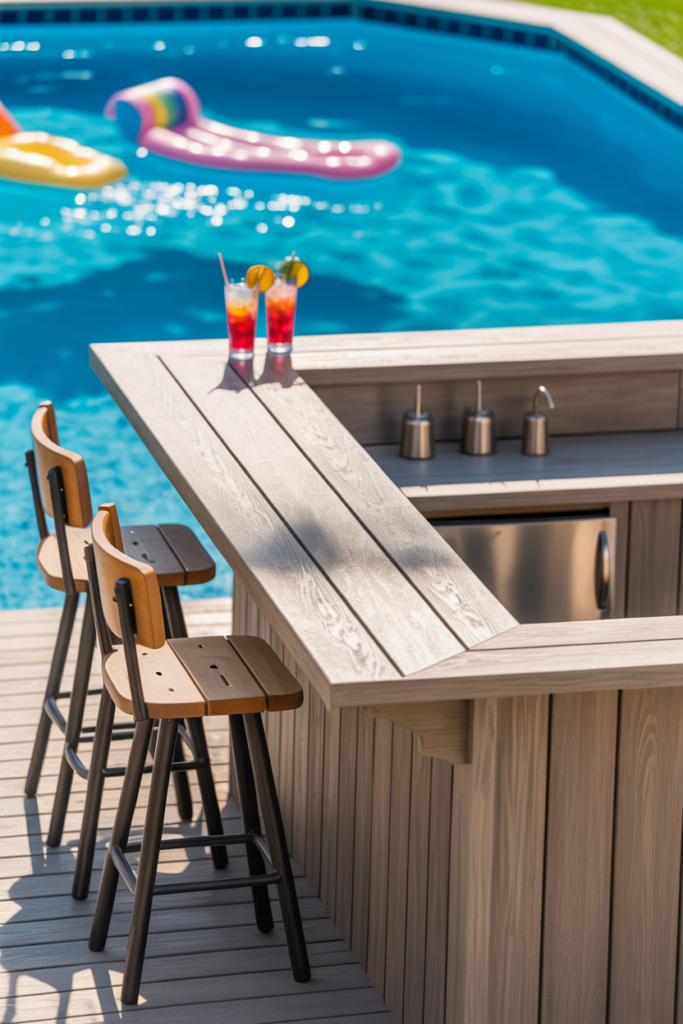
An outdoor bar or refreshment station built into or beside an above-ground pool deck turns the pool area into a proper entertaining space that functions well for gatherings beyond just swimming. A simple bar counter built along one section of the deck railing, with a waterproof surface, a small under-counter refrigerator, and a few bar stools on the outside face, creates a swim-up bar effect that makes any pool party feel significantly more festive and well-considered. It is the kind of addition that guests notice and comment on immediately, and it genuinely changes how you use the pool area on a day-to-day basis.
The bar counter construction works best when it uses the same decking material as the surrounding pool deck for visual consistency. A composite or cedar bar top with a slight overhang on the yard-facing side gives bar stool users a comfortable surface to lean against and keeps drinks and snacks within easy reach of people in the pool. Adding a few hooks underneath the counter for hanging wet towels or pool bags keeps the immediate area organized without requiring additional storage structures nearby.
A refreshment station does not need to be a full bar setup to add significant value to a pool deck. Even a simple weatherproof cart with a cooler, a tray for glasses, and a small shelf for sunscreen and pool accessories positioned at one corner of the deck creates a dedicated functional zone that keeps everything organized and within reach. The goal is a designated spot where all the pool day essentials live so the deck surface stays clear and the experience of spending a day at the pool feels smooth and well-organized rather than constantly interrupted by trips back to the house.
10. Low-Profile Pool Deck With Pavers and Integrated Landscaping
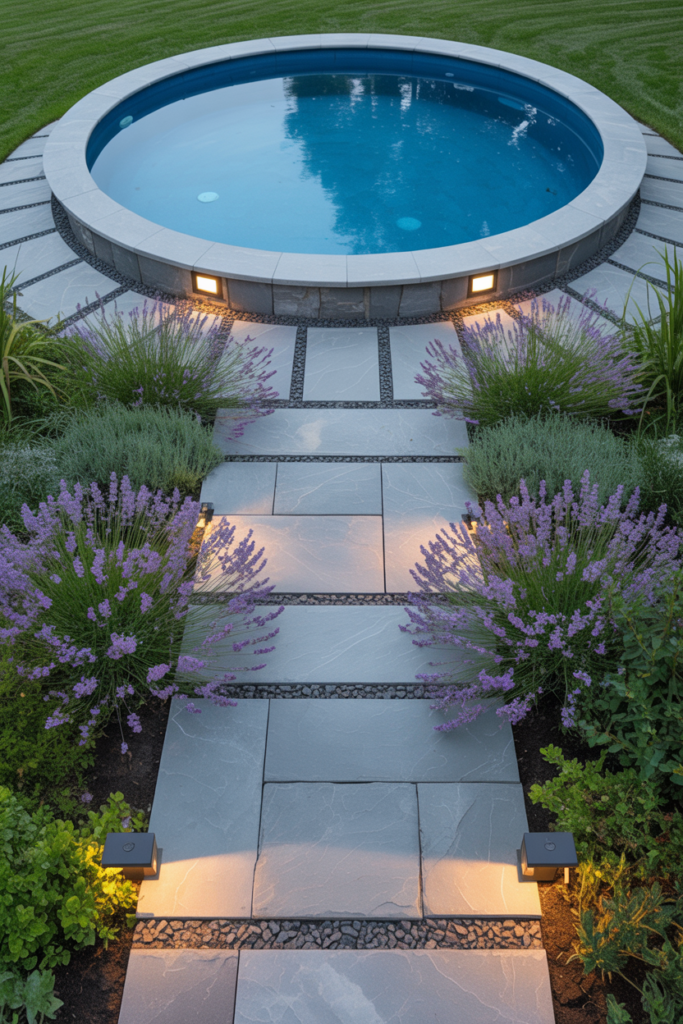
A low-profile deck or paver surround at ground level is the most accessible and budget-friendly approach to creating a finished pool area, and when it combines well-laid pavers with integrated landscaping, it looks genuinely polished and intentional. Concrete pavers, natural stone slabs, or porcelain tiles laid in a clean pattern around the base of an above-ground pool create a solid, level surface that improves both safety and aesthetics without the structural complexity of a raised timber deck. The lower profile also makes the pool feel more grounded and permanent in the yard rather than elevated and temporary.
Integrating planting beds directly into the paver layout is what elevates a simple ground-level pool surround into something that looks truly designed. Leaving deliberate gaps between paver sections for planted borders, ornamental grasses, or low flowering shrubs creates a natural, garden-integrated quality that softens the hard edges of both the pavers and the pool structure. A border of lavender, ornamental sage, or low ornamental grasses planted between the paver surround and the surrounding lawn creates a defined transition zone that frames the whole pool area beautifully.
Lighting integrated directly into a paver surround at ground level adds a layer of evening atmosphere and practical safety that overhead lighting alone cannot provide. Low-voltage LED paver lights set flush into the surface along the pool perimeter illuminate the edge of the pool area after dark without creating glare. Solar-powered versions require no wiring and install easily into most paver layouts, making them one of the most accessible and affordable lighting upgrades for a ground-level pool surround.
What to Consider Before Building Your Above-Ground Pool Deck
Planning a pool deck properly before construction begins saves a significant amount of time, money, and frustration during and after the build process. The first thing to confirm is whether your local municipality requires a building permit for a pool deck, since most jurisdictions do require permits for structures above a certain size or height. Building without the required permit can create serious problems when you sell the property, so checking local regulations before breaking ground is always the right first step.
Deck size relative to pool size is a planning consideration that many first-time builders underestimate. A deck that extends at least four feet beyond the pool wall on the primary access side gives enough room for comfortable movement, towel storage, and a small seating area without feeling cramped. If the budget allows for a larger footprint, extending the deck six to eight feet on the main lounge side creates a genuinely spacious outdoor living zone rather than just a functional access platform.
Orientation relative to the sun is another factor that significantly affects how enjoyable the finished pool area actually is during peak summer use. Positioning the main lounge section of the deck to catch morning sun and partial afternoon shade keeps the surface from becoming uncomfortably hot during the hottest part of the day. If full sun on the lounge area is unavoidable due to the yard layout, incorporating a shade sail, pergola, or large market umbrella into the deck design from the start rather than adding it later as an afterthought produces a much cleaner and more intentional finished result.
| Pool Deck Idea | Approx. Cost | Difficulty Level | Best Yard Size |
| Full wraparound deck | $8,000 to $20,000 | High | Medium to large |
| Raised platform with stairs | $6,000 to $15,000 | High | Medium to large |
| Partial sunbathing deck | $3,000 to $8,000 | Medium | Small to medium |
| Multi-level deck | $10,000 to $25,000 | Very high | Large |
| Composite with cable railing | $9,000 to $22,000 | High | Medium to large |
| Wooden deck with pergola | $7,000 to $18,000 | High | Medium to large |
| Built-in storage bench deck | $5,000 to $12,000 | Medium | Small to medium |
| Natural wood tropical surround | $6,000 to $16,000 | Medium to high | Medium to large |
| Deck with outdoor bar | $8,000 to $20,000 | High | Medium to large |
| Low-profile paver surround | $2,500 to $8,000 | Low to medium | Any size |
Conclusion
An above-ground pool deck is one of the most worthwhile backyard investments you can make because it improves safety, increases usable outdoor living space, and transforms the visual impact of the pool in a way that nothing else quite achieves. Every idea on this list proves that an above-ground pool can look and function just as well as an in-ground setup when the surrounding deck and outdoor living area receive the same level of thoughtful planning and design attention.
The deck ideas that deliver the strongest overall results are the ones that treat the pool area as a complete outdoor room rather than just a pool with some boards around it. A wraparound deck with built-in seating, a pergola providing afternoon shade, string lights for evening atmosphere, and some integrated landscaping along the outer edges creates a backyard destination that your family will genuinely want to spend time in every single day of summer.
If you are working within a tighter budget, start with a well-built partial deck on the main access side of the pool and add to it over subsequent seasons as the budget allows. A smaller deck done well always looks better than a larger deck done poorly, and building in stages gives you the chance to refine the design based on how you actually use the space before committing to the full footprint. Your above-ground pool deserves better than a basic ladder, and some wet grass, and any one of these deck ideas will prove that convincingly.
Frequently Asked Questions
Do I need a permit to build a deck around an above-ground pool? Most municipalities require a building permit for pool decks above a certain height or square footage, typically anything over 200 square feet or higher than 30 inches off the ground. Always check with your local building department before starting construction, since requirements vary significantly by location, and building without a permit can cause issues when selling the property.
What is the best decking material for an above-ground pool deck? Composite decking is the best long-term choice for a pool deck because it resists moisture, warping, splintering, and UV fading far better than natural wood. It costs more upfront than pressure-treated lumber but requires significantly less maintenance and holds its appearance much longer in the wet, sun-exposed environment around a pool.
How far should a pool deck extend beyond the pool wall? A pool deck should extend at least four feet beyond the pool wall on the primary access side to provide safe, comfortable movement around the entry point. Extending six to eight feet on the lounge side gives enough room for full-size sun loungers and a small side table without the deck feeling cramped during peak use.
Can I build an above-ground pool deck myself? A partial ground-level deck or paver surround is achievable as a DIY project for someone with basic carpentry and construction skills. A full wraparound raised deck or multi-level structure is better handled by a licensed contractor since it involves more complex structural requirements, potential permit inspections, and safety considerations that benefit from professional experience.
How long does a wooden above-ground pool deck last? A pressure-treated wood pool deck lasts between 10 and 15 years with proper annual sealing and maintenance. Cedar and redwood decks last 15 to 20 years under similar conditions. Composite decking typically carries manufacturer warranties of 25 years or more and requires far less ongoing maintenance to reach that lifespan.
What is the most affordable above-ground pool deck option? A low-profile concrete paver surround is the most affordable option on this list, with costs starting around $2,500 for a basic installation. It provides a solid, finished surface around the pool without the structural complexity of a raised timber deck and looks clean and intentional when combined with simple border landscaping.