
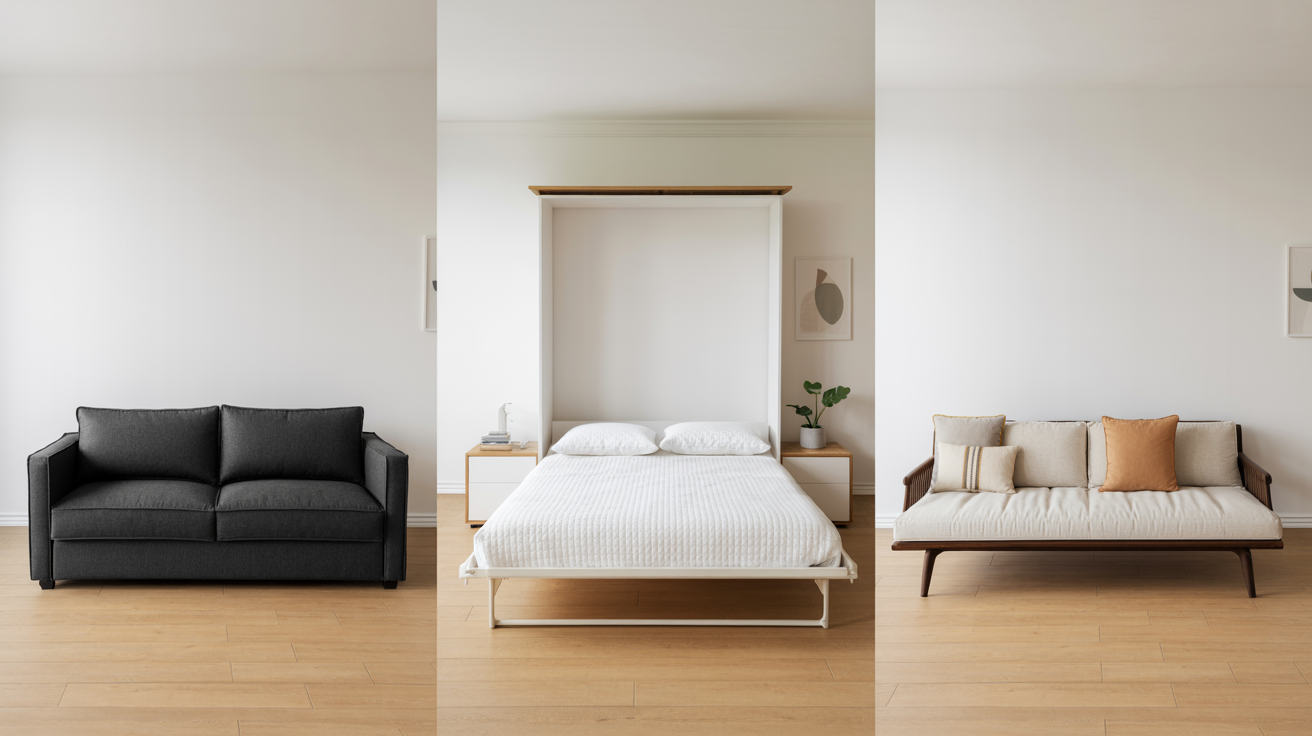
If you’ve ever stared at your living room and thought, “this space needs to do more,” you’re not alone. A lot of people today are dealing with smaller apartments, guest room dilemmas, or studio layouts that demand one room to handle everything. The bed-in-living-room setup is no longer a college dorm move. It’s a real design choice that smart homeowners are making.
The three most popular options people compare are the sofa bed, the Murphy bed, and the daybed. Each one promises to save space and give you a comfortable sleep setup, but they all deliver very differently. I’ve gone through the details of each so you don’t have to spend hours second-guessing on furniture websites.
Here’s the short answer before we get into it: the best choice depends on how often you need the bed, how much space you’re working with, and what your living room should look like during the day. There’s no universal winner, but by the end of this article, you’ll know exactly which one suits your situation.
Why More People Are Putting Beds in Their Living Rooms
The idea of a bed in the living room used to feel like a compromise. Now it feels like a smart move. With rental prices climbing and square footage shrinking, people need their spaces to work harder than ever before.
A living room that doubles as a sleeping space isn’t just for studio apartments anymore. Homeowners are converting spare rooms, parents are setting up guest-friendly living areas, and remote workers are rethinking every inch of their home layout. The demand for multi-functional furniture has gone through the roof, and sofa beds, Murphy beds, and daybeds are leading that conversation.
What’s changed is that these pieces no longer look like compromises. Today’s designs are sleek, stylish, and built to blend into a well-decorated living room without screaming “someone sleeps here.” That shift in design quality is exactly why so many people are now treating this as a legitimate interior design decision rather than a last resort.
Sofa Bed: The Most Familiar Option on the List
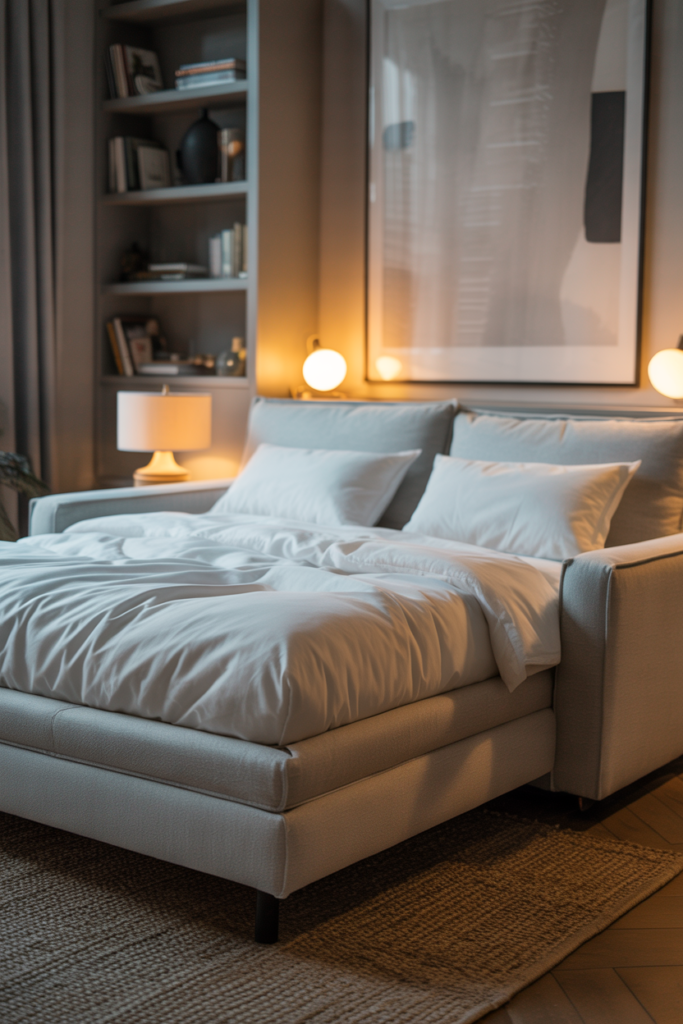
The sofa bed is probably the first thing that comes to mind when someone says “convertible furniture.” It looks like a regular sofa during the day and folds out into a bed at night. Most people have either owned one or slept on one at a friend’s place, which means the reputation, good and bad, is already well established.
The biggest selling point is convenience. You don’t need extra floor space, a dedicated wall, or any installation work. You buy it, place it, and it’s ready to use as both seating and sleeping in the same spot. For guest rooms that double as living areas, this is often the go-to choice.
The honest downside is comfort. The traditional sofa bed mattress, the one that folds into the frame, has never won any awards for back support. That said, modern sofa beds have improved a lot. Many now come with memory foam mattresses or thick innerspring options that make overnight stays genuinely comfortable rather than something guests just tolerate.
Who Should Actually Buy a Sofa Bed
A sofa bed works best for people who need an occasional sleeping solution rather than a nightly one. If guests visit a few times a month and you want seating the rest of the time, it fits that role well. It’s also a solid pick for studio apartments where a full-size sofa is already needed and a separate bed simply won’t fit.
The price range is wide, which works in its favor. You can find decent sofa beds under $600 and premium options with quality mattresses well above $1,500. The key is not skimping on the mattress thickness, anything under 4 inches tends to feel the metal bar beneath it, and that’s a miserable experience nobody wants to repeat.
One thing I’d keep in mind is the size of the room. A sofa bed when unfolded takes up significantly more floor space than it does when closed. Measure your room before buying, because a sofa bed that blocks the walkway or hits the coffee table every time someone unfolds it stops being convenient very quickly.
Murphy Bed: The Space-Saving Overachiever
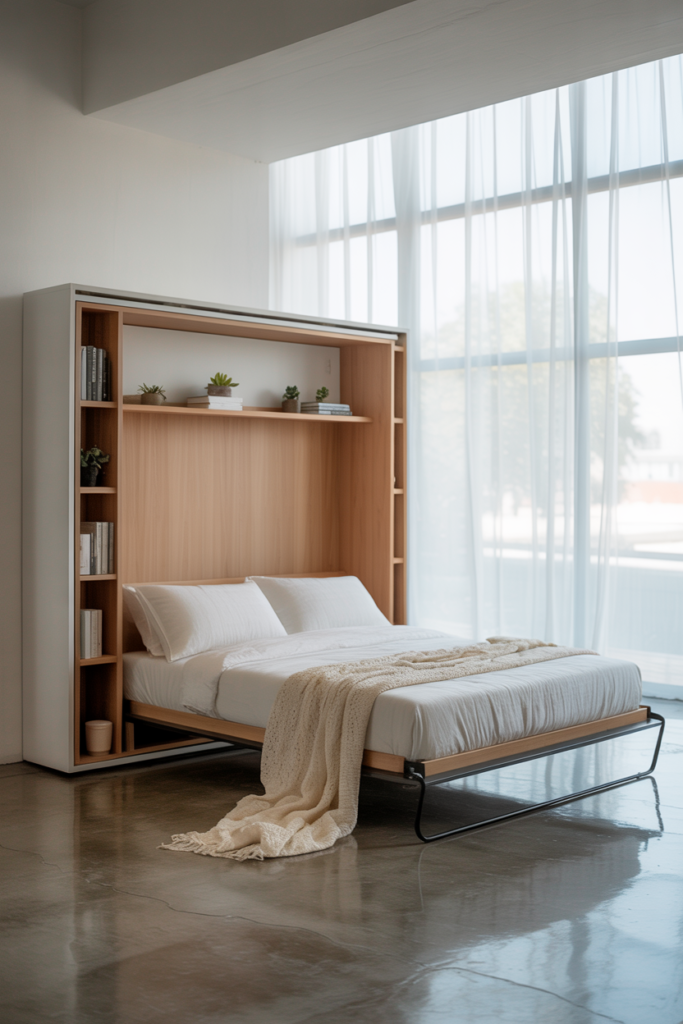
The Murphy bed, also called a wall bed, folds up vertically into a cabinet or wall unit when not in use. During the day, it disappears completely. That floor space it was using? Yours again. For small living rooms, this is genuinely one of the most practical furniture investments available.
What makes the Murphy bed stand out is how it handles daily use. Unlike a sofa bed where you’re working around a permanent piece of furniture, a Murphy bed gives you a full mattress at night and an open room during the day. Some models even pair with a fold-down desk or shelving unit, making them especially useful for people working from home.
The setup does require more commitment than rolling a sofa bed into position. Most Murphy beds need wall mounting, and depending on the model, professional installation is strongly recommended. The upfront cost is also higher, with quality wall beds starting around $1,000 and going well past $3,000 for built-in cabinet systems. But for people who use the bed every single night, the investment usually pays off in comfort and space.
Who Gets the Most Out of a Murphy Bed
The Murphy bed is the right pick for anyone using the living room as a primary bedroom. If you sleep there every night and need the space to function as a proper living area during the day, no other option gives you that clean reset the way a wall bed does. It’s also a strong choice for home offices that need to host overnight guests without looking like a bedroom.
One detail worth noting is mattress quality. Because Murphy beds use a dedicated mattress that stays on the frame, you get to choose a proper sleep mattress rather than accepting whatever padding comes built into a sofa. That makes a real difference for nightly use, especially for anyone with back concerns.
The only real hesitation I’d flag is the installation process. Renters in strict buildings may not be able to mount a wall bed without landlord approval. Free-standing Murphy bed frames exist as a workaround, but they tend to cost more and require a larger footprint than the wall-mounted versions.
Daybed: The One That Looks Good Doing Both Jobs
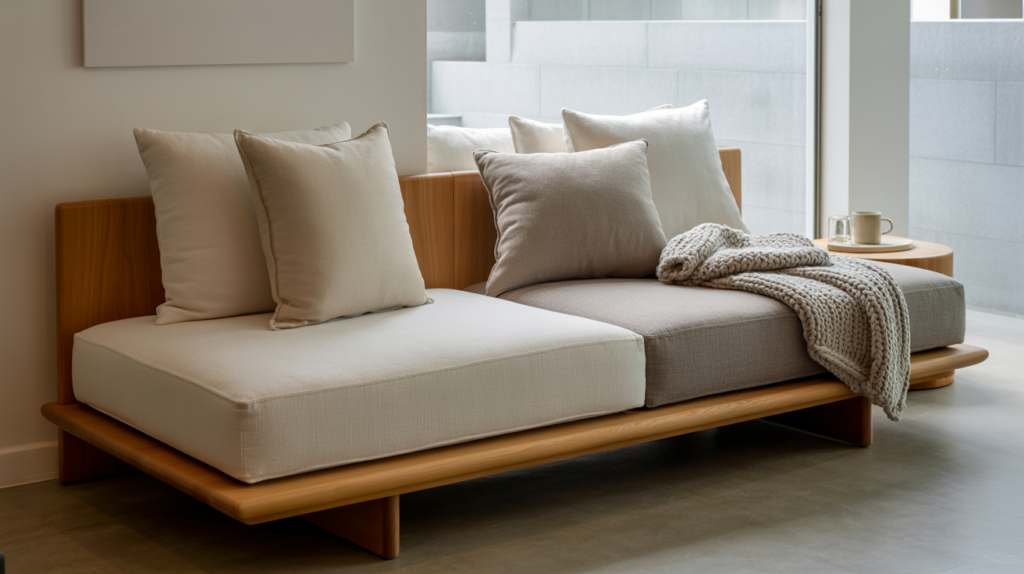
A daybed sits somewhere between a sofa and a bed, both in function and in looks. It has a frame on three sides, works as a seating surface during the day, and converts to a twin or full bed at night without any folding or unfolding mechanism. It’s the most straightforward of the three options when it comes to switching between uses.
The aesthetic appeal of a daybed is genuinely hard to beat. Styled with the right cushions and throw pillows, it reads more like a chaise or a reading nook than a sleeping area. That makes it the easiest of the three to blend into a living room without the space feeling like it serves double duty.
Where the daybed falls short is sleeping space. Most daybeds are twin-sized, which works perfectly for one adult or a child but becomes a tight fit for two people. If the goal is hosting couples or two guests at once, a daybed with a trundle drawer underneath is worth considering, as it pulls out to add a second sleeping surface at floor level.
Who Should Go With a Daybed
The daybed is a great fit for smaller living rooms, guest nooks, or reading corners that occasionally need to host a single overnight guest. It’s also one of the more affordable options, with quality frames starting around $300 and going up to $900 for solid wood or upholstered designs. If the living room belongs to a child or teenager, a daybed is often the most practical and stylish solution available.
What I appreciate about the daybed is how low-maintenance it is. There’s no mechanism to operate, no wall bracket to install, and no heavy frame to unfold. You add bedding at night and swap it back to cushions in the morning. For someone who values simplicity over maximum space savings, that ease of use is a genuine advantage.
The trundle option is worth mentioning again because it adds real value without dramatically increasing cost or floor space. A daybed with a trundle can sleep two people and still look like a styled seating piece during the day. That’s a lot of function packed into a relatively compact footprint.
Sofa Bed vs. Murphy Bed vs. Daybed: A Side-by-Side Comparison
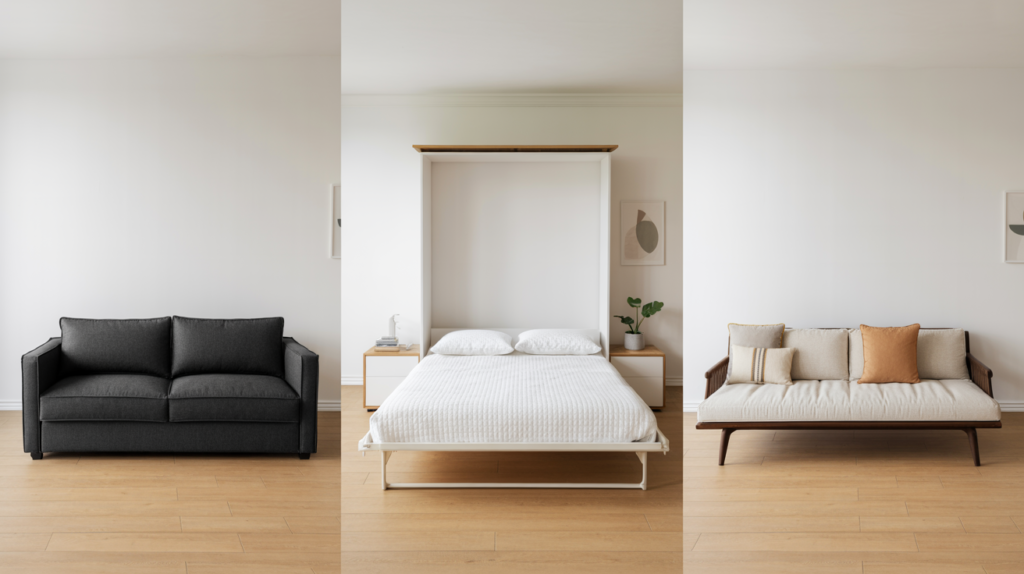
Before making a final call, it helps to see all three options laid out clearly. Each one has a different strength, and the right pick depends entirely on how you use the space and how often the bed gets used.
| Feature | Sofa Bed | Murphy Bed | Daybed |
| Best For | Occasional guests | Nightly use | Single sleepers |
| Space Saved | Moderate | Maximum | Moderate |
| Comfort Level | Moderate | High | Moderate |
| Price Range | $400 – $1,500+ | $1,000 – $3,500+ | $300 – $900+ |
| Installation | None | Wall mounting | None |
| Daytime Look | Sofa | Open wall space | Seating nook |
| Trundle Option | No | No | Yes |
The table makes it easier to spot which one aligns with your priorities. If space is the top concern, the Murphy bed wins. If budget and simplicity matter most, the daybed is hard to beat. If you want something familiar that handles guests without any installation, the sofa bed is still a reliable choice.
Conclusion
Choosing between a sofa bed, a Murphy bed, and a daybed really comes down to three things: how often the bed gets used, how much space you have, and what the room needs to look like during the day.
The sofa bed is the most versatile starting point. It works well for occasional guests, fits most living room layouts, and doesn’t require any installation. The comfort has improved a lot over the years, so as long as you choose one with a decent mattress thickness, it does the job well.
The Murphy bed is the strongest option for anyone sleeping in the living room every night. It gives you a real mattress, clears the floor completely during the day, and makes the space feel like a proper living area rather than a makeshift bedroom. The higher upfront cost is worth it for daily use.
The daybed earns its spot for its looks alone, but it backs that up with genuine practicality for single sleepers and small spaces. Add a trundle and it handles two guests comfortably without taking over the room.
All three options have a real place in modern home design. The goal is matching the right piece to the way you actually live, not just picking the one that looks best in a showroom photo.
Frequently Asked Questions
1. Which is more comfortable for sleeping every night, a sofa bed or a Murphy bed? A Murphy bed is more comfortable for nightly use because it supports a proper full-size mattress. Most sofa bed mattresses are thinner and built into the frame, which limits comfort over time. For daily sleeping, a Murphy bed is the better long-term investment.
2. Can a daybed replace a regular bed in a small living room? Yes, a daybed can function as a primary sleeping surface for one adult in a small living room. It works especially well when styled with cushions during the day so it doubles as seating. A trundle adds a second sleeping spot when needed.
3. Are Murphy beds safe to use without professional installation? Wall-mounted Murphy beds should ideally be installed by a professional to ensure they’re secured properly into wall studs. Free-standing versions are available for renters or anyone who can’t mount into walls. Skipping proper installation on a wall-mounted unit is a safety risk worth taking seriously.
4. What is the most affordable option among sofa beds, Murphy beds, and daybeds? Daybeds are generally the most affordable starting point, with decent options available from around $300. Sofa beds follow in the mid-range, and Murphy beds carry the highest upfront cost. That said, Murphy beds often save money long-term by replacing the need for a separate bedroom setup.
5. Do sofa beds work well for tall people? Standard sofa beds tend to run shorter than a regular queen or king mattress when unfolded. Tall sleepers often find their feet hanging off the edge, which gets uncomfortable quickly. Checking the unfolded mattress dimensions before buying is something I’d strongly recommend for anyone over 6 feet.
6. Can I use a regular mattress on a Murphy bed? Most Murphy bed frames are designed for specific mattress depths, usually between 10 and 12 inches. A standard mattress in that thickness range works perfectly well. Very thick mattresses, anything above 12 inches, may not fold up properly into the cabinet, so always check the manufacturer’s specs first.
7. Which option is best for a living room that needs to impress guests during the day? A Murphy bed gives you the cleanest daytime look because the bed disappears completely into the wall unit. A well-styled daybed comes in second because it reads more like intentional decor than a sleeping setup. A sofa bed, while functional, is the hardest to disguise during the day.