
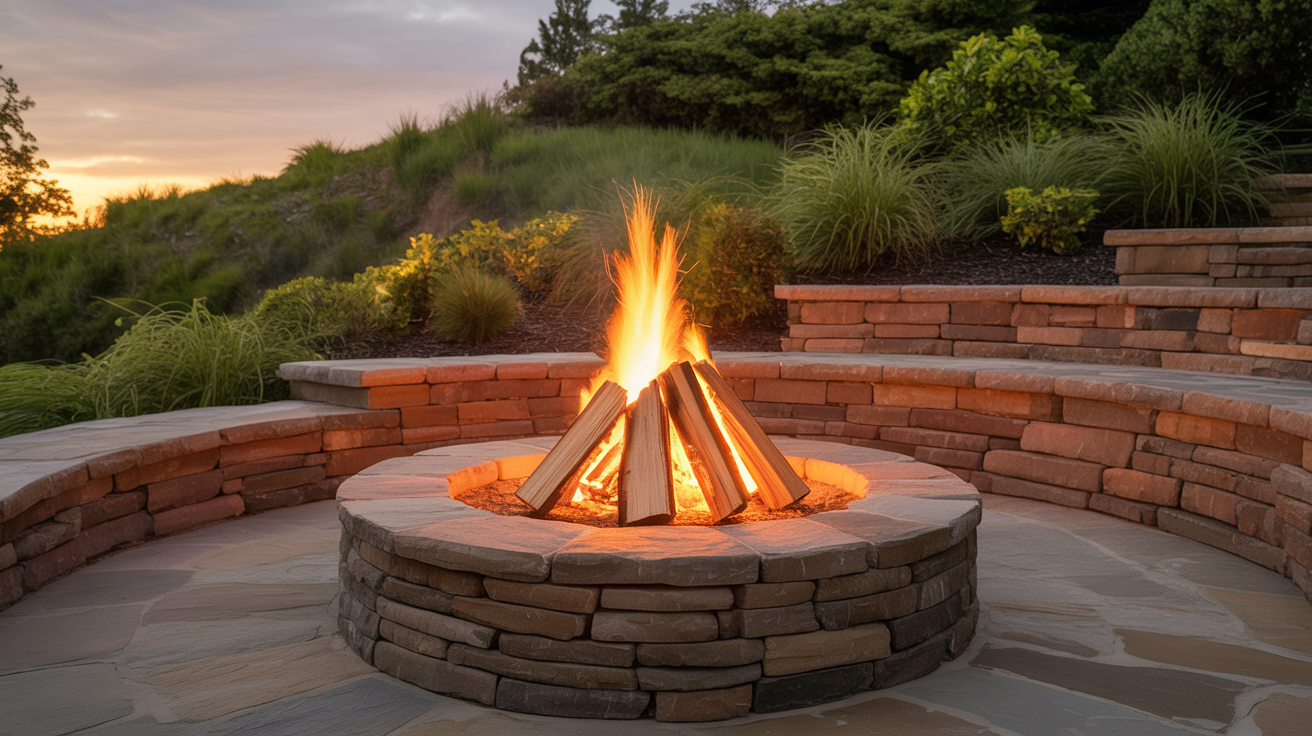
A sloped yard doesn’t have to be a problem. It can actually be your biggest outdoor advantage. With the right fire pit design, that uneven hillside becomes the most talked-about spot in the neighborhood.
Most people look at a sloped backyard and see a headache. I look at it and see potential. The natural elevation changes create depth, drama, and a built-in sense of coziness that flat yards just can’t fake.
That said, building a fire pit on a slope does need some planning. Safety, leveling, and drainage all matter. Get those right, and you’ve got an outdoor living space that genuinely works for you year-round.
Why Hillside Fire Pits Deserve More Attention Than Flat-Yard Versions Ever Get
Hillside fire pits have something special going for them. The tiered elevation means guests naturally face each other and the fire. It creates a built-in amphitheater effect without any extra effort.
I’ve seen flat-yard fire pits that feel oddly exposed and awkward. A hillside setup, on the other hand, feels sheltered and intimate. The slope does the design work for you in ways you don’t expect.
Beyond looks, sloped yards also tend to have better natural drainage. That means less water pooling around your fire pit after rain. It’s a practical bonus that flat-yard owners genuinely envy.
| Feature | Sloped Yard Fire Pit | Flat Yard Fire Pit |
| Natural drainage | Excellent | Requires extra work |
| Visual depth | High | Low |
| Seating arrangement | Tiered, amphitheater feel | Single level |
| Privacy feel | More enclosed | More exposed |
| Leveling required | Yes | Minimal |
15 Smart Fire Pit Designs for Hillside Yards
1. Terraced Stone Fire Pit Patio That Turns Your Slope Into a Multi-Level Outdoor Room
A terraced stone patio is one of the most popular solutions for sloped yards. You cut into the hillside in steps and create flat platforms at each level. The fire pit sits on the lowest or middle terrace, surrounded by natural stone seating walls.
I love this design because it solves the leveling problem and adds serious visual structure to the yard. The stone retaining walls do double duty: they hold the slope and act as casual seating. It’s a two-for-one that always looks intentional and polished.
Natural stone, like flagstone or bluestone, works best here. It weathers beautifully and blends into the landscape. Add some low ground cover plants along the terrace edges, and the whole setup looks like it grew there naturally.
2. Sunken Fire Pit Bowl Built Into the Hillside for a Sheltered and Cozy Outdoor Gathering Spot
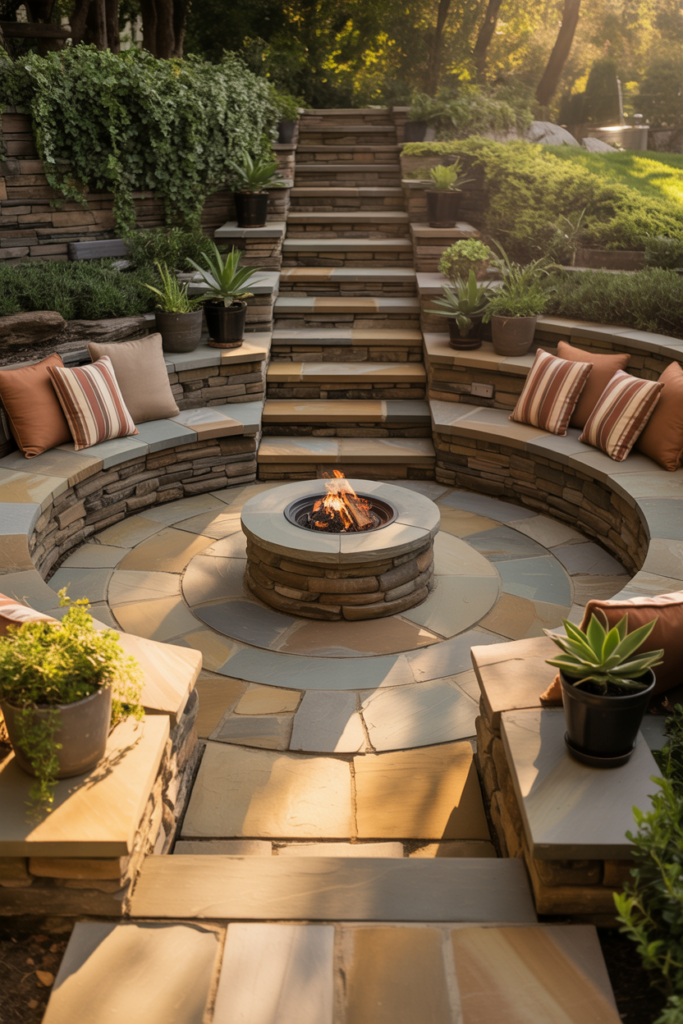
A sunken fire pit uses the slope to your advantage in the most literal way. You dig into the hill to create a recessed bowl-shaped seating area. The fire pit sits at the center, and the earthen walls wrap around the space like a natural windbreak.
This design is one of my personal favorites for hillside yards. The sunken setup feels incredibly private and warm, even on breezy evenings. The hill itself becomes the wall of your outdoor room, which is both practical and atmospheric.
For the seating, curved stone benches or built-in wooden bench seating work really well around the bowl. Keep the fire pit itself simple; a round steel bowl or a stacked stone ring fits the organic feel of this design perfectly.
3. Retaining Wall Fire Pit Combo That Uses Structural Elements as Built-In Seating Walls
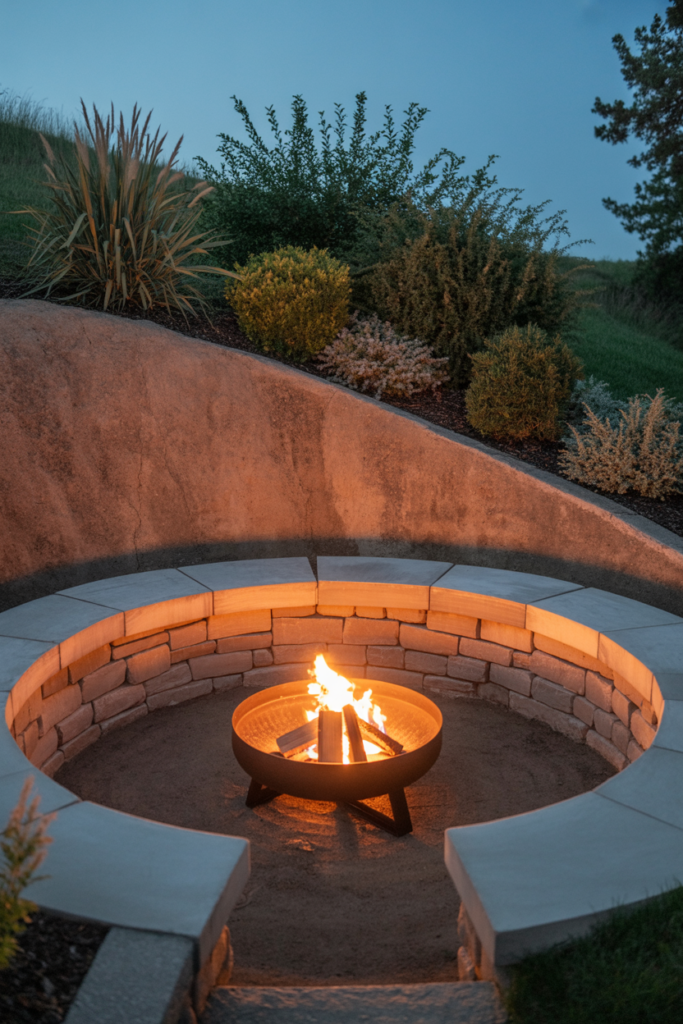
If your sloped yard already needs retaining walls, you might as well make them beautiful. A retaining wall fire pit combo integrates the fire feature directly into the wall structure. The walls hold back the slope and frame the seating area at the same time.
This is a smart approach because you’re solving two problems with one project. The retaining walls are necessary anyway, so building a fire pit nook into the design adds function without a huge extra cost. It looks like a fully planned outdoor room rather than a patchwork fix.
Concrete block walls with a stacked stone veneer are a popular finish for this style. They’re strong enough to handle the structural load and look attractive with warm firelight bouncing off them in the evening.
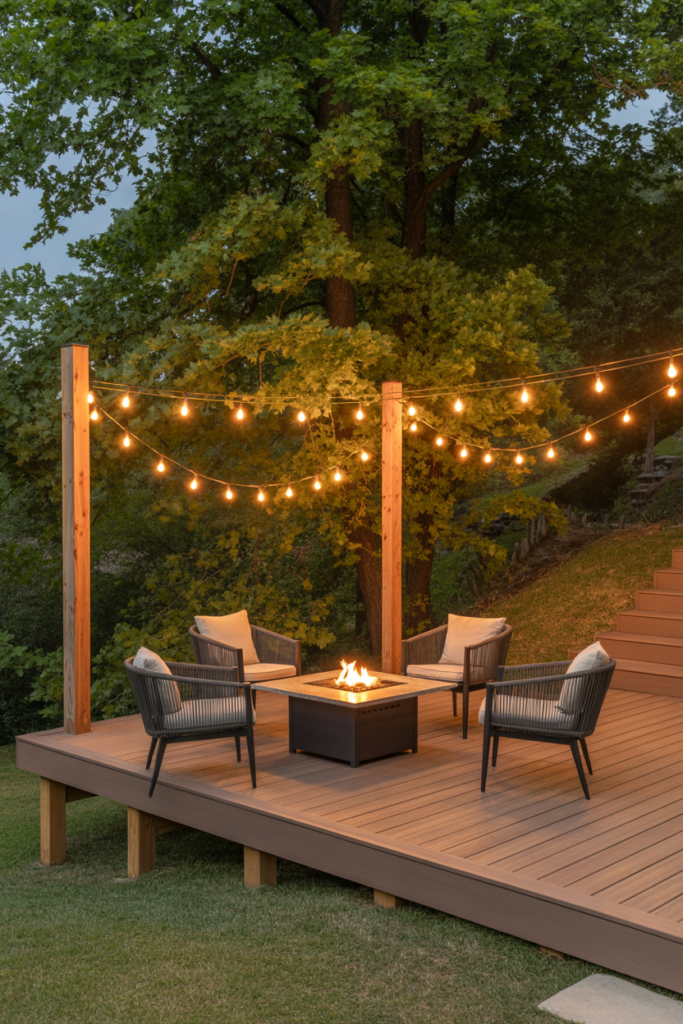
4. Hillside Fire Pit With Wooden Deck Platform That Creates a Level and Stylish Entertaining Space
Sometimes, the cleanest solution for a sloped yard is to build a deck. A wooden or composite deck platform creates a perfectly level surface on the hillside. The fire pit sits at the center or corner of the deck for a clean, modern look.
I find this design works especially well for steep slopes where terracing would require major excavation. The deck essentially floats over the slope and gives you a generous flat area to work with. You get a proper entertaining space without moving a single shovelful of dirt more than necessary.
Use a fire pit table or a built-in gas fire pit for deck installations. Open flame wood-burning pits need more clearance and careful material choices on a wooden deck. A gas insert with a protective surround keeps things safe and sleek.
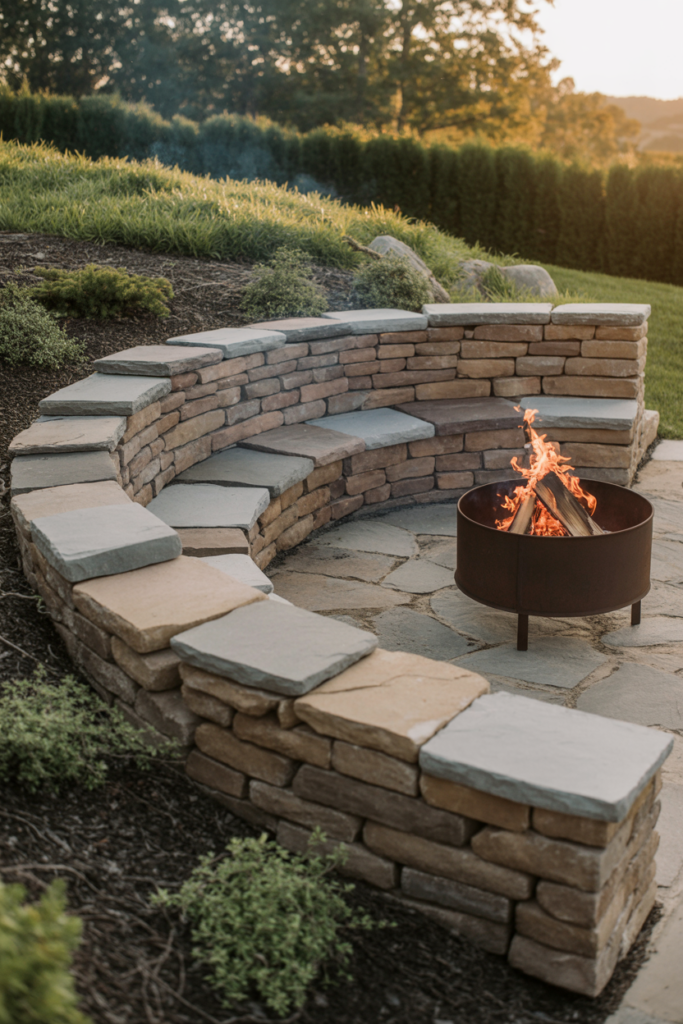
5. Curved Stone Seating Wall Around a Fire Pit That Follows the Natural Contour of Your Slope
Following the natural contour of a slope is always a good design instinct. A curved stone seating wall that wraps around the fire pit works with the hill’s shape instead of against it. The result looks organic, purposeful, and genuinely beautiful.
This design works especially well on gradual slopes where full terracing feels like overkill. You build a curved low wall that follows the hillside’s existing line and level off just the fire pit area. The wall creates the level surface and the seating in one clean move.
Dry-stacked fieldstone or mortared limestone are both great options for the seating wall. They hold up well outdoors and look better with age. A stone cap on top of the wall adds a finished edge that’s also comfortable to sit on.
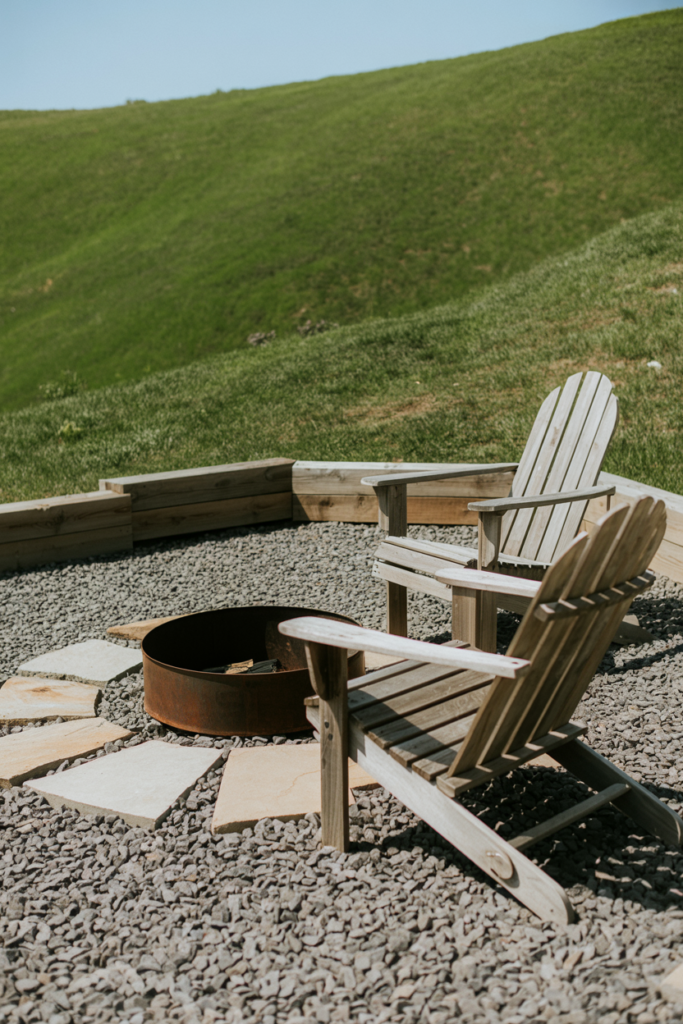
6. Gravel and Flagstone Fire Pit Area on a Slope That Keeps Costs Low Without Sacrificing Style
Gravel and flagstone make one of the most budget-friendly combinations for a hillside fire pit area. You level a small section of the slope, lay flagstone pavers for the fire pit base, and fill the surrounding area with compacted gravel. It’s simple, it drains well, and it looks sharp.
I appreciate this design because it doesn’t require major construction or a big budget. The gravel naturally handles water runoff on a slope, which is a real problem-solver. A few well-placed flagstones and a basic steel fire pit ring are all you need to pull it together.
For extra stability on the slope, consider edging the gravel area with landscape timbers or steel garden edging. This keeps the gravel from migrating downhill over time. It’s a small detail that makes the whole setup look more intentional and last much longer.
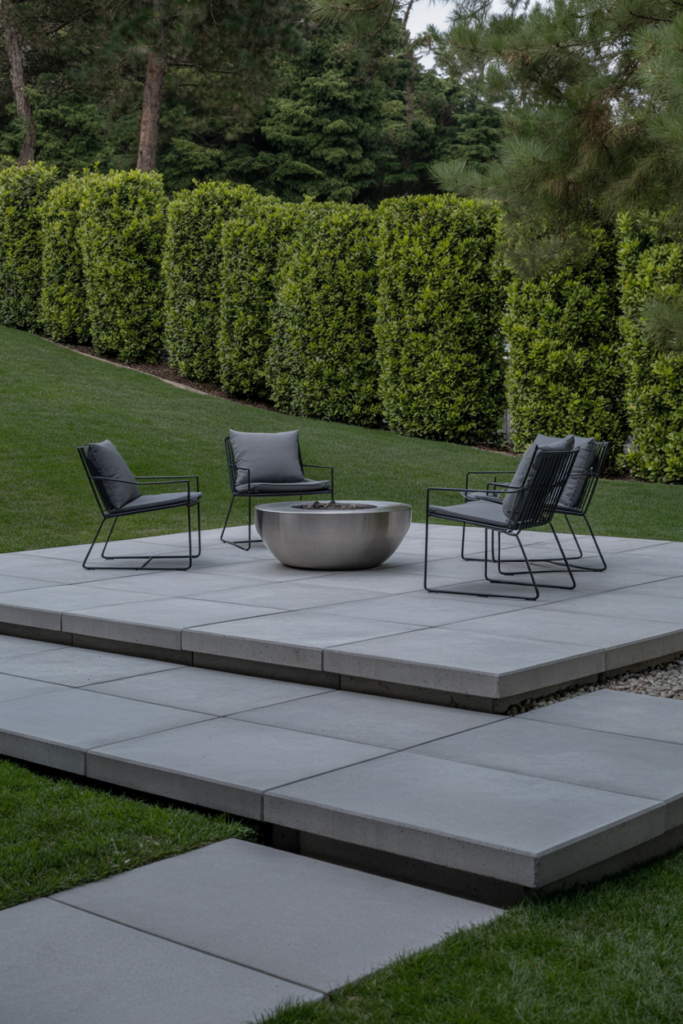
7. Concrete Paver Fire Pit Platform on a Hillside That Gives You a Clean and Modern Outdoor Look
Concrete pavers are a go-to choice for homeowners who want a clean, geometric look on a sloped yard. You build a level compacted base on the hillside and lay the pavers in a tight pattern. The result is a crisp, modern platform that holds a fire pit beautifully.
This approach works well for contemporary homes where natural stone might feel a little too rustic. Concrete pavers come in a huge range of colors, sizes, and finishes. You can match them to your home’s exterior or go with a contrasting tone for visual interest.
The key to making this work on a slope is proper base preparation. A compacted gravel sub-base with a sand leveling layer prevents shifting and settling over time. Spend extra time on the base, and the pavers will stay level and tight for years.
8. Fire Pit With Stepped Pathway Leading Down the Hill for Easy and Safe Access to Your Seating Area
A fire pit on a hillside is only as good as the path that gets you there safely. A stepped stone or concrete pathway leading down the slope to the fire pit area adds both function and visual appeal. It guides guests naturally and prevents the awkward shuffling down a steep grass incline.
I always recommend adding lighting along the pathway steps when you’re planning a hillside fire pit. Solar stake lights or low-voltage landscape lighting along the edges make evening access safe and genuinely atmospheric. There’s something about lit steps leading down to a fire that feels almost magical.
Use the same material for the steps as you use for the fire pit surround to keep the design cohesive. If you go with flagstone for the pit area, use flagstone for the steps too. That visual continuity makes the whole yard feel like one well-thought-out design rather than a collection of random projects.
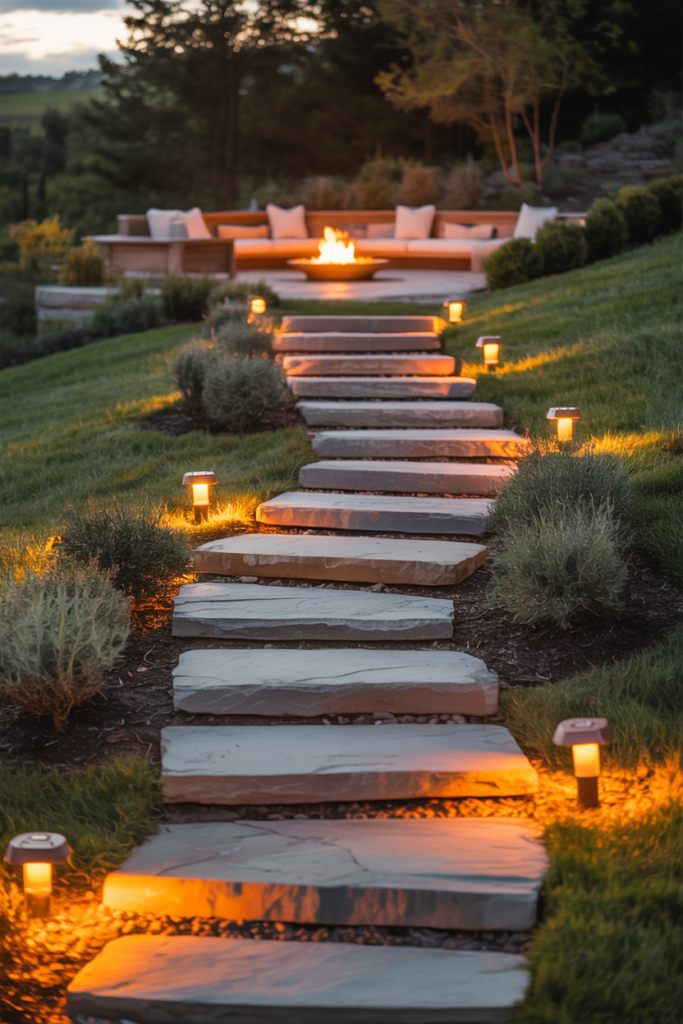
9. Raised Fire Pit Pad Built Into a Hillside Slope That Creates a Natural Stage-Like Focal Point
A raised fire pit pad uses the hillside’s elevation to create a natural stage effect. You build a flat raised platform slightly above the main yard level, set into the slope. The fire pit sits on this elevated pad, making it visible and dramatic from multiple angles.
This design works especially well when the yard is viewed from inside the house. The raised pad frames the fire pit like a piece of outdoor art. Guests seated around it feel slightly elevated from the rest of the yard, which adds a surprisingly pleasant sense of occasion.
Concrete block construction with a natural stone or brick veneer is a solid choice for the raised pad structure. Keep the platform edges clean and level, and add low landscape lighting around the base. At night, the whole structure glows in a way that looks far more expensive than it actually is.
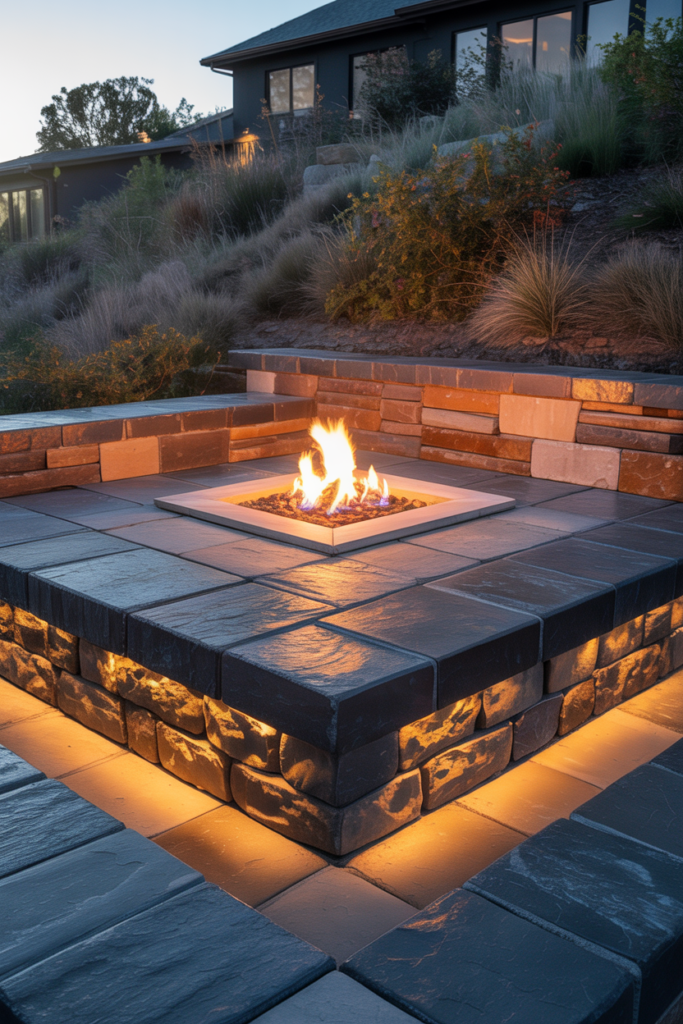
10. Hillside Fire Pit Surrounded by Native Plants and Garden Beds That Blend Into the Natural Landscape
Not every fire pit needs to look like a construction project. A hillside fire pit surrounded by native plants and natural garden beds takes a softer, more organic approach. The plantings fill in around the seating area and make the fire pit feel like it belongs to the landscape.
I genuinely love this approach for yards that already have natural character. Native grasses, low shrubs, and drought-tolerant perennials frame the fire pit without crowding it. They also require very little maintenance once established, which is always a win in my book.
Keep a clear non-combustible zone directly around the fire pit. Use gravel, stone, or compacted decomposed granite as the immediate ground surface. Beyond that safe perimeter, let the plantings go as lush and natural as you like.
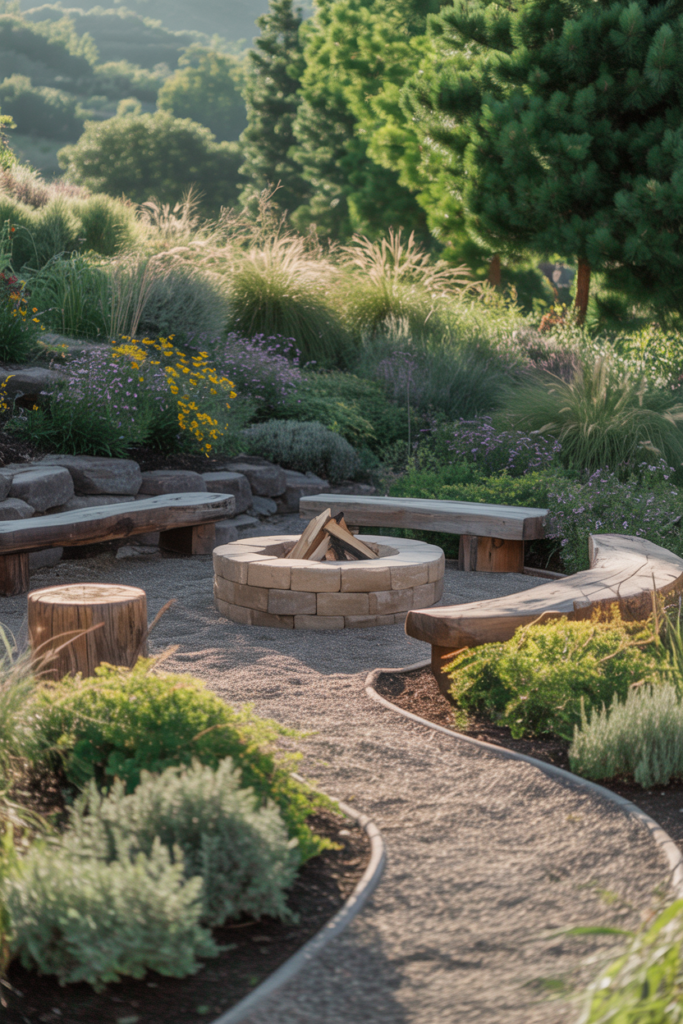
11. Brick Fire Pit With Built-In Bench Seating on a Terraced Hillside for a Classic Backyard Entertaining Space
Brick fire pits have a timeless quality that works in almost any yard style. On a terraced hillside, a brick fire pit with built-in bench seating creates a complete outdoor room in one compact footprint. The brick ties the seating and the fire feature together visually and structurally.
This design is one of the more permanent and investment-worthy options on this list. Built-in brick bench seating with a cushioned top looks polished and handles foot traffic far better than moveable furniture on a slope. Everything stays put, which matters more on a hillside than people realize.
For the fire pit itself, a classic round or square brick surround with a steel insert works perfectly. The steel insert protects the brick from direct heat damage and makes cleaning out ash much easier. It’s a small addition that extends the life of the whole structure significantly.
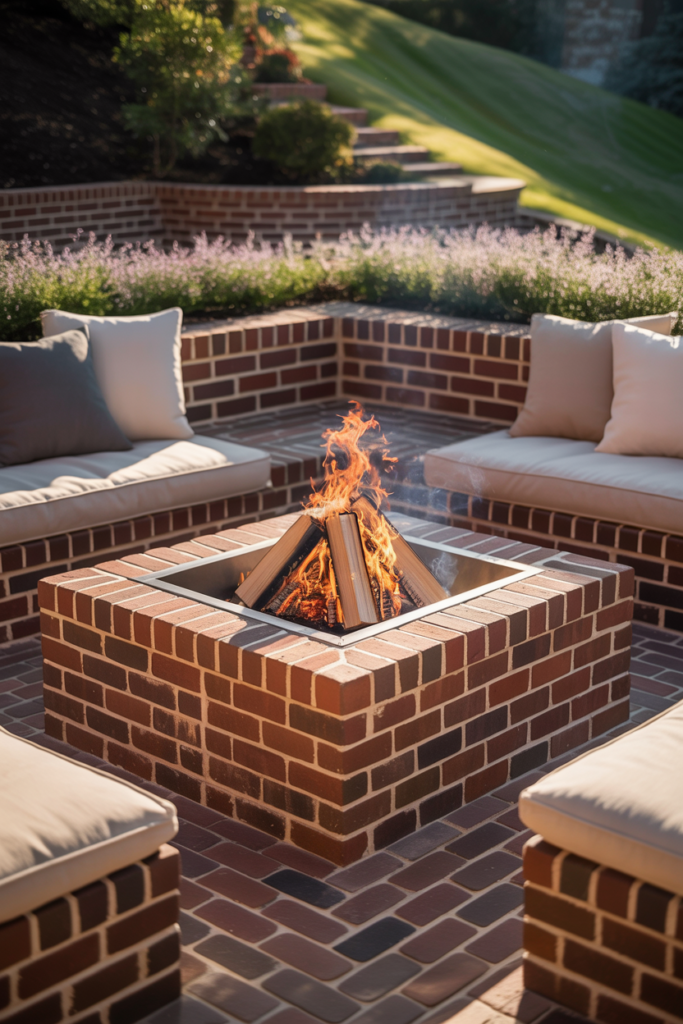
12. Fire Pit Lounge Area With Outdoor Rugs and Weather-Resistant Furniture on a Leveled Hillside Pad
A leveled hillside pad with a lounge-style fire pit setup is one of the more livable designs on this list. You level a generous area of the slope, lay a paver or concrete base, and furnish it like an outdoor living room. Outdoor rugs, deep seating, and a central fire pit table complete the look.
I think this approach gets underused on sloped yards because people assume lounge furniture won’t work on a hill. But once you have a proper level pad, the slope becomes irrelevant. The space functions exactly like a flat-yard patio, just with better views.
Choose weather-resistant furniture with low profiles to keep the wind from catching it on exposed hillside spots. Outdoor rugs with non-slip backing add comfort and keep things from shifting around. A propane fire pit table works best here since it’s easy to move if you ever want to reconfigure the layout.
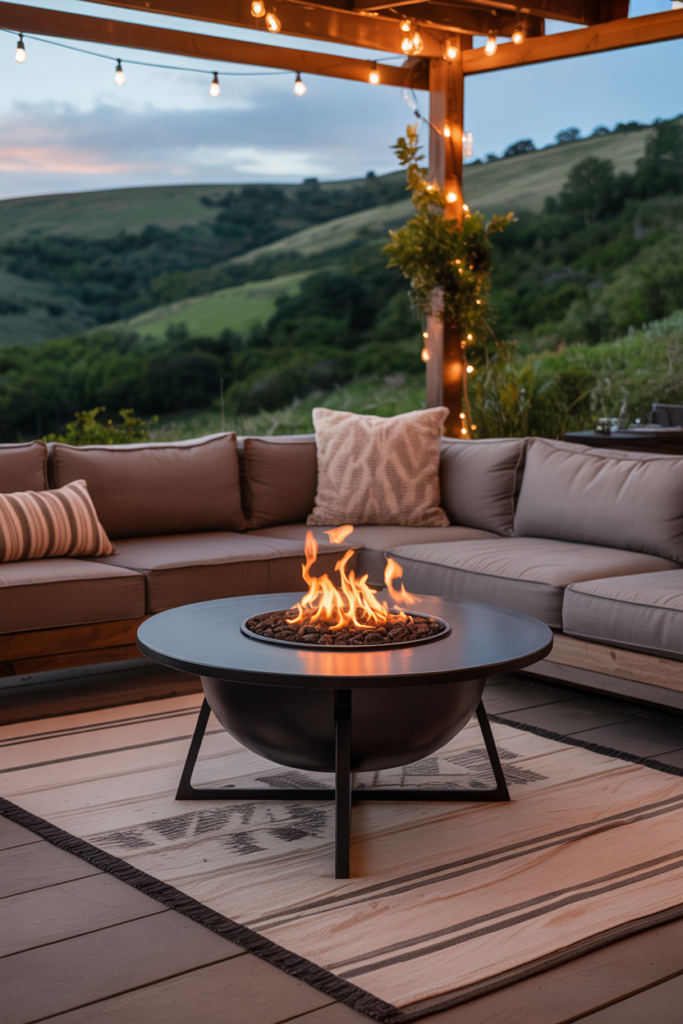
13. Stone Circle Fire Pit on a Gently Graded Hillside Yard That Keeps the Design Simple and Affordable
Sometimes the best fire pit design is the most straightforward one. A simple stone circle fire pit on a gently graded slope costs very little and takes a weekend to build. You level a small circular area, line it with large stones or concrete fire ring blocks, and you’re done.
This is the design I’d recommend to anyone who wants a functional hillside fire pit without overthinking it. There’s real charm in a simple stone ring on a natural slope with log seating around it. It feels honest and unpretentious, which honestly suits a lot of backyard personalities perfectly.
Make sure the ground inside the stone ring is level and clear of any combustible material. A layer of sand or gravel inside the ring keeps things clean and safe. This whole project can come together for well under a few hundred dollars if you source the stones locally.
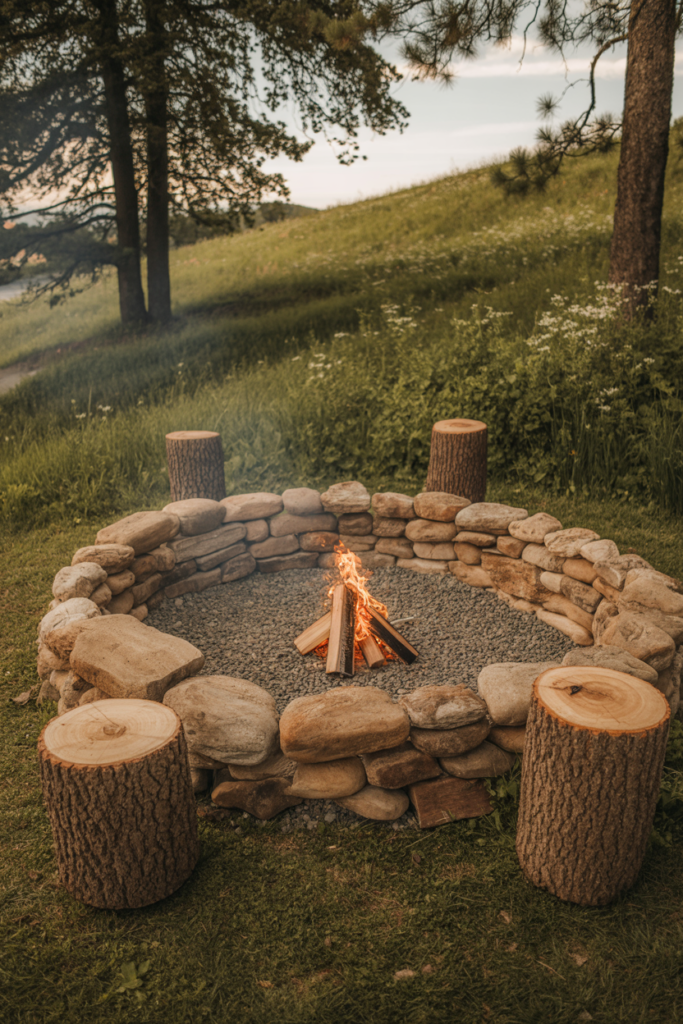
14. Fire Pit With Pergola or Shade Structure on a Hillside Deck That Adds Year-Round Comfort and Coverage
Adding a pergola or shade structure above a hillside fire pit area takes the space from seasonal to year-round. The structure provides shade in summer, a frame for string lights in the evening, and a sense of enclosure that makes the space feel intentional and complete.
I find that pergolas work especially well on hillside deck fire pit setups. The deck gives you the level base, and the pergola defines the space vertically. Together, they create a proper outdoor room that feels as comfortable as an interior space, just with a fire at the center.
Use cedar, pressure-treated pine, or powder-coated aluminum for the pergola frame, depending on your budget and style preference. Keep the pergola open enough to allow smoke to escape freely from the fire pit below. A good rule of thumb is to leave at least 80% of the roof area open if you’re using a wood-burning fire pit.
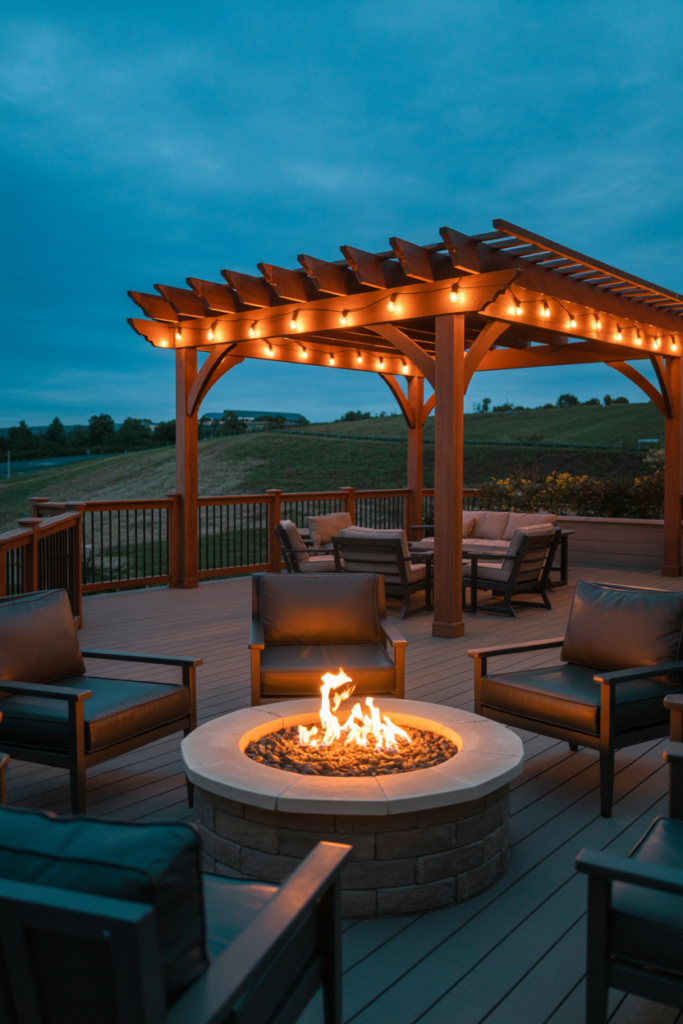
15. Gas Fire Pit Built Into a Hillside Retaining Wall Nook That Maximizes Safety on Steep Sloped Yards
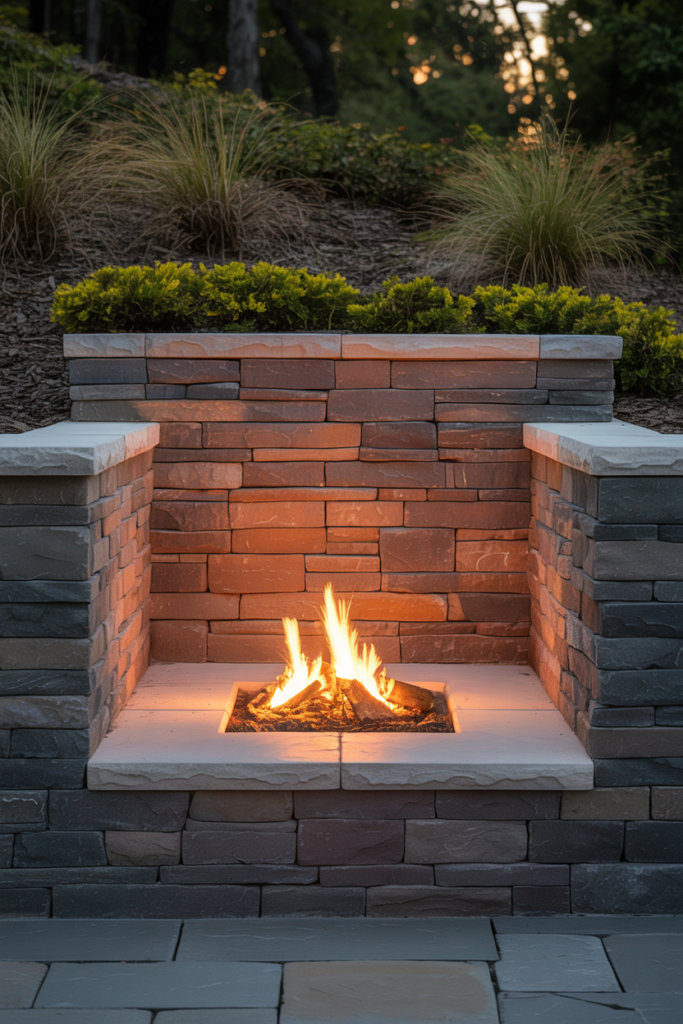
A gas fire pit built into a retaining wall nook is one of the safest and most polished options for steep hillside yards. The retaining wall forms three sides of the fire pit enclosure, and the gas insert sits flush within the stone or concrete structure. It looks like it was always meant to be there.
Gas fire pits make particular sense on steep slopes where managing firewood and open sparks adds extra risk. There’s no ash cleanup, no ember scatter, and no hauling logs up a hillside. You turn a knob and have a clean, controlled flame whenever you want it.
For the wall material, natural stacked stone or concrete block with a stone veneer both look excellent. Pair the gas insert with a lava rock or fire glass fill for a finished look that photographs beautifully. This is the design I’d choose if the goal is maximum safety, minimum maintenance, and maximum visual impact all at once.
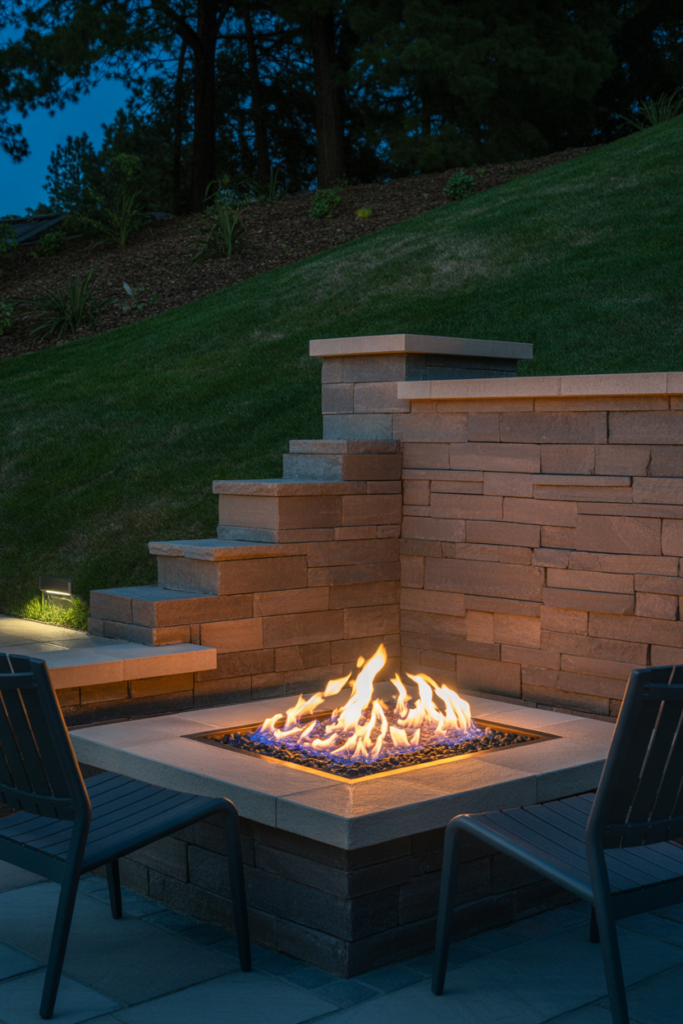
Important Safety Tips for Building a Fire Pit on a Sloped Yard Without Putting Your Property at Risk
Safety is the one thing you cannot compromise on when building a fire pit on a hillside. Slopes create unique fire risks that flat yards simply don’t have. A few smart decisions up front save you from serious problems later.
Always make sure the fire pit base is completely level, even if the surrounding yard is not. A tilted fire pit can cause logs to roll out or embers to scatter in one direction. That’s a fire hazard you don’t want anywhere near dry hillside grass or landscaping.
Keep a minimum clearance of 10 feet between the fire pit and any structure, fence, or overhanging tree branch. On a slope, also consider which direction embers travel when the wind picks up. Position the pit so prevailing winds carry sparks away from the house, not toward it.
| Safety Consideration | Recommended Standard |
| Minimum clearance from structures | 10 feet |
| Ground surface around the pit | Non-combustible only |
| Fire pit base | Must be completely level |
| Slope gradient for safe building | Under 15 degrees ideal |
| Spark screen | Always use one |
| Water or an extinguisher nearby | Required at all times |
Check your local building codes before you break ground. Many municipalities require permits for permanent fire pit structures. A quick call to your local planning office saves you from having to tear down a beautiful project later.
Wrapping It All Up: The Best Hillside Fire Pit Is the One That Works for Your Yard
A sloped yard is not a limitation. It’s a design opportunity that most homeowners underestimate until they finally do something with it. The right fire pit turns that awkward hillside into the best seat in the house.
From terraced stone patios to sunken bowl seating areas, every design on this list solves the slope problem differently. Some prioritize budget, some prioritize safety, and some prioritize pure visual impact. The right choice depends entirely on your yard’s gradient, your style, and how you plan to use the space.
My honest take is that the best hillside fire pit is the one you’ll actually sit around. Don’t overbuild something that feels like a museum piece. Build something that draws you outside on a cool evening with a warm drink and good company.
A few things I’d keep in mind before starting any hillside fire pit project. First, always level the fire pit base, no matter what design you choose. Second, match your materials to the overall style of your home for a cohesive look. Third, plan your seating before you plan the pit because comfort drives how much you actually use the space.
Invest in quality materials for anything structural, especially retaining walls and base layers. Those elements handle the real work of managing your slope long-term. The fire pit itself is almost secondary to getting the foundation right.
Frequently Asked Questions
Can I build a fire pit on a sloped yard without major excavation?
Yes, you can. Simple designs like a stone circle fire pit or a gravel and flagstone pad require minimal digging. You just need to level a small area large enough for the pit and immediate seating.
What is the safest fire pit type for a steep hillside yard?
A gas fire pit built into a retaining wall nook is generally the safest option for steep slopes. It eliminates open spark scatter and removes the need to carry firewood up a grade.
How much does it cost to build a fire pit on a sloped yard?
Costs vary widely depending on the design. A simple stone circle pit can cost under $300, while a fully terraced stone patio with a built-in fire pit can run anywhere from $5,000 to $20,000 or more, depending on materials and labor.
Do I need a permit to build a fire pit on a hillside?
In many areas, yes. Permanent structures, like built-in brick or stone fire pits, often require a building permit. Always check with your local municipality before starting construction.
What materials work best for a hillside fire pit surround?
Natural stone, brick, and concrete pavers all perform well outdoors and handle heat effectively. For sloped yards specifically, materials that integrate well with retaining walls tend to look the most cohesive.
How do I stop my hillside fire pit area from washing out after heavy rain?
Good drainage starts with the base. Use a compacted gravel sub-base under any paver or stone surface. Gravel-filled areas around the pit also help manage runoff without eroding the slope.
Can I put a wood-burning fire pit on a wooden deck built over a slope?
It’s possible, but it needs careful planning. Use a fire pit with a spark screen and keep a non-combustible pad under the pit. Many homeowners opt for a gas fire pit on wooden decks to reduce fire risk significantly.