
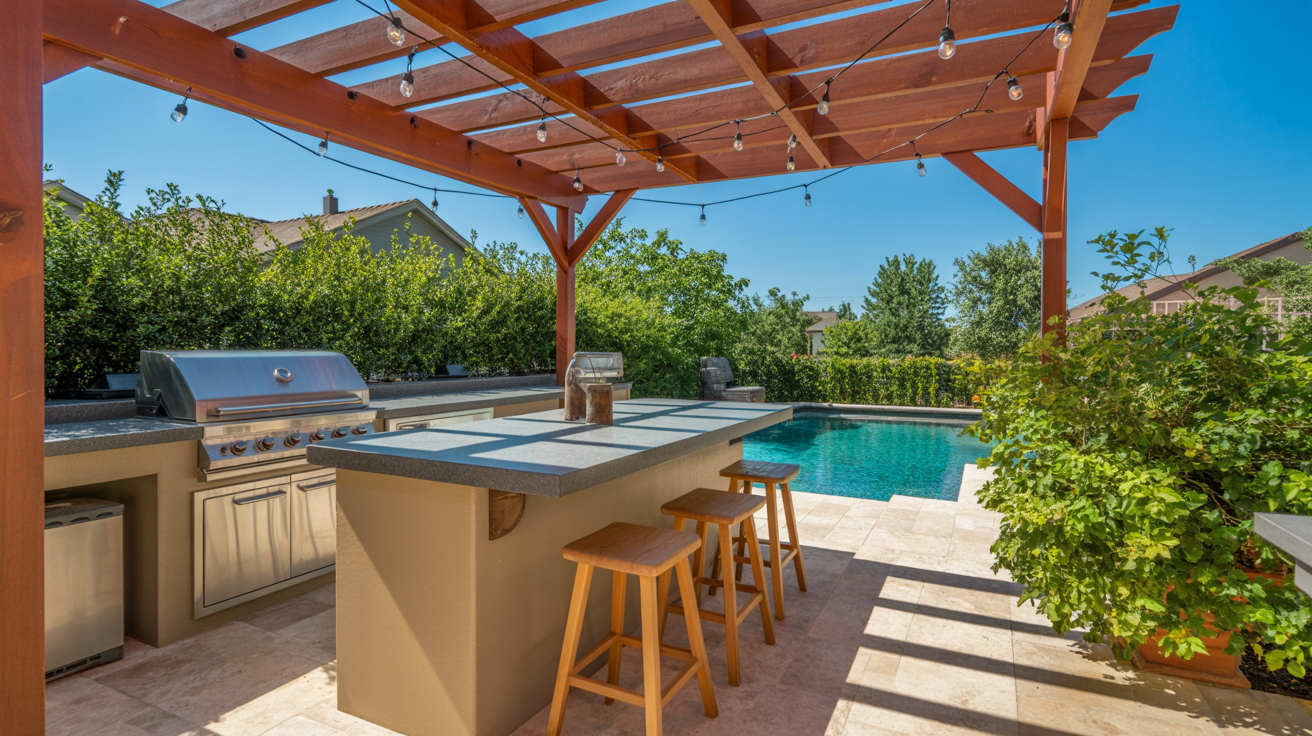
A covered outdoor kitchen turns your backyard from a place people pass through into a place nobody wants to leave. It gives you shade while you cook, protection from unexpected rain showers, and that polished, intentional look that makes guests immediately feel like they’re somewhere special. If you’ve been cooking beside a basic grill with no cover and no counter space, this upgrade changes everything.
I’ve seen backyards go from completely forgettable to genuinely impressive with nothing more than a well-planned covered kitchen setup. The cover alone does so much of the work visually, and once you add a proper cooking station, seating, and lighting underneath it, the whole space takes on a completely different energy. It stops feeling like a yard and starts feeling like an extension of the house.
The good news is that covered outdoor kitchens work at every budget level and every backyard size. Whether you’re working with a small patio behind a townhouse or a sprawling suburban backyard, there’s a covered kitchen configuration that fits the space and makes it work harder for you all summer long.
Why a Covered Outdoor Kitchen Is the Smartest Backyard Investment You Can Make for Year-Round Entertaining
A covered outdoor kitchen extends your entertaining season far beyond what an open-air setup allows. Rain, harsh afternoon sun, and even light wind become non-issues when you have a solid structure overhead protecting the cooking area. That weather protection alone justifies the investment for anyone who loves hosting outdoors regularly.
Beyond weather protection, a covered outdoor kitchen adds measurable value to a home. Real estate agents consistently report that well-built outdoor living spaces increase perceived home value and attract more buyer interest during showings. A covered kitchen in particular signals a finished, thoughtfully designed outdoor living area rather than a basic backyard.
The cooking experience also improves dramatically under a covered structure. You can install proper lighting overhead, run a ceiling fan to stay cool while grilling, and add pendant lights above a bar counter without worrying about weather exposure. Those small additions make outdoor cooking genuinely comfortable rather than something you tolerate between trips back inside.
1. A Classic Pergola-Covered Outdoor Kitchen That Balances Open Air With Overhead Structure
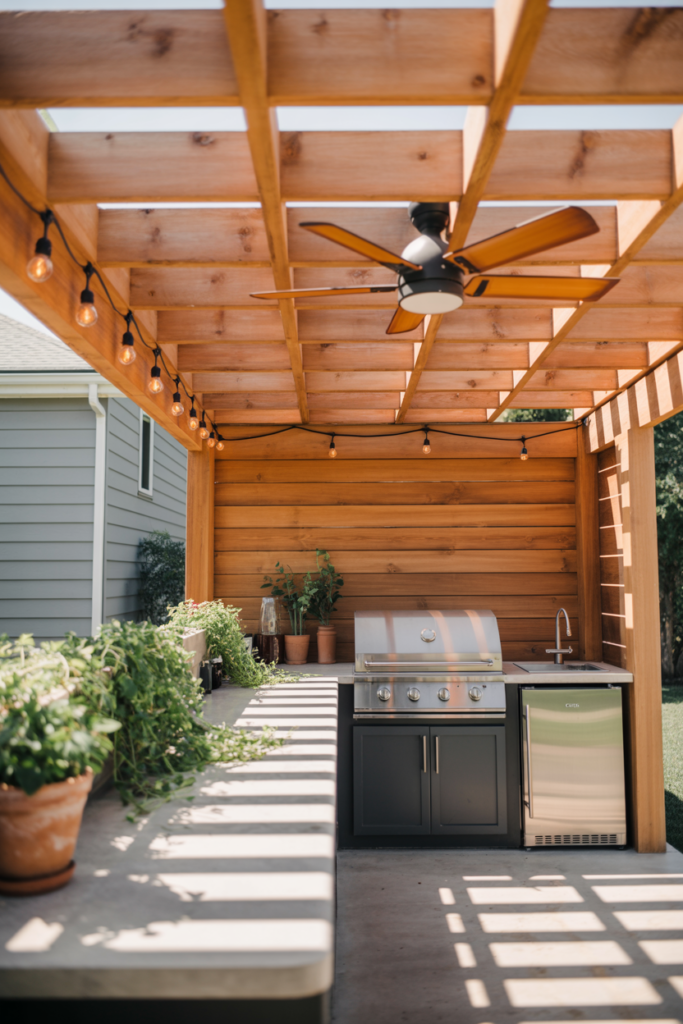
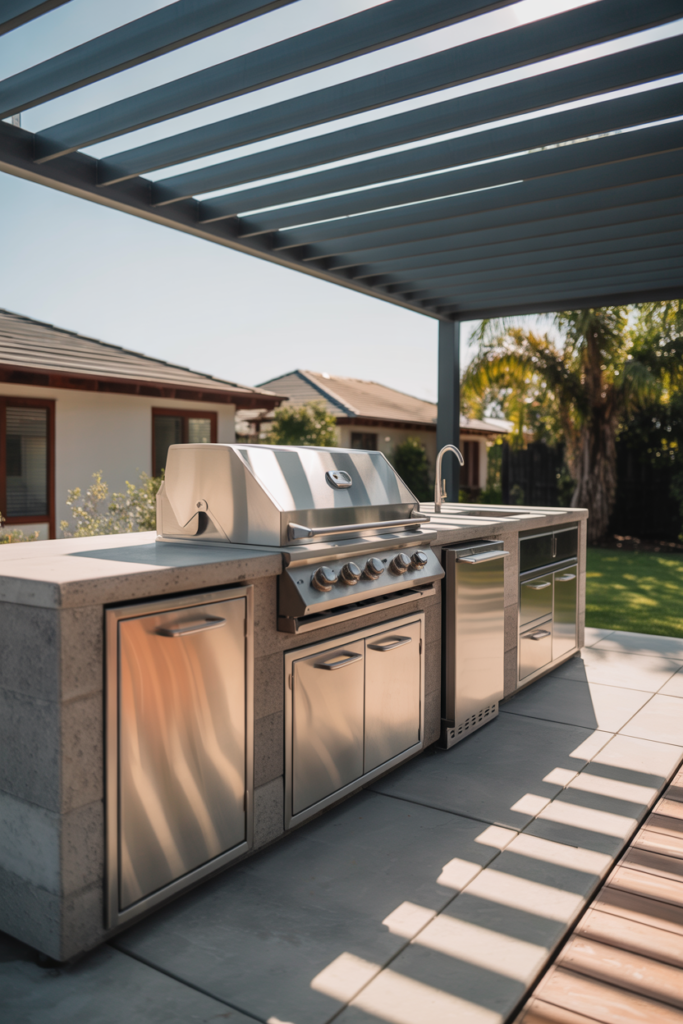
A pergola is one of the most popular covered outdoor kitchen structures for good reason. It provides partial shade and a defined overhead structure without making the space feel closed in or cave-like. The open lattice design still lets air circulate freely while giving you a framework to hang string lights, a ceiling fan, or even climbing plants around the cooking area.
A pergola-covered kitchen works particularly well when positioned against the back of the house, where it connects visually to the main structure and feels like a deliberate architectural addition rather than something dropped into the yard. Pairing the pergola with a built-in grill station, a concrete countertop, and a small bar fridge creates a cooking setup that rivals most indoor kitchens for functionality.
Wood pergolas in cedar or redwood suit traditional and craftsman-style homes beautifully, while aluminum and steel pergolas work better for modern and contemporary properties. Both materials handle outdoor conditions well when properly sealed or powder-coated, and both create that satisfying sense of outdoor room definition that makes a covered kitchen feel complete.
2. A Fully Roofed Outdoor Kitchen With a Metal Roof That Handles Rain and Heat Like a Pro
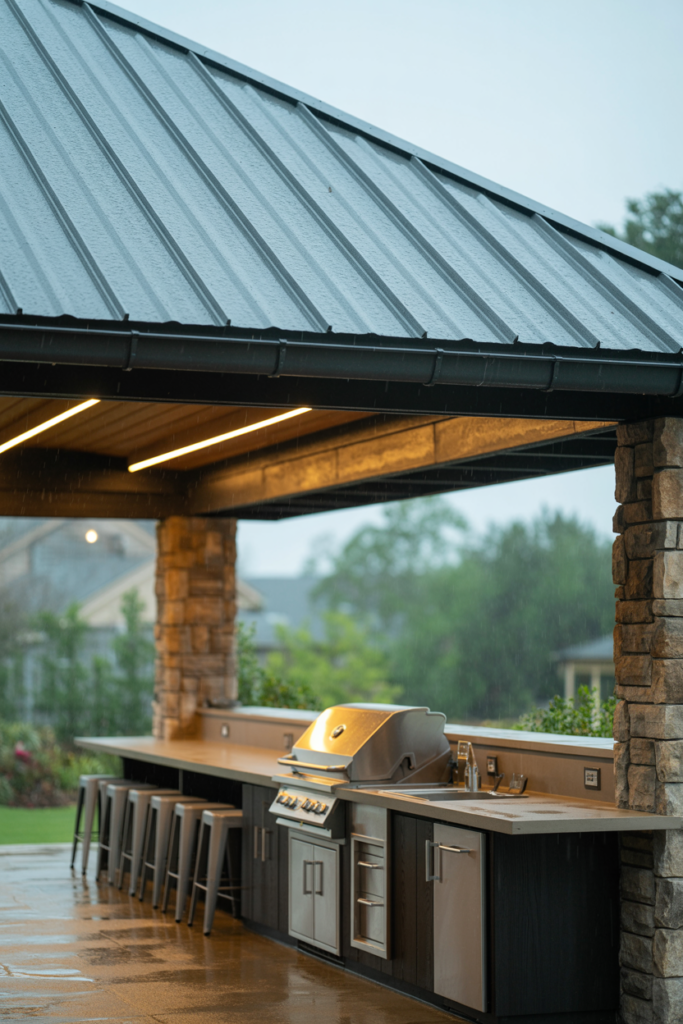
A solid metal roof over an outdoor kitchen is a step up from a pergola in terms of weather protection, and the results speak for themselves. Metal roofing handles heavy rain, strong sun, and wind without any of the maintenance concerns that come with wood or fabric structures. Once it goes up, it essentially takes care of itself for years.
Standing seam metal roofs in charcoal, bronze, or matte black look genuinely striking over an outdoor kitchen, especially when paired with stone or brick columns supporting the structure. The clean lines of a metal roof suit both modern farmhouse and contemporary outdoor kitchen designs without looking out of place in either. I’ve seen this combination on outdoor kitchens that honestly look better than the main house they’re attached to.
The acoustic quality of rain on a metal roof is also worth mentioning. There’s something genuinely pleasant about cooking under a metal roof during a light rain shower, which turns what would otherwise be a reason to go inside into an atmospheric outdoor experience. That kind of unexpected comfort is what separates a great outdoor kitchen from a merely functional one.
3. A Polycarbonate Roof Panel Kitchen Cover That Lets Natural Light Through While Blocking Rain
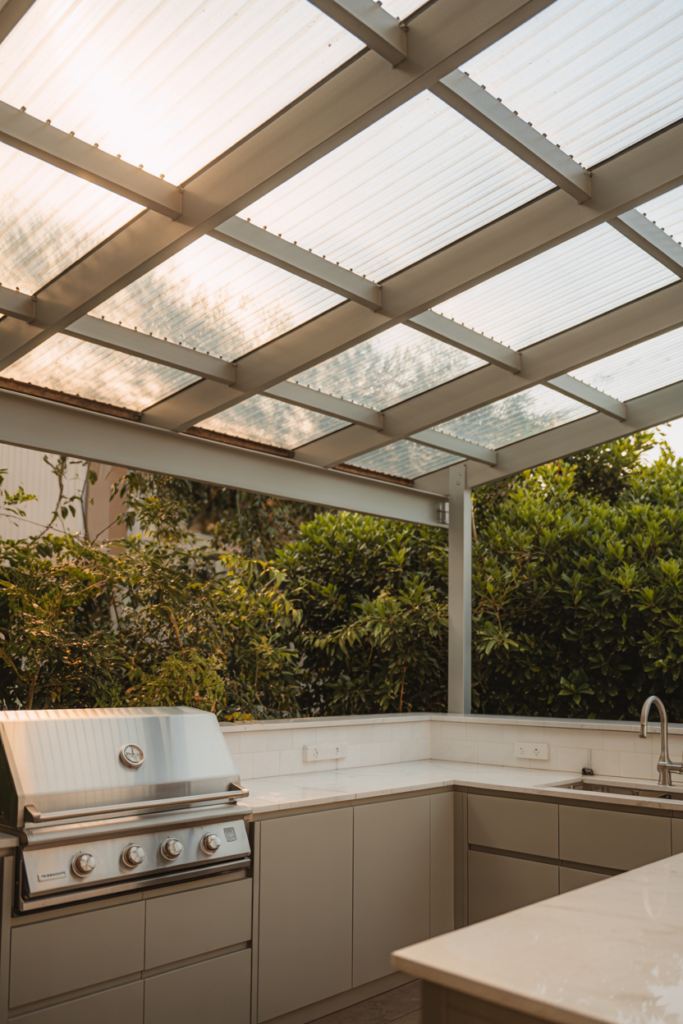
Polycarbonate roof panels are one of the most underrated covered outdoor kitchen solutions available at a mid-range price point. These clear or lightly tinted panels let natural light filter through while providing full rain protection, which means the space underneath stays bright and airy even on overcast days. You get the protection of a solid roof without the dimness that comes with opaque roofing materials.
Twin-wall polycarbonate panels also provide a degree of UV filtration, which reduces heat buildup under the cover during peak summer afternoons. That thermal benefit makes a real difference when you’re standing over a hot grill in July, and the last thing you need is a dark enclosed space trapping heat around you. The panels keep things bright without adding to the temperature underneath.
This roofing option works especially well on modern and Scandinavian-influenced outdoor kitchen designs where clean lines and light-filled spaces are a priority. The transparency of the panels gives the structure an almost floating quality from the outside, which looks genuinely architectural rather than purely functional.
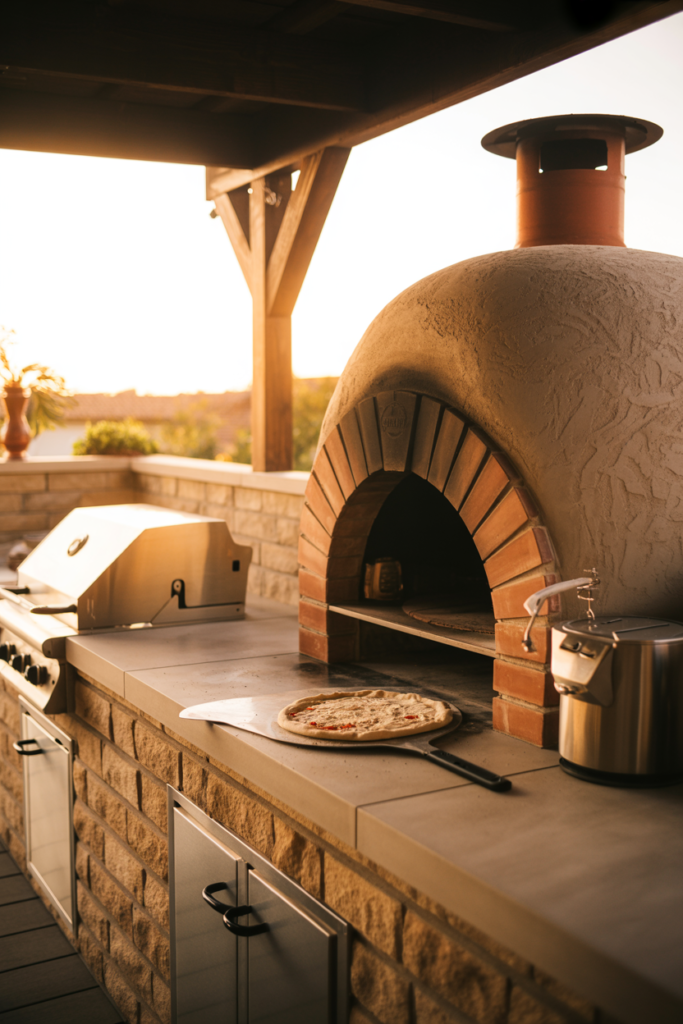
4. A Covered Outdoor Kitchen With a Built-In Pizza Oven That Becomes the Absolute Star of Every Gathering
A built-in pizza oven under a covered outdoor kitchen structure is the kind of addition that changes how people use a backyard entirely. Suddenly, Friday nights involve homemade pizza around the outdoor kitchen rather than takeout inside, and guests start angling for invitations in a way they never did before. It sounds dramatic, but a pizza oven genuinely shifts the social center of gravity in a home.
Wood-fired pizza ovens built from brick or stone suit rustic and Mediterranean outdoor kitchen designs naturally, while prefabricated gas-assist pizza ovens work better in sleeker contemporary setups. Both produce excellent results, and both add a visual focal point to the covered kitchen that no amount of stainless steel appliances can quite replicate. The dome shape of a pizza oven has a sculptural quality that makes the whole outdoor kitchen look more intentional.
Position the pizza oven at the end of the kitchen counter run rather than in the middle, so it becomes a destination within the space rather than an obstacle in the workflow. Leaving enough counter space beside it for dough preparation and finished pizzas makes the cooking process genuinely smooth rather than cramped and frustrating.
5. A Shade Sail Covered Outdoor Kitchen Setup That Adds Color and Modern Style on a Smaller Budget
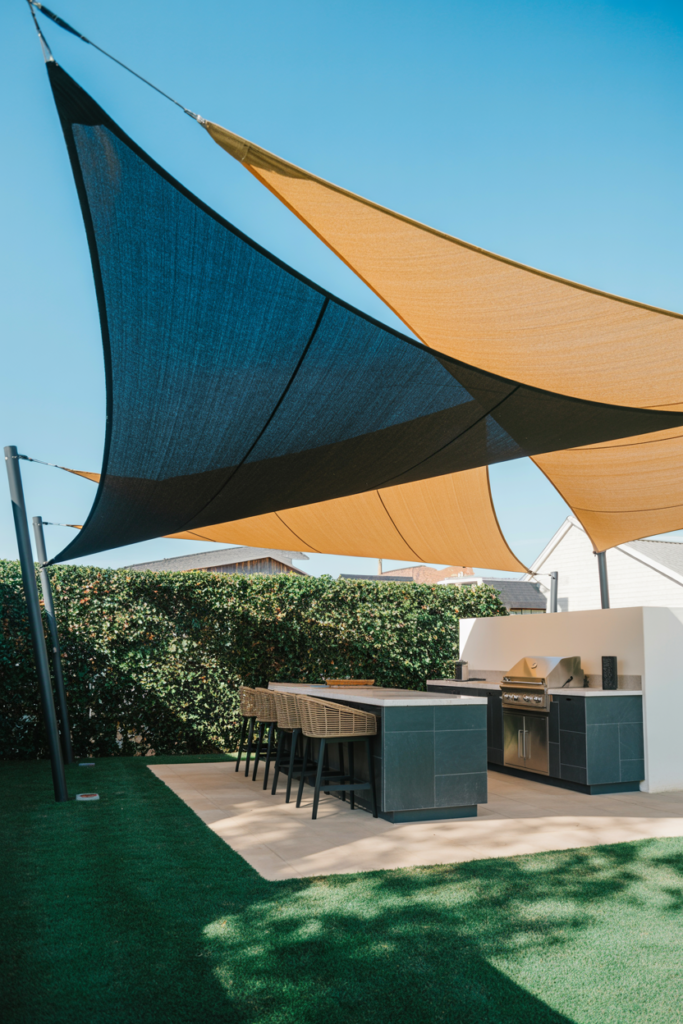
A shade sail is the most affordable entry point into covered outdoor kitchen territory, and it looks far better than its price suggests when installed correctly. Large triangular or rectangular shade sails in UV-resistant fabric provide meaningful sun protection and add a graphic, modern visual element to the outdoor cooking area. Multiple overlapping sails in complementary colors create an even more dramatic effect.
The key to a shade sail installation that looks intentional rather than improvised is getting the attachment points right. Fixing the sail corners to solid anchor points like steel posts, the house fascia, or existing fence posts at slightly different heights creates the taut, angled geometry that makes shade sails look architectural. A saggy shade sail fixed to whatever was convenient nearby looks like an afterthought, which is the opposite of what you want.
Shade sails work best over freestanding outdoor kitchen islands or modular grill stations that don’t require running gas or electrical lines to a fixed structure. The flexibility of the setup means you can reconfigure or relocate the kitchen components without rebuilding any permanent overhead structure.
6. A Covered Outdoor Kitchen With a Built-In Bar Counter That Keeps Guests Close While You Cook
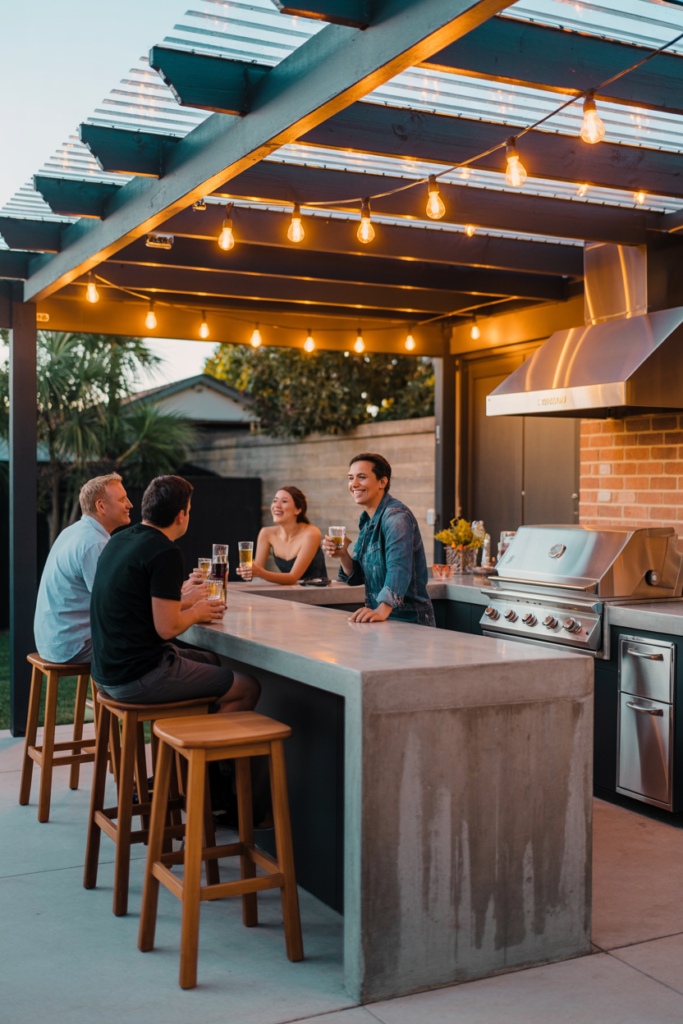
A built-in bar counter along one side of a covered outdoor kitchen solves one of the most common backyard entertaining problems: guests crowding the cooking area because there’s nowhere else interesting to stand. A raised bar counter with stools gives people a destination right beside the kitchen without getting in the way of actual food preparation. Everyone stays connected to the action without the chaos.
I find that a bar counter running perpendicular to the main cooking station creates the best traffic flow in a covered outdoor kitchen layout. The cook faces the grill while guests sit at the bar counter to the side, which means conversations happen naturally without anyone standing directly behind the person holding hot tongs. That simple spatial arrangement makes outdoor entertaining significantly more relaxed for everyone involved.
Concrete, porcelain tile, and quartzite all make excellent bar counter surfaces for outdoor use because they handle heat, moisture, and heavy use without deteriorating. A waterfall edge on the counter adds a high-end visual detail that elevates the entire covered kitchen design without requiring a major budget increase.
7. A Covered Outdoor Kitchen With String Lights and Pendant Lighting That Creates Incredible Evening Ambiance
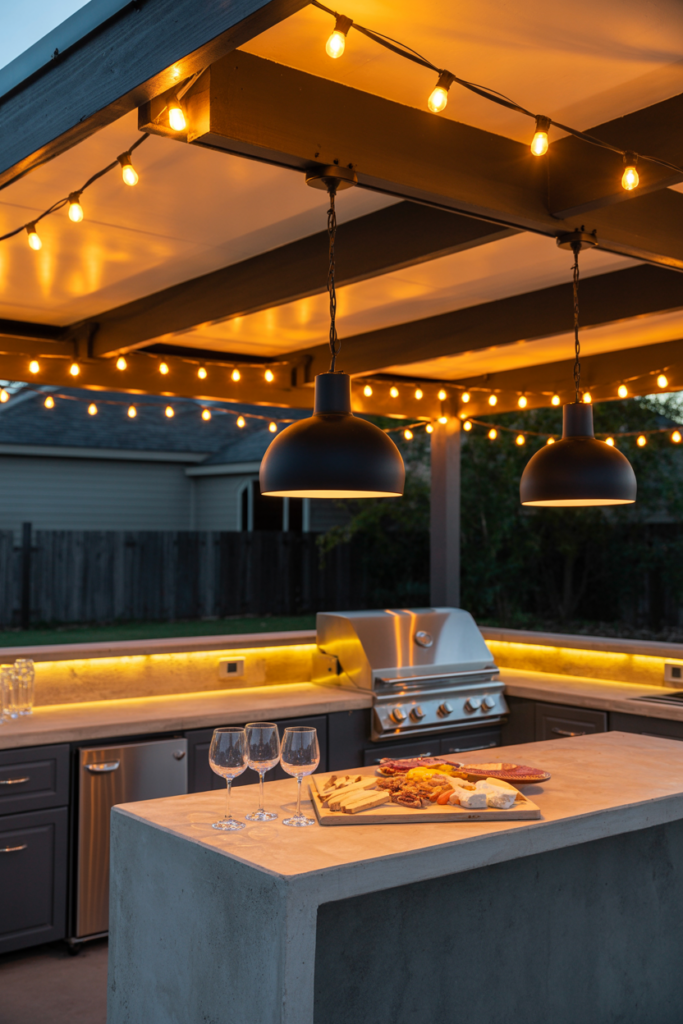
Lighting transforms a covered outdoor kitchen from a daytime cooking space into an evening entertaining destination that people genuinely do not want to leave. Warm Edison string lights draped across a pergola ceiling, pendant lights hanging above a bar counter, and recessed LED fixtures built into a solid roof structure each contribute a different layer to the overall lighting scheme. The combination of these layers creates an atmosphere that overhead lighting alone never achieves.
Pendant lights above an outdoor bar counter are particularly effective because they define the seating area visually while providing task lighting exactly where people need it. Choosing pendants in matte black, aged brass, or weathered bronze keeps the outdoor aesthetic cohesive and adds a design detail that signals a thoughtfully finished space. Weatherproof ratings matter here, so always check that any fixture installed in a covered outdoor space carries at least a damp-rated certification.
String lights deserve a special mention because they do more visual work per dollar than almost any other outdoor lighting option. A single strand of warm white Edison bulbs draped in loose swags across a pergola ceiling creates an instantly festive, welcoming atmosphere that makes every evening gathering feel like an occasion worth showing up for.
8. A Covered Outdoor Kitchen Built Against a Garden Wall That Uses Vertical Space and Creates a Stunning Backdrop
Building a covered outdoor kitchen against an existing garden wall or privacy fence gives the setup a permanent, architecturally integrated quality that freestanding structures rarely achieve. The wall provides a natural backdrop for the kitchen, a surface to mount shelving and hooks, and a windbreak that makes the cooking area more comfortable on breezy days. It also means the overhead cover only needs support on three sides rather than four, which simplifies the build considerably.
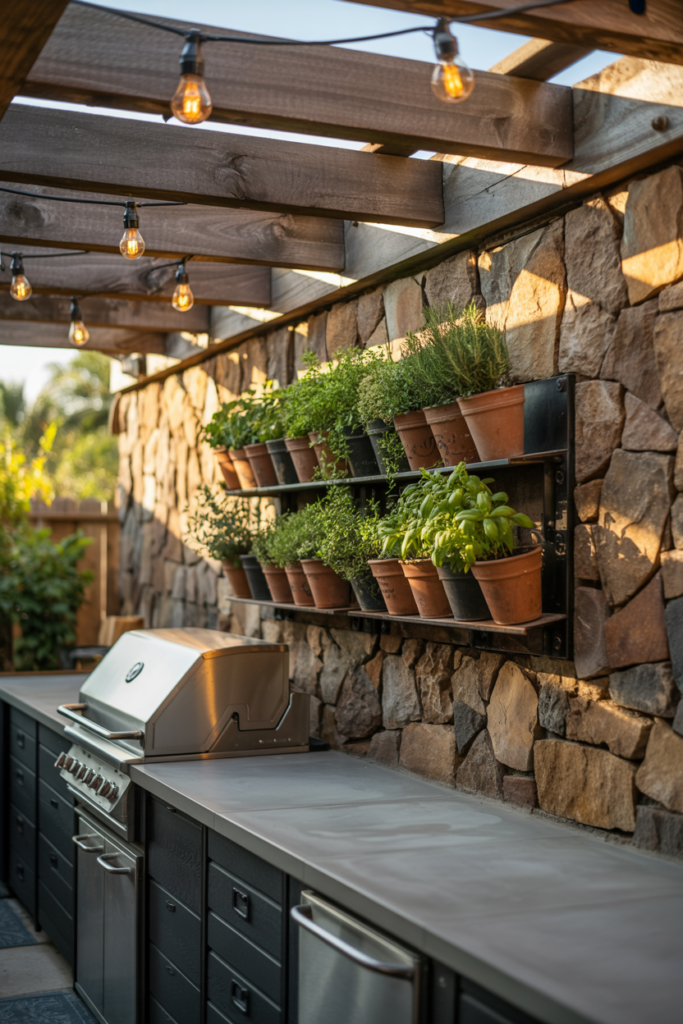
Stone garden walls work particularly beautifully as outdoor kitchen backdrops because they add natural texture and color that complements stainless steel appliances, concrete countertops, and wood cabinetry. A wall-mounted herb garden planted directly into the stone behind the kitchen counter is one of those small details that looks effortlessly stylish and actually gets used regularly during cooking. Fresh herbs within arm’s reach of the grill make a genuine difference to what comes off it.
Rendered and painted walls in warm white, charcoal, or terracotta also work well as outdoor kitchen backdrops when stone isn’t available or doesn’t suit the property’s style. A crisp white rendered wall behind a covered kitchen with dark cabinetry and black hardware creates a contrast that photographs beautifully and looks consistently sharp in person, regardless of the season.
9. A Covered Outdoor Kitchen With a Sink and Running Water That Makes Outdoor Cooking Genuinely Practical
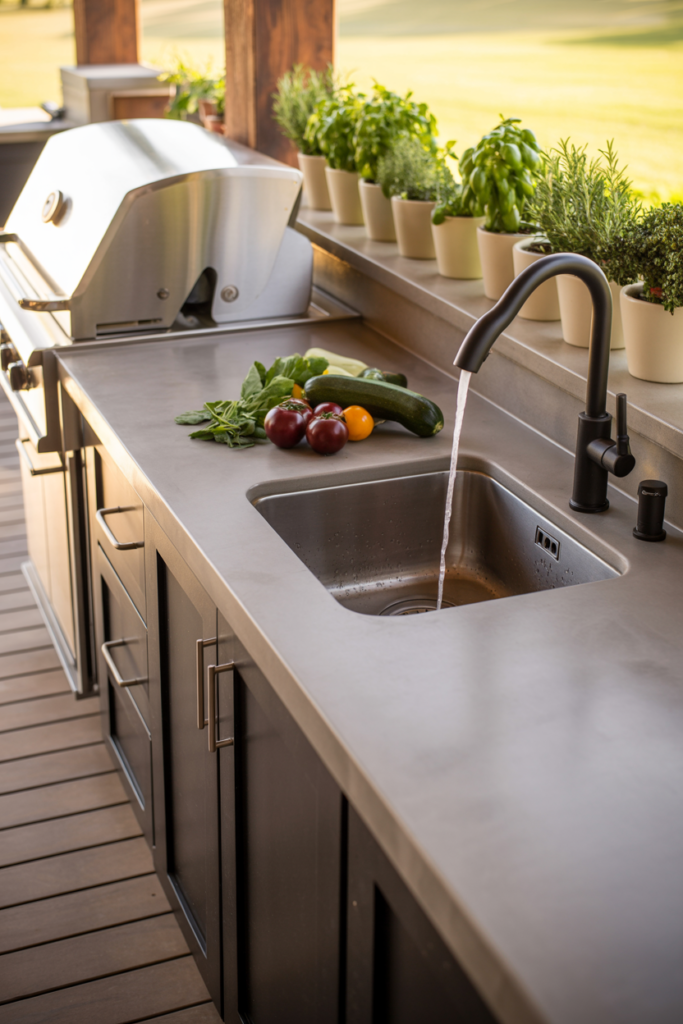
Adding a sink with running water to a covered outdoor kitchen is one of those upgrades that seems optional until you have it, at which point going back feels completely unthinkable. Washing vegetables, rinsing marinades off hands, and cleaning up after cooking without making repeated trips inside saves an enormous amount of time and effort during every single use of the outdoor kitchen. The convenience compounds quickly.
Undermount stainless steel sinks suit most outdoor kitchen styles and handle weather exposure reliably when the covered structure provides adequate overhead protection. A single basin with a high-arc faucet in a brushed nickel or matte black finish gives you the clearance to wash large pots and serving platters without fighting a low spout. Running both hot and cold water requires a connection to the home’s plumbing, which is worth budgeting for during the initial build rather than retrofitting later.
A small prep sink positioned at one end of the outdoor kitchen counter and the main grill at the other creates a natural cooking workflow that mirrors how most indoor kitchens operate. Having that defined prep zone and cooking zone separated by counter space makes outdoor cooking feel organized and intentional rather than improvised and cramped.
10. A Covered Outdoor Kitchen With a Refrigerator and Drink Station That Eliminates Constant Trips Inside
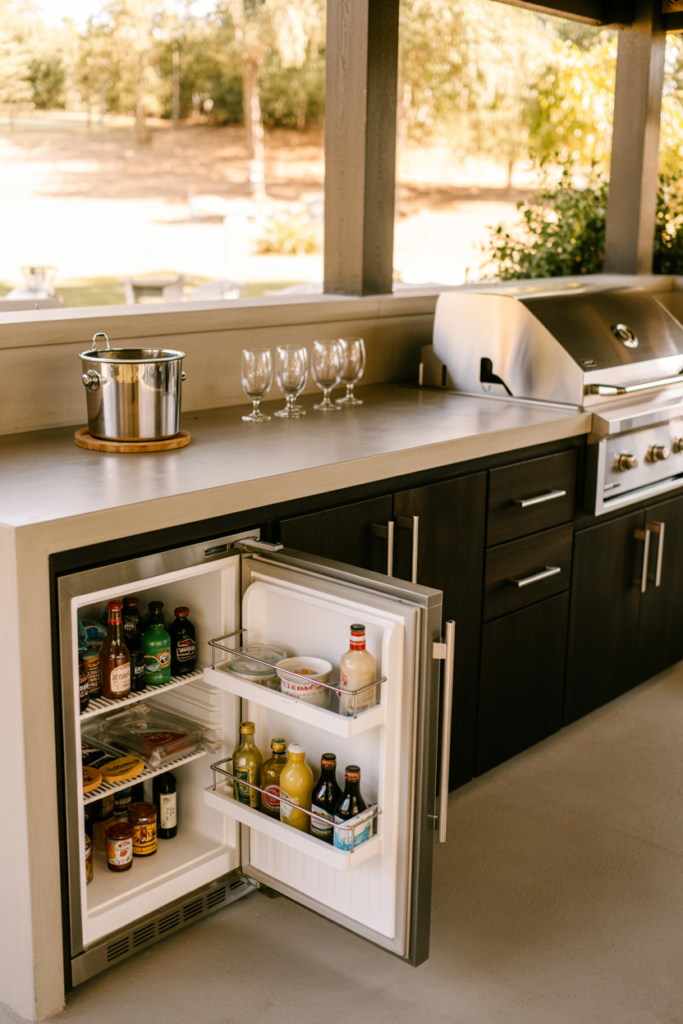
An outdoor refrigerator under a covered kitchen counter might be the single most practical addition you can make to a backyard entertaining setup. Keeping drinks, marinades, condiments, and prepped ingredients cold right at the cooking station eliminates the back-and-forth trips inside that interrupt the flow of outdoor entertaining. Once you cook with a dedicated outdoor fridge within arm’s reach, the idea of not having one seems genuinely inconvenient.
Undercounter outdoor refrigerators designed specifically for exterior use handle temperature fluctuations, humidity, and UV exposure far better than indoor units repurposed for outdoor use. Most quality outdoor fridges also come with stainless steel doors and flush installation options that integrate cleanly into a built-in kitchen cabinet run. Pairing the fridge with a small dedicated drink station area creates a self-serve zone where guests help themselves without interrupting whoever is cooking.
A built-in beverage drawer beside the main refrigerator gives you easy access to canned drinks without opening the full fridge door repeatedly throughout the evening. That small workflow detail makes a more comfortable hosting experience for the cook, which is ultimately what a well-designed outdoor kitchen is all about.
11. A Timber Frame Covered Outdoor Kitchen That Adds Warmth and Natural Character to Any Backyard
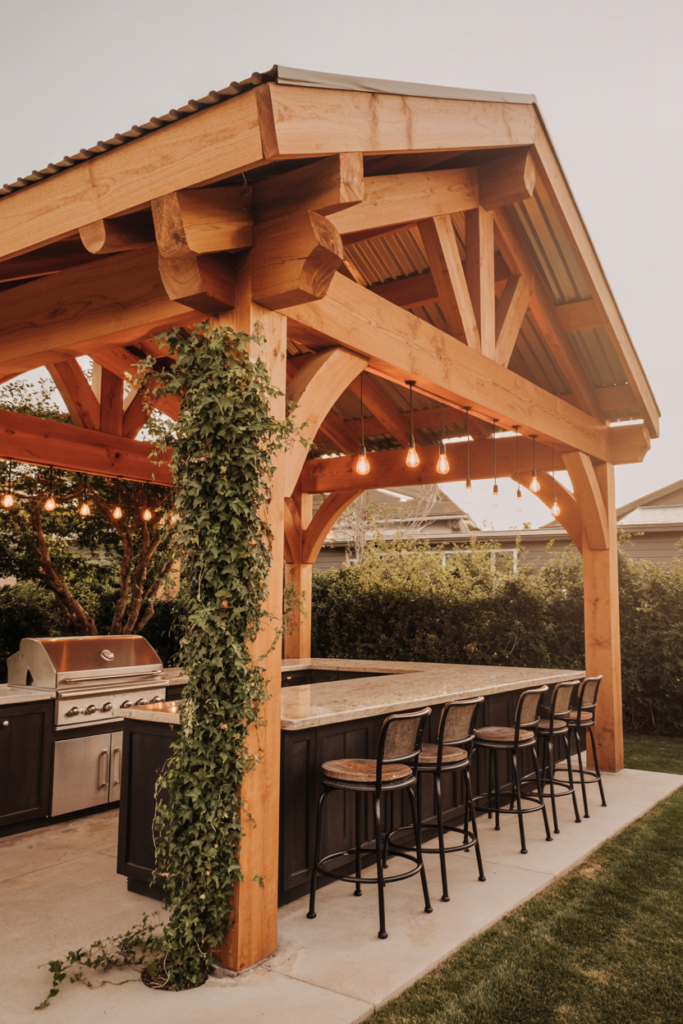
A heavy timber frame structure over an outdoor kitchen creates a sense of permanence and craftsmanship that lighter aluminum or composite structures simply cannot replicate. Large Douglas fir, cedar, or reclaimed oak beams carry visual weight and natural warmth that make a covered outdoor kitchen feel like a true outdoor room rather than a temporary installation. The organic texture of real wood against stone countertops and stainless steel appliances creates a balance of natural and industrial that looks genuinely considered.
Timber frame structures age gracefully when properly sealed and maintained, developing a weathered silver-grey patina over time that many homeowners actually prefer to the original finish. A simple annual coat of outdoor timber oil keeps the structure protected without changing its character. The investment in real timber pays back visually every single day in a way that powder-coated aluminum never quite manages.
Exposed timber ceiling beams also give you a natural surface for hanging pendant lights, ceiling fans, and string lights without any additional hardware. The beams themselves become part of the lighting design, which adds another layer of visual interest overhead and makes the covered kitchen feel more like an architectural space than a backyard structure.
12. A Modular Covered Outdoor Kitchen Setup That Lets You Build and Expand Over Time Without Starting Over
A modular outdoor kitchen system under a covered structure is the most flexible approach to building a backyard cooking space, particularly for homeowners who want to start small and grow the setup gradually. Modular units in weatherproof cabinetry or stainless steel frames combine in different configurations and expand as budget and needs change over time. You’re not locked into a single layout from day one, which matters more than most people realize when they’re first designing an outdoor kitchen.
Most quality modular outdoor kitchen systems include base cabinet units, grill modules, sink modules, refrigerator modules, and countertop sections that all share consistent dimensions. This means adding a new module to an existing run is straightforward, and the overall kitchen always looks intentionally designed rather than assembled from mismatched pieces. Starting with a grill module and two base cabinets under a covered structure gives you a functional outdoor kitchen immediately, while leaving room to add a sink, fridge, or bar module later.
The covered structure itself works perfectly with a modular approach because the roof and support columns define the kitchen footprint from the beginning. You build the modular kitchen to fit the covered space rather than the other way around, which keeps the finished result looking cohesive and purpose-built from every angle.
13. A Covered Outdoor Kitchen With Outdoor-Rated Cabinetry and Storage That Keeps Everything Organized and Protected
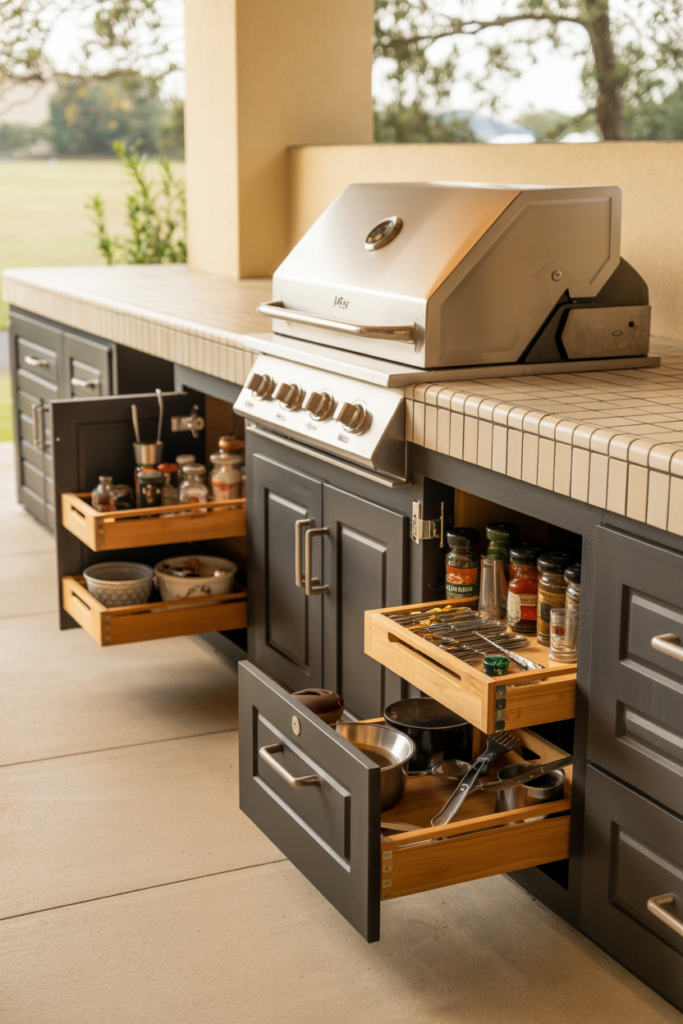
Proper outdoor cabinetry under a covered kitchen structure changes the entire experience of cooking and entertaining outside. Having dedicated storage for grilling tools, serving platters, spice racks, and cooking accessories right at the outdoor kitchen means everything you need stays outside where you actually use it. No more carrying a tray of supplies out from the house every time you want to grill.
HDPE polymer cabinetry is the top material choice for outdoor kitchen storage because it handles moisture, heat, UV exposure, and cleaning chemicals without warping, fading, or corroding. Stainless steel cabinetry is the alternative for a more commercial kitchen aesthetic, though it requires more maintenance in coastal or high-humidity environments to prevent surface oxidation. Both options far outlast wood cabinetry in outdoor conditions, regardless of how well the wood is sealed.
Soft-close drawer mechanisms and stainless steel door hinges designed specifically for outdoor cabinetry hold up through years of temperature cycling without seizing or corroding. Those hardware details feel minor during the planning stage, but make a significant difference to how satisfying and functional the kitchen feels in daily use.
What to Consider Before Building a Covered Outdoor Kitchen in Your Backyard This Season
Planning a covered outdoor kitchen requires thinking through utilities, materials, and local regulations before any construction begins. Gas line extensions, electrical circuits for appliances and lighting, and plumbing connections for a sink all require licensed contractors in most areas and need to be factored into both the budget and the project timeline from the start. Trying to add these utilities after the structure goes up costs significantly more than running them during the initial build.
Local building permits are required for most permanent covered outdoor kitchen structures, particularly those attached to the main house or exceeding a certain square footage. Checking with your local municipality before starting the design process saves time, money, and the significant frustration of being asked to modify or remove a finished structure that doesn’t meet code requirements. Most permit applications require basic structural drawings and a site plan, which a contractor or landscape designer can prepare.
| Covered Kitchen Feature | Budget Range | Impact on Entertaining | Difficulty in Adding Later |
| Pergola or Roof Structure | Medium | Very High | High |
| Built-In Grill Station | Medium | Very High | Medium |
| Outdoor Sink With Plumbing | Medium | High | High |
| Outdoor Refrigerator | Low to Medium | High | Low |
| Bar Counter With Seating | Medium | Very High | Medium |
| String and Pendant Lighting | Low | Very High | Low |
| Pizza Oven | Medium to High | Very High | Medium |
| Outdoor Cabinetry | Medium | High | Low |
14. A Covered Outdoor Kitchen With a Ceiling Fan That Keeps the Cooking Area Cool and Comfortable All Summer
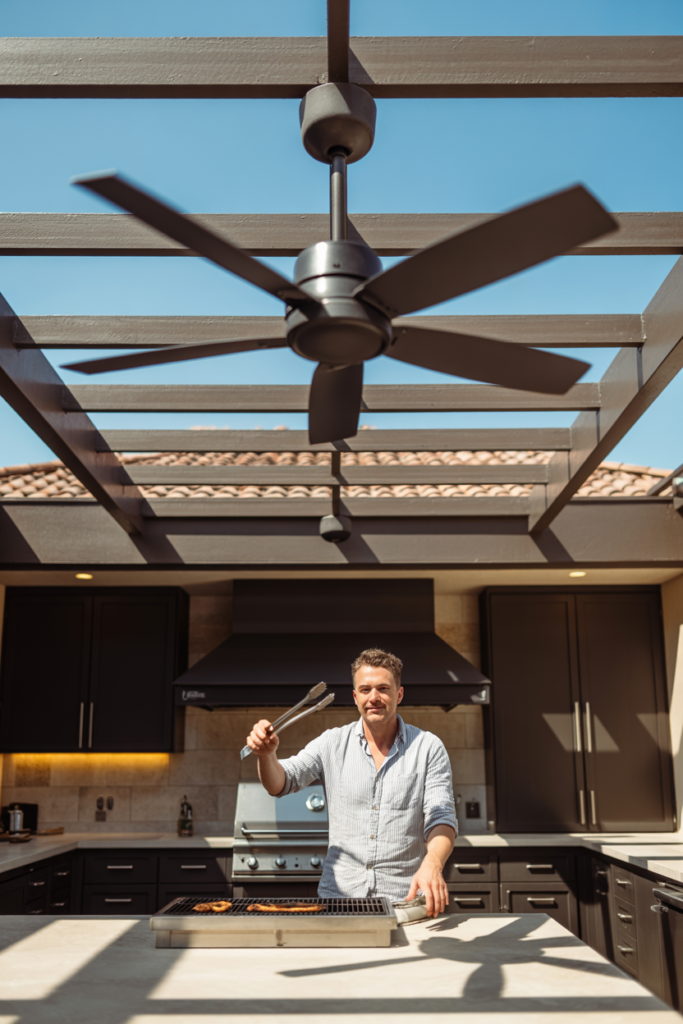
A ceiling fan installed under a covered outdoor kitchen roof is one of those additions that sounds like a minor comfort upgrade until you experience your first July cookout without one. Direct summer heat combined with grill heat makes an uncovered cooking area genuinely unpleasant on hot afternoons, and a ceiling fan changes that equation completely. Moving air makes the temperature feel significantly cooler without requiring any air conditioning infrastructure outdoors.
Outdoor-rated ceiling fans carry either a damp rating for covered spaces or a wet rating for fully exposed areas, and the distinction matters for both performance and safety. A damp-rated fan installed under a solid roof or pergola handles humidity and occasional moisture without the motor corroding or the blades warping over a season or two. Choosing a fan with a DC motor rather than a standard AC motor gives you quieter operation, more speed settings, and meaningfully lower energy consumption over time.
Matte black and brushed nickel ceiling fans with clean blade profiles suit modern and contemporary covered outdoor kitchens particularly well. Rustic wood blade fans with aged bronze hardware work better for farmhouse and traditional outdoor kitchen styles. Either way, sizing the fan correctly for the covered space matters more than the aesthetic choice, so always check the manufacturer’s recommended coverage area before purchasing.
15. A Covered Outdoor Kitchen With an Outdoor Television and Entertainment Setup That Keeps Everyone Engaged
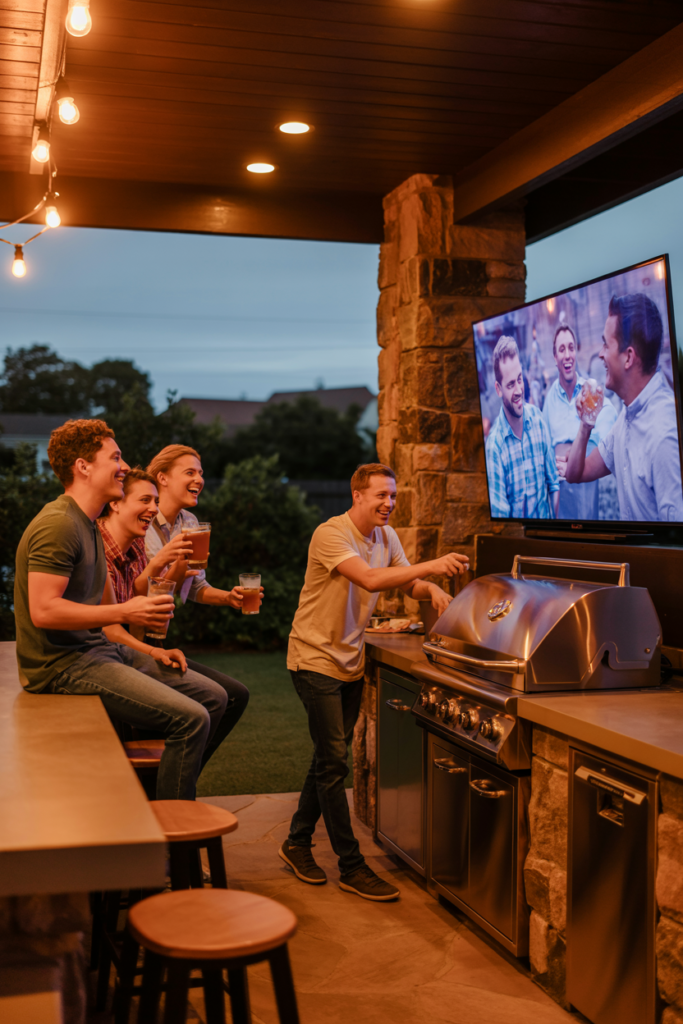
An outdoor television mounted under a covered kitchen roof turns a backyard cooking space into a full entertainment destination that works for game days, movie nights, and casual weekend gatherings equally well. The covered structure protects the screen from direct sun glare during the day and from rain exposure at all times, which makes a covered outdoor kitchen the ideal location for a permanent outdoor TV installation. A freestanding or wall-mounted outdoor-rated television beside the grill station changes how people experience the backyard entirely.
Outdoor-rated televisions differ from indoor sets in several important ways that justify the price difference for a permanent installation. They handle temperature extremes, humidity, insects, and direct sunlight far better than indoor televisions moved outside, and most outdoor-rated models carry significantly higher brightness ratings that make the screen readable in daylight conditions. Mounting the screen at a height and angle that works for both standing cooks and seated guests at the bar counter requires a bit of planning up front, but delivers a much more comfortable viewing experience for everyone.
A full outdoor entertainment setup under a covered kitchen roof might also include a weatherproof Bluetooth speaker system built into the ceiling structure, a dedicated electrical circuit for all entertainment components, and cable management channels that keep wiring hidden within the support columns. These finishing details separate a covered outdoor kitchen that looks professionally designed from one that looks like a collection of good individual decisions that don’t quite add up to a cohesive space.
The Bottom Line on Building a Covered Outdoor Kitchen That Makes Your Backyard Genuinely Worth Spending Time In
A covered outdoor kitchen is one of those backyard investments that pays back in lifestyle quality every single time you use it. The fifteen ideas on this list cover every style, every budget range, and every backyard size, from a budget-friendly shade sail over a modular grill station to a full timber frame structure with a pizza oven, bar counter, and outdoor television. Every one of these setups makes cooking and entertaining outdoors more enjoyable, more practical, and more worth doing regularly.
The best covered outdoor kitchens share a few qualities regardless of budget or style. They protect the cooking area from the weather so you can use the space in more conditions throughout the year. They provide proper lighting, storage, and appliances that make the outdoor cooking experience genuinely comparable to cooking inside. And they create a defined, welcoming space that makes guests want to gather and stay rather than drift back inside after the food is ready.
Start with the cover and the cooking station, then build the rest of the kitchen around those two anchors over time. A pergola and a built-in grill station give you a functional, good-looking outdoor kitchen from day one, and every addition after that, the sink, the fridge, the bar counter, the lighting, makes it progressively better. There is no version of this investment that you will regret once summer arrives and your backyard becomes the place everyone wants to be.
Frequently Asked Questions About Covered Outdoor Kitchens for Backyard Entertaining Spaces
What is the best roof material for a covered outdoor kitchen? Metal roofing and polycarbonate panels are the two most popular choices for covered outdoor kitchens because both handle rain, wind, and sun exposure reliably with minimal maintenance. Metal roofing provides complete weather protection and a very finished architectural look, while polycarbonate keeps the space brighter by letting natural light filter through. The best choice depends on your climate, your budget, and how much natural light you want underneath the cover.
How much does a covered outdoor kitchen typically cost to build? Covered outdoor kitchen costs range widely, depending on the size, materials, and appliances involved. A basic pergola with a modular grill station and minimal appliances typically starts around $5,000 to $10,000, while a fully built-in kitchen with a solid roof, pizza oven, sink, refrigerator, and bar counter can reach $30,000 to $50,000 or more. Getting multiple contractor quotes and prioritizing the features you’ll use most helps manage costs without sacrificing the elements that matter most to your lifestyle.
Do I need a permit to build a covered outdoor kitchen? Most permanent covered outdoor kitchen structures require a building permit, particularly those attached to the main house or exceeding a certain square footage threshold. Requirements vary significantly between municipalities, so checking with your local building department before starting any construction is always the right first step. Skipping the permit process risks fines and complications during future property sales that far outweigh the time saved by avoiding the application.
What appliances should I prioritize in a covered outdoor kitchen? A quality built-in grill is the foundation of any outdoor kitchen and should receive the largest share of the appliance budget. An outdoor refrigerator and a sink with running water are the next two additions that deliver the most practical improvement to the outdoor cooking and entertaining experience. Everything after those three, the pizza oven, the side burner, the warming drawer, adds to the experience but doesn’t fundamentally change how functional the kitchen is daily.
How do I keep a covered outdoor kitchen clean and maintained through the seasons? Covering appliances with weatherproof fitted covers during periods of non-use protects surfaces from moisture, debris, and UV exposure between cooking sessions. Cleaning countertops and cabinetry with outdoor-appropriate cleaners at the end of each season prevents staining and surface deterioration. Gas lines, electrical connections, and plumbing should receive a professional inspection at least once a year to catch any wear or corrosion before it becomes a safety issue.
Can I build a covered outdoor kitchen in a small backyard? A small backyard suits a covered outdoor kitchen better than most people expect because the covered structure actually defines and organizes the space rather than overwhelming it. A compact L-shaped or straight-run kitchen under a small pergola or shade sail takes up surprisingly little floor space while delivering full cooking functionality. Choosing a wall-mounted or built-against-the-fence layout maximizes the remaining yard space and keeps the outdoor kitchen from dominating the entire area.
What is the best flooring for a covered outdoor kitchen area? Porcelain tile, concrete pavers, and natural stone are the three most practical flooring choices for a covered outdoor kitchen because all three handle spills, grease, heat, and heavy foot traffic without deteriorating. Porcelain tile in a large format with a matte or textured finish offers the best combination of durability, easy cleaning, and design flexibility across the widest range of outdoor kitchen styles. Avoid smooth, polished surfaces in outdoor cooking areas since they become dangerously slippery when wet.