
Country Garden Decor That Feels Like Home
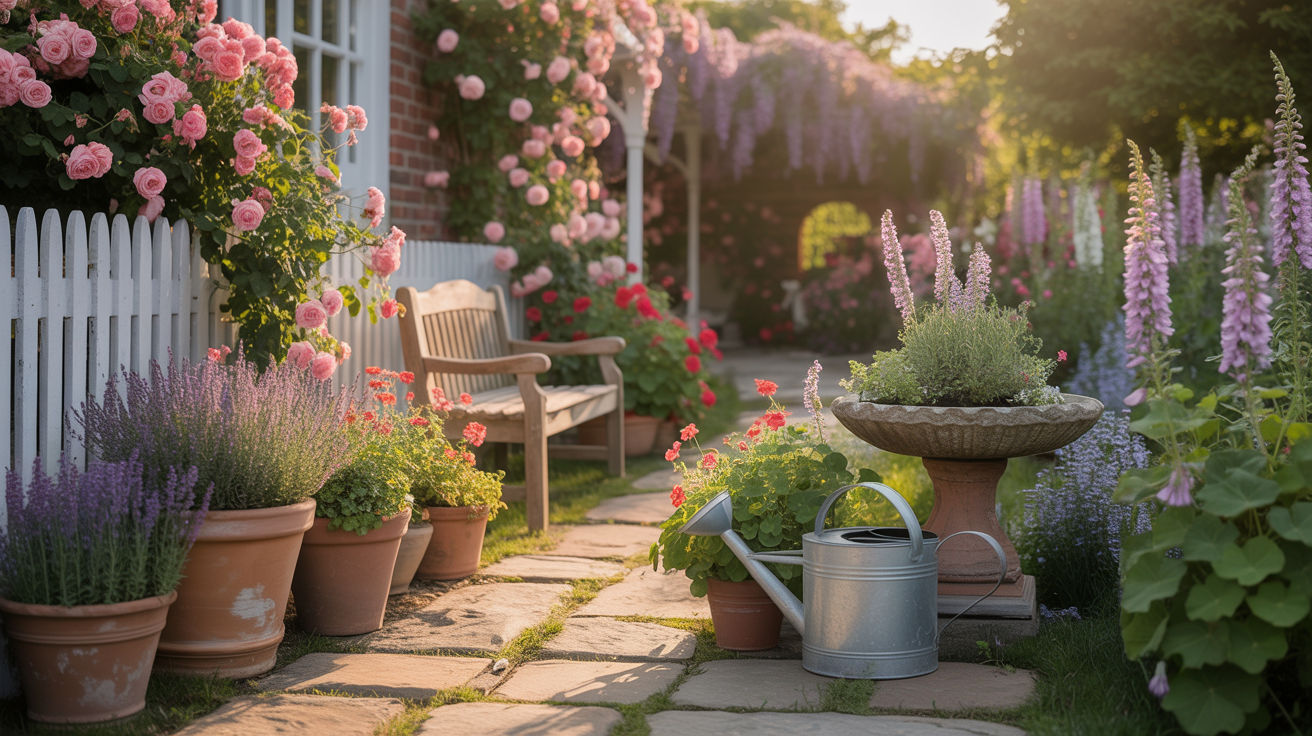
Country garden decor is all about creating an outdoor space that feels genuinely warm, lived-in, and full of natural charm. Think weathered wooden planters, climbing roses on a white picket fence, vintage watering cans spilling over with seasonal flowers, and stone pathways that look like they have been there for a hundred years. It is a style that manages to feel both effortless and deeply considered at the same time.
I have always loved the way a well-styled country garden seems to slow everything down. There is something about a cottage-style outdoor space with overflowing flower beds and a rustic wooden bench that makes you want to sit down, stay longer, and stop checking your phone. That feeling is not accidental, and with the right decor choices, it is completely achievable in any garden size.
The best part about country garden style is that it actually improves with age and imperfection. Moss on a stone path, a slightly crooked fence post, a weathered iron gate, all of these things add character rather than taking away from the overall look. You genuinely cannot get this style wrong, which is a refreshing change from more rigid garden aesthetics.
Why Country Garden Style Works in Any Outdoor Space
Country garden decor works across every garden size because it relies on layering natural materials rather than grand scale or expensive features. A small courtyard can feel just as charming as a sprawling rural garden when you use the right combination of climbing plants, vintage containers, and natural stone elements. The style scales beautifully in both directions.
Cottage garden decor also has one of the lowest barriers to entry of any outdoor style. Most of the key elements, old terracotta pots, wooden crates, galvanized metal buckets, iron garden tools, and climbing plant frames, are widely available at garden centers, antique markets, and charity shops for very little money. The look actually benefits from mixing old and new pieces rather than buying a matching set.
There is also a seasonal quality to country garden style that keeps it feeling fresh all year round. Spring brings tulips and daffodils in rustic planters, summer fills the borders with roses and lavender, autumn adds warm berries and dried seed heads, and winter introduces evergreen wreaths and lanterns along stone pathways. The garden never looks the same twice, which is one of its greatest strengths.
15 Country Garden Decor Ideas to Try Right Now
1. Classic White Picket Fence With Climbing Roses
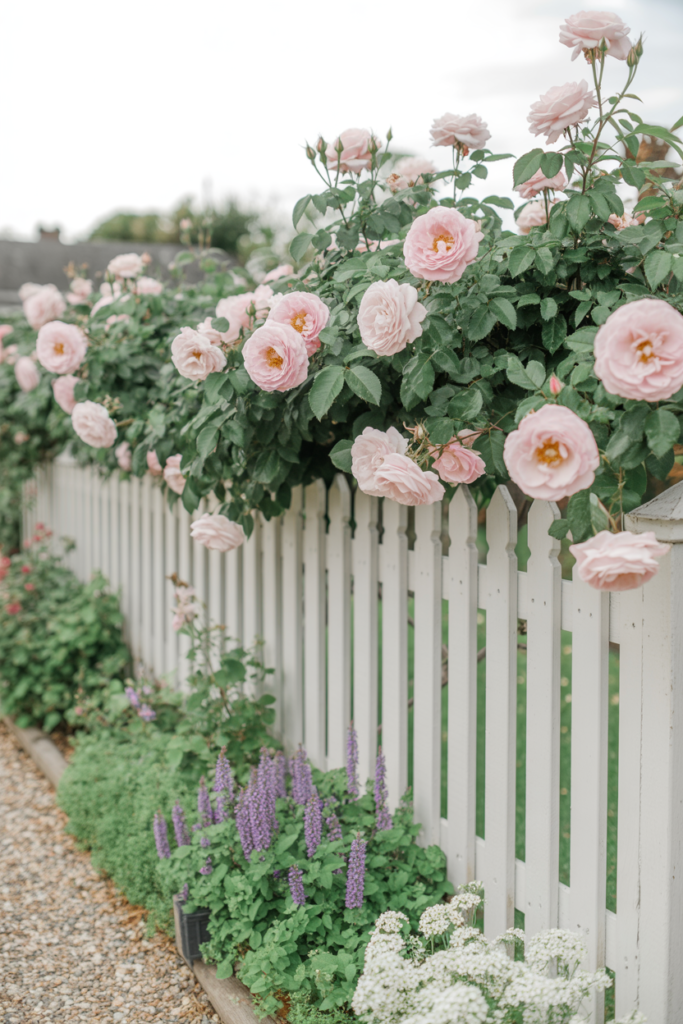
A white picket fence with climbing roses is the single most recognizable image in country garden decor, and for good reason. It combines structure with softness in a way that few other garden features can match. The crisp white of the fence against the loose, abundant blooms of a climbing rose creates a contrast that looks stunning from spring right through to late autumn.
David Austin climbing roses are the most popular choice for this look because they produce large, full blooms in soft pinks, creams, and apricots that suit the cottage aesthetic perfectly. Train the canes horizontally along the fence rails rather than letting them grow straight up, as horizontal training encourages far more blooming along the whole length of the plant. I trained a pale pink climbing rose along a section of white fence last spring, and the difference in flower coverage compared to vertical growth was genuinely dramatic.
Paint the fence with a good-quality outdoor wood paint every two to three years to keep it looking fresh. A slightly aged, chalky white tone actually suits the country garden style better than a bright gloss finish, so do not worry too much about achieving perfect coverage on every repaint.
2. Vintage Watering Cans as Country Garden Planters
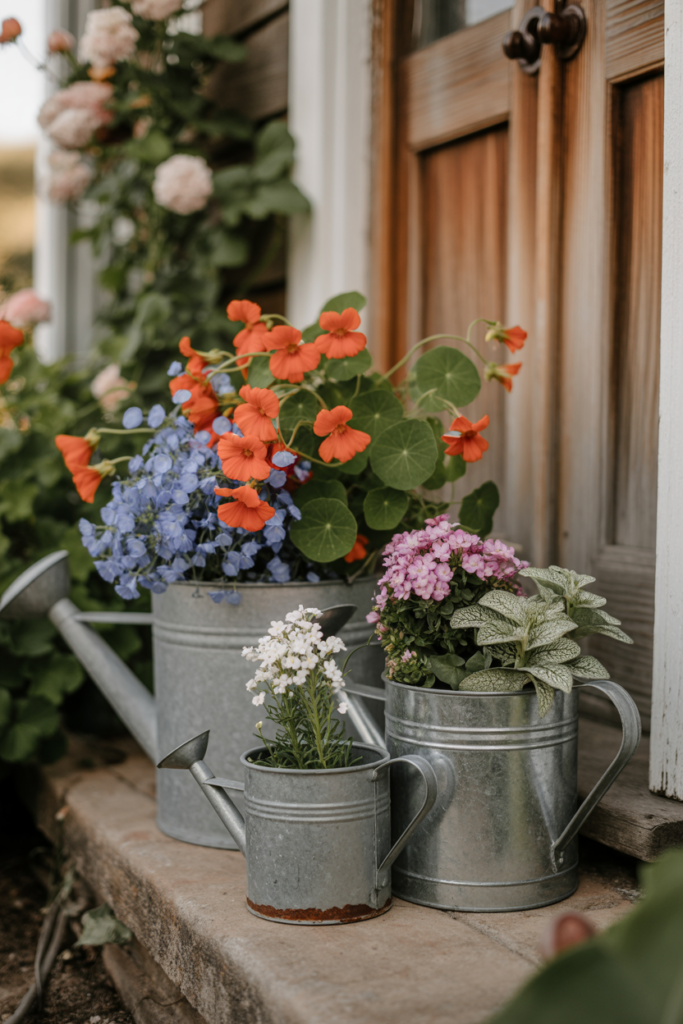
Old galvanized metal watering cans make some of the most charming and affordable country garden planters you will ever find. Fill them with trailing lobelia, soft pink geraniums, or a mix of herbs and let the plants spill naturally over the spout and rim. A cluster of three watering cans in different sizes grouped on a porch step or beside a garden gate creates an instantly recognizable cottage garden vignette.
The galvanized metal develops a beautiful natural patina over time that suits the rustic country aesthetic far better than any new shiny finish. I picked up a set of three old watering cans at a rural antique market for very little and filled them with a mix of trailing nasturtiums and soft blue lobelia. By midsummer, they looked like they had always been part of the garden, which is exactly the effect country decor aims for.
Drill a few drainage holes in the base of each can before planting to prevent waterlogging. Metal containers heat up faster than terracotta in direct sun, so position them in a spot that gets morning light and some afternoon shade to keep the roots comfortable through the warmer months.
3. Rustic Wooden Garden Bench Under a Pergola
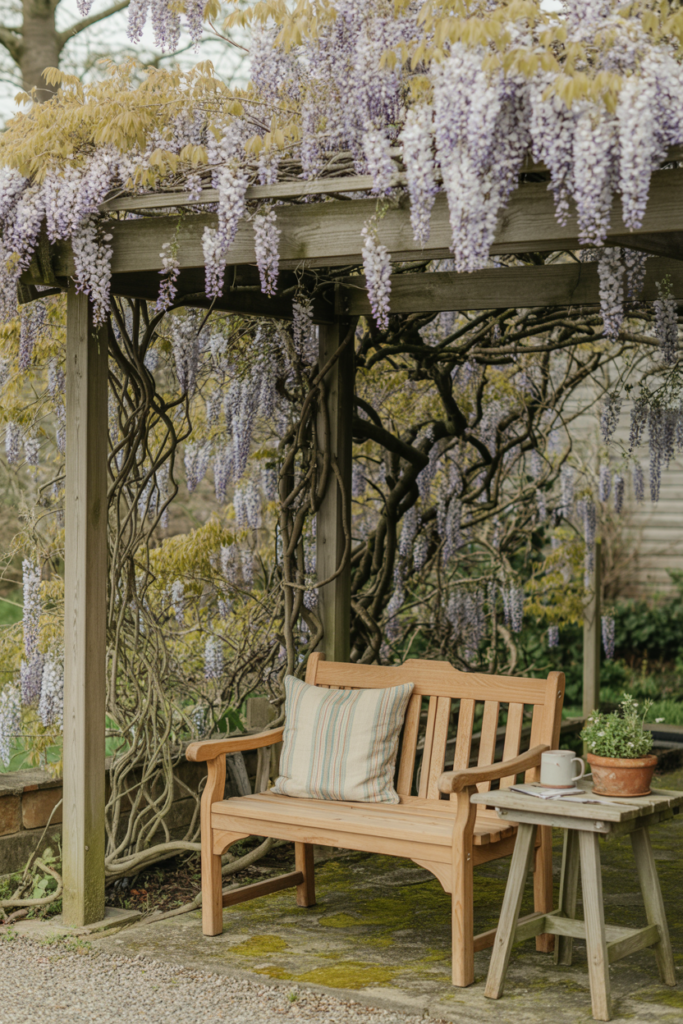
A rustic wooden bench positioned under a simple pergola creates an instant focal point and a genuinely inviting seating spot in any country garden. Choose a bench in natural oak, teak, or reclaimed pine and let it weather naturally over time to develop that silvery, aged tone that suits the cottage garden look so well. Add a simple cushion in a classic stripe or floral print and a small side table for a cup of tea, and the setup is complete.
A pergola does not need to be elaborate to work in a country garden setting. Four simple wooden posts with a basic overhead frame covered in climbing wisteria, jasmine, or rambling roses create a beautifully shaded seating spot that looks like it has been there for decades. I built a simple pine pergola over a garden bench three years ago, and the wisteria has now covered it so thoroughly that the structure underneath is barely visible from late spring onward.
Position the bench where it faces the most interesting part of the garden, a flower border, a water feature, or a vegetable patch. A bench that invites you to look at something specific always gets more use than one positioned purely for its own aesthetic impact.
4. Stone Birdbath as a Country Garden Focal Point
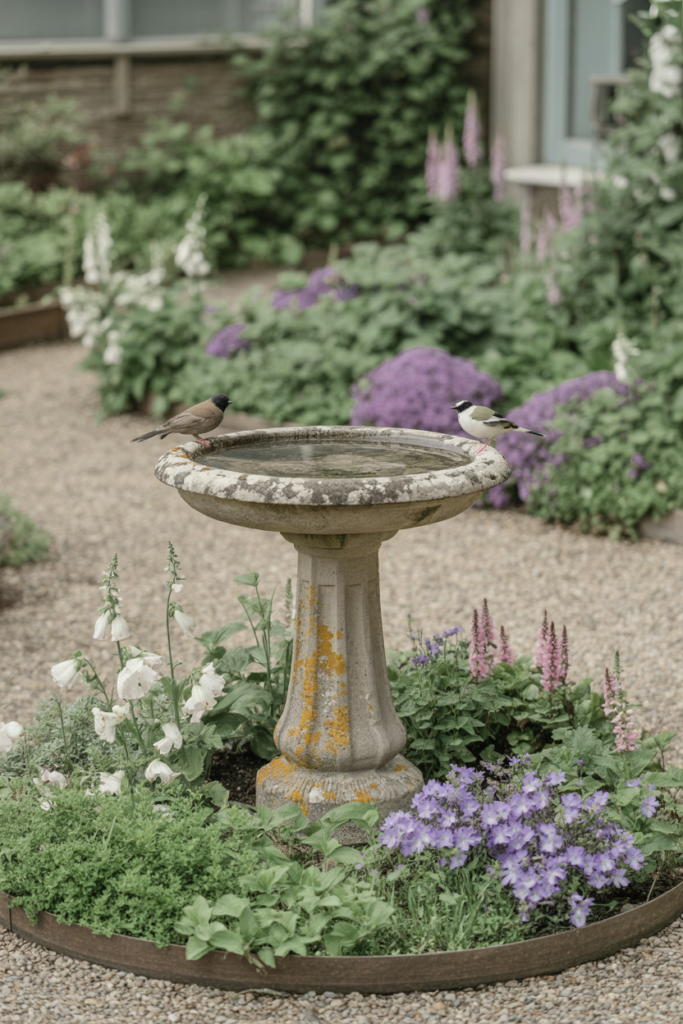
A stone birdbath adds height, structure, and a sense of timeless permanence to any country garden. Position it at the center of a circular flower bed, at the end of a garden path, or in a quiet corner surrounded by cottage garden perennials like catmint, foxgloves, and astrantia. The birds that visit will add movement and life to the garden in a way that no decorative accessory ever could.
Cast stone birdbaths develop a beautiful natural patina of moss and lichen over time that makes them look genuinely antique within a couple of seasons. I placed a simple pedestal birdbath in a bed of catmint and white foxgloves, and within a single summer, it had developed enough moss on the basin rim to look like it came straight from a centuries-old country estate. Nature does the aging work for you, which is very convenient.
Keep the birdbath water fresh by topping it up every two to three days and giving the basin a gentle scrub with a stiff brush every couple of weeks. Clean water attracts far more birds than a stagnant basin, and more birds mean a more alive and dynamic garden all season long.
5. Galvanized Metal Tubs and Buckets as Rustic Planters
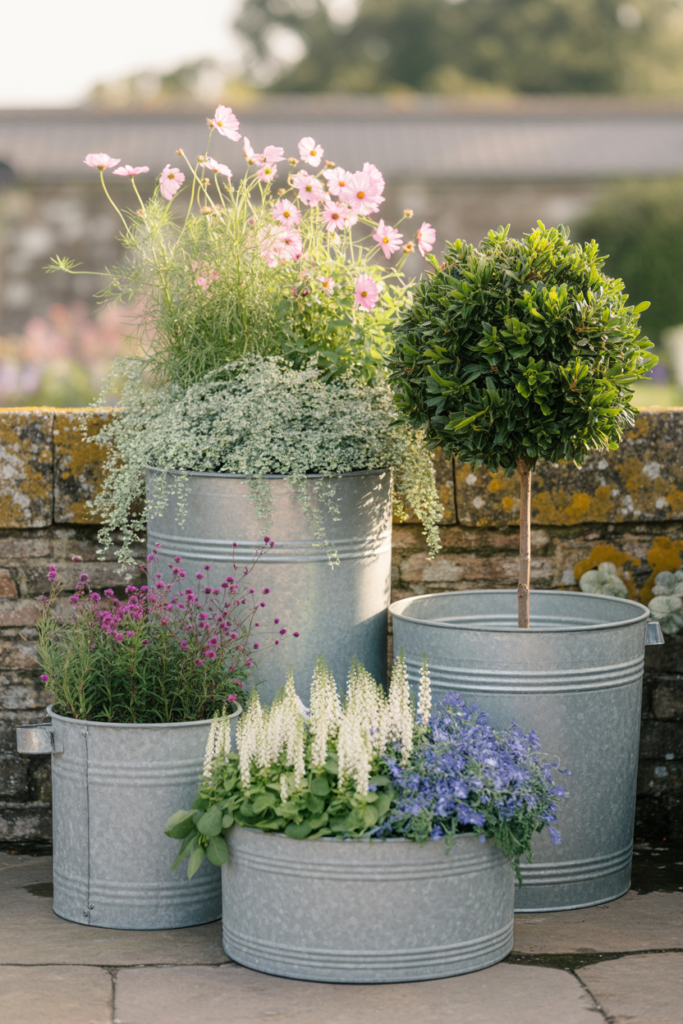
Galvanized metal tubs and buckets are among the most versatile and affordable country garden decor elements available. Use large galvanized tubs as statement planters for standard bay trees, topiary balls, or abundant summer bedding displays. Smaller buckets work beautifully clustered together on steps or along a path edge filled with herbs, strawberry plants, or trailing annuals.
The industrial origins of galvanized metal make a surprising but perfectly suited contrast with soft cottage garden planting. A large galvanized trough overflowing with pink and white cosmos, trailing silver dichondra, and deep purple verbena bonariensis looks genuinely stunning against a stone wall or wooden fence backdrop. I use three large galvanized troughs as my main summer planting containers, and they consistently produce the best displays in the entire garden.
Age new galvanized metal quickly by wiping it down with a diluted white vinegar solution and leaving it to dry in the sun. This dulls the shiny new finish and gives the containers that sought-after weathered look within a single afternoon, rather than waiting years for nature to do it.
6. Cottage Garden Flower Borders With Classic Perennials
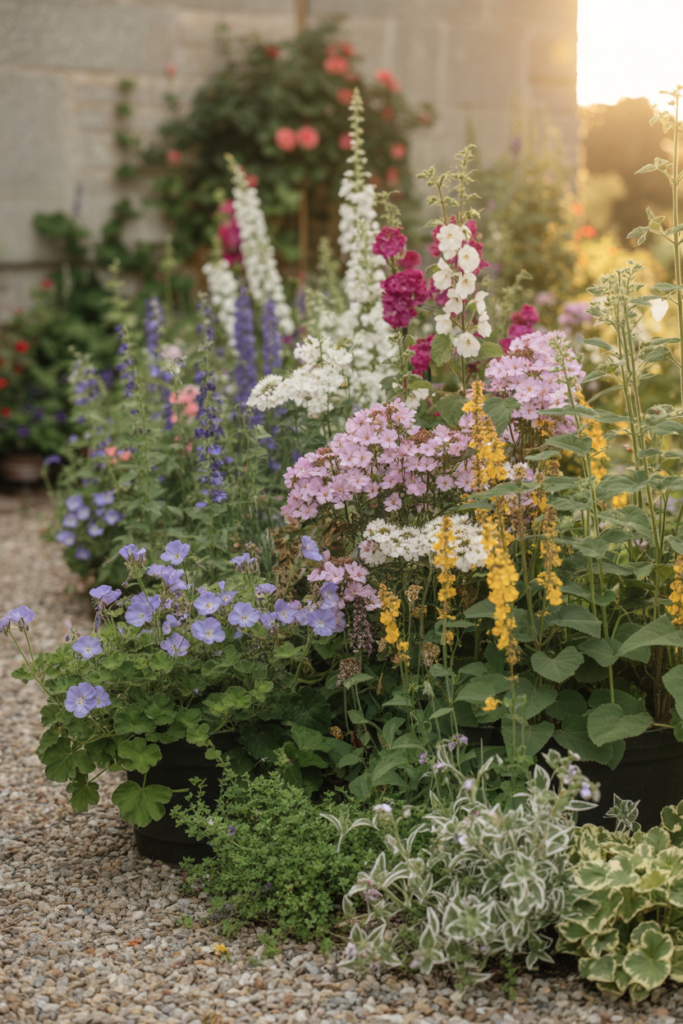
A well-planted cottage garden flower border is the backbone of any country garden decor scheme. Pack the border densely with classic perennials like foxgloves, delphiniums, hollyhocks, peonies, and hardy geraniums, and let them grow in a naturally relaxed, slightly informal way. The key is planting in generous drifts rather than single specimens, so the border looks abundant and full rather than sparse and rigid.
Layering plant heights from front to back makes a cottage border look intentional without feeling formal. Place low-growing plants like hardy cranesbill and catmint at the front edge, medium-height plants like salvia and achillea in the middle, and tall statement plants like hollyhocks and delphiniums at the back. I replanted my main garden border using this layering approach two seasons ago, and the difference in how full and lush it looks compared to the previous random arrangement is significant.
Leave some gaps between perennial clumps for self-seeding annuals like foxgloves, aquilegia, and honesty to fill in naturally each year. These self-seeders move around the border on their own over time, which gives the planting that wonderfully unplanned, cottage garden quality that is genuinely very hard to achieve artificially.
7. Wooden Raised Vegetable Beds With Cottage Charm
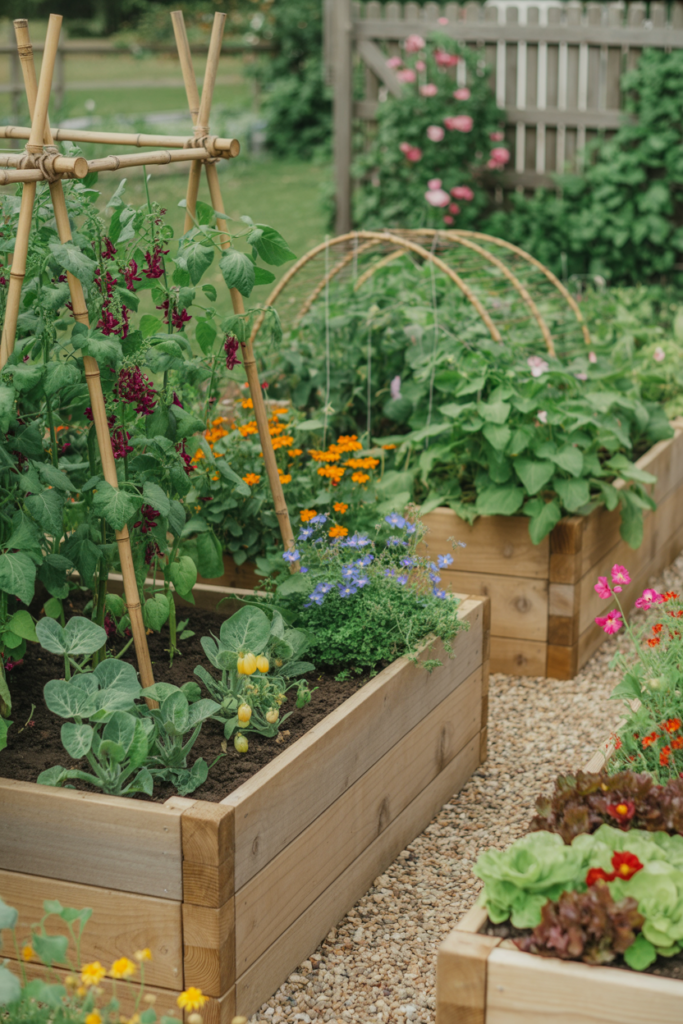
Raised vegetable beds made from natural timber add a functional and deeply charming country garden element to any outdoor space. Build them from untreated oak sleepers, reclaimed scaffold boards, or rough-sawn pine for an authentic rustic look that suits the cottage aesthetic perfectly. Mix edible plants with flowering ones by tucking in nasturtiums, borage, and marigolds between the vegetable rows for a classic potager-style display.
The combination of food growing and ornamental planting is one of the most defining features of traditional English country garden style. I grow tomatoes, courgettes, and climbing beans alongside sweet peas and cosmos in my raised beds, and the mix of foliage textures, flower colors, and vegetable shapes creates a display that is as decorative as any purely ornamental border. Productive and pretty is a very hard combination to beat.
Finish the timber beds with a coat of natural linseed oil rather than paint or wood stain for a more authentic country look. Linseed oil feeds the wood, darkens it slightly, and gives it a beautiful natural sheen that weathers gracefully over time without peeling or flaking the way painted finishes sometimes do.
8. Antique Iron Garden Tools as Decorative Accents
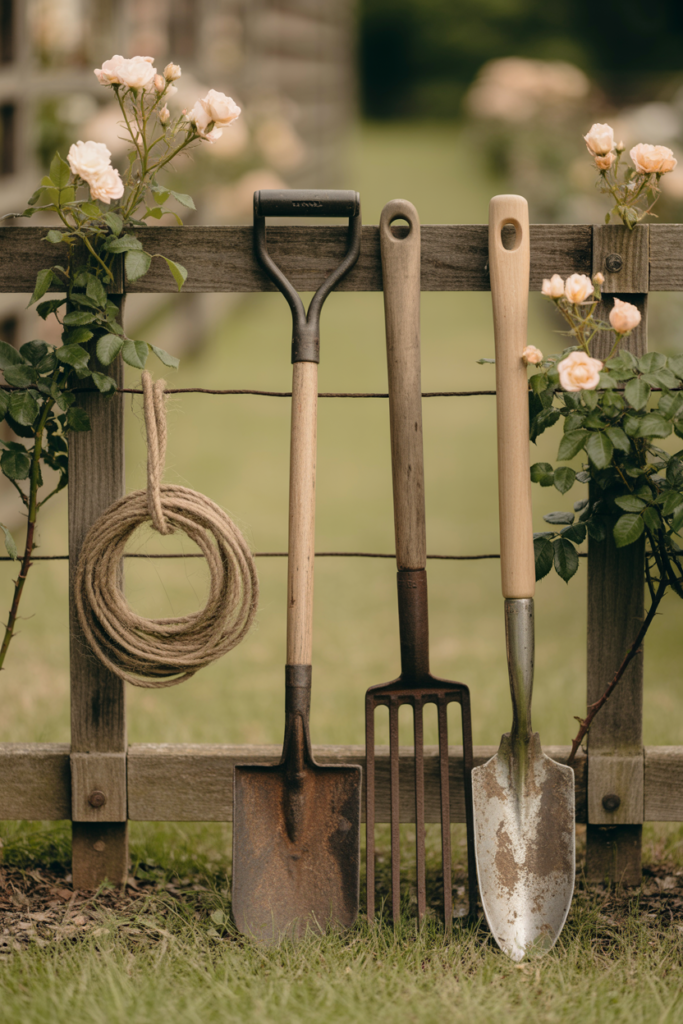
Old iron garden tools leaned against a stone wall, hung on a wooden fence, or propped beside a potting shed door add an instant country garden atmosphere to any outdoor space. Vintage spades, rakes, trowels, and hand forks develop a beautiful rust patina that suits the rustic aesthetic far better than shiny new tools. Source them at antique markets, farm sales, or rural junk shops for very reasonable prices.
Grouping three or four tools creates more visual impact than a single piece. I hang a collection of old iron tools on a section of wooden fence between two climbing rose stems, and the arrangement looks genuinely like something from a period garden photograph. The tools are still fully functional, which adds an authenticity that purely decorative reproductions simply cannot match.
Rub old iron tools occasionally with a little linseed oil to slow further rusting without removing the natural patina that makes them look so good. A light oil coat every season keeps the metal from deteriorating too quickly while preserving that wonderfully aged, well-used appearance.
9. Dry Stone Wall With Planted Crevices
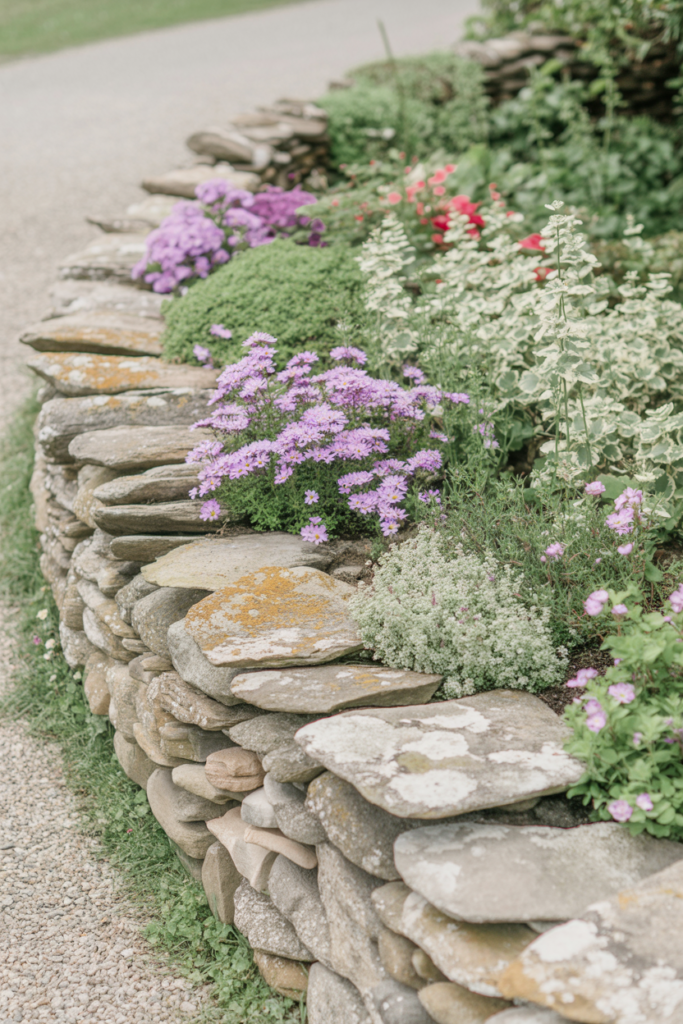
A dry stone wall adds one of the most authentically rural and timeless elements possible to a country garden. Build one as a low retaining wall along a border edge, as a raised bed surround, or as a simple garden divider and plant the crevices between the stones with thyme, aubretia, saxifrage, and sempervivum. These tough little plants root directly into the gaps and create a living, flowering wall surface that looks spectacular in spring.
Dry stone walls require no mortar, which makes them a surprisingly achievable DIY project for a weekend. Collect flat fieldstones from a local stone merchant or reclaim them from a demolished wall and stack them in courses with the largest stones at the base and the smallest at the top. I built a low dry stone wall along one side of my garden path and planted the crevices with creeping thyme and purple aubretia. By the second spring, the wall was flowering along its entire length.
The planting in a dry stone wall also benefits local wildlife enormously. Bees use the crevices for nesting, lizards bask on the warm stone surface, and small insects overwinter in the gaps between the rocks. A dry stone wall genuinely earns its place in a country garden on both aesthetic and ecological grounds.
10. Country Garden Gate With Arch and Climbing Plants
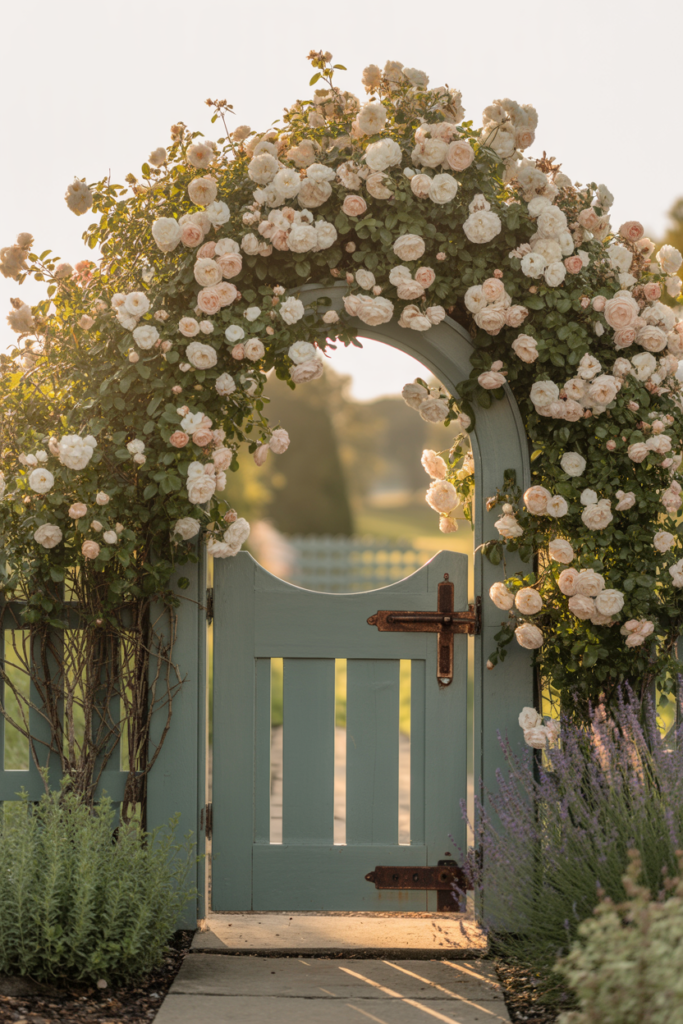
A wooden or iron garden gate set within a planted arch creates one of the most romantic and quintessentially country garden entrances imaginable. Train a vigorous climbing rose, a wisteria, or a honeysuckle over the arch frame and let it grow densely enough to frame the gate opening with flowers and foliage. The moment visitors step through a gate like this, the atmosphere of the whole garden changes completely.
Arched garden gates work particularly well as transitions between different garden areas, from a front garden to a back garden, from a lawn to a kitchen garden, or from an open space to a more enclosed seating area. I installed a simple painted wooden gate with a rustic iron latch under a rose arch between my front and back gardens, and it became the most photographed feature of the entire property within one flowering season.
Choose a gate in a color that complements the surrounding planting rather than competing with it. Soft sage green, chalky white, and faded duck egg blue all work beautifully in a country garden setting and provide a subtle backdrop that lets the climbing plants take center stage.
11. Terracotta Pot Collection Along a Garden Path
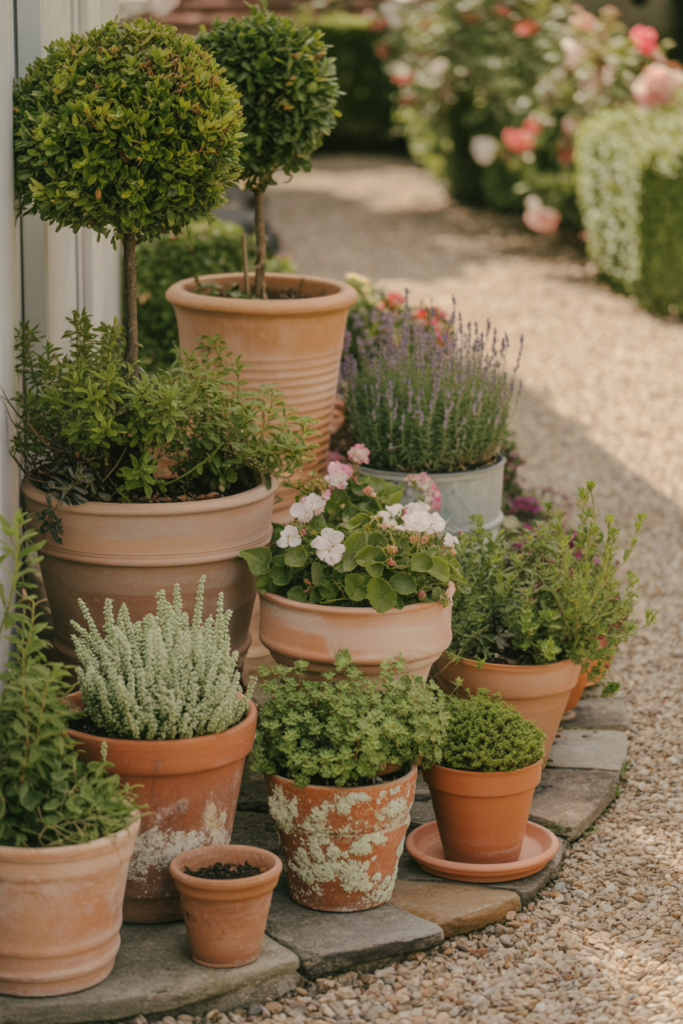
A collection of terracotta pots in different sizes grouped along a garden path or arranged on stone steps creates a warm, abundant country garden display that improves every season. Plant each pot with something different, standard topiary balls, trailing herbs, seasonal bulbs, or cottage garden annuals, and rearrange the groupings as the seasons change. The natural clay color of terracotta works with absolutely every planting combination imaginable.
Terracotta is one of those materials that genuinely gets better with age. Old pots develop a white salt bloom on the exterior, patches of moss and algae, and a beautifully faded tone that no new pot can replicate. I have been collecting terracotta pots of every size for years, and the oldest ones in my collection are by far the most attractive. Buying new terracotta and aging it artificially with a diluted yogurt wash encourages moss growth within a single season.
Group pots in odd numbers of three, five, or seven for the most visually pleasing arrangements. Vary the heights within each grouping by placing taller pots at the back and lower ones at the front, or by standing some pots on an upturned pot or brick to create different levels within the cluster.
12. Rustic Wooden Trellis for Climbing Plants
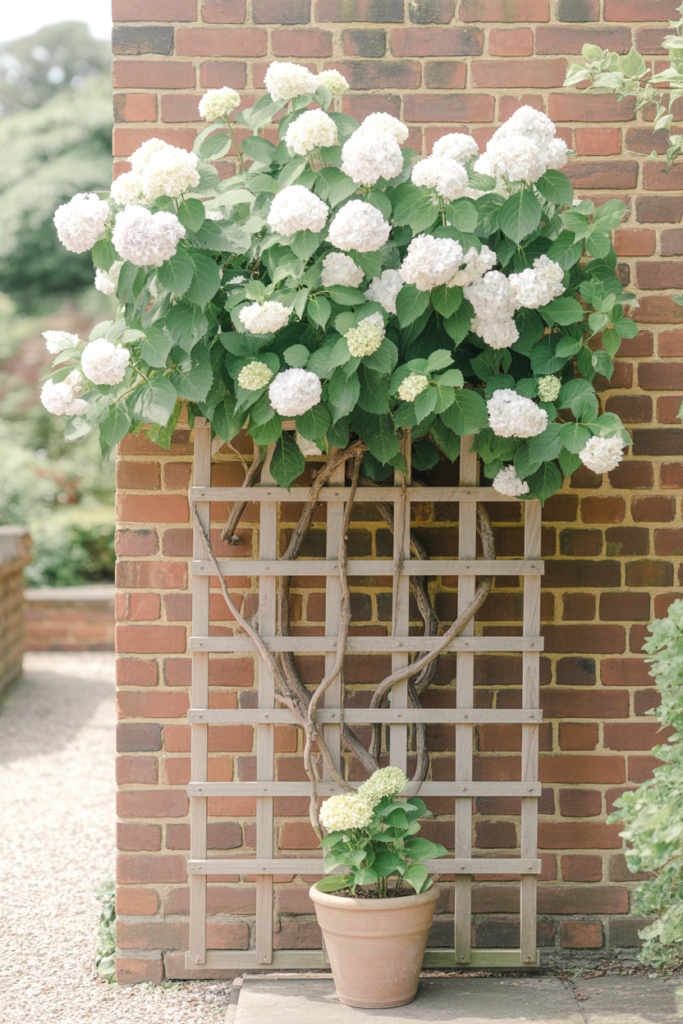
A rustic wooden trellis fixed to a garden wall or fence gives climbing plants the support they need while adding genuine decorative interest to an otherwise flat surface. Choose a trellis in natural cedar or pine rather than plastic and let it weather to a silvery gray tone over time. Train climbing roses, clematis, jasmine, or sweet peas up the frame, and the wall behind will be completely transformed within a single growing season.
A trellis also creates useful growing space in a small country garden where border space is limited. I fixed a large cedar trellis panel to a bare brick wall on the north-facing side of my garden and planted a climbing hydrangea at its base. Within three years, the entire wall was covered in beautiful white lacecap flowers every summer, turning what was the least attractive part of the garden into one of its highlights.
Fix trellis panels to the wall using spacer brackets that hold the frame a few centimeters away from the surface. This small gap allows air to circulate behind the climbing plants and prevents moisture buildup against the wall that can lead to damp issues over time.
13. Cottage Garden Herb Bed Near the Kitchen Door
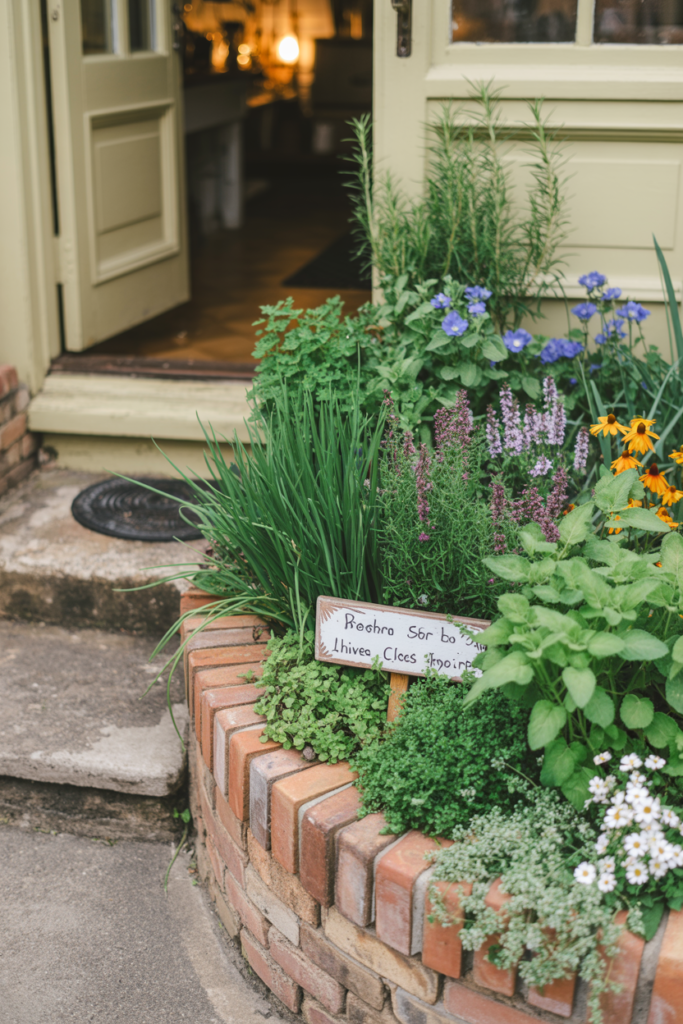
A dedicated herb bed positioned close to the kitchen door is one of the most practical and charming country garden features you can add to any outdoor space. Plant a mix of culinary herbs like rosemary, thyme, sage, chives, parsley, and mint alongside flowering herbs like lavender, chamomile, and lemon balm for a bed that looks beautiful, smells wonderful, and provides fresh ingredients all season long.
Formal herb beds divided into sections by low box hedging or simple stone edging have a classic country garden formality that contrasts beautifully with the more relaxed planting in the rest of the garden. I edged my herb bed with a single course of reclaimed brick laid diagonally into the soil, and the simple border gives the whole planting area a neat, intentional look without feeling stiff or overly manicured.
Include a few edible flowers like nasturtiums, borage, and calendula throughout the herb bed to add color and attract pollinators. These flowering plants also look beautiful mixed in among the more structural herb plants and reinforce that relaxed, productive cottage garden atmosphere that makes a herb bed feel like far more than just a functional planting area.
14. Weathered Wooden Planters and Window Boxes
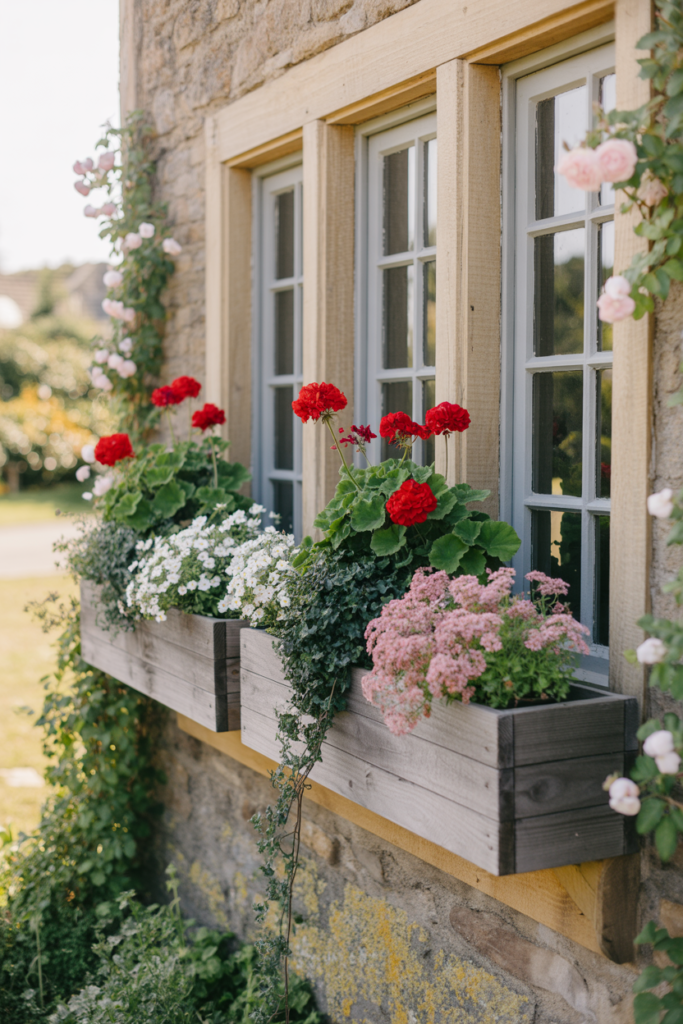
Weathered wooden planters and window boxes are among the most versatile country garden decor elements available and work equally well in large gardens and small courtyard spaces. Fill deep window boxes with a classic cottage combination of trailing ivy, upright geraniums, sweet alyssum, and bacopa for a display that looks full and abundant from early summer right through to the first frosts. The natural wood texture adds warmth and authenticity that plastic containers simply cannot match.
Make your own window boxes from reclaimed scaffold boards or rough-sawn pine for a fraction of the cost of buying them ready-made. A simple rectangular box with drainage holes drilled in the base and a coat of exterior wood oil is all you need for a planter that will last for years and look better with every season that passes. I built a set of six matching window boxes for my garden wall from a single reclaimed scaffold board, and the project cost almost nothing.
Line wooden planters with plastic sheeting or a coco fiber liner before filling with compost to extend the life of the wood. Direct contact with damp soil accelerates rot significantly, but a simple liner layer can double or triple the working life of even the most basic homemade wooden planter.
15. Garden Lanterns and Candle Holders Along Stone Pathways
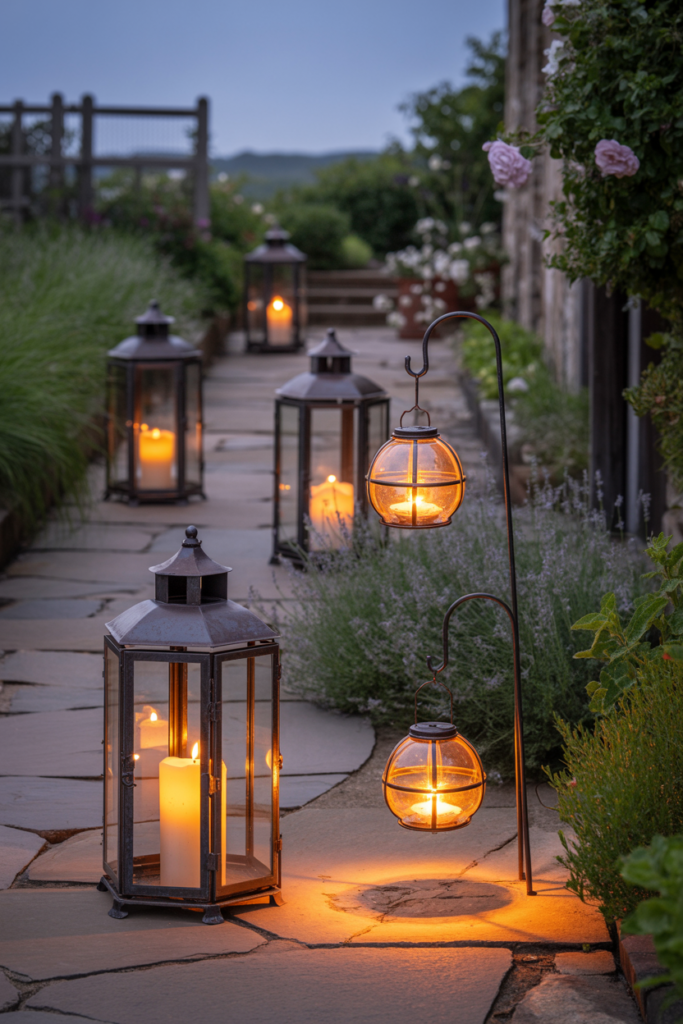
Lanterns and candle holders positioned along a stone garden pathway create a warm and genuinely magical atmosphere in a country garden after dark. Use a mix of iron lantern styles in different heights clustered at irregular intervals along the path edge. Fill them with pillar candles or battery-operated tea lights for a safe, weather-resistant glow that guides visitors through the garden on warm summer evenings.
Vintage-style iron lanterns suit the country garden aesthetic better than any modern lighting option. Their dark metal finish and traditional construction look completely at home among stone, weathered wood, and cottage garden planting. I use a combination of tall floor lanterns and smaller hanging versions suspended from shepherd’s hooks along my main garden path, and the effect on warm evenings is something guests consistently comment on.
Solar-powered lanterns have improved enormously in quality and now offer a warm enough light tone to suit the country garden style well. Position them where they receive at least six hours of direct sun during the day, and they will provide a reliable, gentle glow from dusk onward without any wiring or ongoing running costs.
Best Country Garden Decor Ideas at a Glance
| Country Garden Decor Idea | Best For | Difficulty Level | Estimated Cost |
| White Picket Fence With Roses | Garden boundaries | Medium | Medium |
| Vintage Watering Can Planters | Porch and path displays | Very Easy | Low |
| Rustic Wooden Bench and Pergola | Seating areas | Medium | Medium |
| Stone Birdbath | Garden focal points | Very Easy | Low to Medium |
| Galvanized Metal Tub Planters | Statement containers | Very Easy | Low |
| Cottage Flower Borders | Main garden planting | Medium | Low to Medium |
| Raised Vegetable Beds | Kitchen garden areas | Medium | Medium |
| Antique Iron Garden Tools | Decorative wall accents | Very Easy | Very Low |
| Dry Stone Wall With Planting | Garden dividers | Hard | Low to Medium |
| Gate With Arch and Climbers | Garden entrances | Medium | Medium |
| Terracotta Pot Collection | Path and step displays | Very Easy | Low |
| Rustic Wooden Trellis | Wall and fence planting | Easy | Low |
| Cottage Herb Bed | Near the kitchen door | Easy | Low |
| Weathered Wooden Window Boxes | Wall and fence displays | Easy | Low |
| Garden Lanterns Along Pathways | Evening atmosphere | Very Easy | Low to Medium |
Simple Tips to Make Your Country Garden Decor Look Its Best
Repetition is one of the most powerful tools in country garden styling. Using the same material, terracotta, galvanized metal, or weathered wood, across multiple elements throughout the garden creates a cohesive look even when the individual pieces are all completely different shapes and sizes. Pick one or two core materials and let them run through the whole space.
Plant generously and resist the urge to space things too far apart. Cottage garden borders look their best when plants are packed closely enough to spill into each other and create that lush, slightly unruly quality that defines the style. A sparse, widely spaced border never achieves the same warm and abundant feeling, no matter how good the individual plants are.
Mix plants that flower at different times of year so something always looks good in every season. A country garden that peaks in June and looks bare by August has missed one of its greatest opportunities. Plan for spring bulbs, early summer perennials, midsummer roses, late summer grasses, and autumn berries, and the garden will reward you with color and interest from February right through to November.
A Country Garden That Grows Better Every Single Year
A well-decorated country garden is one of those rare things that genuinely improves with time rather than dating or wearing out. The moss that grows on the stone birdbath, the way the climbing rose thickens on the pergola frame, the patina that develops on the galvanized planters, all of these changes make the space feel more authentic and more beautiful with every passing season.
The ideas in this article work equally well in a large rural garden and a compact urban courtyard. Country garden decor is not about the size of the space but about the warmth, the layering, and the natural materials you bring into it. A single well-planted terracotta pot cluster and a weathered wooden bench can establish the whole aesthetic in even the smallest outdoor area.
Start with the ideas that appeal most and add to the garden gradually over time. The best country gardens are never finished in one go. They grow and develop organically, with new plants filling in, old accessories weathering beautifully, and the whole space becoming more layered and characterful with every year that passes.
Conclusion
Country garden decor is one of the most rewarding and accessible outdoor styles to create because it actively embraces natural aging, imperfection, and personal expression. The 15 ideas in this article give you a complete toolkit for building an outdoor space that feels genuinely warm, charming, and full of cottage character.
The key takeaways are worth keeping in mind as you plan your own country garden. Use natural materials like stone, terracotta, weathered wood, and galvanized metal as your foundation. Layer climbing plants, cottage perennials, and seasonal bulbs generously throughout the space. Add vintage and antique accessories like old watering cans, iron tools, and stone birdbaths to bring history and character to the garden. And always plant more densely than feels comfortable at first, because a full, abundant border is the heart of every great country garden.
The most beautiful country gardens are the ones that look like they have been loved and tended for decades. With the right plants, the right materials, and a little patience, that is exactly how your outdoor space will feel, too.
Frequently Asked Questions
What is country garden decor?
Country garden decor is an outdoor styling approach that uses natural materials, cottage garden plants, vintage accessories, and rustic features to create a warm and charming outdoor space. It draws inspiration from traditional English cottage gardens and rural farmhouse aesthetics. The style celebrates imperfection, natural aging, and abundant planting over formal symmetry and rigid design rules.
How do I start a country garden on a small budget?
Start with the most affordable elements like terracotta pots, galvanized buckets, wildflower seeds, and thrifted vintage accessories from antique markets or charity shops. Most country garden decor benefits from a weathered, well-used appearance that costs very little to achieve. Focus first on generous planting with cottage perennials and climbing roses, as plants deliver the biggest visual impact for the lowest cost in this style.
What plants work best in a country cottage garden?
Classic cottage garden plants include foxgloves, hollyhocks, delphiniums, peonies, hardy geraniums, lavender, climbing roses, sweet peas, and clematis. Mix perennials that return every year with self-seeding annuals like aquilegia, honesty, and cosmos for a border that fills in naturally over time. Include flowering herbs like lavender, chamomile, and lemon balm to add fragrance and attract pollinators throughout the season.
Can I create a country garden style in a small courtyard or urban space?
A small courtyard or urban outdoor space works beautifully with country garden decor when you focus on vertical elements and container planting. Use wall-mounted trellises for climbing roses and clematis, group terracotta pots and galvanized containers on steps and along path edges, and add a small stone birdbath or vintage lantern as a focal point. The style scales down very well, and even a tiny space can feel genuinely charming with the right combination of plants and accessories.
How do I make new garden accessories look authentically aged and rustic?
Age new terracotta pots by applying a diluted natural yogurt wash to the exterior surface and leaving them outside in a damp, shaded spot. New galvanized metal dulls quickly when wiped with diluted white vinegar. New wooden planters and benches weather naturally to a silvery gray tone within one to two outdoor seasons. For iron accessories, a light coat of linseed oil encourages a natural patina without excessive rusting.
What is the best low-maintenance country garden decor idea?
A dry stone wall with planted crevices and a collection of galvanized metal tub planters are both excellent low-maintenance country garden options. The wall requires no ongoing attention once built, and the crevice plants largely look after themselves. Galvanized planters need only seasonal replanting and occasional watering. Perennial cottage flower borders also become progressively lower maintenance as the plants establish and fill in over the first two to three seasons.
How do I keep a country garden looking good through winter?
Leave perennial seed heads and ornamental grass plumes standing through the winter months as they add beautiful structural interest and provide food and shelter for birds and insects. Add evergreen elements like box topiary, holly, and ivy to maintain some green color and structure when herbaceous plants die back. Position lanterns and vintage accessories as focal points along pathways and use winter flowering plants like hellebores, cyclamen, and snowdrops to keep color in the garden from late autumn right through to early spring.