
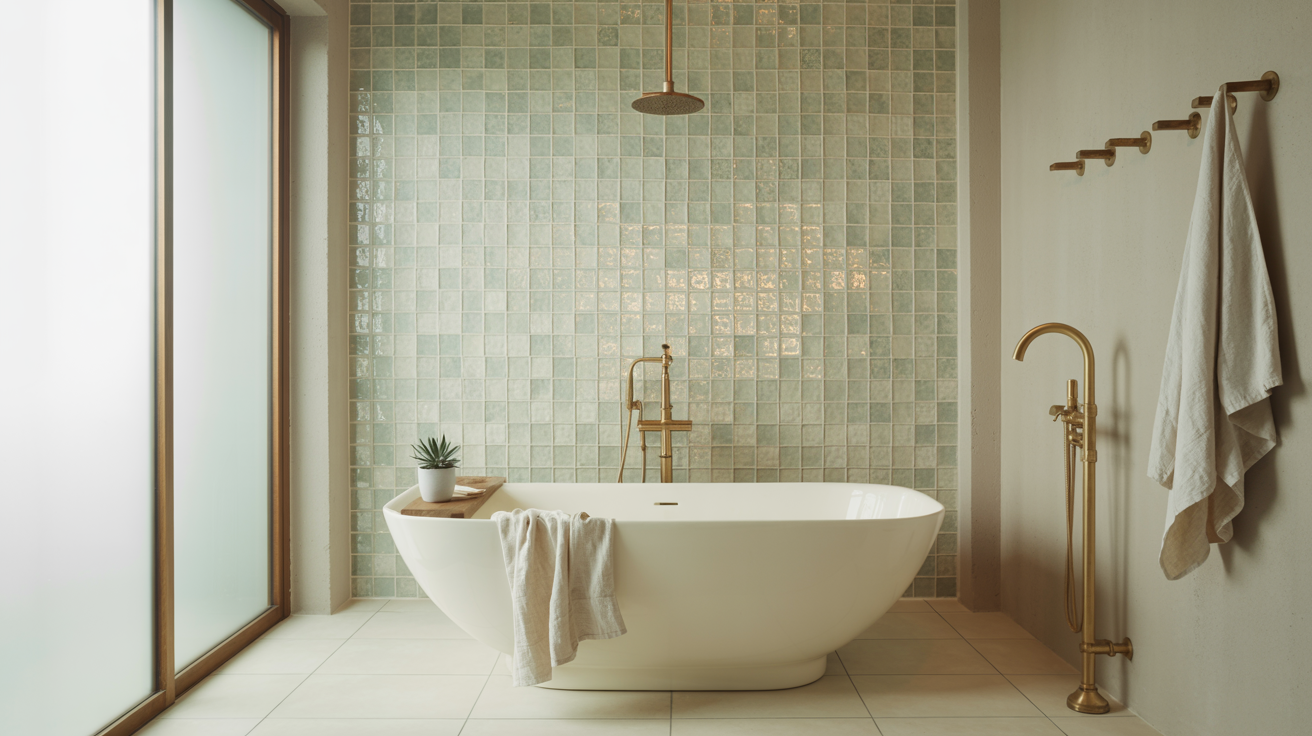
Bathroom tiles do more heavy lifting than most people give them credit for. They set the entire mood of the space, protect your walls and floors from moisture, and honestly determine whether your bathroom feels like a spa retreat or a forgotten afterthought. The right tile choice can completely change how a room feels without touching a single fixture.
I have spent a lot of time researching, testing, and yes, making a few regrettable tile choices along the way. What I have learned is that the best bathroom tile ideas are not always the most expensive ones. Sometimes a simple pattern change or an unexpected color combination does more for a bathroom than a full renovation ever could.
This list covers fifteen bathroom tile ideas that actually work in real homes, across different budgets and styles. Whether you are starting from scratch or refreshing an existing space, there is something here that will make your bathroom feel like a completely different room. And no, you do not need to hire an interior designer to pull any of these off.
Why Choosing the Right Bathroom Tiles Is One of the Most Important Design Decisions You Will Ever Make
Tiles are one of the few design elements in a bathroom that serve both a functional and aesthetic purpose at the same time. They need to handle daily moisture, resist staining, stay safe underfoot, and still look beautiful for years without going out of style. That is a lot to ask of a small square of ceramic or porcelain, but the right tile handles all of it with ease.
The size, color, pattern, and finish of your tiles all work together to shape how a bathroom feels spatially. Large format tiles make small bathrooms feel more open, while smaller mosaic tiles add texture and visual interest to plain walls. Getting this balance right is what separates a bathroom that looks designed from one that just looks finished.
Grout color is another detail that most people overlook until it is too late. A contrasting grout can make individual tiles pop and add graphic energy to a simple layout, while a matching grout creates a seamless, calming effect. I learned this the hard way after choosing white grout for dark floor tiles in my first apartment, which looked beautiful for exactly three weeks.
| Tile Type | Best For | Finish Options | Maintenance Level |
| Ceramic | Walls, budget projects | Matte, gloss | Low |
| Porcelain | Floors, wet areas | Matte, polished, textured | Low |
| Natural stone | Luxury bathrooms | Honed, polished | High |
| Glass | Accent walls, backsplashes | Gloss, frosted | Medium |
| Encaustic cement | Feature walls, floors | Matte | Medium |
| Mosaic | Shower floors, borders | Varied | Medium |
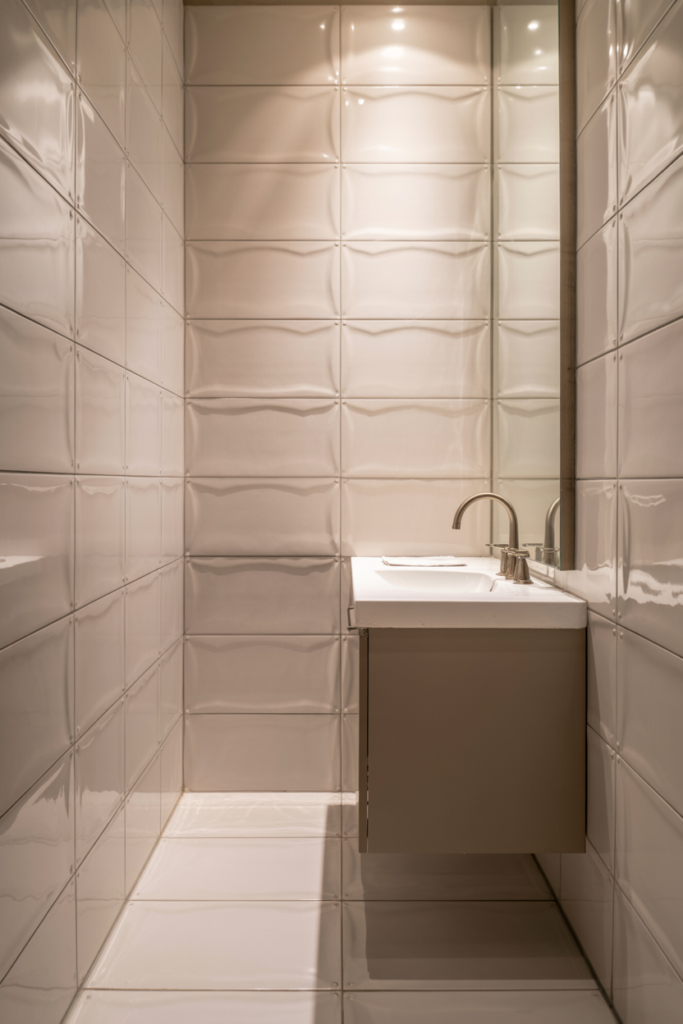
1. Use Large Format Porcelain Tiles to Make Any Small Bathroom Feel Twice as Spacious
Large format tiles are one of the smartest choices you can make in a small bathroom, and the reason is simple. Fewer grout lines mean less visual interruption, which makes the eye travel across the room without stopping. That unbroken visual flow makes the space feel significantly larger than it actually is.
I used 24×48-inch porcelain tiles in a narrow guest bathroom, and the difference was genuinely shocking. The room looked at least a third bigger without changing a single fixture or layout. The tiles ran floor to ceiling on one wall, which added height and drama without any extra effort.
Choose a light neutral tone like warm white, soft gray, or pale greige for the best space-expanding effect. A polished or satin finish reflects light and adds to the airy feel. Keep the grout color close to the tile color so the surface reads as one continuous plane rather than a grid.
2. Try Subway Tiles in an Unexpected Layout to Add Character to a Classic Bathroom Style
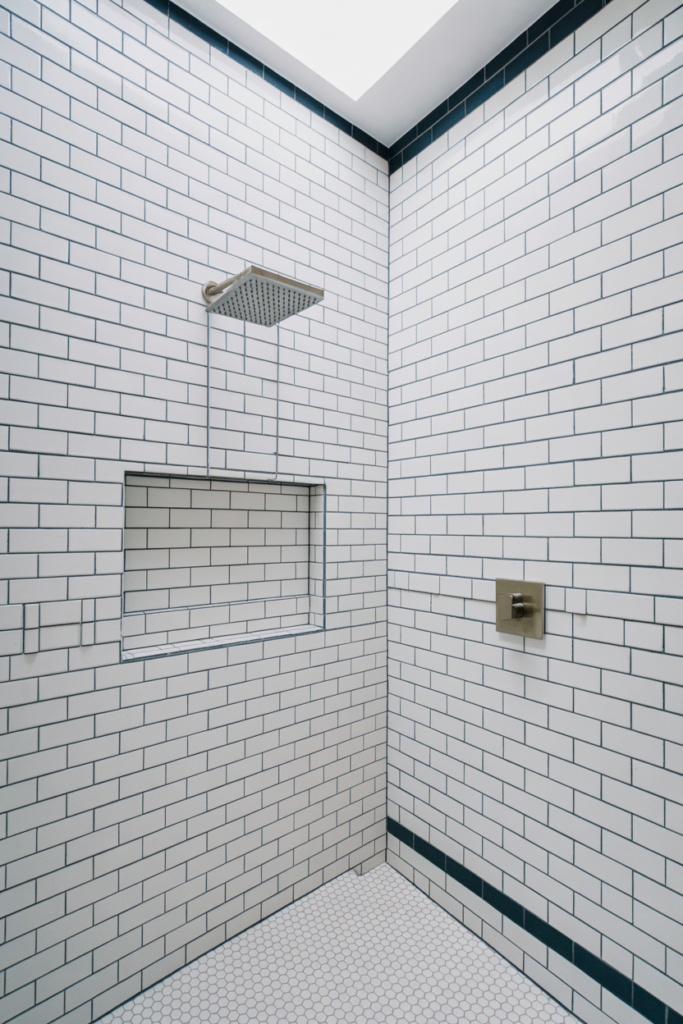
Subway tiles have been around for over a century, and they are still one of the most popular bathroom tile choices for good reason. They are affordable, widely available, clean-looking, and work in almost every style from traditional to modern. The secret to making them feel fresh in 2025 is all in how you lay them.
Instead of the standard horizontal brick pattern, try a vertical stack bond layout, a herringbone arrangement, or a diagonal offset pattern. Each of these layouts takes the same familiar tile and gives it a completely different personality. I used a vertical stacked layout in a narrow shower, and it made the ceiling feel noticeably higher.
Colored grout is another way to give subway tiles a modern edge. A charcoal or dark gray grout against white subway tiles creates a bold graphic contrast that feels far more intentional than the standard white-on-white combination. It is one of the easiest ways to add personality to a classic tile without spending more money.
3. Add a Bold Patterned Encaustic Floor Tile to Create a Stunning Focal Point Underfoot
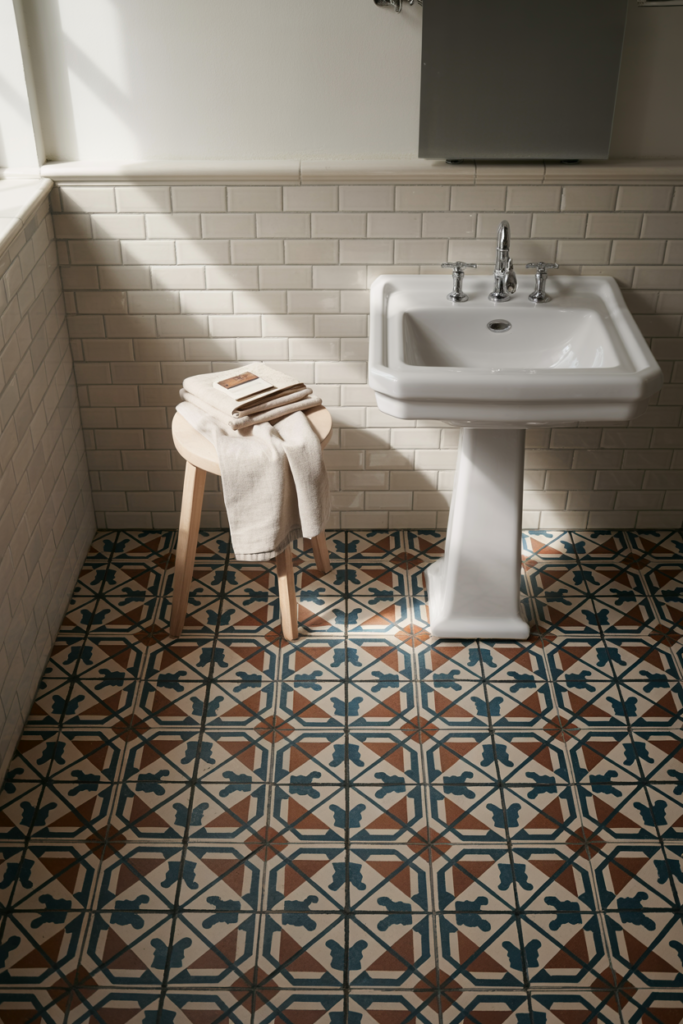
Encaustic cement tiles with geometric or floral patterns are one of those design choices that immediately make a bathroom look curated and intentional. They come in hundreds of patterns and color combinations, and even a small area of patterned floor tile can anchor the entire room visually. I have seen simple white bathrooms completely transformed by a single patterned tile floor.
The key to using patterned tiles well is to keep everything else in the room simple and restrained. Let the floor be the star and support it with plain white or neutral walls. If you try to compete with the pattern elsewhere in the room, the whole space starts to feel chaotic and overwhelming.
Encaustic cement tiles do require sealing before use and occasional resealing over time, but the maintenance is straightforward and well worth the visual payoff. Porcelain versions of encaustic-look tiles are also widely available and require almost no maintenance at all. Either way, a patterned floor is one of the highest-impact bathroom tile ideas on this entire list.
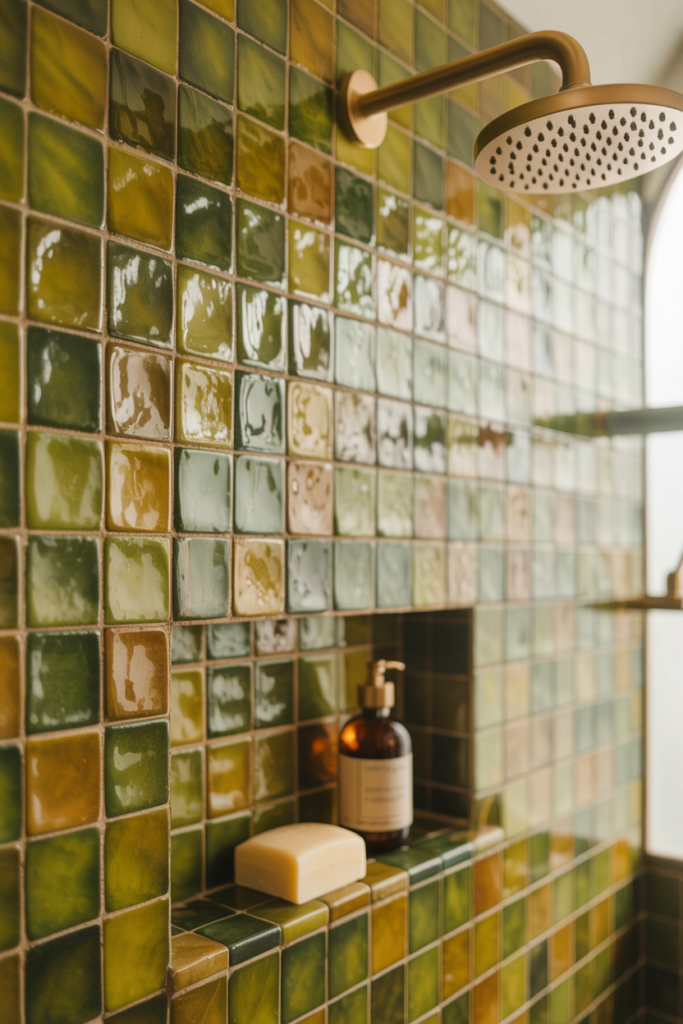
4. Use Zellige Tiles on Your Bathroom Wall for a Textured, Handcrafted Look That Feels Truly Unique
Zellige tiles are hand-cut Moroccan clay tiles with a naturally irregular surface and a richly glazed finish that catches light in a way no machine-made tile can replicate. Each tile is slightly different in color, thickness, and texture, which gives a tiled wall an organic, almost jewel-like quality. I first saw them used in a bathroom renovation online and immediately understood why they have become so sought after.
They work beautifully as a full shower wall, a half-wall feature behind a vanity, or even a single accent niche inside a shower. The light-reactive glaze means the wall looks different depending on the time of day and the direction of the light source. That kind of visual depth is very hard to achieve with standard ceramic or porcelain tiles.
Zellige tiles are on the pricier side compared to standard options, but you do not need to tile an entire bathroom to make an impact. A single feature wall or shower alcove in zellige surrounded by simpler tiles on the remaining surfaces is a cost-effective way to get the look without the full investment.
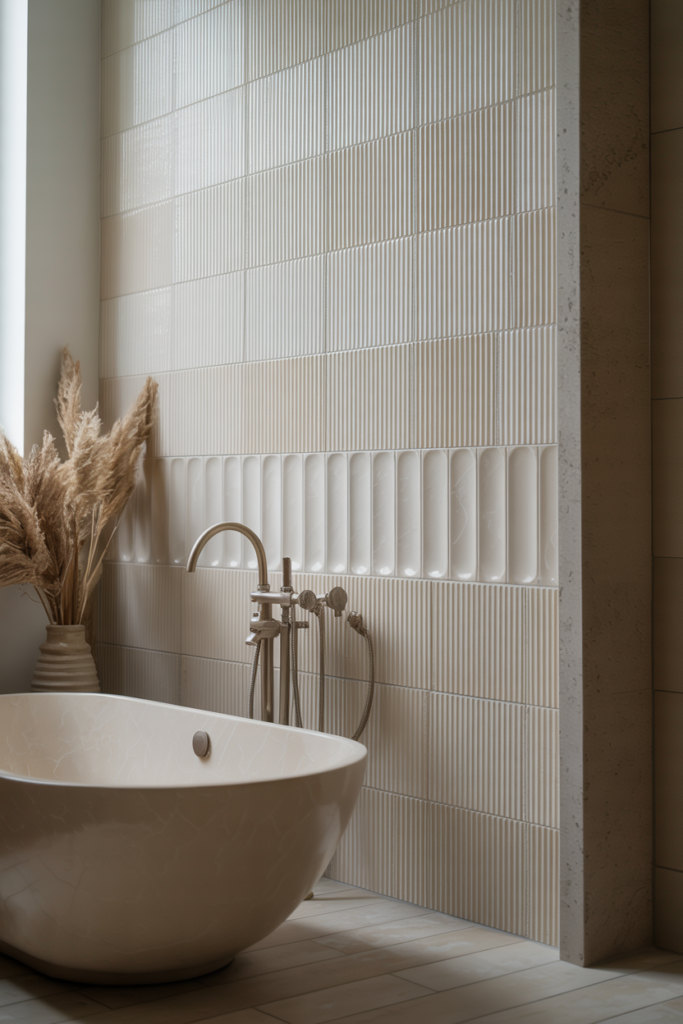
5. Install Vertical Fluted or Ribbed Tiles to Add Texture and Architectural Interest to Plain Walls
Fluted and ribbed tiles have become one of the most popular bathroom wall tile trends in recent years, and it is easy to see why. The three-dimensional surface adds texture and shadow play that flat tiles simply cannot achieve. Even in a single neutral color, a fluted tile wall looks genuinely architectural and considered.
I used soft white ribbed tiles on the back wall of a shower recess, and they added so much more visual interest than a flat tile would have in the same space. The way the grout lines align with the ridges creates a clean, rhythmic pattern that looks intentional without being busy. It is the kind of detail that makes guests stop and look twice.
Fluted tiles work particularly well in matte finishes, which emphasize the texture and shadow detail rather than reflecting light. They also pair beautifully with warmer tones like terracotta, sage green, and dusty pink for a bathroom that feels warm and current. Stick to one textured surface and keep the remaining walls flat so the feature wall has room to breathe.
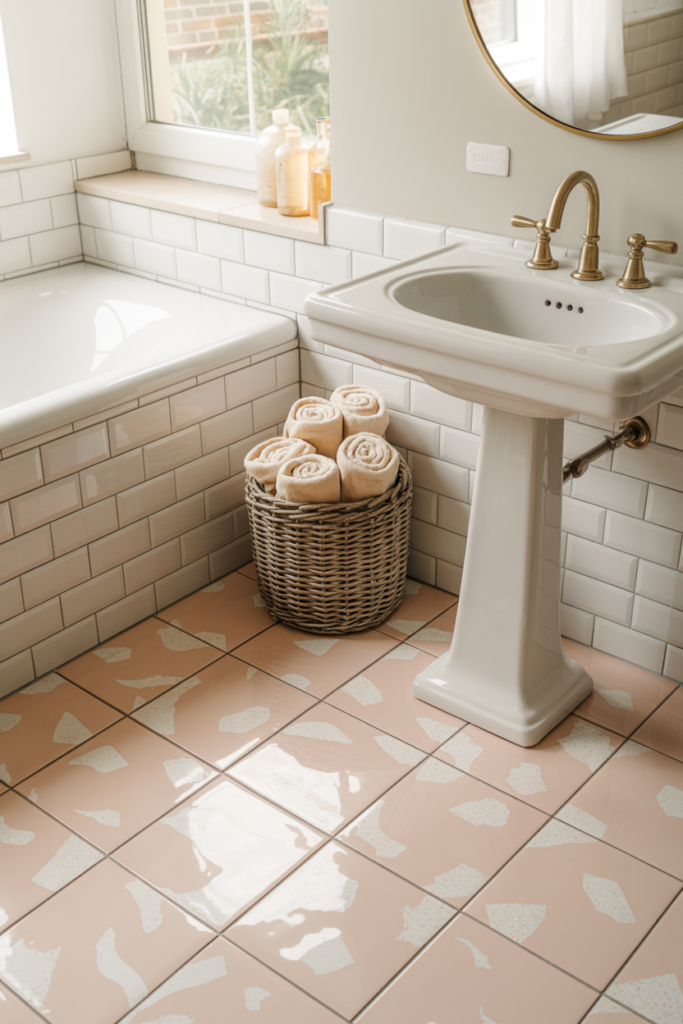
6. Choose Terrazzo Tiles for a Playful Yet Sophisticated Bathroom Floor That Never Goes Out of Style
Terrazzo is one of those materials that keeps coming back into fashion because it genuinely works in almost every design context. The speckled surface of terrazzo tiles adds visual interest without committing to a bold pattern, which makes it incredibly easy to style around. I find it particularly useful in bathrooms where you want the floor to feel special without overwhelming the rest of the space.
Modern terrazzo tiles come in porcelain versions that are far more practical than traditional poured terrazzo and require almost no maintenance. You can find them in soft pastel chip combinations, classic black and white, or warm, earthy tones, depending on the mood you are going for. A pale pink and cream terrazzo floor paired with white walls and brass fixtures is one of my favorite bathroom combinations right now.
The beauty of terrazzo is that it works equally well in a modern minimalist bathroom and a maximalist, color-forward space. It bridges styles effortlessly, which is rare for a floor tile. If you are someone who likes to change your decor accessories frequently, terrazzo is a smart long-term investment because it goes with almost everything.
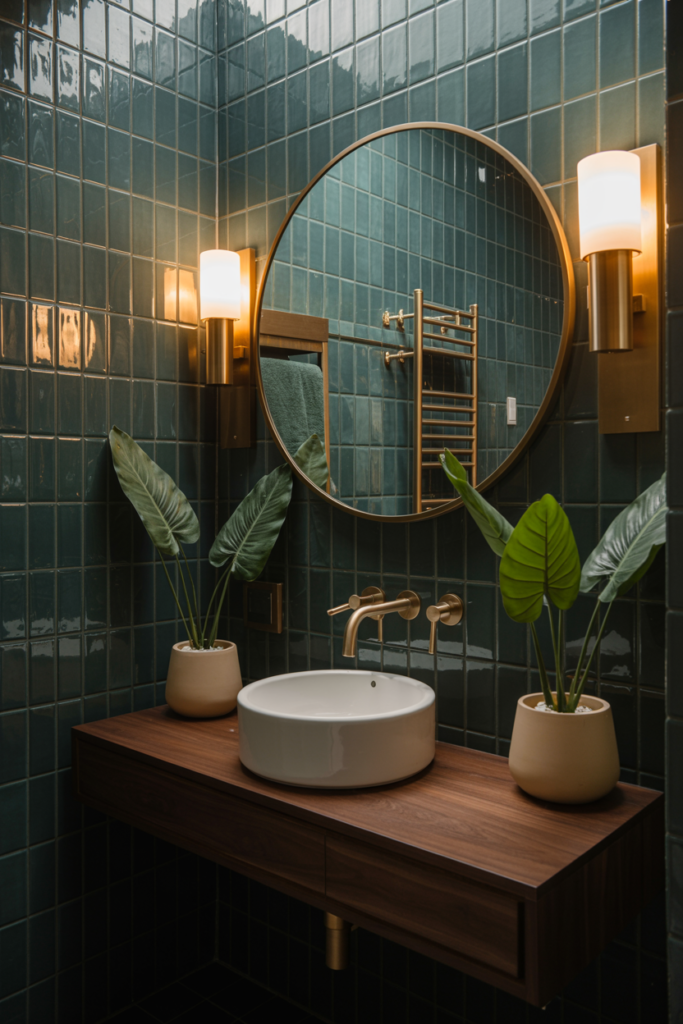
7. Use Dark Moody Wall Tiles to Create a Dramatic and Luxurious Bathroom That Feels Like a Hotel
Dark bathroom tiles get an unfair reputation for making spaces feel small and gloomy, but that is only true when they are used without thought. When chosen and installed correctly, deep charcoal, forest green, navy, or black tiles create a bathroom that feels genuinely luxurious and spa-like. I have seen tiny bathrooms tiled entirely in deep green that felt more expensive than large bathrooms full of builder-grade white tiles.
The trick with dark tiles is to lean into the drama rather than fighting it. Pair them with warm brass or gold fixtures, large mirrors that bounce light around the room, and good layered lighting. Those three elements stop a dark-tiled bathroom from feeling cave-like and make it feel intentionally moody and sophisticated instead.
Matte dark tiles work better than glossy ones in most cases because they hide water spots and fingerprints far more effectively. A matte charcoal or slate tile with a slightly lighter grout in the same color family gives the wall a beautiful tonal depth. Add a few plants and some warm towels in natural linen tones, and the whole bathroom feels like a boutique hotel.
8. Try a Mixed Material Approach by Combining Tiles With Timber, Stone, or Concrete Accents
One of the most interesting bathroom tile ideas I have come across is the idea of not relying on tile alone to finish a bathroom. Combining tiles with complementary materials like timber vanity panels, a stone basin surround, or concrete feature elements creates a layered, textural look that feels genuinely custom. The contrast between hard tile surfaces and warmer natural materials is what gives a bathroom real character.
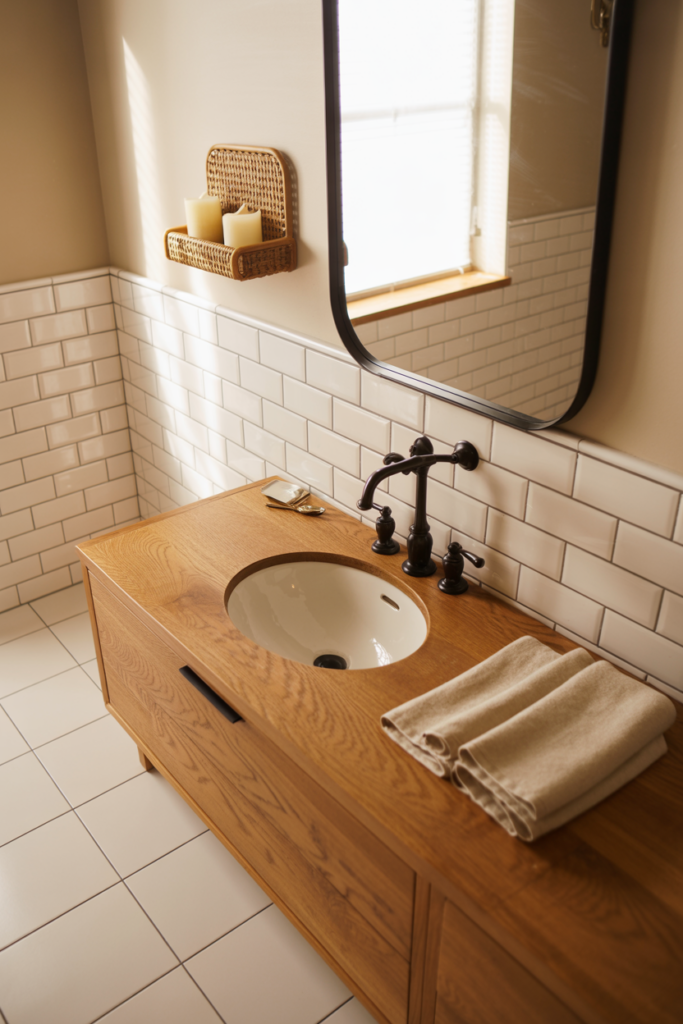
I love the combination of large white porcelain floor tiles with a wall-mounted timber vanity and a simple white subway tile on the lower half of the walls. The wood breaks up what could otherwise be a very cold, clinical space and adds warmth without adding visual noise. It is the kind of combination that looks effortless but actually takes a little thought to pull off well.
The key is to limit your mixed materials to two or three at most so the space does not feel cluttered or disconnected. Tile, timber, and one stone or concrete element are usually the sweet spot. Let each material have its own moment rather than cramming everything in at once.
9. Install Mosaic Tiles on Your Shower Floor for a Safe, Beautiful, and Highly Practical Surface
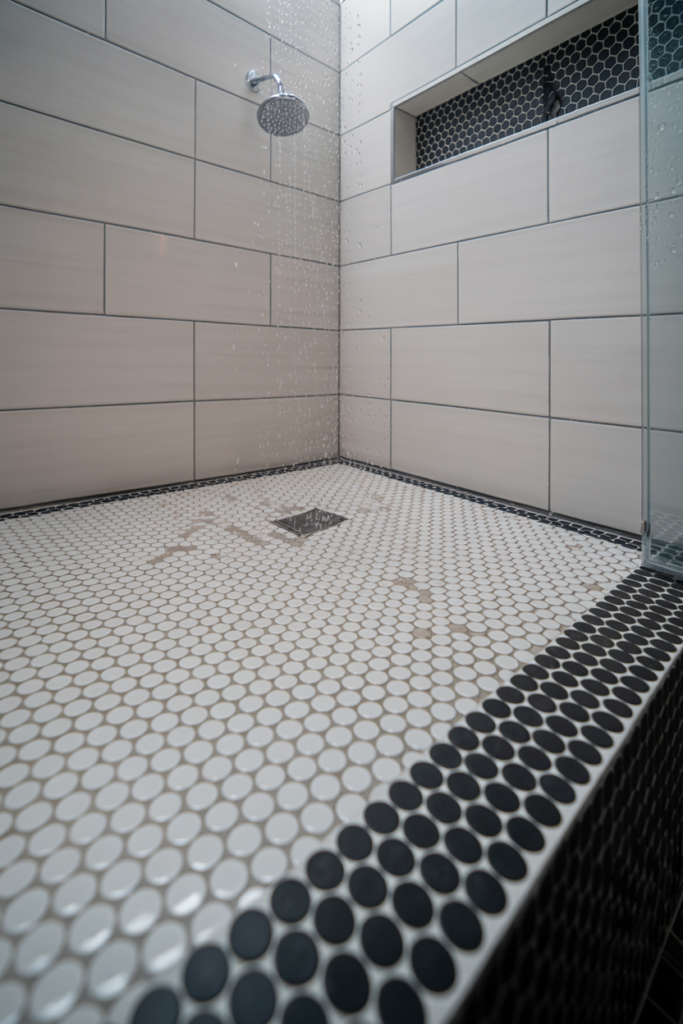
Mosaic tiles are one of the most practical choices for shower floors because their small size means more grout lines, which translates directly into better slip resistance underfoot. Beyond the safety benefit, mosaic tiles add an incredible amount of visual texture to what is often the most neglected surface in a bathroom. A simple white mosaic shower floor with a small contrasting border tile is a classic combination that always looks clean and considered.
I used a small white penny round mosaic on a shower floor with a thin border of black hex tiles around the perimeter, and it looked genuinely custom for a very reasonable cost. The black border framed the shower floor in a way that made the whole shower feel intentionally designed rather than just finished. Small details like border tiles make a surprisingly big difference in the overall look.
Glass mosaic tiles are another option worth considering for shower walls, particularly in a feature niche or on the back wall of the shower. The way glass mosaics catch and reflect light makes even a small shower feel brighter and more open. They cost a little more than ceramic mosaics, but the visual payoff in a light-filled bathroom is significant.
10. Go for a Full Bathroom Tile Feature Wall Behind the Bathtub to Create a Stunning Visual Anchor
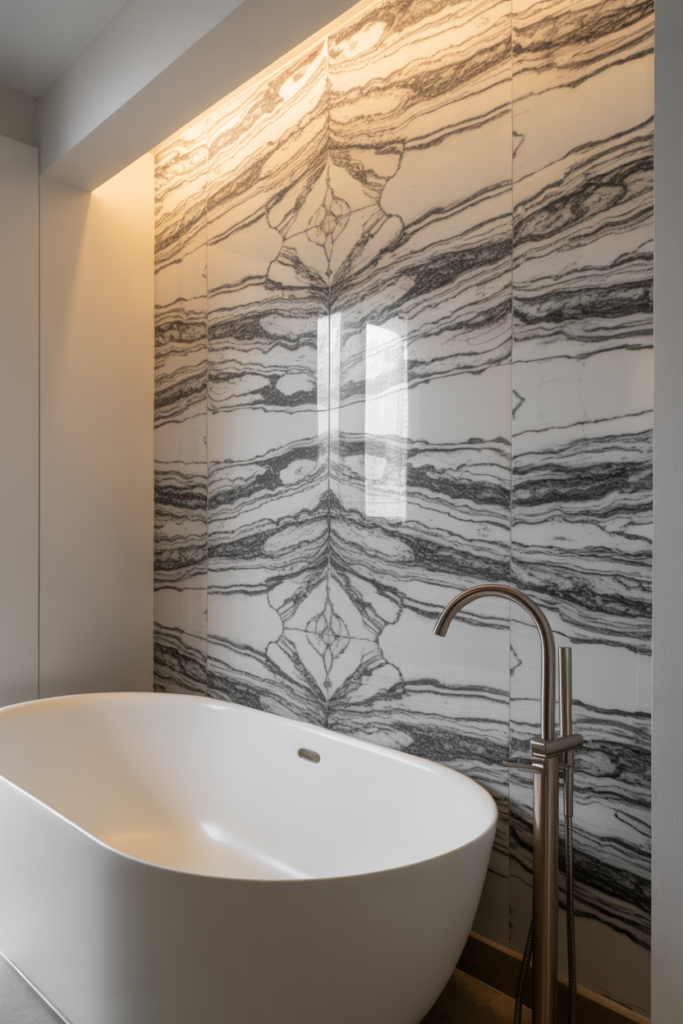
A feature wall behind a freestanding or built-in bathtub is one of the most impactful design decisions you can make in a full bathroom. It gives the eye a clear focal point and makes the bathtub feel like the centerpiece it deserves to be, rather than just a functional fixture sitting against a plain wall. I have seen this done with everything from bold patterned tiles to simple large format stone-look porcelain, and it works every time.
The tile you choose for a bath feature wall should be something you genuinely love because it will be the first thing you see when you walk into the room. Bold geometric patterns, richly textured zellige, dramatic book-matched stone-look tiles, or even a simple handmade ceramic in an interesting color all make excellent feature wall choices. The scale of the bathtub means the wall has enough real estate to carry almost any tile with confidence.
Keep the remaining walls in the bathroom simple and complementary, so the feature wall has full visual authority. A large mirror positioned to reflect the feature wall doubles its impact and makes the whole bathroom feel more dynamic. Good lighting above or beside the bathtub also helps the tile surface read at its best throughout the day.
11. Use Hexagonal Tiles in Your Bathroom for a Geometric Pattern That Adds Modern Visual Interest
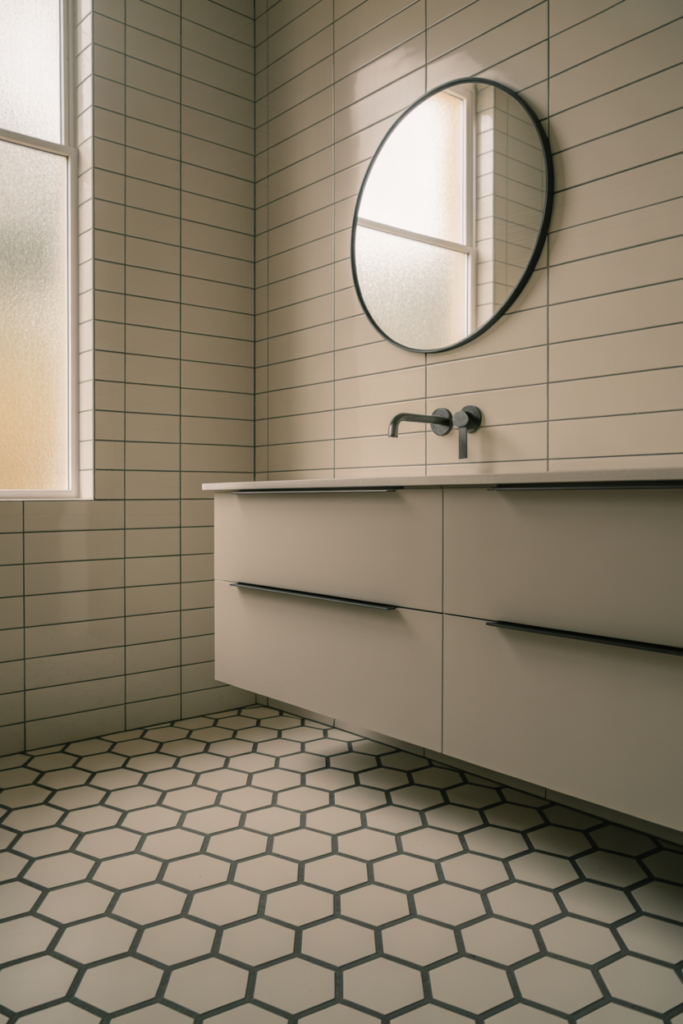
Hexagonal tiles have become a staple of modern bathroom design, and they genuinely deserve their popularity. The six-sided shape creates a naturally interesting pattern without needing any additional design work, and it works on both floors and walls with equal success. I particularly love small white hex tiles on a bathroom floor with a dark grout because the result looks graphic and intentional without being loud.
Larger hexagonal tiles in stone-look finishes work beautifully as a full shower wall or bathroom floor in a more contemporary setting. The geometric shape adds visual structure that square or rectangular tiles simply cannot replicate. Mixing two sizes of hex tile in complementary tones is another approach that adds depth and interest to an otherwise simple layout.
Colored hexagonal tiles are worth considering if you want to add a subtle pop of color without committing to a bold overall scheme. A soft sage green or dusty blue hex tile floor in an otherwise white bathroom adds personality and warmth without feeling overwhelming. It is a low-risk way to bring color into a space that you want to feel fresh and current.
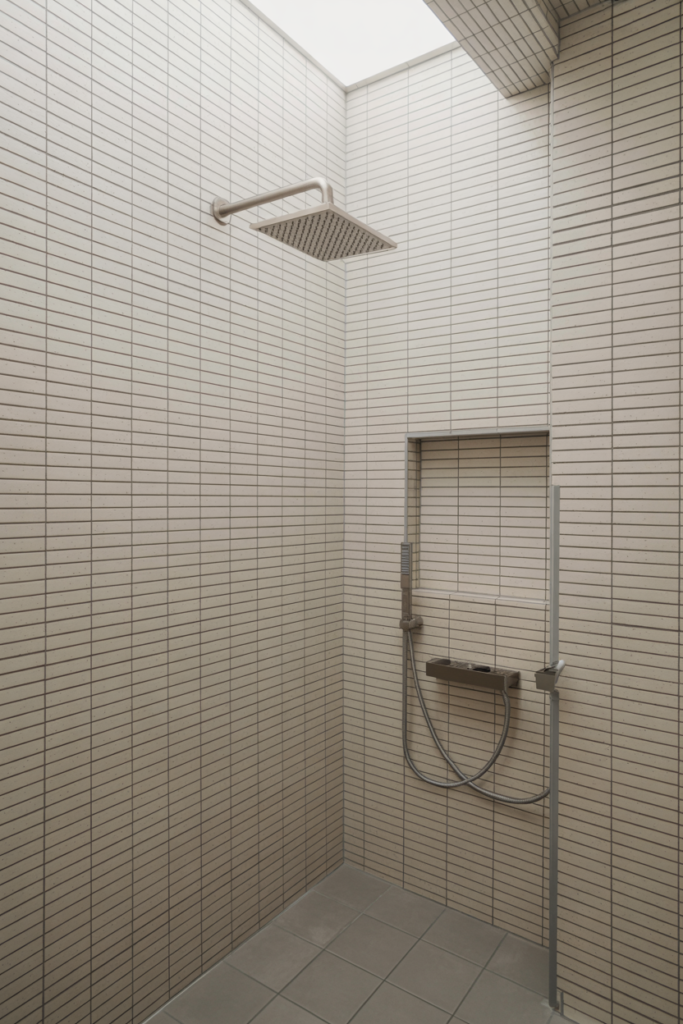
12. Install Narrow Stacked Vertical Tiles in Your Shower to Add Height and a Sleek Modern Finish
Narrow vertical tiles stacked in a straight bond pattern are one of the cleanest, most architectural tile layouts you can choose for a shower or bathroom wall. The vertical orientation draws the eye upward, which makes ceilings feel higher and the overall space feel more generous. I used this layout in a bathroom with standard eight-foot ceilings, and the room genuinely felt taller after the tile went in.
This approach works particularly well with slim rectangular tiles in the 2×8 or 3×12 inch range, which are widely available and very affordable. In a warm white or soft off-white tone, vertically stacked slim tiles give a bathroom a quiet, considered quality that feels more expensive than it actually is. The simplicity of the layout also means installation is straightforward, and grout lines stay minimal.
Pair vertical wall tiles with a contrasting horizontal element somewhere in the room to create visual balance. A horizontal band of a different tile at mid-wall height, a horizontal timber shelf, or even horizontal lines in the vanity cabinetry all work well as counterpoints. That interplay between vertical and horizontal elements is what gives a bathroom a sense of deliberate, thoughtful design.
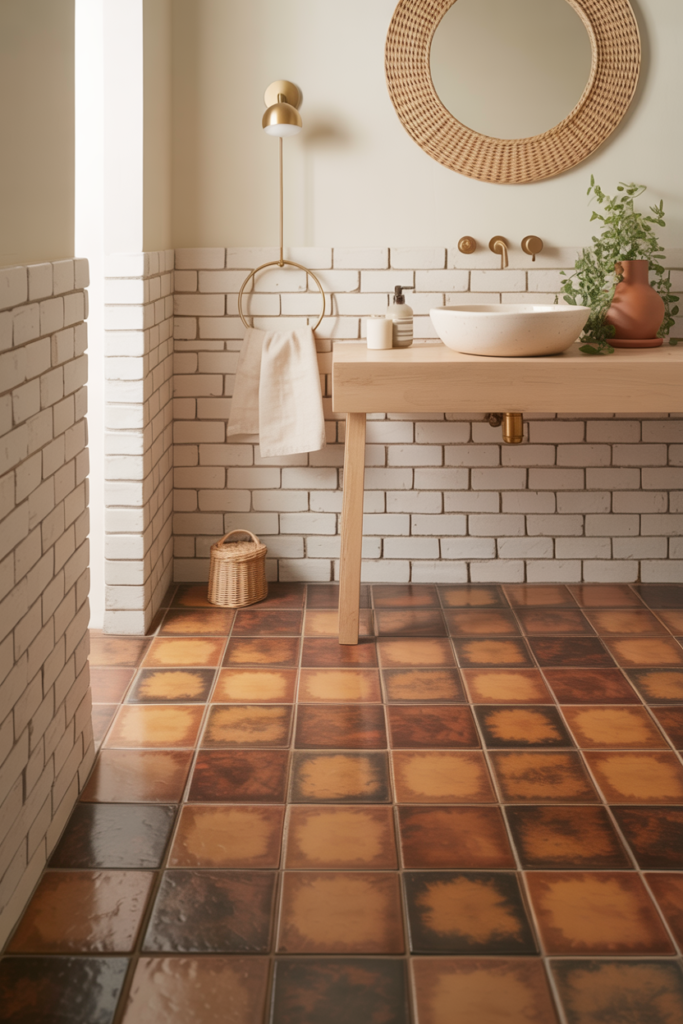
13. Choose Warm Terracotta or Earth-Tone Tiles for a Bathroom That Feels Grounded and Inviting
Terracotta and earth-tone tiles have made a strong comeback in recent years, and I think it is because people are craving warmth in spaces that have historically defaulted to cold, clinical white. Warm ochre, burnt sienna, dusty clay, and sandy beige tones bring a natural, grounded quality to a bathroom that feels genuinely welcoming rather than purely functional. I find earth-tone bathrooms almost universally calming in a way that bright white ones rarely are.
Square terracotta-look porcelain tiles on a bathroom floor paired with warm white walls and wooden accessories create a look that feels both current and timeless. The earthy palette works especially well with natural materials like rattan, linen, and unglazed ceramics, which are all easy to incorporate through towels, baskets, and small decor pieces. This is a style that photographs beautifully and feels even better to actually be in.
If you love the look of real terracotta but want something more practical, porcelain terracotta-look tiles are an excellent alternative. They offer the same warm visual character without the sealing requirements and relative fragility of genuine terracotta. Either way, an earth-tone tile palette is one of the most people-friendly choices you can make in a bathroom right now.
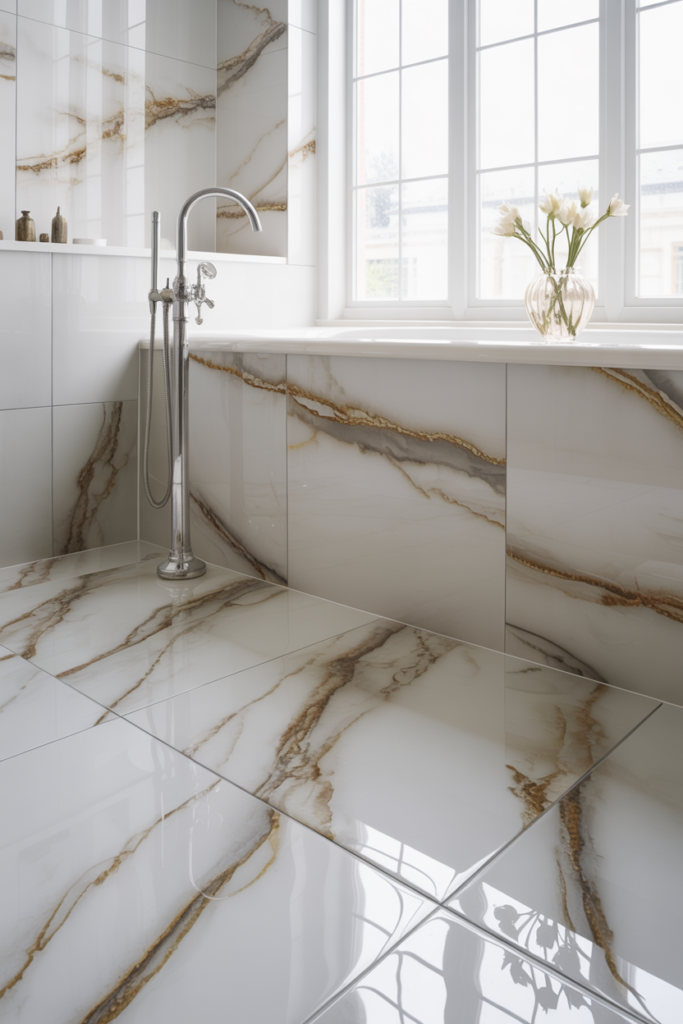
14. Use White Marble-Look Porcelain Tiles for a Timeless and Luxurious Bathroom on a Realistic Budget
Real marble in a bathroom is beautiful, high-maintenance, expensive, and prone to etching and staining if you are not careful with it. Marble-look porcelain tiles give you almost all of the visual appeal of real marble at a fraction of the cost and with virtually none of the upkeep. I have seen marble-look porcelain installed so well that even designers struggle to tell the difference at first glance.
The best marble-look porcelain tiles have realistic veining that varies across individual tiles rather than repeating the same pattern identically. That variation is what makes the installation look genuinely natural rather than printed and repetitive. When shopping for marble-look tiles, always lay several pieces out together on the floor before buying to check how the veining flows across the surface.
Large format marble-look porcelain on both the floor and walls of a bathroom creates an incredibly cohesive, hotel-quality finish. Keeping the grout color very close to the lightest tone in the tile maintains the seamless, luxurious effect. Add polished chrome or brushed nickel fixtures, and the whole bathroom reads as genuinely high-end regardless of the actual budget.
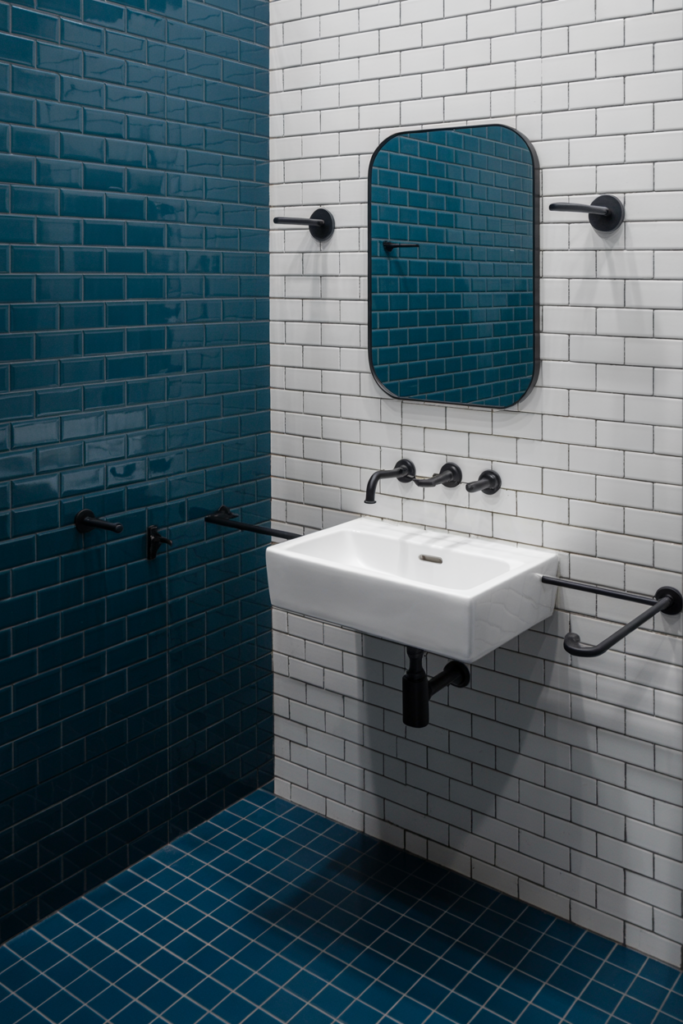
15. Create a Two-Tone Tile Scheme Using Contrasting Colors on the Floor and Walls for a Striking Finish
A two-tone tile scheme is one of the most visually satisfying approaches to bathroom design because it gives the space a clear, deliberate structure. Pairing a bold or dark floor tile with a lighter, simpler wall tile creates a grounded, well-balanced look that feels intentional from every angle. I used deep navy floor tiles with white subway wall tiles in a small bathroom once, and the combination looked genuinely striking despite being made up of two very simple tile choices.
The contrast between floor and wall tiles also helps define the different zones of a bathroom visually, which is particularly useful in open-plan or wet room style bathrooms where everything flows into one continuous space. A color break at the floor-to-wall transition gives the eye a natural resting point and prevents the space from feeling like one undifferentiated blob of tile. That structural clarity is what makes two-tone schemes work so reliably well.
You do not need to use dramatically different colors to make a two-tone scheme work. Even a warm white floor tile paired with a cool white wall tile creates a subtle but effective contrast that adds dimension without any visual noise. The principle is the same whether the contrast is bold or understated: two distinct tile choices working together always look more considered than one tile used everywhere.
Practical Tips for Choosing and Installing Bathroom Tiles Without Making Costly Mistakes
One of the most common mistakes people make when choosing bathroom tiles is selecting them based on small samples without considering how they will look across a full wall or floor. Always order a few full-size tiles before committing to a large quantity and lay them out in your actual bathroom under your actual lighting conditions. The difference between a tile sample under store lighting and that same tile in your bathroom can be genuinely surprising.
Tile quantity is another area where underestimating causes real problems. Always order at least ten percent more tile than your calculated surface area to account for cuts, breakages, and future repairs. Running out of a tile mid-project and finding the batch has been discontinued is one of the most avoidable renovation disasters, and it happens more often than you would think.
Grout selection deserves as much attention as tile selection because the wrong grout can undermine even the most beautiful tile choice. Epoxy grout costs more than standard cement grout but resists staining, cracking, and moisture far more effectively in wet bathroom environments. For floor tiles especially, the investment in quality grout pays for itself very quickly in reduced maintenance and a longer-lasting finish.
| Tile Size | Best Application | Visual Effect | Grout Width |
| Small mosaic (1×1 to 2×2 inch) | Shower floors, borders | Texture, slip resistance | 1/16 to 1/8 inch |
| Medium (4×4 to 6×6 inch) | Walls, feature areas | Classic, versatile | 1/8 inch |
| Large (12×12 to 24×24 inch) | Floors, full walls | Spacious, modern | 3/16 inch |
| Extra large (24×48 inch plus) | Open plan bathrooms | Seamless, luxurious | 1/4 inch |
| Subway (3×6 inch) | Walls, showers | Clean, timeless | 1/16 to 1/8 inch |
| Hexagonal (various) | Floors, feature walls | Geometric, modern | 1/8 inch |
What Makes a Bathroom Tile Choice Stand the Test of Time and Keep Looking Beautiful for Years
The bathroom tiles that age best are almost always the ones chosen for how they feel to live with, rather than how they look in a showroom. A tile that photographs beautifully but shows every water spot or hides grime in its grout lines will frustrate you within months of installation. Choosing tiles with both aesthetics and practicality in mind is what separates a bathroom that stays beautiful from one that starts looking tired within a few years.
Finish matters more than most people realize when it comes to long-term satisfaction. Matte tiles hide water marks and minor surface scratches far better than polished tiles, which is why I almost always recommend matte finishes for bathroom floors. Polished and gloss finishes look stunning on walls where they reflect light beautifully and stay cleaner with less effort.
Scale your tile choice to the size of your bathroom and the style of your fixtures rather than just following trends. A tile that works brilliantly in a large master bathroom with high ceilings can feel completely wrong in a compact ensuite with standard proportions. Always consider the full context of the room before committing to any tile, and you will make a decision you are happy with for a very long time.
Conclusion
The right bathroom tile idea has the power to completely change how a space looks, feels, and functions without touching a single fixture or fitting. From large-format porcelain that makes small bathrooms feel spacious to bold, patterned encaustic floors that anchor an entire room, every idea in this list works in real homes at real budgets. The key is matching the tile to the specific needs, proportions, and personality of your bathroom rather than just choosing whatever looks good on a mood board.
If I had to pick the ideas with the highest visual impact for the lowest investment, I would point to colored grout on subway tiles, vertical tile layouts for added height, and earth-tone porcelain floors for warmth. Each of these delivers a significant design upgrade without requiring expensive materials or complex installation. Sometimes the smallest decisions produce the biggest results in a bathroom renovation.
Take your time with the selection process, order full-size samples, test them in your actual space, and choose tiles you genuinely love rather than tiles you think you should love. A bathroom tile is a long-term commitment, and getting it right means living with something that makes you happy every single day. That is worth the extra thought.
Frequently Asked Questions
What are the best bathroom tiles for a small bathroom to make it look bigger?
Large format tiles in light neutral tones work best for making small bathrooms feel more spacious. Fewer grout lines mean less visual interruption, which allows the eye to travel across the room without stopping. Running the same tile on both the floor and walls amplifies the space-expanding effect even further.
How do I choose the right grout color for my bathroom tiles?
Matching your grout closely to your tile color creates a seamless, calm effect that makes the surface read as one continuous plane. A contrasting grout adds graphic energy and makes individual tiles pop with a more intentional, designed look. Consider how much maintenance you are willing to do, since lighter grout on floors requires more frequent cleaning than darker grout.
Are matte or glossy tiles better for a bathroom floor?
Matte tiles are almost always the better choice for bathroom floors because they offer better slip resistance and hide water marks and minor scratches far more effectively than glossy tiles. Glossy tiles look beautiful on walls where they reflect light and stay cleaner with minimal effort. For a floor that looks good with minimal upkeep, matte is the clear winner.
How much extra tile should I order to account for cuts and breakages?
Always order at least ten percent more tile than your calculated surface area as a standard buffer for cuts and breakages. For rooms with lots of angles, niches, or diagonal layouts, ordering fifteen percent extra is a safer approach. Having spare tiles from the same batch also protects you if a tile needs replacing years down the line.
Can I use large-format tiles in a small bathroom without it looking wrong?
Yes, and in fact, large-format tiles often make small bathrooms look better rather than worse. The reduced number of grout lines creates a cleaner, less busy surface that reads as more spacious than a floor covered in smaller tiles. Choose a light color and keep the grout tone close to the tile for the best result in a compact space.
What is the most low-maintenance bathroom tile option available right now?
Porcelain tiles in a matte or satin finish are the most low-maintenance option for most bathrooms. They resist moisture, staining, and scratching better than ceramic, natural stone, or cement tiles and require no sealing or special cleaning products. Pair porcelain tiles with epoxy grout for a bathroom surface that stays clean and intact with very little ongoing effort.
How do I make a bathroom with plain white tiles look more interesting without retiling?
Changing the grout color is the single most impactful thing you can do to transform plain white tiles without replacing them. A dark charcoal or warm gray grout applied over existing white grout using a grout colorant product completely changes the look of the surface. Adding new fixtures, lighting, mirrors, and accessories in complementary finishes also makes a significant difference to how the tiles read in the overall space.