
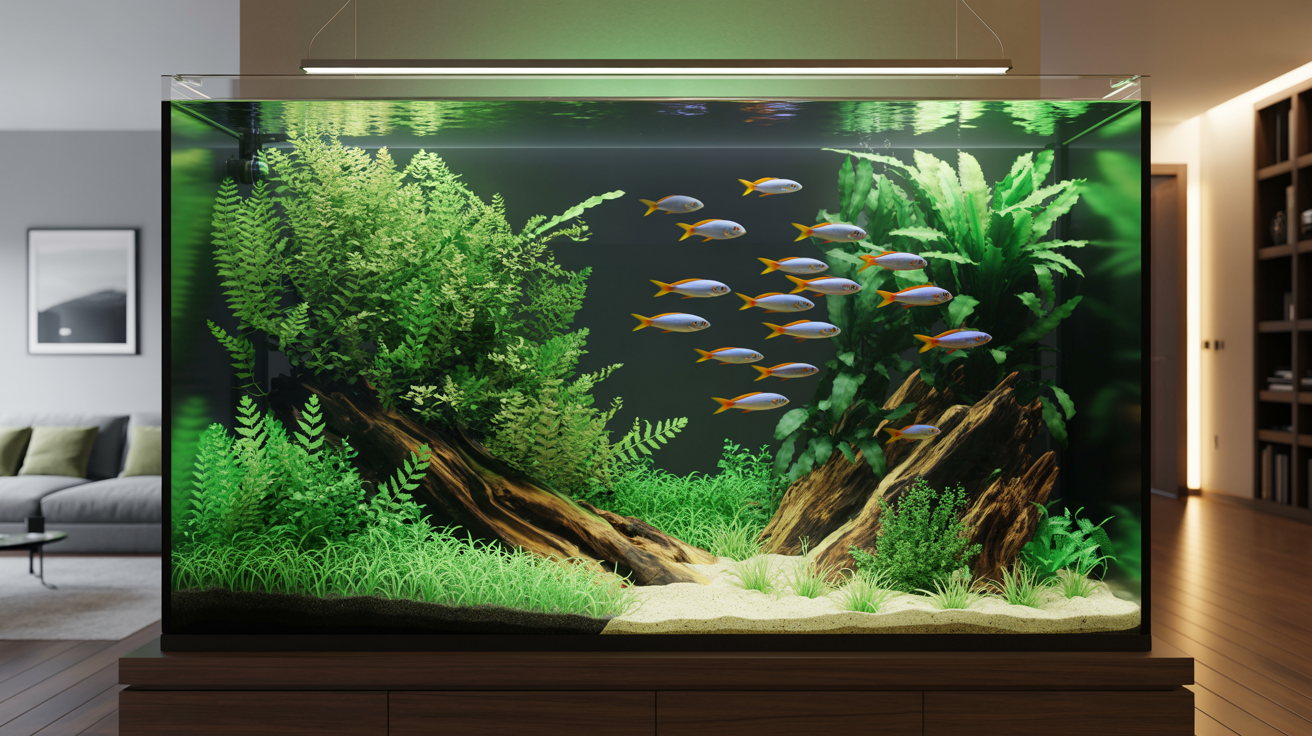
A freshwater aquarium can be one of the most visually striking features in any room when it is set up with intention and creativity. Most people think of a fish tank as just a glass box with some gravel and a plastic castle in the corner, but a well-designed freshwater tank is genuinely closer to living art than a pet enclosure. The difference between a forgettable tank and a room-stopping centerpiece comes down to the ideas behind the setup.
Freshwater aquariums have a huge advantage over saltwater tanks when it comes to creative setups. They cost significantly less to start and maintain, support a wider variety of aquascaping styles, and work with a much broader range of fish species and plant combinations. That flexibility is exactly what makes freshwater tanks so exciting to design and so rewarding to keep.
I put together 10 creative freshwater aquarium ideas that cover everything from natural planted landscapes to bold themed setups. Whether you are setting up your first tank or looking to completely redesign an existing one, there is something on this list that will make your aquarium the most talked-about feature in your home. And yes, people will absolutely stop mid-conversation to stare at it.
What Makes a Freshwater Aquarium a True Room Centerpiece
A freshwater aquarium earns centerpiece status when it does more than just house fish. It needs to work as a visual anchor in the room, drawing the eye the moment someone walks in and holding their attention long enough to make them want to look closer. That quality comes from a combination of thoughtful aquascaping, good lighting, and a clear design vision for the tank.
Tank placement plays a bigger role than most beginners realize. A tank positioned at eye level against a neutral wall with good ambient lighting around it will always have more visual impact than the same tank shoved into a corner on a mismatched stand. Treating the aquarium as a piece of furniture rather than an afterthought in your room layout is the first step toward making it a genuine centerpiece.
The fish themselves contribute enormously to the overall visual impact of a tank. A school of brightly colored tetras moving together in a planted aquarium, or a single impressive cichlid commanding a rocky biotope setup, both create the kind of living movement that no static decoration can replicate. That combination of beautiful aquascaping and active, colorful fish is what gives a well-designed freshwater tank its undeniable presence in a room.
| Setup Style | Best For | Difficulty Level | Approx. Starting Cost |
| Natural planted tank | Living room centerpiece | Intermediate | $150 to $300 |
| Biotope aquarium | Themed or study rooms | Intermediate | $100 to $250 |
| Iwagumi aquascape | Minimalist interiors | Advanced | $200 to $400 |
| Community tank | Family rooms | Beginner | $80 to $200 |
| Blackwater setup | Moody or dark interiors | Beginner | $80 to $150 |
| Nano planted tank | Small spaces and desks | Beginner | $50 to $150 |
1. Natural Planted Aquarium With a Lush Green Landscape
A natural planted freshwater aquarium is one of the most beautiful tank setups you can create, and it genuinely looks like a miniature underwater forest when done well. The idea is to use live aquatic plants as the primary visual element, creating a dense, layered green landscape that fills the tank from substrate to surface. Fast-growing stem plants at the back, mid-ground plants in the middle, and low carpeting plants at the front create depth and dimension that plastic decor simply cannot achieve.
Plants like Java fern, anubias, amazon sword, and dwarf hairgrass are reliable choices for a natural planted setup because they are hardy, widely available, and visually striking. Java fern and anubias attach to driftwood and rocks rather than needing to be planted in substrate, which makes them particularly flexible for aquascaping. A carpet of dwarf hairgrass or Monte Carlo across the front of the tank creates that lush, meadow-like foreground that always draws admiring comments from anyone who sees it.
The fish you choose for a planted tank should complement rather than compete with the greenery. Small, colorful schooling fish like neon tetras, ember tetras, or celestial pearl danios move through a planted aquarium like living jewels against a green backdrop. I find that a planted tank with a tight school of 20 or more small tetras moving together has a hypnotic, almost meditative quality that makes it genuinely hard to look away from.
2. Driftwood and Stone Hardscape Aquarium
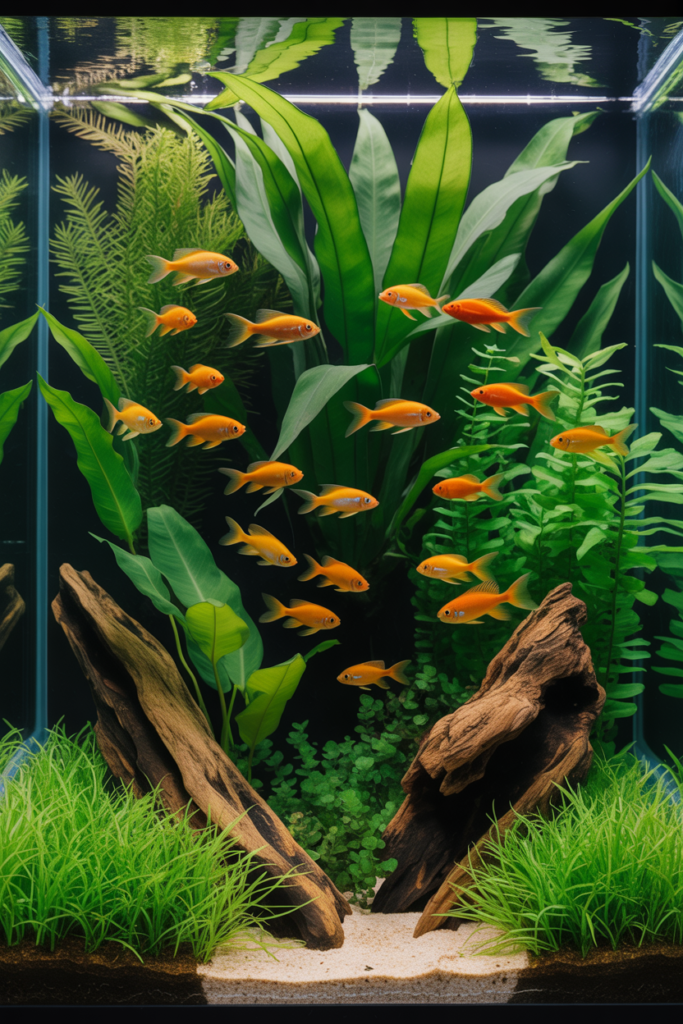
A hardscape-focused freshwater aquarium built around driftwood and natural stones creates a dramatic, sculptural look that works beautifully in modern and minimalist room interiors. The idea is to let the wood and rock do most of the visual heavy lifting, with plants playing a supporting role rather than dominating the tank. A large piece of spider wood or manzanita wood arching across the tank, covered in patches of java moss and surrounded by smooth river stones, looks genuinely architectural.
Choosing the right driftwood piece is the most important decision in this type of setup. Spider wood has a gnarled, branching quality that looks incredibly natural and complex. Manzanita wood tends to be smoother and more angular, which suits a cleaner, more contemporary aesthetic. Both types release tannins into the water initially, which tints it a warm amber color that actually enhances the natural look rather than detracting from it.
Stone placement in a hardscape tank follows the same basic principles as garden rock arrangements. Odd numbers of stones look more natural than even groupings, and varying the sizes creates a more realistic landscape. I like to use seiryu stone or dragon stone for hardscape tanks because both have strong visual texture and a naturally weathered appearance that looks like it belongs in a real riverbed or mountain stream.
3. Blackwater Biotope Aquarium for a Moody, Atmospheric Look
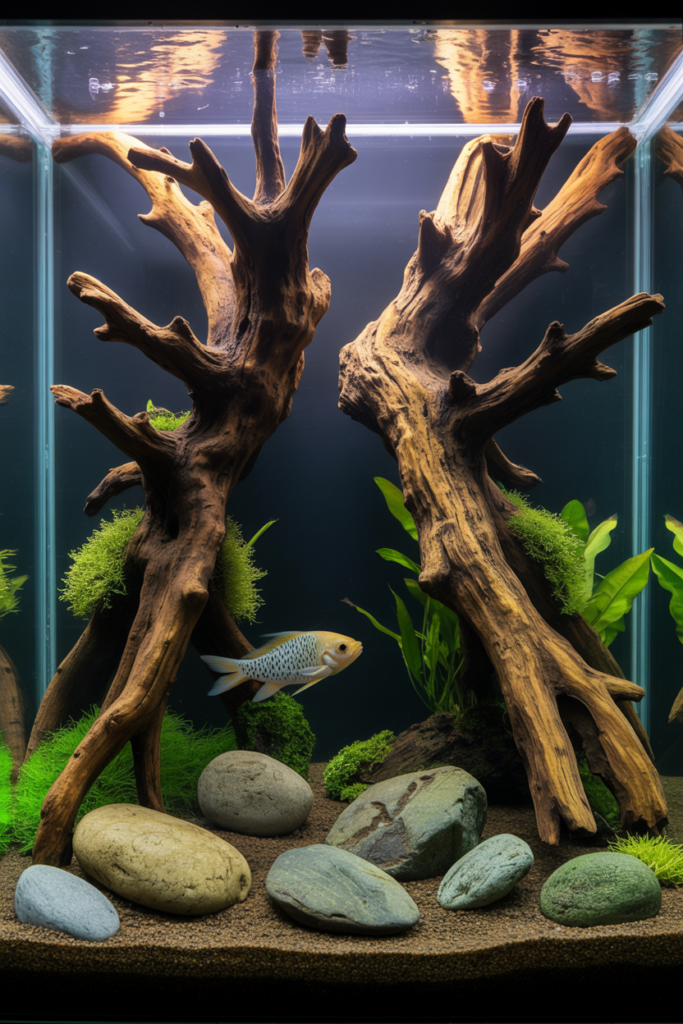
A blackwater biotope aquarium recreates the tannin-rich, tea-colored waters of South American rivers like the Amazon and Rio Negro, and the result is one of the most atmospheric and visually unique freshwater setups you can build. The dark amber water, sandy substrate, scattered dried leaves, and twisted driftwood pieces create a moody, almost cinematic quality that looks completely different from any other tank style. Against a black background, the colors of discus, angelfish, or cardinal tetras become incredibly vivid and striking.
Creating a blackwater setup is actually simpler than most people expect. A fine sand substrate, a few pieces of driftwood, a handful of dried Indian almond leaves scattered across the bottom, and some floating plants at the surface are all you really need. The tannins released by the driftwood and leaves naturally darken the water over time, and Indian almond leaves also have mild antibacterial properties that benefit the fish.
Fish choices for a blackwater biotope are some of the most beautiful in the freshwater hobby. Cardinal tetras, altum angelfish, chocolate gouramis, and apistogramma cichlids all come from blackwater environments naturally and look absolutely at home in this type of setup. Watching a group of cardinal tetras with their vivid red and blue stripes moving through dark amber water against a black background is one of those aquarium moments that stops people mid-sentence every single time.
4. Iwagumi Style Aquascape With Minimalist Stone Layout
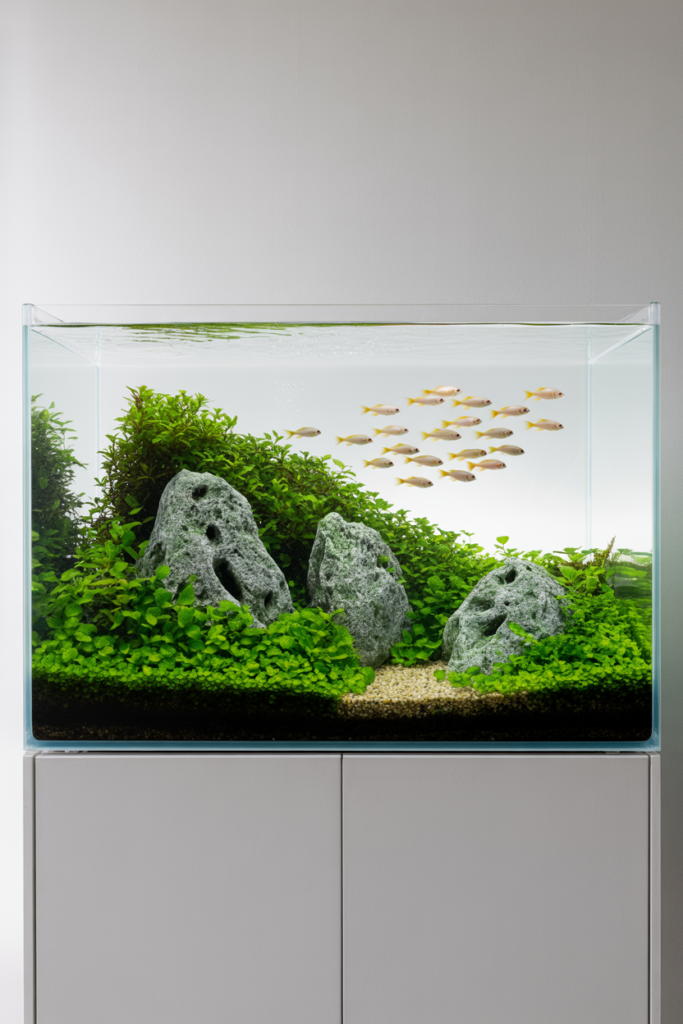
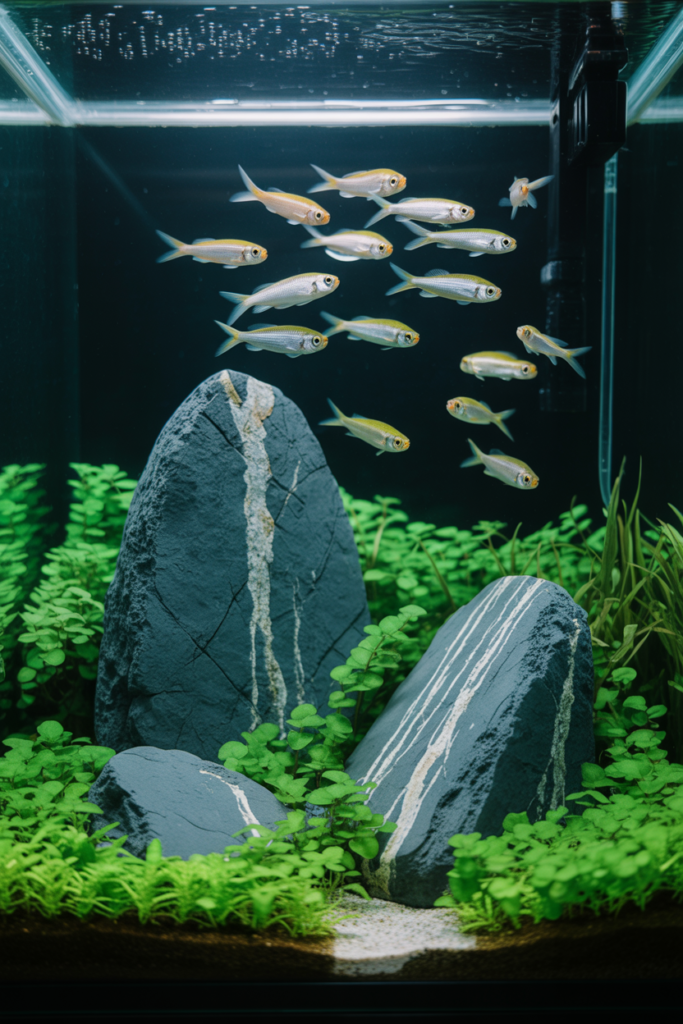
Iwagumi is a Japanese aquascaping style that uses a carefully arranged group of stones as the sole hardscape element, combined with a low carpeting plant foreground and minimal other decoration. The result is a clean, meditative, almost zen-like aquarium that looks incredibly refined and intentional. It is one of those setups that appears deceptively simple but actually requires careful planning and patience to execute well.
The traditional Iwagumi layout uses one large primary stone called the oyaishi, flanked by two or more smaller supporting stones arranged in a natural, asymmetric composition. The stones should all be of the same type, with seiryu stone being the most popular choice for its dramatic grey and white coloring. The entire substrate in front of and around the stones is planted with a carpeting species like dwarf hairgrass, monte carlo, or hemianthus callitrichoides, which fills in over several weeks to create that signature lush green foreground.
Iwagumi tanks suit minimalist and modern room interiors particularly well because their clean lines and restrained color palette complement rather than compete with contemporary furniture and decor. A well-executed Iwagumi setup in a sleek rimless tank on a low modern stand looks like a piece of gallery art sitting in your living room. It is the kind of aquarium that makes people genuinely question whether the plants are real.
5. Colorful Community Tank With Schooling Fish and Live Plants
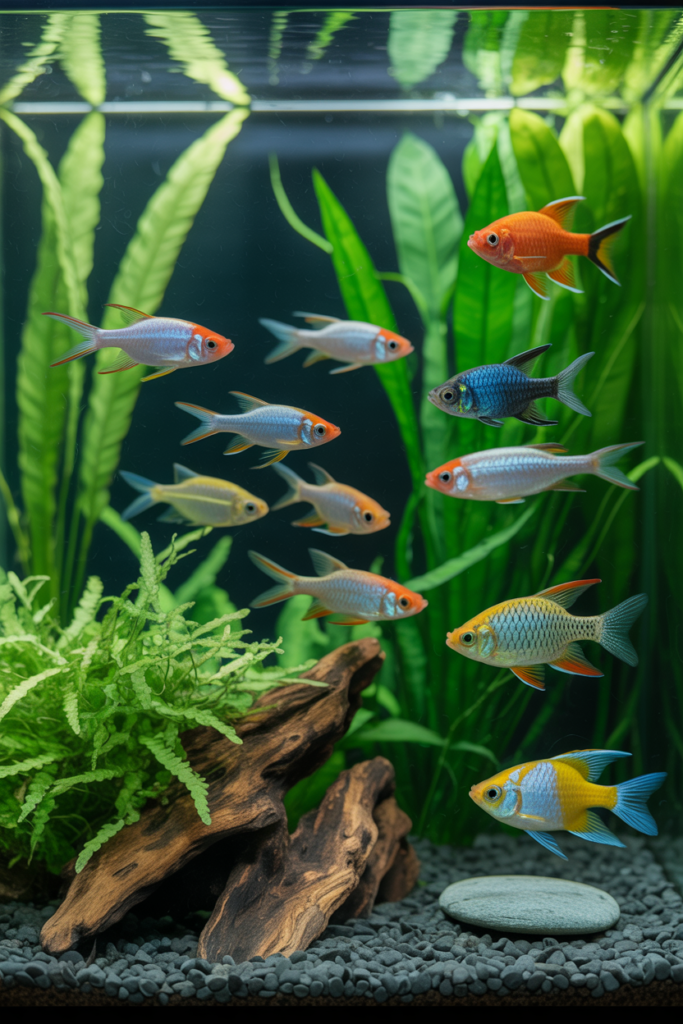
A well-stocked community freshwater aquarium filled with multiple species of colorful schooling fish is one of the most visually dynamic tank setups you can create. The constant movement of different fish at different levels of the tank, each with their own colors, patterns, and swimming behaviors, creates a living display that changes every time you look at it. No two moments in a community tank ever look the same, which is a large part of what makes this style so endlessly entertaining.
Building a good community tank starts with choosing fish that occupy different water column levels so the tank feels active from top to bottom. Surface-dwelling fish like hatchetfish or dwarf gouramis, mid-water schoolers like rummy nose tetras or cherry barbs, and bottom dwellers like corydoras catfish together create a layered, full look that uses the entire height of the tank. Adding a few standout centerpiece fish, like a pair of German blue rams or a small group of pearl gouramis, gives the eye something specific to focus on within the broader community.
Live plants tie a community tank together visually and also benefit the fish by providing natural cover and reducing stress. A background of tall Vallisneria or Amazon swords, some anubias, and Java fern attached to driftwood in the midground, and a few patches of moss on rocks at the bottom, creates a complete planted environment that looks lush and natural. I find that community tanks with live plants always look significantly more polished and intentional than those with artificial decorations.
6. Ancient Ruins Themed Freshwater Aquarium
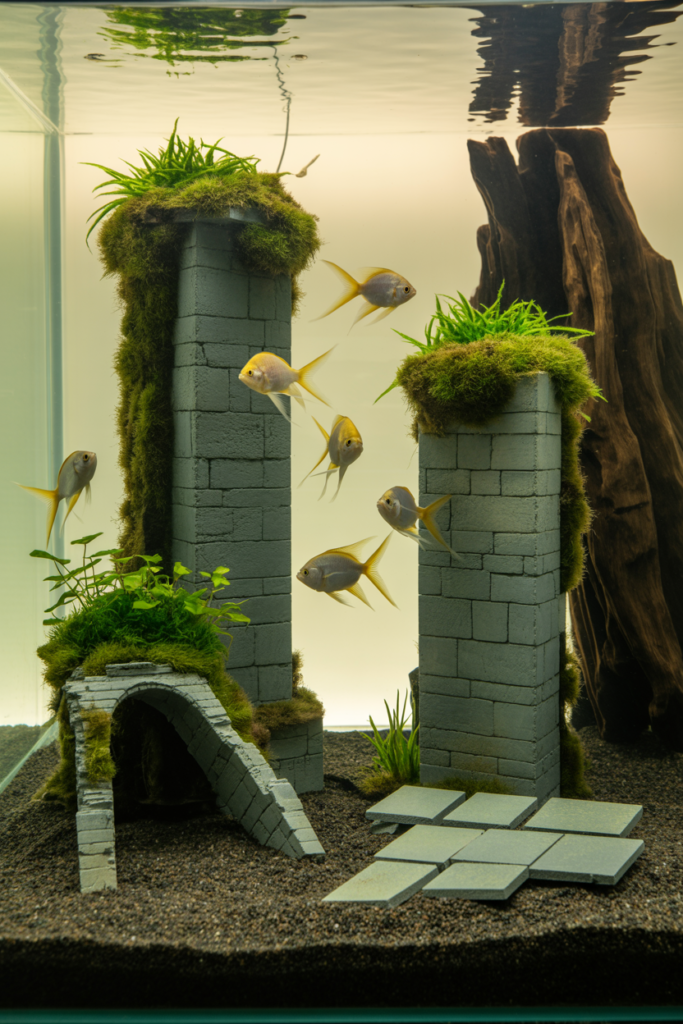
A ruins-themed freshwater aquarium uses carefully chosen decorative pieces to recreate the look of an overgrown ancient structure submerged underwater, and when done tastefully, it looks genuinely spectacular. The keyword there is tastefully, because this style can easily tip into tacky territory if you go overboard with cheap plastic castles and garish colored gravel. The goal is a setup that looks like a real place that has been reclaimed by nature over centuries.
Choosing the right decorative pieces makes all the difference in a ruins-themed tank. Stone-textured resin columns, broken arch structures, and flat stone tiles arranged as a crumbling floor all contribute to the aesthetic without looking cartoonish. Covering these pieces partially with java moss, anubias, and bucephalandra plants that grow naturally over the surfaces over time creates that overgrown, time-worn quality that makes the setup look genuinely ancient rather than freshly purchased.
Dark substrate, dim but warm lighting, and a few dramatic driftwood pieces emerging from behind the ruins add atmosphere and depth to this type of setup. Fish like severum cichlids, angelfish, or a large group of congo tetras suit the scale and drama of a ruins tank beautifully. I particularly love how angelfish move slowly and deliberately through a ruins setup because their tall, elegant body shape somehow looks perfectly at home among crumbling stone columns and trailing moss.
7. Nano Planted Tank as a Desktop or Shelf Centerpiece
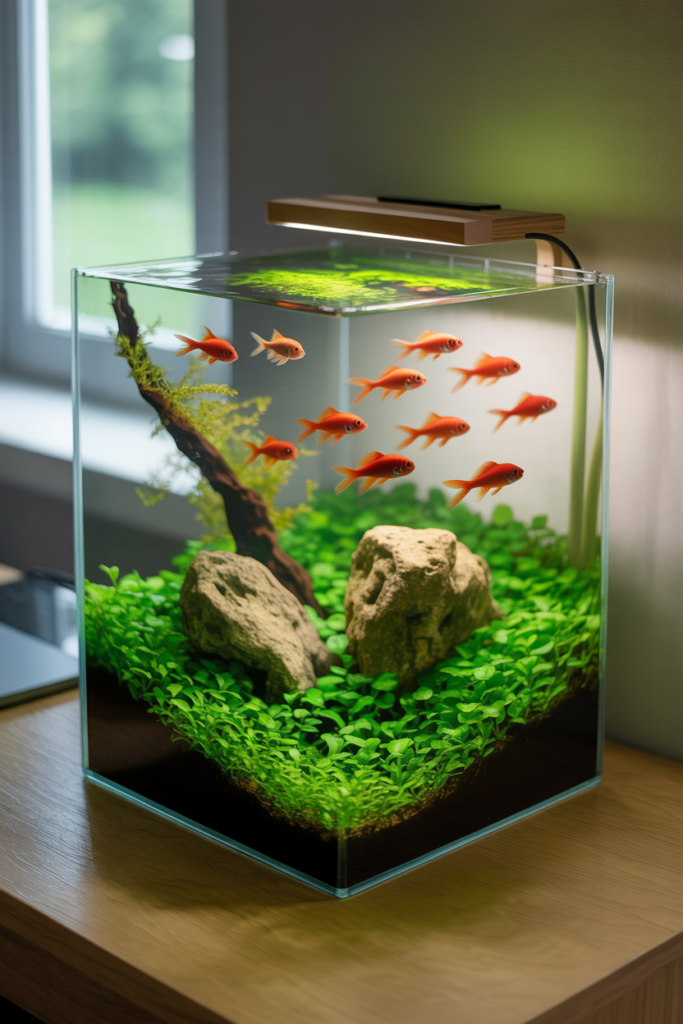
A nano freshwater aquarium, typically between 5 and 20 gallons, makes one of the most charming and space-efficient centerpiece options for a desk, bookshelf, or side table. What nano tanks lack in size, they more than make up for in detail and intimacy. A small, densely planted nano tank with a handful of tiny fish or shrimp is like a perfectly framed miniature world that draws you in for a closer look every time you pass by.
The most popular approach for a nano planted tank is a dense foreground carpet of Hemianthus callitrichoides or Monte Carlo, combined with small pieces of driftwood or stone covered in Java moss or flame moss. Because everything is smaller in scale, even a simple arrangement of two or three stones with a carpet plant looks complex and detailed up close. Lighting is particularly important in nano tanks because the small size means every detail is visible, and the aquascape needs to look good from every angle.
Livestock choices for nano tanks should match the small scale of the setup. Celestial pearl danios, chili rasboras, scarlet badis, and nano rasboras all stay under an inch in size and look stunning in a planted nano environment. Cherry shrimp and crystal red shrimp are also fantastic additions because they graze constantly on algae and biofilm, they add flashes of red or white color to the tank, and watching them go about their business up close is genuinely one of the most relaxing things a freshwater aquarium can offer.
8. Hillstream Biotope Tank With Fast-Moving Water Effects
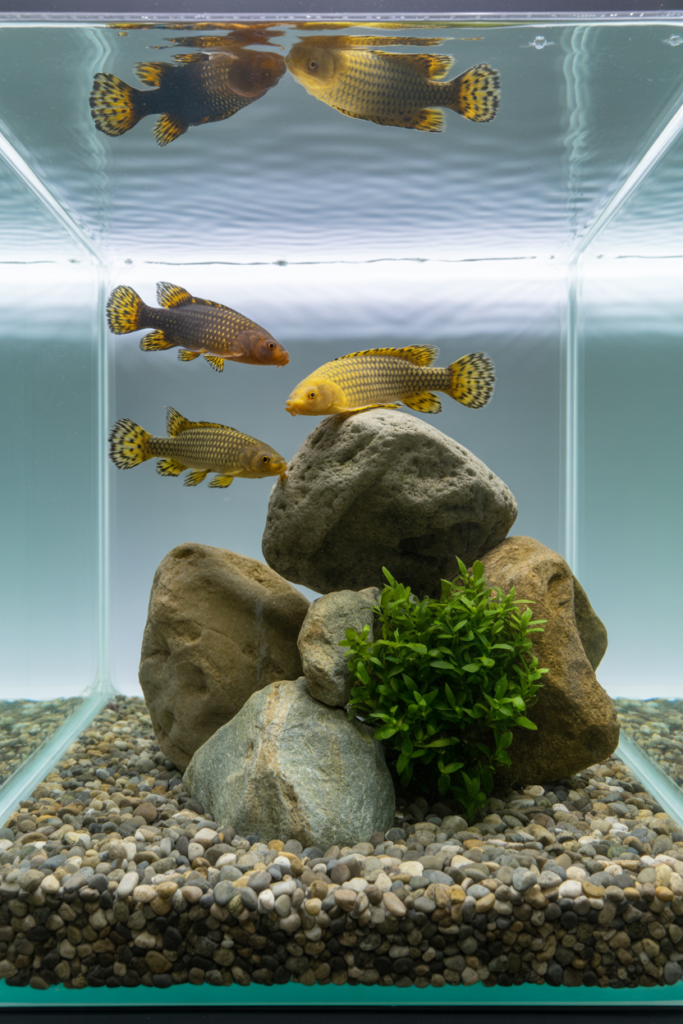
A hillstream biotope aquarium recreates the look and conditions of a fast-flowing mountain stream or river, and it is one of the most visually distinct freshwater setups in the hobby. Smooth river rocks of varying sizes cover the entire substrate, polished to a natural sheen. Strong water flow from powerheads creates visible surface movement and current throughout the tank. The result looks like you captured a section of a real mountain stream and brought it indoors.
The fish suited to a hillstream biotope are some of the most interesting and unusual in the freshwater hobby. Hillstream loaches, also called butterfly loaches, are flat-bodied fish that cling to rocks and glass surfaces using modified fins that act like suction cups. Watching them navigate the current and graze on algae-covered rocks is fascinating in a way that is hard to describe until you actually see it. Danio species, like zebra danios or pearl danios, also thrive in strong currents and add active, fast-moving energy to the upper water column.
Aquascaping a hillstream tank is straightforward because the natural look requires very little beyond carefully arranged rocks. A few clumps of hardy plants like anubias or java fern attached to larger stones add greenery without needing high light or CO2. The power of this setup comes from the movement of the water and the natural, unadorned quality of the stone substrate rather than from complex planting or decoration.
9. Single Species Showcase Tank for Maximum Visual Impact
A single-species freshwater aquarium dedicated to one particularly striking fish is one of the boldest and most confident aquarium setups you can create. Rather than dividing visual attention across multiple species, a showcase tank puts all the focus on one fish or one tight group, allowing the viewer to fully appreciate the colors, behavior, and personality of that species without distraction. Done well, a showcase tank has a gallery-like quality that feels intentional and sophisticated.
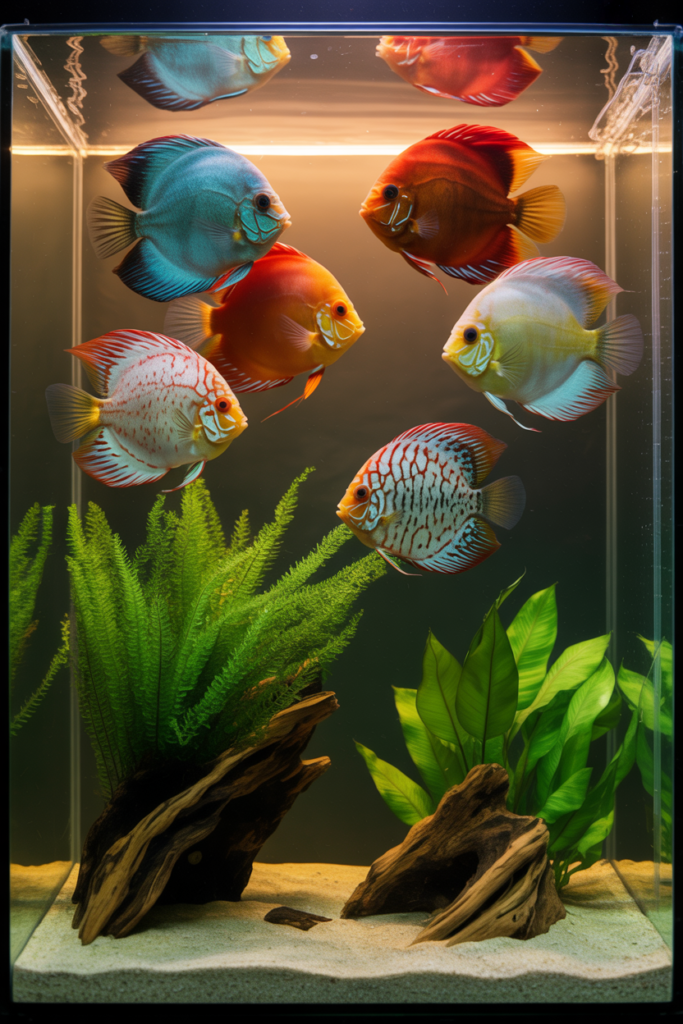
Discus fish are the classic choice for a freshwater showcase tank because their large, disc-shaped bodies and extraordinary color variety make them genuinely one of the most beautiful freshwater fish in the world. A group of six to eight discus in a tall 75-gallon or larger tank, kept with a soft, planted background and warm amber lighting, looks like something from a high-end aquarium exhibit. They are not beginner fish by any means, but for someone with some experience, they represent one of the most rewarding showcase options available.
Other strong candidates for a single species showcase setup include flowerhorn cichlids, which have bold personalities and striking coloration, and oscar cichlids, which grow large and develop recognizable individual personalities over time. Even a large group of a single tetra species, like a school of 50 or more rummy nose tetras moving in tight formation through a planted tank, creates a showcase-worthy display through sheer numbers and coordinated movement rather than individual size.
10. Paludarium Setup With Land and Water Sections
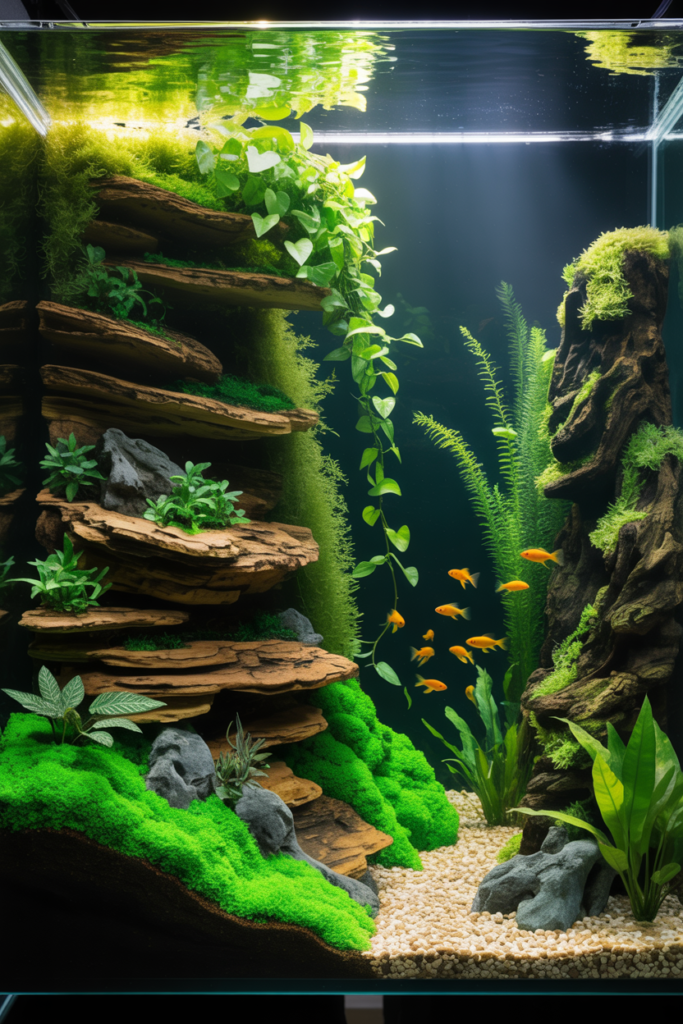
A paludarium is a freshwater setup that combines both an aquatic section and a land section within the same tank, creating a miniature ecosystem that includes both underwater life and above-water plants, moss, and sometimes small terrestrial animals. It is genuinely one of the most visually stunning things you can build in a fish tank, and the combination of lush above-water tropical plants cascading down into a planted underwater section creates a layered, jungle-like display that stops everyone who sees it.
Building a paludarium requires a little more planning than a standard aquarium setup, but the process is very achievable for anyone with basic aquascaping experience. The tank is typically filled only halfway or two-thirds with water, with the remaining space above the waterline dedicated to a built-up land section using hardscape materials, substrate, and terrestrial plants. Cork bark, expanding foam carved into rock shapes, and live sphagnum moss are popular materials for building up the land portion in a way that looks natural and holds moisture well.
Fish and plant choices for a paludarium work together to reinforce the tropical, jungle atmosphere of the setup. Small fish like ember tetras, micro rasboras, or killifish suit the scale of the water section beautifully. Above the waterline, small ferns, pothos, bromeliads, and tropical mosses thrive in the humid environment created by the water below. I think a well-built paludarium is the single most impressive freshwater setup you can have in a living room because it genuinely looks like a piece of the rainforest sitting on your furniture.
How to Choose the Right Freshwater Aquarium Setup for Your Room and Lifestyle
Choosing the right freshwater aquarium setup comes down to matching the tank style with both your room aesthetic and the amount of time you realistically want to spend on maintenance. A natural planted tank with CO2 injection looks stunning but requires consistent trimming, fertilizing, and parameter monitoring. A blackwater biotope or a simple community tank with hardy fish demands far less technical attention while still delivering excellent visual results.
Tank size is another factor that directly affects how the aquarium fits into your room as a centerpiece. A 20-gallon tank on a desk works as a personal focal point for a home office or bedroom. A 75-gallon or larger tank against a living room wall becomes a true room-defining feature that guests notice and comment on immediately. Matching the tank size to the scale of the room it sits in makes a significant difference in how much visual impact the setup actually delivers.
Lighting choice ties everything together from both a practical and aesthetic standpoint. Modern LED aquarium lights with adjustable color temperature let you shift the tank from a bright, plant-growing daylight spectrum during the day to a warm, moody evening glow after dark. That ability to change the mood of the tank with lighting makes a freshwater aquarium surprisingly versatile as a room feature across different times of day and different occasions.
| Tank Style | Maintenance Level | Best Room | Ideal Tank Size |
| Natural planted tank | Medium to high | Living room | 30 to 75 gallons |
| Driftwood hardscape | Low to medium | Living or dining room | 20 to 55 gallons |
| Blackwater biotope | Low | Bedroom or study | 20 to 55 gallons |
| Iwagumi aquascape | Medium to high | Living room or office | 20 to 40 gallons |
| Community tank | Low to medium | Family or living room | 30 to 75 gallons |
| Ruins-themed tank | Low | Kids room or den | 20 to 55 gallons |
| Nano planted tank | Medium | Desk or shelf | 5 to 20 gallons |
| Hillstream biotope | Low to medium | Study or living room | 20 to 40 gallons |
| Showcase tank | Medium to high | Living room | 55 gallons and up |
| Paludarium | Medium | Living room or hallway | 30 to 75 gallons |
Conclusion
A freshwater aquarium has everything it takes to become the most impressive feature in any room, and these 10 creative setup ideas prove that you do not need a saltwater budget or years of experience to make it happen. From the lush green landscape of a natural planted tank to the moody atmosphere of a blackwater biotope and the jaw-dropping complexity of a paludarium, every style on this list offers something genuinely worth building.
The setups that tend to have the strongest impact as room centerpieces are the ones with a clear design vision behind them. A tank that commits fully to one aesthetic, whether that is the clean minimalism of an Iwagumi layout or the dramatic scale of a discus showcase tank, always reads as more intentional and impressive than one that mixes styles without a clear direction. Picking a concept you love and building toward it consistently is what separates a good aquarium from a great one.
If you are just getting started, a natural planted community tank or a blackwater biotope setup gives you excellent visual results without overwhelming technical demands. Build your confidence with one of these approachable styles first, and the more advanced setups like Iwagumi or a full paludarium will feel much more achievable when you are ready for them. Your tank is waiting to become something worth talking about.
Frequently Asked Questions
What is the best freshwater aquarium setup for beginners? A community tank with hardy schooling fish like tetras or danios and easy live plants like java fern and anubias is the most forgiving starting point for beginners. This setup delivers strong visual results without requiring advanced equipment or technical water chemistry knowledge.
How much does it cost to set up a creative freshwater aquarium? A well-equipped freshwater aquarium setup typically costs between $80 and $300, depending on tank size, equipment quality, and aquascaping materials. Nano planted tanks and blackwater biotopes sit at the lower end of that range, while larger planted or Iwagumi setups cost more due to lighting and CO2 equipment requirements.
What plants work best for a freshwater aquarium centerpiece setup? Java fern, anubias, amazon sword, vallisneria, and dwarf hairgrass are among the most reliable and visually impressive plants for freshwater aquascaping. Java fern and anubias work particularly well for beginners because they grow attached to hardscape rather than needing nutrient-rich substrate and tolerate a wide range of water conditions.
How do I keep a planted freshwater aquarium looking its best? Regular trimming of fast-growing stem plants, consistent fertilizing with a quality liquid fertilizer, and weekly partial water changes of around 25 to 30 percent keep a planted tank looking clean and healthy. Good lighting on a consistent timer of eight to ten hours per day also makes a significant difference in plant growth quality and overall tank appearance.
Can a small nano freshwater tank work as a room centerpiece? A well-designed nano tank absolutely works as a centerpiece on a desk, shelf, or side table because the small scale encourages close-up viewing, and the detail in a planted nano setup rewards that attention. The key is placing the tank at eye level, where it can be appreciated up close rather than sitting it low where the detail gets lost.
What fish make the biggest visual impact in a freshwater display tank? Discus, angelfish, flowerhorn cichlids, and large schools of cardinal or rummy nose tetras all create a strong visual impact in a freshwater display setup. The choice depends on tank size and experience level since discus and cichlids need more specific water conditions, while tetras and angelfish suit a wider range of community setups.