
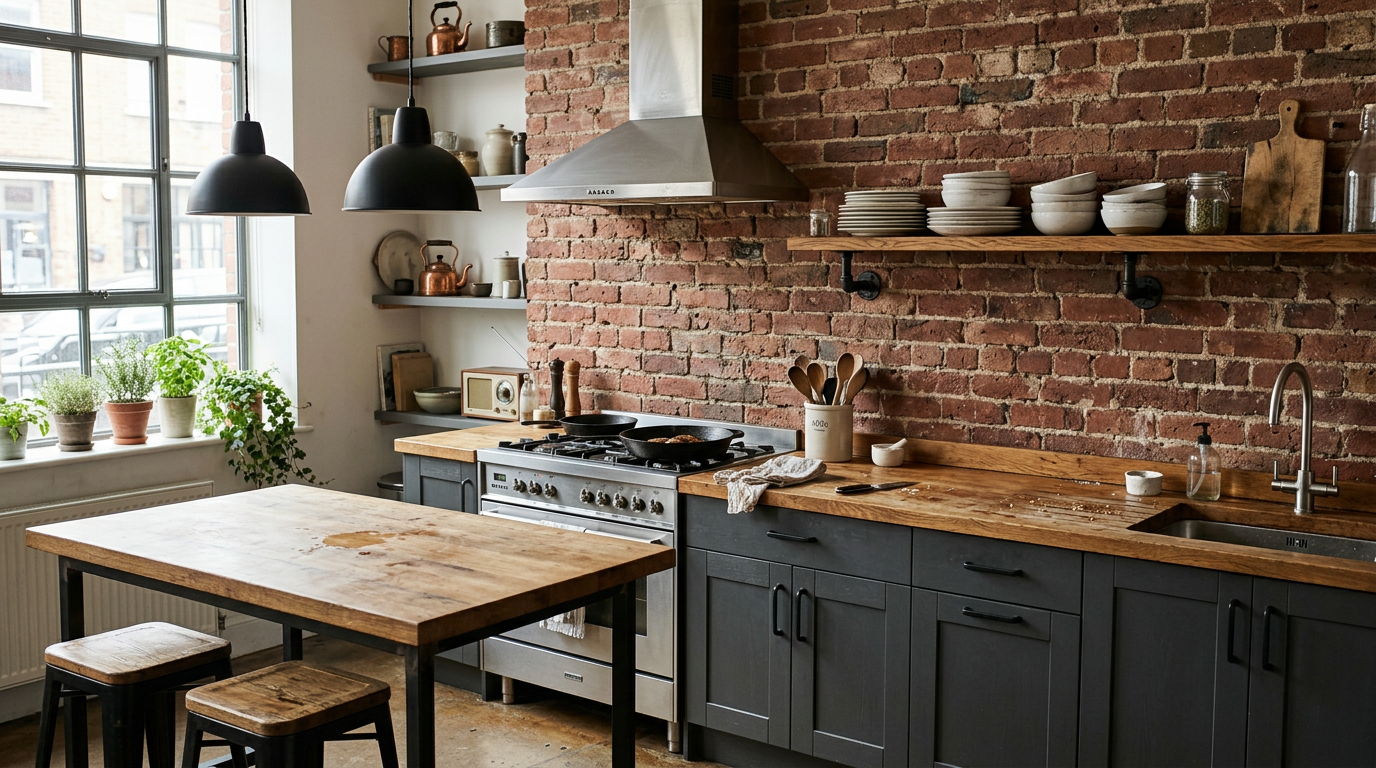
To make a kitchen look industrial, mix raw materials like brick, concrete, black steel, and aged wood. Add open shelving and simple metal lighting, and keep the colors dark and earthy. That is the whole formula.
I love this style because it rewards honest materials. A scuffed wood board or a rough brick wall looks better with age. Perfection is not the goal here.
Below, I share 7 practical ideas for a small or large kitchen. Each one works with a budget, and you can copy any of them in a weekend or two. Pick one or stack them all.
What Defines an Industrial Style Kitchen?
Industrial design started in old factories and warehouses. People turned those spaces into homes and kept the brick walls, steel beams, and big windows. The look says “I used to be a workshop” and says it proudly.
You can get the same feel in a regular kitchen without owning a warehouse. Focus on three things: raw texture, dark metal, and honest function. Hide nothing that looks good, and skip anything that only looks fancy.
An industrial kitchen design also stays practical. Open shelves keep tools in reach, and hard surfaces handle heat and mess. This table shows how each element builds the look.
| Element | What It Looks Like | Why It Works |
|---|---|---|
| Walls | Brick, concrete, or plaster-look finish | Adds raw texture fast |
| Metal | Matte black steel, iron, stainless steel | Gives the strong, factory edge |
| Wood | Reclaimed, rough, or butcher-block surfaces | Softens the cold materials |
| Lighting | Pendant lamps with metal shades | Sets the warehouse mood |
| Storage | Open shelves and hanging rails | Keeps tools visible and handy |
7 Best Ways to Make a Kitchen Look Industrial
Idea 1: Add Exposed Brick, Concrete, or Plaster-Look Walls
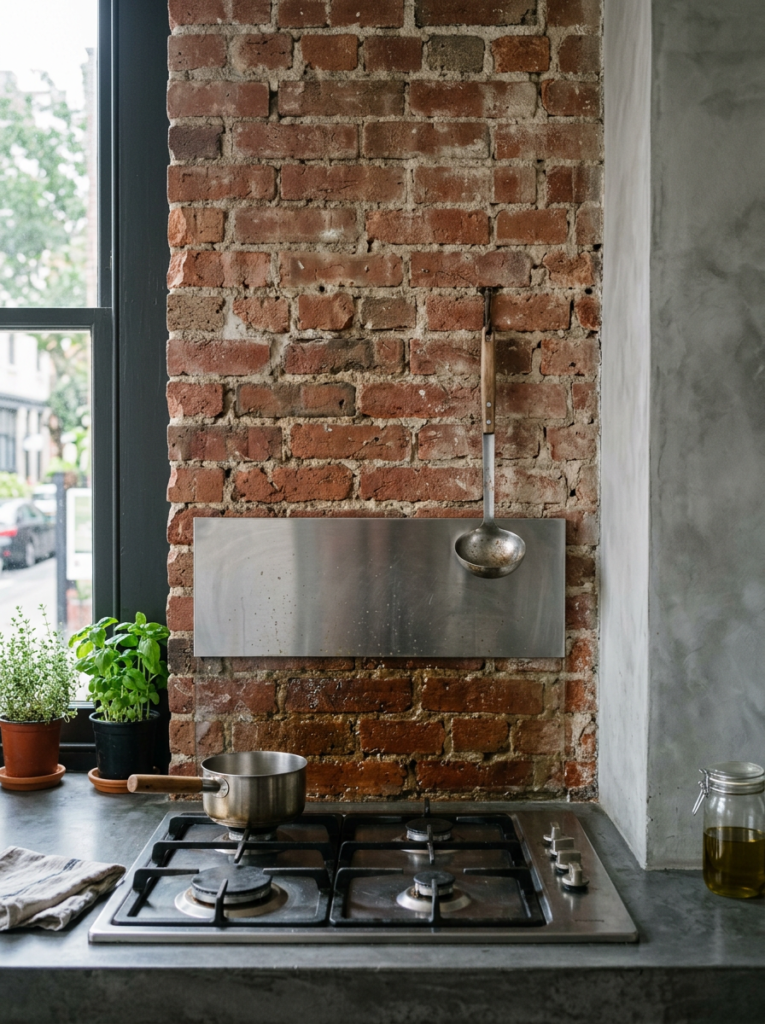
Walls give you the biggest industrial impact for the money. A brick wall instantly sets the mood, and it works behind the stove, the sink, or a breakfast bar. Pick one feature wall instead of covering every surface.
You do not need real brick to get the look. Thin brick veneer, brick-look panels, and wallpaper all work on a budget. If you own an older home, ask a professional to check whether hidden brick lies behind your plaster before you start chipping.
Concrete-look finishes offer another route. Microcement and concrete-effect paint give you a smooth, grey, cool surface. Seal any wall near the cooktop, since grease sticks to bare brick and rough plaster.
Idea 2: Use Matte Black Steel Frames and Metal Accents
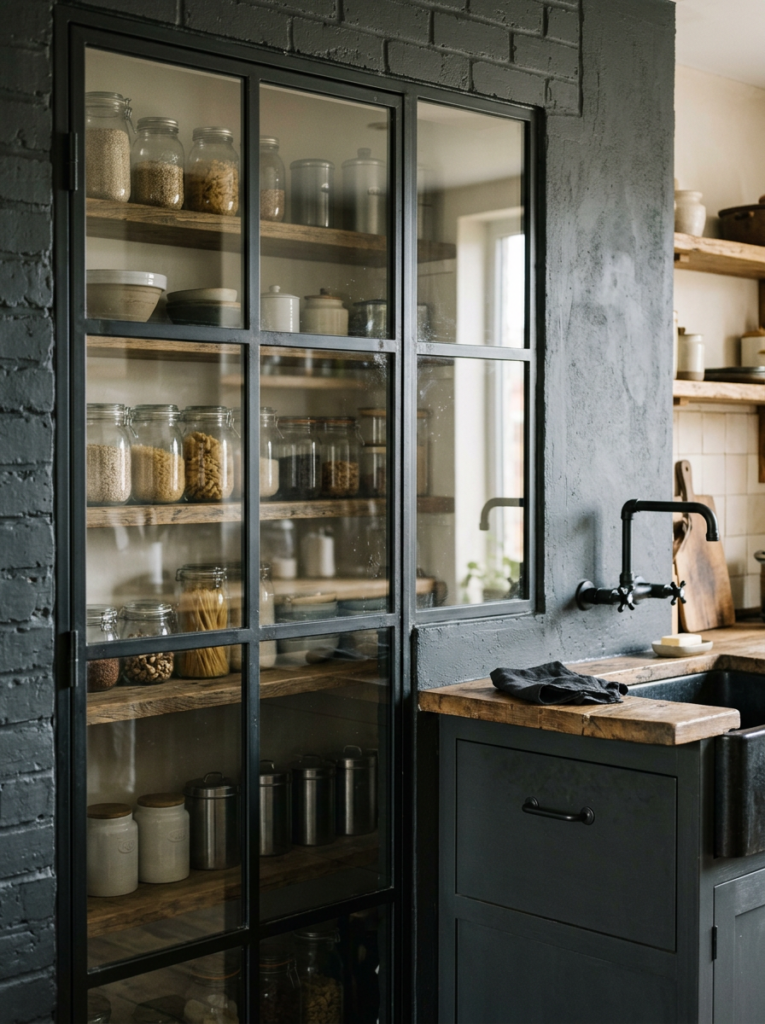
Black metal adds the sharp lines that define the style. I like it in small doses, because too much black makes a kitchen feel like a cave. Think cabinet pulls, a faucet, window-style frames, and a bar rail.
Steel-framed glass looks great as a pantry door or a room divider. It lets in light and keeps the factory feel. Budget versions use black aluminum or even a simple painted frame over plain glass.
Match your finishes across the room. Use matte black for pulls, hinges, and the faucet, then repeat it in a lamp or a shelf bracket. This repetition ties everything together, and a quick wipe with a soft cloth keeps fingerprints under control.
| Metal Accent | Best Spot | Budget Level |
|---|---|---|
| Black cabinet pulls | Drawers and doors | Low |
| Matte black faucet | Sink | Medium |
| Steel-frame glass panel | Pantry or divider | High |
| Black bar rail | Kitchen island | Low |
Idea 3: Install Open Shelving With Pipe or Steel Brackets
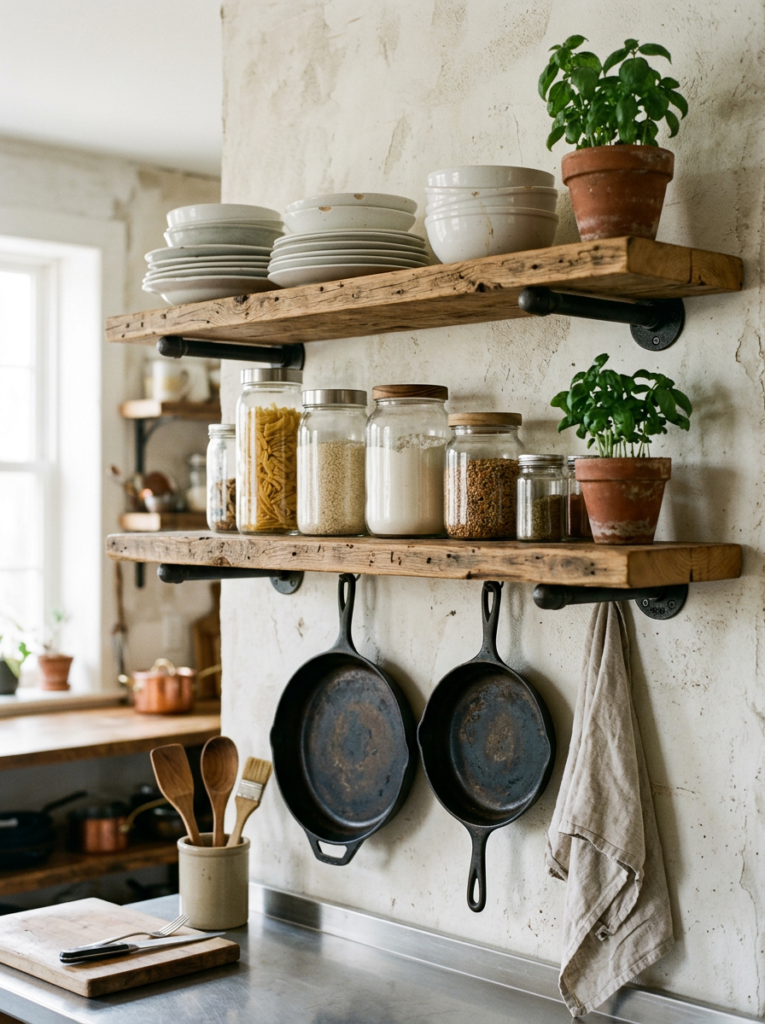
Open shelving makes a kitchen look industrial and keeps your tools within reach. Remove one or two upper cabinets and mount thick wood boards on black pipe or steel brackets. The room instantly feels lighter and more open.
Safety comes first with open shelves. Screw brackets into wall studs, or use anchors rated for the weight you plan to hold. A full row of ceramic plates adds up fast, so check the load limit.
Keep the shelves honest and tidy. Store daily dishes, glass jars, and a few cast iron pans where everyone can see them. Skip the shelf above the stove, because cooking grease coats everything within weeks.
Idea 4: Choose Concrete or Butcher Block Countertops
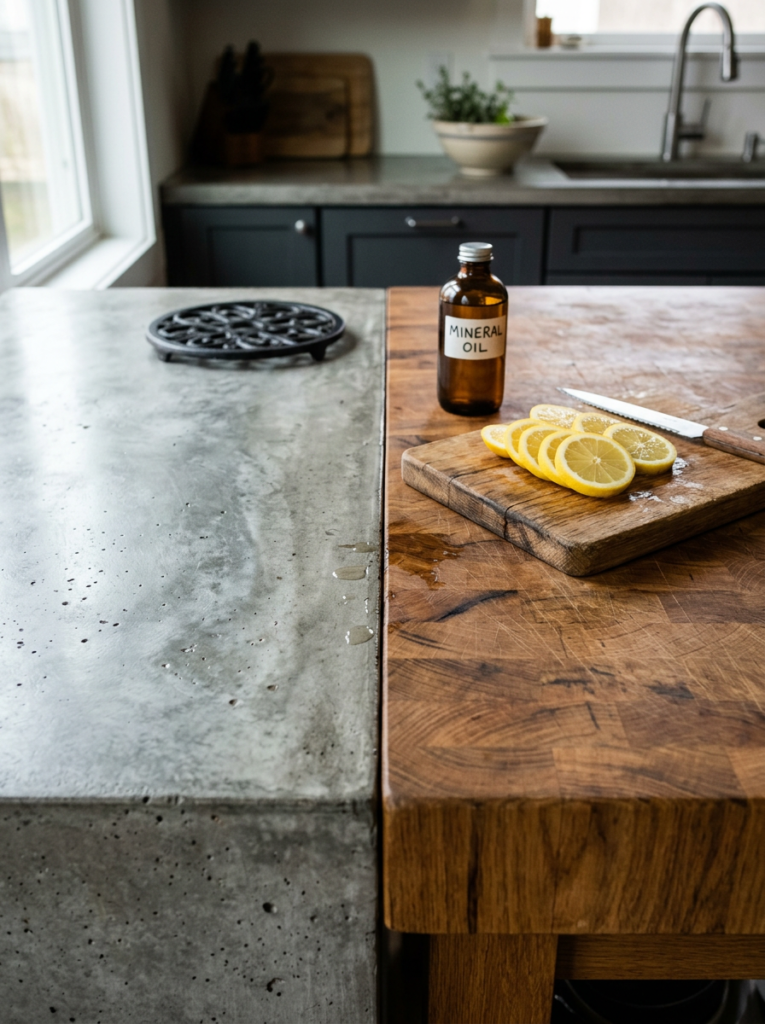
Concrete countertops give you the cool, solid surface that fits this style. They show natural cloud-like variation, so no two slabs match. If a full concrete top costs too much, try a concrete-look laminate or a thin overlay.
Wood works just as well, and it warms the metal and stone around it. Thick butcher block in oak or maple looks great beside black steel. Rub it with food-safe mineral oil every few weeks, and it keeps looking good for years.
Both surfaces need a little care. Seal concrete regularly and wipe up spills like lemon juice and wine quickly. Use a trivet under hot pans, because heat can damage sealers and scorch wood.
| Countertop | Look | Care Needed |
|---|---|---|
| Concrete | Cool, grey, and cloudy | Regular sealing and trivets |
| Butcher block | Warm, grainy, and rustic | Food-safe oil and quick spill cleanup |
| Stainless steel | Sleek, shiny, and workshop-like | Soft cloth for scratches and prints |
Idea 5: Hang Metal Pendant Lights With Filament Bulbs
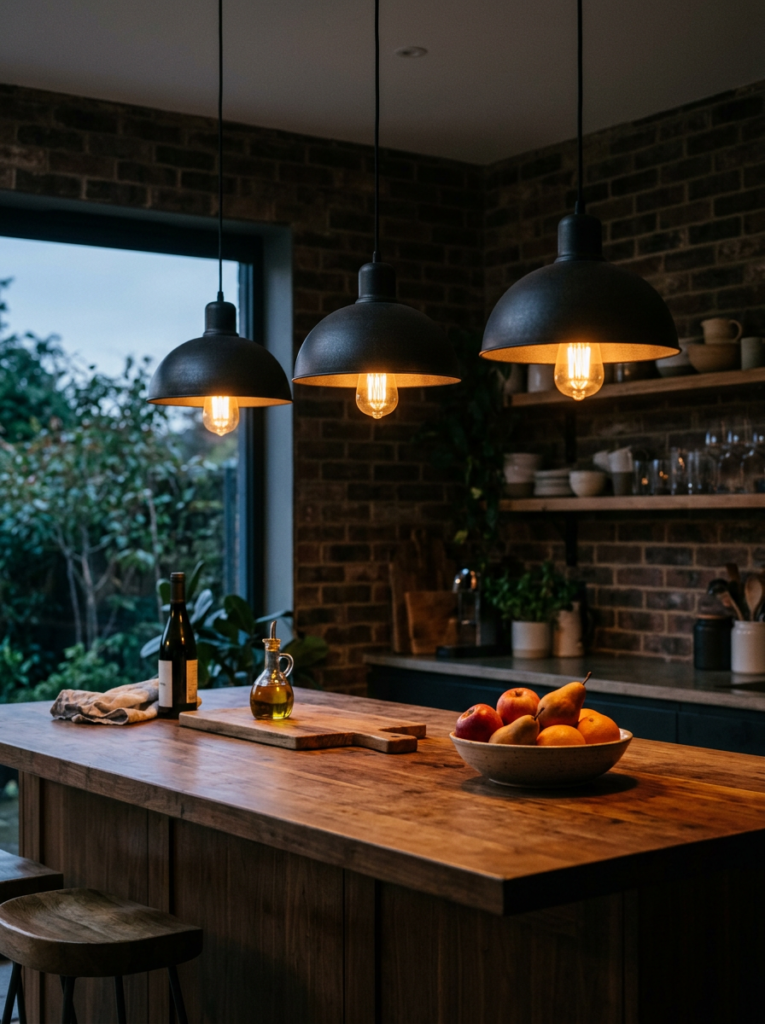
Lighting finishes the look faster than any other upgrade. Dome pendants in black or aged metal give you the classic warehouse shape. Hang two or three over the island or the dining nook.
Pick warm bulbs for the right mood. Filament-style LED bulbs between 2200K and 2700K give an amber glow that flatters brick and wood. Real vintage bulbs look great, though they burn hotter and cost more to run.
Mind the hanging height. Most designers place island pendants roughly 30 to 36 inches above the counter, so they light the surface without blocking views. Add a dimmer switch and a bright task light under the cabinets for chopping and cooking.
Idea 6: Paint Cabinets in Charcoal, Graphite, or Soft Black
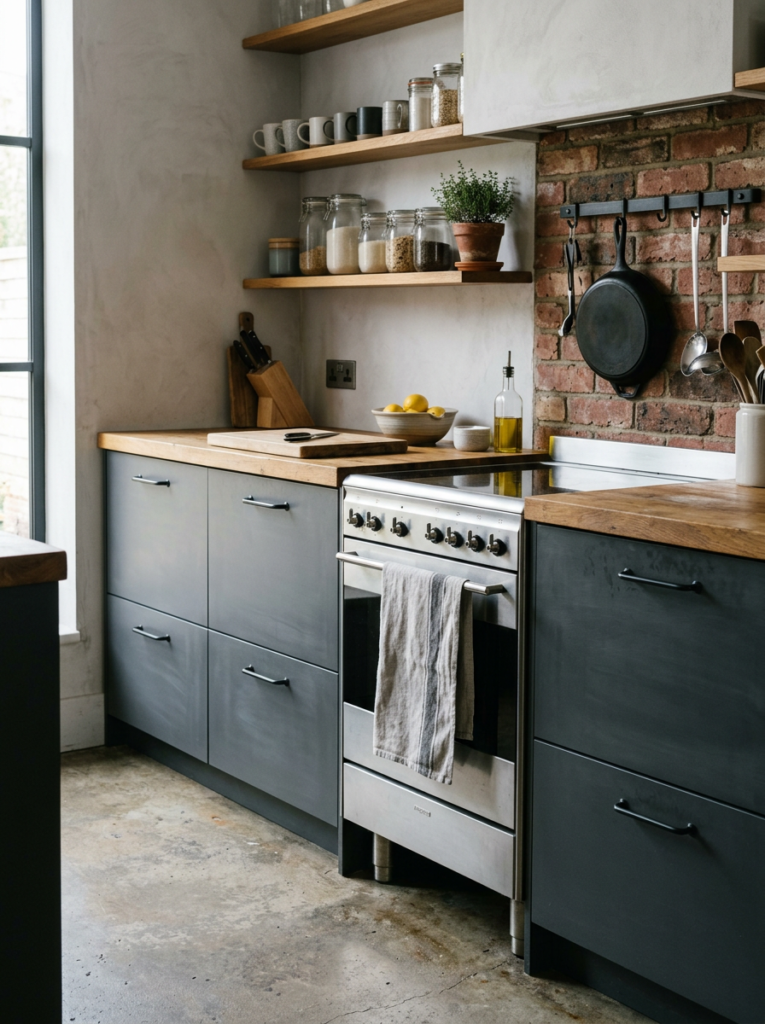
Dark cabinets make a kitchen look industrial in a single afternoon. Charcoal, graphite, and soft black all carry the moody factory feel. They also hide the everyday splashes that white cabinets love to show.
Balance the dark color with warmth, or the room turns gloomy. Pair dark lower cabinets with lighter walls, wood shelves, or a brick backsplash. A mix of dark and light keeps the space open.
Prep matters more than the paint color. Clean every door with a degreaser, sand lightly, and use a bonding primer. Then apply a cabinet-grade paint in thin coats, and let each coat cure fully before you rehang the doors.
Idea 7: Finish With Reclaimed Wood, Stools, and Vintage Finds
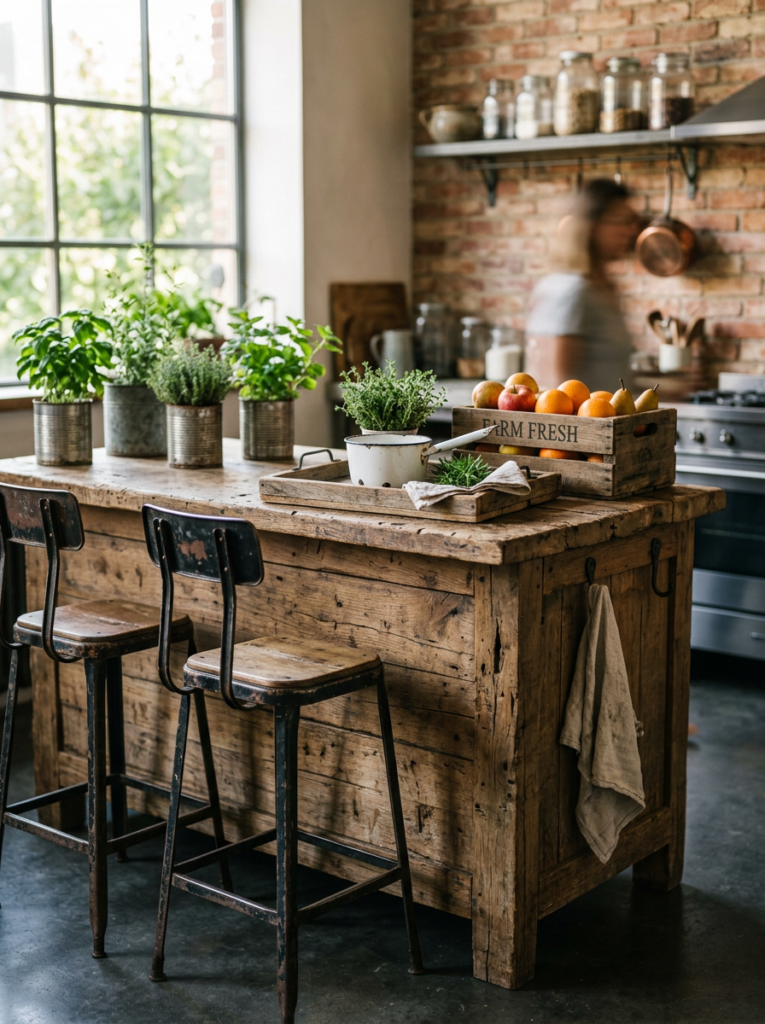
Small details give the kitchen its personality. Metal bar stools with a wooden seat sit perfectly at an island. A reclaimed wood tray or cutting board adds age without any extra fuss.
Hunt for vintage pieces at flea markets and salvage yards. Old crates, enamel pots, and factory-style clocks cost little and add real character. Fake patina rarely fools anyone, so choose pieces that carry real wear.
Handle reclaimed wood with care. Test old painted pieces for lead, and seal any raw wood before it touches food or water. Then keep the styling light, with a few herbs in tin pots and a basket of fruit, so the room stays practical.
5 Common Industrial Kitchen Mistakes and Easy Fixes
Too much black and grey is the most common mistake I see. A kitchen with no warmth feels like a parking garage. Add wood, brass, or amber bulbs to bring the room back to life.
Function gets ignored next. Bare brick and open shelves collect grease, so a cooktop wall needs a sealer or a backsplash. Keep dishes away from the stove, and wipe the shelves often.
Fake details also backfire. A printed brick panel that repeats every foot looks cheap, and people spot it fast. Pick good veneer or real materials, and add a few genuine vintage pieces.
| Mistake | Why It Hurts the Look | Quick Fix |
|---|---|---|
| All dark colors | The room feels heavy and cold | Mix in wood and warm lighting |
| Unsealed brick or concrete | Grease and stains soak in | Seal surfaces near the cooktop |
| Cheap fake textures | The pattern looks flat and repeats | Use quality veneer or real material |
| Overloaded open shelves | The kitchen looks cluttered | Display only daily-use items |
| Cold white bulbs | Metal and brick look harsh | Choose 2200K to 2700K bulbs |
Final Thoughts on Making Your Kitchen Look Industrial
Making a kitchen look industrial comes down to raw materials and honest design. You pick brick or concrete-look walls, add black steel accents, and mount open shelves. Those three moves already set the tone.
Then you build the details. Concrete or butcher block countertops, metal pendant lights, and dark cabinets finish the look. Reclaimed wood and vintage finds add the personality that no catalog can sell.
You do not need to do everything at once. I suggest starting with cabinet paint, pulls, and lighting, since they cost the least. Add the wall and countertops when your budget allows, and let the room grow into its look.
Industrial Kitchen FAQs
How do I make a kitchen look industrial on a budget?
Paint your cabinets charcoal, swap the pulls for black metal, and hang pendant lights. Add one open shelf and brick-look panels on a single wall. These changes cost far less than a full remodel.
What colors work best in an industrial style kitchen?
Charcoal, black, grey, and warm brown work best. Add copper, brass, or aged wood for warmth. Keep the palette to three or four tones.
Can I create an industrial look in a small kitchen?
Yes, this style suits small rooms. Pick one feature wall, one open shelf, and one statement light. Keep the rest of the space light and simple.
Will an industrial kitchen feel cold?
It can, if you only use metal and concrete. Wood, warm bulbs, and soft textiles fix that fast. A balance of warm and cool materials works best.
What materials define an industrial kitchen design?
Brick, concrete, black steel, and reclaimed wood define the style. Stainless steel appliances fit right in too. Raw, honest finishes matter more than shine.
What lighting suits an industrial kitchen?
Metal dome pendants and filament-style bulbs suit it well. Choose warm bulbs between 2200K and 2700K. Add under-cabinet task lights for cooking.
Does the industrial kitchen style go out of fashion?
The style relies on lasting materials instead of quick trends, so it tends to age well. Real brick, wood, and steel look good for years. Swap small accessories to refresh the room.