
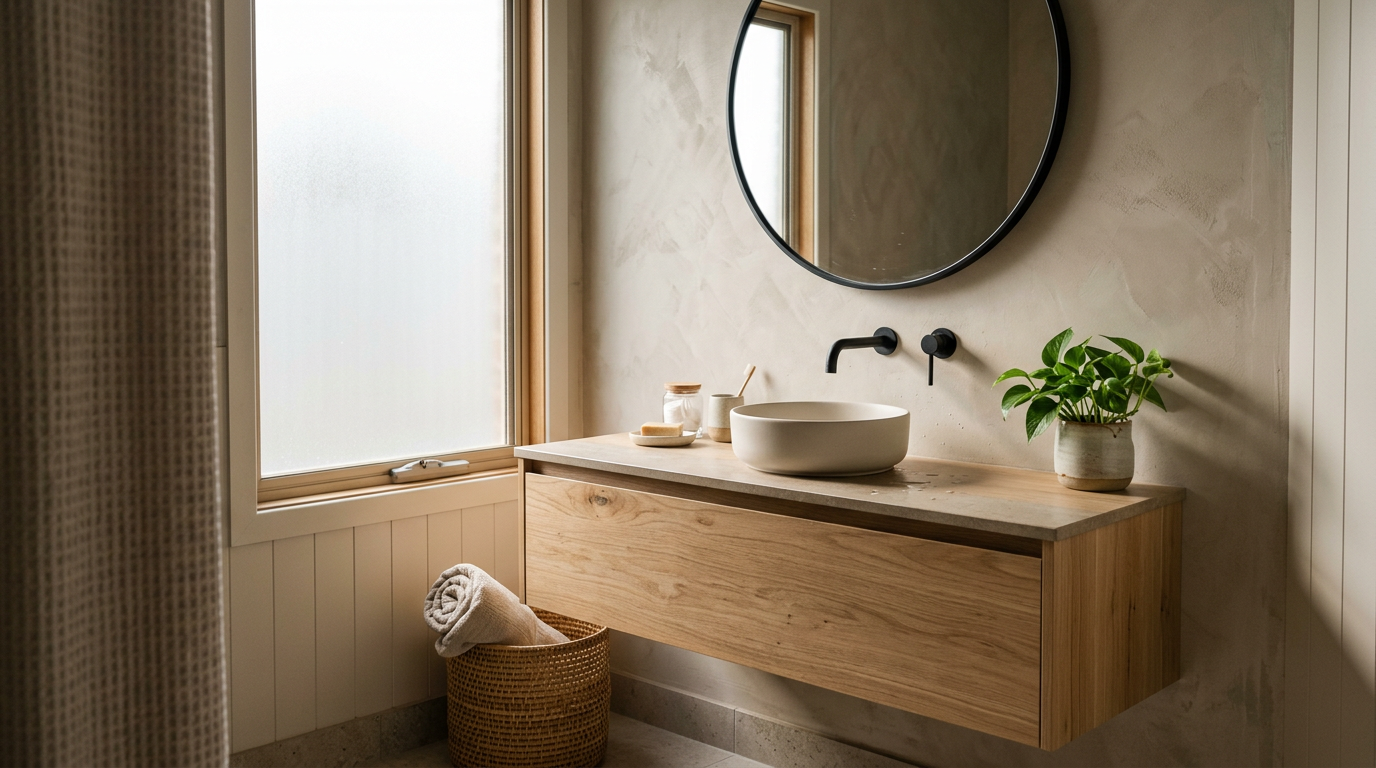
A Japandi ensuite bathroom blends Japanese calm with Scandinavian warmth. You get natural wood, soft neutral colors, clean lines, and very little clutter. That is the whole recipe.
I love this style for an ensuite because the room sits right next to your bed. It shapes how your morning starts and how your night ends. A loud, busy bathroom fights that.
In this guide, I share 7 practical ideas for a small or large ensuite. Each one stays budget friendly and easy to copy. Pick two or try all seven.
What Makes a Japandi En Suite Bathroom So Calming?
Japandi borrows from two design traditions that value simplicity. Japanese design adds wabi-sabi, which finds beauty in natural, imperfect things. Scandinavian design adds hygge, that cozy feeling of comfort.
Together, they create a room that feels light without feeling cold. Wood grain softens hard tile. Matte finishes cut the glare. Every object earns its spot.
An ensuite also suits this style because it is private and compact. You control every detail, and no guest will judge your soap dish. This quick snapshot shows how the two styles meet.
| Element | Japanese Influence | Scandinavian Influence | Japandi Result |
|---|---|---|---|
| Color | Earthy, muted tones | Soft whites and light greys | Warm, quiet palette |
| Material | Natural wood, stone | Light oak, linen | Textured, honest surfaces |
| Layout | Open, clear space | Functional storage | Calm, uncluttered room |
| Mood | Stillness | Coziness | Spa-like comfort |
7 Best Japandi Ensuite Bathroom Ideas
Idea 1: Pick a Warm, Earthy Color Palette
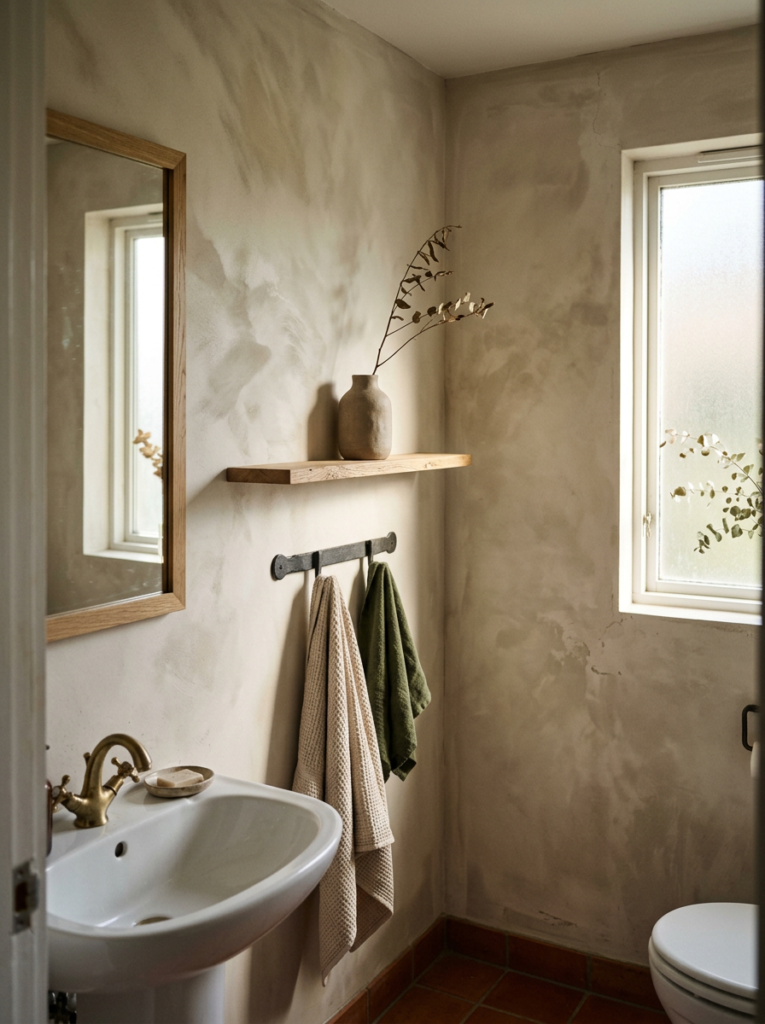
Start with color, because it sets the mood fastest. I stick to warm white, soft greige, sand, and muted clay. Then I add one darker tone, like charcoal or moss green, for contrast.
Choose matte or limewash-style paint for the walls. Shiny paint bounces light and shows every flaw. Matte finishes look softer and hide small marks. Keep limewash away from direct shower spray unless you seal it well.
Limit the palette to three or four colors. Repeat them in your towels, tile, and wood tones. This repetition makes a small ensuite feel bigger and calmer.
Idea 2: Add Natural Oak, Ash, or Teak Wood Accents
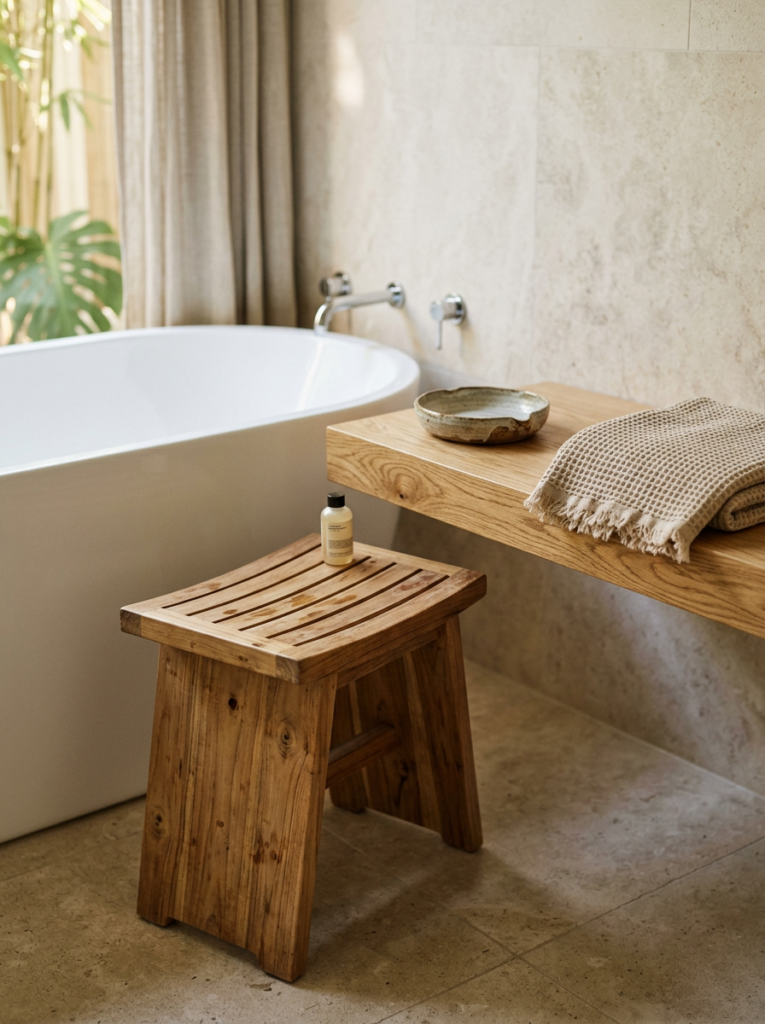
Wood brings the warmth that makes Japandi feel like Japandi. Light oak and ash lean Scandinavian, while darker walnut leans Japanese. Pick one main tone and stay loyal to it.
Bathrooms stay wet, so choose wood that handles moisture. Teak and well-sealed oak work best for vanities, stools, and shelves. Seal every edge and wipe splashes quickly.
A floating wood vanity gives you the biggest impact. It also frees up floor space, so the room looks larger. A teak bath mat or stool adds the same feel for less money.
Idea 3: Use Matte Stone-Look Tile and Textured Surfaces
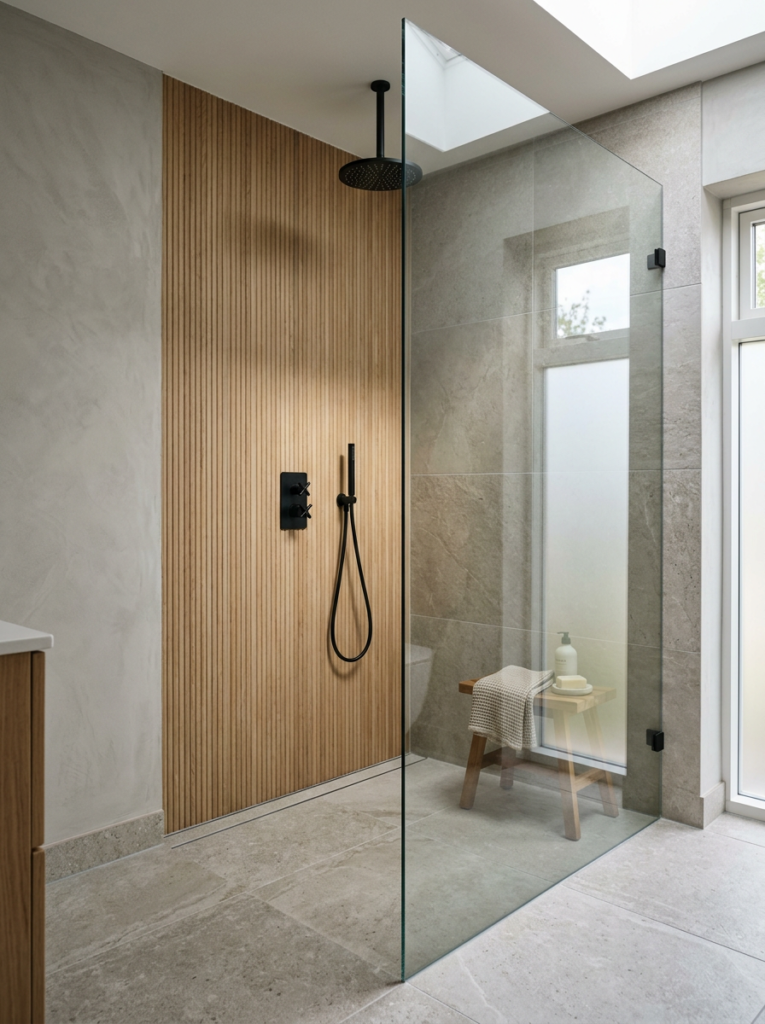
Texture matters more than pattern in this style. Large format tiles with a stone, concrete, or plaster look keep grout lines low. Fewer lines create a calmer wall.
Pick matte or honed finishes for the floor. They grip better when wet, which matters when you walk in barefoot at night. Always check the slip rating before you buy.
Mix one rough surface with one smooth surface. For example, pair a plaster-look wall with a ribbed wood panel or a woven basket. That contrast adds interest without adding clutter, and it skips the shiny chrome that shows every fingerprint.
Idea 4: Install a Floating Vanity With Hidden Storage
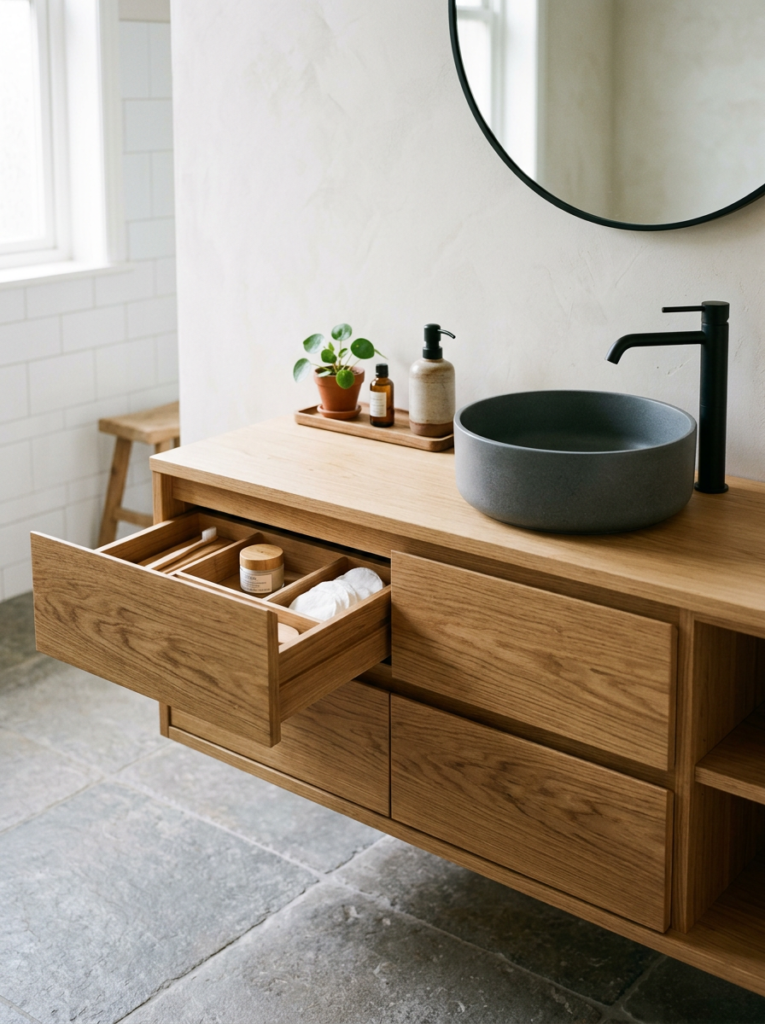
A floating vanity keeps the floor visible, and that trick makes a small ensuite feel larger. I like wall-hung units in oak or ash veneer with a plain slab front. Skip ornate handles, which add fuss.
Storage decides whether the room stays calm. Choose drawers over doors, because drawers let you see everything at a glance. Add small dividers so toothpaste, brushes, and skincare stay in order.
Keep the counter almost bare. One soap pump, one tray, and one small plant look intentional. Everything else goes in a drawer, where it belongs.
Idea 5: Layer Soft, Warm Lighting
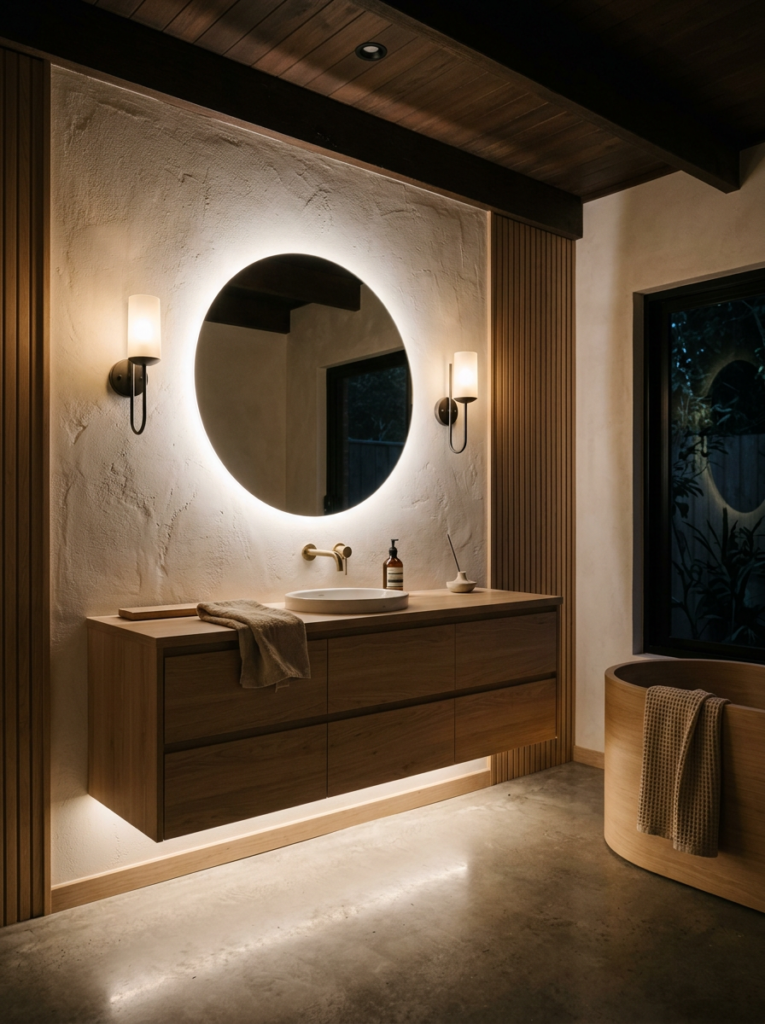
Lighting changes how every material looks. Harsh white bulbs make wood look grey and skin look tired. Warm bulbs make the same room feel like a spa.
I recommend three layers. Use a soft ceiling light for general glow, side lights at the mirror for your face, and a dimmable accent light for late-night visits. Look for 2700K to 3000K bulbs, which give a warm white tone.
Safety matters here, since water and electricity share the room. Check the IP rating on every fixture near the shower and the bathtub. Ask a licensed electrician to confirm what your local code requires.
| Lighting Layer | Where It Goes | Best Choice |
|---|---|---|
| General | Ceiling | Flush mount or recessed lights with a warm tone |
| Task | Beside or around the mirror | Wall sconces or a backlit mirror |
| Accent | Under the vanity or near the tub | Low, dimmable LED strip |
Idea 6: Choose Matte Black or Brushed Brass Fixtures
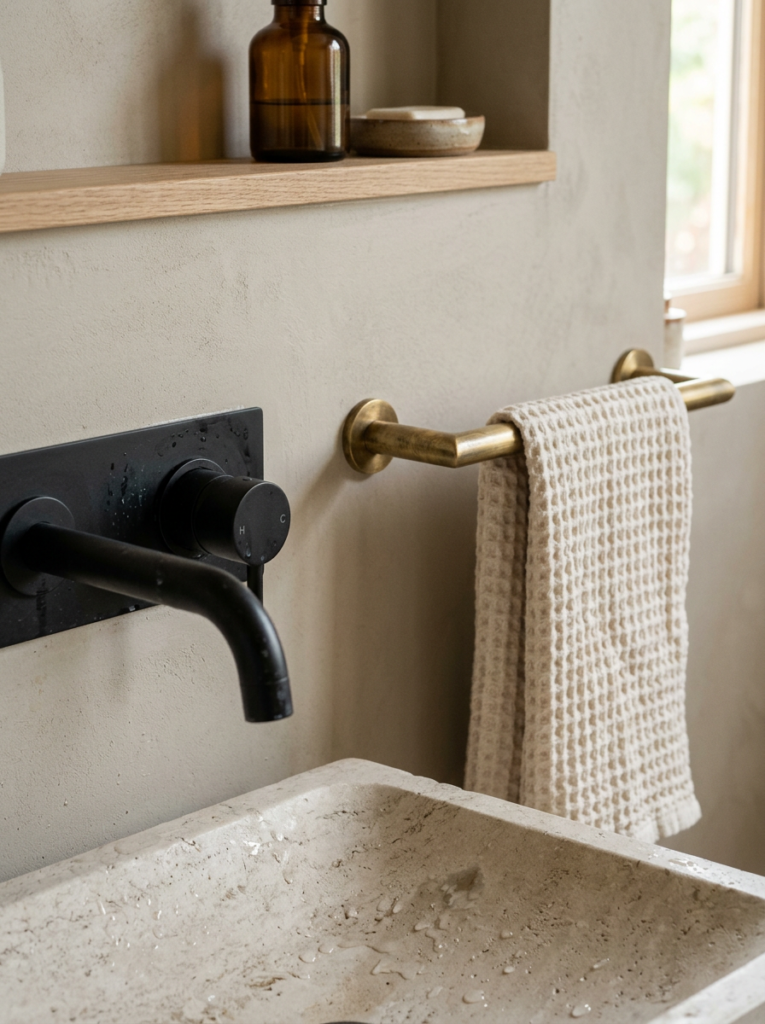
Fixtures work like jewelry for a bathroom. They are small, yet they change the whole look. Matte black gives crisp Japanese contrast, while brushed brass adds a soft Scandinavian glow.
Pick one finish for the faucet, shower set, towel bar, and robe hook. Mixing three metals makes the room look busy. Matching two or three pieces keeps the look clean.
Matte finishes hide water spots better than polished chrome, though they still need a quick wipe. Use a soft cloth and mild soap, and skip harsh scrubbing pads. Harsh pads can scratch the coating and leave dull patches.
| Finish | Mood It Creates | Pairs Well With |
|---|---|---|
| Matte black | Bold, graphic, modern | Light oak, white walls, stone-look tile |
| Brushed brass | Warm, soft, welcoming | Walnut, sand tones, linen towels |
| Brushed nickel | Quiet, neutral, understated | Greige walls, ash wood, pale stone |
Idea 7: Finish With Plants, Linen, and Minimal Decor
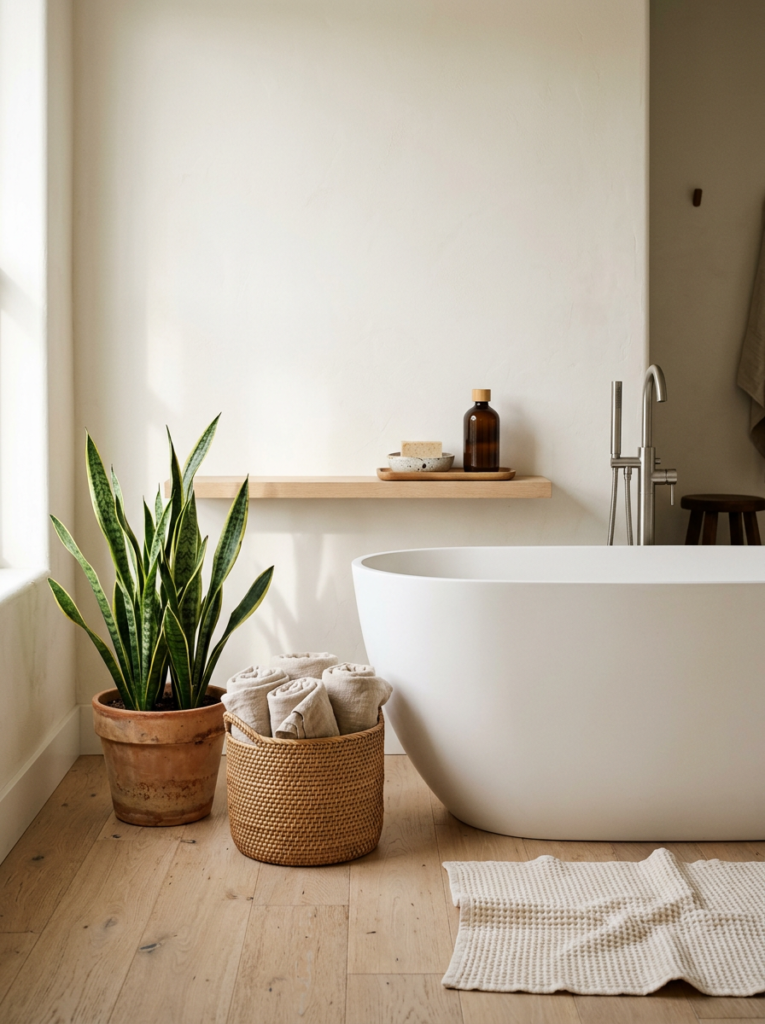
The final layer makes the room feel lived in. Add a few natural pieces, and stop before it looks crowded. In Japandi, empty space counts as a design choice.
Start with plants that enjoy humidity. A pothos, snake plant, or fern handles steamy air well, though a windowless room needs a plant that tolerates low light. Place them in simple clay or stone pots in a neutral shade.
Next, choose textiles in linen, cotton, or waffle weave. Stick to cream, oat, or soft grey towels, and roll them in a basket or hang them neatly. Add one handmade piece, like a ceramic dish or a wooden tray, to bring in the wabi-sabi spirit.
5 Common Japandi Ensuite Bathroom Mistakes and Easy Fixes
The biggest mistake I see is turning Japandi into a beige box. Too much plain cream with no texture feels flat instead of calm. Add wood, stone, and linen to bring the room back to life.
Moisture causes the next problem. Untreated wood swells and cracks near the shower, and no amount of good styling hides that. Seal every edge, run the exhaust fan, and pick water-friendly wood like teak.
Clutter also sneaks back fast. Open shelves look lovely on day one, then the bottles multiply like they have a secret plan. Keep daily items in drawers and lidded baskets, and show only a few pretty pieces.
| Mistake | Why It Hurts the Look | Quick Fix |
|---|---|---|
| Too many colors | The room loses its calm feeling | Stick to three or four warm tones |
| Flat, plain beige | The space feels dull and cold | Layer wood, linen, and stone-look tile |
| Untreated wood | Moisture warps and stains the surface | Seal the wood and ventilate well |
| Harsh white lighting | Wood and skin look grey | Switch to 2700K to 3000K bulbs |
| Too much decor | The room feels busy, not peaceful | Keep three to five items in view |
Final Thoughts on Your Japandi Ensuite Bathroom
A Japandi ensuite bathroom works because it keeps things simple. You choose a warm palette, add natural wood, and use matte stone-look tile. Those three moves already change the whole room.
Then you finish the details. A floating vanity with drawers hides the mess, and warm layered lighting sets the mood. Matte black or brushed brass fixtures, a few plants, and soft linen complete the look.
You do not need to change everything at once. I suggest starting with paint, lighting, and towels, since they cost the least. Add the vanity and tile when your budget allows, and enjoy a calmer start to every day.
Japandi Ensuite Bathroom FAQs
What is a Japandi ensuite bathroom?
A Japandi ensuite bathroom mixes Japanese calm with Scandinavian warmth. It uses natural wood, muted colors, and clean lines. The result feels peaceful and clutter free.
What colors work best in a Japandi en suite?
Warm white, sand, greige, and soft clay work best. Add one darker tone, like charcoal or moss green, for contrast. Keep the whole palette to three or four colors.
Can I create a Japandi ensuite bathroom in a small space?
Yes, this style suits small rooms well. A floating vanity, large tiles, and a light palette make the space feel bigger. Keep the decor minimal.
Which wood suits a Japandi bathroom best?
Teak and well-sealed oak handle moisture the best. Ash gives a lighter, Scandinavian look. Seal every edge and wipe splashes quickly.
How much does a Japandi ensuite bathroom cost?
Cost depends on your room size and how much you replace. Paint, towels, plants, and lighting cost the least. Vanities and tile usually take the biggest share of the budget.
What lighting works best in a Japandi ensuite?
Use warm bulbs between 2700K and 3000K in three layers. Combine ceiling light, mirror light, and a dimmable accent light. Check the IP rating on fixtures near water.
How do I keep a Japandi bathroom from looking boring?
Add texture instead of pattern. Mix plaster-look walls, wood grain, linen, and ceramic. A few plants and one handmade piece add life without clutter.