
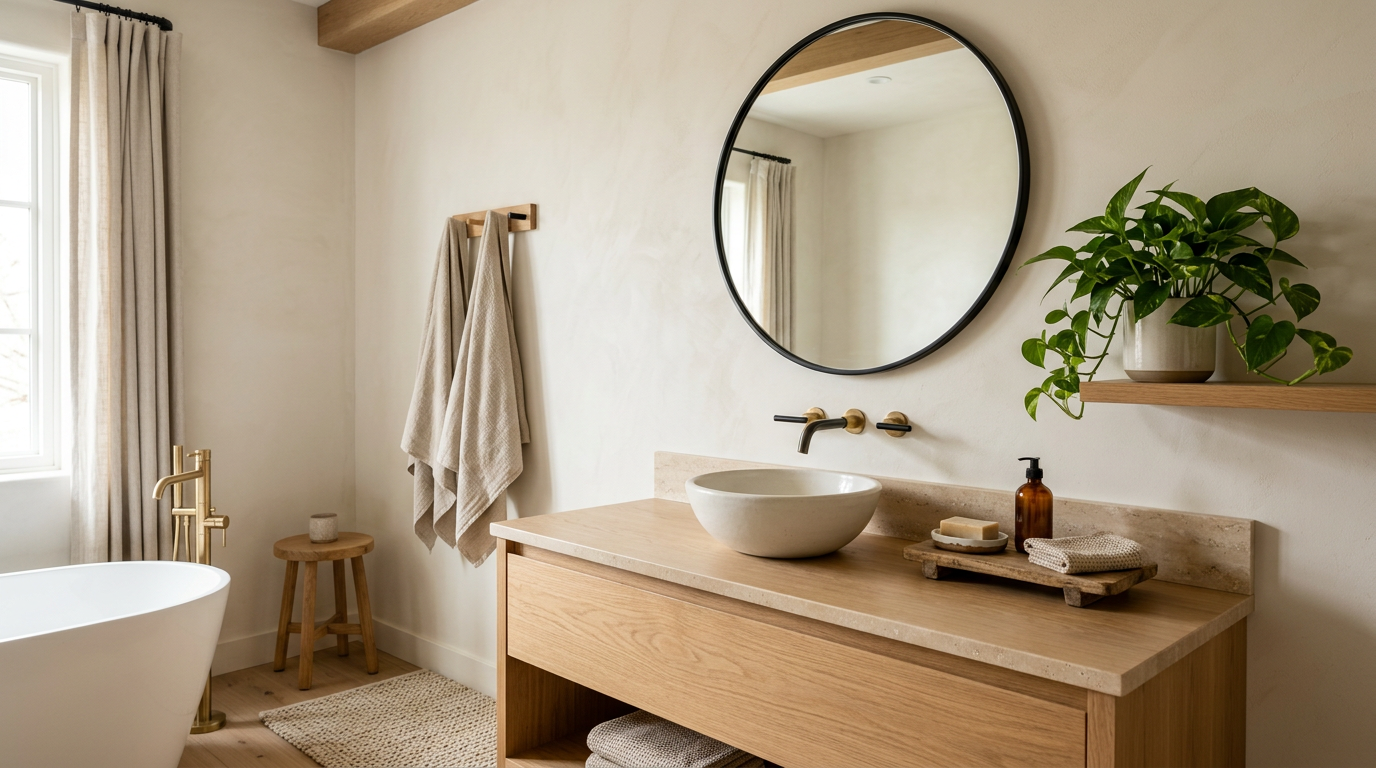
To decorate a Japandi bathroom, keep the palette soft, the surfaces clear, and every item natural. Pick a few pieces in wood, ceramic, and linen, then give each one room to breathe. That is the whole formula.
I love this style because it rewards restraint. You do not need a renovation or a big budget. A new towel, a wooden tray, and a better bulb can change the room in one afternoon.
Most decorating advice tells you to add more. Japandi asks you to add less, but choose better. I will walk through the ideas one by one, starting with the basics.
What Japandi Bathroom Decor Looks Like: 3 Simple Rules
Japandi decor blends Japanese calm with Scandinavian comfort. Japanese design brings wabi-sabi, which values plain, slightly imperfect objects. Scandinavian design brings hygge, the cozy feeling that makes a room easy to enjoy.
The two styles agree on color and texture. Expect muted tones, matte surfaces, and natural fibers. You will not see bright patterns, shiny plastic, or a shelf full of novelty soap.
I follow three rules when I decorate. Keep colors soft, choose natural materials, and leave space on purpose. If a piece breaks two of these rules, it does not make the cut.
| Rule | What It Means | Quick Example |
|---|---|---|
| Soft colors | Muted, warm, and low contrast | Oatmeal towels on a cream wall |
| Natural materials | Wood, ceramic, linen, and stone | Oak tray and ceramic dish |
| Empty space | Open surfaces with room to breathe | Three items on a shelf, not ten |
7 Best Ways to Decorate a Japandi Bathroom
1. Start With a Warm Neutral Base and Edit What You Own
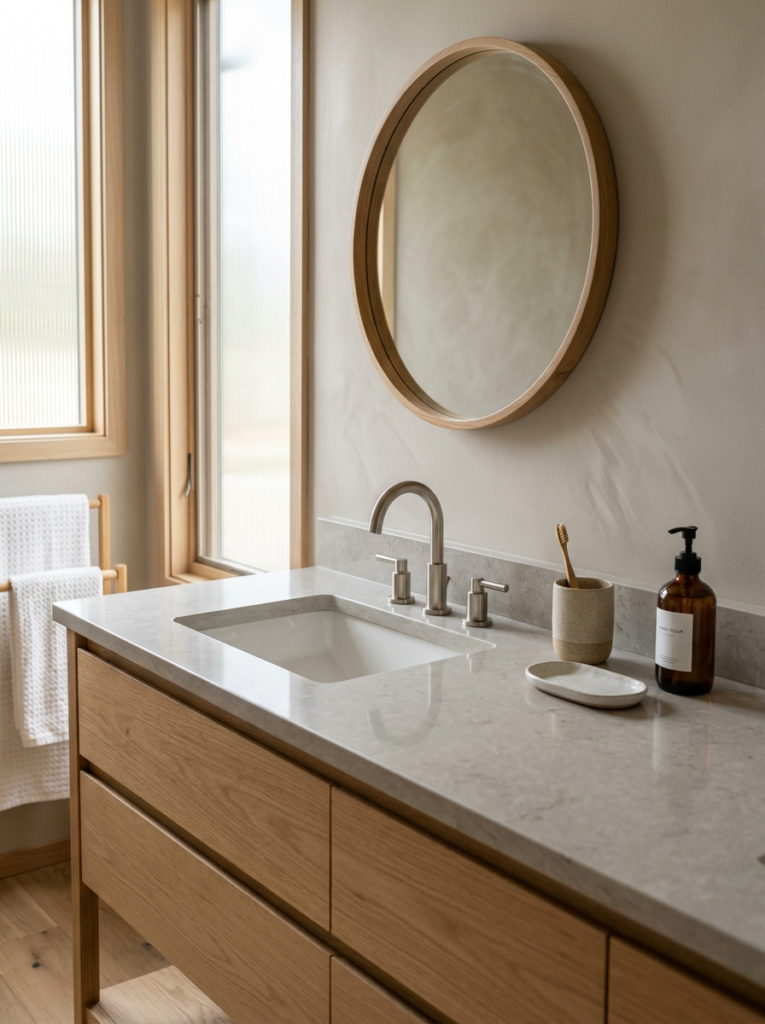
Color comes first, and so does editing. Walls in warm off-white, soft greige, or pale sand give you the right backdrop. These shades reflect light and make wood and stone look richer.
Before you buy anything new, clear the room. Take every item off the counter and shelves. Then put back only what you use daily and what you actually like looking at.
I find this step more useful than any shopping trip. You often discover that half the clutter was never needed. A clear counter is the fastest way to get the Japandi mood.
| Color | Best Use | Mood |
|---|---|---|
| Warm off-white | Walls and ceiling | Bright and clean |
| Soft greige | Tile and large surfaces | Calm and grounded |
| Pale sand | Textiles and accents | Gentle and warm |
| Charcoal or olive | One small accent | Quiet contrast |
2. Layer Natural Textiles: Linen, Cotton, and Waffle Weaves
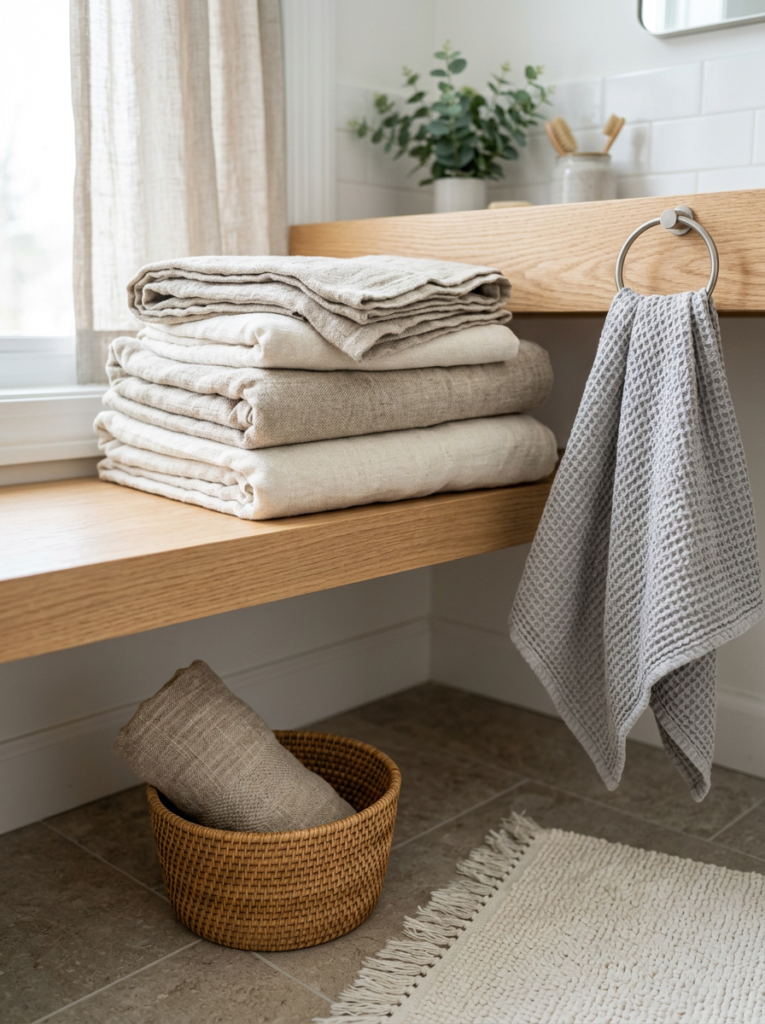
Textiles add warmth without adding clutter. Linen, cotton, and waffle weave towels all suit the style. Choose oatmeal, cream, stone gray, or soft clay.
Keep the set small and matching. Two bath towels, two hand towels, and one bath mat are plenty for most households. Fold them neatly or roll them in a basket, and skip the frilly extras.
A woven or thick cotton bath mat grounds the floor. Look for a natural, slightly textured finish rather than a glossy microfiber. A plain shower curtain in linen or cotton blend also keeps the look calm.
| Textile | Best Colors | Where It Goes |
|---|---|---|
| Linen or cotton bath towels | Oatmeal, cream, stone | Hook or rail |
| Waffle weave hand towels | Soft gray, sand | Beside the sink |
| Cotton bath mat | Cream, light taupe | Floor in front of the vanity |
| Linen blend curtain | Off-white, pale gray | Shower or window |
3. Style Wooden and Ceramic Accessories With Purpose
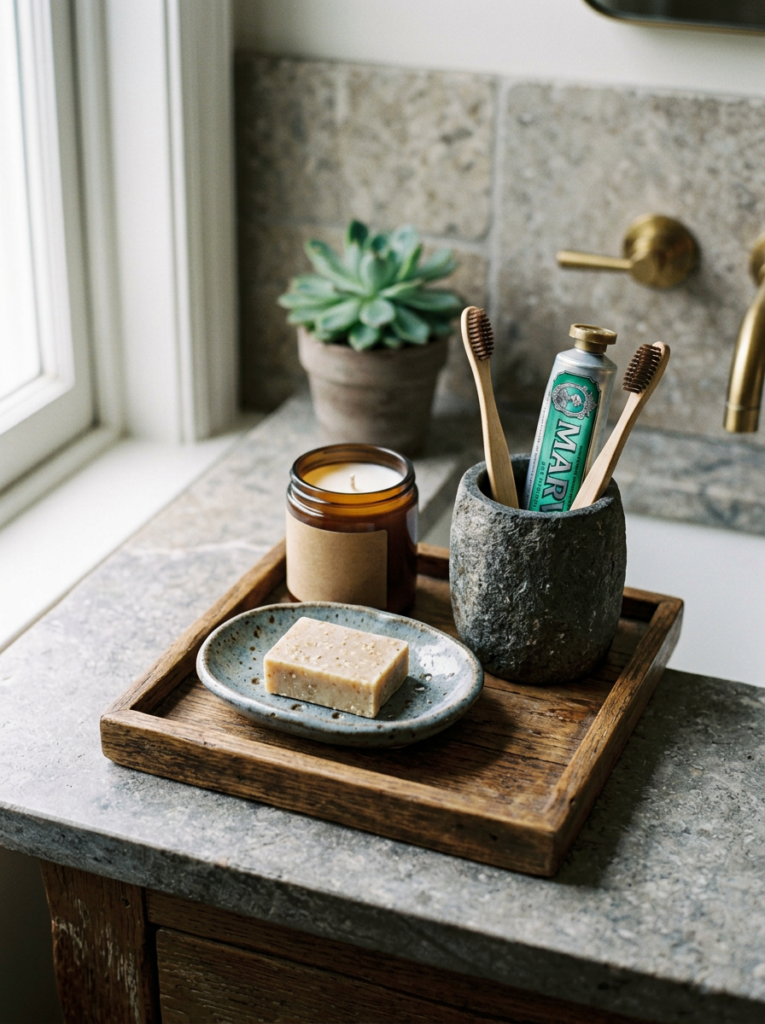
Accessories carry the Japandi mood, so pick them with care. A small wooden tray, a ceramic soap dish, and a glass or stone toothbrush cup look good together. Each one earns its spot by being useful.
Go for handmade or hand-finished looks where you can. A slightly uneven glaze or visible wood grain feels more real than a perfect factory shine. That small imperfection is the wabi-sabi part of the style.
Limit yourself to three to five items on any one surface. Group them on a tray so they read as a single arrangement. Empty space around them makes each piece look intentional.
4. Add Plants and Greenery That Handle Humidity
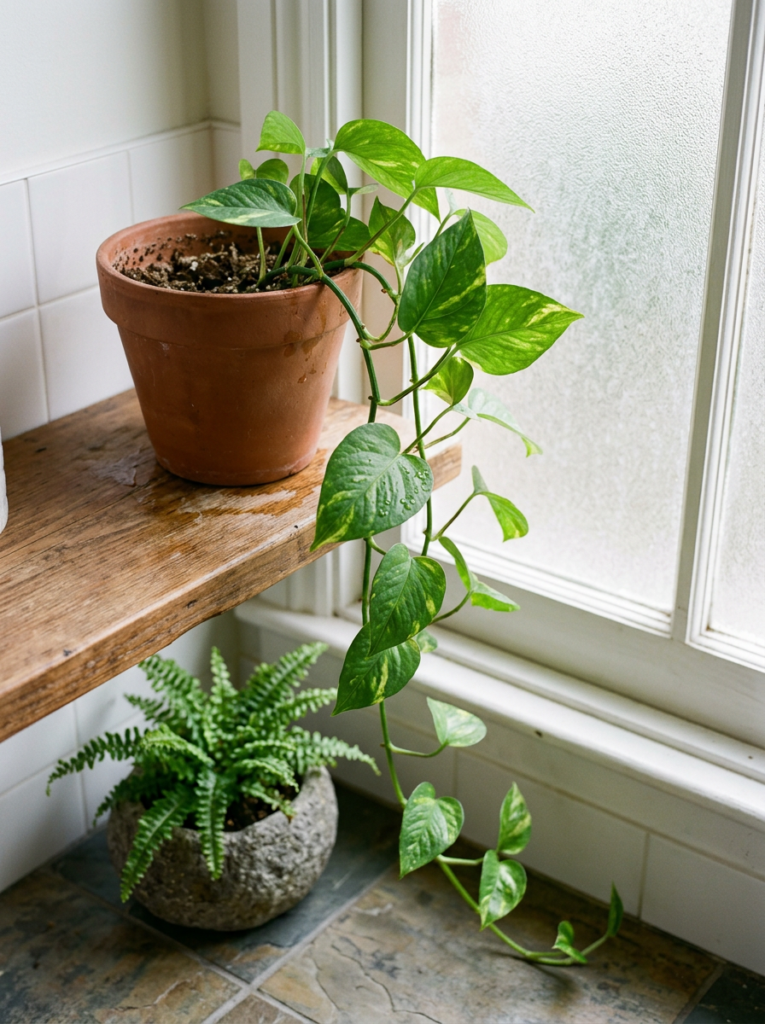
A plant brings life to a quiet room. Ferns, pothos, and snake plants cope well with bathroom humidity. Check how much light your window gives before you choose.
Pick a plain pot in matte ceramic, stone, or terracotta. Skip the bright plastic and the busy patterns. One or two plants are enough, and a single branch in a vase also works in a dim room.
No window at all? A dried stem arrangement or a small bamboo stalk in water can handle lower light. I would avoid fake plants because they tend to look shiny and tired. Real or dried feels calmer.
| Plant | Light Needs | Best Spot |
|---|---|---|
| Pothos | Low to medium | Shelf or hanging pot |
| Boston fern | Medium and humid | Near a window |
| Snake plant | Low | Floor corner |
| Dried branch or stems | None | Vase on the vanity |
5. Choose a Simple Mirror and Minimal Wall Decor
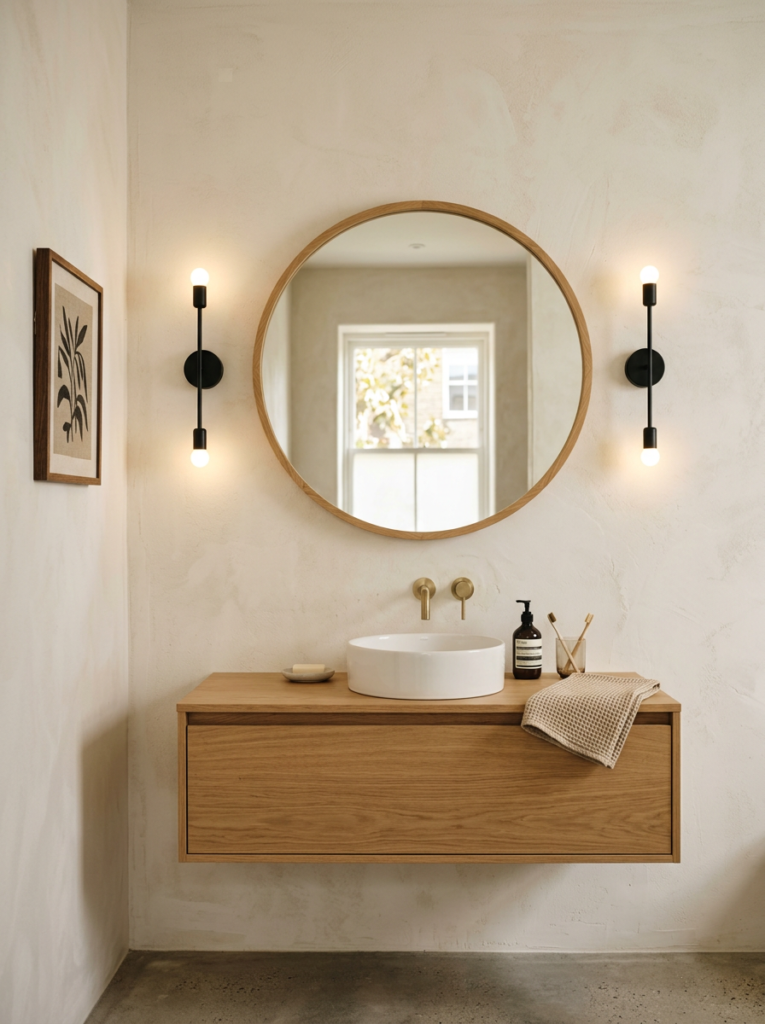
The mirror acts as your main wall piece. A round or soft oval mirror with a thin frame fits the style well. Wood, black metal, or a frameless edge all work.
Hang it at eye level and center it over the sink. Add a pair of small wall lights on either side if your layout allows. This setup keeps your face lit and the wall tidy.
Keep the rest of the wall quiet. One small piece of art, such as a simple line drawing or a framed linen print, is plenty. Pick something that handles steam, like a sealed print or a ceramic wall hook, and skip the big gallery wall.
6. Layer Warm Lighting and Candlelight
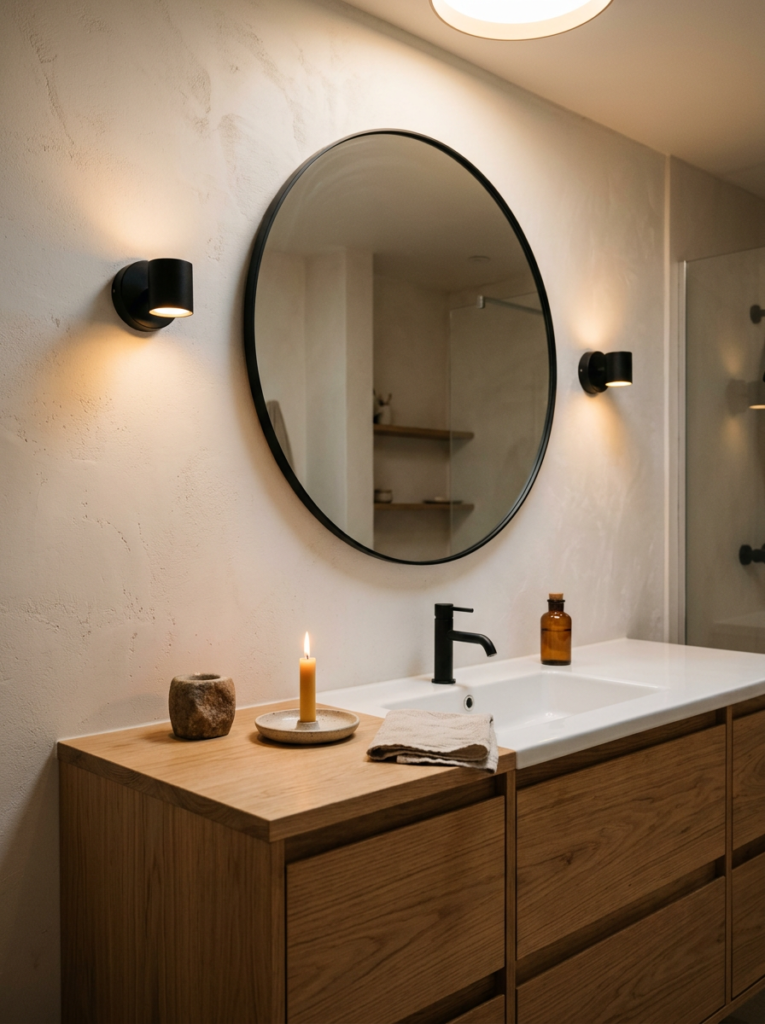
Lighting changes the mood more than any object. Warm bulbs around 2700K make wood and linen glow. Cool white light flattens everything and makes you look tired at 7 a.m., which nobody needs.
Layer three light sources for the best result. Use a dimmable ceiling light for general use, wall lights beside the mirror, and a small candle or lamp for mood. Fixtures near water need the right ingress protection rating, so ask an electrician if you feel unsure.
Candles add a nice final layer if you use them safely. Keep them on a stable ceramic dish, away from towels and plants. I like a plain unscented one in a stone holder, and I never leave it burning when I walk out.
| Light Type | Purpose | Tip |
|---|---|---|
| Ceiling light | General brightness | Use a dimmer |
| Wall lights | Face lighting at the mirror | Place at eye level |
| Candle or small lamp | Mood and warmth | Keep away from fabric |
7. Hide Clutter With Baskets, Hooks, and Decanted Bottles
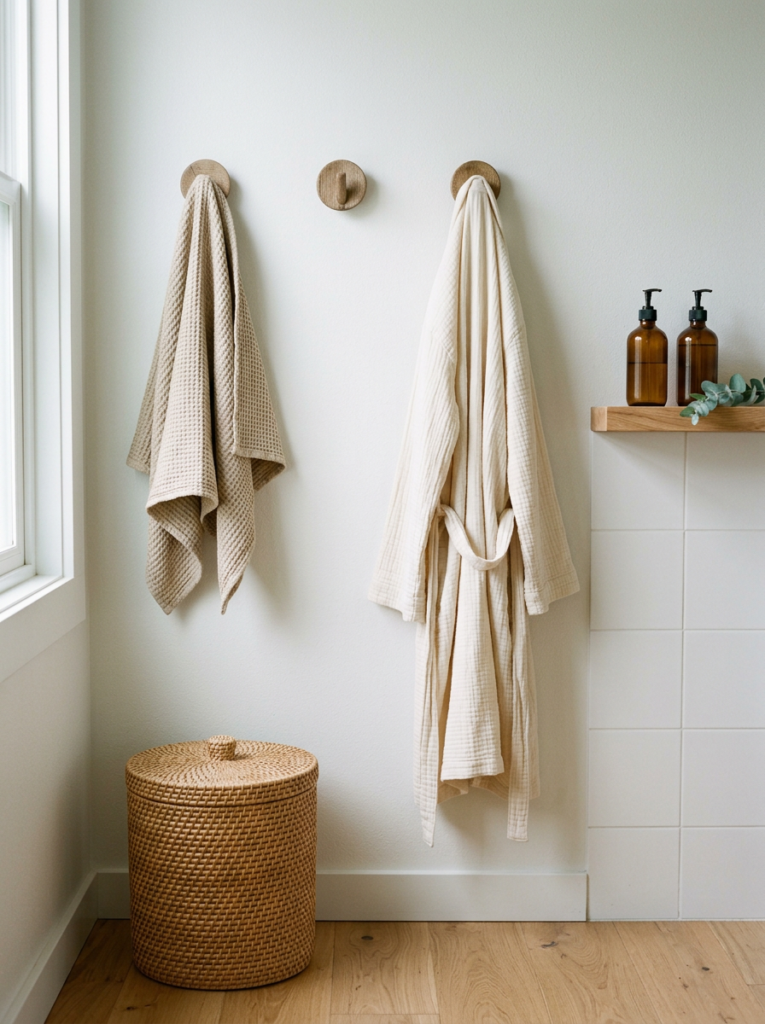
Good decor includes the things you hide. A lidded basket or closed cabinet keeps spare toilet paper, cleaning supplies, and extras out of view. A visible mess ruins a calm room faster than any wrong color.
Use wooden or metal hooks for towels and robes. Space them evenly and keep the color consistent. A row of mismatched plastic hooks undoes all your hard work.
Decant your daily products into matching pump bottles. Plain glass, ceramic, or matte plastic keeps the labels out of sight. I label the bottom of each one with a small sticker so I never mix them up.
5 Japandi Bathroom Decorating Mistakes to Avoid
Most decorating mistakes come from adding too much. People love the style and then buy every wooden tray they see. The room ends up crowded, which defeats the purpose.
Color and light cause the next set of problems. Cool bulbs, bright accents, and shiny plastics clash with the soft palette. Swap those out first, because they cost little and change a lot.
| Mistake | Why It Hurts | Easy Fix |
|---|---|---|
| Too many accessories | Room feels cluttered | Keep three to five per surface |
| Cool white bulbs | Wood and linen look dull | Use 2700K warm bulbs |
| Bright patterns and plastics | Break the calm mood | Choose matte, natural materials |
| Fake, shiny plants | Look cheap and tired | Use real or dried greenery |
| Open shelves full of products | Visual noise | Hide extras in baskets or cabinets |
Conclusion: Your Japandi Bathroom Decor in 7 Simple Moves
To decorate a Japandi bathroom, start with a warm neutral base and clear everything that does not earn its spot. Natural textiles like linen and cotton bring in softness. Wooden and ceramic accessories add the handmade touch.
Plants, a simple mirror, and warm layered lighting finish the mood. Baskets, hooks, and decanted bottles hide the daily clutter. Together they keep the room calm and easy to live with.
Avoid the common slips, like too many accessories, cool bulbs, and shiny fake plants. Pick two or three ideas, start small, and build from there.
FAQs About Decorating a Japandi Bathroom
How do I decorate a Japandi bathroom on a budget?
Start with what you own and remove the clutter. Then add linen or cotton towels, a wooden tray, and a warm bulb. Those small swaps cost little and change the whole mood.
What colors work best in Japandi bathroom decor?
Warm off-white, greige, sand, and soft gray make a solid base. Add one muted accent like charcoal, olive, or clay. Keep the palette to three or four shades.
Which plants grow well in a Japandi bathroom?
Pothos, Boston ferns, and snake plants handle humidity well. Match the plant to the light your window gives. Dried stems work if the room has no natural light.
What accessories should I put on a Japandi bathroom counter?
Keep it to three to five items, like a wooden tray, a ceramic soap dish, and a small candle. Group them together so they look intentional. Leave empty space around them.
Can I decorate a small Japandi bathroom?
Yes, small rooms suit this style. Use light colors, a round mirror, and wall hooks to save space. Hide extras in a basket or closed cabinet.
What lighting suits a Japandi bathroom?
Choose warm bulbs around 2700K on a dimmer. Layer ceiling light, wall lights, and a candle for mood. Use fixtures with the right water protection rating near wet areas.
What is the difference between Japandi and plain minimalism?
Japandi stays warm and natural, while strict minimalism can feel bare. You still keep surfaces clear, but you add wood, texture, and plants. The result feels lived in.