
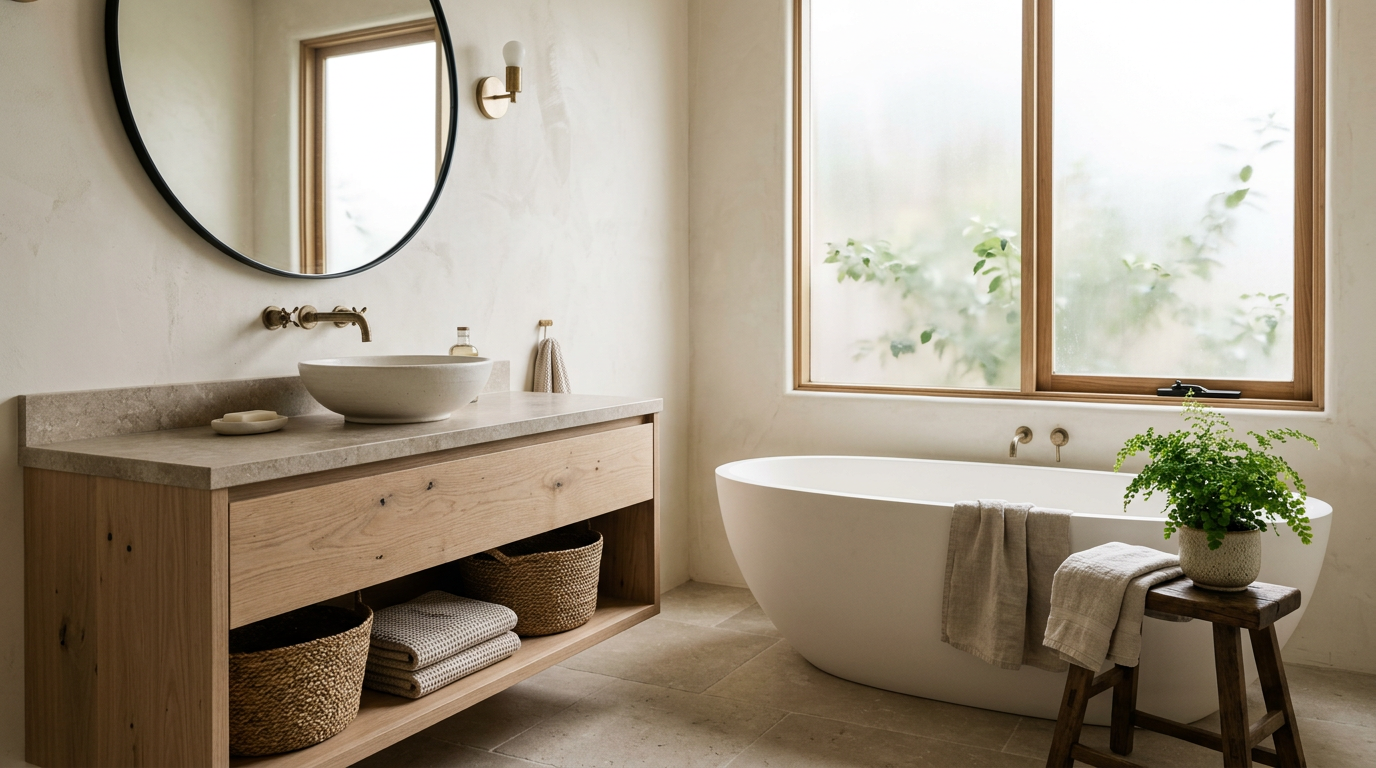
A Japanese Scandinavian bathroom mixes Japanese calm with Nordic warmth. You get natural wood, soft neutral colors, clean lines, and very little clutter. Designers also call this style Japandi.
I love this look because it solves a simple problem. Most bathrooms feel cold, busy, or both. This style slows everything down, and your morning routine feels a little less rushed.
You do not need a huge budget or a spa-sized room. A few smart choices in color, wood, and lighting do most of the work. Here are the ideas I find most useful, starting with the basics.
What Makes a Japandi Bathroom Work: 3 Core Principles
Both design traditions share one belief: less stuff, better stuff. Japanese design brings wabi-sabi, which values simple, imperfect, natural materials. Scandinavian design adds hygge, the cozy feeling that makes a room easy to relax in.
The two styles meet in the middle. Japanese design leans a bit more minimal and earthy. Scandinavian design leans lighter and softer, so the mix feels calm without feeling empty.
Keep three principles in mind as you plan. Choose natural materials, keep surfaces clear, and let light do the decorating. If a piece does not follow at least two of these, I usually leave it out.
| Principle | Japanese Influence | Scandinavian Influence |
|---|---|---|
| Materials | Stone, bamboo, cedar | Light oak, birch, linen |
| Color | Earthy and muted | Soft white and pale gray |
| Mood | Quiet and balanced | Cozy and bright |
7 Best Japanese Scandinavian Bathroom Ideas
1. Warm Neutral Color Palette for a Soft Base
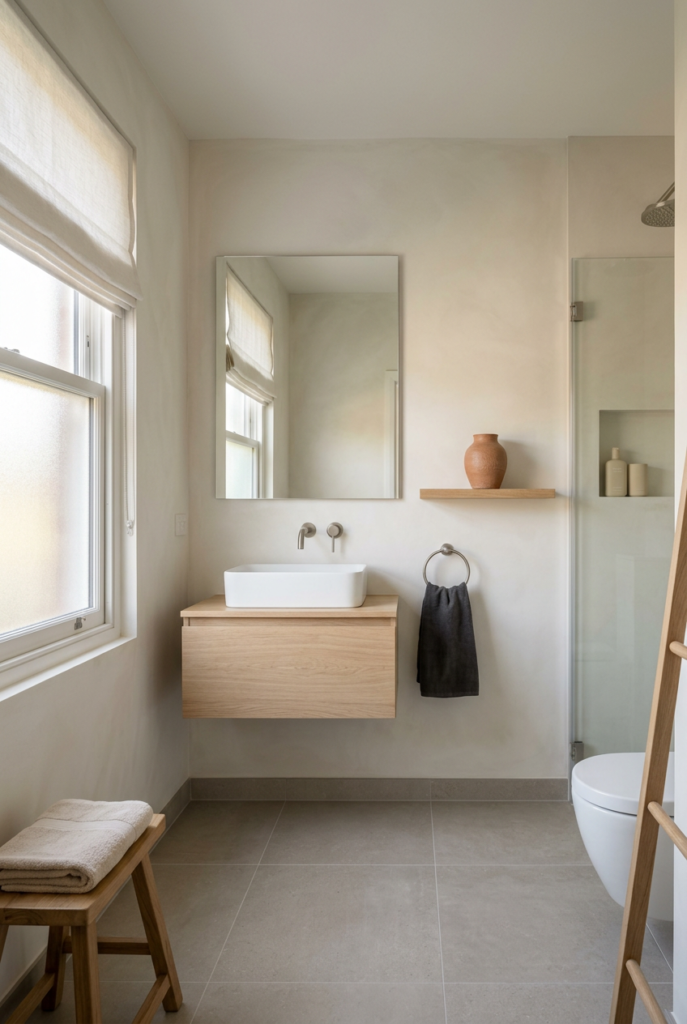
Start with color, because it sets the mood for everything else. Soft white, warm beige, greige, and pale sand work best. These shades reflect light and keep small bathrooms from feeling boxed in.
Skip the stark, hospital-style white. A slightly warm off-white feels friendlier, and it pairs better with wood. I always hold a paint sample next to the vanity before I commit.
Add one muted accent, such as charcoal, olive, or clay. Use it in small doses, like a towel or a single tile border. That one note gives the room depth without breaking the calm.
| Color | Best Use | Mood |
|---|---|---|
| Warm off-white | Walls and ceiling | Bright and clean |
| Greige | Tile and large surfaces | Soft and grounded |
| Charcoal | Fixtures and accents | Quiet contrast |
| Sage or olive | Towels and plants | Fresh and natural |
2. Natural Wood Vanity and Accents for Instant Warmth
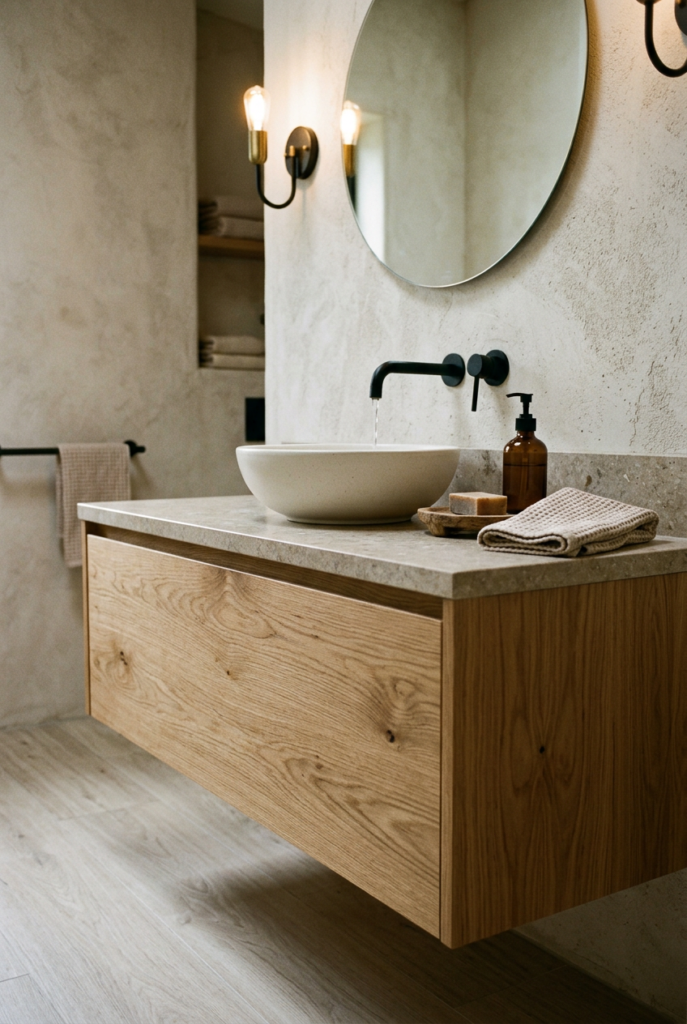
Wood is the heart of this style. A light oak or ash vanity brings the Scandinavian side. A darker walnut or cedar piece brings the Japanese side. Either one makes a white bathroom feel lived in.
Moisture matters here, so choose carefully. Look for sealed or oiled hardwood, teak, or a quality veneer made for bathrooms. Raw, unsealed wood in a damp room will warp, and I have seen it happen.
Floating vanities suit this look well. They show more floor, which makes the room feel larger, and they make cleaning easier. Pair one with a simple stone or ceramic top and a plain round mirror.
3. Freestanding Soaking Tub Inspired by the Ofuro
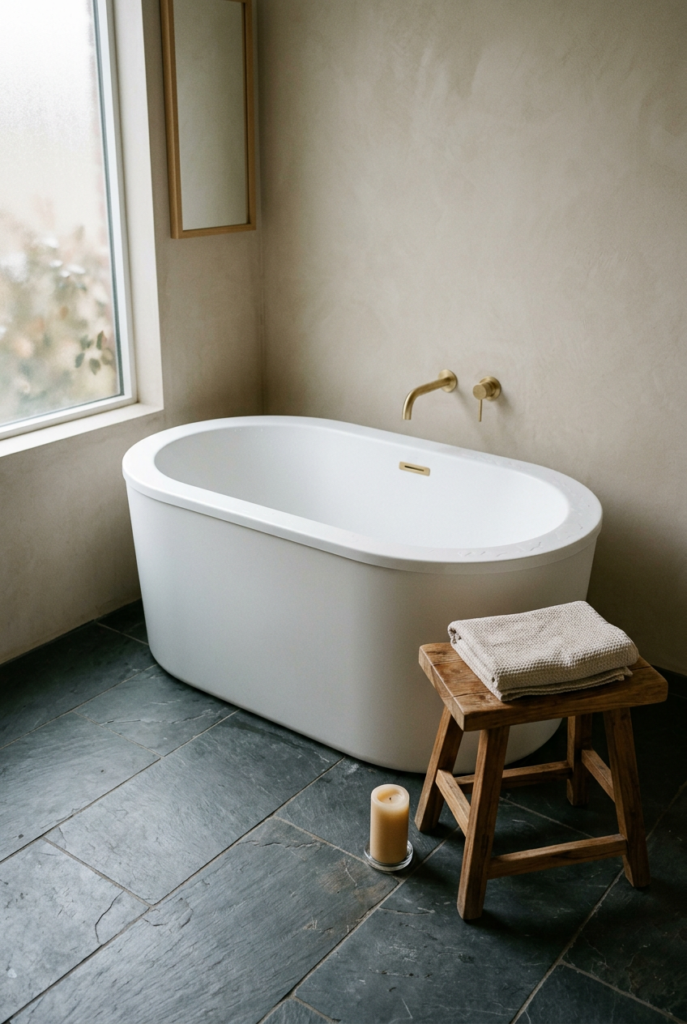
The Japanese soaking tub, called an ofuro, is made for slow evenings. It sits taller and shorter than a typical Western tub, so you sit upright and soak up to your shoulders. A freestanding tub in a simple oval shape gives you a similar feel.
Small bathroom? You still have options. A compact soaking tub or a wooden bath stool and bucket set can bring the ritual without the footprint. Look at the measurements twice before you order anything.
Keep the surroundings plain. A wooden stool beside the tub, a folded towel, and a single candle are enough. Let the tub be the quiet focal point, and leave everything else simple.
4. Stone and Textured Tile for a Natural Feel
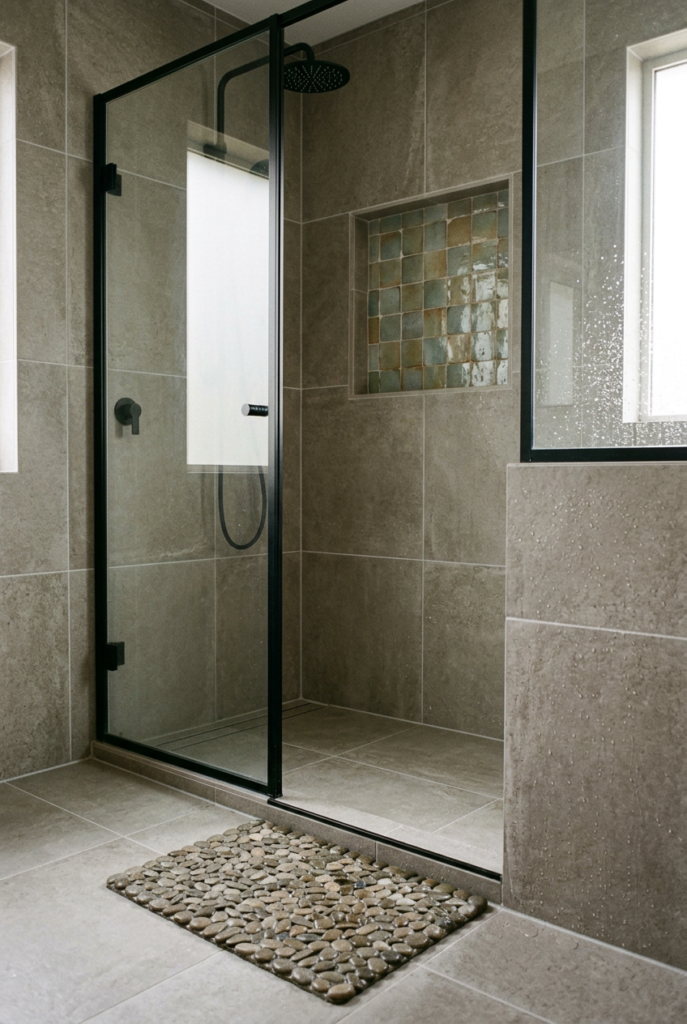
Texture gives a simple bathroom its character. Matte stone, honed concrete-look tile, and small handmade ceramic tiles all work well. They add depth without adding color, which keeps the room calm.
Floors deserve extra thought. Pebble mats, slate, and textured porcelain give you grip when your feet are wet. I always check the slip rating before I fall for a pretty sample.
Skip high-gloss tile in this style. Shiny surfaces bounce light around and feel busy. A matte or softly honed finish looks quieter, and it hides water spots better.
| Material | Look | Best Spot |
|---|---|---|
| Honed slate | Dark and earthy | Floors and shower walls |
| Matte porcelain | Soft and even | Walls and floors |
| Handmade ceramic | Slightly uneven | Backsplash or niche |
| River pebbles | Organic and tactile | Shower floor or mat |
5. Minimal Storage That Hides the Clutter
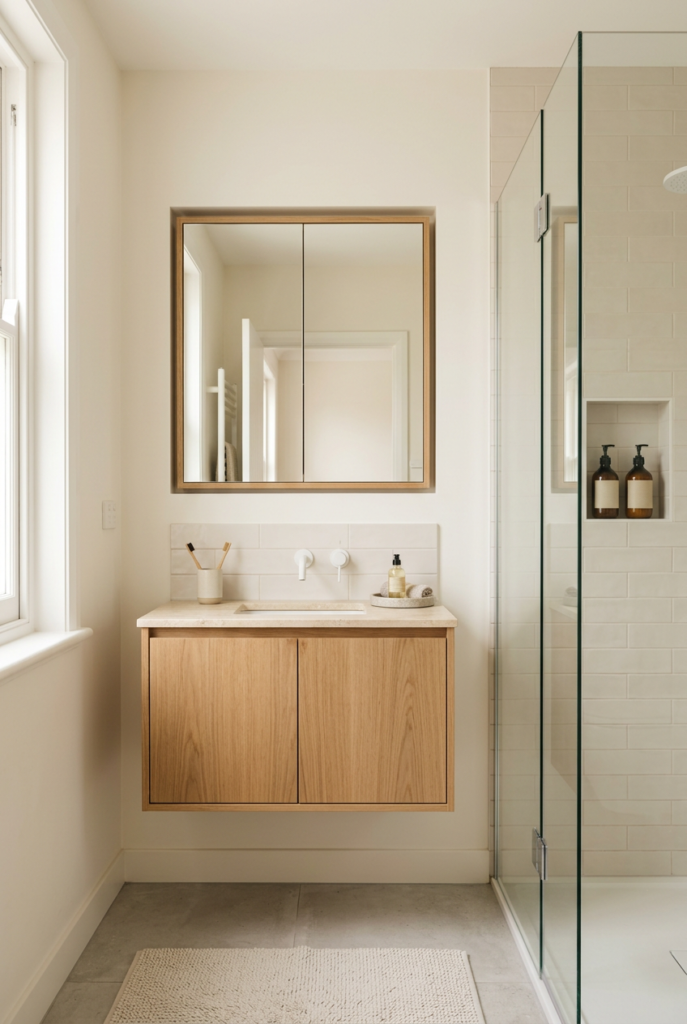
A clear counter is the quickest way to make a bathroom feel calm. Japanese design hides most things behind doors, and Scandinavian design keeps the leftovers tidy. I follow the same rule: if I use it daily, it gets a home within reach.
Closed cabinets, wall niches, and wooden shelves do the job well. Use a recessed niche in the shower for shampoo, and a mirrored cabinet for skincare. Fewer open shelves means less to dust.
Decant what you can see. Pour soap and lotion into matching glass or ceramic dispensers, and keep the loud brand labels out of sight. It takes ten minutes and changes the whole look.
6. Soft, Layered Lighting for a Spa Mood
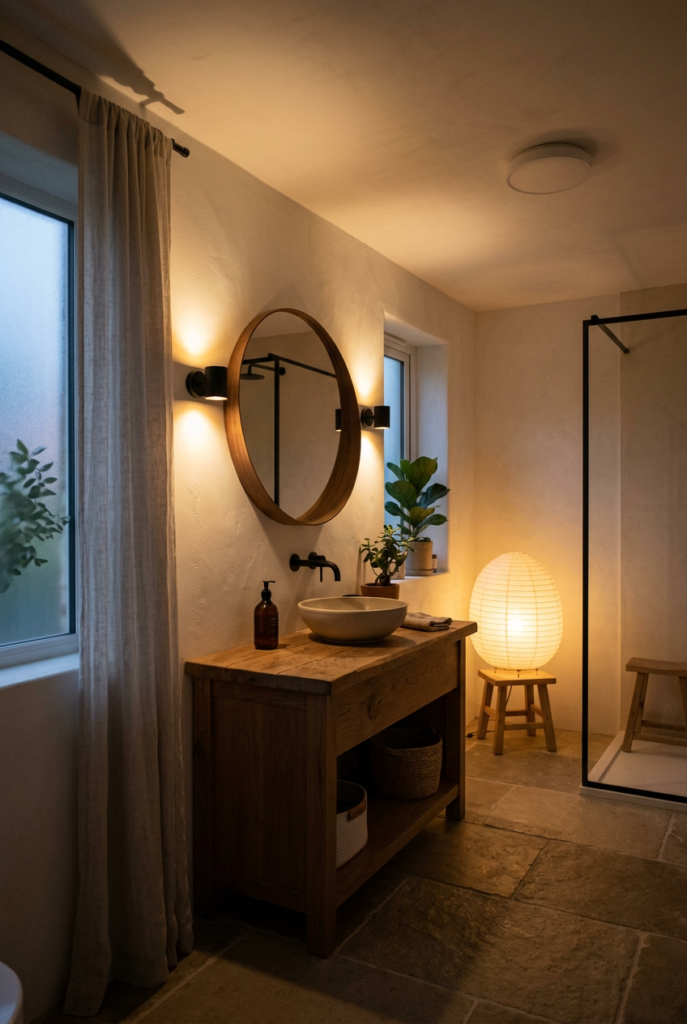
Lighting can make or break this style. Harsh overhead bulbs flatten everything and make you look tired. Aim for warm light around 2700K, which feels closer to candlelight than an office.
Layer your light in three steps. Use a dimmable ceiling fixture for general light, wall sconces beside the mirror for your face, and a small lamp or candle for mood. Make sure anything near water carries the right bathroom safety rating.
Japanese shoji screens inspire another smart trick. Frosted glass or a paper-style lantern spreads light gently. If you have a window, a sheer linen curtain or frosted film keeps privacy and lets daylight in.
7. Plants, Textiles, and Small Finishing Touches
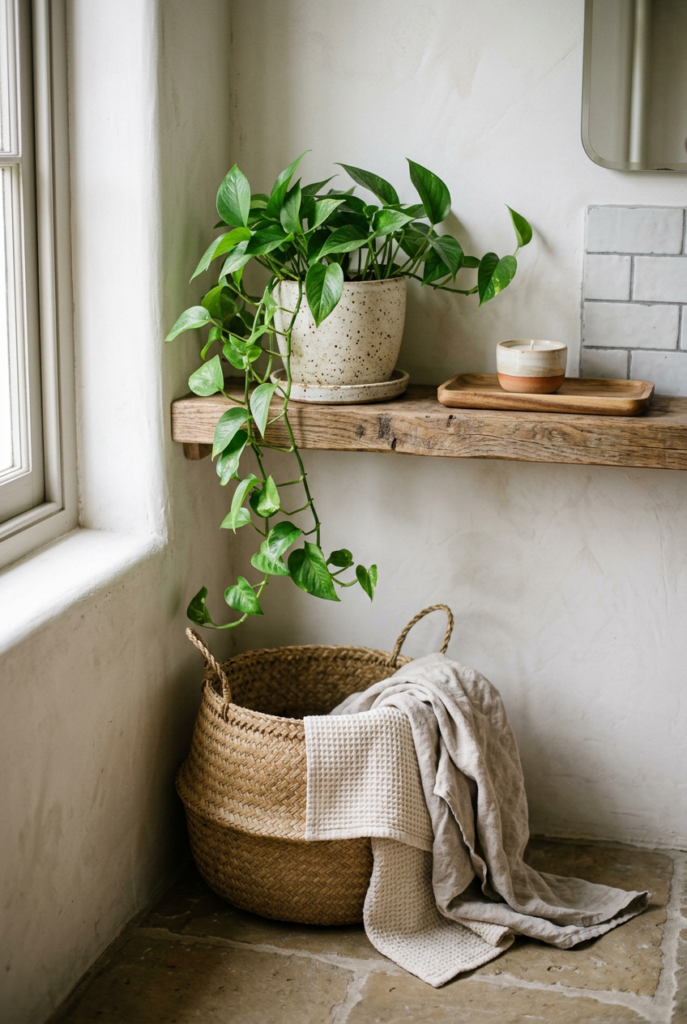
The last layer is where the room starts to feel like yours. Add one or two plants that handle humidity, such as ferns, pothos, or a small bamboo stalk. A single branch in a vase also works if your light is low.
Choose textiles in natural fibers. Linen or cotton towels in cream, oatmeal, and gray fit the palette. A woven basket holds spare towels, and it looks good doing it.
Keep accessories few and meaningful. A wooden tray, a ceramic dish, and a single candle are plenty. I stop when the shelf still has room to breathe, because space is part of the design.
5 Japandi Bathroom Mistakes to Avoid
Most mistakes come from adding too much. People fall in love with the style and then buy every wood tray in sight. The room ends up crowded, which defeats the purpose.
Cold lighting is another common slip. A blue-white bulb can ruin a beautiful wood vanity in a single evening. Swap it for a warm bulb before you blame the paint.
Watch the wood and the grip too. Unsealed wood warps, and slick floors cause falls. Fix these two before you spend money on decor.
| Mistake | Why It Hurts | Easy Fix |
|---|---|---|
| Too many accessories | Room feels cluttered | Keep three to five items |
| Cool white bulbs | Wood looks dull | Use 2700K warm bulbs |
| Unsealed wood | Warps in moisture | Choose oiled or sealed finishes |
| Glossy tile everywhere | Feels busy and shows spots | Pick matte or honed surfaces |
| Slick flooring | Raises slip risk | Check the slip rating |
Conclusion: Your Japanese Scandinavian Bathroom in 7 Simple Moves
A Japanese Scandinavian bathroom comes down to calm colors, natural materials, and a clutter-free layout. Start with a warm neutral palette, then add a wood vanity and a simple soaking tub. Those choices set the tone fast.
Texture and storage finish the base. Matte stone or tile adds depth, while closed cabinets and niches keep the counters clear. Warm, layered lighting then ties it all together.
Plants, linen towels, and a few meaningful accessories complete the look. Avoid the common slips, like cold bulbs, unsealed wood, and slick floors. Pick two or three ideas, start small, and build from there.
FAQs About Japanese Scandinavian Bathrooms
What is a Japanese Scandinavian bathroom?
It blends Japanese minimalism with Nordic coziness. You see natural wood, soft neutral colors, and clean lines. Designers often call it a Japandi bathroom.
Which colors work best in a Japandi bathroom?
Warm off-white, greige, sand, and soft gray make a solid base. Add one muted accent like charcoal, olive, or clay. Keep the palette to three or four shades.
Can I create this style in a small bathroom?
Yes, small spaces suit it well. Use a floating vanity, light colors, and closed storage to open up the room. A compact soaking tub or a wooden stool adds the ritual without taking much space.
What type of wood suits a humid bathroom?
Teak, cedar, and sealed or oiled oak handle moisture best. Avoid raw, unsealed wood, because it warps over time. Always check that the finish is made for bathrooms.
Is a Japandi bathroom expensive to build?
It does not have to be. Paint, lighting, towels, and a few wood accents give you the look on a modest budget. Save your larger spend for the vanity or tub if you want one.
What lighting should I choose?
Pick warm bulbs around 2700K and put them on a dimmer. Layer ceiling light, wall sconces, and a candle or small lamp. Make sure fixtures near water carry the right safety rating.
How is Japandi different from plain minimalism?
Japandi stays warm and natural, while strict minimalism can feel cold and bare. You still keep surfaces clear, but you add wood, texture, and plants. The result feels lived in.