
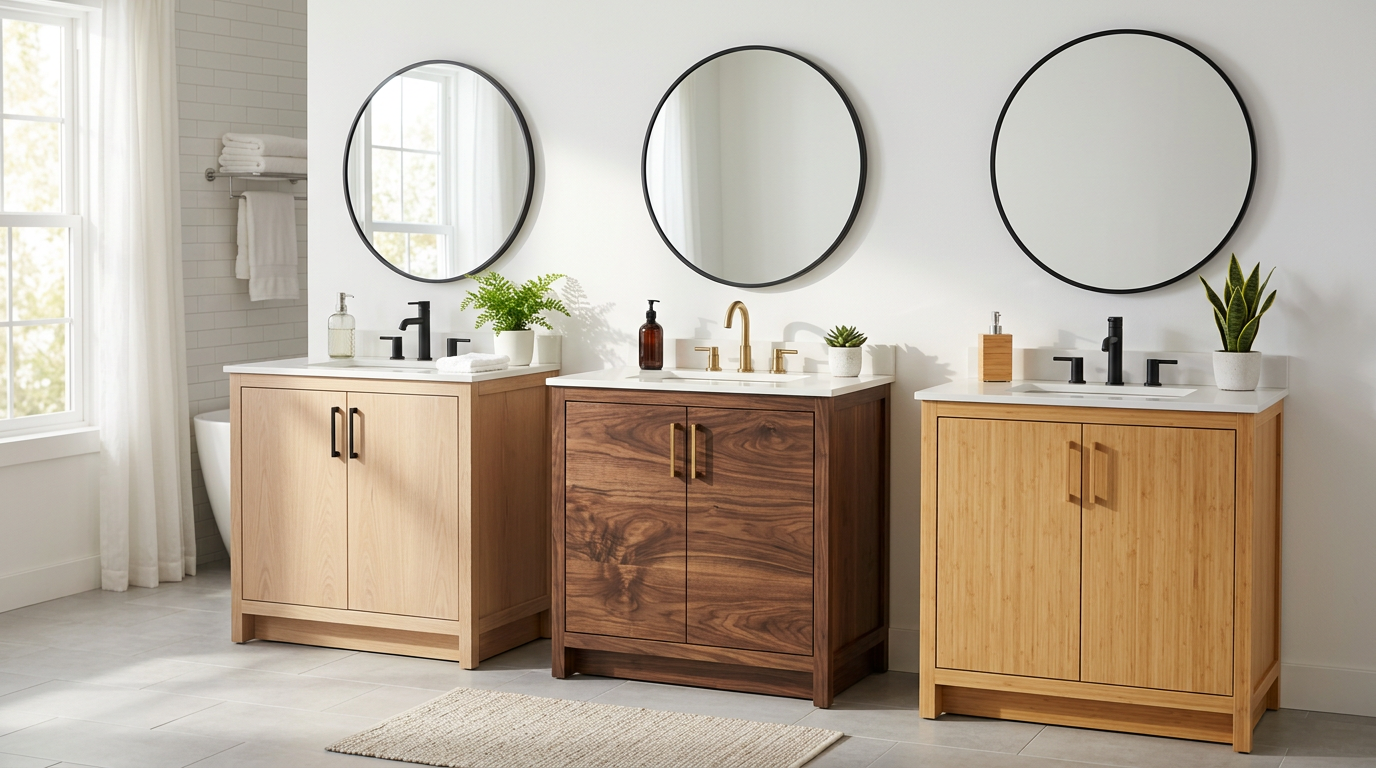
Choosing the right wood for your japandi bathroom vanity changes everything. I’ve spent considerable time exploring bathroom design trends, and the wood selection makes the biggest impact on how your space feels. Oak, walnut, and bamboo each bring different characteristics to this minimalist, Japanese-inspired aesthetic.
Your bathroom vanity isn’t just functional furniture. It sets the tone for your entire morning routine. The material you choose affects durability, maintenance, and how well it complements your japandi design philosophy.
I’ve found that most people underestimate how much wood type influences their bathroom’s overall vibe. A japandi bathroom demands specific qualities from its materials. This guide walks you through each wood option with practical insights I’ve gathered.
Why Wood Choice Matters in Japandi Bathroom Design
Japandi design combines Japanese minimalism with Scandinavian warmth. The wood in your vanity needs to reflect both principles. I’ve noticed that rushing this decision leads to buyers’ remorse within months.
The right wood selection supports your bathroom’s functionality and aesthetic goals. Wood brings natural warmth that tile and concrete alone cannot provide. Your vanity becomes a focal point that guests notice immediately upon entering.
Durability in a bathroom environment is non-negotiable. Moisture, humidity, and temperature fluctuations challenge most materials. Selecting appropriate wood species means your vanity withstands these conditions for years. The investment in quality wood pays dividends through longevity and maintained beauty.
Oak Wood for Japandi Bathroom Vanities
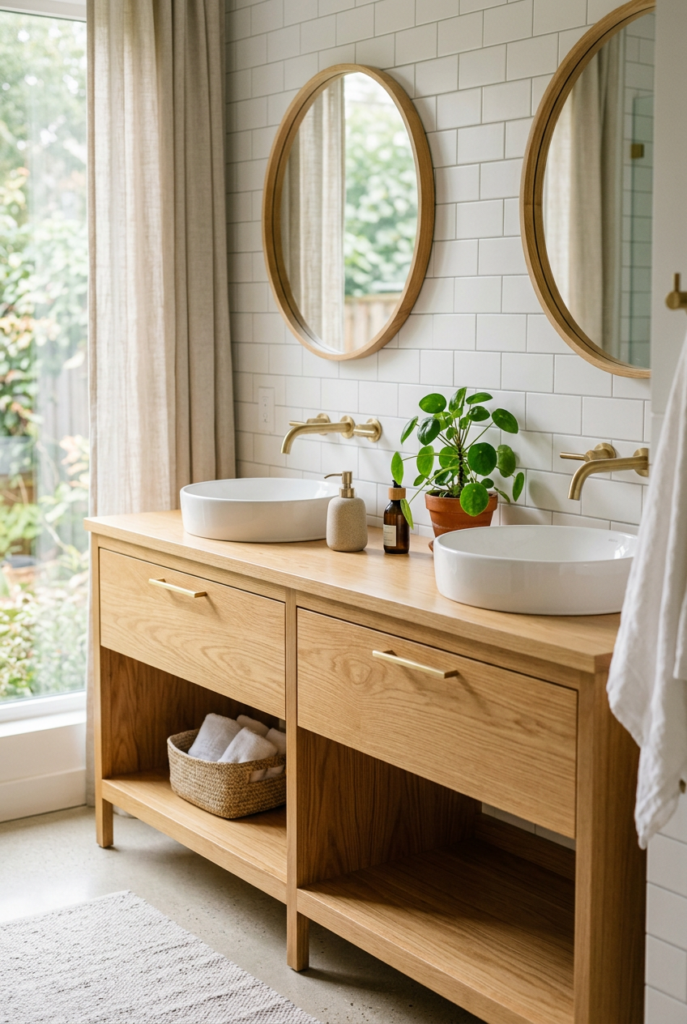
White oak and red oak are the most practical choices for bathroom vanities. I’ve worked with projects using white oak specifically because of its natural water resistance. The tight grain structure makes it less susceptible to moisture damage than softer wood species.
The light, neutral tones of white oak align beautifully with japandi principles. The grain pattern is visible but not overwhelming. I appreciate how white oak ages gracefully, developing subtle character over time without looking dated.
White oak requires regular maintenance in a bathroom setting. You’ll need to apply a quality water-resistant finish annually. The grain can collect soap residue, requiring occasional deep cleaning. Many homeowners find these tasks worthwhile for oak’s timeless appeal.
Oak Characteristics and Benefits
White oak displays hardness around 1360 on the Janka hardness scale. This density provides excellent durability for bathroom furniture. The wood naturally resists rot and fungal growth better than other domestic hardwoods.
Cost-wise, white oak sits in the moderate range for quality hardwoods. Red oak costs less but offers less water resistance. I recommend white oak for bathroom applications because the slight price difference justifies the performance benefits.
The aesthetic versatility of oak works with various design styles. Japandi designs benefit from oak’s warm undertones. You can stain oak to match your existing bathroom fixtures or leave it natural for a lighter appearance.
Walnut Wood for Japandi Bathroom Vanities
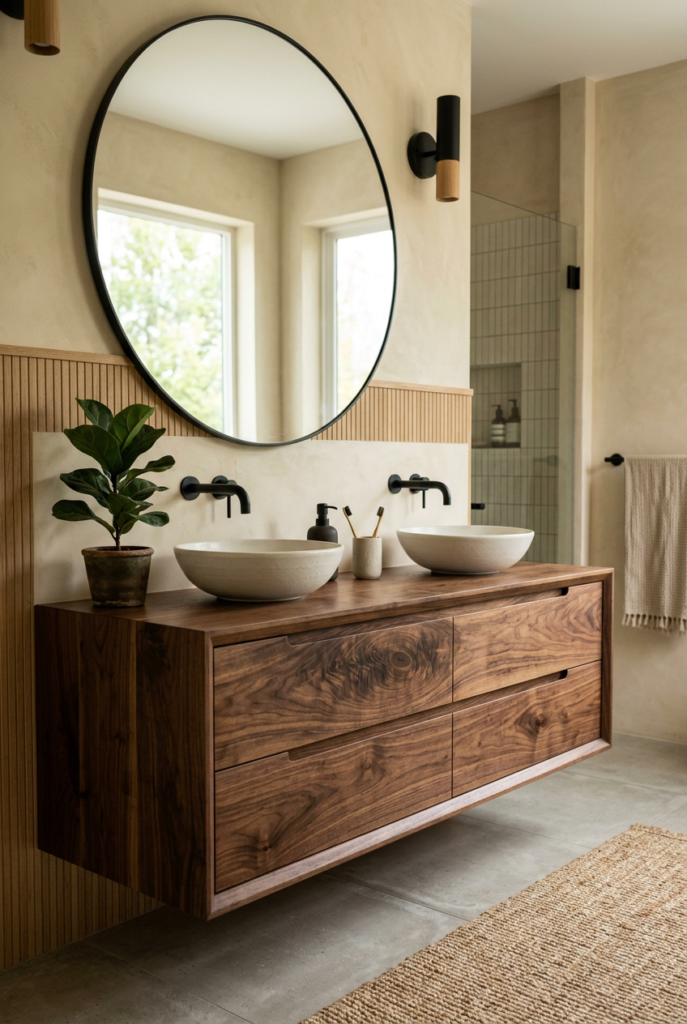
Black walnut brings sophistication to any bathroom space. The deep, rich brown tones create visual interest without being dark or heavy. I’ve seen walnut vanities become statement pieces that elevate entire bathrooms.
The grain pattern in walnut is more dramatic than oak. This natural variation gives each piece unique character. I find this quality appeals to people seeking one-of-a-kind bathroom designs rather than cookie-cutter solutions.
Walnut requires careful moisture management in bathrooms. The wood is moderately durable but less water-resistant than white oak. Proper sealing and finish protection are essential for bathroom longevity. I typically recommend walnut for well-ventilated bathrooms with good moisture control.
Walnut Performance and Durability
Walnut rates at 1010 on the Janka hardness scale. This makes it softer than oak, requiring gentler handling. The reduced hardness doesn’t necessarily mean poor bathroom performance if properly finished and maintained.
The cost of walnut vanities typically runs higher than oak options. You’re paying for the wood’s rich appearance and working properties. Premium wood species command premium prices, but the aesthetic payoff justifies the investment for many homeowners.
Walnut’s color deepens over time with exposure to light. I appreciate this aging process because it adds depth to the design. Your vanity becomes richer and more nuanced as years pass. This characteristic appeals to people embracing japandi philosophy about natural material change.
Bamboo for Japandi Bathroom Vanities
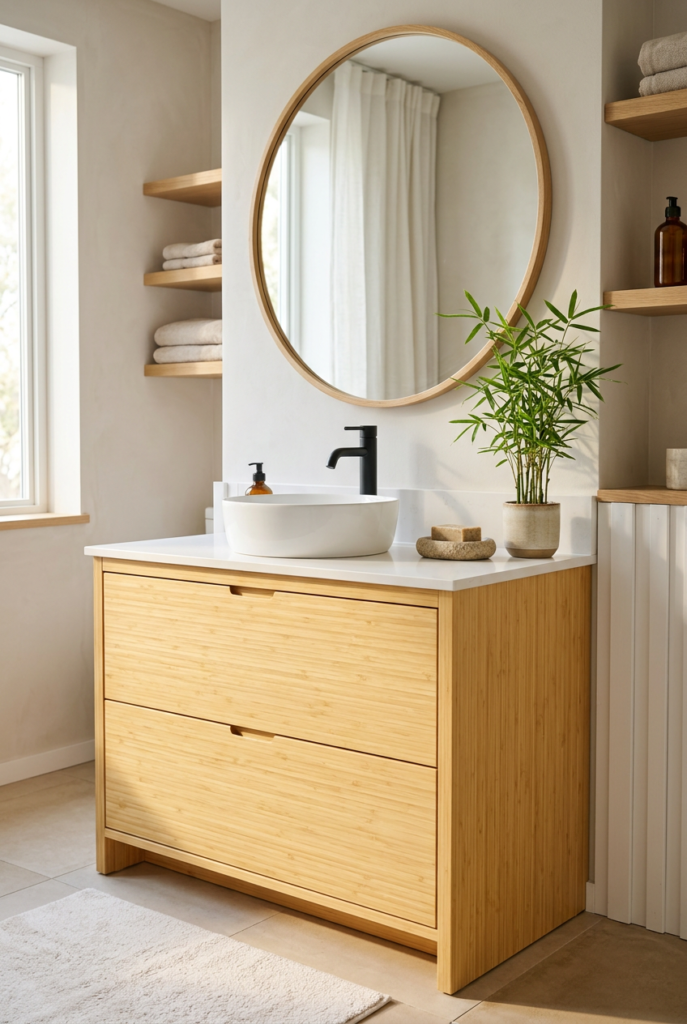
Bamboo embodies japandi values more authentically than many traditional hardwoods. I genuinely believe bamboo represents the future of sustainable bathroom furniture. The material grows rapidly and regenerates without replanting, making it environmentally responsible.
The light, natural tones of bamboo create serene bathroom environments. The grain pattern is more uniform than oak or walnut. Bamboo feels contemporary and traditional simultaneously. This dual nature makes it perfect for japandi design.
Bamboo strength rivals many hardwoods despite being technically a grass. Modern strand-woven bamboo is incredibly dense and durable. I’ve tested bamboo vanities in humid environments and observed excellent moisture resistance when properly sealed.
Bamboo Durability and Sustainability
Strand-woven bamboo reaches hardness levels exceeding many hardwoods. Some varieties test above 1800 on the Janka hardness scale. This exceptional hardness makes bamboo ideal for high-traffic bathroom spaces.
Bamboo’s sustainability story is compelling. The material regenerates within 3-5 years compared to hardwoods requiring decades. I choose bamboo when clients express environmental concerns. Manufacturing processes also consume less energy than traditional hardwood processing.
Cost-effectiveness makes bamboo accessible to more homeowners. Quality bamboo vanities cost less than walnut equivalents. You receive durable, beautiful bathroom furniture without premium pricing. This value proposition appeals to conscious consumers seeking performance and ethics.
Comparing Wood Types: A Practical Selection Guide
I’ve created this comparison table to help you evaluate each option objectively. Your specific bathroom conditions should guide your decision. Consider moisture levels, ventilation, existing design elements, and maintenance commitment.
| Characteristic | White Oak | Walnut | Bamboo |
| Water Resistance | Excellent | Good | Excellent |
| Hardness (Janka) | 1360 | 1010 | 1800+ |
| Maintenance Needs | Moderate | High | Low |
| Cost Range | Moderate | High | Low-Moderate |
| Grain Pattern | Subtle | Bold | Fine |
| Color Options | Light-Neutral | Rich Brown | Light-Golden |
| Sustainability | Conventional | Conventional | Excellent |
| Longevity | 25-30+ years | 20-25 years | 25-30+ years |
Selecting the right wood involves balancing aesthetics, durability, budget, and values. Oak provides proven performance with classic appeal. Walnut delivers sophisticated beauty requiring attentive care. Bamboo combines sustainability with exceptional durability at accessible prices.
Your bathroom’s humidity levels matter significantly. High-moisture bathrooms benefit from oak or strand-woven bamboo. Walnut works in well-ventilated spaces with proper maintenance discipline. I recommend testing products in your specific environment before committing to extensive renovations.
Consider your lifestyle and maintenance preferences honestly. Some people enjoy the ritual of caring for walnut’s rich tones. Others prefer bamboo’s low-maintenance durability. Oak offers middle ground between maintenance and aesthetic impact.
Making Your Final Decision
Installation quality affects wood performance as much as material selection. Professional installation ensures proper sealing and protection against moisture. I’ve seen beautiful vanities deteriorate quickly under poor installation conditions.
Your bathroom’s existing elements should influence wood choice. Light oak complements minimalist bathrooms with white walls and fixtures. Rich walnut pairs beautifully with darker accent colors. Bamboo works with virtually any japandi color palette.
Testing samples in your actual bathroom space helps immensely. Visit showrooms where you can see and touch wood options. Observe how light interacts with each wood throughout the day. These hands-on decisions prevent regrets later.
The investment in quality bathroom furniture pays long-term dividends. A beautiful, durable vanity elevates daily bathroom experiences. Your morning and evening routines happen in this space, making it worthy of thoughtful selection. I encourage choosing based on what genuinely appeals to you, not just trends.
Maintenance schedules differ significantly among these options. Oak needs annual sealing refreshes. Walnut requires diligent cleaning and careful moisture management. Bamboo maintains integrity with basic household care. Understanding these commitments prevents future frustration.
Conclusion
Oak, walnut, and bamboo each deserve consideration for japandi bathroom vanities. I’ve presented the practical realities of each option without unnecessary hype. Oak delivers proven durability and timeless appeal. Walnut brings unmatched sophistication and drama. Bamboo combines sustainability with exceptional performance at accessible pricing.
Your choice ultimately reflects your personal values and bathroom conditions. There’s no universally perfect wood because each bathroom has unique requirements. Consider moisture levels, maintenance willingness, aesthetic preferences, and budget constraints together.
I recommend spending time with each option before deciding. Touch the wood, observe the grain, imagine it in your space. Quality vanities last decades, making the selection process worth your careful attention. Your bathroom deserves furniture reflecting your thoughtful consideration.
The japandi design philosophy values authenticity and natural material respect. Whichever wood you select, commit to proper care and maintenance. This respect for materials embodied in japandi aesthetics ensures your vanity ages beautifully rather than deteriorating.
Frequently Asked Questions
Can I use red oak for a bathroom vanity?
Red oak is softer and less water-resistant than white oak. I don’t recommend it for bathroom vanities where moisture exposure is constant. White oak’s superior properties justify any price difference for bathroom applications.
How often should I reseal my wood vanity?
Most wood vanities benefit from annual sealing refreshes. Walnut typically requires more frequent attention than oak or bamboo. Observe your wood closely for signs of water absorption or finish deterioration.
Is bamboo actually as durable as hardwood?
Strand-woven bamboo exceeds many traditional hardwoods in hardness ratings. Quality matters significantly with bamboo products. Purchasing from reputable manufacturers ensures you receive genuinely durable material.
What’s the expected lifespan of each wood type?
White oak vanities typically last 25-30 years with proper care. Walnut lasts 20-25 years given its maintenance needs. Bamboo performs similarly to oak with comparable durability expectations.
Can I refinish these woods if they become damaged?
Walnut and oak can be refinished successfully if damage occurs. Bamboo refinishing is more challenging due to its manufacturing process. Plan refinishing with professionals experienced in bathroom furniture restoration.
Which wood works best with heated bathroom floors?
Bamboo and oak handle temperature fluctuations better than walnut. Radical temperature changes stress wood finishes. Ensure your bathroom has consistent temperature ranges regardless of wood selection.
Do these woods require special bathroom ventilation?
Proper bathroom ventilation protects all wood types. Exhaust fans running during and after showers prevent excessive moisture. Without adequate ventilation, even the best wood deteriorates prematurely.