
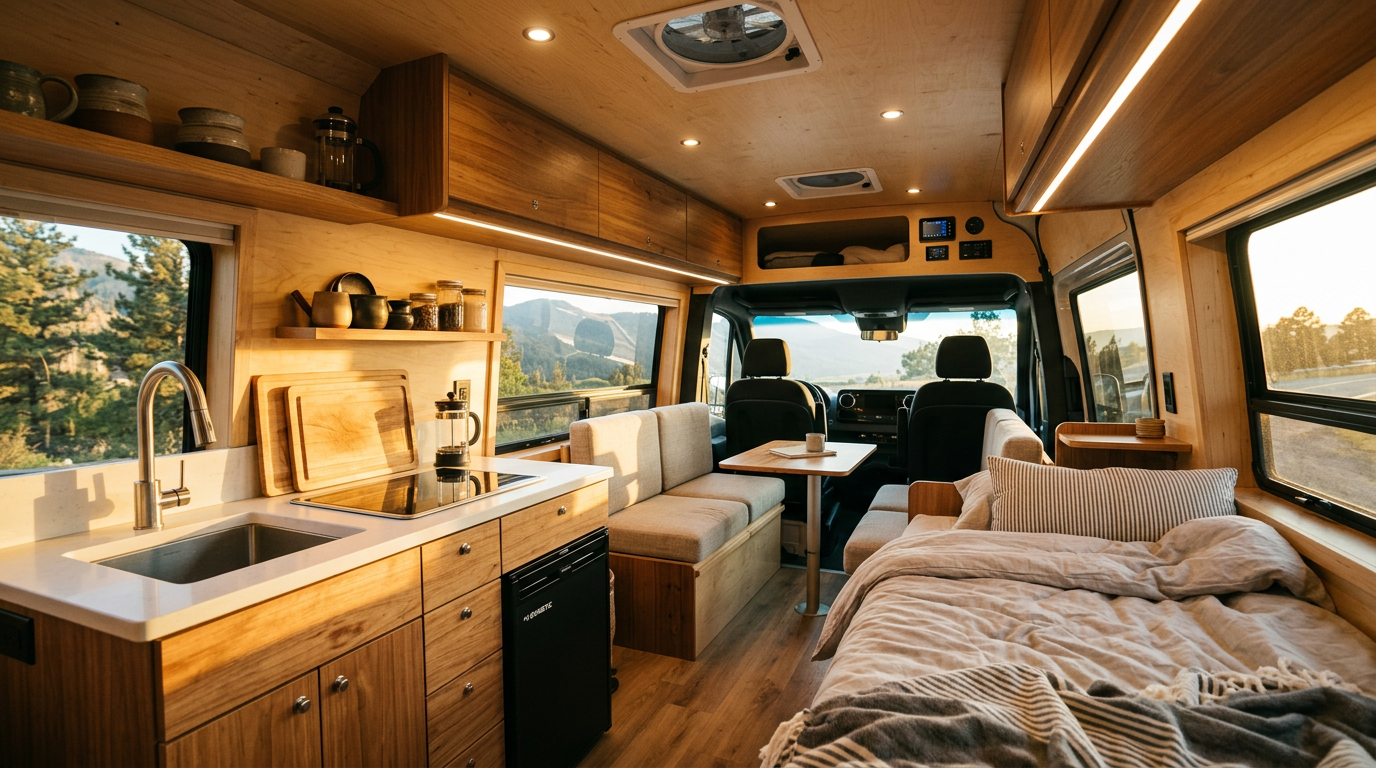
The Sprinter camper van has become my favorite base for exploring how small spaces can feel luxurious. These vehicles offer more space than traditional campervans, yet the interior still requires thoughtful planning. I’ve researched countless builds and studied what works best for extended travel.
Converting a Sprinter into a functional living space changes everything about your camping experience. The layout determines whether you enjoy your trips or feel cramped and frustrated. Getting the interior right means the difference between occasional weekend trips and full-time van life.
Your Sprinter’s interior becomes your home on wheels. Every decision about layout, storage, and design affects how comfortable you’ll be. I want to share the strategies that actually work for creating a beautiful, practical camper van interior.
Understanding Sprinter Camper Van Interior Dimensions
The Sprinter camper van comes in different lengths, which changes your design possibilities. Standard models offer roughly 170 cubic feet of interior space. Extended versions provide even more room to work with. Knowing your exact dimensions helps you make smart decisions.
I measured several Sprinters before planning my own interior layout. The height typically sits around 6 feet 2 inches, which is surprisingly livable. The length varies from about 14 feet to 19 feet depending on your model. Width remains consistent at about 7 feet 4 inches inside.
These measurements matter because they determine furniture sizes and storage solutions. You can’t just use regular RV furniture in a Sprinter. Custom solutions and compact pieces work much better. Many builders I’ve spoken with start by sketching exact dimensions on paper before purchasing anything.
1. Functional Kitchen Layout for Daily Cooking
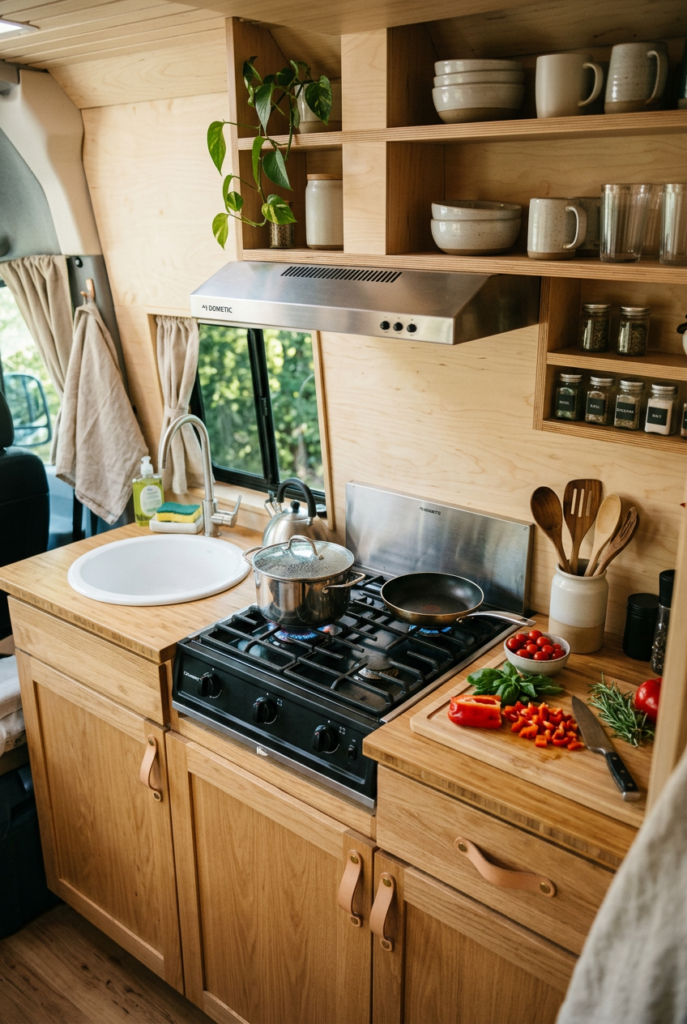
The kitchen becomes the heart of your camper van interior. I’ve found that a galley-style kitchen works best in Sprinter vans. This layout runs along one wall and gives you counter space without taking up the whole van.
Most successful builds include a compact stove, sink, and counter in one area. A single-burner stove or a two-burner cooktop handles most meals. Pair this with a small refrigerator to keep food fresh. I prefer placing the stove and sink on the same side to minimize plumbing runs.
Your counter space should measure at least 18 inches wide. Storage cabinets underneath the counter hold cooking gear, spices, and dishes. Magnetic strips on walls hold knife sets and metal utensils. Open shelving lets you see what you have without rummaging through closed cabinets.
Ventilation matters more in a small camper van kitchen. Without proper airflow, cooking steam damages wood and causes mold. I recommend installing a vent fan above your stove area. A window vent or roof vent removes moisture quickly.
Water management requires careful planning in your kitchen area. Most compact builds use a single tank system with both fresh and gray water storage. A 10-gallon water tank handles several days of cooking and dishes. Place your water tanks in accessible locations for easy filling and draining.
2. Smart Sleeping Solutions for Comfort
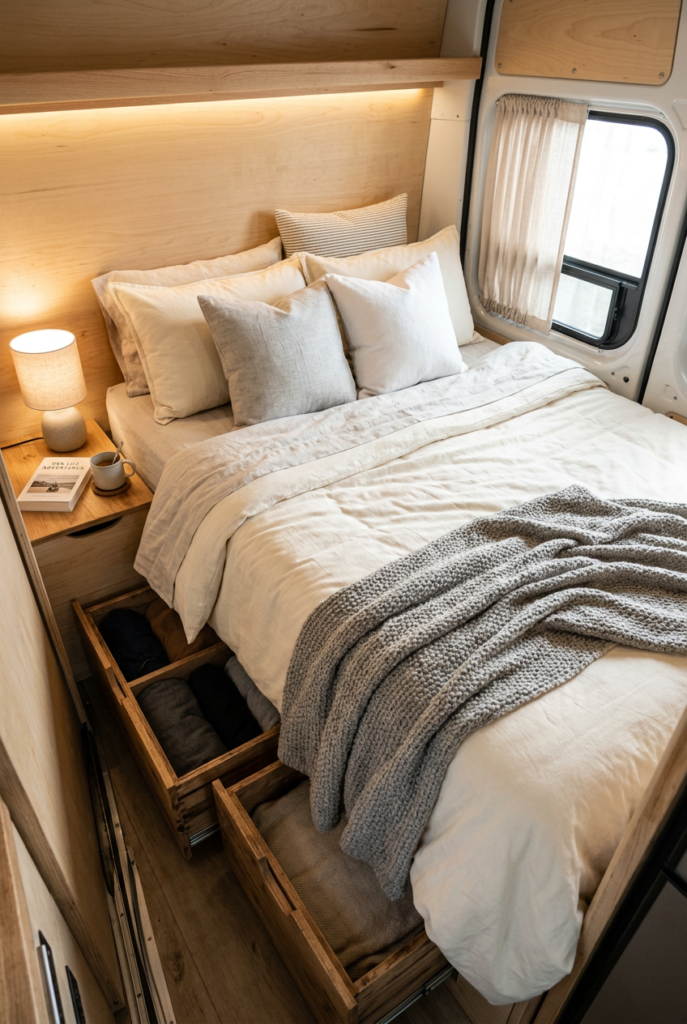
The bed takes up significant space in your Sprinter camper van interior. Most people choose either a fixed bed platform or a convertible dinette bed. Fixed beds offer better comfort but reduce your living space. Convertible designs give you more daytime room but require nightly setup.
I prefer a fixed platform bed running sideways across the van. This setup uses the upper portion of your interior effectively. A queen-size mattress measures 60 inches wide, which fits most Sprinters. Adding under-bed storage creates a perfect solution for gear and supplies.
Mattress choice affects your sleep quality significantly. A quality foam mattress costs more but lasts longer than cheap options. Memory foam provides better support on bumpy roads. Some builders use inflatable mattresses to save space, though I find them less comfortable for regular use.
Bedding storage requires smart planning in your camper van interior. Vacuum storage bags compress pillows and blankets nicely. Overhead cabinets work well for seasonal items you don’t use daily. Under-bed space holds larger items like extra bedding and clothing.
Ventilation near your sleeping area prevents condensation buildup. I recommend at least one roof vent near your bed. A small fan circulates air during hot nights. Proper airflow keeps your bedding fresh and prevents mold growth.
3. Storage Solutions That Maximize Every Inch
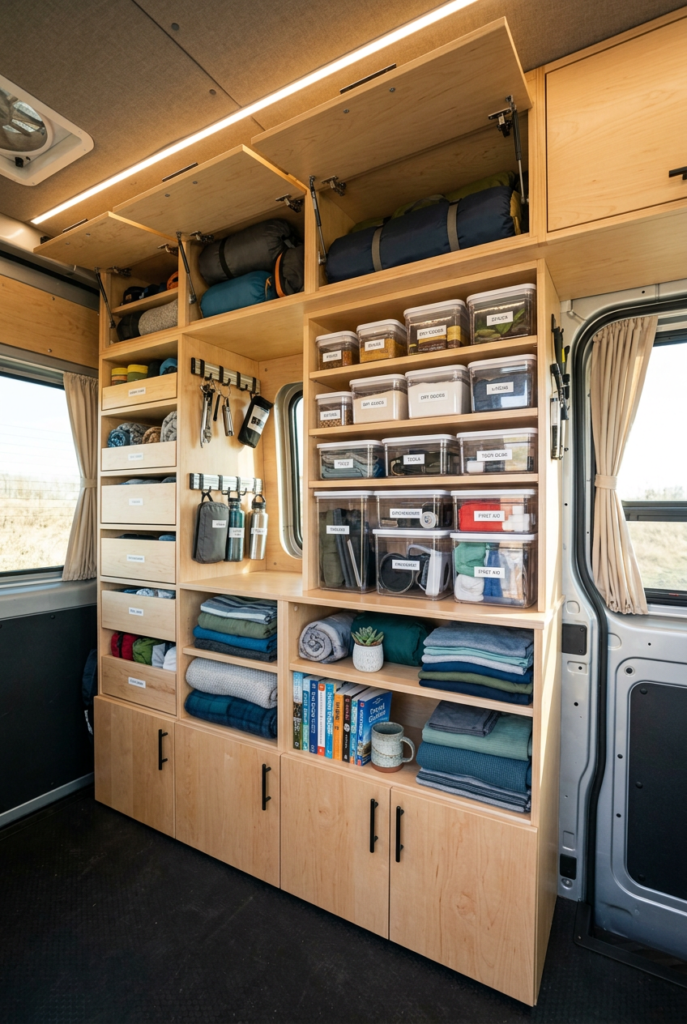
Storage makes or breaks your Sprinter camper van interior experience. Without organized storage, the van feels chaotic regardless of size. I’ve seen tiny vans feel spacious and spacious vans feel cramped based entirely on storage planning.
Vertical storage works best in limited spaces. Wall-mounted cabinets reach from floor to ceiling without taking floor space. Shelving above windows and doors uses dead space effectively. Hanging organizers on walls hold small items in plain sight.
Under-floor storage offers hidden capacity many builders overlook. Removable panels reveal space beneath seating areas and beds. This spot stores items you rarely access during travel. Waterproofing is critical for under-floor compartments to protect your belongings.
Modular storage containers keep gear organized and accessible. Clear plastic bins let you see contents without opening them. Labeling systems help you find things quickly in your camper van interior. Stackable designs maximize vertical space in cabinets and closets.
Open shelving combined with closed storage provides balance. Displaying nice items makes your space feel less cramped. Hiding clutter in cabinets maintains visual calm. I recommend dedicating specific shelves to frequently used items like dishes and toiletries.
4. Comfortable Seating and Dining Area
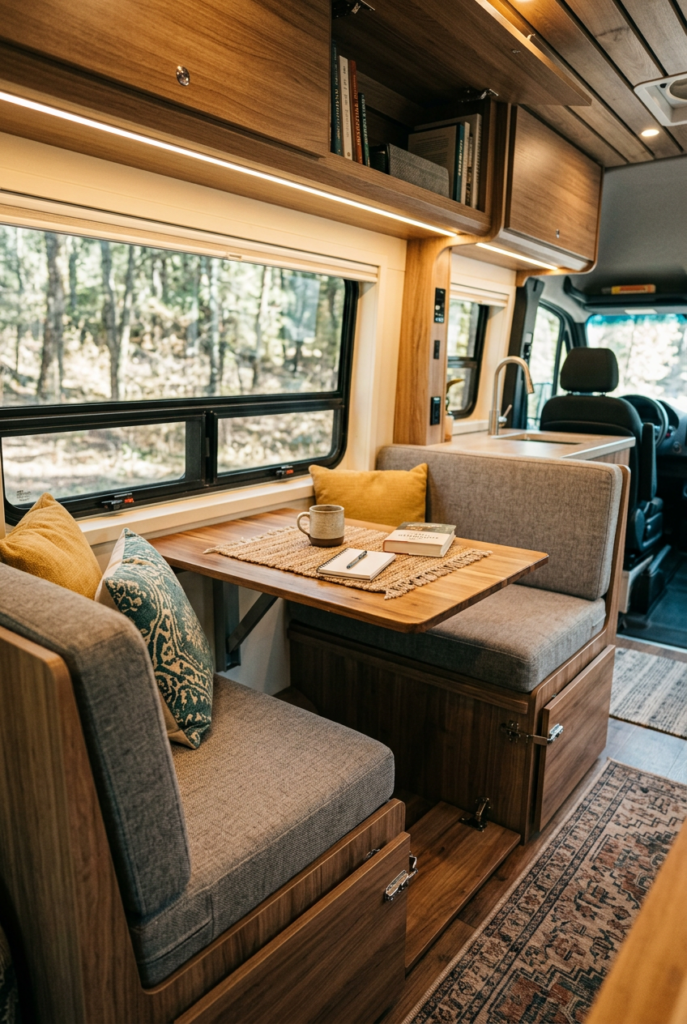
Your dining area serves multiple purposes in a Sprinter camper van interior. It becomes your workspace, social space, and sometimes your bed. A quality dinette setup takes priority over floor space.
Booth-style seating works beautifully in Sprinter vans. Two benches facing each other with a table between them create conversation areas. Storage underneath the benches holds kitchen supplies and camp gear. This arrangement uses less floor space than traditional chairs.
Table size matters for functionality and comfort. A table measuring 36 by 24 inches accommodates two people comfortably. Folding or drop-leaf tables provide flexibility for different situations. Some builders use tables that store against walls during travel.
Seating comfort shouldn’t be sacrificed for space savings. Quality foam cushions with removable covers make a difference. Backrests support your posture during long stays. Adding throw pillows increases comfort and creates a homey atmosphere.
Lighting in your dining area sets the mood for meals and work. LED strip lights mounted under cabinets provide bright task lighting. Dimmable fixtures let you adjust ambiance for different times of day. I prefer avoiding harsh overhead lighting in dining areas.
5. Bathroom and Shower Facilities
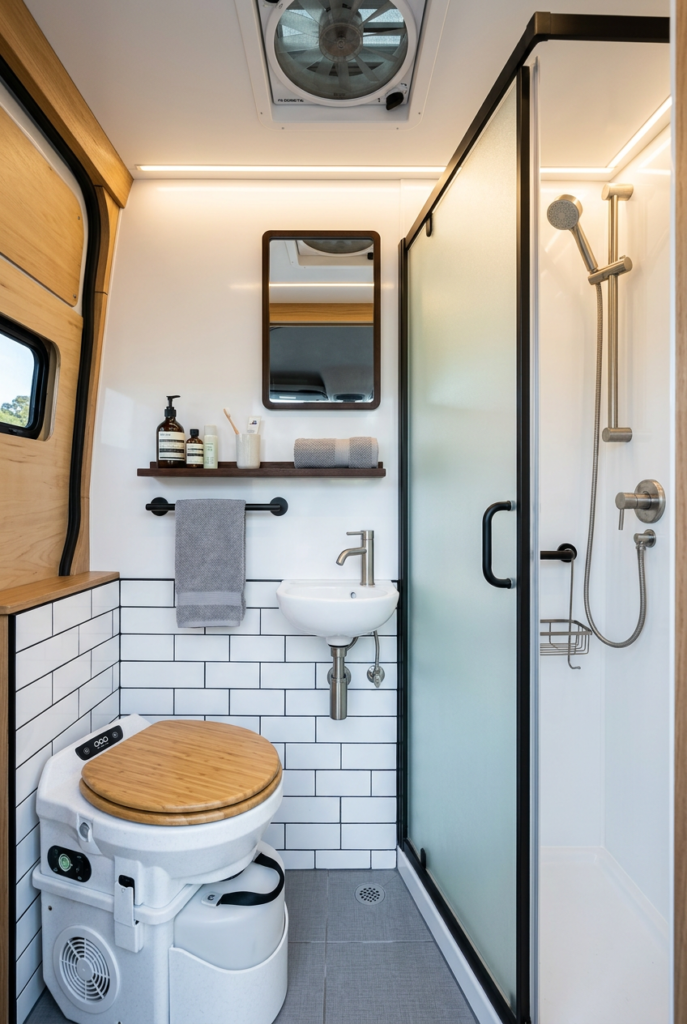
Adding a bathroom to your Sprinter camper van interior changes everything about extended travel. Composting toilets eliminate the need for complex plumbing. They work silently and require minimal maintenance. I find them superior to traditional black water tanks.
Shower facilities can be as simple or elaborate as you prefer. A wetbath design combines shower and toilet in one compact space. Waterproofing with marine-grade sealant prevents water damage. Proper ventilation removes moisture after each shower.
Fresh water systems require careful sizing for your needs. Calculate water usage based on how many people and how long you’ll travel. A 30-gallon tank works for most couples or small families. Gravity-fed systems provide pressure without complicated pumps.
Shower enclosures take minimal space when designed smartly. A fold-up or flexible shower curtain rod creates enclosure without permanent fixtures. Drain systems need proper slope to prevent water pooling. Gray water storage capacity should match your shower and sink usage.
Privacy screens or opaque curtains provide dignity during bathroom use. Frosted vinyl on windows allows light while blocking views. Pocket doors save floor space compared to swinging doors. I recommend installing both a toilet and sink for comfort during travel.
6. Climate Control and Ventilation Systems
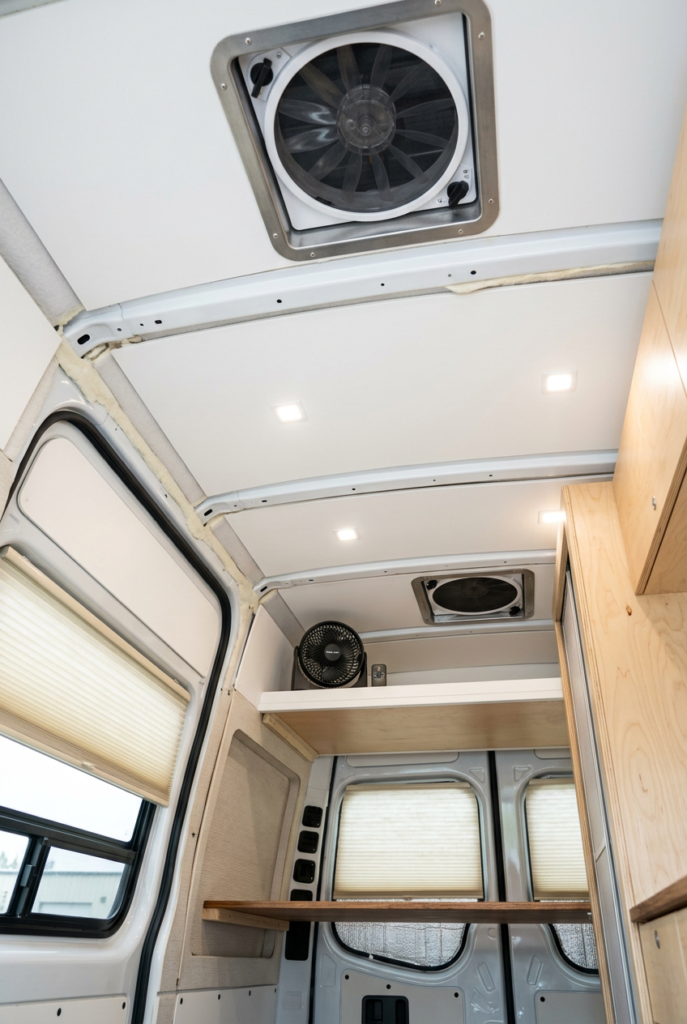
Temperature management in your Sprinter camper van interior affects both comfort and durability. Poor ventilation causes condensation damage to walls and furnishings. Proper airflow keeps you comfortable regardless of weather.
Roof vents remove hot air during summer and moisture year-round. Installing two vents on opposite sides creates cross-ventilation. Turbine vents work passively without drawing power. Fan-powered vents offer better control during humid conditions.
Insulation quality determines how well you maintain temperature. Quality insulation rated for outdoor use handles temperature swings. Closed-cell foam provides better R-value than fiberglass. Proper sealing around seams and edges prevents air leaks.
Heating systems keep you warm during cold weather trips. Diesel heaters provide efficient warmth without ventilation requirements. Some builders choose compact propane heaters with proper ventilation. Electric heaters work if you have sufficient battery capacity and shore power.
Cooling options include roof air conditioning units and portable fans. Roof AC units consume significant battery power but work effectively. Portable units offer flexibility and lower power consumption. Strategic ventilation combined with window coverings handles many situations.
Air circulation fans cost little but provide noticeable comfort improvement. Ceiling fans help distribute warm and cool air throughout your space. Personal fans near sleeping areas provide targeted relief during hot nights.
Transforming Your Space with Lighting and Aesthetics
Lighting sets the entire mood of your Sprinter camper van interior. LED strips under cabinets provide bright, efficient task lighting. Warm-colored LEDs create cozy atmospheres for relaxing evenings. Dimmable options give you control over ambiance throughout the day.
Color choices affect how large or small your space feels. Light colors reflect light and make spaces feel bigger. Accent colors add personality without overwhelming the space. I recommend keeping walls neutral and adding color through textiles.
Window coverings serve practical and aesthetic purposes. Cellular shades insulate while maintaining privacy. Roller shades provide blackout capability for better sleep. Combining different types gives you options for different seasons.
Decor accessories personalize your camper van interior without clutter. A few well-chosen pieces make the space feel like home. Wall-mounted shelves display meaningful items or books. Avoid overfilling surfaces which makes small spaces feel cramped.
Flooring options range from painted plywood to luxury vinyl. Vinyl planks mimic wood appearance while staying durable and easy to clean. They handle water exposure better than real wood. Mats near entrances protect flooring from dirt and moisture.
Creating a Workspace in Limited Space
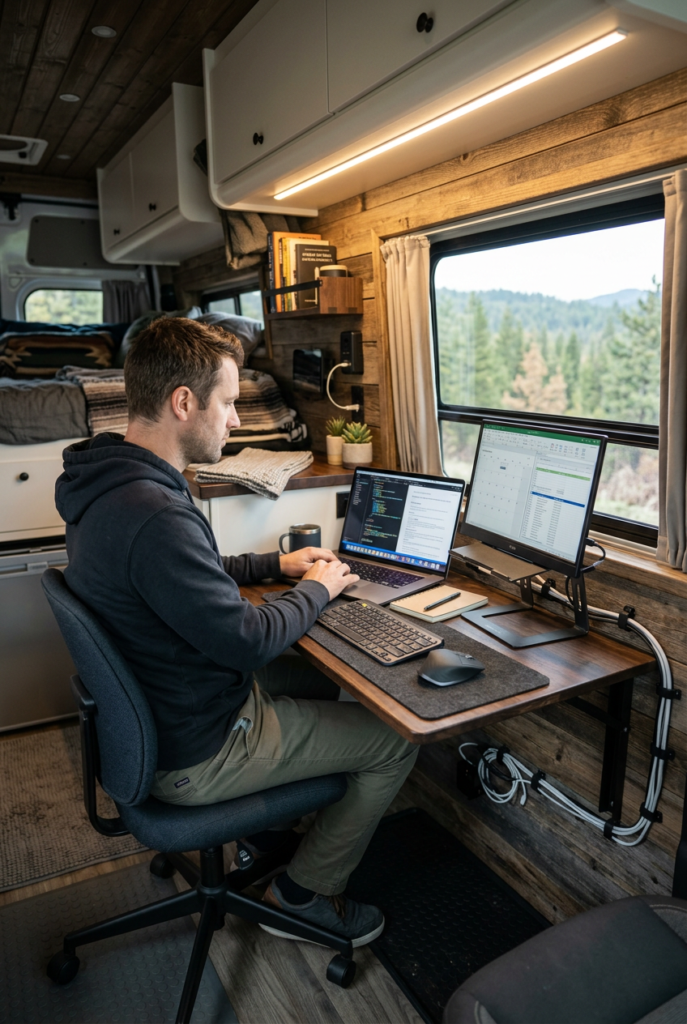
Working remotely from your Sprinter camper van interior requires thoughtful setup. A compact desk mounted to a wall saves significant space. Foldable options give you work surface when needed and floor space when not.
Ergonomics matter even in tiny workspaces. Your monitor should be at eye level to prevent neck strain. A comfortable cushion makes sitting for hours more bearable. Good lighting reduces eye strain during work sessions.
Internet connectivity influences your workspace functionality. Mobile hotspots provide reliable connectivity most places. External antennas improve signal strength in weak areas. Having backup options ensures you can always stay connected.
Cable management keeps your workspace neat and organized. Cable clips organize wires along walls and under desk areas. Labeling cables prevents confusion when troubleshooting connections. Wireless options reduce clutter compared to corded equipment.
Conclusion
Building the perfect Sprinter camper van interior comes down to prioritizing what matters most to you. I’ve seen successful builds that look completely different because they matched individual needs. There’s no single right way, but there are proven principles that work.
Start with essential systems like sleeping, kitchen, and bathroom. These form your foundation for comfortable living. Build storage solutions around your lifestyle and travel style. Add aesthetic touches that make your space feel personal.
Your camper van interior should reflect how you actually travel. Some people spend most time exploring outside. Others work and cook from their van regularly. Honest assessment of your habits guides better design choices.
Quality matters more than quantity in small spaces. Investing in durable furniture and systems pays off over years of use. A well-built Sprinter interior handles varied climates and situations. Budget for the essentials first, then upgrade over time.
The best Sprinter camper van interior adapts to your changing needs. I recommend designing for flexibility where possible. Modular solutions let you reconfigure as your preferences evolve. Starting with solid fundamentals gives you the confidence to travel comfortably.
Frequently Asked Questions
What’s the best bed size for a Sprinter camper van interior?
Queen-size beds fit most Sprinters running perpendicular across the van. Full-size options work if you need extra floor space. Twin arrangements suit couples who prefer separation during travel.
How much does it cost to customize a Sprinter camper van interior?
Basic builds cost between $15,000 and $25,000 depending on quality levels. Premium builds with advanced systems reach $40,000 to $60,000. DIY projects cost less but require significant time and skills.
Can I add a shower to an existing Sprinter camper van interior?
Yes, installing a shower is feasible even in used vans. A compact wetbath design fits in small spaces effectively. Professional installation costs $2,000 to $5,000 depending on complexity.
What’s the most important system in a Sprinter camper van interior?
Ventilation prevents moisture damage that destroys your entire investment. Without proper airflow, mold and rot compromise structural integrity. Prioritize ventilation before adding luxury features.
How do I keep my Sprinter camper van interior from feeling cramped?
Vertical storage and light colors make spaces feel larger. Minimal decor prevents overwhelming the visual space. Good lighting and windows improve how open the space feels.
What insulation works best for Sprinter camper van interiors?
Closed-cell spray foam provides superior R-value and moisture resistance. Rigid foam boards offer good performance at lower cost. Combination approaches balance performance and budget constraints.
How long can someone comfortably live in a Sprinter camper van interior?
Quality builds support comfortable indefinite habitation. Proper ventilation, heating, and cooling systems enable year-round living. Most people cite interior space as the limiting factor for long-term comfort.