
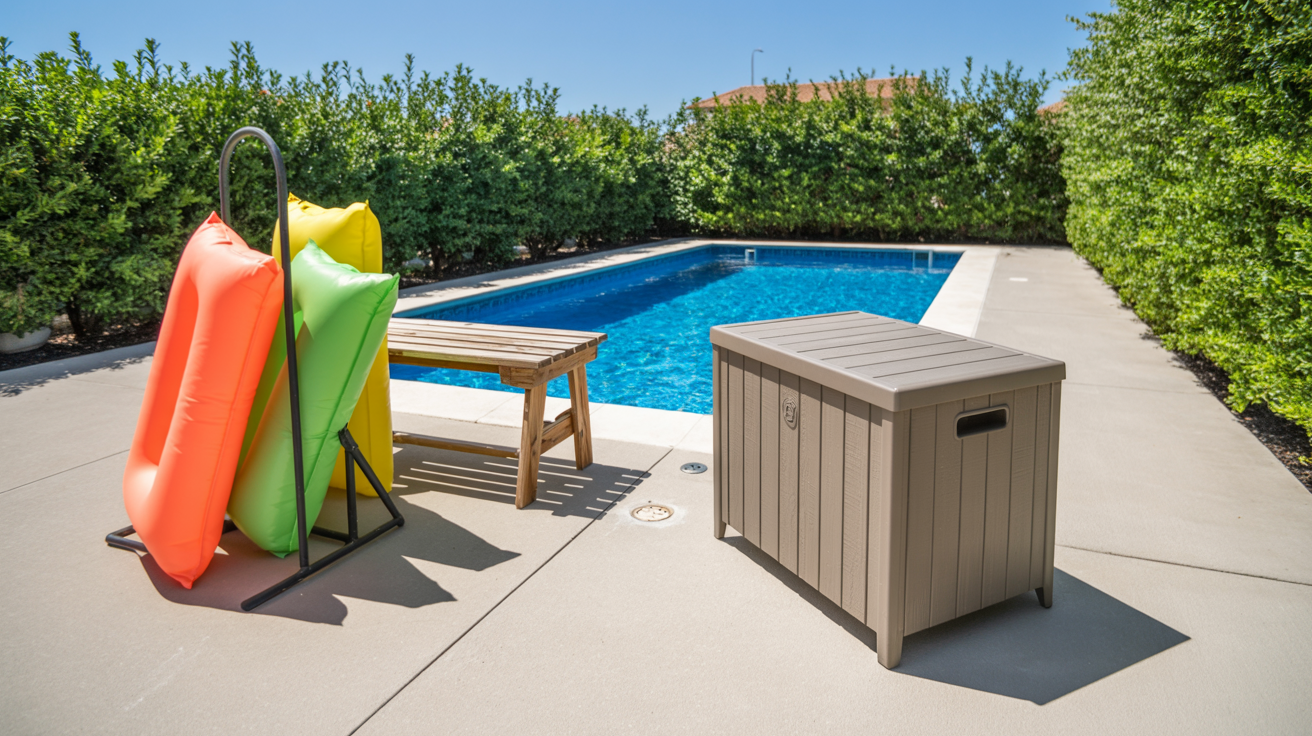
If you own more than two pool floats, you already know the struggle. They end up deflated on the lawn, wedged behind the shed, or slowly taking over your entire patio like an inflatable invasion. Good pool float storage fixes all of that without making your backyard look like a storage unit.
I’ve spent way too much time tripping over flamingo floats and half-deflated unicorns to not have opinions on this. The right storage setup keeps everything organized, protected, and actually easy to grab when you want it. It also makes your outdoor space look put-together instead of chaotic.
The good news is you don’t need a massive budget or a dedicated pool house to make this work. There are smart, affordable options for every backyard size and every float collection, whether you have three floats or thirty.
Why Storing Pool Floats the Right Way Actually Matters More Than You Think for Your Backyard and Your Budget
Most people toss their floats in a corner and call it a day. That works until the sun bakes the vinyl, a sharp edge puts a hole in your favorite donut float, or you spend ten minutes hunting for the pump before every swim. Proper storage genuinely extends the life of your inflatables.
UV exposure is one of the biggest enemies of pool floats. Leaving them out in direct sunlight when they’re not in use causes the material to crack, fade, and weaken over time. Storing them in a shaded or enclosed spot makes a real difference across a full summer season.
Beyond protection, organized storage just makes pool days more enjoyable. When everything has a place, setup takes two minutes instead of twenty. That small convenience adds up fast when you’re trying to get in the water before the afternoon clouds roll in.
1. A Large Outdoor Storage Bin That Holds Everything in One Spot
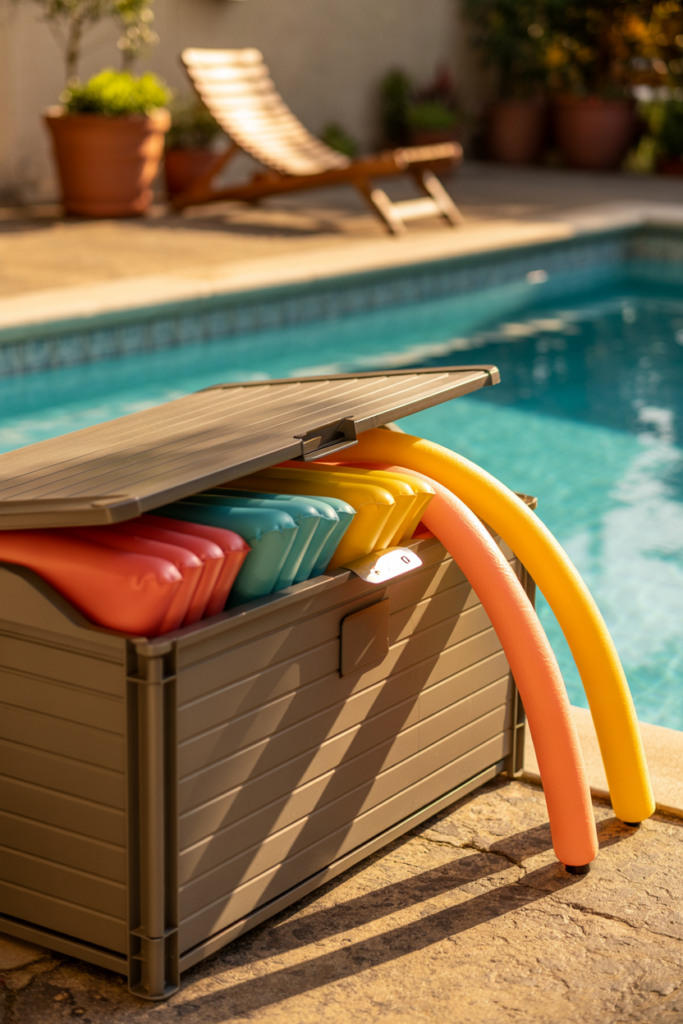
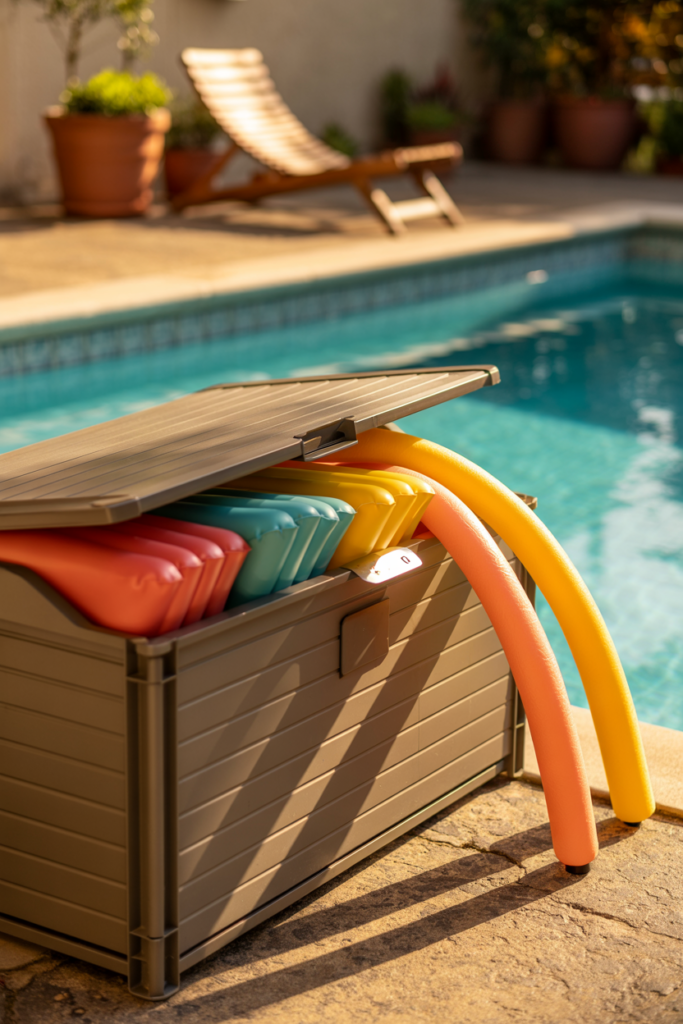
An outdoor storage bin is the most straightforward pool float storage solution, and honestly, it earns its place in any backyard. You can find large resin or wicker-look bins that hold several deflated floats, pool noodles, and water toys all at once. They’re weather-resistant, lockable in some cases, and blend into the patio without looking like an eyesore.
I like this option because it requires zero installation and works for renters, too. You just pick a spot near the pool, fill it up, and you’re done. Some bins even double as extra seating with a flat lid, which is a bonus when you have people over.
Look for bins with ventilation holes or a slightly raised bottom so moisture doesn’t build up inside. Trapped humidity leads to mildew on your floats faster than you’d expect, especially in hot and humid climates.
2. A Freestanding Pool Float Holder That Keeps Inflatables Off the Ground
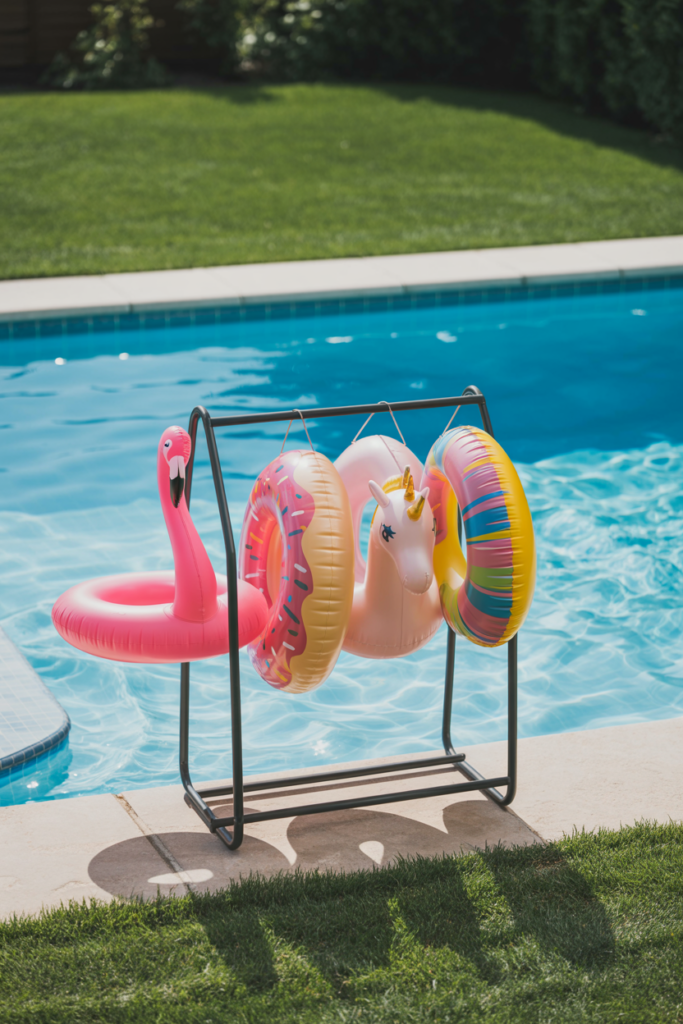
A freestanding pool float holder is a popular choice for people who want their floats inflated and ready to grab at any moment. These are usually metal or PVC frames with arms that hold floats upright in a neat row beside the pool. They look intentional and keep everything visible, so nobody has to dig through a bin to find the right one.
This works especially well for families with kids who want to jump in and out of the pool all day. The floats stay inflated, organized, and right where everyone can reach them. No deflating and reinflating every single day, which is a win if your pump has ever given you trouble at the worst moment.
Most freestanding holders are rust-resistant and easy to move around the patio. Some styles fold flat for off-season storage, which is a thoughtful design detail that not every buyer thinks to check before purchasing.
3. Wall-Mounted Pool Float Hooks That Free Up Your Entire Patio Floor Space
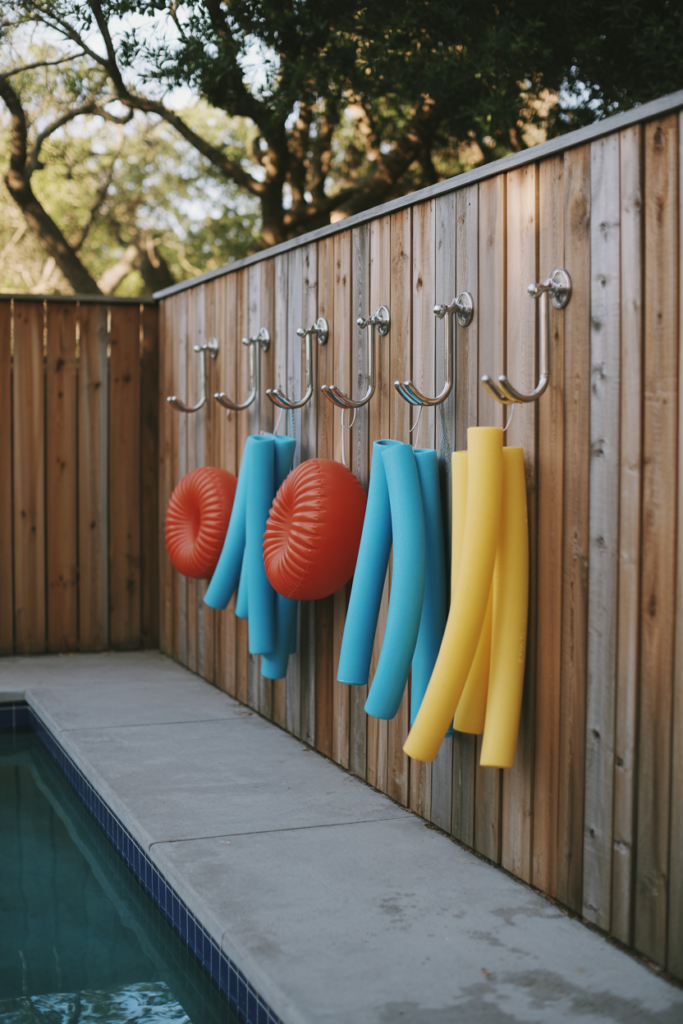
Wall-mounted hooks are one of my favorite pool float storage ideas because they take everything vertical and completely clear the floor. You can install a row of heavy-duty hooks on a fence, the side of your house, or a pool shed wall. Hang deflated floats, pool rings, and noodles without using any ground space at all.
The key is using hooks rated for outdoor use with a rust-resistant coating. Standard indoor hooks will corrode fast when exposed to pool water and humidity. Look for coated steel or stainless options that can handle the outdoor environment without falling apart by August.
This setup also makes it easy to see exactly what you have at a glance. No more pulling everything out of a bin to find the one float you actually want. Everything hangs in plain sight, which saves a lot of time over the course of a summer.
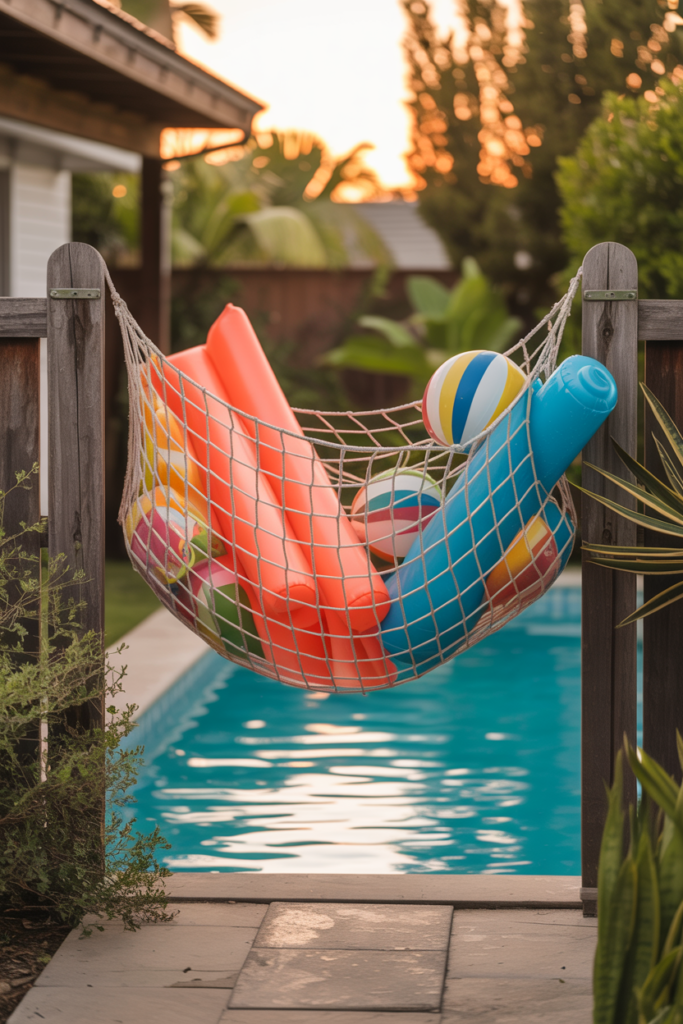
4. A Cargo Net Hung Between Two Posts for a Fun and Functional Storage Wall
A cargo net storage system is one of those ideas that looks like it came straight from a Pinterest board but actually works really well in practice. You stretch a large cargo net between two fence posts or deck pillars and stuff your deflated floats, pool noodles, and beach balls right into the netting. It holds a surprising amount without taking up floor space.
The visual effect is casual and fun, which suits a backyard pool area perfectly. It doesn’t look like storage so much as it looks like a design choice, and that’s exactly the kind of trick that makes a patio feel finished. I’ve seen this done with natural rope netting for a more coastal look, which works beautifully near a pool.
Make sure the net you choose is UV-resistant and designed for outdoor use. Standard cargo nets from hardware stores often work fine, but check the weight rating and the material before hanging anything heavy.
5. Repurposed Laundry Hampers for Budget-Friendly Pool Float Organization
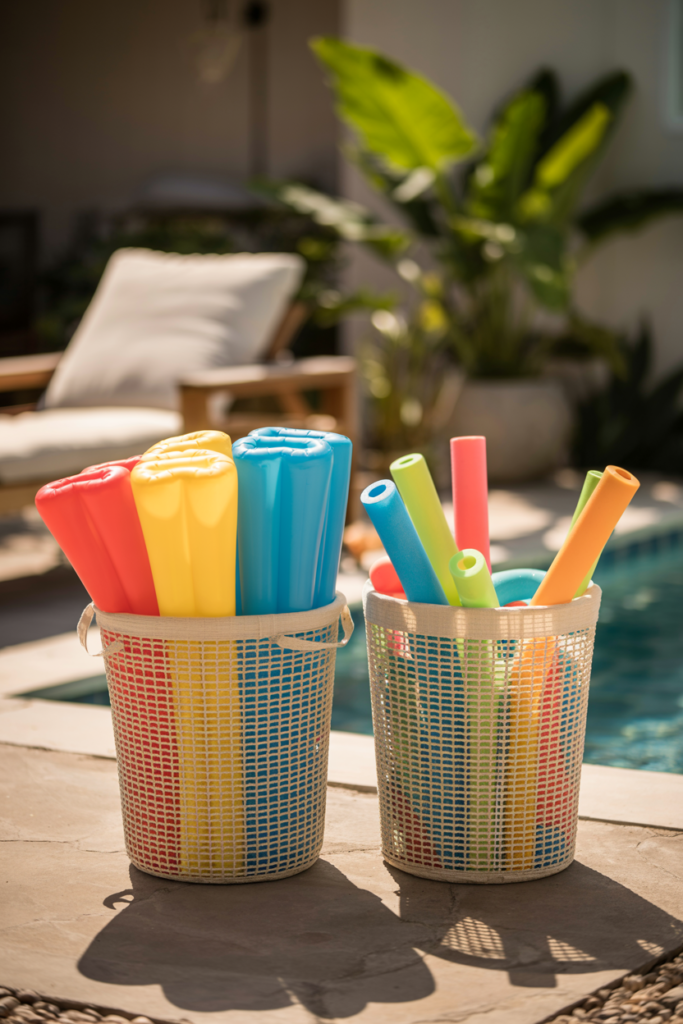
Not every pool float storage solution needs to be a purpose-built product. Large mesh laundry hampers work surprisingly well for storing deflated floats and pool toys, especially if you’re working with a tight budget. The mesh sides allow airflow, so everything dries out between uses, which helps prevent that musty smell that builds up in closed containers.
You can pick up oversized mesh hampers for very little cost and place them right beside the pool or under a covered patio. They’re lightweight enough to move around easily and large enough to handle a decent collection of floats when they’re deflated and folded down.
This is also a great option if you want separate hampers for different categories. One for floats, one for pool noodles, one for goggles, and smaller accessories. It’s a simple system that actually makes pool day cleanup faster for everyone.
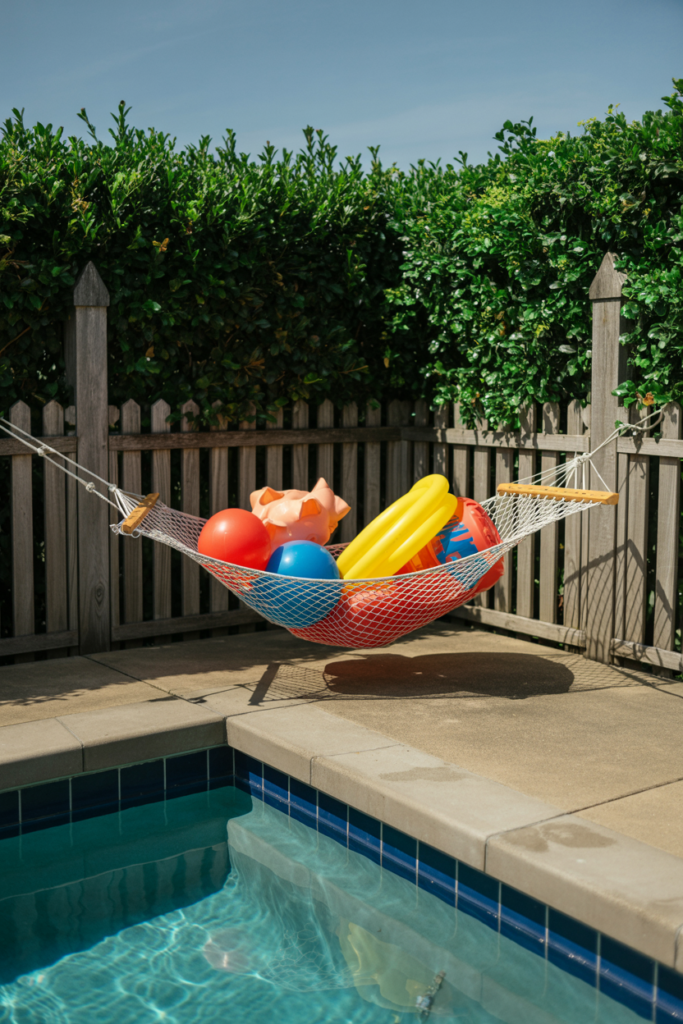
6. A Dedicated Pool Toy Hammock That Tucks Neatly Into Any Corner
A pool toy hammock is one of the cleverest small-space storage solutions you can add to a backyard. It’s basically a mesh net that stretches between two fixed points, like a fence corner or two posts, and cradles your floats and toys off the ground. The open weave lets everything air dry naturally, so you’re not sealing wet inflatables into a closed container.
I love this option for smaller backyards where floor space is already at a premium. A hammock tucks into a corner and uses space that would otherwise just sit empty. It holds more than it looks like it should, which is always a pleasant surprise when you’re dealing with a growing collection of pool toys.
Most pool toy hammocks come with all the hardware you need and can be installed in under fifteen minutes. They’re also inexpensive enough that you can add two or three around the pool area without any guilt about the budget.
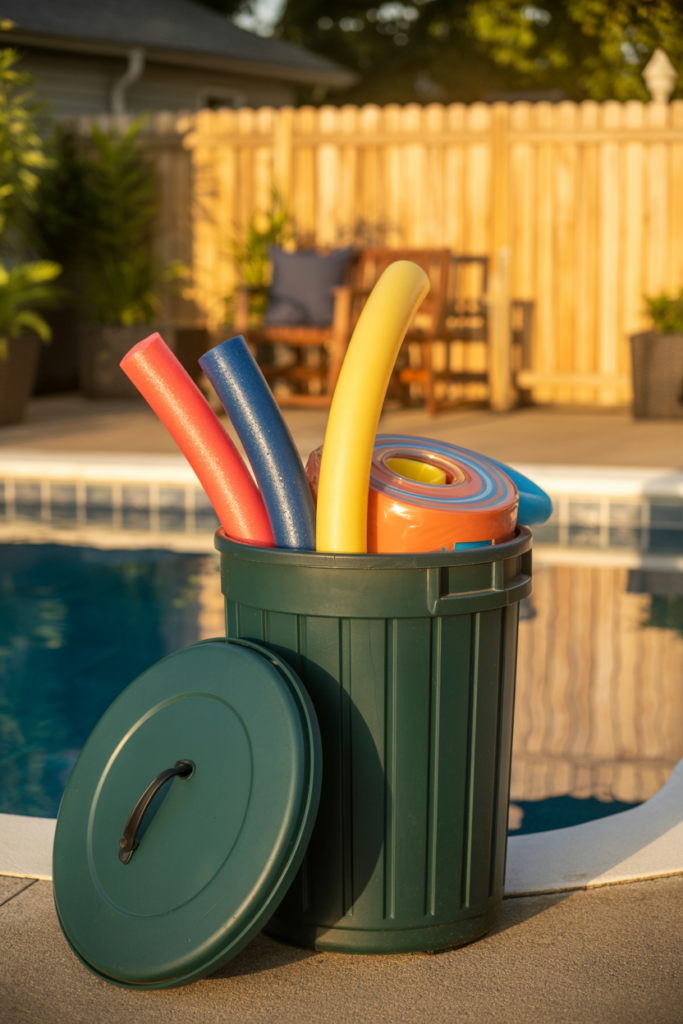
7. A Tall Outdoor Trash Can Repurposed as a Pool Noodle and Float Organizer
A large outdoor trash can might not sound glamorous, but it is one of the most practical pool float storage hacks out there. A tall, wide bin keeps pool noodles standing upright and holds deflated floats folded neatly inside. It takes up minimal floor space and costs next to nothing if you already have one sitting around.
The trick is choosing a bin with a lid so your floats stay dry during unexpected rain showers. A tight-fitting lid also keeps bugs and debris out, which matters more than people realize until they pull out a float covered in spiders. A dark-colored bin also reduces UV exposure to anything stored inside.
You can even label the outside with a waterproof marker or a simple tag so everyone in the family knows exactly where things go after a swim. Simple labeling systems like this make cleanup faster and actually get kids to put things away without being asked three times.
8. A Wooden Storage Crate or Planter Box Built Beside the Pool Deck
A wooden crate or oversized planter box repurposed as pool float storage adds a natural, rustic charm to the pool area. Cedar and teak are great choices because they handle moisture and sun exposure without warping or rotting as quickly as other woods. You can find these at garden centers, or build a simple version yourself if you’re handy with basic tools.
Line the inside with a waterproof liner or give it a coat of outdoor sealant before using it for pool gear. That extra step protects the wood and keeps the inside dry, which matters when you’re storing vinyl inflatables that don’t love sitting in moisture. A hinged lid adds a finished look and keeps everything contained.
This doubles as a decor piece as well as functional storage, which I genuinely appreciate. A well-made wooden crate beside the pool looks like it was always meant to be there rather than something you dragged out of the garage.
9. An Overhead Pulley System in a Pool Shed or Garage for Off-Season Float Storage
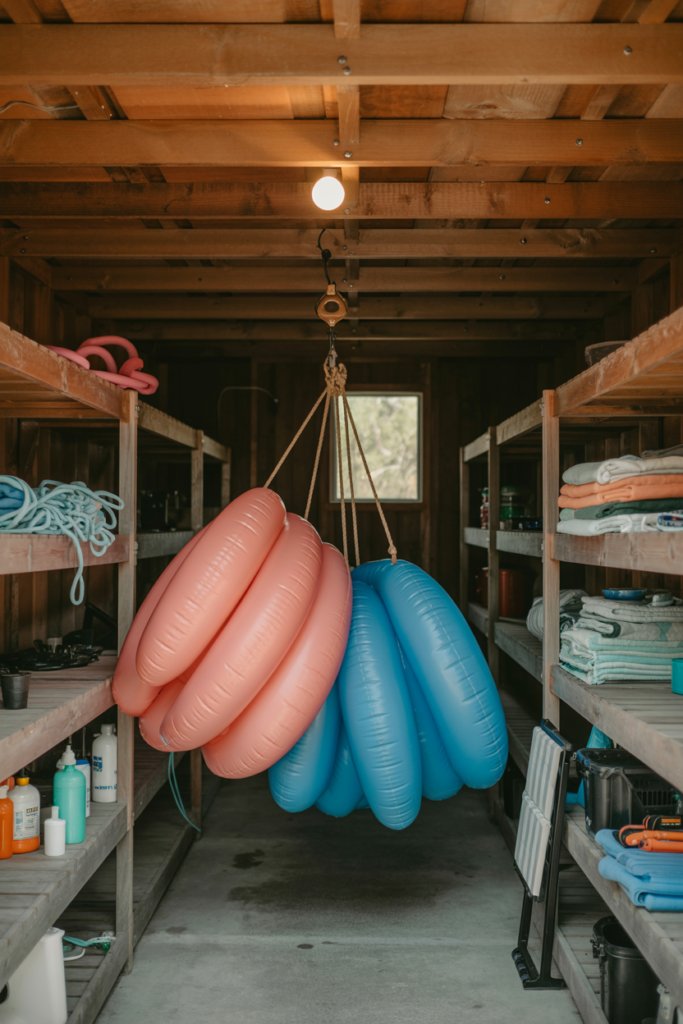
If you have a pool shed or a garage near the pool area, an overhead pulley system is one of the smartest ways to store large inflatables during the off-season. You attach a pulley to the ceiling joists and use it to hoist bulky floats up and out of the way when they’re not in use. It frees up every inch of floor space below.
This works especially well for oversized floats like large lounge islands or multi-person rafts that are awkward to fold and impossible to stuff into a standard bin. Hanging them flat overhead keeps them from developing creases that weaken the seams over time. It’s the kind of storage solution that makes you feel like you really have your life together.
The setup takes a bit more effort than most options on this list, but it pays off in a big way for anyone with a large collection of inflatables. A basic pulley system from a hardware store is affordable and surprisingly easy to install with a few anchors and some rope.
10. A Rolling Cart That Lets You Move Pool Float Storage Around the Yard
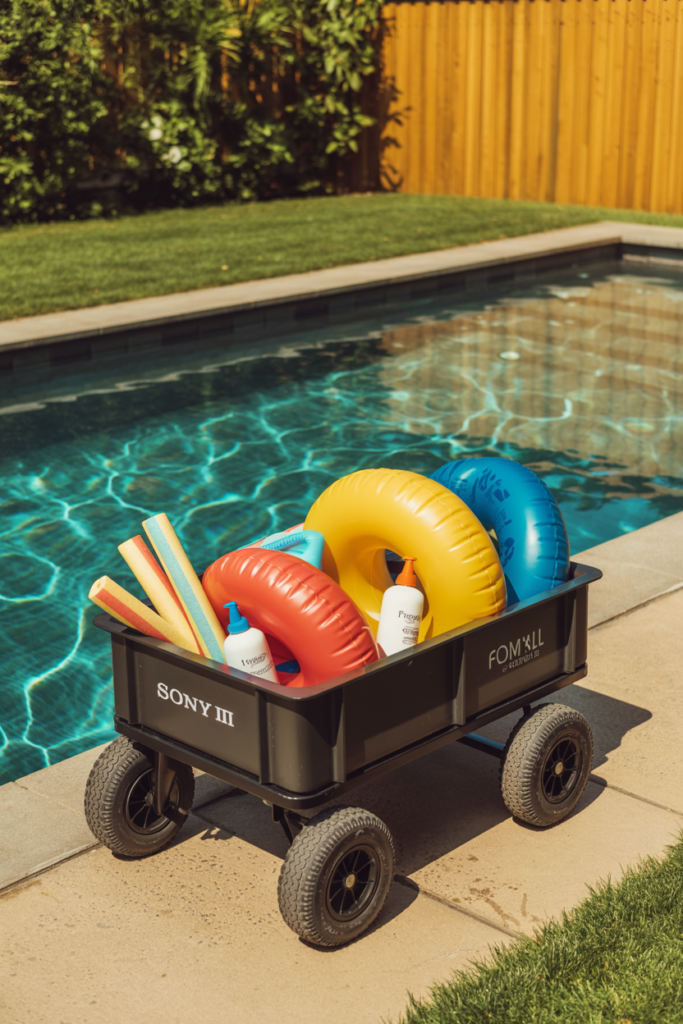
A heavy-duty rolling utility cart gives you pool float storage that moves with you, which is more useful than it sounds. You can load it up with floats, pool accessories, and sunscreen, then wheel it to wherever you’re setting up for the day. When pool time is over, roll everything back to the shed or patio, and you’re done.
I find this option particularly helpful for larger properties where the pool is a decent walk from the storage area. Carrying an armful of inflated floats across a yard is nobody’s idea of a good time. A cart with large wheels handles grass and uneven surfaces without getting stuck every few feet.
Look for carts with a weatherproof coating and rust-resistant hardware if it’s going to live outside. Some rolling carts also come with hooks on the sides for hanging smaller items, which adds a bit of extra storage capacity without taking up more floor space.
11. PVC Pipe Storage Racks That You Can Build Yourself on a Weekend Afternoon
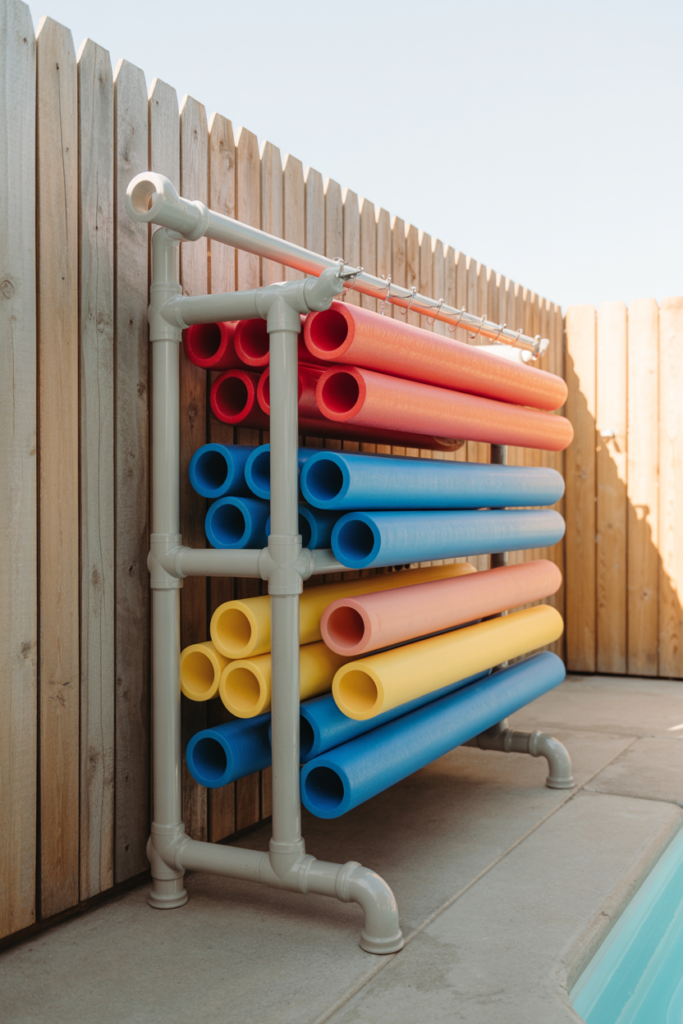
A DIY PVC pipe rack is one of the most satisfying pool float storage projects you can tackle in an afternoon. PVC pipe is cheap, easy to cut, and completely waterproof, making it ideal for a poolside storage build. You can design the rack to fit your exact space and your specific collection of floats and noodles.
The basic concept is a simple frame with horizontal arms that pool noodles slide over and hooks or slots where deflated floats can hang. There are plenty of free plans available online, and most builds only require a pipe cutter, some connectors, and an hour or two of assembly. No special skills needed, which is always reassuring.
Painting the finished rack to match your patio furniture or fence color makes it look far more polished than raw white PVC. A coat of outdoor spray paint is all it takes to turn a utility build into something that actually looks like it belongs in your backyard.
12. A Covered Outdoor Storage Bench That Hides Pool Floats in Plain Sight
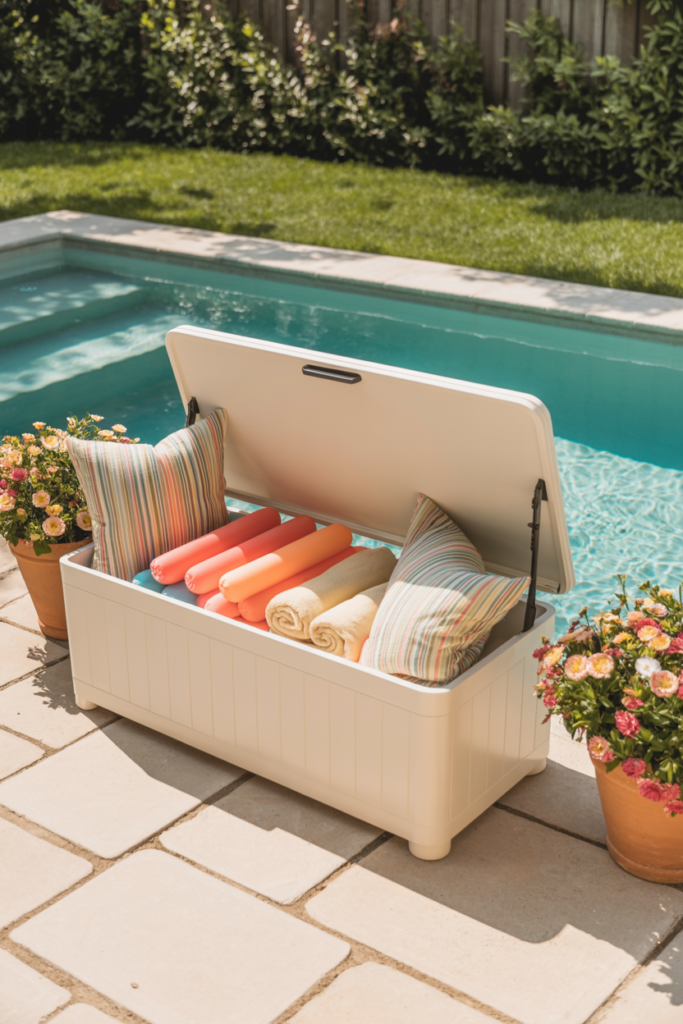
An outdoor storage bench is one of those pieces that works twice as hard as it looks. The seat lifts to reveal a roomy compartment underneath that easily holds deflated pool floats, pool towels, and smaller accessories. From the outside, it just looks like patio furniture, which is exactly the point.
This is my top pick for anyone who wants storage that doesn’t look like storage. A well-chosen storage bench blends into the patio design so seamlessly that guests don’t even realize it’s there until you lift the lid. It also gives you extra seating right next to the pool, which is never a bad thing.
Choose a bench made from weather-resistant materials like resin, powder-coated steel, or teak. Those materials hold up through rain, sun, and humidity without needing much maintenance. Some models even come with a lock, which is handy if you want to secure anything stored inside.
| Storage Solution | Best For | Weather-Resistant | No Installation Needed |
| Outdoor Storage Bin | Large collections | Yes | Yes |
| Freestanding Float Holder | Inflated floats | Yes | Yes |
| Wall-Mounted Hooks | Small spaces | Yes | No |
| Cargo Net | Budget setups | Depends on the material | No |
| Storage Bench | Dual-purpose use | Yes | Yes |
| Rolling Cart | Large properties | Yes | Yes |
13. A Dedicated Floating Storage Caddy That Sits Right at the Pool Edge
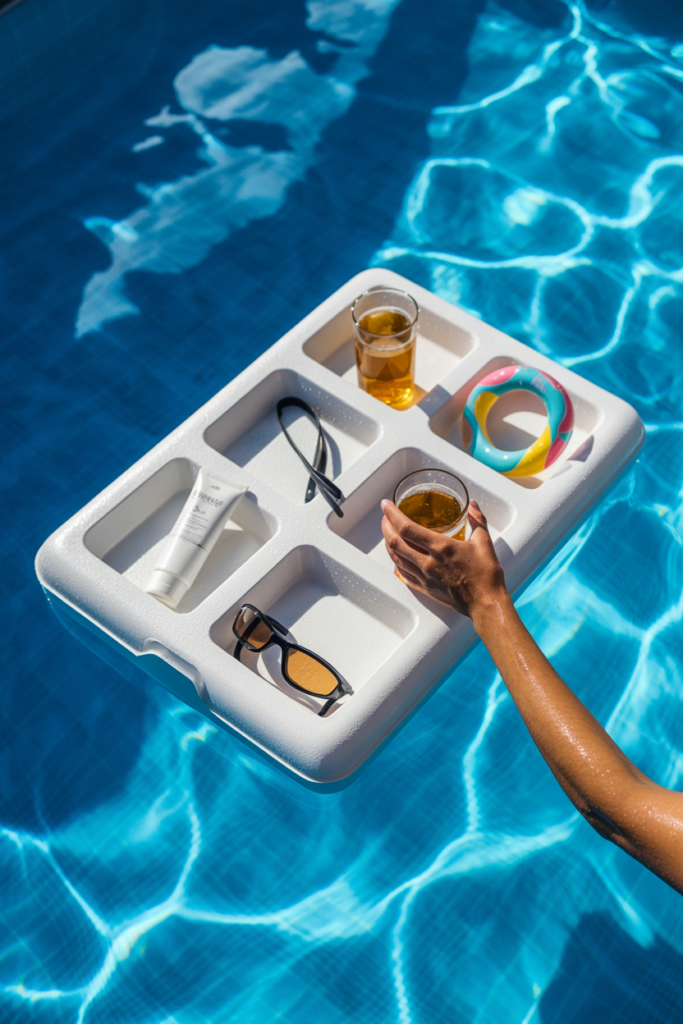
A floating storage caddy is a fun and functional idea that keeps your most-used pool accessories right at the water’s edge. These are buoyant trays or caddies that float on the water surface and hold drinks, sunscreen, goggles, and smaller inflatables within easy reach. They’re not meant for storing large floats, but they handle the small stuff beautifully.
I like this idea because it solves a very specific problem: the constant in-and-out trips to grab things you forgot. A floating caddy keeps the essentials poolside without cluttering the deck. It’s one of those small additions that genuinely change how comfortable a pool day feels.
Most floating caddies are made from foam or hollow plastic and require no setup at all. You just place them on the water and load them up. Some designs have cup holders, phone trays, and small compartments for different items, which keep things organized even on the water.
14. Stackable Outdoor Baskets That Add Style and Storage to Your Pool Deck
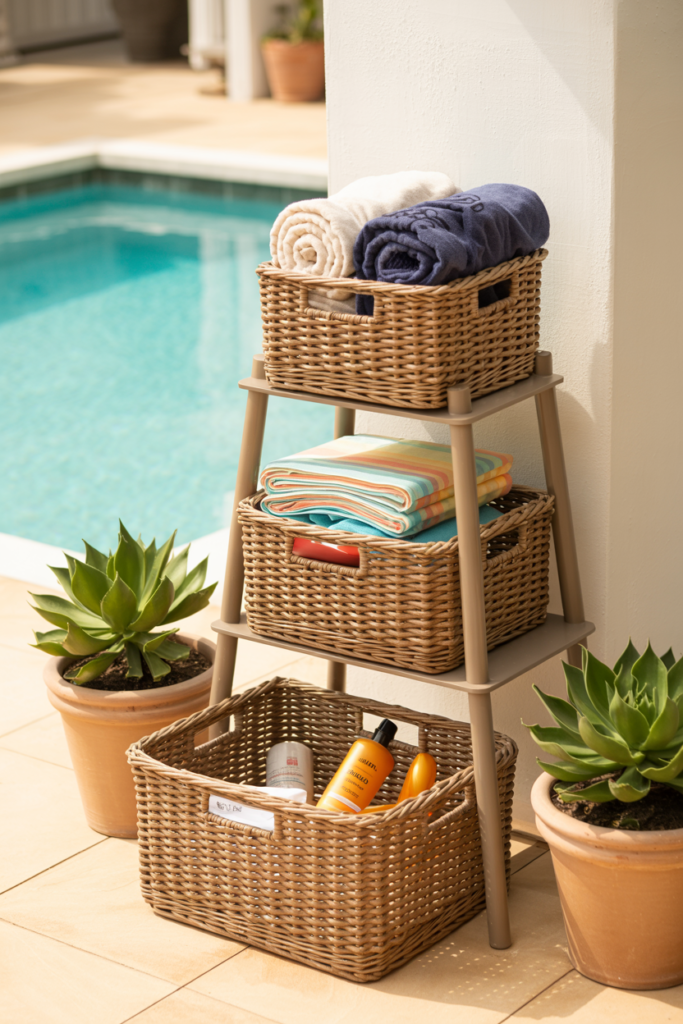
Stackable wicker-look or resin baskets give you flexible, good-looking pool float storage that adapts as your collection grows. You can start with one or two baskets and add more as needed, stacking them in a corner or lining them up along a fence. Each basket holds deflated floats, towels, or accessories, depending on what you need that day.
The visual appeal of woven baskets beside a pool is hard to beat. They look like a deliberate styling choice rather than a practical necessity, which is a quality I always look for in outdoor storage. Choosing baskets in a neutral color like tan, white, or grey keeps them versatile enough to work with any patio color scheme.
Make sure the baskets you choose are actually rated for outdoor use. Some decorative baskets look great but deteriorate quickly when exposed to direct sun and rain. Resin wicker or treated natural materials hold up much better through a full summer season of heavy use.
15. A Shower Caddy or Sports Equipment Bag for Compact Float Storage on the Go
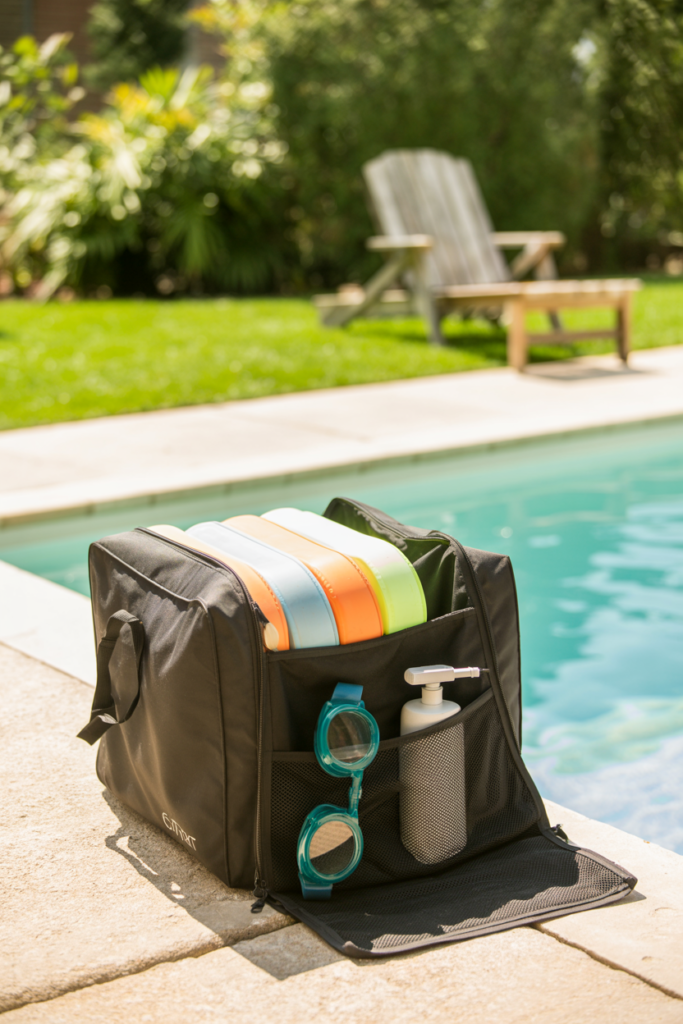
A large sports equipment bag or shower caddy might be the most underrated pool float storage option on this list. For people with smaller collections or limited outdoor space, a sturdy bag keeps everything together, protected, and easy to transport. It works especially well if you also take your floats to the lake, a community pool, or a friend’s house.
Mesh sports bags are particularly good because they allow full airflow around the floats, which prevents moisture from getting trapped. The handles or shoulder strap make it easy to carry everything in one trip, which is the kind of thing that feels small until you’ve done the alternative, carrying things one at a time while barefoot on a hot deck.
This option also stores easily in a closet, basement, or car trunk during the off-season. For people who don’t have a dedicated outdoor storage space, a good bag is often the most practical solution without any compromise on organization.
How to Choose the Best Pool Float Storage Solution for Your Specific Backyard Setup
The best storage option for your backyard depends on three main factors: how many floats you own, how much space you have, and whether you want your storage to be visible or hidden. A family with fifteen floats needs a different solution than someone with two loungers and a couple of pool noodles.
If your backyard is small or your pool is close to the house, vertical storage like hooks or a cargo net keeps things tidy without eating into your floor space. Larger yards with more room to work with can handle freestanding holders, rolling carts, or even multiple storage bins without things feeling cramped.
Think about your daily routine too. If you use the pool every day, you want storage that makes access fast and easy. If you only swim on weekends, a more enclosed option that protects your floats from daily sun exposure makes more sense. Matching your storage to your actual habits is what makes the difference between a system that works and one that gets ignored after two weeks.
The Bottom Line on Keeping Your Pool Float Storage Neat, Organized, and Summer-Ready All Season Long
Good pool float storage is one of those backyard upgrades that seems minor until you actually have it. The difference between a yard where floats are piled in a corner versus one where everything has a home is noticeable the moment you walk outside. It makes the whole space feel more intentional and more enjoyable to spend time in.
The fifteen ideas on this list cover every budget, every backyard size, and every type of float collection. Whether you go with a simple mesh hamper, a stylish storage bench, or a custom DIY PVC rack, the goal is the same: less time searching for things and more time actually in the pool. That trade-off is always worth it.
Start with one solution that fits your current setup and build from there. You don’t need to overhaul everything at once. Even one good storage decision this summer will make next summer feel like a completely different experience.
Frequently Asked Questions About Pool Float Storage Ideas for a Neat and Tidy Backyard
How do I store pool floats without deflating them every time? A freestanding pool float holder or wall-mounted hooks let you keep floats inflated between uses. These options hold everything upright and accessible, so you skip the deflate-and-reinflate routine entirely. They work best when placed in a shaded spot to reduce UV exposure.
What is the best outdoor storage bin for pool floats? A large resin deck box with a weather-resistant lid is the most popular choice for outdoor pool float storage. Look for one with ventilation to prevent moisture buildup and a capacity of at least 100 gallons for a decent-sized float collection. Brands like Suncast and Keter are widely recommended for durability.
Can I leave pool floats outside overnight? You can, but it shortens their lifespan significantly. Overnight dew, UV exposure the next morning, and temperature changes all wear down vinyl over time. Storing floats in a bin, bag, or covered bench overnight keeps them in better condition across the season.
How do I keep pool floats from getting moldy? Always let floats dry completely before storing them in an enclosed container. Moisture trapped inside a sealed bin or bag creates the perfect environment for mold and mildew. Mesh storage options like hampers or cargo nets allow airflow and are much better for preventing that problem.
What is the easiest DIY pool float storage idea? A cargo net strung between two fence posts is one of the easiest DIY options with almost no tools required. A PVC pipe rack is another beginner-friendly build that takes just an afternoon and costs very little. Both work well and can be customized to fit your specific space.
How should I store pool floats during winter? Deflate floats completely, wipe them down with a mild cleaner, and let them dry before folding them loosely. Store them in a cool, dry place like a basement, closet, or garage shelf away from sharp objects. Avoid storing them in outdoor bins during winter in cold climates, as freezing temperatures can crack the vinyl.
How much space do I need for a pool float storage area? That depends entirely on your collection size and the storage method you choose. A storage bench or single-deck bin fits into a very small footprint along a fence or wall. Vertical options like hooks and cargo nets use almost no floor space at all, making them ideal for compact pool areas.