

A witch garden is exactly what it sounds like: a moody, mysterious outdoor space filled with dark foliage, twisted plants, and decor that feels like it came straight out of a fairytale forest. It is not just a garden. It is a whole vibe. If you have ever walked past a shadowy, overgrown yard and thought, “I want that,” you already have the spirit for this.
I have always believed that gardens do not have to be bright and cheerful to be beautiful. There is something deeply satisfying about a space that feels a little wild, a little dark, and a whole lot intentional. A witch garden permits you to go full gothic without apologizing for it.
The best part? You do not need a massive yard or a huge budget. A few carefully chosen plants, some moody decor pieces, and the right layout can turn even a small corner into something that looks genuinely spellbinding. This guide walks you through 15 ideas to get you started.
What Makes a Good Witch Garden Design Worth Your Time
Before jumping into the ideas, it helps to understand what separates a well-done witch garden from a random pile of dark stuff. A good witch garden has a sense of intention. Every plant, every stone, every hanging lantern feels like it belongs there on purpose.
The core elements usually include dark and unusual foliage, plants with magical or herbal associations, weathered textures like aged wood and mossy stone, and decor that leans into the mysterious. Think twisted iron, cracked terracotta, dried botanicals, and objects that look like they have a story.
Color palette matters a lot here. Deep purples, near-blacks, silvery greens, and dusty mauves work beautifully together. You are not going for scary. You are going for atmospheric, the kind of garden that makes people slow down and take a second look.
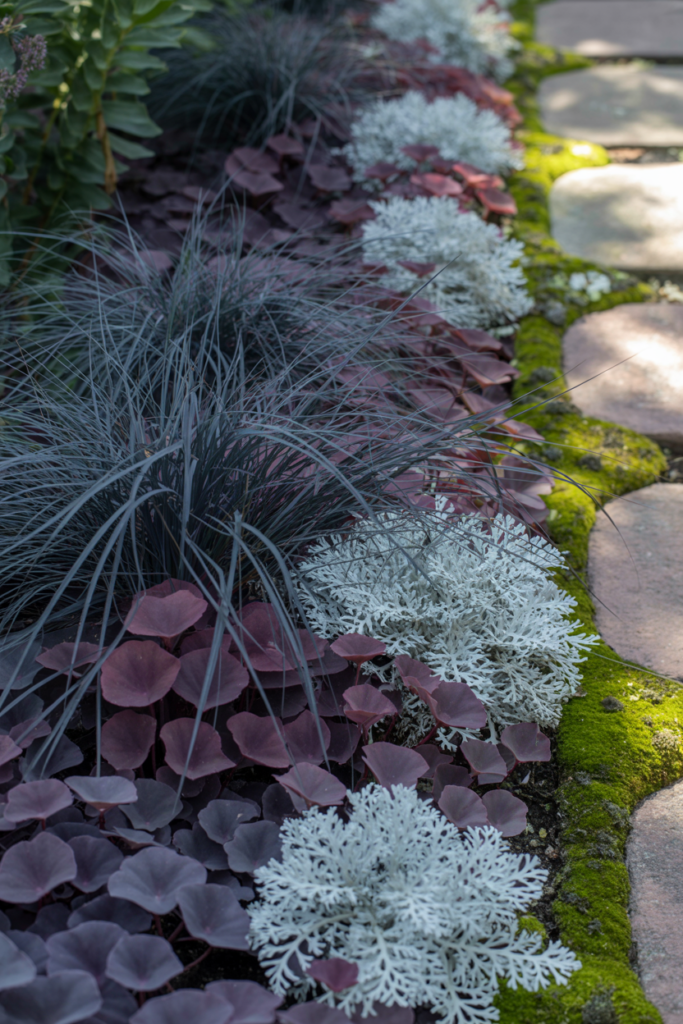
1. Plant a Black and Purple Foliage Border Along Your Garden Path
Dark foliage plants are the backbone of any serious witch garden. Varieties like Black Mondo Grass, Purple Heart, and Darkstar Coleus give you that deep, moody color without needing to paint anything. These plants naturally create a shadowy, lush look that feels intentional and dramatic.
I love pairing Black Mondo Grass with silver-leafed plants like Artemisia or Dusty Miller. The contrast between near-black and soft silver is genuinely stunning. It also helps the dark plants stand out instead of blending into the shadows completely.
Line your garden path with these plants for an immediate effect. Guests walking through feel like they are entering a different world, which is exactly the point. Even a narrow border on each side of a stone path makes a huge visual difference.
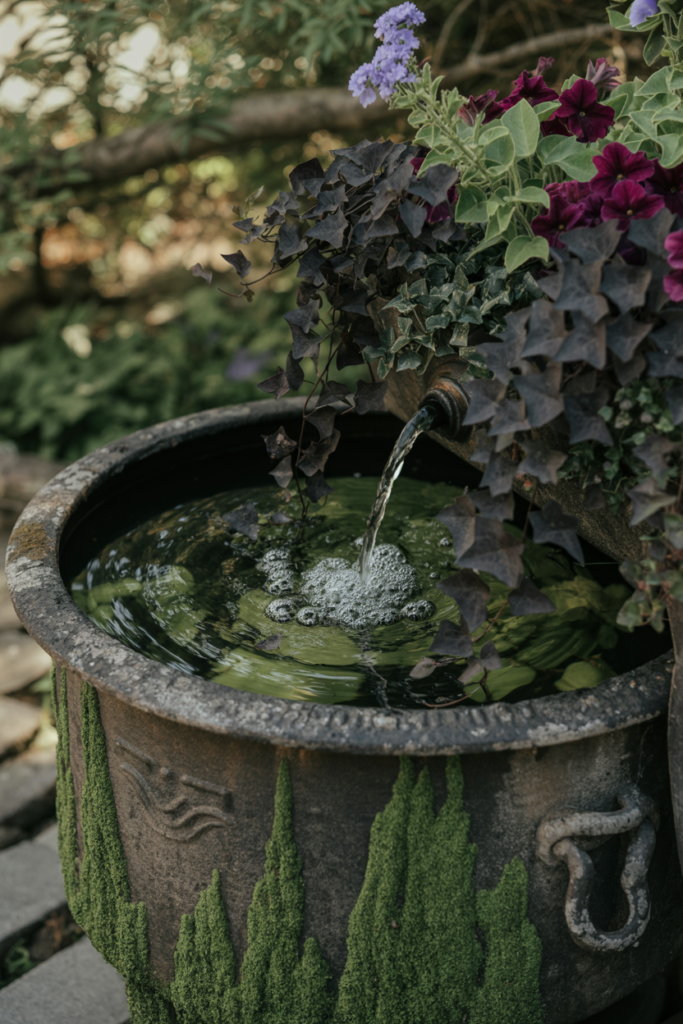
2. Add a Weathered Cauldron as a Water Feature or Planter
A cauldron is probably the most iconic witch garden decor piece, and for good reason. It looks amazing, it is functional, and it immediately sets the tone of the whole space. You can find large cast-iron or resin cauldrons at garden centers, antique shops, and online retailers.
Use it as a small water feature by adding a simple pump and letting water bubble out of the top. The sound of trickling water adds another layer of atmosphere to the space. Alternatively, plant it up with trailing dark ivy, black petunias, or purple verbena for a striking focal point.
I recommend placing the cauldron near the entrance of your witch garden or at the center of a circular herb bed. It draws the eye and anchors the whole design. Just make sure it has drainage holes if you are planting in it directly.
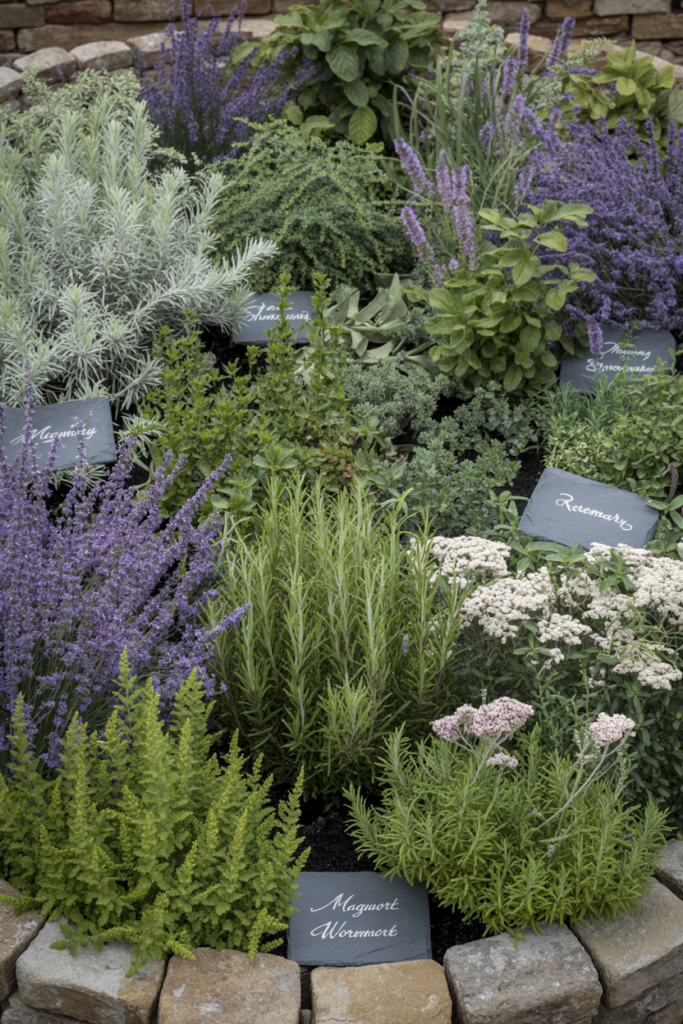
3. Grow a Dedicated Herb Bed With Magical and Medicinal Plants
Herbs have been connected to witchcraft and folk medicine for centuries, and they are genuinely beautiful in a garden setting. Lavender, rosemary, mugwort, wormwood, and yarrow all have strong historical associations with magic and healing. They also look incredible together.
Mugwort and wormwood are especially good choices for a witch garden because they have silvery, feathery foliage that catches the light beautifully. Plant them alongside deep purple lavender, and you have a combination that looks almost otherworldly. These plants are also tough and low-maintenance, which is always a win.
I like to arrange the herb bed in a circular or pentagram-inspired layout, sectioned off with low stones or aged wood edging. It adds a visual structure that feels deliberate and mystical. Label each herb with a small handwritten slate marker for extra charm.
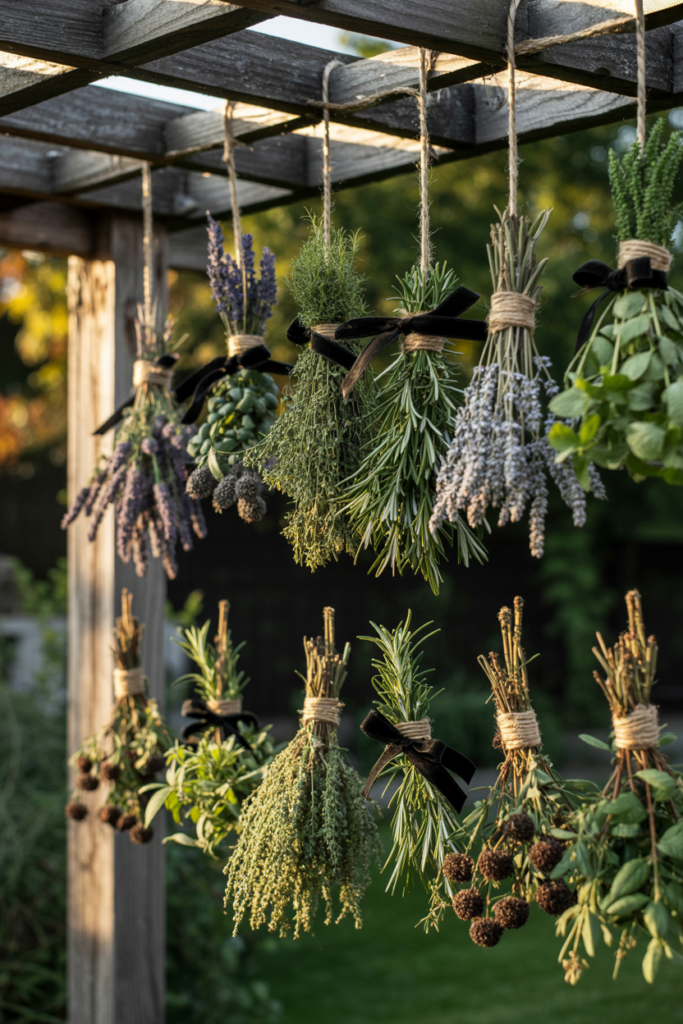
4. Hang Dried Herb Bundles and Botanical Wreaths on Garden Structures
Dried botanicals bring a rustic, apothecary feel to a witch garden that fresh plants simply cannot match. Bundled dried lavender, rosemary, sage, and mugwort hanging from a pergola or garden arch look genuinely beautiful. They also smell incredible when the breeze catches them.
You can dry your own herbs from the garden or buy pre-dried bundles. Tie them with natural twine or black ribbon and hang them in clusters for the best effect. Mix in dried seed pods, thistles, and dried flowers like black-eyed Susans or dark dahlias for more visual variety.
A rustic wooden arch or pergola covered with these bundles instantly becomes a statement piece. It feels like something between a garden feature and an outdoor apothecary. I have seen this done with a simple DIY timber arch, and it looked absolutely stunning.
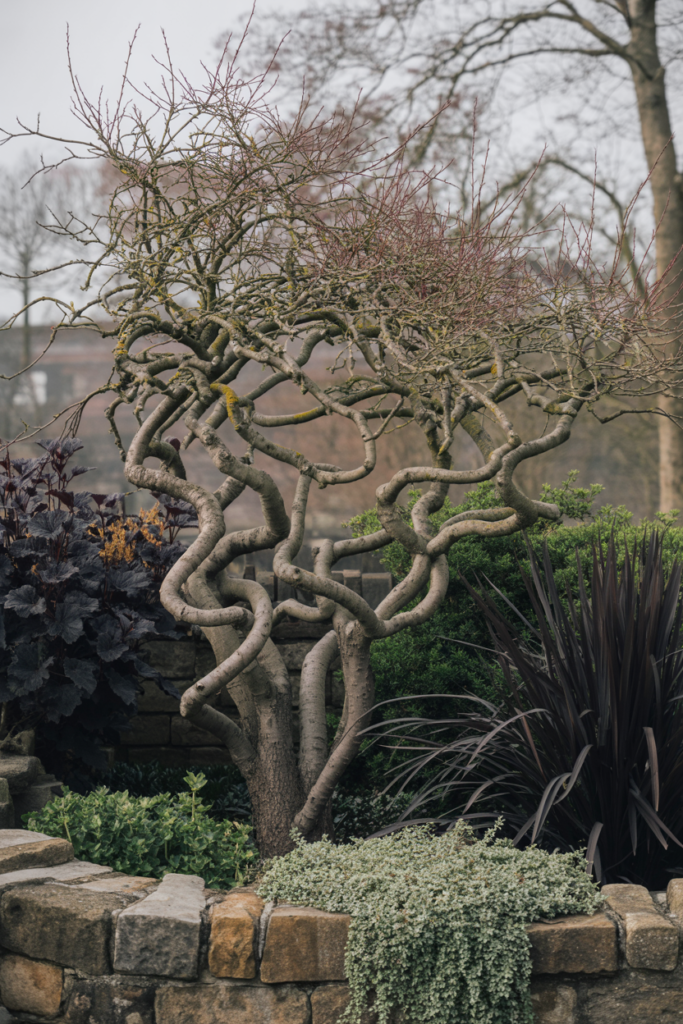
5. Use Twisted Willow or Contorted Hazel as a Gothic Structural Plant
If you want a plant that looks genuinely dramatic without any help from decor, twisted willow and contorted hazel are your answer. These trees have naturally spiraling, corkscrew branches that look striking in every season. In winter, especially, the bare twisted branches against a grey sky look almost theatrical.
Twisted willow grows fast and can get quite large, so it works best as a background plant or a standalone specimen in a larger garden. Contorted hazel stays more compact and is better for smaller spaces. Both work beautifully as gothic structural plants that give the garden height and visual interest.
I planted a contorted hazel in a corner of my garden, and it became the focal point almost immediately. Even people who know nothing about witch garden aesthetics stop to look at it. That kind of natural drama is hard to replicate with decor alone.
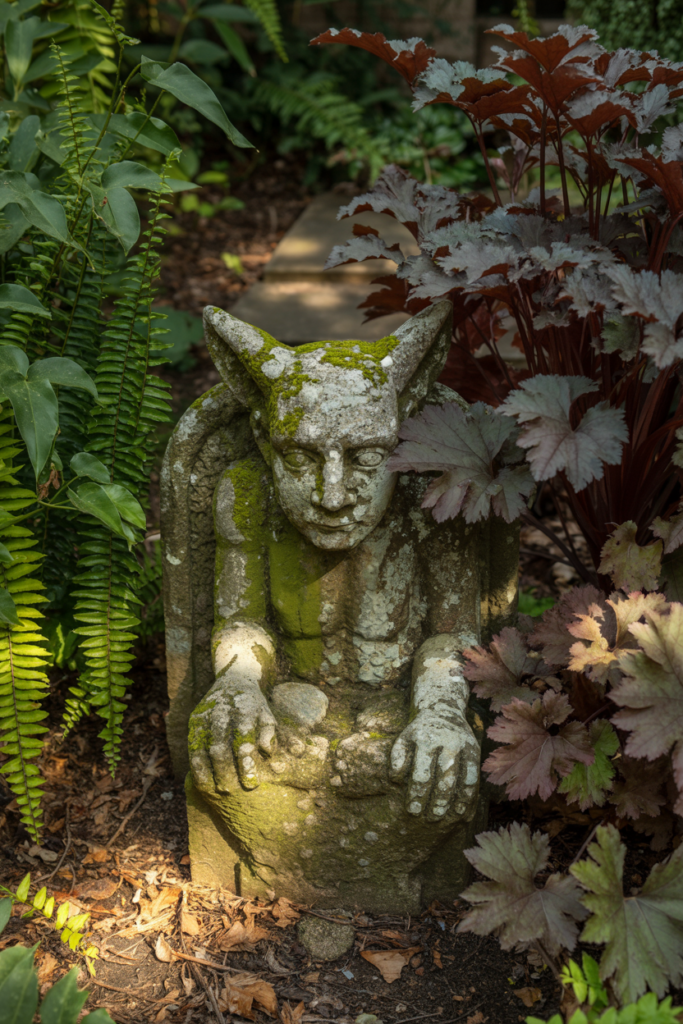
6. Place Mossy Stone Statues and Gargoyles Throughout the Garden
Stone statues with a weathered, mossy finish are perfect for a witch garden. Gargoyles, ravens, owls, and hooded figures all work beautifully within this aesthetic. They add a sense of age and mystery that new, shiny decor simply cannot replicate.
You can speed up the moss-growing process by painting statues with a mixture of yogurt and water, then leaving them in a shaded, damp spot. Within a few weeks, you will start to see real moss forming on the surface. It is a simple trick that makes brand-new pieces look like they have been sitting in a forgotten garden for decades.
Place statues at the end of paths, nestled between plants, or partially hidden by foliage. The partially hidden placement is my personal favorite because it creates a sense of discovery. Guests spot them as they walk through, which keeps the space feeling interesting and layered.
7. Install Dark Lanterns and Candlelight Along Garden Pathways
Lighting makes or breaks a witch garden after dark. Tall black iron lanterns, candle holders, and string lights with warm amber bulbs all create the right kind of moody glow. Avoid bright white LED lights here because they completely kill the atmosphere.
Solar-powered lanterns in aged black or bronze finishes are a practical and affordable option. Line them along your garden path or cluster them around a seating area for a candlelit effect without actual fire. For special evenings, real pillar candles inside glass hurricane holders look absolutely magical.
I also love using hanging lanterns from tree branches or pergola beams at varying heights. The gentle movement of hanging lights in a breeze adds a living quality to the garden that feels genuinely enchanting. It is one of those small details that elevates the whole space.

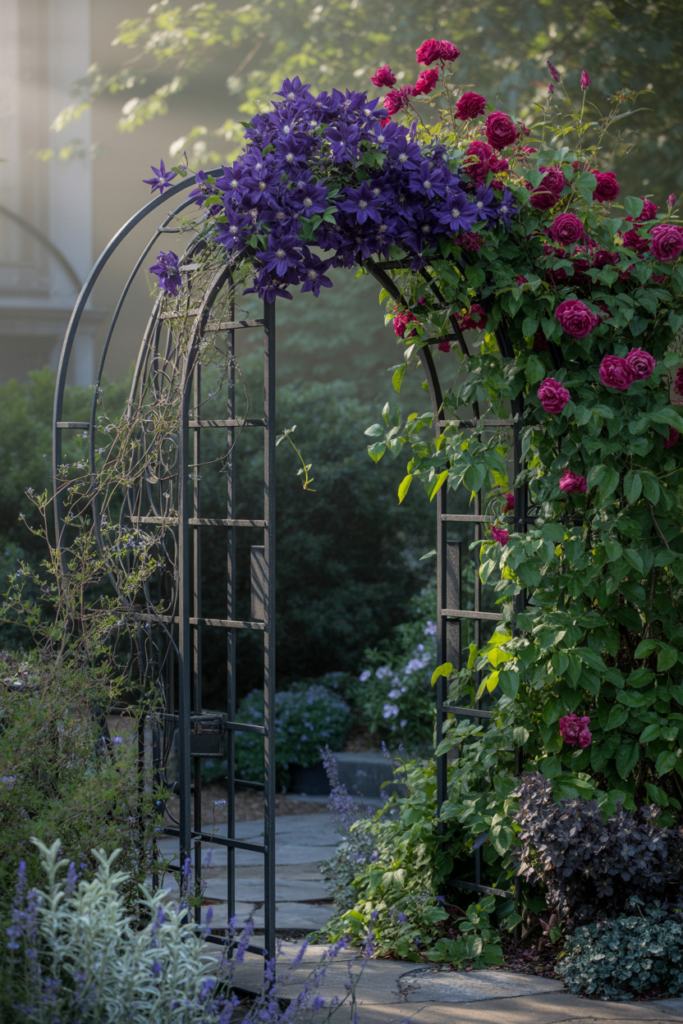
8. Build a Moon Gate or Arched Entrance Covered in Dark Climbing Plants
A moon gate is a circular garden arch, and it is one of the most striking structural features you can add to a witch garden. Walking through a perfect circle framed by dark climbing plants feels like stepping into another world. It is dramatic in the best possible way.
Dark climbing roses like Tuscany Superb or William Shakespeare 2000 work beautifully over a moon gate. Black-eyed Susan vine, dark purple clematis, and climbing nightshade also pair well with this kind of structure. Choose plants with interesting flowers or foliage that complement the gothic palette.
You can find ready-made moon gates in metal or wood, or build a simple one from bent rebar and timber posts. Even a basic version looks impressive once plants start climbing over it. I think it is one of the highest-impact additions you can make to a witch garden for the cost involved.
9. Add a Vintage Apothecary Table or Potting Bench as a Garden Feature
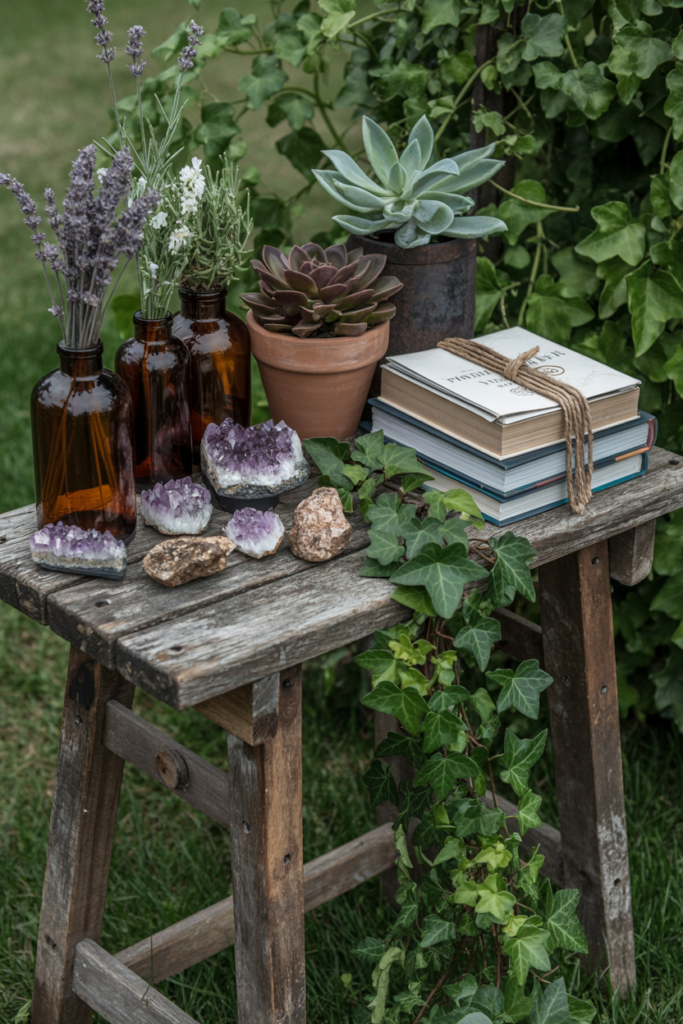
An old wooden potting bench or apothecary-style table styled with bottles, jars, and potted herbs adds incredible character to a witch garden. It looks like a workspace pulled straight from a herbalist’s cottage. The more worn and weathered the furniture, the better it fits the aesthetic.
Style the table with amber glass bottles filled with dried herbs, small terracotta pots of succulents, and a few well-placed crystals or geodes. Add a stack of old books wrapped in twine for extra charm. This kind of styled vignette gives the garden a storytelling quality that pure planting cannot achieve alone.
I recommend sourcing the table from a thrift store, salvage yard, or antique market rather than buying new. An authentically aged piece has a patina and character that reproductions just do not match. Sand it lightly if needed, but leave most of the wear intact because that is what makes it beautiful.
10. Grow Black Flowers and Near-Black Blooms Throughout the Beds
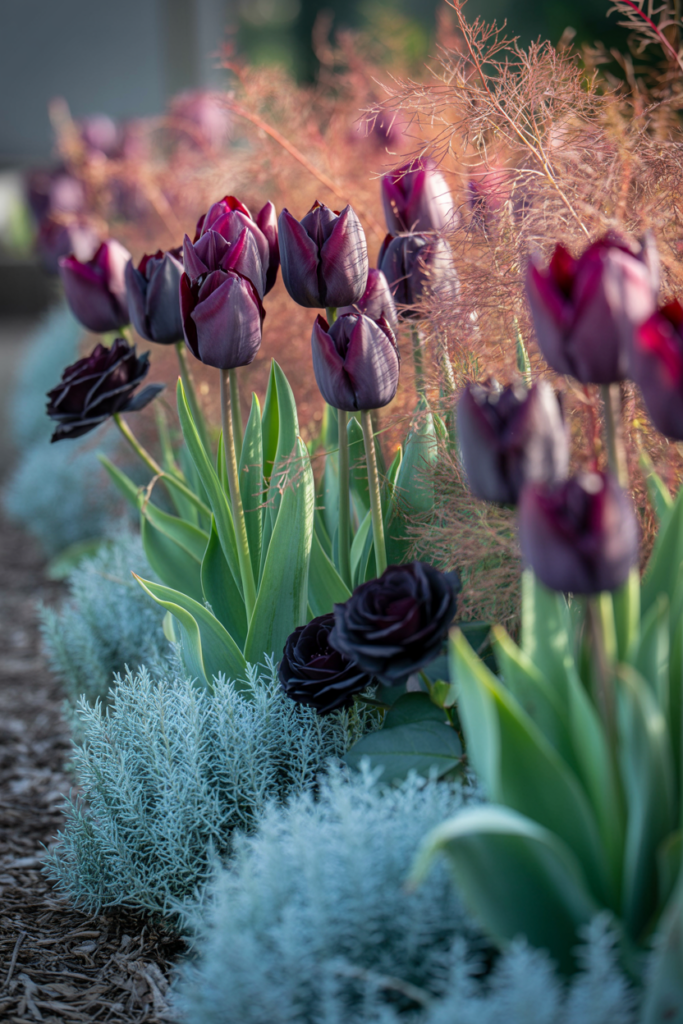
True black flowers do not exist in nature, but there are plenty of near-black varieties that are genuinely stunning. Black Velvet Petunias, Queen of Night Tulips, Black Baccara Roses, and Chocolate Cosmos all produce blooms so dark they read as black in most lighting conditions.
These flowers work best when planted in groups rather than scattered individually. A cluster of Queen of Night Tulips rising from a bed of silver Artemisia looks striking and intentional. Pair dark blooms with plants that have interesting textures like feathery fennel or spiky thistles for added depth.
I grow Black Baccara Roses in my garden, and they consistently get more comments than anything else I have planted. People always want to know what they are because they look so unusual. That kind of curiosity is exactly the energy a witch garden should create.
11. Create a Fairy Ring or Stone Circle as a Garden Focal Point
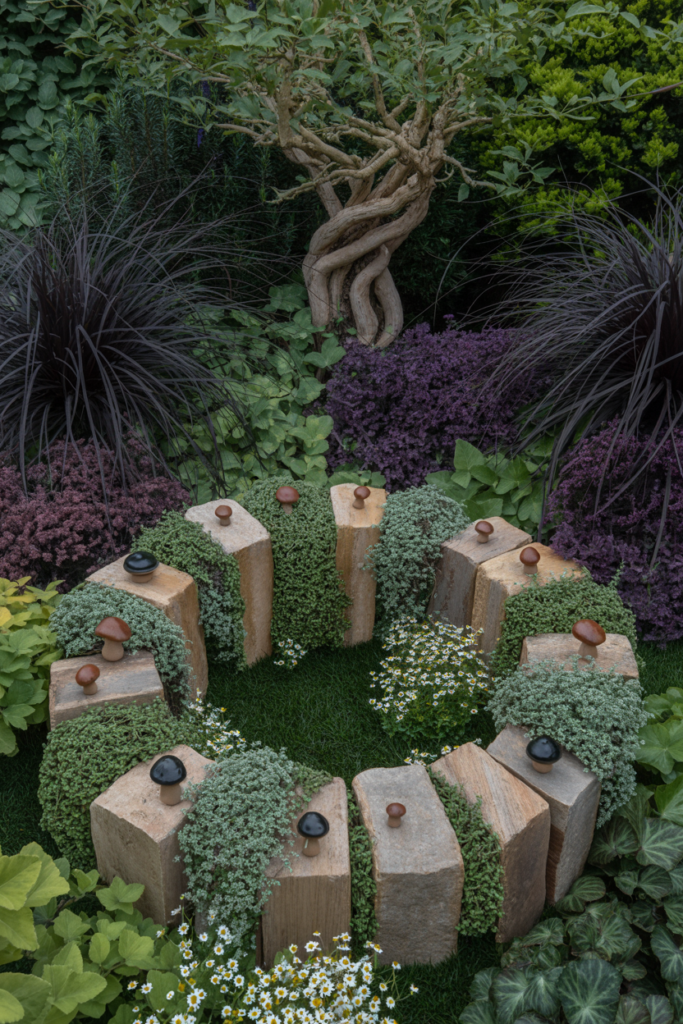
A fairy ring made from rough-cut stones, mushroom ornaments, or low-growing plants creates a natural gathering point in a witch garden. It draws the eye, encourages people to pause, and adds a sense of ritual to the space. Even a simple circle of stones around a central plant or statue works beautifully.
For a more elaborate version, plant low thyme or creeping chamomile between the stones so the circle softens and blurs at the edges over time. Add a few decorative mushroom ornaments or small toadstool sculptures within the ring for extra whimsy. Dark-capped ceramic mushrooms are easy to find at garden centers and look great in this setting.
I placed a stone circle around the base of my contorted hazel tree, and it tied the whole corner together perfectly. It gave the tree an intentional, almost ceremonial quality that it did not have before. Sometimes the simplest structural ideas make the biggest difference in a garden.
12. Hang a Witch Ball or Gazing Globe Among the Plants
Witch balls are hollow glass spheres with a long history in folk magic and garden decor. Traditionally hung near entrances to ward off negative energy, they also look genuinely beautiful, catching light among dark foliage. Deep purple, midnight blue, and smoky grey are the best colors for a witch garden aesthetic.
Hang them from tree branches, pergola beams, or tall shepherd hooks at different heights throughout the garden. The way they reflect surrounding plants and light creates a constantly shifting, almost hypnotic effect. A cluster of three at varying heights looks especially striking against a dark hedge or fence backdrop.
Gazing globes on pedestals work well as ground-level alternatives. Place one at the center of your herb circle or at the end of a garden path for a focal point that doubles as a conversation piece. I find that reflective garden spheres always make a space feel slightly larger and more mysterious than it actually is.

13. Use Reclaimed Wood and Rusted Metal for Fencing and Edging
The materials you use for fencing, edging, and garden borders say a lot about the overall aesthetic. Reclaimed timber with a dark stain, rough-cut slate, and rusted metal sheeting all fit perfectly within a witch garden. They bring texture, age, and an organic quality that smooth modern materials simply cannot match.
Rusted Corten steel edging is one of my favorite options because it looks beautiful, lasts for decades, and develops a richer patina over time. Use it to edge beds and paths for a clean but aged look. Pair it with reclaimed railway sleepers for raised beds, and you have a combination that looks intentional and cohesive.
Old iron gates, even partial ones used decoratively rather than functionally, add enormous character. Lean one against a fence covered in climbing plants, or use it as a trellis for dark roses. These found and salvaged elements give a witch garden the feeling of a space that has been slowly accumulated over many years.

14. Add a Seated Nook or Hidden Bench Surrounded by Dark Foliage
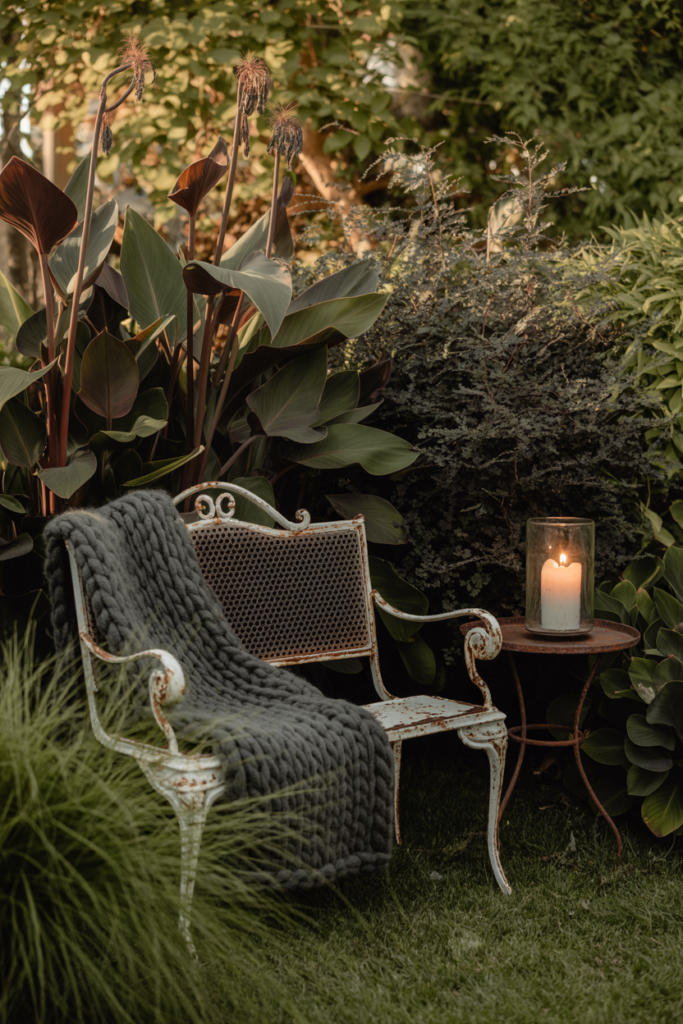
Every good witch garden needs a place to sit and actually enjoy the atmosphere you have created. A weathered wooden bench or a wrought iron chair tucked into a shaded corner surrounded by dark foliage creates an intimate, hidden feeling. It should feel like a secret spot that rewards those who look closely.
Surround the seating area with tall plants like dark-leaved cannas, black elder, or tall ornamental grasses to create a sense of enclosure. Add a small side table for a candle or a cup of tea. Drape a dark throw over the bench, and suddenly the whole corner looks styled and intentional without much effort at all.
I think the seating nook is actually one of the most important elements of a witch garden because it makes the space livable rather than just decorative. A garden you can sit in and feel surrounded by always has more soul than one that only looks good from a distance.
15. Hang Wind Chimes and Copper Bells From Trees and Structures
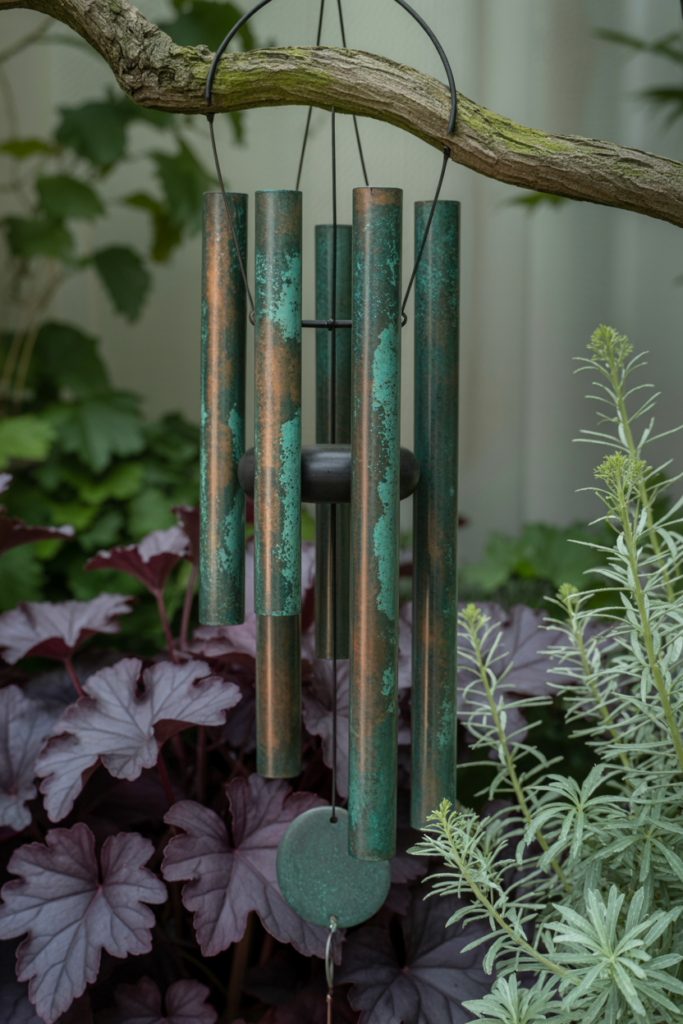
Sound is an underrated element in garden design, and a witch garden is the perfect place to use it deliberately. Copper wind chimes, bronze bells, and wooden chimes all produce sounds that feel organic and atmospheric rather than jarring. They add a sensory layer that makes the garden feel alive in a way that purely visual elements cannot.
Hang chimes from tree branches, pergola beams, or shepherd hooks throughout the space. Choose different sizes for varying tones so the garden produces a gentle, layered sound when the wind moves through. Aged copper and verdigris-finished chimes fit the witch garden color palette beautifully.
I added a set of deep-toned copper chimes near my seating nook, and they completely changed how the space feels on a breezy afternoon. There is something genuinely calming about sitting surrounded by dark foliage and listening to soft, low chimes. It turns the garden from a visual experience into a full sensory one.
Bringing It All Together: Styling Your Witch Garden With Intention
The most important thing I want you to take away from this guide is that a witch garden works best when it feels layered and personal rather than themed and uniform. Mix plants with decor, old with new, structural elements with soft ones. Let things grow a little wild at the edges.
Start with two or three ideas from this list rather than trying to do everything at once. A cauldron planter, a border of dark foliage plants, and a set of iron lanterns along a path can already transform a space dramatically. Build from there as your confidence and budget allow.
The gardens that always look the best are the ones where the person clearly enjoyed making them. So pick the ideas that genuinely excite you, source pieces that have real character, and give your plants time to settle in and do their thing. A witch garden is not built in a weekend, and that is part of what makes it so satisfying.
| Witch Garden Element | Best For | Difficulty Level |
| Dark foliage border | Instant atmosphere | Easy |
| Cauldron planter or water feature | Focal point | Easy |
| Herb bed with magical plants | Functionality and beauty | Easy |
| Moon gate with climbing plants | Structural drama | Moderate |
| Twisted willow or contorted hazel | Year-round interest | Easy |
| Stone circle or fairy ring | Garden ritual feel | Easy |
| Reclaimed wood and rusted metal | Texture and age | Moderate |
| Witch ball or gazing globe | Reflective detail | Easy |
Conclusion
A witch garden is one of the most personal and rewarding garden styles you can create. It rewards creativity, patience, and a willingness to let things get a little wild. From black flower beds and cauldron water features to twisted structural plants and hidden seating nooks, every idea in this list brings its own kind of gothic charm to an outdoor space.
The key takeaways are simple. Start with dark foliage plants to set the palette. Add structural pieces like a moon gate or contorted hazel for drama. Layer in decor like lanterns, witch balls, and dried botanicals for atmosphere. And build a seating nook so you can actually sit inside the magic you have created.
A well-designed witch garden does not just look good in photos. It feels good to be in. That is the real goal, and every single idea on this list moves you closer to it.
Frequently Asked Questions
What plants are best for a witch garden? Dark foliage plants like Black Mondo Grass, Purple Heart, and black elder are excellent starting points. Magical herbs like mugwort, wormwood, lavender, and yarrow also fit perfectly. Near-black flowers like Black Baccara Roses and Queen of Night Tulips add dramatic color.
Do witch gardens work in small spaces? Absolutely. A small courtyard or corner plot can work beautifully with the right plant choices and a few well-placed decor pieces. A cauldron planter, a border of dark plants, and a hanging lantern can transform even a tiny space into something atmospheric.
What is the best color palette for a witch garden? Deep purples, near-blacks, silvery greens, dusty mauves, and dark burgundies all work well together. Accent colors like amber from lantern light and aged copper from wind chimes add warmth without breaking the moody palette.
How do I make garden statues look old and mossy? Paint new statues with a mixture of plain yogurt and water, then place them in a shaded, damp spot. Real moss will start growing on the surface within a few weeks. It is an easy and affordable way to age new pieces quickly.
Can a witch garden be low maintenance? Yes, especially if you choose the right plants. Mugwort, wormwood, ornamental grasses, and Black Mondo Grass are all tough and relatively low-maintenance. Focus on plants suited to your climate, and the garden will largely take care of itself once established.
What lighting works best in a witch garden? Warm amber lighting always works better than cool white in this setting. Solar black iron lanterns, hanging amber string lights, and real candles in glass holders all create the right kind of moody glow. Avoid bright modern LEDs as they flatten the atmosphere completely.
Where do I find witch garden decor pieces? Antique markets, salvage yards, thrift stores, and online marketplaces are all great sources. Pieces with real age and wear always look better than new reproductions in this style. Garden centers increasingly stock gothic and dark garden decor, especially around autumn.