
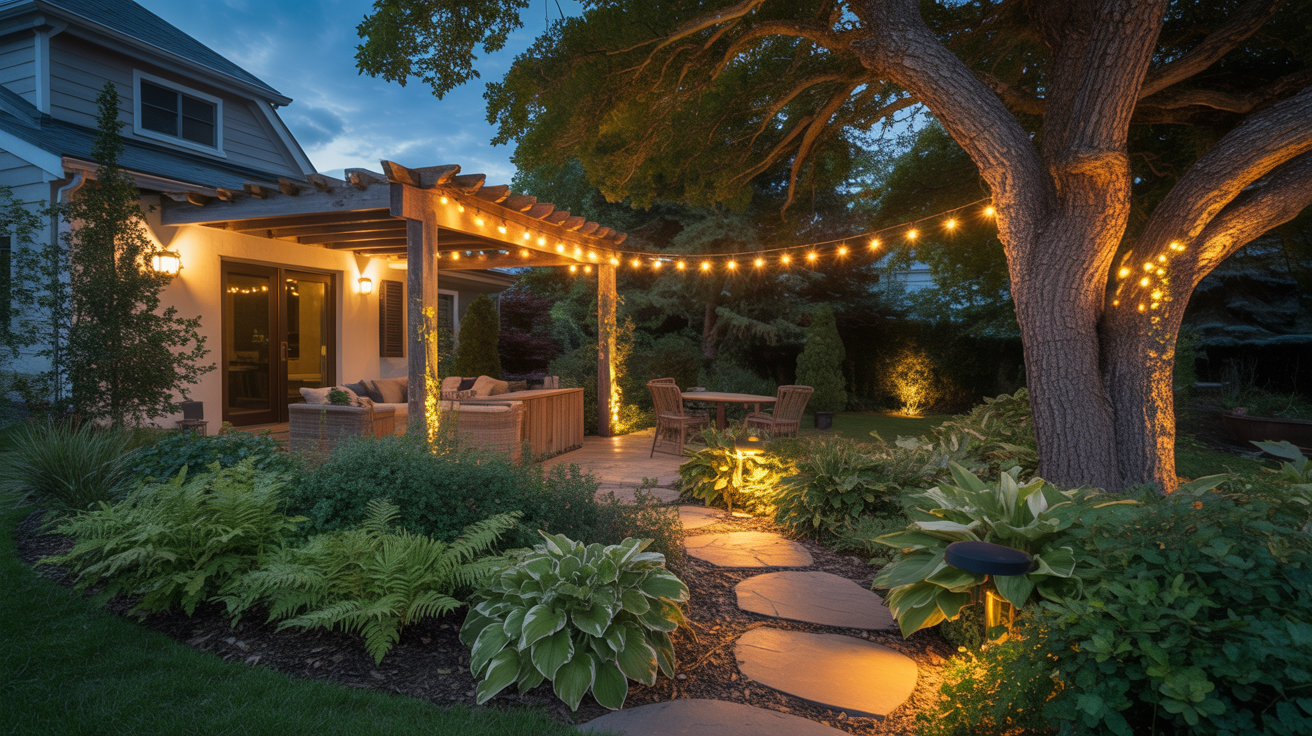
A well-lit garden after dark looks like a completely different place, in the best possible way. The right outdoor yard lighting turns an ordinary backyard into something that genuinely stops people in their tracks. And you do not need an electrician on standby or a massive budget to make it happen.
I have spent a lot of evenings staring out at gardens, both my own and others, trying to figure out what separates a yard that looks magical at night from one that just looks dark with a porch light. The answer almost always comes down to layering light thoughtfully rather than just flooding the space with brightness. Strategic placement beats raw wattage every single time.
Whether you want a cozy entertaining space, a dramatic showcase for your best plants, or simply a yard that looks finished and intentional after sunset, this list covers all of it. These 15 outdoor lighting ideas work across every garden style, budget, and skill level, so there is genuinely something here for everyone.
Why Good Outdoor Yard Lighting Changes Everything After Dark
Outdoor garden lighting does more than just help you see where you are walking at night. It creates atmosphere, extends the usable hours of your outdoor space, and adds a layer of security that a dark yard simply cannot offer. A thoughtfully lit garden feels welcoming and safe rather than empty and forgotten.
Layering different types of light is the approach that consistently delivers the best results. Combining path lights, uplights, string lights, and accent fixtures creates depth and dimension that a single type of light source never achieves on its own. Think of it the same way you would approach indoor lighting: ambient, task, and accent working together.
There is also a real practical benefit to investing in good outdoor lighting. Well-lit pathways reduce the risk of trips and falls, highlighted steps and level changes become visible at night, and a lit exterior deters opportunistic intruders far more effectively than a motion-sensor floodlight alone. Good lighting earns its place on every level.
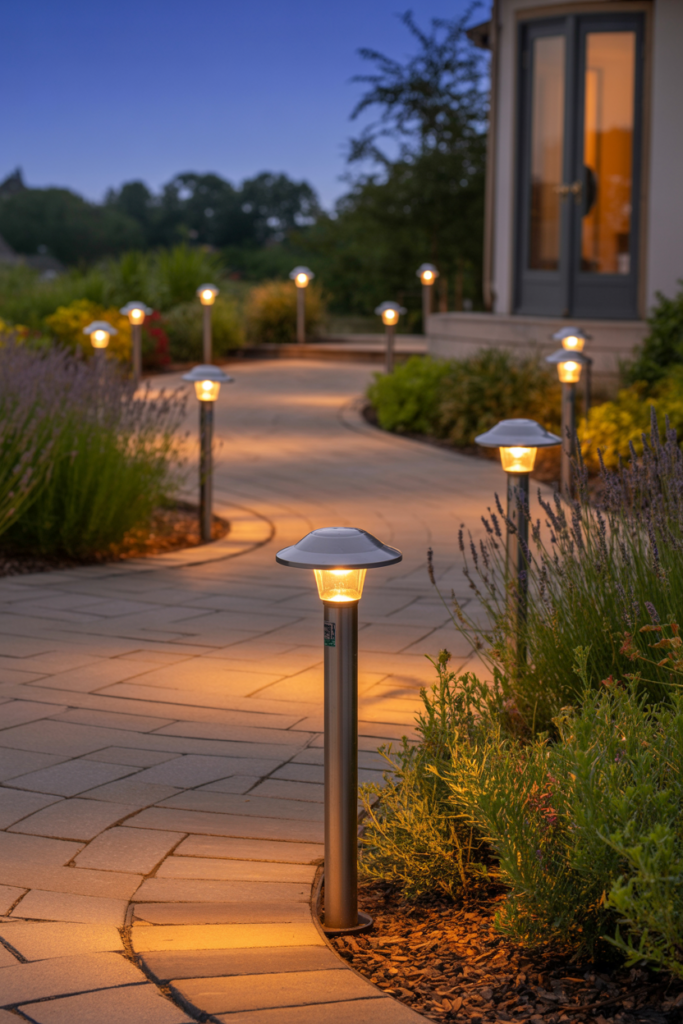
1. Solar Path Lights
Solar path lights are one of the most popular outdoor lighting choices for good reason. They require zero wiring, charge themselves during the day, and switch on automatically at dusk. For anyone who wants immediate impact without any installation complexity, a set of solar path lights along a garden walkway delivers exactly that.
The quality of solar path lights has improved dramatically in recent years. Modern versions hold their charge reliably through the night and produce a warm, consistent glow rather than the dim flicker that older solar lights were known for. Stainless steel and weather-resistant plastic options both hold up well through multiple seasons outdoors.
Spacing matters more than most people realize with path lights. Placing them too close together creates a runway effect that feels more like an airport than a garden. A spacing of around 6 to 8 feet between lights gives a natural, relaxed rhythm that guides the eye without overpowering the surrounding plantings.
2. String Lights
String lights are the easiest way to add warmth and atmosphere to an outdoor space, and they work in practically every garden setting. Draped across a pergola, strung between fence posts, or wound through tree branches, they create that soft, glowing ambiance that makes any outdoor gathering feel more relaxed and inviting.
Warm white bulbs in the 2700K to 3000K color temperature range consistently produce the most flattering and natural-looking result outdoors. Cool white string lights tend to look harsh and clinical in a garden setting, which is the opposite of what most people are going for. The warm tones complement plant colors and timber surfaces beautifully.
Solar-powered string light sets have become genuinely reliable options in recent years, making them a practical choice for areas where running a power cable is not convenient. For permanent installations over a patio or entertaining area, plug-in or hardwired sets deliver more consistent brightness and longer operational life.
3. Uplighting for Trees and Shrubs
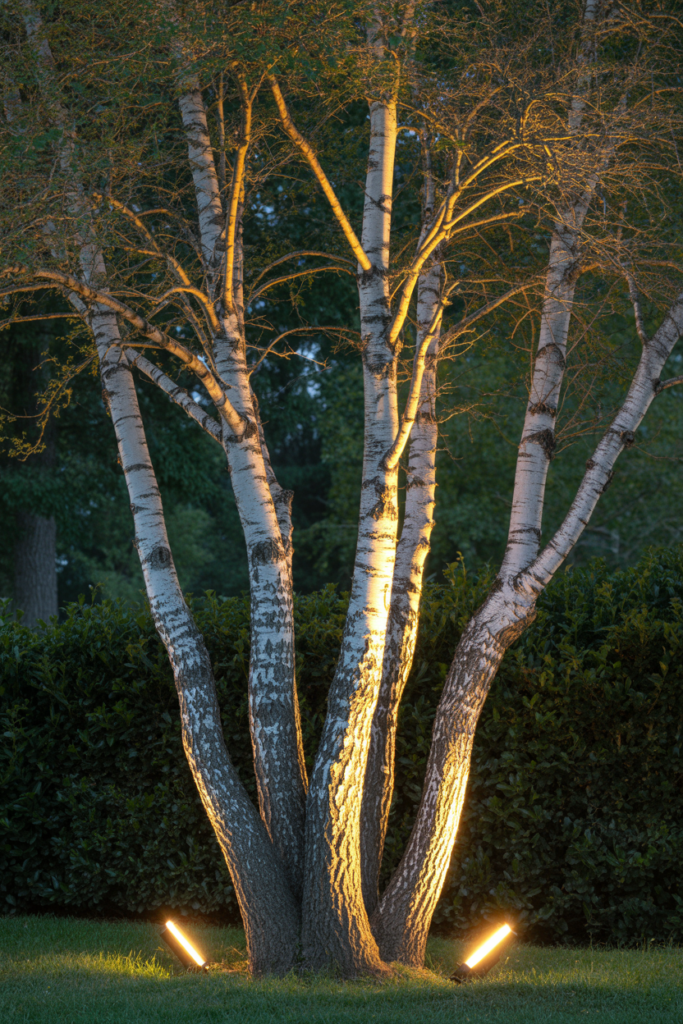
Uplighting is the technique that instantly makes a garden look professionally designed. Placing a directional spotlight at the base of a tree, large shrub, or architectural plant and angling it upward throws dramatic shadows into the canopy and creates a focal point that reads beautifully from both inside the house and from the street.
The best trees for uplighting are those with interesting branch structure, textured bark, or dramatic foliage. A mature oak, a multi-stemmed birch, or a large ornamental grass all respond beautifully to uplighting. The light catches the natural forms of the plant and turns them into something genuinely sculptural after dark.
Ground-mounted spike spotlights are the most practical option for DIY uplighting. They push directly into the soil near the base of the plant, require no hard wiring if you choose solar or low-voltage LED versions, and adjust easily if you want to change the angle or move them to a different plant as the garden evolves.
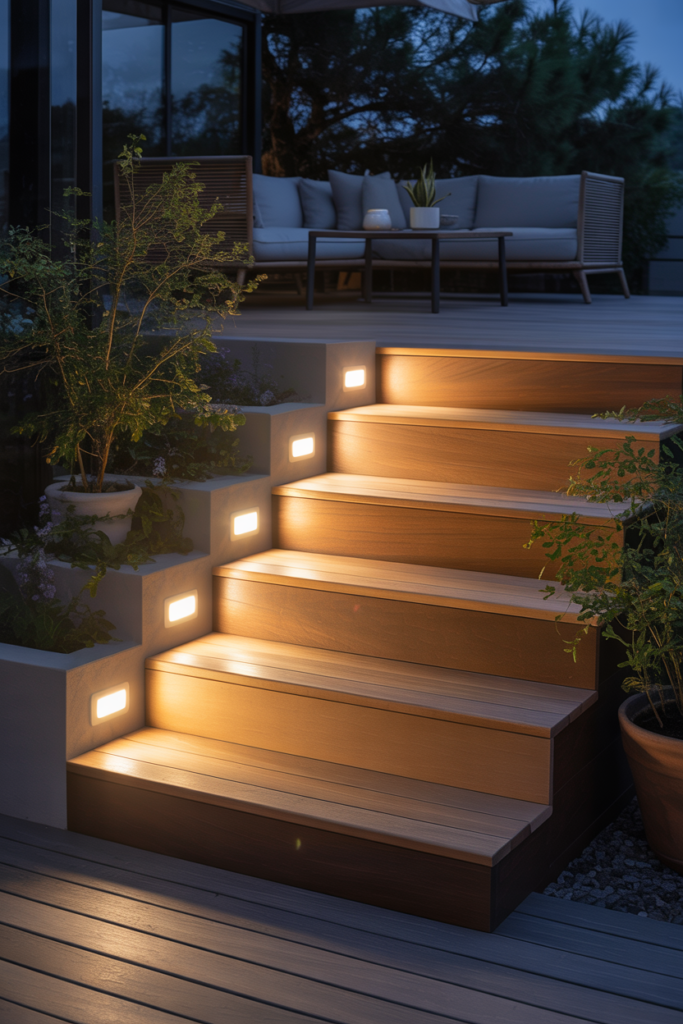
4. Deck and Step Lights
Deck and step lights solve a real safety problem while also looking genuinely sharp at night. Recessed into the risers of outdoor steps or mounted into the fascia boards of a deck, they cast a low, directed glow that illuminates the walking surface without creating glare. The effect is clean, modern, and practical all at once.
Low-voltage LED step lights are the most common choice for this application because they consume very little power and produce minimal heat. Most come in surface-mount and recessed versions, so they work whether you are retrofitting an existing deck or incorporating them into a new build. Warm white tones work best for a welcoming, residential feel.
I find deck and step lights particularly valuable on multi-level outdoor spaces where level changes can be hard to see at night. A few well-placed step lights turn a potential trip hazard into one of the most attractive features of the whole outdoor area after dark.
5. Lanterns and Post Lights
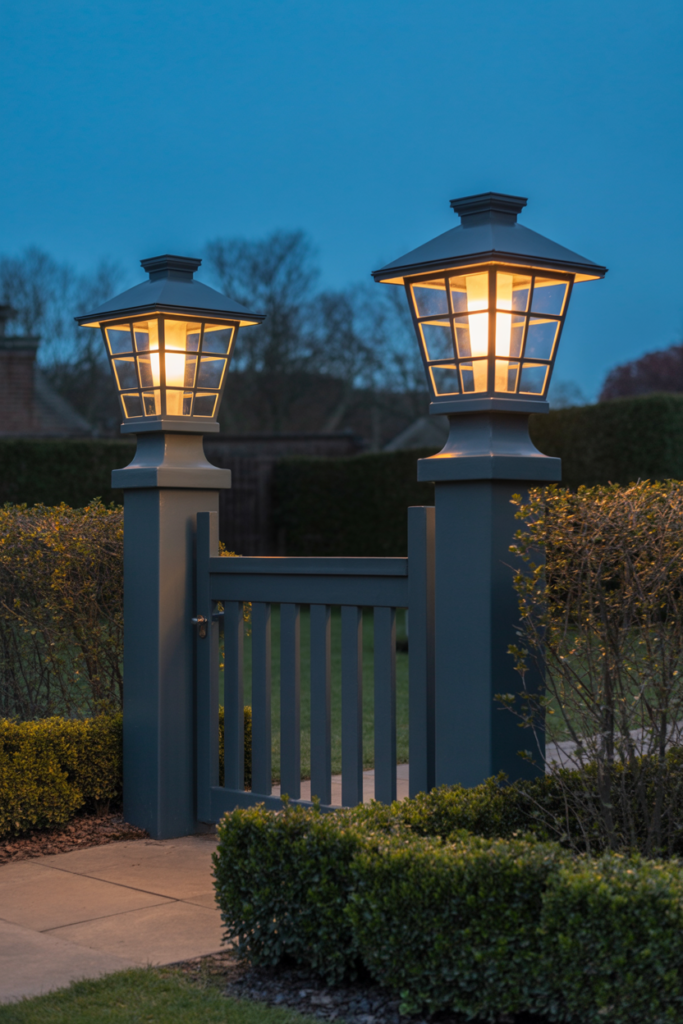
Lanterns and post lights bring a classic, structured quality to outdoor spaces that more casual lighting options simply cannot replicate. A pair of well-chosen post lanterns flanking a garden gate, driveway entrance, or front path immediately gives the whole yard a finished, considered look. They anchor the space visually and provide reliable ambient light across a wide area.
Traditional lantern styles suit cottage, colonial, and farmhouse garden aesthetics particularly well, while sleeker cylindrical post lights work better in contemporary or minimalist settings. Material choices range from powder-coated aluminum and stainless steel for low maintenance to solid brass and copper for a more premium, aging-gracefully finish.
Solar post lights have improved enough in recent years to be a genuinely practical option for most residential settings. For a front entrance or main garden path, however, a hardwired post light delivers the consistent brightness and reliability that a prominent feature position demands.
6. Fairy Lights in Garden Beds
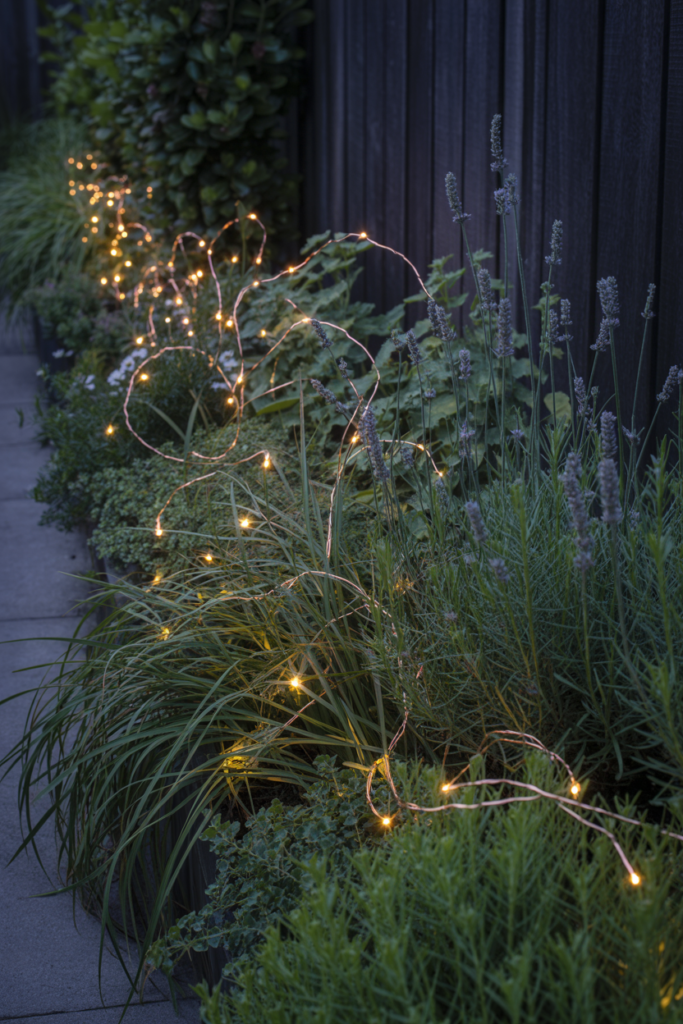
Tucking fairy lights into garden beds and border plantings is one of those lighting ideas that looks more complicated than it actually is. Small LED fairy light strings wound through low shrubs, ornamental grasses, or dense perennial plantings create a soft, twinkling effect that makes the whole bed look alive after dark. It is charming without being over the top.
Copper wire fairy lights are the most flexible option for weaving through plantings because the wire bends easily around stems and branches without damaging them. They are also nearly invisible during the day, so the garden bed looks completely natural when the lights are off and magical when they are on.
Battery-powered fairy lights with a timer function are the most practical choice for garden bed use, since running a power cable through a planting bed is not always convenient. Set them to switch on at dusk and off after a few hours, and the whole thing runs itself without any input from you.
7. Spotlights for Garden Features
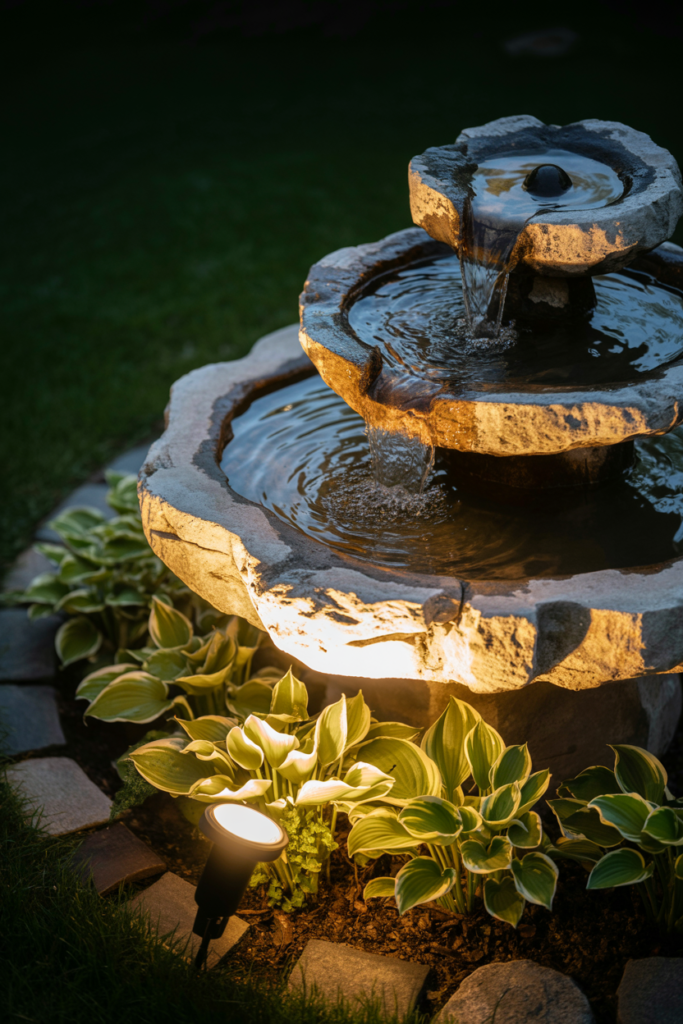
A well-placed spotlight on a garden feature, whether that is a water feature, a sculpture, a statement pot, or an architectural wall, creates an instant focal point that draws the eye and gives the whole garden a sense of intention after dark. It is a simple idea that delivers a disproportionately strong visual result.
The key to spotlighting a garden feature well is restraint. One or two carefully aimed lights on a single feature create drama. Spotlighting everything at once turns the garden into something that feels more like a showroom than an outdoor living space. Pick your best feature and let it shine, literally.
Adjustable spike spotlights give you the flexibility to aim the beam precisely and reposition the light if the garden changes over time. LED versions in warm white deliver the most flattering result on natural materials like stone, timber, and terracotta, bringing out the texture and color depth that cooler light temperatures tend to flatten.
8. Bollard Lights
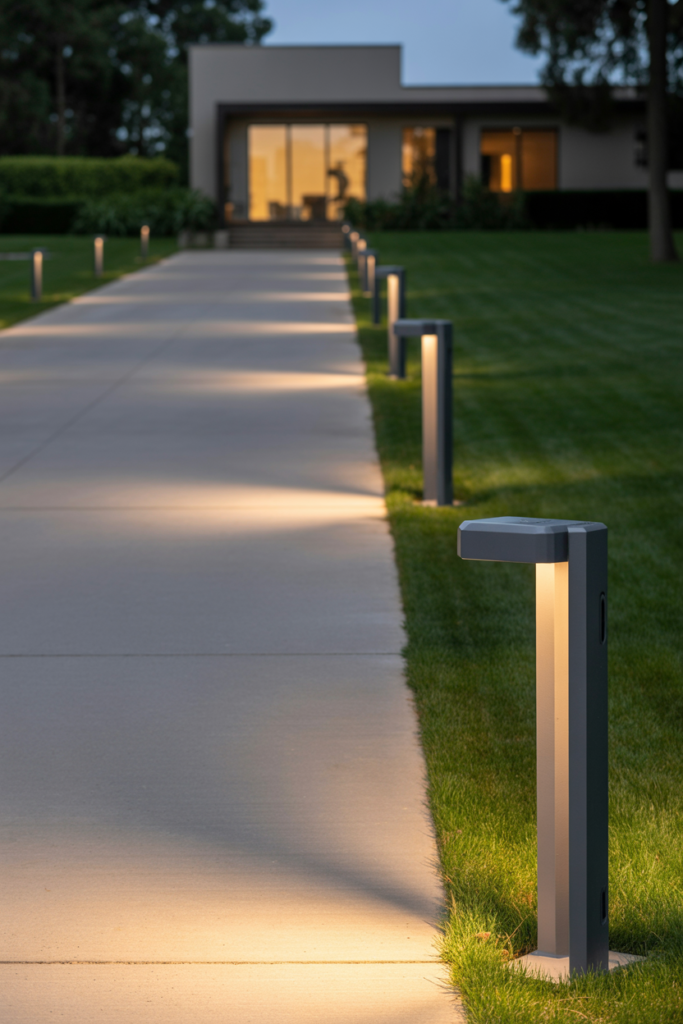
Bollard lights are a sleek, practical outdoor lighting option that works especially well along driveways, wide garden paths, and open lawn edges. They stand at a low to medium height and cast light downward and outward across a wide area, providing solid ambient illumination without the visual clutter of taller post lights. The result is a clean, contemporary look that suits modern garden styles particularly well.
Most bollard lights come in powder-coated aluminum or stainless steel finishes that handle outdoor conditions without rusting or fading over time. Low-voltage LED versions are the most energy-efficient choice and connect easily to a standard outdoor transformer, making them a manageable DIY installation for most homeowners.
I find bollard lights particularly effective when used in pairs or evenly spaced runs along a driveway or main garden path. The repetition creates a visual rhythm that makes the space feel deliberate and well-planned, which is exactly the kind of result that lifts an ordinary yard into something that looks genuinely designed.
9. Recessed Ground Lights
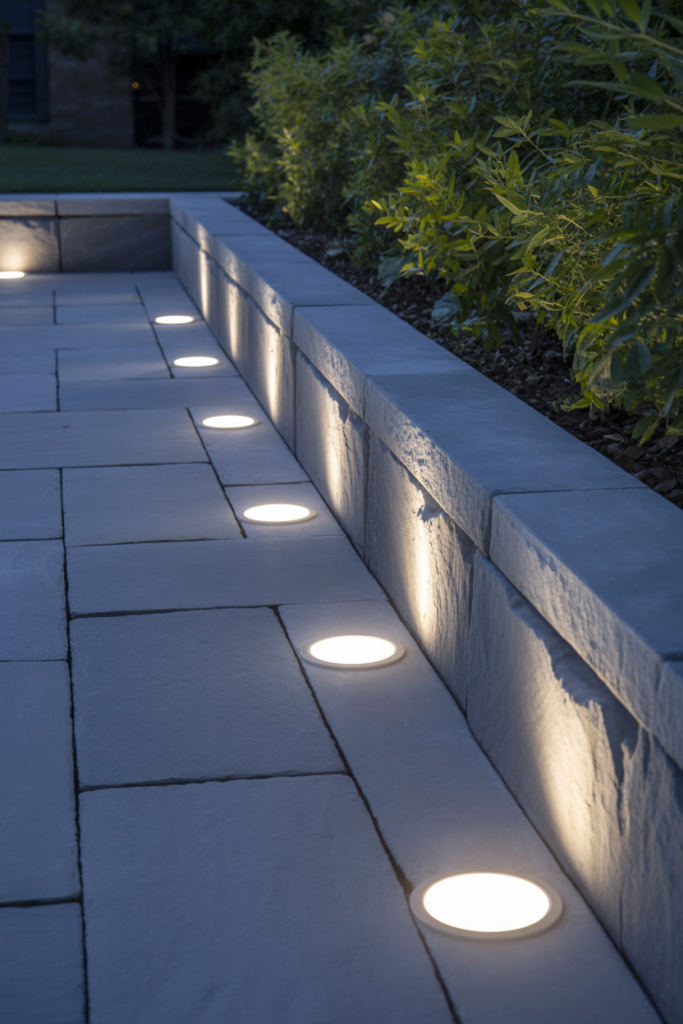
Recessed ground lights sit flush with the surface of a patio, deck, driveway, or pathway and cast light upward or across the surface in a way that feels almost invisible by day and quietly dramatic by night. They are one of the more subtle outdoor lighting options on this list, but the effect they create is anything but understated.
Installing recessed ground lights into an existing hard surface requires cutting out a housing pocket and running low-voltage cable to each fitting, which makes this a slightly more involved installation than surface-mounted options. For new patio or pathway builds, incorporating them from the start is straightforward and well worth the planning effort.
Warm white recessed ground lights work beautifully when spaced along the edge of a patio or used to outline the shape of a garden bed against a lawn. They define spaces and edges after dark in a way that makes the whole garden layout readable and intentional, even without any other lighting present.
10. Wall Wash Lighting
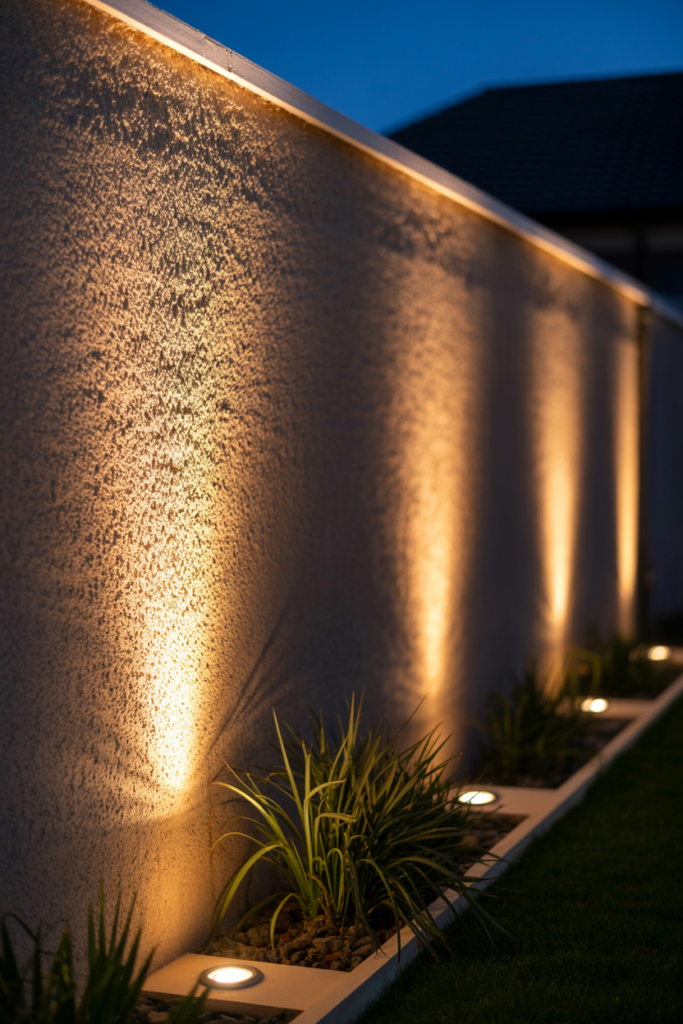
Wall wash lighting involves positioning a light source to cast an even spread of illumination across a vertical surface, such as a garden wall, rendered fence panel, or brick boundary wall. The technique highlights texture, color, and material quality in a way that makes even a plain garden wall look like a considered design feature after dark.
Dedicated wall wash fixtures mount low on the ground and angle upward to graze the surface with light, or mount higher and angle downward for a different effect. The grazing angle is what brings out texture in stone, brick, or rendered surfaces, creating shadows in the surface detail that add genuine depth and visual interest.
This lighting technique works particularly well in gardens with strong architectural elements like feature walls, tall hedges, or boundary structures. Paired with uplighting on nearby plants, wall wash lighting creates a layered backdrop that makes the whole garden feel like a cohesive, designed space rather than a collection of individual elements.
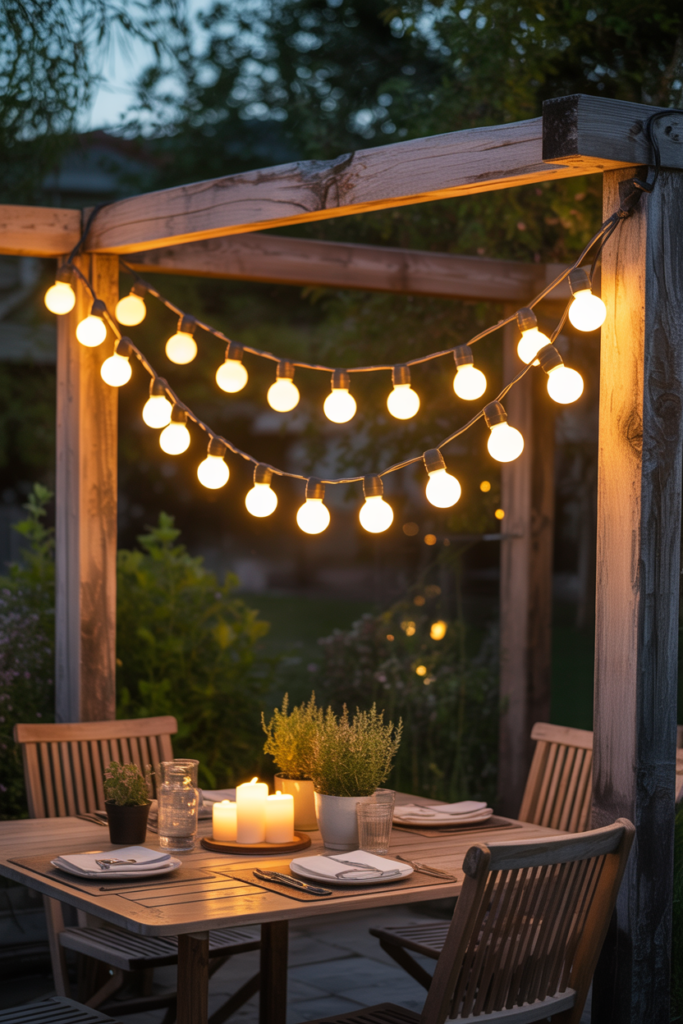
11. Festoon Lights
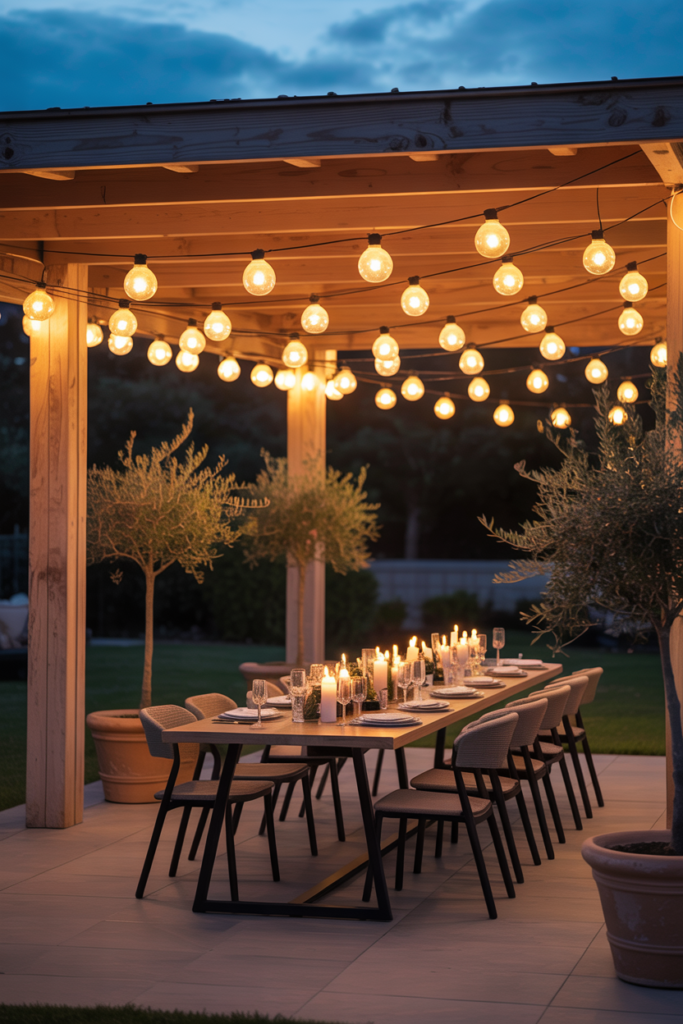
Festoon lights are the slightly more robust, outdoor-rated cousin of string lights, and they are a fantastic choice for permanent or semi-permanent outdoor entertaining areas. The bulbs are larger and more widely spaced than standard string lights, which gives them a bolder, more celebratory look that works beautifully over outdoor dining areas, garden bars, and alfresco kitchens.
Hanging festoon lights between two fixed points, whether that is timber posts, pergola beams, or exterior walls, creates an instant sense of enclosure and atmosphere that transforms an open outdoor space into something that feels like a proper room. The warm glow overhead makes everyone look good, and the food looks better, which is never a bad outcome.
Weatherproof festoon light sets with shatter-resistant bulbs are the most practical choice for permanent outdoor installation. They handle rain, wind, and temperature changes without the bulbs clouding or the cable degrading, which means you get years of reliable performance from a single investment rather than replacing cheaper sets every season.
12. Moonlighting from Trees
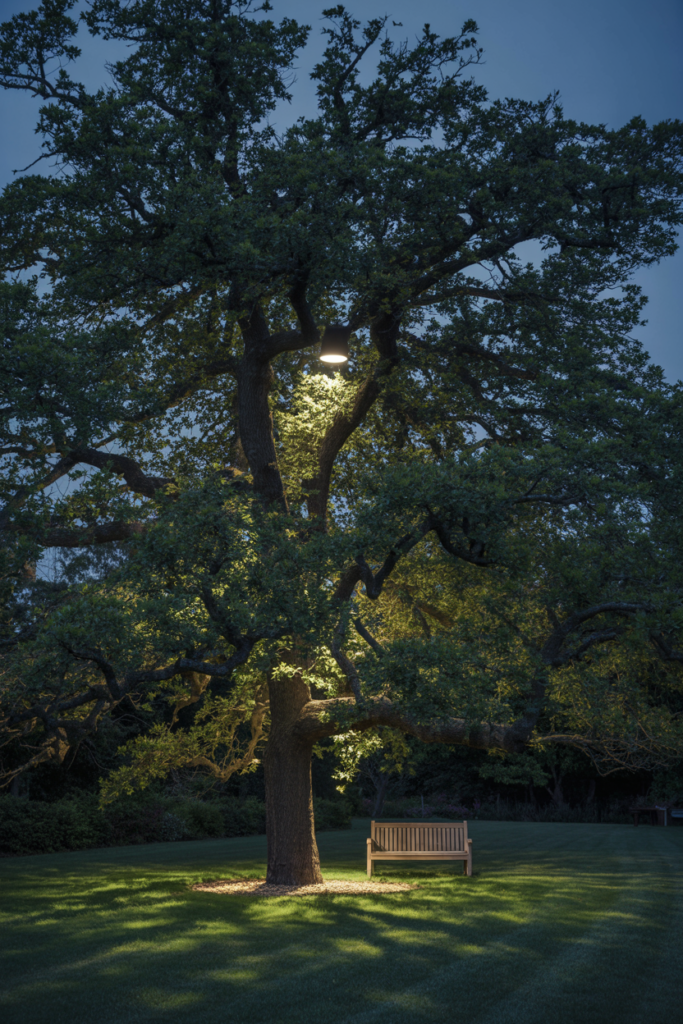
Moonlighting is one of the most beautiful outdoor lighting techniques and one of the least commonly used, which is a genuine shame. The idea is simple: mount a downward-facing light high in a tree canopy and let it cast a soft, diffused glow through the branches onto the ground below. The effect mimics natural moonlight filtering through leaves in a way that feels completely organic and naturally beautiful.
Installing a moonlight fixture requires mounting a weatherproof downlight high in the tree, ideally at least 20 feet up for the most convincing effect, and running a low-voltage cable down the trunk to a transformer at ground level. It is a more involved installation than most options on this list, but the result is unlike anything else in outdoor lighting.
The dappled light pattern that moonlight creates on a lawn or garden bed changes subtly as the breeze moves through the tree canopy, giving the whole garden a living, breathing quality after dark. Once you see a garden lit this way, it is very hard to settle for anything less.
13. Colored LED Accent Lights
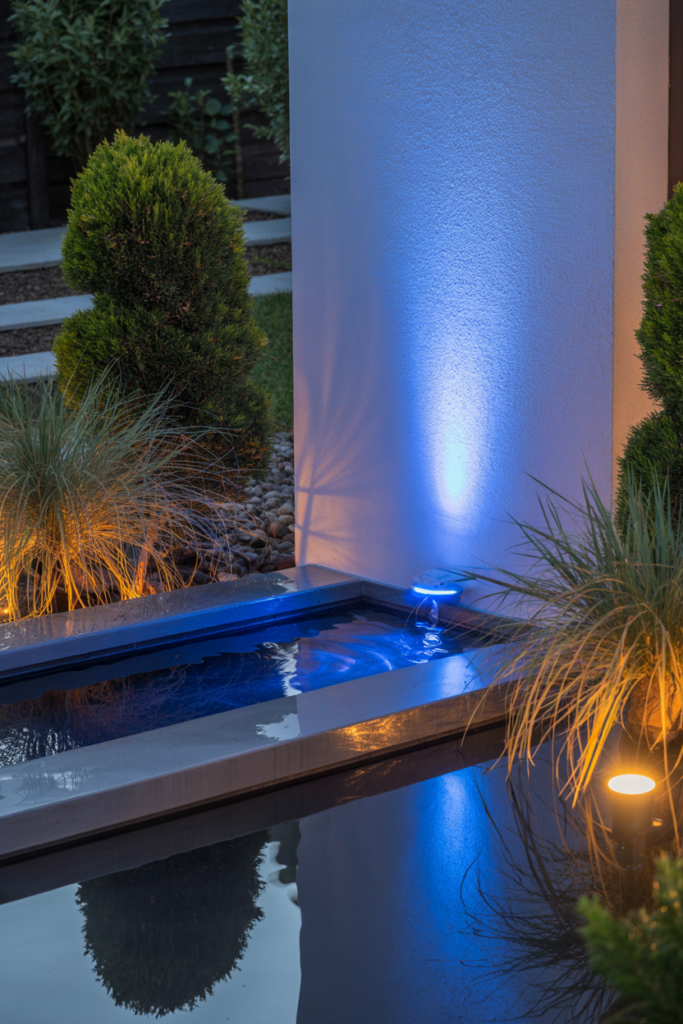
Colored LED accent lights add a playful, creative dimension to outdoor spaces that white light alone cannot achieve. Used sparingly and thoughtfully, colored uplights or spotlights can highlight specific garden features, create mood shifts between different areas of the yard, or simply add a personal touch that makes the garden feel unique and expressive.
The most successful approach with colored outdoor lighting is to keep it focused and intentional rather than scattering multiple colors across the whole garden. A single blue uplight on a water feature, a warm amber glow under a specimen tree, or soft green accent lights in a border planting each create a specific effect without the garden starting to look like a theme park.
Smart LED outdoor lights that connect to a home automation system or smartphone app give you the flexibility to adjust colors, brightness, and timing without going outside. For anyone who likes to change the mood of their outdoor space for different occasions, that kind of control makes a genuine difference to how much you actually use and enjoy the lighting.
14. Lantern String Lights
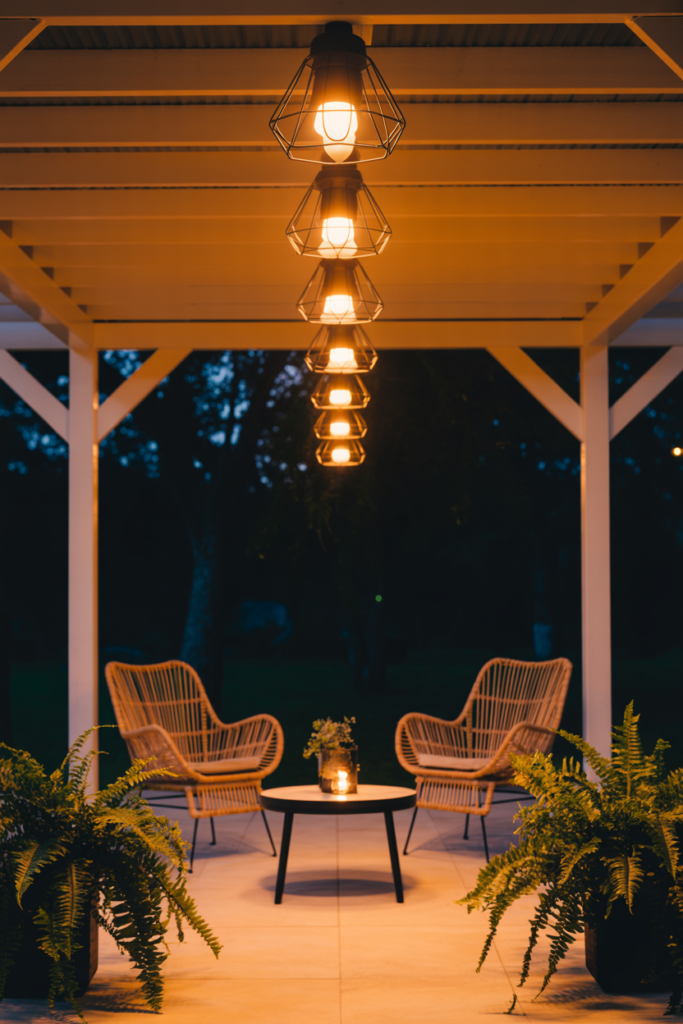
Lantern string lights combine the warmth and versatility of standard string lights with a more decorative, structured look that suits a wider range of garden styles. Each bulb sits inside a small paper, metal, or fabric lantern shade that diffuses the light softly and adds visual interest even when the lights are switched off during the day.
They work particularly well strung across a covered pergola, wrapped around a garden umbrella frame, or hung in loose loops between fence posts along an outdoor dining area. The lantern shades add a layer of texture and character that plain bulb string lights do not deliver, making the whole installation feel more finished and intentional.
Paper lantern string lights are best suited to covered areas where they stay dry, while metal and weatherproof fabric versions handle outdoor conditions well enough for open garden use. Warm white LED versions consume very little power and last for thousands of hours, making them a practical as well as attractive choice.
15. Fire Pit and Candle Lighting
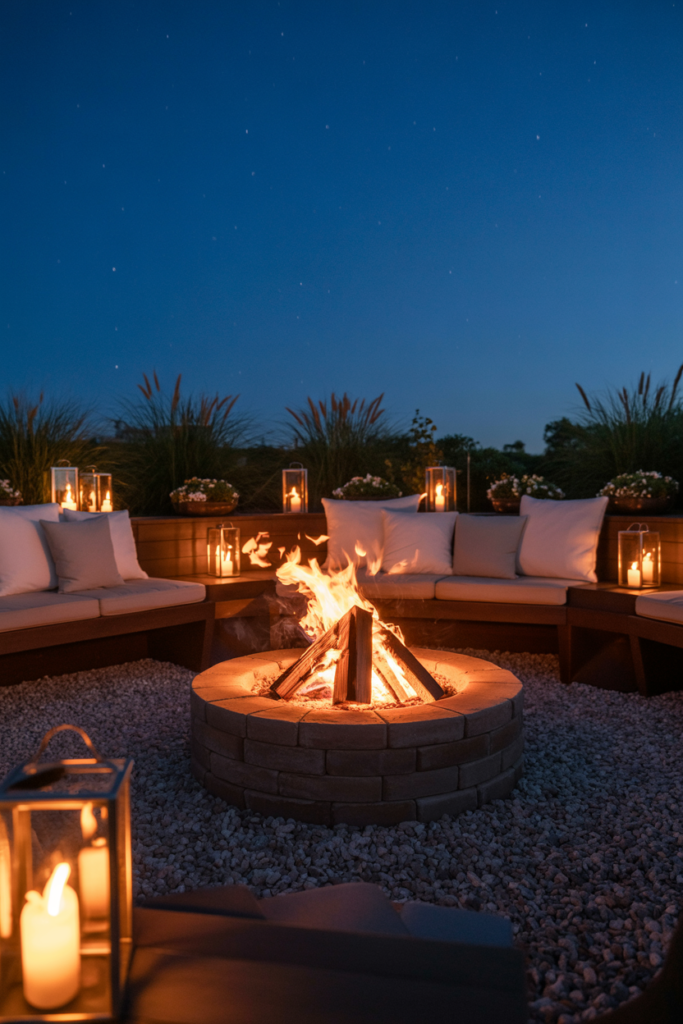
Fire pit and candle lighting occupy a special category in outdoor yard lighting because they create warmth and atmosphere in a way that electric light simply cannot replicate. The flicker of a real flame, whether from a fire pit, a cluster of pillar candles, or a set of lanterns with tea lights, adds a sensory dimension to an outdoor space that goes well beyond mere illumination.
A fire pit as a central outdoor lighting feature also doubles as a heat source, which extends the usable season of an outdoor entertaining area well into the cooler months. Surrounding the fire pit with low seating and a few stake-mounted candle lanterns in the borders creates an outdoor living space that feels genuinely cozy and inviting after dark.
For areas where an open flame is not practical, high-quality LED candle lanterns have become a genuinely convincing alternative. Modern flame-effect LED technology produces a realistic flicker that reads as natural candlelight from a normal viewing distance, delivering the atmosphere of real candles with none of the wind-related frustration.
Quick Comparison of All 15 Outdoor Yard Lighting Ideas
| Lighting Idea | Power Source | Best Location | Mood Created |
| Solar Path Lights | Solar | Walkways, paths | Soft, guiding |
| String Lights | Solar or plug-in | Pergolas, fences | Warm, festive |
| Uplighting | Low-voltage or solar | Trees, shrubs | Dramatic, bold |
| Deck and Step Lights | Low-voltage | Steps, deck edges | Safe, modern |
| Lanterns and Post Lights | Solar or hardwired | Entrances, paths | Classic, structured |
| Fairy Lights in Beds | Battery | Garden borders | Whimsical, soft |
| Spotlights for Features | Low-voltage or solar | Sculptures, water features | Focused, dramatic |
| Bollard Lights | Low-voltage | Driveways, wide paths | Clean, contemporary |
| Recessed Ground Lights | Low-voltage | Patios, paved areas | Subtle, architectural |
| Wall Wash Lighting | Low-voltage | Garden walls, fences | Textured, layered |
| Festoon Lights | Plug-in or hardwired | Dining areas, pergolas | Celebratory, warm |
| Moonlighting from Trees | Low-voltage | Large trees | Natural, magical |
| Colored LED Accent Lights | Smart LED | Features, borders | Creative, expressive |
| Lantern String Lights | Solar or plug-in | Covered areas, pergolas | Decorative, soft |
| Fire Pit and Candle Lighting | Flame or LED | Seating areas | Cozy, intimate |
How to Layer Outdoor Yard Lighting for the Best Results at Night
Layering outdoor lighting is the single most effective thing you can do to make a garden look professionally designed after dark. The approach mirrors what interior designers do inside the home: combine ambient light for general visibility, accent light for focal points, and decorative light for atmosphere. Each layer serves a different purpose, and together they create a result that no single light source can achieve alone.
Start with your path and step lighting first, since safety and navigation form the foundation of any good outdoor lighting plan. Once the practical layer is in place, add uplighting on your best trees or shrubs to create vertical interest and drama. Finally, layer in string lights, fairy lights, or lanterns to add warmth and atmosphere at the human scale where people actually spend their time.
The biggest mistake most people make with outdoor lighting is treating it as an afterthought once the rest of the garden is finished. Planning your lighting alongside your planting and hardscaping decisions gives you far better results because you can position power sources, hide cables cleanly, and choose plants partly for how well they respond to light. A little planning saves a lot of retrofitting later.
Conclusion
A garden that looks stunning after dark does not happen by accident. It happens because someone made a few smart decisions about where to place light, what type of fixture to use, and how different light sources can work together to create something genuinely beautiful. Every idea on this list contributes to that outcome in its own way.
From the simplicity of solar path lights to the drama of moonlighting from a tree canopy, there is a lighting solution here for every garden style, every budget, and every level of DIY confidence. You do not need to implement all fifteen ideas at once. Start with two or three that suit your space best and build from there as the garden evolves.
The best outdoor lighting feels natural, not overdone. It enhances what is already there rather than competing with it. Get that balance right, and your garden will look as good at ten o’clock at night as it does at ten o’clock in the morning.
Frequently Asked Questions
What is the best outdoor lighting for a garden path? Solar path lights and low-voltage LED stake lights both work well for garden paths. Solar options require no wiring and install in minutes, while low-voltage LED sets deliver more consistent brightness across longer runs. Spacing lights around 6 to 8 feet apart gives the most natural, balanced result.
How do I make my backyard look good at night without spending a lot? Solar string lights and battery-powered fairy lights are the most affordable ways to transform a backyard after dark. Both require no wiring, cost very little to run, and create a warm, inviting atmosphere immediately. Start with a pergola or fence line and build from there as your budget allows.
Are solar outdoor lights reliable enough for permanent garden use? Modern solar outdoor lights have improved significantly and work reliably in most climates with adequate sun exposure during the day. For primary lighting in prominent locations like a front entrance or main path, a hardwired or low-voltage option delivers more consistent performance. Solar works best as a secondary or accent lighting layer.
What color temperature works best for outdoor garden lighting? Warm white light in the 2700K to 3000K range works best for most outdoor garden settings. It complements natural materials like timber, stone, and brick, flatters plant colors, and creates a welcoming atmosphere. Cool white or daylight temperatures tend to feel harsh and clinical in a residential garden context.
How do I hide outdoor lighting cables in a garden? Burying low-voltage cable a few inches below the soil surface along bed edges or under mulch is the cleanest solution for most gardens. Surface cables can also run along fence bases or behind border plantings where they stay out of sight. Planning cable routes before planting makes the whole process significantly easier.
Can I install outdoor garden lighting myself? Most low-voltage and solar outdoor lighting systems are genuinely DIY-friendly and require no electrical qualifications to install. Plug-in systems and battery-powered options are even simpler. Hardwired mains-voltage fixtures should always be installed by a qualified electrician to meet safety standards and local building codes.
How do I stop outdoor lights from attracting insects? Warm white LED lights in the 2700K range attract significantly fewer insects than cool white or blue-toned light sources. Positioning lights away from seating areas and pointing them toward plants rather than open spaces also reduces the number of insects that gather around the light source during warm evenings.