
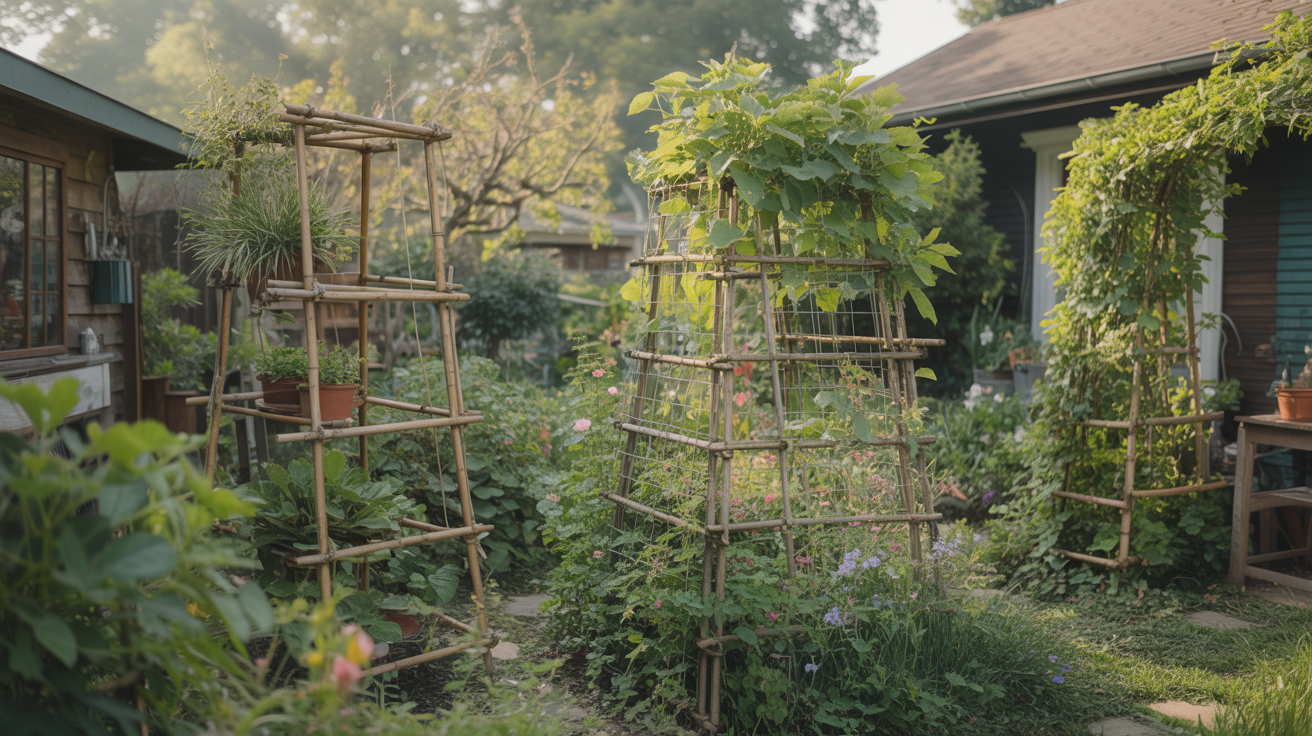
If you’ve ever watched a climbing plant flop around with nothing to grab onto, you already know the pain. A good trellis fixes that fast, and the best part? You don’t need to spend a fortune to get one that actually works and looks great.
Homemade trellis ideas are everywhere right now, and for good reason. Garden lovers are getting creative with wood, wire, bamboo, and even old junk sitting in the garage. The results? Sturdy, functional, and sometimes surprisingly beautiful garden structures that cost a fraction of store-bought ones.
I’ve been down this rabbit hole myself, and I can tell you, building your own trellis is one of those weekend projects that pays off every single season. Whether you’re growing cucumbers, roses, beans, or clematis, the right trellis makes all the difference.
Why a DIY Garden Trellis Is Worth Every Minute of Your Time
A homemade trellis gives you full control over size, shape, and material. You’re not stuck with the flimsy plastic options at the garden center that snap after one windy afternoon.
Building your own also means you can match the trellis to your garden’s style. A rustic wooden trellis looks different from a sleek metal grid, and both serve different plants and spaces. When you build it yourself, you choose exactly what fits your outdoor space.
There’s also the satisfaction factor. Honestly, there’s something deeply satisfying about watching your tomatoes or morning glories climb a structure you built with your own hands. It adds a personal touch that no store-bought product can replicate.
1. Classic Wooden Stake Trellis
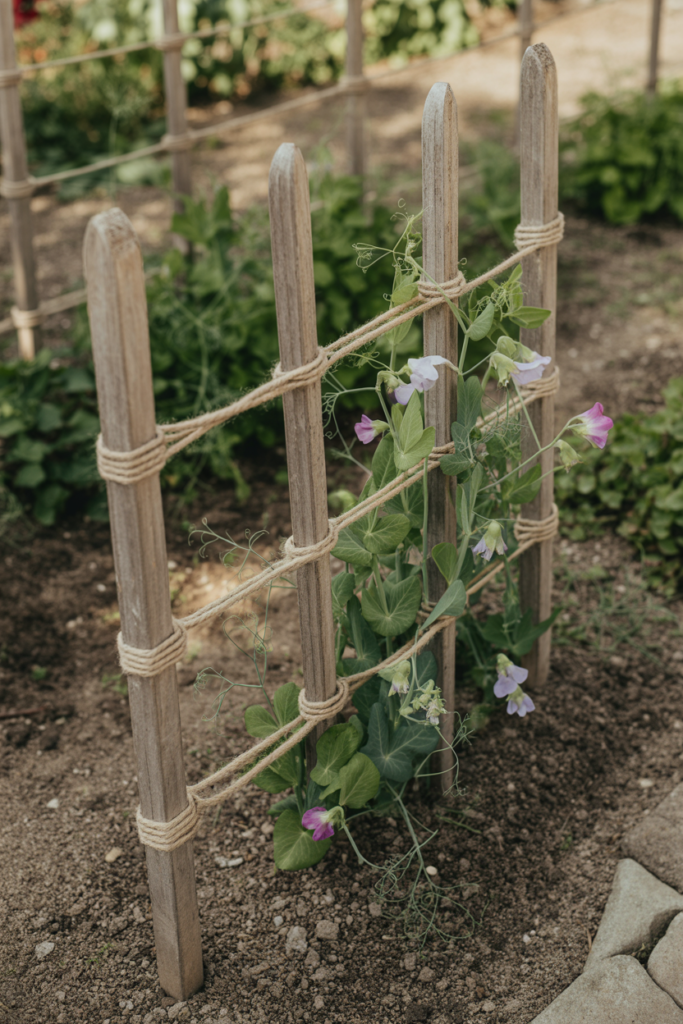
A wooden stake trellis is one of the simplest DIY garden trellis ideas you can start with. All you need are a few wooden stakes, some garden twine, and basic tools you probably already own.
I like this one because it works for almost every climbing plant, from pole beans to sweet peas. You push the stakes into the ground, tie horizontal rows of twine between them, and your plants have a ready-made climbing frame within minutes.
It’s not glamorous, but it gets the job done reliably every season. Plus, wood blends naturally into any garden setting without looking out of place.
2. Bamboo Trellis for Climbing Vegetables
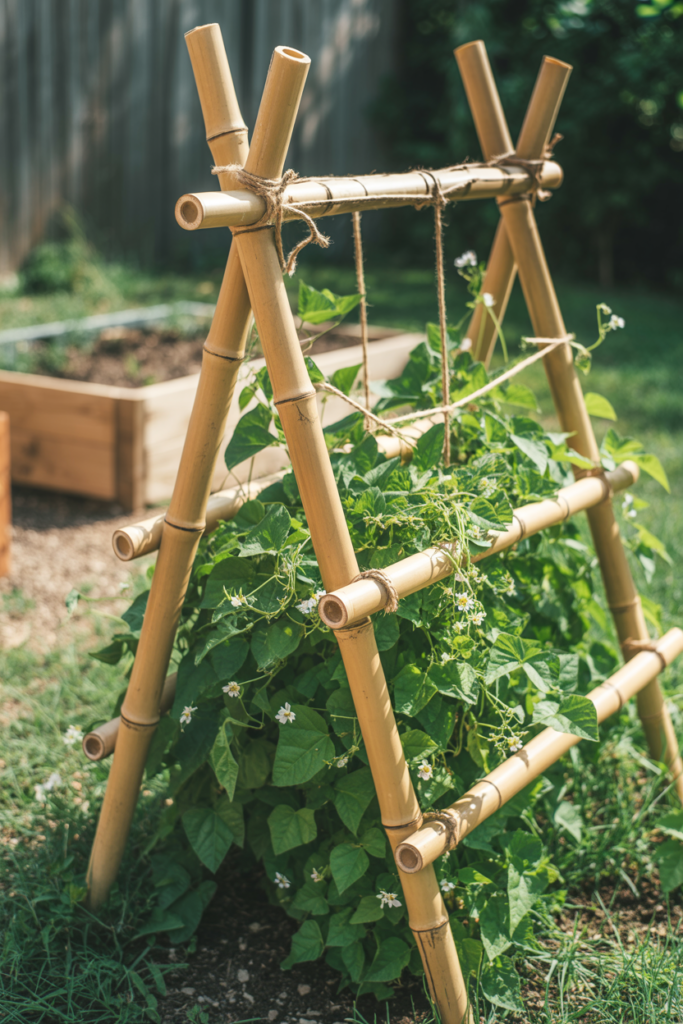
Bamboo is one of the most popular materials for homemade garden trellis projects, and it’s easy to see why. It’s lightweight, strong, naturally rot-resistant, and incredibly affordable.
You can build a simple A-frame bamboo trellis for cucumbers or beans in under an hour. Just cross two bamboo poles at the top, tie them together with twine, and add horizontal rungs along the sides for the plants to grip.
Bamboo also looks clean and intentional in the garden. It has that relaxed, natural aesthetic that works beautifully in both kitchen gardens and ornamental beds.
3. PVC Pipe Trellis
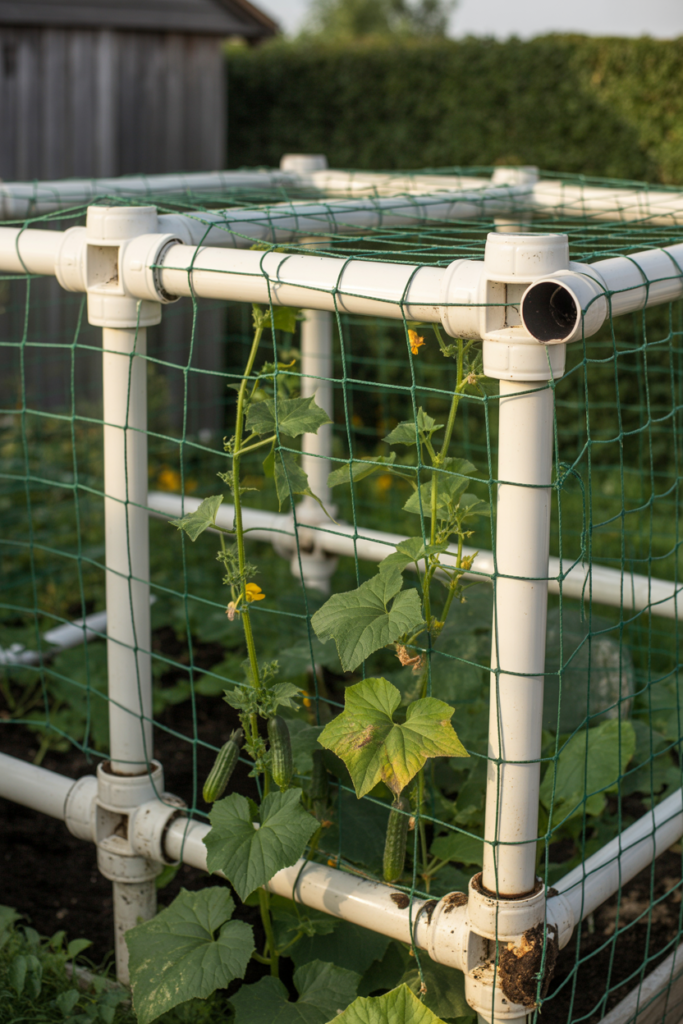
PVC pipe is a surprisingly solid material for a DIY trellis, especially if you want something that lasts more than one season. It doesn’t rot, it handles moisture well, and it’s cheap to buy at any hardware store.
You can build a rigid grid trellis using PVC pipes and connectors, then stretch garden netting across the frame for climbing plants to grab. It’s a great option for heavier crops like squash or indeterminate tomatoes that need real support.
The only downside is that PVC isn’t the prettiest material in a garden. A coat of spray paint in a natural tone fixes that quickly, though.
4. Repurposed Ladder Trellis
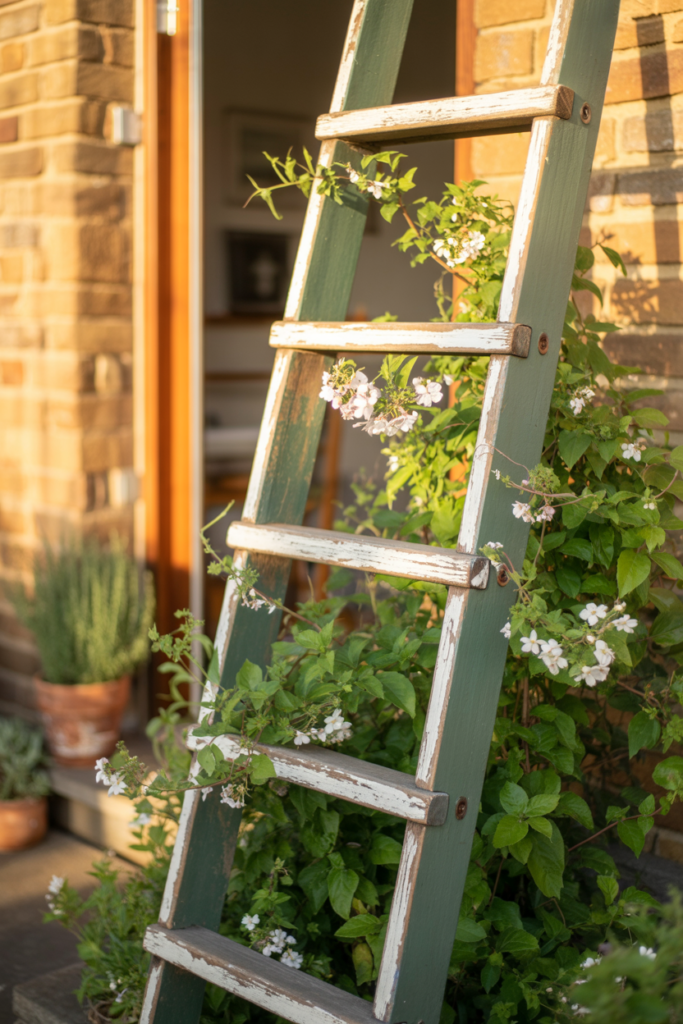
An old wooden ladder leaning against a fence or wall makes a charming and functional trellis with zero construction required. This is one of those homemade trellis ideas that feels almost too easy.
I’ve seen gardeners use vintage wooden ladders for climbing roses and jasmine, and the results look like something from a magazine spread. The rungs act as natural supports, and the plant fills in the gaps beautifully over a single growing season.
If you don’t have an old ladder lying around, thrift stores and garage sales are full of them for a few dollars. A little sandpaper and a coat of outdoor paint, and it looks completely intentional.
5. Branch and Twig Trellis
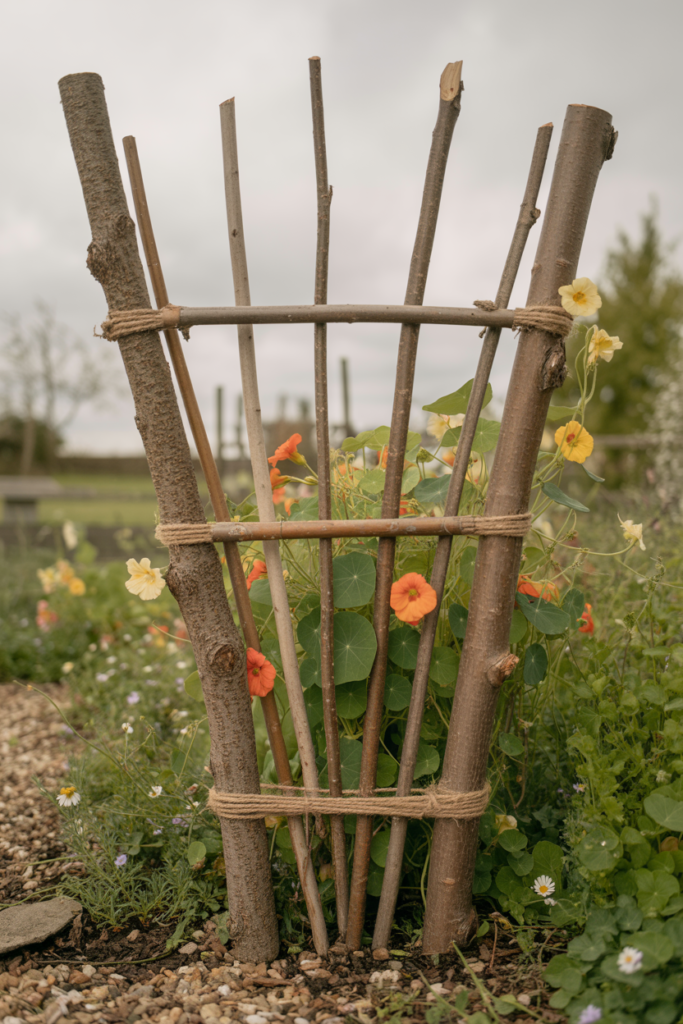
If you have trees in your yard, you already have trellis materials waiting to be used. A branch and twig trellis uses natural wood pieces woven or tied together into a rustic grid or fan shape.
This is one of my favorite budget garden trellis ideas because the materials cost absolutely nothing. You collect fallen branches, arrange them into your desired shape, and bind the joints with twine or thin wire.
The result has a wonderfully organic look that suits cottage gardens and wildflower beds perfectly. It won’t last forever, but it composts naturally at the end of its life, which feels like a bonus.
6. Wire Mesh Panel Trellis
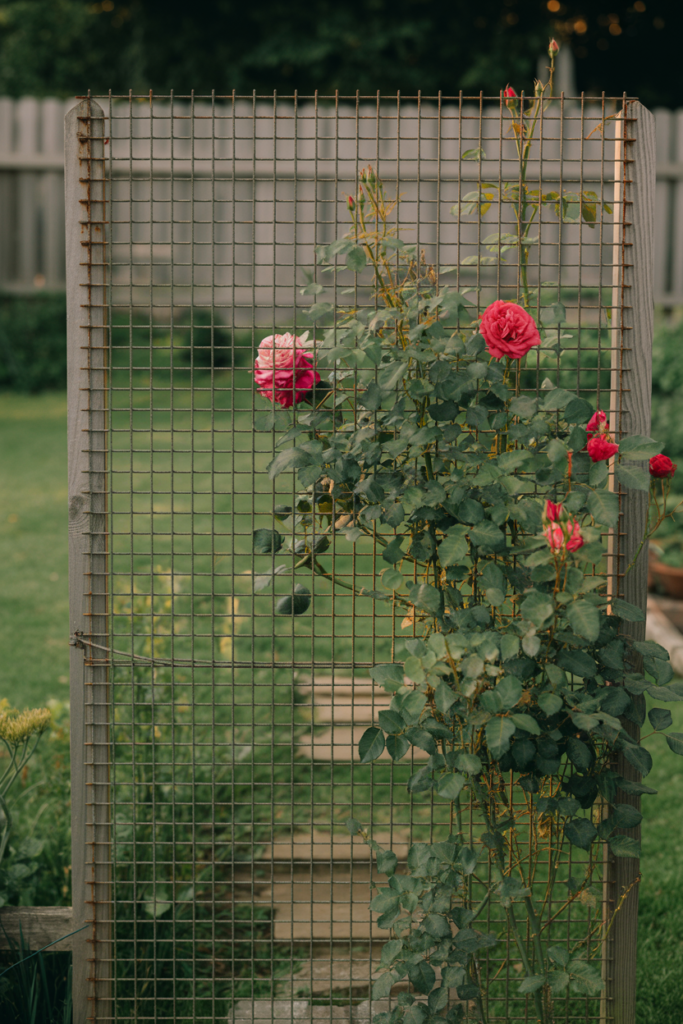
A simple wire mesh or hardware cloth panel makes one of the sturdiest homemade trellis options available. You can buy a roll of galvanized wire mesh at any hardware store for a very reasonable price.
Cut the mesh to your desired size, attach it to two wooden posts driven into the ground, and you have a solid climbing frame for heavy plants like cucumbers, melons, or climbing roses. The grid openings give plants plenty of anchor points as they grow.
Wire mesh also lasts for years without any maintenance beyond occasional cleaning. It’s one of those set-it-and-forget-it solutions that serious vegetable gardeners swear by.
7. Upcycled Window Frame Trellis
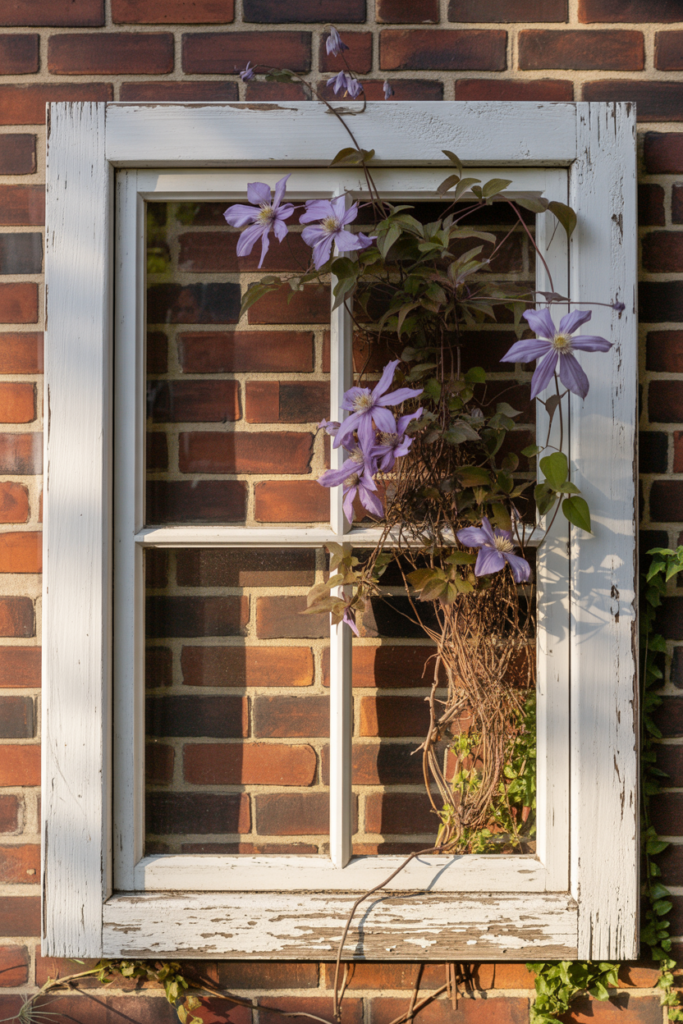
Old window frames are one of the most creative materials for DIY trellis projects. The existing grid of a wooden window frame is practically a trellis already.
You can attach a salvaged window frame to a garden wall or fence and train climbing plants directly through the panes. Over a season, plants like clematis or climbing hydrangea weave through the frame and create a stunning living wall effect.
Window frames are easy to find at salvage yards, flea markets, or online listings for very little money. Sand them down, add a coat of weatherproof paint, and they hold up surprisingly well outdoors.
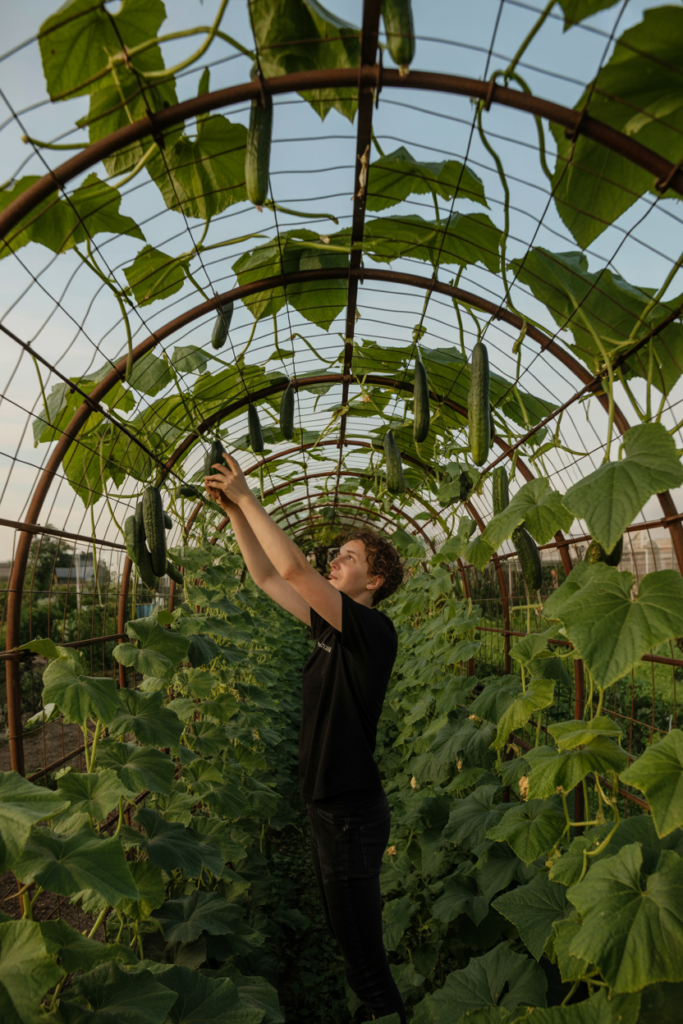
8. Cattle Panel Trellis Arch
A cattle panel trellis arch is one of the most satisfying structures you can build in a vegetable garden. These heavy-duty wire panels are sold at farm supply stores and are incredibly strong.
You bend the panel into an arch shape over a garden bed and secure the ends in the ground. Cucumbers, squash, and beans grow up one side and cascade down the other, which also makes harvesting much easier.
Walking through a cattle panel arch covered in lush green plants feels ridiculously rewarding. It looks like a lot of effort, but it takes less than an afternoon to set up.
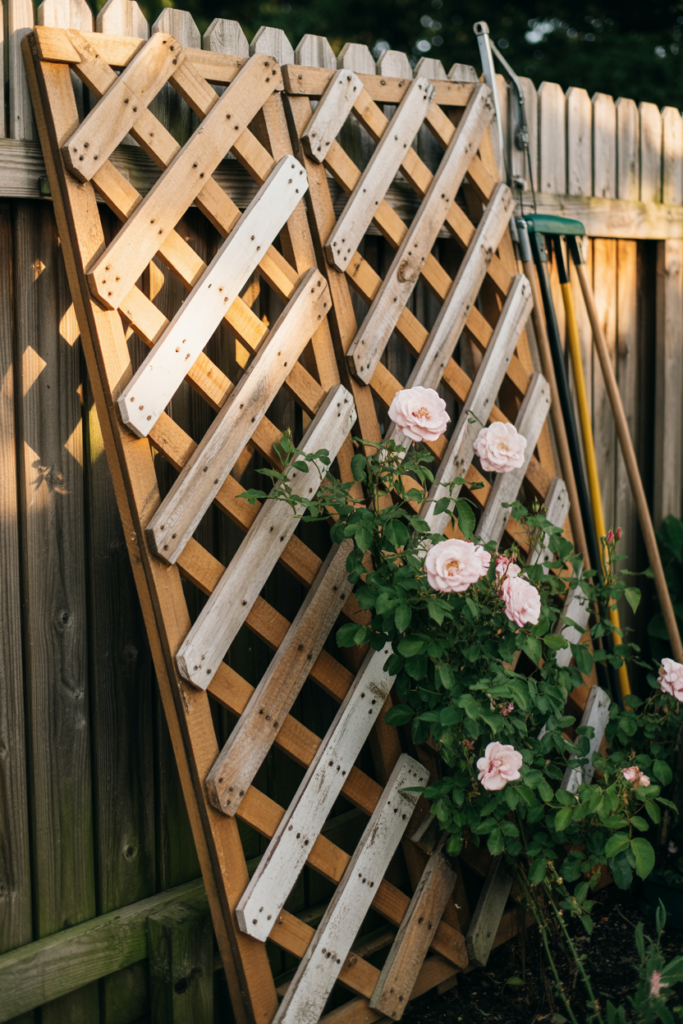
9. Pallet Wood Trellis
Wooden pallets are one of the most versatile free materials available for garden projects. A single pallet leaned against a wall or fence becomes a ready-made trellis with very little effort.
For a more polished look, you can disassemble the pallet and use the planks to build a custom trellis in any size or pattern you like. Diagonal lattice patterns and fan shapes are both popular and work well for flowering climbers.
Just make sure any pallet you use is stamped HT, which means heat-treated and safe for garden use. Avoid pallets marked MB, as those were treated with chemicals you don’t want near your plants.
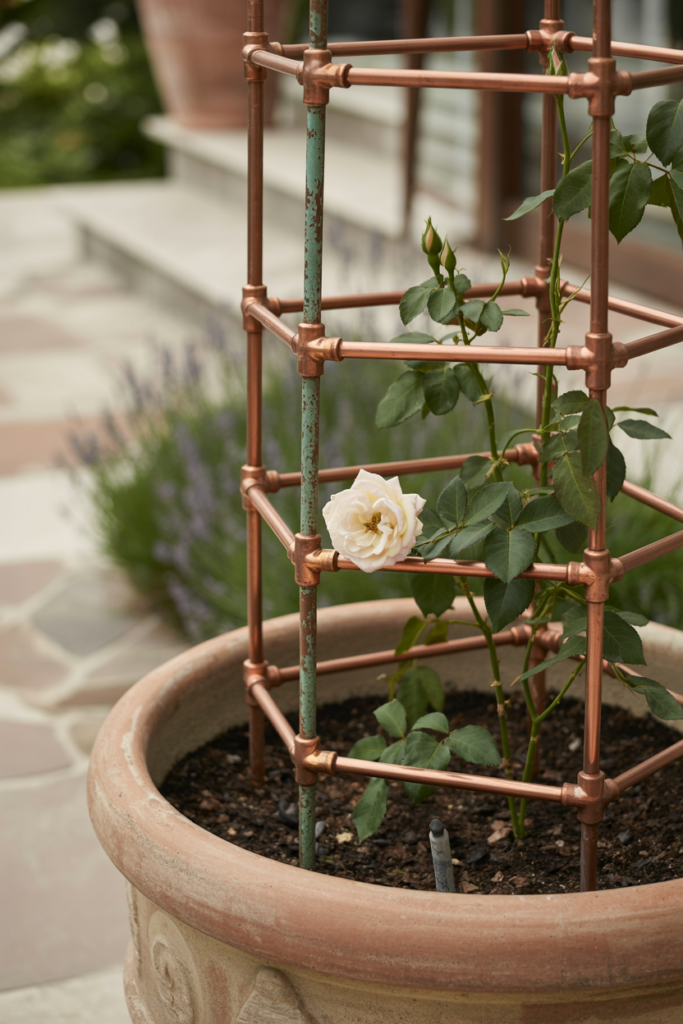
10. Copper Pipe Trellis
A copper pipe trellis is one of the more elegant homemade trellis ideas on this list. Copper weathers beautifully outdoors, developing a green patina over time that looks expensive without actually being expensive.
You can join copper pipes with standard fittings to create geometric trellis shapes, from simple rectangles to more intricate designs. It works especially well in container gardens or as a focal point in a formal garden bed.
The material cost is slightly higher than wood or PVC, but a copper trellis lasts for decades. That makes the price per season genuinely competitive with cheaper alternatives.
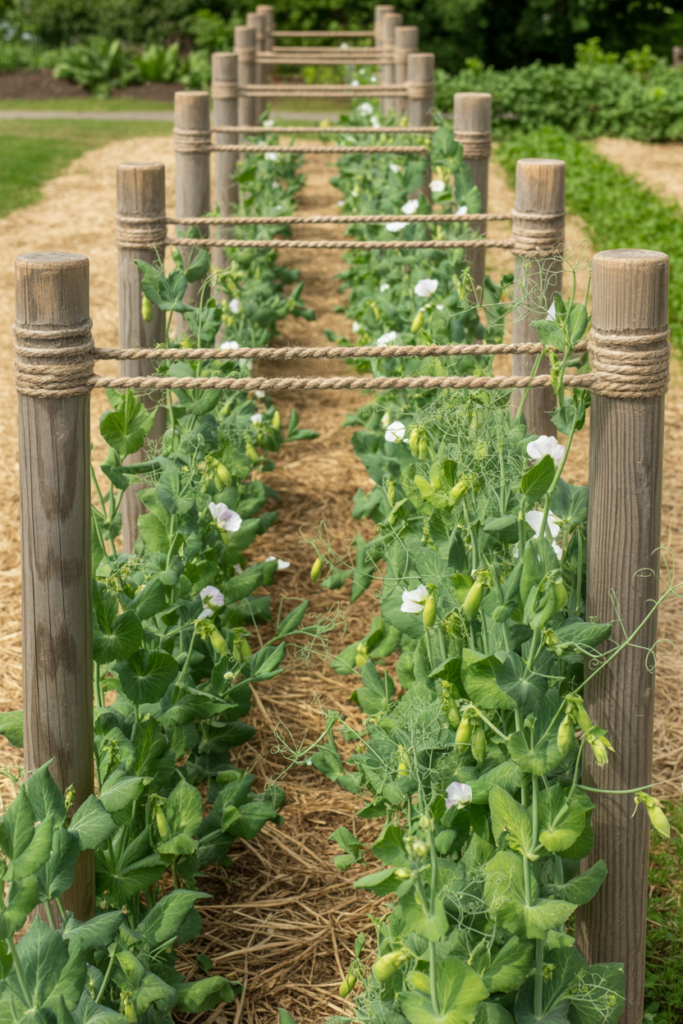
11. String and Post Trellis
A string and post trellis is probably the fastest homemade garden trellis you can set up in a day. You drive wooden or metal posts into the ground at regular intervals and stretch rows of garden twine between them horizontally.
This style works incredibly well for growing peas, beans, and other lightweight climbers in rows. The plants grab onto the string naturally as they grow, and you can add more rows as the season progresses.
At the end of the growing season, you compost the string and store the posts. It’s a low-waste, low-cost system that works season after season with almost no upkeep.
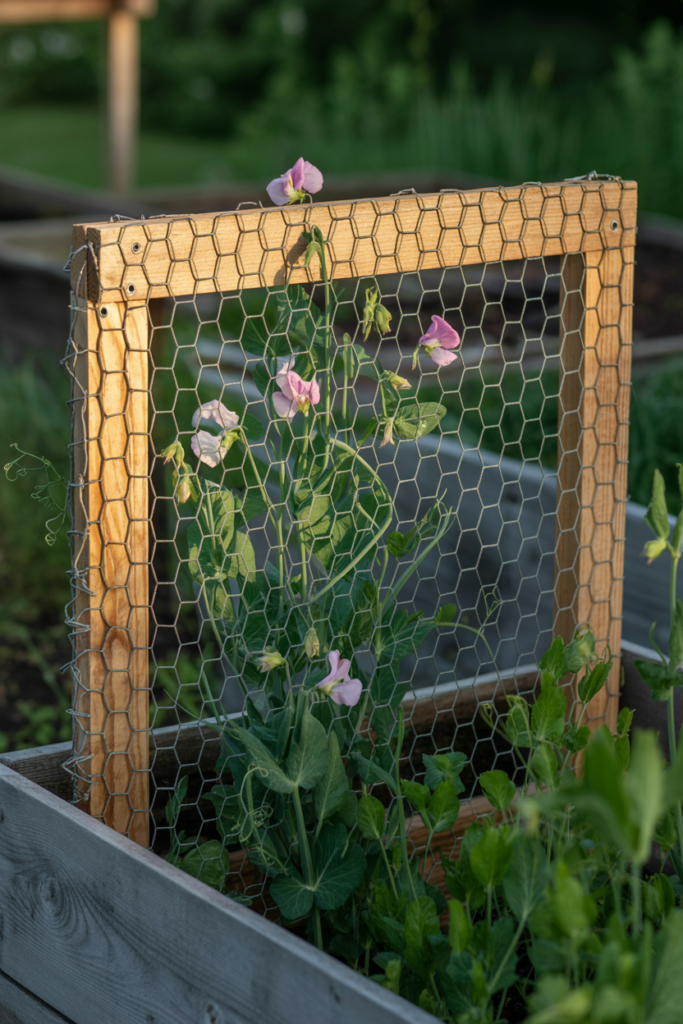
12. Chicken Wire Trellis Frame
Chicken wire stretched over a simple wooden frame is one of the most affordable DIY climbing plant support ideas around. The small hexagonal openings are perfect for plants with delicate tendrils like sweet peas or climbing nasturtiums.
Building the frame takes basic carpentry skills and a staple gun. Once you attach the chicken wire to the frame, you have a lightweight trellis that’s easy to move around the garden as needed.
I like using chicken wire trellis frames inside raised beds, too. They sit perfectly over the bed edges and keep everything growing upward instead of sprawling sideways across the path.
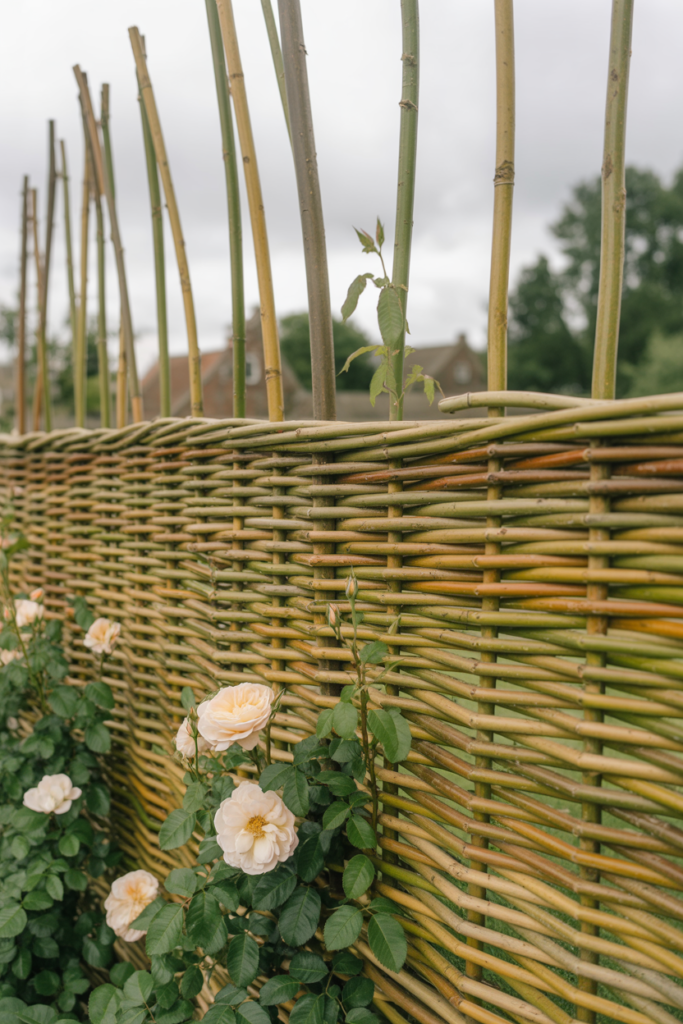
13. Woven Willow Trellis
A woven willow trellis is one of those garden features that looks like it took real skill but is actually straightforward to make. Willow branches are naturally flexible when fresh, which makes them easy to weave into grids, fans, or arched shapes.
You push the thicker willow stakes into the ground, then weave thinner branches horizontally through them while the wood is still pliable. As the willow dries, it holds its shape firmly and becomes a sturdy structure.
Fresh willow rods are available from garden suppliers and sometimes from local tree pruning services. A woven willow trellis suits cottage gardens and naturalistic planting schemes better than almost any other material.
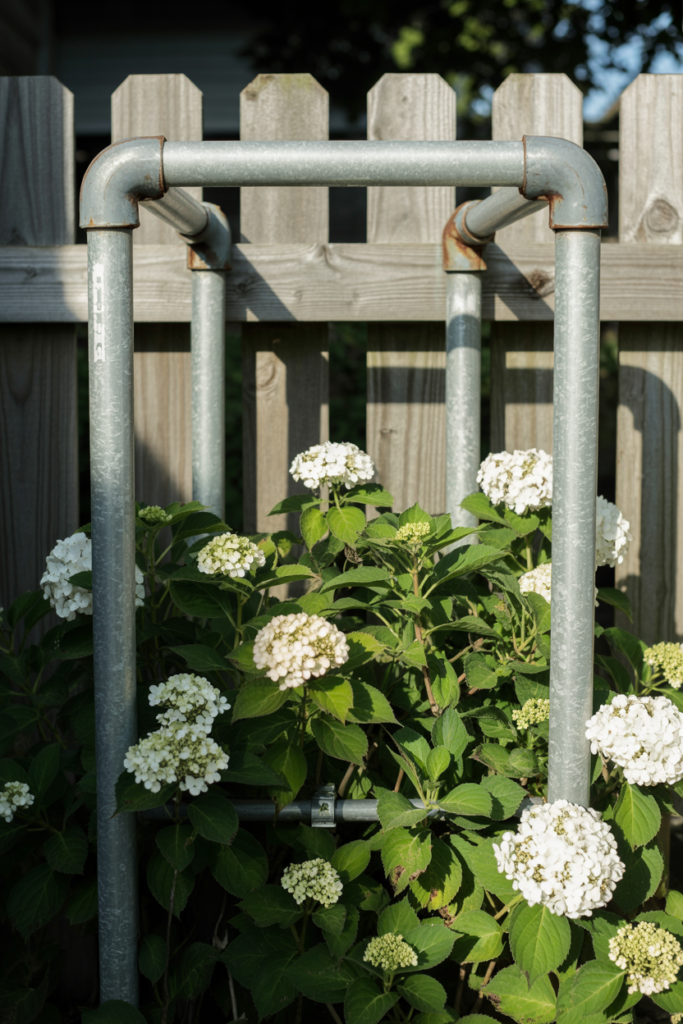
14. Metal Conduit Trellis
Electrical metal conduit is an underrated material for homemade garden trellis projects. It’s cheap, strong, and bends easily with a simple conduit bender tool available at hardware stores.
You can shape conduit into arches, rectangles, or custom frames and connect sections using standard conduit fittings. The result is a clean, industrial-style trellis that holds up against wind and heavy plant growth without any issues.
Metal conduit also works well for permanent trellis installations against walls or fences. It won’t rot, rust is minimal with galvanized versions, and it handles the weight of mature climbing plants with ease.
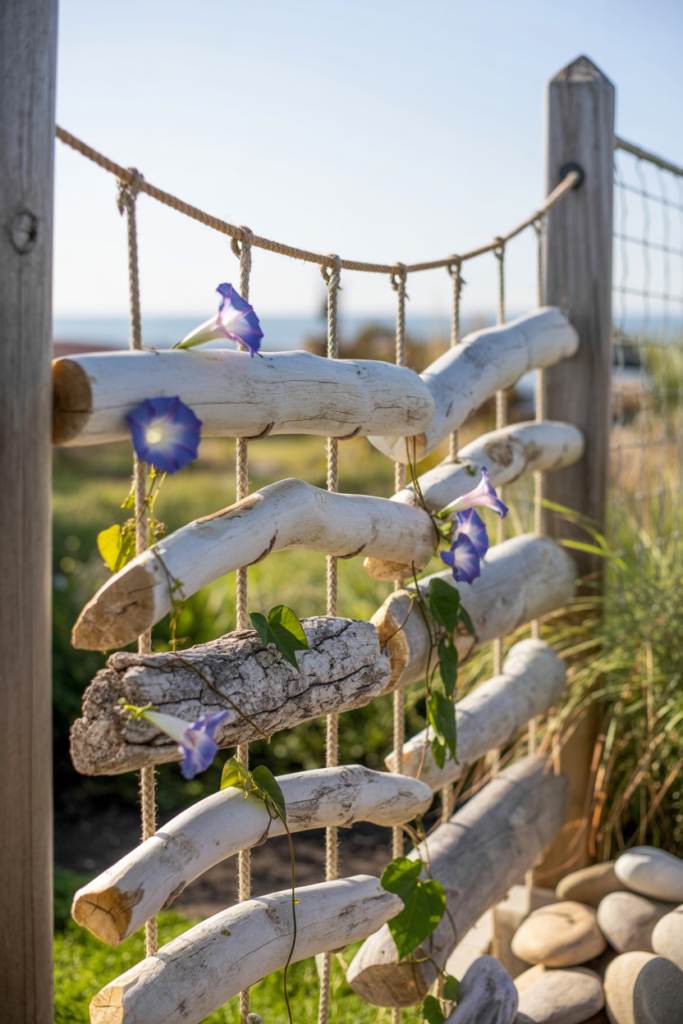
15. Rope and Driftwood Trellis
A rope and driftwood trellis brings a coastal, bohemian feel to any garden space. You collect pieces of driftwood or weathered branches, arrange them horizontally, and suspend them from a top rod or fence rail using thick natural rope.
The spacing between the driftwood pieces creates the climbing structure, and plants weave through the rope and wood naturally. It works beautifully with lightweight climbers like morning glories, black-eyed Susan vine, or climbing nasturtiums.
This is one of those homemade trellis ideas that doubles as garden art. Even before the plants fill in, the structure itself looks like a deliberate design feature rather than a functional support.
Choosing the Right Trellis Material for Your Garden
The material you choose for your homemade trellis matters more than most people think. Different plants have different weight requirements, and a flimsy structure under a mature climbing rose is a recipe for disaster.
Here’s a quick comparison to help you pick the right material based on your needs:
| Material | Cost | Durability | Best For |
| Bamboo | Low | 2-3 seasons | Vegetables, lightweight climbers |
| Wood | Low-Medium | 3-5 years | All-purpose garden use |
| Wire Mesh | Medium | 10+ years | Heavy vegetables, roses |
| PVC Pipe | Low | 5-7 years | Vegetables, wet climates |
| Copper Pipe | Medium-High | 20+ years | Ornamental, container gardens |
| Metal Conduit | Low-Medium | 10+ years | Permanent installations |
| Willow | Very Low | 1-2 seasons | Cottage gardens, lightweight climbers |
| Rope and Driftwood | Very Low | 1-2 seasons | Decorative, lightweight climbers |
Matching your trellis material to your plant type saves you the frustration of rebuilding halfway through the growing season. A cucumber vine can get heavy fast, so always size up your support when in doubt.
Wrapping Up: Your Garden Deserves a Trellis You’re Proud Of
Building a homemade trellis is one of the most practical and rewarding things you can do for your garden. It costs very little, takes a weekend at most, and gives your climbing plants the support they need to thrive all season long.
From a simple bamboo A-frame to an elegant copper pipe grid, there’s a DIY trellis idea on this list for every budget, skill level, and garden style. The key is to start with what you have and build from there.
I genuinely believe that the best garden structures are the ones you make yourself. They fit your space perfectly, reflect your style, and carry that quiet satisfaction every time you walk past them. Pick one idea from this list, gather your materials, and get building this weekend.
Frequently Asked Questions
What is the easiest homemade trellis to build for beginners? A wooden stake and twine trellis is the easiest starting point for beginners. You only need stakes, twine, and basic tools, and the whole setup takes under 30 minutes.
What materials work best for a DIY garden trellis? Bamboo, wood, and wire mesh are the most popular materials for homemade trellis projects. Each one balances affordability, durability, and ease of use well for most home gardeners.
How do I make a trellis for climbing vegetables on a budget? A bamboo A-frame or a string and post trellis are both excellent low-cost options for climbing vegetables. Both cost very little to build and handle crops like beans, peas, and cucumbers reliably.
Can I use a trellis in a raised bed garden? Yes, a trellis works very well inside a raised bed. A chicken wire frame or a simple bamboo structure fits neatly over most raised bed sizes and keeps climbing plants growing upward efficiently.
How long does a wooden homemade trellis last? A well-built wooden trellis treated with outdoor sealant typically lasts between three and five years. Hardwoods like cedar and redwood naturally resist rot and last longer than untreated pine.
Is a cattle panel arch worth building for a home garden? A cattle panel arch is absolutely worth the effort for vegetable gardeners with a bit of space. It supports heavy crops, improves air circulation, and makes harvesting cucumbers and squash much easier.
What climbing plants grow best on a homemade trellis? Cucumbers, beans, peas, clematis, climbing roses, morning glories, and jasmine all grow beautifully on a homemade trellis. Most climbing and vining plants adapt well to any trellis structure as long as it offers enough support.