
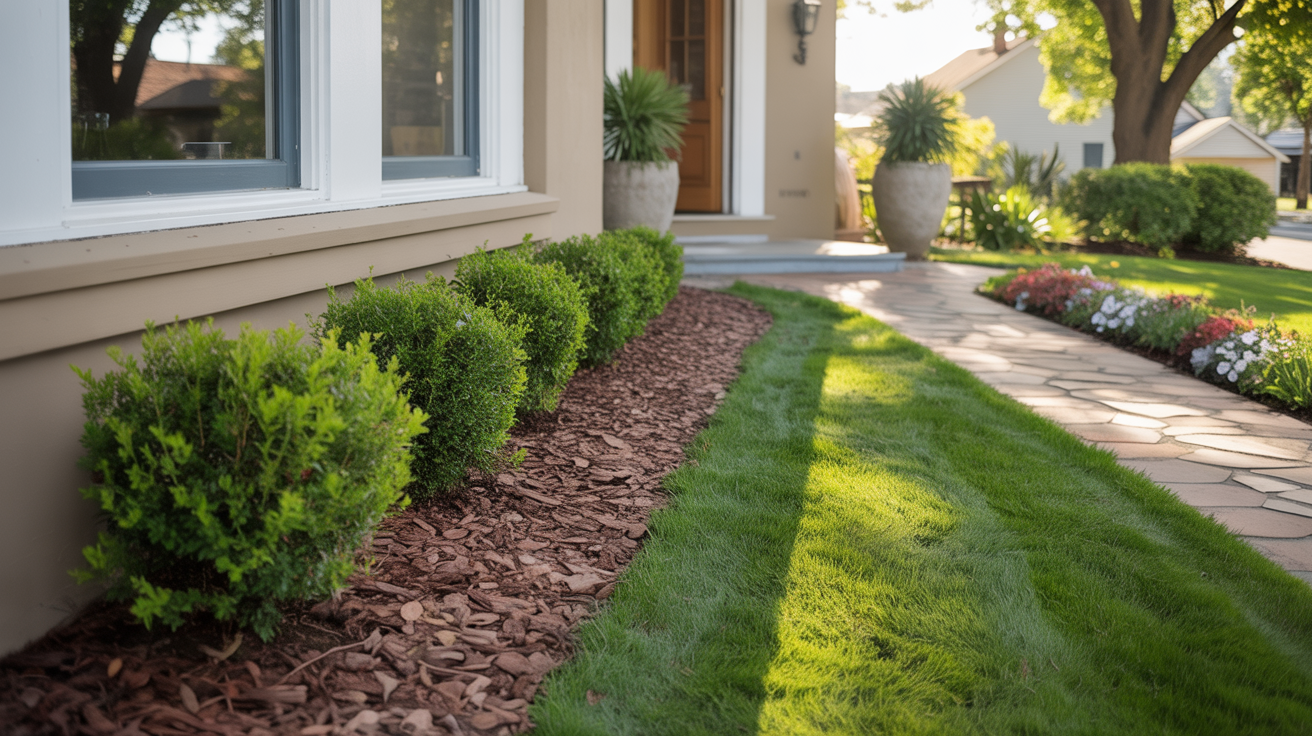
Simple front yard landscaping makes a bigger difference to your home’s curb appeal than almost any other exterior upgrade. A tidy, well-planted front yard signals to everyone who passes by that the home is cared for and loved. You don’t need a professional landscaper or an unlimited budget to get there either.
The front yard is the first thing people see, and first impressions stick. A patchy lawn, overgrown shrubs, or bare soil along the foundation can make even a beautiful house look neglected. On the flip side, clean edging, fresh mulch, and a few well-chosen plants can transform the same house into the best-looking one on the street.
What makes front yard landscaping feel manageable is starting with simple, low-maintenance ideas rather than trying to overhaul everything at once. The ten ideas in this article focus on practical, affordable changes that real homeowners actually use. Each one delivers visible results without requiring a weekend of hard labor or a trip to a specialty nursery.
Why Simple Front Yard Landscaping Ideas Work Better Than Complex Ones
Simple landscaping consistently outperforms complicated designs in front yards for one straightforward reason: it stays looking good over time. Elaborate garden beds with dozens of different plant varieties require constant attention, deadheading, and replanting. A clean, simple layout with the right plants practically maintains itself.
Low-maintenance front yard landscaping also photographs better and appeals to a wider range of tastes. Whether your home is a modern build, a classic colonial, or a cozy bungalow, simple and structured landscaping suits every architectural style. Overthinking the plant palette or layout often leads to a busy, cluttered look that actually reduces curb appeal rather than improving it.
Budget is another reason to keep things simple. Most of the best front yard landscaping ideas rely on a handful of affordable materials: mulch, edging, a few shrubs, and some ground cover. These basics, done well and maintained consistently, create a polished and welcoming front yard that looks far more expensive than it actually is.
1. Define Your Beds With Clean, Sharp Edging
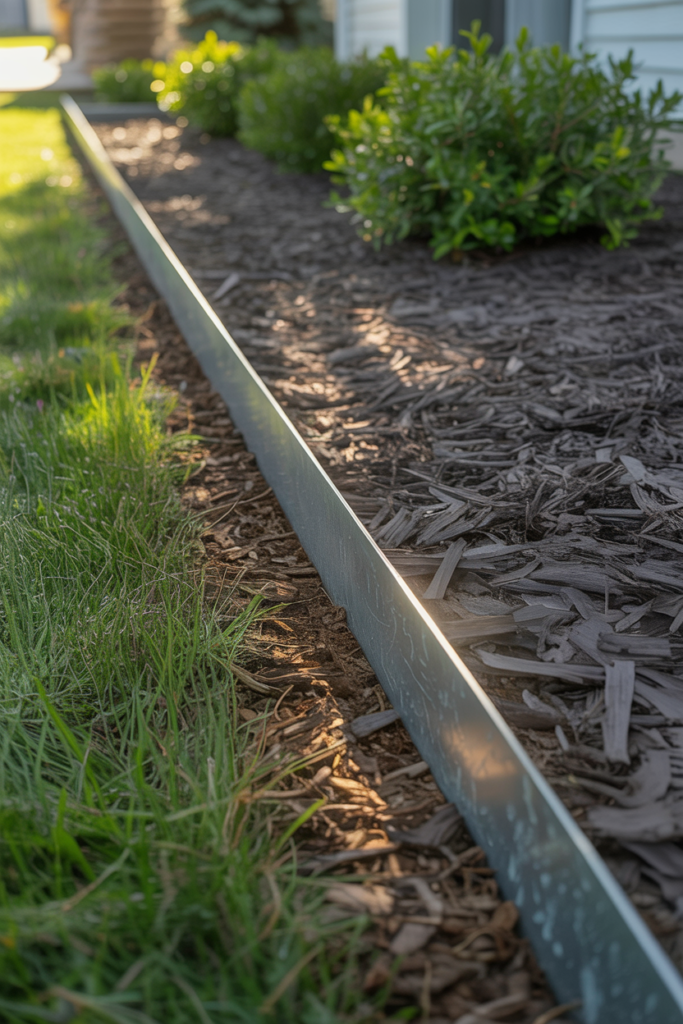
Clean edging is the single most impactful thing you can do for front yard landscaping without planting a single new plant. A sharp, defined border between your lawn and garden beds instantly makes the whole yard look more intentional and well-kept. It’s the landscaping equivalent of ironing a shirt: the difference is immediately obvious.
Steel, aluminum, or rubber landscape edging all work well for creating clean borders along driveways, walkways, and planting beds. Many homeowners prefer steel edging for its crisp, modern look and long lifespan. A simple spade or half-moon edging tool achieves the same clean lines at almost zero cost if you prefer a more natural edge.
Maintaining the edge every few weeks during the growing season keeps everything looking sharp. Grass naturally creeps back into beds over time, so a quick re-edge every month or so prevents that blurring effect that makes otherwise tidy yards look slightly unkempt. This is one of those small habits that makes a consistently big difference.
2. Lay Fresh Mulch in All Planting Beds
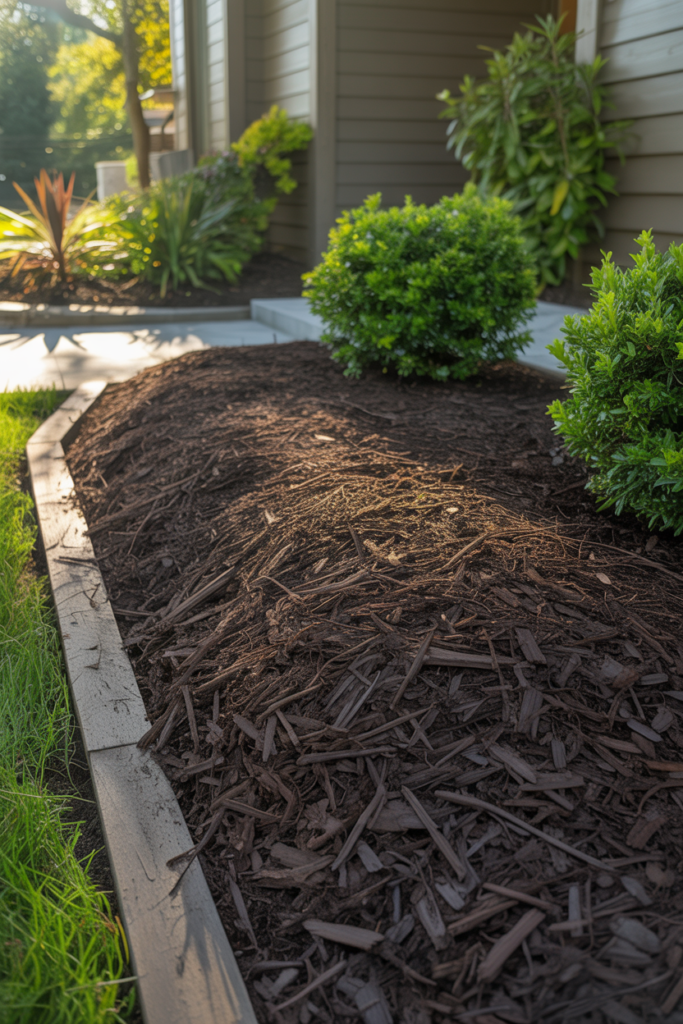
Fresh mulch is one of the most affordable and visually effective front-yard landscaping upgrades available. A 2 to 3 inch layer of shredded hardwood or bark mulch in planting beds suppresses weeds, retains moisture, and gives the entire yard a clean, finished appearance. The contrast between dark mulch and green plants is one of the most satisfying things in simple garden design.
Hardwood shredded mulch in dark brown or black is the most popular choice for front yards because it photographs well and complements almost every house color and plant palette. Cedar mulch is another strong option because it resists insects and breaks down more slowly than standard hardwood. Both are widely available at garden centers and home improvement stores in bags or bulk quantities.
Refreshing mulch once a year in spring is usually enough to keep beds looking their best. Over winter, mulch breaks down and fades, so a fresh top-up each spring revives the color and protective qualities instantly. This is a Saturday morning project that visibly transforms the front yard by Saturday afternoon.
3. Plant a Simple Row of Matching Shrubs Along the Foundation
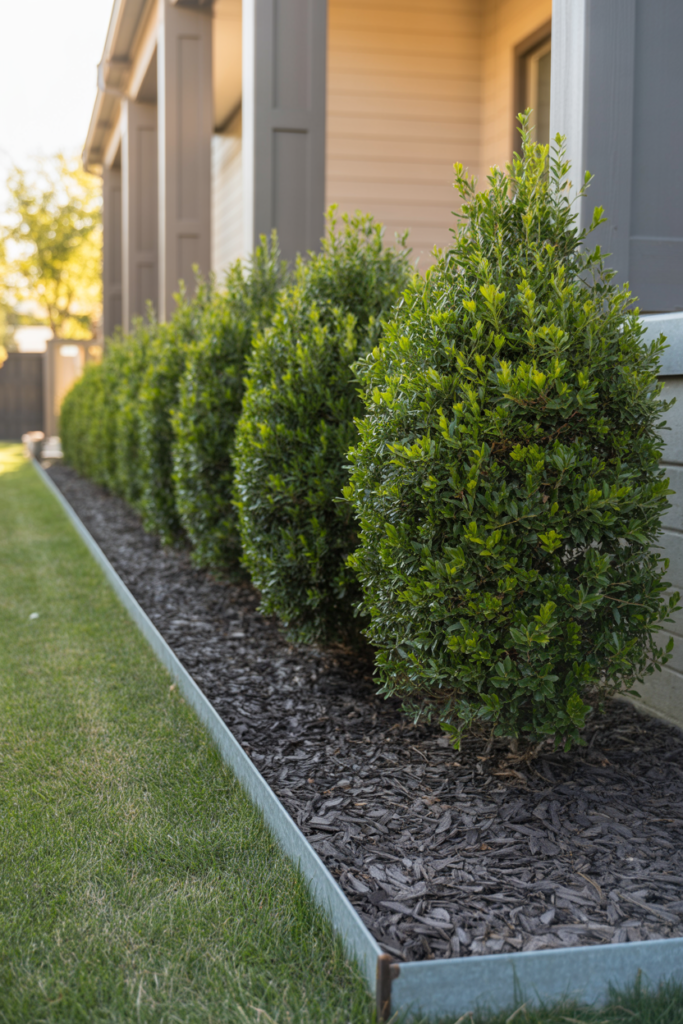
Foundation shrubs are one of the oldest and most reliable front yard landscaping strategies for good reason. A neat row of matching shrubs planted along the base of the house connects the structure to the ground visually and softens the hard line where the foundation meets the soil. Without them, a house can look like it’s just sitting on top of the ground rather than belonging to it.
Boxwood, holly, knockout roses, and dwarf spirea are among the most popular and low-maintenance choices for foundation planting. These shrubs hold their shape well, stay compact, and look good across multiple seasons without constant pruning. Planting them in odd numbers, three or five per section, creates a naturally balanced look that feels both structured and organic.
Spacing matters more than most beginners expect. Planting shrubs too close together is a common mistake that leads to overcrowding within a few years. Checking the mature spread of each shrub at the time of purchase and spacing accordingly saves a lot of future pruning and replanting headaches.
4. Add a Defined Walkway From the Street to Your Front Door
A clearly defined front walkway does two things simultaneously: it guides visitors to your door, and it creates a strong visual axis that organizes the entire front yard. Homes without a defined path often feel unwelcoming, even if the landscaping on either side is perfectly maintained.
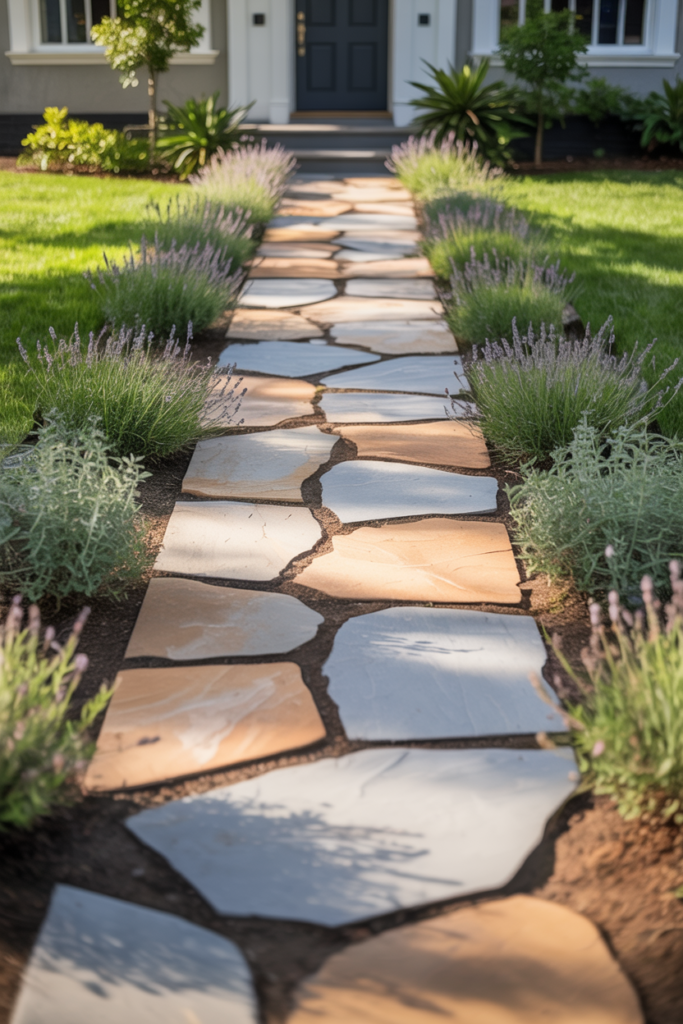
Poured concrete, natural stone pavers, brick, and gravel with edging borders are all practical and attractive walkway materials for simple front yard landscaping. Natural stone pavers in irregular shapes create a charming, cottage-style path while large-format concrete pavers deliver a clean, modern look. The material you choose should complement the exterior of the house rather than compete with it.
Lining the walkway with low border plants or compact shrubs on both sides amplifies the effect significantly. Lavender, ornamental grasses, and low boxwood hedges all work beautifully along a front path. They frame the walkway, add seasonal interest, and reinforce that organized, well-considered quality that good curb appeal relies on.
5. Use Ornamental Grasses for Low-Maintenance Texture and Movement
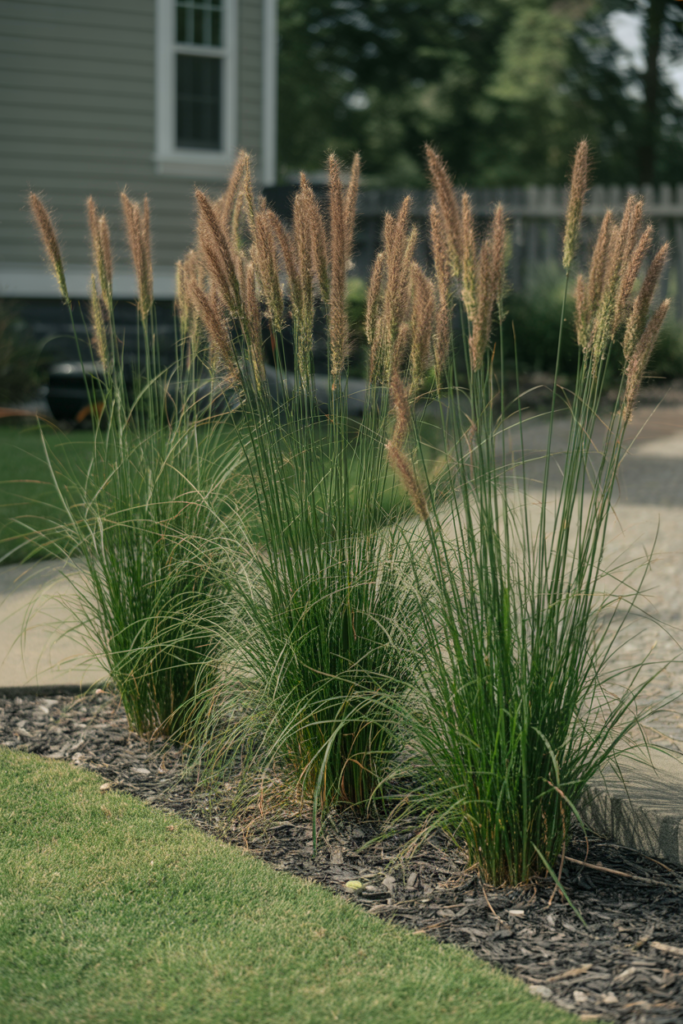
Ornamental grasses are one of the most underrated plants in simple front yard landscaping. They grow quickly, require almost no maintenance, and add a soft, natural texture that most shrubs and flowers can’t replicate. The way they move in a breeze gives a front yard a living, dynamic quality that static plants simply don’t deliver.
Karl Foerster feather reed grass, blue oat grass, and muhly grass are three of the most reliable ornamental grass varieties for front yards. They stay compact, look interesting across multiple seasons, and work well as standalone specimens or in grouped plantings along borders and pathways. Most ornamental grasses also handle drought conditions far better than traditional lawn grass or flowering perennials.
Cutting them back hard once a year in late winter or early spring is essentially the only maintenance they need. New growth emerges cleanly after each cutback, and the plant looks fresh and full within a few weeks. For a low-effort front yard landscaping plant that delivers year-round interest, ornamental grasses are genuinely hard to beat.
6. Create a Simple Gravel or Stone Mulch Bed for a Clean Modern Look
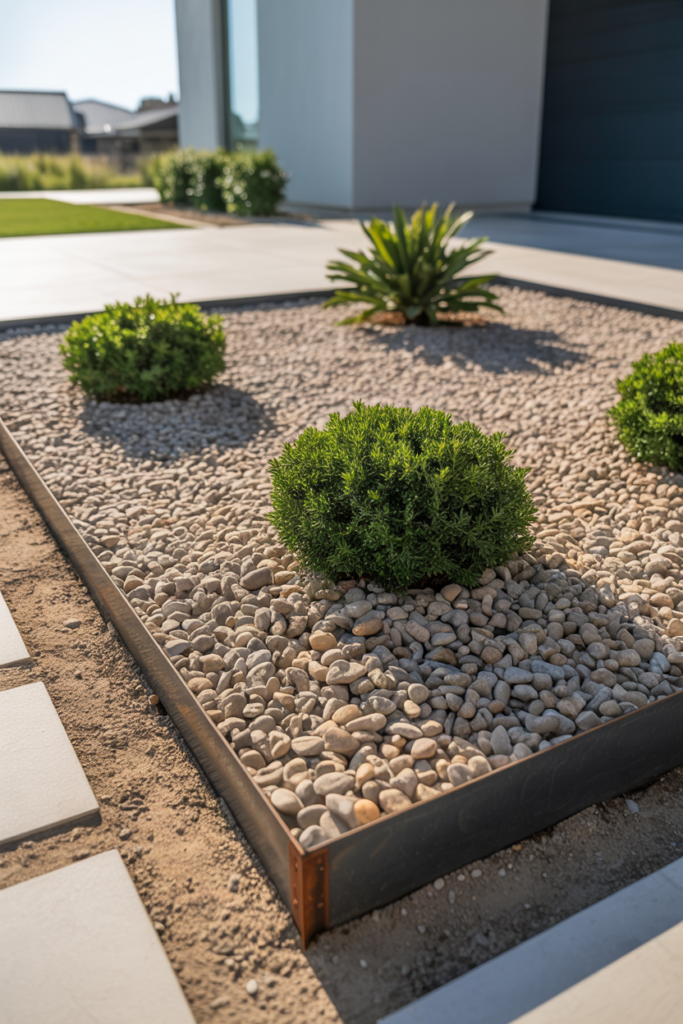
Gravel and decorative stone mulch offer a clean, structured alternative to organic mulch that works particularly well with modern, contemporary, and Mediterranean-style homes. A gravel bed around foundation plantings or along the driveway border creates a sharp, finished look that stays consistent year-round without fading or breaking down like bark mulch does.
Pea gravel, river rock, and crushed granite are the most popular choices for decorative stone mulch in front yards. Pea gravel has a soft, rounded appearance that works well in cottage and traditional garden styles. Crushed granite in grey or tan delivers a more formal, structured look that suits modern architecture particularly well.
Laying a quality landscape fabric under the gravel before installation prevents weeds from pushing through over time. This is a step that a lot of homeowners skip to save time, and they almost always regret it within a season or two. A 30-minute fabric installation saves hours of future weeding and keeps the gravel bed looking sharp and clean for years.
7. Plant Colorful Perennials for Seasonal Curb Appeal
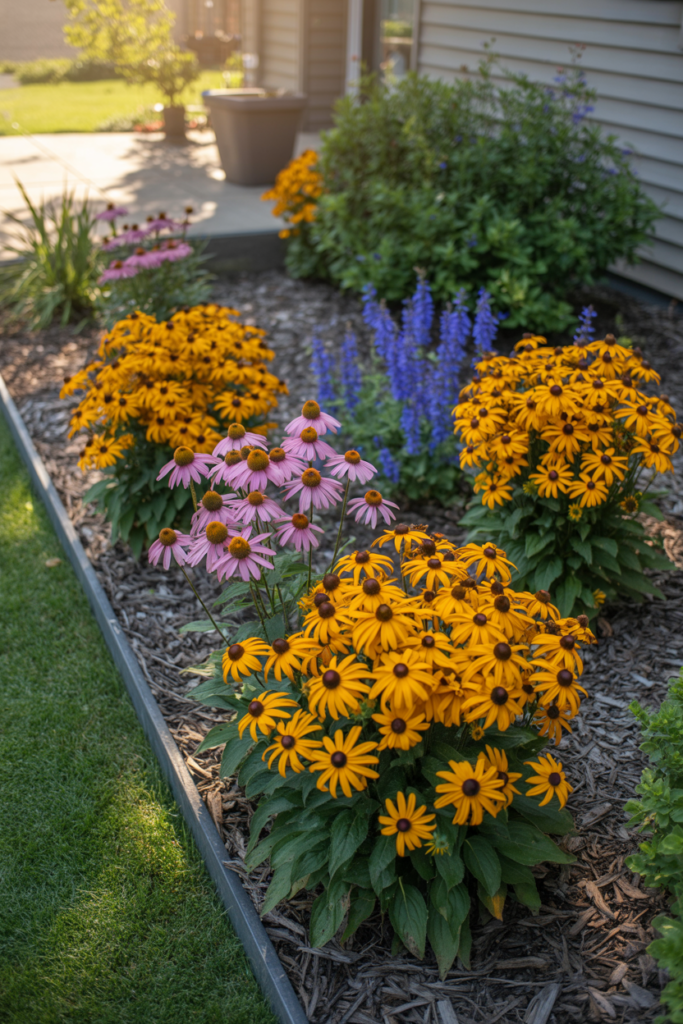
Colorful perennials give a front yard personality and seasonal interest without requiring replanting every year. Unlike annuals that need replacing each spring, perennials come back reliably year after year, expanding slowly and filling in gaps over time. This makes them one of the most cost-effective investments in simple front yard landscaping.
Coneflowers, black-eyed Susans, salvia, and daylilies are among the hardiest and most visually rewarding perennials for front yard beds. They bloom at different times across the season, which means a well-planned perennial border offers continuous color from late spring through early fall. Mixing two or three varieties with staggered bloom times is the easiest way to maintain interest across the whole growing season.
Grouping perennials in clusters of three or five rather than planting them individually creates a more natural, abundant look. Single plants dotted across a bed tend to look sparse and unintentional. Grouped plantings fill in faster, create stronger color impact, and give the bed a lush, established quality that single specimens take years to achieve on their own.
8. Install Landscape Lighting Along the Walkway and Driveway
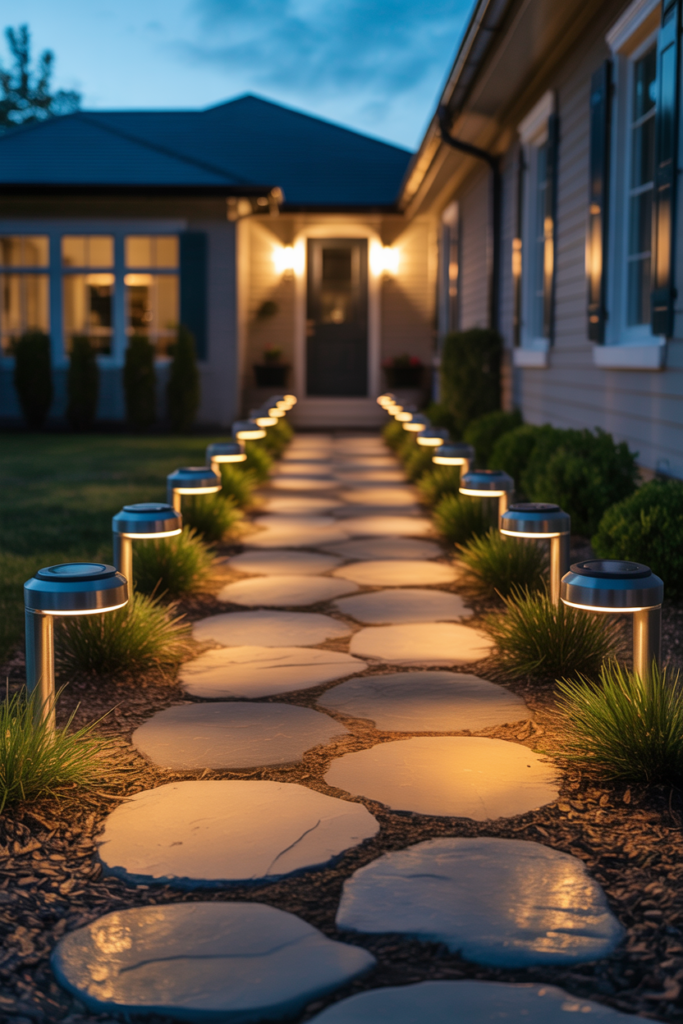
Front yard landscape lighting does something that no amount of daytime landscaping can achieve: it makes your home look welcoming and polished after dark, too. Solar-powered path lights along the walkway, uplights on mature trees, and spotlights aimed at the front of the house all add a layer of nighttime curb appeal that many homeowners completely overlook.
Solar path lights have improved dramatically in quality and brightness over recent years. Modern solar landscape lights charge fully in a day of partial sun and provide consistent illumination through the night without any wiring or electricity costs. Stainless steel or black powder-coated finishes hold up well to outdoor conditions and look clean and intentional rather than cheap and temporary.
Uplighting a single mature tree or a pair of large shrubs flanking the front door creates a dramatic, welcoming effect at night. The pool of warm light draws the eye to the most attractive elements of the front yard and makes the whole property feel more substantial and cared for. This is one of those upgrades that costs very little but delivers outsized visual results.
9. Keep the Lawn Edges Trimmed and the Grass Healthy
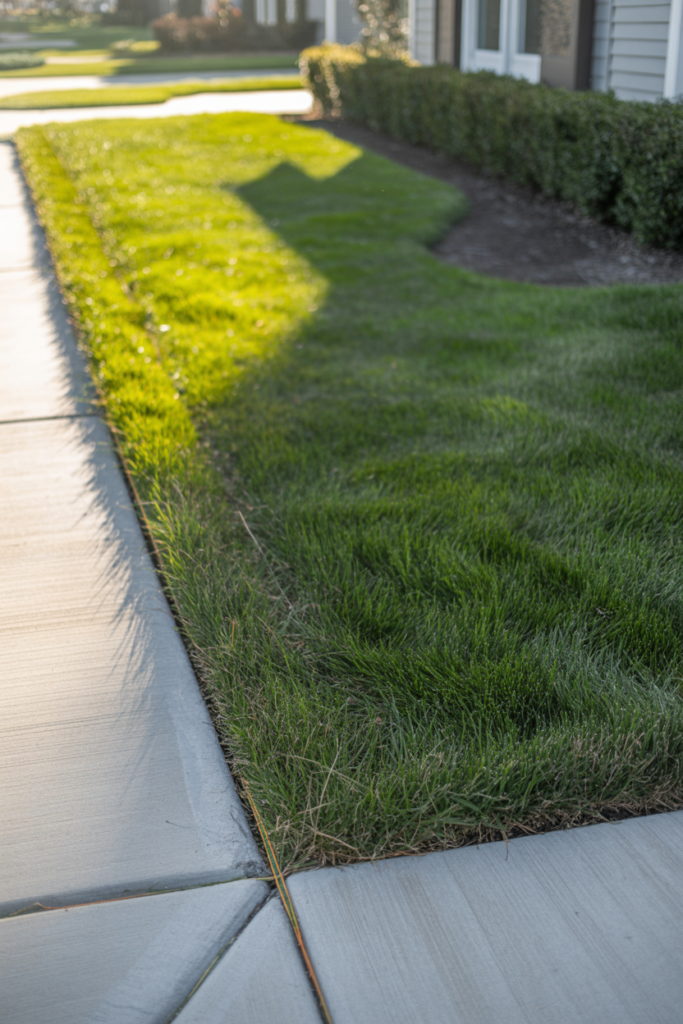
A healthy, well-trimmed lawn is the foundation of any successful simple front yard landscaping plan. No amount of beautiful planting or decorative edging fully compensates for a patchy, overgrown, or weed-filled lawn. The grass itself carries a significant portion of the curb appeal equation, and keeping it in good shape requires only consistent, basic maintenance.
Mowing at the correct height for your grass type makes a noticeable difference in how the lawn looks and how healthy it stays. Most cool-season grasses like Kentucky bluegrass and fescue perform best when cut to around 3 to 4 inches. Warm-season grasses like Bermuda and Zoysia prefer a shorter cut of 1.5 to 2.5 inches. Cutting too short stresses the grass and invites weeds to fill in the gaps.
String trimming along all edges after mowing takes an extra ten minutes, but makes the entire lawn look significantly more maintained. The crisp line between the grass and the sidewalk, driveway, or planting bed is one of those details that separates a well-kept front yard from an average one. It’s a small effort with a consistently large visual payoff.
10. Add a Simple Focal Point Near the Front Door
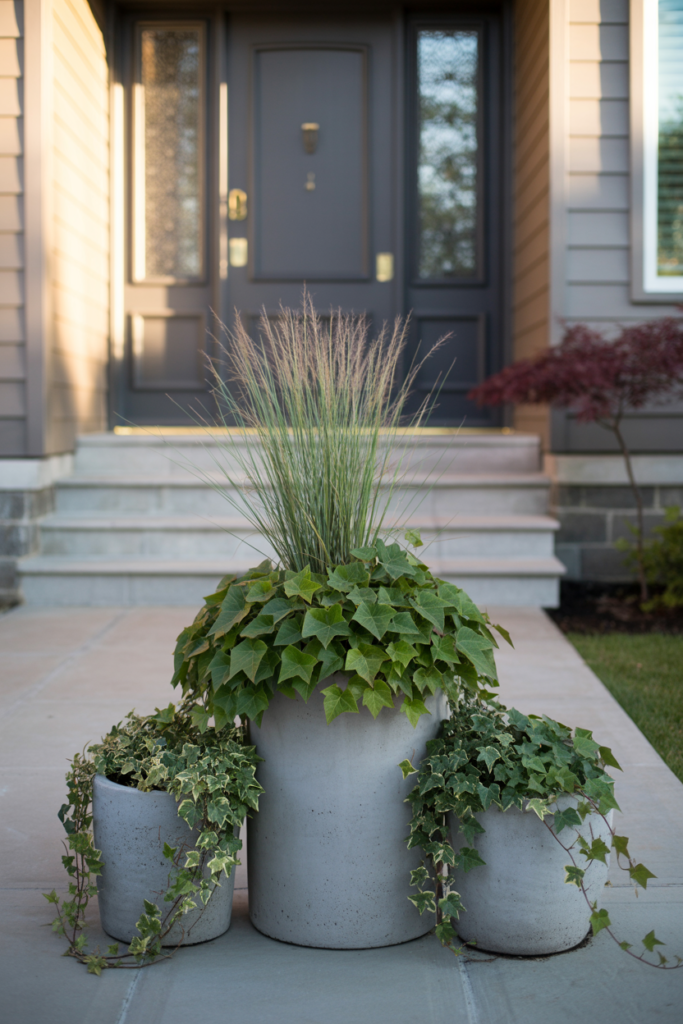
Every well-landscaped front yard benefits from a single, clear focal point near the entrance. This could be a pair of matching planters flanking the front door, a small ornamental tree centered in the lawn, or a simple birdbath or garden sculpture in a prominent bed. The focal point anchors the eye and gives the landscaping a sense of purpose and intention.
Large planters in a material that complements the house exterior work particularly well as front door focal points. Concrete, ceramic, and lightweight fiberglass planters all hold up well outdoors and come in styles to suit every home aesthetic. Planting them with a tall thriller plant in the center, a mounding filler around it, and a trailing plant spilling over the edge creates a professional container garden look that requires very little effort to maintain.
An ornamental tree like a Japanese maple, dwarf magnolia, or flowering cherry planted in the center of the front lawn creates a natural focal point that adds four-season interest. These trees stay compact, rarely require pruning, and add a level of maturity and elegance to front yard landscaping that no annual flower bed can replicate. One well-chosen tree in the right spot can define the entire front yard design.
Quick Guide to Simple Front Yard Landscaping Materials
| Landscaping Element | Best Material Options | Maintenance Level |
| Bed edging | Steel, aluminum, rubber, or spade-cut | Low, re-edge monthly |
| Mulch | Shredded hardwood, cedar bark | Low, refresh annually |
| Walkway | Natural stone pavers, concrete, brick | Very low |
| Foundation shrubs | Boxwood, holly, dwarf spirea | Low, trim twice yearly |
| Ground cover | Ornamental grasses, creeping phlox | Very low |
| Decorative stone | Pea gravel, river rock, crushed granite | Very low with fabric |
| Path lighting | Solar stainless steel or powder-coated | Very low, solar-powered |
| Focal point plants | Japanese maple, dwarf magnolia | Low, minimal pruning |
How Small Consistent Habits Keep a Front Yard Looking Its Best
The front yards that always look great share one thing in common: their owners do small maintenance tasks consistently rather than big overhauls occasionally. A quick edge touch-up, a fresh layer of mulch in spring, and a seasonal swap of container plants keep everything looking intentional and cared for without requiring full weekend commitments.
Seasonal thinking helps a lot with simple front-yard landscaping. Spring is the time for fresh mulch, new perennial plantings, and edging cleanup after winter. Summer calls for consistent mowing, watering during dry spells, and deadheading any spent flowers in the beds. Fall is perfect for planting spring bulbs, cutting back ornamental grasses, and adding a layer of mulch before the ground freezes.
A simple seasonal checklist takes the guesswork out of front yard maintenance entirely. When you know exactly what needs doing and when, the whole process feels manageable rather than overwhelming. Most of the tasks on that checklist take under an hour, and the cumulative effect of doing them consistently is a front yard that looks professionally maintained all year long.
Conclusion
Simple front yard landscaping consistently delivers some of the highest returns of any home improvement project, both in terms of property value and daily enjoyment. The ten ideas in this article cover every major element of a well-kept front yard, from clean edging and fresh mulch to foundation shrubs, walkway definition, and thoughtful focal points.
The most important takeaway is that simplicity works. A front yard with five well-chosen, well-maintained elements always looks better than one with twenty competing features that nobody has time to keep up. Choosing a few of these ideas and executing them carefully produces results that feel considered and polished rather than rushed or random.
Starting with the highest-impact ideas first makes the whole project feel rewarding from day one. Clean edging and fresh mulch deliver immediate visible results for very little money or effort. Build from there by adding foundation shrubs, a defined walkway, and seasonal color, and the front yard transforms gradually into something that genuinely makes coming home feel better every single day.
Frequently Asked Questions
What is the easiest front yard landscaping idea for beginners? Fresh mulch and clean edging are the two easiest and most impactful starting points for beginner front yard landscaping. Both require minimal skill, cost very little, and produce immediate visible results that make the whole yard look more intentional and well-kept.
How much does simple front yard landscaping cost on average? Basic front yard landscaping with mulch, edging, and a few shrubs typically costs between $200 and $800 for an average-sized front yard when done as a DIY project. Professional installation adds to that cost but remains far more affordable than a full hardscape or irrigation project.
What are the best low-maintenance plants for a simple front yard? Boxwood, knockout roses, ornamental grasses, black-eyed Susans, and dwarf spirea are among the best low-maintenance plants for front yards. These varieties handle a range of climates, require minimal pruning, and look attractive across multiple seasons without constant attention.
How often should I refresh mulch in my front yard beds? Refreshing mulch once a year in early spring is usually sufficient for most front yard planting beds. A fresh 2 to 3-inch layer each spring replenishes what breaks down over winter, suppresses new weed growth, and restores the clean, dark color that makes beds look sharp and well-maintained.
Does front yard landscaping increase home value? Good front yard landscaping consistently adds value to a home by improving curb appeal and creating a strong first impression for potential buyers. Studies from the National Association of Realtors suggest that landscaping improvements can return between 100 and 200 percent of their cost in added home value, depending on the market and the quality of the work.
What is the best edging material for a clean front yard border? Steel landscape edging is widely considered the best option for clean, long-lasting front yard borders. It holds a sharp line, resists shifting over time, and gives beds a crisp, professional edge that rubber and plastic alternatives often fail to maintain after a season or two of ground movement.
How do I make my front yard look good with a small budget? Focusing on edging, fresh mulch, and one or two well-placed shrubs delivers the most visual improvement for the least money. Buying plants in smaller sizes and allowing them to grow, dividing existing perennials from the backyard, and shopping end-of-season sales at garden centers all stretch a small landscaping budget significantly further.