
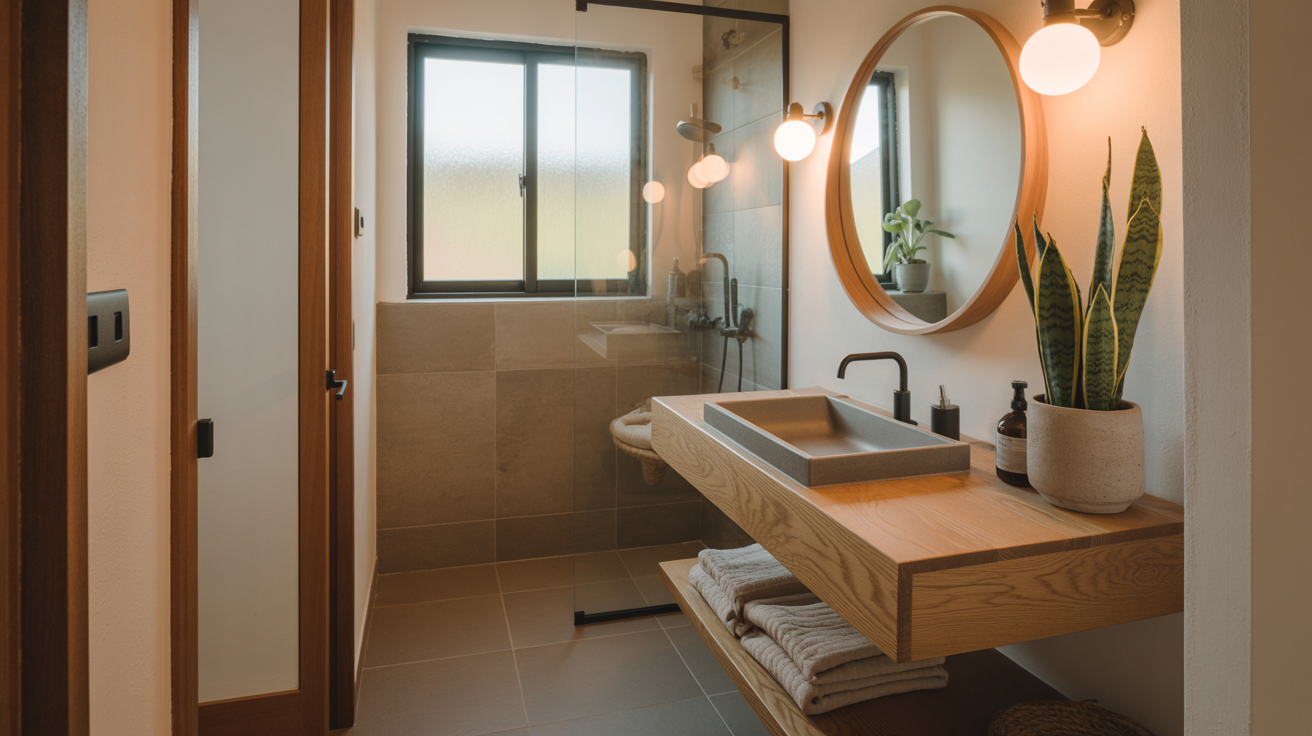
Japandi bathrooms are having a serious moment, and honestly, it makes complete sense. This style blends Japanese minimalism with Scandinavian warmth, resulting in a bathroom that feels calm, clean, and quietly beautiful. If your bathroom is on the smaller side, Japandi design might just be the best thing that ever happened to it.
Small bathrooms don’t have to feel cramped or chaotic. With the right materials, colors, and layout choices, even a compact space can feel like a high-end retreat. I’ve seen 40-square-foot bathrooms look more luxurious than massive ones, simply because of smart Japandi styling decisions.
The secret is intentionality. Every element in a Japandi bathroom earns its place. Nothing is random, nothing is excessive, and nothing is there just to fill space. That’s exactly what makes this style so perfect for small bathrooms.
Why Japandi Style Works So Well in Small Bathrooms
Japandi design is built on restraint, and restraint is exactly what small bathrooms need. When you strip away visual clutter, the space automatically feels larger and more breathable. Clean lines, neutral tones, and natural textures all work together to create that effect.
The Japanese concept of “ma” plays a big role here. Ma refers to the beauty of space, the idea that what you leave out matters just as much as what you put in. In a small bathroom, embracing ma means resisting the urge to fill every shelf and surface.
Scandinavian design brings the warmth that keeps Japandi from feeling cold or sterile. Think natural wood accents, soft lighting, and cozy textiles that make the space feel lived-in and human. Together, these two design philosophies create a bathroom that feels both serene and genuinely welcoming.
1. Use a Neutral, Nature-Inspired Color Palette
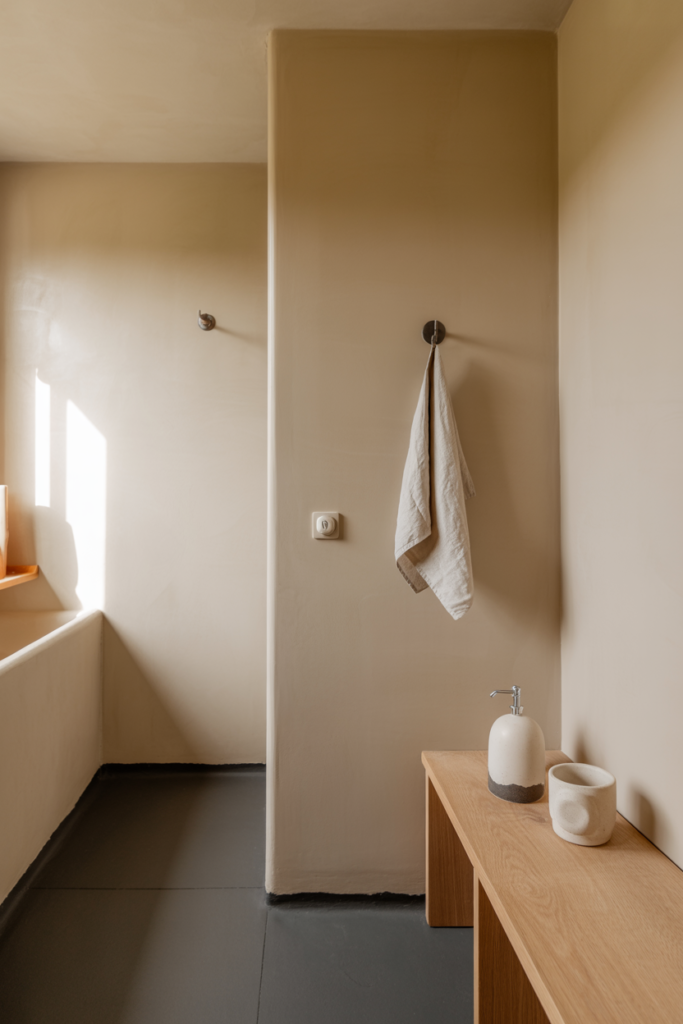
The foundation of any Japandi bathroom is its color palette. Soft whites, warm beiges, muted greiges, and deep charcoals are the go-to shades. These colors reflect light beautifully, which is a huge advantage in a small bathroom.
I always recommend starting with walls in a warm white or greige tone. Then layer in darker accents through fixtures or cabinetry to add depth without making the space feel heavy. The contrast keeps things visually interesting without overwhelming the eye.
Avoid anything too bright or saturated. Japandi color palettes are quiet on purpose. The goal is a bathroom that feels like a deep exhale, not a design statement shouting at you from every corner.
2. Choose a Floating Vanity for an Airy, Open Feel
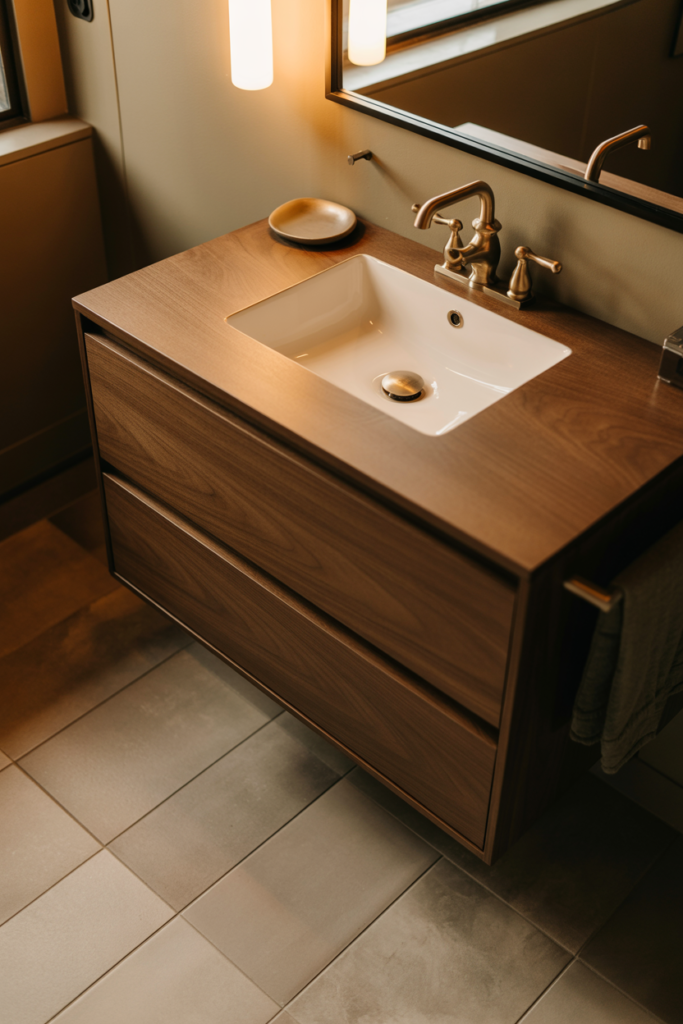
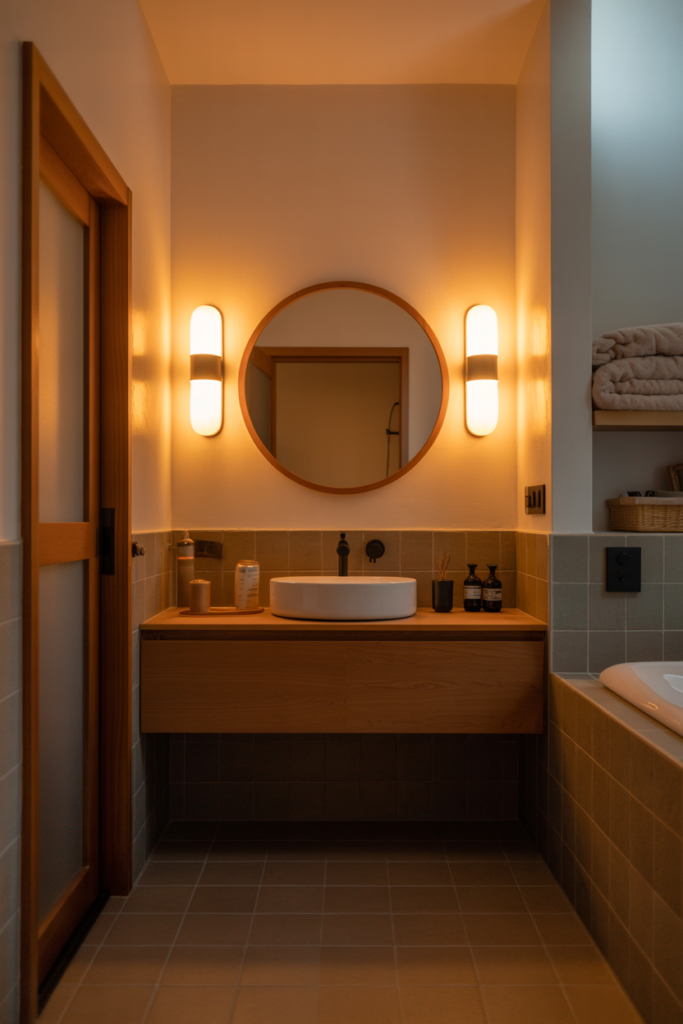
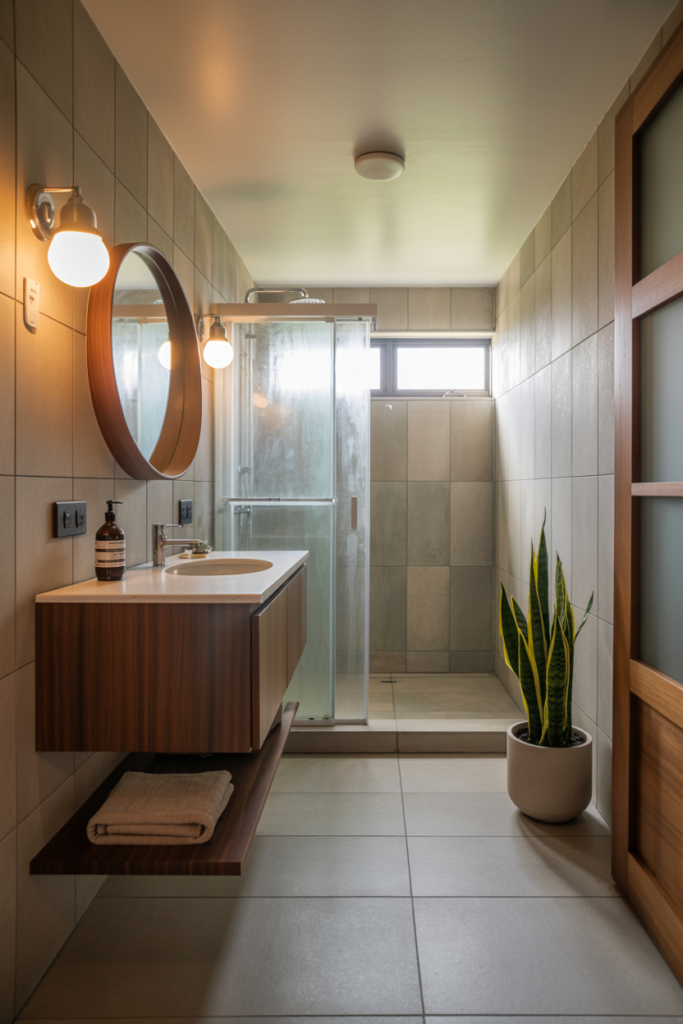
A floating vanity is one of the smartest moves you can make in a small Japandi bathroom. Because it doesn’t touch the floor, it creates visual breathing room and makes the space feel taller and more open. It’s a simple switch with a big payoff.
Natural wood finishes work beautifully here. Oak, walnut, and teak all bring warmth and organic texture that fit the Japandi aesthetic perfectly. Pair a wood vanity with a simple rectangular undermount sink and clean-lined hardware for a cohesive look.
Storage is always a concern in small bathrooms, and a floating vanity handles this well. Two slim drawers can hold far more than an open shelf, and keeping surfaces clear is a core Japandi principle. A clutter-free vanity makes the whole bathroom feel more intentional.
3. Bring in Natural Materials Like Wood, Stone, and Bamboo
Natural materials are the heartbeat of Japandi design. Wood, stone, bamboo, and linen all bring an organic quality that no synthetic material can replicate. In a small bathroom, these textures add richness without adding visual noise.
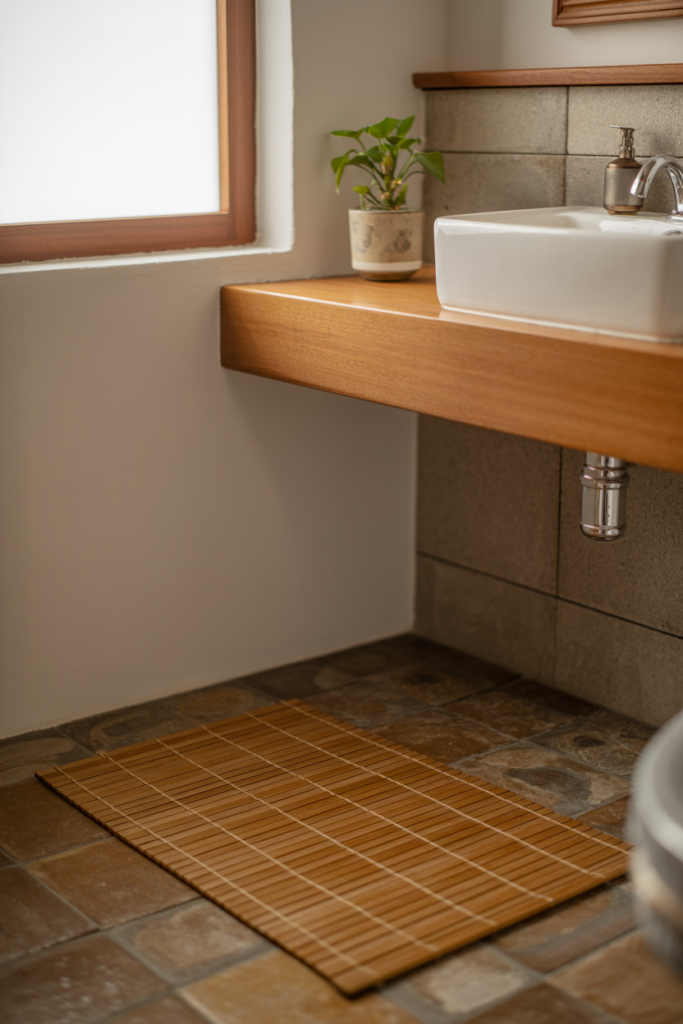
Bamboo is especially practical in bathrooms because it handles moisture well. A bamboo bath mat, a small bamboo shelf, or even a bamboo-framed mirror can instantly shift the mood of a space. These are small additions that carry a lot of weight aesthetically.
Stone or concrete-look tiles on the floor or walls add a grounded, spa-like quality. I find that large-format tiles in a soft stone shade make small bathrooms look significantly bigger. Fewer grout lines mean less visual interruption, and that contributes to the calm, seamless feel Japandi is known for.
4. Install Warm, Layered Lighting for a Spa-Like Atmosphere
Lighting makes or breaks a small bathroom, and Japandi design handles this with care. The goal is warm, diffused light that feels soft and flattering, not the harsh overhead glow that makes most bathrooms feel clinical.
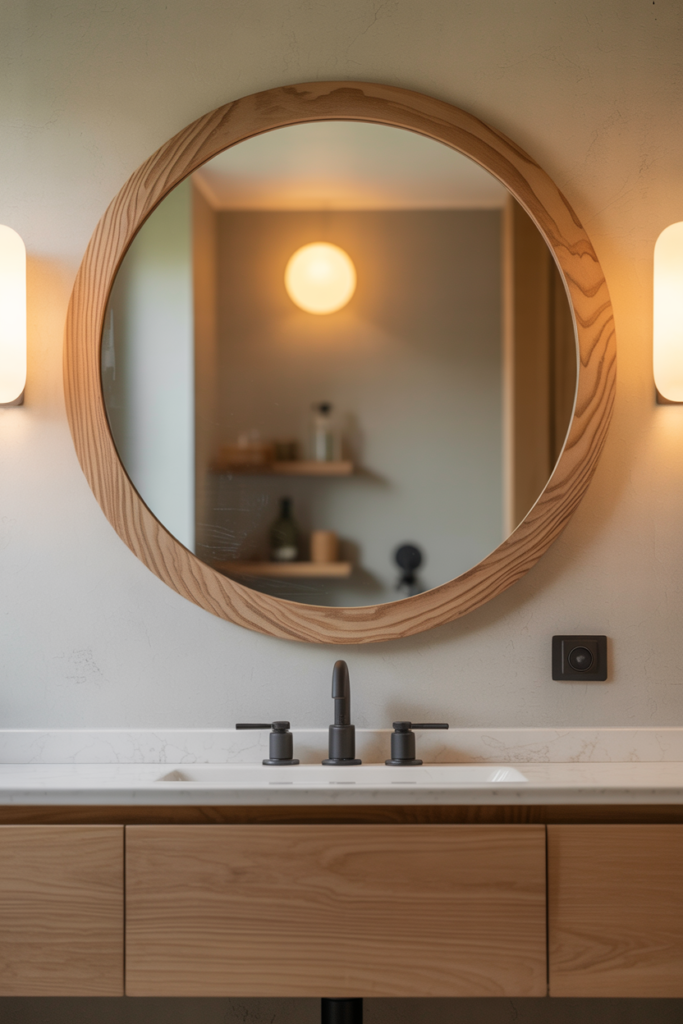
Wall sconces placed on either side of the mirror are a great starting point. They eliminate unflattering shadows and create a balanced, even light across the face. I personally prefer sconces with a matte black or brushed brass finish to complement the Japandi palette.
Adding a small dimmer switch is one of the easiest upgrades you can make. Being able to lower the lights in the evening completely changes how the space feels. Suddenly, your small bathroom goes from functional to genuinely relaxing, and that’s the whole Japandi goal.
5. Opt for a Walk-In Shower With Frameless Glass
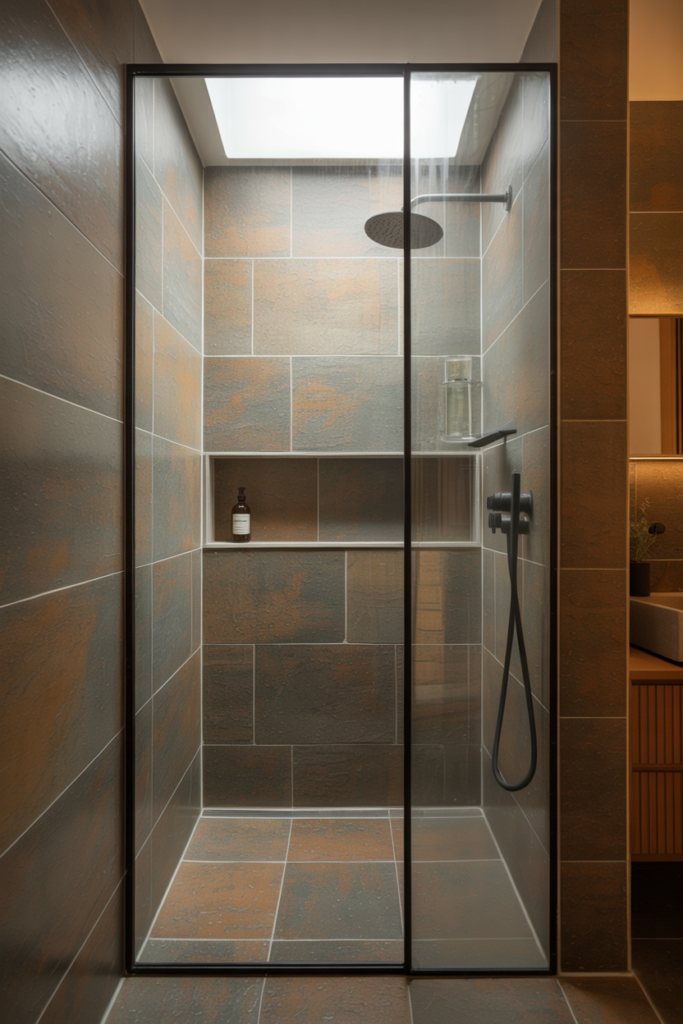
A walk-in shower with frameless glass is one of the best ways to make a small bathroom feel twice its size. The glass keeps the sightlines open, so your eye travels through the space rather than stopping at a wall or curtain. It’s a practical choice that also looks genuinely high-end.
Keep the shower tiles simple and consistent with the rest of the bathroom. Using the same tile on the shower floor and walls as the main bathroom floor creates a seamless, flowing look. This continuity is a classic Japandi trick for making compact spaces feel larger and more cohesive.
A rainfall showerhead completes the spa experience beautifully. It slows you down, encourages you actually to enjoy the shower, and looks far more elegant than a standard showerhead. For a small Japandi bathroom, it’s one of those details that quietly elevates everything around it.
6. Add Greenery With Low-Maintenance Indoor Plants
Plants bring life into a Japandi bathroom without adding clutter, as long as you choose wisely. A single sculptural plant in a simple ceramic pot does more for the space than a collection of random succulents crowded on a shelf. One well-placed plant carries real visual weight.
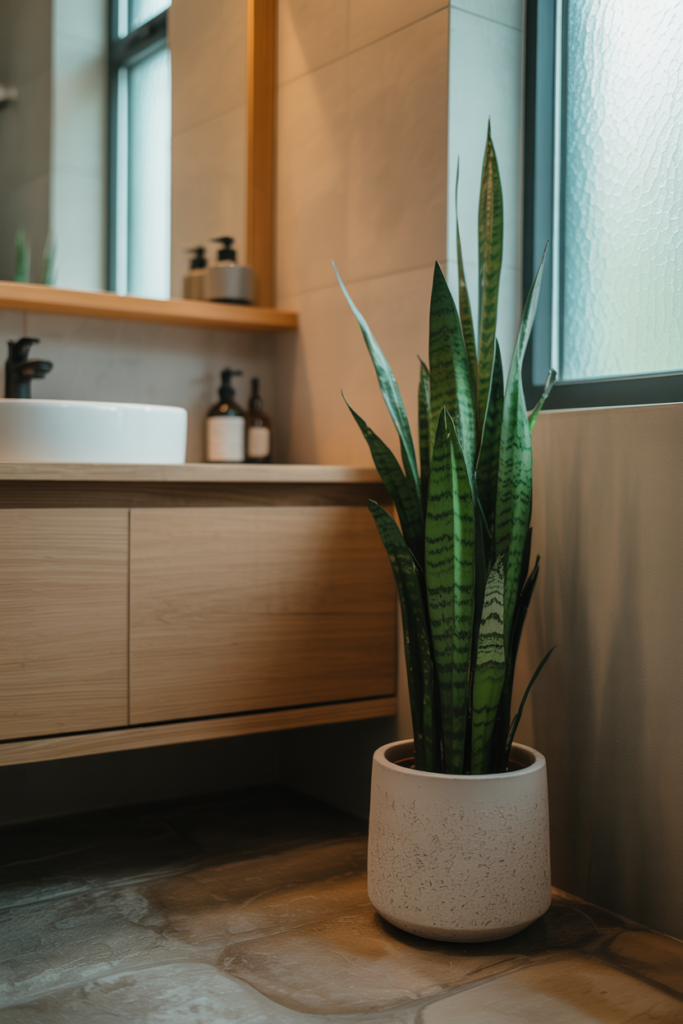
Snake plants, pothos, and peace lilies are all excellent choices for bathrooms because they thrive in humidity and low light. I find that a tall snake plant in the corner adds height and draws the eye upward, which makes the ceiling feel higher. That vertical element is especially useful in small spaces.
The pot matters just as much as the plant. Choose a matte ceramic or textured stone pot in a neutral tone. Avoid anything glossy, brightly colored, or overly decorative. The plant should feel like a natural part of the space, not an accessory that’s trying too hard.
7. Use Large-Format Tiles to Minimize Visual Interruption
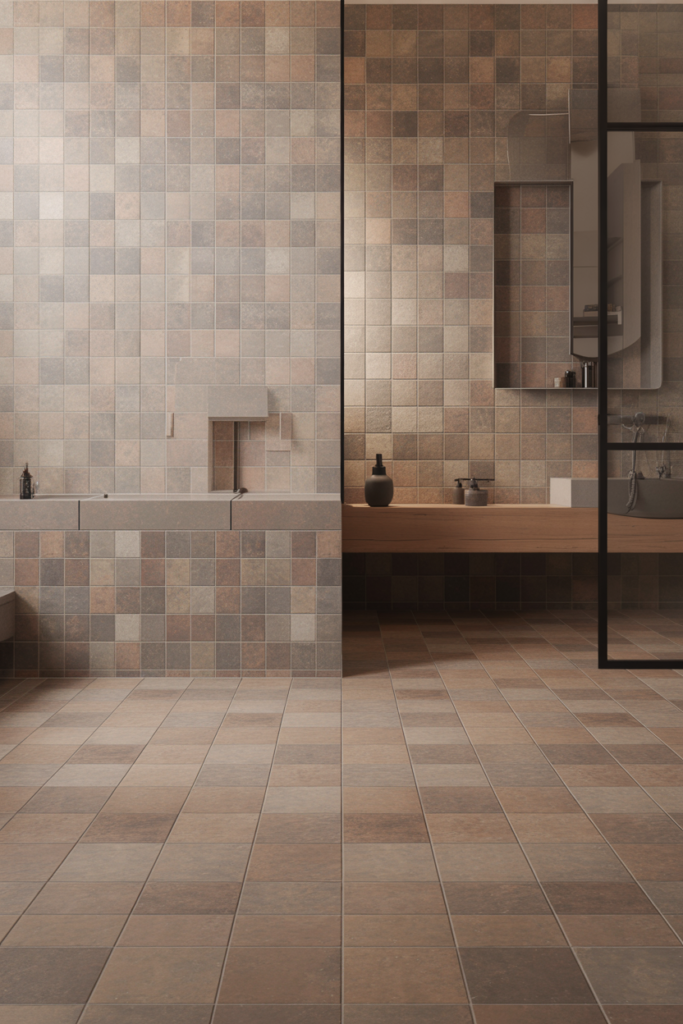
Tile choice has a huge impact on how spacious a small bathroom feels. Large-format tiles, think 24×24 inches or bigger, reduce the number of grout lines on the floor and walls. Fewer lines mean a calmer, more continuous surface that reads as larger to the eye.
Soft stone-look porcelain tiles are a favorite in Japandi bathrooms for good reason. They bring the organic texture of natural stone without the high maintenance. In shades like warm white, greige, or soft taupe, they complement the entire Japandi color story effortlessly.
For walls, consider carrying the same tile from the floor partway up the wall in a half-height application. This grounds the space and gives it a cohesive, considered quality. It’s a detail that looks like it came straight out of a design magazine, but it’s surprisingly simple to execute.
8. Keep Accessories Minimal and Intentional
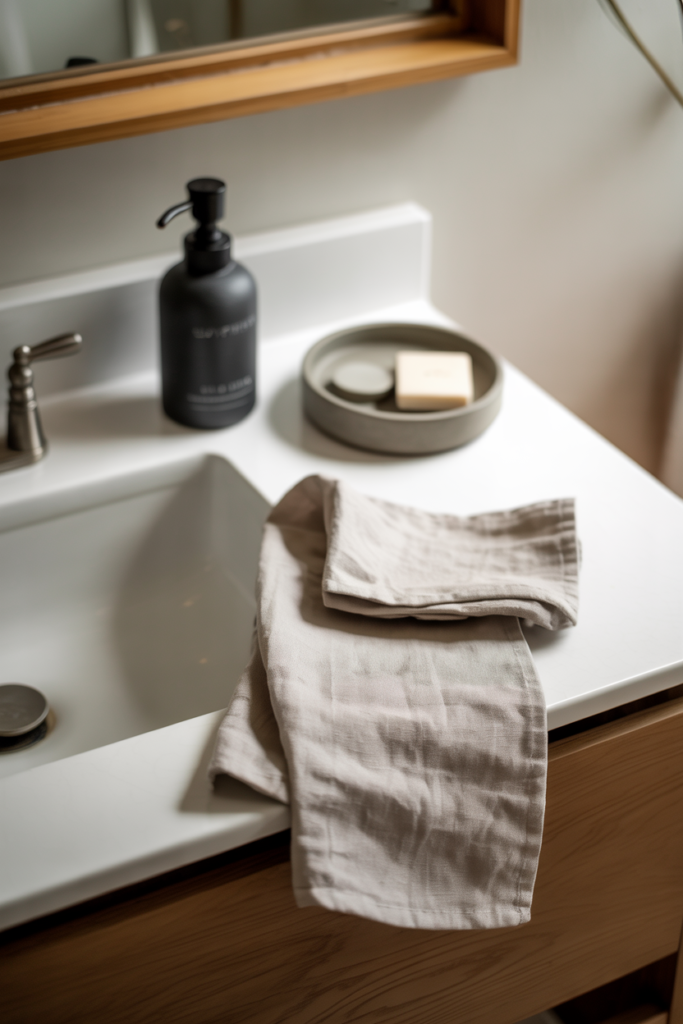
In a Japandi bathroom, accessories are not decoration for decoration’s sake. Every item on the counter, every hook on the wall, and every object on the shelf should have a clear reason to be there. This level of intentionality is what separates a Japandi bathroom from just a beige bathroom.
A good starting point is a simple soap dispenser in matte black or brushed brass, a small ceramic tray for everyday items, and one or two quality towels folded neatly. That’s genuinely enough. Resist the urge to add more just because there’s space available.
Towels deserve special mention here. Thick, high-quality towels in linen, white, or warm grey add a tactile luxury that you actually feel every day. Folded and stacked on a simple open shelf or hung on a minimal wall hook, they become part of the design rather than an afterthought.
9. Install a Simple, Statement Mirror
The mirror is one of the most important design decisions in a small bathroom. A well-chosen mirror reflects light, adds depth, and anchors the vanity area. In a Japandi bathroom, the mirror should be simple, intentional, and slightly unexpected.
Round mirrors are particularly popular in Japandi spaces because the soft shape contrasts nicely with the clean lines elsewhere. A round mirror with a thin wooden frame or a simple matte black frame works beautifully above a floating wood vanity. It feels balanced without being predictable.
Oversized mirrors are another strong option for small bathrooms. A large mirror that spans most of the wall above the vanity bounces light around the room and creates a genuine sense of depth. It’s one of the most effective ways to make a small bathroom feel significantly more spacious.
10. Focus on Quality Over Quantity in Every Detail
The final Japandi idea isn’t about a specific product or material. It’s a mindset. Japandi design consistently chooses one beautiful, well-made thing over three mediocre ones. In a small bathroom, this approach pays off in a big way.
Invest in one really good faucet in a brushed nickel or matte black finish rather than buying a budget option you’ll want to replace in two years. Choose tiles that genuinely excite you rather than settling for whatever is on sale. These decisions add up to a bathroom that feels considered and cohesive.
Quality also extends to the things you can’t see, like proper waterproofing, good ventilation, and durable grout. A Japandi bathroom that looks beautiful but develops mold or moisture issues defeats the entire purpose. The best small bathrooms are the ones that work as well as they look.
Simple Japandi Bathroom Swaps at a Glance
| Element | Standard Choice | Japandi Upgrade |
| Vanity | Bulky floor cabinet | Floating wood vanity |
| Mirror | Basic rectangle | Round wood-framed mirror |
| Lighting | Harsh overhead light | Warm wall sconces with dimmer |
| Tiles | Small mosaic or busy pattern | Large-format stone-look porcelain |
| Accessories | Mixed and cluttered | Minimal ceramic tray and soap dispenser |
| Plants | Multiple small pots | One sculptural plant in a neutral pot |
| Towels | Thin and mismatched | Thick linen towels in neutral tones |
What Makes a Japandi Bathroom Feel Like a Luxury Spa
The luxury spa feeling that Japandi bathrooms create is not accidental. It comes from a combination of sensory details that work together quietly in the background. Warm lighting, natural textures, and a clutter-free environment all signal to your brain that this is a space for rest, not rushing.
Scent plays a role too, even though it rarely comes up in design conversations. A simple reed diffuser with a cedarwood or hinoki cypress fragrance adds an olfactory layer that genuinely elevates the experience. Hinoki, a Japanese cypress wood, is actually used in traditional Japanese bathhouses for exactly this reason.
Sound is the other underrated element. If your bathroom has thin walls or noisy pipes, a small white noise machine or even a simple Bluetooth speaker tucked discreetly on a shelf can make a real difference. These sensory details are what separate a bathroom that looks like a spa from one that actually feels like one.
Conclusion
Japandi bathrooms prove that small spaces can be just as beautiful and calming as large ones. The style works because it prioritizes quality, intention, and restraint over excess. When every element earns its place, the result is a bathroom that genuinely feels like a retreat.
The ten ideas in this article work individually, but they work even better together. Start with a neutral color palette and a floating vanity, then layer in natural materials, warm lighting, and minimal accessories. Each addition builds on the last, and before long, your small bathroom feels completely transformed.
You don’t need a full renovation to get there. Some of the most impactful Japandi changes cost very little, swapping out a soap dispenser, adding a plant, replacing a mirror, or simply editing down what’s on the counter. Small, intentional shifts add up to something that feels genuinely considered and calm. That’s the Japandi promise, and it delivers every time.
Frequently Asked Questions
What is the Japandi bathroom style? Japandi is a design style that blends Japanese minimalism with Scandinavian warmth. In bathrooms, it shows up as neutral colors, natural materials, clean lines, and a strong focus on calm, clutter-free spaces.
What colors work best in a Japandi bathroom? Warm whites, soft beiges, greiges, warm greys, and deep charcoals are the most popular Japandi bathroom colors. These shades reflect light well and create a serene, cohesive look that feels both fresh and grounded.
Can I create a Japandi bathroom on a budget? Absolutely. Simple swaps like replacing accessories with minimal ceramic pieces, adding a sculptural plant, switching to warm-toned bulbs, and decluttering surfaces can shift the entire mood of a bathroom without a big spend.
What materials are most common in Japandi bathroom design? Natural wood, stone, or concrete-look porcelain, bamboo, linen, and matte ceramic are the most common materials. These textures bring organic warmth that is central to the Japandi aesthetic.
Is the Japandi style good for small bathrooms? Japandi is actually one of the best styles for small bathrooms. Its emphasis on open space, minimal accessories, large-format tiles, and light-reflective colors all work together to make compact spaces feel larger and more open.
How do I add warmth to a Japandi bathroom without making it feel cluttered? Focus on texture rather than objects. A thick linen towel, a wooden bath mat, a stone soap dish, or a single plant all add warmth without visual noise. Warmth in Japandi comes from materials, not from filling up surfaces.
What type of lighting suits a Japandi bathroom best? Warm, diffused lighting works best. Wall sconces on either side of the mirror, a dimmer switch, and bulbs in the 2700K to 3000K range all contribute to that soft, spa-like glow that Japandi bathrooms are known for.