
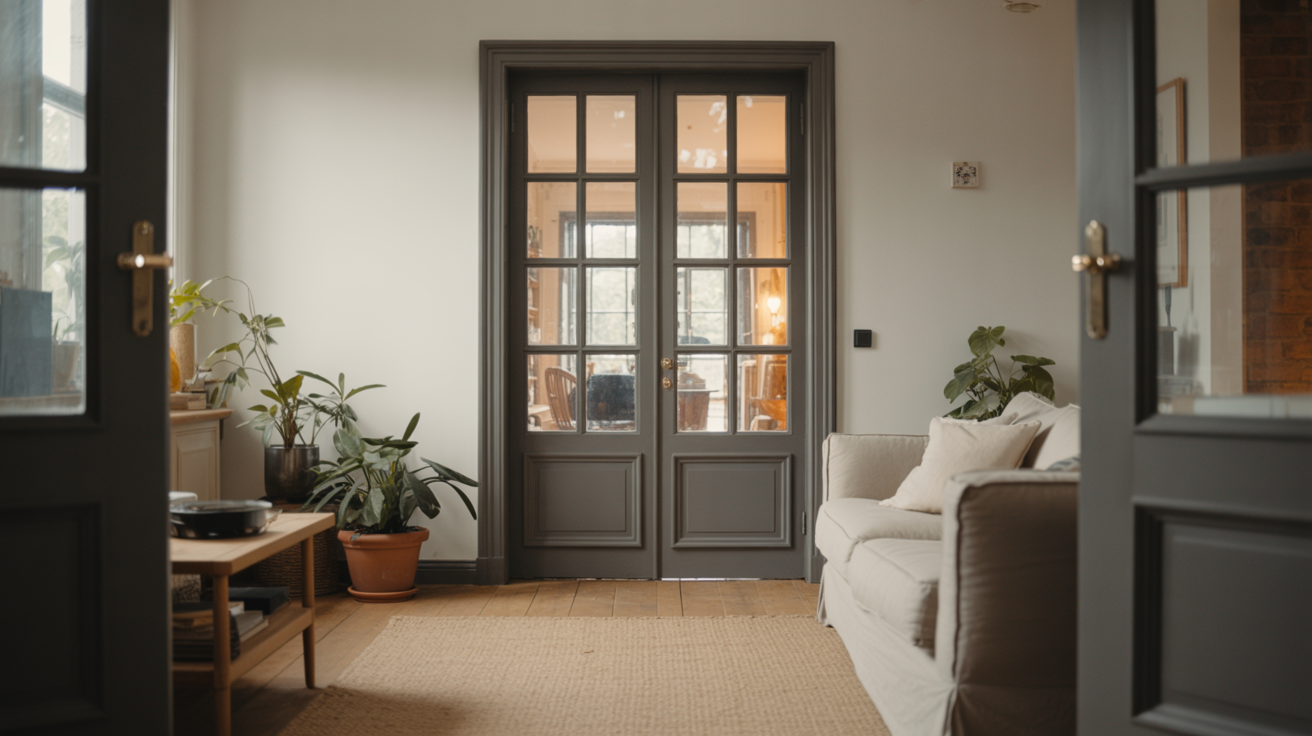
The door to your living room does more than open and close. It sets the mood, defines the style, and honestly, it can make or break the whole look of your space. I have seen so many beautiful living rooms let down by a boring, builder-grade door that nobody gave a second thought to.
Choosing the right interior door is one of those decisions that feels small but carries a lot of weight. The style, material, and finish you pick will either tie your living room together or leave it looking unfinished. And the good news is, there are so many options available today that suit every budget and taste.
Whether you are going for a sleek modern look, a warm rustic feel, or something in between, the right door can genuinely pull the whole room together. In this guide, I am walking you through the best modern interior door ideas for living rooms, along with real design tips that actually work in everyday homes.
Why Your Living Room Door Deserves More Attention Than You Think
Most people spend hours picking the perfect sofa or the right shade of wall paint, but the interior door gets maybe five minutes of thought. I get it, doors are not exactly the most exciting part of a room. But they take up a surprisingly large visual footprint, and a well-chosen door adds character that furniture simply cannot replicate.
The style of your living room door also communicates something about the overall design language of your home. A chunky barn door says something very different from a floor-to-ceiling glass panel door. Both are beautiful, but they tell completely different stories about the space.
Beyond aesthetics, the door you choose affects how light moves through your home, how sound travels between rooms, and how open or closed the living space feels. So yes, it absolutely deserves more than a last-minute decision.
| Door Style | Best For | Light Flow | Privacy Level |
|---|---|---|---|
| French Doors | Open-plan to formal living | High | Low |
| Barn Doors | Rustic, bohemian, farmhouse | Low | Medium |
| Glass Panel Doors | Modern, Scandinavian, minimal | Very High | Low |
| Solid Wood Doors | Traditional, classic, period homes | None | High |
| Pocket Doors | Small spaces, studio apartments | Medium | Medium |
| Bi-fold Doors | Large openings, flexible layouts | High | Low |
Modern Interior Door Ideas for Living Rooms
1. French Doors: Elegant and Timeless
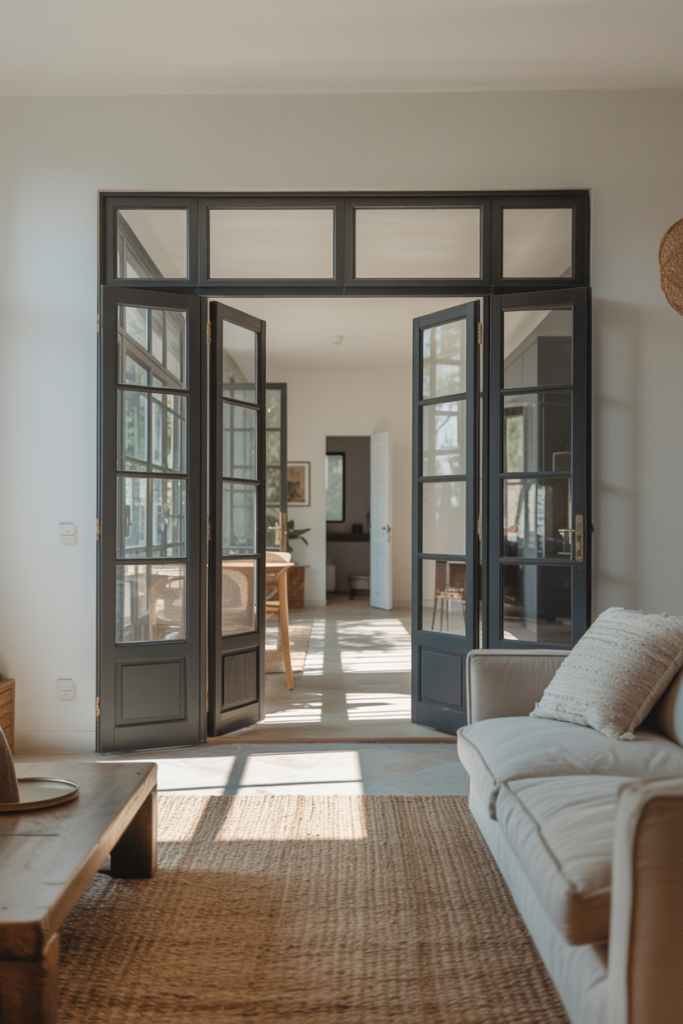
French doors remain one of the most popular living room door ideas, and honestly, it is easy to see why. They bring in light, create a sense of openness, and add an elegance that feels effortless rather than overdone. I have seen them work beautifully in both older period homes and brand new builds.
The key to making French doors work is getting the proportions right. They look best when they are tall, ideally reaching close to the ceiling, because this draws the eye upward and makes the room feel larger. Shorter French doors can feel a bit awkward, like they were an afterthought.
For a modern update on the classic look, try black-framed French doors with clear glass. The contrast between the dark frame and the light glass gives them a crisp, architectural feel that works incredibly well in contemporary living rooms.
2. Barn Doors: Character Without the Effort
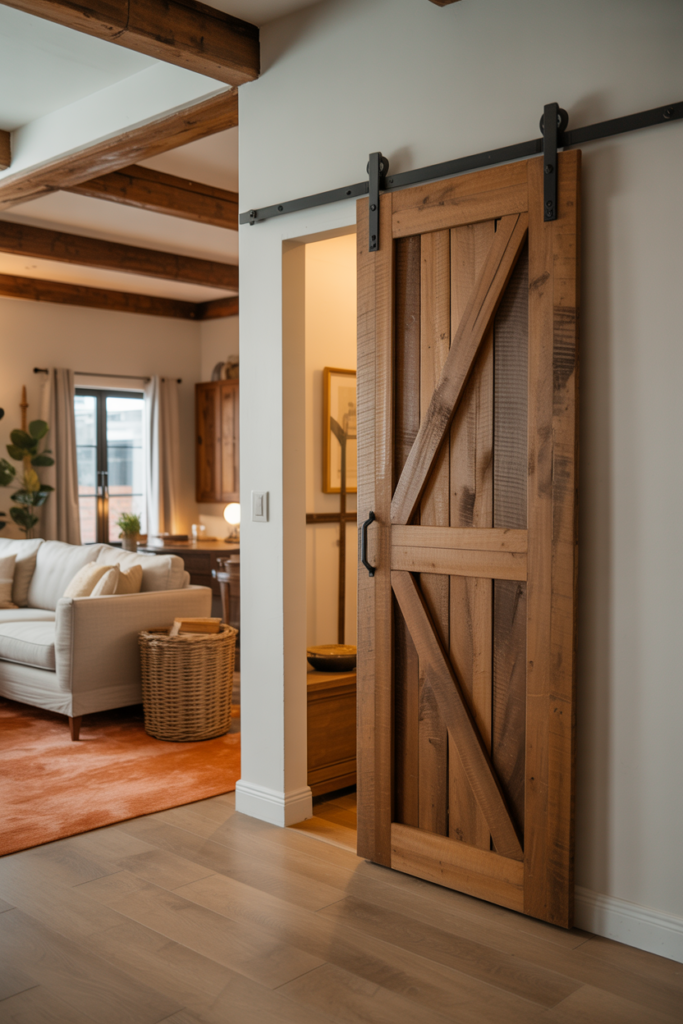
Barn doors have become a staple in interior design, and they are not going anywhere soon. What I love about them is that they slide along the wall rather than swinging open, which saves floor space and adds a real visual statement at the same time.
They work especially well in living rooms with exposed brick, wooden beams, or neutral linen sofas. The texture of a barn door, whether it is reclaimed wood, painted MDF, or a mix of wood and metal, adds warmth that a flat, hollow-core door simply cannot.
One thing to keep in mind: barn doors do not seal completely, so they are better for spaces where you want a visual separation rather than full soundproofing. For a media room or a home office off the living room, that gap can let in noise. But for a casual, open-plan living space, they are perfect.
3. Glass Panel Doors: Bring the Light In
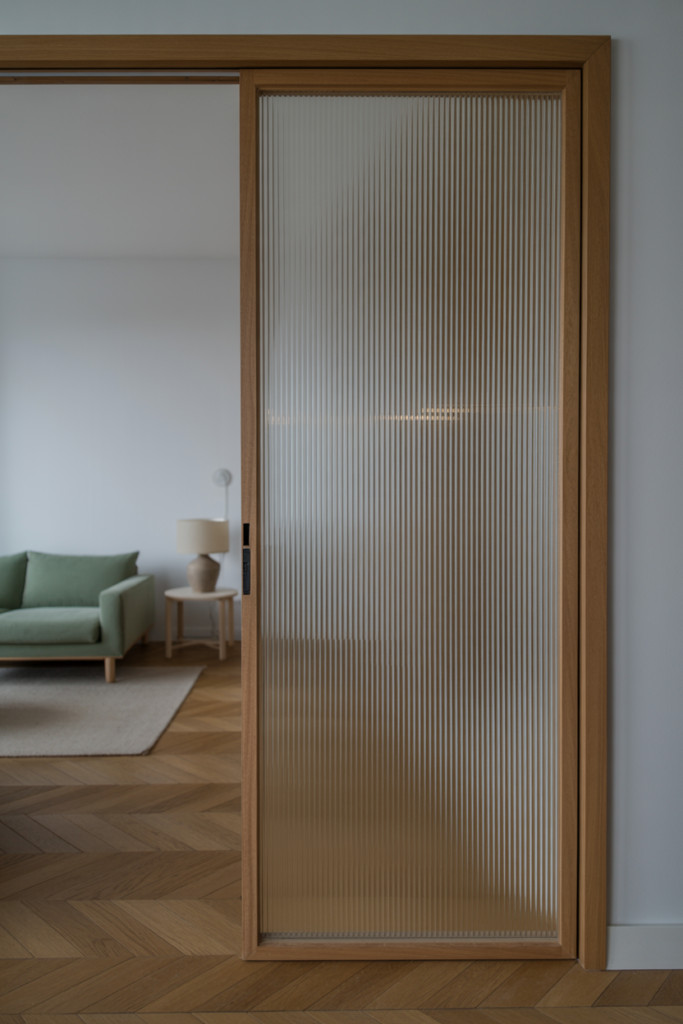
If your living room feels dark or closed off, a glass panel door can genuinely change the feel of the space. I am not just talking about clear glass either. Frosted, reeded, or fluted glass panels give you the benefit of light without sacrificing privacy.
Reeded glass in particular has had a massive moment in interior design recently, and for good reason. It has a beautiful tactile quality and diffuses light in a way that feels soft and warm rather than harsh. Paired with a slim timber or black aluminium frame, it looks genuinely high-end.
Glass panel doors also work brilliantly in narrow hallways leading into a living room. They visually extend the space and make the whole area feel more connected, even when the door is closed.
4. Pocket Doors: The Space-Saver That Looks Great
Pocket doors slide directly into the wall cavity, which means they disappear completely when open. For smaller living rooms or apartments where every square foot matters, this is a genuinely clever solution.
They tend to work best when planned during a renovation rather than retrofitted, since you need a wall cavity wide enough to accommodate them. But if you are already doing building work, adding a pocket door is one of the best decisions you can make for a small living space.
Design-wise, pocket doors can be as simple or as detailed as you like. A clean, flat-panel pocket door in a matte white finish looks sleek and minimal. A glazed pocket door with reeded glass adds texture and keeps the light flowing even when the room is divided.
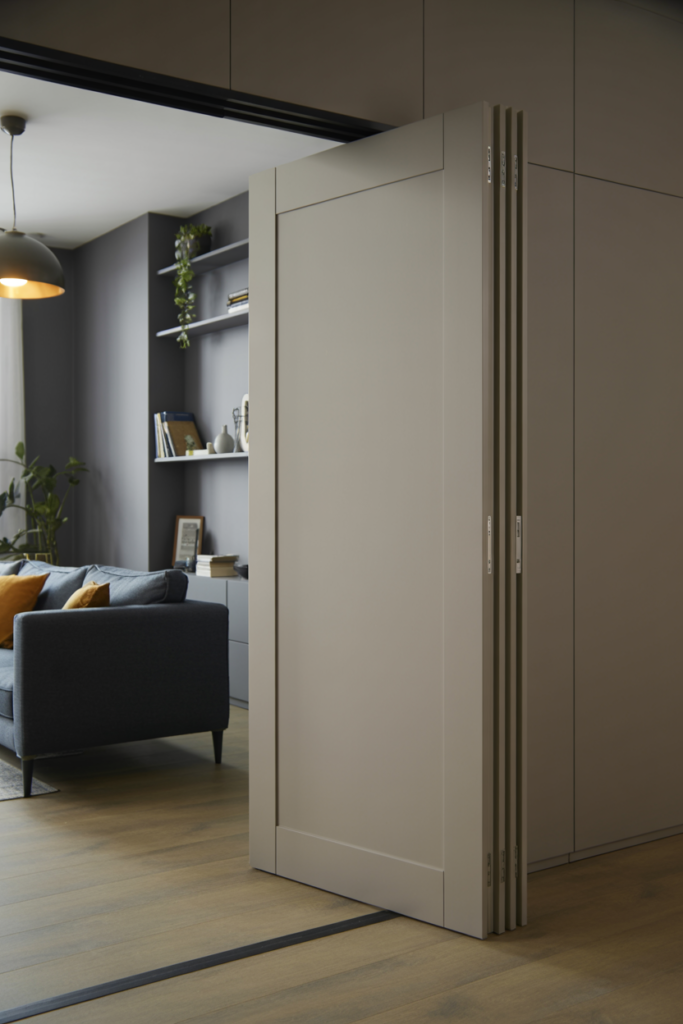
5. Bi-fold Doors: Open Up the Living Room
Bi-fold doors are the go-to choice when you want to completely open up a living room to an adjacent space, like a dining area or a garden room. They fold back on themselves and stack neatly to one side, creating a wide, unobstructed opening.
Internally, bi-fold doors work well between a living room and a formal dining room. They give you the flexibility to keep the spaces separate when you want a quieter evening in, and to throw them wide open when you have guests over. That kind of flexibility is genuinely useful in everyday life.
For a cohesive look, match the door finish to your skirting boards or window frames. This ties the architectural elements together and makes the whole room feel considered rather than pieced together.
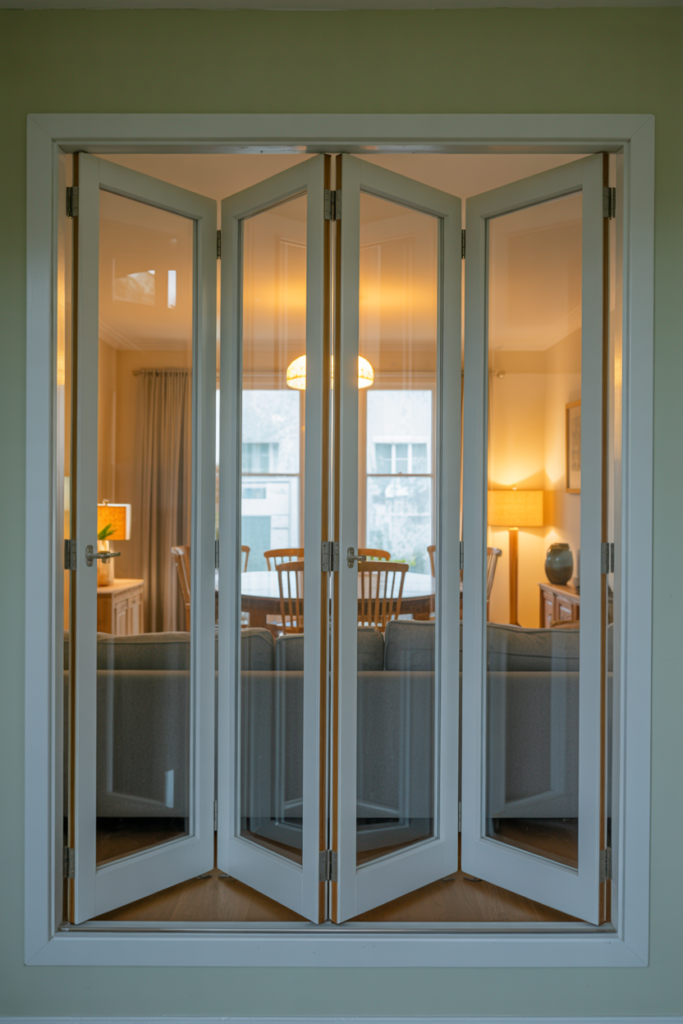
6. Solid Wood Doors: Classic, Warm, and Built to Last
There is something about a solid wood door that feels substantial in a way that hollow-core doors simply do not. The weight of it, the sound it makes when it closes, the grain of the timber. It all adds up to a quality that you can feel as much as see.
In traditional or period-style living rooms, a solid wood door with raised panels is a natural fit. But solid wood doors also work in modern spaces when finished in a deep, matte paint color. Forest green, navy, charcoal, or even a warm terracotta can make a solid door the focal point of the room.
If budget allows, I would always recommend solid wood over hollow-core for main living room doors. The difference in quality and longevity is significant, and the visual impact is immediately noticeable.
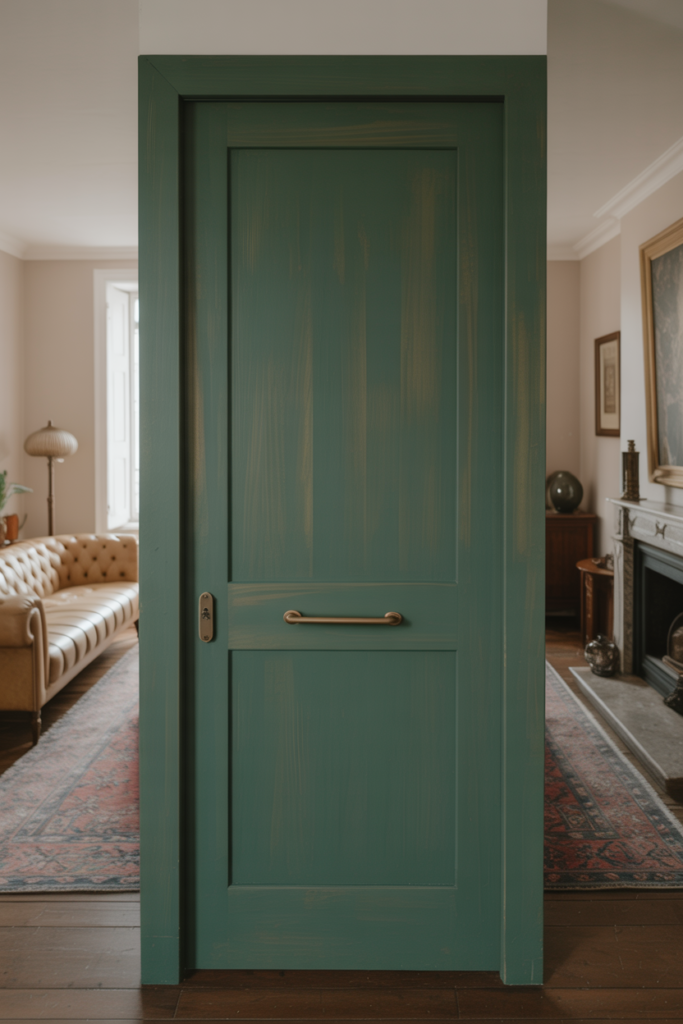
7. Arched Doors: Soft Lines That Change the Whole Room
Arched doors have made a real comeback in interior design, and they bring a softness that rectangular doors simply do not have. The curved top breaks up the straight lines of a typical living room and adds an almost Mediterranean or Scandi-bohemian feel that is hard to achieve any other way.
They work particularly well in white or cream-painted homes where the arch itself becomes a sculptural detail rather than just a functional feature. I have seen arched doors painted in exactly the same color as the surrounding wall, which creates a seamless, tonal effect that looks genuinely sophisticated without trying too hard.
Arched doors are also one of the best ways to add character to a new-build home that might otherwise feel a little flat and generic. One well-placed arched doorway into the living room can completely change the personality of the space, and that is a lot of impact for a single design decision.
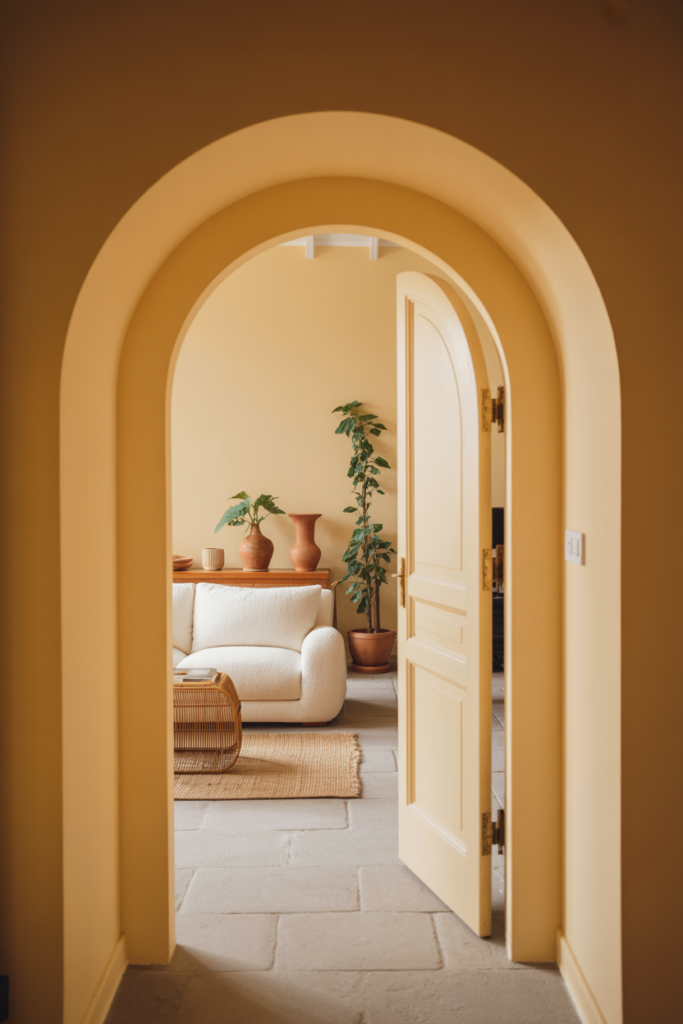
Choosing the Right Door Finish and Hardware
The door style gets most of the attention, but the finish and hardware are what bring the whole thing together. A beautiful door with cheap, mismatched handles is like wearing a great outfit with the wrong shoes. It throws everything off.
Matte black hardware has been a firm favorite for a few years now, and it works across a wide range of door styles, from modern glass panel doors to rustic barn doors. It is versatile, easy to keep clean, and gives a crisp, defined look that feels current without being trendy.
For warmer, more traditional living rooms, brushed brass or antique bronze handles add a richness that cooler finishes cannot replicate. Pair them with a solid wood door in a deep, earthy tone and the result feels genuinely warm and considered.
| Hardware Finish | Best Paired With | Overall Feel |
|---|---|---|
| Matte Black | Glass panel, barn, modern flat doors | Sleek, contemporary |
| Brushed Brass | Solid wood, arched, traditional doors | Warm, classic |
| Satin Nickel | French doors, bi-fold, pocket doors | Neutral, timeless |
| Antique Bronze | Rustic, farmhouse, period-style doors | Rich, traditional |
| Chrome | Minimalist, Scandi, white interiors | Clean, modern |
Conclusion
Choosing a living room door is one of those decisions that seems straightforward until you realize how much it actually affects the look and feel of the entire space. The right door brings in light, adds texture, defines the style of the room, and makes the whole space feel more intentional.
From the timeless elegance of French doors to the space-saving cleverness of pocket doors, there is a style to suit every living room and every budget. My honest advice is to think about how you use the space first, then let the design follow from there. A door that works beautifully in everyday life will always feel better than one that just looks good in a photo.
And do not forget the hardware. The handles, hinges, and finish are the finishing touches that make a door feel complete rather than like an afterthought. Get those details right and the whole room benefits.
Frequently Asked Questions
What is the most popular interior door style for living rooms right now? Glass panel doors, particularly those with reeded or fluted glass, are extremely popular right now. They bring light into the room while still offering a level of privacy, and they suit both modern and transitional living room styles very well.
Are barn doors a good choice for living rooms? Barn doors work brilliantly in living rooms with a casual, open-plan layout. They save floor space and add real visual character. However, they do not seal completely, so they are not ideal if soundproofing is a priority for your space.
How do I make a small living room feel bigger with a door choice? Pocket doors or glass panel doors are the best options for smaller living rooms. Pocket doors disappear into the wall completely, saving swing space. Glass doors visually extend the room by allowing light and sightlines to flow through even when closed.
What door height works best for a living room? Taller doors, ideally 2.4 meters or higher, make a living room feel more spacious and elegant. Standard-height doors can feel low in rooms with high ceilings, so always consider ceiling height when choosing door proportions.
Should living room doors match throughout the house? Consistency generally looks more polished and considered, especially in open-plan homes. Matching door styles, colors, and hardware throughout the main living areas creates a cohesive flow. That said, a statement door in the living room can work well as a deliberate design choice.
Can I paint my existing living room door instead of replacing it? Absolutely, and it makes a bigger difference than most people expect. A fresh coat of paint in a bold or on-trend color can completely transform a flat, dated door. Sand it down properly, use a good primer, and finish with a matte or eggshell paint for the best result.
What is the best material for an interior living room door? Solid wood is the best option for quality, longevity, and visual warmth. It holds paint and stain beautifully and feels substantial in a way that MDF or hollow-core doors do not. If solid wood is outside the budget, a solid core MDF door is a good middle-ground option.