
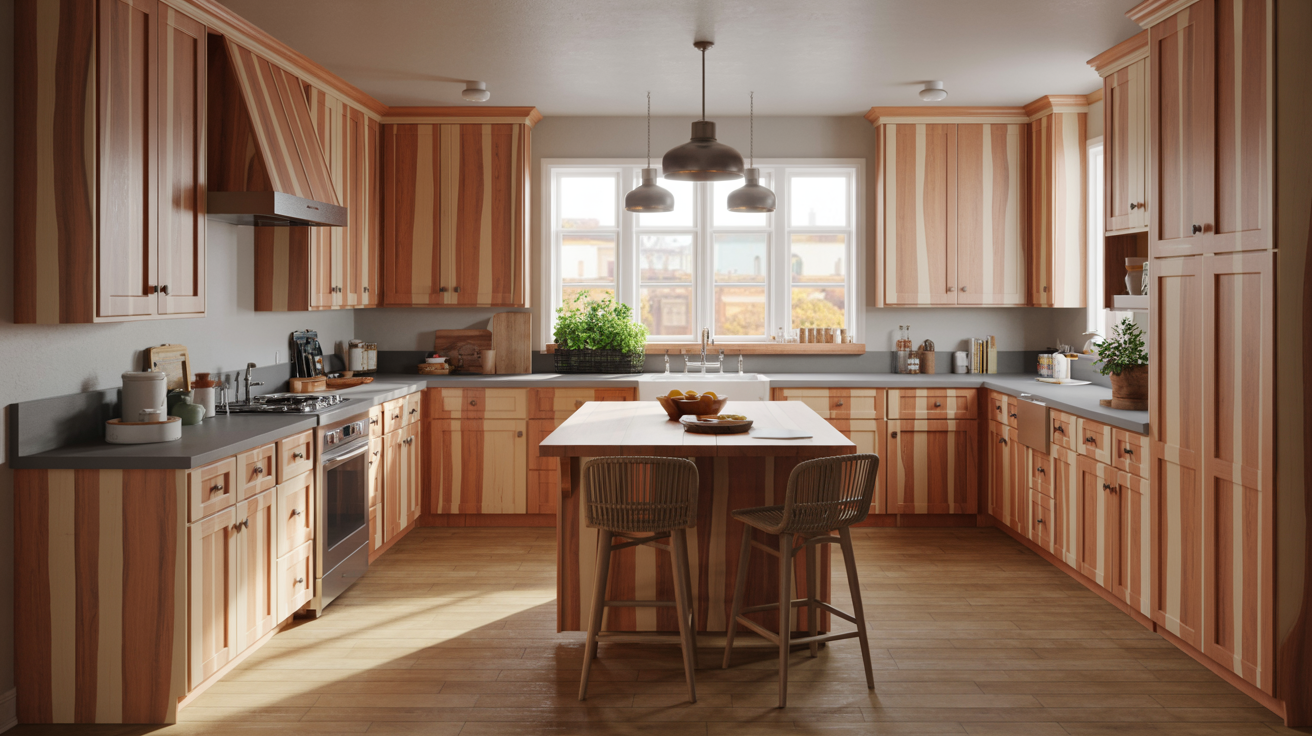
Hickory kitchen cabinets are one of those choices you never regret. The bold grain, the natural color shifts, the knots that tell a story all come together in a way no painted cabinet ever can. It is raw, real, and makes a kitchen feel genuinely lived in.
I have seen a lot of kitchens. Some look straight out of a catalog, pretty but forgettable. Then there are hickory kitchens, the ones that stop you mid-step and make you want to stay a while. There is something about that wood that just feels right, especially in a rustic or farmhouse-style home.
If you are thinking about hickory cabinets for your kitchen, you are already making a strong call. This guide walks through 15 hickory kitchen cabinet styles that actually work in real homes. Not showroom fantasy, just honest, good-looking kitchens built around one of the most dependable hardwoods out there.
Why Hickory Wood Works So Well in Kitchens
Hickory is one of the hardest domestic woods available, which makes it a smart pick for cabinets. It resists dents, handles daily wear well, and ages beautifully over time. A hickory cabinet that looks great today will look even better in ten years.
The color range in hickory is what makes it so interesting to work with. A single plank can go from pale cream to deep reddish-brown, sometimes within inches of each other. That natural contrast is what gives hickory kitchens their bold, layered look without any extra effort.
What I personally love most about hickory is that it does not need much help. You do not need trendy hardware or expensive countertops to make a hickory kitchen look good. The wood does the heavy lifting, and everything else falls into place around it.
Style 1: Natural Finish Hickory Cabinets
Natural finish hickory cabinets are the most straightforward way to let the wood speak for itself. No stain, no color added, just a clear coat that protects the surface while keeping every grain line and color variation fully visible. It is the most honest version of hickory you can put in a kitchen.
This style works especially well in kitchens with plenty of natural light. The pale tones in the wood brighten up the space, while the darker streaks add depth without making things feel heavy. It is a balance that is genuinely hard to achieve with any other material.
If you want a kitchen that looks naturally warm without trying too hard, this is the style to start with. Pair it with stone countertops and simple open shelving, and you have a kitchen that feels both relaxed and well put together.
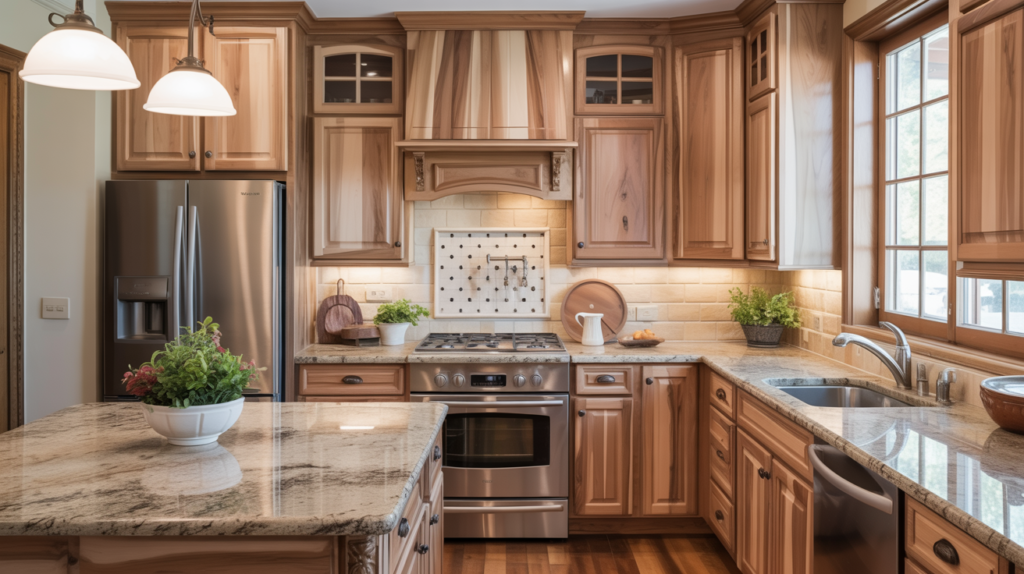
Style 2: Dark Stained Hickory Cabinets
Dark stained hickory cabinets bring a more dramatic, grounded energy to the kitchen. A walnut or espresso stain deepens the natural tones in the wood while still letting the grain pattern show through. The result is rich, bold, and surprisingly versatile.
This style pairs well with lighter countertops like white quartz or light granite. The contrast keeps the kitchen from feeling too dark or closed in. I have seen this combination work beautifully in both large open kitchens and smaller, cozier spaces.
Dark stained hickory also hides everyday smudges and minor scratches better than lighter finishes. So if you have a busy kitchen with kids around, this might just be the most practical bold choice you can make.
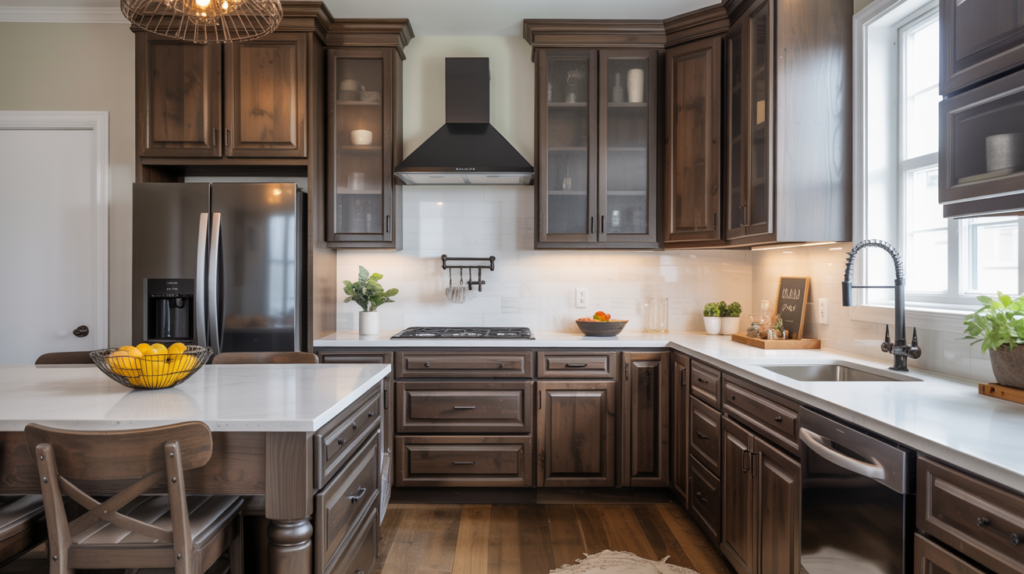
Style 3: Rustic Knotty Hickory Cabinets
Knotty hickory cabinets are for those who want their kitchen to have a full rustic personality. The knots, mineral streaks, and color shifts are kept completely intact, giving each cabinet door a look that is entirely its own. No two doors look the same, and that is exactly the point.
This style fits perfectly in log cabins, farmhouse kitchens, and country-style homes. It brings an outdoor, natural feel inside without feeling overdone. Paired with wrought iron hardware and a stone backsplash, it looks like it belongs in a kitchen that has been there for generations.
I find knotty hickory to be the most character-rich option on this list. It is not for everyone, but for those who love raw, unfiltered natural beauty, it delivers better than almost any other wood species.
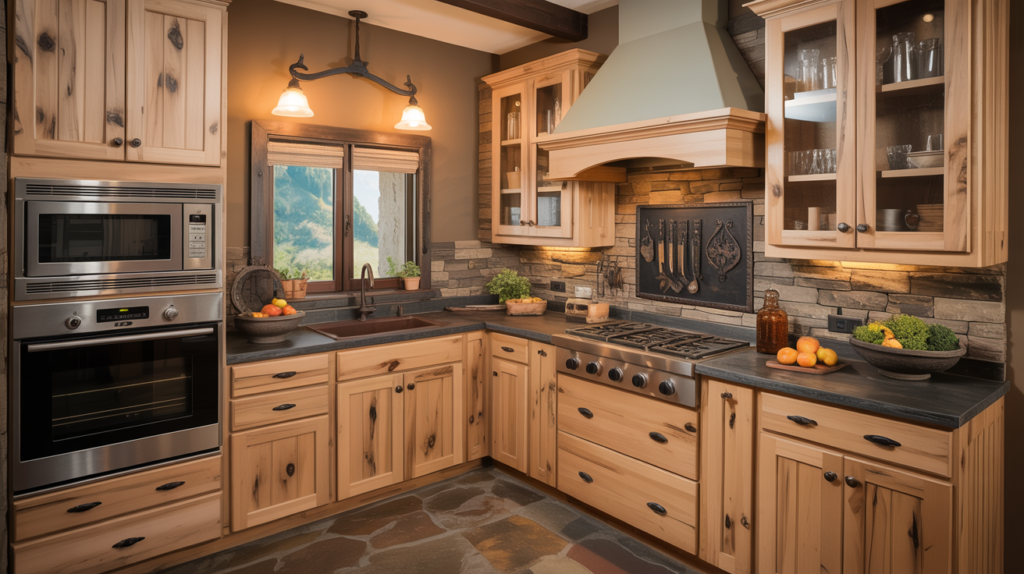
Style 4: Two-Tone Hickory Cabinets
Two-tone hickory cabinets use hickory on the upper cabinets and a contrasting finish on the lower ones, or the other way around. This style adds visual interest and breaks up what could otherwise feel like too much wood in one space. It is a smart design move that works across different kitchen sizes.
A popular combination is natural hickory uppers with painted white or navy lowers. The hickory brings warmth and texture while the painted base adds a clean, modern edge. It keeps the rustic feel without making the kitchen look like a log cabin that got lost in the suburbs.
Two-tone also gives you more flexibility with countertop and flooring choices. Since you are working with two distinct finishes, it is easier to pull in other materials and colors without the kitchen feeling disconnected or overdone.
Style 5: Hickory Shaker Cabinets
Hickory shaker cabinets combine one of the most classic cabinet door styles with one of the most distinctive wood species. The clean, flat-panel frame of a shaker door lets the hickory grain take center stage without any extra visual noise. It is a pairing that just makes sense.
Shaker style keeps things simple, which is actually what hickory needs most. The wood already brings enough personality on its own. Adding an overly ornate door style would compete with the grain rather than complement it.
I would recommend hickory shaker cabinets for anyone who wants a rustic kitchen that still feels current and clean. It sits comfortably between traditional and modern without leaning too hard in either direction.
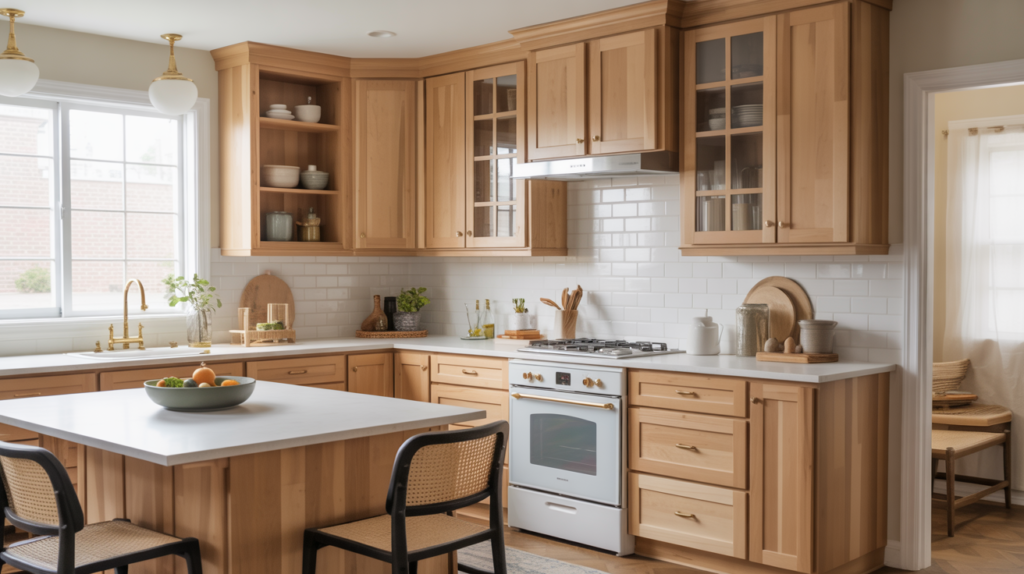
Style 6: Hickory Cabinets With Open Shelving
Mixing hickory cabinets with open shelving is one of the best ways to keep a rustic kitchen from feeling too enclosed. The open shelves break up the cabinet run and give the kitchen a more relaxed, lived-in look. It also gives you a spot to display things that actually mean something to you.
Matching the open shelf material to the hickory cabinet finish ties the whole design together. You get a cohesive look that still feels layered and interesting. Add a few plants or ceramic pieces on those shelves and the kitchen immediately feels like home.
This style works especially well in smaller kitchens where full upper cabinets can feel overwhelming. Open shelving keeps the eye moving and makes the space feel bigger than it actually is.
Style 7: Hickory Cabinets With Black Hardware
Pairing hickory cabinets with matte black hardware is one of the sharpest combinations in rustic kitchen design right now. The dark hardware creates a strong contrast against the warm wood tones, giving the kitchen a bold, defined look. It feels intentional without being overdone.
Matte black pulls, knobs, and hinges work across almost every hickory finish, from natural to dark stained. They also photograph really well if that matters to you. More practically, matte black hardware does not show fingerprints the way brushed nickel or chrome does.
This is one of those small choices that makes a noticeably big difference. If your hickory cabinets feel like they are missing something, switching out the hardware for matte black is usually the fastest fix.
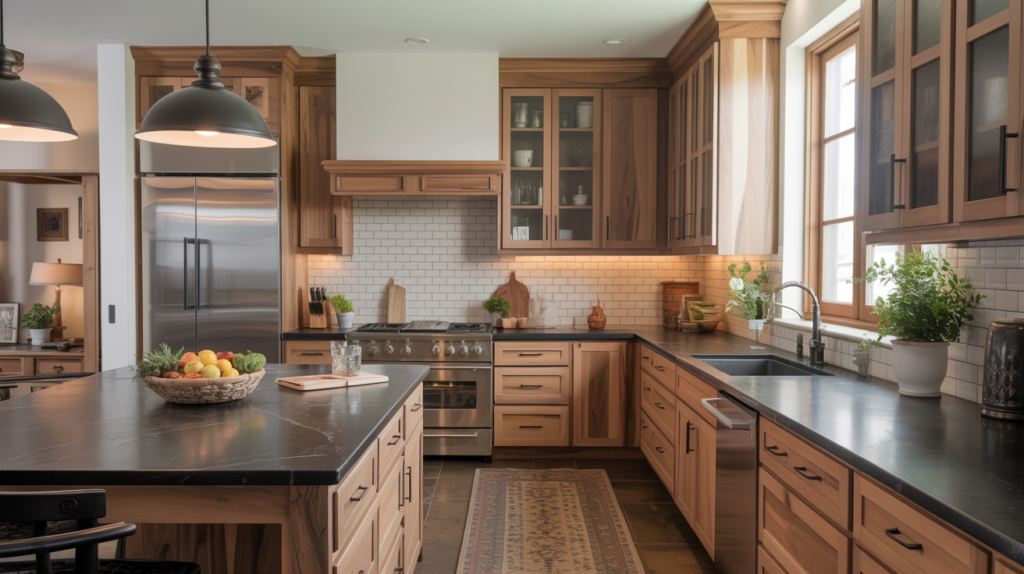
Style 8: Hickory Cabinets With Stone Countertops
Hickory cabinets and stone countertops are one of the most natural pairings in a rustic kitchen. Whether it is granite, quartzite, or soapstone, the natural variation in stone mirrors the natural variation in hickory. Both materials bring organic texture, and together they create a kitchen that feels genuinely connected to nature.
Lighter stone works well with darker hickory finishes, while darker stone like black granite pairs beautifully with natural or lighter hickory tones. The contrast keeps each material from competing with the other. I have always felt this combination looks expensive without necessarily costing more than other options.
Stone countertops also add practical value. They are heat resistant, durable, and easy to clean. Paired with hickory cabinets, you get a kitchen that looks great and actually holds up to real daily use.
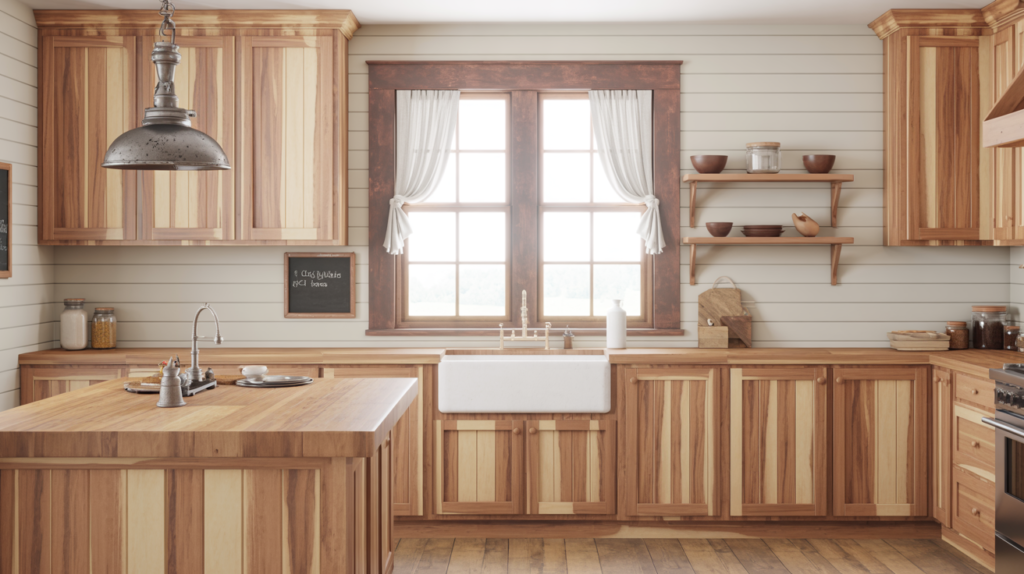
Style 9: Hickory Cabinets in a Farmhouse Kitchen
Hickory cabinets feel completely at home in a farmhouse kitchen. The rustic grain and warm tones match the relaxed, welcoming energy that farmhouse style is built on. Add a farmhouse sink, shiplap walls, and a simple pendant light and you have a kitchen that feels warm and genuinely inviting.
Farmhouse kitchens benefit from the natural color variation in hickory because it adds depth without requiring layered decor. The wood itself does the decorating. That means you can keep everything else simple and the kitchen still looks thoughtfully designed.
This is one of my favorite hickory applications because it feels so effortless. Everything belongs together, and nothing looks like it was forced into the space just to fill a trend.
Style 10: Hickory Cabinets With White Walls
White walls and hickory cabinets are a combination that works in almost every kitchen layout. The white keeps the space bright and airy, while the hickory grounds it with warmth and texture. It is one of the easiest ways to make a bold wood choice feel balanced.
This pairing also gives you a lot of flexibility with accents. You can bring in green plants, colorful textiles, or patterned tile without the kitchen feeling chaotic. The white and hickory act as a neutral base that absorbs other design choices well.
If you are unsure about going all in on a rustic look, starting with white walls and hickory cabinets is a low-risk way to test the combination. It is approachable, bright, and genuinely hard to get wrong.
Style 11: Hickory Cabinets With Subway Tile Backsplash
A subway tile backsplash behind hickory cabinets keeps the kitchen looking clean without competing with the wood. The simple, repeating pattern of subway tile creates a calm backdrop that lets the hickory grain remain the main focus. It is a classic choice that holds up well over time.
White subway tile is the most common pairing, but gray or off-white tiles also work beautifully with hickory tones. The grout color can shift the whole mood, with darker grout adding more definition and a slightly industrial edge. Lighter grout keeps things softer and more traditional.
I like this combination because it is genuinely timeless. Trends come and go, but subway tile and natural wood have been working together in kitchens for decades and show no signs of stopping.
Style 12: Hickory Cabinets in a Log Cabin Kitchen
Hickory cabinets in a log cabin kitchen feel like a natural extension of the building itself. The wood tones and grain patterns complement the raw, structural look of log walls and exposed beams. Everything feels like it grew from the same source, which is exactly the point of a cabin kitchen.
In this setting, knotty hickory with a natural or light stain works best. Heavy finishes can look out of place against raw log walls. Keeping the cabinet finish close to the natural state of the wood ties the whole interior together in a way that feels authentic.
This is a kitchen style where more is genuinely more. Copper fixtures, stone floors, and a cast iron stove alongside hickory cabinets create a space that feels deeply rooted in craftsmanship and tradition.
Style 13: Hickory Cabinets With Butcher Block Countertops
Hickory cabinets paired with butcher block countertops create a warm, all-natural kitchen aesthetic that feels both rustic and functional. Both materials are organic and textured, and they complement each other without either one overpowering the other. It is a combination that feels genuinely at home in a working kitchen.
Butcher block adds a practical surface that is easy to maintain and repair over time. Light sanding and a fresh coat of food-safe oil can make a worn butcher block surface look brand new. Paired with the durability of hickory cabinets, this is a kitchen built to last.
The warmth of both materials together can feel very cozy, so balancing the space with lighter walls or good lighting helps keep the kitchen feeling open. A large window over the sink does a lot of work in a kitchen like this.
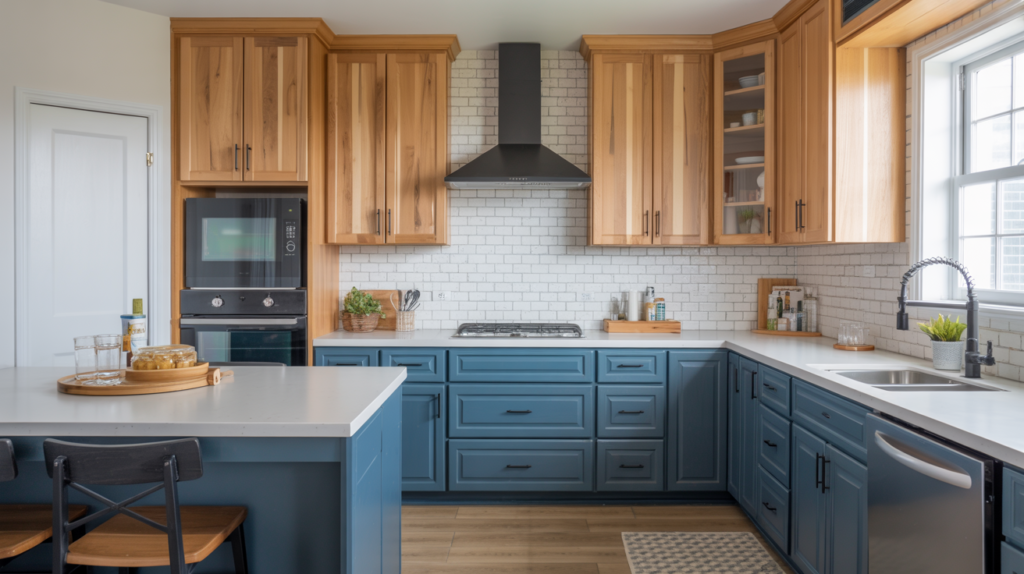
Style 14: Painted Lower Cabinets With Hickory Uppers
Keeping hickory on the upper cabinets and using painted lowers is a great way to introduce color into a rustic kitchen without overwhelming the wood. Sage green, navy, or deep charcoal on the lower cabinets all pair well with the warm tones of hickory above. It gives the kitchen a layered, intentional look.
This arrangement also draws the eye upward, which can make a kitchen with lower ceilings feel taller. The natural hickory uppers keep the top half of the kitchen warm and textured while the painted lowers anchor the space with a grounded, solid color.
I find this style works particularly well in kitchens where the homeowner wants personality but also some control over the overall color palette. You get the best of both worlds without compromising either.
Style 15: Hickory Cabinets With Concrete Floors
Hickory cabinets above concrete floors is a pairing that sits right at the intersection of rustic and industrial. The raw, cool texture of concrete creates an interesting contrast against the warm, organic grain of hickory. It is unexpected, but it works remarkably well in open-plan spaces.
Concrete floors are easy to clean, extremely durable, and can be finished in a range of tones from light gray to charcoal. A lighter concrete floor keeps the space feeling bright alongside warm hickory cabinets. Darker concrete creates a moodier, more dramatic kitchen environment.
This combination suits modern rustic kitchens that want to push past traditional farmhouse aesthetics. It brings a raw, grounded quality to the space that feels current without chasing trends.
What to Know Before Choosing Hickory Kitchen Cabinets
Hickory is a strong, beautiful wood, but it is not the right fit for every kitchen or every homeowner. Before you commit, there are a few practical things worth knowing. Going in informed saves you from surprises later.
Hickory’s bold grain and color variation mean it can feel visually busy in smaller kitchens. If your kitchen has limited natural light or a tight layout, a lighter hickory finish or a two-tone approach works better than going full knotty hickory on every surface. Balance is everything in a small space.
Hickory is also harder to stain evenly than softer woods like pine or oak. The density of the wood means it absorbs stain at different rates across the same plank. Working with a skilled cabinet maker who has experience finishing hickory specifically makes a noticeable difference in the final result.
Conclusion
Hickory kitchen cabinets bring a level of warmth, texture, and personality that very few other materials can match. Whether you go with a natural finish that lets every grain line show, a dark stain for a richer look, or a two-tone setup that balances rustic with modern, hickory gives you a kitchen worth spending time in.
The 15 styles covered in this guide each bring something different to the table. Some are bold and dramatic, some are quiet and warm, and some sit right in between. The right choice depends on your kitchen layout, your lighting, and honestly, what makes you feel good when you walk in every morning.
Hickory is not a low-maintenance, blend-into-the-background kind of wood. It has presence. It asks to be noticed. And in a kitchen, that kind of confidence in a material almost always pays off.
Frequently Asked Questions
1. Are hickory kitchen cabinets a good choice for everyday use?
Yes, hickory is one of the hardest domestic woods available, which makes it highly durable for daily kitchen use. It resists dents and scratches better than most other wood species. With proper care, hickory cabinets can last for decades without losing their appeal.
2. Do hickory cabinets work in a modern kitchen? Hickory works in modern kitchens when paired with clean door styles like shaker and simple hardware like matte black pulls. The key is balancing the bold grain with minimal surrounding decor. A modern rustic approach gives you the best of both worlds.
3. What countertop color goes best with hickory cabinets? Light countertops like white quartz or cream granite work well with darker hickory finishes. For natural or lighter hickory tones, darker stone like black granite or soapstone creates a strong, grounded contrast. Stone countertops in general tend to pair naturally with hickory wood.
4. Is hickory wood expensive for kitchen cabinets? Hickory cabinets are generally mid to higher range in price compared to other wood species. The cost reflects the wood’s hardness, durability, and the difficulty of working with it. The long lifespan of hickory cabinets makes them a worthwhile investment for most homeowners.
5. How do I maintain hickory kitchen cabinets? Wipe hickory cabinets with a soft, damp cloth and a mild wood-safe cleaner for regular cleaning. Avoid harsh chemicals or abrasive scrubbers that can damage the finish. Re-oiling or resealing every few years keeps the wood protected and looking its best.
6. Can hickory cabinets be painted? Hickory can technically be painted, but most designers advise against it. Painting hickory covers the grain and color variation that makes the wood worth choosing in the first place. If you want color, a two-tone approach with painted lowers and natural hickory uppers is a far better option.
7. What hardware finish looks best on hickory cabinets? Matte black hardware is currently the most popular choice with hickory cabinets and for good reason. It creates a sharp contrast against the warm wood tones and does not show fingerprints easily. Bronze and wrought iron hardware also work well for a more traditional rustic look.