
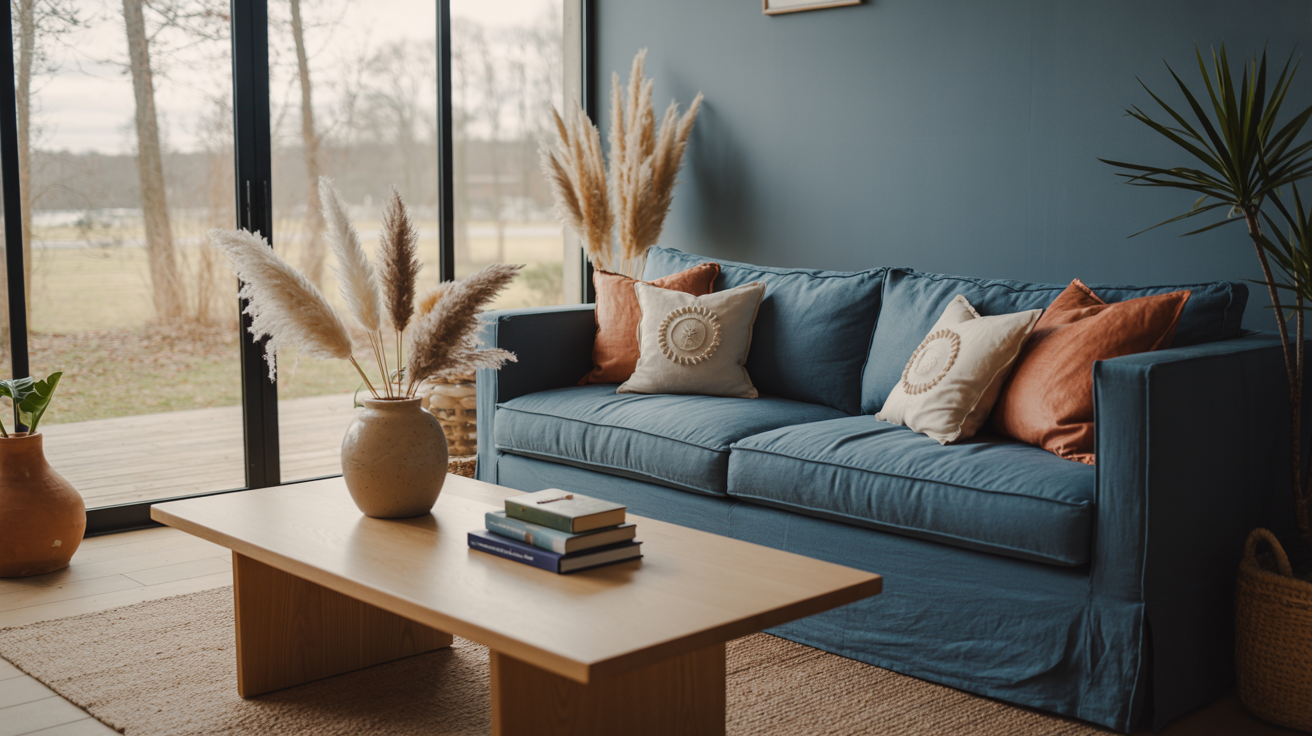
Blue is one of those colors that just works. It can feel calm and breezy one moment, bold and sophisticated the next. Whether you are redesigning your living room from scratch or just looking for a fresh update, blue gives you so much to play with.
I have always believed that a living room should feel like a place you actually want to be in. And blue, in all its shades, has a way of making spaces feel more alive without trying too hard. From soft powder blue to deep navy, there is a version of this color for every personality and every style.
The best part? Blue pairs beautifully with almost everything. Wood tones, white walls, gold accents, green plants. It is one of the most flexible colors in interior design, and once you start exploring it, you will wonder why you ever played it safe with beige.
Why Blue Works So Well in a Living Room
Blue has a psychological edge over most other colors. Studies in color psychology consistently show that blue tones reduce stress and create a sense of calm. That is exactly the kind of energy most people want in their living room after a long day.
It is also a color with serious range. A pale sky blue can make a small living room feel open and airy. A deep indigo or slate blue can make a large room feel warm and intimate. You are not locked into one mood when you choose blue. You get to decide how dramatic or how subtle you want to go.
What I find most interesting is how differently blue behaves depending on the light in a room. In a south-facing room with lots of natural light, a cool blue looks crisp and fresh. In a north-facing room, that same blue can feel a bit cold, so warmer blues like dusty teal or soft denim work better there. Always test your paint in the actual room before committing.
Blue Living Room Ideas for Every Design Style
There is no single way to do a blue living room. The color shows up differently across design styles, and that versatility is exactly what makes it so popular. Here are some of the best ways to use blue depending on the look you are going for.
Coastal Blue Living Room Style
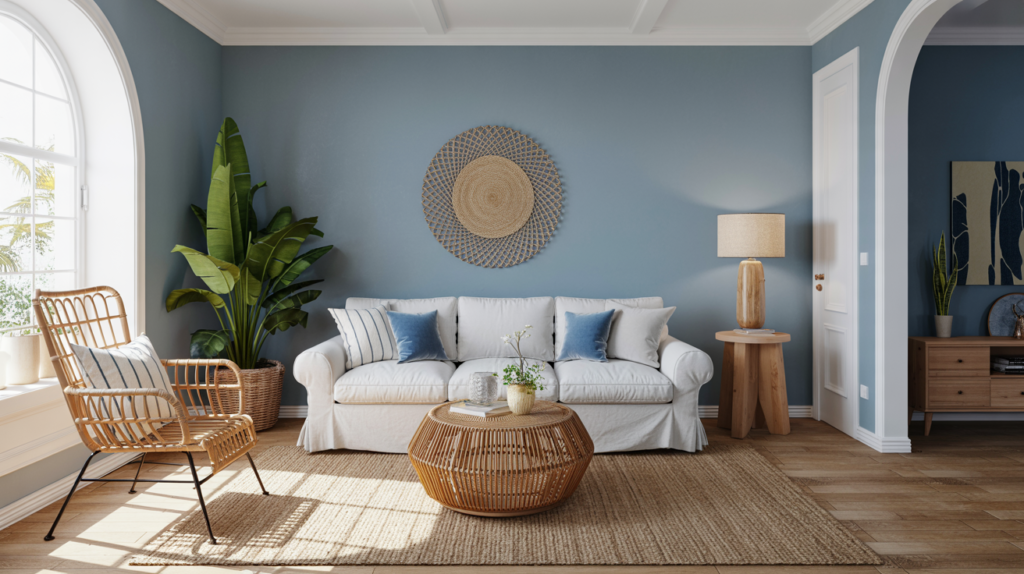
A coastal blue living room is probably the most recognizable version of this trend. Think sandy textures, white linen sofas, weathered wood, and walls in shades like seafoam, aqua, or soft cerulean. It feels relaxed and effortless, like you are always on a long weekend.
The key to nailing coastal style is layering natural materials. Jute rugs, rattan chairs, linen curtains, and driftwood accents all work beautifully with soft blue tones. You do not need to live near the ocean to pull this off. You just need the right textures and a light hand with the color.
I personally love how a coastal palette makes a room feel like it is breathing. Nothing feels forced or overdone. If you keep the furniture simple and let the blue do most of the talking, the result almost always looks great.
| Coastal Style Elements | Best Blue Shades |
| Jute rugs, rattan furniture | Seafoam, Aqua |
| White linen sofas | Soft Cerulean |
| Driftwood accents | Sky Blue, Sand Blue |
| Linen curtains | Powder Blue |
Navy Blue Living Room for a Bold, Classic Look
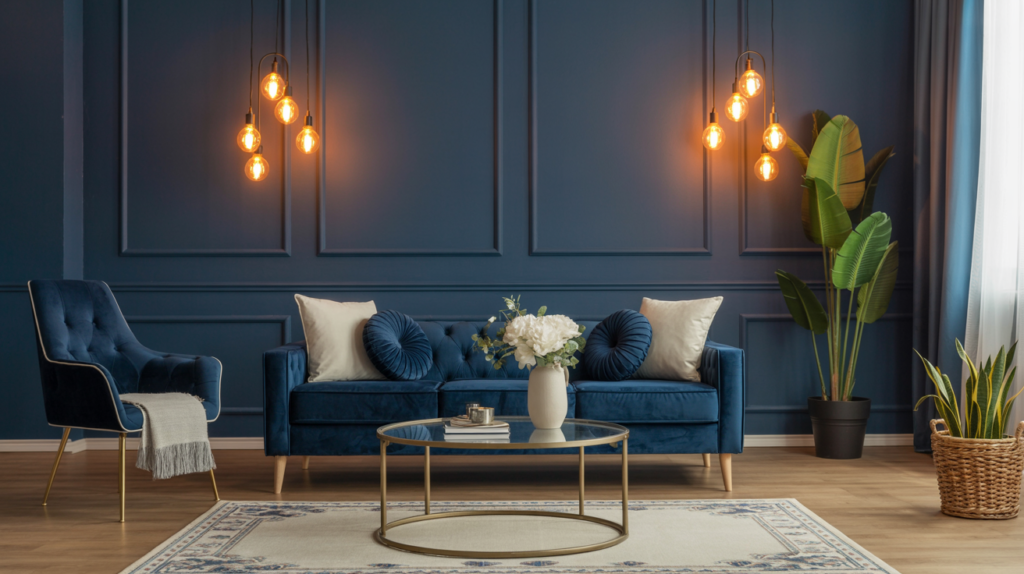
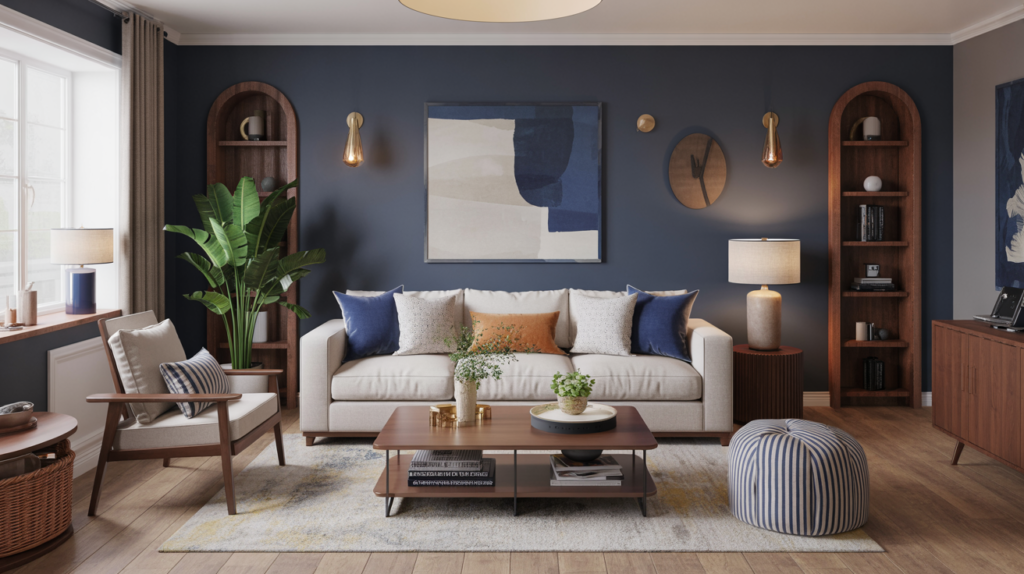
Navy is the little black dress of interior design. It is bold, timeless, and always looks intentional. A navy blue living room can feel library-cozy or sleek and modern depending on how you style it.
Pairing navy walls with brass or gold hardware is one of my favorite combinations. The warmth of the metal cuts through the depth of the navy and stops the room from feeling too heavy. Add a cream or ivory sofa and you have a space that feels both rich and balanced.
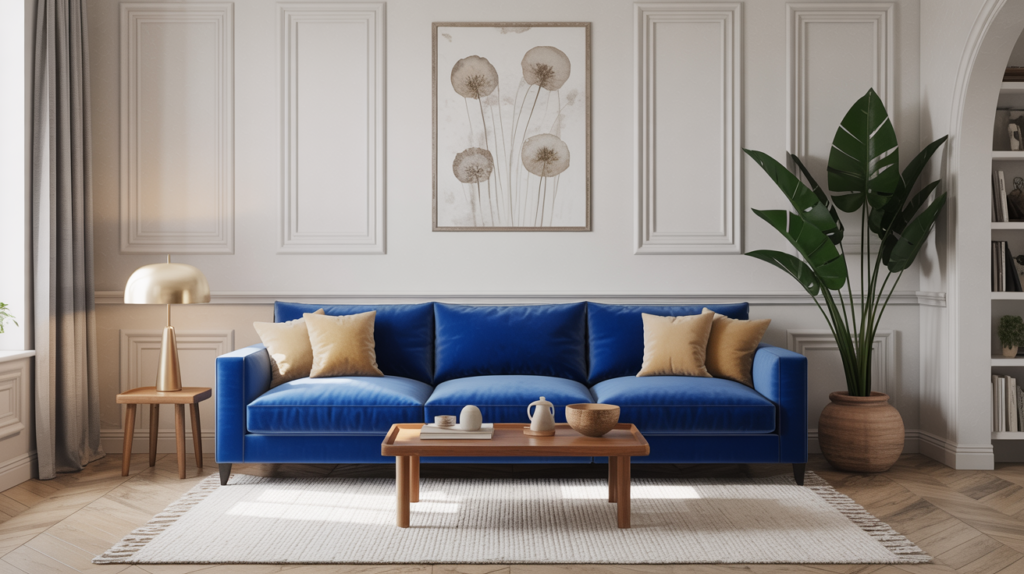
Navy also works well as an accent rather than an all-over wall color. A navy velvet sofa against white walls is a statement on its own. You get the drama without committing to a full repaint, which is always a win.
Contemporary Blue Living Room Design
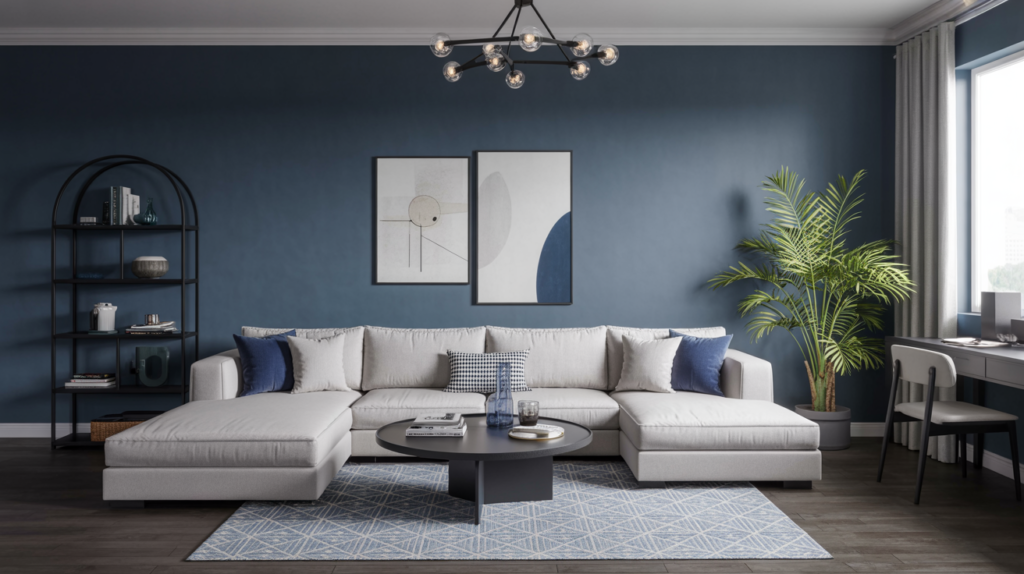
Contemporary style is all about clean lines, minimal clutter, and intentional choices. Blue fits into this aesthetic surprisingly well, especially in cooler, muted tones like slate, steel blue, or dusty periwinkle. The trick is to keep everything else in the room simple so the blue has room to breathe.
In a contemporary blue living room, you want furniture with straight edges and smooth finishes. Think low-profile sofas in neutral tones, glass or metal coffee tables, and abstract art with blue accents. Every piece should feel like it belongs there for a reason.
What I love about contemporary blue spaces is how put-together they look with very little effort. A steel blue accent wall behind a white sectional sofa, a geometric rug, and one or two carefully chosen decor pieces. That is genuinely all you need.
Bohemian Blue Living Room Vibes
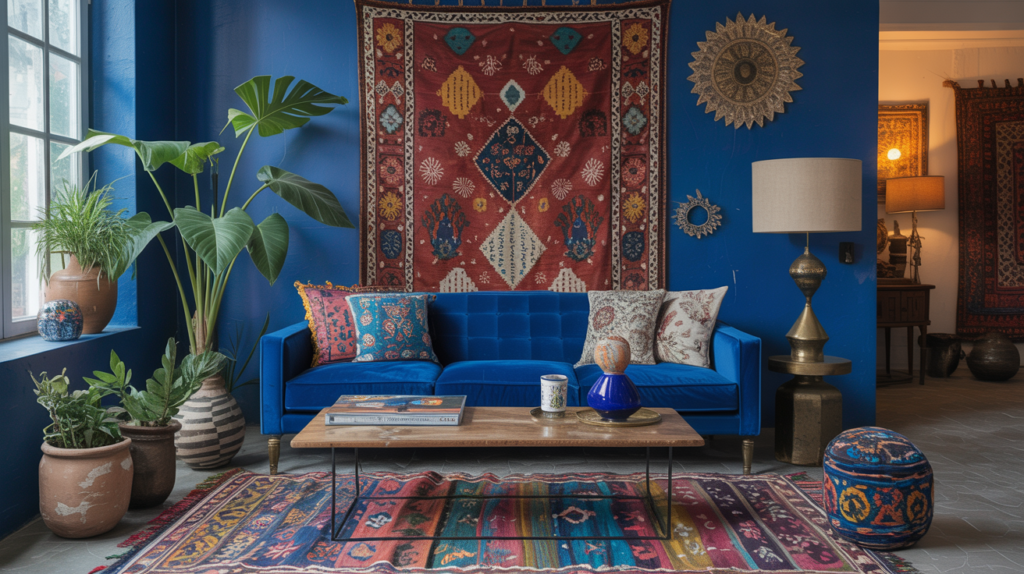
Bohemian style gives you permission to mix patterns, layer textures, and collect things you actually love. Blue works beautifully here, especially in deeper, richer tones like cobalt, teal, indigo, or peacock blue. These shades feel warm and jewel-like against the layered bohemian aesthetic.
The bohemian approach is all about abundance done right. A cobalt blue velvet sofa, a patterned Moroccan rug, mismatched throw pillows in blue and terracotta, hanging macrame on the wall. It sounds like a lot, but when the colors are anchored by a strong blue base, everything ties together naturally.
Do not be afraid to mix in warm tones with your blue in a boho space. Mustard yellow, burnt orange, and earthy rust all sit beautifully next to rich blue shades. That contrast is exactly what gives bohemian rooms their signature energy.
Modern Farmhouse with Blue Accents
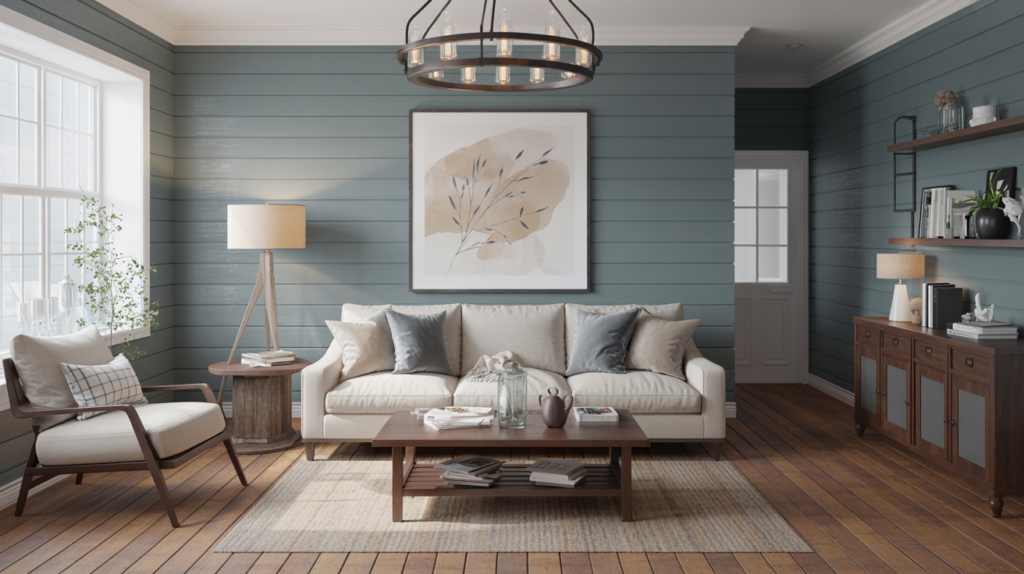
Modern farmhouse style has become a staple in home design, and blue fits into it better than most people expect. Soft, muted blues like dusty blue, slate, or French blue feel right at home alongside shiplap walls, barn doors, and linen-covered furniture.
The key in a farmhouse blue living room is to keep the blue soft and the overall palette warm. A dusty blue throw on a cream linen sofa, blue pottery on a wooden shelf, or a soft blue patterned rug over wide-plank floors. These small touches add color without disrupting the cozy, grounded feel of farmhouse style.
I think what makes blue work so well in farmhouse spaces is that it has a worn, lived-in quality when you choose the right shade. It does not feel decorative or precious. It feels like it has always been there, which is exactly the vibe farmhouse style is going for.
| Design Style | Best Blue Shades | Key Pairings |
| Contemporary | Slate, Steel Blue, Periwinkle | White, Glass, Metal |
| Bohemian | Cobalt, Teal, Indigo | Terracotta, Mustard, Rust |
| Modern Farmhouse | Dusty Blue, French Blue | Cream, Warm Wood, Linen |
| Coastal | Seafoam, Aqua, Sky Blue | White, Rattan, Jute |
| Navy Classic | Navy, Deep Indigo | Brass, Ivory, Velvet |
How to Choose the Right Blue for Your Living Room
Choosing the right shade of blue is probably the most important decision in this whole process. And honestly, it is where most people get stuck. There are hundreds of blues out there, and they all behave differently depending on your room’s size, light, and existing furniture.
Start by thinking about the mood you want. Soft and calming? Go with pale blues, powder blue, or muted sky tones. Bold and dramatic? Navy, cobalt, or deep teal will give you that effect. Something in between? Dusty blue, slate, or denim blue sit comfortably in the middle ground and work with almost any decor style.
Always test paint samples on your actual wall before buying a full can. Blue is one of the most light-sensitive colors in the spectrum. A shade that looks perfect in the store can read completely differently once it is on your walls at home. I have made this mistake more than once, and it is an easy one to avoid.
Blue Living Room Decor Tips That Actually Work
Once you have your blue foundation in place, whether that is a wall color, a sofa, or a statement rug, the decor around it matters just as much. Blue is generous with other colors, but a little thought goes a long way.
White and blue is the most classic pairing and for good reason. It is crisp, clean, and always looks fresh. But if you want more warmth, try pairing your blue with natural wood tones, terracotta accents, or soft greens. These combinations feel more organic and less like a showroom.
Lighting also plays a bigger role than most people realize. Warm-toned bulbs make cool blues feel cozier and more inviting. Cool-toned bulbs, on the other hand, make blue rooms feel sharper and more modern. It is a small detail that genuinely changes how the whole room feels.
Making Blue Work in Small and Large Living Rooms
A common concern I hear is that blue will make a small living room feel even smaller. That is actually a myth worth clearing up. Light blues, especially pale aqua, powder blue, or soft sky tones, can make a small room feel more open and spacious than a flat white wall sometimes does.
In a larger living room, deeper blues like navy or indigo help the space feel more intimate and grounded. A big room with pale walls can sometimes feel cold and echoing. A rich blue brings the walls in just enough to make the space feel cozy without feeling cramped.
The finish of your paint also matters here. A matte or eggshell finish absorbs light and makes a color feel softer. A satin finish reflects a little more light and can make a room feel slightly larger. For most living rooms, eggshell is a safe and flattering choice for blue walls.
Blue Sofa or Blue Walls: Which One First?
This is a question that comes up a lot, and the honest answer is that it depends on which element you are more committed to. If you have already fallen in love with a blue sofa, build the rest of the room around it. Keep the walls neutral and let the sofa be the star.
If you want blue walls instead, start there and choose your furniture in response to the wall color. Lighter walls give you more flexibility with furniture. Darker blue walls tend to look best with lighter, contrast-heavy furniture pieces.
My personal preference is to start with the larger surface area, which is usually the walls. Once the wall color is set, everything else becomes easier to choose. But honestly, either approach works as long as you are intentional about the colors and tones you are mixing.
Conclusion
Blue is one of the most versatile and rewarding colors you can bring into a living room. It works across every design style, from coastal and bohemian to contemporary and farmhouse. It pairs well with warm and cool tones alike, and it has a natural ability to make spaces feel both beautiful and livable.
The key takeaways from this guide are simple. Choose your shade based on your room’s light and the mood you want to create. Test paint samples before committing. Layer textures and complementary colors to add depth. And do not overthink it. Blue is a forgiving color that tends to look good in almost any space when you approach it with intention.
Whether you go all in with a full navy room or just add a dusty blue throw to your existing sofa, blue has a way of making a living room feel more like home. Start small if you are unsure, and build from there. You might surprise yourself with how much you love it.
Frequently Asked Questions
What is the best shade of blue for a living room?
It depends on your room’s light and the mood you want. Soft blues like powder blue or sky blue work well in bright rooms. Navy and deep teal suit larger or darker spaces beautifully.
Does blue make a living room look smaller?
Light blues actually make small rooms feel more open and airy. It is the darker shades that can make a room feel more enclosed, though that can also create a cozy, intimate effect.
What colors go well with blue in a living room?
White, cream, warm wood tones, terracotta, mustard yellow, and soft greens all pair beautifully with various shades of blue. The combination depends on the style you are going for.
Can I use blue in a modern living room?
Absolutely. Slate, steel blue, and muted periwinkle work especially well in contemporary and modern spaces. Pair them with clean-lined furniture and minimal decor for the best effect.
Is a blue sofa a good idea for a living room?
A blue sofa can be a stunning focal point. Navy and cobalt velvet sofas are particularly popular right now. Keep the surrounding decor neutral to let the sofa stand out.
How do I make a blue living room feel warm?
Add warm-toned accents like brass fixtures, wooden furniture, terracotta cushions, and warm-toned lighting. These elements balance out the coolness of blue and make the room feel inviting.
What blue shades work best in a farmhouse style living room?
Dusty blue, French blue, and soft slate are perfect for farmhouse interiors. They have a muted, weathered quality that fits naturally with linen, wood, and vintage-inspired decor.