
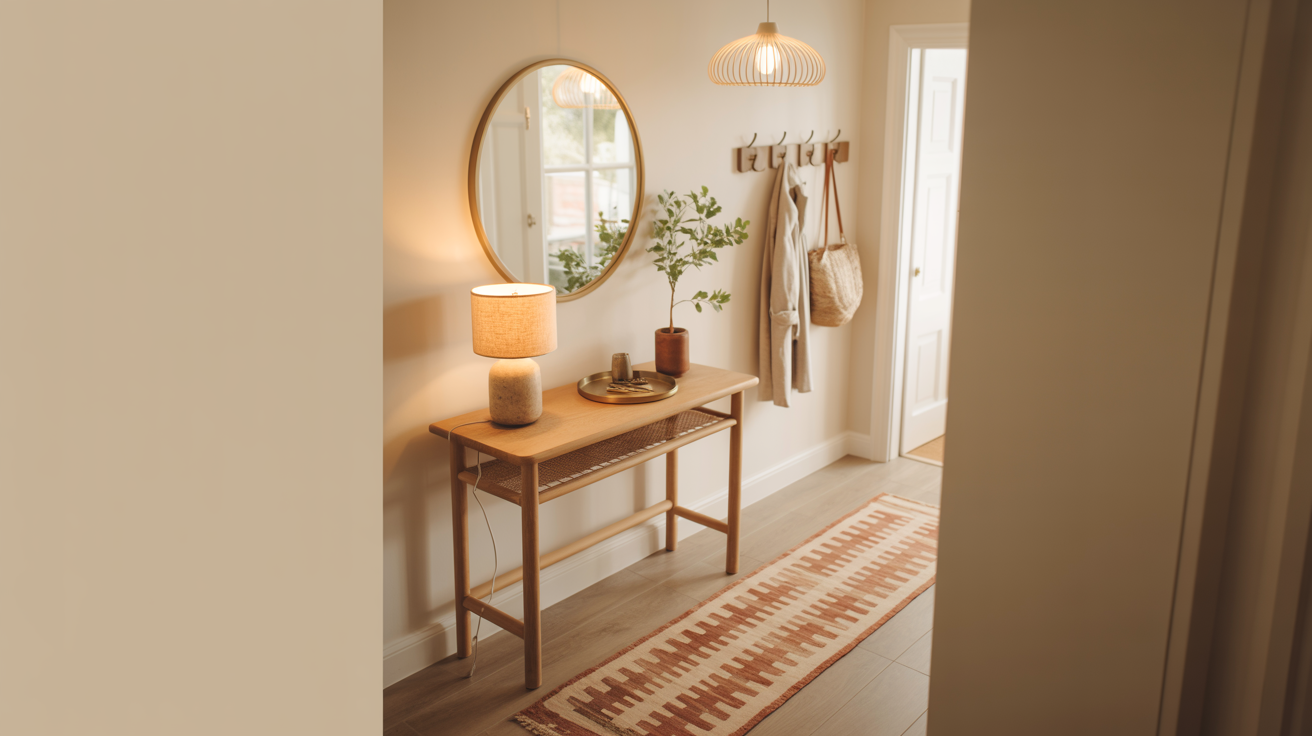
A small entryway can absolutely make a big first impression. I know it feels counterintuitive when you are working with a narrow strip of floor and barely enough room to take off your shoes, but the right combination of furniture, lighting, and smart storage changes everything. The entry is the first thing people see when they walk into your home, and it deserves more attention than most people give it.
The challenge with small entryways is that they tend to collect clutter faster than any other space in the house. Shoes pile up, bags get dumped, keys go missing somewhere between the door and the kitchen counter. When the entry feels chaotic, the whole home feels chaotic, even if the rest of it is spotless.
What I find most interesting about small entryway design is how much impact a few well-chosen pieces can have. You do not need a grand foyer or a sweeping staircase to make an entrance feel considered and welcoming. A mirror, a console table, a decent hook rail, and one good light fitting can turn even the most awkward little corridor into a space that genuinely sets the tone for the rest of the home.
Why First Impressions Start at the Entryway
The entryway is the transition point between the outside world and your personal space. It sets the mood before anyone has even seen the rest of the home. Interior designers often say that if the entry feels good, visitors assume the whole house will too. That is a lot of pressure on a few square feet, but it also means a small investment here goes a long way.
A well-designed small entryway also makes daily life noticeably easier. When there is a dedicated spot for keys, a proper place for shoes, and a surface to drop things as you walk in, the whole household runs more smoothly. It is one of those improvements that pays you back every single day, not just when guests visit.
What surprises most people is how little space good entryway design actually requires. Some of the best small foyer ideas I have seen work in under two square metres. The secret is always the same: be intentional about every single piece you put in that space. Nothing goes in unless it earns its place.
7 Small Entryway Ideas That Create a Stunning First Impression
1. Add a Narrow Console Table to Create an Instant Foyer Feel
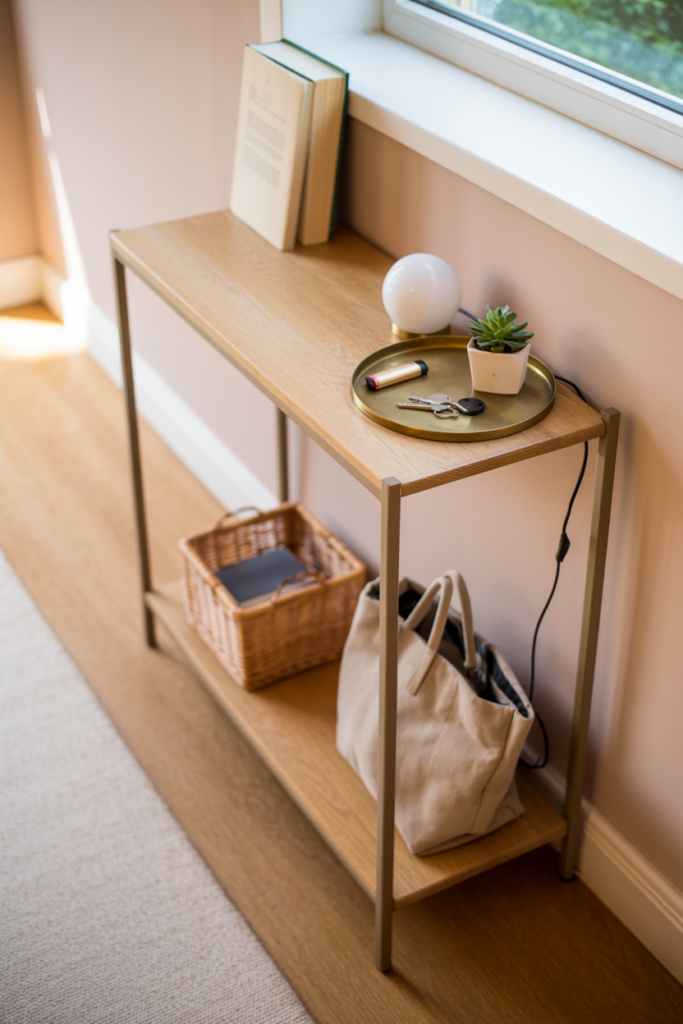
A narrow console table is the single most effective piece of furniture for creating an entryway in a small or open-plan space. It gives the area a defined purpose, provides a surface for keys, bags, and decorative objects, and anchors the zone visually without taking up meaningful floor space.
The best console tables for small entries are no deeper than 30 centimetres. Any deeper and they start to feel like an obstacle rather than a feature. Slim-profile designs in natural oak, painted wood, or metal with a shelf underneath give you storage options without bulk.
Style the top simply. A small lamp, a tray for keys, a single plant, and one decorative object is all you need. Resist the urge to pile things on it. A console table that stays relatively clear looks intentional and put-together, which is exactly the impression a good entryway should give.
2. Hang a Large Mirror to Make the Space Feel Twice as Big
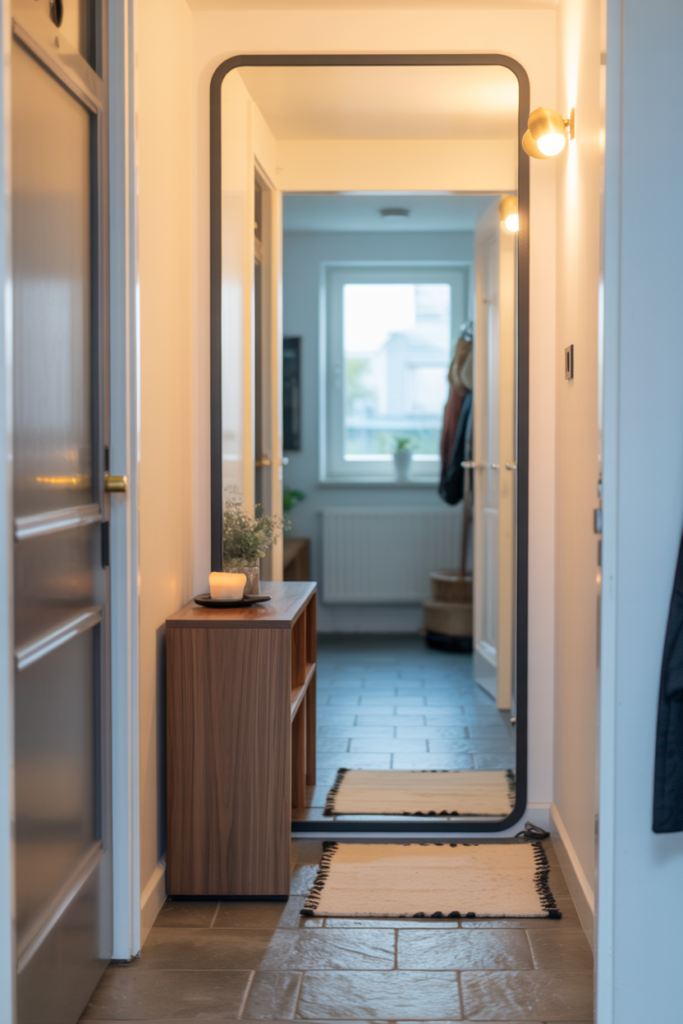
A large mirror in a small entryway does two jobs at once. It reflects light and makes the space feel noticeably bigger, and it gives everyone a last-chance outfit check before heading out the door. Both are genuinely useful, and neither requires much effort to achieve.
For small entries, I always recommend going bigger with the mirror than feels comfortable. A mirror that fills most of the wall above the console table or runs nearly floor to ceiling makes the entry feel like a proper room rather than a pinched corridor. Small mirrors in tight spaces tend to make the entry feel even more cramped.
The frame matters too. A warm wood, brushed brass, or thin black metal frame adds character without competing with the rest of the space. Avoid very ornate or chunky frames in small entries as they can overwhelm the area visually.
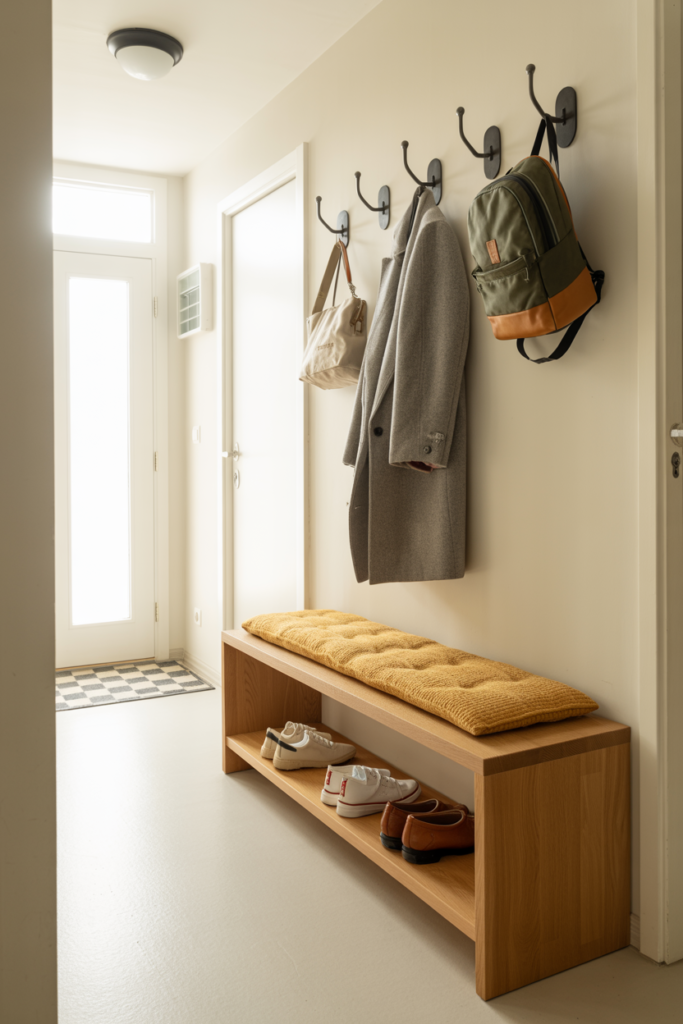
3. Use Wall-Mounted Hooks to Keep the Entryway Tidy
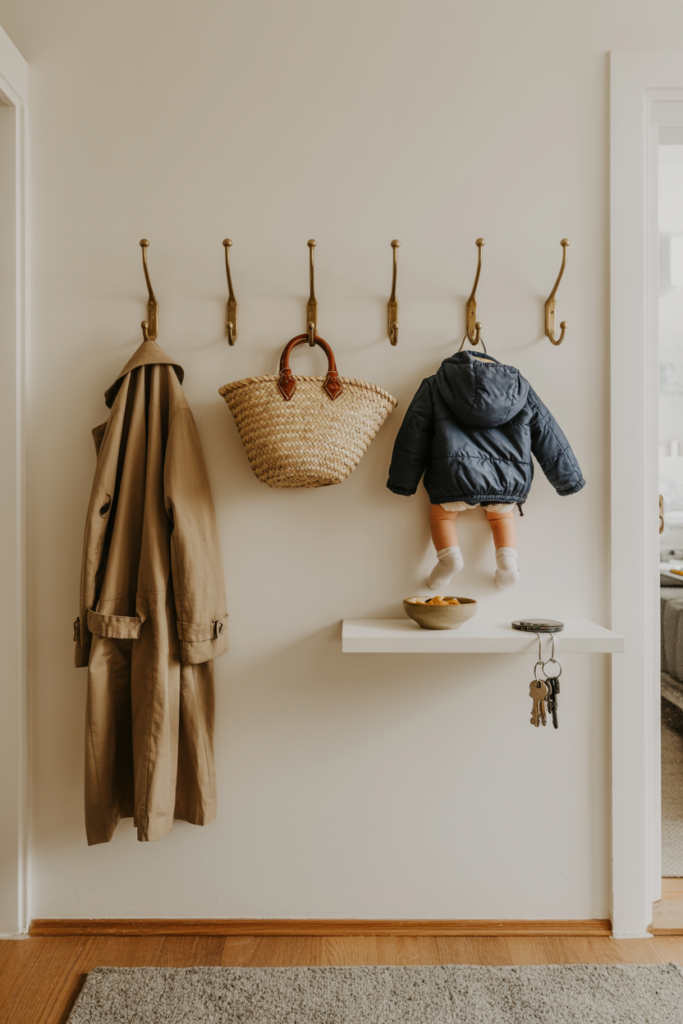
Wall-mounted hooks are one of the most practical additions to any small entryway. They keep coats, bags, and scarves off the floor and off any furniture, which instantly makes the space look cleaner and more organised. A hook rail at the right height means everything has a home the moment you walk through the door.
I prefer a row of individual hooks over a single coat rack because individual hooks give each person in the household their own spot. It sounds like a small thing, but it genuinely reduces the pile-up of coats that happens when there is only one or two hooks fighting for space.
For small entries, choose hooks that sit close to the wall rather than projecting far out. Deep hooks can catch bags and create a tripping hazard in a narrow space. Low-profile hooks in brass, matte black, or brushed nickel look smart and take up almost no visual space.
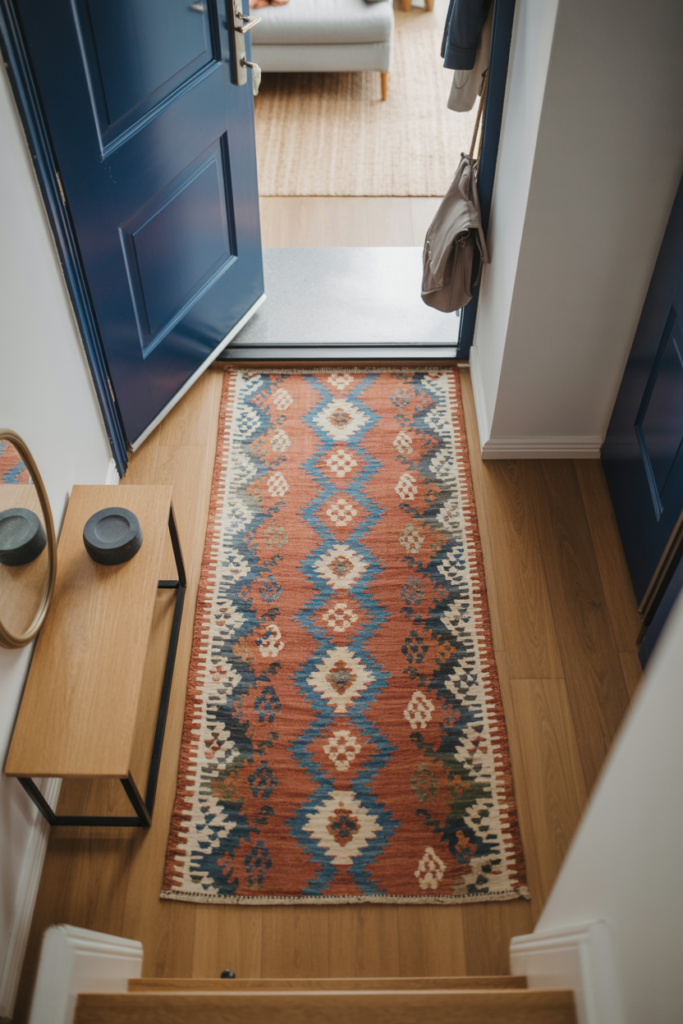
4. Lay a Patterned Entryway Rug to Define the Zone
A rug does something subtle but powerful in a small entryway. It marks the transition from outside to inside and signals to the brain that this is a distinct space with its own purpose. Even in an open-plan home with no walls around the entry, a rug on the floor creates a foyer zone that feels intentional and complete.
Patterned rugs work especially well in small entries because they add visual interest without requiring extra furniture or wall space. A bold geometric, a classic runner stripe, or a traditional kilim pattern all bring personality to a space that might otherwise feel plain and forgotten.
Sizing matters here just as much as style. The rug should be wide enough to cover the entry zone fully, not just sit under the door. In a narrow corridor, a long runner that extends the full length of the entry makes the space feel taller and more considered.
5. Install a Wall-Mounted Bench for Smart Seating and Storage
Floor space in a small entryway is precious, and a wall-mounted bench uses vertical space instead of eating into the floor area. A wall-mounted bench at seat height gives you somewhere to sit while putting on shoes and can incorporate a lower shelf for footwear underneath.
I have seen this work brilliantly in entries as narrow as 80 centimetres. A slim floating bench with a cushion on top and a lower shelf for two or three pairs of shoes turns a practically unusable strip of wall into a fully functional and attractive entryway feature.
Pair the bench with hooks directly above it for the most efficient layout. The combination of seating, shoe storage, and coat hanging in a single wall zone keeps everything contained, everything accessible, and the floor completely clear.
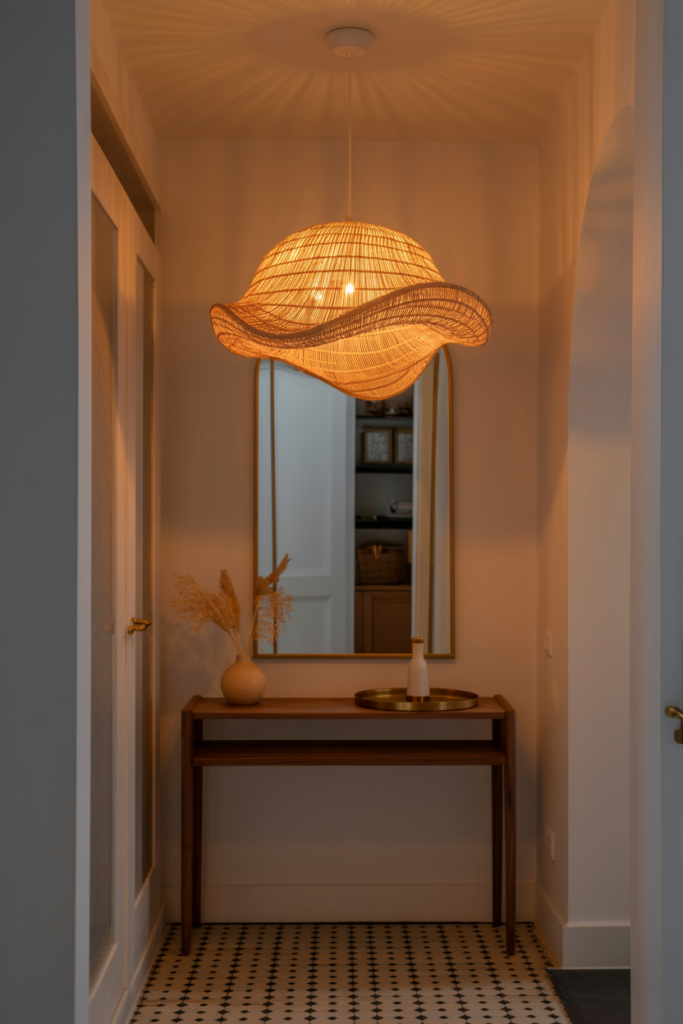
6. Add a Statement Light Fitting to Elevate the Whole Entry
Lighting transforms a small entryway more dramatically than almost any other single change. A statement pendant light or a wall sconce with real character turns a plain corridor into a space that feels designed and considered. Good lighting also makes the entry feel warmer and more welcoming the moment you walk in.
In very low-ceiling entries, a flush mount or semi-flush light with an interesting shade or a sculptural shape works better than a hanging pendant. The goal is visual interest at the ceiling level, not necessarily height. A well-chosen flush mount can be just as striking as a full pendant.
Warm bulb tones around 2700K make small entries feel cosy and inviting rather than stark and clinical. Avoid cool white or daylight bulbs in entry spaces as they tend to make the area feel more like a waiting room than a home.
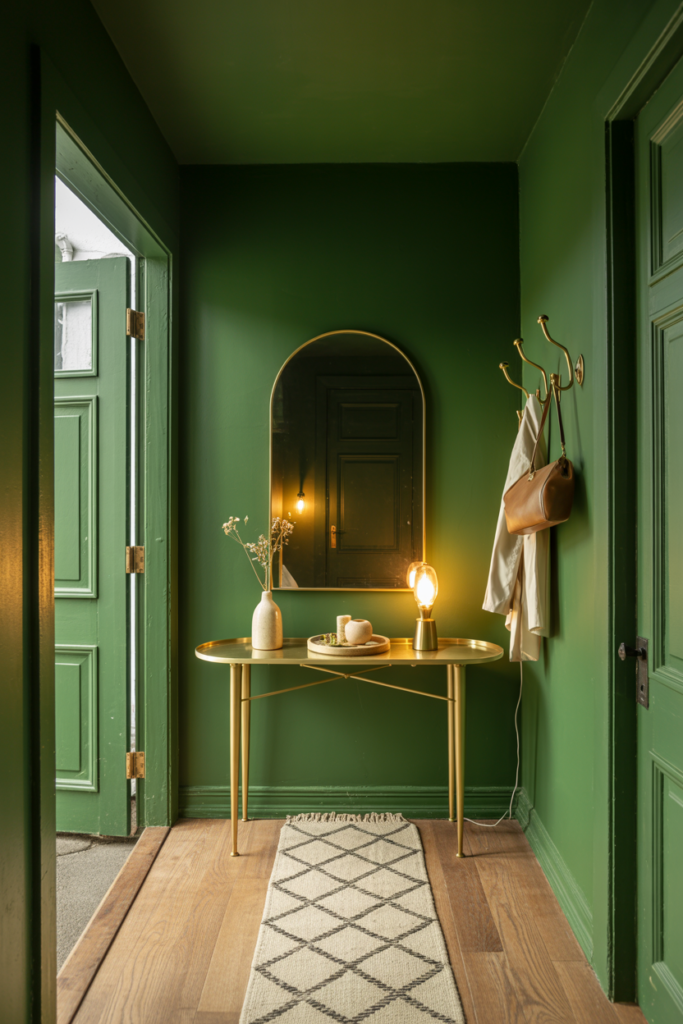
7. Paint the Entryway a Bold or Dark Colour
Painting a small entryway a bold or deep colour is one of the most counterintuitive but genuinely effective design moves available. Dark colours like forest green, navy, charcoal, or deep terracotta make a small space feel intimate and intentional rather than simply small. The entry stops feeling like an afterthought and starts feeling like a deliberate design choice.
The key is to commit fully. Paint all four walls, the ceiling, and even the door trim in the same deep tone for maximum impact. Half-measures rarely work with dark colours in small spaces. When the whole entry wraps in one rich colour, the space feels cosy and considered rather than dark and depressing.
If bold feels too permanent, a deeply coloured wallpaper achieves the same effect with the option to change it more easily later. Botanical prints, textured grasscloth, or geometric patterns in rich tones all work beautifully in small entry spaces and add a layer of personality that plain painted walls simply cannot match.
Quick Comparison: Best Small Entryway Ideas by Space Size and Budget
| Entryway Idea | Best For | Budget Level | Renter Friendly |
|---|---|---|---|
| Narrow console table | Any layout | Low to medium | Yes |
| Large mirror | Narrow corridors | Low to medium | Yes |
| Wall-mounted hooks | All entry types | Very low | Yes |
| Patterned rug | Open-plan entries | Low | Yes |
| Wall-mounted bench | Narrow entries | Medium | Yes |
| Statement light fitting | All ceiling heights | Medium | Yes |
| Bold paint or wallpaper | Any entry size | Very low | Wallpaper only |
What to Avoid in a Small Entryway
The biggest mistake people make in small entryways is over-filling the space. Every extra piece of furniture or accessory in a tight entry increases visual clutter and makes the area feel more cramped. The goal is always to do more with less.
Avoid bulky freestanding coat racks in narrow entries as they eat floor space and tend to look messy within days of being set up. Wall-mounted solutions always outperform freestanding ones in tight spaces because they keep the floor clear and the eye moving upward.
Overly matching sets also make small entries feel stiff and impersonal. A hook rail, a bench, and a mirror that all come from the same collection can look more like a showroom than a home. Mix materials and finishes slightly for a more natural, lived-in result.
Conclusion: Small Entry, Big Impact
A small entryway has more potential than most people realise. As this article covers, seven well-chosen ideas can completely transform even the most compact entry into a space that feels welcoming, functional, and genuinely designed. From a slim console table and a well-placed mirror to bold paint and a statement light, every idea here works in real homes with real space constraints.
The approach that works best is always the one that suits your specific layout, your daily habits, and your budget. Start with the pieces that solve your biggest practical problem first, whether that is shoe storage, coat hanging, or simply having a surface to drop your keys. Once the function is right, the style follows naturally.
If I had to pick one starting point for anyone working with a very small entry, it would be the mirror. It costs relatively little, requires no building work, and makes an immediate and visible difference to how spacious and considered the space feels. Get that right first, then build the rest of the entry around it.
FAQs: Small Entryway Ideas
Q1. What is the best furniture for a very small entryway?
A narrow console table no deeper than 30 centimetres is the most versatile starting point. Pair it with a large mirror above and wall-mounted hooks beside it, and you have a fully functional entryway using minimal floor space.
Q2. How do I make a small entryway look bigger?
A large mirror, light-coloured walls, and good lighting all make a small entry feel more spacious. Keep the floor as clear as possible and avoid bulky freestanding furniture that eats into the walkable area.
Q3. Can I create an entryway in an open-plan living room with no defined entry space?
Yes, and a rug is the easiest way to do it. Place a distinct rug at the front door to mark the entry zone, add a console table behind it, and the area immediately reads as a foyer even without walls surrounding it.
Q4. What colours work best in a small entryway?
Both light and dark colours work well, for different reasons. Warm whites and soft neutrals make the space feel larger and brighter. Deep greens, navies, and terracottas make it feel intentional and intimate. The key is committing fully to whichever direction you choose.
Q5. How do I keep a small entryway tidy every day?
Give everything a dedicated home the moment it enters the space. Hooks for coats and bags, a tray for keys, a shelf or basket for shoes. When every item has an assigned spot, clutter does not get a chance to build up.
Q6. Are wall-mounted benches practical in very narrow entries?
Absolutely. A wall-mounted bench with a lower shoe shelf works in entries as narrow as 80 centimetres. It keeps the floor completely clear while providing seating and storage, which makes it one of the most space-efficient solutions available for tight entry spaces.
Q7. What type of rug works best in a small entryway?
A long runner in a durable, low-pile material works best in narrow entries. Choose a pattern rather than a plain colour to add visual interest without requiring additional decor. Natural fibres like wool or cotton hold up well to the daily foot traffic an entry receives.