
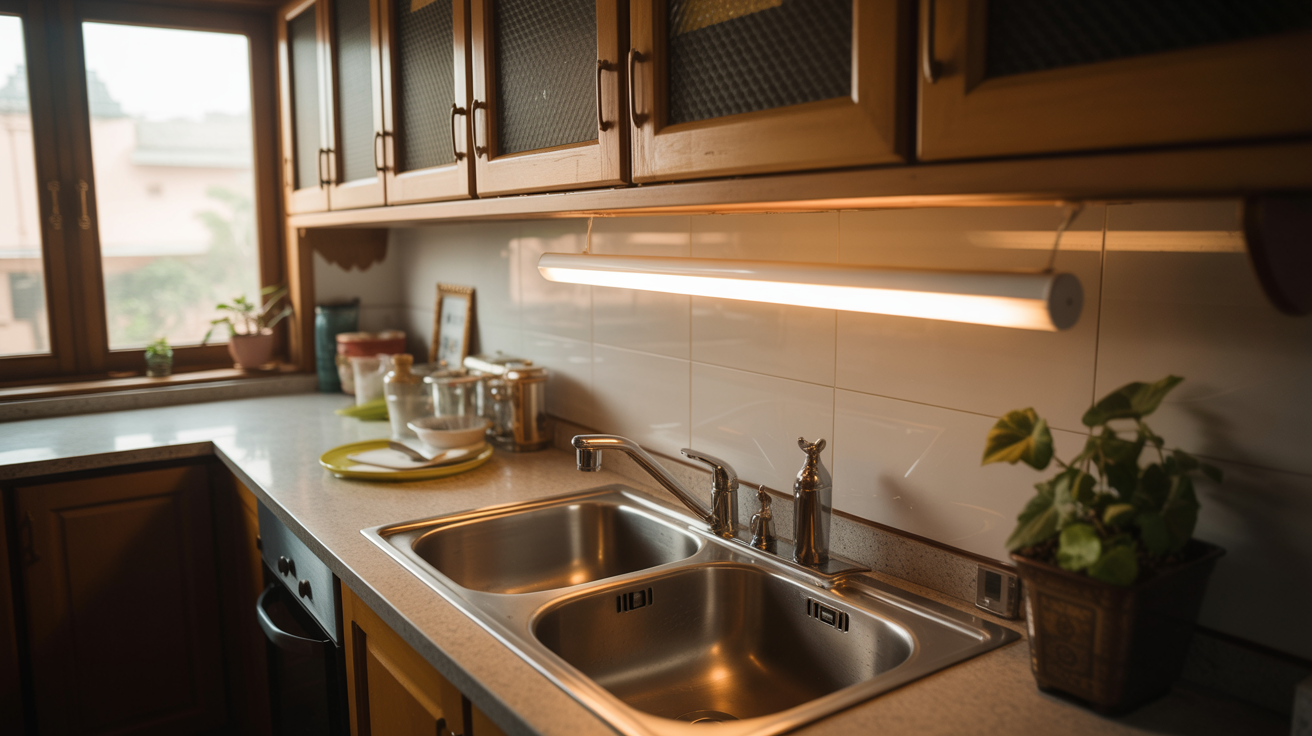
Good under cabinet lighting above a kitchen sink changes everything. It turns a dim, frustrating workspace into something you actually enjoy using. Whether you’re scrubbing dishes at 10 PM or prepping vegetables before dinner, the right light makes a real difference.
I’ve seen so many kitchens with beautiful cabinetry and terrible lighting right above the sink. It’s one of those things people overlook during a renovation and regret almost immediately. The sink area gets used more than almost any other spot in the kitchen, yet it’s often the darkest corner in the room.
This guide covers exactly what works for under cabinet lighting in the sink area and what quietly fails you over time. I’ll walk through fixture types, placement tips, common mistakes, and everything in between. By the end, you’ll know exactly what to look for before spending a single rupee or dollar.
Why Kitchen Sink Lighting Deserves More Attention
Most people assume the overhead ceiling light handles everything. It doesn’t. Overhead lights cast shadows directly onto the sink area because your own body blocks the light while you work. That shadow over the drain is not a design feature.
Task lighting placed under the cabinet solves this completely. It throws light forward and downward, right where your hands are. This is the difference between squinting at a dirty pan and actually seeing what you’re cleaning.
Good sink lighting also adds a layer of safety. Handling sharp knives, hot pans, or glassware in poor light is a genuine risk. Proper under cabinet lighting removes that problem without requiring any major electrical work in most cases.
4 Types of Under Cabinet Lighting That Actually Work for Kitchen Sinks
Not every fixture suits the sink area. Some look great in a showroom and fall apart within months near water and steam. Here’s what genuinely holds up.
1. LED Strip Lights
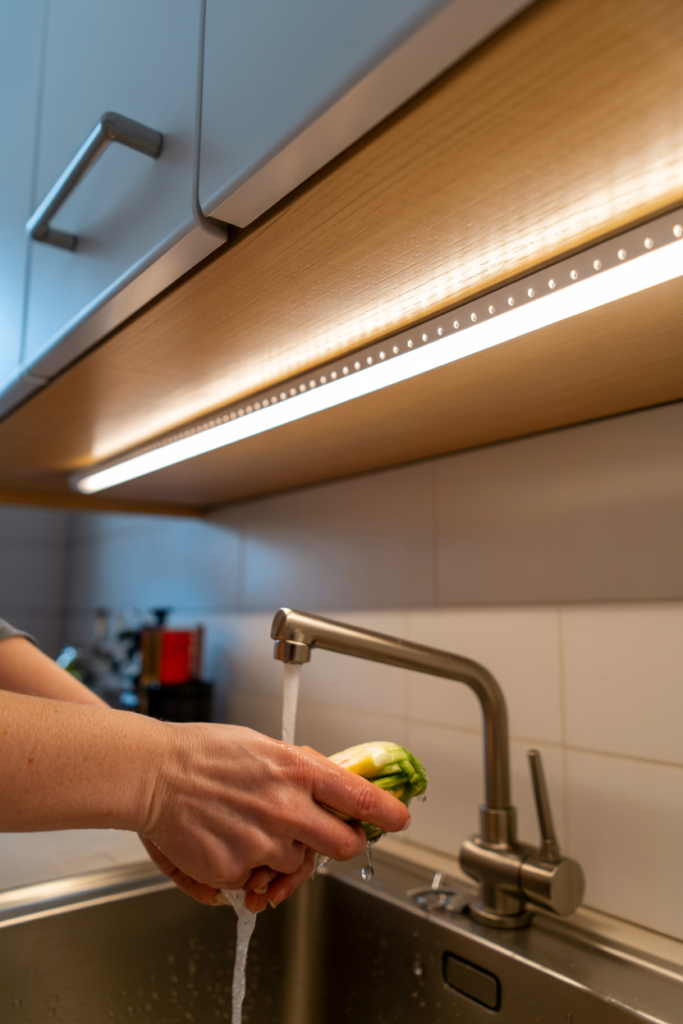
LED strip lights are the most popular choice for under cabinet kitchen sink lighting right now. They’re flexible, affordable, and easy to install without calling an electrician. I’ve used them in two different kitchens and both times the installation took under an hour.
They spread light evenly across the entire sink area, which is exactly what you need for task lighting. No harsh hot spots, no dark corners. Just clean, consistent brightness along the full width of your cabinet.
The one thing to watch is the color temperature. For a kitchen sink area, go for lights between 3000K and 4000K. Anything cooler starts to feel like a hospital corridor, and anything warmer makes your white dishes look slightly yellow.
2. Puck Lights
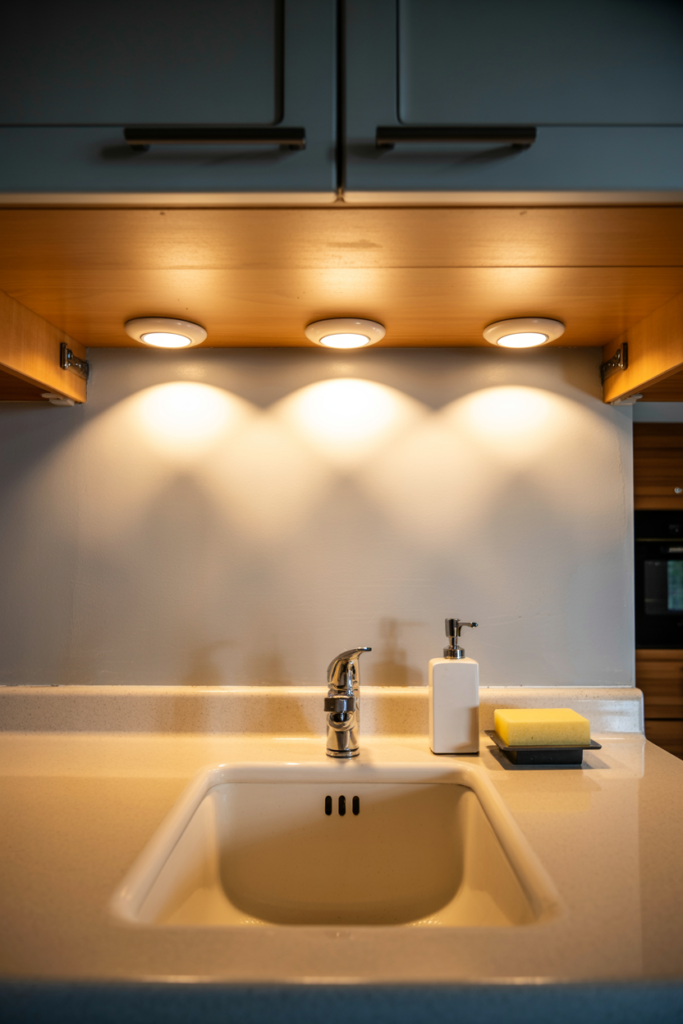
Puck lights are small, round fixtures that mount directly to the underside of your cabinet. They work well when you need focused lighting over a specific spot rather than full-width coverage. Some people love them, some find them a bit spotty.
The honest truth is that puck lights work better in display cabinets than above a kitchen sink. They create pools of light with darker gaps in between. If your sink is narrow and centered, one or two puck lights might be enough. For a wider sink, you’ll need at least three to avoid shadows.
Battery-operated puck lights are convenient but fade faster than wired options. If you’re using them above a sink you use daily, go for plug-in or hardwired versions instead.
3. Fluorescent Under Cabinet Fixtures
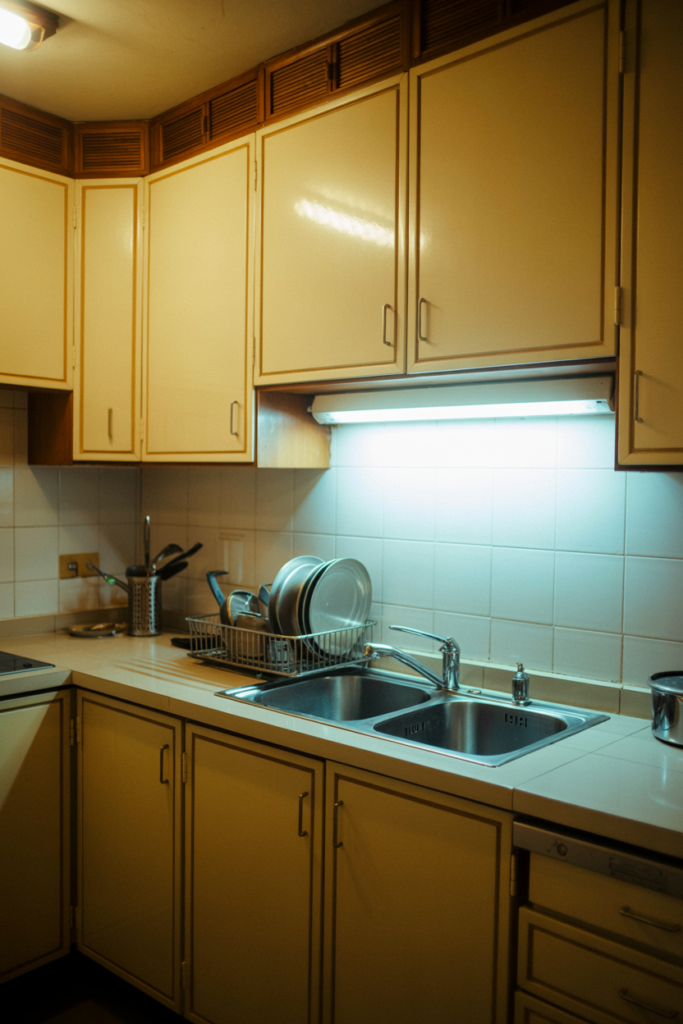
Fluorescent fixtures were the go-to option for decades and they still work fine in many kitchens. They’re bright, they cover a wide area, and the older ones are surprisingly tough. My parents have had the same fluorescent strip above their sink for over twelve years.
The downside is energy efficiency. LED options now use significantly less power for the same brightness. Fluorescent lights also take a second or two to reach full brightness, which feels a little dated compared to instant-on LEDs.
If you already have a fluorescent fixture installed and it’s working well, there’s no rush to replace it. But if you’re starting fresh, LED is the smarter investment in 2024.
4. Hardwired Linear LED Fixtures
Hardwired linear LED fixtures are the cleanest-looking option for a kitchen sink area. No cords, no plugs, no visible wires. They sit flush under the cabinet and look like they were always part of the kitchen.
Installation requires a licensed electrician unless you’re comfortable with basic wiring. The upfront cost is higher, but the result is a polished, permanent setup that adds real value to your kitchen. For anyone renovating or building new, this is the option worth budgeting for.
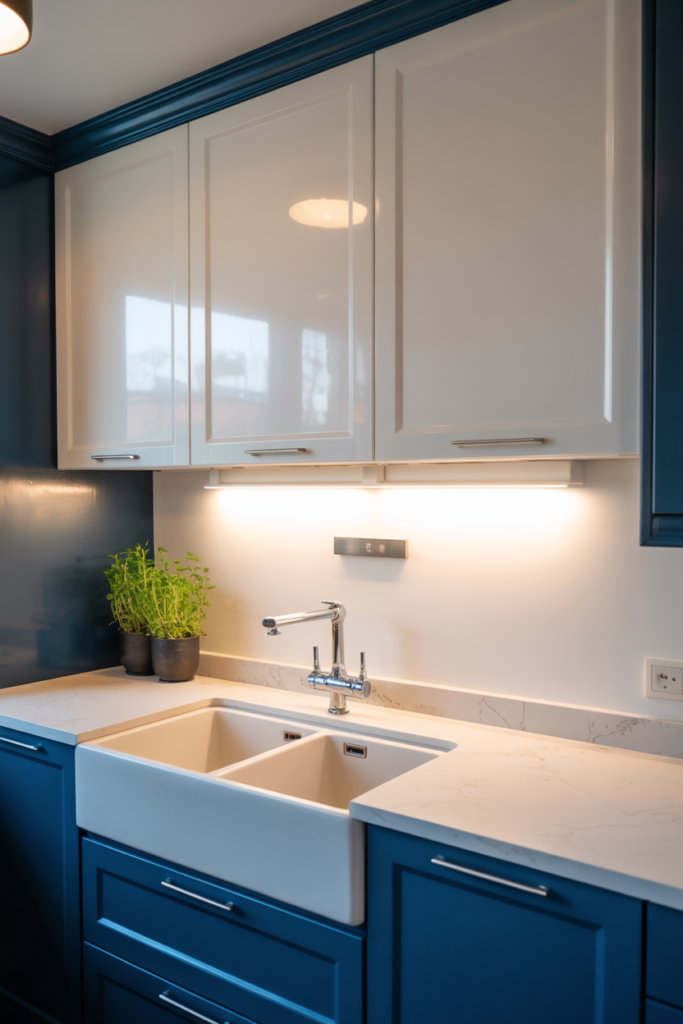
They also tend to be more durable since they’re not relying on adapter plugs or adhesive strips. A quality hardwired fixture above your sink can last well over a decade with zero maintenance.
| Fixture Type | Best For | Install Difficulty | Avg. Lifespan |
| LED Strip Lights | Full-width coverage | Easy (DIY) | 5-7 years |
| Puck Lights | Narrow or centered sinks | Easy (DIY) | 3-5 years |
| Fluorescent Strips | Budget-friendly setups | Moderate | 10+ years |
| Hardwired Linear LED | Permanent, clean installs | Hard (electrician) | 10-15 years |
Common Mistakes That Make Kitchen Sink Lighting Fail
Choosing the wrong color temperature is one of the most common errors I see. Lights above 5000K make the sink area feel cold and clinical. They also make food look less appealing, which matters if your sink is near your prep area. Always check the Kelvin rating before purchasing.
Placing the fixture too far back under the cabinet is another mistake that quietly ruins the whole setup. If the light source sits near the wall rather than toward the front edge of the cabinet, most of the light hits the backsplash instead of the sink. The fixture should sit as close to the front edge of the cabinet as possible.
Ignoring moisture resistance is probably the biggest error of all. The area above a kitchen sink gets steam, splashes, and humidity on a daily basis. Fixtures without at least an IP44 moisture rating can corrode, flicker, or short out within months. Always check the IP rating before buying anything for this specific spot.
How to Get the Placement Right
The ideal position for under cabinet lighting is about 2 to 4 inches from the front edge of the cabinet. This angle pushes light forward and down onto the sink basin rather than straight down onto the counter. It’s a small adjustment that makes a big visual difference.
For a standard 30-inch wide sink, a single LED strip running the full width works perfectly. For a larger farmhouse or double-bowl sink, consider two strips or a longer linear fixture. The goal is even coverage with no dark patches over the drain or the faucet area.
If you’re using plug-in fixtures, plan your cord routing before installation. A visible cord dangling beside your cabinet looks messy and can be a safety hazard near water. Use cord clips or channels to keep everything neat and away from the sink itself.
Conclusion
Under cabinet lighting for the kitchen sink area is one of those upgrades that sounds minor but changes how you use your kitchen every single day. The right fixture, placed correctly, with the right color temperature, turns the hardest-working spot in your kitchen into a genuinely pleasant place to be.
LED strip lights and hardwired linear fixtures are the top performers for most kitchens. Puck lights work in specific situations but struggle with wider sinks. Fluorescent options are reliable but slowly being replaced by better LED alternatives.
Avoid the common mistakes: wrong color temperature, poor placement, and ignoring moisture ratings. Get those three things right and your under cabinet lighting will serve you well for years. The sink area deserves proper light, and now you know exactly how to give it that.
Frequently Asked Questions
What is the best color temperature for kitchen sink lighting? The best range is between 3000K and 4000K. This gives you bright, clean light without making the space feel too cold or too warm.
Can I install under cabinet lights above a sink myself? Yes, plug-in and LED strip options are straightforward DIY installs. Hardwired fixtures need a licensed electrician for safe installation.
Are LED strip lights waterproof enough for above a kitchen sink? Look for strips with an IP44 rating or higher. Standard LED strips without a moisture rating are not suitable for the sink area.
How far from the front edge should I place under cabinet lights? Position the fixture 2 to 4 inches from the front edge of the cabinet. This angle directs light onto the sink rather than the wall behind it.
Do puck lights work well above a kitchen sink? They work for narrow sinks but create uneven coverage on wider ones. For a standard or double-bowl sink, LED strips provide much better results.
How long do under cabinet LED lights last above a sink? Quality LED strip lights typically last 5 to 7 years. Hardwired linear LED fixtures can last 10 to 15 years with proper installation.
Is dimmable under cabinet lighting worth it for a kitchen sink area? Yes, dimmable options give you flexibility for different times of day. Bright light for washing up, softer light for a late-night glass of water.