
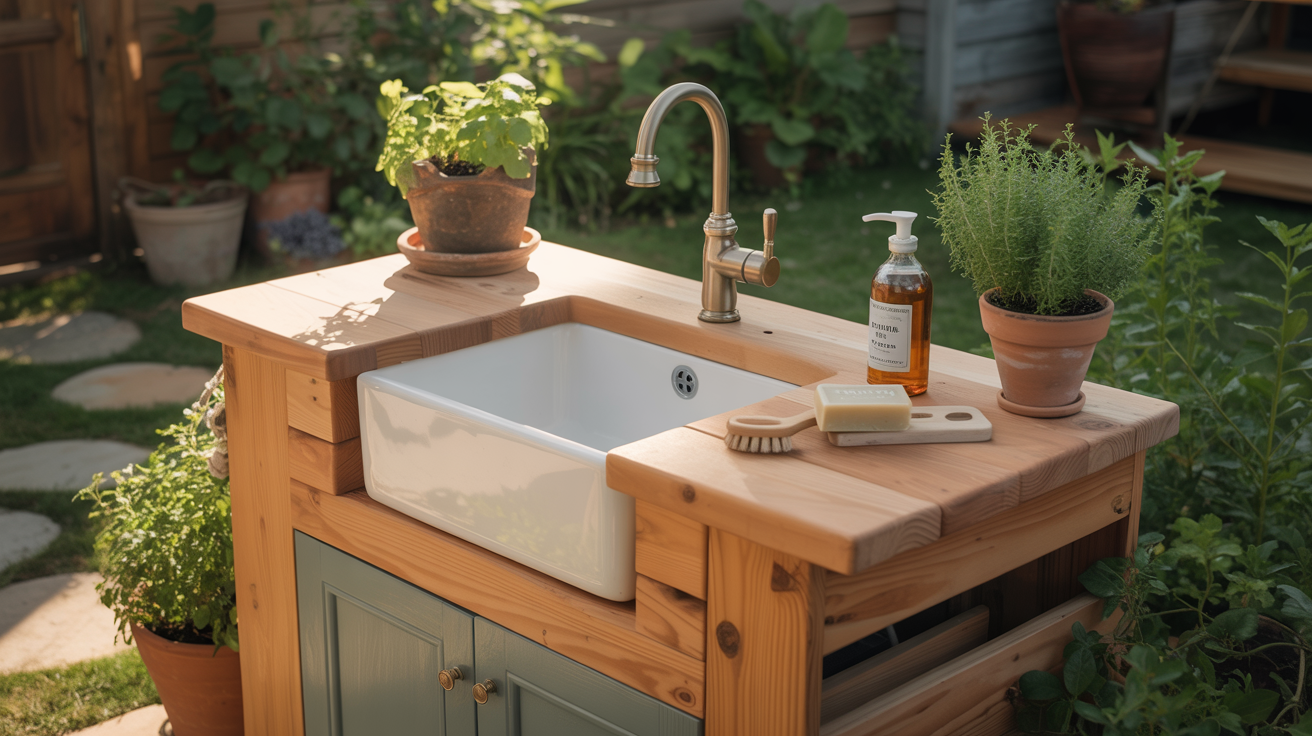
A DIY outdoor sink station is one of those backyard additions that sounds simple until you actually have one and realize how much it changes your entire outdoor routine. No more trudging through the house with muddy hands after gardening, no more carrying buckets of water across the yard, and no more interrupting a perfectly good backyard cookout just to rinse something off inside. An outdoor sink station solves all of these problems in one straightforward build.
What makes a DIY outdoor sink station such a satisfying project is how accessible it is for homeowners at almost every skill level. Some versions require basic plumbing knowledge and a weekend of work. Others are as simple as repurposing an old cabinet, attaching a utility sink basin, and connecting a garden hose. The range of approaches means there is genuinely a workable solution for every backyard, every budget, and every skill set.
The other thing that surprises most people is how good a well-built outdoor sink station can actually look. This is not just a functional utility build that you hide in the corner of the yard. Done right, a DIY outdoor sink station becomes a genuinely attractive feature of the backyard that complements the surrounding space and adds real character to the outdoor area. This list covers 15 ideas that prove exactly that point.
Why Every Backyard Needs a DIY Outdoor Sink Station for Better Functionality and Cleaner Outdoor Living
An outdoor sink station fills a gap in backyard functionality that most homeowners do not even notice is missing until they finally add one. Gardeners use it to wash harvested vegetables, rinse tools, and clean up muddy hands without setting foot inside the house. Outdoor cooks use it for food prep, handwashing between grill sessions, and post-cooking cleanup. Families with children use it to rinse off muddy boots, clean up after water play, and keep the chaos of outdoor activity from following everyone indoors.
The practical value of a dedicated outdoor water station extends well beyond convenience. Having a proper wash area outside genuinely reduces the amount of dirt, mud, and garden debris that gets tracked into the home on a daily basis. That reduction in indoor cleanup is something that every household member benefits from, even those who never use the outdoor sink directly.
Here is a quick overview of the most common DIY outdoor sink station types, the materials they typically use, and the skill level each one requires:
| Sink Station Type | Primary Materials | Skill Level | Approximate Cost |
| Repurposed cabinet sink | Old cabinet, utility basin, garden hose | Beginner | $50 to $150 |
| Pallet wood sink station | Pallets, basin, basic plumbing fittings | Beginner | $30 to $100 |
| Concrete block sink station | Concrete blocks, mortar, stone top | Intermediate | $100 to $300 |
| Cedar wood built-in sink | Cedar lumber, undermount basin, tap | Intermediate | $200 to $500 |
| Outdoor kitchen sink station | Stone veneer, granite top, plumbing | Advanced | $500 to $1500 |
| Potting bench with sink | Lumber, basin, storage shelves | Beginner to intermediate | $100 to $400 |
| Stainless steel utility station | Steel frame, utility sink, hose fitting | Intermediate | $150 to $400 |
Understanding where each build sits in terms of cost, materials, and skill requirements makes it much easier to choose the right project for your specific situation. Starting with a build that matches your current skill level and available budget is always the smartest approach, and you can always upgrade the setup over time as your confidence and budget grow.
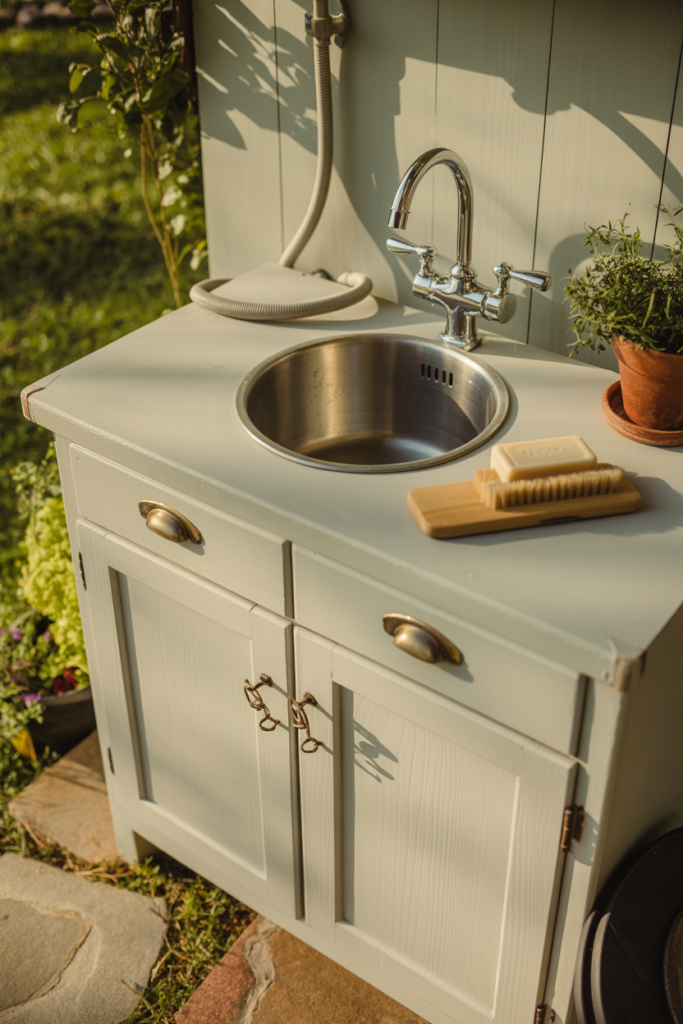
1. Repurposed Old Cabinet With a Drop-In Utility Basin for the Easiest and Most Affordable DIY Outdoor Sink Station Build
Repurposing an old kitchen or bathroom cabinet into a DIY outdoor sink station is genuinely one of the easiest and most satisfying backyard projects you can tackle on a tight budget. The cabinet provides instant structure, storage, and a countertop surface without requiring any complex woodworking skills. All you need to add is a drop-in utility basin, a simple outdoor faucet fitting, and a garden hose connection at the back.
The key to making a repurposed cabinet last outdoors is proper weatherproofing before installation. Sand the exterior surfaces thoroughly, apply a good quality exterior primer, and finish with at least two coats of weatherproof outdoor paint or a marine-grade sealant. This treatment protects the cabinet from moisture, UV exposure, and temperature changes that would otherwise cause it to deteriorate quickly in an outdoor environment.
I love this build because the finished result looks far more intentional and polished than the minimal effort it actually requires. Painting the cabinet in a color that complements your outdoor space, adding new hardware, and placing a few potted herbs on top transform a basic utility build into a genuinely attractive outdoor feature. It is the kind of project that makes people ask where you bought it rather than realizing you built it yourself.
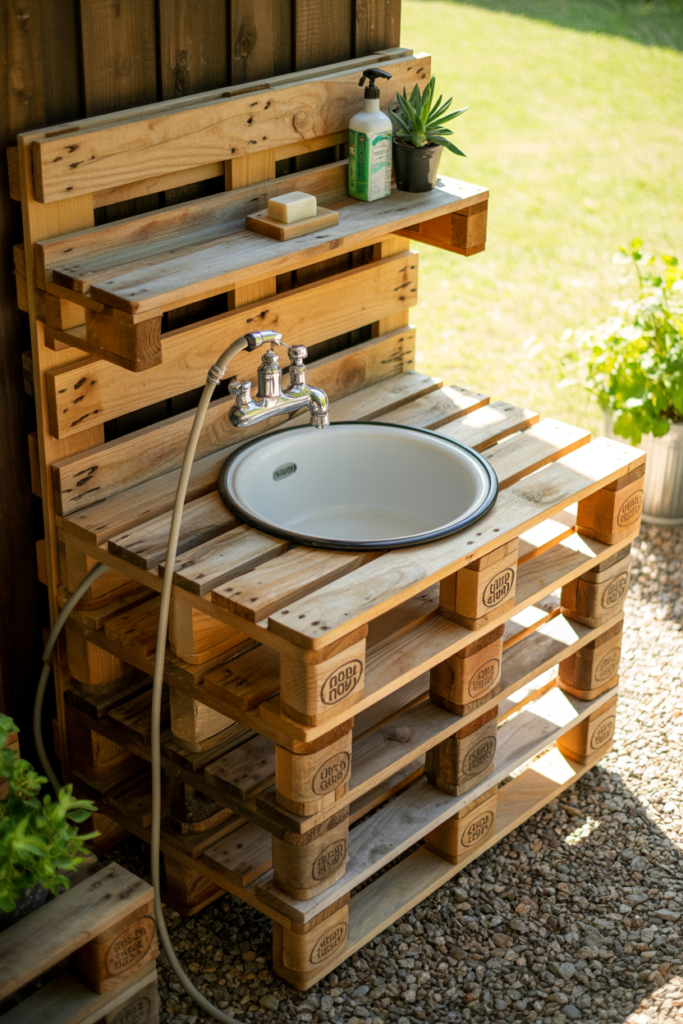
2. Pallet Wood DIY Outdoor Sink Station With a Utility Basin and Garden Hose Connection for a Rustic and Budget-Friendly Backyard Wash Station
A pallet wood DIY outdoor sink station is one of the most budget-friendly outdoor builds available, and the rustic character of reclaimed pallet timber gives the finished station a genuinely warm and charming appearance. Most people can source wooden pallets for free or at very low cost from local businesses, garden centers, or online marketplaces. The basic structure of a pallet sink station involves stacking and securing pallets to create a cabinet-height frame, adding a simple basin, and connecting a garden hose through the back.
Treating the pallet wood before assembly is important for longevity outdoors. Sand all surfaces to remove splinters and rough edges, then apply a good penetrating wood sealer or outdoor decking oil to protect against moisture absorption. Pallet timber varies in quality, so selecting pallets that are heat-treated rather than chemically treated is important, particularly if the sink will be used for food washing or vegetable garden cleanup.
The rustic aesthetic of a pallet wood sink station suits cottage gardens, bohemian outdoor spaces, and casual backyard setups beautifully. Adding a small shelf above the basin for soap, a scrubbing brush, and a small potted herb completes the look with a practical and decorative finishing touch. This is a genuinely satisfying weekend build that costs almost nothing and delivers a result that looks far more considered than the materials suggest.
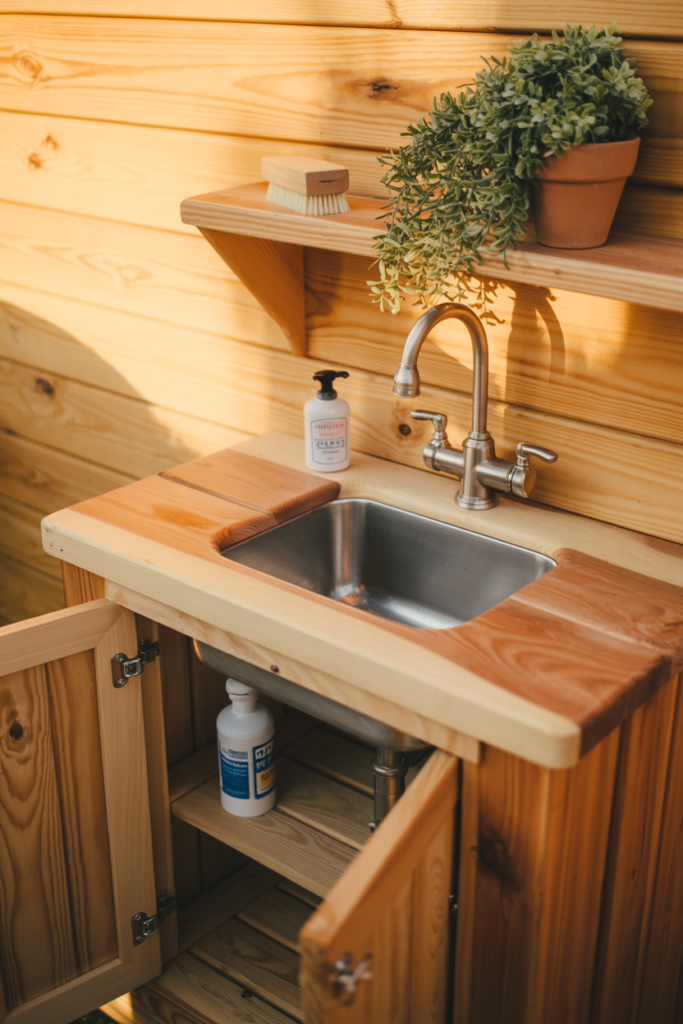
3. Cedar Wood DIY Outdoor Sink Station With an Undermount Basin and Outdoor Tap for a Warm and Durable Garden Wash Area
A cedar wood DIY outdoor sink station is a step up in both quality and visual appeal from pallet or repurposed cabinet builds, and it delivers a result that genuinely looks like a professional outdoor feature rather than a DIY project. Cedar is one of the best wood species for outdoor use because it naturally resists moisture, insects, and rot without requiring constant chemical treatment. A well-built cedar sink station with clean joinery, an undermount basin, and a proper outdoor tap fitting looks and functions beautifully for many years with minimal maintenance.
The construction involves building a simple rectangular cabinet frame from cedar lumber, adding a solid cedar countertop with a routed undermount basin cutout, and fitting a standard outdoor tap through the countertop. The interior of the cabinet can be fitted with a shelf for cleaning supplies and a simple drain system that directs water away from the base of the structure to prevent moisture buildup. Cedar’s natural warm honey tone weathers to a beautiful silver grey over time if left untreated, or maintains its original color with a simple annual application of decking oil.
I find that a cedar outdoor sink station elevates the entire feel of a backyard garden area in a way that few other additions can match. Positioned beside a vegetable garden, a potting area, or an outdoor kitchen, it creates a purposeful, well-designed outdoor workspace that makes gardening and outdoor cooking feel genuinely more enjoyable and organized. The investment in quality cedar timber pays off in a finished result that improves rather than deteriorates with age.
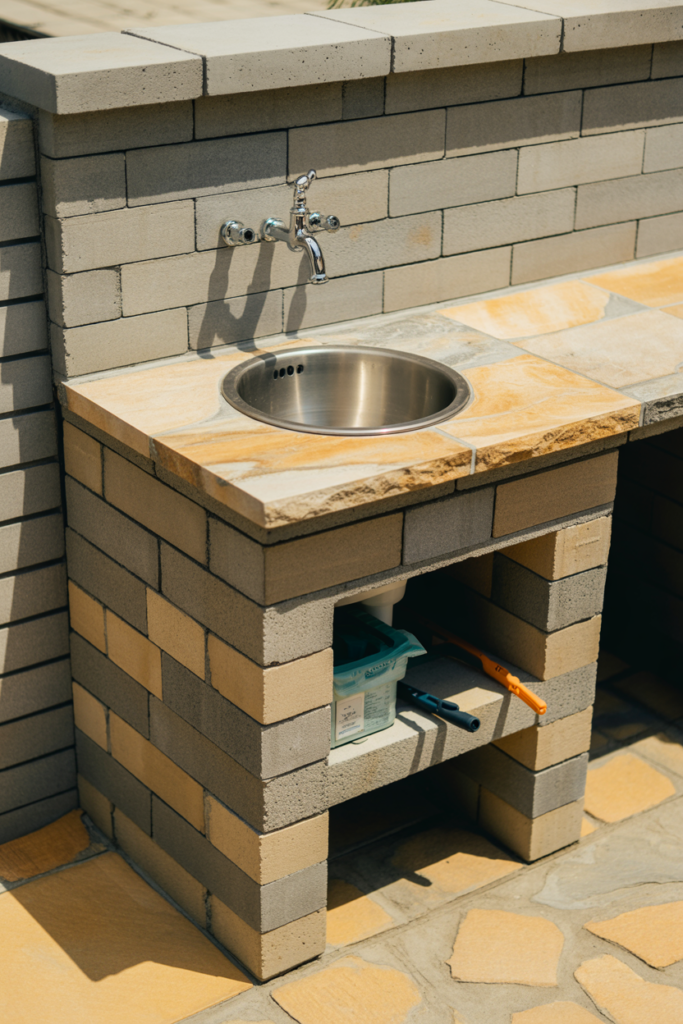
4. Concrete Block DIY Outdoor Sink Station With a Stone Countertop for a Sturdy and Permanent Backyard Cleanup Station
A concrete block DIY outdoor sink station is one of the most durable and permanent outdoor sink solutions available, and it is a surprisingly accessible build for anyone with basic DIY confidence and a free weekend. Concrete blocks stack and bond easily with construction adhesive or mortar to create a solid, weather-resistant base structure that supports a stone, tile, or poured concrete countertop. The finished station handles heavy daily use without any of the deterioration concerns that affect timber-based builds in wet climates.
Building the concrete block structure involves laying the first course of blocks on a level concrete pad or paving base, bonding each course with construction adhesive, and leaving an opening in the front for a cabinet door if desired. A poured concrete countertop or natural stone slab sits on top of the block structure with a cutout for the drop-in or undermount sink basin. Grouting natural stone tiles onto the block exterior adds a refined, decorative finish that transforms the raw block structure into something genuinely attractive.
Concrete block sink stations work particularly well in modern, industrial, or Mediterranean-style garden settings where the raw material character suits the broader design language of the outdoor space. Paired with a simple stainless steel utility sink basin and a wall-mounted outdoor tap, a concrete block station creates a professional-quality outdoor wash area that genuinely impresses anyone who sees it. It is the kind of permanent outdoor feature that adds real practical value and visual character to a backyard for decades.
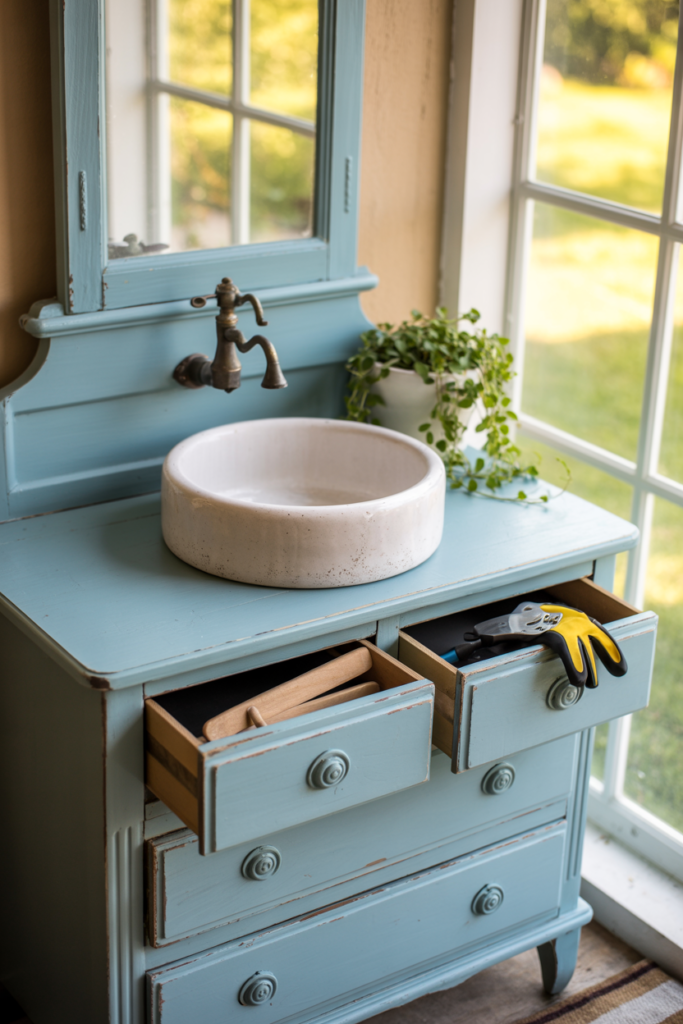
5. Repurposed Vintage Dresser DIY Outdoor Sink Station for a Quirky and Characterful Garden Wash Area That Costs Almost Nothing
Turning a vintage dresser into a DIY outdoor sink station is one of the most creative and characterful approaches on this list, and it produces a finished result that is unique and full of personality. Old dressers with solid wood construction are ideal candidates for this conversion because they provide generous counter height, built-in drawer storage below, and a surface area large enough to accommodate a good-sized sink basin comfortably. The vintage character of an old dresser gives the outdoor sink station an instant charm that purpose-built alternatives simply cannot replicate.
The conversion process involves removing the top drawer section or cutting a basin-sized opening in the dresser top, dropping in a utility or farmhouse-style sink basin, and connecting the plumbing through the back of the dresser cabinet. Weatherproofing the dresser thoroughly before outdoor installation is absolutely essential. Apply exterior primer to all surfaces, seal all joints and edges with exterior caulk, and finish with durable outdoor paint in a color that suits your garden aesthetic.
I particularly love the drawer storage that a dresser sink station provides. The lower drawers store gardening gloves, tools, soap, scrubbing brushes, and cleaning supplies in a genuinely organized and accessible way. The combination of a functioning sink basin on top and practical drawer storage below creates one of the most functional DIY outdoor sink stations available, all from a piece of furniture that most people would otherwise send to a thrift store.
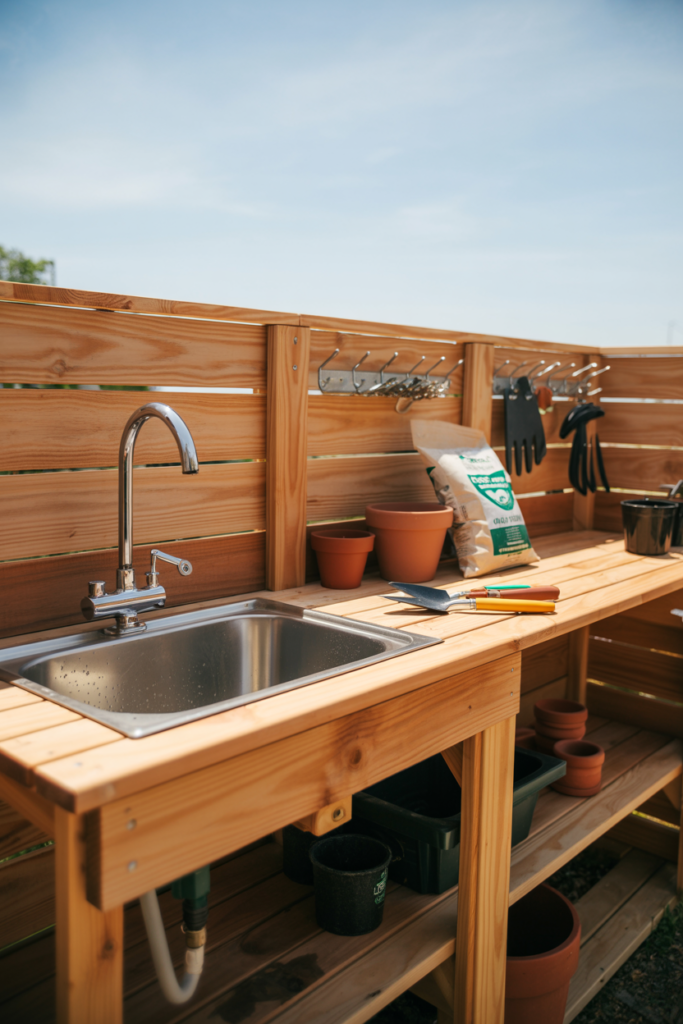
6. Potting Bench DIY Outdoor Sink Station With Built-In Basin and Storage Shelves for a Dual-Purpose Garden Workspace
A potting bench with a built-in sink basin is one of the most practical and genuinely useful DIY outdoor sink station designs for gardeners. It combines a generous work surface for potting, planting, and seed starting with a built-in wash basin for cleaning tools, rinsing vegetables, and keeping hands clean throughout the gardening process. Having both functions in one dedicated outdoor workspace completely changes how efficiently and enjoyably you can work in the garden.
The construction involves building a standard potting bench frame from cedar, pressure-treated pine, or Douglas fir lumber and integrating a drop-in sink basin into one section of the work surface. Lower shelves provide storage for potting mix bags, pots, trays, and gardening supplies. Upper shelves or a back panel with hooks hold hand tools, gloves, and spray bottles within easy reach during the potting process. A garden hose connection at the back feeds the tap, and a simple drain pipe directs wastewater to a gravel drainage pit or directly onto garden beds.
A potting bench sink station works hardest when it is positioned in a sheltered spot close to the vegetable garden or greenhouse. The proximity to the growing area means less time walking back and forth and more time actually gardening, which is something every gardener genuinely appreciates. It is one of those additions that immediately makes the entire outdoor gardening experience feel more professional and organized.
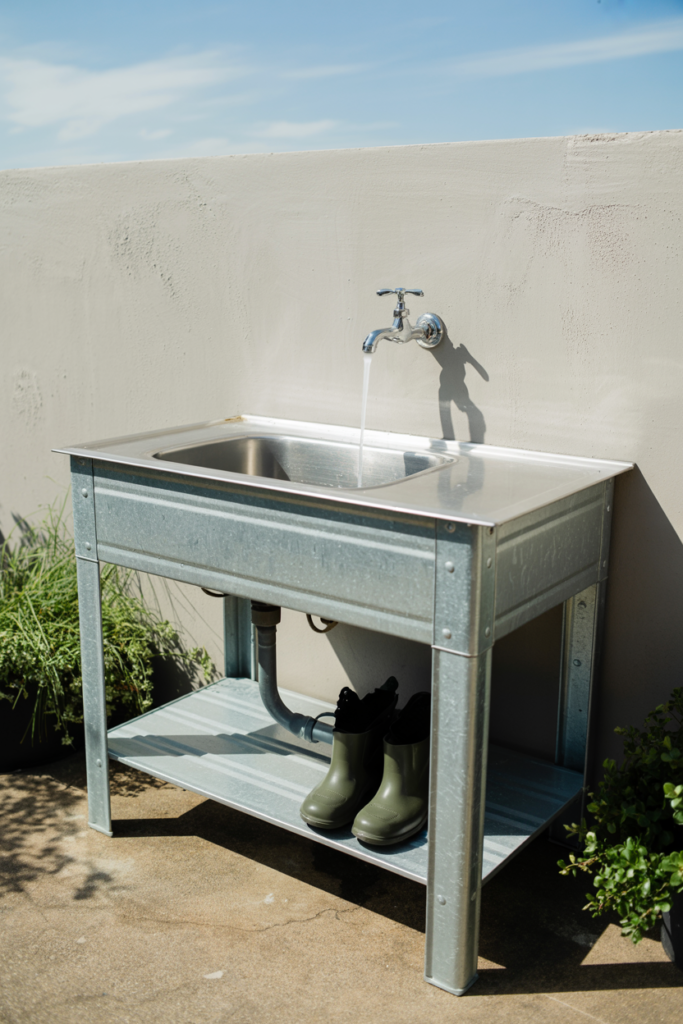
7. Stainless Steel Utility Sink on a Galvanized Steel Frame for a Durable and Easy-to-Clean DIY Outdoor Sink Station
A stainless steel utility sink mounted on a galvanized steel frame creates one of the most durable, hygienic, and easy-to-clean DIY outdoor sink stations available. Stainless steel handles outdoor weather conditions, heavy use, and constant water exposure better than almost any other sink material. The deep basin of a standard utility sink accommodates large items like garden boots, buckets, and oversized pots that smaller decorative basins simply cannot handle.
Building the galvanized steel frame involves welding or bolting square steel tube sections into a simple cabinet-height rectangular frame and mounting the utility sink basin on top. For homeowners without welding experience, heavy-duty bolt-together steel shelving units provide a ready-made frame alternative that requires no fabrication skills at all. A garden hose fitting connects to the tap, and a standard PVC drain pipe handles wastewater disposal.
The industrial aesthetic of a stainless steel and galvanized frame outdoor sink station suits modern, minimalist, and urban garden settings particularly well. It is also one of the easiest stations on this list to keep clean because both stainless steel and galvanized metal wipe down quickly and resist staining and bacterial growth naturally. For anyone who prioritizes maximum practicality and durability over decorative character, this is the outdoor sink station to choose.
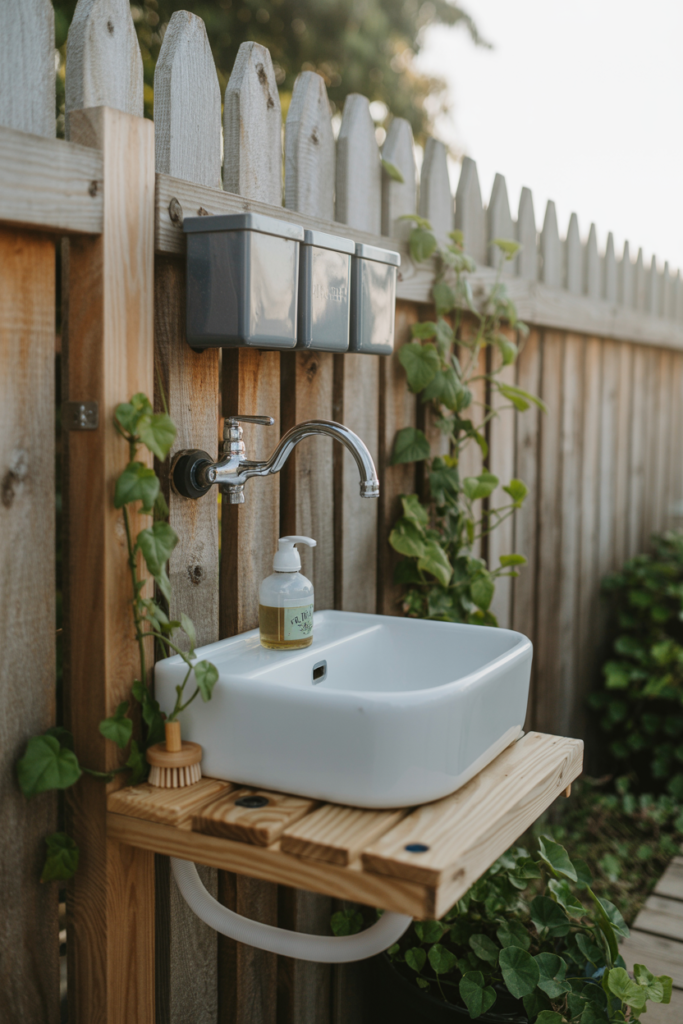
8. Outdoor Sink Station Built Into a Garden Fence or Retaining Wall for a Space-Saving and Integrated Backyard Wash Area
Building an outdoor sink station directly into a garden fence or retaining wall is the smartest space-saving solution for backyards where floor space is limited. A wall-mounted or fence-integrated sink uses vertical structure that already exists in the garden to support the basin, tap, and storage without occupying any additional ground footprint. This approach is particularly valuable in small urban gardens, narrow side passages, and compact courtyard spaces where every square meter counts.
The installation involves mounting a wall-hung basin bracket directly into the fence posts or retaining wall structure, attaching the sink basin to the bracket, and running a garden hose connection along the fence line to the tap. A small fold-down shelf below the basin provides a surface for soap and cleaning supplies without permanently occupying wall space when not in use. Waterproof storage boxes mounted on the fence above the sink hold additional supplies within easy reach.
I find that wall-integrated outdoor sink stations also look particularly clean and intentional in a garden setting. Because the sink appears to grow out of the existing garden structure rather than sitting as a separate freestanding unit, it feels like a planned feature of the garden design rather than an afterthought. That integrated quality is something that genuinely elevates the overall appearance of the outdoor space.
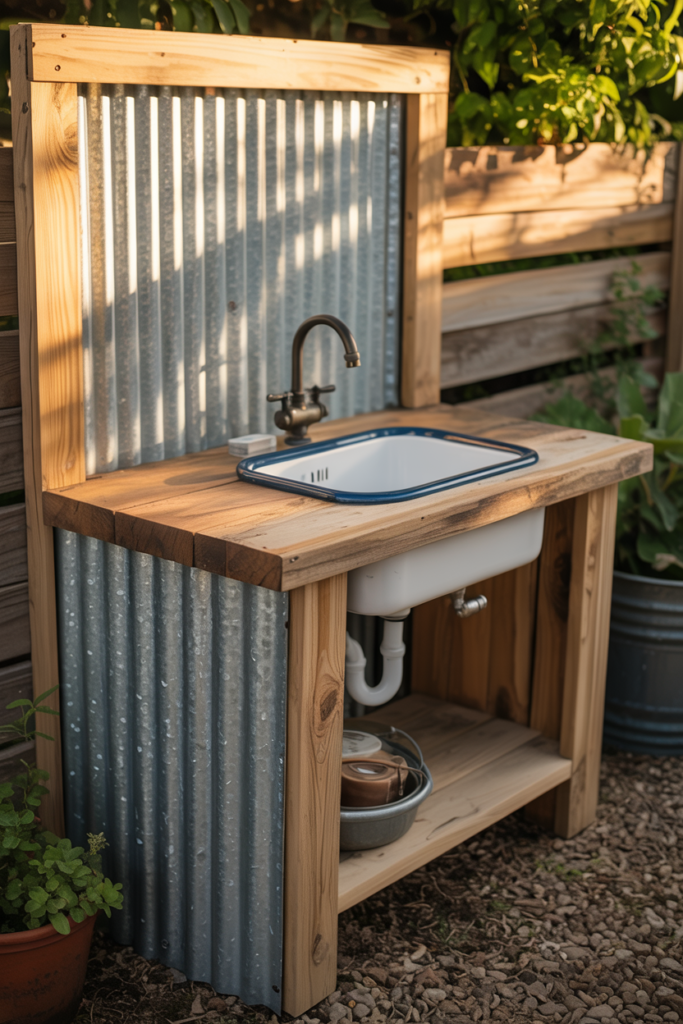
9. Corrugated Metal and Timber DIY Outdoor Sink Station for a Rustic Farmhouse-Style Backyard Wash Station With Real Character
A corrugated metal and timber DIY outdoor sink station creates a farmhouse-style outdoor wash area that feels genuinely at home in cottage gardens, rural properties, and rustic backyard settings. The combination of weathered timber framing and corrugated metal sheeting on the cabinet sides and back panel creates a visual character that is warm, rugged, and completely charming. This is a build that looks like it belongs in the landscape rather than having been placed into it.
The construction involves building a simple timber frame from rough-sawn lumber or reclaimed wood and cladding the sides and back with corrugated metal sheeting fixed with roofing screws. A solid timber countertop with a drop-in farmhouse-style enamel or stainless steel sink basin completes the top surface. A wall-mounted outdoor tap or a simple garden hose fitting provides the water supply. The corrugated metal handles outdoor weather conditions excellently and requires virtually no maintenance beyond an occasional rinse.
Pairing a corrugated metal and timber sink station with a matching potting bench or outdoor bar counter creates a cohesive farmhouse aesthetic across the entire backyard entertaining and garden work area. The visual consistency of repeating the same materials across multiple outdoor structures ties the backyard together into a unified design story. This is the kind of DIY outdoor build that makes a backyard feel genuinely designed rather than assembled piece by piece over time.
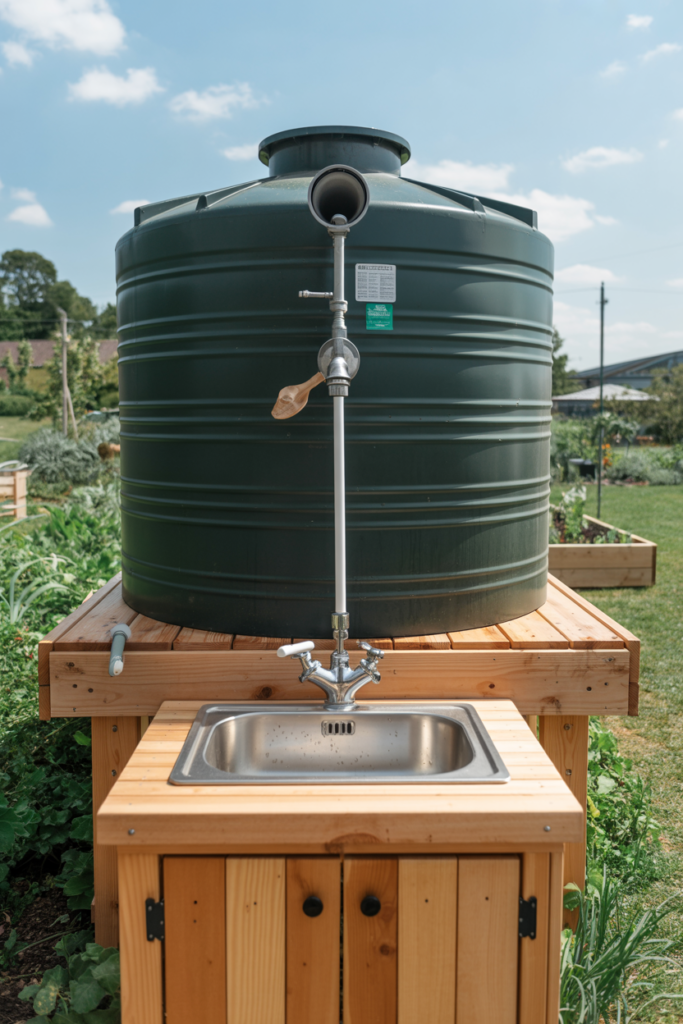
10. Outdoor Sink Station With a Rainwater Tank Connection for a Sustainable and Off-Grid Backyard Water Solution
Connecting a DIY outdoor sink station to a rainwater collection tank is one of the most sustainable and genuinely clever approaches to outdoor water supply. Instead of running a garden hose from the main water supply, the sink draws from a collected rainwater tank positioned above the sink station to use gravity feed for water pressure. This approach works well for garden tool cleaning, boot rinsing, and general outdoor cleanup tasks without using any mains water at all.
The build involves positioning a food-grade rainwater collection tank on a raised platform above the sink station height to create sufficient gravity-fed water pressure. A standard tap fitting connects the tank outlet to the sink basin tap, and a simple leaf filter on the tank inlet keeps debris out of the water supply. The tank refills automatically during rainfall, making the system genuinely self-sustaining during wet seasons with minimal human intervention required.
This kind of sustainable outdoor sink station appeals strongly to gardeners and homeowners who want to reduce their water consumption and utility costs. In regions with regular rainfall, a well-sized rainwater tank provides more than enough water for all outdoor sink use throughout the growing season. The environmental benefit, combined with the practical convenience,e makes this one of the most genuinely thoughtful DIY outdoor sink station builds on this list.
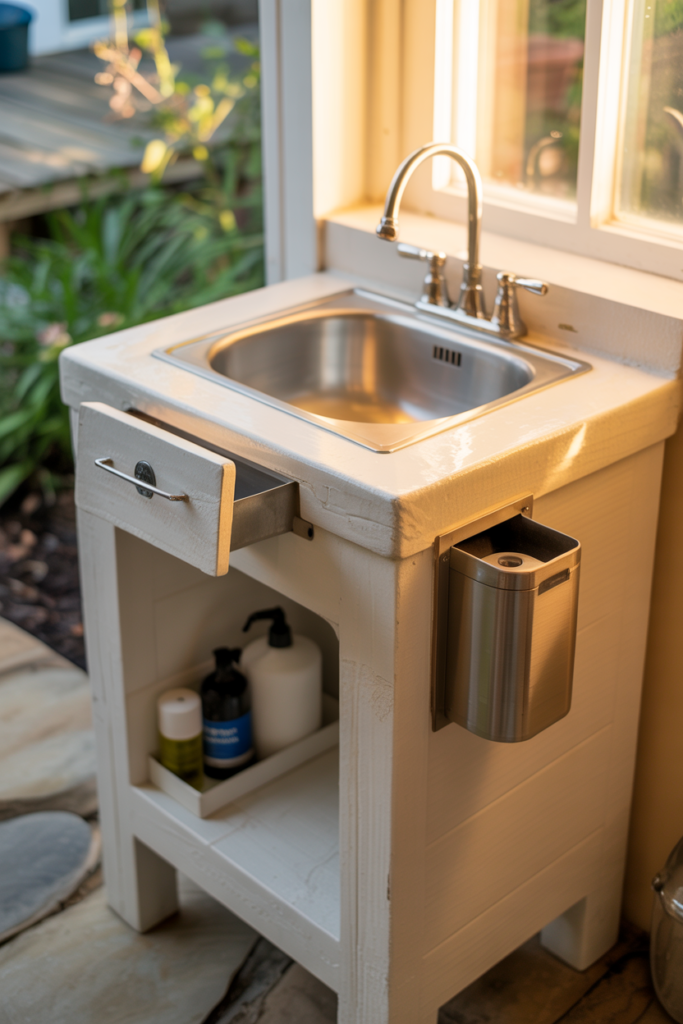
11. Outdoor Sink Station With a Built-In Soap Dispenser, Paper Towel Holder, and Storage Cabinet for a Fully Equipped Backyard Hand Wash Station
Building a fully equipped outdoor hand wash station with an integrated soap dispenser, paper towel holder, and storage cabinet creates a backyard cleanup area that functions just as conveniently as an indoor bathroom sink. This level of detail transforms a basic outdoor sink into a genuinely complete handwashing station that everyone in the household actually wants to use, rather than bypassing in favor of going inside. The addition of these small functional details costs very little but makes an enormous difference to how practical and enjoyable the station is to use daily.
The base structure can use any of the cabinet builds described earlier in this list, with the additional fittings mounted directly onto the cabinet sides or back panel. A stainless steel recessed soap dispenser, a simple paper towel holder bracket, and a small waterproof storage cabinet for soap refills and cleaning supplies all mount easily onto a timber or metal surface with basic screws. Keeping all consumables stored and accessible at the sink itself eliminates the need to retrieve supplies from elsewhere during outdoor use.
I find that the practical details of an outdoor sink station matter just as much as the structural build quality. A sink that requires you to hunt around for soap or dry your hands on your jeans defeats the whole purpose of having an outdoor wash station in the first place. Getting these small details right from the beginning creates a station that genuinely improves the daily outdoor routine for every member of the household.
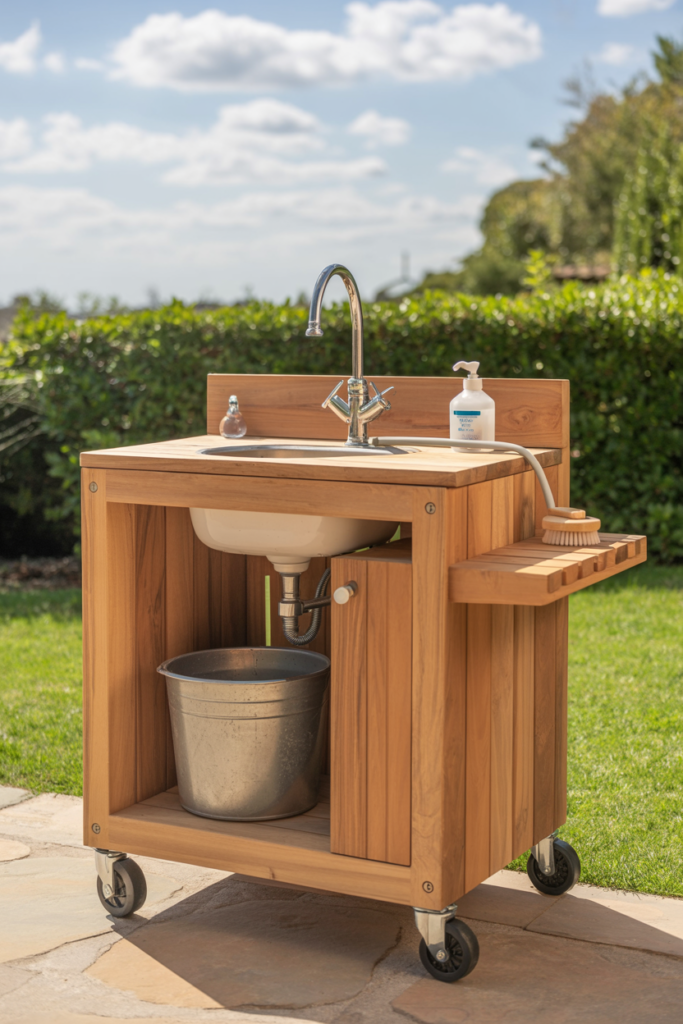
12. Portable DIY Outdoor Sink Station on Wheels for a Flexible and Mobile Backyard and Camping Water Station
A portable DIY outdoor sink station on wheels is the most flexible outdoor sink solution available and works brilliantly for homeowners who want the option to reposition the station throughout the backyard depending on the season or activity. A wheeled outdoor sink station can move to the vegetable garden during summer, to the outdoor entertaining area during barbecue season, and into a sheltered spot during winter. This kind of flexibility is particularly valuable in smaller outdoor spaces where a permanent fixed installation would limit how the area can be used.
The build involves constructing a simple timber or steel cabinet frame on heavy-duty lockable caster wheels rated for outdoor use. The sink basin, tap fitting, and garden hose connection work identically to a fixed installation, with the garden hose simply running along the ground to the nearest outdoor tap. A lower shelf inside the cabinet holds a bucket to collect drain water when a permanent drain connection is not practical, which the bucket empties regularly during use.
A portable outdoor sink station is also the ideal solution for renters who want the functionality of an outdoor sink without making any permanent changes to the property. Everything rolls away into a shed or garage when not needed and leaves no permanent marks or installations behind. That combination of full functionality and complete reversibility makes this one of the most genuinely practical DIY outdoor sink station options for a wide range of living situations.
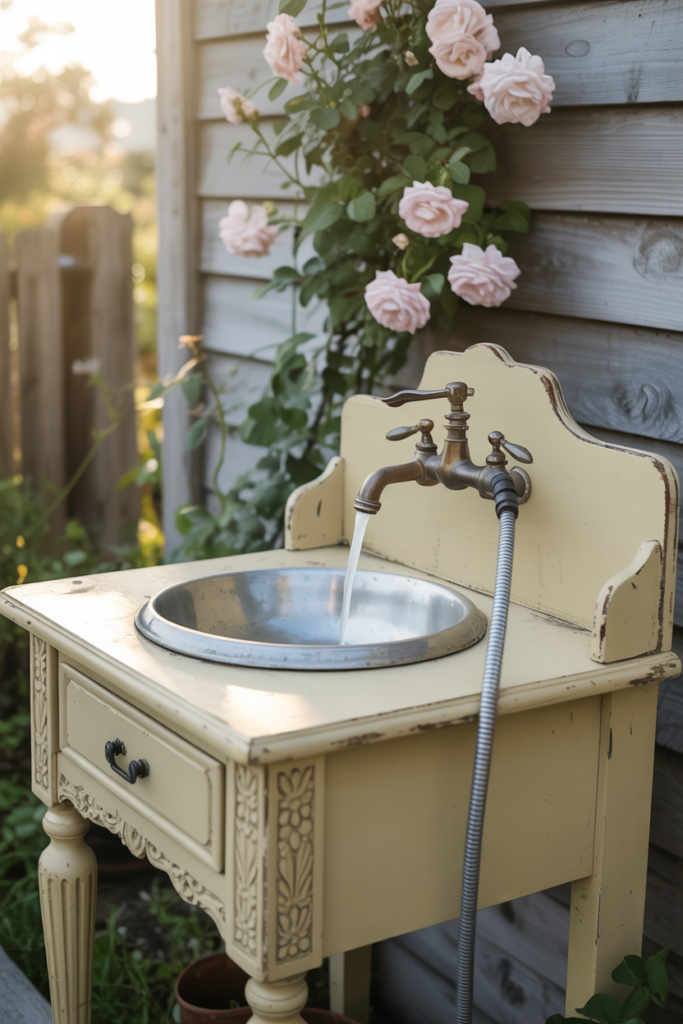
13. Outdoor Sink Station Built From an Upcycled Antique Washstand for a Vintage and Elegant Garden Wash Area
Upcycling an antique washstand into a DIY outdoor sink station creates one of the most visually striking and genuinely elegant outdoor sink builds possible. Antique washstands were designed specifically to hold a basin and water pitcher, which makes them naturally suited to conversion into an outdoor sink with minimal structural modification. The ornate legs, decorative apron detail, and vintage character of a genuine antique washstand give the finished outdoor sink station an appearance that no purpose-built alternative can replicate.
The conversion involves fitting a drop-in or vessel sink basin into the washstand top surface and connecting a simple outdoor tap fitting and garden hose supply through the back. Thoroughly weatherproofing the washstand before outdoor installation is essential. Strip any existing finish, seal all wood surfaces with exterior primer, and apply multiple coats of outdoor paint or a high-quality marine varnish to protect against moisture, UV, and temperature variation. Metal hardware and decorative fittings should be treated with a rust-inhibiting clear coat.
An antique washstand outdoor sink station works particularly beautifully in cottage gardens, romantic garden spaces, and outdoor entertaining areas with a vintage or heritage aesthetic. Positioned beside a rose garden, a herb border, or a classic English-style garden bench, it creates a genuinely picturesque outdoor feature that elevates the entire visual character of the space. This is a build that functions as both a practical utility station and a genuine piece of garden art simultaneously.
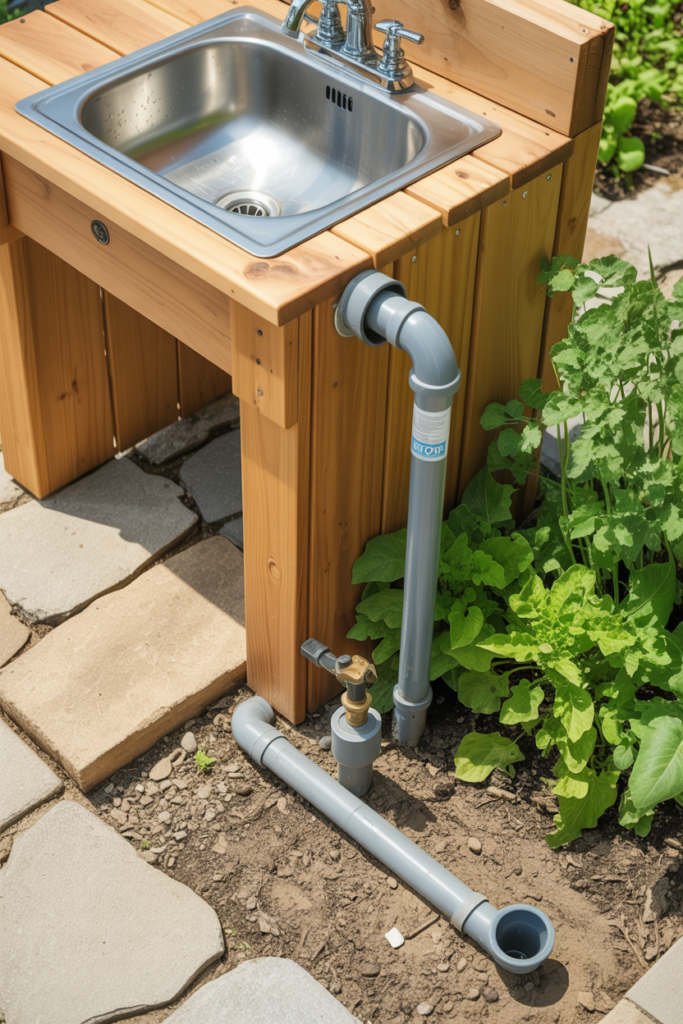
14. Outdoor Sink Station With a Greywater Garden Irrigation Connection for a Water-Efficient and Eco-Friendly Backyard Build
Connecting a DIY outdoor sink station drain directly to a simple greywater garden irrigation system is one of the most environmentally responsible and genuinely practical outdoor sink builds available. Rather than directing sink wastewater into the storm drain, the greywater system channels rinse water from the outdoor sink directly into subsurface garden irrigation pipes or a gravel-filled absorption trench beneath garden beds. This approach recycles every drop of water used at the outdoor sink back into the garden, which reduces overall water consumption significantly.
The greywater connection involves installing a standard PVC drain pipe from the sink basin outlet that runs to a simple branched drip irrigation network buried beneath nearby garden beds. Using biodegradable soap products at the outdoor sink ensures the greywater remains safe for garden plants and soil organisms. A simple diverter valve allows the drain to switch between the irrigation system and the storm drain when needed, such as during periods of heavy rainfall when additional water input to garden beds is unnecessary.
This kind of eco-conscious outdoor sink appeals particularly to vegetable gardeners and sustainability-focused homeowners who want every element of their outdoor space to work as efficiently as possible. The water savings over a full growing season add up to a genuinely meaningful reduction in outdoor water consumption. It is a thoughtful addition that costs very little to implement during the initial sink station build and delivers ongoing environmental and practical benefits for the entire life of the installation.
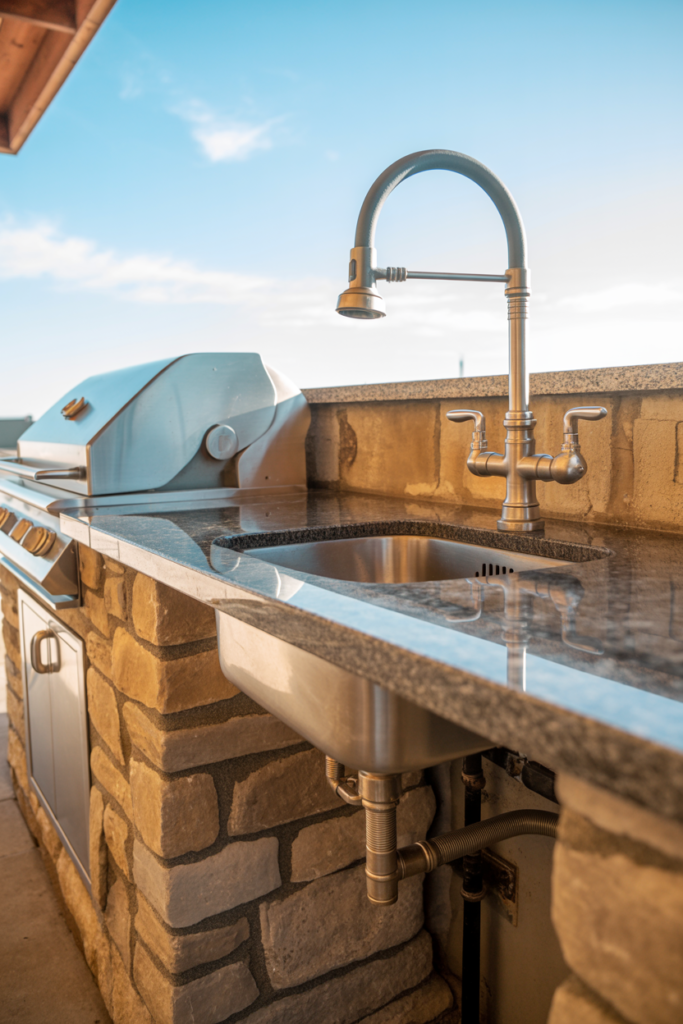
15. Fully Plumbed Permanent DIY Outdoor Sink Station With Hot and Cold Water for a Professional-Quality Outdoor Kitchen and Garden Wash Area
A fully plumbed permanent DIY outdoor sink station with both hot and cold water supply is the most complete and professional-quality outdoor sink build on this list, and it creates an outdoor wash area that functions with exactly the same convenience as an indoor kitchen sink. Hot water access outdoors makes cleaning greasy grill equipment, washing vegetables in cool weather, and general outdoor cleanup significantly more effective and comfortable than cold water alone. This is the build for homeowners who want their outdoor space to function at the highest possible level.
The plumbing involves running both hot and cold supply lines from the nearest interior water supply point through the exterior wall to the outdoor sink location. This work typically requires intermediate plumbing knowledge and may need a licensed plumber for the connection to the interior hot water system, depending on local building regulations. The outdoor supply pipes require insulation in climates with freezing winters, along with isolation valves that allow the outdoor water supply to be drained and shut off before temperatures drop below freezing.
A fully plumbed outdoor sink with hot and cold supply works best as part of a broader outdoor kitchen or entertaining area build. Positioned beside an outdoor grill, a prep counter, and an outdoor refrigerator, it completes a fully self-contained outdoor cooking and entertaining space that requires virtually no trips back inside during use. This is the outdoor sink build that transforms a backyard from a pleasant outdoor space into a genuinely complete outdoor living environment.
How to Choose the Right DIY Outdoor Sink Station Build for Your Backyard, Budget, and Skill Level
Choosing the right outdoor sink station build comes down to three key factors working together: how you plan to use the sink, how much you want to spend, and how much DIY experience you currently have. Matching all three factors honestly before starting ensures the project stays enjoyable rather than becoming frustrating. Here is a practical decision guide:
| Primary Use | Best Build Type | Recommended Skill Level |
| General garden cleanup | Pallet or repurposed cabinet | Beginner |
| Vegetable garden washing | Potting bench with basin | Beginner to intermediate |
| Outdoor cooking and entertaining | Cedar or concrete block station | Intermediate |
| Maximum durability and hygiene | Stainless steel utility station | Intermediate |
| Small space or rental property | Wall-mounted or portable on wheels | Beginner |
| Eco-conscious water use | Rainwater tank or greywater connection | Intermediate |
| Full outdoor kitchen setup | Fully plumbed hot and cold station | Advanced |
Starting with an honest assessment of your current skill level and available weekend time prevents the most common DIY mistake of choosing a build that is too ambitious for your first outdoor project. Every build on this list can be upgraded or expanded later as your confidence and budget grow, so starting with the right fit for where you are right now is always the smartest approach.
A DIY Outdoor Sink Station That Works Hard and Looks Great Is Well Within Any Homeowner’s Reach
After going through all 15 ideas, it is clear that a DIY outdoor sink station is one of the most practical and rewarding backyard projects you can take on, regardless of your budget, skill level, or available space. From a simple repurposed cabinet with a drop-in basin to a fully plumbed permanent outdoor kitchen sink with hot and cold water, every build on this list delivers a genuine improvement to how the backyard functions daily. The difference between a backyard with an outdoor sink and one without is something you feel every single time you use it.
What stands out across all 15 ideas is how much variety exists within what sounds like a straightforward project category. A vintage antique washstand conversion creates an entirely different atmosphere than a corrugated metal and timber farmhouse station, yet both solve the same practical problem with equal effectiveness. That range of aesthetic options means there is genuinely no excuse for an outdoor sink station to look out of place in any backyard style, from modern minimalist to rustic cottage garden.
The sustainability angle of several builds on this list is also worth emphasizing. Rainwater tank connections, greywater irrigation systems, and upcycled furniture conversions all reduce environmental impact while delivering full outdoor sink functionality. Building an outdoor sink station that works with the natural resources available in your garden, rather than purely relying on mains water,r is a genuinely smart approach that pays off in both reduced utility costs and a lighter environmental footprint.
Conclusion
These 15 DIY outdoor sink station ideas prove that adding a functional and stylish outdoor wash area to any backyard is completely achievable at every budget and skill level. From beginner-friendly pallet wood builds and repurposed cabinet conversions to intermediate cedar and concrete block stations and advanced fully plumbed outdoor kitchen sinks, every idea on this list delivers real practical value alongside genuine visual appeal.
The key takeaways are straightforward and worth keeping in mind as you plan your own build. Match your chosen build to your current skill level, your available budget, and your primary intended use before purchasing any materials. Weatherproof every timber surface thoroughly before outdoor installation, regardless of which build you choose, as this single step determines how long the finished station lasts and how good it continues to look over time. Plan your drainage solution before you start building rather than figuring it out afterward, because good drainage is what prevents moisture damage to the base structure and surrounding garden area.
A well-built DIY outdoor sink station genuinely changes the daily experience of using your backyard. It keeps the inside of your home cleaner, makes outdoor cooking and gardening more efficient, and adds a purposeful, well-designed feature to the outdoor space that improves both its function and its appearance. If you have been considering adding one to your backyard, any of these 15 ideas gives you a clear and achievable starting point to work from right now.
Frequently Asked Questions
Q1. Do I need a plumber to build a DIY outdoor sink station? Most basic DIY outdoor sink stations connect to an existing outdoor tap or garden hose fitting, which requires no licensed plumbing work at all. More advanced builds that involve running new supply lines from interior plumbing or adding a hot water connection may require a licensed plumber, depending on local building regulations. Always check your local plumbing code requirements before starting any build that involves connecting to interior water supply lines.
Q2. What is the best sink basin material for an outdoor sink station? Stainless steel and enamel-coated cast iron are the two best sink basin materials for outdoor use because both handle weather exposure, temperature changes, and heavy daily use without deteriorating. Stainless steel is lighter, easier to install, and simpler to keep clean. Enamel cast iron is heavier and more durable,e with a classic aesthetic that suits vintage and farmhouse style outdoor sink builds particularly well.
Q3. How do I drain an outdoor sink station without connecting to the sewer? The most common drainage solutions for outdoor sink stations that cannot connect to the sewer include directing the drain pipe to a gravel-filled French drain pit, connecting to a greywater garden irrigation system, or simply running the drain into a removable bucket that empties regularly. A French drain pit filled with gravel and coarse sand beneath the sink area handles moderate water volume effectively and requires no connection to any existing drainage infrastructure.
Q4. What wood is best for building an outdoor sink station that lasts? Cedar, teak, and pressure-treated pine are the three best timber choices for a DIY outdoor sink station because all three naturally resist moisture, rot, and insect damage better than untreated softwoods. Cedar is the most popular choice because it is lightweight, easy to work with basic tools, and naturally beautiful without requiring constant chemical treatment. Teak is the most durable and weather-resistant option, but it costs significantly more than cedar or pressure-treated pine.
Q5. Can I build a DIY outdoor sink station without any plumbing experience? Absolutely. The simplest outdoor sink station builds require nothing more than connecting a standard garden hose fitting to a tap, which anyone can do without any plumbing knowledge or tools beyond a basic adjustable wrench. Garden hose-fed outdoor sinks work perfectly well for most backyard cleanup tasks, including tool washing, vegetable rinsing, boot cleaning, and general handwashing. Gravity-fed rainwater tank connections are equally simple and require no plumbing experience at all.
Q6. How do I winterize an outdoor sink station in a cold climate? Winterizing an outdoor sink station involves disconnecting the water supply, draining all water from the supply line and tap fittings completely, and storing any removable basin or fitting components indoors during freezing temperatures. For permanently plumbed outdoor sinks, installing an isolation valve on the interior supply line allows you to shut off and drain the outdoor section of the plumbing before the first frost. Leaving any water in outdoor pipes or fittings during freezing temperatures risks cracking the pipes and damaging the tap fittings significantly
.Q7. How much does a basic DIY outdoor sink station cost to build? A basic beginner-level DIY outdoor sink station using a repurposed cabinet or pallet wood frame with a simple drop-in basin and garden hose connection typically costs between $30 and $15,0, depending on whether you source materials for free or purchase them new. A mid-range cedar or concrete block build with a proper undermount basin and outdoor tap fitting runs between $200 and $500. A fully plumbed permanent outdoor kitchen sink with hot and cold water supply can cost between $500 and $1500 morer more, depending on the materials chosen and whether professional plumbing assistance is required.