
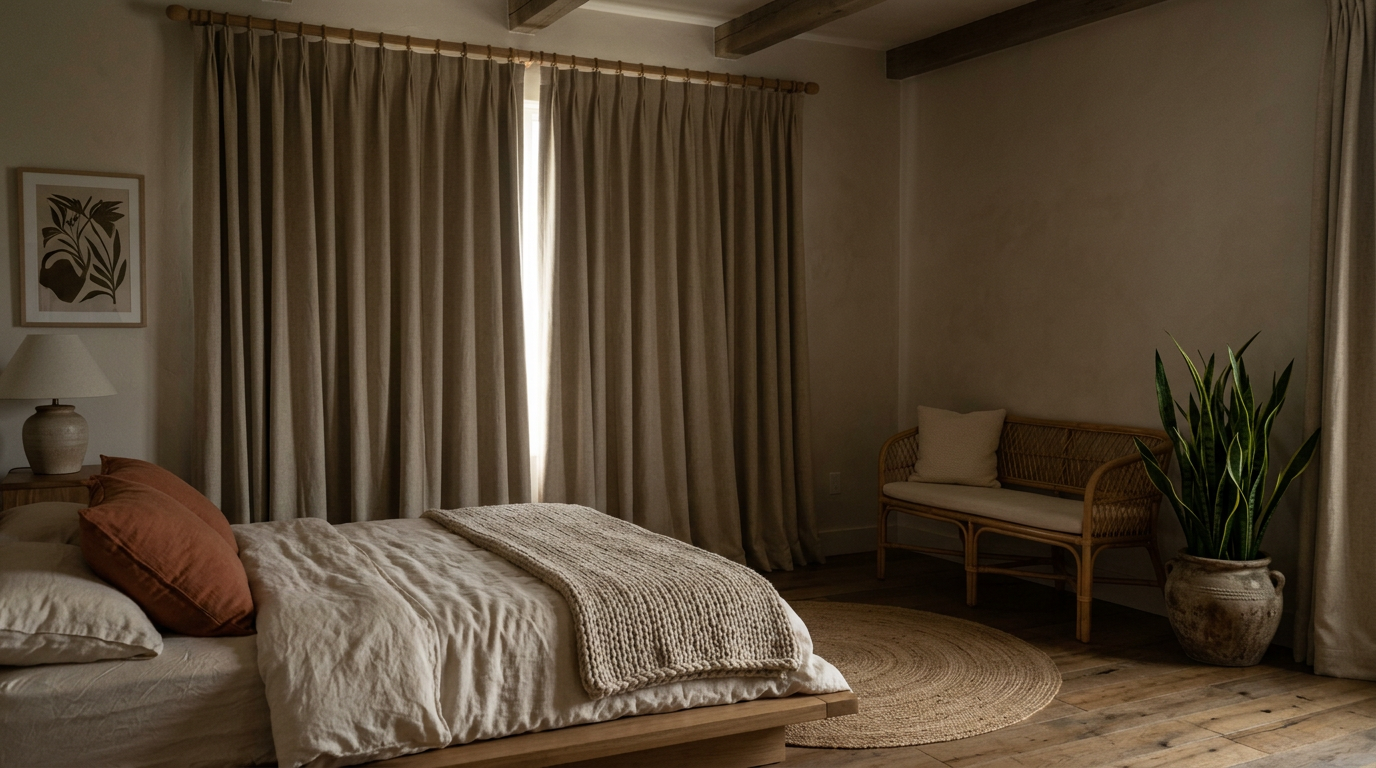
Blackout boho curtains block morning light and keep the boho look. Pick a lined panel in a textured, earthy fabric like faux linen. Hang it high and wide so light cannot sneak around the edges.
I like these curtains because they solve two problems at once. They darken the room for sleep, and they still look soft and handmade. Plain gray blackout panels cannot say that.
This guide gives you 7 easy ways to style blackout boho curtains in your bedroom and beyond. Each idea stays affordable and simple to copy. Keep reading, and your sleep schedule may thank you.
What Are Blackout Boho Curtains and How Dark Do They Get?
Blackout boho curtains pair a boho look with a dense lining. The front shows texture, pattern, or tassels. The back layer blocks sunlight and helps keep the room dim.
Not every blackout curtain blocks the same amount of light. Many brands list 80 to 90 percent for lighter panels, 95 percent for thicker ones, and 100 percent for coated linings. Check the label before you buy.
Even a 100 percent panel can leak light around the edges. Direct sun stays out, but a thin glow can slip past the sides and top. Hang the panels wide, and the problem shrinks.
| Blackout Level | What It Means | Best For |
|---|---|---|
| 80 to 90 percent | Dims the room and softens glare | Living rooms and daytime rest |
| 95 percent | Blocks most light | Bedrooms with moderate sun |
| 100 percent | Blocks direct sunlight with a coated lining | Night sleepers and shift workers |
1. Choose Textured Faux Linen Blackout Boho Curtains for a Natural Look
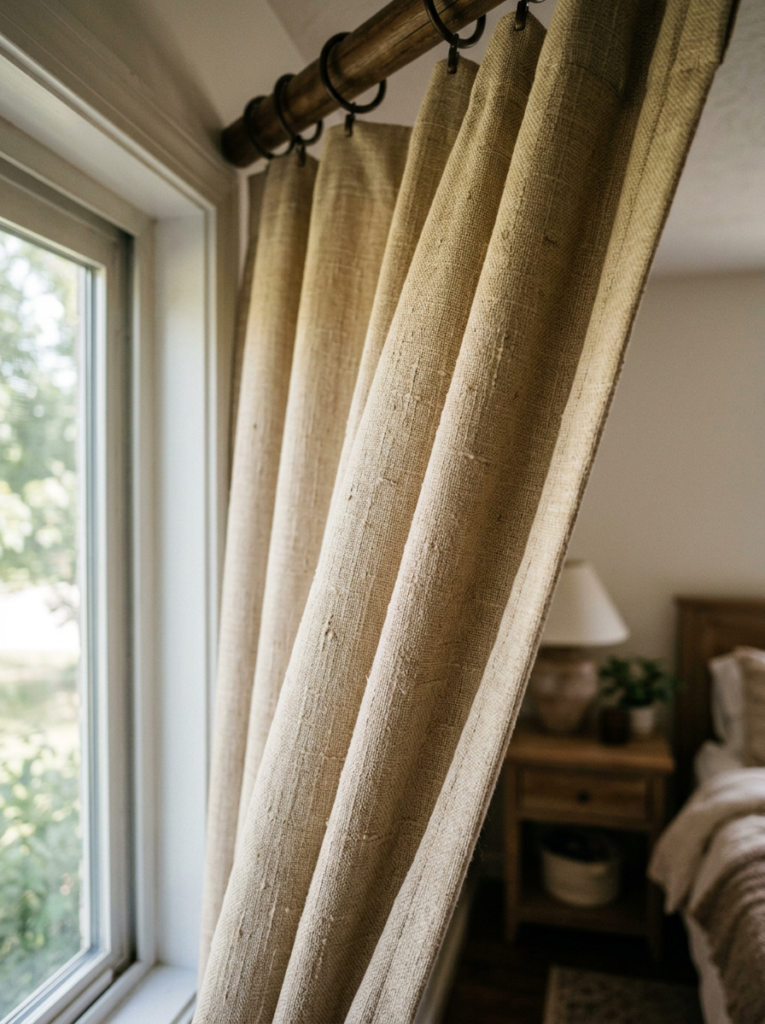
Textured faux linen gives blackout panels a natural, boho feel. The front looks like woven linen, while the lining does the dark work. You get a relaxed look without a heavy, hotel-style drape.
Pick a warm neutral like oatmeal, sand, or taupe. These shades match wood, rattan, and woven bedding. They also keep the bedroom calm in daylight.
Check how the fabric feels before you buy. Thick, soft panels hang better than thin, stiff ones. A good lining also adds some insulation against drafts.
2. Pick a Soft Boho Pattern in Earth Tones
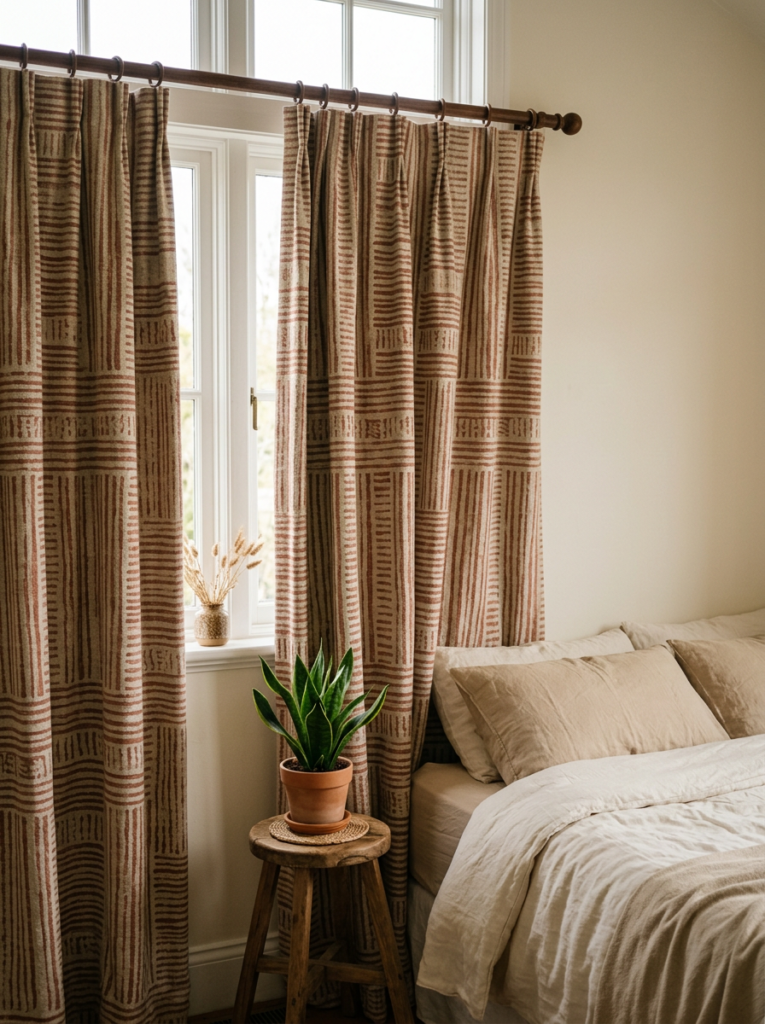
Pattern adds personality to a dark, quiet bedroom. Look for simple geometric lines, soft stripes, or botanical prints in earth tones. These designs keep the room warm without making it busy.
Keep the rest of the bedroom calm if the curtains carry the pattern. Plain bedding and a neutral rug let the print stand out. Two loud pieces compete with each other.
Choose colors that already live in your room. Terracotta, sage, and cream work well together. Hold a sample against your walls in daylight first.
3. Hang Blackout Panels High and Wide to Stop Light Leaks
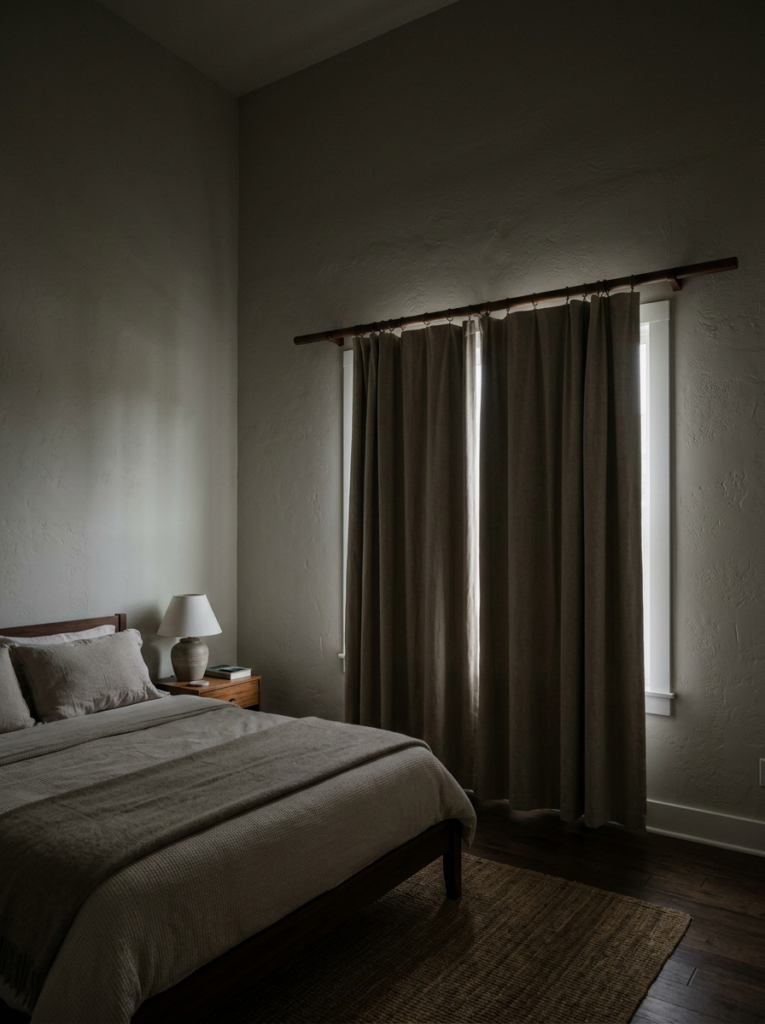
Light leaks ruin a good blackout curtain. The gaps at the sides and top let in thin beams. Fix this with the right rod placement.
Mount the rod about 6 to 12 inches above the window frame. Extend it 4 to 6 inches past each side. This lets the panels cover the whole opening and stack off the glass in the daytime.
Choose panels about 2 times the window width for a full look. Let the curtain fall to the floor or just above it. A wraparound rod or a curtain with a side return blocks even more light.
4. Layer Blackout Boho Curtains With Sheer Panels for Day and Night Control
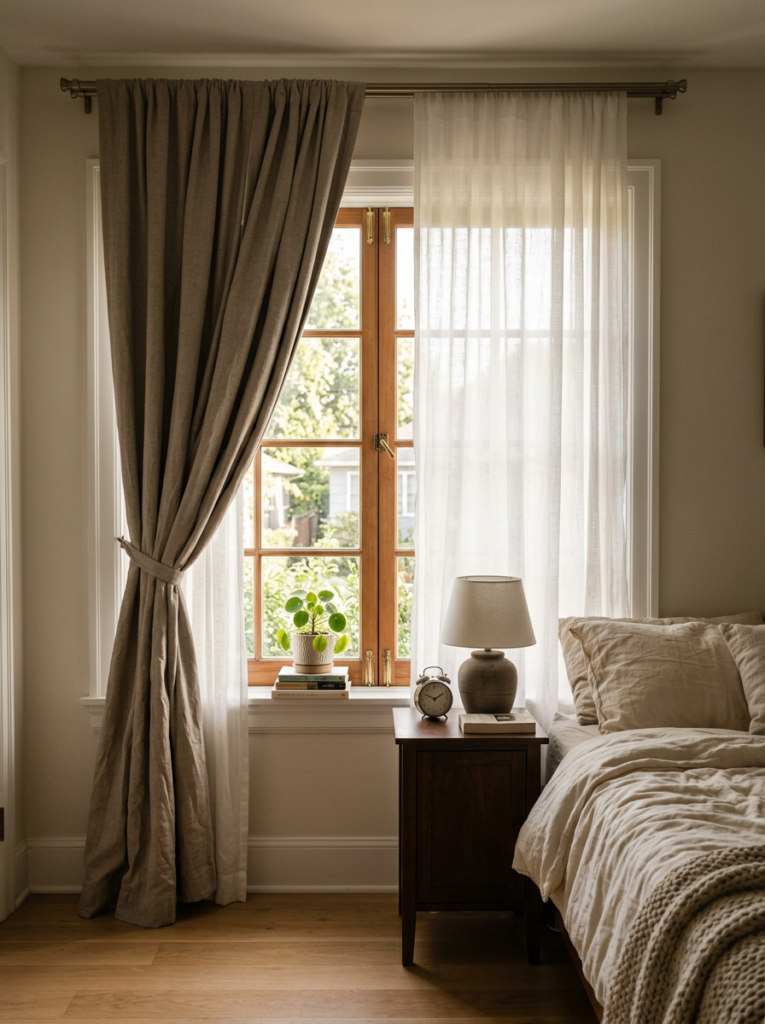
Layering gives you control at any hour. Hang a white or cream sheer on the rod closest to the glass. Then hang the blackout panel on a second rod in front.
In the morning, open the blackout panels and keep the sheers closed. You get soft light and privacy. At night, close both layers for full darkness.
Keep the sheer plain so the boho pattern stands out. Linen-look sheers match textured blackout curtains well. The two layers also make the window look fuller.
5. Add a Wood Rod, Rings, and Simple Hardware
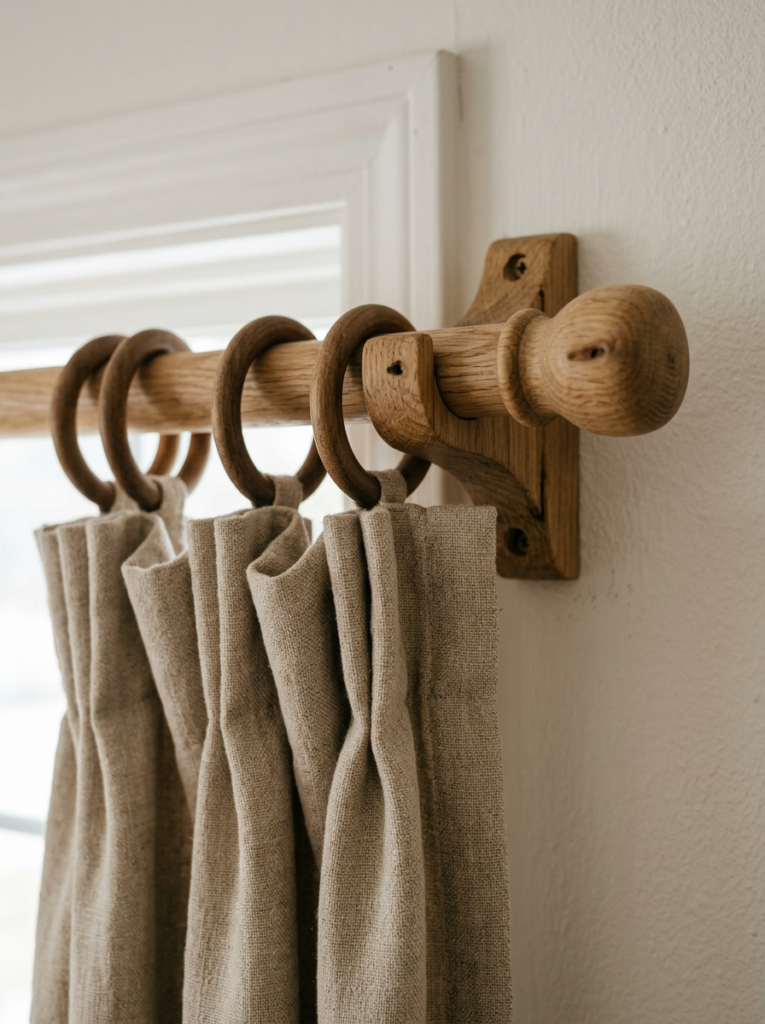
Hardware sets the tone for the whole window. A wood rod with simple rings gives a warm, natural look. A matte black or brass rod suits a more modern boho room.
Choose a sturdy rod, since blackout panels weigh more than regular curtains. Use strong brackets and anchor them into studs when you can. A thin rod can sag under a lined panel.
Ring clips or grommets keep the panels sliding smoothly. Rod pockets work too, but they grip the rod and slow down daily use. Pick the style you will actually open and close.
6. Build a Boho Bedroom Around the Curtains
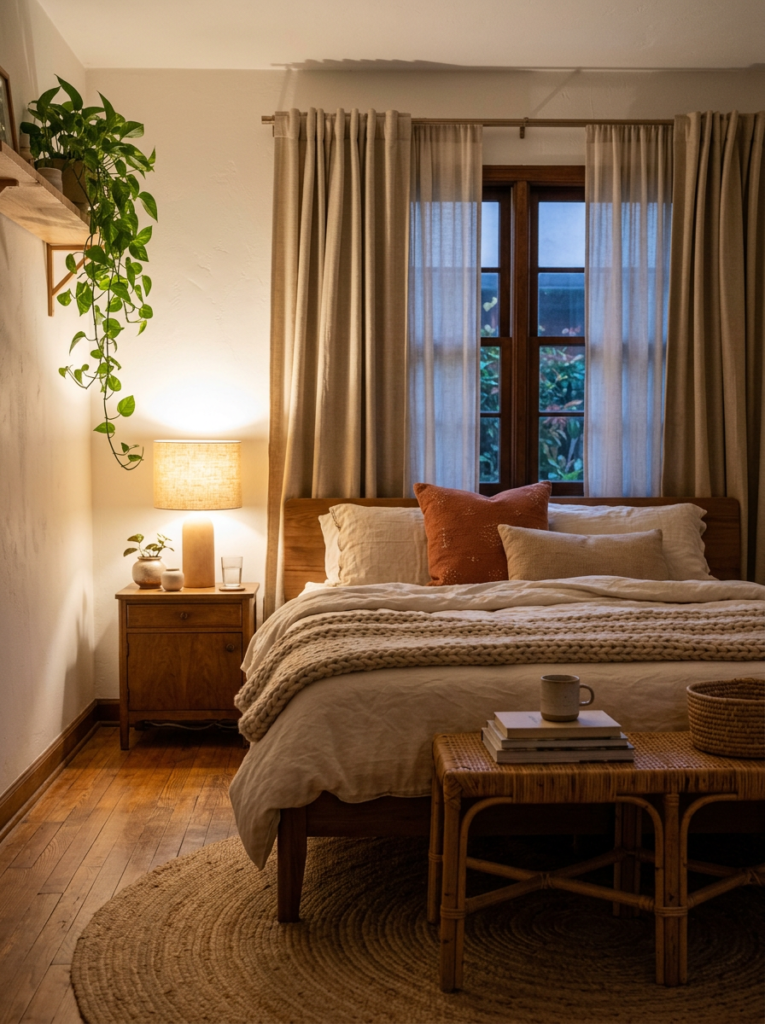
Blackout curtains look best when the room supports them. Start with textured bedding in cream or sand. Add a jute rug, a rattan bench, and a wooden nightstand.
Bring in one or two plants that handle low light. A snake plant or a pothos copes well in a dim bedroom. Keep them a few inches from the fabric.
Add a warm lamp with a linen shade for evening light. Soft, low light helps the room feel calm before bed. Repeat one color from the curtains in a pillow or a throw.
7. Use Blackout Boho Curtains in a Nursery, Home Office, or Media Room
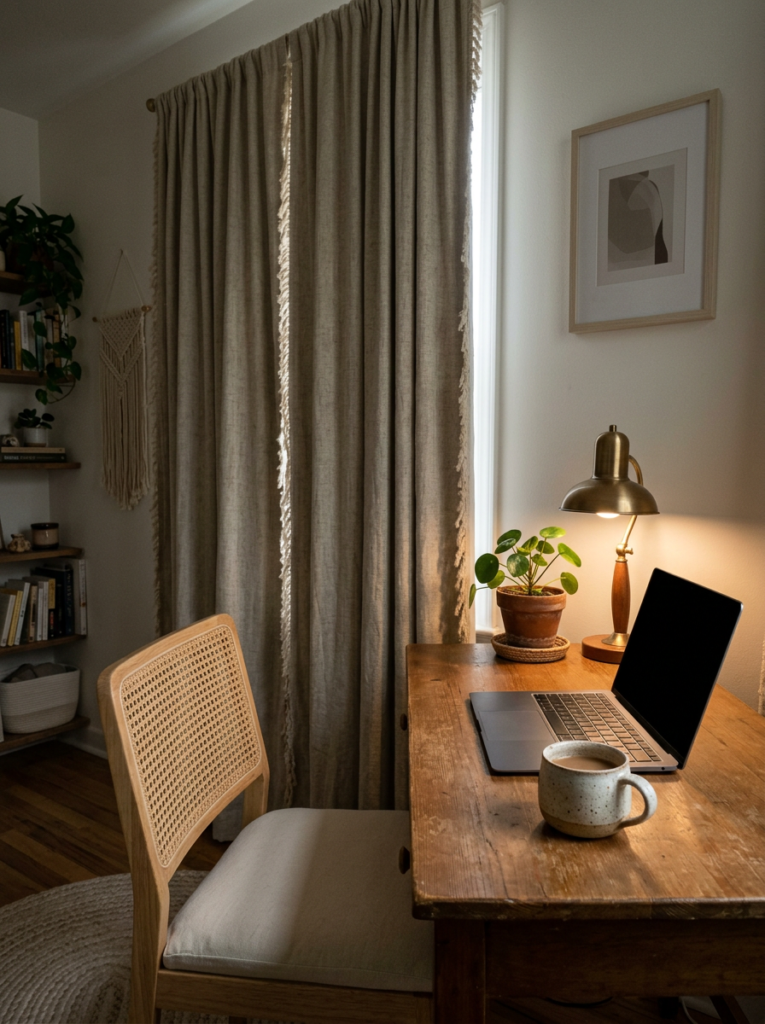
Bedrooms are not the only place for blackout panels. A nursery benefits from darker daytime naps. A home office needs less screen glare, and a media room needs better contrast.
Choose the same boho style in each room so the home feels connected. Repeat a color or a pattern, not the exact same curtain. This keeps each space personal.
Match the blackout level to the room. A media room may need a 100 percent lining. A home office may do fine with 80 to 90 percent and a little daylight.
5 Common Mistakes to Avoid With Blackout Boho Curtains
Even a good blackout curtain can disappoint. The most common mistake is hanging it too close to the window frame. Light slips in from the top and sides.
Another mistake is trusting the product title without reading the details. Some panels list 80 percent, and others list 100 percent. Check the lining before you assume the room will go fully dark.
Here is a quick guide to the mistakes I would skip, with an easy fix for each.
| Mistake | Why It Hurts | Easy Fix |
|---|---|---|
| Hanging the rod too low | Light leaks over the top | Mount it 6 to 12 inches above the frame |
| Using narrow panels | Gaps let in light at the sides | Extend the rod and use panels 2 times the window width |
| Skipping the lining details | The room stays too bright | Check the blackout percentage on the label |
| Using a thin rod | The rod bends under heavy fabric | Choose a sturdy rod with strong brackets |
| Ignoring care instructions | Washing can damage the lining | Follow the label, and wash on a gentle cycle |
Final Thoughts: Dark, Cozy Blackout Boho Curtains for Better Rest
Blackout boho curtains block light and keep a warm, natural look. Choose a textured fabric in earthy colors. Check the blackout level, and hang the panels high and wide.
The 7 ideas work as a simple checklist. Start with faux linen texture and pick a soft pattern. Hang the panels wide, layer them with sheers, and use sturdy hardware. Then build the bedroom around them and use them in other dark rooms.
I would also watch for the common mistakes. Skip low rods, narrow panels, and thin hardware. Fix those, and your bedroom stays dark, calm, and stylish.
FAQs About Blackout Boho Curtains
1. What are blackout boho curtains?
They are lined curtains with a boho look, such as textured fabric, earthy colors, or soft patterns. The lining blocks sunlight, so the room stays dim.
2. Do blackout curtains block all light?
Not always. Many panels block 80 to 100 percent of light, depending on the lining. Light can still leak around the edges, so hang the rod high and wide.
3. How wide should blackout curtains be?
Choose panels about 2 times the window width. Extend the rod 4 to 6 inches past each side of the window. This reduces side gaps and gives a fuller look.
4. Can I layer blackout curtains with sheers?
Yes, and it works well. Hang the sheer on the rod closest to the glass. Then add the blackout panel on a second rod for night use.
5. What colors suit boho blackout curtains?
Oatmeal, sand, taupe, terracotta, and sage suit most boho rooms. Pick one shade that already appears in your bedding, rug, or plants.
6. How do I clean blackout boho curtains?
Check the care label first. Many panels are machine washable on a gentle cycle in cold water. Skip bleach, and tumble dry on low or hang to dry.
7. Do blackout curtains help with noise or temperature?
They can help a little. A dense lining may soften outside sound and slow heat loss through the window. They do not replace insulation or soundproofing.