
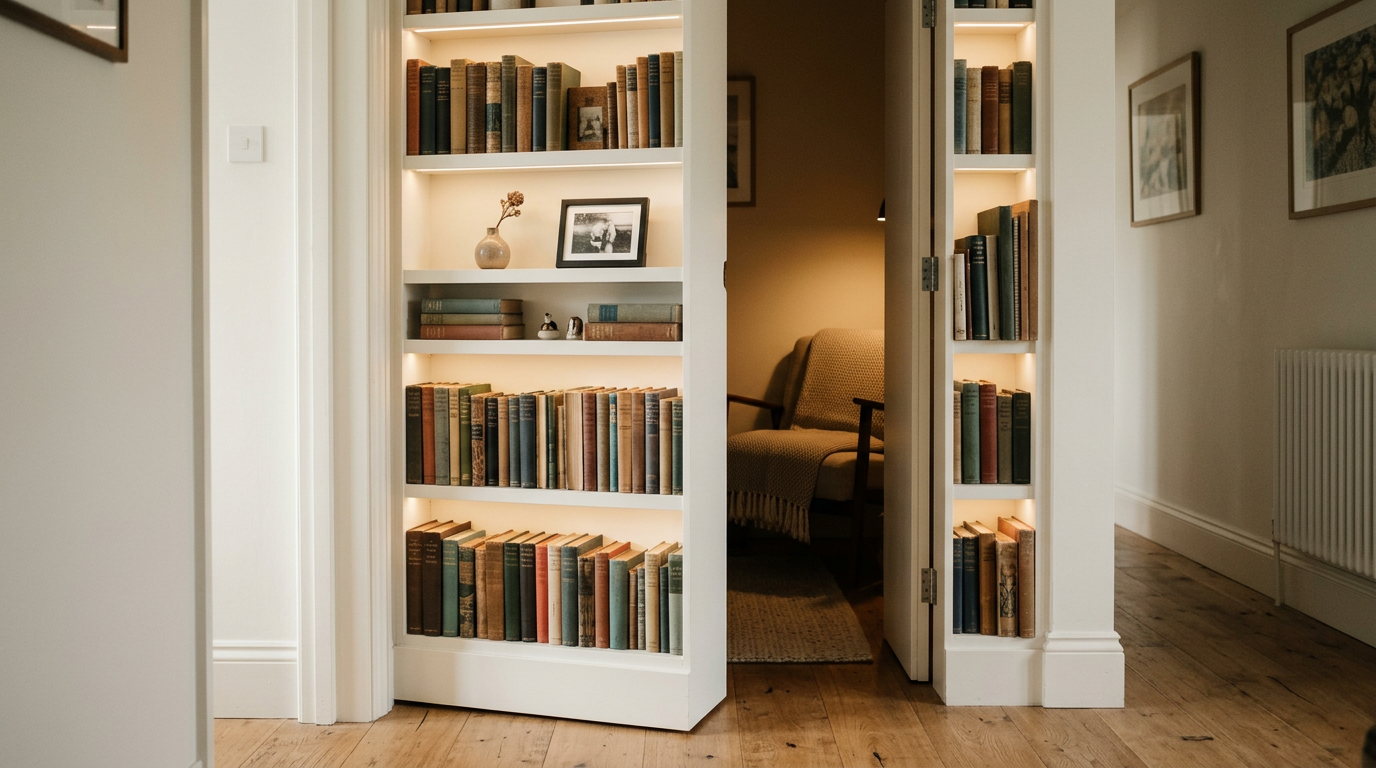
Good hidden bookcase door plans start with the doorway, the loaded weight, and a load-rated pivot hinge. Build a sturdy frame, leave a small gap for swing, and test the door with weight before you add books. Do that, and the door looks like furniture and works like a door.
I like these projects because they mix woodworking with a little theater. A normal bookshelf turns into a secret entrance. Few home upgrades get this many “wait, what?” reactions.
This guide gives you 7 DIY hidden bookcase door ideas. Each one explains the layout, hinge choice, and clearance in plain terms. Keep reading before you cut any wood.
What to Know Before You Start Hidden Bookcase Door Plans
A hidden bookcase door is a moving cabinet. It carries shelves, books, and hardware, so it weighs more than most people expect. Many guides put a loaded bookcase door between 150 and 300 pounds.
Start with the doorway. Many builds use doors about 30 to 36 inches wide and 80 to 84 inches tall. Measure your opening, then plan the swing and the clearance around it.
Safety matters here. A hidden door should not block an exit that your home needs. Check your local building codes, and ask a licensed pro if you plan to hide a bedroom or basement door.
| Planning Factor | Typical Range | Why It Matters |
|---|---|---|
| Door width | 30 to 36 inches | Matches a standard doorway |
| Door height | 80 to 84 inches | Fits a standard opening |
| Loaded weight | 150 to 300 pounds | Sets the hinge rating you need |
| Swing gap | About 6 to 12 mm total | Stops rubbing and sticking |
| Frame depth | Keep it shallow | Reduces the swing arc and clearance trouble |
1. Build a Center-Hung Pivot Bookcase Door
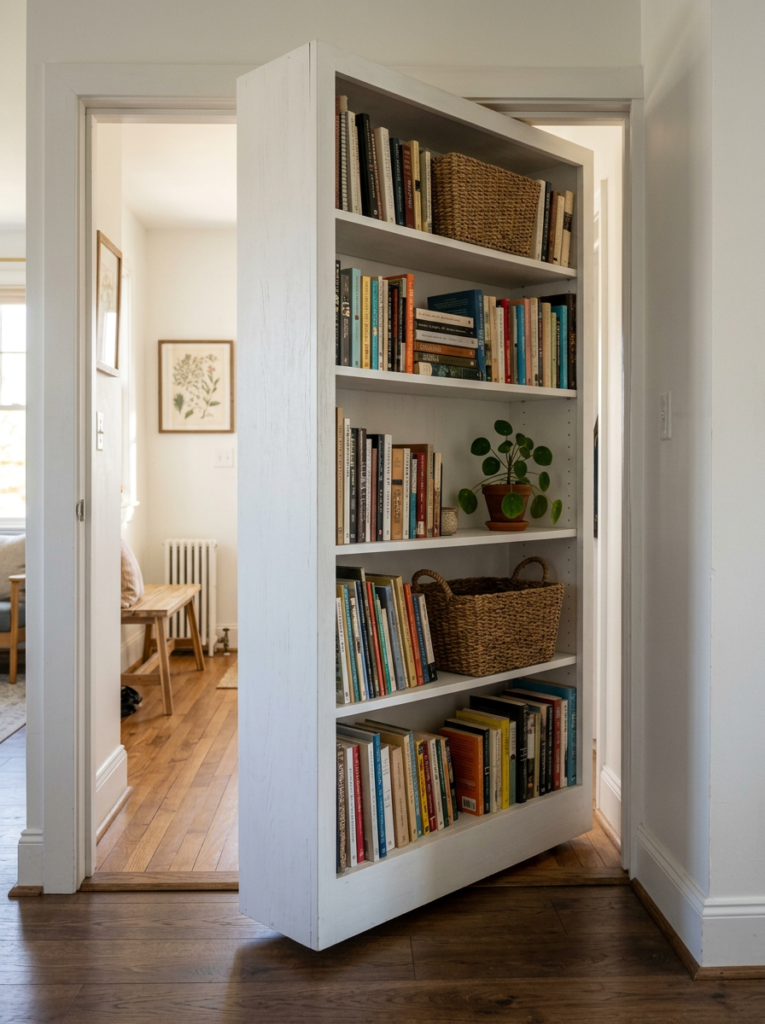
A center-hung pivot is one of the most popular hidden bookcase door plans. The pivot sits at the top and bottom of the case, so no hinge shows on the face. The door looks like a plain bookshelf.
Heavy pivots matter here. Some commercial pivot hinges list ratings up to 1,000 pounds, which gives a lot of room for a loaded case. Always match the hinge rating to the real weight of your finished door.
Set the pivot point carefully. Its position decides how far the case swings past the wall on each side. Draw the plan on paper first and test the swing arc before you cut anything.
2. Use Heavy-Duty Hinges for a Swing-Out Bookcase Door
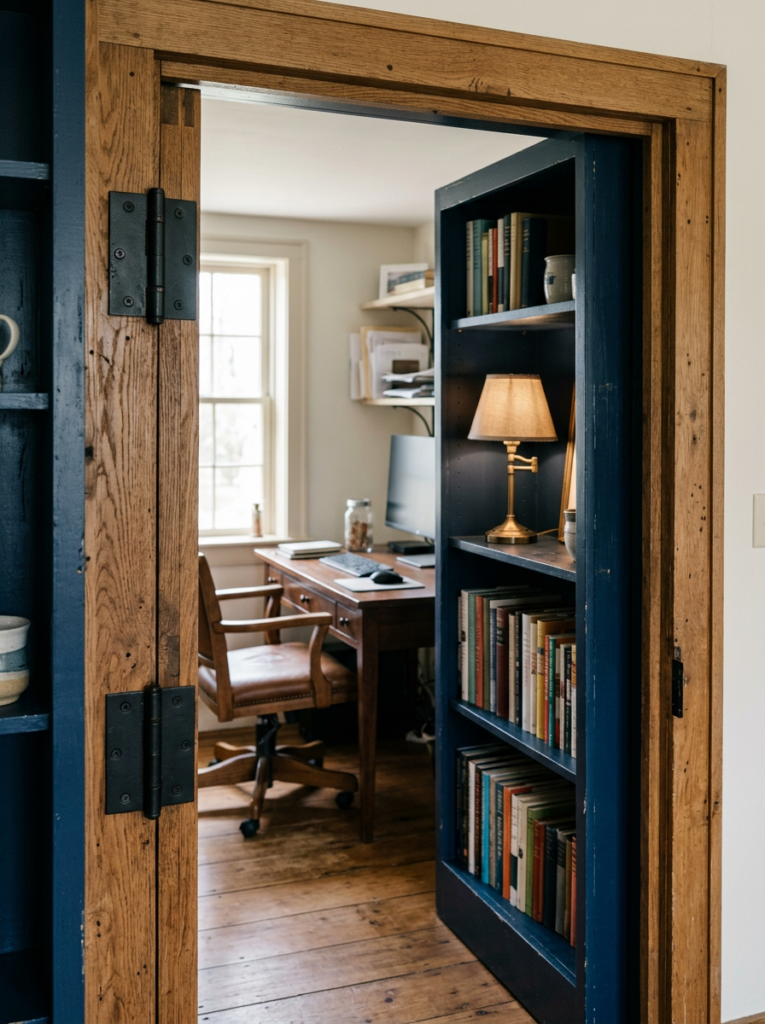
Heavy-duty butt hinges work for a simpler swing-out door. The bookcase hangs on one side and opens toward you. Many builders choose this plan because the hardware is easy to find.
The frame needs real strength behind it. Screw the hinges into solid framing, not drywall. A heavy door can sag over time if the structure behind it is weak.
Plan for adjustments. Hinges that you can tweak later save you from a lot of annoying fixes. A slightly loose fit now beats a stuck door next winter.
3. Plan a Swing-In Bookcase Door for a Small Hidden Room
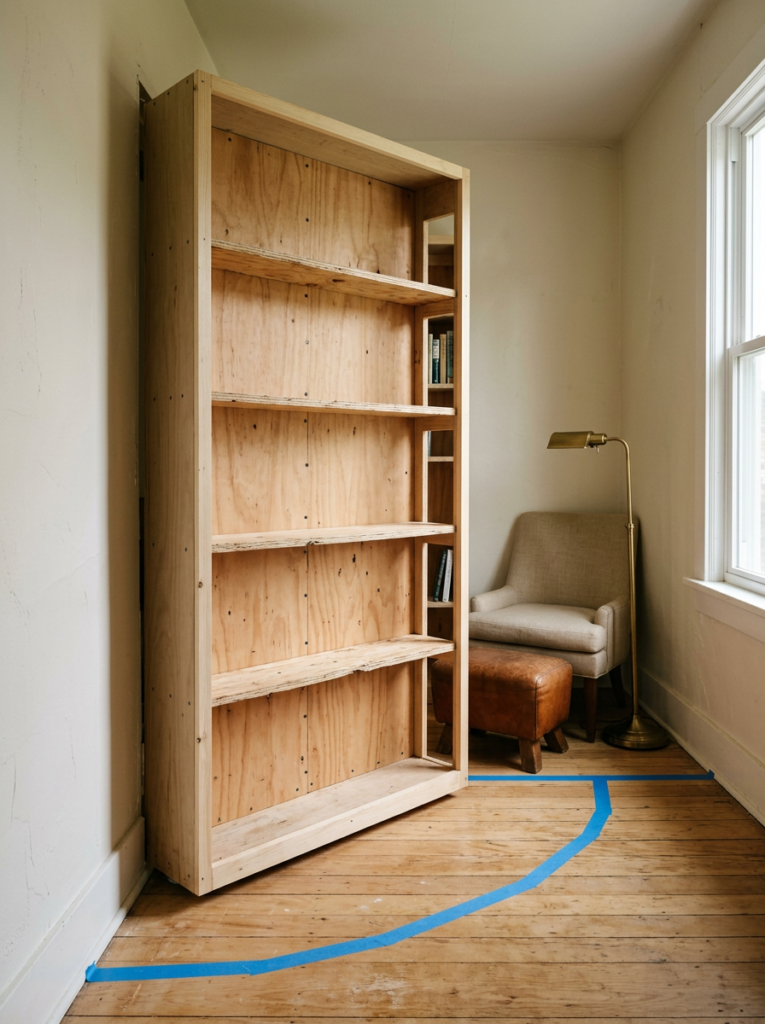
A swing-in door opens into the hidden room, not toward you. This plan keeps the bookcase flush with the outside wall. It suits closets, small offices, and tight hallways.
The tricky part is clearance. The hinge side and the latch side can both hit the nearby wall or the neighboring shelves. Builders often fix this with beveled edges or a stepped design.
Check the space inside the room before you commit. The open door needs somewhere to go. Mark the swing on the floor with tape and walk through it a few times.
4. Build a Light Plywood Frame to Control the Weight
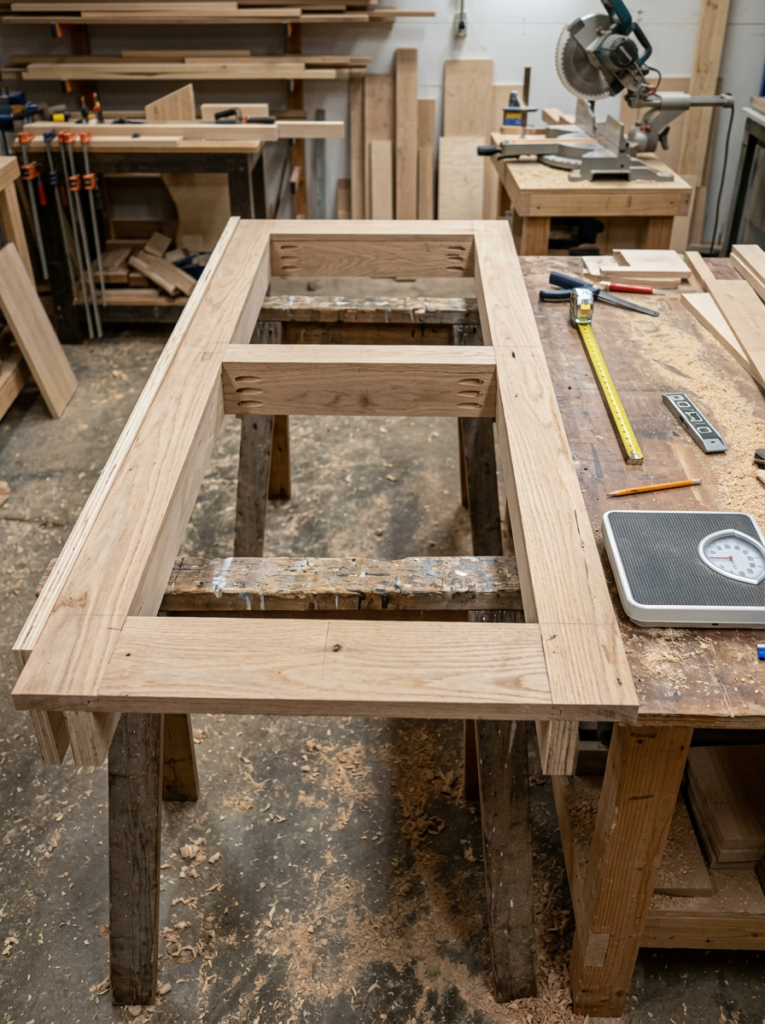
Weight decides how long your door lasts. A plywood carcass with solid wood stiles and rails keeps the frame stiff without adding too much extra weight. Many builders use this mix for that reason.
Plan the weight before you buy hardware. Add up the shelves, the door panels, the hinges, and the books. If you feel unsure, choose a hinge with a higher rating than the number you calculated.
Test the door in stages. Start with empty shelves, then add books little by little and watch how the pivot reacts. A door that swings smoothly with a light load can still sag when you stack it with hardcovers.
5. Keep the Case Shallow to Protect Swing Clearance
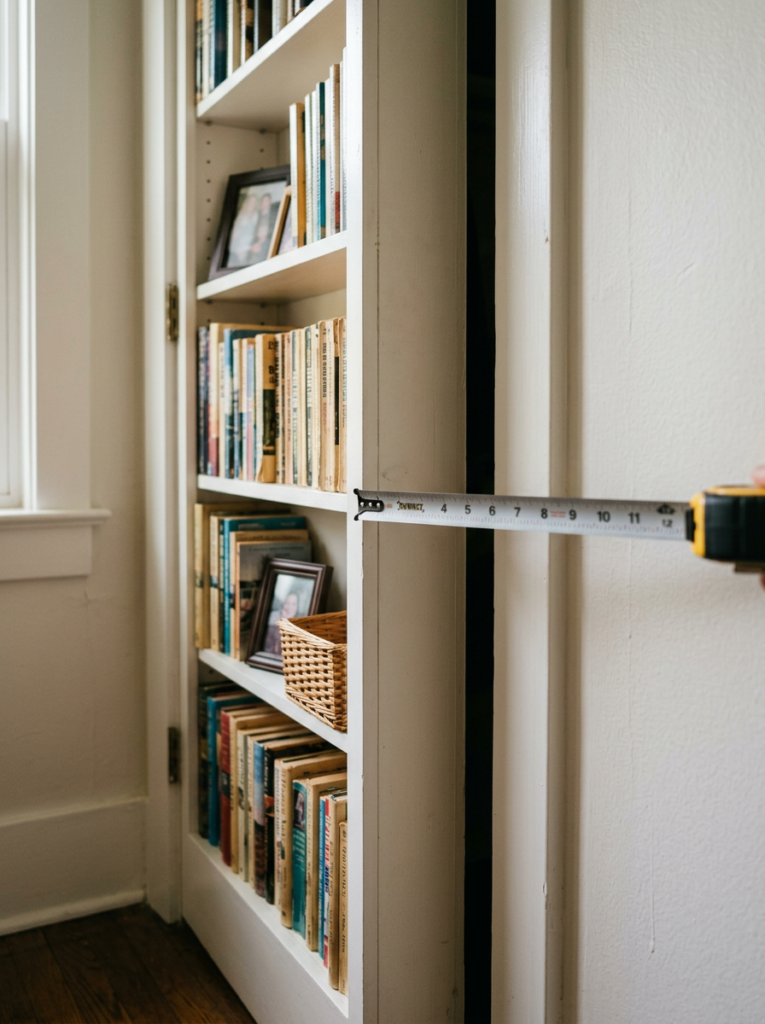
A shallow case swings with less trouble. One popular DIY plan keeps the total depth of the bookcase door at about 8 inches or less. This helps the case clear the doorway as it opens and closes.
Use the depth to your advantage. Shallow shelves hold paperbacks, framed photos, and small baskets well. They also look more like a normal built-in wall unit.
Leave a small gap around the edges. A total allowance of about 6 to 12 millimeters often works for smooth movement. Too tight, and the door rubs. Too loose, and the secret shows.
6. Add a Hidden Latch or Pull-Book Release

A hidden latch finishes the plan. One popular DIY option is a pull-book latch. You tug on a book, and the door releases. It feels like a movie, and I will not pretend otherwise.
Plan the latch before you add trim. The mechanism needs space inside the frame and a clear path for the release. Fixing it after the trim goes on takes much longer.
Think about daily use too. A door you open every day needs a latch that works without a struggle. A fun trick that jams on busy mornings loses its charm quickly.
7. Finish the Reveal With Trim, Paint, and Warm Lighting
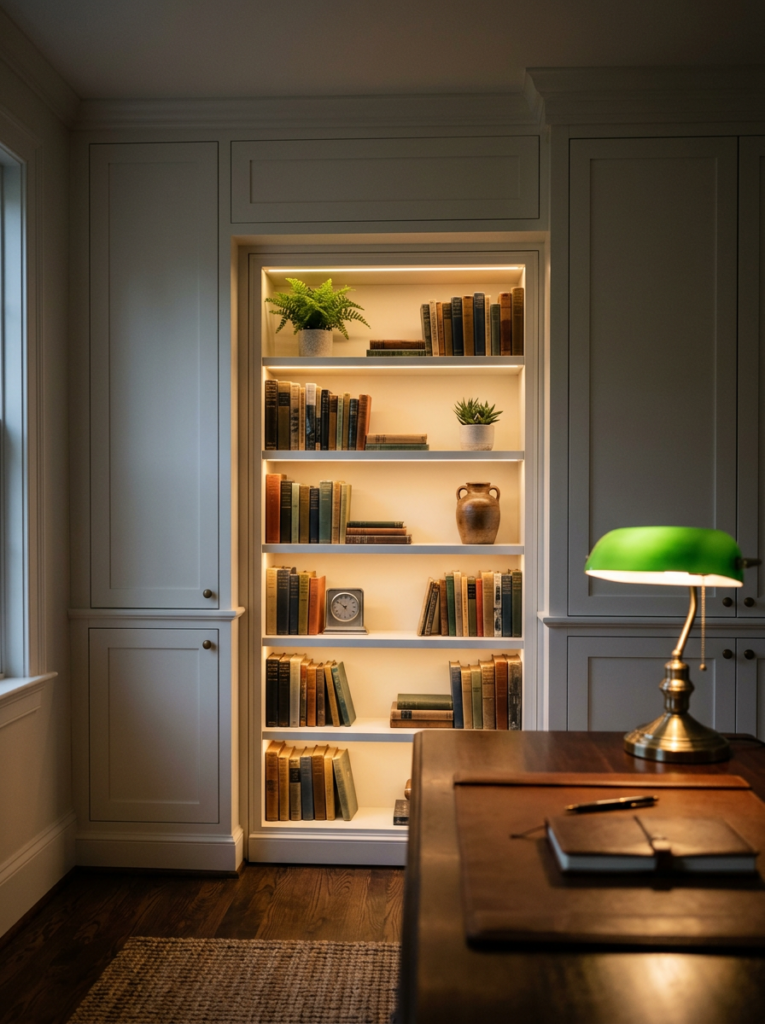
The finish decides whether the door stays hidden. A careful reveal, which is the narrow gap around the door, keeps the edges clean. A neat gap looks like a shelf joint, not a door.
Match the paint to the nearby walls and trim. Use the same color and sheen on the case and the surrounding built-ins. A small mismatch draws the eye right to the door.
Add warm lighting inside the shelves. Small LED strips make the books look cozy. The soft glow also hides the seam between the case and the wall.
5 Common Mistakes to Avoid With Hidden Bookcase Door Plans
Most hidden door problems come from weight and planning. The biggest mistake is picking hinges before you know the loaded weight. A door that looks great on paper can sag once you fill the shelves.
Another trap is forgetting safety and code rules. A hidden door should never block a required exit. Check your local building code before you hide a bedroom, basement, or other key door.
Here is a quick guide to the mistakes I would skip, with an easy fix for each.
| Mistake | Why It Hurts | Easy Fix |
|---|---|---|
| Choosing hinges too early | The door sags under real weight | Estimate the loaded weight first |
| Skipping a swing test | The case hits the wall or trim | Mark the arc and test it with tape |
| Hanging on weak framing | Screws pull loose over time | Anchor into solid framing or blocking |
| Blocking a required exit | Creates a safety and code problem | Check your local code before you build |
| Ignoring upkeep | Fasteners loosen and the door shifts | Check screws and hinges once a year |
Final Thoughts: Plan Your Hidden Bookcase Door With Care
Good hidden bookcase door plans start with the doorway, the loaded weight, and strong hardware. Choose a load-rated pivot or heavy-duty hinges, and keep the frame light and shallow. Test the swing before you add books, and check your local code before you hide any door.
The 7 ideas work as a simple checklist. Pick a center-hung pivot or heavy-duty hinges, then plan a swing-in layout if the room is tight. Control the weight with a light plywood frame, keep the case shallow, add a hidden latch, and finish the reveal with trim, paint, and warm lighting.
I would also watch for the common mistakes. Skip early hinge choices, weak framing, and skipped swing tests. Fix those, and your secret door works smoothly for years.
FAQs About Hidden Bookcase Door Plans
1. What hinge works best for a hidden bookcase door?
A load-rated pivot hinge is the most common choice, because it carries heavy weight and stays out of sight. Match the rating to the loaded door weight.
2. How much does a hidden bookcase door weigh?
Many guides put a loaded bookcase door between 150 and 300 pounds. Add up the shelves, door panels, hardware, and books. Choose hinges rated above that number.
3. What size should a hidden bookcase door be?
Many builds follow a standard doorway, about 30 to 36 inches wide and 80 to 84 inches tall. Measure your own opening before you cut any wood.
4. Can I use regular hinges on a bookcase door?
Heavy-duty butt hinges can work if the frame is strong and the hinges are rated for the load. For very heavy doors, a pivot hinge is often more dependable.
5. How much gap should I leave around the door?
A small total allowance of about 6 to 12 millimeters often works. Too tight, and the door rubs. Too loose, and the seam shows. Test the swing before you finish.
6. Is a hidden bookcase door legal?
Rules vary by area. A hidden door should never block a required exit. Check your local building code, and ask a licensed pro if the door leads to a bedroom or basement.
7. How do I keep a hidden bookcase door working well?
Check the screws and hinges once a year, and tighten anything that loosens. Lubricate the pivot or hinges as the maker suggests. Watch for sagging after seasonal changes.