
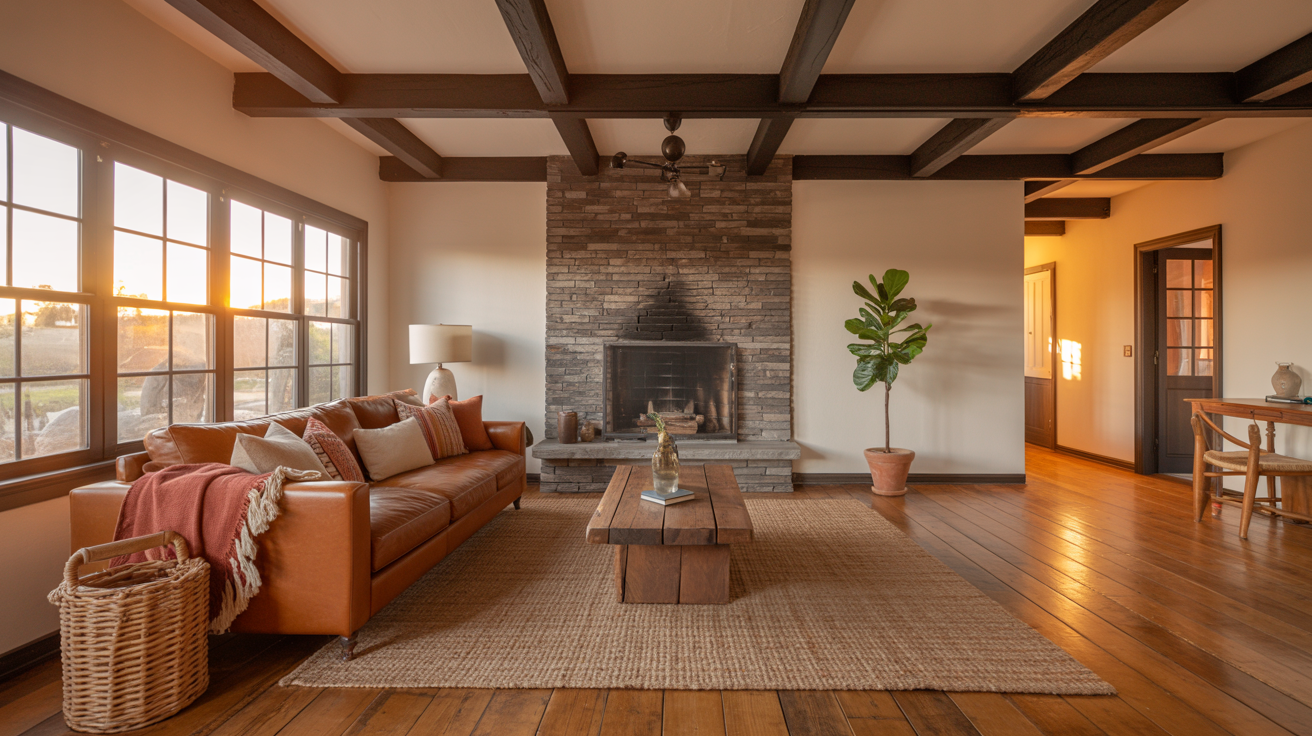
Ranch house decor hits differently from every other home style because it starts from a place of genuine comfort rather than architectural showmanship. There are no grand staircases to style, no double-height entryways to fill, and no pressure to make a dramatic first impression from above. What ranch house interiors do have is a relaxed, connected quality where every room flows naturally into the next and the whole home feels like one cohesive, welcoming space.
I have always appreciated ranch homes for the way they refuse to take themselves too seriously. The style grew out of a very practical American idea: build something low to the ground, spread it out across the lot, connect it to the outdoors, and make it genuinely comfortable to live in every single day. That philosophy translates directly into an interior decorating approach that prioritizes warmth, natural materials, and a sense of ease over formal elegance or trend-chasing.
The decorating opportunities in a ranch house are genuinely exciting once you understand what the architecture is asking for. Low ceilings become an asset when you use the right lighting and furniture scale. Open floor plans become stunning when you define zones with rugs, furniture arrangement, and thoughtful material choices. The ideas on this list cover every room and every budget with approaches that feel right at home in a single-story ranch layout.
Why Ranch House Interior Decor Deserves More Credit Than It Gets From the Modern Design World
Ranch house interior design has experienced a genuine comeback in recent years as more homeowners recognize the lifestyle advantages of single-story living and the decorating potential of the floor plan. Open layouts that connect the kitchen, dining, and living areas create a natural entertaining flow that two-story homes rarely achieve with the same ease. That connected quality is one of the defining strengths of ranch house decor when approached with intention.
The low rooflines and wide horizontal proportions of ranch architecture actually create a very forgiving environment for interior decorating. Furniture that would look small and lost in a double-height space looks perfectly proportioned and inviting in a ranch room with a standard eight or nine-foot ceiling. That human-scale quality makes ranch interiors feel genuinely comfortable and livable rather than impressive but cold.
Natural materials suit ranch house decor better than almost any other interior style because they reinforce the home’s inherent connection to the land and the outdoors. Wood, stone, leather, linen, and woven textures all belong naturally in a ranch interior in a way that feels earned rather than decoratively imposed. The material palette almost selects itself once you understand what the ranch house aesthetic is fundamentally about.
1. Exposed Wood Beam Ceilings That Add Height, Warmth, and Architectural Character to Ranch Rooms
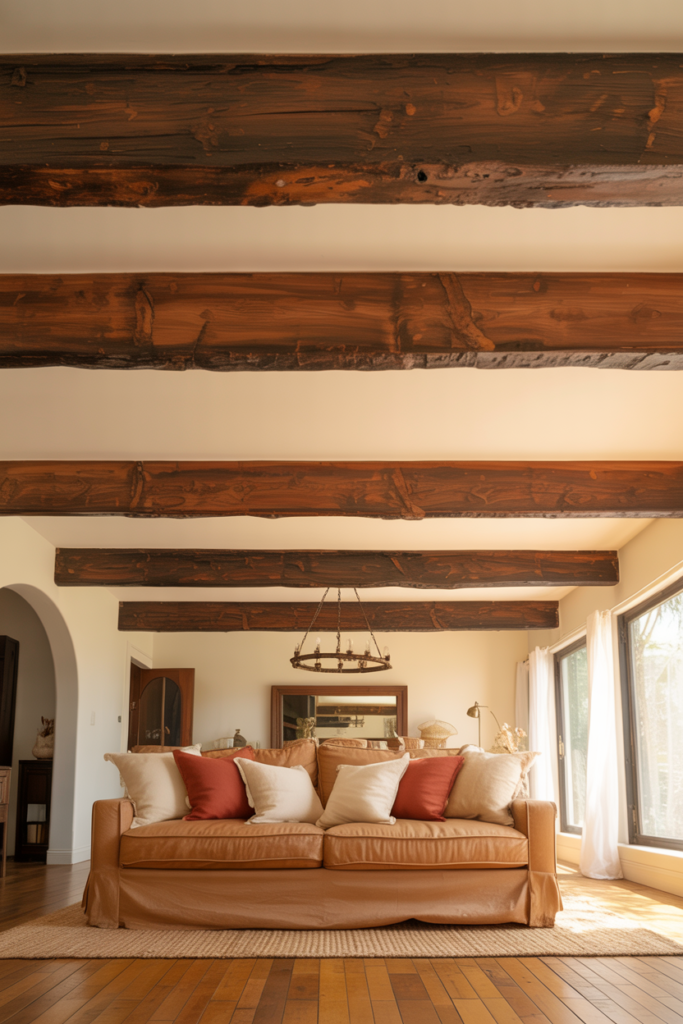
Exposed wood beams on a ranch house ceiling do more decorating work than almost any other single interior element in this style. They draw the eye upward in a room where the ceiling is already relatively low, which paradoxically makes the space feel taller and more substantial rather than compressed. Dark-stained beams against a white ceiling create dramatic contrast, while natural or whitewashed beams against a warm white ceiling create a softer, more relaxed farmhouse-influenced effect.
Real solid timber beams installed by a contractor create the most authentic result, but also carry the highest cost. Hollow faux wood beams made from high-density polyurethane are a widely used and genuinely convincing alternative that installs easily without structural modifications and costs a fraction of real timber. From a normal viewing distance in a finished room, the difference between real and faux beams is essentially undetectable, which makes the faux option a very reasonable choice for most ranch homeowners.
The beam spacing matters as much as the beam style for a result that looks intentional and properly scaled. Beams spaced too closely together look busy and heavy, while beams spaced too far apart look like an afterthought. A general rule of three to five beams across a standard ranch living room ceiling creates the proportion that reads as architecturally considered rather than randomly placed.
2. A Stone or Brick Fireplace Surround That Becomes the Natural Focal Point of the Ranch Living Room
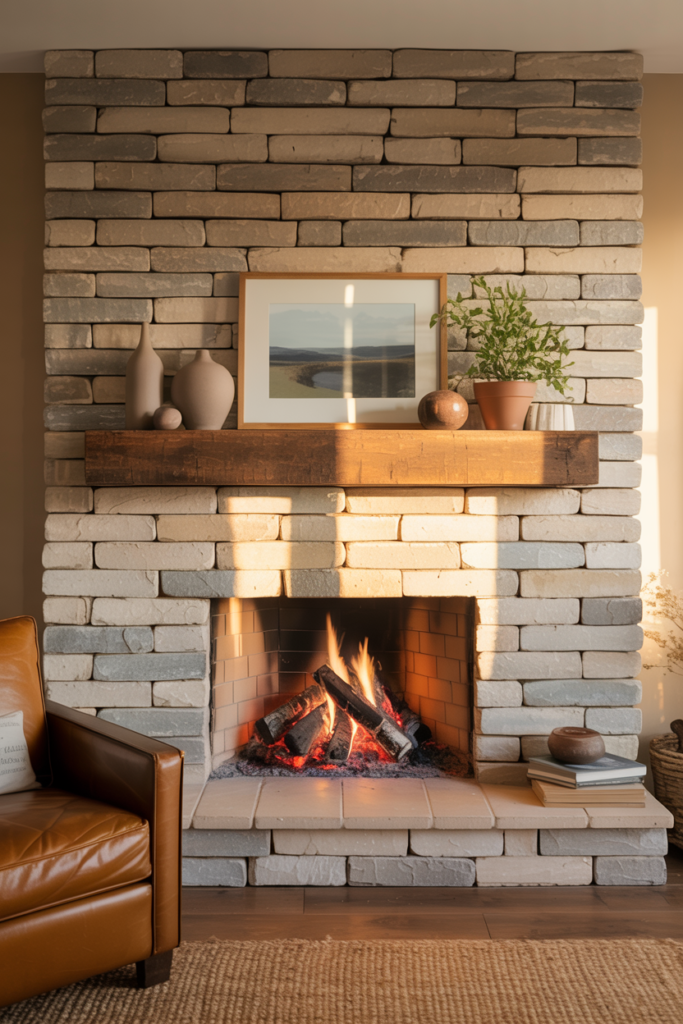
A stone or brick fireplace is arguably the single most impactful decor element in any ranch house living room, and the reason comes down to how naturally it suits the material palette and horizontal proportions of the style. A floor-to-ceiling stone surround on the main living room wall creates a vertical anchor that draws the eye upward and gives the low-ceilinged room a strong sense of structure and permanence. The natural texture of stone or brick also introduces that grounded, earthy quality that defines ranch house decor at its best.
Stacked stone surrounds in warm grey, cream, and tan tones suit the classic ranch aesthetic perfectly, while whitewashed brick creates a lighter, more transitional interpretation that bridges ranch style and modern farmhouse without fully committing to either. River rock surrounds carry a more organic, naturalistic quality that suits ranch homes in wooded or mountainous settings particularly well. The choice of stone shapes the entire personality of the living room, so it deserves careful consideration in relation to the surrounding flooring, furniture, and wall color.
A wide timber mantel shelf above the fireplace opening adds warmth and gives you a natural display surface for meaningful objects, seasonal decor, and framed artwork. Reclaimed timber mantels with visible saw marks, nail holes, and natural weathering suit the ranch aesthetic more authentically than smooth painted MDF versions and cost surprisingly little when sourced from salvage yards or online reclaimed wood suppliers.
3. Warm Earthy Wall Colors That Make Ranch House Rooms Feel Cozy, Grounded, and Intentionally Styled
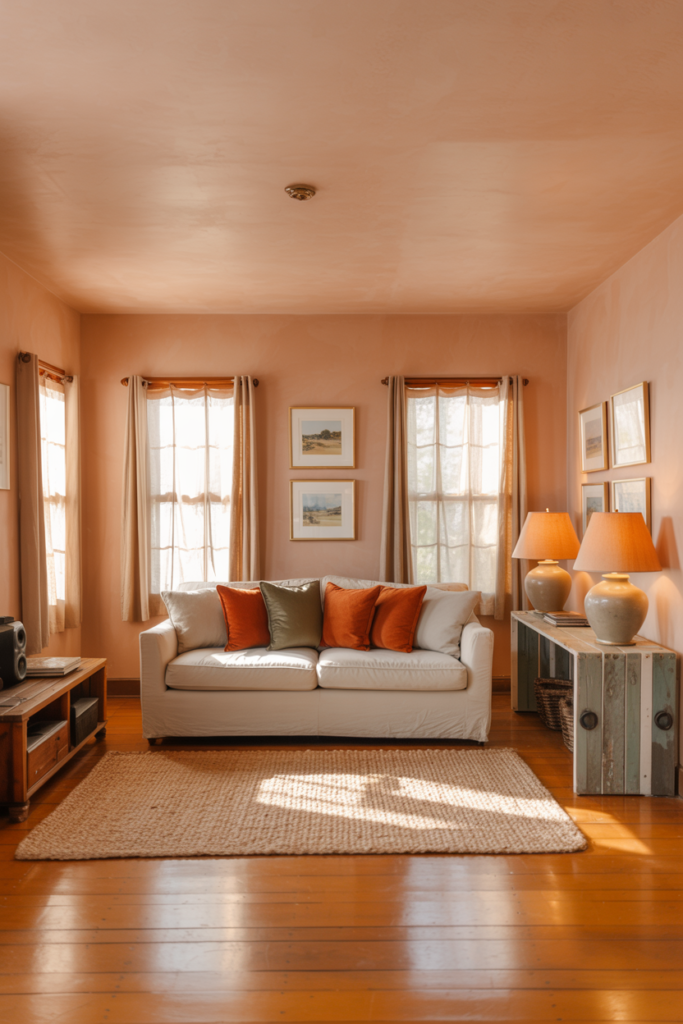
Wall color does more to establish the overall mood of a ranch house interior than almost any other decorating decision, and the color choices that work best in this style lean consistently toward warm, earthy, and grounded tones. Terracotta, warm sand, dusty sage, adobe clay, and deep ochre all suit ranch interiors beautifully because they reinforce the home’s connection to the natural landscape rather than working against it. These colors make low ceilings feel intentional and cozy rather than limiting.
Painting the ceiling a slightly lighter version of the wall color rather than a stark white creates a wrapped, enveloping quality in ranch rooms that feels genuinely warm and considered. This approach works particularly well in bedrooms and living rooms where a sense of enclosure and comfort is more desirable than the crisp contrast of white ceilings against colored walls. The tonal ceiling color also makes the room feel taller rather than shorter, which is a counterintuitive but consistently reliable decorating trick.
Accent walls in a ranch house work best on the fireplace wall or the wall directly behind the main sofa, rather than on a side wall where they feel disconnected from the room’s focal point. A deep terracotta or warm adobe accent wall behind a natural linen sofa with leather throw pillows creates a color story that feels completely at home in a ranch interior without requiring any other major decorating changes to the surrounding space.
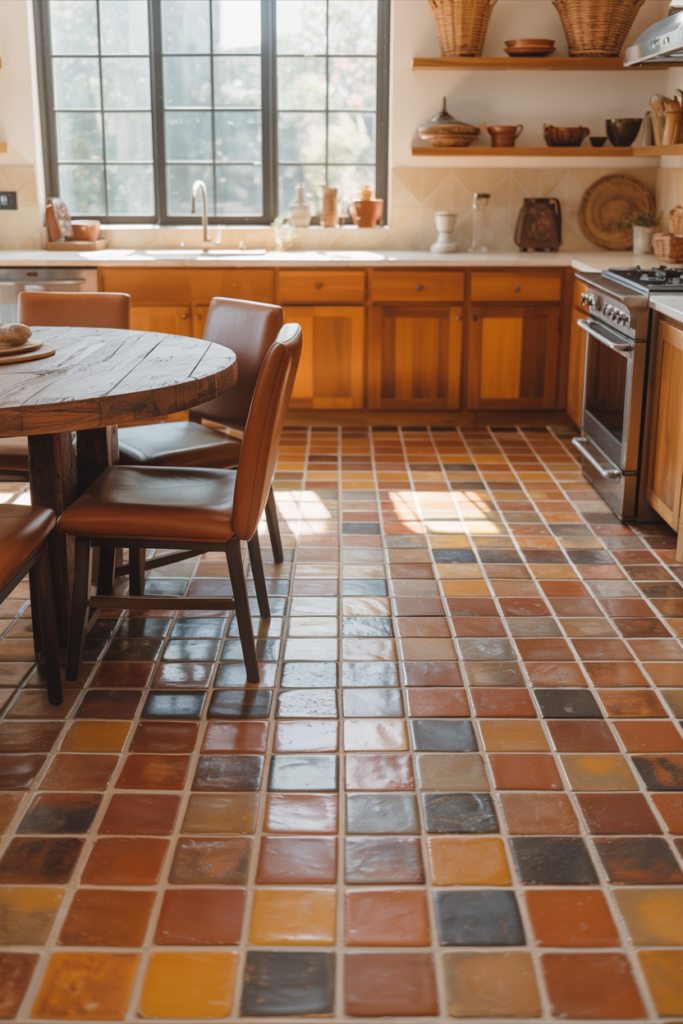
4. Saltillo or Terracotta Tile Flooring That Grounds a Ranch House Interior With Warmth and Texture
Saltillo tile and terracotta floor tiles are practically synonymous with classic ranch house decor, and their enduring popularity in this style comes from how naturally they suit both the material palette and the indoor-outdoor lifestyle that ranch homes are built around. The warm orange-brown tones of unsealed or lightly sealed terracotta tiles connect the interior floor visually to the natural earth tones of the surrounding landscape in a way that no manufactured flooring material quite replicates. The slight variation in color and texture between individual tiles adds a handmade quality that gives the floor genuine character.
Saltillo tiles work best in ranch homes in warmer climates, where the thermal mass of the clay helps keep interior temperatures comfortable through hot afternoons. In cooler climates, terracotta-look porcelain tiles deliver the same visual warmth and earthy quality with better moisture resistance and significantly easier maintenance than authentic clay tile. The porcelain option also handles radiant floor heating systems better than natural clay, which makes it the smarter practical choice for ranch homes in northern states.
Sealing authentic terracotta or Saltillo tiles with a penetrating natural finish rather than a high-gloss topcoat preserves the matte, earthy quality that makes these floors so visually appealing in a ranch interior. A glossy, sealed terracotta floor loses most of its handmade character and starts to look more like a commercial kitchen than a warm residential space, so the sealer choice matters almost as much as the tile selection itself.
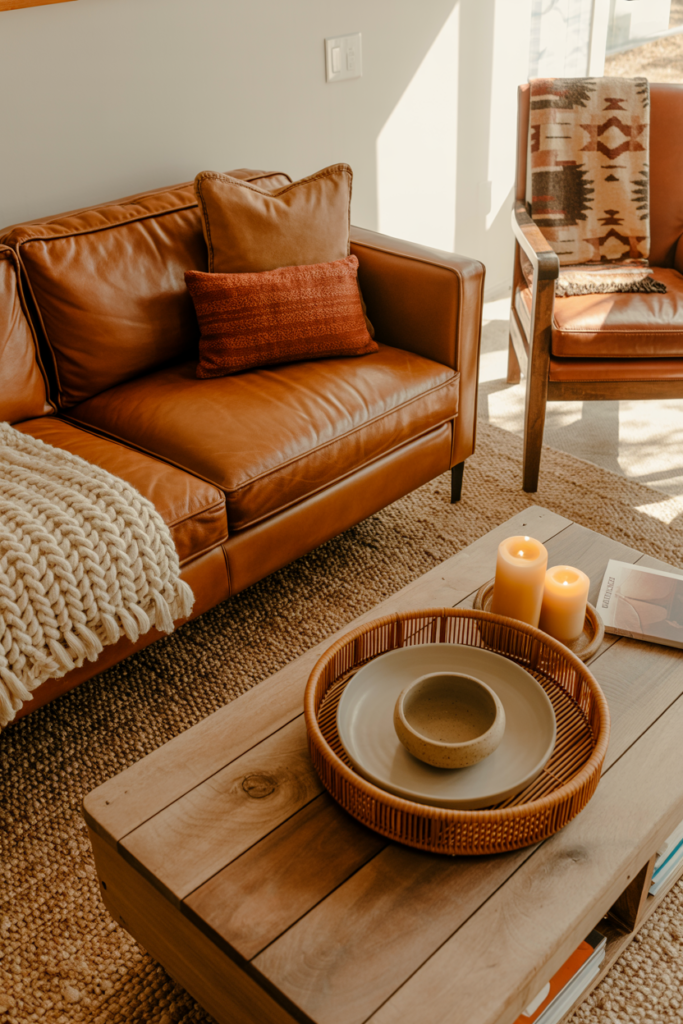
5. Leather Furniture and Woven Textile Accents That Balance Ranch House Living Rooms With Comfort and Character
Leather furniture belongs in a ranch house living room, the way a wood-burning fireplace belongs on the main wall: completely, naturally, and without any need for justification. A leather sofa or pair of leather armchairs in a warm cognac, saddle tan, or aged brown tone suits the ranch aesthetic at a fundamental material level and improves with age in a way that fabric upholstery rarely manages. The natural patina that develops on quality leather over the years of use adds character that new furniture simply does not have.
Balancing leather furniture with woven textile accents prevents the living room from feeling hard or cold despite the inherently firm quality of the material. Chunky knit throws draped over leather sofa arms, a large jute or wool area rug anchoring the seating arrangement, linen or cotton throw pillows in warm neutral tones, and a woven rattan coffee table tray all add softness and texture that work with the leather rather than competing against it. That balance of hard and soft, smooth and textured, is what gives ranch living rooms their characteristic layered comfort.
Choosing leather furniture in a distressed or pull-up finish rather than a smooth uniform grain suits the ranch aesthetic more authentically because the natural variation and slight imperfection in the leather surface reinforce the handcrafted, lived-in quality that defines the style. Pull-up leather darkens where it bends and lightens where it stretches, creating a constantly evolving patina that makes each piece genuinely unique over time.
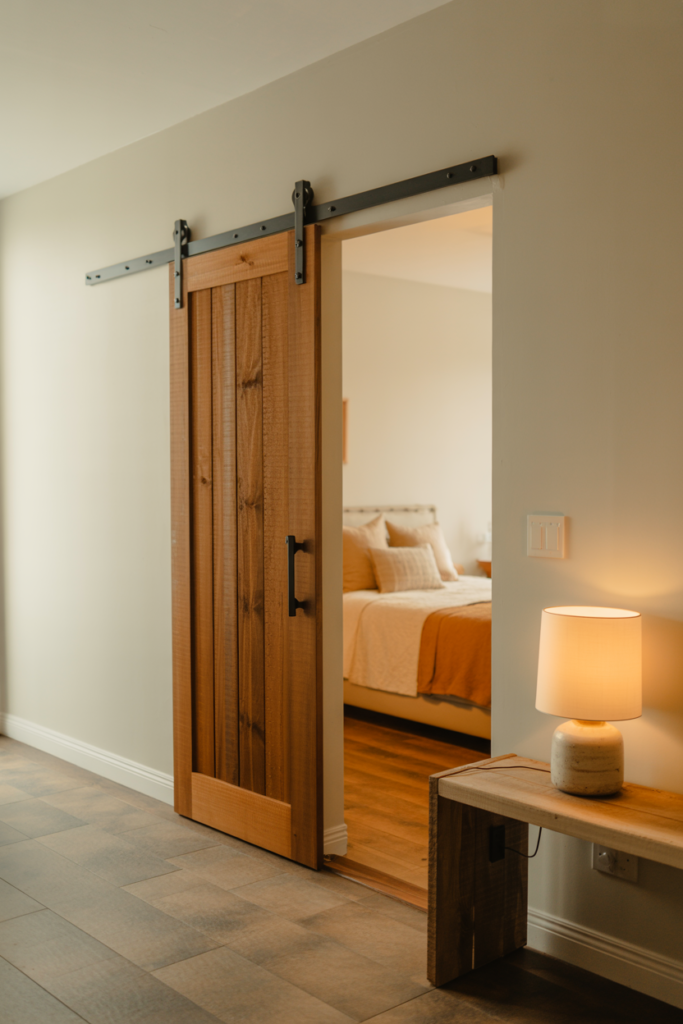
6. Sliding Barn Doors That Add Rustic Functionality and Ranch Style Character to Interior Doorways
A sliding barn door is one of those ranch house decor additions that looks like a purely aesthetic choice until you live with one and realize how much practical sense it makes in a single-story floor plan. Ranch homes often have wide hallways and open transitional spaces where a swinging door eats into usable floor area in a way that a sliding barn door eliminates. The hardware stays visible and intentional rather than hidden, which adds a decorative element to what is otherwise a purely functional building component.
Wood barn doors in a natural stained finish suit classic and rustic ranch interiors, while painted barn doors in a contrasting color suit more contemporary ranch interpretations that want the sliding door functionality without the heavy rustic aesthetic. A white painted barn door with simple black strap hardware against a warm grey wall creates a clean, modern farmhouse effect that works beautifully in ranch homes with updated kitchens and bathrooms. The hardware style drives the overall look as much as the door material itself, so choosing the track and strap style deliberately rather than defaulting to whatever comes in the hardware kit matters.
Barn doors work particularly well in ranch homes as bathroom entries, bedroom closet covers, laundry room doors, and home office dividers, where the space-saving slide function delivers the most practical benefit. Installing a barn door on a visible hallway wall where it stays partially open most of the time also gives you a permanent decorative element in that space, rather than a door that disappears into a frame when not in use.
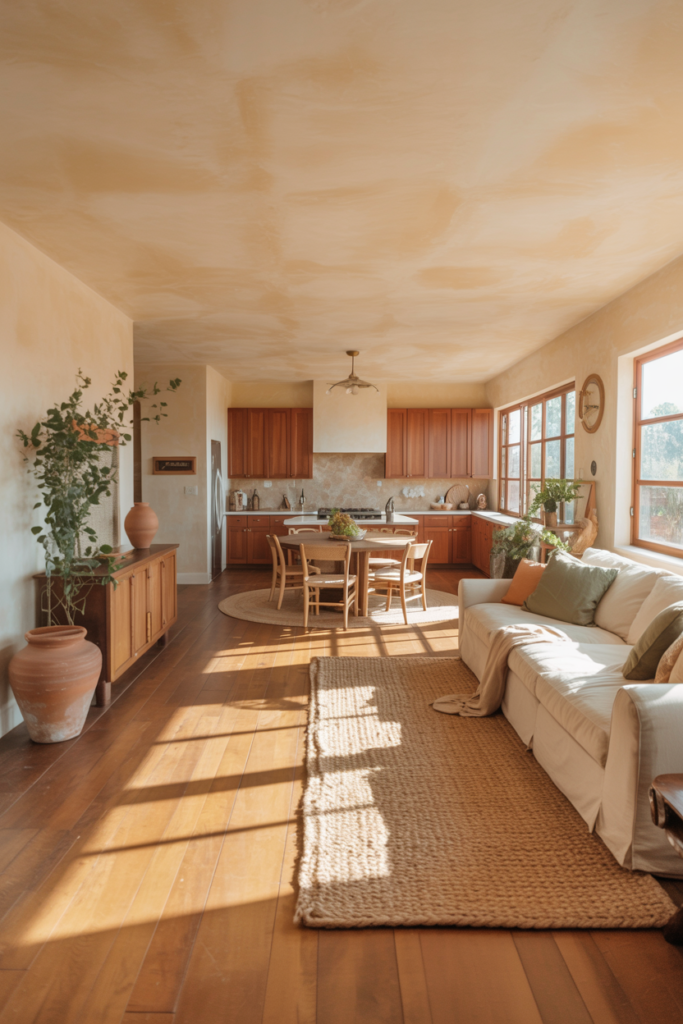
7. A Neutral and Warm Color Palette Throughout the Open Floor Plan That Creates Visual Cohesion Across Every Room
One of the most common decorating challenges in a ranch house is maintaining visual cohesion across an open floor plan where the kitchen, dining area, and living room all share the same sightline. A consistent warm neutral color palette across all three zones solves this problem more effectively than any other single decorating decision. When the wall colors, flooring, and major furniture pieces share a family of warm undertones, the open space reads as one intentionally designed interior rather than three separate rooms competing for attention.
Warm whites, creamy off-whites, warm greiges, and soft sand tones all work well as the primary wall color across a ranch open floor plan. The key is choosing colors with warm rather than cool undertones throughout, so the palette stays cohesive even when the light shifts across different times of day. A wall color that looks warm and inviting in morning light but turns grey and cool in the afternoon undermines the ranch aesthetic, regardless of how well everything else in the space is styled.
Introducing color through accessories, textiles, and artwork rather than through wall color gives the open ranch floor plan the visual interest it needs without disrupting the overall sense of cohesion. A terracotta ceramic lamp, a set of sage green linen throw pillows, a collection of warm-toned framed botanical prints, and a rust-colored woven area rug all add color and personality to the space while the neutral wall palette holds everything together calmly behind them.
8. Large Indoor Plants and Organic Greenery That Connect the Ranch House Interior to the Natural Landscape Outside
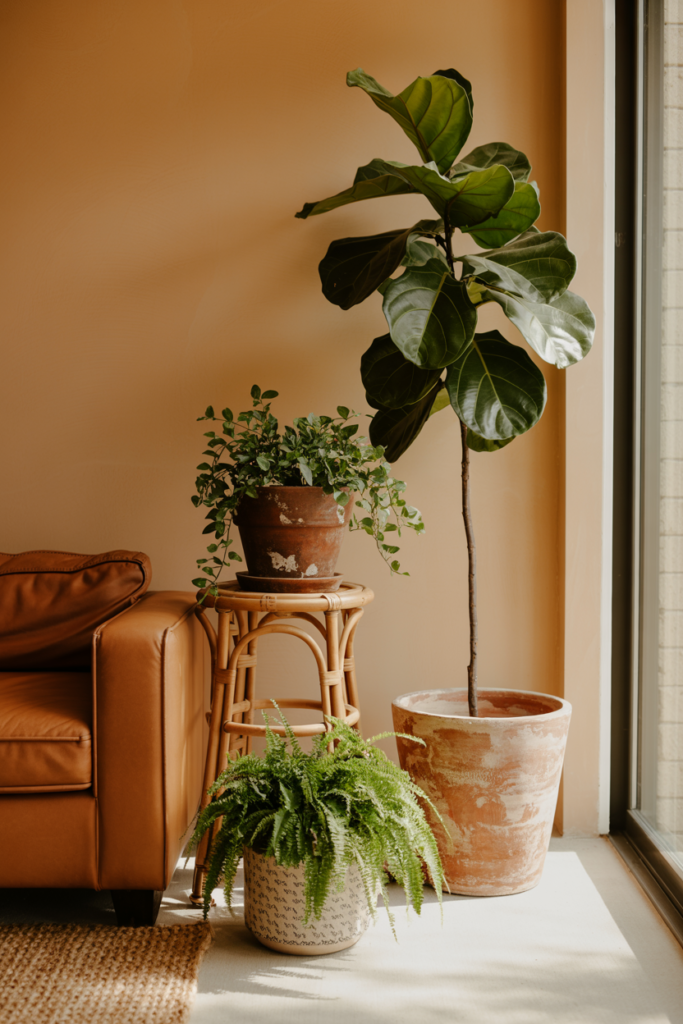
Large indoor plants suit ranch house interiors better than almost any other home style because they reinforce the fundamental connection between inside and outside that ranch architecture is built around. A large fiddle leaf fig, a sprawling monstera, a tall snake plant cluster, or a statement olive tree in a terracotta pot adds a living, breathing organic element to ranch rooms that no amount of styled accessories can replicate. The scale of large plants also suits ranch proportions naturally because they fill vertical space without overwhelming the relatively modest ceiling height.
Grouping plants of different heights and leaf textures in a corner of the living room or beside a large window creates a natural vignette that looks lush and intentional rather than like a single houseplant sitting awkwardly in a corner. Mixing a tall architectural plant like a snake plant or bird of paradise with a mid-height trailing plant like a pothos and a low-growing textural plant like a fern creates a layered plant arrangement that has genuine visual depth and movement.
Terracotta pots suit ranch house plant styling more naturally than any other container material because they share the earthy, warm material palette that defines the style. Varying the pot sizes and grouping them in odd numbers creates an arrangement that looks collected and personal rather than matchy and retail-ready. Worn or slightly imperfect terracotta pots with natural mineral staining on the exterior actually look better in ranch interiors than pristine new ones because the aged quality fits the aesthetic more authentically.
9. Woven Jute and Wool Area Rugs That Define Zones and Add Texture to Ranch House Open Floor Plans
A large area rug is one of the most important decorating tools in a ranch house open floor plan because it defines the living zone visually within a space that has no walls to create boundaries. A well-chosen rug under the main seating arrangement anchors the furniture grouping, adds warmth underfoot, and introduces texture and pattern to a space that might otherwise feel flat and undefined. The rug essentially creates the room within the room, which is exactly what an open ranch floor plan needs to feel organized and intentional.
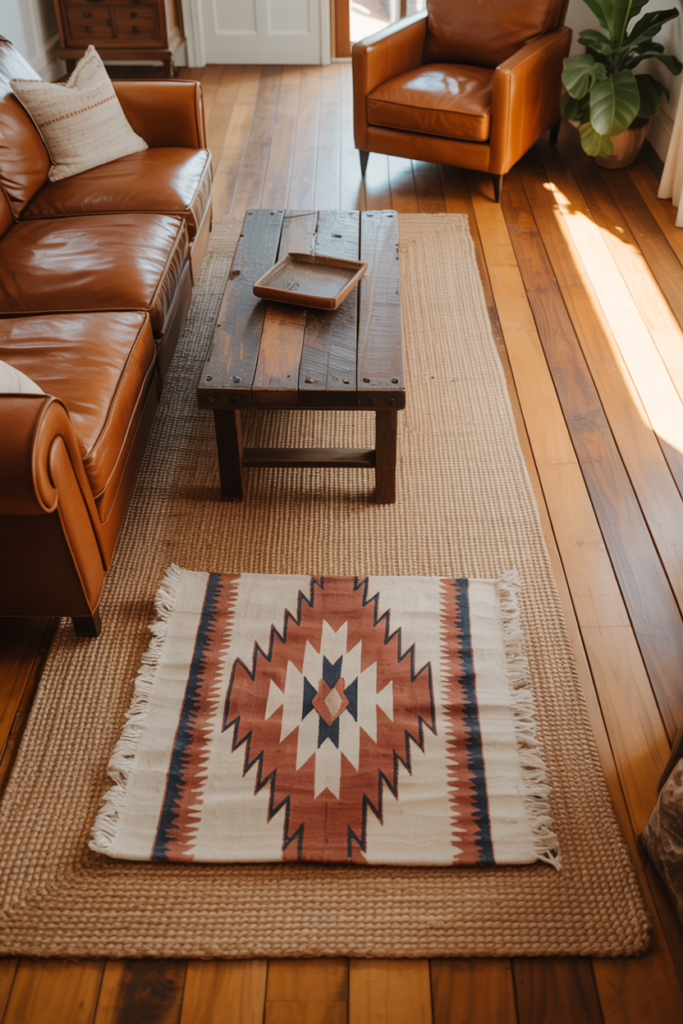
Jute rugs suit ranch house decor at a fundamental material level because the natural fiber, warm honey tone, and woven texture all belong within the earthy, organic palette that defines the style. A large jute rug under a leather sofa grouping with a reclaimed wood coffee table creates a material combination that feels completely right in a ranch interior without requiring any additional decorating justification. The slightly rough texture of jute also adds a tactile quality that smooth flooring materials like tile and hardwood can’t provide on their own.
Layering a smaller patterned wool rug over a larger jute base rug adds visual complexity and warmth that a single rug rarely achieves in a large open ranch living space. A Southwestern-influenced geometric wool rug in terracotta, cream, and navy tones layered over a natural jute base creates a floor treatment that references the regional heritage of ranch style while keeping the overall palette warm and cohesive. The layered rug approach also makes a large floor area feel more residential and furnished rather than empty and echoing.
10. Reclaimed Wood Furniture and Accents That Bring Authentic Ranch Character Into Every Room of the Home
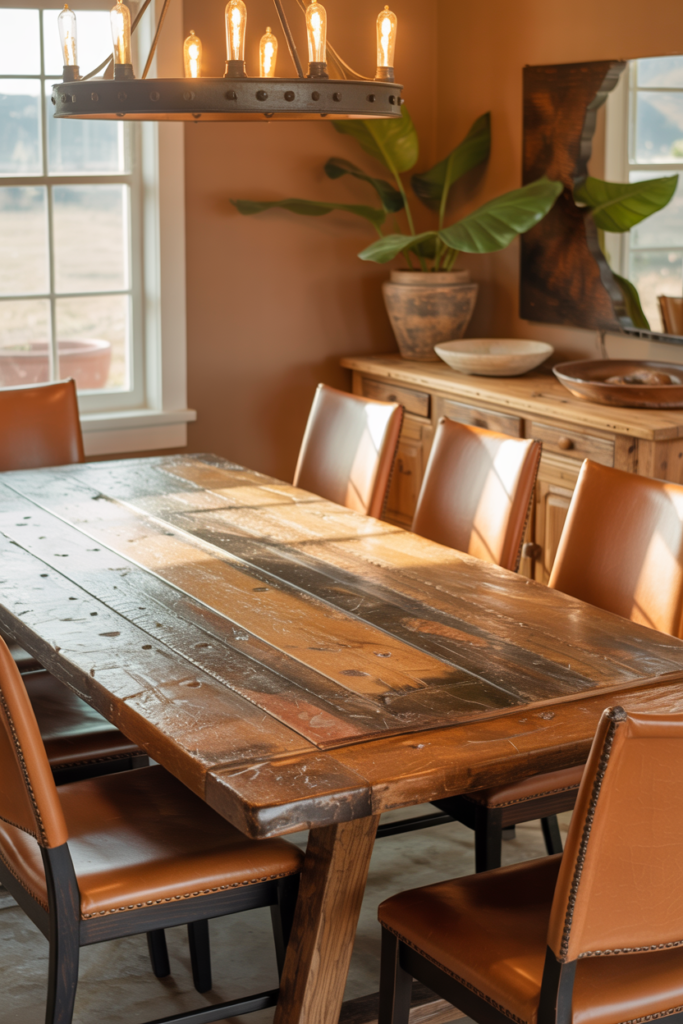
Reclaimed wood furniture suits ranch house decor so naturally that it almost feels like the style was designed specifically to showcase it. A reclaimed timber dining table with visible saw marks, nail holes, and natural color variation becomes an immediate focal point in a ranch dining room and brings a history and character to the space that no new furniture purchase can replicate, regardless of price. The table tells a story before anyone sits down at it, which is exactly the quality that makes ranch interiors feel genuine rather than decorated.
Sourcing reclaimed wood furniture from local salvage dealers, antique markets, and small-batch furniture makers who work with reclaimed timber keeps the pieces authentic and often produces better quality than mass-produced alternatives. A solid reclaimed oak console table in the entryway, a rough-hewn timber coffee table in the living room, and a reclaimed pine sideboard in the dining room create a connected material thread through the entire ranch home that feels cohesive without being matchy. Each piece looks slightly different because each comes from a different source of timber, which is precisely what makes the collection feel collected rather than purchased as a set.
Mixing reclaimed wood with other natural materials like leather, stone, linen, and wrought iron keeps the ranch interior from feeling like a lumber yard showroom. The wood pieces ground the space and provide warmth, while the other natural materials add variety in texture, weight, and visual temperature that prevents any single material from dominating the overall palette.
11. Wrought Iron Light Fixtures and Hardware That Add Ranch-Style Detail to Ceilings, Walls, and Cabinets
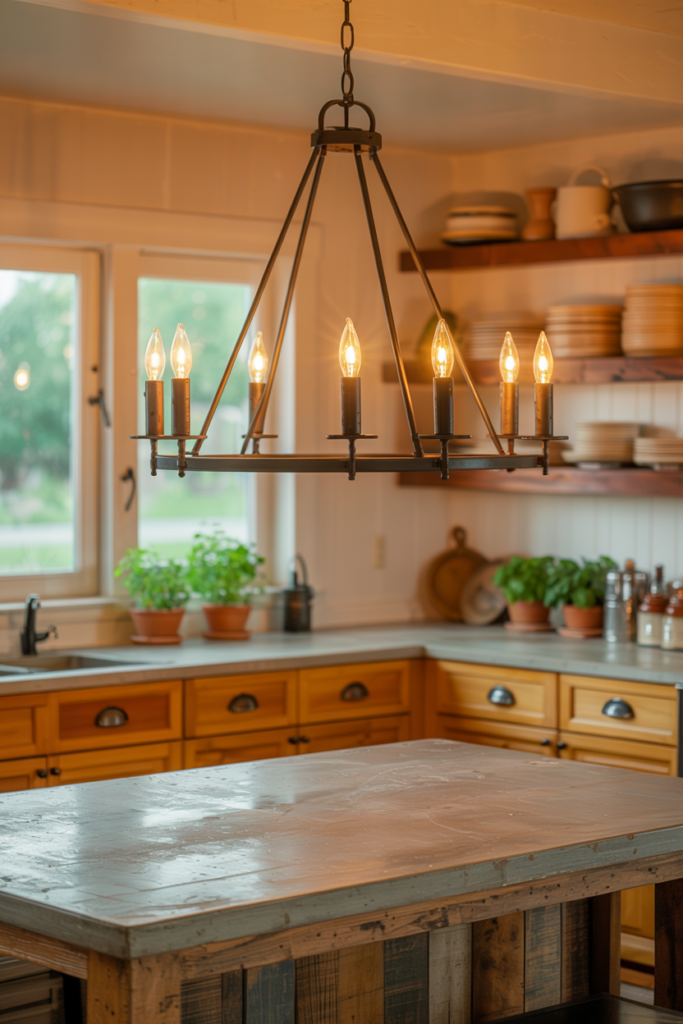
Wrought iron light fixtures are one of the most reliable ranch house decor upgrades because they add visual weight, period-appropriate character, and a handcrafted quality to rooms that might otherwise feel generic and builder-standard. A wrought iron chandelier above a reclaimed wood dining table creates an immediate focal point that reads as genuinely curated rather than catalog-standard. The dark metal tone also works as a consistent accent color that ties together hardware, light fixtures, and decorative accessories across different rooms without requiring a formal decorating scheme.
Replacing builder-grade brass or chrome cabinet hardware in a ranch house kitchen with wrought iron or oil-rubbed bronze pulls and knobs is one of the fastest and most affordable ranch house decor upgrades available. The hardware change alone shifts the kitchen’s character significantly without requiring new cabinets, new countertops, or any other major renovation work. A simple hardware swap on a standard white or cream kitchen cabinet set transforms the whole room’s personality in a single afternoon.
Wrought iron curtain rods, door handles, towel bars, and light switch plates all contribute to the cohesive material story in a ranch interior when chosen in a consistent finish across rooms. These small hardware details accumulate into a home that feels considered from floor to ceiling rather than one where the main furniture pieces got attention, and everything else stayed builder-standard.
12. Southwestern and Native American-Inspired Textiles That Add Color and Cultural Richness to Ranch Interiors
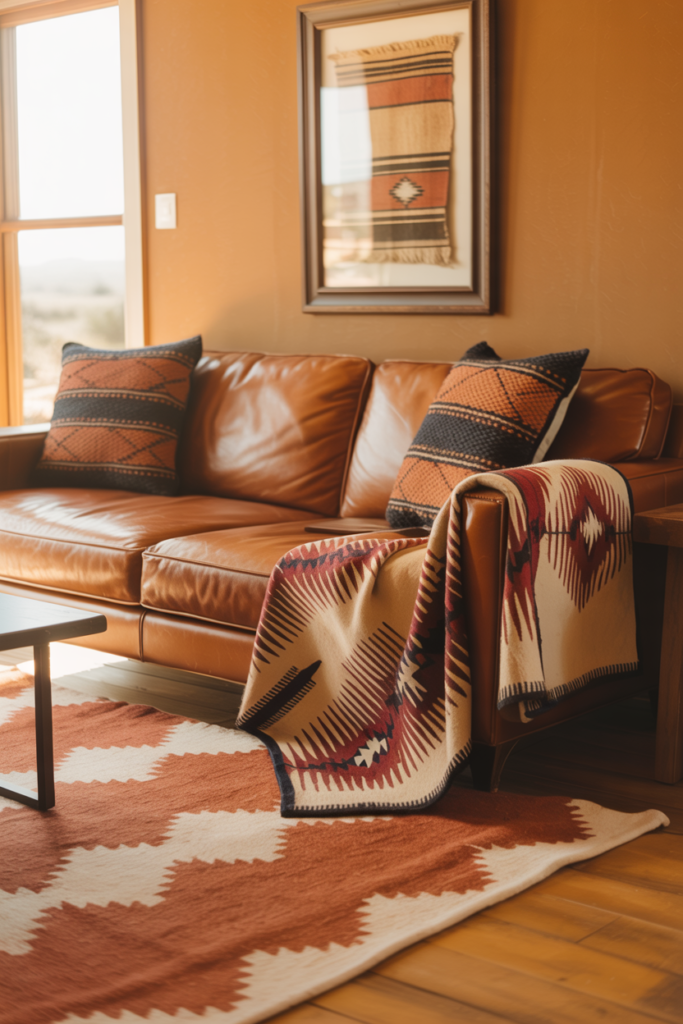
Southwestern-inspired textiles bring a distinctive color energy and cultural richness to ranch house interiors that no other decorating style quite replicates. Blankets, throw pillows, area rugs, and wall textiles in geometric Navajo-inspired patterns with terracotta, turquoise, cream, and deep red tones add warmth and visual complexity to ranch rooms without overwhelming the earthy neutral palette that forms the foundation of the style. These textiles reference the regional heritage of ranch architecture in a way that feels authentic rather than superficially themed.
Authentic Navajo woven blankets and rugs from Indigenous artisans and reputable dealers carry historical and cultural significance that mass-produced Southwestern-print alternatives simply do not possess. Choosing authentic pieces when possible adds genuine value to the collection and supports the communities and craft traditions that created these textile forms. When authentic pieces fall outside the budget, looking for textiles made by small independent weavers using traditional techniques produces a better result than buying mass-produced fast-fashion versions of the pattern.
Using Southwestern textiles as accents within an otherwise neutral ranch interior keeps the look balanced and respectful rather than themed and costume-like. A single Navajo-inspired geometric throw blanket on a leather sofa, one bold area rug in a traditional pattern, or a framed vintage textile panel on the wall each introduces the cultural reference with restraint and intention rather than overwhelming the space with a single aesthetic reference repeated on every surface.
How to Approach Ranch House Decor in a Way That Feels Personal, Cohesive, and Genuinely Comfortable to Live In
Ranch house decorating works best when it builds from the architecture outward rather than imposing a predetermined style onto the existing floor plan. Starting with the fixed elements like flooring, ceiling height, window placement, and fireplace position gives you a clear picture of what the house is already asking for before any furniture or accessories enter the conversation. Working with those existing elements rather than against them produces results that feel natural and effortless rather than forced and overcrowded.
Prioritizing comfort and livability over strict aesthetic consistency produces ranch interiors that people actually enjoy spending time in rather than admiring from the doorway. A ranch house that looks perfectly styled but feels stiff and precious misses the fundamental point of what single-story living is about. The warmth, ease, and connection to everyday life that ranch homes offer at an architectural level should translate directly into how the interior feels to occupy.
| Ranch House Decor Element | Best Application | Material Recommendation | Style Impact |
| Exposed Wood Beams | Living room, kitchen, ceiling | Real or faux timber | Very High |
| Stone Fireplace Surround | Main living room wall | Stacked stone or brick | Very High |
| Sliding Barn Door | Hallways, bedrooms, bathrooms | Stained or painted wood | High |
| Leather Furniture | Living room seating | Cognac or saddle tan | High |
| Reclaimed Wood Furniture | Dining room, living room | Oak, pine, or elm | High |
| Terracotta Floor Tile | Kitchen, entry, hallways | Saltillo or porcelain | High |
| Wrought Iron Fixtures | Kitchen, dining room | Matte black or dark bronze | Medium |
| Woven Area Rugs | Living room, dining room | Jute or wool | High |
13. A Curated Gallery Wall of Landscape Photography and Western Art That Tells the Ranch House Story
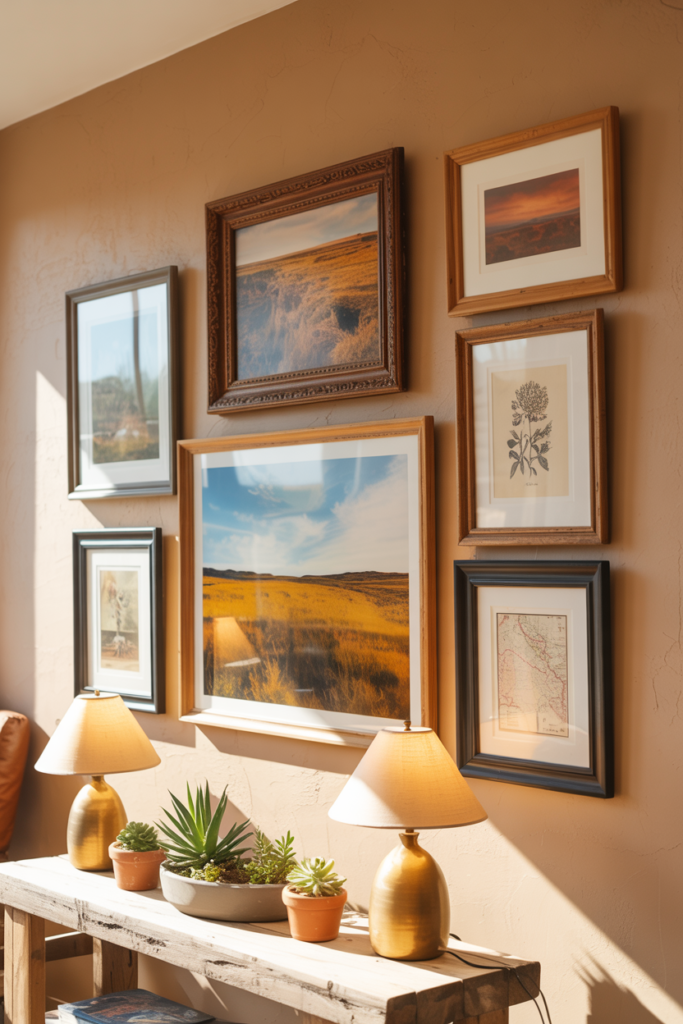
A gallery wall built around landscape photography, Western art, and nature-inspired prints creates one of the most personal and visually compelling ranch house decor statements available without any furniture purchases or structural changes. Large-format photographs of open plains, desert landscapes, mountain ranges, and golden hour skies suit ranch interiors at a fundamental level because they extend the visual connection between the home’s interior and the natural world outside. The right gallery wall makes a ranch living room feel like it genuinely belongs to its landscape rather than sitting on top of it.
Framing choices matter as much as the artwork itself for a ranch gallery wall that feels cohesive and intentional. Natural wood frames in varying widths, simple black metal frames, or weathered antique frames in warm tones all suit ranch house decor well when used consistently across the gallery arrangement. Mixing too many different frame finishes creates visual noise that competes with the artwork rather than supporting it, so choosing one or two frame finishes and sticking with them across the entire gallery produces a significantly more polished result.
Mixing photography with original paintings, vintage maps, botanical illustrations, and handmade textile pieces adds variety to a ranch gallery wall without losing the cohesive material story. A large oil painting of a Western landscape beside two smaller landscape photographs beside a framed vintage botanical print creates a collected, over-time quality that suits the ranch aesthetic far better than a matched set of identical prints purchased from the same source.
14. An Updated Ranch House Kitchen With Open Shelving, Warm Wood Tones, and Earthy Hardware Details
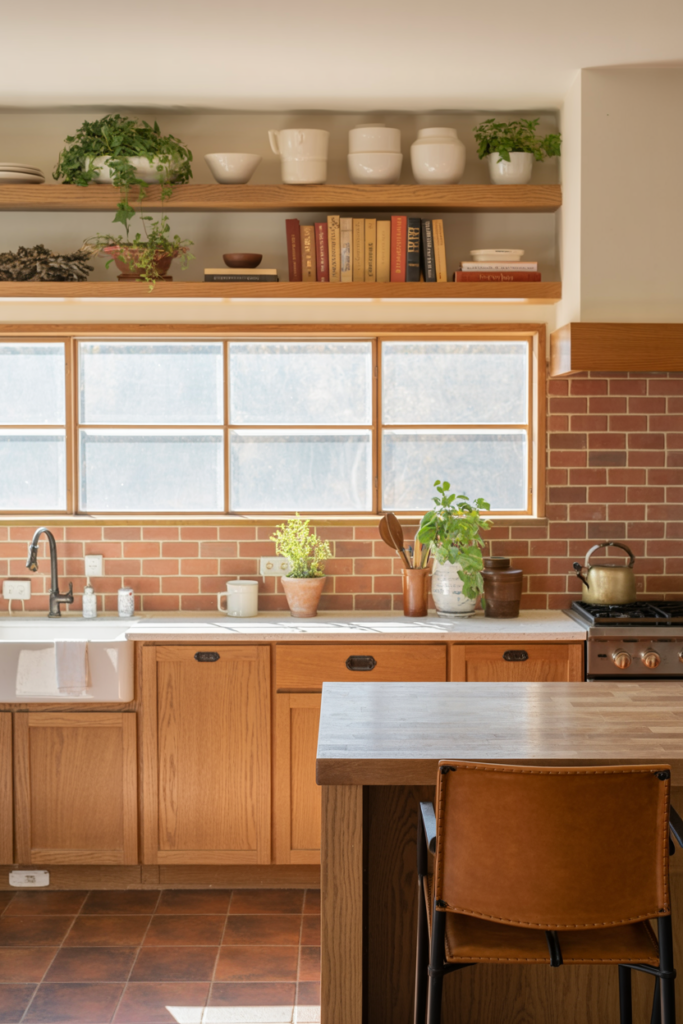
A ranch house kitchen that leans into warm wood tones, open shelving, and earthy hardware details looks more intentionally designed and more authentically suited to the style than one that gets a generic white-and-grey renovation treatment. Open wood shelving in place of upper cabinets on at least one kitchen wall creates that relaxed, accessible quality that suits ranch living perfectly and gives you a display surface for ceramics, glassware, and small plants that adds personality to the most-used room in the home. The open shelves also make the kitchen feel larger and less enclosed than a full upper cabinet installation.
Warm wood cabinet fronts in natural oak, walnut stain, or a honey-toned pine suit ranch kitchen aesthetics naturally and provide the material warmth that white or grey painted cabinets rarely achieve in this style. Pairing warm wood lower cabinets with open upper shelving in the same timber creates a kitchen that looks cohesive and considered without requiring custom cabinetry or a high renovation budget. Adding a simple shiplap or subway tile backsplash behind the range in a warm cream or terracotta tone completes the kitchen palette without introducing any competing colors.
Concrete, butcher block, or honed limestone countertops suit ranch kitchen aesthetics better than polished granite or quartz because their matte, textured surfaces reinforce the earthy, handcrafted quality that defines the style. Butcher block countertops in particular suit ranch kitchens where cooking is taken seriously because they develop a rich patina over the years of use that tells the story of the kitchen in a genuinely appealing way. Pairing butcher block island counters with a honed concrete or limestone perimeter counter creates a two-material approach that adds visual interest without disrupting the overall warm palette.
15. A Welcoming Ranch House Front Porch That Extends the Home’s Warmth and Hospitality to the Outdoors
A front porch on a ranch house is more than an architectural feature: it is a genuine extension of the interior living space and deserves the same decorating attention as any room inside the home. A wide ranch porch with a ceiling fan, comfortable seating, and warm lighting creates an outdoor room that gets used daily rather than sitting empty as a purely decorative facade element. The porch sets the tone for everything inside and tells arriving guests exactly what kind of home they are walking into before they reach the front door.
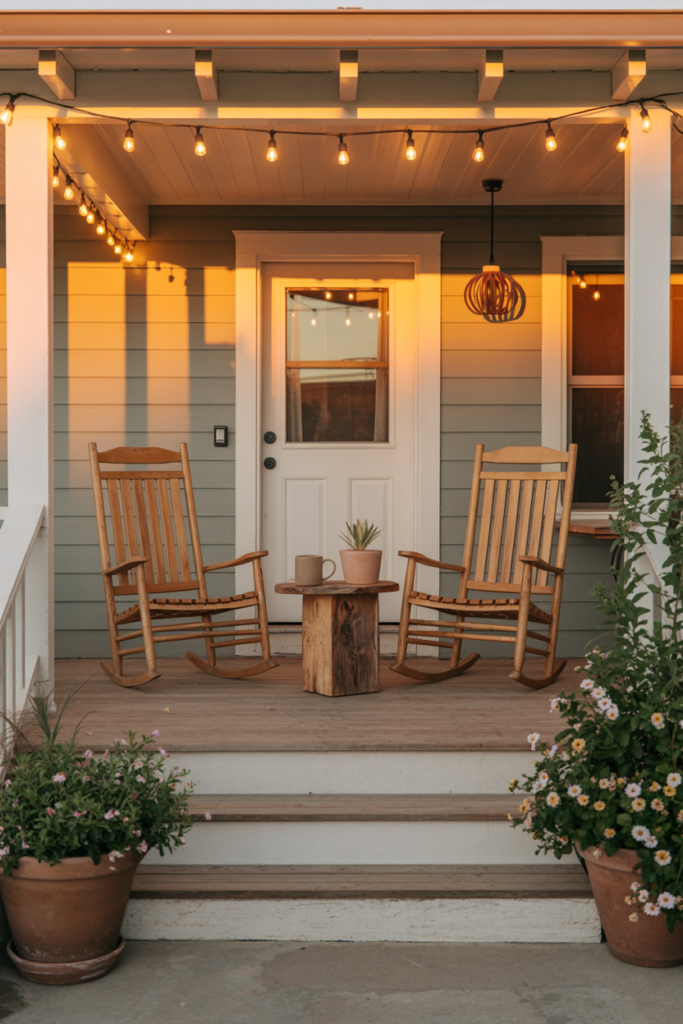
Porch furniture in natural materials like teak, cedar, or powder-coated steel with woven seat cushions in durable outdoor fabric suits ranch front porch aesthetics at every budget level. A pair of classic rocking chairs flanking the front door is one of those timeless ranch porch combinations that never looks wrong and never goes out of style, regardless of what interior decorating trends are doing at any given moment. Adding a small side table between the chairs for drinks and a potted plant or two beside the steps introduces the plant material that bridges the porch visually with the surrounding landscape.
String lights strung along the porch ceiling edge or wrapped loosely around porch columns create warm evening lighting that extends the usable hours of the outdoor space well into the night. A front porch that glows warmly in the evening draws people outside after dinner in a way that harsh overhead porch lighting never manages, and that habitual evening use of the outdoor space is exactly what ranch house living is fundamentally about. Layering the string lights with a ceiling-mounted porch light in a wrought iron or aged bronze finish gives you both ambient and task lighting that suits every porch activity from reading to entertaining.
The Bottom Line on Ranch House Decor That Feels Warm, Authentic, and Genuinely Worth Coming Home To
Ranch house decor works best when it honors what the architecture is already doing rather than fighting against the horizontal proportions, modest ceiling heights, and open floor plans that define the style. The fifteen ideas on this list build a complete ranch house interior from the floor up, starting with materials like terracotta tile, reclaimed wood, and exposed beams, and moving through furniture, textiles, lighting, and outdoor spaces to create a home that feels cohesive and genuinely lived-in from every angle.
The common thread running through every strong ranch house interior is a commitment to natural materials, warm color palettes, and a relaxed approach to decorating that prioritizes comfort over perfection. Ranch homes do not want to be precious or formal, and every decorating decision that pushes in that direction works against the fundamental character of the style. Choosing materials that age gracefully, colors that feel warm in every light, and furniture that invites actual use rather than careful admiration produces ranch interiors that improve with time rather than dating quickly.
Start with the elements that have the most impact on the overall character of the space: the wall color, the main area rug, and the primary seating. Get those three decisions right within the warm, earthy ranch palette, and every subsequent decorating addition has a strong foundation to build on. The ranch house style rewards a patient, layered approach to decorating more than almost any other interior style, and the finished result of that patience is a home that feels genuinely complete rather than a showroom assembled in a single weekend shopping trip.
Frequently Asked Questions About Ranch House Decor Ideas for Single-Story Homes
What colors work best for ranch house interior walls? Warm earthy tones like terracotta, warm sand, dusty sage, adobe clay, and creamy off-white suit ranch house interiors best because they reinforce the home’s connection to the natural landscape. Avoid cool greys and stark whites as dominant wall colors since they work against the warm, grounded quality that defines ranch style. Painting ceilings in a slightly lighter version of the wall color, rather than stark white, adds warmth and makes low ceilings feel more intentional.
How do I make low ranch house ceilings feel taller and more spacious? Exposed wood beams draw the eye upward and make low ceilings feel more architectural and intentional rather than simply short. Painting walls and ceilings in the same tonal family rather than contrasting them removes the visual line where the wall ends and the ceiling begins, which makes the room feel taller. Choosing low-profile furniture with legs rather than boxy floor-sitting pieces also makes a significant difference to how spacious a ranch room feels in daily use.
What flooring suits a ranch house interior best? Terracotta tile, Saltillo tile, wide-plank hardwood, and natural stone all suit ranch house flooring aesthetics well because they share the warm, earthy material palette that defines the style. Wide-plank hardwood in a warm honey or medium brown stain works particularly well in ranch living rooms and bedrooms, where the wood grain adds warmth and texture to the space. Large format terracotta or terracotta-look porcelain tile suits kitchens, entryways, and hallways where durability and easy cleaning matter most.
How do I decorate a ranch house open floor plan without it feeling chaotic? A consistent warm neutral color palette across all zones of the open floor plan is the single most effective way to create visual cohesion in a ranch house interior. Defining each zone with a large area rug, consistent furniture groupings, and overhead lighting positioned over each functional area creates clear spatial boundaries without any walls. Keeping the color palette consistent across the kitchen, dining, and living areas while varying the texture and material keeps the space interesting without becoming visually overwhelming.
What lighting works best in ranch house interiors? Wrought iron chandeliers, pendant lights with warm Edison bulbs, and semi-flush ceiling fixtures in aged bronze or matte black all suit ranch house lighting aesthetics well. Layering overhead fixtures with table lamps, floor lamps, and wall sconces creates the warm, multi-source lighting that makes ranch interiors feel genuinely inviting rather than harshly lit. Avoiding recessed can lighting as the primary light source prevents the flat, commercial quality that works against the warm atmosphere that ranch decor aims to create.
Can a ranch house work with a modern or contemporary decorating style? Ranch architecture actually suits modern and contemporary decorating approaches very well when the natural material palette stays warm, and the horizontal proportions of the home are respected rather than fought against. A modern ranch interior that uses clean-lined furniture in warm timber and leather tones, large-format natural stone flooring, and minimal but warm lighting creates a contemporary result that still feels grounded and appropriate for the architecture. The key is keeping materials warm and natural rather than introducing the cool, hard surfaces that suit urban contemporary spaces but feel out of place in a ranch home.
How do I bring the outdoors in with ranch house decor? Large indoor plants in terracotta pots, natural materials like jute, linen, leather, and reclaimed wood, and landscape-inspired artwork all connect ranch interiors to the natural world outside without requiring any structural changes. Maximizing natural light through existing windows by keeping window treatments simple and light-filtering rather than heavy and light-blocking reinforces the indoor-outdoor connection that ranch architecture naturally promotes. Adding a front porch or back patio that extends the interior decorating language outside with coordinated furniture and lighting completes the connection between inside and outside that defines ranch living at its best.