
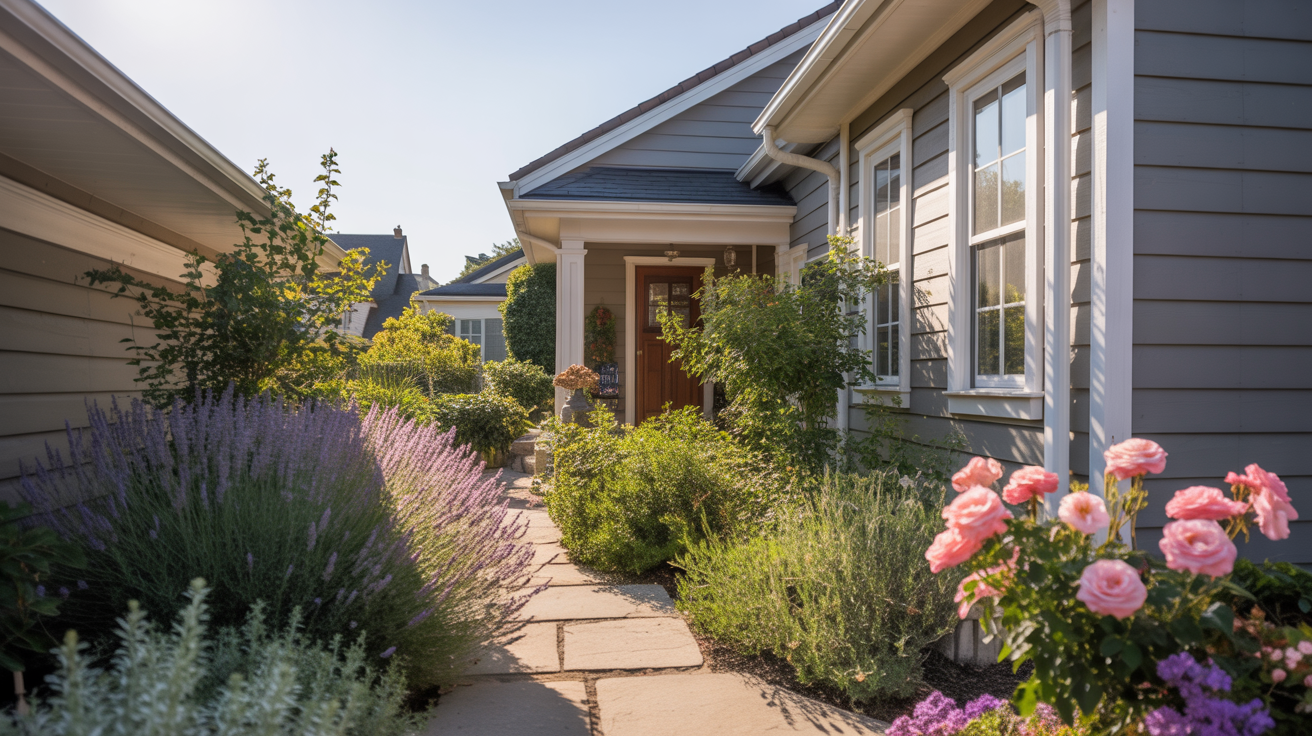
The right plants can make a front yard look like it belongs in a magazine. You do not need a gardening degree or a landscaper on speed dial to pull it off. A few smart plant choices, and your curb appeal does the heavy lifting for you.
I have spent way too much time staring at front yards, both my own and my neighbors’, trying to figure out what makes one look polished and another look neglected. The secret is rarely the most expensive plants. It is about picking plants that look good year-round without demanding constant attention.
Most people overthink front yard landscaping. They either go overboard with exotic plants that die in two weeks, or they play it so safe that the yard looks like a parking lot with grass. The sweet spot is somewhere in the middle, and these 15 plants hit it perfectly.
Why Low-Maintenance Front Yard Plants Are a Smarter Choice
Choosing low-maintenance plants is not about being lazy. It is about being strategic with your time and money. A plant that needs weekly pruning, daily watering, and special fertilizer is a part-time job you did not sign up for.
The best front yard plants work with your climate, not against it. They handle drought, occasional neglect, and seasonal shifts without throwing a tantrum. That kind of resilience is exactly what makes a front yard look consistently good, not just good the week after you spent a Saturday fussing over it.
There is also a real cost advantage here. Low-maintenance plants tend to be hardy, which means fewer replacements and less spending on treatments and fertilizers. Your front yard ends up looking high-end, and your wallet quietly thanks you for it.
1. Lavender
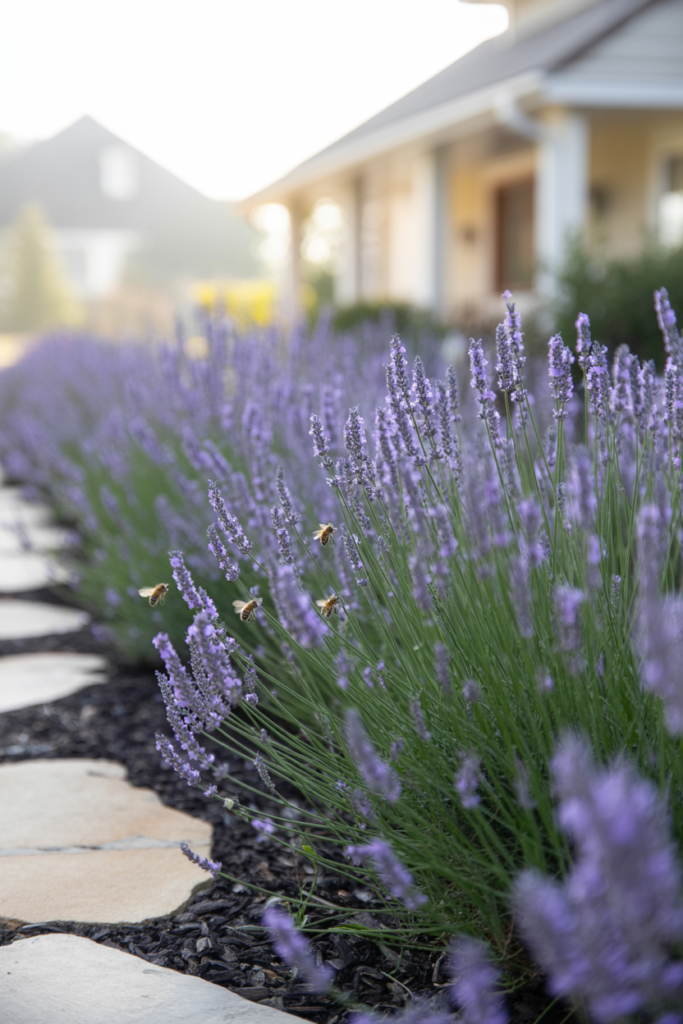
Lavender is one of those plants that earns its place in a front yard ten times over. It looks elegant, smells incredible, and practically takes care of itself once it settles in. Plant it in a sunny spot with well-drained soil, and it will reward you with purple blooms every season without much fuss.
What I love most about lavender is how it bridges the gap between casual and refined. A row of lavender along a front walkway looks intentional and designed, not like something that just happened to grow there. It also attracts pollinators, which is always a bonus.
One thing to keep in mind is that lavender hates soggy roots. Make sure the planting area drains well, and skip the heavy mulch around the base. Other than that, it is genuinely one of the easiest plants you can grow in a front yard.
2. Ornamental Grasses
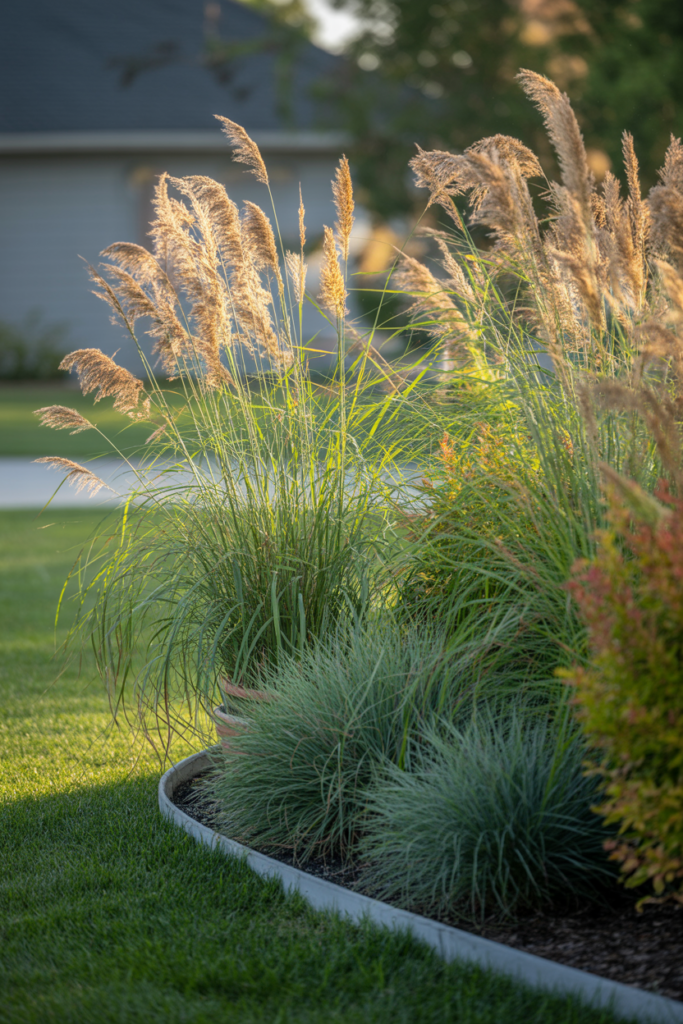
Ornamental grasses bring movement and texture to a front yard in a way that most flowering plants simply cannot. Varieties like Karl Foerster feather reed grass or Blue Oat grass add height and structure without needing regular trimming or babysitting. They look dramatic with almost zero effort.
These grasses handle heat, wind, and dry spells better than most plants. They are also incredibly versatile. You can use them as a focal point, line them along a driveway, or tuck them between other plants to add contrast and depth.
The only real maintenance task is cutting them back once a year in late winter before new growth starts. That is it. One annual haircut, and they come back looking better than ever.
3. Knockout Roses
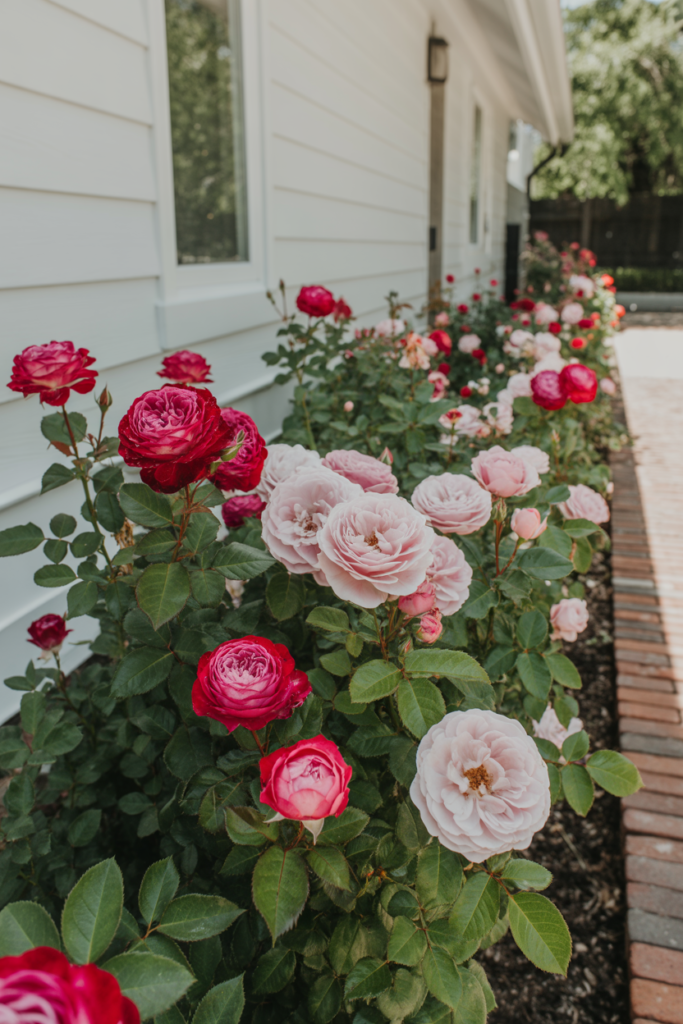
Knockout roses changed the game for front yard gardening. They bloom repeatedly from spring through fall, resist disease better than traditional roses, and do not need deadheading to keep flowering. For anyone who has ever wrestled with high-maintenance rose bushes, these are a genuine relief.
They come in shades of red, pink, coral, and yellow, so there is plenty of room to match them to your home’s exterior. Plant them in a sunny spot with decent soil, water them occasionally during dry periods, and they handle the rest on their own.
I think Knockout roses are one of the best investments you can make in front yard landscaping. They deliver that classic, expensive look without the upkeep that traditional roses demand.
4. Russian Sage
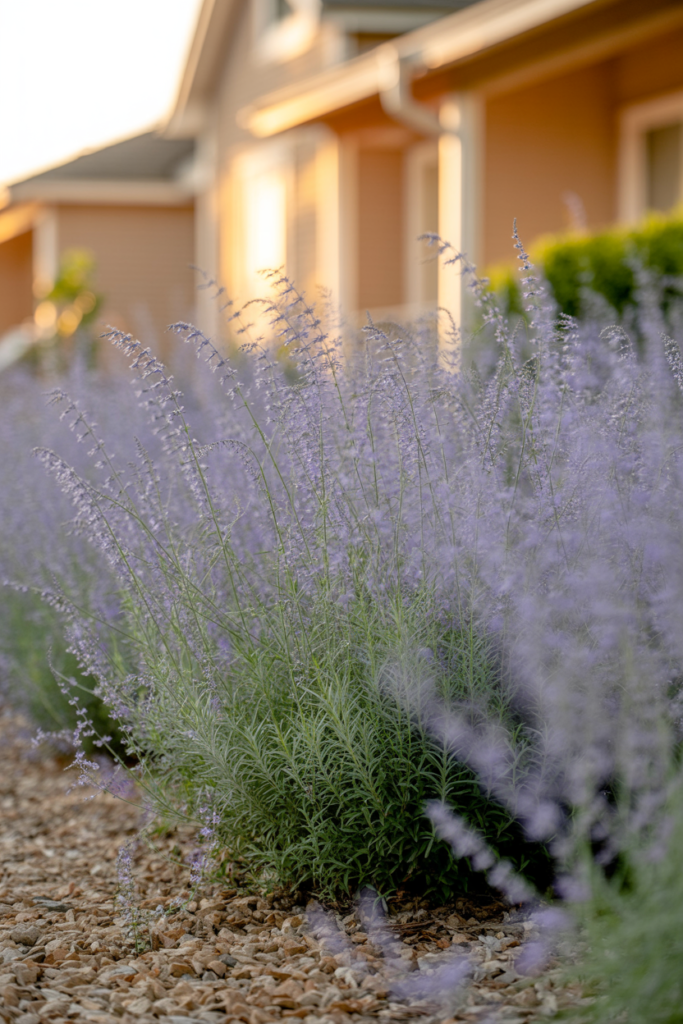
Russian sage is one of the most underrated front-yard plants out there. It produces wispy, lavender-blue flower spikes that look airy and elegant from late summer into fall. It thrives in hot, dry conditions and laughs in the face of neglect.
This plant works especially well in front yards that get a lot of sun and not much rain. It is drought-tolerant once established, deer-resistant, and rarely bothered by pests. That combination is hard to beat.
Russian sage pairs beautifully with plants like ornamental grasses or Knockout roses. The contrast in texture and color creates a layered, designed look that genuinely elevates curb appeal.
5. Boxwood Shrubs
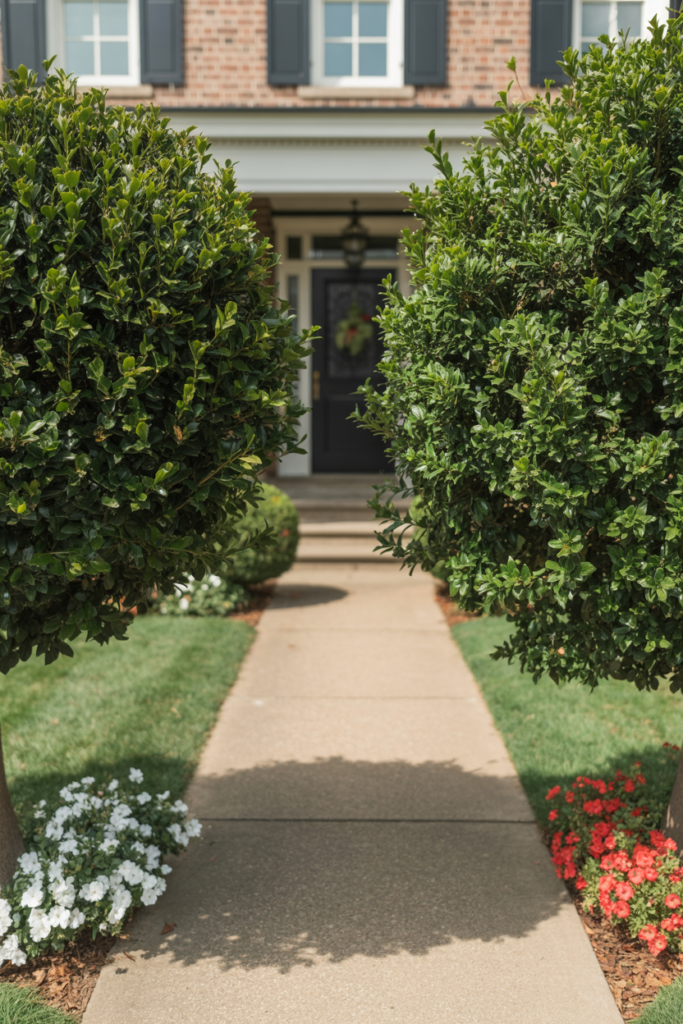
If you want that classic, polished front yard look without putting in daily effort, boxwood shrubs are your answer. They hold their shape well, stay green year-round, and work perfectly as borders, hedges, or standalone accent plants. A few well-placed boxwoods can make a front yard look like it was designed by a professional.
Boxwoods are slow growers, which sounds like a downside but is actually a perk. You trim them once or twice a year, and they stay neat in between. No weekly shearing required.
They do best in partial to full sun and prefer well-drained soil. Once established, they are quite drought-tolerant and need only occasional watering. For a clean, structured front yard look, boxwoods are hard to top.
6. Daylilies
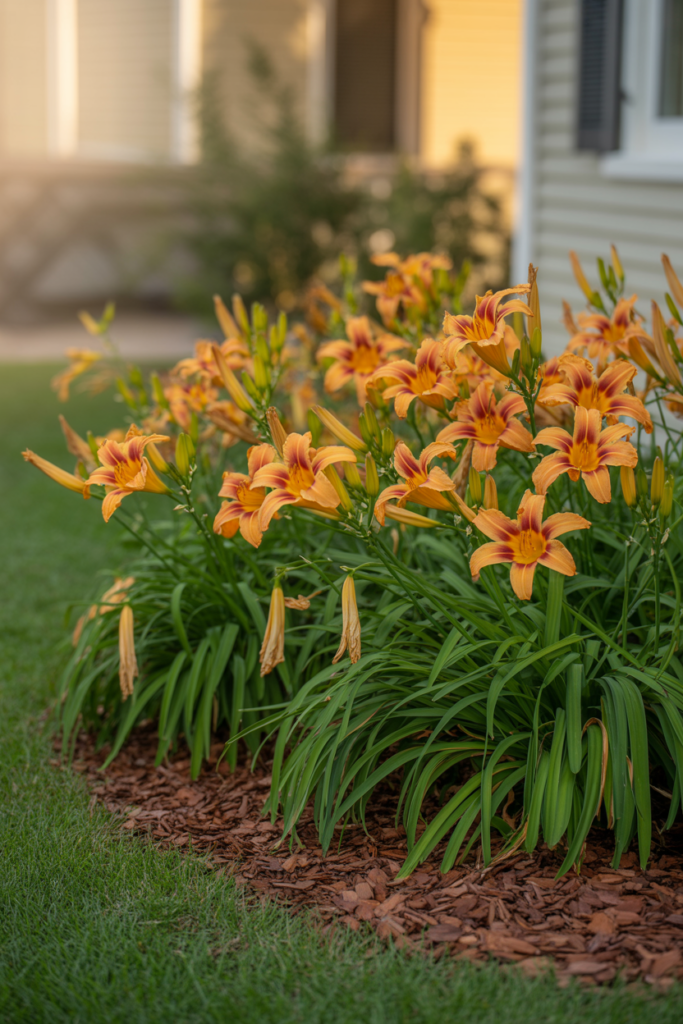
Daylilies are practically indestructible, and that is exactly why they belong in a low-maintenance front yard. They spread on their own, return every year, and produce cheerful blooms in shades of yellow, orange, red, and pink throughout summer. They also handle poor soil, drought, and heat without complaint.
What makes daylilies look expensive is their volume. A well-established clump of daylilies in full bloom looks lush and abundant, the kind of planting that takes effort to ignore. And yet, they do most of that work themselves.
Divide them every few years to keep them performing at their best, and that is about all the maintenance they ask for. For a pop of reliable summer color, daylilies are one of the smartest plants you can add to a front yard.
7. Blue Spruce
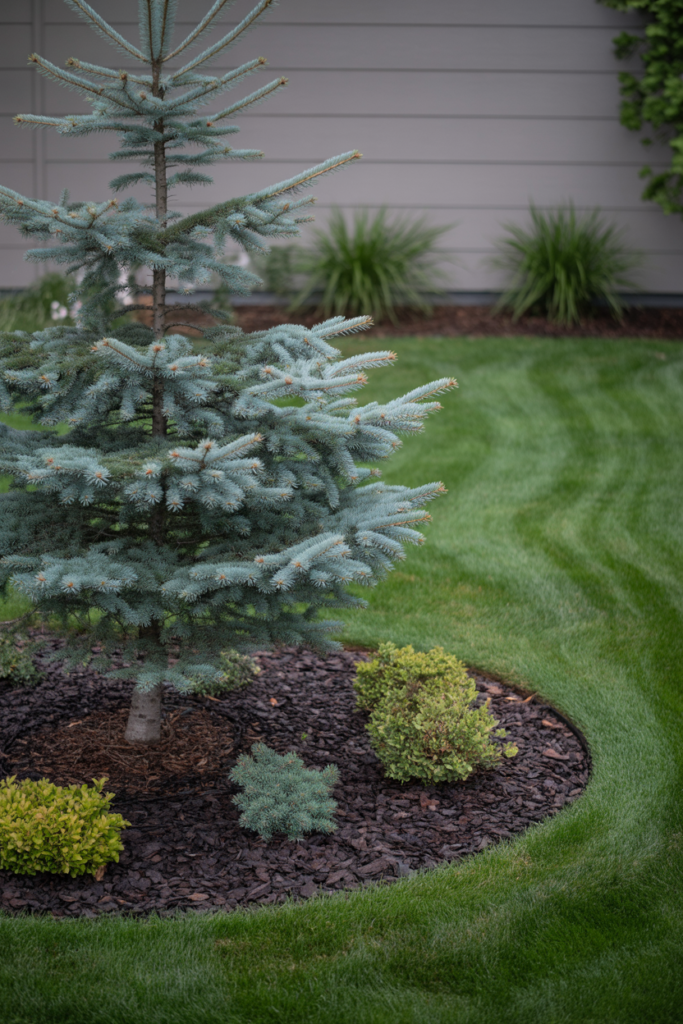
A Blue Spruce adds something most front yard plants cannot: year-round structure and a striking blue-gray color that looks genuinely unique. It works as a focal point, a corner anchor, or a backdrop for smaller plants. And once it is established, it needs almost nothing from you.
Blue Spruce trees are cold-hardy, drought-tolerant, and pest-resistant. They grow slowly, so they will not suddenly overwhelm your front yard or block your windows without warning. That slow, steady growth makes them easy to plan around.
The silvery-blue foliage creates a color contrast that makes surrounding plants pop. Paired with deep green boxwoods or bright daylilies, a Blue Spruce becomes the kind of anchor plant that ties an entire front yard design together.
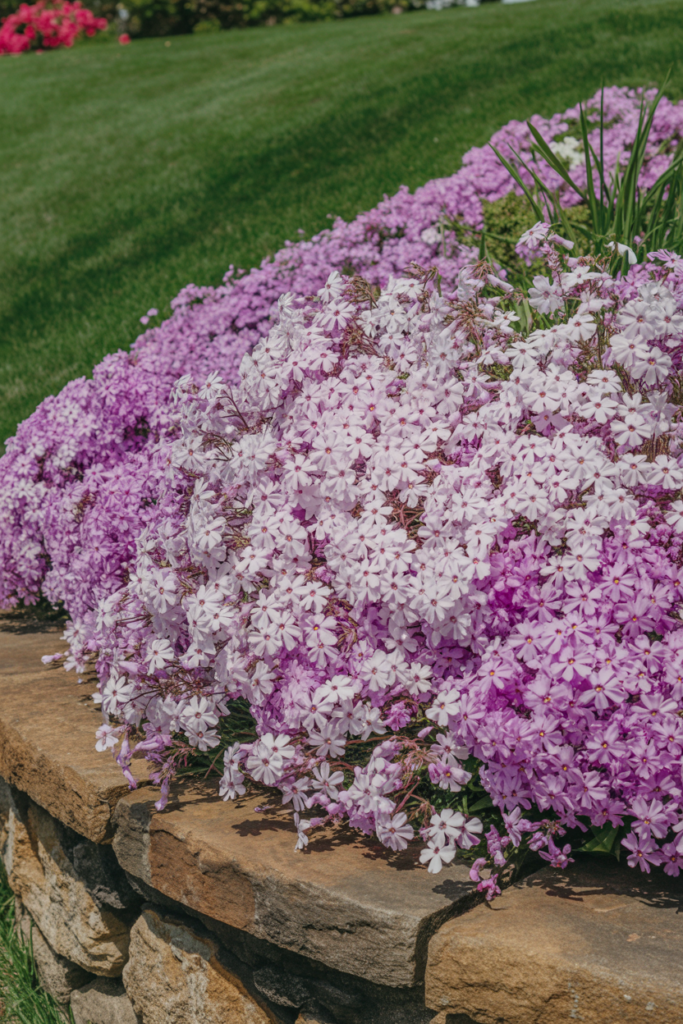
8. Creeping Phlox
Creeping phlox is one of the best ground cover plants you can add to a front yard. In spring, it produces a carpet of small flowers in shades of pink, purple, white, and red that covers the ground so completely it looks like someone painted the soil. It is the kind of plant that makes neighbors stop and ask questions.
It works especially well on slopes, along walkway edges, or spilling over retaining walls. Once it fills in, it also suppresses weeds naturally, which means less work for you in the long run. That is the kind of multitasking I can fully get behind.
Creeping phlox is drought-tolerant once established and comes back stronger every year. Trim it lightly after blooming to keep it tidy, and it will reward you with an even fuller display the following spring.
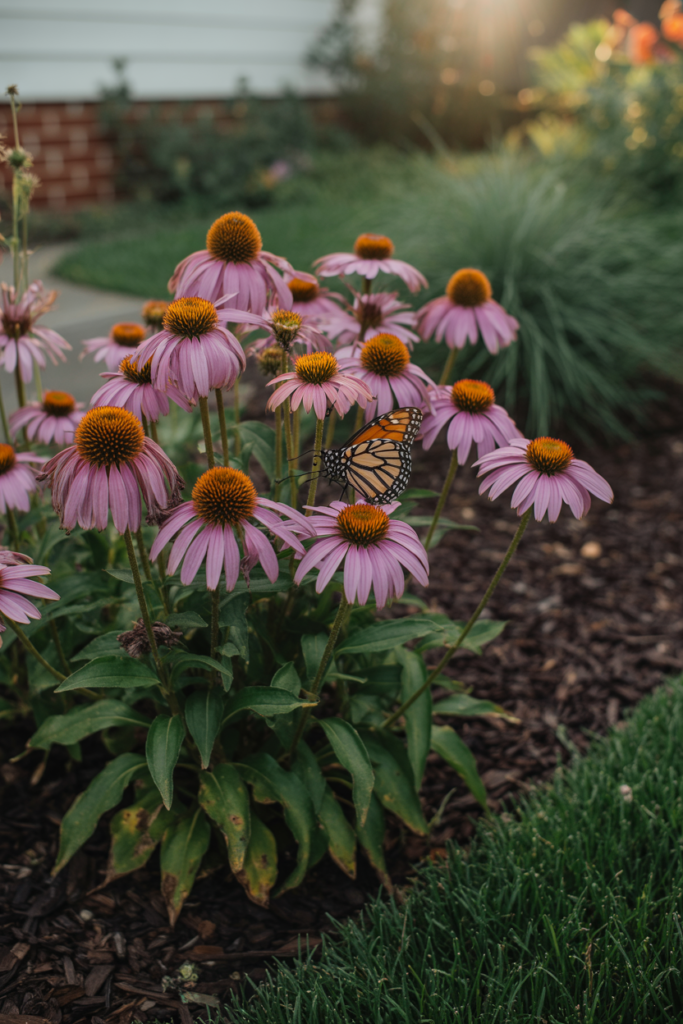
9. Coneflowers (Echinacea)
Coneflowers are a front-yard staple for good reason. They produce bold, daisy-like blooms in shades of purple, pink, orange, and white from midsummer through fall, and they do it without asking for much in return. They are also one of the best plants for attracting butterflies and bees, which adds a whole layer of life to a front yard.
What I appreciate most about coneflowers is how well they hold up in tough conditions. Poor soil, summer heat, and dry spells do not slow them down. They are built for resilience, and it shows.
Leave the seed heads in place after blooming, and you will also attract birds through the winter months. It is a small decision that turns your front yard into a year-round habitat, which looks far more intentional than a bare flowerbed.
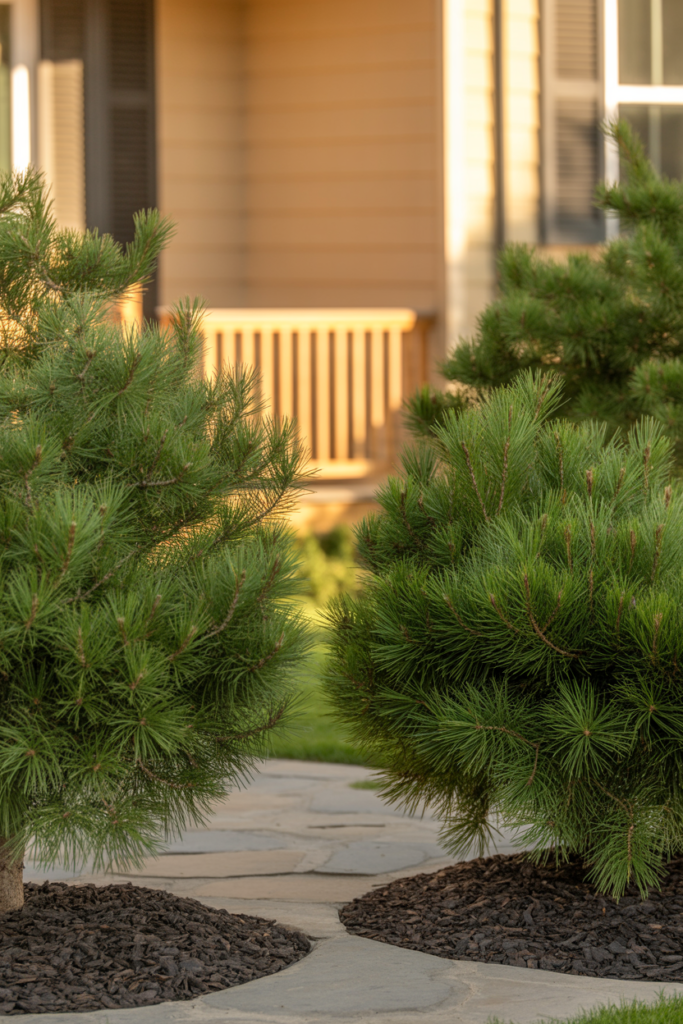
10. Mugo Pine
Mugo pine is a compact, slow-growing evergreen that brings permanent structure to a front yard without ever getting out of hand. It stays relatively small, making it a great choice for homes where space is limited or where you need a neat, contained shrub that holds its shape naturally.
It thrives in full sun, handles poor soil well, and is highly drought-tolerant once established. You will not spend weekends trimming it or worrying about winter damage. It simply sits there looking good, year after year.
Mugo pine works particularly well flanking an entryway or anchoring the corners of a front bed. Its deep green color provides a strong contrast against lighter flowering plants and gives the yard a grounded, finished look.
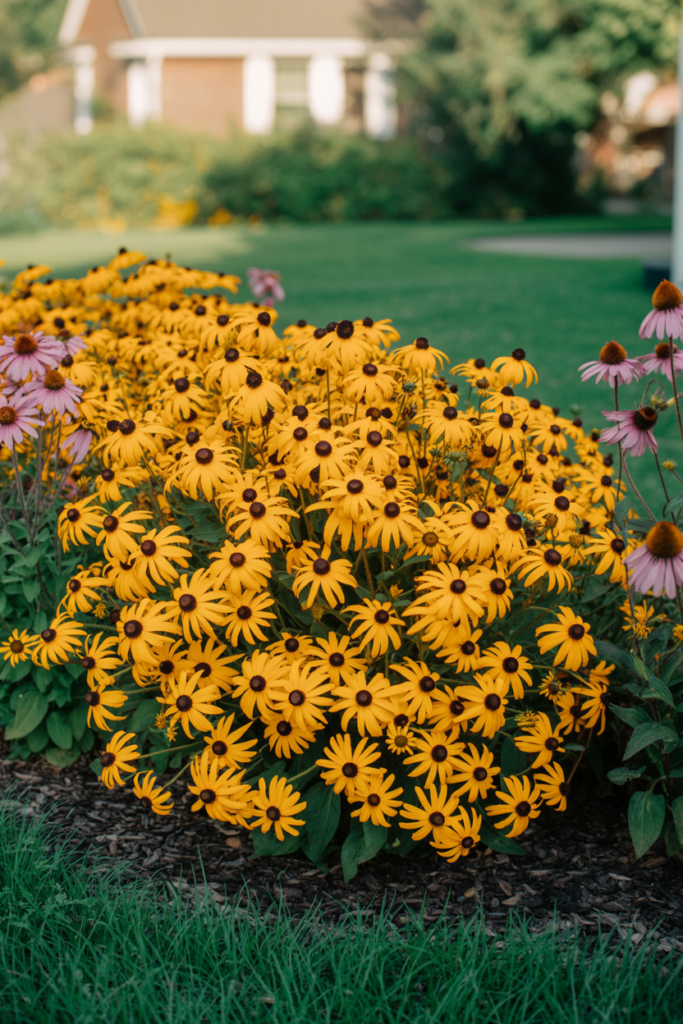
11. Black-Eyed Susans
Black-eyed Susans are one of those cheerful, golden-yellow flowers that make a front yard look warm and welcoming from the street. They bloom from midsummer through early fall, filling in the gap when spring flowers have faded, and fall color has not yet arrived. That mid-season reliability is genuinely valuable in front yard planning.
They are native wildflowers, which means they are perfectly adapted to a wide range of soil types and weather conditions. They self-seed freely, so a small planting tends to fill out nicely over time without any help from you.
Pair them with purple coneflowers or Russian sage for a color combination that looks deliberately designed. The yellow and purple contrast is classic for good reason, and both plants ask for almost nothing in return.
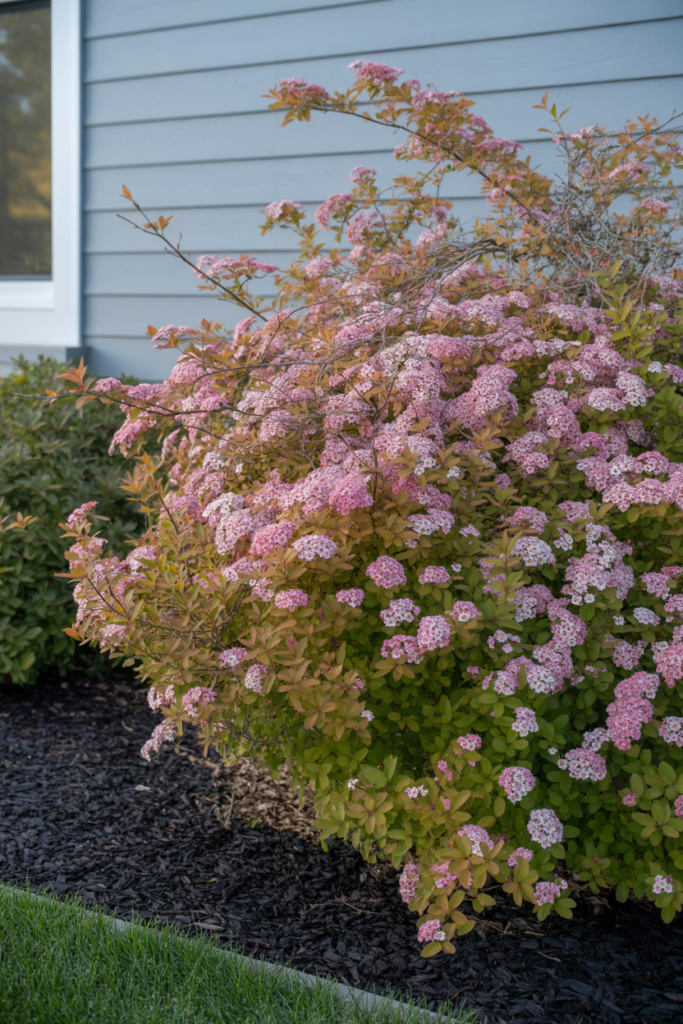
12. Spirea
Spirea is a flowering shrub that delivers a lot of visual impact for very little effort. It produces clusters of small flowers in pink or white in spring, and wide varieties also offer attractive foliage in shades of gold, chartreuse, or burgundy that look good even when the plant is not in bloom.
It grows quickly enough to fill a space without becoming a problem, and it responds well to pruning if you want to keep it shaped. Most varieties are also deer-resistant and tolerant of a wide range of soil conditions, which makes them easy to place in almost any front yard.
I find spirea particularly useful as a mid-height filler between taller shrubs and low ground covers. It ties different layers of planting together and gives the yard a cohesive, well-planned look that is surprisingly easy to achieve.
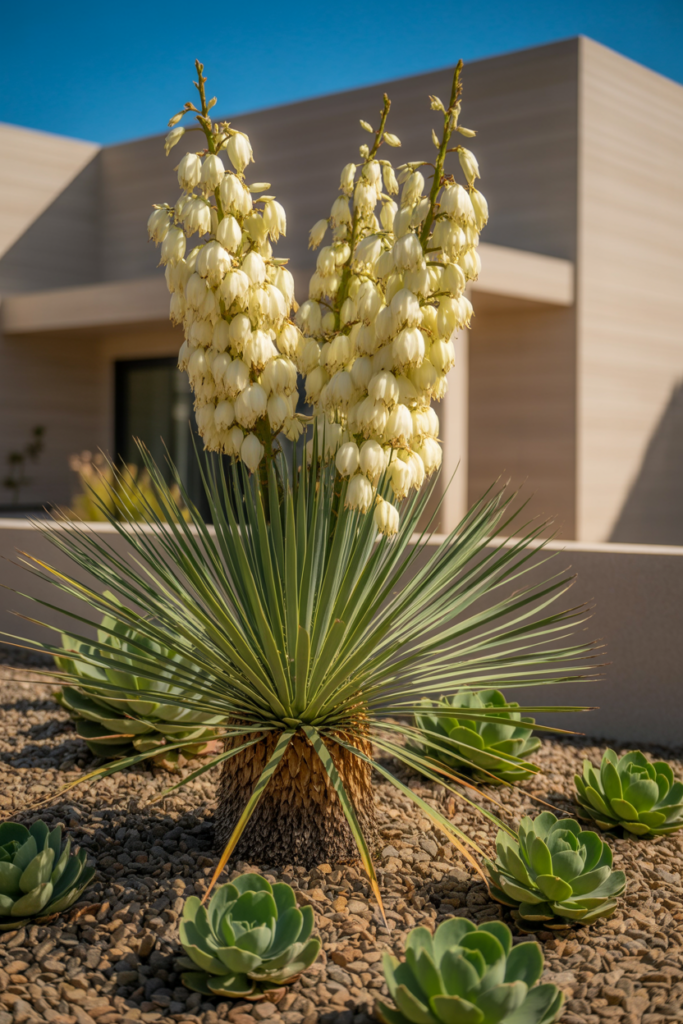
13. Yucca
Yucca is for front yards that want to make a statement. Its bold, spiky foliage and tall flower stalks create a dramatic focal point that looks architectural and expensive. It also happens to be one of the toughest plants you can grow, tolerating heat, drought, and poor soil with complete indifference.
It works especially well in modern or southwestern-style landscapes, but it can also add an interesting textural contrast in more traditional front yard settings. The key is placement. One well-positioned yucca can anchor an entire planting bed.
Yucca needs almost no maintenance beyond removing spent flower stalks once a year. It does not need regular watering, special fertilizer, or winter protection in most climates. For maximum visual drama with minimum effort, it is hard to beat.
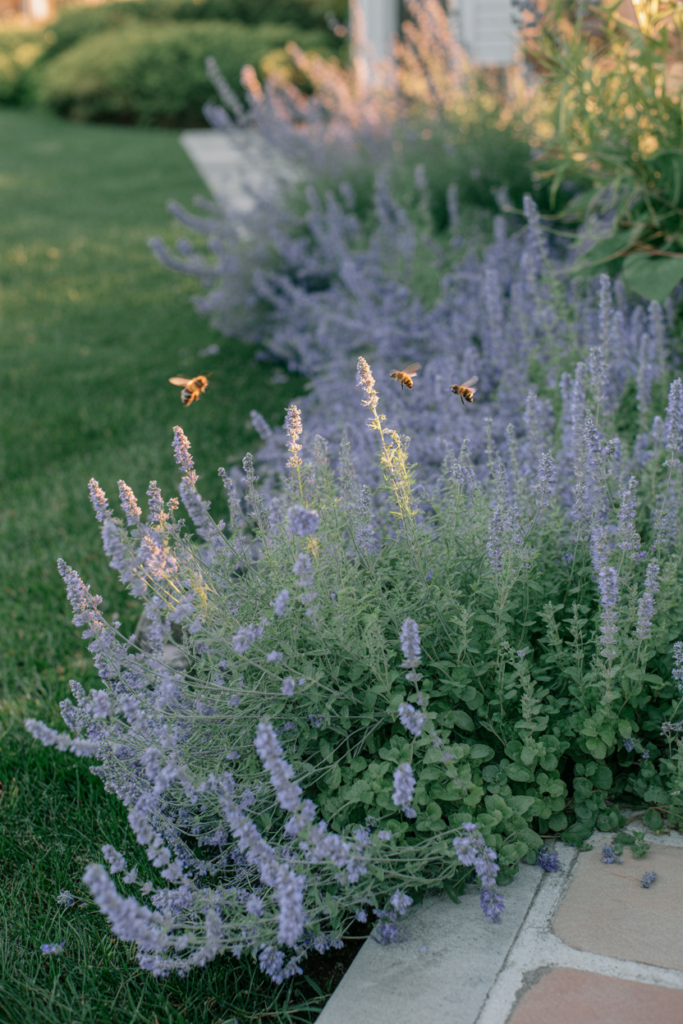
14. Catmint
Catmint is a soft, billowy perennial that produces masses of small lavender-blue flowers from late spring through summer, and often again in fall if you cut it back after the first flush. It has a relaxed, cottage-garden look that feels both casual and refined at the same time.
It is one of the most reliable front-yard plants I have come across. It handles heat, drought, and poor soil without missing a beat, and deer tend to leave it alone because of its aromatic foliage. That combination makes it genuinely low-effort in almost any climate.
Catmint works beautifully along walkway borders or as a soft edge in front of taller shrubs. Its mounding habit and long bloom time give a front yard that layered, full look that takes years to achieve with slower-growing plants.
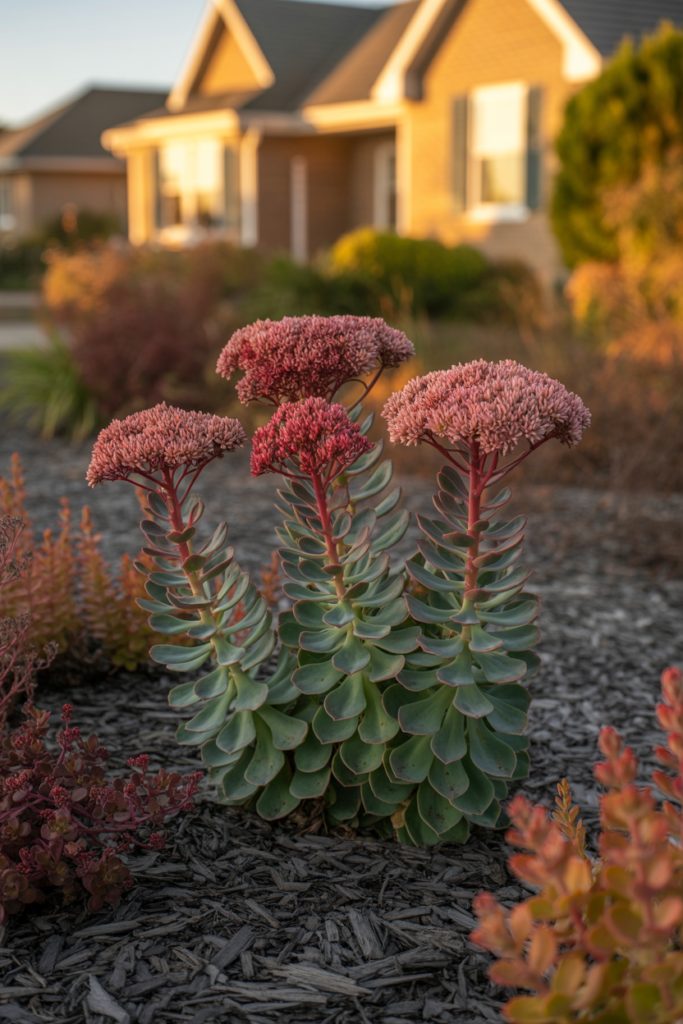
15. Sedum (Stonecrop)
Sedum wraps up this list perfectly because it covers ground beautifully, asks for almost nothing, and looks great across multiple seasons. Low-growing varieties spread into a tidy mat of succulent foliage, while upright varieties like Autumn Joy produce showy flower clusters that go from pink to deep red as fall arrives.
It thrives in full sun and poor, dry soil, which makes it a go-to choice for spots where other plants struggle. Sedum is also incredibly cold-hardy, so it handles winter without any special protection in most growing zones.
What makes sedum look polished is its texture. The thick, fleshy leaves have a clean, sculptural quality that reads as intentional and designed. Tuck it between stepping stones, use it as a border plant, or let it fill a challenging dry patch, and it will quietly make that corner of your yard look far better than it has any right to.
A Quick Look at All 15 Plants Side by Side
| Plant | Sun Needs | Water Needs | Best Feature |
| Lavender | Full sun | Low | Fragrance and color |
| Ornamental Grasses | Full sun | Low | Texture and movement |
| Knockout Roses | Full sun | Moderate | Repeat blooms |
| Russian Sage | Full sun | Very low | Drought tolerance |
| Boxwood Shrubs | Part to full sun | Low | Year-round structure |
| Daylilies | Full to part sun | Low | Summer color volume |
| Blue Spruce | Full sun | Low | Unique blue foliage |
| Creeping Phlox | Full to part sun | Low | Spring ground cover |
| Coneflowers | Full sun | Low | Wildlife attraction |
| Mugo Pine | Full sun | Very low | Compact evergreen |
| Black-Eyed Susans | Full sun | Low | Mid-season color |
| Spirea | Full sun | Low | Colorful foliage |
| Yucca | Full sun | Very low | Bold focal point |
| Catmint | Full sun | Low | Long bloom time |
| Sedum | Full sun | Very low | Multi-season interest |
How to Put These Plants Together for a Front Yard That Looks Intentional
Picking great plants individually is one thing. Arranging them well is where a front yard goes from looking like a random collection of plants to looking like an actual design. The good news is that you do not need a landscape architect to figure this out.
Start with your anchor plants first. A Blue Spruce, Mugo Pine, or a pair of Boxwood shrubs give the yard a structural backbone that holds everything together across all four seasons. Build outward from there with mid-height plants like Spirea, Knockout Roses, or Russian Sage, then fill the edges and borders with lower-growing plants like Creeping Phlox, Sedum, or Catmint.
Think in layers when you plan your planting beds. Tall plants at the back, medium plants in the middle, and low ground covers at the front edge. That simple three-layer approach creates depth and dimension that makes a front yard look professionally designed, even when it absolutely was not.
Conclusion
A front yard that looks expensive does not require expensive plants or expensive help. It requires smart choices, and every plant on this list qualifies. From the wispy elegance of Russian Sage to the bold drama of Yucca, each one brings something real to the table without demanding much in return.
The plants that perform best long-term are the ones that suit your climate and your soil. Pick a few from this list that match your growing conditions, layer them thoughtfully, and let them settle in. Within a season or two, your front yard will start doing the talking for you.
Curb appeal is not about perfection. It is about consistency, and low-maintenance plants are the most consistent things you can put in the ground. Choose well once, and your front yard rewards you for years without asking for much more than occasional water and a little patience.
Frequently Asked Questions
What is the easiest plant to grow in a front yard? Daylilies and Sedum are among the easiest front-yard plants you can grow. Both handle poor soil, drought, and neglect without losing their appeal. They come back year after year with minimal input from you.
Which low-maintenance plants look good all year? Boxwood shrubs, Blue Spruce, and Mugo Pine all hold their shape and color through every season. They provide consistent greenery and structure even when flowering plants are dormant in winter.
Can I mix flowering plants with evergreen shrubs in a front yard? Absolutely, and it is actually the best approach for a balanced front yard. Evergreens give you year-round structure, while flowering plants add seasonal color and interest. The two work together far better than either does alone.
How do I make a small front yard look more expensive with plants? Focus on a few well-chosen plants rather than cramming in too many. A pair of neatly trimmed Boxwoods flanking your front door, a border of Lavender along the walkway, and a patch of Creeping Phlox at the edges can make even a small front yard look polished and intentional.
Are any of these plants safe for yards with pets? Some plants on this list, including Yucca and certain varieties of Sedum, can cause mild stomach upset in dogs and cats if eaten in large quantities. It is always worth checking with your vet if you have pets that graze in the yard. Most of these plants are fine in general outdoor settings when pets are supervised.
How long does it take for low-maintenance plants to establish? Most perennials and shrubs need one full growing season to establish their root systems. During that first year, water them regularly during dry spells. After that, the majority of plants on this list become largely self-sufficient.
Do these plants work in hot climates? Yes, most of them do. Russian Sage, Yucca, Sedum, Black-Eyed Susans, and Catmint are all particularly well-suited to hot, dry climates. For humid heat, Knockout Roses, Daylilies, and Coneflowers perform reliably as well.