
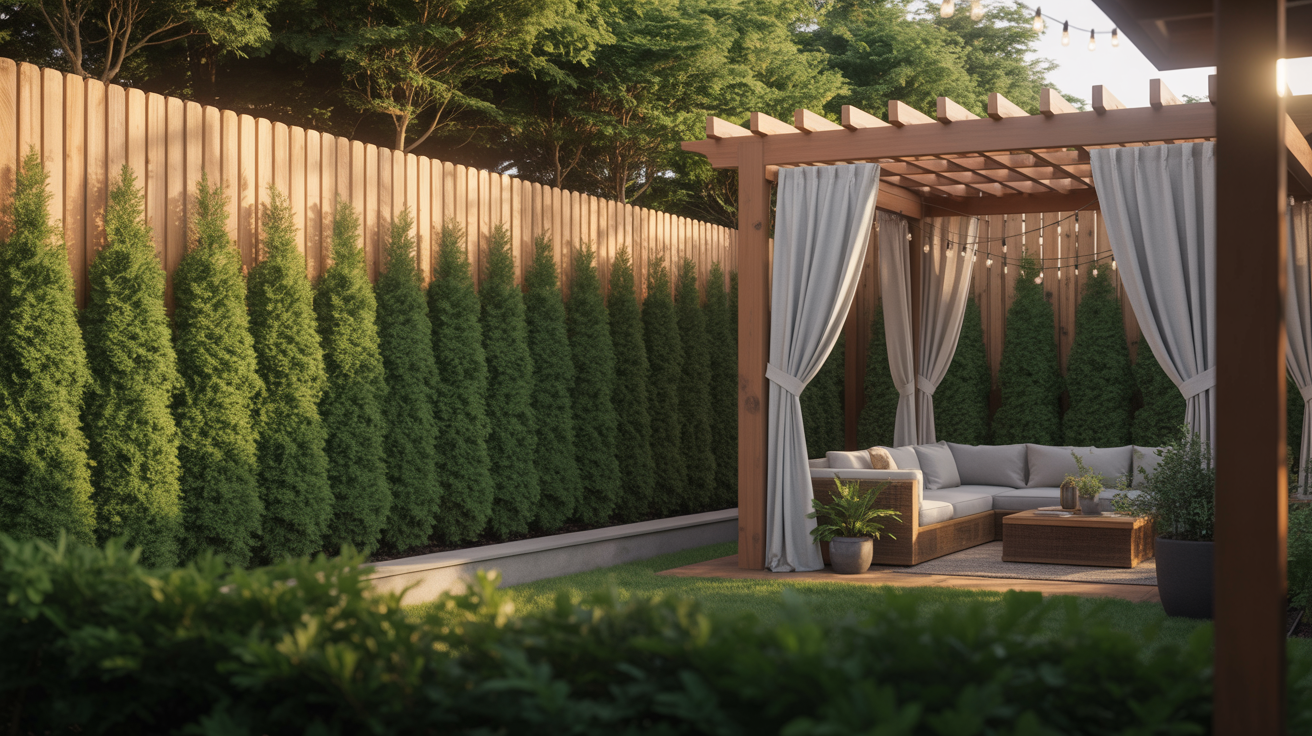
There is nothing quite as frustrating as stepping into your own backyard and feeling like you are sitting in a fishbowl. Whether it is a neighbor’s second-floor window with a direct sightline to your patio or a shared fence line that barely reaches shoulder height, a lack of backyard privacy changes how much you actually use and enjoy your outdoor space. The good news is that fixing it does not require moving to a remote mountain cabin.
Backyard privacy projects range from fast weekend installations to more involved landscaping efforts, but almost all of them deliver results that genuinely transform how a yard feels. A well-screened outdoor space feels larger, more relaxing, and more personal than an open yard where every move is visible to the surrounding neighborhood. That shift in how the space feels is exactly why privacy upgrades consistently rank among the most satisfying backyard improvement projects homeowners take on.
In this guide, I am covering 10 backyard privacy projects that actually work, look great, and suit a range of budgets and yard sizes. Whether you want a lush living wall of plants, a solid wood fence, a pergola with curtains, or a creative combination of several elements, there is a realistic option here for every backyard situation.
Why Backyard Privacy Makes Your Outdoor Space More Enjoyable
Backyard privacy directly affects how often and how comfortably you use your outdoor space. Research consistently shows that people spend more time in outdoor areas that feel enclosed and sheltered compared to open, exposed spaces. That instinct toward enclosed spaces is deeply human, and a backyard that satisfies it becomes an extension of your living space rather than just a patch of grass you walk through.
Privacy screening also reduces noise from neighboring properties and street traffic in ways that surprise most homeowners. Dense plantings, solid fences, and pergola structures all absorb and deflect sound to varying degrees, making the yard noticeably quieter even without any dedicated soundproofing. That acoustic benefit adds to the retreat-like quality that good privacy projects create.
A private backyard also adds measurable value to a home. Real estate professionals regularly note that screened, usable outdoor living spaces attract buyers and support higher asking prices compared to open, exposed yards. Investing in backyard privacy projects pays off both in daily quality of life and in long-term property value, which makes these projects some of the most practical outdoor improvements available.
1. Tall Privacy Fence for Full Backyard Screening
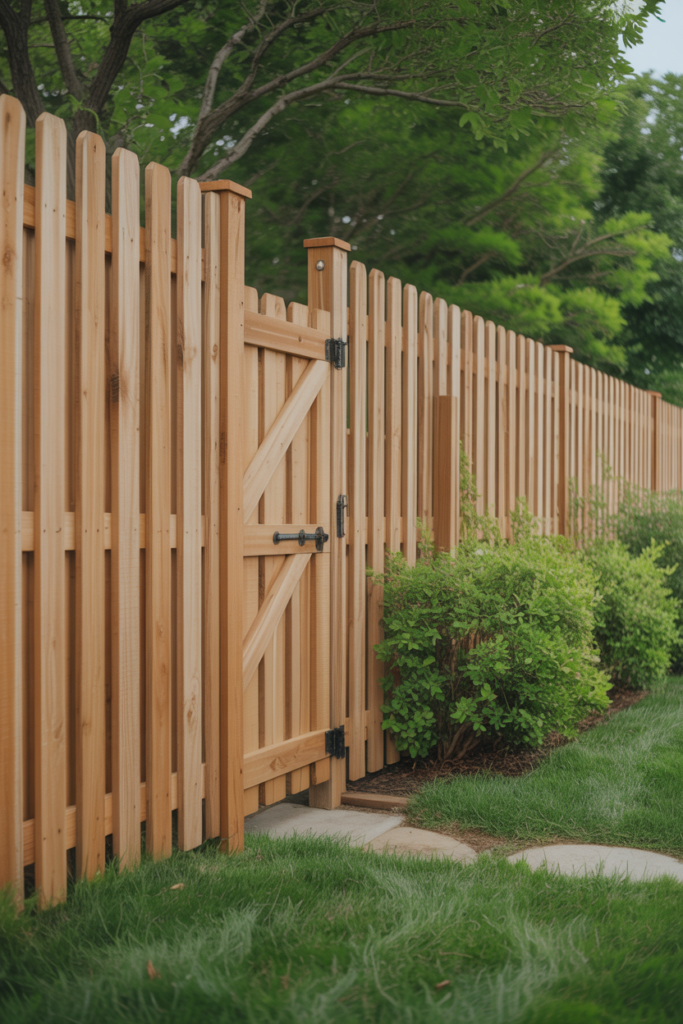
A tall privacy fence is the most direct and complete solution for blocking neighbors and creating a fully enclosed backyard space. A solid wood fence at 6 to 8 feet in height eliminates sightlines from adjacent yards completely and creates an immediate sense of enclosure that no other single project matches. Cedar and redwood are the most popular choices for privacy fencing because both resist rot and insects naturally without requiring chemical treatment.
The style of the fence boards makes a significant difference in the overall look of the finished project. Board-on-board fencing, where boards overlap slightly, provides full privacy while allowing some air movement through the slight gaps between boards. Solid panel fencing with no gaps provides maximum privacy and wind blocking, but can create a more closed-in feel in smaller yards.
Check local zoning regulations and HOA rules before installing any fence taller than 6 feet, since many municipalities cap residential fence heights at that point without a variance. Getting the permitting right before installation saves the significant headache of having to modify or remove a completed fence later. A properly permitted fence also avoids complications when selling the property down the road.
2. Horizontal Slat Privacy Screen for a Modern Look
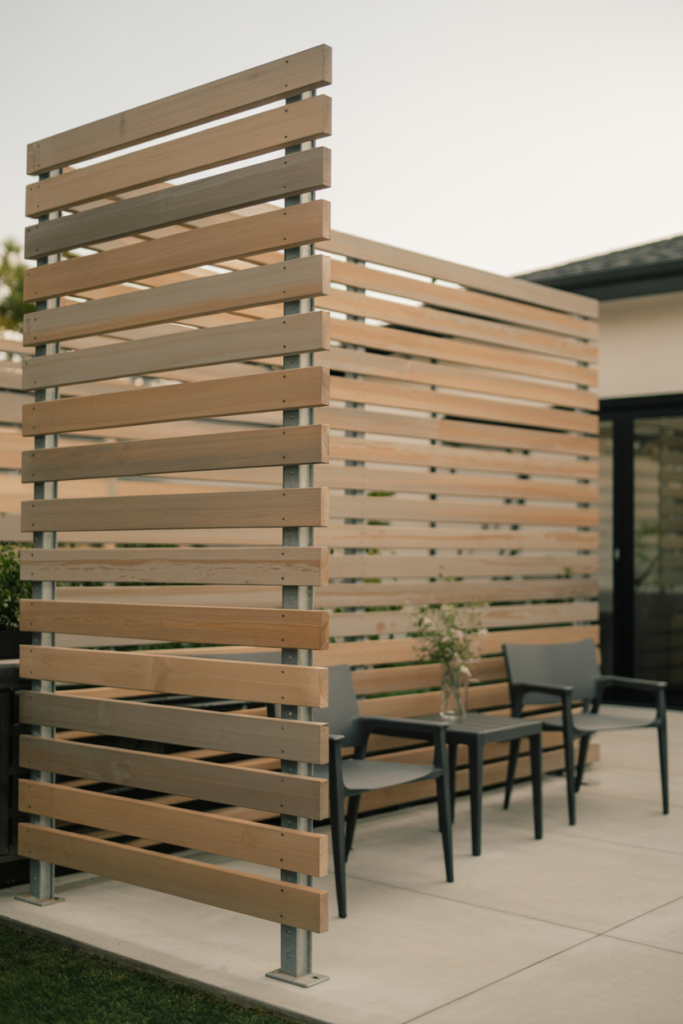
A horizontal slat privacy screen delivers a contemporary, architectural look that standard vertical board fencing simply cannot match. Evenly spaced horizontal cedar or composite boards mounted on a sturdy frame create a clean, modern privacy barrier that looks more like a design feature than a functional screen. The spacing between the slats provides partial privacy while still allowing light and air to pass through, which keeps the yard feeling open rather than walled in.
The gap width between slats determines the privacy level the screen provides. Slats spaced one inch apart block most sightlines from a distance while still feeling airy up close. For full privacy, reducing the gap to half an inch or less blocks direct views almost completely while maintaining the horizontal aesthetic that makes this style so appealing.
Horizontal slat screens work particularly well as partial privacy solutions for specific areas like a patio seating zone, a hot tub enclosure, or a pool equipment screen rather than a full perimeter fence. Building a screen specifically around the area where privacy matters most costs far less than fencing an entire yard and often delivers a more intentional, designed result.
3. Tall Privacy Hedge for a Natural Living Screen
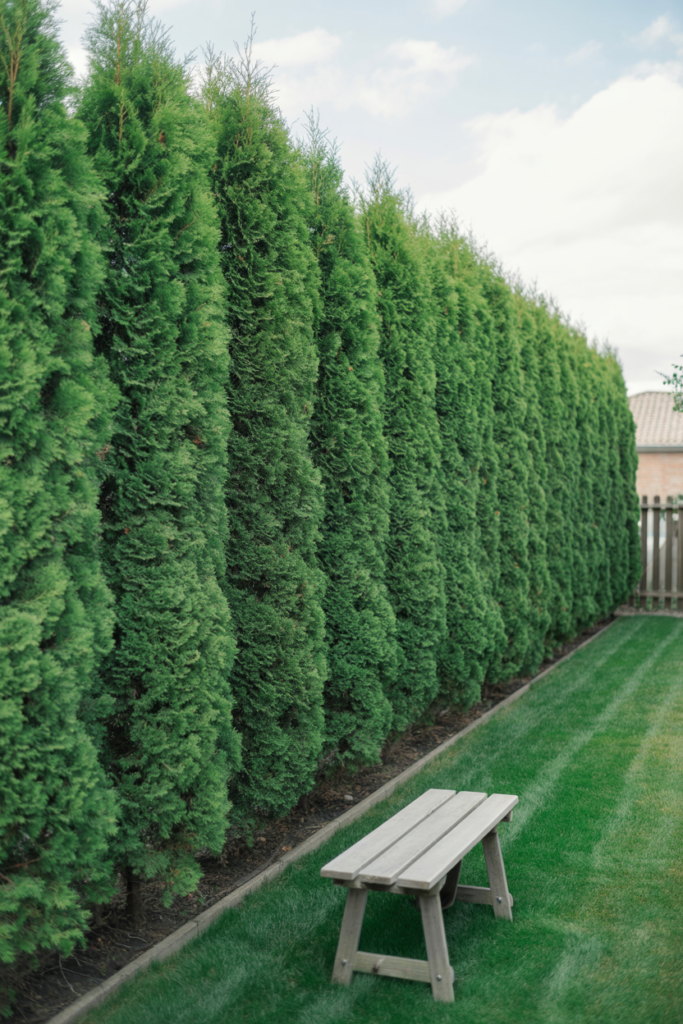
A tall privacy hedge creates the most natural-looking backyard screening available and gets better every year as the plants mature and fill in. Evergreen shrubs like arborvitae, Leyland cypress, holly, and privet all grow quickly to screening height and maintain their coverage year-round without losing leaves in winter. A well-established hedge also provides noise reduction, wind protection, and wildlife habitat that no fence can replicate.
Emerald Green arborvitae is one of the most popular choices for a privacy hedge because it grows in a naturally narrow, columnar shape that reaches 10 to 15 feet tall without requiring much width. Planting them 3 to 4 feet apart creates a solid screen within two to three growing seasons. Green Giant arborvitae grows even faster at up to 3 feet per year and reaches impressive heights for properties that need screening from taller neighboring structures.
The main consideration with a living privacy hedge is the establishment period before full screening coverage develops. Planting a hedge requires patience if starting from smaller nursery stock, though purchasing larger specimens speeds up the process at a higher upfront cost. Combining a temporary screen like bamboo panels or a lattice fence with new hedge plantings covers the yard during the establishment years without leaving the space exposed while waiting for plants to mature.
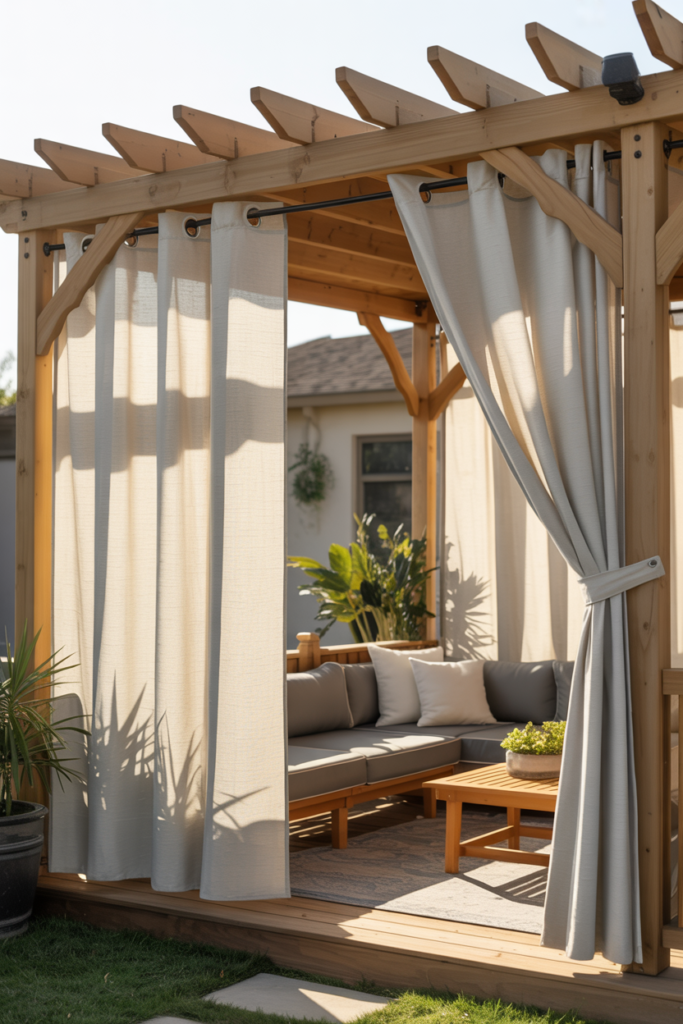
4. Pergola with Privacy Curtains or Shade Sails
A pergola combined with outdoor curtains or shade sails creates a defined outdoor room that feels genuinely sheltered and private without fully enclosing the space. The pergola structure provides the framework and overhead coverage, while curtains or shade panels on the sides control how much screening the space provides. I find this combination particularly effective for patio areas where you want privacy during gatherings without making the space feel permanently closed off.
Outdoor curtain panels in weather-resistant fabrics like Sunbrella or solution-dyed acrylic block sightlines from neighboring yards when drawn and open up the space completely when pushed to the sides. Installing curtain rods on three sides of a pergola gives full flexibility to adjust privacy levels throughout the day, depending on the sun angle and neighboring activity. White, linen, and neutral-toned curtains look elegant and keep the space feeling light even when the curtains are fully drawn.
Shade sails attached between the pergola posts and the house wall or nearby trees offer a more architectural privacy solution that works well in modern or minimalist backyard styles. Triangular or rectangular shade sails in solid colors block overhead and angled sightlines while creating a dramatic canopy effect above the seating area. The combination of a pergola structure with shade sails above and climbing plants on the sides creates a fully layered outdoor privacy room over time.
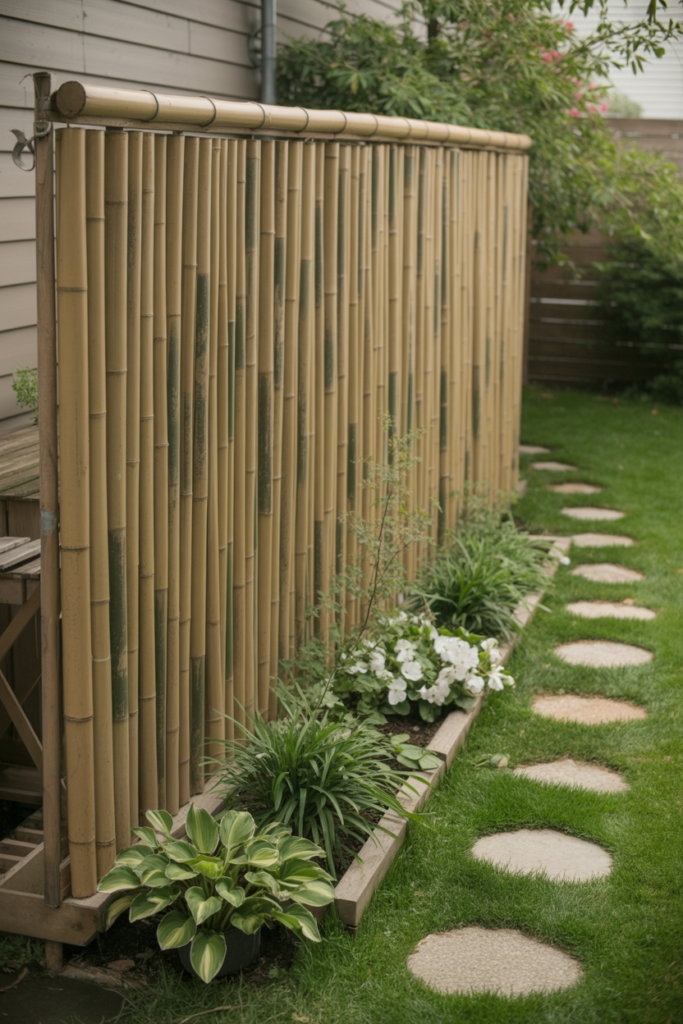
5. Bamboo Privacy Screen or Rolled Fence
A bamboo privacy screen is one of the fastest and most affordable ways to add immediate privacy to a backyard without any construction work. Rolled bamboo fencing attaches directly to an existing fence or a simple wooden frame with zip ties or wire and creates an instant, natural-looking screen in about an hour. The warm, organic texture of bamboo looks attractive in almost any garden style and provides complete privacy at heights of 6 to 8 feet.
Bamboo rolled fencing costs significantly less than building a new wood fence and requires no digging, no post setting, and no concrete. For renters or homeowners who want a non-permanent privacy solution, bamboo panels attach and remove easily without causing damage to existing structures. That flexibility makes bamboo screening one of the most practical quick-fix privacy solutions available for any yard situation.
The main limitation of bamboo screening is longevity, since natural bamboo degrades over time when exposed to constant moisture and UV light. Sealed or treated bamboo panels last longer than untreated versions, and keeping the panels from sitting in standing water extends their lifespan considerably. Replacing a section of bamboo screening every few years is inexpensive enough that the lower upfront cost still makes it a very economical privacy solution over the long term.
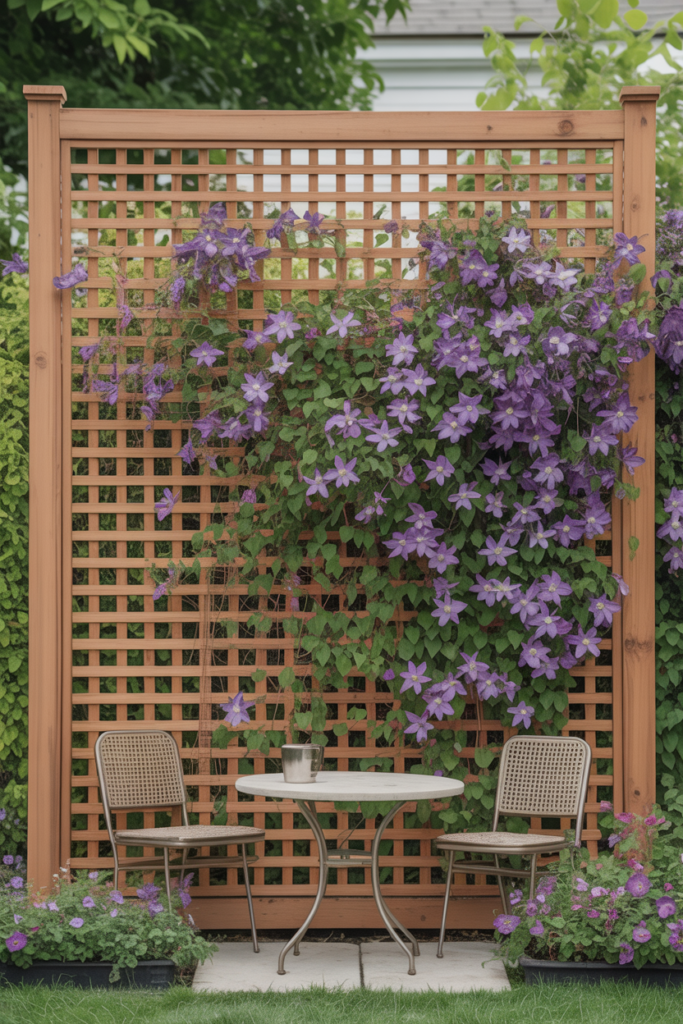
6. Lattice Panel Privacy Screen with Climbing Plants
A lattice panel screen combined with climbing plants creates one of the most beautiful long-term privacy solutions available for a backyard. The lattice provides immediate partial screening from the day it goes up, while the climbing plants gradually cover the structure and create a lush living wall over one to two growing seasons. The finished result looks like a natural garden feature rather than a privacy barrier, which is exactly what makes this approach so appealing.
Climbing plants like clematis, jasmine, climbing roses, wisteria, and evergreen ivy all cover lattice quickly and provide varying degrees of visual interest across the seasons. For year-round screening coverage, evergreen climbers like ivy or climbing euonymus maintain their coverage through winter, while deciduous climbers like clematis go bare but return vigorously each spring. Choosing a fragrant climber like jasmine or climbing roses adds a sensory dimension to the privacy screen that purely structural solutions cannot provide.
Cedar lattice panels with a 2-by-2-inch grid pattern provide enough structure for climbing plants to grip while still looking attractive during the plant establishment period. Mounting the lattice panels on a simple frame of 4-by-4-inch posts creates a freestanding structure that installs without any attachment to existing fences or structures. This freestanding approach works particularly well for creating privacy in a specific zone, like a patio corner or hot tub area.
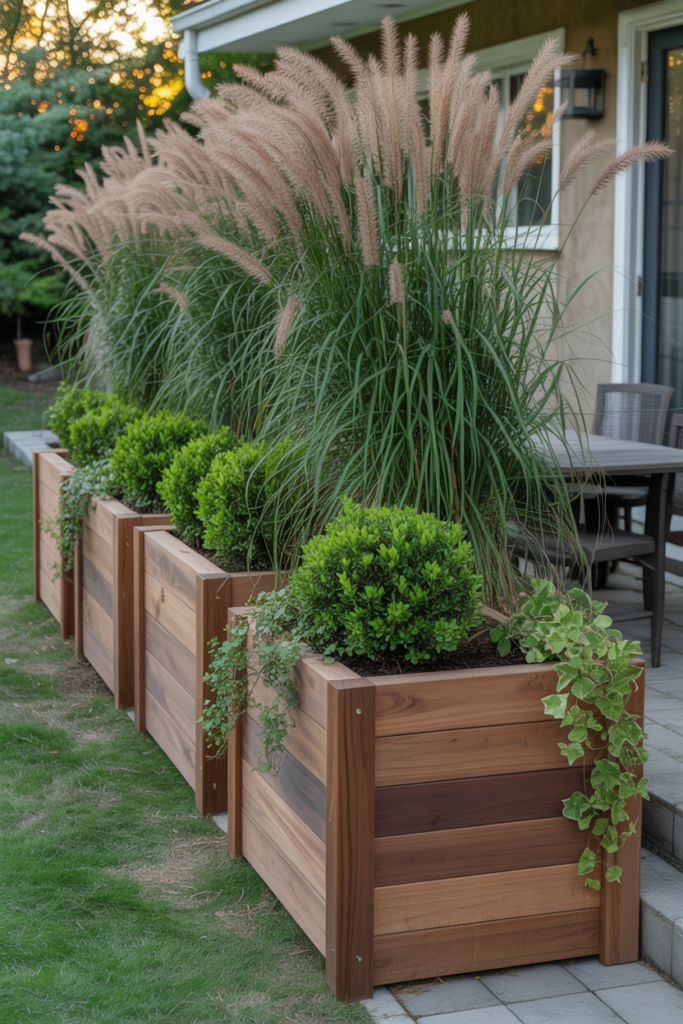
7. Raised Planter Beds with Tall Grasses or Shrubs
Raised planter beds filled with tall ornamental grasses or screening shrubs create privacy that feels like a natural part of the garden rather than a constructed barrier. Building raised planters along a fence line or patio edge and filling them with tall plants like miscanthus grass, phormium, or bamboo adds significant screening height above what a standard fence provides. The combination of the planter height plus the plant height creates a layered privacy screen that reaches well above neighboring sightlines.
Raised planters also solve a common problem in yards where the soil quality is too poor or the drainage too inconsistent to support healthy hedge plants in the ground. Filling the planters with quality potting mix gives even fast-growing screening plants the best possible start, regardless of what the native soil looks like. This approach works particularly well in urban yards with compacted or contaminated soil where in-ground planting is impractical.
Building the planters from cedar, composite lumber, or corten steel creates a clean, finished look that adds to the overall design quality of the backyard. Sizing the planters at least 24 inches wide and 18 inches deep gives screening plants enough root space to establish quickly and grow to full height without becoming root-bound. A well-built raised planter with healthy screening plants becomes a genuine design feature that adds value and visual interest far beyond basic privacy function.
8. Outdoor Privacy Wall or Garden Screen Panel
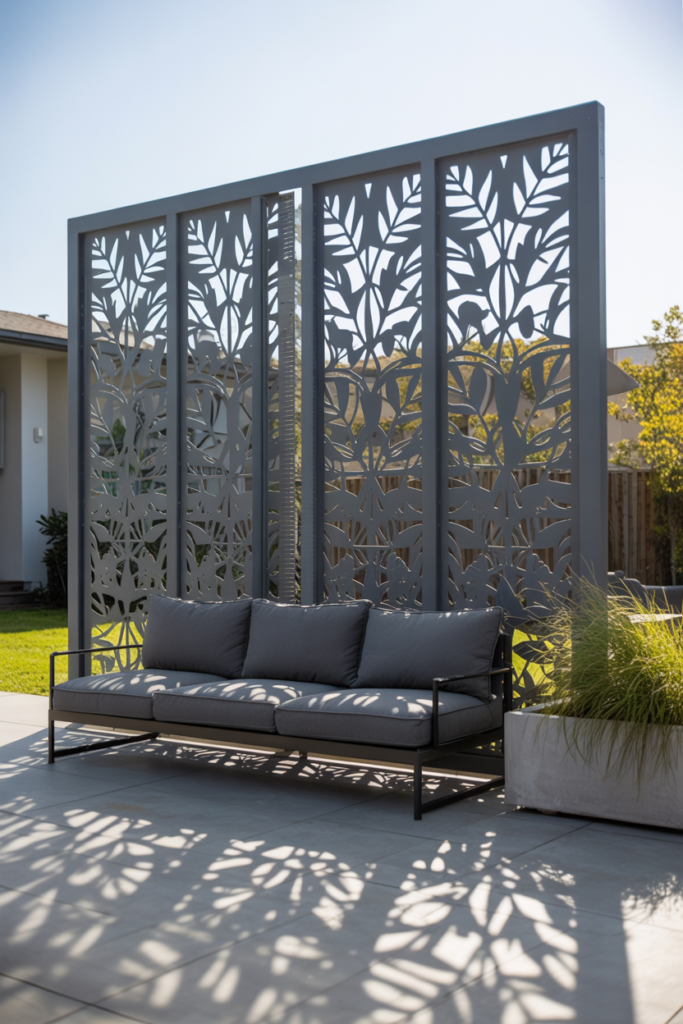
A freestanding outdoor privacy wall or decorative garden screen panel creates an architectural focal point in the backyard while blocking specific sightlines without fencing the entire perimeter. Metal, wood, or composite decorative panels in geometric or organic cut-out patterns provide partial to full privacy depending on the design density and can serve as a backdrop for outdoor seating areas, fire pit zones, or garden beds. I have seen single well-placed privacy panels completely transform the feel of an exposed patio with minimal installation effort.
Laser-cut metal privacy screens in steel or aluminum are particularly popular for modern and contemporary backyard styles because the precision-cut patterns create beautiful shadow effects when sunlight passes through them. These panels mount on simple post frames and require no ongoing maintenance beyond an occasional rinse. Powder-coated finishes in black, bronze, or charcoal gray hold up well outdoors and coordinate easily with most fence and furniture color schemes.
Positioning a privacy screen panel strategically matters more than the size of the panel itself. Placing a single large panel directly in the sightline between your seating area and the neighbor’s window or elevated deck blocks the specific view that causes the most discomfort. A targeted placement of one or two well-chosen panels often solves the privacy problem more elegantly and affordably than a full fence installation covering the entire yard.
9. Green Wall or Vertical Garden for Privacy
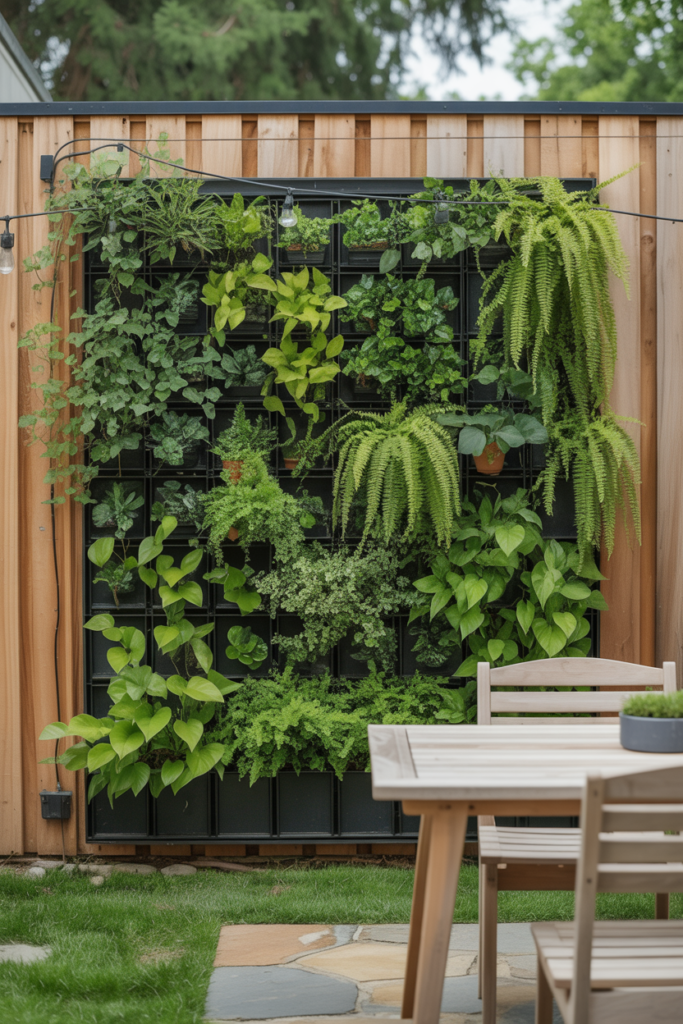
A vertical green wall mounted on a fence or freestanding frame adds dense plant coverage to a vertical surface and creates a living privacy screen with a lush, resort-like quality. Modular vertical garden systems use individual planting pockets or trays that mount on a wall or frame and support a wide range of plants from trailing ivy and ferns to flowering annuals and succulents. The density of a fully established green wall provides complete visual screening while dramatically improving the look and atmosphere of the backyard.
Vertical garden systems work particularly well on existing fence surfaces that are technically adequate for privacy but look plain or unattractive. Mounting a green wall system on a basic wood fence transforms a utilitarian barrier into a living garden feature that becomes more impressive as the plants fill in. Choosing low-maintenance plants like pothos, sedums, or native ferns reduces the ongoing care commitment while keeping the wall looking full and healthy.
Irrigation is the most important practical consideration for a vertical green wall since the small planting volumes in individual pockets dry out faster than in-ground or raised bed plantings. Installing a simple drip irrigation system connected to a timer handles watering automatically and keeps the plants consistently hydrated without daily manual attention. That automated watering setup is what makes a green wall genuinely sustainable as a long-term privacy feature rather than a high-maintenance showpiece.
10. Shade Sail and Pergola Combination for Overhead Privacy
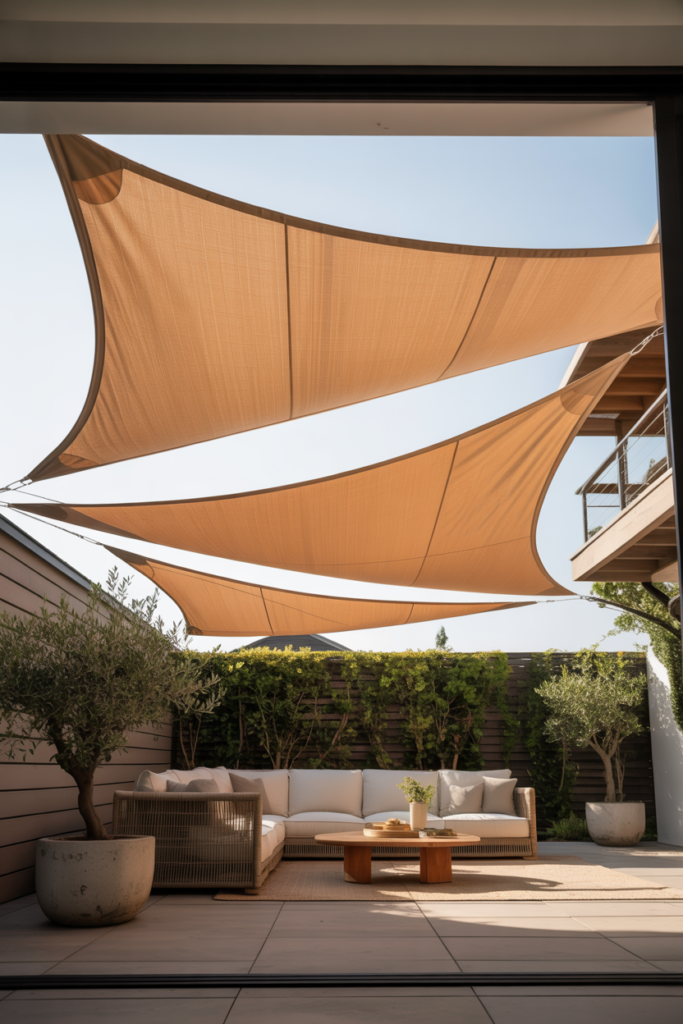
Overhead privacy matters just as much as lateral screening in yards with neighboring second-floor windows, elevated decks, or hillside properties that look down into the backyard. A shade sail stretched across a patio area or a solid pergola roof with polycarbonate panels blocks the overhead sightlines that standard fencing completely ignores. This type of overhead privacy solution turns an exposed patio into a genuinely sheltered outdoor room that feels private from every angle.
Shade sails in dense woven fabric like high-density polyethylene block 90 to 98 percent of UV light and create effective visual screening from above when installed at the right angle and height. Mounting points on the house wall, pergola posts, and strategic anchor posts allow a single large sail or a combination of overlapping smaller sails to cover the entire seating area. The angular, geometric look of shade sails adds a modern architectural quality to the backyard that a pergola covered with traditional roofing cannot replicate.
A solid pergola roof using polycarbonate roofing panels, outdoor fabric panels, or even a living roof planted with sedum provides complete overhead coverage that handles rain as well as privacy. Combining a solid roof pergola with side curtains or lattice panels creates a fully enclosed outdoor room that functions as a true extension of the interior living space. This type of structure represents the most complete backyard privacy solution available and creates an outdoor retreat that genuinely rivals interior rooms for comfort and usability.
How to Choose the Right Backyard Privacy Project for Your Yard
Choosing the right privacy project starts with identifying exactly where the privacy problem originates and what kind of screening best addresses it. A neighbor’s second-floor window requires a different solution than a low shared fence line, and a large open yard needs a different approach than a compact urban patio. Spending a few minutes mapping the specific sightlines you want to block before committing to any project saves both money and effort.
| Privacy Project | Best For | Approx. Cost | Installation Difficulty |
| Tall Privacy Fence | Full perimeter screening | $15 – $45 per linear ft | Moderate |
| Horizontal Slat Screen | Modern partial screening | $20 – $60 per linear ft | Moderate |
| Privacy Hedge | Natural long-term screening | $10 – $50 per plant | Low |
| Pergola with Curtains | Patio enclosure | $1,500 – $5,000 | Moderate |
| Bamboo Screen | Quick affordable screening | $2 – $8 per sq ft | Very Low |
| Lattice with Climbers | Natural decorative screen | $5 – $20 per panel | Low |
| Raised Planters with Shrubs | Elevated natural screening | $200 – $800 | Low – Moderate |
| Decorative Screen Panel | Targeted sightline blocking | $100 – $600 | Low |
| Vertical Green Wall | Living wall screening | $150 – $500 | Moderate |
| Shade Sail or Pergola Roof | Overhead privacy | $200 – $3,000 | Moderate |
Budget, timeline, and maintenance preference all play important roles in narrowing down the right project. Someone who wants immediate results and minimal ongoing maintenance points toward a solid fence or bamboo screen. Someone willing to wait two to three years for a more natural result and who enjoys gardening points toward a hedge or lattice with climbing plants. Matching the project to realistic expectations about both the process and the outcome makes the whole experience more satisfying.
Conclusion
A private backyard is not a luxury; it is what separates an outdoor space you genuinely enjoy from one you only tolerate. The 10 backyard privacy projects in this guide cover every scenario from quick, affordable fixes to more involved long-term solutions, giving every homeowner a realistic path to a more secluded outdoor retreat. Whether you choose a tall cedar fence, a bamboo screen, a lush privacy hedge, or a pergola with curtains, the result is a backyard that finally feels like it belongs to you.
Starting with a clear picture of where the privacy problem actually exists makes the whole project more efficient and the finished result more satisfying. A targeted decorative panel that blocks one key sightline often delivers as much practical privacy improvement as a full fence at a fraction of the cost. Build from the most impactful solution first and layer in additional screening elements over time as your budget and vision for the space develop.
The best backyard privacy project is the one that fits your yard, your budget, and your lifestyle while making the outdoor space feel more comfortable every single day. That feeling of stepping into your backyard and actually relaxing without wondering who is watching is worth every bit of the effort these projects take to complete.
Frequently Asked Questions
What is the fastest backyard privacy project to install? Rolled bamboo fencing attached to an existing fence or simple frame installs in a single afternoon and provides immediate full privacy screening. Freestanding decorative screen panels also install very quickly with minimal tools and no digging required. Both options deliver the same-day results without any construction expertise or heavy equipment.
What is the best privacy plant for a fast-growing hedge? Green Giant arborvitae grows up to 3 feet per year and reaches 20 to 30 feet at maturity, making it one of the fastest and most effective privacy hedge options available. Leyland cypress grows at a similar rate and provides dense year-round coverage in most climates. Both plants establish quickly when planted in well-drained soil with consistent watering during the first two growing seasons.
How tall can a backyard privacy fence legally be? Most residential zoning regulations cap backyard fence heights at 6 feet without a variance permit, though rules vary significantly by municipality and HOA. Some areas allow up to 8 feet in rear yard locations while restricting front and side yards to lower heights. Always check local building codes and HOA guidelines before starting any fence project to avoid costly modifications after installation.
Can I create backyard privacy without building a fence? Absolutely. Tall privacy hedges, bamboo screens, lattice panels with climbing plants, raised planters with screening shrubs, and vertical green walls all create effective privacy without any traditional fence construction. These plant-based and panel-based alternatives often look more attractive and natural than standard fencing while still providing complete screening from neighboring sightlines.
How do I block a neighbor’s second-floor window view into my backyard? Overhead privacy solutions like shade sails, pergola roofs, and strategically angled privacy screens address second-floor sightlines that standard fencing cannot reach. Tall trees or large columnar shrubs planted in the direct line of sight between your outdoor seating area and the neighboring window also block elevated views effectively over time. Combining an overhead shade sail with tall plantings along the relevant fence line creates the most complete solution for this specific privacy challenge.
What backyard privacy project adds the most home value? A well-built cedar or composite privacy fence consistently adds measurable value to a home by improving the usability and appeal of the outdoor space. A mature privacy hedge adds similar value with the bonus of a more natural aesthetic that many buyers find attractive. Pergola structures with defined outdoor rooms also add significant value, particularly in markets where outdoor living space carries strong buyer appeal.