
A beautiful pool deck does not have to drain your savings account to look like it did. Some of the best-looking backyard pool areas I have come across were built on surprisingly modest budgets, using smart material choices and a little creative planning. The difference between a cheap-looking deck and an expensive-looking one often comes down to design decisions, not dollar amounts.
Most homeowners assume that a high-end pool deck automatically means premium materials and a hefty contractor bill. That assumption costs people a lot of money they do not need to spend. With the right approach, you can get a poolside space that looks polished, intentional, and genuinely resort-worthy without the resort price tag.
In this guide, I am walking through 10 affordable pool deck ideas that deliver serious visual impact on a real-world budget. These ideas cover different materials, styles, and layouts so you can find the right fit for your backyard, your pool shape, and the look you are going for.
Why Your Pool Deck Matters More Than You Think
The pool deck is the first thing people notice when they walk into your backyard, even before they look at the pool itself. A well-designed deck sets the tone for the entire outdoor space and makes the pool look more intentional and well-integrated into the yard. I have seen gorgeous pools surrounded by cracked, plain concrete that somehow made the whole backyard feel unfinished.
A good pool deck also plays a very practical role beyond just looking nice. It provides a safe, slip-resistant surface around the water, defines the lounging and entertaining zones, and protects the surrounding lawn and landscaping from constant foot traffic. Getting this surface right serves both form and function at the same time.
The good news is that the materials and design trends available today give homeowners far more affordable options than existed even ten years ago. Composite decking, concrete overlays, porcelain pavers, and rubber pool deck tiles have all improved dramatically in quality while staying accessible in price. You genuinely have more good options now than ever before.
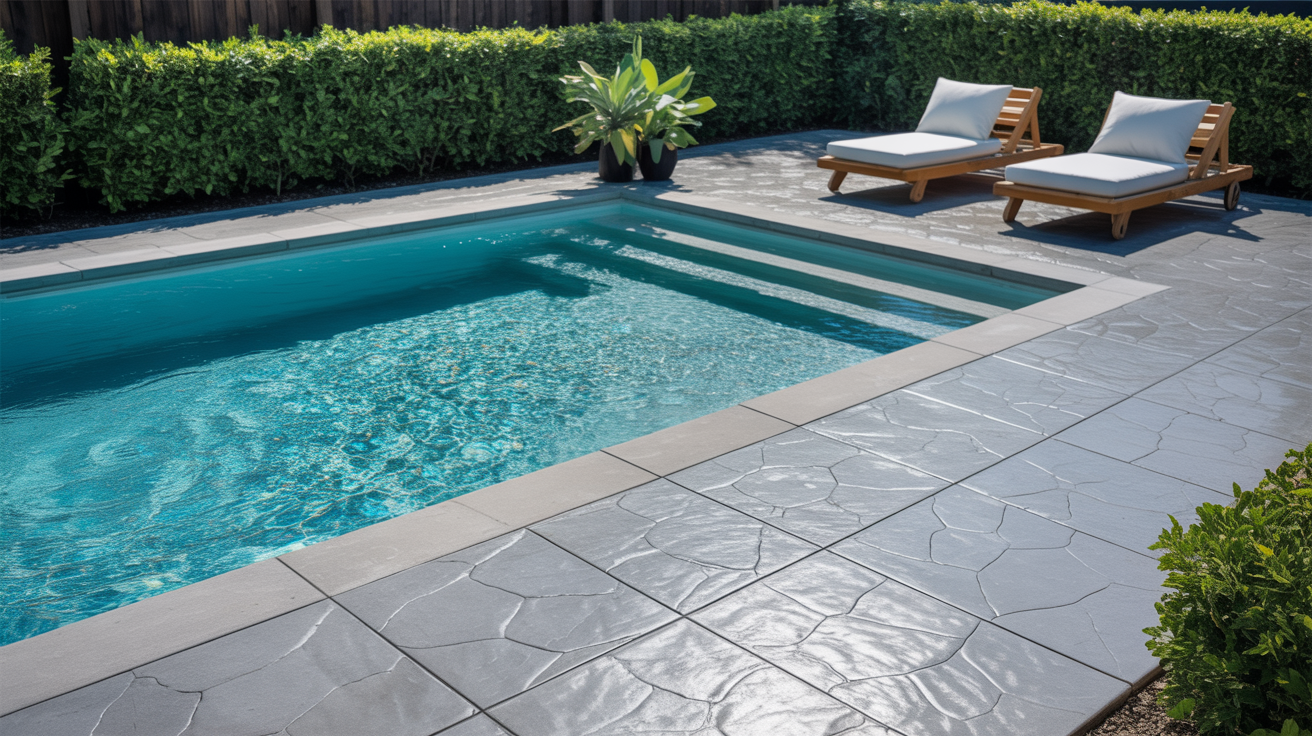
1. Concrete Pool Deck with a Stamped Pattern Finish
A stamped concrete pool deck is one of the best ways to get a high-end look at a fraction of the cost of natural stone or pavers. The process involves pressing textured molds into freshly poured concrete to create patterns that mimic slate, flagstone, brick, or wood planks. The result looks genuinely upscale, and most people cannot tell the difference from a few feet away.
Stamped concrete costs significantly less than the natural materials it imitates, making it one of the most budget-friendly options for a large pool surround. A standard stamped concrete pool deck typically runs between $8 and $18 per square foot, depending on the pattern complexity and your location. Compare that to natural flagstone at $25 to $50 per square foot, and the savings become very clear very quickly.
The one thing to keep in mind with stamped concrete is sealing. A quality concrete sealer applied every two to three years keeps the color vibrant, protects the surface from pool chemicals, and prevents cracking from freeze-thaw cycles. That small maintenance step keeps a stamped concrete deck looking fresh for 20 years or more.
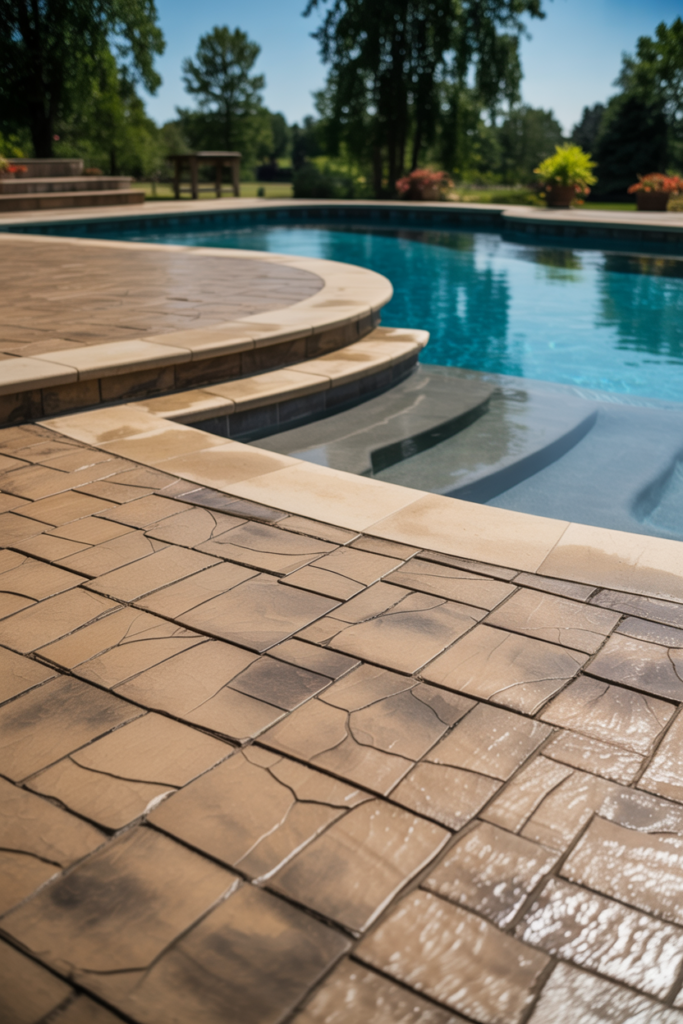
2. Concrete Overlay on an Existing Pool Deck
If you already have a plain concrete pool deck that looks worn or dated, a concrete overlay is the most affordable way to completely transform it without tearing anything out. An overlay applies a thin layer of textured or colored concrete over the existing surface, giving it a completely new look for a fraction of the full replacement cost. I find this option particularly smart for homeowners who want a dramatic change without a construction project.
Concrete overlays come in a wide range of finishes, including smooth trowel, exposed aggregate, broom finish, and even stamped textures. You can also add color through integral pigments or acid staining to create a custom look that ties into your home’s exterior palette. The cost typically runs between $3 and $7 per square foot, making it one of the most budget-friendly pool deck upgrades available.
The key requirement for a successful overlay is that the existing concrete must be structurally sound with no major cracking or heaving. A professional installer will assess the surface before applying the overlay and make any necessary repairs first. When done correctly, an overlay bonds tightly to the existing slab and performs just as well as a full replacement.
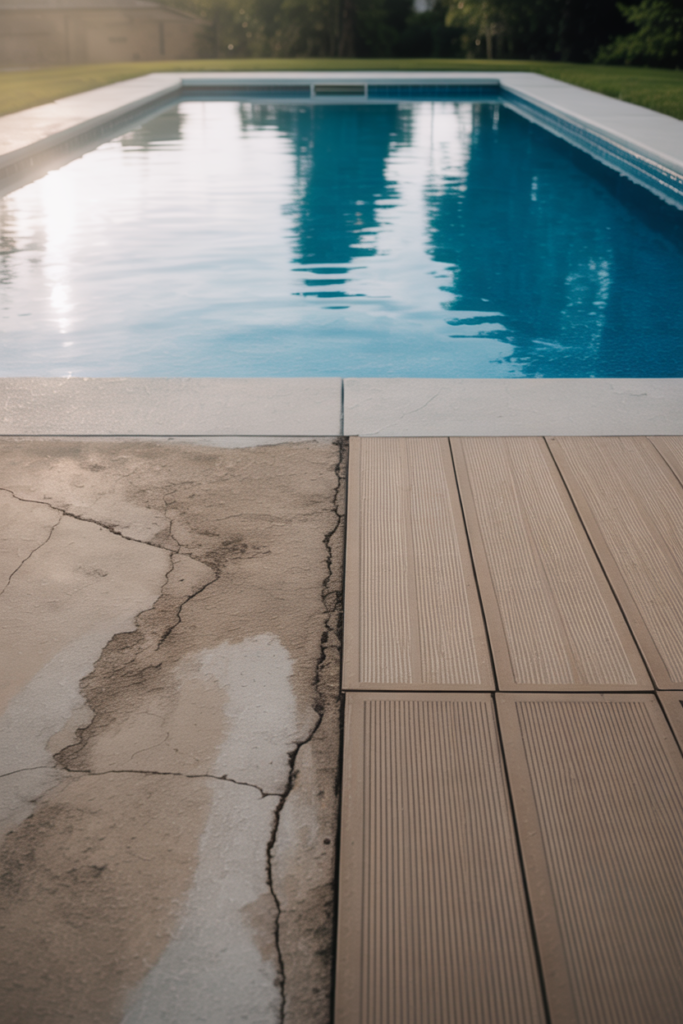
3. Porcelain Paver Pool Deck on a Budget
Porcelain pavers have become increasingly affordable over the last few years, and they deliver one of the most sophisticated looks available for a pool surround. Large format porcelain tiles in stone or concrete look create a seamless, resort-style deck surface that holds up exceptionally well to pool water, sunlight, and heavy foot traffic. The material is dense, non-porous, and naturally slip-resistant when textured finishes are chosen.
The price of porcelain pavers has dropped considerably as production has scaled up, with many good-quality options now available in the $3 to $8 per square foot range for the material alone. Installation adds to the cost, but the long-term durability of porcelain means you rarely need to replace or repair individual pieces. That lifespan makes the upfront investment more economical over time compared to materials that need frequent maintenance.
One practical tip is to choose a porcelain paver with a coefficient of friction rating suitable for wet areas. Pool deck surfaces need a specific slip resistance level for safety, and reputable suppliers list this rating clearly on their product specs. Choosing the right finish from the start saves you from a slippery surface situation that nobody wants around a pool.
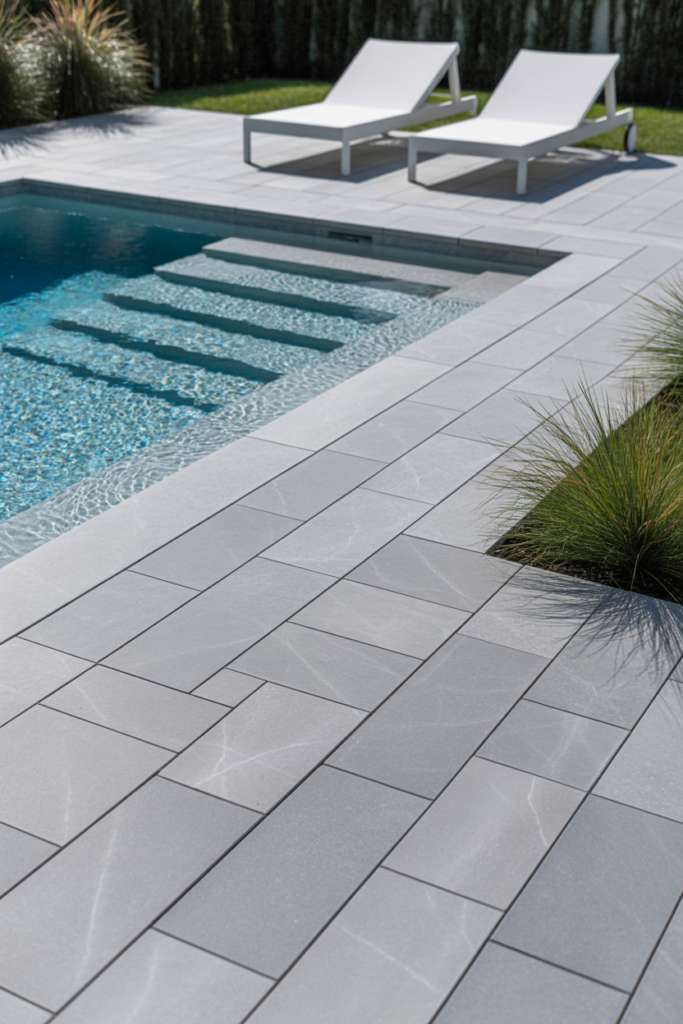
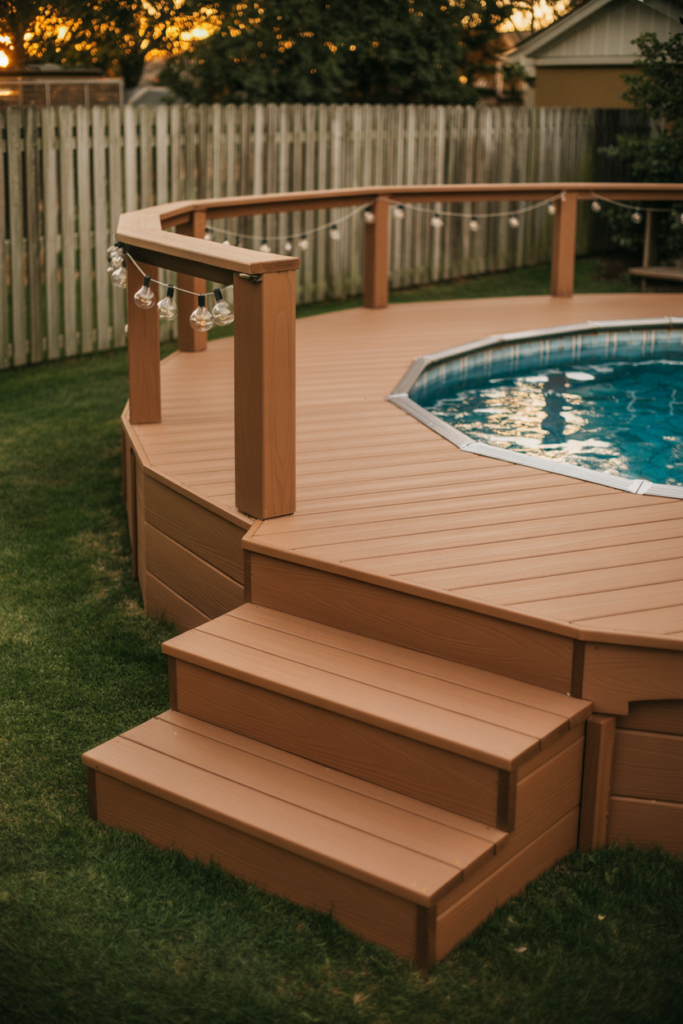
4. Composite Decking Around an Above-Ground or In-Ground Pool
Composite decking has come a long way from the faded, streaky boards that gave it a bad reputation in its early years. Modern composite deck boards look remarkably close to real wood, resist fading and staining, and hold up well in wet poolside environments. For above-ground pools especially, a composite wood deck surround transforms what could look like a backyard eyesore into a genuinely attractive outdoor living space.
The cost of composite decking runs between $20 and $38 per square foot installed, which sits in the mid-range for pool deck materials. However, the near-zero maintenance cost over its lifespan makes composite very competitive with cheaper materials that require regular sealing, staining, or replacement. No splinters, no warping, no annual refinishing treatments make composite a very practical poolside choice.
Capped composite boards, which have a protective polymer shell on all four sides, perform best in pool environments since they resist moisture absorption most effectively. Brands like Trex, TimberTech, and Fiberon all offer capped composite lines with good warranties and a wide range of color options. Choosing a lighter-colored board also helps keep the surface cooler underfoot on hot summer days.
5. Gravel and Paver Combination Pool Deck
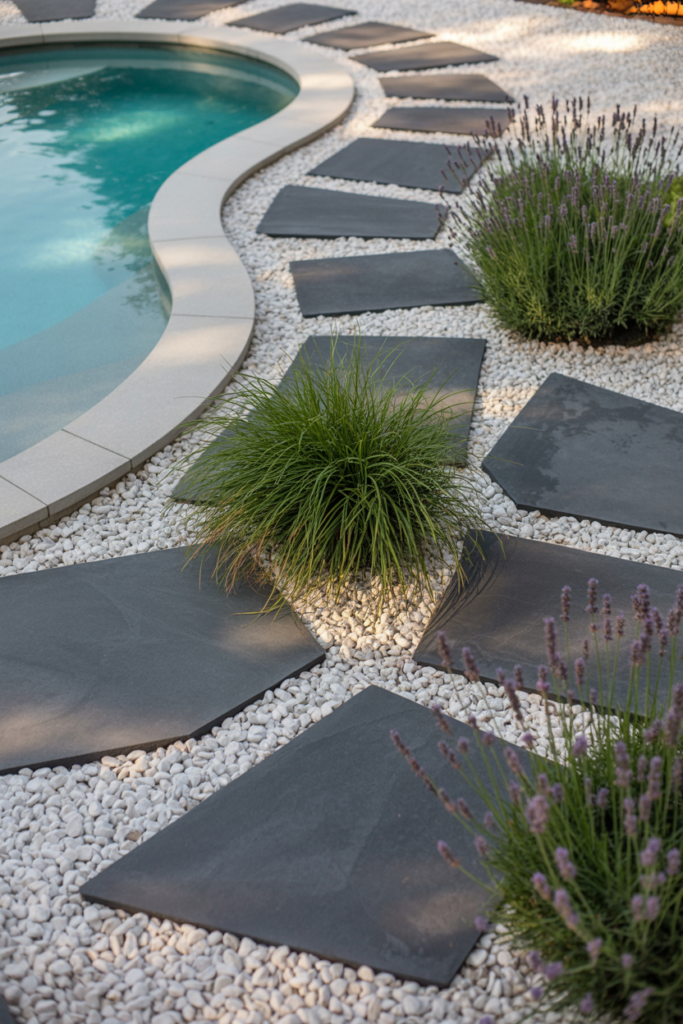
A combination of concrete pavers and decorative gravel creates a pool deck that looks designed and intentional while keeping material costs very manageable. The pavers form the primary walking and lounging surface while gravel fills the areas between paver sections, reducing the total amount of paving material needed. This approach works particularly well for irregular pool shapes or larger yards where paving the entire area would get expensive quickly.
Pea gravel and river rock both work well as filler material between paver sections, and both stay relatively cool underfoot compared to solid concrete or dark stone. The gravel also improves drainage around the pool area, preventing puddles from forming after rain or heavy splashing. I have seen this combination used to great effect in both modern geometric layouts and more relaxed, naturalistic backyard designs.
The key to making this look polished rather than unfinished is using a consistent paver style and keeping the gravel contained with clean edging. Steel or aluminum landscape edging installed along the borders of the gravel sections keeps everything tidy and prevents the gravel from migrating into the lawn over time. That containment detail is what separates a well-executed gravel and paver deck from one that just looks messy.
6. Rubber Pool Deck Tiles for an Affordable and Safe Surface
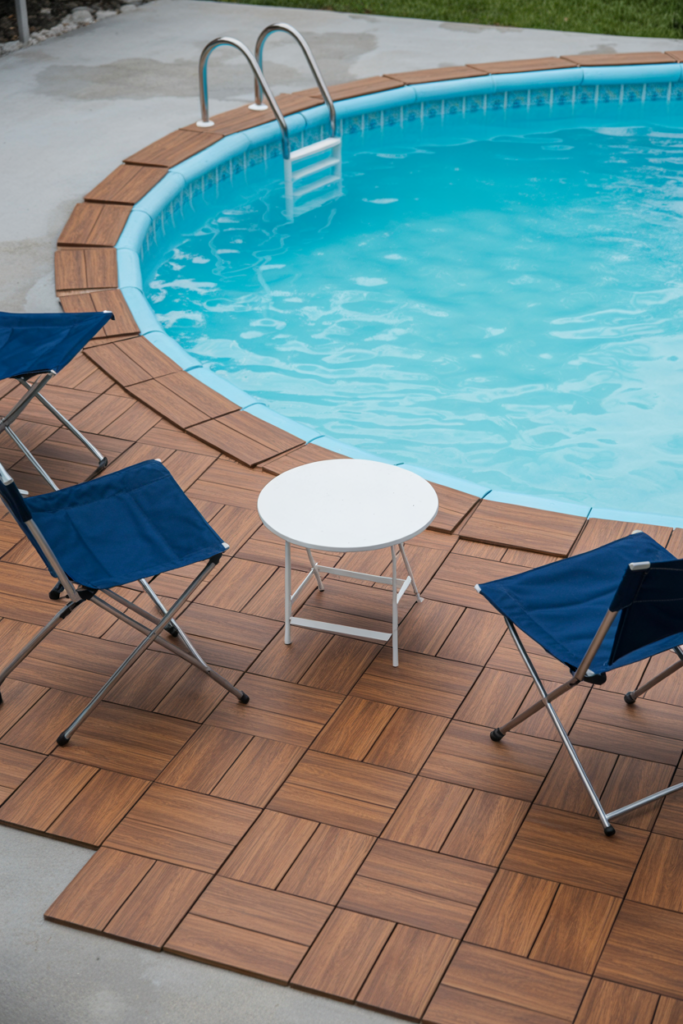
Rubber pool deck tiles are one of the most underrated, affordable options for a pool surround, particularly for above-ground pools or as a surface upgrade over existing concrete. These interlocking tiles install without any adhesive or professional labor, making them a genuinely DIY-friendly option that costs a fraction of traditional paving materials. The material is inherently slip-resistant, cushioned underfoot, and available in a range of colors and textures.
The cost of rubber pool deck tiles ranges from $2 to $6 per square foot for the tiles alone, and installation requires no special tools or skills beyond snapping the interlocking edges together. That makes this one of the few pool deck upgrades a motivated homeowner can complete in a single weekend. The tiles also lift easily for cleaning underneath or for storage during the winter months in colder climates.
Modern rubber deck tiles have improved significantly in appearance and are available in wood grain, stone texture, and solid color finishes that look far more attractive than the plain black rubber matting of earlier versions. For renters or homeowners who want a non-permanent pool deck solution, rubber tiles offer flexibility that no other material can match. The combination of safety, comfort, and easy installation makes them worth serious consideration.
7. Brick Paver Pool Deck for a Classic and Affordable Look
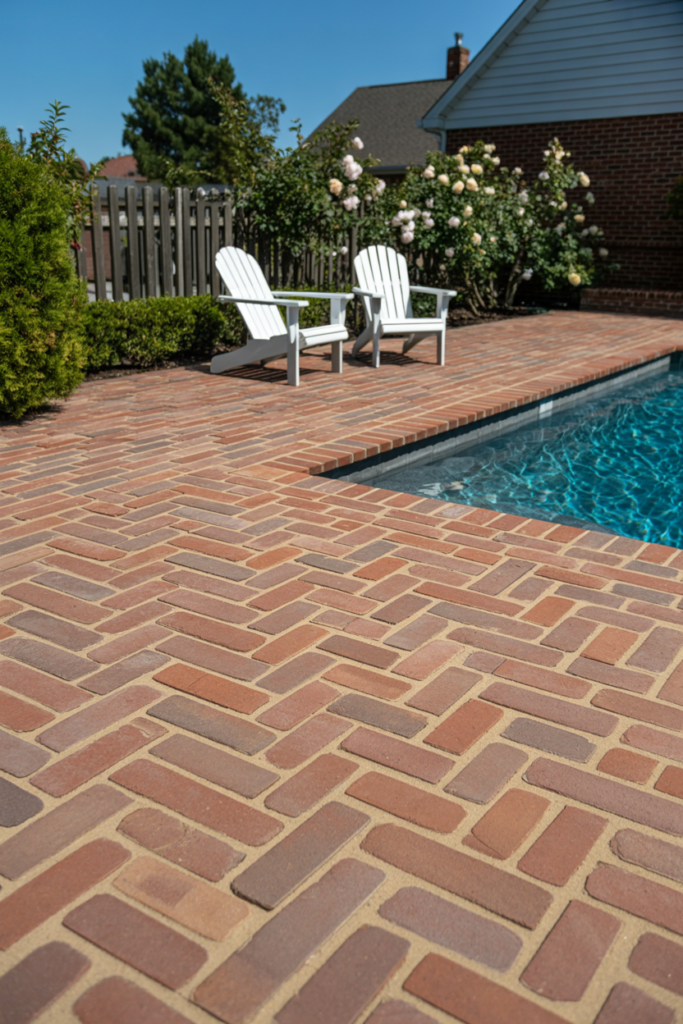
Brick pavers bring a timeless, classic look to a pool deck that holds up beautifully for decades with very little maintenance. The warm red and tan tones of traditional brick complement almost every home exterior style and look particularly good alongside lush green landscaping. Brick paver pool decks typically cost between $10 and $20 per square foot installed, placing them in the affordable to mid-range category for pool deck materials.
One of the practical advantages of a brick paver pool deck is repairability. If a paver cracks or shifts, individual pieces lift out and replace without disturbing the rest of the surface. That spot-repair ability means a brick paver deck can look well-maintained for 30 or 40 years with minimal overall investment. Contrast that with poured concrete, where a single crack often requires a full section replacement.
Sealing brick pavers every three to four years enhances the color, reduces staining from pool chemicals and sunscreen, and prevents weed growth between the joints. Polymeric sand in the joints also helps lock pavers in place and discourages weeds from establishing. These simple maintenance steps keep a brick paver pool deck looking sharp season after season.
8. Natural Stone Look Concrete Pavers
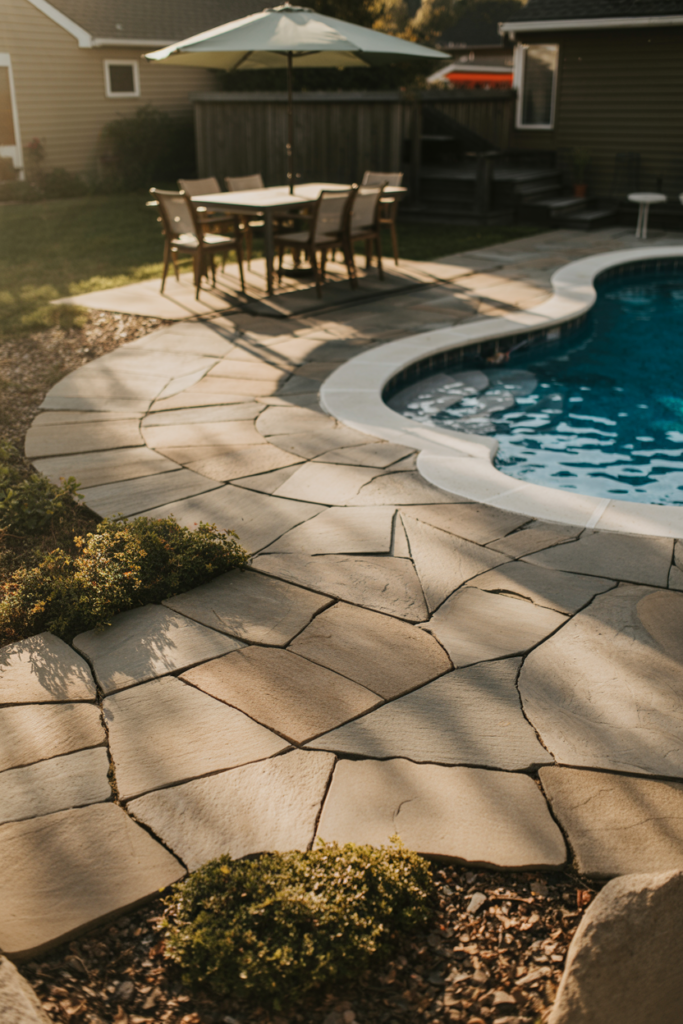
Concrete pavers that mimic the look of natural stone give you the aesthetic of flagstone or slate at roughly half the price. Manufacturers have gotten very good at replicating the color variation, surface texture, and irregular edges of natural stone in a concrete paver format. The result is a pool deck that looks like it cost considerably more than it actually did, which is exactly the goal.
Concrete pavers cost between $8 and $15 per square foot installed, compared to $25 to $50 for genuine natural stone. They also offer more consistency in thickness and dimension, which makes installation faster and more straightforward than working with irregular natural stone pieces. For a DIY installation, that consistency is a significant advantage since it reduces the cutting and fitting work considerably.
These pavers also handle pool chemical exposure, freeze-thaw cycles, and heavy foot traffic well when sealed properly. A penetrating concrete sealer applied after installation and refreshed every few years protects the surface and keeps the color looking rich. The combination of low cost, easy installation, and solid durability makes concrete pavers one of the smartest choices for an affordable pool deck.
9. Wood Deck with Pressure-Treated Lumber
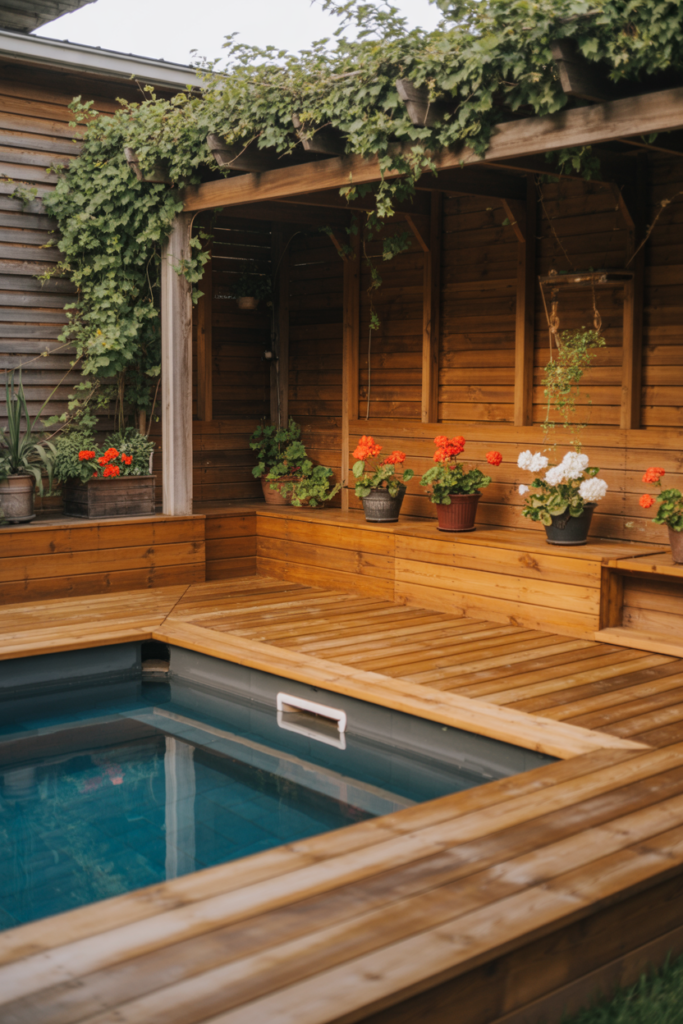
A pressure-treated wood pool deck delivers that warm, natural look that composite and concrete simply cannot fully replicate, at a lower upfront cost than any other wood decking option. Pressure-treated pine handles moisture and outdoor exposure well when properly sealed and maintained, making it a practical choice for a poolside deck surface. The cost typically runs between $15 and $25 per square foot installed, depending on the deck size and complexity.
The key to a long-lasting pressure-treated wood pool deck is the finishing and maintenance routine. Applying a water-repellent deck sealer or semi-transparent stain every one to two years prevents the wood from graying, cracking, and absorbing excess moisture from pool splashing. That maintenance commitment is more involved than composite or concrete, but many homeowners genuinely prefer the look and feel of real wood enough to consider it worthwhile.
Choosing the right stain color also allows you to coordinate the deck with your home’s exterior, fencing, and outdoor furniture for a cohesive backyard look. A warm cedar or honey tone stain on pressure-treated pine looks surprisingly close to more expensive hardwood decking at a fraction of the cost. That visual flexibility is something concrete and paver options simply cannot offer in the same way.
10. Travertine Paver Pool Deck on a Budget
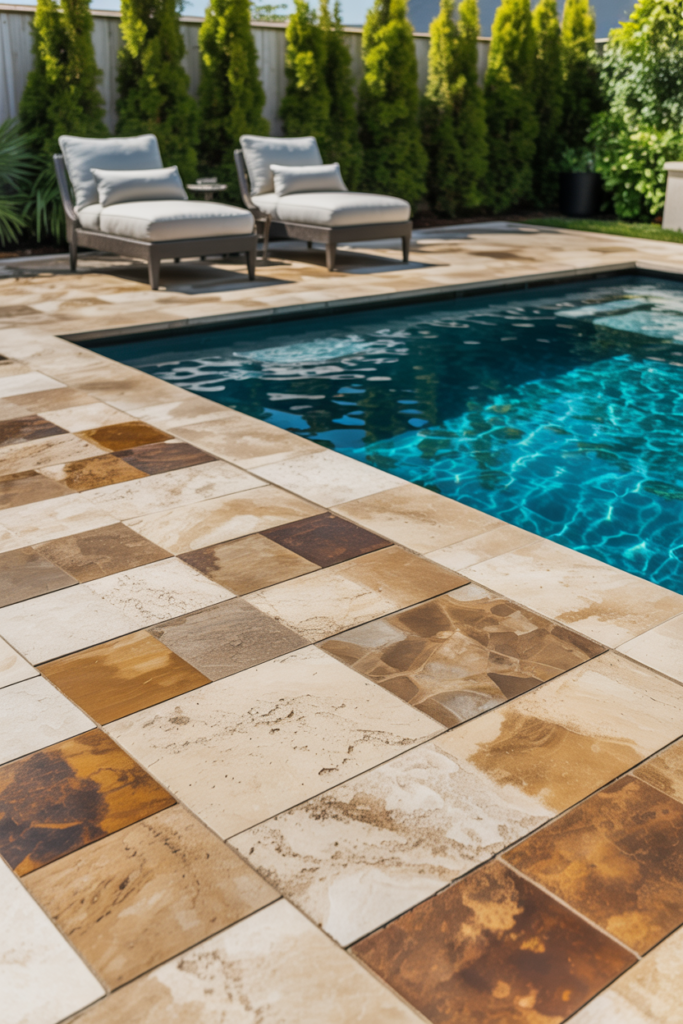
Travertine pavers have long been associated with luxury pool decks, but prices have become much more accessible in recent years as supply has increased. Tumbled travertine in particular offers a beautiful, naturally textured surface that stays cool underfoot even in direct summer sun, which is a genuinely practical advantage around a pool. Prices now range from $10 to $20 per square foot installed for quality travertine pavers, putting it within reach for budget-conscious homeowners.
The natural porous texture of travertine makes it inherently slip-resistant, which is an important safety consideration for any pool deck surface. The material also stays noticeably cooler than dark concrete or brick in direct sunlight, making it more comfortable for bare feet during peak summer heat. Those practical benefits, combined with the undeniable visual elegance of natural travertine, make it one of the best value options available at this price point.
Travertine does require sealing to prevent pool chemicals and organic staining from penetrating the surface. A quality penetrating stone sealer applied at installation and refreshed every two to three years handles this effectively. With that basic maintenance in place, a travertine pool deck holds its beauty and structural integrity for decades without significant additional investment.
Smart Tips for Getting the Most from Your Pool Deck Budget
Getting a high-end look on an affordable budget comes down to a few smart decisions made early in the planning process. Choosing the right material for your climate, pool type, and maintenance preference saves money both upfront and over the long term. Spending a little extra on quality installation also prevents costly repairs down the road that could wipe out the savings from choosing an affordable material.
| Pool Deck Material | Cost Per Sq Ft (Installed) | Maintenance Level | Lifespan |
| Stamped Concrete | $8 – $18 | Low – Medium | 20+ years |
| Concrete Overlay | $3 – $7 | Low – Medium | 10 – 15 years |
| Porcelain Pavers | $10 – $20 | Very Low | 25+ years |
| Composite Decking | $20 – $38 | Very Low | 25 – 30 years |
| Gravel and Pavers | $8 – $15 | Low | 15 – 20 years |
| Rubber Tiles | $2 – $6 | Very Low | 10 – 15 years |
| Brick Pavers | $10 – $20 | Low | 30+ years |
| Concrete Pavers | $8 – $15 | Low | 20+ years |
| Pressure-Treated Wood | $15 – $25 | Medium – High | 15 – 20 years |
| Travertine Pavers | $10 – $20 | Low – Medium | 25+ years |
Keeping the deck layout simple also reduces labor costs significantly. A straightforward rectangular or L-shaped deck costs less to install than a complex curved design that requires custom cutting and more precise fitting work. Saving the budget on the layout and spending it on a better material or quality finishing details is a trade-off that almost always produces a better overall result.
Conclusion
A high-end looking pool deck is absolutely achievable on a budget when you choose the right material and plan the project thoughtfully. From stamped concrete and concrete overlays to travertine pavers and composite decking, every idea in this list delivers serious visual impact without requiring a luxury budget. The key is matching the material to your climate, maintenance preference, and the overall style of your backyard.
The ideas I have shared cover a wide range of price points and styles, so there is a realistic option here for almost every homeowner and every pool setup. Whether you want the warmth of wood, the elegance of stone, or the low-maintenance simplicity of porcelain, you can get that look without overspending. A well-planned, well-installed pool deck at any budget point adds real value to your home and makes your backyard a place you actually want to spend time in.
Start with the material that fits your budget and lifestyle best, invest in a good installation, and keep up with the basic maintenance each material requires. Do those three things, and your pool deck will look great for years without costing a fortune to maintain.
Frequently Asked Questions
What is the most affordable pool deck material? Rubber interlocking tiles are the least expensive option at $2 to $6 per square foot, and they require no professional installation. Concrete overlays over an existing slab are the most affordable option for a permanent surface upgrade, typically running $3 to $7 per square foot. Both options deliver a clean, functional pool deck without a large upfront investment.
What pool deck material stays coolest in summer heat? Travertine pavers stay noticeably cooler than most other pool deck materials because the natural stone reflects heat rather than absorbing it. Light-colored concrete pavers and porcelain tiles in lighter shades also perform well in hot climates. Dark-colored concrete and brick absorb more heat and can become uncomfortably hot for bare feet in direct afternoon sun.
How long does a stamped concrete pool deck last? A well-installed stamped concrete pool deck lasts 20 years or more with proper sealing and basic maintenance. Resealing every two to three years protects the surface from pool chemicals, UV fading, and freeze-thaw cracking. Avoiding de-icing salts in winter and cleaning up pool chemical spills promptly also extends the lifespan significantly.
Can I install a pool deck myself to save money? Some pool deck options are genuinely DIY-friendly, including rubber interlocking tiles, gravel and paver combinations, and basic concrete paver layouts. Stamped concrete, concrete overlays, and large-format porcelain tile installations generally require professional skills and equipment to achieve a quality result. Taking on the right DIY project can save 30 to 50 percent of the total installation cost.
What is the best pool deck surface for bare feet? Travertine pavers, rubber tiles, and composite decking all feel comfortable underfoot around a pool. Travertine stays cool and has a smooth but textured natural surface. Rubber tiles provide cushioning that hard surfaces cannot match. Composite decking’s splinter-free surface makes it one of the most foot-friendly wood alternative options available for poolside use.
How do I make a cheap pool deck look expensive? Consistent material choice, clean edges, and thoughtful finishing details make the biggest difference in how upscale a budget pool deck looks. Adding built-in planters, quality outdoor lighting along the deck perimeter, and coordinated furniture pulls the whole space together. A simple deck with good finishing details almost always looks better than a complex design executed poorly.
Do pool decks add value to a home? Yes, a well-designed pool deck adds measurable value to a home by improving the usability and visual appeal of the outdoor space. Real estate professionals generally consider a quality pool and deck combination a positive selling feature in warmer climates where outdoor living space gets used year-round. The return on investment varies by region, but a clean, well-maintained pool deck consistently improves the overall impression a home makes on buyers.