
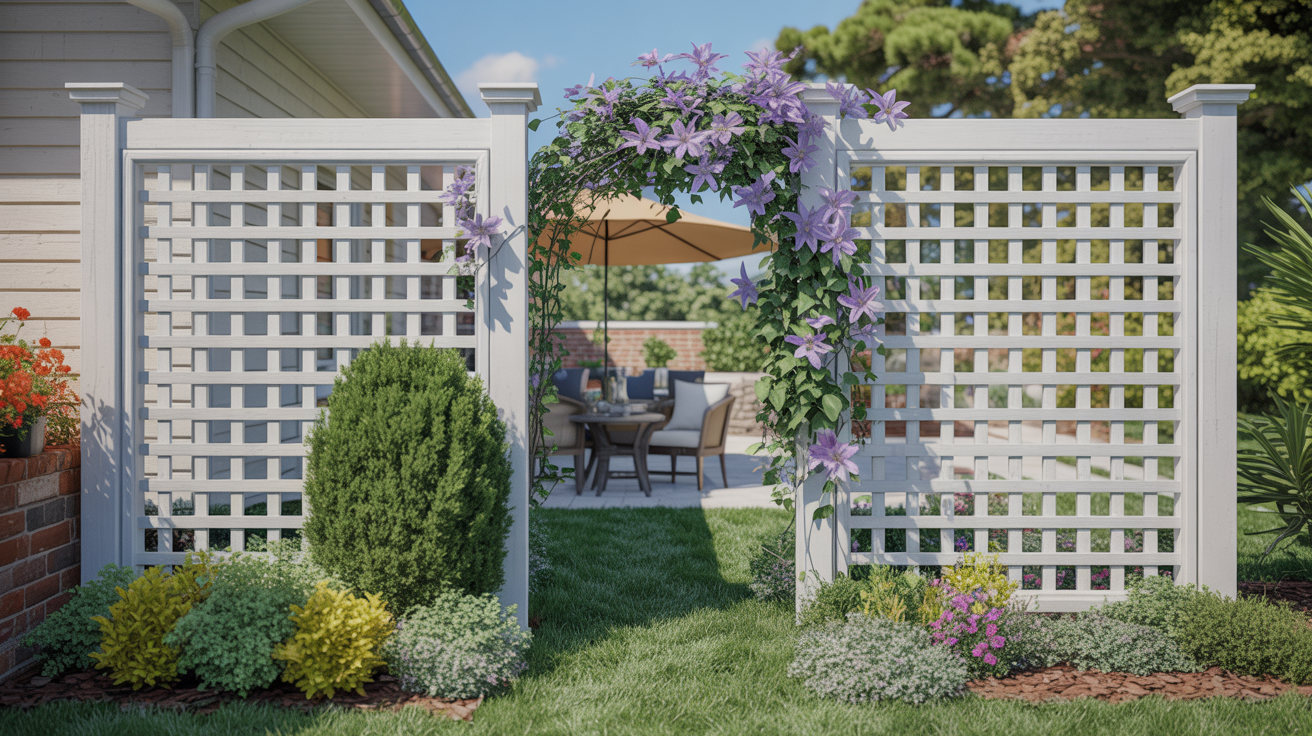
Vinyl lattice panels are one of those versatile outdoor materials that most people seriously underestimate. The majority of homeowners see them installed as basic deck skirting or a simple fence screen and assume that’s the full extent of what they do. In reality, vinyl lattice panels work beautifully in at least ten different applications around the home and garden, several of which look genuinely high-end when executed with a little thought.
The appeal of vinyl lattice over wood lattice comes down to three practical advantages that are hard to argue with. Vinyl never rots, never needs painting, never warps in wet weather, and cleans up with nothing more than a garden hose. For outdoor applications that face constant sun, rain, and temperature swings, those qualities matter enormously over the long life of the installation.
The creative possibilities with vinyl lattice panels extend well beyond the backyard fence line. From indoor room dividers and garden trellises to pergola accents and poolside privacy screens, vinyl lattice brings a structured, decorative quality to almost any application you put it in. This article covers ten of the most creative and practical uses that go well beyond what most homeowners consider when they first pick up a panel at the home improvement store.
Why Vinyl Lattice Panels Deserve More Credit Than They Usually Get
Vinyl lattice panels come in a wider range of styles, colors, and opening sizes than most people realize until they actually stand in the lattice aisle at a hardware store. Standard diagonal lattice is the most familiar pattern, but square lattice, privacy lattice with smaller openings, and decorative lattice with ornamental border details all exist at accessible price points. That variety makes vinyl lattice a genuinely flexible design material rather than a one-look product.
The structural qualities of vinyl lattice make it suitable for applications that wood lattice handles less reliably. Vinyl panels resist moisture damage completely, which means they perform just as well in a humid garden environment or beside a pool as they do in a dry climate under a covered patio. Wood lattice in the same conditions requires regular sealing, repainting, and eventual replacement as the moisture cycle breaks down the material over time.
Cost is another area where vinyl lattice consistently wins. The upfront price sits at a similar or slightly higher level than wood lattice, but the lifetime cost comparison strongly favors vinyl once you factor out the ongoing maintenance expenses. No paint, no stain, no sealer, no replacement panels every few years. For a material used across large outdoor areas, the long-term savings add up to a meaningful difference in total project cost.
1. Garden Privacy Screen With Climbing Plants
A vinyl lattice panel privacy screen with climbing plants growing through the openings is one of the most attractive and functional uses of this material in any garden setting. The lattice provides the structural framework that climbing plants need to grip and grow upward, while the plants themselves soften the manufactured appearance of the panel and add seasonal color and texture. Together they create a living privacy screen that looks far more expensive than its parts suggest.
Clematis, jasmine, climbing roses, and black-eyed Susan vine all work beautifully on vinyl lattice. These plants attach naturally to the lattice openings and fill in steadily over a single growing season to create a dense, flowering screen. The vinyl underneath handles the outdoor exposure without any degradation, while the plants do the decorative work on the surface.
Installing the lattice panels in a sturdy frame of pressure-treated or vinyl posts gives the screen the structural integrity to support mature plant growth over many years. Spacing the posts no more than six to eight feet apart prevents sagging under the weight of established climbing plants. A finished planted lattice screen in full growth genuinely looks like a feature a professional landscape designer specified rather than a DIY weekend project.
2. Deck Skirting That Actually Looks Finished and Intentional
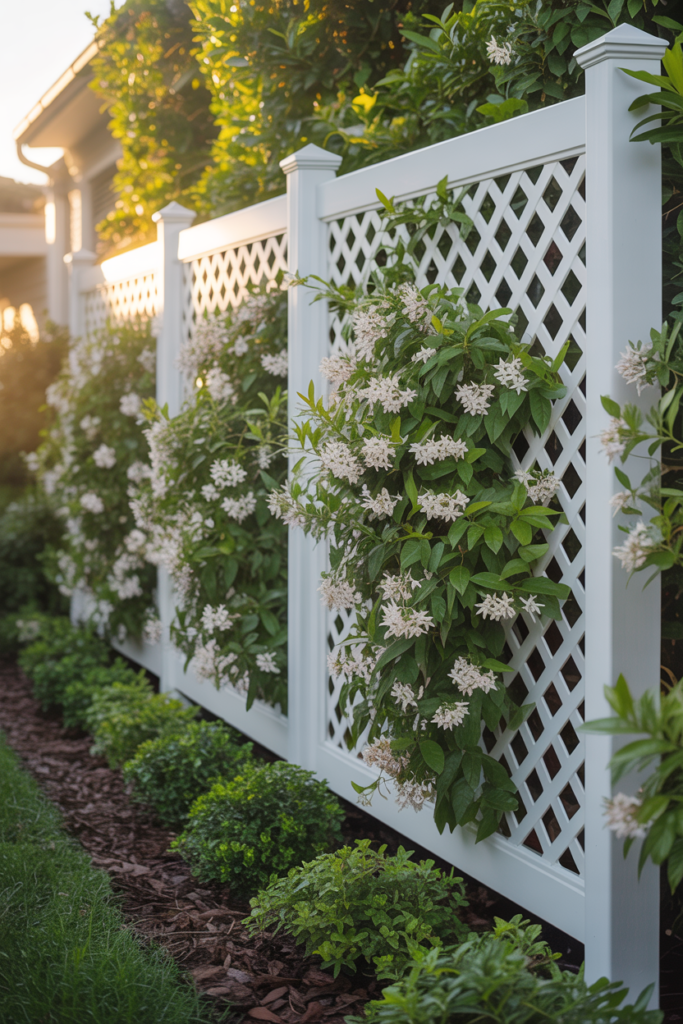
Deck skirting with vinyl lattice panels is one of the most common applications, but most people install it without the framing details that separate a finished-looking result from a basic one. A proper vinyl lattice deck skirt uses a continuous frame of vinyl trim channels around each panel section, clean corner posts, and consistent panel alignment to create a polished, built-in appearance that makes the deck look like a complete structure rather than a platform on stilts.
Choosing the right lattice opening size for deck skirting makes a significant visual difference. Standard diagonal lattice with larger openings creates an open, airy look that works well in casual and cottage-style outdoor settings. Square lattice with smaller openings reads as more formal and contemporary, which suits modern deck designs and cleaner architectural styles. Matching the lattice color to the deck railing or house trim color ties the whole exterior together cohesively.
Adding an access panel in one section of the lattice skirting is a practical detail that most homeowners appreciate after the fact if they don’t plan for it upfront. The space under a deck stores garden tools, hoses, and seasonal items conveniently, but only if you can actually get to them without removing panels. A simple hinged or removable lattice access panel in a discreet location solves this completely and costs almost nothing extra to include during the initial installation.
3. Pergola Side Panel for Partial Shade and Privacy
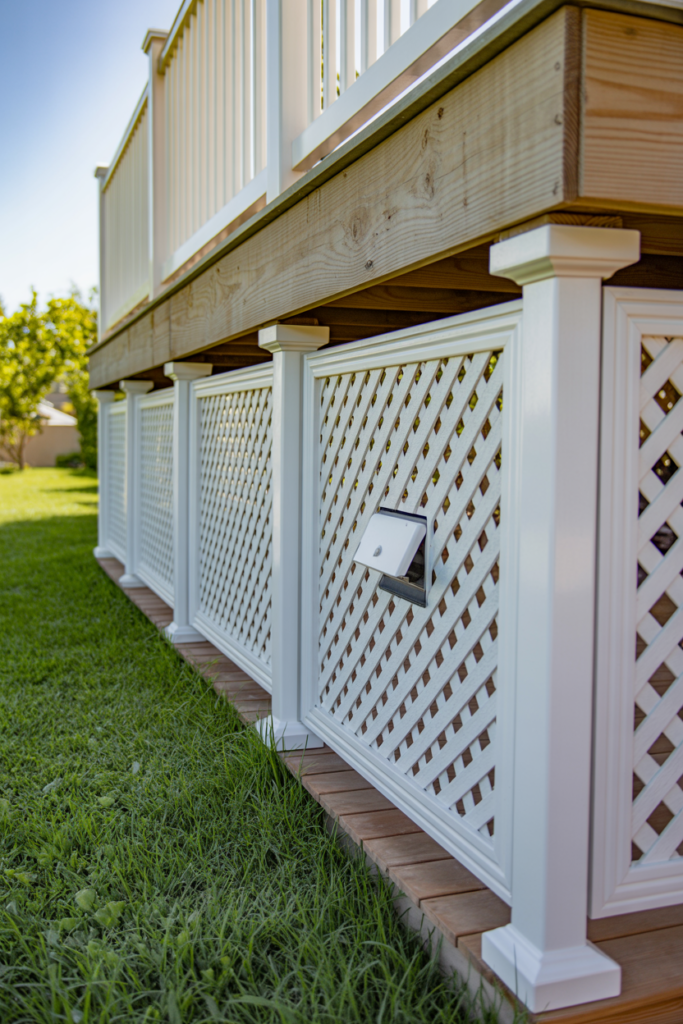
A vinyl lattice panel installed as a side wall on an existing pergola transforms an open structure into a partially enclosed outdoor room. The lattice allows air circulation and filtered light through while creating a visual separation between the pergola space and the surrounding yard. This partial enclosure quality is exactly what makes a pergola feel like a destination rather than just a structure you walk under.
Attaching vinyl lattice panels to pergola posts requires only basic tools and standard outdoor fasteners. Most vinyl lattice panels cut cleanly with a circular saw or jigsaw, which makes fitting them between posts of any spacing a straightforward process. Framing each panel in vinyl trim channels before attaching it to the posts creates a finished edge detail that looks intentional and professionally installed.
Growing a wisteria, climbing hydrangea, or star jasmine up and over the pergola while the lattice side panels provide the lower privacy layer creates a layered, botanical outdoor room effect that is genuinely beautiful. The lattice handles the structural and privacy function at the base, while the climbing plants take over the overhead canopy. This combination of hard structure and soft planting is a classic landscape design approach that works regardless of the garden style.
4. Outdoor Room Divider for Patio Zoning
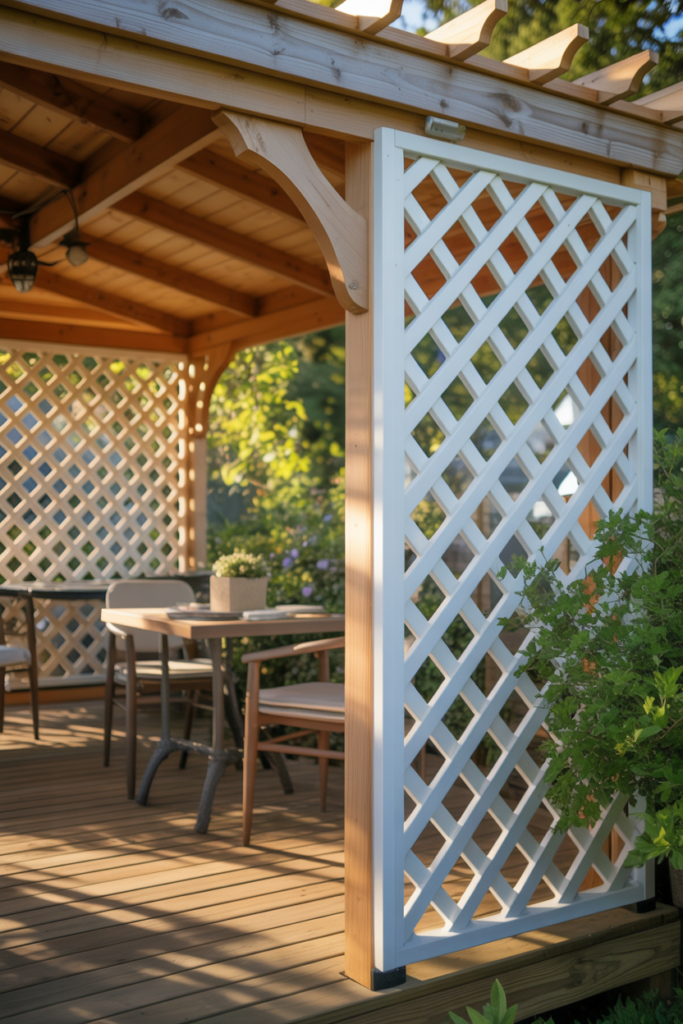
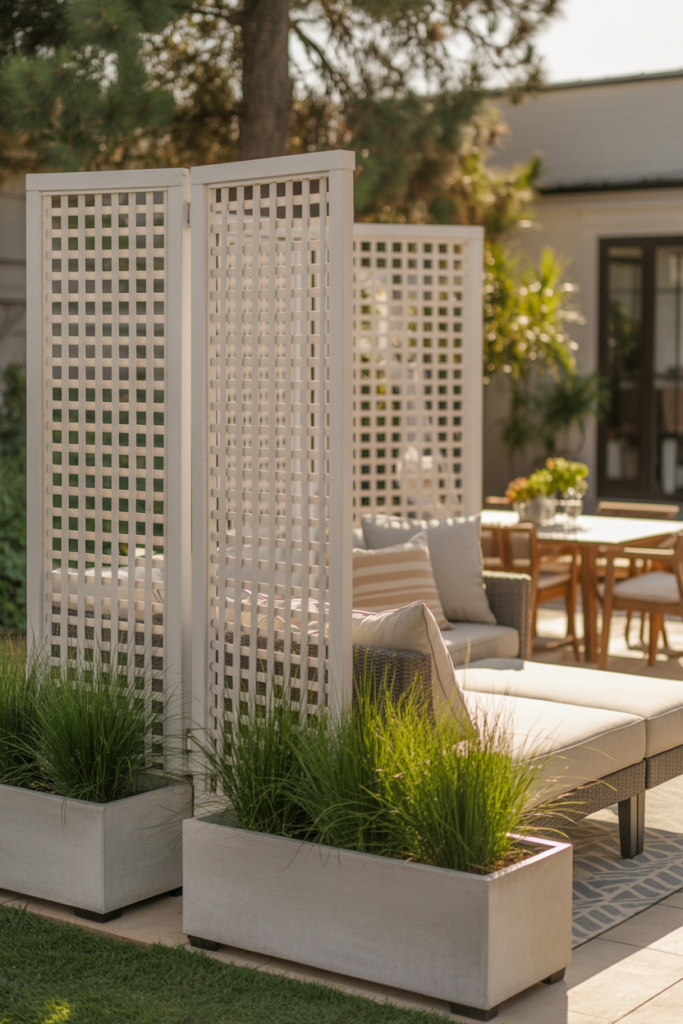
Using vinyl lattice panels as a freestanding outdoor room divider on a patio or deck is a creative application that most homeowners never consider. A simple frame of two or three vinyl lattice panels connected at angles creates a partial enclosure that defines a seating area, separates a dining zone from a lounge area, or screens a utility corner of the patio from the main entertaining space. The open lattice pattern keeps the division feeling light and airy rather than solid and confining.
Building a freestanding lattice room divider requires a stable base to prevent tipping in the wind. Weighted planter boxes attached to the base of each panel section work beautifully for this purpose. The planters add ballast weight that keeps the divider stable while also introducing greenery and seasonal color that enhances the decorative quality of the whole installation. Tall ornamental grasses, boxwood topiary, or cascading trailing plants all work well in this role.
The modular nature of vinyl lattice panels makes a freestanding room divider easy to reconfigure as entertaining needs change across different seasons. Panels that snap or bolt together can separate and reassemble in different arrangements without permanent installation. This flexibility is a significant advantage over built-in patio walls or fixed pergola structures that commit the space to one permanent layout.
5. Trellis Wall for a Vegetable or Herb Garden
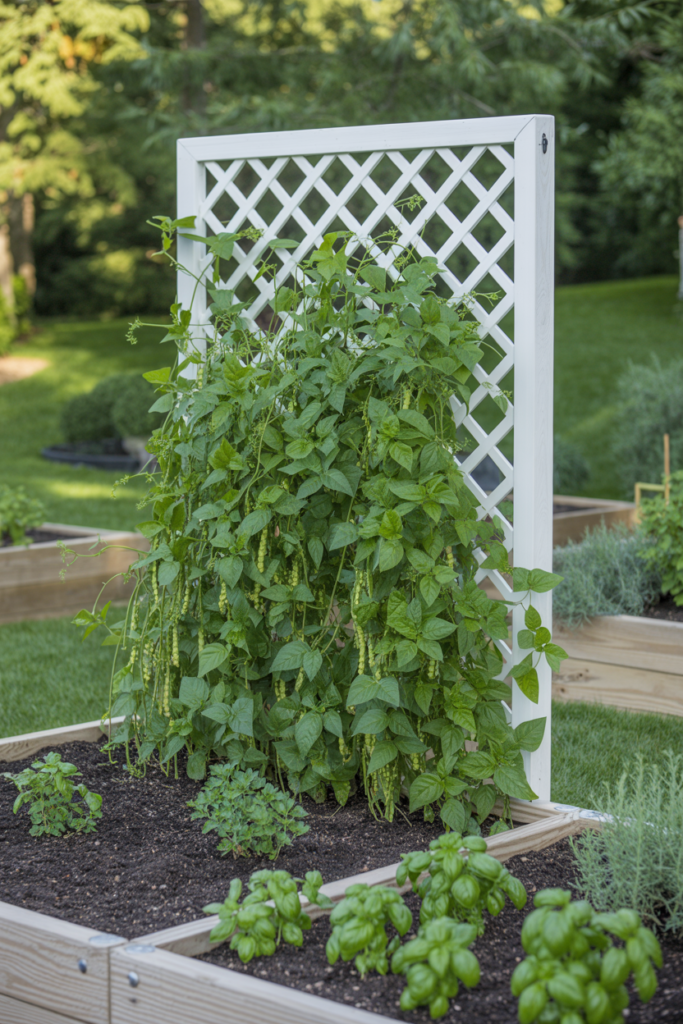
A vinyl lattice panel trellis wall for a vegetable or herb garden is one of the most practical and hardworking uses of this material in any outdoor space. Vertical growing on a lattice trellis maximizes production in small garden areas by training climbing vegetables upward rather than letting them sprawl across the ground. Cucumbers, pole beans, peas, and indeterminate tomatoes all grow readily on vinyl lattice and produce significantly more fruit per square foot of ground space when trained vertically.
Mounting vinyl lattice panels between garden bed posts at a slight backward angle from vertical, around 10 to 15 degrees, makes it easier for climbing plants to attach and reduces the stress on the lattice from the weight of mature fruit-bearing plants. This angled installation also improves water and light distribution across the plant canopy. These are the kinds of practical growing details that experienced vegetable gardeners discover through trial and error and that make a real difference in garden productivity.
The food-safe quality of vinyl is worth noting here for edible garden applications. Unlike treated wood lattice that may leach preservative chemicals into nearby soil over time, vinyl lattice contains no chemical treatments and presents no concerns about soil or plant contamination. For an organic vegetable garden or a herb bed positioned near food preparation areas, chemical neutrality is a genuine practical advantage.
6. Poolside Privacy Screen for a More Enclosed Swim Area
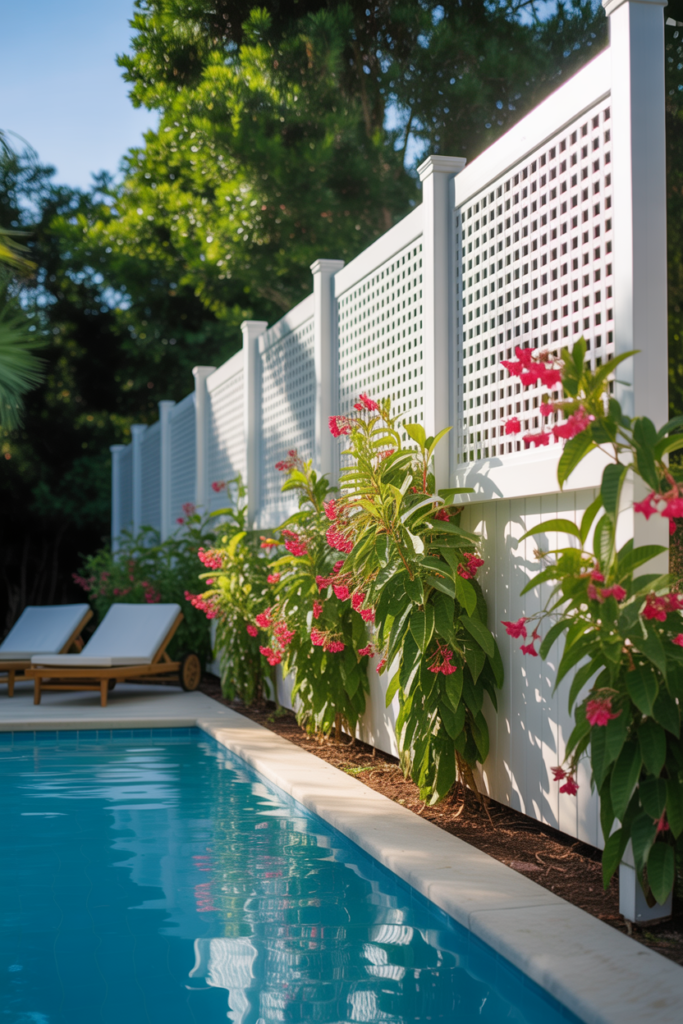
A vinyl lattice privacy screen beside a pool creates a sense of enclosure and seclusion that transforms an exposed backyard pool into a genuinely retreat-like space. Standard pool areas often feel open and overlooked from neighboring properties, which reduces the sense of relaxation that a pool should deliver. A well-positioned vinyl lattice screen along the property boundary or beside the pool deck addresses this directly without the visual heaviness of a solid fence.
Vinyl lattice is particularly well-suited to poolside applications because it handles constant moisture, chlorine splash, and intense UV exposure without any degradation. Wood lattice in the same poolside environment absorbs moisture repeatedly, swells, contracts, and eventually warps or rots, regardless of how well it was initially sealed. Vinyl simply does not have those problems, which makes it the genuinely practical choice for any water-adjacent outdoor installation.
Choosing a white or tan vinyl lattice panel for a poolside privacy screen creates a bright, clean aesthetic that complements the typical blue and white color palette of a pool area beautifully. Planting a fast-growing climbing plant like mandevilla or bougainvillea along the base of the screen adds color and softness while the lattice provides the structural support. The combination creates a poolside privacy feature that looks resort-inspired and well-considered rather than purely functional.
7. Decorative Headboard Feature Wall for an Outdoor Bedroom or Covered Patio
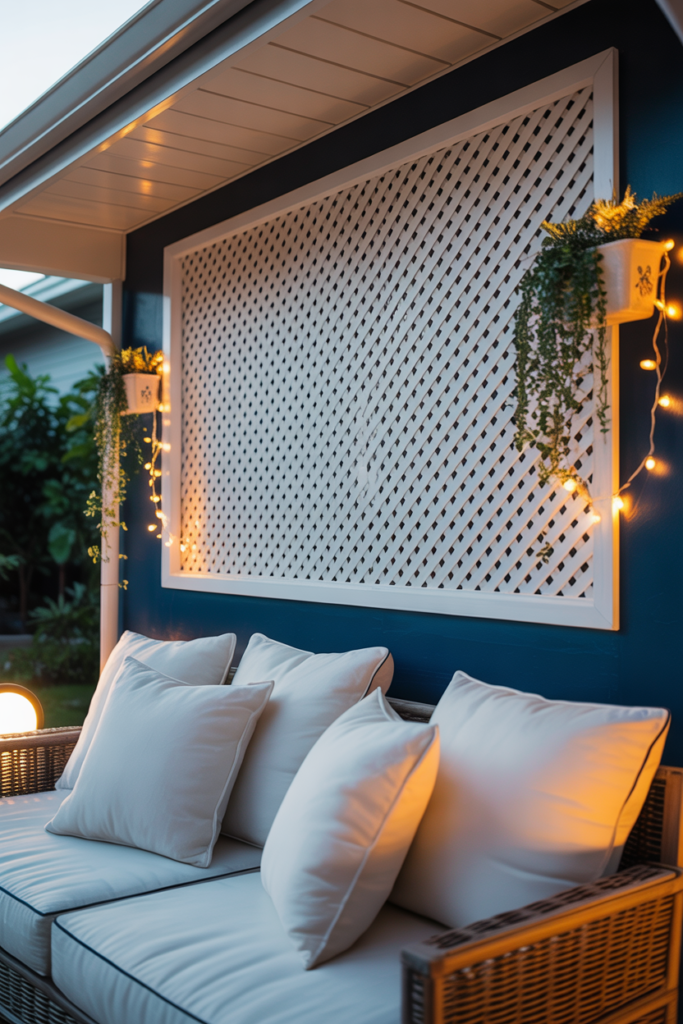
Using vinyl lattice as a decorative feature wall or headboard backdrop in an outdoor bedroom or covered patio setting is a creative interior-meets-exterior application that produces genuinely striking results. A large vinyl lattice panel mounted on a covered patio wall behind an outdoor daybed or sofa creates a textured backdrop that adds visual depth and architectural interest to what would otherwise be a plain painted wall. The geometric pattern of the lattice catches light differently at various times of day and creates a subtle shadow play that adds atmosphere to the space.
Painting the wall behind the lattice panel in a contrasting color before mounting the white or tan vinyl panel amplifies the decorative effect significantly. A deep navy, forest green, or charcoal wall behind a white vinyl lattice panel creates a graphic, layered backdrop that looks like a deliberate design choice rather than a simple panel installation. This two-layer approach costs very little but delivers a visual result that genuinely impresses.
Hanging string lights, trailing artificial greenery, or small potted plants through the lattice openings adds further dimension to this decorative wall application. The lattice openings act as a natural grid for arranging these decorative elements evenly and securely. A finished outdoor feature wall using this approach creates the kind of atmospheric, photogenic outdoor living space that most homeowners associate with professional landscape design rather than a weekend DIY project.
8. Under-Stair Enclosure for a Clean and Finished Exterior Look
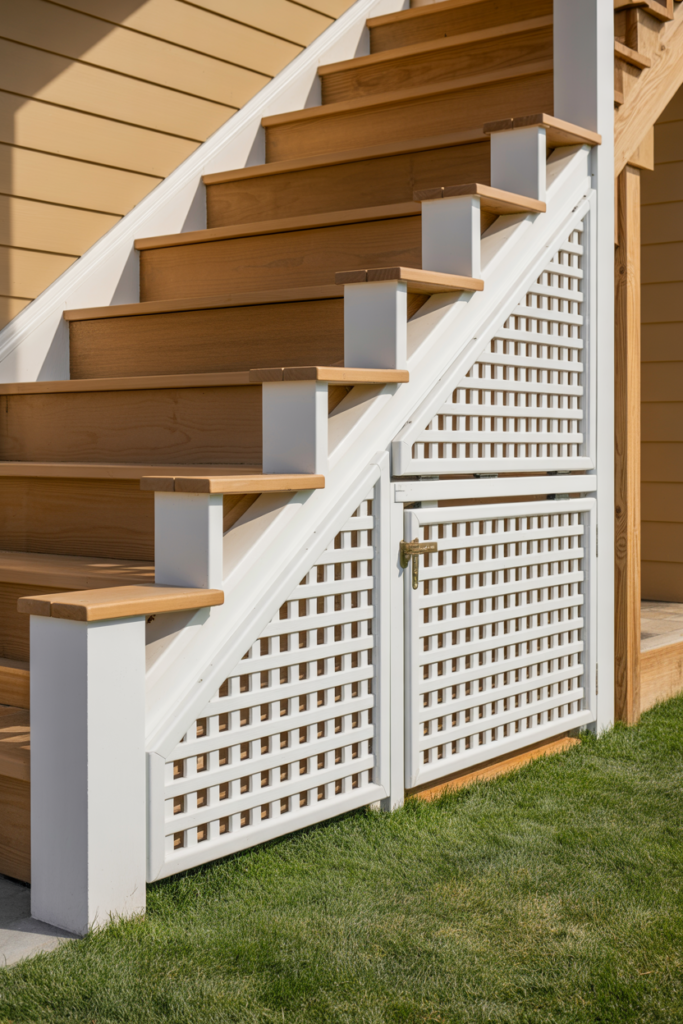
The space under an exterior staircase is one of the most commonly neglected areas of a home’s exterior. Open stair stringers with exposed framing underneath look unfinished and tend to collect debris, leaves, and general outdoor clutter. A vinyl lattice panel enclosure under exterior stairs solves this problem quickly and affordably while adding a polished, intentional detail to the home’s exterior appearance.
Installing vinyl lattice panels between the stair stringers and the ground requires measuring each opening individually since stair angles create panels of varying sizes. Cutting vinyl lattice panels to fit angled openings is straightforward with a circular saw and a basic cutting guide. Framing each cut panel in vinyl trim channel before installation gives the angled edges a clean, finished appearance that looks purpose-built rather than improvised.
The under-stair enclosure creates useful concealed storage for garden tools, hoses, or seasonal items while keeping the exterior of the home looking tidy. Adding a small hinged access panel in the lattice enclosure maintains access to this storage space without requiring panel removal. This practical storage benefit, combined with the improved exterior appearance, makes the under-stair vinyl lattice enclosure one of the highest-value applications on this entire list.
9. Indoor Room Divider for a Sunroom or Enclosed Porch
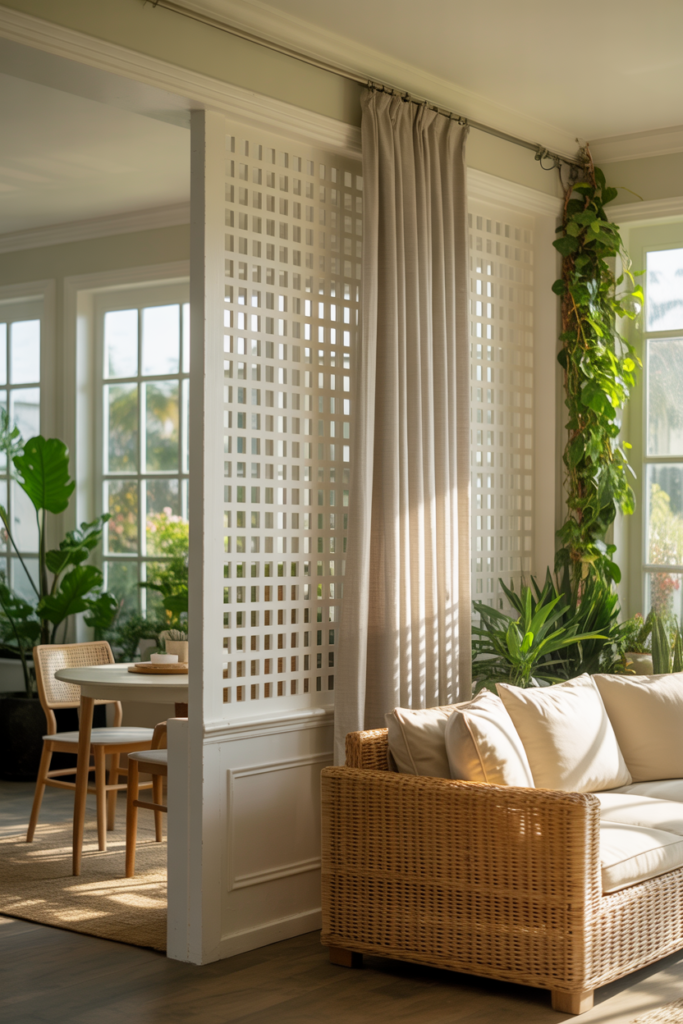
Vinyl lattice panels work surprisingly well as decorative room dividers inside a sunroom, enclosed porch, or three-season room. The open pattern allows light and air to pass through while creating a visual separation between different zones of the space. In a sunroom used for both dining and lounging, a lattice panel divider between the two areas creates a defined layout that makes the space feel more organized and intentionally designed.
Mounting vinyl lattice panels in a painted wood or vinyl frame that matches the interior trim of the sunroom integrates the divider into the room’s architecture rather than making it look like an outdoor material brought inside. Choosing a white vinyl lattice panel in a sunroom with white trim and light walls creates a cohesive, airy aesthetic that feels deliberate and considered. The lattice pattern adds visual texture to what might otherwise be a plain interior wall surface.
Hanging lightweight curtain panels from a rod mounted above the lattice divider adds a soft, layered quality that transitions the hard geometric pattern of the lattice into a warmer, more residential interior feeling. The curtains can draw across the lattice for full visual separation when needed and pull back to reveal the decorative lattice panel underneath when an open, connected layout suits the occasion better. This combination of hard structure and soft textile is a classic interior design layering technique that works beautifully in transitional indoor-outdoor spaces.
10. Raised Garden Bed Border and Trellis Combination
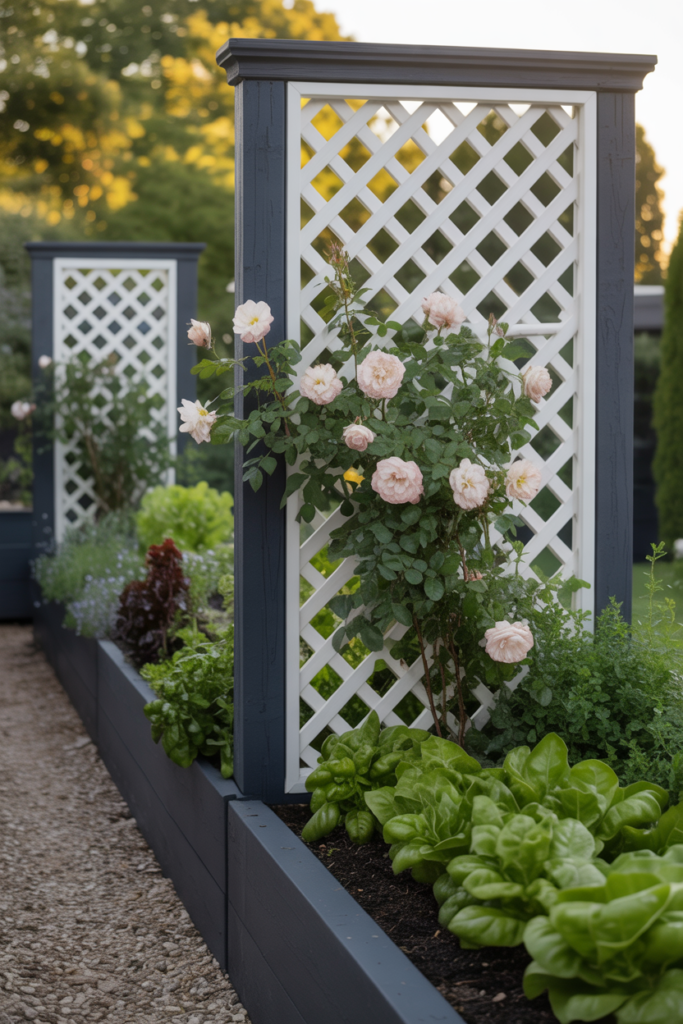
Combining vinyl lattice panels with raised garden beds creates a garden feature that is both structurally functional and visually attractive. A lattice panel mounted vertically at the back of a raised bed acts simultaneously as a trellis for climbing plants and a decorative backdrop that makes the garden bed look like a designed feature rather than a simple planting box. This combination approach gets double the functional value from a single material installation.
Building the raised bed frame from pressure-treated lumber or composite decking material and attaching the vinyl lattice panel to posts extending upward from the back corners of the bed creates a stable, integrated structure. The lattice panel height above the raised bed can range from two feet for low-growing climbers like annual sweet peas to six feet or more for vigorous climbers like climbing roses or scarlet runner beans. Scaling the lattice height to the plant variety keeps the proportions of the structure visually balanced.
Painting the raised bed frame in a color that contrasts with the white or tan vinyl lattice panel adds a polished, designed quality to the garden feature. A charcoal, deep green, or navy raised bed frame against a white vinyl lattice backdrop creates a garden vignette that looks like it came from a curated kitchen garden design rather than a standard vegetable patch. These color and material combinations cost nothing extra to consider during planning but make a significant difference in the finished visual quality of the garden feature.
Vinyl Lattice Panel Applications at a Glance
| Application | Best Lattice Style | Recommended Color | Key Benefit |
| Garden privacy screen | Diagonal standard | White or tan | Living screen with climbing plants |
| Deck skirting | Square or diagonal | Match house trim | Finished, built-in appearance |
| Pergola side panel | Diagonal standard | White | Partial enclosure, airflow |
| Patio room divider | Square privacy | White or grey | Zone definition, flexibility |
| Vegetable garden trellis | Standard diagonal | White or tan | Vertical growing, food-safe |
| Poolside privacy screen | Privacy lattice | White | Moisture-resistant enclosure |
| Decorative feature wall | Diagonal standard | White | Textured backdrop, shadow play |
| Under-stair enclosure | Standard diagonal | Match exterior trim | Clean look, concealed storage |
| Indoor sunroom divider | Square standard | White | Light division, decorative texture |
| Raised bed trellis combo | Standard diagonal | White or tan | Dual function, garden feature |
Getting the Most Out of Vinyl Lattice Panels in Any Application
The quality of the frame around a vinyl lattice panel determines how finished and intentional the installation looks more than almost any other single factor. A vinyl lattice panel dropped into a rough opening without proper framing looks temporary and improvised, regardless of how good the panel itself is. The same panel installed in a clean vinyl trim channel frame with capped corners and consistent reveal looks like a permanent, professional installation. The framing is where the quality lives.
Color consistency across a vinyl lattice installation matters more in large applications than most people anticipate during the planning stage. Using the same white or tan vinyl lattice color throughout an entire deck, skirting, privacy screen, and pergola panel installation creates a unified exterior appearance that reads as deliberate and well-planned. Mixing lattice colors or combining vinyl lattice with wood lattice in the same continuous installation creates a patchy, inconsistent look that undermines the finished quality of each individual section.
Seasonal plant choices paired with vinyl lattice screens and trellises extend the visual interest of the installation across the full calendar year rather than just during peak summer growth. Evergreen climbing plants like climbing hydrangea or certain clematis varieties maintain foliage through winter and keep the lattice screen looking inhabited and intentional even in the colder months. Planning the planting palette with year-round coverage in mind is the detail that separates a lattice installation that looks great in July from one that looks great every month of the year.
Conclusion
Vinyl lattice panels are genuinely one of the most versatile and underused materials available to homeowners for both outdoor and indoor-outdoor applications. The ten creative uses covered in this article demonstrate that vinyl lattice goes far beyond basic fence screening or standard deck skirting when approached with a little imagination and proper installation technique. From poolside privacy screens and pergola enclosures to raised garden bed trellises and decorative indoor room dividers, the applications are broader than most people ever explore.
The practical advantages of vinyl over wood lattice make it the smarter long-term choice for almost every application on this list. No painting, no sealing, no warping, no rotting, and no replacement panels every few years. Those maintenance savings compound over the lifetime of the installation into a meaningful cost advantage that the slightly higher upfront price of vinyl more than justifies.
The most important thing to take away from this article is that execution quality determines the final result more than material choice or application complexity. Clean framing, consistent color, proper post spacing, and thoughtful plant pairings all contribute to a vinyl lattice installation that looks considered and high-quality rather than budget and temporary. Apply those principles to any of the ten ideas here, and the result will consistently exceed what the material cost alone would suggest is possible.
Frequently Asked Questions
What is the difference between vinyl lattice and wood lattice? Vinyl lattice never rots, warps, or requires painting, while wood lattice needs regular sealing and repainting to maintain its appearance and structural integrity outdoors. Vinyl costs slightly more upfront but saves significantly on maintenance over its lifetime, making it the more practical and cost-effective choice for most outdoor applications.
Can vinyl lattice panels be cut to custom sizes? Vinyl lattice panels cut cleanly and easily with a circular saw, jigsaw, or fine-tooth handsaw, making custom sizing straightforward for any application. Always measure the opening carefully before cutting, and frame the cut edges in vinyl trim channel afterward to create a finished, professional-looking edge on the custom-sized panel.
How do I attach vinyl lattice panels to a frame or posts? Vinyl lattice panels attach to frames and posts using standard outdoor screws through the lattice openings into the framing behind, or by sliding the panel edges into a vinyl trim channel that mounts directly to the post or frame face. The trim channel method produces a cleaner, more finished appearance and allows the panel to expand and contract slightly with temperature changes without cracking or buckling.
What climbing plants work best on vinyl lattice panels? Clematis, jasmine, climbing roses, mandevilla, black-eyed Susan vine, and pole beans all attach readily to vinyl lattice openings and grow vigorously enough to cover a panel within one to two growing seasons. Choosing plants suited to the local climate and the available sun exposure at the lattice location produces the healthiest, most vigorous coverage results.
How long do vinyl lattice panels last outdoors? Quality vinyl lattice panels typically last twenty to thirty years in outdoor applications without significant degradation, fading, or structural failure when installed correctly with proper framing and support. UV-stabilized vinyl formulations resist the color fading and surface chalking that lower-quality vinyl products develop after several years of direct sun exposure.
Can vinyl lattice panels be painted? Vinyl lattice panels can be painted with a paint formulated specifically for vinyl surfaces, though most homeowners choose vinyl lattice in their preferred color at purchase to avoid painting altogether. Painting vinyl requires thorough cleaning, a bonding primer designed for plastic surfaces, and a topcoat paint rated for exterior vinyl use to achieve a finish that adheres durably without peeling.
What size vinyl lattice panels are most commonly available? Standard vinyl lattice panels most commonly come in 4×8-foot sheets, though 2×8-foot and 4×4-foot sizes are also widely available at home improvement stores. Opening sizes within the lattice pattern typically range from one and a half inches to two inches for standard lattice and as small as half an inch for privacy lattice varieties designed to limit sightlines more effectively.