
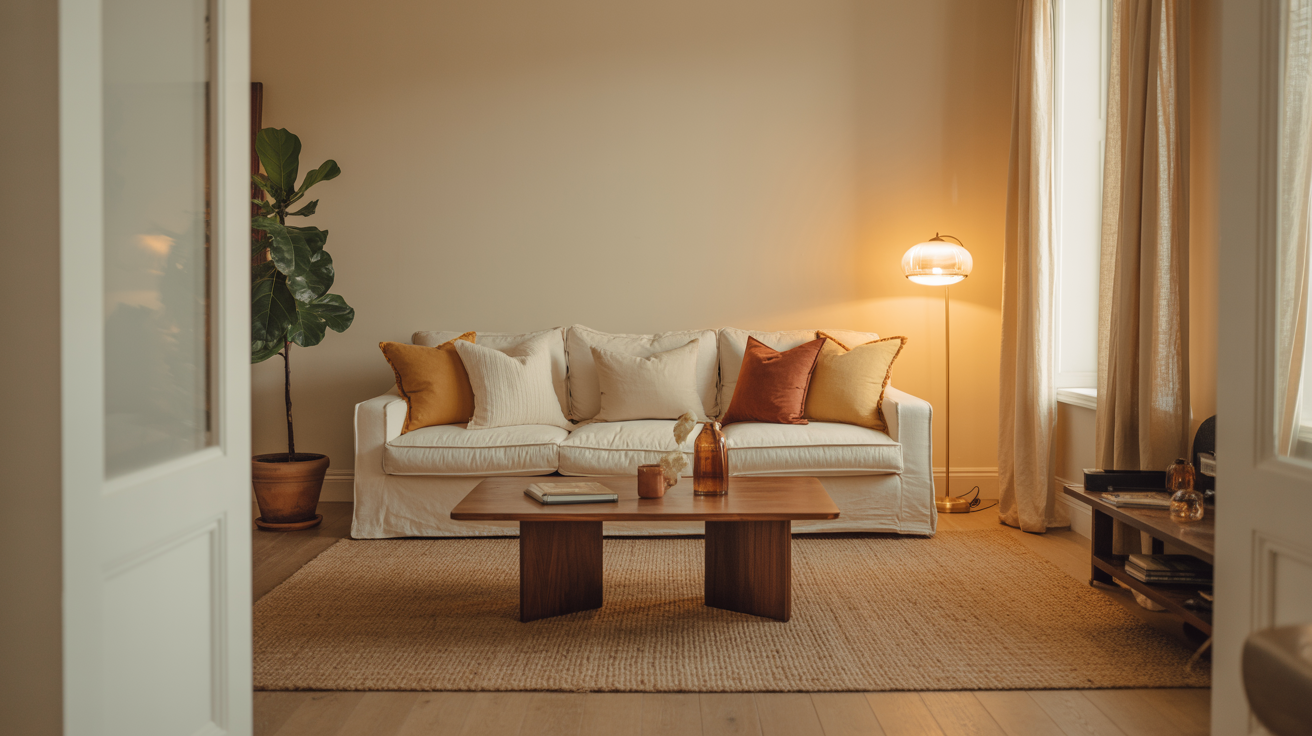
Ivory is one of those colors that sounds perfect on paper but can go very wrong very fast. Too much of it in the wrong finishes and your living room starts looking less “elegant retreat” and more “waiting room at a dentist’s office.” The good news is, getting ivory right is genuinely not that hard once you understand what makes it work.
The secret to a warm ivory living room is all in the layering. You need texture, contrast, and a few carefully chosen accent tones to give the room depth and personality. Without those elements, ivory just sits there looking flat and a little sad.
I have spent a lot of time looking at ivory living rooms that work and ones that really do not, and the difference always comes down to the same few decisions. In this guide, I am sharing the best ivory living room ideas that bring warmth, character, and that effortlessly pulled-together look that makes a room feel like a real home.
Why Ivory Works Better Than Bright White in a Living Room
Ivory is a softer, warmer alternative to stark white, and that subtle difference makes a huge impact in a living room setting. Bright white can feel cold and clinical, especially in rooms that do not get a lot of natural light. Ivory, on the other hand, bounces light in a way that feels gentle and inviting.
The undertones in ivory lean toward yellow, beige, or cream, which naturally complement warm wood tones, natural fabrics, and earthy accents. This makes ivory much easier to decorate around than cool whites, which can clash with warm furniture finishes and make the whole room feel disconnected.
Another reason I prefer ivory over white in living rooms is that it ages beautifully. It does not show every scuff or shadow the way bright white does, and it tends to look richer over time as the room fills with layers of texture and color. That kind of longevity is worth a lot in a space you use every single day.
| Feature | Ivory | Bright White |
|---|---|---|
| Warmth | High | Low |
| Versatility with warm wood | Excellent | Poor |
| Light reflection | Soft and diffused | Harsh and direct |
| Forgiveness with wear | Good | Low |
| Best room type | Living, bedroom | Kitchen, bathroom |
Ivory Living Room Ideas That Actually Work
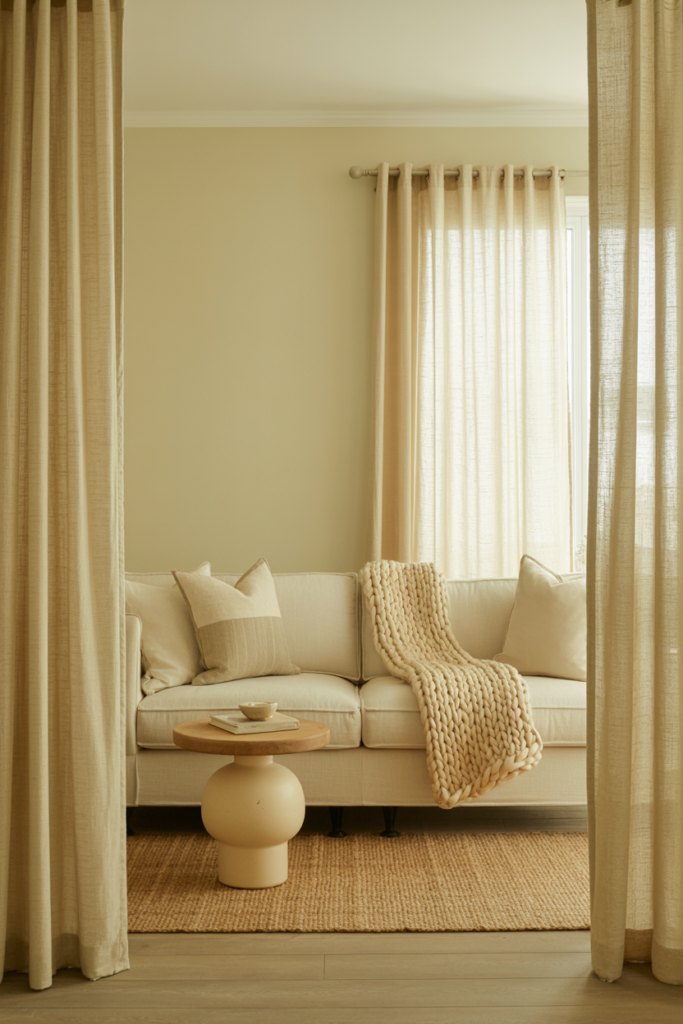
1. Layer Different Ivory Tones for a Tonal Look
One of the most sophisticated things you can do with an ivory living room is layer different shades of the same family together. Think ivory walls with a cream sofa, an off-white rug, and linen curtains in a slightly warmer tone. The variation between the shades creates visual interest without introducing a jarring contrast.
This tonal approach works especially well in living rooms with good natural light, where the subtle differences between the shades become more visible throughout the day. In lower light, the layers still read as cohesive and calm rather than flat or boring.
The key is to vary the textures as much as the tones. A chunky knit throw, a smooth ceramic lamp, a linen sofa, and a jute rug all in similar ivory and cream tones will feel layered and rich rather than matchy-matchy. Texture is what stops a tonal room from looking like a mistake.
2. Add Warm Wood Accents to Stop Ivory Feeling Cold
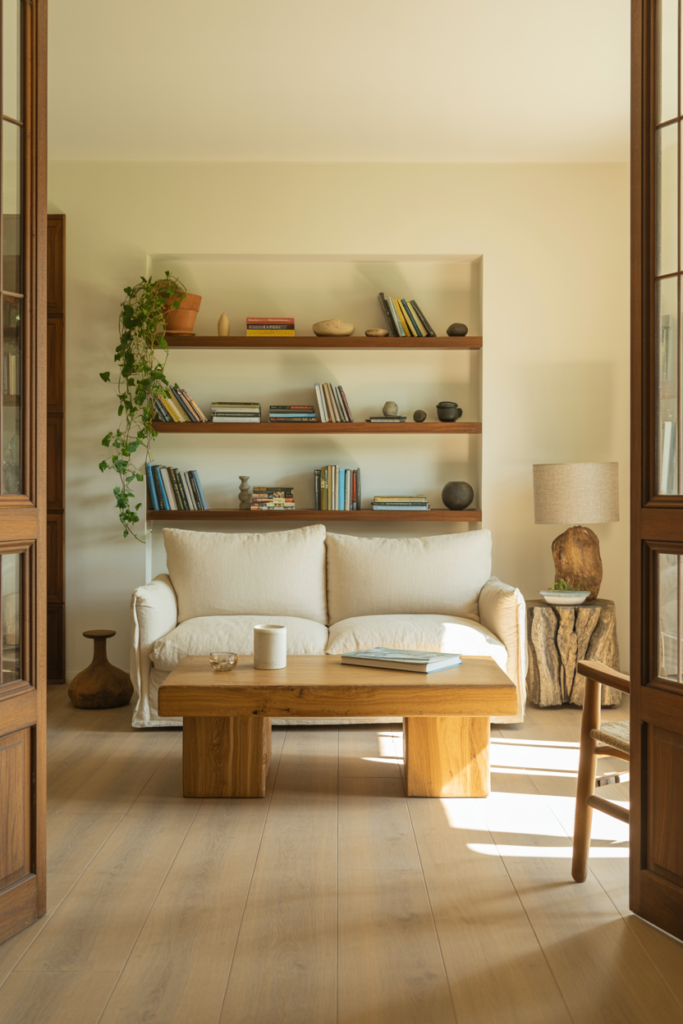
Warm wood is the single best friend an ivory living room has. Whether it is a walnut coffee table, oak shelving, or a driftwood side table, natural timber instantly grounds the room and adds the warmth that ivory on its own can sometimes lack.
I find that mid-tone woods like oak, walnut, and teak work best with ivory because they add color without overpowering the palette. Very dark woods like ebony can feel too heavy, and very light woods like bleached pine can blend too much into the ivory and disappear entirely.
The placement of wood accents matters too. A wooden coffee table in the center of the room anchors the space visually. Wooden shelving or a sideboard along one wall adds structure. Even small touches like a wooden tray or a set of carved decorative objects can make a real difference to how warm and grounded the room feels.
3. Use Terracotta and Rust Accents for Warmth and Contrast
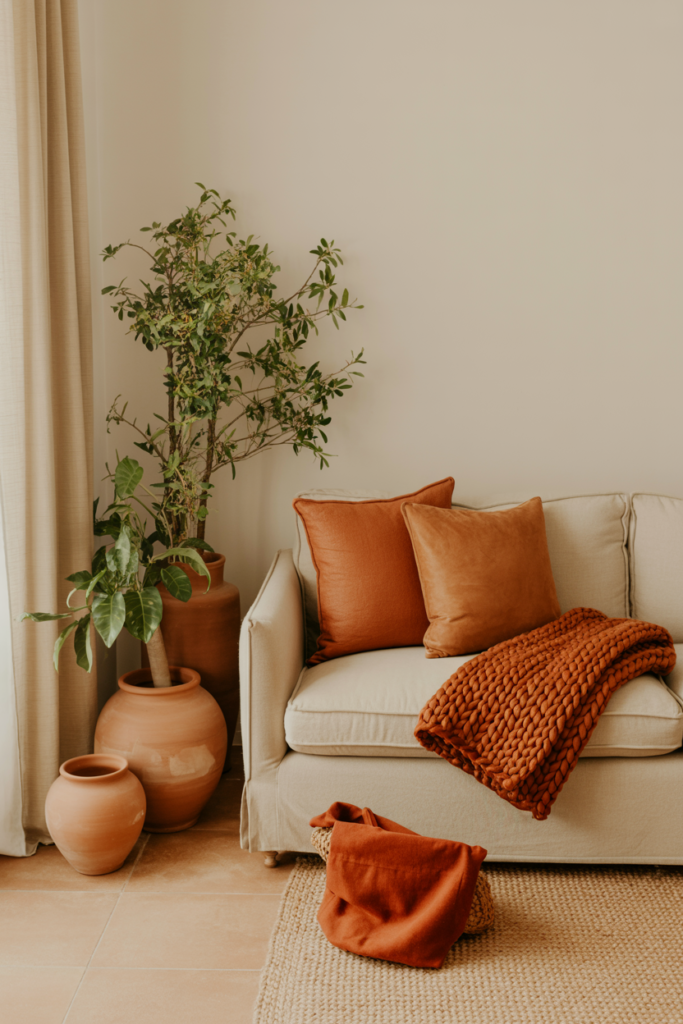
Terracotta and rust are some of the best accent colors to pair with ivory, and I think they are still underused in living room design. These earthy, warm tones sit beautifully against ivory without creating a harsh contrast, and they add a richness that cooler accent colors simply cannot replicate.
A pair of terracotta cushions on an ivory sofa, a rust-toned wool throw, or a few ceramic pots in burnt orange shades are easy ways to introduce this palette without committing to a full redesign. These accents work especially well in living rooms with wooden floors or natural stone finishes, where the earthy tones feel completely at home.
What I love about terracotta with ivory is how timeless the combination feels. It is not a trend-driven pairing. Earthy tones and neutral backgrounds have been working together in Mediterranean and North African interiors for centuries, and they continue to feel fresh and relevant today.
4. Bring in Natural Linen and Boucle Fabrics
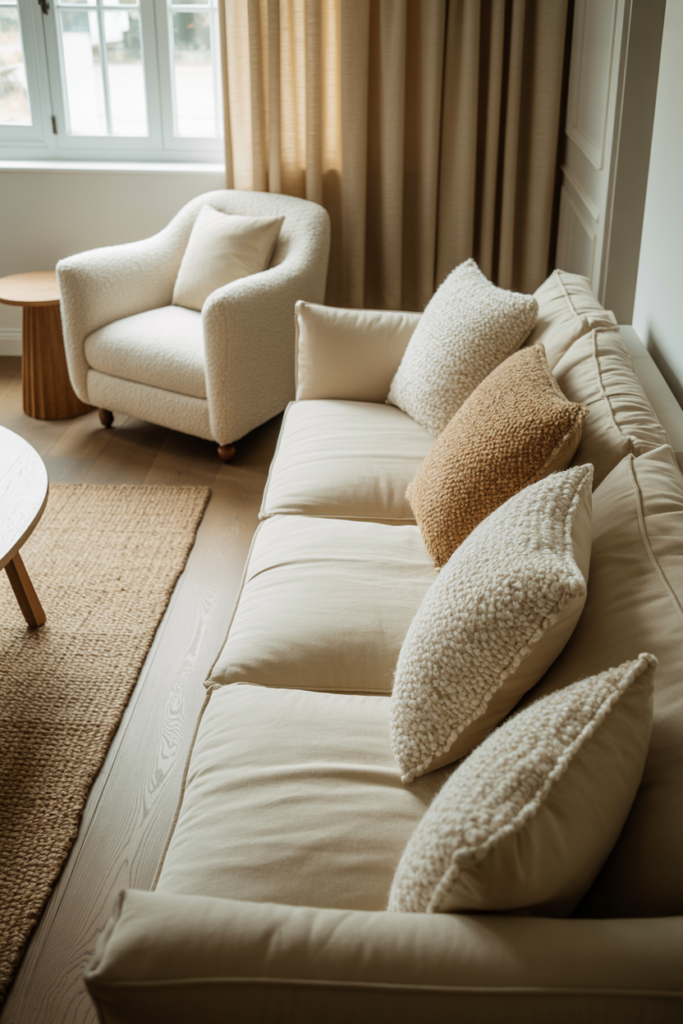
Fabric choices make or break an ivory living room, and natural textiles are the ones that consistently deliver the best results. Linen and boucle in particular have a texture and warmth that synthetic fabrics just cannot match, and they work beautifully in a soft, neutral palette.
A linen sofa in a warm ivory or oatmeal tone is one of my top recommendations for this kind of room. Linen has a naturally lived-in quality that feels relaxed and real, and it ages gracefully. Boucle armchairs or accent chairs add a tactile softness that makes the room feel genuinely cozy rather than styled within an inch of its life.
Mixing both fabrics in the same room works brilliantly too. A linen sofa with boucle cushions, or a boucle armchair paired with linen curtains, gives the room a layered, considered feel. Keep the tones within the same warm neutral family and the combination will look intentional rather than accidental.
5. Choose Warm Metallic Accents Over Cool Silver
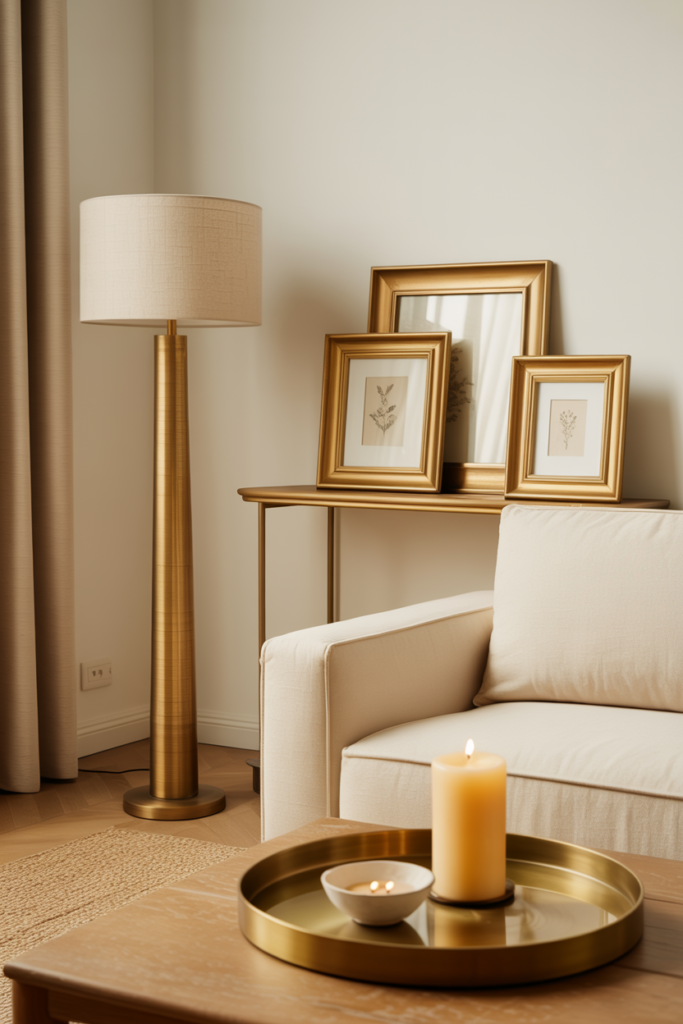
Metallics add a finishing touch to any living room, but the tone of the metal matters enormously in an ivory space. Cool silver and chrome finishes can make ivory feel stark and a little clinical. Warm metallics like brushed brass, aged gold, and antique bronze are a far better match.
Brushed brass in particular has become a staple in warm, neutral interiors, and for good reason. It adds a gentle glow that complements ivory without feeling flashy or overdone. A brass floor lamp, a set of brass picture frames, or brass hardware on a sideboard all add warmth and sophistication in equal measure.
Aged gold and antique bronze work beautifully in living rooms with a more traditional or eclectic feel. These finishes have a depth and patina that polished gold lacks, and they pair especially well with darker wood tones and deeper accent colors like forest green or navy.
6. Use Indoor Plants to Add Life and Color
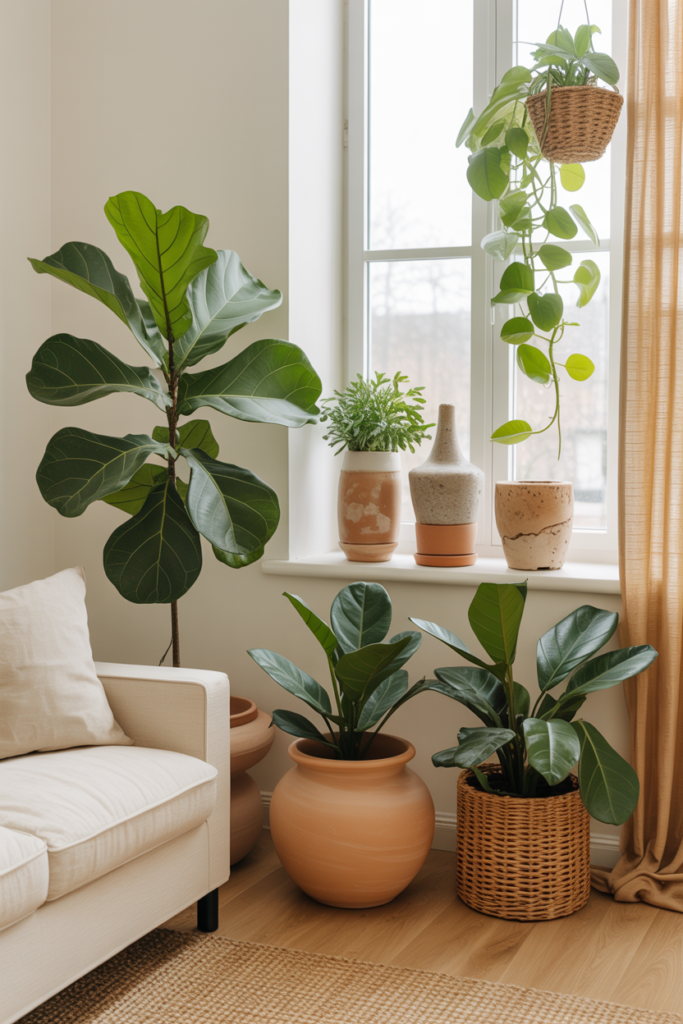
An ivory living room can sometimes feel a little too quiet, and greenery is the easiest fix. Indoor plants introduce a natural, organic element that instantly makes the space feel alive without disrupting the soft, neutral palette.
Large statement plants like a fiddle leaf fig, a monstera, or an olive tree work brilliantly in an ivory room because their deep green leaves pop beautifully against the light background. Smaller plants grouped on a shelf or a windowsill add visual interest at a different scale and stop the room from feeling too sparse.
I always recommend choosing planters in earthy, natural tones for an ivory living room. Terracotta pots, stone-effect planters, and woven baskets all complement the palette without competing with it. A bright white or stark black planter can look jarring against ivory, so keeping the vessels warm and natural ties everything together.
7. Add Contrast With Darker Furniture Pieces
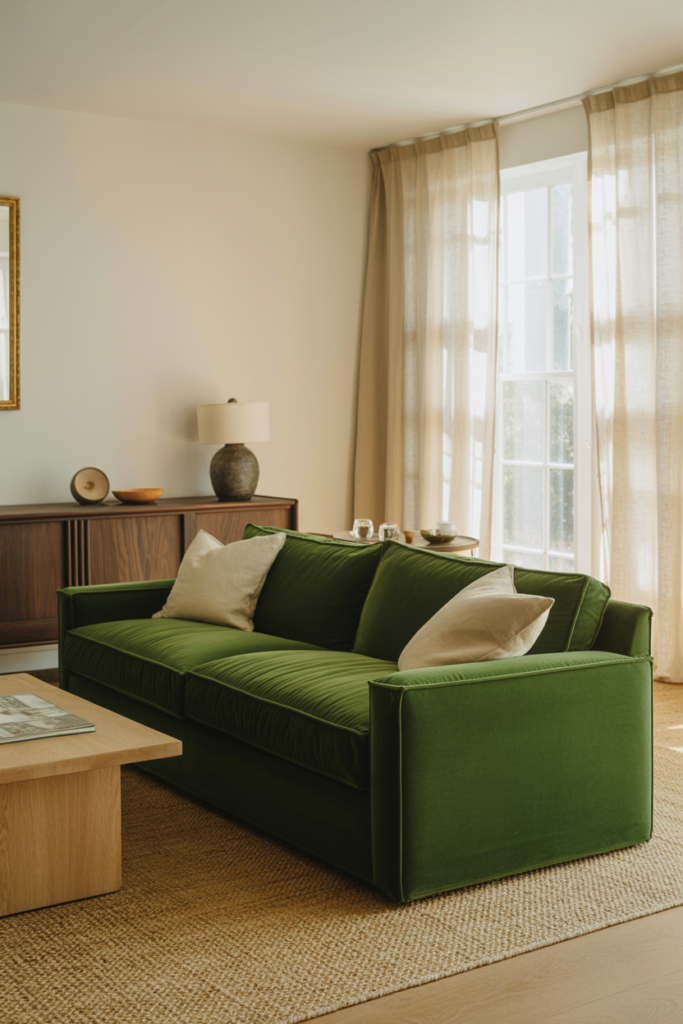
One of the most common mistakes in an ivory living room is keeping every piece of furniture light. The result tends to feel washed out and one-dimensional. Adding one or two darker furniture pieces gives the room the contrast it needs to feel grounded and complete.
A dark walnut console table, a charcoal linen ottoman, or a deep navy armchair can all work as contrast pieces in an ivory room without overpowering the palette. The key is balance. One or two darker pieces anchor the room visually, while the ivory walls and soft furnishings keep the overall feel light and airy.
I personally love a deep green velvet sofa in an ivory living room. The combination is rich and sophisticated, and the green sits within the natural, earthy family that works so well with ivory tones. It is a bolder choice, but it looks genuinely stunning and avoids the washed-out problem entirely.
Getting the Lighting Right in an Ivory Living Room
Lighting has a bigger impact on how ivory reads in a room than almost any other factor. In cool, blue-toned light, ivory can look flat and a little grey. In warm light, it glows beautifully and the room feels exactly as inviting as it should.
I always recommend warm white bulbs in an ivory living room, ideally around 2700K to 3000K on the color temperature scale. This warmth enhances the natural undertones in ivory paint and fabric and makes the whole room feel cohesive and comfortable rather than cold and clinical.
Layering your lighting sources also helps. A combination of floor lamps, table lamps, and ceiling lighting gives you control over the mood at different times of day. An ivory room with warm, layered lighting in the evening feels genuinely luxurious, and that is not something you achieve with a single overhead light.
| Lighting Type | Best Position | Effect in Ivory Room |
|---|---|---|
| Warm white floor lamp | Corner of room | Adds depth and warmth |
| Table lamp with linen shade | Side table or console | Soft, diffused glow |
| Recessed ceiling lights | Central or perimeter | Even base illumination |
| Pendant light | Above coffee table | Focal point and warmth |
| Candles or candle holders | Mantelpiece or shelves | Cozy evening ambience |
Conclusion
An ivory living room done well is one of the most beautiful and versatile spaces you can create. The key is avoiding the trap of keeping everything the same tone and finish, which leads to that flat, washed-out look that gives ivory a bad reputation.
Layer different shades and textures within the ivory and cream family. Bring in warm wood, earthy accents like terracotta and rust, natural fabrics like linen and boucle, and warm metallic finishes like brushed brass. Add contrast with a darker furniture piece or two, introduce some greenery, and get your lighting right.
Do all of that and your ivory living room will feel warm, layered, and genuinely inviting every single day. It is the kind of room that looks effortless but has actually been thought through really carefully, and that is exactly the sweet spot.
Frequently Asked Questions
Does ivory make a living room look smaller? Ivory actually makes a living room feel more spacious rather than smaller. Its warm, light-reflective quality opens up the space without the harshness of bright white. Pair it with mirrors and good lighting to maximise the effect.
What colors go best with ivory in a living room? Warm tones like terracotta, rust, sage green, camel, and soft navy all pair beautifully with ivory. Warm wood tones and natural materials also complement ivory very well. Avoid cool greys and stark whites, as they can clash with ivory’s warm undertones.
Is ivory a good color for living room walls? Ivory is an excellent choice for living room walls, especially in spaces with warm natural light. It feels softer and more welcoming than bright white and works with a much wider range of furniture and accent colors. It also tends to look better as a room evolves over time.
What is the difference between ivory and cream? Ivory sits slightly cooler and brighter than cream, though both fall within the warm white family. Cream tends to have stronger yellow or beige undertones, while ivory is closer to a very soft white with subtle warmth. In practice, the two often work beautifully together in a tonal scheme.
Can I use ivory in a north-facing living room? Yes, but choose an ivory with genuinely warm undertones rather than one that leans cool or grey. In a north-facing room with limited natural light, a warmer ivory will hold its warmth better than a cooler shade, which can start to look dull and flat in low light conditions.
How do I stop an ivory living room from looking boring? Texture is the answer. Layer different materials like linen, boucle, jute, wood, and ceramics throughout the room. Add one or two contrast pieces in a deeper tone, introduce some greenery, and vary your lighting. A room with strong textural variety never looks boring, even in a very neutral palette.
What type of rug works best in an ivory living room? A natural fibre rug in jute, sisal, or wool works beautifully in an ivory living room. These materials add texture and warmth without disrupting the palette. A rug with a subtle pattern in warm tones like camel, rust, or sage can also add visual interest while keeping the overall feel soft and cohesive.